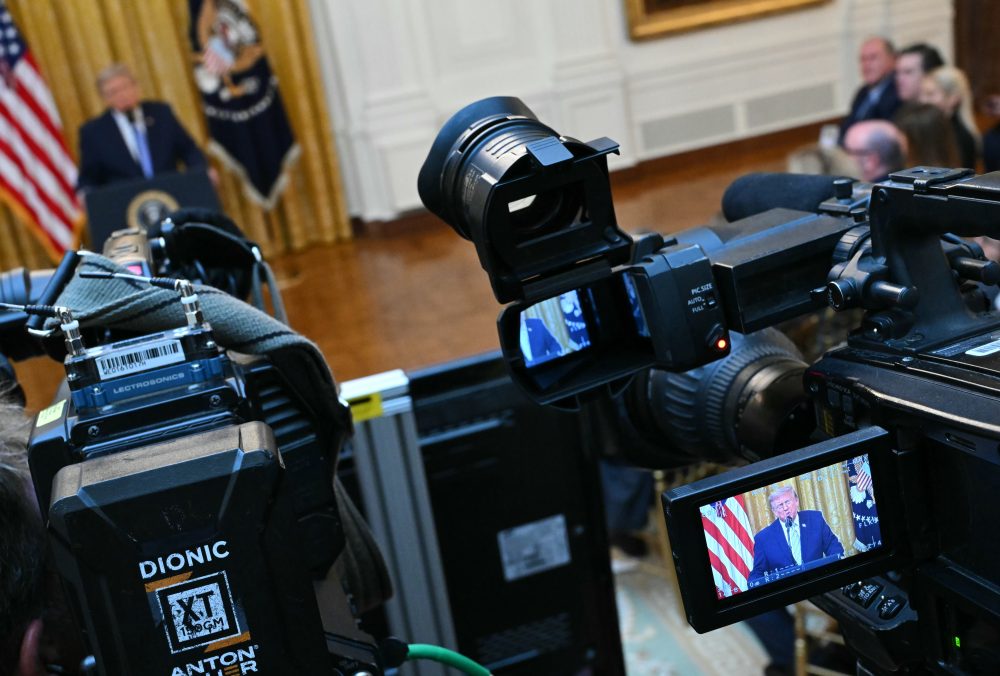

Global financial markets experienced a dramatic turnaround Tuesday following President Donald Trump’s decision to delay planned military strikes against Iran’s electrical infrastructure and extend his deadline by five additional days.
The announcement came after Trump’s initial Saturday demand that Iran reopen the Strait of Hormuz within 48 hours. The president cited constructive discussions with Iranian representatives as the reason for the extension, though Iranian officials have disputed these claims.
Investment markets, which had been experiencing significant volatility at the week’s start, responded positively to news of the postponement. Investors appeared relieved by the reduced prospect of immediate military escalation in the region.
“It’s a negotiating tactic… I don’t think that the U.S. administration wants to see oil at $150 because they themselves provoked it,” explained Rajeev De Mello, who serves as chief investment officer at GAMA Asset Management.
The market response was swift and substantial. Stock prices climbed while crude oil futures dropped significantly. Additionally, the dollar weakened and government bond yields declined as traders adjusted their positions.
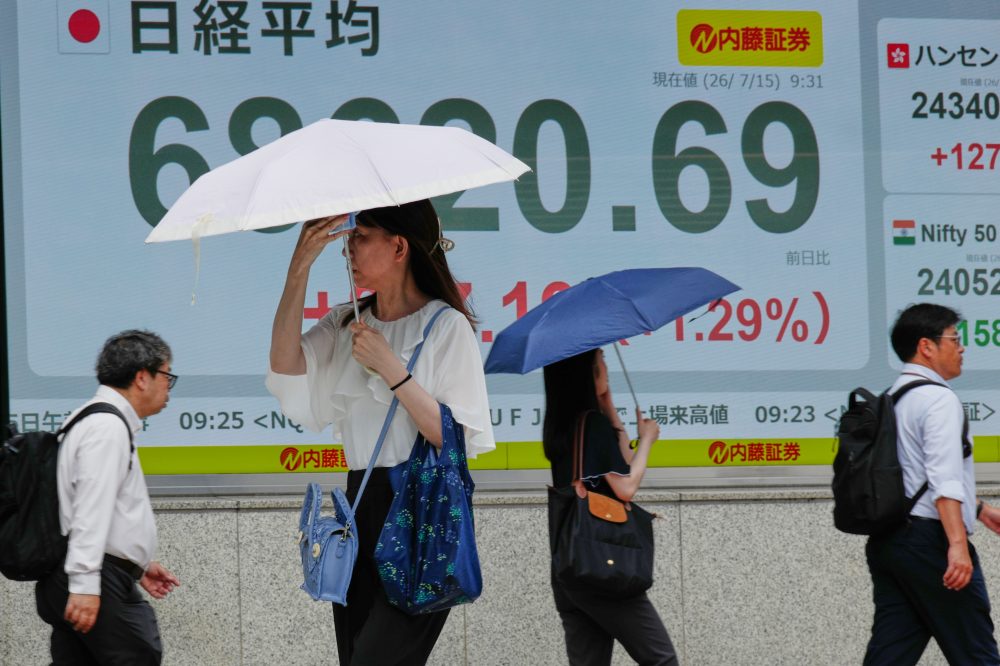
Asian markets carried this momentum into Tuesday’s trading session. The MSCI Asia-Pacific index, excluding Japan, gained 1.3%, while Australian shares rose 0.7%. Japan’s Nikkei index posted particularly strong gains of more than 2%, recovering most of Monday’s 3.5% loss.
Energy markets showed mixed signals Tuesday. After Monday’s dramatic 10% decline, oil prices recovered modestly. Brent crude futures increased 1% to reach $100.94 per barrel, while U.S. crude climbed 1.9% to $89.84.
However, analysts cautioned that uncertainty remains high given the ongoing Middle Eastern conflict and potential for sustained elevated energy costs.
“Markets are not out of the woods,” warned Chris Weston, head of research at Pepperstone. “Price action could remain choppy into Friday’s revised deadline… The key question is whether participants see this as a genuine extension that brings a deal closer, or simply a delay that prolongs uncertainty.”
The geopolitical developments also influenced expectations for central bank monetary policy. U.S. Treasury yields stabilized Tuesday after sharp overnight declines, reflecting reduced investor expectations for aggressive interest rate increases by major central banks this year.
The two-year Treasury yield remained relatively stable at 3.8498% after falling more than 6 basis points in the previous session. The benchmark 10-year yield stood at 4.3400%.
Market participants have essentially eliminated expectations for Federal Reserve rate increases this year, anticipating rates will remain unchanged. The Bank of England is now expected to raise rates only twice this year, down from four previous expectations. European Central Bank rate hike projections have similarly been reduced.
“Unless the Strait (of Hormuz) is reopened very quickly, we are still more likely than not to see higher interest rates and a meaningful increase in oil importers’ costs in the coming weeks,” noted Kit Juckes, head of FX strategy at Societe Generale.
Currency markets reflected the improved risk sentiment, with the U.S. dollar weakening as demand for safe-haven assets decreased. The euro traded at $1.1603 after gaining 0.4% overnight, while the British pound maintained strength near Monday’s two-week high at $1.3420.
The dollar showed slight gains against the Japanese yen, rising 0.04% to 158.54. This came as new data revealed Japan’s core consumer inflation rate dropped to 1.6% in February, falling below the Bank of Japan’s 2% target for the first time in nearly four years.
Precious metals also benefited from the market uncertainty, with spot gold prices increasing 0.6% to $4,431.65 per ounce.