
DAKAR, Senegal (AP) — American military officials confirmed Monday that the United States has positioned advanced surveillance drones in Nigeria as the West African nation confronts an increasingly complex array of security threats.
The deployment involves MQ-9 Reaper aircraft, which joined 200 American military personnel who arrived in Nigeria last month to conduct training operations and provide intelligence support. These sophisticated drones are capable of reaching altitudes exceeding 40,000 feet and remaining airborne for more than 30 hours at a time. The aircraft have been extensively utilized by both U.S. military forces and the CIA across Middle Eastern operations, including missions in Afghanistan, Iraq, and Yemen during American combat operations in those regions.
Nigeria, which holds the distinction of being Africa’s most densely populated nation, is currently grappling with a complicated security situation, particularly across its northern territories. The country faces threats from several prominent Islamic extremist organizations, including Boko Haram and a splinter group that has aligned itself with the Islamic State and operates under the name Islamic State West Africa Province, or ISWAP. Additional concerns include the IS-connected Lakurawa organization, along with various criminal networks that focus on kidnapping operations for financial gain and unauthorized mining activities.
An AFRICOM representative from the U.S. Africa Command explained to The Associated Press that American personnel “are working alongside their Nigerian counterparts to provide intelligence support, advisory assistance, and targeted training in support of the Nigerian Armed Forces.”
Both the military personnel and the MQ-9 aircraft are operating from Bauchi Airfield, a recently constructed airport facility located in Nigeria’s northeastern region, according to the spokesperson. Officials have not disclosed the exact number of drones currently deployed to the location.
Each MQ-9 drone carries a price tag of approximately $30 million and comes in specialized variants designed for land-based and maritime operations. While these aircraft possess strike capabilities, AFRICOM officials emphasize that their mission in Nigeria will be limited exclusively to intelligence collection and training purposes.
This military deployment represents part of a fresh security cooperation agreement established following President Donald Trump’s assertions that Christians are being specifically targeted during Nigeria’s ongoing security crisis. American forces conducted strikes against Islamic State positions on December 26.
Previously, the United States maintained a significant drone installation in neighboring Niger, but operations ceased after the country’s military leadership forced American troops to withdraw.
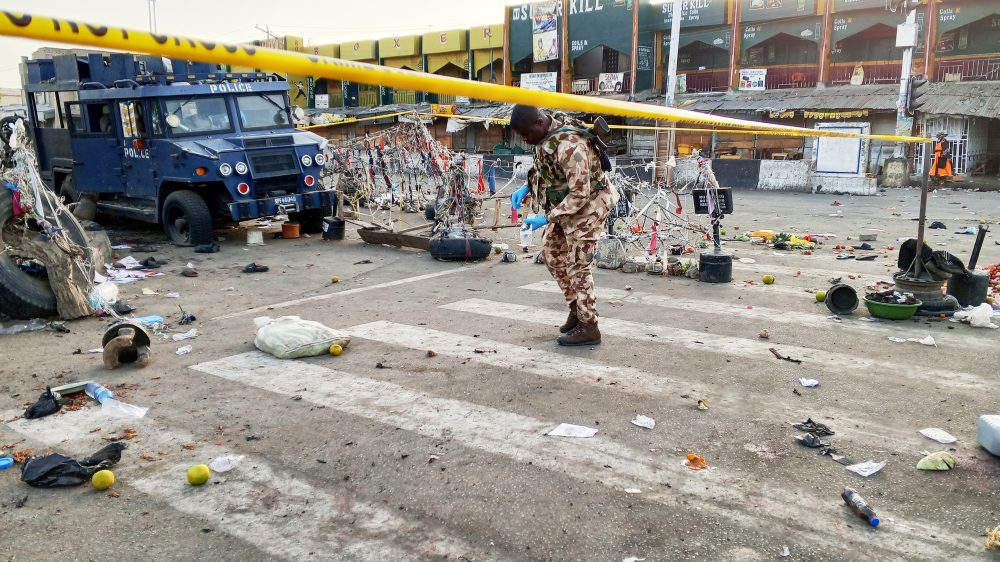
Recent violence struck earlier this month when three suspected suicide attacks claimed the lives of at least 23 individuals and injured 108 others in Maiduguri, which serves as the capital of Borno state. While no organization has taken credit for the attacks, investigators suspect Boko Haram involvement, given the group’s 2009 launch of an insurgency campaign across northeastern Nigeria aimed at imposing their extreme interpretation of Islamic law.
The security situation has deteriorated further with the involvement of additional militant organizations from the broader Sahel region, including Jama’at Nusrat al-Islam wal-Muslimin, which conducted its first documented attack on Nigerian territory last year.
United Nations statistics indicate that more than 40,000 people have lost their lives since Boko Haram’s insurgency commenced. Security analysts argue that the Nigerian government’s efforts to safeguard its population remain inadequate.