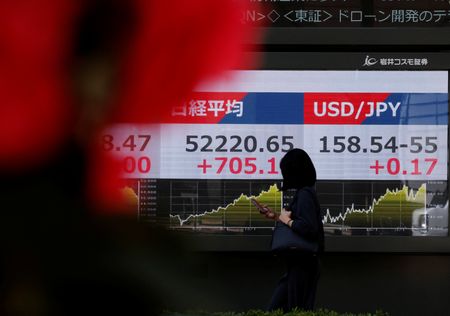

International investors are fleeing Asian stock markets at an unprecedented pace this March, pulling out more than $50 billion as Middle East tensions threaten global oil supplies and spark economic concerns.
The massive withdrawal of funds represents the largest monthly exodus from the region since at least 2008, according to data from LSEG covering major exchanges across South Korea, Taiwan, Thailand, India, Indonesia, Vietnam and the Philippines.
The selling spree has been triggered by escalating tensions from the U.S.-Israeli conflict with Iran, which has raised alarm about potential disruptions to Middle Eastern energy exports and the possibility of an oil price shock leading to stagflation.
“Outflows from EM Asia markets were driven by the broad-based risk-off sentiment due to the Middle East conflicts, as most of EM Asia economies are net importers of energy products,” explained Jason Lui, who heads APAC equity and derivative strategy at BNP Paribas.
Energy markets have already felt the impact, with Brent crude oil prices skyrocketing as much as 65% during March to reach $119.50 per barrel.
The situation has been made worse by climbing global interest rates and changing expectations about monetary policy, according to Abdelaziz Albogdady, a market research and fintech strategy manager at brokerage FXEM. He noted that the outflows were amplified by rising yields and reassessment of rate expectations, alongside concerns about economic effects on countries that import oil.
Central bank officials from major economies have signaled that interest rates will likely stay put or increase further if the Middle East crisis continues to drive up prices.
Taiwan has been hit hardest, experiencing approximately $25.28 billion in outflows so far this month – the largest drain in at least 18 years. South Korea and India have also seen significant foreign selling, with about $13.5 billion and $10.17 billion in net sales respectively.
“Outflows in Taiwan and South Korea were mostly focused on AI/technology stocks given they have accumulated sizable gains during the AI boom,” Lui noted.
Despite the broader selloff, analysts at Nomura pointed out in a Monday research note that technology hardware companies in Korea and China continue to show promise, experiencing minimal direct effects from the Middle East crisis or higher energy costs.
Other regional markets have also seen money flowing out, with Thailand recording $1.35 billion in net outflows, the Philippines losing $182 million, and Vietnam seeing $21 million in departures. Indonesia bucked the trend, attracting $59 million in net inflows during the same timeframe.
Looking ahead, Lui warned that emerging Asian markets will likely continue experiencing volatility as conflicting news reports and heightened geopolitical tensions persist.
“Unlike the Liberation Day scenario during which the U.S. can unilaterally decide on the tariff threshold, the current energy shock may take longer to normalize given the disruption to the production facilities in the Middle East,” he said.