
Former NHL netminder Brian Boucher remembers constantly checking the shot counter during games, mentally calculating how many more saves he needed to consider his performance successful.
“It was a way to kind of validate what you were doing and how you felt about yourself and kind of a barometer that you used to gauge your game,” Boucher explained.
Today’s goalies shouldn’t rely on those same metrics, and there’s a compelling explanation why. The current NHL season is creating an unwelcome milestone for goaltenders across the league.
For the first time in thirty years, the league-wide save percentage has fallen below .900, currently sitting at .896 — the worst mark since 1994. Players at every position have become more talented and strategic in their shot selection, while the pace of play has reached unprecedented speeds. These combined elements are reshaping expectations for hockey’s most crucial position.
“The players evolve and they get better,” explained Washington’s Logan Thompson, whose .912 save percentage places him second among goalies with 50-plus starts. “Their sticks get better. Their shots get harder. They kind of know sneaky little spots, or they’re not shooting as many pucks as they did back in the day, as well.”
Current shot totals support Thompson’s observation. Teams average just 27.8 shots per contest, the fewest since the defensive-heavy late 1990s and early 2000s. That era’s emphasis on hooking, holding and interference prompted rule modifications following the 2004-05 lockout, specifically aimed at boosting offensive production. Those adjustments have succeeded beyond expectations.
Clubs now combine for more than six goals per game, a trend that has continued for four consecutive seasons. Modern players frequently seek additional passing opportunities instead of accepting mediocre scoring chances.
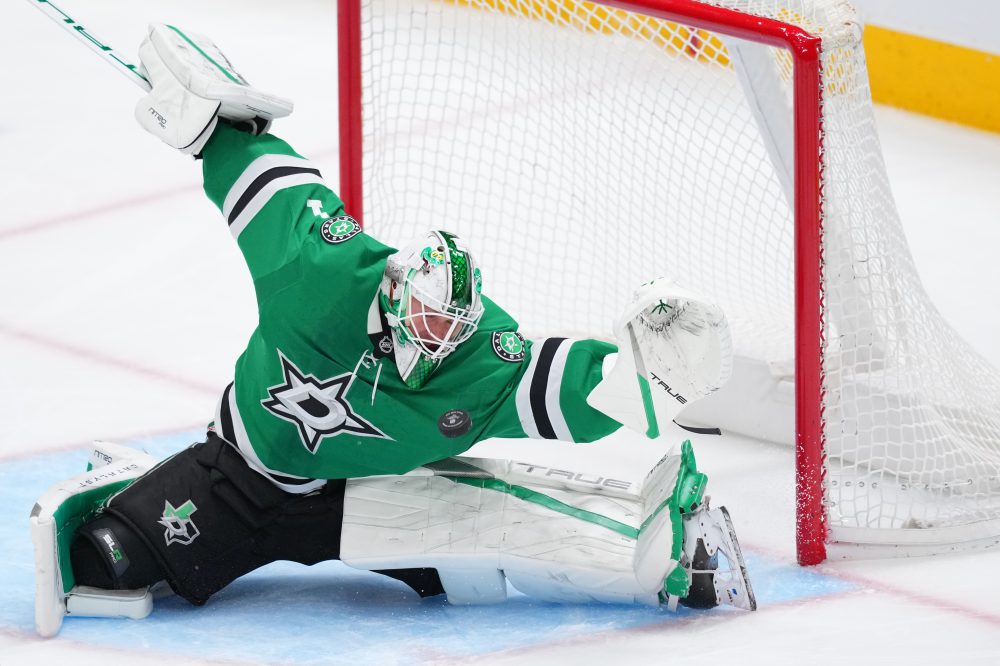
“It’s insane,” said Dallas goalie Jake Oettinger, whose .900 save percentage represents a career-low across six seasons. “Guys will have it in the slot and they’re passing it, where I feel like 10 years ago it was just pucks on net. I think guys are way more skilled, so when they get Grade-A chances, they’re that much more talented and everyone can shoot.”
Former goaltender Martin Biron, like Boucher, emphasizes how dramatically the sport has evolved since their playing days. During Biron’s peak years, league-average save percentages reached as high as .911.
“A lot of it was straight on: a guy coming down the wing, taking a shot,” Biron recalled. “All I had to worry about was the shooter, my angles and it was a lot easier.”
Post-game shot total revisions have become increasingly common, sometimes occurring days after contests conclude, which naturally affects goaltenders’ save statistics. Both Oettinger and Dallas backup Casey DeSmith express frustration with these modifications.
“They just take shots away that are shots on goal,” Oettinger noted. “There are probably three a game. If you multiple that by 50 games, that’s like having five more shutouts that they’re taking away.”
These statistical reviews have intensified since sports betting became legal throughout the United States and Canada. With wagers available on shots-on-goal totals, each recorded shot faces rigorous scrutiny.
“All of that auditing that the league is doing with shots, and honestly it stems from gambling,” Biron observed. “People don’t want to lose their bets if there was a shot that was missing the net or whatnot.”
NHL officials attribute the increased precision to advanced puck and player tracking technology, along with other innovations that provide more accurate data for both the league and betting operators. These technological reviews can result in changes to original scorekeeper decisions made during games.
Equipment modifications represent another factor in the league’s offensive surge. The NHL has systematically reduced goaltender gear dimensions over recent years, trimming shoulder pads, chest protectors, and pants to create additional target areas for shooters while maintaining safety standards.
Thompson prefers his equipment fitted tightly due to his mobile playing style, but acknowledges the impact of these changes on shots that previously would have struck padding.
“Sometimes, there might be a shot that it looks weak but it goes kind of through your knees and there’s really nothing else you can do: There’s just a little hole there and sometimes the puck goes in,” Thompson explained. “That’s out of your control.”
The Washington netminder, in his second season with the Capitals and a former Olympic backup for Canada, believes hockey is shifting away from large, position-blocking goalies toward more agile, reactive players.
“I don’t think you can be a blocking-style goalie,” Thompson stated. “With how good and skilled all these players are in this league, you’ve got to be able to react and use your hands. … You’ve got to be able to react because the shooters, they make too good of shots and too good of plays now.”
While teams have recently invested in specialized skill coaches to enhance scoring, goalie-specific instruction has existed for years, though these coaches may need to adapt their methods.
“Shooters are getting good, and it’s time for goalies to adjust a little bit,” Biron suggested. “It’s not the north-south game anymore. It’s an east-west game, so goalies have to adjust to that. They have to become much more conscious of the puck moving laterally, and the better goalies are the ones that can move laterally so much better.”
Biron identifies Tampa Bay’s Andrei Vasilevskiy, Buffalo’s Ukko-Pekka Luukkonen, Boston’s Jeremy Swayman, and the New York Islanders’ Ilya Sorokin as exceptional lateral movement specialists. Statistics support his assessment, with Vasilevskiy (.912) and Luukkonen (.910) ranking third and eighth league-wide, while Swayman and Sorokin both maintain .906 percentages.
Shot locations also reflect coaching philosophies that prioritize offensive opportunities over defensive security.
“Now teams are more OK with giving up what they give up,” Oettinger explained. “That’s kind of just the style now. It’s less defensive-minded and more try to score as much as you can.”
Given these transformations, Boucher questions whether the traditional .900 benchmark — stopping nine of every ten shots — remains realistic. Thompson recently watched Dallas face New Jersey, where Oettinger was removed after surrendering four goals on eight shots. The teams combined for ten goals on 51 total shots, producing an .803 save percentage that evening.
“You can say, ‘Oh the goaltending wasn’t good,’” Thompson reflected. “But at the same time, I don’t really know many goalies who are going to be making those stops.”