
PHOENIX — Major League Baseball organizations once viewed college baseball programs with doubt and uncertainty. Professional teams questioned the use of aluminum bats, the abbreviated season length, and believed nothing could substitute for the experience gained through years of development in the minor league system.
Those days are over.
Multiple influences — particularly increased funding and advanced technology — have brought MLB and college baseball closer together than ever before. The movement of personnel between both levels of the sport has increased significantly in recent years.
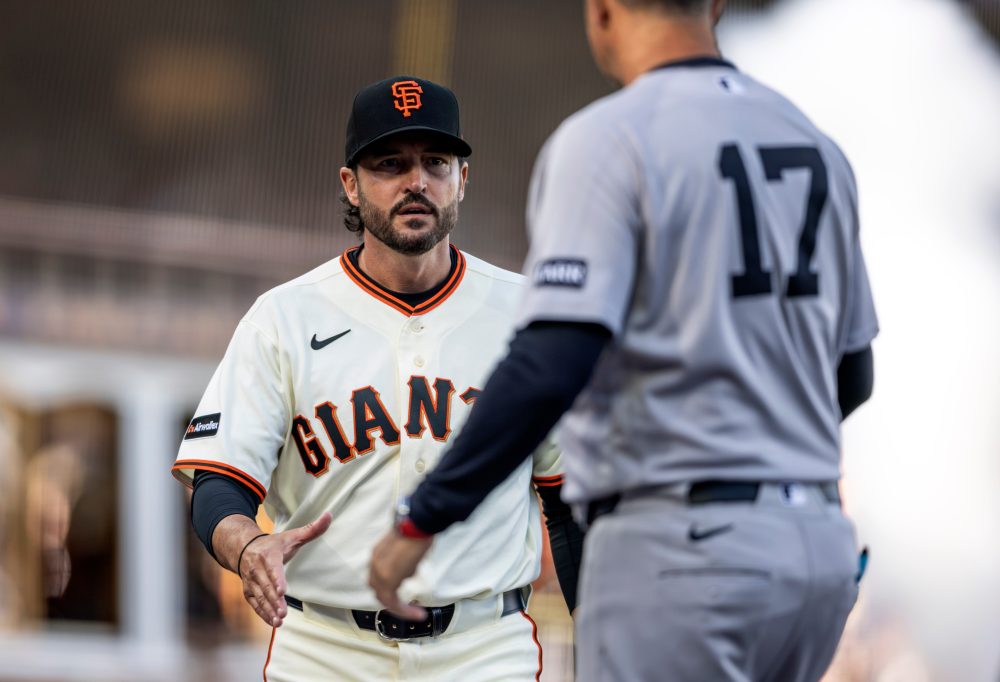
This shift explains how Tony Vitello became the San Francisco Giants manager without any prior professional baseball experience — making history as the first person to achieve this milestone. It also helps explain why Athletics first baseman Nick Kurtz earned AL Rookie of the Year honors in 2025 just one year after completing his standout college career at Wake Forest.
“The college game has definitely taken a bigger step toward the pro game — mainly because of the almighty dollar,” said Arizona State coach Willie Bloomquist, who spent 14 seasons in the major leagues.
“Essentially what’s happened, the Power 4 Conferences are basically the minor leagues.”
Athletics general manager David Forst — who chose Kurtz with the fourth overall selection in the 2024 draft — said the player’s rapid advancement through the farm system demonstrated how competitive college baseball has become. Kurtz required only 210 minor league plate appearances before excelling against MLB pitching, posting a .290 average with 36 home runs and 86 RBIs across 117 games in 2025.
“There’s no doubt that top-level college baseball is High-A or Double-A now. It’s really close,” Forst said. “I never would have imagined a player like Nick Kurtz coming to the big leagues for us 11 months after he was drafted.
“That was unthinkable when I first started doing this. The timeline is squashed because these guys are coming out of college so ready, so physically advanced. Some of them — frankly — don’t need the minor league at-bats they used to need.”
The improvement in college baseball stems largely from increased financial investment. Coaching compensation has skyrocketed over recent decades: LSU’s Jay Johnson leads the field earning more than $3 million annually while Mississippi State’s Brian O’Connor follows at $2.9 million.
While these represent the highest salaries, power conference coaches commonly earn over $1 million per year.
The top-paid MLB managers earn approximately $8 million per season, though premier assistants like pitching and hitting coaches typically receive six-figure salaries.
Name, Image, and Likeness compensation has also increased the financial appeal of college baseball, despite payments remaining below those for football and basketball players. Additionally, elite NCAA programs are investing heavily in technological resources.
“We have one of the better pitching labs on the West Coast,” Bloomquist said. “I think it would rival a lot of professional organizations. From a data standpoint, it’s all trickled down to the college level.”
Following his playing career, Bloomquist worked in the Arizona Diamondbacks’ front office before joining the Sun Devils. His pitching coach — Jeremy Accardo — brings 18 years of professional baseball experience as both player and coach.
Bloomquist explained that MLB organizations have grown more confident in allowing NCAA programs to develop professional prospects rather than risking draft picks on unproven 18-year-old high school graduates. He suggested this confidence likely contributed to MLB’s decision to eliminate 40 minor league affiliates in 2020.
During the 2025 MLB draft, 56 college players were chosen among the first 90 selections.
“These guys trust (college) programs,” Bloomquist said. “They say, ‘We’ll just watch them in college in three years at a Power 4 program, see how they development and then we’ll go get them.’”
Georgia baseball coach Wes Johnson represents another example of successful transitions between MLB and NCAA levels. He served as Minnesota Twins pitching coach for 3½ successful seasons from 2019 to 2022 before returning to college baseball. He contributed to developing 2025 NL Cy Young Award winner Paul Skenes while serving as LSU’s pitching coach before accepting the head coaching position with the Bulldogs.
Johnson acknowledged the undeniable similarities between college and professional baseball while noting important differences remain for players and coaches. The scheduling differences represent the most significant challenge.
College baseball’s compressed schedule makes each of the 56 regular-season games critically important. A three-game losing streak feels catastrophic. In professional baseball, such a streak represents a minor setback.
“With the Twins, we played 33 spring games, then played 162 in the season and then made the playoffs,” Johnson said. “It’s every day there. That’s the hardest challenge you have when you go from college to the big leagues. We won 101 games in 2019 (in the regular season). That means we only lost 61 games.
“But that’s the most I’ve ever lost in my life in one year.”
Bloomquist confirmed the scheduling differences while noting age as another consideration.
“There’s a different style in college than there is in professional baseball — to an extent that’s accurate,” Bloomquist said. “There’s an intensity in college, motivating 18 to 20 year olds, as opposed to guys who are making $20 million. Can you relate to those guys in pro ball?”
San Francisco Giants third baseman Matt Chapman, who played college baseball at Cal State Fullerton before becoming a five-time Gold Glove winner in the majors, wasn’t concerned about Vitello’s adjustment despite some differences — including more native Spanish speakers in professional baseball.
“Winning baseball looks the same,” Chapman said. “It’s pitching and defense, knowing how to run the bases and then managing personalities. He has a lot of experience with that.
“There will be a learning curve in some areas. You just can’t fully know how to run a Major League clubhouse unless you’ve been in one. But it’s not foreign to him. He’s a baseball guy.”