
Advertisements in New York featuring computer-generated people instead of real actors must now include clear disclosure labels or face state law violations, under new legislation that became effective Tuesday.
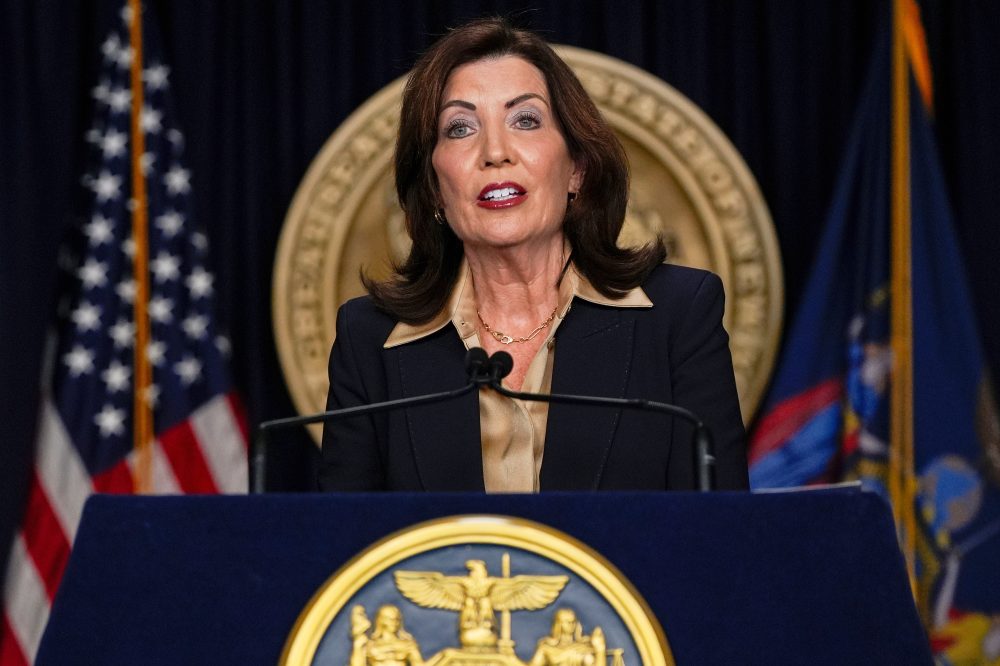
Gov. Kathy Hochul signed the legislation in December, with her administration describing it as groundbreaking nationwide legislation designed to increase transparency as AI-created performers become more common in media and digital marketing campaigns.
The state defines synthetic performers as “digitally-created media that appear as a real person,” with the requirements covering advertisements across all media formats.
“In New York, we are setting the rules of the road instead of letting AI run the show,” Hochul, a Democrat, said in a statement. The “simple, honest disclosure” required by the law “protects consumers, respects our creative workforce and keeps New York at the forefront of responsible innovation,” she said.
Advertisements failing to “conspicuously disclose” their use of synthetic performers face penalties starting at $1,000 for initial violations, escalating to $5,000 for subsequent infractions.
The legislation includes several exemptions, notably for advertisements promoting movies, television programs, streaming services, video games and similar entertainment featuring synthetic performers throughout the entire production. Audio-only advertisements and those using AI exclusively for language translation are also excluded.
During the legislative process last year, the American Association of Advertising Agencies along with multiple advertising industry groups voiced strong resistance to the measure.
The 4As, as the organization is better known, said in one blog post that it would hurt advertisers by “injecting compliance uncertainty into the advertising process, burdening brands (and their agencies) who advertise in New York and undermining creative and technological innovation.”
Other organizations, like the The New York State Broadcasters Association, said in public statements during the legislation’s journey to become law that they were relieved to see some of those carve outs that were created through amendments, but remained concerned about the broad definition of a synthetic performer.
SAG-AFTRA, the actors’ union, provided the strongest backing for the legislation, having recently approved a new agreement with studios and streaming services that they claim offers additional safeguards against synthetic performers.
This measure represents one of numerous state-level initiatives nationwide aimed at protecting employment opportunities for actual people or addressing potential privacy and security concerns related to artificial intelligence. Current state regulations include restrictions on deepfakes in certain situations, limitations on personal data collection, and enhanced corporate transparency requirements.
Shortly after Hochul approved the synthetic performer legislation in December, President Donald Trump issued an executive order discouraging states from implementing AI regulations. The directive stemmed from concerns that varying state rules might hinder AI company development and allow China to narrow the gap with U.S. artificial intelligence capabilities. Executive order critics contend it enables technology companies to function with minimal regulatory supervision.