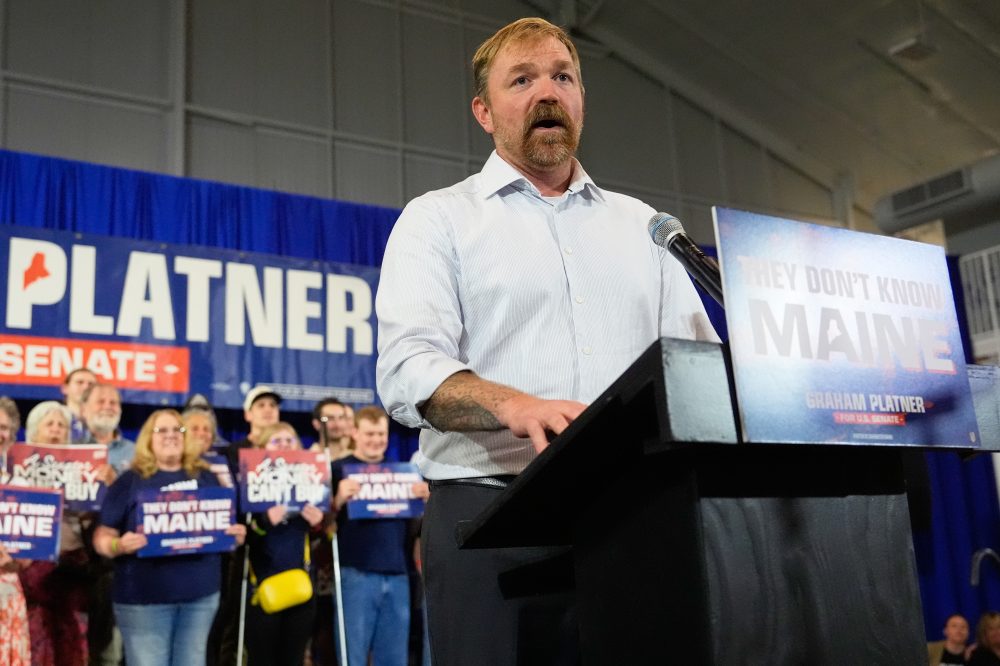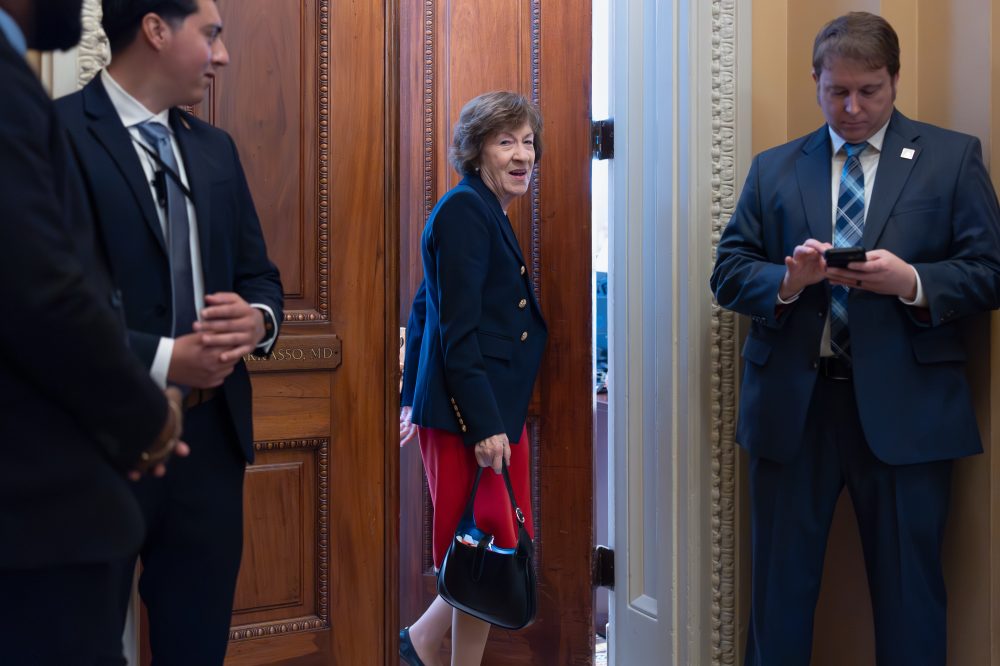

PORTLAND, Maine — Senator Susan Collins finds herself in a familiar position this election cycle — the Maine Republican is campaigning for reelection while Democrats rally behind a fresh face hoping to unseat her. Previously, it was state lawmaker Sara Gideon challenging her seat. Now, combat veteran and oyster farmer Graham Platner leads the Democratic charge.
However, Collins has consistently presented challenges for Democratic opponents throughout her career — even against candidates who don’t carry Platner’s controversies, including criticism regarding his relationships with women, provocative social media content, and a former tattoo associated with Nazi imagery. The incumbent seeks her sixth term armed with widespread name recognition, a record-setting streak of consecutive Senate votes, and decades of securing federal dollars for her home state.
Collins stands out as one of the few Republicans who can sometimes enhance her local standing by maintaining space between herself and President Donald Trump. She has mastered this careful balance even as Trump’s increasing influence over the party contributed to the electoral defeats of two fellow Republican senators.
Senators John Cornyn of Texas and Bill Cassidy of Louisiana fell in their primaries against Trump-backed challengers. Yet despite the president’s grievances with Collins, he chose not to actively oppose her campaign. Decades of experience have taught her when to align with the president for political benefit and when to demonstrate independence.
“She’s shown time and time again where her state’s electorate is. She understands what’s too far, she understands where she needs to be,” explained political consultant Matt Mackowiak, who worked for Cornyn’s unsuccessful reelection effort. Trump had endorsed Cornyn’s challenger, Texas Attorney General Ken Paxton.
Democrats require four seat flips to control the Senate following November’s elections and believe Trump’s declining approval numbers and the Iran conflict — along with resulting impacts on oil costs and the economy — might strengthen their prospects. Maine ranks among their primary targets, alongside Alaska, Ohio and North Carolina.
Platner aims to argue that Collins maintains closer ties to Trump than her independent image suggests — frequently highlighting how she supported his Supreme Court nominees, which contributed to the 2022 reversal of Roe v. Wade, the pivotal 1973 ruling that established abortion rights, among other significant matters.
“Susan Collins may have started her career decades ago in Washington with good intentions, but she has become just as spineless and corrupt as the establishment she now serves,” Platner declared at a victory celebration on Tuesday.
Platner’s supporters welcome potential change, according to John Keenan, of Sullivan, Maine.
“I think Maine has grown tired of the same old system,” he stated. “And putting youth into the campaign, with new instead of a rubber stamp, is very refreshing.”
While preparing to face Platner in November, Collins must remain cautious regarding Trump. The president has repeatedly criticized her for occasionally opposing him on certain matters.
Nevertheless, he has held back recently — particularly as Collins avoided drawing a serious primary opponent and easily secured her Republican nomination.
The White House declined comment. Political advisers close to Trump indicated the president recognizes the importance of Republicans retaining Congressional control after November, which means accommodating Collins. Trump seeks to prevent a Republican collapse similar to the 2018 “blue wave” midterms when Democrats captured the House and disrupted much of his final two years’ agenda.
“Senator Susan Collins represents the people of Maine first and foremost and has proven herself to be a dedicated public servant,” stated Republican National Committee spokesperson Kristen Cianci.
Collins spokesperson Blake Kernan noted the senator “has worked with five different Presidents throughout her Senate tenure, and has never agreed with any of them on every issue.”
“When she agrees with an effort, she will support it; when she disagrees, she does not hesitate to speak up for what she believes is the right outcome for Maine and for America,” Kernan added.
This approach failed other Republican senators.
Cornyn ranked among his party’s leading voices, advancing through leadership after entering the Senate in 2002. Paxton defeated him decisively in a runoff following Trump’s endorsement of the attorney general.
Serving since 2015, Cassidy voted to convict Trump during his post-January 6, 2021 Capitol siege impeachment trial. He lost his primary to Trump-endorsed state Rep. Julia Letlow.
Maine appears positioned for a more competitive November contest — demonstrated by Trump’s recent restraint in targeting Collins. This occurred despite her joining Democrats last week to block the nearly $1.8 billion fund the president sought to establish for allies he claims faced unfair law enforcement targeting.
“She’s always down in the polls and she survives,” Trump acknowledged when questioned about Collins during a New York Post interview last week.
Collins defeated Gideon, the Maine House speaker, by nearly 9 points in 2020, the same year Biden won the state by a comparable margin over Trump.
Mackowiak observed “there’s just no pathway to a MAGA senator from Maine.”
“It does appear that the Trump political operation is soberly analyzing the electoral environment in Maine and really kind of follows her lead as it relates to that state and that race, particularly this cycle,” he explained.
Chuck Ellis, a Republican from Westbrook who operates a digital marketing business, said Collins’ unwillingness to follow Trump completely can benefit her.
While acknowledging some “hard-line” voters might object, Ellis noted, “ultimately a lot of your conservatives, your Republicans, are people who are a bit more pragmatic.”
Following Collins’ opposition to the White House’s major tax cut and spending legislation last year, plus her vote against a proposal to recover $9 billion in foreign aid and public media funding, the president criticized her on social media.
“Republicans, when in doubt, vote the exact opposite of Senator Susan Collins,” he posted.
Then in January, Trump attacked the “stupidity” of Collins and four other Senate Republicans who joined Democrats to begin debate on limiting the president’s military authority in Venezuela.
She subsequently received a profanity-filled phone call from Trump.
Serving as chair of the influential Senate Appropriations Committee, Collins cast her 10,000th consecutive Senate vote last week, establishing a record.
“She has been able to do and show that ‘I am bringing money and resources from the federal government to Maine to help Maine,’” Ellis said.
The president likely won’t visit Maine before November despite traveling to other states with crucial Senate contests, including Iowa and Michigan. He might even personally campaign for Paxton.
Vice President JD Vance has visited Maine, where he promoted his anti-fraud task force. Collins skipped Vance’s Bangor speech last month where he acknowledged the senator’s separation from the Trump administration.
“If she was as partisan as I sometimes wish that she was,” Vance remarked, “she would not be a good fit for the people of Maine.”