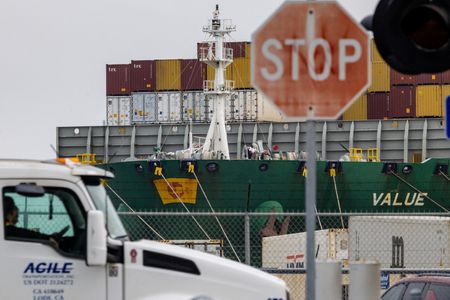
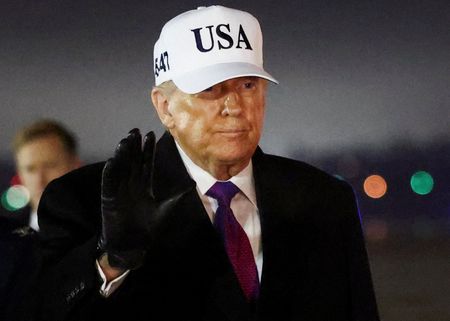
Companies across the nation are fielding increased offers from investors eager to purchase rights to potential tariff refunds following the U.S. Supreme Court’s recent determination that President Donald Trump’s emergency tariffs violated federal law.
While the nation’s highest court stopped short of mandating the return of approximately $175 billion collected by the government since February of last year, numerous businesses are now preparing for anticipated lengthy court fights to recover those payments.
In recent months, many corporations have chosen to minimize risk by transferring rights to some or all potential refunds to third-party investors, accepting immediate payments worth only a portion of the total amounts owed. Under these arrangements, companies retain the upfront cash while investors position themselves to collect any eventual government payouts.
Legal professionals working in this marketplace describe these transactions as “special situations” investments, which appeal to buyers because they operate independently of traditional market fluctuations.
Amy Pasacreta, an attorney with Orrick’s restructuring division, reported witnessing dramatically increased activity in this specialized market following the court’s decision, with trading prices climbing into the 40-50% range after previously operating at significantly lower levels.
Orrick began observing demand for refund claims shortly after the tariff implementation in April.
The Supreme Court case addressed two distinct emergency tariff categories: measures designed to reduce fentanyl imports and a wider array of ‘reciprocal’ tariffs. The fentanyl-related tariffs, which some experts believed had better chances of surviving legal challenges, previously commanded lower prices. According to Pasacreta, both categories now trade at similar levels since Friday’s ruling.
Prior to the court’s decision, investors were offering 16-17% for fentanyl tariff claims and 26-28% for reciprocal tariff claims.
“The reason that we’re not seeing higher (prices) is because there is still the uncertainty,” Pasacreta explained. “This administration has indicated that they’re going to fight the refunds.”
Mark Bissell, who leads vacuum manufacturer Bissell Inc, confirmed his company has received numerous inquiries since Friday regarding the sale of their refund rights, with quoted prices reaching 45%.
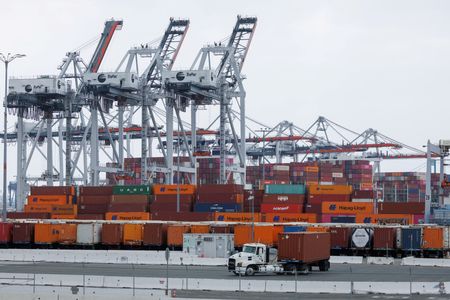
“Our name pops up, because we’re higher volume in (imported) containers,” he noted, “so we’re on a list a lot of people see.”
However, Bissell remains hesitant to sell, preferring to wait and determine whether his company might receive complete reimbursement from the Trump administration. “We spent last year thinking we wouldn’t get anything back, so if we get it back—that’s a bonus,” he stated.
Students from Delaware State University recently had the opportunity to explore the legal profession firsthand through a special visit to Richards, Layton & Finger, one of the region’s prominent law firms.
The educational experience allowed DSU students to witness actual legal operations and gain practical understanding of how the legal industry functions in a professional setting.
This type of real-world exposure helps bridge the gap between classroom learning and professional practice, giving students valuable insights into potential career paths in the legal field.
On Wednesday, Australia’s leading grocery retailer Woolworths announced interim earnings that surpassed analyst expectations, crediting strategic pricing initiatives aimed at cost-conscious consumers for the strong performance.
The company’s focus on strategic discount offerings successfully attracted shoppers seeking value, helping Woolworths establish itself as a preferred destination for families managing tight household budgets during uncertain economic times.
For the 27-week period ending January 4, Australia’s largest supermarket operator reported underlying net profit after tax climbed 16.4% to A$859 million ($606.28 million), up from A$739 million in the corresponding period last year.
Financial analysts surveyed by Visible Alpha had projected underlying net profit after tax of A$813.5 million for the reporting period.
Revenue from the company’s primary revenue generator, the Australian Food division, increased 3.6% to A$27.63 billion during the six-month period. This growth came as Woolworths expanded its Lower Shelf Price initiative to attract additional customers while implementing various shopping incentives, including enhanced customer rewards programs.
The supermarket chain announced an interim dividend payment of 45 Australian cents per share, representing an increase from 39 Australian cents distributed in the previous year.
Enterprise software company Workday experienced a significant stock decline Tuesday evening after announcing subscription revenue projections for fiscal 2027 that fell short of Wall Street’s expectations, as businesses continue to postpone major technology investments during uncertain economic times.
The company’s stock price dropped more than 8% during after-hours trading following the announcement.
Economic headwinds including elevated interest rates and an unstable economic environment have caused businesses to put off substantial technology spending decisions, creating challenges for software companies despite Workday’s expansion into artificial intelligence capabilities.
Chief Commercial Officer Rob Enslin explained during an analyst call following earnings results that “some net new large enterprise deals are taking longer to close.” He specifically mentioned delays in federal, state and local government sectors, as well as higher education, healthcare, and portions of the commercial marketplace.
Though these delays affected the completion of new contracts during the fourth quarter, Enslin noted that “most opportunities remain active in our pipeline, and a few have already closed in the first quarter.”
The California-based company projected yearly subscription revenue ranging from $9.93 billion to $9.95 billion, falling below the $10 billion average forecast from analysts tracked by LSEG data.
Chief Financial Officer Zane Rowe stated that while Workday maintains its medium-term subscription revenue growth objectives, the company is “prioritizing incremental investment in our agentic AI roadmap to capture a larger market opportunity.”
Adding to sector-wide concerns, software and technology service stocks declined globally after AI research company Anthropic unveiled new business-focused tools, raising investor worries that artificial intelligence automation might negatively impact some software companies’ revenue.
For the fourth quarter ending January 31, Workday reported total revenue of $2.53 billion, slightly exceeding analyst predictions of $2.52 billion.
The Pleasanton, California-headquartered company’s subscription revenue reached $2.36 billion during the quarter, meeting analyst expectations.
Electric vehicle manufacturer Lucid Motors announced Tuesday that production could increase by more than 50% in 2026, marking a deceleration from previous years’ expansion as the company grapples with persistent supply chain difficulties and manufacturing disruptions.
The luxury EV maker’s stock dropped 5% during after-hours trading following the release of fourth-quarter results that showed losses exceeding Wall Street expectations.
This year represents a pivotal moment for Lucid as the company increases manufacturing of its newly-introduced Gravity SUV while preparing to launch a mid-sized electric vehicle platform later in 2025, with pricing anticipated to begin below $50,000.
Industry analysts view the lower-priced model as essential for expanding Lucid’s customer base and determining the company’s future trajectory in the competitive luxury electric vehicle market.
CEO Marc Winterhoff acknowledged to Reuters that supply chain obstacles remain a significant challenge, explaining the company’s cautious approach to forecasting 25,000 to 27,000 vehicle deliveries this year, compared to 17,840 units produced in 2025.
“Supply chains, in particular long supply chains like we have, are always prone to surprises,” Winterhoff stated. “That is a learning from 2025. Let’s be prudent. Let’s make a plan that, whatever happens, so to speak, we can hit.”
The CEO noted that production projections do not account for potential opportunities created by competitor Tesla’s decision to discontinue its premium Model S sedans and Model X SUVs.
Beyond elevated tariffs on imported automotive components, Lucid has faced multiple manufacturing hurdles including semiconductor shortages, unreliable rare earth material supplies, and a September fire at an aluminum parts supplier.
These challenges, combined with commitments to Saudi Arabia, have prompted the company to begin production of its mid-sized vehicle at its Middle Eastern facility before bringing manufacturing to U.S. operations, according to Winterhoff.
Saudi Arabia previously agreed to purchase up to 100,000 vehicles from Lucid over a decade-long period.
While the company has addressed some production limitations, these issues contributed to fourth-quarter losses that surpassed analyst predictions, intensifying pressure to reduce operational expenses.
Last week, Lucid eliminated 12% of its domestic workforce as part of cost-cutting measures amid a difficult EV market environment following the September termination of the federal $7,500 tax credit for new electric vehicles.
Fourth-quarter revenue jumped 123% to $522.7 million, surpassing the analyst consensus estimate of $468 million compiled by LSEG.
However, the company recorded an adjusted loss of $3.08 per share, significantly higher than the projected loss of $2.62 per share.
To stimulate sales demand, Lucid introduced price reductions and promotional incentives on its luxury Air sedan models throughout the previous year, targeting consumers who reduced major purchases due to elevated interest rates.
The automaker is also concentrating on advancing its driver assistance technology and software capabilities, representing a potentially profitable sector where numerous manufacturers are competing to deliver innovative solutions.
Lucid established partnerships with Uber and autonomous driving company Nuro in the previous year, planning to launch a robotaxi service.
A major Australian technology company revealed Wednesday that it will eliminate approximately 2,000 positions during the next two years as part of a comprehensive shift toward artificial intelligence integration.
WiseTech Global, which specializes in logistics software solutions, announced the significant workforce reduction as the company transitions to incorporate AI technology throughout both its product offerings and internal business processes.
The job cuts represent a substantial restructuring effort for the Australian firm as it adapts to evolving technology trends in the software industry. The company indicated the changes will be implemented gradually over a 24-month period.
U.S. consumers who have been bearing the financial burden of tariffs through increased product prices should not hold their breath for reimbursement.
The reality is that American households, who ultimately absorbed the costs of these trade fees through higher retail prices, will not be seeing that money returned to them.
These tariff expenses, which were passed along to shoppers at checkout counters across the nation, represent a permanent cost that consumers have already paid without the prospect of future compensation.
Stock markets staged a recovery Tuesday as Wall Street shook off recent worries about artificial intelligence threatening jobs and businesses, while investors processed President Donald Trump’s unexpected tariff adjustments and awaited earnings from tech powerhouse Nvidia.
The market turnaround suggests recent panic over AI’s potential to disrupt industries may have been excessive, according to financial analysts reporting from Orlando, Florida.
Market watchers noted that while U.S. stock markets have underperformed compared to international counterparts, the narrative suggesting investors should abandon American assets may be misguided. Data indicates foreign investment in U.S. markets has reached record levels.
Asian markets led the charge with Taiwan and South Korea each climbing 2.5% to reach new highs, while Brazil’s Bovespa index also hit fresh peaks, approaching the 200,000-point milestone. Wall Street’s recovery was robust, with the S&P 500’s technical support level holding steady.
Technology stocks drove much of the gains, with nine out of eleven S&P 500 sectors posting increases. The Philadelphia semiconductor index closed at a record high, while major tech names saw significant jumps: AMD rose 9%, Intel gained 6%, Salesforce climbed 4%, and IBM advanced 2.7%. Consumer discretionary, industrial, and utility stocks also performed well, though healthcare and energy sectors declined.
The positive sentiment around AI technology improved after Anthropic, an artificial intelligence company, unveiled new business tools targeting sectors like investment banking and human resources. Companies that had been hammered by previous AI announcements recovered some ground, with Thomson Reuters surging 11.5% in its biggest single-day gain since 2008. However, the broader S&P 500 software and services index, which has dropped over 20% in recent weeks, managed only a modest 1% rebound.
Trump’s tariff policy created confusion throughout the trading session. Following last Friday’s Supreme Court decision blocking most of his proposed tariffs, the president signed an executive order implementing temporary 10% global tariffs. By Saturday, Trump announced plans to increase the rate to 15%, only to scale it back to 10% on Monday, while still considering the higher rate.
The policy uncertainty has left international officials scrambling, with representatives from Europe, Japan, and Britain expressing hope that trade agreements negotiated last year will remain intact. Trump may provide additional clarity during Tuesday evening’s State of the Union address to Congress.
Currency markets saw notable movement, with China’s yuan posting its strongest performance against the dollar this year. The Chinese currency extended its winning streak to eight consecutive trading sessions, marking its longest rally since April 2024. The last time the yuan rose for nine straight days was in September 2010, following the reopening of Chinese markets after the Lunar New Year holiday.
In other market movements, the dollar weakened against the Chinese yuan to nearly year-low levels, while the Japanese yen declined significantly among major currencies after comments from Prime Minister Takaichi. Bitcoin dropped below $63,000 before recovering later in the session.
Bond markets showed mixed results, with Treasury yields rising at the short end following a weak two-year note auction. The yield curve between two-year and ten-year bonds flattened for the tenth consecutive day, a pattern not observed in more than a decade. Meanwhile, Spain’s 30-year bond offering attracted record investor demand.
Commodity markets were mixed, with oil prices falling 1% on hopes for a U.S.-Iran diplomatic agreement, while gold declined 2%.
Looking ahead, investors will focus on Nvidia’s fourth-quarter earnings report after market close, which many consider a crucial test for the AI sector amid growing competitive concerns. Other key events include inflation data from Australia and the eurozone, interest rate decisions from Thailand, and speeches from multiple Federal Reserve officials.
The Arizona company behind TASER devices and police body cameras delivered stronger-than-expected fourth-quarter earnings on Tuesday, with Axon Enterprise surpassing Wall Street profit projections thanks to robust sales of security equipment and software solutions.
Investors responded positively to the news, pushing Axon’s stock price up 15% during after-hours trading sessions.
The company, widely recognized for manufacturing law enforcement equipment including TASER energy devices, officer-worn cameras, and digital evidence storage systems, has capitalized on increased corporate investment in executive protection and expanded federal spending on immigration enforcement initiatives.
Axon’s connected devices division, which represents the company’s largest revenue stream, experienced remarkable growth with fourth-quarter sales climbing 38% to approximately $454.2 million, compared to $330.2 million during the same period last year. This surge reflects heightened interest in the company’s product lineup, which includes the TASER 10, Axon Body 4 camera, anti-drone technology, virtual reality training systems, and fleet management solutions.
Despite the revenue growth, the connected devices segment saw its adjusted profit margins decline from 52.2% to 49.3%, impacted by international trade tariffs and changes in the product sales mix.
The company’s software and services division also demonstrated impressive performance, with quarterly revenue increasing 40% year-over-year to reach $342.5 million. This growth stemmed from new customer acquisitions and existing clients upgrading to premium software packages.
Looking ahead, Axon projects 2026 revenue will increase between 27% and 30% compared to the previous year.
The company reported adjusted earnings of $2.15 per share for the fourth quarter, significantly exceeding the $1.60 per share average forecast from analysts surveyed by LSEG.
Total quarterly revenue reached $796.7 million, surpassing analyst expectations of $755.2 million.
Latin American e-commerce leader MercadoLibre announced Tuesday that its quarterly earnings dropped 12.5%, falling below what financial experts had predicted, as the company invested heavily in credit services and shipping infrastructure. Despite the profit shortfall, the firm’s total revenue beat forecasts thanks to strong performance in Brazil and Mexico.
Following the earnings announcement, stock prices for the Uruguay-based company jumped up to 7% in after-hours trading before settling to approximately 2% gains. Earlier in the day, shares had already climbed 3% before the financial results were released.
The company, which operates both an online marketplace and the Mercado Pago financial technology platform throughout Latin America, recorded $559 million in net income during the fourth quarter of 2024. Wall Street analysts surveyed by LSEG had anticipated profits of $587 million.
Leandro Cuccioli, MercadoLibre’s senior vice president of investor relations, explained to Reuters that the earnings decrease resulted from reduced profit margins as the company chose to boost spending on long-term growth initiatives.
Cuccioli pointed to several key investment areas, including expanding credit card offerings that require higher financial reserves, broadening free shipping options, and growing direct-to-consumer sales operations, known in the industry as 1P format.
Total company revenue climbed approximately 45% compared to the same period last year, reaching $8.8 billion and surpassing analyst expectations of $8.5 billion. Cuccioli attributed this growth to a 35% increase in sales volume across Brazil and Mexico when accounting for currency fluctuations.
Operating income, measured as earnings before interest and taxes, increased roughly 8% to $889 million, coming close to analyst projections of $891 million. However, the operating margin decreased from 13.5% in the previous year to 10.1%.
Financial experts and investors continue to analyze how MercadoLibre’s current investment strategy affects immediate profitability, with many seeking indicators of when profit margins might rebound.
Regarding market potential, Cuccioli expressed optimism about online commerce growth in the company’s operating regions. “In soccer terms, we are still in minute 15 of the first half of the market development,” he stated.
The company’s lending portfolio expanded dramatically by approximately 90% year-over-year to $12.5 billion, while the delinquency rate for accounts 15-to-90 days overdue remained relatively stable at 7.6%, compared to 7.4% in the prior year. Payment processing volume in the acquiring business grew about 40%.
Regarding Venezuelan operations, which MercadoLibre separated from its main financial reporting in 2017, Cuccioli noted that conditions have “not changed much in the latest months.”
Following recent political developments in Venezuela, including the capture of President Nicolas Maduro by U.S. forces in January and President Donald Trump’s appointment of Delcy Rodriguez as interim president, Cuccioli acknowledged that Venezuela was previously a significant market for the company and could regain importance, though it currently has minimal impact on overall business operations.
Shares of First Solar took a significant hit in after-hours trading Monday, dropping nearly 14% following the company’s announcement of disappointing sales projections for the coming years.
The Arizona-headquartered firm, which holds the title as America’s largest solar panel manufacturer, issued a revenue forecast for 2026 that fell well short of Wall Street expectations. The company projected annual sales between $4.9 billion and $5.2 billion, while financial analysts had anticipated revenues of $6.12 billion.
Company officials attributed the cautious outlook to anticipated price increases for their solar products, which they expect will result from new tariffs imposed on internationally manufactured panels. This pricing pressure comes as the residential solar market continues to struggle with multiple headwinds.
The home solar sector has faced persistent challenges due to elevated borrowing costs and regulatory changes in California, the nation’s top solar market. Recent modifications to the state’s net metering policies have significantly reduced the financial incentives homeowners receive when they sell surplus electricity back to utility companies.
These market pressures are occurring against a backdrop of broader industry uncertainty as solar companies navigate potential policy shifts under President Donald Trump’s administration, particularly regarding trade regulations and energy sector priorities.
Despite the gloomy forecast, First Solar did report some positive fourth-quarter results. The company’s net sales reached $1.68 billion for the three months ending December 31, representing an 11.1% increase compared to the same period last year. This growth was driven primarily by higher sales volumes of solar modules during the quarter.
The company also posted stronger earnings per share, reporting net income of $4.84 per share for the fourth quarter, up from $3.65 per share in the previous year’s comparable period.
Warner Bros Discovery announced on Tuesday that it has evaluated Paramount Skydance’s updated acquisition offer and believes it could potentially represent a better deal than previous proposals.
The entertainment company revealed that the enhanced offer provides $31 cash per Warner Bros Discovery share, along with an additional daily fee of $0.25 per quarter that would begin after September 30.
The media giant’s assessment of the modified proposal suggests the deal has gained momentum as negotiations continue between the companies.
Stock prices for Thomson Reuters climbed over 11% on Tuesday following news that the company’s artificial intelligence legal assistant, CoCounsel, has reached one million users. The milestone helped ease investor concerns about competitive threats from rival AI technologies in the legal services sector.
Tuesday’s surge marked the company’s largest single-day percentage increase since 2009. The gains came on the same day Anthropic revealed that Thomson Reuters was among several companies utilizing its AI technology for product development.
Earlier this month, a new artificial intelligence tool from Anthropic that incorporates its Claude AI system into legal processes triggered widespread selling across software and services companies. The selloff wiped out $830 billion in market value over six trading sessions as investors worried the technology could reduce industry revenues. Despite Tuesday’s gains, Thomson Reuters stock remains down over 30% for the year due to that earlier decline.
“The legal AI market is maturing, and substance matters more than hype. Our fiduciary-grade AI strategy is driving real adoption — and we have the capital, content, and expertise to shape what comes next,” said Thomson Reuters President and CEO Steve Hasker in an email response regarding the stock movement.
The Toronto-headquartered company that owns Reuters News created CoCounsel following its $650 million acquisition of AI legal startup Casetext in 2023. The AI assistant serves as the primary engine behind CoCounsel Legal, which handles automated research, document analysis, and legal writing tasks for attorneys.
Company executives explained to Reuters following recent quarterly earnings that their legal products stand apart from general AI startups through proprietary intellectual property. This includes centuries of British legal documents and over 100 years of U.S. legal archives, much of which remains undigitized, unpublished, or unavailable to the public.
The Legal Professionals segment represents Thomson Reuters’ largest revenue source, generating approximately one-third of total company sales.
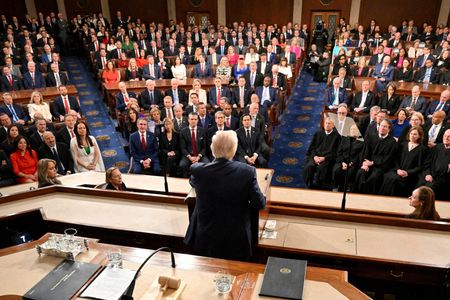
Financial markets are holding their breath as President Donald Trump prepares to deliver his State of the Union address Tuesday evening, with Wall Street analysts warning the speech could heighten investor concerns during an already turbulent period.
The address comes just days after the Supreme Court struck down Trump’s emergency tariff powers, leaving market watchers wondering what policy announcements might emerge that could shake up trading in areas ranging from international trade to housing costs to Middle East tensions.
Trump’s second presidential term has brought significant market swings as investors navigate the administration’s efforts to reshape America’s trade partnerships with other nations.
Though the S&P 500 has climbed 13% during the 400 days following Trump’s January 2025 swearing-in ceremony, the key market indicator has shown minimal growth throughout 2026, with U.S. markets trailing behind international exchanges while the dollar hovers near its weakest levels since 2022.
“Just as the winter storms in the Northeast have been adding to the piles of snow on the roads, I’m afraid that this speech is just going to add to the levels of anxiety in the market,” said Sam Stovall, chief investment strategist at CFRA. This year, he adds, the crowded policy agenda “makes everything a little less predictable.”
While presidential State of the Union addresses typically have minimal influence on financial markets, according to Stovall and fellow market experts, since they usually focus on highlighting accomplishments and outlining broad policy goals, they warn Trump might discuss anything from military action against Iran to more aggressive trade tariffs than previously announced.
Michael Rosen, chief investment officer at Angeles Investments, pointed to numerous agenda items that could rattle financial markets if the president addresses them, spanning from geopolitical concerns like Iran—where any aggressive stance could drive oil prices significantly higher—to Federal Reserve policy changes.
White House press secretary Karoline Leavitt told Reuters the president intends to highlight his administration’s successes during the speech while outlining “an ambitious agenda to continue bringing the American Dream back for working people.”
COST OF LIVING CONCERNS TAKE CENTER STAGE
Market observers anticipate affordability issues will feature prominently in the address, particularly as November’s midterm congressional races approach and cost-of-living concerns remain top voter priorities. Trump has previously declared success in fighting inflation while proposing various solutions for expensive housing costs.
The president is also anticipated to discuss plans for implementing “Trump accounts”—government-backed investment programs for newborns—as part of his affordability initiative.
“He could propose other ideas around mortgage affordability that might impact the bond market,” said Tom Graff, chief investment officer at Facet. “There is also the proposed 10% cap on credit card interest rates. There could be new details around that, which is definitely being closely watched by Wall Street.”
Rosen warned that any hints about sending stimulus payments to taxpayers before the midterm elections would spark concerns about increased government debt and drive bond yields upward.
Even if Trump uses the platform primarily to celebrate achievements, as Monday’s client analysis from Beacon Policy Advisors suggested, investors remain skeptical this approach would calm market nerves, particularly if combined with continued reliance on executive orders for policy implementation, as Beacon’s researchers predicted.
“That’s been the recipe for so much chaos, confusion and uncertainty in the last year that the idea of more of that in 2026 would spook a lot of folks,” said Stovall.
A major shake-up could be brewing in the digital payments industry as private company Stripe reportedly explores acquiring PayPal or select parts of the established payment platform, according to a Bloomberg News report released Tuesday.
Sources with knowledge of the discussions told Bloomberg that Stripe, one of the payment processing sector’s highest-valued private companies, has shown initial interest in potentially purchasing the digital payment veteran or specific assets from its portfolio.
The market responded immediately to the acquisition rumors, with PayPal’s stock price climbing 7% during late-afternoon trading sessions. Current market data from LSEG shows PayPal maintains a valuation exceeding $40 billion.
When contacted for comment, PayPal representatives did not provide an immediate response to inquiries, while Stripe officials chose not to comment on the potential deal. The report has not been independently confirmed through additional sources.
Casino operator Wynn Resorts confirmed Tuesday that cybercriminals successfully accessed employee information in a data security incident.
The company’s chief communications officer, Michael Weaver, disclosed in a Tuesday email that Wynn discovered “an unauthorized third party acquired certain employee data.” The casino giant has launched a full investigation and enlisted outside cybersecurity specialists to assist.
According to Weaver, the cybercriminals have claimed “that the stolen data has been deleted.” He added, “We are monitoring and to date have not seen any evidence that the data has been published or otherwise misused.”
Weaver emphasized that the security incident “has had no impact on our guest experience, our operations or our physical properties, which are all fully operational and open for business.”
The company declined to reveal how many employees had their information compromised or whether any ransom payment was made to the attackers.
A member of the hacking organization told Reuters during an online conversation Friday that they were seeking 22.34 bitcoin, valued at approximately $1.5 million. When contacted Tuesday, the group’s representative refused to discuss any potential payment but confirmed the data had been erased.
SambaNova Systems announced Tuesday it has secured $350 million in new investment funding while forming a strategic alliance with Intel, positioning the company to take advantage of growing market demand for specialized computer chips that power artificial intelligence systems.
The chips in question, known as inference processors, operate AI software models and enable instant decision-making capabilities. These components have become a hot commodity among investors as technology companies search for alternatives to Nvidia’s dominant position in the market, seeking hardware that delivers superior speed and efficiency.
Vista Equity Partners and Cambium Capital spearheaded the investment round, with participation from Intel Capital, the chip giant’s venture arm, SambaNova confirmed Tuesday. The announcement validates an exclusive Reuters report from earlier this month.
The new capital will support the rollout of SambaNova’s latest SN50 AI processor, expand its SambaCloud service platform, and strengthen connections with business software systems. SoftBank Corp has committed to becoming the inaugural customer for the SN50 chip, implementing it across AI data facilities in Japan.
The collaboration between SambaNova and Intel includes a multi-year contract to provide affordable AI inference technology to companies built around artificial intelligence, adding to Intel’s current data center graphics processing commitments.
This investment represents an unusual move for Vista, which typically concentrates on enterprise software companies rather than hardware ventures.
The funding announcement follows unsuccessful merger discussions between SambaNova and Intel that ultimately broke down. Intel’s CEO Lip-Bu Tan, who also chairs SambaNova’s board, had previously explored purchasing the startup for approximately $1.6 billion, including outstanding debt obligations, according to Reuters reporting.
Mining corporation Newmont Corporation has announced plans for a substantial $800 million investment in the Cerro Negro gold mining operation located in Argentina, according to the country’s Economy Minister Luis Caputo on Tuesday.
The significant financial commitment will fund the revival and expansion of the Cerro Negro Expansion 1 project, known as CNE1, which is designed to keep the mining facility running past 2035.
In a social media post on X, Caputo explained the investment’s broader goals, stating: “This investment aims to strengthen the company’s operational safety, boost employment, and promote regional development.”
Three major corporations have joined a rapidly expanding legal battle to reclaim tariff payments made during former President Donald Trump’s trade policies, following a Supreme Court decision that declared those duties illegal.
Beauty products giant L’Oreal, vacuum cleaner company Dyson, and contact lens manufacturer Bausch + Lomb submitted their lawsuits Monday to the U.S. Court of International Trade. Their legal filings came just days after the nation’s highest court determined Trump exceeded his presidential powers when implementing emergency tariffs.
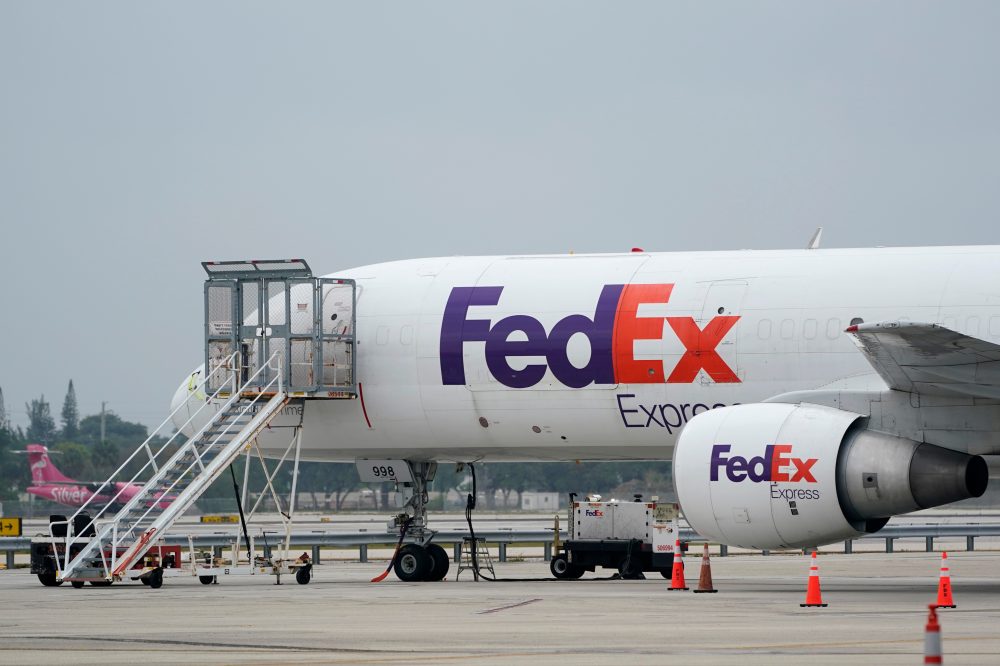
These companies join an already substantial group of businesses seeking refunds, including shipping giant FedEx and beauty brand Sol de Janeiro, who also filed their cases this week. Court records reveal that more than 1,400 importing companies, including warehouse retailer Costco and tire manufacturer Goodyear, have already initiated similar legal proceedings.
Trade attorneys anticipate a flood of additional lawsuits as businesses attempt to recover what could amount to billions in tariff payments. However, the refund process must still be determined by lower courts, and final resolutions may require months or even years to complete.
According to economists from the Penn Wharton Budget Model, as much as $175 billion in collected U.S. tariffs could potentially be returned to companies. This follows Friday’s 6-3 Supreme Court decision ruling that Trump exceeded his authority by using the International Emergency Economic Powers Act, typically reserved for sanctions, to impose import duties.
The current group of companies filing suits represents just a small portion of businesses that may qualify for refunds.
L’Oreal’s lawsuit was submitted through L’Oreal Travel Retail Americas, the company’s division that operates in airports and travel-related retail locations.
All four companies – L’Oreal, Dyson, Bausch + Lomb, and Sol de Janeiro – stated in their legal documents that they served as official importers for products affected by the emergency tariff measures. L’Oreal has not disclosed the specific refund amount they are seeking.
The companies have not yet provided responses to media inquiries. Following the pattern of other similar cases, their lawsuits name U.S. Customs and Border Protection, agency commissioner Rodney Scott, and the United States government as defendants. Neither CBP nor White House officials have responded to requests for comment.
The parent company of Spirit Airlines announced it anticipates completing its Chapter 11 bankruptcy proceedings by late spring or early summer, following a preliminary agreement with lenders and secured creditors that provides necessary support to complete its restructuring process.
This initial agreement will assist Spirit in finalizing modifications to its aircraft fleet, flight routes, and operational expenses as the company works toward becoming what it calls “a new Spirit” — a more compact and efficient airline that continues to prioritize affordable ticket prices while adding enhanced options such as premium economy seating and an upgraded first-class experience with additional legroom.
“Spirit will emerge as a strong, leaner competitor that is positioned to profitably deliver the value American consumers expect at a price they want to pay,” CEO Dave Davis stated.
The discount airline entered bankruptcy protection for the second time in August, just months after completing a previous Chapter 11 reorganization. Davis explained at that time that the airline’s initial bankruptcy filing concentrated on debt reduction and capital raising, but after completing that process last March, it became apparent that additional restructuring work was necessary and more resources were available to better prepare Spirit for future success.
The Florida-based company quickly announced alongside news of its second bankruptcy filing within twelve months that it would halt operations in approximately a dozen American cities and furlough 1,800 flight attendants. The carrier had also implemented furloughs and workforce reductions prior to its initial bankruptcy filing.
Budget airlines such as Spirit face increasing competition from major carriers that have launched their own economical fare options.
Recognized for its distinctive yellow aircraft and basic service model, Spirit has experienced significant challenges since the COVID-19 pandemic due to increasing operational expenses and growing debt obligations. When the airline filed for Chapter 11 protection for the first time in November 2024, Spirit had accumulated losses exceeding $2.5 billion since early 2020.
An artificial intelligence company focused on accounting services has successfully secured $100 million in new investment funding, bringing the startup’s total valuation to $1.15 billion.
The technology firm Basis completed its Series B funding round with backing from venture capital company Accel, along with investments from GV (previously Google Ventures), former Goldman Sachs CEO Lloyd Blankfein, and existing supporter Khosla Ventures.
The company operates an artificial intelligence platform specifically designed for accounting professionals, with systems that adapt to individual client requirements and handle multi-step financial tasks without human intervention. According to company officials, Basis currently provides services to approximately seven of the nation’s top 25 accounting firms.
Investment dollars flowing into AI-related companies have surged dramatically in recent years, with artificial intelligence startups claiming an increasingly larger portion of worldwide investment activity as financial backers anticipate the technology will revolutionize multiple industries.
So-called “agentic AI” technology, which can independently plan, make decisions and take action rather than merely responding to user commands, has emerged as one of the most attractive investment opportunities for venture capital firms targeting professional service sectors.
“Agent-native operations are pushing startups toward higher output per employee, and in some cases smaller teams; the cost impact can be significant early on and could, at scale, mean more competitive market dynamics,” said Michael Ashley Schulman, partner and CIO at Running Point Capital Advisors.
Company representatives say their platform helps solve the accounting industry’s persistent staffing challenges, as the field has faced ongoing difficulties recruiting and keeping qualified workers in recent years.
Investment management company Neuberger Berman is investigating ways to expand its insurance business operations, according to individuals with knowledge of the situation, as financial firms continue pursuing insurance-related opportunities for additional income and improved investment returns.
The financial services company is evaluating various approaches, including establishing a new division that would enable it to purchase life insurance assets, the sources revealed. However, they emphasized that these discussions remain in early stages with no certainty that Neuberger will move forward with such an initiative.
The sources requested anonymity when discussing these private business conversations.
When contacted for comment, Neuberger representatives declined to provide a statement.
Acquiring life insurance policies and related financial products like annuities has become an increasingly popular strategy among asset management companies in recent years. This approach allows money managers to collect fees for overseeing the underlying insurance investments while also achieving better returns by incorporating these assets into their broader investment portfolios.
With $563 billion in managed assets as of the end of 2025, Neuberger has extensive experience working with insurance-related investments, primarily serving insurance company customers.
The company’s insurance solutions division has experienced significant expansion recently, managing $98 billion in assets by December’s end, representing growth from $86 billion at the conclusion of September, company website data shows. This growth coincides with insurance companies’ increasing demand for diverse financial products, including specialized areas like asset-based financing and private credit investments.
Earlier this month, the New York-headquartered Neuberger revealed its agreement to acquire MIO Partners, the investment management arm of consulting giant McKinsey & Company. MIO Partners oversees $26 billion in investments for current and former McKinsey employees.
Privacy regulators in Italy announced Tuesday they have prohibited Amazon Italia Logistica from accessing personal information belonging to 1,800 employees at the company’s distribution center in Passo Corese, located northeast of Rome.
The logistics division must immediately cease collecting data through four surveillance cameras positioned near restroom facilities and employee break rooms at the warehouse, according to the regulatory agency’s announcement.
Amazon has not yet responded to requests for comment regarding the decision.
The collected information, which multiple supervisors could access, contained details about employees’ health issues, strike participation, union involvement, and private family matters. The privacy authority determined this data collection violated regulations prohibiting employers from gathering information unrelated to evaluating job performance capabilities.
The prohibition applies to information the online retail giant collected during active employment and kept on file for as long as 10 years after employees departed the company, regulators noted.
The oversight agency conducted on-site inspections at the Passo Corese location from February 9 through 12, with their investigation ongoing to identify additional possible rule violations.
NEW YORK – Wall Street analysts anticipate the S&P 500 will climb roughly 10% from current levels through the remainder of 2026, fueled by robust corporate profits and consistent economic expansion, even as concerns linger over President Trump’s trade approach and artificial intelligence market disruption, a new Reuters survey reveals.
Financial professionals surveyed expect the benchmark index to reach approximately 7,500 by December’s end, representing a 9.7% increase from Monday’s closing price of 6,837.75. The projection comes from polling 44 market strategists, analysts and investment managers over the past week.
This latest prediction exceeds the target established in Reuters’ November survey.
Should the S&P 500 finish 2026 in positive territory, it would represent the fourth consecutive year of market advances.
MARKET STRENGTH EVIDENT
Sameer Samana, senior global market strategist at Wells Fargo Investment Institute, explained the optimistic outlook: “It’s very difficult right now to point to where there’s a lot of weakness.” Wells Fargo’s year-end target of 7,500 reflects positive expectations for American corporate earnings and economic performance, Samana noted.
However, Samana identified potential challenges, including “lingering concern around inflation, and what that means for the Fed.”
The Federal Reserve maintained current interest rate levels last month, pointing to reduced threats to both price stability and job markets. Market participants have been anticipating at least a quarter-point rate reduction by mid-year.
When asked about potential market corrections, nine out of 13 survey participants indicated an S&P 500 pullback within the next three months appears probable.
Marc Dizard, chief investment officer at Huntington Wealth Management, characterized such a correction as “healthy,” while maintaining his year-end forecast of 7,650, approximately 12% above present levels.
Current market valuation shows the S&P 500 trading at 21.6 times forward earnings, down from 22.5 at 2026’s start, according to LSEG data.
TECHNOLOGY SECTOR UNCERTAINTY
Following a robust 2025 that delivered roughly 16% gains for the S&P 500, markets have shown mixed performance during 2026’s opening months. Investors have rapidly sold shares in companies perceived as vulnerable to artificial intelligence disruption, with software stocks declining approximately 23% since year-end.
Robert Pavlik, senior portfolio manager at Dakota Wealth Management in Fairfield, Connecticut, expects AI-related equities to be “remaining out of favor for the majority of the year.” However, he added, “that out-of-favor view will eventually lead participants back to the ‘fold’ as investors start to see these AI names as having gotten ‘cheaper.’”
Despite current headwinds, technology companies are projected to lead profit growth, with analysts forecasting 33% earnings expansion in 2026. Overall S&P 500 earnings growth is anticipated at 14.8% compared to 14.4% in 2025, LSEG data shows.
Anthony Saglimbene, chief market strategist at Ameriprise Financial in Troy, Michigan, noted: “Overall, technology should be a profitable sector and that offers some support even though there’s some near-term volatility.”
Market professionals also pointed to uncertainty surrounding Trump’s recent trade policy announcements.
Last Friday, the Supreme Court determined Trump exceeded presidential powers by implementing reciprocal tariffs under emergency economic legislation. Subsequently, Trump established a 10% levy on all foreign imports, threatening to increase it to 15%. This tariff remains temporary, requiring Congressional authorization for extension beyond 150 days.
Survey participants additionally highlighted U.S.-Iran tensions as a potential risk factor that could drive oil prices higher.
The poll projects the Dow Jones Industrial Average will conclude the year at 52,000. The Dow finished Monday’s session at 48,804.06.
Technology stocks experienced a welcome rebound Tuesday as artificial intelligence company Anthropic revealed new collaborative projects that helped calm investor nerves in a sector recently battered by automation concerns.
The AI startup announced development of specialized tools, referred to as “plug-ins,” created alongside business partners to assist with financial services, human resources, and investment tasks such as transaction reviews, investment analysis, and creating hiring materials that match company branding standards.
Companies working with Anthropic saw stock gains ranging from 0.4% to 5.3%, including LSEG, FactSet, Salesforce’s Slack platform, and DocuSign.
Broader technology indices also posted solid increases, with the S&P 500 software and services sector advancing 1.4% while the iShares Expanded Tech-Software Sector ETF surged 2.4%.
The software sector had reached its lowest point in 10 months during Monday’s trading after research firm Citrini presented a forecast suggesting unemployment could climb to 10.2% by 2028 due to widespread job cuts as artificial intelligence replaces software and delivery workers.
“Software stocks and the IGV particularly are just massively oversold. So any incremental news that we’re getting about more disruptions is like getting to a point where how much is priced in already,” explained Dennis Dick, chief market strategist at Stock Trader Network.
“Some of this disruption is not imminent and a lot of this is probably years out yet. The market’s telling us that now.”
A sustained selloff earlier this month eliminated approximately $1 trillion in Wall Street market capitalization in what analysts termed ‘Software-mageddon,’ affecting technology and logistics firms across the United States, Europe, and India.
IBM shares recovered 3.5% Tuesday after dropping significantly Monday when Anthropic revealed its Claude Code system could update older programming languages used in IBM’s infrastructure, causing the company’s steepest single-day decline in over 25 years.
Tax software company Intuit rose 2.8% while artificial intelligence solutions firm Intapp jumped 7.1% following their separate partnership announcements with Anthropic on Tuesday.
Canadian aviation officials have given their stamp of approval to Gulfstream’s G700 and G800 business aircraft, following weeks of pressure from President Donald Trump who threatened economic retaliation over the jets’ regulatory status.
Records from Transport Canada’s database indicate the American manufacturer’s newest private aircraft received certification on Monday, approximately one week after regulators cleared two earlier Gulfstream variants.
Marie-Justine Torres, speaking for Canada’s transportation department, verified on Tuesday that Transport Canada had issued the certification.
Last month, Trump issued warnings that he would revoke certification and impose duties on all aircraft manufactured in Canada if the government failed to authorize Gulfstream business jets.
Transport Canada’s approval proceeded even though the U.S. Federal Aviation Administration has raised concerns about ice removal systems, granting only conditional approval to the G700 and G800 models in 2024.
According to the FAA, General Dynamics-owned Gulfstream must demonstrate by year’s end that both aircraft models operate “properly … where ice may form in the fuel system.”
In late January, Trump specifically targeted Bombardier Inc. with threats to ban Canadian-manufactured aircraft and impose a 50% duty, representing another chapter in escalating commercial disputes between the neighboring countries.
The president stated he was responding to Canada’s refusal to certify aircraft from Gulfstream Aerospace, headquartered in Savannah, Georgia.
Trump indicated the United States would reciprocate by withdrawing certification for all Canadian aircraft, including those produced by the country’s premier aircraft manufacturer, Bombardier.
“If, for any reason, this situation is not immediately corrected, I am going to charge Canada a 50% Tariff on any and all Aircraft sold into the United States of America,” Trump said in his post.
The two companies compete directly in the luxury aircraft market, with Bombardier’s Global aircraft line vying for customers against Gulfstream’s most recent offerings.
John Gradek, an aviation management instructor at McGill University, noted that aircraft certification focuses on safety considerations and using decertification as a trade weapon would be without precedent.
European Union officials are bracing for months of trade negotiations with the United States following President Donald Trump’s implementation of new import fees that could jeopardize a trade agreement reached between the two regions last year.
European Trade Commissioner Maros Sefcovic addressed the European Parliament on Tuesday, explaining that the bloc is entering what he called a “transitional period” as both sides work to resolve issues stemming from Trump’s recent “import surcharge” policy.
Sefcovic revealed that his American counterparts, including Trade Representative Jamieson Greer and Commerce Secretary Howard Lutnick, have assured him they remain committed to honoring last year’s trade pact.
“Of course, what is now ahead of us, this is the transitional period where they are figuring out how to deal with this really landmark court ruling and we are talking every day,” Sefcovic explained to lawmakers. He noted that the surcharge could remain active for as long as 150 days, creating a July 24 target date for reaching a resolution.
“When I was talking to my counterparts yesterday, today, they believe that it will happen even in a shorter period of time, three, four months,” he added.
The United States began enforcing a temporary 10% surcharge on Tuesday for all products not specifically exempted, following a Supreme Court decision that overturned Trump’s previous global tariff structure. Trump announced over the weekend that he plans to raise this rate to 15%.
During his parliamentary testimony, Sefcovic encouraged the trade committee to move forward with a March vote on eliminating EU import duties, despite lawmakers postponing their originally scheduled vote. The proposal would still require additional negotiations between legislators and EU member governments before reaching a final assembly vote.
Several European lawmakers have expressed concerns that the trade arrangement favors the United States unfairly. Despite these reservations, many appeared ready to support the deal with certain conditions, including an 18-month expiration clause. They have also criticized a separate 50% American tariff implemented in August targeting steel and aluminum components in over 400 products, including wind turbines and motorcycles, arguing it undermines the July agreement.
“I got reassurances from U.S. colleagues that they know that this is a big problem for us and that they’re looking into this matter, and hopefully we will be having better news in that regard rather soon,” Sefcovic stated.
Under the current trade deal, most European goods face a 15% U.S. tariff rate, while the EU agreed to eliminate import duties on numerous American products.
If Trump’s new surcharge takes precedence over the existing agreement, some of Europe’s duty-free exemptions could be eliminated. The additional tariffs might also stack on top of existing “most-favoured-nation” U.S. duties, unlike the current EU-U.S. arrangement. For certain cheese products, the 10% surcharge could push total tariffs to approximately 25%.
California’s top prosecutor is asking a state court to immediately halt what officials describe as Amazon’s systematic effort to drive up consumer prices by intimidating sellers into avoiding cheaper pricing on rival platforms.
Attorney General Rob Bonta filed the request for a preliminary injunction on Tuesday as part of his ongoing antitrust case against the retail giant, which has been in litigation for three and a half years. The legal action also aims to recover profits allegedly obtained through illegal practices.
In court documents filed with the California Superior Court in San Francisco, Bonta outlined the state’s position: “Amazon’s goal is to insulate itself from price competition by preventing lower retail prices in the market. Amazon tells vendors what prices it wants to see to maintain its own profitability.”
According to the attorney general’s office, investigators have documented numerous instances where Amazon worked with competitors and merchants to coordinate pricing strategies designed to prevent the company from being undersold on platforms like eBay, Target, and Walmart.
The state alleges that Amazon and its rivals frequently collaborated through merchant intermediaries to either increase prices or temporarily remove products from availability, effectively eliminating the need for competitive price-matching policies.
Bonta’s filing claims that merchants who refused to comply with Amazon’s pricing demands faced severe consequences, including losing access to the platform’s crucial “Buy Box” feature. This tool, which allows customers to directly add items to their cart or make immediate purchases, generates the overwhelming majority of sales activity on Amazon’s marketplace.
“We welcome companies that succeed by offering better prices and better service,” Bonta stated. “What we have here is a greedy, behemoth corporation intentionally increasing prices in the marketplace to get richer and richer off the backs of consumers.”
If granted, the injunction would force Amazon to cease its alleged anti-competitive practices during the ongoing legal proceedings. Additionally, a court-appointed monitor would be assigned to ensure the company’s compliance with any restrictions.
Amazon has pushed back against the allegations, arguing in legal filings that its merchant agreements are “procompetitive,” legally sound, and standard practice within the industry. The company maintains these arrangements actually benefit shoppers by providing better product variety, proper inventory management, and competitive pricing.
Technology stocks bounced back Tuesday following artificial intelligence company Anthropic’s announcement of 10 new business applications, providing some relief after weeks of sharp declines in traditional software shares.
The San Francisco AI startup revealed its expanded capabilities now include tools for investment banking deal reviews, wealth management portfolio analysis, and human resources functions like creating employee materials that match company branding and policies.
MARKET RESPONSE:
The S&P 500 gained 0.6% while the Nasdaq climbed 1%, driven by technology sector strength. Salesforce jumped 3.4%, ranking among the Dow’s top performers for the day.
The S&P 500 software and services sector recovered 0.5%, though it remains down 23.5% year-to-date as companies face concerns about AI disruption.
ANALYST PERSPECTIVES:
ROBERT PAVLIK, SENIOR PORTFOLIO MANAGER, DAKOTA WEALTH, FAIRFIELD, CONNECTICUT:
“Anthropic’s been busy with announcements that their product is going to do all these new and sort of wonderful things. It’s still early in the process and certainly acceptance and the application of these tools is probably still a ways away. I can see how parts of these products would be welcomed by corporations trying to reduce overhead and costs, if they work.
“But we know from experience that you definitely need human intervention, otherwise problems develop. I don’t think that people anticipate AI will taking over for real humans and real tasks.
Regarding labor market disruption: “I think it’s still too early to tell. I don’t think adaptation or implementation of these AI products is that fully done yet. We’re still a ways away from it being fully implemented in the actual workforce.”
KEN POLCARI, PARTNER AND CHIEF MARKET STRATEGIST AT SLATESTONE WEALTH IN JUPITER, FLORIDA:
“Investment banking – that got hit a couple of weeks ago when they did the legal and financial services, so that was a known. Yesterday’s reaction was so overdone that it can’t help but bounce a little bit. I don’t think it’s going to hold. I think it’s going to continue to weaken a little bit. The opening is just a reflection of the disaster that took place yesterday. I think it probably settles in and then trades lower again. Not like yesterday, but I think it churns lower.
“There’s some people getting fatigued. I also think there are some names that have gotten absolutely clobbered that are actually looking like opportunities. Even though they’re down, and even though it’s an AI story, and even though it’s blah, blah, blah, everyone’s talking negative, it does create an opportunity where there’s some value in these stocks that have gotten crushed.
“Some of it is that ‘shoot first, ask questions later’ mentality all driven by algorithms. And then like anything, the pendulum swings too far to the left and it swings too far to the right.
“I’m not saying that AI is not going to disrupt the world. It clearly is. And it will continue to disrupt the world, but I don’t think it’s the end of the world. Like every industrial revolution, there’ll be anxiety going through it, but then when it comes out the other side, there will be new opportunities. We don’t know yet what they are. Some opportunities, they won’t exist anymore.
“I’m not in that camp that’s lighting my hair on fire. I’m in a camp that as long as you remain relevant and change with it and keep yourself up to date and educated, then you just kind of move along.”
MIAMI (AP) — Lesley VanNess attended the South Beach Wine & Food Festival for almost a decade straight, drawn to the oceanside celebration where celebrities, spirits, and cuisine attracted thousands willing to spend hundreds or thousands of dollars for admission.
The appeal centered on exclusive opportunities to sample food and chat with stars like Rachael Ray and Bobby Flay — personalities she could otherwise only watch through Food Network programming.
“I’d get the Food Network Magazine and there would be advertisements for it. I’m like, ‘Oh my god! You could go to that? Go to these great events and meet these celebrity chefs?’,” VanNess, a 44-year-old former Iowa restaurant owner, explained. “I’m in!”
This occurred during the golden age of culinary festivals, roughly a ten-year period beginning around 2010 when similar gatherings sprouted nationwide, establishing a touring network for top-tier chefs and aspiring culinary personalities.
Social media platforms then emerged as game-changers, breaking down traditional boundaries between admirers and food celebrities. Attendees like VanNess discovered they could skip crowding into massive pavilions hoping for brief conversations with Flay and instead send direct messages.
Even better, they could follow online food discussions to potentially identify emerging talents — the next Ray or Flay — earning cultural credibility in the process.
VanNess stopped attending South Beach events by 2020 at the latest. “I’d rather see them on social media or go to their restaurant,” she explained.
This past weekend marked the South Beach Wine & Food Festival’s 25th anniversary, establishing its position among veteran culinary gatherings alongside the New York City Wine & Food Festival and Colorado’s Food & Wine Classic in Aspen. Reports indicate all three continue performing well, though numerous smaller festivals have vanished due to pandemic impacts, declining attendance, rising operational expenses, and waning chef participation.
This raises questions about food festivals’ continued importance.
“South Beach and New York, they fill a niche and I can see them going on forever. But food events and food festivals are going in a whole other direction,” explained Mike Thelin, co-founder of the discontinued Oregon gathering Feast Portland.
Festival success traditionally depended on chefs, wineries, bartenders, food producers, and modern food influencers needing broader exposure. By 2026, this concept seems outdated.
“In 2010, they wanted to get on the map,” Thelin noted. “They don’t need that anymore.”
This doesn’t signal festival extinction, he clarified. Instead, a transformation is occurring. Traditional “white tent affairs” — referencing South Beach’s beachside pavilion events — are declining.
“If I’m going to a certain region, I want to know what makes that region special,” Thelin said. “I don’t want to go into a giant white tent that’s devoid of geography and drink a bunch of wines from California if I’m in Washington or Tennessee.”
Replacing them are numerous intimate, specialized gatherings rooted in local identity and community. Examples include AAPI Food & Wine, a three-year-old Oregon and New York City festival showcasing Asian American and Pacific Islander contributions.
“The foodie scene has changed so much,” said Lois Cho, one of the founders of that event, which draws about 1,000 attendees a year. “People didn’t realize wine and black bean noodles and izakaya and all these different Thai dishes — they had no idea they paired. Creating a different narrative and community where you can connect with people, those are the types of events we’ll see now.”
Social media platforms have amplified previously overlooked perspectives, she noted.
“And a lot of people haven’t caught on because it’s been a lot of cookie-cutter events for the last 20 years,” she added.
Birmingham, Alabama’s Southbound Food Festival follows a comparable approach, highlighting the city’s culinary landscape. Launched in 2022 as a week-long autumn celebration, the event incorporates regional arts and music communities alongside restaurant participation.
“There’s less appeal today with these TV chefs. Great chefs are everywhere,” said Nancy Hopkins, one of the event’s founders. “People come to celebrate and uplift Birmingham.”
Nevertheless, as Thelin observed, South Beach Wine & Food Festival and its New York counterpart show no signs of disappearing, complete with white pavilions and Food Network personalities. Nearly all 110 South Beach events featuring over 500 culinary professionals sold out this year. Over its quarter-century existence, the festival has contributed more than $45 million to Florida International University’s Chaplin School of Hospitality and Tourism Management.
Lee Schrager, the driving force behind both festivals, maintains the South Beach model’s ongoing relevance.
“There’s something very different about DM’ing Bobby Flay than going to an intimate dinner at a table of 10 that he’s doing that’s sold out in three days,” Schrager said. “Social media has made everyone available, but can you touch and feel it?”
The inaugural South Beach gathering, featuring only 10 chefs, resembled little more than wine sampling. This year drew over 30,000 participants. Martha Stewart presented a luncheon at Joe’s Stone Crab, Italian celebrity butcher Dario Cecchini distributed beef portions to enthusiastic dinner guests, and Ray returned with her Burger Bash, featuring everything from Kool-Aid pickles to foie gras on premium wagyu patties served on potato rolls.
Schrager recognized that most smaller festivals cannot replicate his operational model, including hosting events he knows will generate ticket sales despite ultimately losing money. He reported $7 million in ticket revenue and $6 million in sponsorship income this year, netting slightly over $1 million.
“It’s a good number in the festival world, but it’s not a great return if you’re running a profit business,” he acknowledged.
Ray, who has participated in virtually every South Beach and New York festival, continues her involvement due to loyalty toward Schrager, who supported her when much of the culinary establishment didn’t. She also values direct fan interaction.
“I love talking to people, being with people, having people climb all over you, hang on you, give you a compliment,” she said. “I love being in the real-life experience.”
WASHINGTON – Federal economic data released Tuesday revealed that wholesale inventory levels across the nation experienced a modest uptick during December, accompanied by robust sales performance.
According to the Commerce Department’s Census Bureau, wholesale stock levels climbed 0.2% during the final month of 2024, mirroring the identical growth rate recorded in November. Officials noted the report’s release was postponed due to previous government shutdown disruptions.
When compared to the same period the previous year, inventory levels jumped 2.9% in December. The data highlighted notable stock increases in automotive and furniture sectors.
However, professional equipment inventory levels dropped 0.2%, while computer equipment stocks decreased by 1.4%. Despite experiencing their third consecutive quarterly reduction, business inventories contributed positively to the fourth quarter’s 1.4% annualized GDP growth rate. Consistent consumer purchasing has led to inventory reductions. The nation’s economy expanded 4.4% during the July through September period.
Wholesale sales climbed 1.0% in December, following November’s stronger 1.4% surge. Based on December’s sales velocity, clearing current stock levels would require 1.27 months, an improvement from November’s 1.28-month timeline. The inventory-to-sales ratio measured 1.30 months in December 2024.
WASHINGTON – Major Chinese drone manufacturer DJI announced Tuesday it has taken legal action against federal regulators over restrictions that prevent the company from selling new drone models in the United States.
The drone giant filed its challenge in the U.S. Court of Appeals for the 9th Circuit, targeting a December decision by the Federal Communications Commission that blocks imports of new drone models and essential parts from DJI and fellow Chinese company Autel.
In a company statement, DJI criticized the federal action, saying “It carelessly restricts DJI’s business in the U.S. and summarily denies U.S. customers access to its latest technology.”
Under the FCC’s December ruling, DJI, Autel, and other international drone manufacturers are prohibited from securing the required federal authorization needed to market new drone models or essential components within American borders. However, the companies may continue selling drone models that were already approved before the restriction took effect.
Xcel Energy announced Tuesday that it has formed a partnership with tech giant Google to supply electricity for the company’s upcoming data center facility in Pine Island, Minnesota, while adding 1,900 megawatts of renewable energy capacity to the electrical grid.
The nation’s electricity usage is projected to surge dramatically over the coming years, fueled by the expansion of data centers supporting artificial intelligence and cryptocurrency operations, along with growing adoption of electric heating systems and vehicles in residential and commercial settings.
In response to this growing energy demand, utility companies nationwide have committed billions in investments to modernize America’s electrical infrastructure, though these upgrades have sparked worries about potential rate increases for consumers.
According to Xcel, the Minnesota project will not burden existing ratepayers with additional costs, as Google will cover all expenses related to its new electrical service in accordance with state regulatory and legislative guidelines for major energy users.
The utility company detailed that the initiative will bring 1,400 MW of additional wind power generation, 200 MW of solar energy capacity, and 300 MW of extended-duration battery storage systems. The project also includes a $50 million commitment to Xcel’s Capacity*Connect initiative.
Google, owned by parent company Alphabet, has been aggressively pursuing power supply agreements to support its expanding network of data centers nationwide.
On the same day, AES Corp announced a two-decade power supply contract with Google for a planned data center facility in Wilbarger County, Texas.
Just last week, renewable energy firm Ormat Technologies revealed it had secured a long-term geothermal energy agreement with NV Energy to support Google’s Nevada operations.
Officials from the European Union anticipate that the United States will reduce tariffs on products containing steel and aluminum in the coming weeks, according to a Bloomberg News report published Tuesday that cited sources with knowledge of the situation.
The expected tariff reductions would help reduce a significant point of tension in trade relations between the United States and Europe, the report indicated.
According to the Bloomberg report, the anticipated modifications would not impact tariffs applied to basic commodity forms of these metals.
Reuters was unable to confirm the Bloomberg report independently.
This development occurs amid growing uncertainty surrounding broader trade negotiations, particularly following a recent U.S. Supreme Court decision that restricted the current administration’s authority to use emergency powers for implementing extensive “reciprocal” tariffs. This ruling has created doubt about the possibility of reaching a comprehensive trade agreement between Washington and Brussels.
Consumer sentiment among Americans, including Delaware residents, showed a small rebound in February after taking a sharp dive in January, according to new data released Tuesday.
The Conference Board reported that its monthly consumer confidence measurement climbed to 91.2 in February, up from a revised reading of 89 the previous month.
However, when looking ahead, Americans remain cautious about what’s coming. The index measuring short-term outlook for income, business conditions and employment jumped four points to 72, but stayed well beneath the 80 threshold that economists watch as a potential recession warning sign. This marks the 13th straight month this forward-looking indicator has remained below that critical level.
Meanwhile, how consumers view current economic conditions dropped 1.8 points to 120 this month.
Survey participants continued to express concerns about prices and inflation at elevated levels, with little change from previous months. References to trade policies and political issues increased among respondents, while worries about job market conditions decreased somewhat as employment perceptions showed slight improvement.
Economic experts describe the nation’s employment situation as being in a “low hire, low fire” pattern, with companies hesitant to make major staffing changes due to uncertainty surrounding Trump administration tariff policies and the ongoing impact of higher interest rates.
Federal data released earlier this month revealed that employers across the country added 130,000 nonfarm positions in January, exceeding expectations. However, total job creation for 2025 reached only 584,000 positions, representing roughly one-quarter of the more than 2 million jobs created during 2024.
This employment slowdown occurs despite continued U.S. economic expansion that frequently surpasses expert forecasts.
WASHINGTON – A White House official announced Tuesday that the Trump administration plans to raise the rate on its recently implemented global tariff from 10% to 15%.
The official stated that President Trump has experienced “no change of heart” regarding his preference for the higher 15% rate, which he had originally announced this past Saturday. This comes after Trump signed a formal directive Friday establishing the current 10% rate for the new duties, which are scheduled to remain in effect for 150 days. These temporary tariffs, implemented under Section 122 of the Trade Act of 1974, serve as a replacement for Trump’s previous global emergency tariffs that were overturned by the U.S. Supreme Court on Friday.
According to the White House official, no specific timeline has been provided for when the tariff rate will be increased. The U.S. Customs and Border Protection agency can only impose tariffs based on information contained in official presidential executive orders or proclamations.
Stock markets appeared ready for a modest bounce-back Tuesday morning following a sharp downturn in the previous trading session, as investors continued grappling with uncertainty surrounding President Donald Trump’s trade policies and mounting anxiety about artificial intelligence’s impact on various industries.
Advanced Micro Devices emerged as an early standout, surging nearly 10% in pre-market activity after the semiconductor company announced a significant agreement to supply Meta Platforms with as much as $60 billion in AI processing chips over a five-year period.
Home improvement retailer Home Depot also showed strength with a 2.5% increase after delivering fourth-quarter earnings that exceeded analyst expectations while keeping its yearly projections unchanged.
Monday’s trading session saw all three primary market indices drop more than 1%, with banking and technology software shares experiencing particularly heavy losses. The decline followed market uncertainty stemming from a U.S. Supreme Court decision Friday regarding Trump’s tariff authority, prompting investors to move away from riskier investments.
Following Friday’s court ruling, Trump implemented a temporary worldwide tariff of 10% that took effect Tuesday. The president later mentioned the rate could reach 15%, though the timing and application of this higher rate remained uncertain.
“The market doesn’t only have one particular worry… the AI trade has certainly become a worry for the market but then there are geopolitical concerns, macro concerns and of course, the tariff concerns,” said Peter Cardillo, chief market economist at Spartan Capital Securities.
Market analysts also pointed to Monday’s sell-off being influenced by a pessimistic analysis from Citrini Research that highlighted potential risks to the worldwide economy from advancing artificial intelligence technology.
As of 8:29 a.m. Eastern Time, Dow futures climbed 86 points or 0.18%, while S&P 500 futures increased 5.5 points or 0.08%, and Nasdaq 100 futures advanced 93.75 points or 0.38%.
Large technology companies showed mixed performance, with Nvidia declining 0.7% ahead of its quarterly earnings announcement scheduled for Wednesday after market close. Meanwhile, Alphabet and Apple posted slight gains.
Keysight Technologies experienced a notable jump of 14.5% after the electronic testing equipment manufacturer projected second-quarter earnings above Wall Street forecasts.
Conversely, Hims & Hers Health dropped 4.9% following the digital healthcare company’s forecast of first-quarter revenue falling short of analyst estimates.
Major software companies Salesforce and Intuit are set to release earnings reports later this week, with their performance expected to receive extra attention as the technology sector faces increasing concerns about AI-related disruption.
The S&P 500 software and services sector index, which has fallen nearly 24% year-to-date, continued its struggles with a 4.3% decline Monday, marking it as one of the session’s poorest-performing areas.
February has proven challenging for U.S. equities as elevated stock prices and artificial intelligence uncertainties have weighed on technology and other sectors, with market participants questioning whether substantial AI investments are generating expected returns.
President Trump is scheduled to deliver his State of the Union address to Congress Tuesday evening. Additionally, at least six Federal Reserve officials are expected to make public remarks throughout the day, with investors listening for clues about future monetary policy direction.
Market participants currently anticipate the Federal Reserve will maintain current interest rates at its March meeting, with the next rate reduction not expected until June, based on CME FedWatch Tool data.
Warner Bros Discovery announced Tuesday it is reviewing an enhanced proposal from Paramount Skydance, though the company did not reveal the financial terms of this latest offer as competition intensifies to acquire the entertainment giant.
According to a source with knowledge of the negotiations, Paramount’s newest proposal exceeds their earlier $30 per share cash offer, which totaled $108.4 billion when including debt obligations for the complete acquisition of Warner Bros.
This enhanced bid emerged after a week of intensive negotiations between the companies aimed at resolving issues that led the HBO parent company to initially dismiss Paramount’s previous proposals in favor of Netflix’s existing agreement valued at $27.75 per share, or $82.7 billion, covering the studio and streaming divisions.
Warner Bros released a statement confirming, “The Netflix merger agreement remains in effect and the Board continues to recommend in favor of the Netflix transaction.”
Neither Netflix nor Paramount provided immediate responses when contacted for comment. Stock prices for all three companies showed modest gains of 0.4% to 0.6% during premarket trading sessions.
Industry analysts from MoffettNathanson suggest that a Paramount offer around $34 per share would likely conclude the competitive bidding process and “avoid further debate over Discovery Global’s value.”
Warner Bros estimates indicate Discovery Global’s worth could range from $1.33 to $6.86 per share.
Should Warner Bros determine Paramount’s revised offer surpasses the Netflix agreement, the streaming service would have a four-day window to counter-respond under terms established in December’s initial deal.
This high-stakes competition will fundamentally alter Hollywood’s power dynamics by granting the winning bidder control of one of the industry’s most prestigious studios, along with an extensive content catalog featuring major properties including “Game of Thrones,” “Harry Potter,” and DC Comics franchises.
Netflix possesses substantial financial resources and could potentially increase its current offer for the HBO Max parent company. The streaming giant contends its proposal delivers superior investor value partly through spinning off Warner Bros cable properties prior to completing the acquisition.
Paramount, which has proposed purchasing Warner Bros in its entirety including television assets, maintains that the cable properties hold minimal value.
Under CEO David Ellison’s leadership, the CBS parent company believes it has better prospects for securing U.S. regulatory clearance due to established connections with the Trump administration.
To address investor concerns, Paramount has committed to covering the $2.8 billion termination fee Warner Bros would owe Netflix if that agreement is abandoned, plus approximately $650 million additional cash compensation for each quarter beyond this year that deal completion is delayed.
Warner Bros’ renewed discussions with Paramount also stem from pressure by Ancora Capital, an activist investor that accumulated roughly $200 million in HBO owner shares while criticizing the company for inadequately engaging with Paramount’s proposals.
The investment firm condemned Warner Bros’ board for accepting what it considers an inferior agreement and risking an uncertain spinoff strategy. Ancora Capital has pledged to oppose the Netflix deal unless Warner Bros resumes meaningful negotiations with Paramount.
Warner Bros shareholders received notification earlier this month that a shareholder vote regarding the Netflix transaction is scheduled for March 20.
Medical equipment distributor Henry Schein announced Tuesday that it surpassed fourth-quarter earnings expectations while projecting annual profits that align closely with Wall Street forecasts, bolstered by recovering demand for dental and medical equipment.
Following a challenging 2025 characterized by inconsistent patient appointments and declining demand for expensive procedures, industry analysts anticipate the American dental sector will find stability in 2026.
Although patient numbers are gradually increasing and demand for clear dental aligners shows signs of strength in certain areas, analysts warn the sector remains vulnerable to household spending constraints, indicating a complete recovery could require additional time.
The quarterly performance and yearly profit projections from Henry Schein suggest “potential signs of improved demand in areas that have been volatile,” according to Leerink Partners analyst Michael Cherny.
Competitor Align Technology, which manufactures Invisalign products, also exceeded fourth-quarter projections due to robust demand for its dental alignment products.
Henry Schein’s Chief Executive Officer Stanley Bergman noted that fourth-quarter revenue represented the company’s strongest sales performance in 15 quarters, supported by gains in equipment, specialty products, and technology divisions.
Revenue from the company’s dental distribution equipment division increased 12.2% during the fourth quarter compared to the previous year, with notable expansion in the United States, Germany, Brazil, Canada, and Australia.
The company’s adjusted earnings reached $1.34 per share, exceeding analyst projections of $1.30 for the quarter ending December 27.
Total quarterly revenue climbed 7.7% to $3.44 billion, surpassing the anticipated $3.35 billion.
Revenue from the global distribution and value-added services division increased 7.0% to $2.89 billion. The global specialty products segment, encompassing dental implants and biomaterials, saw revenue jump 14.6% to $422 million.
For 2026, the company projects adjusted earnings between $5.23 and $5.37 per share, with the middle range exceeding analysts’ average projection of $5.29, based on LSEG data.
Henry Schein anticipates total annual revenue growth of 3% to 5% from 2025’s $13.2 billion in sales. Industry analysts had projected 2026 revenue of $13.54 billion.
The parent company of Facebook, Meta Platforms, has struck a massive agreement with Advanced Micro Devices to purchase cutting-edge artificial intelligence processors, with the deal potentially reaching more than $100 billion in value. The partnership also provides Meta with the option to acquire as much as a 10% ownership stake in the semiconductor manufacturer.
This major announcement follows closely behind Meta’s recent long-term collaboration with Nvidia, where the social media giant committed to utilizing millions of processors and additional hardware from the graphics chip leader for its AI-powered data facilities.
Under the new arrangement, Meta will purchase AMD’s newest MI450 processors to support its data center operations. The comprehensive 6-gigawatt contract includes initial shipments for the first gigawatt deployment scheduled to begin in the latter half of this year.
AMD is working to maintain competitiveness with Nvidia amid the artificial intelligence boom, which many industry experts consider the most significant technological transformation since Apple’s Steve Jobs introduced the original iPhone to the world.
Nvidia established an early advantage by adapting its graphics processing units, originally designed for video gaming, to train sophisticated AI systems like those powering ChatGPT and various image creation tools. As AI chatbot usage exploded, demand for these specialized chips surged, leading technology companies to compete aggressively for access to the hardware needed to develop and operate their systems.
Despite continued strong demand for AI processors, some analysts express concern about the enormous spending by companies like Meta on artificial intelligence technology and question whether these massive investments will generate sufficient returns through increased profits and productivity.
Meta has been intensifying its artificial intelligence initiatives as it battles fierce competition from rivals including Google and OpenAI, the company behind ChatGPT. Last June, the tech giant invested $14.3 billion in AI data firm Scale and brought on CEO Alexandr Wang to lead a team focused on developing “superintelligence” capabilities. In December, Meta acquired AI startup Manus as part of its aggressive strategy to enhance artificial intelligence features across Instagram and its other platforms.
As part of the deal structure, AMD has granted Meta performance-based warrants for up to 160 million shares of common stock at $0.01 per share, designed to vest when specific performance targets are met.
The warrant system includes an initial tranche that becomes available with the first 1-gigawatt shipment, followed by additional tranches as Meta’s processor purchases expand to the full 6-gigawatt capacity.
AMD stock prices surged more than 9% in pre-market trading on Tuesday following the announcement.
Shipping giant FedEx has filed a federal lawsuit demanding the U.S. government return money the company paid in tariffs during former President Donald Trump’s administration, following a Supreme Court decision that declared these trade taxes unconstitutional.
In court documents submitted to the U.S. Court of International Trade, FedEx claims the company has “suffered injury” from paying these tariffs and is asking the court to provide relief for these financial damages.
FedEx joins a growing list of major American businesses pursuing reimbursement for the now-illegal tariffs, with retail giants Costco and cosmetics company Revlon among those already taking legal action.
The National Retail Federation released a statement Friday expressing support for the Supreme Court’s decision, saying it brings clarity for American businesses and manufacturers.
“We urge the lower court to ensure a seamless process to refund the tariffs to U.S. importers,” the organization stated. “The refunds will serve as an economic boost and allow companies to reinvest in their operations, their employees and their customers.”
On Friday, the Supreme Court overturned former President Trump’s extensive international tariffs in a decisive ruling. Trump responded with harsh criticism of the justices, saying he was “absolutely ashamed” of some who voted in the 6-3 decision against him, labeling them “disloyal to our Constitution” and “lapdogs.” He also suggested foreign interference without providing any supporting evidence.
The high court determined that tariffs Trump enacted using emergency authority were unconstitutional, including broad “reciprocal” trade taxes applied to almost all other nations.
Government data reveals the Treasury Department collected over $133 billion from these import taxes imposed under emergency powers through December. Economists project the economic impact could reach approximately $3 trillion over the coming decade.
Trump has indicated plans to pursue tariffs through alternative methods. Following Friday’s Supreme Court defeat, he immediately turned to a temporary solution: Section 122 of the Trade Act of 1974 permits presidential tariffs up to 15% for a maximum of 150 days. However, any extension beyond that timeframe requires Congressional approval, which appears unlikely as lawmakers face midterm elections in November and would be reluctant to approve what amounts to a tax increase.
Fidelity National Information Services delivered impressive fourth-quarter financial results on Tuesday, with earnings climbing significantly due to strong performance in their banking technology division. The company’s stock price rose 3% in pre-market trading following the announcement.
Despite ongoing economic concerns, consumer purchasing patterns have remained relatively stable. Wealthy consumers continue spending on non-essential items while middle and lower-income families concentrate their purchases on necessities, maintaining consistent transaction activity levels.
This steady flow of transactions works in favor of payment technology companies like FIS, which collect fees from merchants and financial institutions for processing each transaction.
The Florida-based corporation saw its banking solutions division generate $1.9 billion in revenue during the fourth quarter, marking a 9% increase from the previous year. Meanwhile, their capital markets segment brought in $883 million, representing an 8% year-over-year growth.
Industry experts note that banks continue investing heavily in information technology infrastructure, while a more favorable regulatory climate is encouraging merger and acquisition activity among financial institutions. FIS stands to benefit from this trend given their focus on serving large banks rather than smaller community institutions.
For the three-month period ending December 31, FIS recorded adjusted net earnings of $874 million, equivalent to $1.68 per share. This represents a substantial increase from the same quarter last year when they earned $754 million, or $1.40 per share.
The company’s financial landscape changed significantly following a major transaction completed last April. Global Payments purchased competitor Worldpay from FIS and private equity firm GTCR in a deal worth $24.25 billion. As part of this complex arrangement, Global Payments sold its issuer solutions division, previously called TSYS, to FIS for $13.5 billion.
Financial analysts predict that acquiring TSYS will increase FIS’s borrowing costs and limit their ability to buy back shares from investors.
Company executives announced Tuesday that they plan to temporarily halt share repurchase programs and smaller acquisition activities.
Looking ahead to 2026, FIS projects annual revenue will fall between $13.77 billion and $13.85 billion.
Payment processing giant Stripe announced Tuesday that its company value has reached $159 billion through a new employee and shareholder stock offering, representing a dramatic increase of over 70% compared to the company’s worth from a similar stock sale just one year ago.
The financial technology company’s co-founders, brothers John Collison and Patrick Collison, highlighted their firm’s strong financial performance in their yearly shareholder communication. “Stripe remained robustly profitable, allowing us to continue investing heavily in product development as well as acquisitions,” the Collison brothers stated.
The majority of money for this stock purchase program will come from investment firms such as Thrive Capital, Coatue and Andreessen Horowitz, according to the company. Stripe also plans to use some of its own available funds to purchase shares back from current holders.
An activist investment firm has taken a significant position in precision technology manufacturer Ralliant and is pressuring company leadership to make sweeping operational changes, according to two sources with knowledge of the private discussions.
Irenic Capital Management now controls approximately 2% of the $4.7 billion company and has conducted multiple meetings with Ralliant executives to discuss potential improvements to boost performance, the sources revealed. Company officials were not immediately available to respond to requests for comment.
The New York-based hedge fund is demanding that the Raleigh, North Carolina-based manufacturer accelerate its stock repurchase program beyond current commitments. While Ralliant announced during its February earnings report that its board’s $200 million buyback authorization from last year “remains fully available,” Irenic believes the company should announce a more substantial repurchase plan and implement an accelerated share buyback program, which would allow immediate large-volume stock purchases through contract agreements, sources indicated.
The investment firm is also demanding reductions in daily operational expenses after Ralliant caught investors off guard by raising its cost projections twice, including increases for employee merit raises and other personnel-related expenditures.
Additionally, Irenic wants management to concentrate more resources on the sensors and safety systems division, which generates approximately 80% of company profits, according to sources. The remaining revenue comes from Ralliant’s test and measurement operations.
Market analysts have observed that fluctuations in the test and measurement sector have negatively impacted overall company performance, contributing to a 20.5% stock price decline since Ralliant separated from industrial technology parent company Fortive less than twelve months ago.
Ralliant shares dropped roughly 30% in early February after investors reacted poorly to signals that future expenses would exceed previous expectations.
Irenic’s co-founders Adam Katz and Andy Dodge have privately communicated to both investors and company officials that the two business segments lack logical synergy, sources stated.
Market analysts suggest Ralliant’s test and measurement operations might be better suited for competitors like engineering services corporation Emerson Electric, which acquired National Instruments in 2023.
Meanwhile, sources noted that Irenic believes the sensors and safety systems division could achieve high single-digit growth for years to come, driven by major trends including U.S. electrical grid modernization and expansion of the nation’s missile defense capabilities.
Ralliant’s Qualitrol subsidiary produces sensor technology for monitoring utility infrastructure performance, including power generation facilities, transformers, and transmission towers.
The company’s Pacific Scientific EMC division creates pyrotechnic components for missile and space applications.
Irenic has established a track record of targeting aerospace and defense sector investments, often advocating for portfolio companies to split into specialized entities or pursue acquisition opportunities.
Barnes Group, another company where Irenic pushed for operational changes, completed its sale to private equity firm Apollo in early 2025.
WASHINGTON – A top Federal Reserve official is urging caution when it comes to lowering interest rates, emphasizing that inflation must show clear signs of declining before the central bank takes action.
Chicago Federal Reserve President Austan Goolsbee shared his perspective Monday with reporters before addressing the National Association for Business Economics on Tuesday, weighing in on an important discussion taking place within the nation’s central banking system.
“I’m optimistic that by the end of ’26…it would be appropriate that (the policy rate) go down several more cuts,” Goolsbee stated. “But…I’m a little concerned about front loading that too much if there’s not yet evidence that inflation is headed back to 2%, and so far my read is we do not yet have that.”
Currently, inflation continues to run roughly one percentage point higher than the Federal Reserve’s desired target, with minimal improvement seen over the past twelve months.
Goolsbee specifically cautioned against relying on anticipated productivity improvements to justify easier monetary policy – a strategy supported by Fed chair nominee Kevin Warsh and current Governor Stephen Miran. These officials believe an emerging productivity boom is strong enough to warrant more relaxed monetary policies, drawing comparisons to the mid-1990s when former Fed Chair Alan Greenspan resisted rate increases based on his belief that enhanced productivity would enable robust growth without triggering inflation.
“It really isn’t the same situation,” Goolsbee explained, pointing out that Greenspan simply postponed eventual rate increases, whereas today’s debate centers on whether to reduce rates while inflation remains elevated after several years above target levels.
“You want to be extremely careful…You can overheat the economy easily” if policy decisions are based on investment expectations that fail to deliver results “as grand as what was forecast. Then you have a big overhang and you just go into a regular downturn,” Goolsbee warned. “Let’s be a little bit careful, circumspect.”
He observed that expectations of future productivity gains can drive up current consumption, a trend he’s witnessing in areas like Cedar Rapids, Iowa, where local contacts informed him that data center construction has created hiring challenges.
“Nobody can hire an HVAC person because data centers are absorbing all the people….Stuff’s getting expensive,” he reported. The circumstances “feels like we have not loosed the bounds of gravity. It feels like, hey, we got a limited scarce resource in the short run, and massive demand of AI data centers is kind of overheating and overloading.”
These concerns align with staff analysis presented during the Fed’s January meeting, according to session minutes that revealed growing attention to how artificial intelligence investment and productivity changes might affect economic forecasts.
Staff members predicted a moderate increase in the economy’s fundamental potential but also indicated that near-term demand “was expected to outpace potential growth” over the next two years, potentially driving prices higher.
The Federal Reserve is anticipated to maintain current rates at the upcoming March 17-18 meeting, with investors not expecting another decrease until July, when Fed chair nominee Kevin Warsh is likely to receive confirmation.
Goolsbee expressed hope that inflation will begin declining by that time, with tariff impacts on import prices likely diminishing – a process he suggested could accelerate following a recent Supreme Court decision eliminating many of these fees.
However, he stressed that rate reductions must wait for concrete evidence.
“We are failing if we’ve got three to three and half percent inflation that is not going away,” he concluded.
British privacy authorities have imposed a substantial financial penalty on the social media platform Reddit, ordering the company to pay nearly $20 million for violations related to protecting children’s personal information.
The United Kingdom’s Information Commissioner’s Office announced Tuesday it levied the 14.5 million pound ($19.5 million) sanction after determining Reddit processed minors’ data in violation of privacy laws.
Information Commissioner John Edwards stated that the platform allowed children younger than 13 to have their personal details gathered and processed without proper understanding or permission. “Children under 13 had their personal information collected and used in ways they could not understand, consent to or control. That left them potentially exposed to content they should not have seen,” Edwards explained. “This is unacceptable and has resulted in today’s fine.”
UK privacy officials have intensified their oversight of social media companies regarding youth protection measures. This month, the same regulatory body penalized MediaLab, which operates the photo-sharing platform Imgur, with a 247,590 pound fine for comparable violations, while also conducting an ongoing investigation into TikTok that began last year.
The regulatory agency criticized Reddit’s approach to confirming users’ ages. Despite the platform’s policy prohibiting users under 13, officials noted the company lacked any system to verify user ages until July 2025.
Edwards emphasized that digital platforms accessible to minors must take responsibility for safeguarding young users by ensuring their information isn’t processed in ways that create risks. He said companies can accomplish this through “effective age assurance measures.”
Reddit implemented age confirmation procedures in July 2025, requiring users to provide their age when creating accounts and before accessing adult-oriented material.
However, regulators dismissed this “self-declaration” method as easily circumvented and warned Reddit they would maintain oversight of the platform’s handling of children’s information.
The company announced plans to challenge the ruling. “Reddit doesn’t require users to share information about their identities, regardless of age, because we are deeply committed to their privacy and safety,” the platform stated. “The ICO’s insistence that we collect more private information on every UK user is counterintuitive and at odds with our strong belief in our users’ online privacy and safety.”
The Atlanta-based home improvement giant exceeded Wall Street’s profit projections for the fourth quarter, even as cautious consumers continued reducing their spending in a sluggish housing market.
For the quarter ending February 1, the retailer posted profits of $2.57 billion, equivalent to $2.58 per share. When excluding one-time items, earnings reached $2.72 per share, surpassing analyst forecasts of $2.53 per share according to FactSet data.
This represents a decline from the previous year’s $3 billion profit, or $3.02 per share.
The company noted that an additional week in the 2024 fiscal year contributed roughly 30 cents per share to the prior year’s quarter.
Shares climbed more than 3% in pre-market trading Tuesday following the earnings announcement.
Quarterly revenue fell to $38.2 billion from $39.7 billion in the same period last year. The extra week in the previous year’s reporting period contributed approximately $2.5 billion in additional sales.
Analysts had projected revenue of $38.09 billion.
Same-store sales, a crucial metric for retail performance, increased modestly by 0.4%. Within the United States, comparable store sales grew 0.3%.
Chairman and CEO Ted Decker noted that the quarterly performance “were largely in-line with our expectations, reflecting the lack of storm activity in the third quarter and ongoing consumer uncertainty and pressure in housing. Adjusting for storms, underlying demand was relatively stable throughout the year.”
The number of customer visits declined 1.6% during the quarter, while average purchase amounts increased to $91.28 from $89.11 the previous year.
The retailer, along with other merchants, has witnessed consumers reducing expenditures due to inflation worries and economic uncertainty. A stagnant housing market has further dampened spending patterns, particularly affecting Home Depot’s business.
America’s housing sector has struggled since 2022, when mortgage rates started rising from record lows that had sparked a buying surge earlier in the decade. Consumer confidence plummeted in January to its lowest point since 2014 as Americans expressed growing concerns about their financial futures.
GlobalData managing director Neil Saunders observed a behavioral shift among homeowners due to housing market and economic conditions, with more people focusing on smaller-scale projects.
“The broader truth here is that Home Depot does best for big scale improvement tasks and major DIY jobs and is a major destination for consumers undertaking such work,” Saunders explained Tuesday. “Unfortunately, the market did not play ball over the final quarter with the number of projects undertaken down by 1.5%, mostly driven by a sharp decline in bigger ticket projects, such as full remodels.”
This trend has driven more homeowners toward local hardware stores, which better serve smaller project needs.
Looking ahead to fiscal 2026, the company projects adjusted earnings will remain flat to increase up to 4% from fiscal 2025’s $14.69 per share. Management expects total sales growth between 2.5% and 4.5%, with comparable sales growth ranging from flat to up 2%.
Keurig Dr Pepper announced optimistic projections for the full year after surpassing quarterly profit expectations on Tuesday, crediting innovative flavor launches and strategic marketing campaigns for boosting sales of carbonated drinks and energy beverages.
The American beverage company experienced steady consumer demand throughout the recent quarter and expanded its market presence through successful products like 7UP and Dr Pepper Zero.
The company has been rolling out innovative taste profiles including Dr Pepper Creamy Coconut and refresher drinks inspired by social media platform TikTok trends, successfully drawing in additional customers. Revenue from Keurig’s domestic refreshment beverages division – which generates the most income – surged 11.5% during the quarter, while coffee sales increased 3.9% compared to the previous year.
The corporation has been implementing gradual price increases to offset expenses associated with coffee costs and import tariffs. Keurig stock climbed approximately 2% during pre-market trading sessions.
The company also announced Pamela Patsley as the new board chairperson. Patsley, who joined Keurig’s board in 2018, will assume the position when the first quarter of 2026 concludes.
Keurig is also depending on its pending purchase of Dutch coffee and tea company JDE Peet’s to enhance its attractiveness to younger demographics.
On Monday, the company secured an additional $1.5 billion in equity financing from long-term investors as part of funding arrangements for the approximately $18 billion JDE Peet’s acquisition. Keurig projects annual net revenue between $25.9 billion and $26.4 billion, significantly higher than analyst predictions of $17.23 billion according to LSEG data.
The ready-to-drink tea producer anticipates annual adjusted earnings to increase in the low-double-digit percentage range on a constant currency basis, exceeding analyst forecasts of 6.4% growth. During the fourth quarter, the company reported net revenue of $4.50 billion, surpassing predictions of $4.36 billion, and recorded adjusted earnings of 60 cents per share, slightly above the estimated 59 cents per share.
Energy provider AES Corp announced Tuesday that it has entered into a two-decade partnership with tech giant Google to provide electricity for a planned data center facility in Wilbarger County, Texas.
The utility company revealed it has also secured additional energy generation contracts that will be positioned alongside Google’s new facility, allowing the technology company to scale up operations to support increased demand for its primary services.
Following the announcement, AES Corp’s stock price climbed 1.2% during pre-market trading hours.
Across the nation, utility companies are actively pursuing contracts with data center operators as the artificial intelligence revolution creates unprecedented electricity demands. However, this increased power consumption has raised concerns about potential increases in utility bills for residential customers.
According to Amanda Peterson Corio, Google’s global head of Data Center Energy, the partnership will introduce new clean energy production capacity directly connected to the facility, which should help reduce pressure on the regional electrical grid while maintaining affordable energy prices.
AES Corp has now secured energy agreements totaling nearly 12 gigawatts with data center clients, with 9 gigawatts of these contracts being direct power purchase agreements with major technology companies.
The energy company stated it will construct the required shared electrical infrastructure to support the co-located facility.
Investment funds managed by Citigroup moved away from U.S. dollars following Friday’s Supreme Court decision that overturned President Donald Trump’s extensive tariff program, according to internal bank communications obtained by Reuters on Monday.
The American currency experienced significant fluctuations and declined on Friday after the nation’s highest court rejected the tariffs that were implemented under national emergency legislation.
Kristjan Kasikov, who leads Citi FX Quant Investor Solutions globally, wrote in the internal memo that hedge fund clients became net sellers of U.S. currency both during and following the court’s tariff decision. He noted that the Australian dollar emerged as the most popular purchase among major international currencies.
Kasikov further observed that currencies from developing nations, especially those in Asian and Latin American markets, also attracted investment capital.
The bank indicated that trading activity remained consistent with historical patterns, largely because financial markets had anticipated the Supreme Court’s ruling outcome.
Despite Friday’s currency movements, Citigroup’s internal tracking system still shows moderate bullish positions on the dollar, supported by continued investment from both hedge funds and traditional money managers.
In financial terms, a bullish or long position represents an investor’s expectation that an asset’s value will increase over time.
Facebook’s parent company Meta Platforms has secured a massive five-year agreement to purchase artificial intelligence processors worth up to $60 billion from chip manufacturer Advanced Micro Devices, the companies announced Tuesday from San Francisco.
The substantial contract permits the social media giant to potentially acquire as much as 10% ownership in the semiconductor company, marking AMD’s second major AI chip partnership following a similar arrangement with OpenAI established last year.
The agreement highlights the enormous demand for specialized processors within the artificial intelligence sector, as companies race to secure the computing power needed for AI operations. Meta has also negotiated separate arrangements with AMD’s primary competitor Nvidia for millions of additional AI processors.
According to AMD Chief Executive Lisa Su, the company will deliver six gigawatts worth of processors to Meta, beginning with one gigawatt of AMD’s upcoming MI450 flagship technology during the latter half of this year.
Beyond AMD’s premier graphics processing units, Meta will also purchase central processing units, including specially modified versions designed specifically for the social media platform’s requirements.
Su explained that the customized processors will be engineered to maximize performance while minimizing power usage. The arrangement encompasses two generations of AMD’s central processing technology.
“So no question Mark is very, very ambitious in what he wants to accomplish, and we want to use every aspect of our technology to really help Meta to accomplish that,” Su stated, referencing Meta’s CEO Mark Zuckerberg.
Meta contributed to developing the MI450 design, which is specifically optimized for inference computing – the process that enables chatbots like OpenAI’s ChatGPT to respond to user questions.
Industry experts anticipate that the market for inference equipment will eventually exceed the market for hardware used to construct the foundational AI models.
Under the agreement’s terms, AMD will provide a warrant for 160 million shares priced at one cent per share.
The warrant will become available gradually throughout the deal’s duration, activating when AMD’s stock reaches increasing performance benchmarks up to $600. Beyond stock price goals, Meta must also meet “technical and commercial considerations” for each portion of the warrant.
“Meta is making a big bet on AMD,” Su remarked.
AMD shares finished Monday’s trading session at $196.60.
Meta intends to maintain purchasing relationships with multiple chip suppliers while simultaneously developing its own internal processors, according to Santosh Janardhan, Meta’s infrastructure director, who spoke during the reporter briefing. Sources indicate Meta has been exploring the use of Google’s tensor processing units for AI applications.
Janardhan noted that the massive scale of Meta’s data center construction and infrastructure development necessitates working with multiple chip manufacturers and technological approaches.
“All of the chip makers end up having sort of a seat at the table,” Janardhan explained.
Wall Street experienced another turbulent trading session Monday as investors wrestled with fresh concerns about artificial intelligence and ongoing uncertainty surrounding U.S. trade policies, sending major stock indices down more than 1%.
The market decline was driven primarily by selling in software and payment processing companies, sectors that remain most exposed to potential disruption from advancing AI technology.
Adding fuel to investor anxiety was a widely-circulated research report from Citrini Research that painted dire scenarios for employment and economic stability if artificial intelligence deployment accelerates rapidly. The analysis, which some described as resembling a futuristic disaster film, gained traction over the weekend despite coming from a relatively unknown research firm.
The report’s influence highlighted the broader market nervousness surrounding AI developments, though stock futures appeared to stabilize ahead of Tuesday’s trading as investors await earnings results from semiconductor leader Nvidia.
Trade policy uncertainty added another layer of market confusion as new tariffs took effect Tuesday at 10% rather than the 15% rate President Trump had announced over the weekend. The discrepancy has intensified international calls for clearer direction on U.S. trade strategy.
Multiple nations are questioning whether existing bilateral trade agreements remain valid, along with previous commitments to increase U.S. investment. The European Union has postponed approval of its agreement with Washington from last year, while the United Kingdom warned of possible retaliatory measures if their deal isn’t respected.
These economic headwinds create a challenging environment for President Trump’s State of the Union address scheduled for Tuesday evening, potentially pushing him to focus more heavily on foreign policy matters like the Iran standoff rather than his economic agenda.
Oil markets continued their upward climb Tuesday ahead of Thursday’s third round of nuclear negotiations between the U.S. and Iran. Notably, Brent crude prices turned positive year-over-year for the first time in more than 12 months, raising concerns among those watching inflation trends.
U.S. Treasury bonds held steady as investors prepared for major bond auctions later this week.
In international markets, Chinese stocks jumped 1% as mainland exchanges reopened following New Year holidays. The yuan extended its 2026 rally against the dollar, reaching its strongest position in nearly three years.
Japan’s currency weakened further amid reports that Prime Minister Sanae Takaichi expressed reservations about additional Bank of Japan interest rate increases. China’s decision to ban exports of dual-use materials to 20 Japanese companies accused of supplying Japan’s military also pressured the yen, though Japanese and South Korean stock indices both gained ground Tuesday.
In pharmaceutical news, Novo Nordisk shares plummeted 16% to their lowest levels since 2021 after the company revealed its next-generation obesity treatment CagriSema failed to outperform Eli Lilly’s Zepbound in direct comparison trials. The setback represents another blow for Novo in the increasingly competitive weight-loss medication market, with the company’s market value now sitting at $183 billion—less than one-third of its peak from early last year.
Key events for Tuesday include the Conference Board’s February Consumer Confidence Index release at 10:00 AM, President Trump’s State of the Union speech at 9:00 PM, a U.S. 2-year Treasury note auction, and speeches from multiple Federal Reserve officials including Raphael Bostic, Susan Collins, Austan Goolsbee, and Thomas Barkin.
The nation’s largest home improvement retailer exceeded Wall Street projections for its latest quarter while keeping its yearly outlook steady, buoyed by consistent business from construction professionals and homeowners choosing smaller repairs over major renovations.
Home Depot’s stock climbed nearly 3% during early Tuesday trading following the earnings announcement.
The Atlanta-based company has increasingly focused on professional contractors, builders, and carpenters whose ongoing construction projects have helped balance the decline in major do-it-yourself renovations as high interest rates and a sluggish housing market impact consumer spending.
The retailer has introduced new financing options and project management resources designed to help professional customers handle larger and more complicated jobs, while expanding assistance through its field sales team.
Chief Executive Ted Decker noted the quarter’s performance aligned with company projections. “For the fourth quarter, our results were largely in-line with our expectations, reflecting the lack of storm activity in the third quarter and ongoing consumer uncertainty and pressure in housing,” Decker stated.
Competitor Lowe’s, scheduled to release its quarterly report Wednesday, saw its shares rise 1% following Home Depot’s announcement.
The company recorded a 0.4% increase in comparable store sales during the three-month period ending February 1, beating analyst predictions of essentially flat performance, based on LSEG data.
Market analyst Michael Gunther from Consumer Edge Research observed a shift in customer behavior. “In Q4, performance trends suggest consumers are prioritizing repair and upkeep over big-ticket remodel activity,” Gunther explained.
The retailer posted adjusted earnings of $2.72 per share, exceeding the $2.54 analyst consensus estimate.
While the average purchase amount per customer visit rose 2.4% to $91.28 compared to the previous year’s fourth quarter, total customer transactions dropped 8.5% to 366.5 million visits.
Home Depot kept its fiscal 2026 projections intact, anticipating comparable sales growth between flat and 2% higher, with adjusted earnings per share expected to remain steady or increase up to 4% year-over-year.
LONDON – British data protection authorities announced Tuesday they have imposed a substantial financial penalty of 14.47 million pounds (approximately $19.52 million) against the popular social media site Reddit due to violations involving minors’ privacy protections.
The Information Commissioner’s Office determined that Reddit violated privacy regulations by failing to implement adequate age verification systems for its users. This oversight meant the platform improperly collected and processed personal information from children under 13 years old without proper authorization.
Additionally, regulators found that Reddit failed to complete mandatory safety evaluations designed to assess potential risks to young users until after January 2025, well beyond required deadlines.
The enforcement action highlights ongoing concerns about how major technology platforms handle sensitive data from underage users and comply with international privacy standards designed to protect children online.
More than twelve months have passed since Donald Trump began his second presidency, and his comprehensive economic policy overhaul presents a complex picture of achievements and shortcomings for American families and businesses nationwide.
While the nation has experienced robust economic expansion and significant technology sector investment growth, employment gains have stagnated and inflation continues to burden consumers. The economic landscape became even more uncertain following last week’s Supreme Court ruling that eliminated the emergency tariff system that formed a cornerstone of Trump’s economic strategy.
The president’s economic initiatives have encompassed multiple areas, frequently intersecting with his foreign policy objectives and “America First” political platform.
His administration has implemented tax reductions aimed at stimulating consumer spending and economic expansion, imposed tariffs designed to generate government income while decreasing American reliance on foreign goods and strengthening domestic production, launched immigration enforcement measures positioned as beneficial for American job seekers and housing costs, and pursued widespread deregulation across sectors including energy and financial services.
As Trump’s second term enters its second year, here’s how key indicators of the nation’s $30 trillion economy are performing.
ECONOMIC EXPANSION SURPASSES PROJECTIONS
The American economy initially contracted early last year as companies accelerated import purchases to avoid upcoming tariffs. Growth slowed toward year’s end, primarily due to an extended government shutdown that temporarily decreased federal spending. However, between these periods, the economy expanded at a rate that exceeded forecasts, and this year’s economic momentum is expected to receive additional support from tax reductions included in Trump’s comprehensive legislation package. Artificial intelligence investments have contributed to this growth, alongside sustained consumer spending.
TARIFF REVENUES AND TRADE IMBALANCE
Import duties have remained fundamental to Trump’s economic approach since the beginning. Even before his inauguration, companies accelerated their import schedules to avoid these fees, temporarily worsening the American trade imbalance that Trump claimed his tariffs would address. Economic experts suggest that over time, these duties might reduce the gap between imports and exports that Trump views as an indicator of American economic power, though this hasn’t occurred yet.
While the Supreme Court invalidated Trump’s comprehensive “emergency” worldwide tariffs, his administration has already implemented new 15% duties to partially compensate for the eliminated ones and has committed to utilizing various legal authorities to maintain import levy revenues.
INDUSTRIAL PRODUCTION INCREASES WHILE EMPLOYMENT DECREASES
Manufacturing has experienced a resurgence despite pressure from Trump’s import duties and elevated borrowing costs, supported by continued artificial intelligence investment growth. Analysts predict this recovery may persist and expand this year as Trump’s tax reductions take effect.
However, the recent rise in industrial production hasn’t coincided with a job revival in manufacturing.
Factory employment has actually decreased during Trump’s second presidential term, undermining his goals of using aggressive trade policy changes to create more American manufacturing opportunities.
OVERALL EMPLOYMENT MARKET STAGNATION
The unemployment rate has increased slightly but remains relatively low at 4.3% in January. Monthly employment growth, however, slowed dramatically last year, with the annual increase of 180,000 jobs only marginally exceeding the 168,000 average monthly gain from 2024. Analysts attribute this slowdown to Trump’s immigration enforcement policies, which reduced both job availability and demand. American employers added 130,000 positions in January, though it’s uncertain whether this positive trend will continue.
INFLATION AND COST CONCERNS PERSIST
Price increases have moderated since the post-pandemic spike during President Joe Biden’s term, but year-over-year inflation measured by the Federal Reserve’s preferred indicator was actually rising at the end of last year. Analysts anticipate this upward trend will continue for several more months until tariff effects from last year diminish.
Trump has selected former Fed Governor Kevin Warsh to replace Jerome Powell as Federal Reserve chair in May, and financial markets anticipate that inflation will have cooled by then, allowing Warsh to implement interest rate reductions beginning in June. Rate cuts might also result from additional labor market weakening.
Affordability issues remain a primary concern for American households. Trump announced several policies late last year to address these problems, but mortgage rates stay elevated and housing availability falls short of demand in most regions. This situation keeps homeownership costs increasingly unattainable for families earning near or below median incomes.
NAIROBI, Kenya — Investment in electric vehicle infrastructure across Africa is gaining momentum as investors show increasing faith in battery-swapping technology and rapid charging solutions.
Africa’s leading electric mobility company, Spiro, has obtained $50 million in debt funding from the African Export-Import Bank (Afreximbank), U.S. climate finance company Nithio, and the Africa Go Green Fund to grow its battery-swapping infrastructure.
This funding announcement follows recent investments in other African electric mobility companies, including Arc Ride’s $5 million equity investment from the International Finance Corporation (IFC) and Gogo Electric’s $1 million funding from EU-backed ElectriFi last week, demonstrating rising institutional support for clean transportation in Africa.
According to Spiro, the new capital will help expand battery-swapping locations in current and future markets while developing advanced technology such as automated battery exchanges, rapid charging capabilities, and renewable energy systems.
“This new funding reinforces our vision of building a robust, scalable energy network tailored for Africa by Africans,” said Kaushik Burman, CEO of Spiro.
The electric mobility firm currently operates across Kenya, Uganda, Rwanda, Nigeria, Benin, and Togo, with pilot programs underway in Cameroon and Tanzania. The company has rolled out more than 80,000 electric motorcycles, distributed over 300,000 batteries, facilitated 30 million battery exchanges, and built over 2,500 swap locations. Customers have traveled more than one billion carbon-neutral kilometers.
“We will use it to deploy energy infrastructure that will contribute meaningfully to a greener future in Africa,” said its founder, Gagan Gupta.
Development finance institutions view electric mobility as both an environmental solution and an opportunity for industrial growth across Africa.
“Spiro is one of the largest and fastest-growing players in the Pan-African e-mobility market. We see e-mobility as a critical pillar of Africa’s clean energy transition,” said Raghav Sachdeva, chief investment officer at Nithio.
Laurène Aigrain, managing director of Africa Go Green Fund, described the investment as reflecting the fund’s dedication to supporting financially sound businesses that merge innovation with quantifiable environmental and social benefits.
Representatives from Afreximbank positioned their investment as essential to Africa’s sustainable industrial development.
“Driving Africa’s transition to electric mobility is central to how we view sustainable economic development across the continent,” said Oluranti Doherty, managing director for export development.
Since 2022, Spiro has collected over $230 million in funding, supporting manufacturing and assembly operations throughout Nigeria, Kenya, Uganda, and Rwanda, demonstrating the wider movement of climate-focused investment into Africa’s electric mobility industry.
Nvidia faces a critical moment Wednesday when the tech giant reports quarterly earnings, with artificial intelligence investors watching closely to see if the company’s massive profits can keep pace with Big Tech’s $630 billion spending spree on AI infrastructure.
The chipmaker that has driven much of the stock market’s gains over the past three years now confronts mounting challenges to its market leadership, as major tech companies increasingly develop their own cost-effective AI processors.
Nvidia’s stock performance has cooled significantly in 2026, climbing only about 2% compared to its previous explosive growth trajectory.
Competition is intensifying from multiple fronts. Advanced Micro Devices plans to launch a new flagship AI server this year, while Google’s Alphabet has positioned itself as a major competitor through a partnership supplying its proprietary TPU chips to Anthropic, the company behind the Claude chatbot. Reports also indicate Google is negotiating to provide chips to Meta, currently one of Nvidia’s largest customers.
In response to competitive pressures, Nvidia secured a licensing agreement with chip technology company Groq last year, reportedly valued at $20 billion. Industry experts believe this move strengthens Nvidia’s position in the rapidly expanding inference market, where trained AI models respond to questions instantly. The company also finalized a deal last week to supply millions of chips to Meta, though financial terms weren’t disclosed.
However, Nvidia has created some uncertainty about AI spending sustainability by prolonging discussions around a potential $100 billion investment in OpenAI, one of its key customers. Recent reports suggest the company may reduce that commitment to $30 billion.
“This earnings in particular is important because people are so concerned about AI spending – whether we’re in a bubble,” said Ivana Delevska, chief investment officer of Spear Invest, which holds the company’s shares in an exchange-traded fund. “Showing that earnings are not really decelerating will be pretty important.”
Financial analysts project Nvidia will announce that January quarter profits jumped more than 62%, based on LSEG data compilation. This represents a slight deceleration from the previous quarter’s 65.3% growth rate, as the company faces more challenging year-over-year comparisons.
Revenue is expected to surge more than 68% to $66.16 billion. Forecasters anticipate Nvidia will project first quarter revenue growth of another 64.4% to $72.46 billion. The company has exceeded sales projections for 13 consecutive quarters, although the margin of outperformance has narrowed.
RBC analysts predict the company will forecast April quarter revenue at least 3% above current estimates. Spear Invest’s Delevska, who maintains a bullish outlook on Nvidia, expects the company could project sales as much as $10 billion above estimates, potentially surpassing market predictions by over 13%.
Despite competitive pressures, analysts maintain that demand for Nvidia’s expensive chips, which function as the “brains” of servers handling massive AI workloads, should remain strong. The company is positioned to capture the majority of Big Tech’s enormous spending to expand AI data center capabilities this year.
Nvidia executives indicated in January they were negotiating data center orders for next year with customers, prompting several analysts to expect an update to the company’s $500 billion order backlog figure initially announced in October.
Supply chain constraints may present the biggest obstacle to Nvidia’s growth, potentially limiting AI chip delivery speeds as Nvidia and competitors compete for manufacturing space on contract chipmaker TSMC’s advanced 3-nanometer production lines.
“We think Nvidia will meet expectations, but it is hard to see them delivering much upside in light of TSMC capacity,” Jay Goldberg of Seaport Research Partners wrote in a note.
A potential boost could come from renewed AI chip sales to China, previously limited by U.S. government export restrictions. CEO Jensen Huang stated last month he hopes China will approve sales of the company’s powerful H200 AI chip domestically, with licensing arrangements being finalized.
Competitor AMD recently added AI chip sales back to its current quarter forecast after receiving licenses to ship modified processors to China.
Nvidia is projected to achieve an adjusted gross margin of 75% in the fourth quarter, representing more than a one percentage point increase from the same period last year.
Analysts don’t expect the global memory supply shortage to significantly impact the company. Nvidia’s pricing advantages and likely pre-secured high-bandwidth memory allocations for the year should protect it from rising memory costs, according to industry observers.
A major Swiss mining corporation has finalized a significant cobalt acquisition valued at approximately $115 million, according to industry insiders familiar with the transaction.
Mining giant Glencore struck the deal with seasoned cobalt trader Rami Weisfisch for close to 2,000 metric tons of the strategic metal, sources revealed. The material plays a crucial role in defense applications and military hardware production.
Industry experts anticipate the cobalt will be transported to American facilities as part of the nation’s efforts to build strategic mineral reserves. This move aligns with ongoing U.S. initiatives to decrease dependency on Chinese suppliers, who currently dominate the global market for critical metals and minerals essential to strategic sectors.
Beijing has used its market position to implement export restrictions, establish quotas, and introduce new regulatory measures affecting mineral trade.
The London-traded mining company finalized the agreement late last year, with delivery scheduled throughout 2026. Pricing will follow a formula based on assessments from Fastmarkets, a specialized price reporting service, according to the sources.
Both Weisfisch and Glencore representatives declined to provide statements when contacted.
This transaction concludes Weisfisch’s remarkable 50-year career in the cobalt industry, sources indicated. The cobalt inventory, which Weisfisch obtained in 2015, is currently housed in storage facilities across Europe and the United States.
Industry watchers believe Glencore plans to supply the cobalt to American buyers through Project Vault, a comprehensive program designed to accumulate critical minerals. The initiative has secured $10 billion in initial funding from the U.S. Export-Import Bank plus an additional $2 billion from private investors.
During a recent company presentation, Glencore CEO Gary Nagle confirmed the company’s participation in the stockpiling project.
The Weisfisch-Glencore arrangement emerged following the U.S. Defense Logistics Agency’s decision to cancel a cobalt procurement tender in October. The original solicitation, first announced on August 19, underwent multiple revisions before being withdrawn entirely.
Defense officials informed Reuters they remain committed to acquiring cobalt for the National Defense Stockpile but are reevaluating their procurement approach. No timeline has been established for reissuing the tender.
The initial tender limited participation to three suppliers: Vale’s Canadian facilities in Port Colborne and Long Harbour, Japan’s Sumitomo Metal Mining, and Glencore’s Norwegian Nikkelverk operation.
Market dynamics have shifted dramatically due to supply constraints and increased demand expectations. The Democratic Republic of Congo, the world’s leading cobalt producer, suspended exports from late February through mid-October before implementing quota restrictions.
Current cobalt prices have reached $26 per pound, equivalent to $57,320 per ton, representing a 160% increase from February 2025 levels.
Congolese cobalt production occurs as a byproduct of copper mining, yielding hydroxide that processors easily convert into cobalt sulfate for lithium-ion battery manufacturing used in electric vehicles and mobile devices.
China, the world’s largest cobalt processor, has been most severely impacted by Congo’s export limitations and quota system, with Chinese companies actively seeking alternative supply sources.
A new tariff policy announced by the Trump administration on Tuesday is creating fresh opportunities for airlines and aircraft manufacturers, particularly Brazil’s Embraer, according to industry analysts and aviation lawyers.
The revised trade measures exempt commercial aircraft, engines, and aerospace components from a temporary 10% worldwide import tax implemented under Section 122 of the Trade Act of 1974. President Donald Trump later indicated this rate could increase to 15%. These new tariffs replace previous duties that the U.S. Supreme Court invalidated on Friday.
This aerospace exclusion provides more comprehensive relief than existing tariff exemptions already in place for major industry exporters like the European Union, United Kingdom, Japan, Canada, and Mexico under previous trade agreements.
The policy change particularly helps Embraer, which had been facing a 10% tariff on its business and regional aircraft since Trump imposed a 50% duty on most Brazilian products last July. That earlier action was taken in response to what Trump described as a “witch hunt” against former Brazilian President Jair Bolsonaro, though aircraft received lighter penalties at the time.
The new exemption eliminates a competitive disadvantage Embraer faced against private jets from Canada’s Bombardier and France’s Dassault, which had been entering the U.S. market without duties.
“It’s actually very encouraging and quite good news for our industry,” Katie DeLuca, a Florida-based private aviation attorney with Harper Meyer, said during a Monday webinar hosted by the National Business Aviation Association.
The announcement comes as Embraer prepares to unveil a new version of its Praetor business jets on Tuesday, according to two sources with knowledge of the plans. Embraer declined to provide comment but had previously described the 10% tariff as manageable yet damaging.
Alaska Airlines, which took delivery of two E175 regional jets last July after a brief delay, said Monday that its next E175 delivery is planned for this summer. The airline noted it has “time to understand where the tariff landscape settles.” SkyWest Airlines and American Airlines, both customers for Embraer’s E175 regional aircraft, did not immediately respond to requests for comment.
Despite the positive developments, industry professionals are urging careful optimism due to continuing policy uncertainties.
Dave Hernandez, a U.S. business aviation specialist and attorney with Vedder, described the new tariffs as particularly beneficial for Embraer while noting that the Trump administration is conducting separate reviews of Brazil’s trade practices and commercial aerospace sector. He also pointed out that aviation continues facing elevated costs from U.S. tariffs on materials used in aircraft component manufacturing.
“It’s great that aircraft, engines, and parts are exempt from the Section 122 tariffs, but a real concern still exists that the steel and aluminum tariffs are increasing the ultimate costs of the aircraft, engines, and parts,” Hernandez explained.
The policy shift opens opportunities for aircraft that previously faced tariffs, including certain used business jets, to enter the world’s largest private aviation market without duties, according to industry experts.
U.S. airlines may also leverage the new exemption to accelerate imports of Embraer regional jets, industry sources suggested.
“Now it seems we have a window at least where we can import these aircraft free from tariffs,” said Tobias Kleitman, president of U.S.-based TVPX, which provides trustee and customs services. “Question is how long that window is going to last. But it is a stunning change,” Kleitman told the NBAA webinar.
The developments occur as the Commerce Department examines potential national security risks from imported goods through a Section 232 investigation, which could potentially impose tariffs on imported aircraft, engines, and components.
Alex Krutz, managing director at U.S. aerospace and defense consultancy Patriot Industrial Partners, said he doesn’t anticipate the 232 investigation will lead to widespread aerospace tariffs, given the current exclusion and previous exemptions for aircraft and parts in trade agreements.
“I think it’s recognized within the administration that aerospace is a net exporter,” said Krutz, who previously served as deputy assistant secretary for manufacturing at the U.S. Commerce Department.
Oil tanker shipping rates have climbed to their highest point in six years as Middle Eastern crude exports surge and concerns grow over potential military action between the United States and Iran, according to industry experts.
Charter rates for very large crude carriers (VLCCs) capable of transporting up to 2 million barrels from Middle Eastern ports to China have jumped more than three times their January levels, reaching above $170,000 daily by Tuesday. This marks the steepest pricing since April 2020, according to LSEG data.
February crude exports from the Middle East topped 19 million barrels daily, representing the highest volume since April 2020. Shipping analytics company Kpler reports that Saudi Arabia, the United Arab Emirates, and Iran led these exports, with increased demand from India as that nation reduced its Russian oil purchases.
June Goh, a senior analyst with Sparta Commodities, explained the market dynamics: “VLCC freight rates have seen many positive fundamental drivers, starting with Venezuela barrels moving on legitimate freight vs a dark fleet before, increased OPEC+ production and healthy crude demand from refineries, particularly from India, which has moved from Russian to Middle Eastern barrels.”
Goh also predicted broader market impacts, stating: “Suezmax and Aframax markets will soon receive the spillover effects in the dirty freight market,” referring to smaller tanker vessels used for crude and fuel oil transport.
Insurance costs could climb significantly if Washington launches strikes against Iran, potentially prompting Tehran to disrupt operations through the strategically important Strait of Hormuz, a crucial passage for Gulf oil shipments.
Shipping broker Clarksons noted in their analysis: “For crude tankers, the key point is that VLCC spot … (rates do) not need barrels to disappear to move. It can reprice quickly on perceived risk through higher war-risk premiums, owners demanding compensation to call the region, and charterers accelerating bookings further out in time to reduce schedule uncertainty.”
Maritime security firm Dryad Global reported Monday that commercial shipping in the Gulf of Oman and Strait of Hormuz faces increased risks of GPS interference and ship tracking disruption, directly connected to current Iranian military operations.
The available tanker fleet has shrunk as hundreds of older vessels have been transferred to what’s known as the shadow fleet – ships with questionable insurance coverage used for transporting sanctioned oil from Iran and Russia. Major oil companies refuse to use these vessels, creating tighter ship availability until new vessels enter service over the next three years.
South Korean shipping company Sinokor has emerged as a dominant force in the VLCC market, acquiring vessels and reducing available supply for other operators, which allows owners to increase charter rates for standard 30-day contracts.
Industry estimates indicate Sinokor currently operates approximately 78 VLCCs in the active spot market, with expectations to reach at least 88 vessels this quarter and potentially 100 to 130 ships eventually.
Signal Group, a shipping analytics firm, noted last week: “At the 88-vessel threshold, Sinokor becomes the largest commercial operator in the VLCC segment, accounting for roughly 24% of the spot-trading fleet and approximately 12% of the total global VLCC fleet – an unprecedented level of concentration for a single commercial entity in this market.”
Market analysts expect the VLCC sector to maintain strength, supporting higher rates for operators. However, Sparta’s Goh cautioned: “At some point, expensive freight will hit refining profitability and could be the trigger to reduce demand for the fleet.”
Investment firms have started purchasing technology stocks again after an extended period of selling, according to client reports from major Wall Street banks reviewed this week.
JPMorgan’s analysis revealed that hedge funds made significant purchases of major technology companies and firms considered at risk from artificial intelligence developments during the previous week.
The world’s largest technology companies have experienced significant drops in value this year, following years of exceptional growth, as market participants debate whether massive AI investments will produce adequate returns to support current stock prices.
“While positioning remains very stretched between Semis and Software (globally, in the U.S., and in Europe), the rotation seemed to slow or reverse a bit,” the JPMorgan client note stated.
Software companies experienced renewed investor interest after experiencing historically large sell-offs in prior weeks, according to the bank’s findings.
Meanwhile, Goldman Sachs reported that hedge fund borrowing levels rose from the week ending February 14 and are approaching their highest point in twelve months.
The investment bank noted that global stock selling orders reached their peak since former President Donald Trump’s tariff announcements last April.
Goldman Sachs identified financial sector stocks as experiencing the most net selling activity, while energy, healthcare, and consumer staples sectors attracted the strongest buying interest.
Kuwait’s state-owned oil company is in preliminary discussions with several major investment firms regarding a massive $7 billion deal to sell stakes in its crude oil pipeline infrastructure, according to three individuals with knowledge of the negotiations.
Kuwait Petroleum Corporation has attracted interest from prominent financial giants including BlackRock, Brookfield Asset Management, EIG Partners, and private equity firm KKR, sources revealed. Additional interest has come from Chinese government-backed entities China Silk Road Fund and China Merchants Capital, as well as I Squared Capital and Macquarie Infrastructure Partners.
The proposed deal would be structured with approximately $1.5 billion in equity investment, while the remaining funds would come through debt financing, the three sources indicated.
Leading the effort is Sheikh Nawaf Saud Al-Sabah, who serves as KPC’s deputy chairman and chief executive. He heads a steering committee that maintains tight control over the process, meeting every few weeks to review developments.
Speaking to reporters in September, Al-Sabah explained the company’s rationale: “We are studying the possibility of leasing and re-leasing (oil) pipelines in the country. The pipelines are assets owned by KPC and do not generate direct financial returns. If there is an opportunity to secure additional financing through these assets… then welcome.”
When contacted for comment, BlackRock, Brookfield, Macquarie, KKR, EIG, and I Squared all declined to respond. KPC, China Silk Road Fund, and China Merchants Capital did not return requests for comment.
Sources indicate that KPC is currently reaching out to additional banks to join HSBC in underwriting the debt component of the transaction.
The formal launch of the pipeline stake sale could commence as soon as late February, two sources confirmed, consistent with previous reporting.
The proposed 25-year concession faces challenging market conditions, with crude oil prices around $71 per barrel putting pressure on anticipated volumes and returns. Regional geopolitical tensions add another layer of uncertainty to the deal, one source noted.
This initiative mirrors recent transactions by other Gulf energy companies, including Saudi Aramco, Abu Dhabi National Oil Company, and Bahrain’s Bapco Energies, all of whom have monetized their pipeline infrastructure. These arrangements typically provide immediate capital in exchange for future tariff payments.
Kuwait Petroleum Corporation announced in late 2023 a comprehensive $410 billion investment strategy running through 2040, designed to increase production capacity to 4 million barrels daily.
BlackRock, which completed a similar agreement for Aramco’s Jafurah gas project facilities in Saudi Arabia last year, plans to establish a Kuwait office under the leadership of Ali AlQadhi, according to Kuwait’s official news agency in September.
Starting Tuesday, the United States began collecting new 10% tariffs on most imported goods, according to a directive from U.S. Customs and Border Protection. The rate matches what President Donald Trump first announced Friday, rather than the higher 15% he pledged the following day.
The tariff implementation follows a Supreme Court decision that invalidated Trump’s previous emergency-based tariffs. Trump had initially responded by announcing a temporary 10% global tariff, but on Saturday stated he would raise it to 15%.
In guidance related to the February 20, 2026 Presidential Proclamation, CBP announced that imports not specifically exempted would face “an additional ad valorem rate of 10%.”
The decision to use the lower rate has created uncertainty about American trade policy direction, with officials offering no explanation for the discrepancy. The Financial Times reported that a White House official indicated the increase to 15% would occur at a later date, though Reuters was unable to verify this claim.
The new tariff collection began at midnight, replacing the Supreme Court-rejected tariffs that had ranged from 10% to 50%. Collection of those previous duties was simultaneously halted.
Trump is using Section 122 authority, which permits presidents to impose duties for up to 150 days on any nation to address “large and serious” balance-of-payments deficits and “fundamental international payments problems.”
The president’s tariff proclamation cited America’s $1.2 trillion annual goods trade deficit, a current account deficit representing 4% of GDP, and the reversal of the U.S. primary income surplus as justification for the serious balance of payments deficit.
On Monday, Trump cautioned nations against withdrawing from recently negotiated trade agreements with America, threatening to impose significantly higher duties under alternative trade legislation if they did.
Japan announced Tuesday it had requested assurance from the United States that it would receive treatment under the new tariff system as favorable as under existing agreements. The European Union and Britain have both signaled their intention to honor previously negotiated deals.
After the Supreme Court invalidated existing import taxes, the Trump administration is moving at breakneck speed to establish replacement tariffs. The swift policy shifts are generating fresh economic uncertainty for companies and international trade partners alike.
The administration’s urgent push to reinstate trade barriers comes as businesses struggle to navigate the changing landscape of international commerce and import regulations.
Financial analysts have delivered a harsh verdict on a promising new obesity treatment, slashing revenue projections by more than 80% after clinical trial data fell short of expectations.
Investment firm Barclays dramatically reduced their peak revenue estimates for Novo Nordisk’s experimental obesity medication CagriSema on Tuesday, cutting projections from $12 billion down to just $2 billion. The steep revision came one day after the Danish pharmaceutical company released underwhelming trial results for the drug.
The massive forecast reduction highlights the significant setback facing Novo Nordisk as it attempts to compete with American pharmaceutical giant Eli Lilly in the rapidly expanding obesity treatment market.
Clinical trial data released Monday revealed that CagriSema failed to match the effectiveness of Lilly’s competing drug Zepbound, which hit the market in late 2023. The results showed Zepbound delivering superior weight loss outcomes, even exceeding some of Lilly’s own previous trial data.
Stock markets reacted swiftly to the news, with Novo Nordisk shares plummeting 16% and erasing gains previously generated by their successful weight-loss medication Wegovy. Meanwhile, Eli Lilly’s stock price surged 5% higher.
Despite plans to launch CagriSema next year pending expected FDA approval by year-end, multiple investment firms including Barclays and Jefferies now express serious doubts about the drug’s commercial viability based on the latest trial outcomes.
BEIJING – Chinese officials on Tuesday called on Washington to eliminate what they described as “unilateral tariffs” while signaling Beijing’s readiness to engage in fresh trade negotiations with the United States, according to a statement from the nation’s commerce ministry.
The ministry indicated that China will determine the appropriate timing for modifying its own retaliatory measures in response to recent U.S. tariff changes.
The Ford Motor Company announced Tuesday it will pull 412,774 Explorer SUVs from American roadways after federal safety regulators identified a dangerous mechanical flaw that could cause drivers to lose control of their vehicles.
According to the National Highway Traffic Safety Administration, the affected SUVs have defective rear suspension components called toe links that may break apart, potentially causing complete loss of steering capability while driving.
Federal safety officials have instructed Ford dealerships to replace the faulty suspension parts at no cost to vehicle owners as the solution for this dangerous defect.
In addition to the Explorer recall, Ford announced it will also pull another 40,655 vehicles from U.S. roads due to separate safety concerns involving faulty batteries and problematic brake pedal systems that federal regulators say significantly increase collision risks.
Abu Dhabi-based Etihad Airways announced Tuesday that its annual net profits climbed dramatically by almost 50%, reaching $698 million last year, driven by fleet growth and rising passenger demand across global markets.
The Middle Eastern carrier’s CEO Antonoaldo Neves attributed the financial success to strategic investments and expansion efforts. “We’ve been investing a lot in our product, in customer satisfaction. We’ve been growing a lot, adding capacity, right?…So I would say it’s a combination of efforts,” Neves explained to Reuters.
The airline transported 22.4 million passengers in 2025, marking a 21% increase from the previous year. During this period, Etihad grew its fleet to 127 aircraft by acquiring 29 new planes from Boeing and Airbus manufacturers, while also bringing its A380 aircraft back into operation.
Looking ahead, Neves expressed optimism about continued market strength, particularly in premium travel segments. “Our load factors were 88% last year,” he noted. “We’re getting many, many days of 90% this year. We wouldn’t have that if economy was not strong as well.”
The CEO highlighted that newly established markets are exceeding expectations. “I think the great news that we have is that the new markets are performing much better than we thought … they’re maturing much, much more quickly than we actually anticipated,” he said, though he didn’t specify which regions.
During 2024, Etihad introduced service to several new destinations, including Prague, Hanoi, and Hong Kong. For the current year, the airline intends to continue expanding its presence in China, Southeast Asia, and European markets.
Despite industry-wide challenges with aircraft manufacturing delays affecting both Boeing and Airbus, Neves said Etihad remains focused on maintaining its aircraft upgrade schedule while working with manufacturers on delivery timelines.
“So far, I mean, I wouldn’t say it’s amazing … but it’s improving,” Neves commented, adding that the carrier anticipates receiving approximately 20 additional aircraft this year, mostly from Airbus.
MUMBAI, India – A leading industry organization announced Tuesday that India’s technology industry is projected to experience 6.1% growth during the current fiscal year.
The trade association Nasscom attributes this anticipated expansion to increased demand for artificial intelligence-driven services and continued business growth at global capacity centers operating throughout the country.
According to Nasscom’s projections, the technology sector’s total revenue is anticipated to surpass the $300 billion milestone in fiscal year 2026, representing significant growth for one of India’s most important economic sectors.
A British medical device manufacturer announced Tuesday it is boosting its medium-term revenue growth projections after reporting strong financial performance driven by an improved product lineup and strategic business changes.
Convatec, which specializes in medical products including wound care supplies, catheters, and drug delivery devices, saw its adjusted operating profits climb more than 12% annually, reaching $544 million compared to the previous year’s $485 million.
The company has transformed its business model by focusing exclusively on chronic care products, streamlining operations and introducing innovative items like advanced wound dressings. This strategic shift has included expanding their presence across North American and European markets.
Looking ahead, Convatec has revised its medium-term organic revenue growth expectations upward to a range of 6% to 8%, an increase from the previously projected 5% to 7%. The company maintains its forecast for organic sales growth of 5% to 7% for fiscal 2026, excluding revenue from its InnovaMatrix skin-graft product.
Company officials indicated they expect the first-half adjusted operating margin to show modest improvement compared to the same period last year. However, they cautioned that reduced sales from the InnovaMatrix product line and additional tariff expenses may create some headwinds for overall performance.
The positive financial results were supported by consistent demand for the company’s chronic care product portfolio and successful launches of new medical devices throughout the year.
The head of Hyundai Motor is sounding the alarm about potential escalating trade tensions between the United States and South Korea, despite recent legal developments that appeared to favor international companies.
During a Tuesday meeting with South Korean opposition legislators and business leaders, Hyundai Motor President Sung Kim pressed for rapid approval of legislation enabling a massive $350 billion U.S. investment deal. The package represents part of a trade agreement reached between the two nations last year that would reduce tariffs from 25% to 15%.
Kim’s concerns center on the possibility that the Trump administration may pivot toward targeting specific industries like automotive manufacturing, even after suffering a setback when the Supreme Court overturned universal tariff measures.
President Trump has issued warnings about imposing higher tariffs on nations that he claims are not honoring their existing trade commitments with America.
“I think that with the reciprocal tariffs now nullified, there may be increased pressure to raise sector-specific tariffs,” Kim explained to the assembled lawmakers.
The Hyundai executive painted a stark picture of potential consequences, stating: “Should the 25% tariffs be materialised, the competitiveness of Korean companies will inevitably weaken, at a time when the entire industry is undergoing upheaval, including the ongoing transition to electric vehicles and the acceleration of competition for autonomous driving.”
South Korea had already been working urgently to enact the necessary legislation before the Supreme Court decision, responding to Trump’s threats to increase automotive, pharmaceutical, and other product tariffs to 25% from 15%. The administration accused Seoul of failing to implement the trade agreement negotiated last year.
Both Hyundai and its corporate affiliate Kia have been actively advocating for tariff policies that would create fair competition with their Japanese and European competitors in the crucial American market.
According to Kim, the automotive sector has faced what he described as a “major crisis” stemming from U.S. tariffs implemented last year. He expressed expectations that industry-specific tariffs, particularly affecting steel and automotive products, would likely continue.
The financial impact has been substantial for the Korean automakers. Kim revealed that Hyundai and Kia together absorbed a devastating 7.2 trillion won ($4.98 billion) loss from U.S. tariffs in the previous year. He warned this figure could grow if tariffs return to the 25% level.
Following the Supreme Court’s ruling on Friday, Trump quickly responded by implementing a new 15% universal import duty and launching fresh investigations that have reignited concerns about tariffs affecting automobiles, semiconductors, and other key sectors.
Lawmaker Park Soo-young, speaking to media after the meeting, reported that Kim suggested the court’s decision might actually accelerate Trump’s tariff initiatives rather than slow them down.
The Korean government announced Monday that it remains committed to the trade agreement established last year, despite the ongoing tensions and uncertainty surrounding tariff policies.
A major German dialysis company delivered impressive fourth-quarter financial results on Tuesday, with operating income soaring well beyond Wall Street expectations.
Fresenius Medical Care announced that its operating income, excluding one-time items, climbed 44% to reach 705 million euros (equivalent to $830 million) during the final three months of last year. This performance significantly exceeded the 633 million euros that financial analysts had projected.
Company CEO Helen Giza emphasized the firm’s ongoing transformation efforts in her statement. “We remain steadfast in our commitment to further improve profitability, while investing in our future and overcoming regulatory headwinds,” Giza declared, noting that the organization is moving into the next stage of what it calls the “FME Reignite” strategy.
Under Giza’s leadership, the German-based dialysis company has been implementing sweeping changes aimed at improving profit margins, maintaining strict cost controls, and streamlining its business portfolio. These efforts intensified after the company separated from its former parent organization Fresenius in 2023.
While the company’s fourth-quarter revenue of 5.07 billion euros met market forecasts without exceeding them, the impressive profit margins indicate that management’s efficiency initiatives are showing results. These improvements have helped counterbalance challenges including rising labor costs in the United States and unfavorable currency exchange rates.
A manufacturing crisis unfolding in Germany’s industrial heartland offers sobering lessons for Delaware’s own manufacturing sector as global economic pressures reshape traditional industries.
In Baden-Wuerttemberg, Germany’s premier automotive region, small supplier companies like Dostech are feeling the squeeze from a broader industry upheaval. The Moessingen-based sealant technology firm pivoted to electric vehicle projects in 2018 when automotive inquiries surged, allowing them to purchase their current headquarters facility south of Stuttgart.
However, that strategic shift has now left them vulnerable to Germany’s automotive sector crisis.
“This area is shaky,” company director and co-founder Steffen Braun explained to reporters. “It is no longer as stable and it’s hard to make investments.” The company has been forced to reduce workforce numbers while automotive-related income has declined.
These challenges are spreading throughout Baden-Wuerttemberg as the state prepares for its March 8 election, with economic concerns topping voter priorities.
The region houses Mercedes and Porsche, automotive brands that have long represented German manufacturing prowess. However, fierce competition from Chinese manufacturers, an inconsistent transition to electric vehicles, and increasing operational costs have destabilized the industry.
Decreased demand throughout the automotive supply network is pressuring hundreds of smaller manufacturing companies while threatening employment stability and local government services.
While Chancellor Friedrich Merz’s conservative party remains favored to win the upcoming election, economic anxieties and diminished regional confidence are creating opportunities for far-right political movements.
Baden-Wuerttemberg faces greater exposure to industrial transformation than most German regions. The state leads Germany in exports, representing 15.5% of national export activity, with manufacturing contributing 38.1% of the state’s total economic output compared to 28.5% nationally.
The state’s economy contracted 0.4% in 2024, exceeding Germany’s overall 0.2% decline, and analysts expect another contraction despite modest national growth.
U.S. trade tariffs have particularly impacted export-focused states with significant automotive sectors, according to Ifo economist Robert Lehmann.
“Baden-Wuerttemberg is a classic example,” he noted.
Warning signs continue mounting across the region.
Business insolvency cases in Baden-Wuerttemberg climbed for the second consecutive year to 2,445 in 2024, representing a 30% increase and the highest level since 2010, state statistics show. A third straight annual increase appears likely.
Cornelius Pleser, managing director of valuation and asset-disposition company Pleser KG, reports dramatically increased demand for his services in his home state.
“Ten years ago, there was significantly more capital in the market, and in insolvency proceedings investors or successors were often found,” he explained, adding that companies without viable succession plans are now at an “alarmingly high” number.
Restructuring efforts have swept through Baden-Wuerttemberg’s industrial corridor.
“There is a domino effect,” said Matthias Bianchi, public affairs representative for the DMB, which advocates for Germany’s small and medium-sized enterprises. “This crisis in the lead industries slowly trickles down.”
While Baden-Wuerttemberg’s unemployment remains below national levels, the rate increased to 4.8% in January 2026 from 3.9% in January 2023.
Economic analysts attribute the relatively modest unemployment increase to labor retention practices, where companies maintain staff despite weakening demand due to concerns about future worker shortages.
“The employees I’ve trained here are irreplaceable. If they leave tomorrow, I can’t replace them the day after—impossible,” Dostech’s Braun explained.
Nevertheless, staffing issues persist for his company. Reassigning employees to new positions becomes what he describes as an “odyssey” involving extensive paperwork, changing government contacts, and lengthy approval delays.
Despite the moderate unemployment increase, Hanno Kempermann, economist and managing director of IW Consult, points to other indicators suggesting labor market weakness. Job postings in Baden-Wuerttemberg have dropped 30% compared to 2022, while companies plan to eliminate 14,000 automotive positions by 2030.
“The situation is very tense,” stated Barbara Resch, Baden-Wuerttemberg head of the IG Metall trade union. “Suppliers invested a lot in electromobility and now demand isn’t coming and at some point they simply run out of air financially.”
IG Metall, the primary union representing workers at companies like Mercedes and Volkswagen, is working to preserve employment through reduced working hour agreements.
“Right now it’s hitting everyone: apprenticeship positions are being reduced and highly qualified people are also at serious risk,” Resch added.
While the automotive industry faces deep structural challenges and export-dependent industrial firms struggle, other economic sectors are experiencing strong growth, according to Bianca Schmitz, founding director of the Hidden Champions Institute at ESMT Berlin.
“It’s an asymmetry you find here,” she observed, highlighting rapid expansion in automation and robotics, medical technology, and software and information technology companies.
The state accounts for over 25% of Germany’s total research and development expenditure, demonstrating the southwest region’s heavy reliance on innovation-driven industry and applied research. Research and development investment represents approximately 5.7% of state economic output—nearly double the national average.
The economic slowdown’s impact extends beyond major cities like Stuttgart and Sindelfingen to smaller communities where automotive suppliers suddenly reduce staff or halt hiring, creating financial pressure on local governments.
“People notice when the opening hours of municipal facilities are cut and kindergarten fees go up,” explained Friedrich Heinemann, economist at the ZEW economic institute. “That hits home.”
Five economists consulted for this analysis agreed that maintaining failing companies through government subsidies would be counterproductive, a position supported by Reint Gropp, president of the Halle Institute for Economic Research.
“We need to allow a process of predatory competition, where new ideas push out old ones,” he stated.
However, if artificial industry preservation isn’t viable, what actions should the next state government take to revitalize the struggling economy?
Many business leaders provide identical responses: invest in infrastructure including high-speed internet, transportation networks, and rail systems.
Merz’s federal government approved a 500 billion euro infrastructure fund last year and reformed state borrowing regulations, though economists note the funding has yet to begin flowing.
From the 100 billion euros designated for states, Baden-Wuerttemberg will receive 13 billion euros, with 8.7 billion euros directed to municipalities, Kempermann reported.
“It’s a bit like a drop in the ocean, because it’s still too little to eliminate the infrastructure deficits that have built up over the last 20 years,” he assessed.
According to Heinemann, state governments can orient their budgets toward economically essential growth factors: quality education systems, reliable transportation infrastructure, digital networks, and research and development.
“We need to look into what Baden-Wuerttemberg is doing and whether they manage this very structural change,” Schmitz concluded. “It is at the forefront of what is currently happening in Germany.”
President Donald Trump has implemented new 15% tariffs using an obscure 1974 trade statute following the Supreme Court’s decision to overturn his previous import duties, but economists are questioning whether the economic emergency Trump cites actually exists.
The new tariffs took effect at midnight Tuesday, replacing the 10% to 50% duties that were eliminated when the Supreme Court ruled against Trump’s use of the International Emergency Economic Powers Act on Friday.
Trump is now invoking Section 122 of the Trade Act of 1974, a provision that has never been used before and allows presidents to impose duties up to 15% for 150 days to address “large and serious” balance-of-payments deficits and “fundamental international payments problems.”
The president’s order claims the United States faces a severe balance of payments crisis, pointing to the nation’s $1.2 trillion annual goods trade deficit, a current account deficit representing 4% of GDP, and the reversal of America’s primary income surplus.
However, economic experts are pushing back on this characterization. Former International Monetary Fund First Deputy Managing Director Gita Gopinath told Reuters the administration’s concerns are misplaced.
“We can all agree that the U.S. is not facing a balance of payment crisis, which is when countries experience an exorbitant increase in international borrowing costs and lose access to financial markets,” Gopinath said.
Gopinath dismissed the administration’s argument that America’s first negative primary income balance since 1960 signals a major payments problem. Instead, she explained this shift resulted from increased foreign investment in U.S. stocks and high-risk assets over the past decade, which have outperformed international markets during this timeframe.
Former Treasury and IMF official Mark Sobel echoed these sentiments, noting that balance of payments crises typically affect nations with fixed exchange rates. He pointed out that the dollar remains stable, Treasury yields are steady, and U.S. markets continue performing well.
Josh Lipsky from the Atlantic Council think tank agreed with this assessment, explaining that genuine balance of payments crises occur when countries cannot afford their imports or service foreign debt obligations – a fundamentally different situation from having a trade deficit.
Brad Setser, a trade expert at the Council on Foreign Relations who previously advised the Biden administration’s Trade Representative, offered a different perspective. In social media posts Sunday, Setser suggested Trump might have legitimate grounds to claim a “large and serious” balance of payments deficit exists.
Setser noted that today’s current account deficit exceeds the levels that prompted President Richard Nixon to impose tariffs during the 1971 balance of payments crisis, and America’s net international investment position has deteriorated significantly since then. This “gives the administration a real argument” for their tariff strategy, Setser wrote.
The White House, Treasury Department, and U.S. Trade Representative’s office have not responded to requests for comment regarding the Section 122 implementation.
The Trump administration’s new approach faces potential legal challenges, particularly given the Justice Department’s previous position on this statute. In court documents defending the now-struck-down IEEPA tariffs, Justice Department lawyers argued Section 122 had “no obvious application” to trade deficit emergencies, calling trade deficits “conceptually distinct from balance-of-payments deficits.”
Attorney Neal Katyal, who represented plaintiffs challenging the original tariffs before the Supreme Court, told CNBC that the administration’s contradictory stance makes the new tariffs vulnerable to litigation.
“I’m not sure it will necessarily even need to get to the Supreme Court, but if the president adheres to this plan of using a statute that his own Justice Department has said he can’t use, yeah, I think that’s a pretty easy thing to litigate,” Katyal said.
It remains unclear which parties might challenge the Section 122 tariffs in court. Sara Albrecht, who chairs the Liberty Justice Center representing small businesses in the previous tariff case, said her organization will closely watch any new legal authorities being used.
Rather than revealing litigation plans, Albrecht said their immediate priority is “making sure the refund process begins and that checks start flowing to the American businesses that paid those unconstitutional duties.”
The Supreme Court’s ruling did not specify refund procedures, instead sending the case back to a lower trade court to determine the next steps in the process.
Cities across the globe are receiving major funding to launch groundbreaking programs that blend artificial intelligence with community engagement to enhance municipal services, according to Tuesday’s announcement of Bloomberg Philanthropies Mayors Challenge recipients.
Among the innovative approaches is South Bend, Indiana Mayor James Mueller’s program, which employs AI technology to analyze resident data – such as households struggling with water bill payments – and proactively connect them with assistance before problems escalate.
“Technology is not necessarily good or bad – it’s how it’s used and how you protect against abuses,” Mueller explained. The Democratic mayor, who took office in 2020, added: “We’re trying to use cutting edge tools to deliver city services in a proactive way that meets our residents’ needs.”
The competition selected 24 municipal governments from around the world, with projects ranging from Boise, Idaho’s geothermal energy program to reduce heating costs, to Beira, Mozambique’s initiative to move fishing families from flood-vulnerable coastal areas to secure inland housing. Each winning city receives $1 million in funding plus expert guidance from Bloomberg Philanthropies staff.
Former New York City Mayor Michael R. Bloomberg, who established both Bloomberg Philanthropies and Bloomberg L.P., envisions successful programs spreading to additional municipalities.
“The most effective city halls are bold, creative, and proactive in solving problems and meeting residents’ needs – and we launched the Mayors Challenge to help more of them succeed,” Bloomberg stated.
According to James Anderson, who leads government innovation programs at Bloomberg Philanthropies, this year’s recipients are incorporating AI in advanced ways that strengthen connections between local governments and their communities.
“Testing and learning and adapting new ideas don’t generally get funded with public dollars,” Anderson noted. “It is up to philanthropy to support experimentation.”
In the Philippines, Pasig City Mayor Vico Sotto plans to accelerate his floating river park project, which will create community spaces while reducing flood risks in the Pasig River. Sotto said the Bloomberg support moves his timeline up by one to two years.
“The government doesn’t have a great reputation when it comes to maintaining infrastructure,” Sotto acknowledged. “So we will be creating a governance council, including people who live in the area, so definitely they’re not going to abandon these parks. They’re going to take care of them because they’re using them as well.”
Lafayette, Louisiana faced different challenges with sewer system upgrades complicated by infrastructure located on private property, which prevented city funding. Mayor-President Monique Blanco Boulet said the Mayors Challenge motivated her team to develop a workaround that enables necessary repairs and promotes urban development.
“Bloomberg Philanthropies, the staff, Michael Bloomberg – all of them – have such a global impact in ways that most people will never know,” said Boulet, a Republican who won election in 2023. “They bring in a level of capacity and give you the space to really be creative and to come up with solutions that can change lives.”
Mueller emphasized that the competition addresses the growing need for local solutions to worldwide challenges.
“Trust in government is at an all-time low, but local governments consistently perform better in surveys about trust from their residents,” Mueller observed. “It is critical for us to maintain that level of trust with our residents and build it even further. So that’s why we’re always looking at innovative ways of doing things better and making the city a better place to live.”
The complete list of 2026 Bloomberg Philanthropies Mayors Challenge recipients includes: As-Salt, Jordan; Barcelona, Spain; Beira, Mozambique; Belfast, Northern Ireland; Benin City, Nigeria; Boise, Idaho, United States; Budapest, Hungary; Cape Town, South Africa; Cartagena, Colombia; Fez, Morocco; Fukuoka, Japan; Ghaziabad, India; Ghent, Belgium; Kanifing, The Gambia; Lafayette, Louisiana, United States; Medellín, Colombia; Netanya, Israel; Pasig, Philippines; Rio de Janeiro, Brazil; South Bend, Indiana, United States; Surabaya, Indonesia; Toronto, Canada; Turku, Finland; Visakhapatnam, India.
BANGKOK (AP) — Stock markets across Asia showed varied performance Tuesday following a significant downturn on Wall Street, where investors heavily sold shares of companies viewed as vulnerable in the artificial intelligence competition.
Meanwhile, U.S. market futures showed upward movement and crude oil prices increased.
Japan’s Nikkei 225 jumped 0.9% to reach 57,354.14, driven by advances in semiconductor-related companies. Chip testing equipment manufacturer Advantest climbed 4.6%, while machinery producer Disco Corp. gained 2.2%.
Chinese mainland markets rose more than 1% as trading resumed after a week-long holiday break, though Hong Kong’s Hang Seng declined 1.9% to 26,564.01 as investors took profits from recent increases.
Shanghai’s Composite index advanced 1.2% to 4,129.78.
South Korea’s Kospi surged 1.8% to 5,951.90, reaching new record highs boosted by Samsung Electronics, which jumped 3.2%. Fellow chipmaker SK Hynix climbed 4.8%.
Australia’s S&P/ASX 200 dipped 0.1% to 9,014.50, while Taiwan’s Taiex rose 2.4%. India’s Sensex dropped 0.3%.
President Donald Trump’s State of the Union address is scheduled for Tuesday.
Monday saw U.S. markets decline after Trump announced his latest tariff measures.
The S&P 500 dropped 1% to 6,837.75 following Trump’s announcement of temporary 15% tariffs on other nations, coming after a Supreme Court decision rejected his comprehensive “reciprocal” import taxes from worldwide sources.
The Dow Jones Industrial Average fell 1.7% to 48,804.06. The Nasdaq composite declined 1.1% to 22,627.27.
Trump’s rapid implementation of more aggressive tariff policies demonstrates the continued uncertainty surrounding the global economy, despite the Supreme Court ruling that the president lacks legal authority for his broad “reciprocal” tariff plan.
Market analysts suggest it may require considerable time and additional legal challenges before greater clarity emerges regarding future global trade patterns.
Wall Street experienced major declines in companies suspected of facing threats from AI-powered competitors.
CrowdStrike dropped 9.8%, expanding its year-to-date losses to 25.3%. A new Anthropic tool that examines codebases for security weaknesses and recommends targeted software fixes for human evaluation has impacted cybersecurity industry stocks.
AppLovin plummeted 9.1%, bringing its yearly decline to 43.5%. The company joins other software firms affected by concerns that AI competition will capture customers and fundamentally transform their sectors.
Additional significant Wall Street movements may occur this week, especially with Nvidia’s earnings report scheduled for Wednesday.
Growing concerns suggest that companies such as Alphabet and Amazon may be investing so heavily in Nvidia’s processors that they won’t recover their investments through enhanced productivity and future earnings.
In other Wall Street activity, airline stocks declined after severe snow and strong winds led to thousands of flight cancellations throughout the busy Northeast region.
United Airlines lost 5.2%, American Airlines fell 4.9%, and Delta Air Lines dropped 3.7%.
Novo Nordisk’s U.S.-traded stock plummeted 16.4% after the Danish pharmaceutical company reported that its CagriSema drug trial showed participants lost less weight after 84 weeks compared to a comparable treatment from competitor Eli Lilly. Eli Lilly’s stock rose 4.9%.
Federal Reserve Governor Christopher Waller stated Monday that it’s a “coin flip” whether the Fed will reduce its primary interest rate at the March meeting or maintain current levels.
This represents a significant change from January, when he was among two Fed governors who opposed the central bank’s decision to keep rates unchanged after three rate reductions at year’s end.
Reduced rates would stimulate economic growth, and Trump has strongly advocated for them. However, they could also risk increasing inflation.
In early Tuesday trading, U.S. benchmark crude oil rose 57 cents to $66.88 per barrel. Brent crude, the global standard, increased 59 cents to $71.70 per barrel.
Oil prices have been rising due to concerns that President Trump might pursue military action against Iran.
The U.S. dollar strengthened to 155.16 Japanese yen from 154.66 yen. The euro weakened to $1.1775 from $1.1786.
Internal company communications show that Meta’s senior executives moved forward with encrypting Facebook and Instagram messaging despite strong objections from safety officials who warned the change would severely limit the company’s capacity to identify and report child exploitation to authorities.
Court documents filed in a New Mexico lawsuit reveal that Monika Bickert, who leads Meta’s content policy division, expressed sharp criticism in March 2019 internal messages as CEO Mark Zuckerberg prepared to announce the encryption initiative.
“We are about to do a bad thing as a company. This is so irresponsible,” Bickert stated in the company chat.
These previously unreported documents became public Friday as part of a lawsuit filed by New Mexico Attorney General Raul Torrez. The case alleges that Meta provided predators with unrestricted access to minors and facilitated connections that resulted in actual abuse and human trafficking. This groundbreaking case against Meta is currently being heard by a jury.
The revelations surface amid mounting legal challenges and regulatory pressure worldwide concerning the protection of young users across Meta’s platforms.
Beyond the New Mexico litigation focused on alleged failures to prevent child predation, over 40 state attorneys general are pursuing separate claims that Meta’s services negatively impact youth mental health.
Multiple school systems have also filed lawsuits against the company, while Zuckerberg provided testimony last week in another case in Los Angeles County Superior Court involving a teenager allegedly harmed by Meta’s products.
The New Mexico court filing specifically challenges Meta’s public statements about the safety measures surrounding its decision to implement automatic end-to-end encryption for Facebook Messenger, initially announced in 2019 and later extended to Instagram direct messaging.
ELEVATED CONCERNS
End-to-end encryption technology ensures that messages are scrambled during transmission and can only be read by the intended recipient’s device. This privacy feature is commonly found in messaging platforms like Apple’s iMessage, Google Messages, and Meta’s WhatsApp service.
However, child protection organizations, including the National Center for Missing and Exploited Children (NCMEC), have raised concerns that implementing this technology within public social networks that easily connect children with strangers creates additional dangers.
The court filings demonstrate that Meta’s own safety leadership shared these concerns. While Zuckerberg publicly assured that the company was addressing potential risks, internal communications show top safety and policy executives voiced serious reservations, with Bickert criticizing what she called “gross misstatements of our ability to conduct safety operations.”
“I’m not very invested in helping him sell this, I must say,” Bickert wrote regarding Zuckerberg’s public promotion of encryption for privacy reasons. She noted that with end-to-end encryption, “there is no way to find the terror attack planning or child exploitation” and proactively alert law enforcement.
Internal company analysis from February 2019 projected that if Messenger had been encrypted the previous year, Meta’s reports of child nudity and sexual exploitation imagery to NCMEC would have dropped from 18.4 million to 6.4 million cases – a 65% reduction.
A subsequent version of the same analysis indicated Meta would have been “unable to provide data proactively to law enforcement in 600 child exploitation cases, 1,454 sextortion cases, 152 terrorist cases [and] 9 threatened school shootings.”
ENHANCED PROTECTION MEASURES
Meta representative Andy Stone responded to inquiries by explaining that the concerns raised by Bickert and Antigone Davis, Meta’s Global Head of Safety, prompted the company to develop enhanced safety tools before rolling out encrypted messaging for Facebook and Instagram in 2023.
Although messages are now encrypted automatically, users retain the ability to report problematic content to Meta for evaluation and potential law enforcement referral.
“The concerns raised in 2019 represent the very reason we developed a range of new safety features to help detect and prevent abuse, all designed to work in encrypted chats,” Stone explained.
The company’s protective measures included establishing specialized accounts for minors that block unknown adults from initiating contact with underage users.
Safety executives particularly highlighted concerns about children being targeted on Meta’s public social media platforms and then victimized through private messaging features.
“FB [Facebook] allows pedophiles to find each other and kids via social graph with easy transition to Messenger,” Davis wrote in a 2019 email evaluating the plan’s dangers.
She contrasted this with Meta’s existing encrypted WhatsApp service, noting it operates independently from social media platforms and therefore presents fewer risks.
“WA (WhatsApp) does not make it easy to make social connections, meaning making Messenger e2ee (end-to-end encrypted) will be far, far worse than anything we have seen/gotten a glimpse of on WA,” Davis stated.
Pharmaceutical giant Pfizer has struck a major licensing agreement with Chinese biotech company Sciwind Biosciences to commercialize a new type 2 diabetes medication, with the deal potentially worth up to $495 million based on achieving specific milestones.
According to a Tuesday announcement from the Hangzhou-based firm, the partnership involving their diabetes drug ecnoglutide marks “an important first step to advance Pfizer’s global strategy in the metabolic field in China.”
The medication belongs to a popular category of treatments known as GLP-1 receptor agonists, which has attracted significant investment from major pharmaceutical companies such as Novo Nordisk, Eli Lilly, Innovent Biologics, and Guangzhou Innogen.
This marks Pfizer’s second foray into the GLP-1 drug market in recent months, following a December licensing deal with another Chinese pharmaceutical company for a similar experimental treatment. These medications work by managing blood sugar levels and creating a sensation of satiety in patients.
Chinese regulators gave their approval for ecnoglutide in January, and Sciwind has submitted an application to market an experimental version of the treatment for weight management purposes.
The financial terms include an undisclosed upfront payment to Sciwind, plus additional compensation tied to regulatory approvals and sales performance. The licensing arrangement covers distribution rights for mainland China.
When contacted for additional details, a Pfizer representative declined to reveal the initial payment amount, launch timeline, or expected pricing for the medication.
However, unlike competing treatments such as Novo’s Ozempic, Lilly’s Mounjaro, and Innogen’s efsubaglutide alfa, the new diabetes drug will not receive coverage through China’s government-operated health insurance program for type 2 diabetes care.
Technology giant Apple plans to relocate portions of its Mac Mini desktop computer manufacturing operations from overseas facilities to a Texas location, according to a Monday report from The Wall Street Journal.
The tech company will begin producing the compact desktop computers at a Foxconn manufacturing plant located in northern Houston sometime later this year, marking another step in Apple’s domestic production strategy.
This manufacturing shift represents the latest in Apple’s domestic investment initiatives, building on the company’s August announcement of a $600 billion commitment to U.S. operations over the coming four years.
The decision comes after former President Donald Trump issued threats in May regarding potential 25% import duties on Apple products made abroad, representing a significant policy change from his administration’s previous exemptions for electronics, smartphones, and computers from Chinese import tariffs.
Chief Operating Officer Sabih Khan explained to the Journal that Asian manufacturing will continue alongside the new domestic operations, with the Texas facility initially serving local market needs while production capacity increases.
“The facility will meet local demand as the U.S. assembly line ramps up,” Khan told the publication.
Company representatives did not immediately clarify whether overseas production volumes would decrease as domestic operations expand. Apple has not yet responded to requests for additional information.
Khan noted the company feels increasingly optimistic about long-term Mac Mini sales projections, citing the product’s stronger market performance compared to the Mac Pro line.
The Houston location will also feature an expanded advanced manufacturing training facility, according to the report.
Apple’s history with manufacturing investment commitments shows mixed results. In 2019, CEO Tim Cook and Trump toured a Texas production facility that was presented as new manufacturing, though the site had actually been producing Apple computers since 2013. That operation has since relocated to Thailand.
The majority of Apple’s product lineup, including iPhones and iPads, continues to be manufactured in Asian countries, with China serving as the primary production hub. However, the company has gradually expanded operations to Vietnam, Thailand, and India in recent years.
International Business Machines experienced its worst single-day stock performance in more than two decades Monday, plummeting 13.2% after artificial intelligence company Anthropic announced technology that could replace traditional IBM services.
The massive selloff represents IBM’s largest daily decline since October 18, 2000, triggered by Anthropic’s announcement that its Claude Code technology can modernize COBOL programming systems.
COBOL represents a decades-old computer programming language that runs extensively on IBM’s mainframe computers, particularly within banking institutions, insurance companies, and government agencies.
According to Anthropic’s Monday blog announcement, traditional COBOL system updates previously demanded extensive consultant teams working for multiple years to map complex workflows. The company stated that its Claude Code technology can now handle the exploration and analysis work that typically consumes the majority of modernization efforts.
“With AI, teams can modernize their COBOL codebase in quarters instead of years,” the startup explained in its announcement.
The broader software industry has faced significant pressure in recent months as investors grow increasingly concerned about artificial intelligence capabilities potentially disrupting established technology companies, especially following Anthropic’s expansion of its Claude language model through new plug-in applications.
Other technology stocks also suffered Monday, with cybersecurity firms like CrowdStrike and Datadog declining as market participants evaluated how Anthropic’s new security applications might affect their business prospects.
Precious metals markets experienced a sharp reversal Tuesday, with gold prices tumbling 1.5% as the strengthening U.S. dollar overshadowed geopolitical concerns and trade uncertainties that had previously supported the safe-haven asset.
Gold dropped to $5,150.38 per ounce by early morning trading after reaching its highest level in more than three weeks earlier in the session. April gold futures also declined, falling 1.1% to $5,170.70.
The retreat came as the dollar gained strength, making gold more costly for investors using other currencies. This pressure outweighed factors that typically drive investors toward gold as a safe haven.
Trade policy remains a key concern after President Trump issued warnings Monday to countries considering backing away from recently negotiated trade agreements. Following the Supreme Court’s decision to overturn his emergency tariffs, Trump threatened to impose “much higher duties under different trade laws” on nations that withdraw from deals.
Federal Reserve Governor Christopher Waller added to market uncertainty, stating he would consider keeping interest rates unchanged at the upcoming March meeting if February employment data shows the job market has “pivoted to a more solid footing” following weakness in 2025.
Current market expectations point to three quarter-point interest rate reductions this year, according to the CME FedWatch Tool.
International tensions also weighed on investor sentiment, with the State Department announcing Monday the evacuation of non-essential personnel and eligible family members from the U.S. embassy in Beirut due to escalating concerns about potential military action involving Iran.
These developments contributed to overnight losses on Wall Street that carried over into Asian markets Tuesday morning, creating broader uncertainty in global financial markets.
Other precious metals also faced selling pressure, with silver declining 3.1% to $85.50 per ounce after reaching a more than two-week peak Monday. Platinum dropped 2.9% to $2,092.31 per ounce, while palladium decreased 2.1% to $1,706.50.
Looking ahead, investors will be watching for France’s February business climate data and U.S. consumer confidence numbers, both scheduled for release later today.
Federal safety investigators have determined that poor safety protocols at a Pemex oil refinery in Texas resulted in a fatal toxic gas leak that claimed two workers’ lives last October.
The U.S. Chemical Safety and Hazard Investigation Board released findings Monday showing that workers at the Deer Park, Texas facility accidentally opened the wrong pipe while preparing equipment for maintenance on October 10, 2024. The mistake occurred because the Mexican oil company failed to implement proper identification systems for inactive equipment.
The error triggered a massive release of 27,000 pounds of hydrogen sulfide, a lethal gas. One worker died immediately after opening the incorrect pipe connection. The toxic cloud then spread across the facility, killing a second employee who couldn’t get to safety in time.
Pemex representatives could not be reached for immediate response to the investigation findings.
According to the safety board’s conclusions, “PEMEX Deer Park had written procedures that standardize pipe marking for pipe cutting but did not have a standardized process for flange opening and blind removal activities.” The investigators added, “Had PEMEX Deer Park required clear standardized markings for all line opening activities, this incident may have been prevented.”
The toxic gas reached dangerous levels of at least 500 parts per million throughout the refinery during the incident. Thirteen additional workers required medical treatment at area hospitals. Local authorities in the Houston-area communities of Pasadena and Deer Park ordered residents to shelter indoors until the emergency passed.
Following the deadly accident, the Pemex facility has implemented new equipment identification procedures, according to the federal report.
Crude oil markets stayed near seven-month highs on Tuesday as investors monitored developments in U.S.-Iran nuclear negotiations while also considering uncertainties surrounding American trade policies.
Brent crude dropped 9 cents, representing a 0.1% decline to $71.40 per barrel by 0120 GMT. This followed Monday’s turbulent trading session that saw prices reach $72.50 – the peak level since July 31 – with swings exceeding 1% in both directions.
Meanwhile, U.S. crude fell 11 cents or 0.2% to $66.20 per barrel, after climbing to $67.28 during the prior session, marking the highest point since August 4.
ANZ analyst Daniel Hynes noted in his research analysis that “Crude oil markets remained on edge as U.S.-Iran talks resume this week.” He added that “Renewed trade tensions also weighed on sentiment.”
According to Oman’s Foreign Minister Badr Albusaidi’s Sunday announcement, Iran and the United States are scheduled to conduct their third round of nuclear discussions on Thursday in Geneva.
While Washington seeks Iran’s abandonment of its nuclear program, Tehran has consistently rejected these demands and maintains it is not pursuing atomic weapons development.
A senior State Department official announced Monday that non-essential U.S. government staff and their families are being withdrawn from the American embassy in Beirut due to increasing worries about potential military confrontation with Iran.
President Donald Trump posted on social media Monday, warning it would be a “very bad day” for Iran if no agreement is reached.
IG market analyst Tony Sycamore explained in a client note that “Crude oil remains at the very top of the $55–$66.50 trading range that has defined the past six months.” He continued, “A sustained break above the top of this range would open the way for further gains towards $70.00–$72.00. Conversely, signs of de-escalation would likely see a retracement back towards $61.00.”
Regarding trade matters, Trump cautioned nations Monday against withdrawing from recently completed trade agreements with America following the Supreme Court’s rejection of his emergency tariffs, threatening significantly higher duties under alternative trade legislation.
The President announced Saturday his intention to increase temporary tariffs from 10% to 15% on American imports from all nations, reaching the maximum permitted under current law.
Additionally, a Ukrainian security official reported Monday that Ukrainian drones attacked a Russian pumping facility connected to the Druzhba oil pipeline, which transports Moscow’s crude to Eastern European markets.
The U.S. dollar faced pressure Tuesday as Asian financial markets returned from holiday breaks, grappling with fresh uncertainty surrounding President Donald Trump’s trade policies and tariff announcements.
America’s currency maintained its recent decline while markets in China and Japan resumed trading, following Trump’s warnings to nations considering backing away from existing trade agreements after the Supreme Court overturned his emergency tariff measures.
Japan’s yen experienced slight weakness following reports in the Nikkei newspaper indicating that American officials spearheaded currency intervention efforts last month aimed at supporting Japan’s monetary unit.
The Supreme Court’s decision that Trump overstepped his constitutional powers by using a 1977 emergency statute to implement tariffs has created fresh doubts about international trade’s future direction.
Ray Attrill, who leads currency strategy at National Australia Bank, expressed concerns during a NAB podcast, stating: “Now we’re back in a very uncertain environment. It’s just the uncertainty about what the future trade landscape will look like, just at a point where most countries had signed or were on the cusp of signing trade deals.”
The dollar index, tracking America’s currency performance against multiple international currencies, remained unchanged at 97.69 following a decline of up to 0.45% during Monday’s trading session.
European currency gained 0.07% reaching $1.1793, while Japan’s yen declined 0.03% against the dollar, trading at 154.71 per dollar.
Over the weekend, Trump announced plans to increase temporary import duties from 10% to 15% on goods from all nations—the highest rate permitted under existing legislation. Monday brought additional social media threats from the president, promising even steeper penalties for countries that “play games” following the high court’s ruling.
According to Wall Street Journal reporting, the Trump administration is exploring additional national security-based tariffs targeting sectors including large-scale battery production, cast iron manufacturing, iron fittings, plastic piping, industrial chemicals, and power grid plus telecommunications equipment.
European Parliament lawmakers postponed Monday’s scheduled vote on the EU-U.S. trade agreement, citing concerns over the new import taxes.
Japanese officials confirmed that Trade Minister Ryosei Akazawa contacted U.S. Commerce Secretary Howard Lutnick Monday, urging that Japan receive treatment under new tariff policies no less favorable than previous agreements.
As Japan’s markets reopened following an extended weekend, the yen weakened slightly after Nikkei reported that American authorities conducted currency market rate checks in January without Tokyo’s request, while remaining prepared for joint intervention to strengthen the yen.
These trade policy uncertainties emerge alongside growing skepticism about massive artificial intelligence investments and Federal Reserve officials’ worries regarding persistent inflation levels.
America’s central bank is anticipated to maintain current interest rates through at least June. Fed Governor Christopher Waller indicated Monday his willingness to keep rates steady at March’s meeting if February employment data shows the U.S. job market has “pivoted to a more solid footing” after 2025’s weak start.
Market participants are also monitoring escalating geopolitical tensions.
The State Department announced Monday the withdrawal of non-essential government staff and eligible family members from the U.S. embassy in Beirut, according to a senior department official, amid rising concerns about potential military confrontation with Iran.
Australia’s dollar gained 0.1% against the greenback, reaching $0.7061. New Zealand’s currency rose 0.08% to $0.5961.
Cryptocurrency markets saw bitcoin increase 0.6% to $64,961.86, while ethereum climbed 0.2% to $1,866.88.
Stock exchanges throughout Asia showed unsteady performance during Tuesday’s opening hours following a decline on Wall Street that left investors on edge, as concerns mounted over President Donald Trump’s trade policies and increasing international tensions.
The MSCI Asia-Pacific index, excluding Japanese stocks, shifted from positive territory into negative ground after a six-day upward streak, closing down 0.2% with South Korean markets leading the decline.
Japan’s Nikkei 225 bucked the trend, climbing 0.7% as trading resumed following a holiday break. S&P 500 electronic mini futures showed a modest 0.1% increase.
Market analysts from Bernstein explained in their research note that stock market strength “has been under pressure with increased concerns around the AI trade and escalation in geopolitical and trade uncertainty.”
President Trump issued warnings Monday to nations considering withdrawal from recently completed trade agreements with the United States, following the Supreme Court’s rejection of his emergency tariffs. He threatened to impose significantly higher duties through alternative trade legislation.
The administration’s new tariff approach relies on Section 122 of the Trade Act of 1974, creating additional market confusion as investors struggle to understand U.S. protectionist strategies.
Monday’s U.S. trading session saw the S&P 500 fall 1.0%, wiping out gains from the previous week, while concerns about artificial intelligence’s impact on software and related sectors drove the Nasdaq Composite down 1.1%. A pessimistic analysis from Citrini Research regarding potential global economic risks further dampened already nervous investor attitudes.
The CBOE Volatility Index, known as the VIX, increased 1.9 percentage points to reach 21.01.
Both Japanese and Chinese markets reopened Tuesday after holiday closures, boosting regional trading volume. The U.S. dollar strengthened 0.1% against the yen to 154.77, while China’s yuan held steady at 6.889 in overseas trading.
Federal Reserve futures indicate a 95.5% likelihood that the central bank will maintain current rates during its March 18 two-day meeting, according to CME Group’s FedWatch monitoring system.
The 10-year U.S. Treasury yield rose 0.6 basis points to 4.029% as market participants evaluated how the Supreme Court ruling might affect federal tax collections.
Commodity markets saw WTI crude oil slip 0.1% to $66.23 amid ongoing U.S.-Iran tensions. The State Department announced Monday it would withdraw non-essential staff and eligible family members from the U.S. embassy in Lebanon due to growing military conflict concerns.
Market uncertainty drove safe-haven gold prices up 0.3% to $5,244.96, while silver decreased 0.1% to $88.12.
In cryptocurrency trading, Bitcoin gained 0.4% to $64,832.48, while Ethereum fell 0.1% to $1,861.22.
Major cybersecurity firms experienced steep stock losses Monday as Wall Street reacted to the debut of a new artificial intelligence security product from startup Anthropic.
The AI company unveiled Claude Code Security, a feature that identifies serious security flaws in open-source software libraries and provides fixes for discovered problems.
Market reaction was swift and severe. CrowdStrike, Datadog and Zscaler each saw their stock prices tumble approximately 11%, while Fortinet and Okta declined about 6%. Palo Alto Networks dropped 3% and SentinelOne fell 5%.
The technology sector has faced mounting pressure in recent months as investors grow concerned about AI’s expanding abilities, especially after Anthropic introduced new plugins for its Claude language model in what appears to be an effort to expand into applications.
Shrenik Kothari, a security and infrastructure analyst at Robert W. Baird, characterized Monday’s market movement as ongoing investor anxiety. “What you’re seeing today is really the continuation of a panic-driven, narrative-led selloff,” Kothari stated.
However, Kothari noted important limitations in Anthropic’s new tool. Claude Code Security doesn’t perform immediate security functions like identifying active breaches, halting ongoing cyber attacks, or overseeing compiled software in live environments – capabilities that established security companies provide.
Market observers suggest the sell-off may be excessive, driven by oversimplified assumptions that artificial intelligence will eliminate the need for current cybersecurity products.
In related news, graphics chip giant Nvidia announced Monday it has partnered with Akamai, Forescout, Palo Alto Networks, Xage Security and Siemens to enhance immediate cybersecurity protection for industrial control systems.
Digital currency exchange Crypto.com announced Monday that federal banking regulators have granted the company preliminary authorization to operate as a national trust bank, marking a major milestone in the cryptocurrency industry’s push toward mainstream financial services.
The Office of the Comptroller of the Currency issued the conditional charter approval, which positions the digital asset platform to become a federally supervised custodian for client investments.
This development reflects the shifting regulatory landscape under President Trump’s administration, where government agencies have begun reversing previous restrictions and enforcement measures against cryptocurrency businesses.
Under the new charter, Crypto.com would gain authority to safeguard and manage customer assets while processing transaction settlements within federal regulatory oversight. However, the authorization excludes traditional banking services such as accepting cash deposits or issuing loans.
The company stated that upon receiving final approval, it will function as a fully regulated national trust bank under OCC supervision.
Industry experts note that obtaining a national trust bank charter represents a crucial step for cryptocurrency-focused businesses seeking to attract large institutional investors and establish deeper connections with conventional financial institutions.
Established in 2016, Crypto.com operates as a widely-used digital asset trading platform, featuring more than 400 different cryptocurrency tokens for users to buy and sell.
The chief executive of America’s largest bank announced Monday that he plans to continue in his leadership role for several more years.
Jamie Dimon, who heads JPMorgan Chase, made his intentions clear during the financial institution’s investor meeting held in New York on Monday.
“I’m here for a few years as CEO, and maybe a few after that, as executive chairman,” Dimon told attendees at the bank’s investor day event in New York.
The announcement provides clarity about Dimon’s future plans at the helm of the nation’s biggest banking institution.
A digital currency associated with the Trump family experienced a temporary decline in value Monday after what company officials described as a security incident targeting their platform.
The cryptocurrency known as USD1, which is designed to maintain a steady $1 value, dropped to approximately $0.994 before bouncing back to normal trading levels. The currency serves as a key offering from World Liberty Financial, a company established in 2024 with backing from President Donald Trump and his three sons.
Representatives from World Liberty Financial told reporters that their technical and security staff had “successfully repelled a coordinated attack.” The company clarified that unauthorized individuals had gained access to social media accounts belonging to some co-founders, though they did not specify which accounts were compromised.
In a social media statement, the organization emphasized that the underlying technology and digital wallets supporting both World Liberty Financial and USD1 remained untouched by hackers.
“Zero smart contracts were affected. All USD1 funds remain completely safe, secure, and fully backed. Our infrastructure and team operated exactly as designed,” the company stated in their public response.
USD1 operates similarly to other stable digital currencies, maintaining reserves of U.S. dollars and equivalent securities to keep its market value near the $1 target. While minor fluctuations are typical, sudden drops in value draw significant attention from investors and industry observers.
Current trading data shows USD1 at $0.9994, which falls within its normal price range. According to CoinGecko.com, a cryptocurrency tracking service, USD1 ranks as the fifth-largest stable digital currency by total market value.
U.S. stock markets experienced significant losses Monday as investors grappled with fresh uncertainty surrounding President Trump’s trade policies and growing concerns about artificial intelligence’s impact on the software industry.
The market downturn came after the Supreme Court declared most existing tariffs unlawful, prompting Trump to immediately respond with a temporary 15% levy on global imports. This development has created widespread confusion among investors, businesses, and consumers who thought they had navigated the previous round of trade disputes.
The uncertainty extends beyond just trade policy, affecting federal revenue projections, potential tariff refund litigation, existing trade agreements, upcoming midterm elections, inflation expectations, and asset valuations. Market analysts acknowledge that nobody has clear answers about the ultimate consequences.
Adding to market stress, the private credit sector continues facing scrutiny due to exposure to struggling U.S. software companies and liquidity issues. Blue Owl, an alternative asset manager, suspended redemptions at one of its funds, causing its shares to drop another 3% Monday. The company has lost nearly 25% of its value this month alone.
Major private credit firms Apollo and KKR saw their stock prices fall 5% and 9% respectively. UBS analysts warn that private credit defaults could potentially increase by 8% over the coming year in a worst-case scenario.
The software sector’s troubles have deepened, with the industry down 25% year-to-date and having erased almost all gains made since April’s “Liberation Day.” This decline pushed the S&P 500 back into negative territory for the year.
While the Nasdaq has fallen 3% and the Dow remains up 1.5% year-to-date, U.S. markets are significantly underperforming international counterparts. Europe’s STOXX 600 has gained 6%, Britain’s FTSE 100 is up 8%, and Japan’s Nikkei has climbed 12%. Asian chip-making centers Taiwan and South Korea have seen even stronger performance, with stocks rising 16% and 38% respectively.
During Monday’s trading session, investors sought traditional safe-haven assets. Gold reached a three-week high above $5,200 per ounce, while silver jumped 5%. Treasury bonds rallied, pushing yields down as much as 7 basis points. The Swiss franc and Japanese yen strengthened, while the U.S. dollar weakened and bitcoin fell 5% below $64,000.
Among U.S. stocks, six S&P 500 sectors managed gains, led by healthcare and consumer staples. However, five sectors lost at least 1%, with financials suffering the biggest decline at 3% – their worst performance since April. Individual stock losers included IBM, down 13%, and KKR, falling 9%.
Currency markets saw the Mexican peso as the day’s biggest decliner, falling 1%, while the Norwegian crown dropped 0.5%. Oil prices hit six-month highs before ending lower.
Looking ahead, several Federal Reserve officials are scheduled to speak Tuesday, including Chicago Fed President Austan Goolsbee, Atlanta Fed President Raphael Bostic, and Boston Fed President Susan Collins. The Treasury Department will auction $69 billion in two-year notes, and President Trump will deliver his State of the Union address after markets close.
The current market environment reflects growing concerns about policy uncertainty and sector-specific challenges, with investors remaining cautious as they await clearer direction on trade policies and economic conditions.
Shipping giant FedEx has taken legal action against the federal government, demanding repayment of tariffs the company paid during former President Donald Trump’s administration.
The Memphis-based logistics company filed the lawsuit Monday in the U.S. Court of International Trade, following last week’s Supreme Court ruling that declared Trump’s emergency tariffs unlawful.
In court documents, FedEx stated it wants complete reimbursement from the government for all duties it paid under the emergency measures. The tariffs were originally implemented by Trump using authority granted under the International Emergency Economic Powers Act.
“Plaintiffs seek for themselves a full refund from Defendants of all IEEPA duties Plaintiffs have paid to the United States,” the company wrote in its legal filing.
The lawsuit represents FedEx’s effort to recover what could amount to significant financial losses from the now-invalidated trade policy.
WASHINGTON – Federal securities regulators announced Monday they have approved a groundbreaking request from investment firm WisdomTree, permitting real-time trading of digital shares in a Treasury money market fund. The Securities and Exchange Commission said the decision could accelerate transaction processing and improve investment access for everyday investors.
The regulatory approval represents a significant milestone in the growing movement to digitize traditional financial markets using blockchain technology. Previously, investors would have been restricted to conducting transactions only at the close of each trading day under standard SEC mutual fund regulations.
Will Peck, who oversees digital assets at WisdomTree, expressed excitement about the regulatory breakthrough. “This relief preserves the protections of a regulated money market fund while permitting retail investors intra-day liquidity,” said Brian Daly, who leads the SEC’s Investment Management division.
The Treasury Money Market Digital Fund becomes the first tokenized mutual fund to receive this type of regulatory exemption, according to company officials. Peck described WisdomTree as “thrilled” by the development in a company statement.
The approval comes as cryptocurrency and blockchain companies increasingly seek to expand into traditional financial services, benefiting from a more favorable regulatory climate in Washington toward digital asset innovations. Tokenized securities allow traditional investments to be traded on distributed digital ledgers, potentially offering faster settlements and broader market access.
A major Hollywood bidding battle has escalated as Paramount increased its acquisition offer for Warner Bros Discovery, according to a source with knowledge of the negotiations who spoke to Reuters on Monday. The move aims to disrupt the entertainment company’s existing agreement with Netflix.
The competition centers on valuable entertainment properties, including beloved franchises such as “Harry Potter” and “Game of Thrones,” as companies fight for streaming market control.
Netflix currently holds the preferred position with Warner Bros after proposing to purchase the studio and streaming operations for $27.75 per share in cash, totaling $82.7 billion. However, the streaming giant now has the opportunity to counter Paramount’s enhanced proposal.
With substantial financial resources at its disposal, Netflix could increase its bid for the HBO Max parent company, while Paramount’s competing offer has backing from Oracle billionaire Larry Ellison through his son David Ellison’s leadership.
Paramount’s comprehensive company bid reaches $108.4 billion, equivalent to $30 per share.
Warner Bros requested Paramount submit its “best and final offer” after declining an improved proposal that would have covered the $2.8 billion Netflix termination fee and included a quarterly “ticking fee” of 25 cents per share starting next year to offset any deal completion delays for shareholders.
Warner Bros stated that Paramount’s February 10 proposal remained inadequate for board consideration as a superior alternative, establishing a seven-day February 23 deadline for a revised submission.
MoffettNathanson analysts previously indicated that a Paramount offer around $34 per share would likely conclude the competition and “eliminate continued discussion about Discovery Global’s worth.”
Warner Bros estimates suggest Discovery Global’s value could range from $1.33 to $6.86 per share.
Netflix maintains its proposal provides Warner Bros shareholders additional benefits through the Discovery Global separation, which the company claims will create value by offering enhanced strategic, operational and financial flexibility to the resulting entity.
Conversely, Paramount has characterized the cable division spinoff that forms the core of the streaming company’s offer as having no meaningful value.
Warner Bros, under David Zaslav’s leadership, faced pressure from Ancora Capital after the activist investor acquired approximately $200 million in HBO owner shares and criticized the company for insufficient engagement with Paramount.
The investor issued a warning that rejecting renewed Paramount negotiations would result in opposition to the Netflix agreement and accountability measures against the company’s board during the annual shareholder meeting.
Banking giant Citigroup announced Monday it has reached agreements to divest a significant portion of its Mexican banking subsidiary to a consortium of major investors in a deal worth approximately $2.5 billion.
The financial services company will transfer 24% of its ownership in Banamex to a diverse group of institutional investors and family investment offices. The buyer group includes several prominent names in finance: private equity giant General Atlantic, an affiliate of asset management firm Sura, Banco BTG Pactual, insurance company Chubb, and investment funds operated by Blackstone, Liberty Strategic Capital, and Qatar Investment Authority.
Once this transaction closes, which Citigroup anticipates will happen sometime in 2024, the bank’s controlling interest in its Mexican division will drop from the current 73% to 49%.
Shares of Keysight Technologies jumped more than 15% in after-hours trading Monday after the electronic testing equipment manufacturer projected second-quarter earnings that exceeded Wall Street predictions.
The company, which specializes in electronic design, testing and simulation software, continues to capitalize on robust demand from data centers that are scaling up operations to handle artificial intelligence computing needs.
Based in Santa Rosa, California, Keysight anticipates second-quarter revenue between $1.69 billion and $1.71 billion, surpassing analysts’ consensus estimate of $1.51 billion compiled by LSEG.
The company projects adjusted earnings per share will fall between $2.27 and $2.33 for the upcoming quarter, well above the $1.91 per share that analysts had predicted.
The company noted that its projections do not account for possible effects from the February 20 U.S. Supreme Court decision that overturned President Donald Trump’s tariffs imposed under the International Emergency Economic Powers Act, or any follow-up measures by the current administration.
Keysight also exceeded Wall Street expectations for both revenue and earnings in its first quarter that concluded January 31, powered by robust results from its communications solutions division.
Revenue from that division climbed 27% to reach $1.12 billion during the quarter, fueled by ongoing investments in AI-centered data center infrastructure, satellite and space-based network applications, and military equipment upgrades.
Total quarterly revenue reached $1.6 billion, topping analyst projections of $1.54 billion.
The company’s adjusted first-quarter earnings per share hit $2.17, exceeding the $2 per share estimate.
JPMorgan Chase announced Monday it will stick with its annual spending budget of $105 billion while setting a goal of achieving a 17% return on tangible common equity, the nation’s biggest bank told investors.
During a presentation to investors in New York, bank officials expressed optimism about their financial outlook. “We remain confident in achieving our longer-term ambitions,” the banking giant stated.
The return on tangible common equity figure represents an important measure of how well a financial institution uses its physical assets to create sustained profits over time.
Last month, JPMorgan announced fourth-quarter earnings that surpassed what financial analysts had predicted, with the bank’s trading division capitalizing on market turbulence. According to LSEG information, the financial institution exceeded Wall Street earnings projections during each quarter of the previous year.
The bank’s stock performance showed strong gains of 34.4% in 2025, doing better than both the index that tracks major U.S. banking institutions and the overall stock market benchmark.
Following the announcement, JPMorgan shares showed slight increases in after-hours trading sessions.
Federal antitrust officials announced Monday they will launch a public review process to develop updated rules governing when companies can legally cooperate with their competitors, according to a senior Justice Department spokesperson.
The initiative comes at a time when more businesses are turning to third-party services that collect industry-wide data and provide pricing recommendations to clients. Officials from both enforcement agencies are requesting public feedback on which emerging business practices and technologies should be covered in the new guidance.
The agencies had previously operated under guidelines established in 2000, but those rules were scrapped in December 2024 during the final weeks of President Joe Biden’s term after regulators determined they no longer reflected current market conditions.
The chief executive of agricultural news organization Agri-Pulse has earned a prestigious recognition from the Software Information Industry Association.
Sara Wyant, who established and currently heads Agri-Pulse, received the McAllister Top Management Fellow designation from the industry group. The annual honor includes a special three-day engagement each autumn where the recipient collaborates with both students and professors at Northwestern University’s Medill School of Journalism.
A leading agricultural economist predicts the Federal Reserve will reduce short-term interest rates in the months ahead as economic conditions shift.
Ernie Goss from Creighton University shared his forecast with Brownfield, stating his expectation for multiple rate reductions. “I look for a couple of cuts on the short end – two or three – going forward. None at this meeting in March, but we will see some rate cuts and that will,” Goss explained.
The economist’s projections come as financial markets closely monitor Federal Reserve policy decisions that could impact borrowing costs across various sectors, including agriculture.
The e-commerce giant Amazon has announced a massive $12 billion investment to construct data centers throughout Louisiana, marking one of the company’s largest infrastructure commitments in recent years.
The tech company, headquartered in Seattle, revealed that the extensive data center development will take place in the northwestern region of Louisiana and is projected to generate 540 permanent positions. Beyond these direct employment opportunities, the project will also create numerous supporting roles for skilled tradespeople, including electrical workers and heating and cooling system specialists.
This substantial investment comes as Amazon significantly ramps up its infrastructure spending. During the company’s most recent quarterly earnings announcement in February, executives revealed plans for $200 billion in capital investments throughout this year, representing a dramatic jump from the previous year’s $131 billion expenditure. The announcement of these increased spending plans caused Amazon’s stock price to decline.