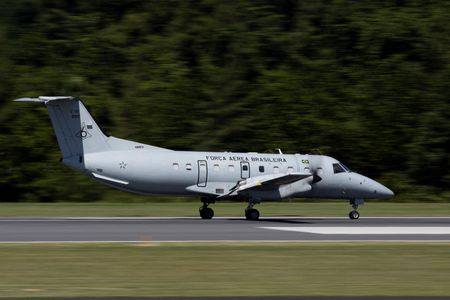

A new tariff policy announced by the Trump administration on Tuesday is creating fresh opportunities for airlines and aircraft manufacturers, particularly Brazil’s Embraer, according to industry analysts and aviation lawyers.
The revised trade measures exempt commercial aircraft, engines, and aerospace components from a temporary 10% worldwide import tax implemented under Section 122 of the Trade Act of 1974. President Donald Trump later indicated this rate could increase to 15%. These new tariffs replace previous duties that the U.S. Supreme Court invalidated on Friday.
This aerospace exclusion provides more comprehensive relief than existing tariff exemptions already in place for major industry exporters like the European Union, United Kingdom, Japan, Canada, and Mexico under previous trade agreements.
The policy change particularly helps Embraer, which had been facing a 10% tariff on its business and regional aircraft since Trump imposed a 50% duty on most Brazilian products last July. That earlier action was taken in response to what Trump described as a “witch hunt” against former Brazilian President Jair Bolsonaro, though aircraft received lighter penalties at the time.
The new exemption eliminates a competitive disadvantage Embraer faced against private jets from Canada’s Bombardier and France’s Dassault, which had been entering the U.S. market without duties.
“It’s actually very encouraging and quite good news for our industry,” Katie DeLuca, a Florida-based private aviation attorney with Harper Meyer, said during a Monday webinar hosted by the National Business Aviation Association.
The announcement comes as Embraer prepares to unveil a new version of its Praetor business jets on Tuesday, according to two sources with knowledge of the plans. Embraer declined to provide comment but had previously described the 10% tariff as manageable yet damaging.
Alaska Airlines, which took delivery of two E175 regional jets last July after a brief delay, said Monday that its next E175 delivery is planned for this summer. The airline noted it has “time to understand where the tariff landscape settles.” SkyWest Airlines and American Airlines, both customers for Embraer’s E175 regional aircraft, did not immediately respond to requests for comment.
Despite the positive developments, industry professionals are urging careful optimism due to continuing policy uncertainties.
Dave Hernandez, a U.S. business aviation specialist and attorney with Vedder, described the new tariffs as particularly beneficial for Embraer while noting that the Trump administration is conducting separate reviews of Brazil’s trade practices and commercial aerospace sector. He also pointed out that aviation continues facing elevated costs from U.S. tariffs on materials used in aircraft component manufacturing.
“It’s great that aircraft, engines, and parts are exempt from the Section 122 tariffs, but a real concern still exists that the steel and aluminum tariffs are increasing the ultimate costs of the aircraft, engines, and parts,” Hernandez explained.
The policy shift opens opportunities for aircraft that previously faced tariffs, including certain used business jets, to enter the world’s largest private aviation market without duties, according to industry experts.
U.S. airlines may also leverage the new exemption to accelerate imports of Embraer regional jets, industry sources suggested.
“Now it seems we have a window at least where we can import these aircraft free from tariffs,” said Tobias Kleitman, president of U.S.-based TVPX, which provides trustee and customs services. “Question is how long that window is going to last. But it is a stunning change,” Kleitman told the NBAA webinar.
The developments occur as the Commerce Department examines potential national security risks from imported goods through a Section 232 investigation, which could potentially impose tariffs on imported aircraft, engines, and components.
Alex Krutz, managing director at U.S. aerospace and defense consultancy Patriot Industrial Partners, said he doesn’t anticipate the 232 investigation will lead to widespread aerospace tariffs, given the current exclusion and previous exemptions for aircraft and parts in trade agreements.
“I think it’s recognized within the administration that aerospace is a net exporter,” said Krutz, who previously served as deputy assistant secretary for manufacturing at the U.S. Commerce Department.