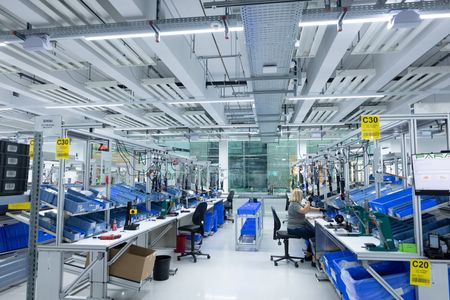
An Iowa-based equipment manufacturing company is expanding its operations with a major new production facility to keep pace with surging market demand. Vermeer Corporation’s chief executive Jason Andringa announced that the Pella-headquartered company will construct a massive 300,000 square foot manufacturing plant in Bondurant.
According to Andringa, who serves as both president and CEO of Vermeer Corporation, the decision to build the cutting-edge facility stems from persistent innovation efforts and increasing customer demand for their products. The new plant is designed to produce industrial components and equipment, representing a significant expansion of the company’s manufacturing footprint in Iowa.
The state-of-the-art facility will add substantial production capacity as Vermeer works to meet growing market needs for their specialized equipment and parts.
The chief executive of logistics giant C.H. Robinson is pushing back against investor fears that artificial intelligence will disrupt the freight industry, arguing instead that the technology will benefit larger companies and drive consolidation.
CEO Dave Bozeman made the comments following a significant stock decline earlier this month. On February 12th, C.H. Robinson experienced its steepest single-day stock drop in approximately two years, falling 14.5% as part of a wider decline in transportation and logistics companies.
The market downturn was sparked by statements from AI technology firm Algorhythm Holdings, which claimed its SemiCab platform helps clients increase freight volumes by 300% to 400% while maintaining the same staffing levels.
Speaking with Reuters, Bozeman characterized the stock decline as a “short-term reaction” and emphasized his company’s competitive advantages. He pointed to C.H. Robinson’s size and extensive proprietary database as assets that would be expensive and challenging for competitors to match.
“We’re going to go into agentic artificial intelligence that’s going to make us faster and even better,” Bozeman stated.
The CEO predicts increased consolidation within the industry as smaller firms struggle to compete in an AI-focused marketplace that demands substantial data resources and specialized knowledge – capabilities that cannot be quickly developed even with significant investment.
C.H. Robinson recently announced fourth-quarter earnings that exceeded Wall Street projections, with AI-powered improvements contributing to streamlined operations and reduced manual work in routine business functions.
As of Monday afternoon trading, the company’s stock was trading at $178.44, down 6.1%, though it has regained some value since the mid-February selloff.
Banking giant Citigroup appears ready to finalize another major sale of its Mexican retail banking division, according to a Bloomberg News report published Monday.
Sources with knowledge of the negotiations tell Bloomberg that Citi is close to completing a deal that would transfer a 24% ownership stake in Grupo Financiero Banamex to an investment consortium led by Blackstone.
This potential transaction would build on Citi’s previous divestment move in late 2022, when the bank sold a 25% portion of Banamex to a company controlled by Mexican billionaire Fernando Chico Pardo and his family members.
When contacted about the Bloomberg report, Citigroup representatives refused to provide comment. Reuters was unable to confirm the details independently.
According to the report, the American banking institution is also in talks to distribute smaller ownership pieces – each representing less than 5% – to various companies and wealthy Mexican family investment offices. The potential buyers mentioned include General Atlantic, leadership from Grupo Televisa SAB, Brazil’s Banco BTG Pactual SA, Afore Sura, and the Mexican retirement fund operated by Colombia’s Sura Asset Management.
Should this deal move forward, it would represent another success for Citigroup’s ongoing efforts to shed its Banamex holdings after spending years searching for suitable buyers or acquisition partners.
The transaction would also continue Citi’s broader withdrawal from Latin American markets, where the institution previously maintained significant retail banking operations across Brazil, Argentina and Colombia.
Last December’s stake sale to Mexico’s Pardo, who assumed the role of Banamex chairman as part of that agreement, resulted in a $726 million goodwill impairment charge for Citigroup during the third quarter. Such charges typically occur when assets are sold for less than their recorded book value.
Citigroup originally acquired Banamex through a $12.5 billion purchase in 2001. The Mexican bank represents the final international consumer banking divestiture in CEO Jane Fraser’s organizational restructuring strategy unveiled in 2021. Under that plan, the bank pledged to exit 14 markets spanning Asia, Europe, the Middle East and Mexico.
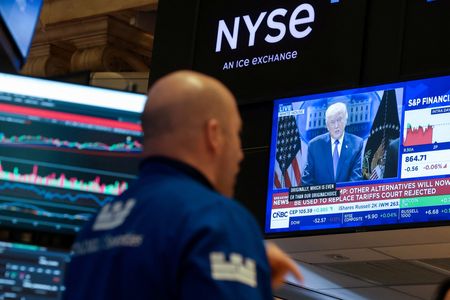
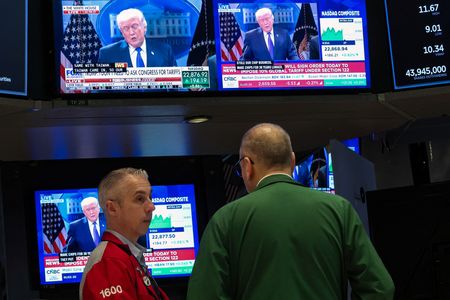
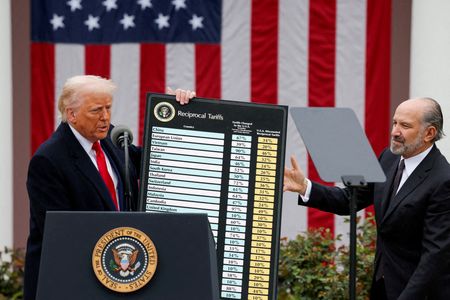
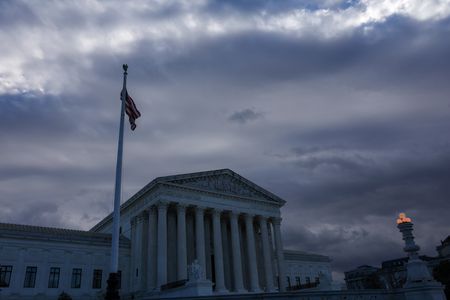
Financial markets are grappling with fresh trade policy uncertainty after President Donald Trump unveiled a 15% tariff this week, following the Supreme Court’s decision to overturn his broader trade levies last week.
On Monday, domestic lumber companies saw their stock prices drop amid concerns that cheaper foreign imports could undercut their pricing power. Meanwhile, Wall Street experts predict that retailers and exchange-traded funds focused on emerging markets could see gains down the road.
Several market sectors are positioned to feel the effects of this latest shift in U.S. trade strategy:
RETAIL AND CONSUMER GOODS
Investment firm Jefferies identified several companies that could see the biggest gains from tariff reductions, including electronics retailer Best Buy, high-end fashion brand Ralph Lauren, and athletic wear company Nike.
Target and cosmetics company Elf Beauty are also expected to benefit, according to Jefferies research.
Morgan Stanley analysts noted that products like toys, sporting goods, and games – which previously faced very high tariff rates – may see improvements since Trump’s new levy represents a 4% decrease from earlier rates.
ONLINE RETAIL PLATFORMS
BofA Global Research suggests smaller and mid-sized e-commerce companies will see varied effects from the policy changes.
Following Friday’s court ruling, stocks of Etsy, eBay, Wayfair, and Chewy had climbed higher. But Trump’s new worldwide tariff approach is expected to create additional uncertainty.
According to BofA, Etsy appears best positioned to weather tariff fluctuations due to its global diversification across multiple trade routes and nations. Roughly half of the platform’s buyers and sellers operate outside the United States, with no individual importing country accounting for more than 4% of total sales revenue.
Pet supply retailer Chewy and furniture platform Wayfair are expected to face minimal impact, with Wayfair having already adjusted to previous year’s tariff changes, the investment firm noted.
PAPER, LUMBER, AND PACKAGING INDUSTRIES
The court’s tariff decision threatens to erode the competitive advantage that domestic packaging and lumber businesses previously held against lower-cost foreign competitors, industry analysts warn.
RBC analysts identified potential negative consequences for companies including Clearwater Paper, Rayonier, Sylvamo, and Smurfit WestRock.
A recent industry survey revealed that most U.S. purchasers reported declining containerboard prices in February, as increased European imports expanded supply and created additional pricing pressures.
Monday trading saw Smurfit and domestic competitor International Paper decline by 7% and 6%, respectively.
AUTOMOTIVE SECTOR
Traditional car manufacturers Ford Motor and General Motors have faced ongoing challenges from tariff policies throughout Trump’s second presidential term, but the recent ruling is unlikely to provide relief, according to Barclays analysts.
The majority of automotive industry tariffs fall under Section 232 of the Trade Expansion Act of 1962 and remain unaffected by the elimination of IEEPA-level duties, they explained.
METALS: STEEL, ALUMINUM, AND COPPER
Companies producing steel, aluminum, and copper – such as Steel Dynamics, Alcoa, and Freeport-McMoran – are not expected to see changes since their tariffs will continue under Section 232 protections, according to analysis from ING and UniCredit.
INTERNATIONAL MARKETS
Multiple investment firms anticipate that China will be among the nations benefiting most from the restructured U.S. tariff approach.
Hong Kong’s primary stock index finished Monday’s session up 2.5%, with technology companies like Alibaba and Tencent posting significant gains.
Morgan Stanley and J.P. Morgan analysts project that tariff rates affecting China will drop to 24% and 27%, respectively, down from the previous 32% level.
Other regions expected to see overall benefits include India, most Southeast Asian nations, and Brazil.
BofA forecasts that most Southeast Asian countries will experience tariff reductions of approximately 4-5%, while Morgan Stanley analysts predict India’s levies will decrease to 14%.
Pharmaceutical company AbbVie revealed Monday its plans to spend $380 million constructing two new manufacturing plants at its Illinois headquarters, boosting domestic production capabilities for brain-related and weight-loss medications.
This major investment comes as drug manufacturers rush to strengthen their American manufacturing operations following the Trump administration’s significant tariffs on pharmaceutical imports. Federal officials implemented a 100% tariff on brand-name medications in October, though companies that had already started building U.S. facilities were exempt.
Construction on the new North Chicago, Illinois facilities will kick off in spring 2026, with both plants expected to reach full operation by 2029, according to company officials.
The facilities will incorporate cutting-edge manufacturing technology and artificial intelligence to help produce medications currently in development, AbbVie stated. Company representatives noted that creating active pharmaceutical ingredients – the core chemical compounds in medications – represents one of the most challenging aspects of drug production.
AbbVie expects to bring on 300 new employees at the North Chicago location, including engineers, scientists, production workers, and laboratory technicians.
This latest announcement builds on AbbVie’s January commitment to invest $100 billion in American research and development over ten years, which included a separate $195 million expansion at the same Illinois site to increase production of treatments for immune system disorders, cancer, and neurological conditions.
The pharmaceutical company currently operates 11 manufacturing locations across the United States and is exploring additional projects with several states, with more investment announcements expected in 2026.
A major French energy company is considering an unusual solution to maximize profits at its newest solar facility in Brazil: cryptocurrency mining operations.
Engie, the French utility giant, is exploring the possibility of adding bitcoin mining data centers or energy storage systems to its Assu Sol solar plant, according to Eduardo Sattamini, the company’s Brazil operations manager.
The massive solar facility in northeastern Brazil boasts 895 megawatts of installed capacity and reached full operational status this month, making it Engie’s largest solar project globally. However, the plant’s profitability has been hampered by forced production reductions needed to maintain grid stability.
“We are looking at some possible offtakers,” Sattamini explained to reporters during a conference call last week.
The production limitations, known as curtailments, occur when the electrical grid cannot handle all the renewable energy being generated. This issue has plagued Brazil’s solar and wind energy sectors since 2023, resulting in billions of reais in financial losses for energy companies.
Brazil’s curtailment problems stem from multiple factors: a rapid increase in new renewable energy facilities, sluggish electricity demand growth, inadequate grid infrastructure, and the explosive growth of distributed solar generation, including rooftop installations.
To address these challenges at Assu Sol, Sattamini said the company is evaluating options to create local energy demand, including cryptocurrency mining facilities and storage systems. However, he cautioned that implementation would not happen quickly.
“That’s not coming next month. It will take a couple of years for us to implement,” he stated.
The company behind the popular Facetune photo editing application is restructuring its operations by dividing into two distinct business units, according to internal company documents obtained by Reuters.
Lightricks, the design software developer, plans to separate its consumer application division from its artificial intelligence video platform called LTX. This strategic move reflects the company’s effort to better position itself in the rapidly expanding AI market while traditional software businesses face changing investor sentiment.
This restructuring follows a growing trend among technology companies that are isolating their established operations from emerging AI ventures as investment communities reevaluate older software models in favor of artificial intelligence opportunities.
The Facetune application represents a successful software model from the previous decade, built on repeat users and gradual product enhancements. A source with knowledge of the company’s finances indicates the app produced approximately $100 million in profits during the past year. Meanwhile, LTX operates within the generative AI sector, where investors demonstrate willingness to pay premium prices for potential rapid expansion similar to venture capital growth patterns.
LTX, which launched in 2024, has received roughly $150 million in funding from its parent organization Lightricks. The company reports that its open-source AI model platform achieved 3 million downloads during its initial month on Hugging Face, a widely-used platform for sharing and operating machine learning models.
Investment interest significantly influenced the decision to divide the business operations. The rapidly growing business-to-business LTX division has generated greater investor attention compared to the established business-to-consumer Facetune application, as financial backers pursue the substantial returns they anticipate from AI development. This separation may also create opportunities for LTX to secure outside funding or consider an independent spin-off, demonstrating stronger market enthusiasm for dedicated AI companies rather than diversified software platforms.
Shlomo Dovrat, who co-founded venture capital firm Viola Ventures and serves on Lightricks’ board, explained the valuation challenges facing traditional software companies. “Even if you grow 25%, the software business, you won’t get the same valuation you get for a pure disruptive AI, which has a $600 billion market opportunity ahead of it,” Dovrat stated.
Dovrat emphasized that the separation involves more than financial considerations, describing it as managing two different types of businesses. He noted that creating separate units provides various options, including potential spin-offs or other strategic moves, with the company founders planning to concentrate on leading the artificial intelligence division.
“We’re making amazing returns just on the software business, we believe we will do even much, much better on the AI side,” Dovrat added.
Digital payment giant PayPal has emerged as a potential acquisition target following a dramatic decline in its stock price that eliminated nearly half of the company’s market value, according to a Bloomberg News report released Monday.
Sources with knowledge of the situation indicate that the financial services company has conducted discussions with banking institutions as multiple potential acquirers have expressed unsolicited interest. The report reveals that at least one major competitor is considering purchasing the entire organization, while other interested parties are focusing solely on specific divisions or assets within PayPal’s portfolio.
When contacted for comment regarding these acquisition rumors, PayPal representatives chose not to provide a statement. Reuters was unable to confirm the Bloomberg report through independent sources.
Following the news of potential takeover interest, PayPal’s stock price surged 9% during late-morning trading sessions. The company currently maintains a market value of approximately $38.35 billion based on LSEG data compilation.
Five European Union member states are standing firm against proposals to weaken corporate merger oversight, according to documents obtained by news outlets.
Finland, Ireland, the Czech Republic, Estonia, and Latvia have collectively voiced opposition to relaxing current merger regulations, despite pressure from some businesses seeking less stringent review processes for their consolidation deals.
These companies argue they need more freedom to merge in order to compete effectively against international competitors from outside the EU.
The European Commission, responsible for enforcing competition policy across the bloc, is currently updating merger regulations that have been in place since 2004. Officials plan to release draft proposals for public comment in April, with sources indicating the goal is to promote cross-border European mergers.
However, the five dissenting nations argue in their joint statement that loosening current rules is unnecessary for creating strong European companies, since existing regulations already permit such consolidations when economic data justifies them.
“Size in itself should not be the primary objective” of corporate mergers, the countries stated in their document, which is scheduled for discussion during an EU ministerial meeting on February 26. They advocated for “undertakings that succeed through efficiency, innovation and fair competition instead of exemptions or special treatment.”
The nations specifically challenged arguments from European telecommunications companies claiming that larger corporate entities would lead to increased investment spending. Instead, they sided with regulatory officials who have found minimal evidence supporting such claims.
“The empirical link between higher concentration and stronger investment incentives in telecom markets is at best inconclusive and should be analysed on case-by-case basis,” the countries wrote.
They also dismissed assertions that bigger telecommunications operators would create more secure supply networks, warning this approach could actually weaken Europe by creating excessive dependence on too few suppliers.
“If strengthening resilience and secure supply chains is considered to require additional regulatory measures, these should be pursued through sectoral or industrial policy instruments rather than through changes to competition legislation,” the nations concluded.
WASHINGTON – American manufacturing experienced a setback in December as factory orders declined 0.7%, according to data released Monday by the Commerce Department’s Census Bureau. The decrease came primarily from a substantial drop in commercial aircraft bookings, though other sectors showed resilience.
The December decline followed a 2.7% surge in November orders that remained unchanged from previous reports. While economists surveyed by Reuters had predicted a 0.6% decrease, the actual drop was slightly steeper. Despite the monthly decline, orders still showed a healthy 3.7% increase compared to December of the previous year.
The data release was postponed due to last year’s federal government shutdown, which contributed to slower economic growth during the fourth quarter. Manufacturing represents 10.1% of the nation’s economy and continues to face challenges from President Trump’s comprehensive tariff policies, which business executives say have increased expenses for both factories and consumers.
However, certain manufacturing segments have benefited from the accelerating implementation of artificial intelligence technologies. The U.S. Supreme Court struck down Trump’s broad tariff measures on Friday, which were enacted under emergency powers legislation. Trump responded immediately by implementing a 10% worldwide tariff for 150 days to substitute for some emergency duties, then increased the rate to 15% on Saturday.
Wells Fargo economist Shannon Grein commented on the situation: “The Supreme Court ruling doesn’t reset trade policy, and President Trump’s swift actions signal tariffs are here to stay even if they are adjusted in coming months.”
The aviation sector saw dramatic fluctuations, with commercial aircraft orders plummeting 24.8% in December after a remarkable 98.2% jump in November. This sector typically experiences significant volatility. Boeing’s website indicated the company secured 175 aircraft orders in December, though most were for less costly aircraft models, compared to 164 orders received in November.
Several other manufacturing categories demonstrated positive growth. Computer and electronic product orders surged 3.1%, while electrical equipment, appliances, and components saw a 0.3% gain. Machinery orders increased by 0.5%.
Additional sectors showing strength included fabricated metal products and primary metals, both experiencing robust order increases. Motor vehicle bodies, parts, and trailers advanced 2.0%. While business investment beyond AI applications slowed during the fourth quarter, experts anticipate growth acceleration this year due to tax reduction policies.
The Census Bureau also provided updated figures for non-defense capital goods orders excluding aircraft, which economists use to gauge business equipment spending intentions. These orders actually increased 0.8% in December, higher than the initially reported 0.6% gain from last week.
Similarly, shipments of these core capital goods rose 1.0%, exceeding the previously announced 0.9% increase.
A major German pharmaceutical corporation announced Monday that it has initiated legal proceedings in a New York courtroom targeting Johnson & Johnson and its subsidiary Janssen Biotech Inc.
Bayer revealed the lawsuit concerns disputes related to Nubeqa, the company’s treatment for prostate cancer patients.
The legal action was filed in New York court, though specific details about the nature of the dispute between the pharmaceutical giants were not immediately disclosed.
Swedish automaker Volvo announced Monday it will recall more than 40,000 of its EX30 electric SUVs worldwide due to dangerous battery defects that could cause fires.
The recall affects 40,323 vehicles – specifically the EX30 Single-Motor Extended Range and Twin-Motor Performance models – whose high-voltage battery systems pose an overheating risk. The Swedish company, which is owned by Chinese manufacturer Geely, confirmed the recall details to Reuters.
“We are now contacting the owners of all affected cars to advise them of next steps,” Volvo stated.
This safety issue strikes at the core of Volvo’s brand identity, which has long been built around vehicle safety. The recall involves the company’s compact electric SUV that plays a key role in Volvo’s strategy to compete against lower-priced Chinese electric vehicle manufacturers.
Since December, Volvo has instructed EX30 owners across more than a dozen nations – including the United States, Australia, and Brazil – to park their vehicles away from structures and restrict battery charging to 70% capacity to prevent fire risks, according to regulatory documents and company statements.
The automaker will provide replacement battery modules at no cost to owners while maintaining the charging restrictions until repairs are completed. The defective batteries were manufactured by Shandong Geely Sunwoda Power Battery Co., a joint venture backed by Volvo’s parent company Geely. Volvo says the supplier has resolved the manufacturing problem and will provide the replacement battery components.
Industry expert Sam Fiorani from AutoForecast Solutions emphasized the stakes for Volvo: “The EX30 especially is very important to Volvo, so they have to get it right.”
Former Nissan executive Andy Palmer, who led the development of the pioneering Leaf electric vehicle, noted that Volvo faces unique pressure due to its safety-focused reputation. “Volvo can’t afford a safety issue because that strikes at the heart of their brand,” Palmer explained.
The recall comes as Volvo pursues cost-cutting measures worth $1.9 billion and works toward closer integration with its Chinese parent company. Battery safety remains a critical concern for both electric vehicle manufacturers and consumers, as defects can result in massive financial losses.
General Motors faced similar challenges in 2020 when battery problems forced the recall of 140,000 Chevrolet Bolt vehicles, with repair costs reaching $2 billion. Those batteries were supplied by South Korean company LG Electronics.
According to Reuters analysis, the replacement batteries alone could cost Volvo approximately $195 million, not including shipping and installation expenses. The company called these estimates “speculative in nature” and said it continues negotiating with the battery supplier.
Some EX30 owners have expressed frustration with the situation. British insurance agent Matthew Owen, who selected the EX30 for its driving range and Volvo’s safety record, believes the company should accept full responsibility for “producing a car that is dangerous.”
New Zealand owner Tony Lu reported increased costs due to the charging limitations reducing his vehicle’s range. “I would be absolutely delighted if they bought the car back,” Lu said.
Former tennis superstar Serena Williams has swapped championship matches for corporate meetings, but her competitive drive remains as fierce as ever.
The 23-time Grand Slam winner is featured prominently in Prime Video’s latest docuseries “The CEO Club,” which debuts Monday and follows successful female executives as they navigate the challenges of running major businesses while juggling family obligations and personal struggles.
Williams stepped back from professional tennis competition following the 2022 U.S. Open, describing her departure as an “evolution” from the sport. Though she recently re-entered the official drug-testing program, making her eligible to return to competition, her future playing plans remain uncertain.
The tennis legend now channels the same determination that dominated courts worldwide into her entrepreneurial ventures, finding striking similarities between athletic competition and business leadership.
“I think the biggest lesson is just never give up, and you have to keep trying,” Williams explained. “As a CEO, you don’t win everything. You have to make really hard decisions. Just like in sport and in tennis, you have to show up every day. You might lose, but you just have to show up again the very next day.”
Williams joins an impressive lineup of female leaders in the eight-episode series, including Latin music star Thalia, former model turned fashion designer Dee Ocleppo Hilfiger, Market America and Shop.com CEO Loren Ridinger, supermodel Winnie Harlow, wellness entrepreneur Hannah Bronfman, and jewelry designer Isabela Rangel Grutman.
In addition to starring in the show, Williams took on executive producer duties through her production company Nine Two Six Productions, a role she says allows her to maintain control over storytelling.
“Being in the public eye for so long, you really want to control the narrative and make sure the truth gets out there,” Williams stated. “Not only for me, but for these amazing women that are in the show as well, it’s super important that the right story is told.”
Market America CEO Loren Ridinger emphasized how the series reveals the hidden realities of executive leadership that the public rarely witnesses.
“Everybody thinks you’re just like an overnight success. They don’t realize it took 34 years to get where you’re at,” Ridinger noted. “Leadership is not that easy. You have to make tough decisions, tough calls. You’re not always a fan favorite of people who you’re working with.”
Ridinger stressed that successful business management while maintaining personal relationships requires strategic prioritization and unwavering discipline, especially for executives balancing professional responsibilities with family commitments.
“You cannot become a slave to emergencies,” Ridinger advised. “You have to learn how to prioritize. And the way I do that is very simple. I do the hardest things first every day.”
Both business leaders highlighted the critical importance of building strong support networks, describing this as a central theme woven throughout the documentary series.
“The curation of a positive circle is just part of life that we need to have,” Ridinger observed. “You’re not going to associate with somebody that doesn’t believe in what you do.”
Williams credits her athletic background with providing the mental toughness necessary to handle the pressures and criticism that come with leadership positions.
“When you’re the best, most people want you to not do so well,” she reflected. “You just have to lean into making those decisions anyway.”
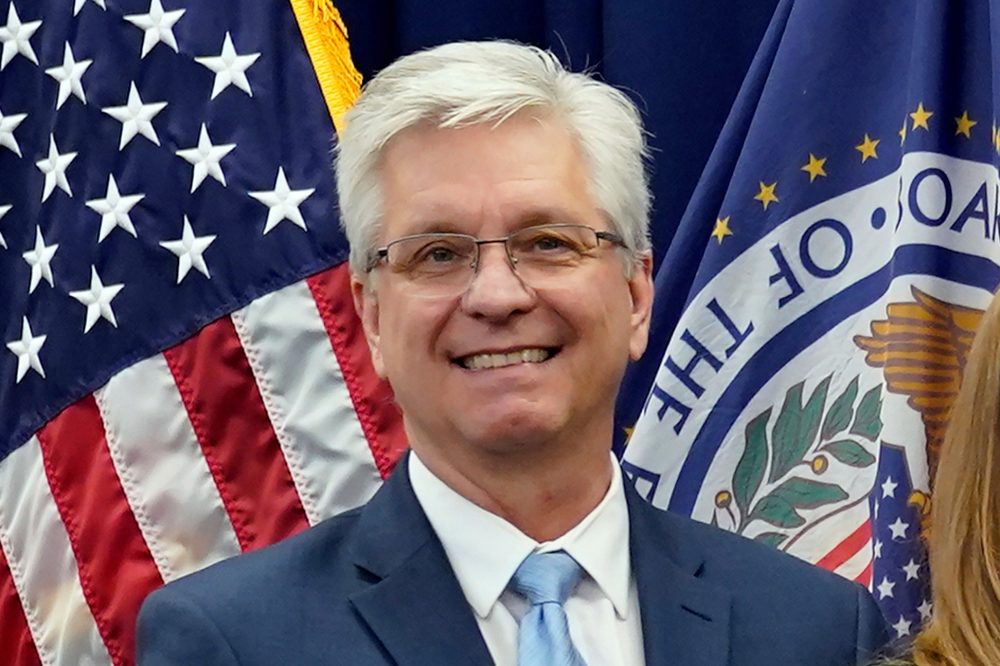
WASHINGTON — A Federal Reserve official said Monday that January’s unexpectedly strong employment numbers might lead the central bank to postpone an interest rate reduction at its upcoming March meeting, a move that could draw criticism from President Donald Trump.
Federal Reserve Governor Christopher Waller noted that employers hired 130,000 workers last month, exceeding forecasts, but cautioned this improvement might be temporary. He emphasized the need to see similar positive employment data in February before determining whether the job market is truly recovering from its weakness throughout 2024.
This cautious stance marks a change for Waller, who previously advocated for rate cuts. In January, he was among two Fed governors who opposed keeping interest rates unchanged after the central bank had reduced rates three times late last year. The Fed’s benchmark rate currently sits around 3.6%.
Lower Federal Reserve rates typically translate to reduced borrowing costs for home mortgages, car loans, and business financing over time, though market conditions also influence these rates.
Regarding the Supreme Court’s decision to overturn several of Trump’s tariffs, Waller suggested this would have minimal economic impact and wouldn’t influence his rate decisions. The ruling might create “a positive impact on spending and investment,” he noted, but “how large the impact may be and how long it could last is unclear.”
Waller pointed out that the White House plans to reinstate tariffs through alternative legal mechanisms, generating “considerable uncertainty over to what extent tariffs will continue.”
Speaking at a National Association for Business Economists conference, Waller outlined two scenarios for March. If February’s employment report matches January’s strength, “indicating that downside risks to the labor market have diminished, it may be appropriate” to maintain current rate levels “and watch for continued progress on inflation and strength in the labor market.”
However, he added, “But if the good labor market news of January is revised away or evaporates in February, a cut should be made at the March meeting.”
“As things stand today, I rate these two possible outcomes as close to a coin flip,” Waller concluded.
The Fed governor also discussed what many economists find puzzling about today’s economy: relatively strong growth alongside minimal job creation last year. Waller predicted that even the modest employment gains reported for 2024 will eventually be revised downward to negative territory.
“This would be the first time in my career, my life, that I saw an economy growing like this, and zero job growth,” Waller explained. “I don’t even know quite how to think about this.” He suggested that hiring might increase this year, resolving this apparent contradiction.
Another possible explanation involves increased productivity following the pandemic, as businesses discovered ways to maintain output with fewer employees.
President Trump criticized the Fed Friday after government data showed economic growth slowed to 1.4% annually in the fourth quarter, down from 4.4% in the previous quarter.
“LOWER INTEREST RATES,” Trump wrote on social media. “‘Two Late’ Powell is the WORST!!” he added, misspelling his typical nickname for Fed Chair Jerome Powell, whom he usually calls “Too Late.”
A disappointing clinical trial outcome has delivered another blow to Danish pharmaceutical giant Novo Nordisk’s ambitions in the lucrative weight-loss drug sector. The company’s experimental medication CagriSema failed to outperform Eli Lilly’s competing product Zepbound when tested side-by-side, marking a significant setback in the fierce competition for obesity treatment dominance.
Financial analysts are weighing in on what this means for Novo Nordisk’s future strategy, with many suggesting the company may need to pivot toward major acquisitions to stay competitive.
Michael Leuchten from Jefferies expressed concern about the broader implications for Novo’s drug pipeline. “Where all of this is a headache is that Novo’s terminal value pivots around amycretin, which like CagriSema is a GLP-1/amylin combination (albeit in one molecule), so the failure of REDEFINE-4 and commercial uncertainty versus competition does little to calm long-term investor nerves,” Leuchten stated.
He added that attention will likely shift to the company’s merger and acquisition plans. “Investors’ focus will likely now turn to management’s M&A strategy, in our view, with our forecasts suggesting potential for up to $35 billion to be spent this year. Feedback suggests that investors wish to see this spend in adjacent therapy areas outside of obesity and diabetes, with our view that this should buy management time to reinvest its obesity portfolio,” Leuchten explained.
BMO Capital Markets analyst Evan David Seigerman delivered particularly harsh criticism of the trial results. “We struggle to identify a reason why a patient would be prescribed CagriSema vs. Tirzepatide if/when the Novo product is approved/available,” he said.
Seigerman didn’t mince words about the significance of the setback. “We see no way to spin this one as a win for Novo. It is striking to hear management concede that their competitor’s product outperformed in a trial they sponsored and designed. We believe Novo needs more than just the Wegovy pill to right this ship — a complete strategy overhaul is in order,” he stated.
J.P. Morgan’s Chris Schott believes the results solidify Eli Lilly’s market position. “We see this result confirming Zepbound as a clear market leader for now and positioning LLY for continued share gains for the drug over time. While CargiSema should bring a more competitive offering to market for Novo, we believe it will be difficult for Novo to dislodge market share from LLY,” Schott noted.
He predicted extended success for Lilly’s product. “As a result, we expect LLY will have a longer runway for share gains for Zepbound beyond 2026,” Schott added.
Truist Securities’ Srikripa Devarakonda acknowledged CagriSema’s potential while reinforcing Lilly’s current advantage. “Cagrisema is a potent drug and we continue to keep track of additional trial data, we believe these data maintain LLY’s dominance in obesity landscape at least for the near future,” Devarakonda said.
She emphasized multiple factors supporting Lilly’s market position. “Best-in-class profile coupled with improved access and supply, and increasing demand are expected to support LLY’s position in the landscape, in our view,” Devarakonda explained.
Regarding safety considerations, she noted: “While we await detailed data, we note that discontinuation rates with tirzepatide were lower vs. semaglutide; based on data so far, we believe Cagrisema is unlikely to see a safety benefit vs. tirzepatide.”
Bernstein analyst Courtney Breen highlighted the ongoing competitive challenges. “This trial now emphasizes that Novo’s challenges remain and Lilly continues to weather whatever Novo throws at them,” she said.
Breen had previously expressed doubts about CagriSema’s competitive potential, citing production difficulties and minimal advantages over existing treatments. She noted that Lilly’s upcoming next-generation medication retatrutide, which demonstrates superior effectiveness, will likely launch around the same timeframe, potentially further limiting Novo’s market opportunities.
Barclays analyst James Gordon offered a measured assessment of CagriSema’s commercial prospects. “While we continue to see CagriSema as approvable, today’s RD4 (trial) results will likely mean driving uptake is an uphill battle vs. a more effective and better tolerated incumbent, leaving Novo little to compete on apart from price,” Gordon concluded.
Dominion Energy announced Monday it will significantly boost infrastructure spending over the next five years, even as the utility company projects annual earnings that fall short of Wall Street’s expectations.
The Richmond, Virginia-based power company plans to invest $64.7 billion between 2026 and 2030, marking a substantial increase from its previous five-year budget of $50.1 billion through 2029. This nearly 30% jump reflects the company’s push to handle rapidly growing electricity demands.
Across the nation, utility companies are pouring billions into infrastructure upgrades as they face mounting pressure from severe weather events and unprecedented power requests from data centers supporting artificial intelligence and cryptocurrency operations.
Dominion reported securing contracts for approximately 48.5 gigawatts of data center capacity by December, representing a 1.4 gigawatt increase since September. Major technology corporations including Alphabet, Amazon, Microsoft, Meta, and Equinix are among the company’s clients, alongside private firms CoreWeave and CyrusOne.
The utility serves Virginia’s data center market, which the company describes as the world’s largest, exceeding the combined capacity of the five next-biggest data center markets in the United States.
Despite the ambitious spending plans, Dominion’s stock price dropped 1.4% in pre-market trading following the earnings announcement. The company projected fiscal 2026 operating earnings between $3.45 and $3.69 per share, with the midpoint falling below analysts’ average prediction of $3.60 per share, based on LSEG data.
Fourth-quarter operating costs rose nearly 11% to $3.33 billion compared to the same period last year, dampening an otherwise strong quarterly performance. However, Dominion’s adjusted earnings for the quarter ending December 31 reached 68 cents per share, slightly exceeding analyst estimates of 67 cents.
The company behind ChatGPT announced Monday it’s forming strategic partnerships with four major consulting firms as it works to expand artificial intelligence adoption in the business world.
OpenAI revealed the launch of its “Frontier Alliance” program on Monday, bringing together consulting giants BCG, McKinsey, Accenture and Capgemini. The collaboration will combine OpenAI’s specialized engineers with consulting teams to help businesses incorporate AI tools into essential operations like software creation, sales processes and customer service.
This development comes after months of CEO Sam Altman highlighting business clients as a key focus for the artificial intelligence company. Last December, OpenAI brought on former Slack CEO Denise Dresser to serve as chief revenue officer.
Though OpenAI has collaborated with consulting companies before to market its products, Dresser explained this new partnership aims to help organizations weave AI into their fundamental business operations instead of conducting separate test projects.
“They don’t just need caution. They actually need a path, and they need help so that they can grow and adopt this technology,” Dresser explained during an interview.
Through this alliance, OpenAI’s technical staff will collaborate directly with consulting professionals to educate employees and support system rollouts. The new Frontier platform features a “context layer” built to link different company databases and software programs, addressing a frequent barrier to AI implementation. Organizations can develop AI tools that maintain shared capabilities and information across different work processes, while overseeing them through a monitoring system. Existing products like ChatGPT Enterprise will also be included in these services.
“Companies have realized that siloed AI deployments do not deliver the value and they don’t transform their company,” Dresser stated.
The partnership highlights how the ChatGPT creator views AI as a “profound” technological transformation that requires more than simply licensing software, according to Dresser, as businesses reconsider their offerings. Numerous companies attempting large-scale AI implementation have reported to Reuters that they face practical obstacles that technology models by themselves cannot address.
However, Dresser anticipates that organizations working with consulting partners will eventually “become self-sufficient on their own and ultimately be able to take their transformation forward.”
“We do not want to build a model where we are doing the work. We want our customers to become self-sufficient,” she emphasized.
In the corporate market competition, OpenAI competes with rivals including Anthropic and technology leaders like Google that are marketing AI solutions to businesses. OpenAI stated its strategy enables organizations to maintain their current systems while gaining enhanced research collaboration opportunities.
LONDON — A fresh analysis from ING Bank indicates the U.S. dollar has diminished as a safe-haven currency since 2024, though the financial institution emphasized Monday that worldwide appetite for American currency remains steady.
The greenback experienced its steepest annual decline since 2017, with the dollar index falling nearly 10% throughout the previous year. Unpredictable trade policies from the United States, along with President Donald Trump’s tariff warnings directed at allied nations and criticism of the Federal Reserve, have put pressure on the currency’s performance.
According to ING’s analysis, several key findings emerged from their research:
The American currency has surrendered a significant portion of its safe-haven appeal when compared to 2024 levels, based on calculations measuring three-month correlations between the dollar index, U.S. equity markets, and 10-year Treasury bonds.
Private sector investors, who control over 80% of international holdings in American assets, continue maintaining their positions.
Current dollar weakness appears to reflect cyclical rather than structural changes in the market.
No evidence suggests an acceleration in global de-dollarization efforts when analyzing dollar usage in international assets, liabilities, market activity, and transactions.
The Federal Reserve’s independence serves as “the cornerstone of global financial stability,” and should the central bank be perceived as cutting interest rates inappropriately, “a run on the dollar” might occur.
This year’s potential dollar decline is unlikely to mirror last year’s performance. ING forecasts the euro will reach $1.22 by year’s end, compared to current trading levels near $1.18.
Pharmaceutical company Gilead Sciences announced Monday it will acquire cancer drug developer Arcellx for as much as $7.8 billion, marking the company’s most significant acquisition in four years as it seeks to expand its cancer treatment portfolio.
The biopharmaceutical giant, known primarily for its HIV medications and liver disease therapies, is pursuing growth opportunities outside its traditional strongholds while facing reduced revenue from its COVID-19 treatment Veklury and anticipating future patent expirations.
Under the agreement, Gilead will offer $115 cash per share, representing a 79% markup over Arcellx’s previous closing price.
Market reaction was swift, with Arcellx stock surging 78.5% to $114.46 in pre-market trading, while Gilead shares dropped approximately 1%.
The transaction represents Gilead’s most substantial deal since its $21 billion purchase of Immunomedics, which provided access to Trodelvy, a specialized drug combination for treating advanced breast cancer.
Gilead’s subsidiary Kite Pharma had been collaborating with Arcellx on the development and commercialization of anito-cel, an investigational CAR-T treatment targeting multiple myeloma, a blood cancer affecting bone marrow.
CAR-T therapy represents an innovative cancer treatment approach that genetically modifies patients’ immune cells to locate and destroy cancerous cells.
Federal regulators are currently evaluating anito-cel as a fourth-line therapy option for patients whose multiple myeloma has returned or proven resistant to other treatments, with an FDA determination anticipated by December 23.
“Beyond the potential launch this year, anito-cel could become a foundational treatment for multiple myeloma over time, including earlier lines of therapy,” stated Gilead Chief Executive Daniel O’Day.
O’Day explained that anito-cel’s distinctive targeting capabilities could enable Gilead to create advanced cellular therapies, bolstering the company’s prospects in cancer and inflammatory disease treatment.
Following FDA clearance of anito-cel, the acquisition is projected to boost earnings per share starting in 2028 and continuing thereafter.
Additionally, Gilead has committed to paying Arcellx stockholders an extra $5 per share if anito-cel achieves worldwide sales totaling at least $6 billion between its launch and the end of 2029.
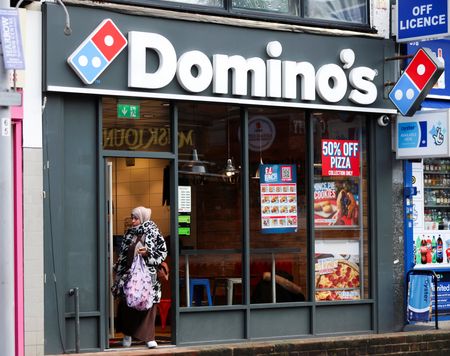
Pizza giant Domino’s exceeded financial analysts’ predictions for fourth-quarter domestic sales on Monday, driven by promotional pricing and menu innovations that appealed to cost-conscious diners, causing company stock to climb approximately 5% in early market activity.
Budget-minded consumers, particularly those from lower-income families, are increasingly choosing home-prepared meals instead of restaurant dining as they manage expenses while facing higher costs for everyday necessities like groceries and food products.
The pizza company has expanded its promotional offerings to draw customers, including bringing back its “Best Deal Ever” promotion priced at $9.99, while also rolling out new flavors and menu additions like Parmesan-stuffed crust pizza.
During the fourth quarter, domestic same-store sales at Domino’s increased by 3.7%, surpassing Wall Street projections of 3.47%, based on information gathered by LSEG.
“Domino’s continues to steal share in the U.S. pizza category,” said Ari Felhandler, analyst at Morningstar.
The analyst noted that the company maintains a strong position to capture consumer business through its value offerings, online expansion, and quicker delivery services.
The pizza chain also benefited from collaborations with third-party delivery platforms like DoorDash, which broadened the company’s customer reach.
Chief Executive Russell Weiner stated that Domino’s anticipates significantly expanding its market presence within the domestic quick-service pizza sector during the current year.
However, overseas same-store sales grew by just 0.7%, falling short of projected 1.03% growth due to sluggish consumer demand and intense rivalry in markets including Australia and Japan.
Competing fast-food companies including McDonald’s and Yum Brands, which owns Taco Bell, have similarly introduced budget-friendly meal options, creating fierce competition for price-sensitive customers amid weakened worldwide demand.
The company’s quarterly earnings per share reached $5.35, up from $4.89 during the same period last year, though slightly below analyst expectations of $5.37.
Financial markets are grappling with significant uncertainty following a Supreme Court decision that has reshuffled America’s trade policy landscape, leaving both investors and international partners scrambling to understand the new rules.
The Supreme Court delivered a blow to President Trump’s trade strategy on Friday, ruling against his use of emergency powers to impose sweeping tariffs. While markets initially celebrated this decision, with U.S. stock indices climbing and Europe’s STOXX 600 reaching record highs by Friday’s close, the relief proved short-lived.
Trump quickly countered the court’s ruling by announcing new tariffs under different legal authority. He first implemented a 10% blanket tariff, then raised it to 15% by Saturday. These new levies operate under previously unused legislation that permits tariffs for up to 150 days before requiring Congressional authorization.
The policy whiplash sent U.S. stock futures tumbling on Monday as traders tried to assess the implications of the rapidly changing trade environment.
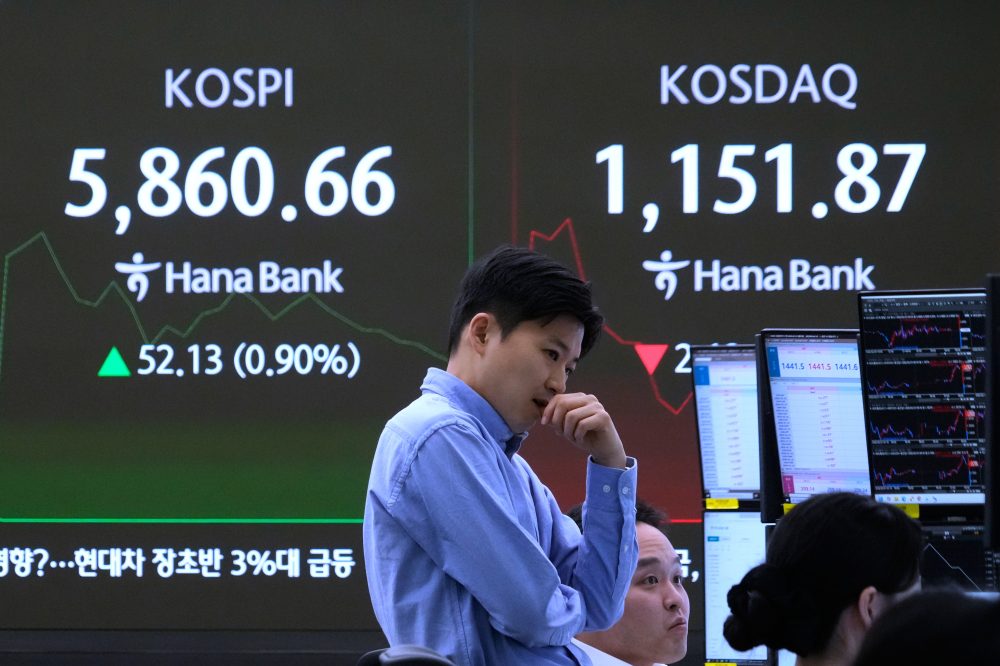
International markets showed mixed reactions to the developments. Countries like China and others that faced severe penalties under the previous emergency tariffs found some relief in the new 15% rate. Hong Kong markets jumped more than 2% and South Korea’s Kospi index posted gains on Monday.
However, European Union nations that had negotiated more favorable terms under previous agreements expressed frustration with the changes. The European Commission firmly stated it would reject any tariff increases, emphasizing that “a deal is a deal” regarding last year’s trade agreement with Washington.
The dollar weakened slightly Monday morning while gold prices increased as investors sought safer assets amid the trade uncertainty.
The tariff confusion extends beyond market reactions, creating questions about federal revenue projections and potential rebate programs. Analysts worry these uncertainties could undermine expectations that tariff income will reach approximately $300 billion this year, potentially eliminating prospects for new stimulus payments to American households and forcing increased Treasury borrowing.
Adding to market concerns, Atlanta Federal Reserve President Raphael Bostic suggested that the next interest rate move could be upward, despite weaker-than-expected fourth-quarter GDP growth being offset by higher inflation readings.
Oil prices declined over the weekend as fears of potential U.S. military action against Iran subsided, though tensions remain high with new Geneva negotiations scheduled for Thursday and reports indicating advanced U.S. military planning stages.
The trade policy upheaval complicates numerous bilateral agreements Trump had secured using his now-invalidated emergency authority. With lengthy trade investigations required to establish permanent sectoral tariffs and many needing Congressional approval, the outcome may depend heavily on midterm election results where Republicans risk losing their House majority.
Looking ahead, what happens after the July expiration of the temporary tariffs remains unclear, leaving markets and trading partners in a state of continued uncertainty about America’s trade direction.
A Massachusetts-based pharmaceutical company announced Monday its plans to enter the stock market with a potential company valuation reaching $2.17 billion.
Generate Biomedicines, headquartered in Somerville and supported by investment firm Flagship Pioneering, plans to collect as much as $425 million through its public stock debut. The company intends to sell 25 million shares with each share priced between $15 and $17.
The biotechnology sector is experiencing renewed momentum in 2024 following a disappointing previous year, as declining interest rates and increased investment capital create favorable conditions for companies going public.
Several major financial institutions will manage the stock offering, including Goldman Sachs, Morgan Stanley, Piper Sandler, Guggenheim Securities, and Cantor.
The pharmaceutical company plans to trade on the Nasdaq stock exchange using the ticker symbol “GENB.”
Shares of Danish pharmaceutical company Novo Nordisk plummeted more than 15% during Monday trading after the company announced disappointing results from a clinical trial of its experimental obesity medication CagriSema, which failed to match the effectiveness of a competing drug from Eli Lilly.
The clinical study was intended to demonstrate that CagriSema could deliver weight reduction results comparable to Eli Lilly’s tirzepatide, but the trial did not achieve this objective, according to a company announcement.
The stock decline has eliminated approximately $400 billion from Novo Nordisk’s market value, bringing shares back to price levels not seen since before the successful launch of Wegovy transformed the company into the globe’s highest-valued pharmaceutical manufacturer. At its peak in 2024, the company was valued at over $600 billion.
During mid-morning trading in Copenhagen, Novo Nordisk’s stock price hit its lowest point since June 2021, coinciding with when the company first introduced its highly successful weight management medication to the market.
Financial analysts from J.P. Morgan characterized the trial failure as a major disappointment that could reduce interest in CagriSema, dampen future revenue projections, and make it challenging for Novo to regain competitive position in the rapidly expanding obesity medication sector.
“While CagriSema could offer a new treatment option to patients, the inferiority to Zepbound means it is unlikely to help Novo retake market share in obesity,” the analysts stated.
This development compounds existing investor concerns about escalating rivalry in the obesity treatment field, where consumer preference increasingly favors medications that deliver superior weight reduction outcomes.
Novo Nordisk ranked among the poorest-performing stocks on Europe’s primary STOXX 600 market index Monday. Zealand Pharma, another Danish pharmaceutical company, also experienced a 6.7% stock decline.
Meanwhile, Eli Lilly’s shares climbed approximately 4% during pre-market trading in the United States.
ZURICH – Swiss officials announced Monday they remain committed to finalizing formal trade negotiations with the United States, working to transform a preliminary agreement from late 2025 into a binding contract that reduced American tariffs on Swiss products from 39% down to 15%.
According to the Swiss Economy Ministry, negotiations with Washington continue under their current directive, with regional cantons and other important stakeholders not requesting an end to discussions despite the U.S. Supreme Court’s ruling that overturned former President Donald Trump’s tariff policies.
“The primary objective of the ongoing negotiations has from the outset been a legally binding agreement that would provide Swiss companies with the greatest possible legal certainty,” the ministry stated, emphasizing their commitment to achieving this target.
Technology companies specializing in software are putting off major financing deals as concerns about artificial intelligence disruption make lenders more cautious and expensive to work with, according to industry experts.
The growing fear that AI will reshape or eliminate traditional software business models has prompted both domestic and international firms to halt fundraising efforts. Loan markets are already reflecting these concerns, with riskier companies seeing spreads that anticipate more bankruptcies ahead.
Matthew Mish, who leads credit strategy at UBS, expects the impact to intensify in the coming years. “We expect AI disruption risk to be increasingly reflected over 2026 to early 2027, particularly for lower‑quality credit sectors with elevated refinancing needs — and more so in the U.S. than in Europe,” Mish explained.
The financial institution anticipates default rates could climb between 3% and 5% if market disruptions accelerate, significantly higher than the 1% to 2% increase most market watchers expect.
“The disruption is going to play out over two years,” Mish noted. “We ultimately think that the market will price in a majority, but not all of the defaults that we’re forecasting.”
Even software companies with stronger credit profiles are avoiding debt markets while waiting for conditions to improve, according to banking sources.
Market observers will be watching closely when Qualtrics, an established software firm, seeks $5.3 billion in acquisition financing next month for its purchase of competitor Press Ganey Forsta. Both companies declined to provide comments.
The AI disruption concerns are hitting leveraged loan deals harder than high-yield bond transactions, two banking professionals said. Technology borrowers, with software companies making up 60% of that category, represent the biggest segment in leveraged lending.
According to Brendan Hoelmer from Fitch Ratings’ U.S. default research team, tech loans make up 17% of the leveraged loan market, worth approximately $260 billion. In contrast, technology companies account for only 6% of high-yield bonds, totaling $60 billion, with software firms representing 70% of that amount.
Morgan Stanley research shows that half of software sector loans carry “B- or lower” credit ratings, indicating elevated default risk. BNP Paribas analysts estimate that private credit exposure to software and services reaches about 20%.
Stock markets have also felt the AI impact, with software company shares leading the decline before spreading to other automation-vulnerable sectors. The software index has dropped 20% year-to-date.
While immediate refinancing pressure remains limited—with only 0.5% of software loans maturing this year—the situation becomes more pressing by 2027, when 6% of loans come due. High-yield software debt follows a similar pattern, with 0.7% maturing this year and 8% in 2027, Hoelmer reported.
Companies attempting to access debt markets are encountering substantially higher underwriting costs from banks, while lenders marketing these loans face increased investor skepticism.
Banking sources indicate that future deals will likely require higher yields and steeper discounts on existing debt. Companies are expected to return to markets once pricing conditions improve.
New transactions will probably include more restrictive covenants to attract investors, including maintenance requirements that force borrowers to maintain debt-to-earnings ratios below specified thresholds.
Several technology sector deals have been withdrawn or delayed since late January. European digital services company Team.blue postponed extending its 1.353 billion euro term loan and repricing its $771 million facility. The company declined to comment.
Currently, no leveraged loan deals for software companies are active, as firms and banks await recovery in trading levels for existing sector debt following late January losses when AI disruption fears intensified.
A January Moody’s Ratings analysis warns that lower-rated companies with approaching maturities “are likely to face greater refinancing and default risk in 2026.”
Jeremy Burton, who manages leveraged finance portfolios at PineBridge Investments, expressed caution about the sector’s near-term prospects. “I don’t really see software and business services as being hot sectors for issuance over the next year,” Burton said. “The technology is changing so quickly that you’ve really got to be confident.”
The automotive industry is advancing toward a significant breakthrough in self-driving technology: vehicles that permit drivers to divert their attention from the road for activities like texting or working on laptops, until the car signals them to resume control.
For years, automobile manufacturers have been improving driver-assistance features that automatically manage speed and steering. Allowing drivers to multitask while driving could represent the next advancement that helps car companies profit from their substantial investments in autonomous technology.
“We can start saving them time immediately, and do it in a very affordable way,” said Doug Field, Ford Motor’s chief electric vehicle, digital and design officer. Ford plans to launch an eyes-off system on budget-friendly electric vehicles beginning in 2028.
However, a heated industry discussion continues about whether this eyes-off capability – known in the automotive sector as Level 3 autonomous driving – is worthwhile to develop. Several executives and industry specialists contend that transferring control between vehicle and human driver is impractical or dangerous, creating complex liability concerns.
Many also wonder if sufficient consumers will buy the technology to warrant its expensive development expenses.
“We don’t know if Level 3 ever makes financial sense,” Paul Thomas, president of the North America business at automotive supplier Bosch, told Reuters at the CES consumer-technology show in January.
COMPANIES RETREATING FROM LEVEL 3 PLANS
Ten years ago, automotive leaders forecasted that self-driving vehicles would be commonplace today, but technical obstacles, budget overruns and regulatory confusion have postponed widespread implementation. Meanwhile, automakers have been bundling the components of completely driverless vehicles into progressively advanced driver-assistance capabilities that demand continuous human oversight.
Eyes-off Level 3 technology occupies the middle ground on the industry’s autonomous driving spectrum, ranging from basic features like cruise control at Level 1, to complete driverless functionality under all circumstances at Level 5.
Presently, nearly all assisted-driving technologies available, including Tesla’s Full Self-Driving, are categorized as Level 2 systems, which demand drivers maintain road awareness. Besides Ford, manufacturers that have revealed intentions for eyes-off Level 3 technology include General Motors and Honda Motor.
The expense to create a Level 3 system for highway operation reaches $1.5 billion, approximately twice the cost for Level 2 systems that can function even on urban roads, according to a recent industry survey by consulting firm McKinsey.
“Those carmakers who have attempted an L3 system, and the consumers who have tried it, are finding that the juice isn’t worth the squeeze,” said John Krafcik, the former CEO of Waymo and current board member of EV maker Rivian.
Some companies have already retreated from their Level 3 goals due to cost worries, McKinsey reported, and have instead intensified efforts on improving their less expensive Level 2 systems.
Germany’s Mercedes-Benz, the sole automaker to launch Level 3 technology in the U.S. so far, recently stopped its program because limited speed, restricted conditions and geographic limitations reduced demand. Currently, the company is concentrating on deploying autonomous driving features for urban roads that require driver oversight. Mercedes intends to launch an improved Level 3 system in several years, a spokesperson confirmed.
In August, Reuters reported that Stellantis abandoned its Level 3 development work due to high expenses, technical difficulties and worries about consumer interest.
While Tesla’s Full Self-Driving capability can function on city roads, it demands the driver remain attentive to traffic. The Elon Musk-led company has not yet launched an eyes-off Level 3 option for personal cars, and is instead concentrated on delivering completely autonomous driving.
Tesla has started a small robotaxi service and plans to expand to several U.S. cities by early 2026, placing it in direct rivalry with industry leader Waymo, owned by Alphabet.
A significant technical hurdle with Level 3 involves designing a system capable enough to recognize the need for human involvement, deliver that alert, and continue driving until the operator takes control, explained Bryant Walker Smith, a University of South Carolina law professor specializing in autonomous-driving regulation.
“That’s going football fields down a road, minimum 6 seconds, probably much more,” he said. “What makes more sense from a regulatory perspective is being able to provide Level 4 under a significant enough set of operating conditions that people will actually find it useful to use.”
Joel Johnson, a strategist who has collaborated with GM on autonomous programs, said eyes-off systems create cost and liability obstacles for car manufacturers.
“Automakers only have a reason to deploy autonomy strategically to fight Waymo and keep them at bay, or to be able to charge more money” through upfront payments or subscriptions, he said.
LIABILITY SHIFTS WITH EYES-OFF CAPABILITY
Industry experts indicate that adopting eyes-off technology raises the probability that the vehicle manufacturer would face liability during a collision.
The issue of who might bear responsibility in an accident involving Level 3 technology – the driver or the manufacturer – remains unclear today, according to research published last year in the Fordham Intellectual Property, Media and Entertainment Law Journal.
“If a publicly acceptable regulatory solution is not quickly implemented, this technology may never reach the market,” the research stated.
Increasing pressure on automakers to launch more advanced assisted-driving capabilities comes from the swift advancement of Chinese manufacturers. China’s government in December approved a vehicle with Level 3 capability for the first time.
Chinese brands including Leapmotor and BYD are already incorporating advanced Level 2 driver-assistance capabilities in their vehicles’ base prices. This could trigger a worldwide pricing competition if U.S. and European consumers expect identical features from their models without monthly fees.
“This is a war of global business models,” said Johnson, the strategist who has worked with GM.
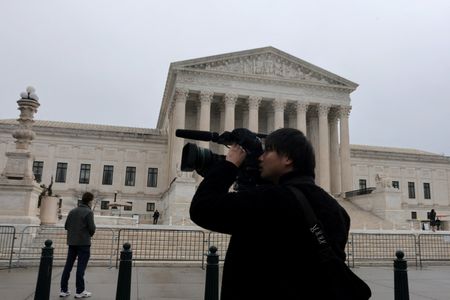
The nation’s highest court will examine on Monday how far a federal law extends in allowing American businesses to pursue compensation for assets confiscated by Cuba’s government, with cases involving ExxonMobil and major cruise companies taking center stage during heightened tensions with the island nation.
Two separate cases will come before the justices involving the Helms-Burton Act of 1996, legislation that opened the door for legal action in American courts against entities that “traffic” in assets taken by Cuba’s communist leadership following the 1959 revolution that installed Fidel Castro.
ExxonMobil is pursuing more than $1 billion from Cuban government-controlled companies for the oil giant’s energy holdings that were confiscated by Cuban authorities in 1960.
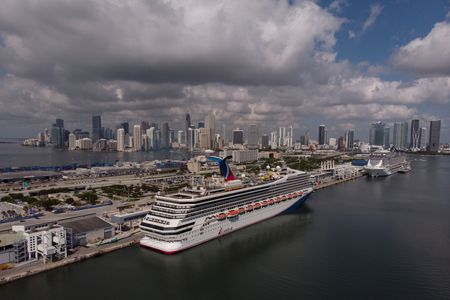
The second case centers on whether four major cruise companies — Carnival, Royal Caribbean, Norwegian Cruise Line and MSC Cruises — bear responsibility for utilizing port facilities constructed by an American firm that Cuba also seized in 1960. The cruise industry case will be presented to the court first.
The Trump administration is supporting ExxonMobil’s position in the legal battle.
Current U.S. policy has labeled Cuba “an unusual and extraordinary threat” to American national security, blocking Venezuelan oil shipments to the Caribbean nation and warning of potential tariffs on any country providing fuel supplies.
Though the cases address different legal questions, both examine how extensive Congress meant the Helms-Burton Act’s remedies to be. The Supreme Court could remove obstacles that plaintiffs encounter when filing suits under this legislation.
Castro’s seizure of ExxonMobil’s entire Cuban energy portfolio represented a $70 million loss when it occurred. The company’s present-day claim carries a much higher value due to accumulated interest and possible enhanced damages.
In 2019, ExxonMobil filed suit against Corporación CIMEX, Cuba’s biggest business conglomerate. The energy company alleged that CIMEX continues to possess and generate profits from the seized assets.
ExxonMobil brought the case to the Supreme Court following a lower court decision that Cuban government-owned entities facing Helms-Burton Act litigation can claim foreign sovereign immunity, a legal protection that shields foreign governments and their representatives from American lawsuits unless specific exceptions exist.
The cruise ship dispute was initiated by Havana Docks, an American entity that held a 99-year agreement for building and managing dock facilities at Havana’s port, originally granted in 1934 by Cuba’s then-government. Castro’s administration canceled that contract.
The four cruise companies targeted by Havana Docks operated at the terminal between 2016 and 2019, following former President Barack Obama’s relaxation of travel restrictions to the Caribbean island.
A federal judge determined that the cruise operators had illegally participated in trafficking by utilizing the terminal, ordering judgments exceeding $100 million against them. Havana Docks filed an appeal after a lower court dismissed those judgments, determining the company lacked a valid claim since its agreement would have ended in 2004, years before the cruise lines operated there.
When Congress enacted the Helms-Burton Act, lawmakers gave the president authority to suspend its court lawsuit provision based on national security considerations. Three presidents subsequently suspended this provision to prevent diplomatic disputes with allies including Canada and Spain, whose businesses had invested in Cuba. Trump removed that suspension in 2019 during his initial presidency.
Stock market futures dropped Monday morning as investors grew concerned about fresh trade uncertainty following President Trump’s announcement of new 15% tariffs after the Supreme Court blocked his earlier trade policies.
In a 6-3 decision Friday, the nation’s highest court invalidated most of the trade levies Trump had put in place last year, ruling that the emergency legislation he used as justification didn’t provide authority for such tariffs.
Working under different legal authority, Trump first declared a 10% worldwide levy, then increased it to 15%, with the policy potentially remaining in effect for five months as his administration looks for more permanent solutions.
Arthur Laffer Jr., who leads Laffer Tengler Investments, explained the challenge facing corporations: “It’s really hard from a business standpoint when you are at a company to know how do you plan if you’re not even sure about suppliers, supply chains and what the tariffs are going to look like.”
He added: “That’s a huge concern for corporate America and why it was really important to get that hammered out and ironed out as fast as possible, so that companies know what the playing field really looks like, and they can plan accordingly.”
Despite Monday’s decline, all major market indexes posted gains for the previous week as traders initially responded positively to the Supreme Court’s ruling, with the tech-heavy Nasdaq ending a five-week slide.
Early Monday trading showed Dow futures falling 125 points or 0.25%, while S&P 500 futures dropped 15.5 points or 0.22%. Nasdaq 100 futures decreased 91 points or 0.36% as of 5:22 a.m. Eastern Time.
Large technology companies mostly traded lower before markets opened, though Alphabet rose 0.5% after climbing about 4% Friday.
Chip giant Nvidia gained 0.2% ahead of its quarterly financial results scheduled for Wednesday. Investors will closely watch comments from the world’s most valuable company for clues about the artificial intelligence industry, which has faced increasing investor doubt.
Expensive stock prices and concerns about AI’s disruptive effects have recently hurt technology and other sectors, as market participants question whether enormous AI investments are generating returns.
Financial reports from major software companies like Salesforce and Intuit will draw attention this week, particularly since the S&P 500 software index has fallen over 20% this year due to mounting AI disruption worries.
In individual stock movements Monday, pharmaceutical company Eli Lilly jumped 4% after competitor Novo Nordisk’s weight-loss medication performed worse than Lilly’s treatment in a Copenhagen study.
Digital currency and blockchain stocks declined as bitcoin dropped approximately 2%, with exchange operator Coinbase Global and crypto investor Strategy each falling more than 1%.
Precious metals mining companies rose broadly as gold and silver prices increased. Leading gold producer Newmont advanced 1.1% while silver miner Hecla Mining gained 2.5%.
A senior executive at major Indian technology company Wipro is pushing back against fears that artificial intelligence will devastate the software services industry, arguing instead that AI adoption will significantly increase demand for tech workers.
The software services sector, valued at $283 billion globally, has experienced significant stock market declines as investors worry that AI technology could fundamentally disrupt the industry’s labor-heavy business approach.
However, Wipro’s Chief Technology Officer Hari Shetty sees things differently. In a recent interview, he stated: “When you look at the entire gamut of things that’s possible, it really appears like a large opportunity for us.” Shetty predicted that AI will generate more employment opportunities than it eliminates.
“What you’re seeing today is basically task automation. What we are really talking about is autonomous enterprise, which is a completely different ball game that will require IT services companies to work deeply with clients to actually convert them,” Shetty explained.
The technology leader described AI as “probably the single biggest opportunity” facing the industry, comparing its potential impact to groundbreaking innovations like electricity and the internet. He believes current discussions focus too heavily on automation while overlooking a much larger transformation taking place.
Drawing from World Economic Forum projections, Shetty noted that AI technology could generate 170 million new positions worldwide while affecting approximately 92 million existing roles. He emphasized that India’s information technology industry will experience high demand for specialized capabilities including model training, data management, and ethical AI development.
“The primary differentiation here is people who know AI and people who do not know AI,” he observed.
Shetty drew parallels to cloud computing, suggesting that AI will expand rather than reduce the scope of work for service providers. He reported that Wipro continues experiencing robust demand for younger engineers who possess AI expertise, contradicting forecasts that the industry’s traditional workforce structure will be undermined.
According to Shetty, companies require partners with deep understanding of their operational processes to facilitate their evolution into “autonomous enterprises,” a transformation he anticipates will influence technology investment patterns over the coming decade.
“We clearly think AI is a dominant force, at least for the next decade to two decades, in terms of the kind of business that it will drive,” he concluded.
A prominent Swiss manufacturing association condemned President Donald Trump’s weekend decision to boost temporary import duties to 15% from 10% on goods from all nations, calling the move destructive to global economic stability.
The Swiss industry group Swissmem issued a statement Monday saying the tariff increase is worsening worldwide economic turmoil and discouraging business investments across international markets.
Switzerland faced Europe’s steepest U.S. trade penalties last August when Trump slapped a 39% import tax on Swiss products. Swiss officials managed to negotiate that rate down to 15% in November, matching what European Union countries pay.
Swiss leaders are now working to finalize that agreement, which the Trump administration wants completed before March ends.
Swissmem called on Switzerland’s government to continue pursuing the trade deal to establish legal clarity while condemning the latest tariff action.
“U.S. President Donald Trump’s announcement that he will increase the additional tariff imposed on Friday from 10% to 15% is exacerbating the current chaos,” Swissmem said. “Global uncertainty is huge. This is dampening investment activity.”
The president initially implemented a 10% temporary duty Friday following a Supreme Court ruling that invalidated his earlier tariff system, then raised it to 15% Saturday.
According to Swissmem, the new universal tariffs appear separate from the 15% rate Switzerland previously negotiated with Washington.
However, when combined with an existing 5% levy on industrial products that predates Trump’s global tariff campaign, Swiss exporters could face roughly 20% total duties, the organization warned.
“This will significantly increase prices for American customers,” Swissmem stated, adding that the mechanical and electrical engineering industry’s only silver lining is that competing foreign companies will likely face similar penalties.
Switzerland removed all its industrial tariffs in 2024.
A major pharmaceutical company announced disappointing results Monday for its experimental weight loss medication, dealing a significant blow in the competitive obesity drug marketplace.
Danish drugmaker Novo Nordisk revealed that its developing treatment CagriSema performed worse than competitor Eli Lilly’s tirzepatide when tested directly against each other in clinical studies.
The clinical study was structured to demonstrate that CagriSema could match tirzepatide’s effectiveness in helping patients lose weight, but the experimental drug failed to reach that benchmark, according to company officials.
This disappointing outcome represents a major challenge for Novo Nordisk as it attempts to reclaim its early leadership position in the profitable weight management pharmaceutical sector, where consumers increasingly demand more powerful treatments.
Following the announcement, Novo Nordisk’s stock value dropped 11% by mid-morning European trading.
According to the company’s data, CagriSema helped patients achieve a 23% reduction in body weight during the 84-week study period, while Eli Lilly’s tirzepatide produced a 25.5% weight reduction in the same trial.
These findings indicate that Novo’s developing medication was less successful than Eli Lilly’s existing treatment, which consumers can already purchase under the brand names Zepbound and Mounjaro.
Company officials noted that additional studies are currently investigating CagriSema’s complete weight reduction capabilities, including testing stronger dosage combinations.
Meanwhile, Lilly’s stock price increased 4% to $1,049.94 during pre-market trading in the United States.
The United States Supreme Court has delivered a significant blow to former President Trump’s trade policies by striking down roughly half of his administration’s tariffs. The high court’s decision has left American companies across the nation wondering if they will see refunds for tariffs they have already paid.
The ruling represents a major shift in trade policy that could have widespread implications for businesses that have been operating under the tariff structure implemented during the Trump presidency. Companies are now seeking clarity on potential reimbursements following the court’s decision to invalidate a substantial portion of these trade measures.
The popular fried chicken restaurant chain KFC has announced plans to significantly increase its reliance on domestically-raised poultry through a major financial commitment to British farming operations.
The fast-food giant revealed it will invest an additional £10 million into the poultry industry, bringing the company’s total financial commitment to nearly £100 million. This investment strategy aims to ensure that by late 2026, more than one-third of all chicken used in KFC locations across the United Kingdom and Ireland will come from British farm operations.
As part of this expanded sourcing initiative, the restaurant chain plans to incorporate chicken wings into its British supply chain operations, marking a significant shift in the company’s procurement strategy.
International trading partners are closely monitoring Washington’s response after the Supreme Court blocked President Donald Trump’s tariff program, though global financial markets showed measured reactions to Friday’s landmark decision.
The high court’s ruling could potentially upend trade agreements negotiated following Trump’s announcement of extensive tariffs affecting numerous nations in April 2025.
Officials from China’s Commerce Ministry announced they are performing a “comprehensive assessment of” the court’s decision to overturn tariffs that Trump had implemented using the International Emergency Economic Powers Act.
“China urges the United States to lift the unilateral tariffs imposed on trading partners,” a ministry representative stated without providing their name.
Beijing reinforced its position that trade conflicts produce no victors, with the official Xinhua News Agency reporting that a spokesperson described Trump’s previously announced measures as actions that “not only violate international economic and trade rules but also contravene domestic laws of the United States, and are not in the interests of any party.”
Following the Supreme Court ruling, Trump announced plans for a new 10% worldwide tariff using Section 122 of the 1974 Trade Act as legal justification, subsequently raising that figure to 15%.
Nations like China and other Asian countries that faced elevated import taxes on their goods could see some relief under this approach. However, allies including Japan and the United Kingdom might encounter increased tariff rates.
During a CBS News appearance Sunday, U.S. Trade Representative Jamieson Greer emphasized that America intends to honor existing trade agreements and anticipates partners will reciprocate.
“The deals were not premised on whether or not the emergency tariff litigation would rise or fall,” Greer, who serves as Trump’s lead trade negotiator, explained. “I haven’t heard anyone yet come to me and say the deal’s off. They want to see how this plays out.”
South Korea’s trade minister Kim Jung-kwan warned Monday that continued uncertainty could intensify if the Trump administration proceeds with implementing additional tariffs through alternative legal mechanisms.
Kim indicated that South Korean officials have committed to conducting “amicable” conversations with their American counterparts to reduce potential harm to South Korean businesses. Key South Korean export industries including automotive and steel manufacturing already face tariffs under separate trade regulations.
“Given the uncertainty over future U.S. tariff measures, the public and private sectors must work together to strengthen our companies’ export competitiveness and diversify their markets,” Kim stated.
Treasury Secretary Scott Bessent expressed confidence Sunday that trading partners would honor current agreements and predicted tariff collections would remain consistent.
“Tariff revenues will be unchanged this year and will be unchanged in the future,” Bessent told Fox News, referencing Trump’s proposed 15% global tariffs as a substitute measure.
Regarding potential refunds for import taxes already collected under the now-invalidated tariffs, Bessent said the administration would follow judicial guidance.
“It’s out of our hands and we will follow the court’s orders,” he explained.
Early Monday trading showed U.S. market futures declining, with S&P 500 contracts dropping 0.6% and Dow Jones Industrial Average futures falling 0.5%. Oil prices decreased while the dollar lost ground against both the Japanese yen and euro.
Asian markets displayed a different pattern, with most indices posting gains and Hong Kong’s Hang Seng climbing 2.4%.
LOS ANGELES (AP) — Individual investors were once labeled as “dumb money” by Wall Street professionals.
This term typically described people who made trades based on excitement rather than solid research, followed popular trends instead of analyzing company fundamentals, or jumped into market movements too late.
Those days appear to be over. New data reveals that individual investors actually beat the performance of two widely-held professional index funds last year – SPY and QQQ – which track the S&P 500 and Nasdaq 100 respectively.
According to Vanda, an independent research company, individual investors generated $5.4 trillion in stock and ETF trading volume in 2025. This represents a nearly 47% jump from the year before and marks the highest level recorded since at least 2014.
“I personally want to dispel the myth of retail being dumb money, because it’s not dumb money anymore,” said Joe Mazzola, head trading and derivatives strategist at Charles Schwab, at an investor education event held in Anaheim, California, last November that drew around 800 of the financial services company’s clients.
While Americans have participated in stock markets for decades, most did so passively through workplace retirement plans like 401(k)s. However, the past ten years have brought mobile trading applications, commission-free trades, investment-focused social media groups, and accessible online educational resources that have sparked a do-it-yourself investment revolution.
The pandemic lockdowns marked a turning point. New investors, particularly younger people using platforms like Robinhood, fueled the “meme stock” phenomenon that sent GameStop, AMC Entertainment, and similar companies soaring.
Beyond meme stocks, nearly continuous stock market growth created an appealing environment for new investors to enter. The S&P 500 benchmark has only experienced annual losses three times since 2015.
JPMorgan Chase reported that by early last year, transfers from checking accounts to investment accounts hit their highest point since 2021. The bank suggested some of this activity came from younger Americans who couldn’t afford home purchases and chose stocks instead.
Overall, individual investor money flowing into markets increased approximately 50% from 2023 to early 2025, the report found.
“I would say they are considerably more important as a force in markets right now,” said Steve Sosnick, chief strategist at Interactive Brokers. “Markets used to be really dominated by institutional investors, but if you put enough ants together, they can move a very big log.”
Frank Sabia from Encino, California, began investing in 2018. He’s enhanced his market knowledge through private online investor groups and educational seminars like Schwab’s.
“I learned a lot more about options strategies and charting and everything from there,” he said in an interview in November. “Now I’m independent. I just look for my own trades. I have my own strategy. I hunt on my own.”
Sabia, who works as a high school registrar, trades cryptocurrencies and other investments, but considers options trading his “bread and butter.”
Options involve contracts to purchase or sell stocks at predetermined prices before expiration dates. While requiring less initial capital than stock purchases, they carry higher risks since options expire and small stock price changes can create large swings in contract values.
Last April, Sabia opened a Roth IRA and invested during a market crash triggered by President Donald Trump’s announcement of more extensive tariffs than expected. The news caused the S&P 500 to plunge over 10% in two days – the steepest drop since the 2020 COVID crash.
“I just bought the dip,” Sabia said.
He joined many others in this strategy. Vanda data shows individual investors purchased over $5 billion in stocks during those two days of market decline.
“In April, it was retail (investors) that bought the dip,” Mazzola said. “They were the ones that were willing to step in front. They saw the opportunity.”
Individual investors also made significant “buy-the-dip” purchases on October 10, when markets fell 2.7% after Trump threatened a “massive increase on tariffs” on China.
This year has seen continued high activity from individual investors. J.P. Morgan reports their trading reached record monthly levels last month, with particularly heavy activity in late January as the S&P 500 climbed to all-time highs.
Individual traders also drove silver prices to record levels last month through unprecedented purchases of silver ETFs, according to Vanda data.
Charles Schwab’s analysis of its millions of individual investor clients shows they were net stock buyers in January, favoring Microsoft, Netflix, and Tesla.
Many individual investors have expanded beyond stocks and ETFs into riskier investments. Options trading represented about $650 billion of their activity last year and has grown steadily since at least 2019, Vanda reports.
Noah Goodwin, a high school junior in Castaic near Los Angeles, began options trading through Robinhood early last year using his mother’s custodial account with immediate success.
He purchased $148 worth of Nvidia options on January 20, 2025, the same day the tech company’s shares dropped on news about AI developments from Chinese startup DeepSeek.
Goodwin sold his options that same day.
“I made a $200 profit. My very first trade!” Goodwin said in an interview in November.
Not all his trades succeeded. In July, he attempted to profit from tariff-related market volatility but miscalculated.
“I lost a lot of money, like probably like around $600 to $800,” he said. “So, a horrible month for me.”
“For the most part, with only some exceptions, buying the dip has tended to be a very profitable tactic for many retail investors,” said Sosnick. However, he warned that this strategy sometimes leads to trading decisions without fully considering risks and rewards.
“The risk to it is that for many of them it’s become sort of mechanical,” he said.
Many individual investors balance high-risk moves with long-term portfolio building.
Andy Hu, a Los Angeles financial analyst who attended the November Schwab event, keeps 50% of his portfolio in the SPDR S&P 500 ETF Trust, which tracks the S&P 500’s performance.
For short-term trading, he focuses on micro-cap stocks – very small public companies that can experience dramatic price swings due to limited trading volume.
This approach generated approximately 20% gains in his active trading account through the first eleven months of last year, he said.
Hu stopped trading near year’s end when big tech company declines helped push the S&P 500 to a December loss, dampening Wall Street sentiment.
“I haven’t made a single trade in the last two months,” Hu said.
Investment banking powerhouse Goldman Sachs has bumped up its petroleum price predictions for the final quarter of 2026, increasing its Brent crude estimate by $6 to reach $60 per barrel and West Texas Intermediate to $56 per barrel. The financial firm attributes this adjustment to reduced petroleum reserves among developed nations, while still factoring in no supply interruptions from Iran and maintaining expectations of an oil surplus throughout the current year.
The bank has also revised its annual projections upward, now anticipating Brent crude will reach an average of $64 per barrel for the year, a significant jump from its previous $56 estimate. Similarly, WTI is expected to average $60 annually, up from the earlier $52 prediction.
Monday saw petroleum prices drop approximately 1% as the United States and Iran gear up for their third series of nuclear negotiations, which has helped calm concerns about potential conflict escalation.
Current market activity shows Brent crude futures hovering near $71 per barrel at 0641 GMT, with U.S. WTI crude futures positioned at $65.75 per barrel.
In their weekend analysis, Goldman explained that their $60 Brent projection accounts for a gradual reduction of an estimated $6 risk premium, anticipating that geopolitical stress will diminish, along with a $5 decrease in fair value pricing due to increasing inventories within Organisation for Economic Co-operation and Development nations.
The financial institution continues to project a 2026 surplus of 2.3 million barrels daily, operating under assumptions that exclude major supply interruptions and ongoing Russia-Ukraine tensions.
Goldman noted that their surplus projection incorporates mutual 0.2 million barrel per day reductions in both supply and demand forecasts, reflecting somewhat weaker economic expansion across Asia.
The bank has lowered its 2026 production expectations for Kazakhstan, Venezuela, Iran, and Iraq following actual output shortfalls, while simultaneously raising supply projections for Americas-based production and key OPEC nations with available capacity.
Goldman anticipates that OPEC+ will start implementing gradual production increases during 2026’s second quarter, considering that OECD petroleum reserves haven’t accumulated as expected.
However, the bank warns of potential downside risks of $5 for Brent and $8 for WTI in late 2026 should sanctions relief for Iran or Russia accelerate inventory accumulation and release additional long-term supply capacity.
Looking ahead to 2027, Goldman projects Brent and WTI will average $65 and $61 respectively, with prices climbing to $70 and $66 by December 2027, supported by strong demand and decelerating supply expansion.
Saudi Arabia’s national oil company has finalized agreements to sell multiple shipments of ultra-light crude oil from its massive new Jafurah facility to major American energy companies and an Indian refinery, according to industry sources familiar with the transactions.
The groundbreaking $100 billion Jafurah development contains an estimated 229 trillion standard cubic feet of raw gas reserves and 75 billion barrels of condensate. This project represents a cornerstone of Saudi Aramco’s strategy to significantly increase natural gas production and establish itself as a dominant force in the global energy market while diversifying its light crude oil portfolio.
Sources revealed that Chevron has secured two condensate shipments scheduled for delivery this month and in March, while Exxon Mobil Corporation and Indian Oil Corporation have purchased cargoes set for pickup in March. The transactions were completed at premium rates of $2 to $3 per barrel above Dubai pricing on a free-on-board basis.
Industry insiders indicate that Chevron’s initial shipment will likely be delivered to GS Caltex, its South Korean joint-venture refinery operation, while the second cargo may be destined for Star Petroleum Refining in Thailand.
When contacted for comment, Aramco, Exxon, Indian Oil Corporation, and Star Petroleum Refining Company did not provide immediate responses. GS Caltex was unavailable for comment, while Chevron declined to discuss the matter.
The Jafurah development stands as potentially the largest shale gas operation outside American borders and is projected to achieve consistent daily production of 2 billion cubic feet by 2030.
According to previous reports, Saudi Aramco plans to ship between four and six 500,000-barrel condensate cargoes monthly from Yanbu, the kingdom’s eastern coastal port facility.
Condensate represents a valuable non-gas liquid that processing facilities can convert into petrochemical feedstock naphtha and additional refined products, or blend with crude oil for traditional refinery distillation processes.
Technical specifications from a preliminary crude analysis show the Jafurah condensate measures 49.7 degrees API gravity and contains approximately 0.17% sulfur content.
The analysis indicates that roughly 40% of the product yields petrochemical feedstock naphtha, primarily the heavier variety, while the remaining output consists largely of gasoil and kerosene products.
WASHINGTON – Business leaders, government officials, and economic analysts who thought the chaotic trade policy shifts of last year had stabilized now find themselves facing renewed uncertainty following a Supreme Court decision that dismantled major components of President Donald Trump’s tariff strategy.
The Friday ruling, decided by a 6-3 margin, has recreated the unpredictable environment that characterized early 2025, when tariff policies seemed to change without warning. Companies must now grapple with questions about which products will face taxes, what rates will apply, and which countries will be affected as the administration scrambles for solutions.
Many businesses that had developed strategies to manage higher import taxes now face difficult decisions about adjusting prices, accelerating inventory purchases while tariffs remain uncertain, and potentially postponing hiring or capital investments until clarity returns.
European Central Bank President Christine Lagarde expressed concern about the disruption during her Sunday appearance on CBS’s “Face the Nation.” “If it shakes the whole equilibrium which people in trade have got used to…it is going to bring about disruptions,” Lagarde stated. “You want to know the rules of the road before you get in the car. It’s the same with trade. It’s the same with investment.”
Lagarde emphasized that businesses “want to do business. They don’t want to go into lawsuits,” while expressing hope that future U.S. tariff policies would be “sufficiently thought through so that we don’t have, again, more challenges, and the proposals will be in compliance with the Constitution.”
The Supreme Court determined that the emergency legislation Trump used as justification did not provide authority for imposing the tariffs. In response, Trump announced a global levy using different legal authority – initially set at 10%, then raised to 15% – that would remain in effect for five months while his administration develops more permanent solutions.
EY-Parthenon Chief Economist Gregory Daco noted that while companies had begun adapting to previous tariff structures, underlying trade policy uncertainty persisted and continues affecting business planning. “We’ve seen extreme volatility by country and by product. That’s very uncertain still,” Daco explained. “It’s impossible to plan. You hear that tariffs are off and you are considering how to get refunds. Then a few hours later it’s 10%. Then it’s 15% the next day….Not having that stable framework is hurtful for activity, hiring, investment.”
Federal Reserve policymakers had recently grown confident that tariff-related inflation pressures were beginning to subside, reflecting widespread belief that 2025’s confusion was ending. While that assessment may prove accurate, the situation has become more volatile as the administration explores different tariff approaches that could take months to implement and likely face legal challenges at each stage.
Import tax rates might decrease temporarily but could rise again on an unpredictable timeline as Trump attempts to recreate the court-rejected tariffs through alternative legal mechanisms that may require separate investigations or Congressional approval.
Justice Neil Gorsuch highlighted the importance of procedural protections in creating stable policy in his opinion supporting the majority decision. He noted that proposals surviving the legislative process “must earn such broad support…they tend to endure, allowing ordinary people to plan their lives in ways they cannot when the rules shift from day to day.”
Federal Reserve officials frequently emphasized certainty’s value throughout last year, stating that rapid changes in trade, immigration, and other policies complicated economic analysis and appeared to discourage business hiring and investment decisions.
The Supreme Court ruling’s economic impact comes during a period of generally positive sentiment. A recent National Association for Business Economics survey found nearly 60% of responding economists don’t anticipate a recession for at least twelve months, increasing from 44% in August. Additionally, 74% believe artificial intelligence technology will at least “moderately increase productivity growth over the next three to five years,” potentially representing significant improvement in U.S. economic capacity.
While this new uncertainty wave may not derail that optimism, Oxford Economics Lead U.S. Economist Bernard Yaros suggested it could still negatively impact U.S. growth in coming months. Following Friday’s Supreme Court decision, Yaros calculated that effective tariff rates would drop from 12.7% to 8.3% after excluding the voided levies.
However, this calculation doesn’t account for Trump’s new 15% across-the-board levy, which may or may not affect countries with separate bilateral agreements and would only last five months. Meanwhile, the administration seeks more permanent solutions requiring separate investigations and potentially Congressional action.
“Any economic boost from lowering tariffs in the near term will likely be partly offset by prolonged uncertainty,” Yaros stated. “Even if the administration replicates the overall level of tariffs using other means, the by-sector and by-country implications could end up looking quite different, which will create another bout of trade policy uncertainty for businesses, investors, and households.”
Financial markets are grappling with unexpected turbulence following the Supreme Court’s decision to overturn President Donald Trump’s tariff policies, creating fresh uncertainty rather than the stability many had hoped for.
The high court’s ruling has opened the door to potential refunds that could drain approximately $170 billion from federal coffers, while Trump’s swift implementation of substitute tariffs has already triggered tensions with European partners and added confusion to America’s trade strategy.
Currency markets reflected the instability Monday as the dollar weakened against safe-haven currencies including the Swiss franc and Japanese yen. Treasury bond markets have struggled to assess the implications for government finances and future inflation trends.
Market observers note that while Trump’s new tariffs appear lower and may reduce immediate price pressures, the Court’s limitation of presidential authority creates unpredictable consequences for both markets and the broader economy.
“Uncertainty is back, and given the latest muscle-flexing by European leaders, the risk of escalation is now higher than it was a year ago,” ING analysts said in a note.
The Treasury bond market faces particular challenges from potential litigation seeking tariff refunds, which could tie up courts for months. Revenue from existing tariffs has exceeded $175 billion, representing a small portion of total federal revenues projected above $5 trillion, but still significant enough to require additional government borrowing.
Dan Siluk, head of global short-duration and liquidity at Janus Henderson, warned that refunds would necessitate increased debt issuance. “At the margin, that raises the risk of further steepening pressure at the long end of the curve, particularly if refund-related issuance coincides with already elevated borrowing needs and ongoing QT (quantitative tightening),” he explained.
Ten-year Treasury yields edged up to 4.1% Friday, though they remain below mid-2025 peaks above 4.5%, supported by cooling inflation data and anticipation of Federal Reserve rate reductions. Monday’s Asian trading showed futures-implied yields slightly lower at 4.05%.
“Markets are currently focused on the short-term impact – namely, lower inflation and interest rates falling more quickly,” observed Alberto Conca, chief investment officer at LFG+ZEST in Lugano, Switzerland. “I think that’s rather short-sighted, though, because it increases an already enormous deficit, and yield curves ought to steepen more significantly given that the U.S. government’s finances are, effectively, out of control.”
The Congressional Budget Office had projected Trump’s original tariffs would generate roughly $300 billion yearly over the coming decade for the world’s largest economy.
Trump’s 15% replacement tariff carries a 150-day time limit, with unclear details about timing and scope of implementation. Previous rates varied significantly, with Britain and Australia facing 10% levies while many Asian nations encountered higher charges.
“The bond market faces the biggest concern,” stated Gene Goldman, chief investment officer at Cetera Investment Management, pointing to increased debt issuance if the government must process refunds while funding other spending initiatives.
However, market reactions have remained relatively muted, with some analysts believing lasting damage can be prevented. Morgan Stanley researchers suggest debt markets won’t be overly concerned about fiscal deficits, expecting Trump to find tariff alternatives and any additional funding to utilize shorter-term Treasury bills.
The ruling may also prevent Trump from delivering promised $2,000 tariff dividend payments to Americans, which would have contributed to inflationary pressures.
Nevertheless, another cycle of policy and revenue uncertainty has begun. The dollar extended its decline, losing about 0.4% against the euro Monday, marking nearly 12% in losses since Trump’s second term started in early 2025.
Future market direction depends on how traders interpret the ongoing disruption. Barclays analysts suggest the Supreme Court decision demonstrates effective governmental checks and balances, potentially reducing risk premiums on U.S. assets and currency.
Other market watchers remain focused on inflation implications. “When you have this much liquidity and lowering of tariffs this all fuels growth and causes rates to rise,” said Eddie Ghabour, CEO at Key Advisors Wealth Management in Delaware. “These things can also cause inflation to accelerate in the months to come. I think the bond market is sniffing this out.”
Financial markets across Asia responded with concern to the turbulent developments surrounding America’s trade tariff strategy, according to market analyst Wayne Cole’s assessment of global economic conditions.
Asian trading sessions reflected a “sell America” sentiment as both the U.S. dollar and Wall Street market indicators declined following recent tariff policy upheaval.
The Supreme Court recently overturned President Trump’s primary emergency tariff program, effectively ruling that the administration had violated legal procedures for nearly twelve months. Following this decision, Trump conducted a press briefing announcing a universal 10% tariff on all nations, set to begin Tuesday.
Within a day of that announcement, the President used social media platforms to declare an immediate increase to 15%, apparently catching some administration personnel off guard. The White House released an extensive list Friday detailing products excluded from the original 10% rate, though officials have not clarified whether these exemptions apply to the updated 15% figure.
The legislation Trump is now implementing for the first time requires equal treatment of all countries, meaning every nation faces the same 15% rate. This unusual situation now encompasses heavily sanctioned nations like Russia and North Korea, which had previously avoided the initial tariff measures.
The new policy creates mixed results internationally: some nations including the United Kingdom and Australia will experience increased tariffs, while others such as China may see significant reductions. India has suspended its trade agreement negotiations with America, and European Commission officials have rejected any modifications to existing arrangements.
This presidential authority expires after 150 days unless Congress provides an extension, which Republican legislators may resist given tariffs’ poor performance in public opinion surveys. Administration representatives have stated that actual tariff rates won’t change dramatically and existing trade agreements will remain valid. However, it remains unclear how these deals will function when they were negotiated under tariff structures that no longer exist.
Treasury Secretary Bessent has even warned trading partners of potential embargoes if they fail to honor current agreements. The prospect of America imposing embargoes on itself from global commerce raises questions about enforcement – whether the U.S. Navy would blockade Chinese or European ports, or perhaps find it simpler to blockade American ports instead.
Companies are now rushing to recover approximately $170 billion in tariffs now deemed illegal, with over 1,800 lawsuits already submitted to the U.S. Court of International Trade. Any reimbursements will likely benefit importing businesses rather than consumers who ultimately paid higher prices due to tariffs.
This uncertainty has caused European stock market indicators to drop 0.5%, while S&P 500 projections fell 0.8% and Nasdaq predictions declined 1%. Markets were already nervous ahead of Nvidia’s Wednesday earnings report, which will evaluate the strength of artificial intelligence investment trends.
The world’s most valuable corporation is projected to report a 71% increase in earnings per share for its fiscal fourth quarter, with revenue reaching $65.9 billion. For the upcoming fiscal year, analysts average expectations of $7.76 earnings per share, though projections range from $6.28 to $9.68. Options trading suggests the stock could move at least 6% in either direction following the announcement.
Important developments that may affect markets Monday include appearances by European Central Bank President Christine Lagarde, Bank of England MPC member Alan Taylor, and Federal Reserve Board Governor Christopher Waller. Economic data releases will feature the German Ifo survey, U.S. factory orders, and Dallas and Chicago Federal Reserve surveys.
A major Australian property development company experienced a dramatic financial downturn Monday, with stock values plummeting to their lowest point in nearly four decades following the announcement of substantial losses.
Lendlease Group’s stock price dropped by as much as 9.17% to A$4.160, marking the lowest trading level since mid-December 1987. This represented the company’s most severe single-day percentage drop since February 19, 2024, while Australia’s main stock index fell only 0.7% during the same period.
The property development firm reported a net loss of A$318 million ($224.86 million) for the six-month period ending December 31, a stark contrast to the A$48 million profit recorded during the same timeframe the previous year.
Investment property devaluations and asset write-downs totaling A$118 million significantly contributed to the company’s financial troubles, with most of these losses occurring in properties located across the United States, United Kingdom, and Singapore markets.
The company’s operational losses reached A$200 million after taxes, despite A$87 million in profits generated by their Investments, Development and Construction division, which was overshadowed by a A$287 million loss from their Capital Release business unit.
While the Investments, Development and Construction segment saw reduced contributions from its investment and development operations, the construction arm showed marked improvement, generating A$69 million in operating profits compared to a A$25 million loss the year before, thanks to increased revenue and better project execution.
Company CEO Tony Lombardo described fiscal 2026 as a “transitional year” and expressed optimism that the Investments, Development and Construction division would show stronger performance in the second half of the fiscal year and continuing into 2027.
Despite the challenging financial results, Lendlease maintained its annual earnings forecast for the IDC segment at 28-34 Australian cents per share, citing anticipated gains from upcoming transactions.
Shareholders will receive an interim dividend payment of 6.2 Australian cents per share, representing a slight increase from the 6 cents distributed during the previous year’s comparable period.
Federal customs officials announced they will discontinue collecting tariffs that the Supreme Court ruled unconstitutional, effective Tuesday at 12:01 a.m. Eastern time.
U.S. Customs and Border Protection informed shipping companies through its cargo messaging system that all tariff codes linked to former President Donald Trump’s International Emergency Economic Powers Act orders will be deactivated as of Tuesday morning.
The Supreme Court struck down these duties as illegal on Friday, yet the customs agency continued collecting them at entry points for more than three days following the ruling. Officials provided no explanation for the delay in implementation.
This cessation of IEEPA-based tariff collection occurs simultaneously with Trump’s introduction of a replacement 15% worldwide tariff using different legal authority.
The customs agency’s notice did not address whether importers who paid the now-illegal tariffs might receive refunds. The message also clarified that other Trump-era tariffs remain unaffected, including those enacted under national security provisions and unfair trade practice statutes.
“CBP will provide additional guidance to the trade community through CSMS messages as appropriate,” the agency stated.
According to Reuters reporting, the Supreme Court’s decision potentially subjects over $175 billion in Treasury revenue from these IEEPA tariffs to refund claims. Economists from the Penn-Wharton Budget Model estimated these particular tariffs were bringing in more than $500 million daily in gross revenue.
President Donald Trump announced plans to implement a 15% temporary tariff on imports from all nations, up from the current 10%, after the Supreme Court invalidated a significant portion of his previous trade measures. The administration is basing these new import duties on Section 122, a different legal provision that has not been previously tested.
Trade Representative Jamieson Greer indicated that nations with existing trade agreements with the United States have not indicated they plan to abandon those deals despite the high court’s decision.
The announcement has sparked responses from trading partners worldwide.
China’s commerce ministry released a statement Monday saying the country is conducting a “full assessment” of the Supreme Court’s tariff decision while calling on Washington to remove “relevant unilateral tariff measures” imposed on trading partners.
“U.S. unilateral tariffs … violate international trade rules and U.S. domestic law, and are not in the interests of any party,” the Chinese ministry stated. “China will continue to pay close attention to this and firmly safeguard its interests.”
The European Commission called on the United States to honor the conditions of a trade agreement between the EU and U.S. that was established last year.
“The current situation is not conducive to delivering ‘fair, balanced, and mutually beneficial’ transatlantic trade and investment, as agreed to by both sides” in the joint statement outlining last year’s trade deal, the Commission stated. “A deal is a deal.”
European Central Bank President Christine Lagarde expressed concerns Sunday that changes in U.S. trade policy could create business disruptions again, hoping any new tariff strategies are “sufficiently thought through” so businesses understand what to anticipate.
“To sort of shake it up again is going to bring about disruptions,” Lagarde commented on CBS’ “Face the Nation.”
She added that people “want to do business. They don’t want to go into…lawsuits. So I hope it’s going to be clarified, and it’s going to be sufficiently thought through so that we don’t have, again, more challenges, and the proposals will be in compliance with the (U.S.) Constitution.”
Helene Budliger Artieda, who leads Switzerland’s State Secretariat for Economic Affairs, told Swiss publication SonntagsBlick that Switzerland should prepare for U.S. tariffs to become a permanent fixture.
“I suspect we will have to come to terms with U.S. tariffs. It is clear that the U.S. administration remains committed to its trade policy goals: reducing the U.S. trade deficit, achieving greater reciprocity in international trade, and bringing production back to the United States.”
American stock futures dropped while several Asian markets posted gains Monday following the Supreme Court’s decision to overturn the majority of President Donald Trump’s comprehensive tariff policies.
Markets in Tokyo remained closed due to a holiday observance.
Hong Kong’s market led the regional rally with the Hang Seng index climbing 2.2% to reach 27,003.47. However, Shanghai’s Composite index declined 1.3% to 4,082.07.
South Korea’s Kospi index advanced 1.1% to 5,873.07, while Australia’s S&P/ASX 200 dropped 0.4% to 9,041.00. Taiwan’s Taiex posted a strong 1.4% increase.
These varied market responses reflect “the winners-and-losers effect of shifts in tariff policy that has just delivered a boost to countries who previously had a comparatively bad deal,” Benjamin Picton of Rabobank explained in his market analysis.
“U.S. tariff policy will continue to be a source of uncertainty for markets as traders attempt to price in the implications of what is still a movable feast,” Picton noted.
American futures contracts showed declines across the board, with the S&P 500 future falling 0.7%, the Dow Jones Industrial Average future dropping 0.6%, and the Nasdaq composite future declining 0.8%.
Last Friday, Wall Street maintained stability despite the Supreme Court’s decision against Trump’s extensive tariff program, which had caused significant market volatility when initially announced last year.
The S&P 500 increased 0.7% to 6,909.51, after fluctuating between modest gains and losses prior to the court’s announcement. This movement came amid disappointing economic data showing reduced U.S. growth and rising inflation rates.
The Dow Jones Industrial Average gained 0.5% to 49,625.97, while the Nasdaq composite advanced 0.9% to 22,886.07.
Despite the court’s ruling, tariff policies will persist in some form. Trump announced Monday afternoon his intention to pursue alternative methods for imposing import taxes on foreign goods, describing the court’s decision as “terrible.”
“Just so you understand, we have tariffs, we just have them in a different way,” Trump explained to reporters during an afternoon press conference. He indicated plans to sign an executive order implementing a 10% worldwide tariff under legislation that could restrict its duration to 150 days, later increasing that figure to 15%.
The president also mentioned exploring additional tariff options through other channels, including measures requiring Commerce Department investigations.
Market responses have remained cautious due to ongoing uncertainty about Trump’s future actions.
On Wall Street, Akamai Technologies experienced one of the day’s steepest declines, falling 14.1%. The cybersecurity and cloud computing firm reported fourth-quarter 2025 results exceeding analyst expectations but provided profit projections for the coming year that disappointed investors.
Akamai announced plans to allocate a larger portion of its revenue toward equipment and other investments in the upcoming year, serving as another potential sign of how computer memory shortages from the AI surge are impacting businesses across the economy.
Disappointing economic reports showing slower U.S. growth and accelerating inflation generated relatively subdued investor reactions.
These reports highlight the challenging position facing the Federal Reserve as it determines interest rate policy, though they didn’t significantly alter trader expectations for Fed actions. Market participants continue anticipating at least two rate reductions this year, based on CME Group data.
Reduced interest rates could stimulate economic activity and boost investment values, but they also carry the risk of exacerbating inflation. Federal Reserve officials indicated at their most recent meeting their desire to see further inflation decreases before supporting additional rate cuts.
In early Monday trading, U.S. benchmark crude oil decreased 53 cents to $65.95 per barrel, while Brent crude, the international benchmark, fell 51 cents to $70.79 per barrel.
The U.S. dollar weakened to 154.11 Japanese yen from 154.99 yen, and the euro strengthened to $1.1828 from $1.1780.
Gold prices increased 1.9%, while silver prices jumped 5.5%.
Currency markets responded Monday to the US Supreme Court’s ruling against President Donald Trump’s extensive tariff program, with the American dollar weakening as investors interpreted the decision as beneficial for worldwide economic expansion.
The euro climbed 0.4% to reach $1.1823, while the British pound gained similar ground to hit $1.3521 during early Asian trading sessions. Trading activity remained subdued due to holidays in Japan and China’s Lunar New Year celebration. Against the Japanese yen, the dollar dropped 0.4% to 154.42.
Friday’s Supreme Court ruling determined that Trump’s comprehensive tariff strategy went beyond presidential powers. In response, Trump criticized the court’s decision and implemented a broad 15% import tax, while maintaining that existing high-tariff agreements with trading partners should remain in effect.
“It weakens the dollar in the sense that it potentially benefits non-U.S. growth,” explained Sim Moh Siong, a currency analyst at OCBC Bank in Singapore.
Siong noted that the long-term currency effects remain uncertain, as reduced US government income could harm both the fiscal situation and dollar strength, though limiting Trump’s authority might reduce policy uncertainty.
Both the New Zealand and Australian currencies showed morning gains, with Australia’s dollar surpassing 71 cents while New Zealand’s currency approached 60 cents. The Swiss franc, considered a safe investment during uncertain times, jumped 0.5% to 0.7716 francs per dollar.
“This decision is another chip away at Trump’s power … so that’s a positive for markets,” stated Jason Wong, a strategist with BNZ in Wellington.
“But there’s so many factors, there’s all these moving parts, it’s not tradable,” Wong added.
Beyond tariff concerns, financial markets are monitoring US military expansion in the Middle East as America pressures Iran to abandon nuclear weapon development, while also anticipating Trump’s Tuesday State of the Union speech.
Trump’s substitute tariffs will last 150 days, though uncertainty remains about whether the US must reimburse importers for previously collected duties, as the Supreme Court didn’t address this matter.
Financial experts predict extended legal battles and renewed confusion that could hamper economic activity while Trump explores alternative methods to reinstate global tariffs permanently.
“Things don’t change too much,” said Martin Whetton, Westpac’s head of financial markets strategy in Sydney.
On Sunday, the European Commission insisted the US honor last year’s agreement with the EU, which eliminates tariffs on certain items including aircraft and replacement parts.
Asian trading partners cautiously evaluated new uncertainties, joining investors who have been surprised by market reactions to Trump’s trade policies, which have not succeeded in reducing America’s trade deficit.
Before Trump’s election victory, investors had expected tariffs to strengthen the dollar, assuming other nations would devalue their currencies to counteract export damage.
However, throughout 2025 the dollar weakened, with the dollar index falling over 9%, as markets focused on expected interest rate reductions, concerns about the US budget deficit, and Trump’s unpredictable policy changes.
“The key issue … is that the Trump administration will be much more constrained in their ability to use tariffs in general,” ANZ’s chief economist Richard Yetsenga said during the bank’s podcast.
“I don’t think this will change too much about the global economy,” Yetsenga concluded.
Financial markets across Asia displayed cautious trading Monday as investors sought clarity on shifting U.S. trade policies, while the American dollar weakened amid growing uncertainty about tariff implementation.
The market turbulence follows the Supreme Court’s decision to overturn President Donald Trump’s emergency tariffs, prompting him to declare a new 10% levy on global imports before quickly raising it to 15% – a move that apparently caught some administration officials off guard.
“The tariff landscape is now more uncertain than before, uncertainty is not good news for any economy or market,” said Rodrigo Catril, a senior FX strategist at NAB.
“Unless common sense prevails, we could be entering a circular process where new tariffs are announced, then potentially overturned, only for new tariffs to be announced, and we do the dance again.”
Key details about the tariff rollout remain unclear, including implementation timing, potential exemptions, and whether all nations will face the full 15% rate. Previously, countries like the UK and Australia operated under 10% rates, while many Asian nations faced higher tariffs.
Given the uncertainty, MSCI’s comprehensive Asia-Pacific stock index excluding Japan managed a modest 0.5% gain during quiet trading sessions. South Korea continued its impressive streak with another 2.0% increase, building on last week’s 5.5% surge to record levels.
Technology markets face a major test this week with Nvidia’s earnings announcement. The chip manufacturer, representing nearly 8% of the S&P 500, is projected to report a 71% jump in earnings per share to $7.76, though analyst predictions vary widely from $6.28 to $9.68.
Treasury markets felt the impact of tariff developments, as policy reversals could force the government to return approximately $170 billion in collected revenue. Such a scenario would theoretically expand the fiscal deficit by half a percentage point to roughly 6.6% of GDP.
Mixed economic signals also influenced trading, with December quarter growth falling short of expectations while core inflation exceeded forecasts. These developments reduced expectations for a June Federal Reserve rate cut from over 60% to around 52%.
Currency markets reflected the policy confusion, with the dollar declining 0.4% against the Japanese yen to 154.36, while the euro strengthened 0.4% to $1.1826. The Swiss franc also gained 0.5% against the dollar.
Commodity markets showed safe-haven buying, with gold rising 0.8% to $5,143 per ounce and silver jumping 2% to $86.24 after Friday’s nearly 8% climb.
Oil prices remained volatile following Trump’s warning of potential military action against Iran if nuclear negotiations fail. Talks are scheduled for Thursday in Geneva. Brent crude dropped 0.6% to $71.29 per barrel, while U.S. crude fell 0.8% to $65.95.
Oil markets fell on Monday following President Donald Trump’s announcement that he plans to increase tariffs on imports from all nations, sparking concerns about worldwide economic growth and energy demand.
By late Monday evening, Brent crude had dropped 45 cents to $71.31 per barrel, representing a 0.63% decline, while U.S. crude fell 50 cents to $65.98 per barrel, down 0.75%.
During a Saturday announcement, Trump revealed plans to increase temporary import tariffs from 10% to 15% on goods from all countries – the highest rate permitted under current law. This decision follows the U.S. Supreme Court’s rejection of his earlier tariff program.
The new tariff announcement counteracted recent price increases driven by escalating tensions between the United States and Iran, which had pushed both Brent and West Texas Intermediate crude prices up over 5% during the previous week.
British engineering company Rolls-Royce Holdings is reportedly preparing to unveil a major shareholder return program worth up to 1.5 billion pounds ($2.02 billion) when it releases annual earnings results this week, according to Sky News.
The television network reported Sunday that the aerospace manufacturer plans to announce the substantial share buyback initiative alongside its yearly financial report. TV Delmarva was unable to independently confirm these details, and company representatives have not yet responded to requests for comment.
The potential announcement comes after Rolls-Royce demonstrated strong financial momentum throughout the previous year. Last July, the company raised its annual profit projections during its mid-year earnings report, boosting its operating profit forecast by 300 million pounds to reach 3.2 billion pounds. The firm also increased its free cash flow expectations by 200 million pounds to 3.1 billion pounds.
This would represent the second significant buyback program from Rolls-Royce in consecutive years. The company previously initiated a 1 billion pound share repurchase plan approximately one year ago when announcing its annual results.
The current exchange rate shows $1 equivalent to 0.7417 pounds.
A Dubai aviation firm appears poised to complete the acquisition of an aircraft leasing business, according to industry insiders familiar with the negotiations.
Sources indicate that DAE Capital, headquartered in Dubai, is approaching a final agreement to acquire control of Macquarie AirFinance’s leasing operations. Both companies have not yet provided responses to inquiries about the potential transaction.
Earlier this year in January, reports surfaced that DAE Capital had advanced to the final selection round for purchasing Macquarie’s aviation leasing portfolio. The company faced competition from Saudi Arabia’s AviLease and Qatar’s Lesha Bank during the bidding process.
The anticipated transaction emerges from an intense competitive bidding environment, driven by unprecedented demand for commercial aircraft. Major manufacturers Boeing and Airbus are currently struggling to produce sufficient numbers of jets to satisfy airline requirements worldwide. This supply shortage has generated lucrative opportunities for aircraft leasing company owners to command higher sale prices.
DAE Capital’s parent company, Dubai Aerospace Enterprise, previously completed a significant acquisition in 2017 when it purchased AWAS, a Dublin-headquartered firm that ranked as the world’s tenth-largest aircraft lessor at the time.
Movie theaters across the nation experienced a sluggish weekend as returning films dominated the charts, with Sony Pictures Animation’s family-friendly ‘GOAT’ claiming the number one position by a narrow margin over Warner Bros.’ R-rated ‘Wuthering Heights.’
The animated feature ‘GOAT’ brought in $17 million during its second weekend in theaters, while ‘Wuthering Heights’ collected $14.2 million, based on Sunday’s studio projections. Both movies are now in their second week of release.
The weekend proved particularly challenging for new releases, with every fresh title failing to reach the $10 million mark. This included the faith-centered follow-up ‘I Can Only Imagine 2,’ Glen Powell’s dark comedy ‘How to Make a Killing,’ and the critically panned horror flick ‘Psycho Killer,’ which currently holds a dismal 0% score on Rotten Tomatoes. However, Baz Luhrmann’s immersive documentary ‘EPiC: Elvis Presley in Concert’ provided a bright note, generating $3.3 million from just 325 IMAX locations during its limited run before expanding nationwide on Feb. 27.
‘These somewhat slower weekends can be a land of opportunity,’ said Paul Dergarabedian, the head of marketplace trends for Comscore.
The Stephen Curry-produced ‘GOAT,’ featuring the voice of ‘Stranger Things’ star Caleb McLaughlin as a determined goat pursuing athletic greatness, experienced only a modest 38% decline in its sophomore weekend. Studio executives credit strong audience recommendations for the film’s staying power. The movie has now accumulated more than $58.3 million domestically and reached $102.3 million worldwide.
In contrast, ‘Wuthering Heights’ saw a steeper 57% drop from its debut weekend, bringing its North American earnings to $60 million. International markets contributed an additional $26.3 million, elevating the global tally to $151.7 million against its $80 million production cost. The United Kingdom remains the film’s strongest overseas territory, generating $22.5 million in that market alone.
Lionsgate and Kingdom Story’s ‘I Can Only Imagine 2’ secured third place with an $8 million opening. This sequel to the 2018 Dennis Quaid drama, which earned $86 million on a $7 million budget, fell short of the original’s $17 million debut but met industry forecasts. Despite the modest opening, audiences awarded the film a rare A+ CinemaScore rating.
Amazon and MGM’s ‘Crime 101’ dropped 59% in its second outing, earning $5.8 million for fourth position. The heist thriller starring Chris Hemsworth and Mark Ruffalo has accumulated $24.7 million against its reported $90 million production budget. ‘Send Help’ completed the top five with $4.5 million in receipts.
A24’s ‘How to Make a Killing’ captured sixth place with $3.6 million from 1,600 theaters across North America. The StudioCanal production, drawing inspiration from ‘Kind Hearts and Coronets,’ features Powell as a man systematically eliminating family members to claim a $28 billion inheritance. John Patton Ford, director of ‘Emily the Criminal,’ helmed the project, which received lukewarm critical reception with a 47% Rotten Tomatoes score.
20th Century Studios’ ‘Psycho Killer’ performed significantly worse, landing outside the top ten with only $1.6 million from 1,110 locations. The horror-thriller, penned by ‘Seven’ writer Andrew Kevin Walker and directed by first-time filmmaker Gavin Polone, failed to connect with both critics and moviegoers. PostTrak data revealed that merely 31% of viewers would recommend the film to others.
Current box office figures show the year running approximately 5% higher than the previous year, with Dergarabedian anticipating increased activity when ‘Scream 7’ debuts next weekend.
‘It’s been a kind of rollercoaster ride at the box office,’ he said.
The weekend’s top ten, based on estimated Friday through Sunday ticket sales at U.S. and Canadian theaters according to Comscore:
1. ‘GOAT,’ $17 million.
2. ‘Wuthering Heights,’ $14.2 million.
3. ‘I Can Only Imagine 2,’ $8 million.
4. ‘Crime 101,’ $5.8 million.
5. ‘Send Help,’ $4.5 million.
6. ‘How to Make a Killing,’ $3.6 million.
7. ‘EPiC: Elvis Presley in Concert,’ $3.3 million.
European Union leaders are pushing back against new American tariffs, insisting Washington must honor the terms of a trade agreement reached between the two sides last year.
The European Commission, speaking for all 27 EU nations in trade matters, called on the United States to provide complete transparency about its next moves following a recent Supreme Court decision that invalidated former President Trump’s worldwide tariff system.
The Supreme Court eliminated Trump’s global tariff structure on Friday, prompting the former president to respond by implementing temporary tariffs of 10% on all imports, which he then raised to 15% just one day later.
European officials stated that the current circumstances do not support achieving the mutually beneficial transatlantic trade relationship that both parties committed to in their previous agreement. The Commission emphasized: “A deal is a deal.”
This response marked a significantly tougher stance compared to the EU’s initial reaction on Friday, when officials had simply indicated they were reviewing the Supreme Court’s decision and maintaining communication with American officials.
The trade agreement established last year set American tariff rates at 15% for most European products, excluding items already subject to specific sector tariffs like steel. The deal also eliminated tariffs entirely on certain goods including aircraft and replacement parts. In exchange, European nations removed import fees on numerous American products and abandoned plans for retaliatory tariffs.
EU leadership stressed that European goods must continue receiving the most favorable treatment possible, with no tariff increases above the comprehensive limits previously established. Officials warned that unpredictable tariff policies create disruption and damage confidence in worldwide markets.
The Commission reported that EU Trade Commissioner Maros Sefcovic held discussions about the situation with US Trade Representative Jamieson Greer and Commerce Secretary Howard Lutnick on Saturday.
BRUSSELS — European Union leadership is demanding complete transparency from the United States and insisting America stick to its trade obligations following a Supreme Court ruling that overturned several of former President Donald Trump’s extensive tariff policies.
In response to the court’s decision, Trump criticized the ruling and announced Saturday his intention to implement a worldwide 15% tariff, an increase from the 10% rate he had previously proposed just one day before.
The European Commission stated that current circumstances do not support achieving trade and investment across the Atlantic that is “fair, balanced, and mutually beneficial,” as both nations committed to in their EU-U.S. Joint Statement from August 2025.
Last year, U.S. and European Union representatives finalized a trade agreement establishing a 15% import duty on 70% of goods shipped from Europe to America. The European Commission represents all 27 EU nations in trade negotiations.
A senior EU legislative leader announced Sunday his intention to recommend that the European Parliament’s negotiating committee temporarily halt the ratification process for the agreement.
“Pure tariff chaos on the part of the U.S. administration,” wrote Bernd Lange, who chairs Parliament’s international trade committee, in a social media post. “No one can make sense of it anymore — only open questions and growing uncertainty for the EU and other U.S. trading partners.”
According to Eurostat, the EU’s statistics office, trade between Europe and the United States in goods and services totaled 1.7 trillion euros ($2 trillion) during 2024, averaging 4.6 billion euros daily.
“A deal is a deal,” declared the European Commission. “As the United States’ largest trading partner, the EU expects the U.S. to honor its commitments set out in the Joint Statement — just as the EU stands by its commitments. EU products must continue to benefit from the most competitive treatment, with no increases in tariffs beyond the clear and all-inclusive ceiling previously agreed.”
The top European exports to America include pharmaceuticals, automobiles, aircraft, chemicals, medical devices, and alcoholic beverages including wine and spirits. Major American exports to Europe consist of professional and scientific services such as payment processing and cloud computing infrastructure, petroleum and natural gas, pharmaceuticals, medical equipment, aerospace technology, and vehicles.
“When applied unpredictably, tariffs are inherently disruptive, undermining confidence and stability across global markets and creating further uncertainty across international supply chains,” the commission stated.
Being fundamentally a commercial alliance, the EU possesses significant retaliatory capabilities through its Anti-Coercion Instrument. This mechanism encompasses various options for blocking or limiting trade and investment from nations determined to be applying excessive pressure on EU member states or businesses.
These countermeasures might involve restricting the flow of goods and services in both directions, excluding nations or corporations from EU government contracts, or constraining foreign direct investment. At its most extreme level, such action would effectively deny access to the EU’s 450-million consumer marketplace and cause billions in damages to American businesses and the U.S. economy.
India has postponed plans to dispatch a trade delegation to Washington this week, primarily due to confusion following the U.S. Supreme Court’s decision to overturn tariffs implemented by President Donald Trump, according to a trade ministry official who spoke Sunday.
This represents one of the initial tangible responses from Asian countries to the court’s ruling, which came after Trump implemented a temporary 15% tariff on Saturday – the highest rate permitted under law – on American imports from all nations following the judicial rejection.
“The decision to defer the visit was taken after discussions between officials of the two countries,” said the source, who sought anonymity as the matter is a sensitive one. “No new date for the visit has been decided.”
The postponement stemmed primarily from confusion surrounding tariffs after Friday’s court decision, the official explained.
The Indian delegation was scheduled to depart Sunday for negotiations to complete a preliminary trade agreement, following both nations’ approval of a framework for Washington to reduce punitive 25% tariffs on certain Indian exports connected to New Delhi’s purchases of Russian oil.
American tariffs on Indian products were planned to decrease to 18%, while India committed to purchasing American goods valued at $500 billion across five years, including energy supplies, aircraft and components, precious metals, and technology items.
India’s opposition Congress party had demanded the preliminary agreement be suspended, pushing for renewed negotiations and challenging Prime Minister Narendra Modi’s choice to release a joint statement prior to the court’s decision.
Saturday saw the Indian trade ministry announce it was examining the consequences of the judicial ruling and subsequent American declarations.
Trade Minister Piyush Goyal stated last week that the preliminary agreement could become effective in April, once remaining issues were settled during the delegation’s Washington visit.
The gaming world has evolved into an economic powerhouse, bringing in roughly $190 billion in annual revenue last year – a figure that exceeds what the music and movie industries earn together.
A fresh podcast series titled Hidden Levels is diving deep into this remarkable transformation, exploring how video games made the leap from simple arcade cabinets to becoming one of the world’s most profitable entertainment sectors.
The show examines the journey of an industry that started with basic coin-operated machines and has now become a dominant force in global entertainment, attracting billions of players and generating unprecedented revenue streams.
Cities throughout the United States are facing a challenging real estate paradox: an abundance of vacant office buildings alongside a critical shortage of residential housing.
Property developers are beginning to address this imbalance by transforming underutilized commercial office spaces into residential living units, including apartments and condominiums. However, industry experts note that this conversion process is moving at a gradual pace.
The transformation represents a significant shift in urban development, as spaces once filled with desks and conference rooms are being redesigned to accommodate bedrooms and living areas. This trend reflects broader changes in how Americans work and live, particularly following shifts in office occupancy patterns.
Two office buildings located near Washington D.C.’s Dupont Circle area serve as an example of this conversion trend, with developers planning to create more than 500 residential units from the previously commercial spaces.
While the concept shows promise for addressing housing shortages in urban areas, the conversion process faces various logistical and financial challenges that are slowing widespread adoption of these projects.
Indian Prime Minister Narendra Modi and Brazilian President Luiz Inacio Lula da Silva have strengthened economic ties between their nations by formalizing a mining cooperation agreement during Saturday’s diplomatic meetings in New Delhi.
The mining partnership was established as India works to secure additional raw materials for its growing steel industry while Brazil leverages its position as a leading global iron ore producer. Lula concluded a three-day diplomatic visit to India’s capital this week.
According to Indian government officials, the collaboration will enhance India’s ability to obtain essential steelmaking materials and advanced technologies necessary for sustained industrial growth. Brazil possesses extensive iron ore deposits and substantial reserves of other minerals crucial for steel production.
The partnership will concentrate on drawing investment into mineral exploration, mining operations, and steel industry infrastructure development, government representatives stated.
India currently maintains steel production capabilities of 218 million metric tons, with companies working to increase output to satisfy growing domestic needs fueled by infrastructure projects and industrial expansion.
During discussions with the Brazilian delegation headed by Lula, Modi outlined their focus on strengthening economic cooperation between the two nations.
“We are committed to taking bilateral trade much beyond $20 billion in the next five years,” Modi stated.
Current trade volume between the countries reaches approximately $15 billion annually.
“Our nations will also work closely in areas such as technology, innovation, digital public infrastructure, AI, semiconductors and more,” Modi added.
The two countries have maintained strategic partnership status since 2006, collaborating across multiple sectors including trade, defense, energy, agriculture, healthcare, critical minerals, technology, and digital infrastructure.
Brazil serves as India’s primary trading partner throughout the Latin America and Caribbean region, with both nations coordinating efforts on international matters including United Nations reform, climate change initiatives, and counter-terrorism measures.
During Thursday’s discussions, Lula proposed that Brazil and India should conduct trade using their respective national currencies instead of relying on U.S. dollar transactions. However, he rejected suggestions that BRICS member nations, which include both countries, would establish a shared currency system.
A senior European Central Bank official issued a warning Saturday about substantial inflation risks facing the eurozone, highlighting the growing influence of inexpensive Chinese goods on price trends.
Speaking at a financial conference in Venice, Italy, ECB Governing Council member Fabio Panetta noted that inflation declined more rapidly than economists predicted in early 2026, and upcoming economic forecasts from ECB staff in March will help shape future monetary policy decisions.
“Both upside and downside inflationary risks are significant,” stated Panetta, who serves as head of Italy’s central bank, during his remarks at the Assiom-Forex financial conference.
“Monetary policy must keep a flexible approach, anchored to the medium-term outlook and based on a comprehensive assessment of the data and their implications for inflation and growth,” he continued.
The eurozone experienced inflation dropping to 1.7% in January, marking a 16-month low that falls beneath the ECB’s 2% goal. This decline has prompted concerns among some policymakers that price increases could decelerate excessively.
According to Panetta, while the inflation decrease doesn’t “significantly alter the medium-term assessment, but highlights a number of aspects to be monitored.”
“The main one is the trend in imports from China,” he noted.
Data shows Chinese imports into the eurozone have increased 27% by volume since early 2024, while their prices have decreased by 8%. This trend is pushing down costs for products that compete with Chinese goods, Panetta explained.
“The disinflationary impact remains limited for the time being, but is already visible – with the prices of the goods most exposed to Chinese competition decelerating faster than the rest – and could become more pronounced in the coming months.”
Additional downward pressure on inflation could emerge from potential euro strengthening or corrections in financial markets, where corporate stocks and bonds might not properly reflect economic uncertainties.
“On the other hand, energy markets remain exposed to geopolitical tensions,” Panetta observed, noting that inflation risks could stem from rising commodity costs or increased supply chain disruptions that elevate production expenses.
European wine producers, chemical companies, and distillers are grappling with unexpected complications following the US Supreme Court’s landmark decision to overturn major portions of tariffs imposed during the Trump administration, according to industry representatives across the continent.
The nation’s highest court ruled 6-3 on Friday that the former president lacked authority to use the 1977 International Emergency Economic Powers Act as justification for implementing tariffs without Congressional approval, citing national emergency provisions inappropriately.
While many businesses initially celebrated the outcome after years of legal challenges, European trade associations, corporations, and market analysts now express concern that the decision could make commercial relationships between the two economic regions even more unpredictable, especially after last year’s hard-fought trade agreements.
Paolo Castelletti, who serves as secretary general for Italy’s wine association UIV, warned of potential negative consequences. “This decision risks creating a boomerang effect, generating more uncertainty and freezing orders, while operators wait for a clearer regulatory framework,” Castelletti stated.
Italian wine exports to America represent a crucial market segment, generating approximately 1.9 billion euros in 2024 sales – nearly 25% of Italy’s total global wine shipments.
Industry experts believe Donald Trump will likely pursue alternative methods to implement comparable tariffs, potentially reigniting tensions between America and its key trading partners. Additionally, companies face challenges in securing refunds for previously paid tariffs.
Trump has already announced plans for a new global 10% surcharge through executive order, set to take effect “almost immediately” for an initial 150-day period. The former president also indicated uncertainty about whether refunds would occur and their potential timeline.
French President Emmanuel Macron announced Saturday that France would evaluate the impact of Trump’s new measures, while emphasizing the importance of democratic checks and balances following the Supreme Court’s decision.
Steve Ovara, who leads the Trade Practice Group at King & Spalding law firm, noted that his clients – ranging from major American manufacturers to consumer goods and technology companies – expect any tariff relief to be temporary.
“The main challenge everyone will face, at least in the short term, is additional uncertainty,” Ovara explained.
Wolfgang Grosse Entrup, director of VCI, a German lobbying organization representing chemical and pharmaceutical companies including BASF, Bayer, and Evonik, shares similar concerns.
“For our companies, this isn’t the beginning of a stable phase, but a new period of uncertainty. Those who think this means the end of tariff conflicts are mistaken,” Grosse Entrup said. “New tariffs based on different legal foundations can be imposed at any time,” he added.
Peter Sand, chief analyst at freight pricing platform Xeneta, warned that political risks remain for export-focused companies due to “irreversible” supply chain trends.
“The damage caused to many carriers’ supply chains is largely irreversible,” Sand emphasized.
France’s cosmetics association FEBEA, whose membership includes companies like L’Oréal, expressed caution about the ruling and indicated they would monitor the American administration’s response, particularly regarding potential new tariff implementations.
“We’re all accustomed to twists and turns on tariff matters,” said Emmanuel Guichard, FEBEA’s secretary general.
Massimiliano Giansanti, president of Italian farmers’ federation Confagricoltura, acknowledged that the Supreme Court decision “eliminated the entire legal basis” for Trump’s tariffs, but cautioned it complicates exporters’ situations just as they were adapting to American tariff structures.
“All of this creates profound instability at a time when we need certainties and when we’ve begun processes with our American importers,” Giansanti stated.
In Ireland, whisky exporters are taking a wait-and-see approach before making business decisions, according to Eoin Ó Catháin, director of the Irish Whiskey Association, who believes political discussions and de-escalation offer better solutions to tariff-related problems.
“This isn’t a miracle solution for eliminating tariffs,” Ó Catháin said. “It’s just an additional complication, another twist in this story,” he concluded.
Delaware businesses with international supply chains are facing fresh uncertainty after the Supreme Court invalidated numerous tariffs President Donald Trump had placed on Asian imports, only to see Trump announce new sweeping duties within hours.
The high court’s decision eliminated tariffs that Trump’s administration had placed on major Asian exporters including China, South Korea, Japan, and Taiwan – a critical player in the global technology supply chain that many Delaware companies rely on.
Trump responded swiftly, announcing a new 10% tariff on imports from all nations beginning Tuesday, set to last 150 days under different legal authority. Trade experts warn this could signal additional measures ahead, creating more uncertainty for Delaware businesses and investors.
Japanese officials said Tokyo “will carefully examine the content of this ruling and the Trump administration’s response to it, and respond appropriately.”
China, which is set to welcome Trump for a visit in late March, has not yet issued an official response as the country observes an extended holiday period. However, Christopher Hui, Hong Kong’s financial services secretary, called the U.S. situation a “fiasco” during a Saturday media briefing.
Hui argued that Trump’s new tariff actually highlights Hong Kong’s “unique trade advantages,” stating: “This shows the stability of Hong Kong’s policies and our certainty … it shows global investors the importance of predictability.”
Hong Kong maintains separate customs status from mainland China, which has protected it from direct impact of U.S. tariffs on Chinese products. This arrangement has allowed Hong Kong to sustain trade relationships even as U.S.-China tensions have intensified.
The Supreme Court’s Friday ruling specifically targeted tariffs Trump implemented using the International Emergency Economic Powers Act, which is reserved for national emergencies.
According to Global Trade Alert, the court decision alone reduces the average U.S. trade-weighted tariff rate from 15.4% to 8.3% – nearly cutting it in half.
Countries facing the highest U.S. tariff rates will see the most significant relief. China, Brazil, and India will experience double-digit percentage point reductions, though rates remain elevated.
Taiwan’s government issued a statement saying it was “monitoring the situation closely,” noting uncertainty about how the U.S. will implement trade agreements with various nations.
“While the initial impact on Taiwan appears limited, the government will closely monitor developments and maintain close communication with the U.S. to understand specific implementation details and respond appropriately,” Taiwan’s cabinet announced.
Taiwan recently completed two significant agreements with the United States – a January memorandum committing Taiwan to $250 billion in investments, and a February deal reducing mutual tariffs.
Trade analysts caution that the Supreme Court’s intervention may provide minimal relief for the global economy. They anticipate continued confusion as trading nations prepare for Trump to pursue alternative methods of imposing tariffs that circumvent the court ruling.
Nantapong Chiralerspong, who leads Thailand’s Trade Policy and Strategy Office, suggested the ruling might actually boost Thai exports as uncertainty triggers “front loading” – where exporters rush shipments to the U.S. ahead of potentially higher future tariffs.
Corporate filings reviewed by Reuters show companies throughout the Asia-Pacific region have reported financial losses, supply chain disruptions, and market exits as tariff conflicts intensified through 2025 and early 2026.
European businesses are expressing cautious concern following a U.S. Supreme Court decision that eliminated a significant portion of President Trump’s trade tariffs, warning that the ruling may actually increase uncertainty in international commerce.
The nation’s highest court delivered a major blow to the Republican president by overturning his extensive tariff program, which had been implemented using emergency powers legislation. The decision is expected to have widespread effects across the global marketplace.
Despite celebrations from some companies that had fought lengthy court battles against these trade barriers, European industry organizations, businesses, and market experts are expressing worry that the court’s action could make international trade relationships even more complicated following difficult negotiations last year.
Paolo Castelletti, who leads Italy’s wine association UIV, expressed concern about the decision’s potential consequences. “This ruling … risks creating a boomerang effect, producing further uncertainty and a freeze on orders while operators wait for a clearer regulatory framework,” Castelletti stated.
The stakes are particularly high for Italian wine producers, as the United States represents their largest export market. Italian wine sales to America totaled approximately 1.9 billion euros ($2.3 billion) in 2024, accounting for nearly 25% of Italy’s worldwide wine exports.
Numerous companies are warning that Trump will probably seek alternative methods to implement comparable tariffs, which would reduce any benefits from lower trade barriers. Additionally, the situation could increase friction between America and its key trading partners, while obtaining tariff refunds may prove challenging.
In response to the court’s decision, Trump declared new worldwide tariffs of 10% for an initial 150-day timeframe and admitted uncertainty about whether any refunds would be available.
Steve Ovara, who heads the International Trade Practice Group at King & Spalding law firm, noted that companies his firm represents – ranging from major U.S. manufacturers to consumer and technology corporations – generally anticipate that any tariff relief will be temporary.
“The major issue everybody’s going to be dealing with for at least the short term is some additional uncertainty,” Ovara explained.
Wolfgang Grosse Entrup, the managing director of Germany’s chemical and pharmaceutical industry group VCI, which represents major companies including BASF, Bayer and Evonik, shared similar concerns.
“For our firms, this isn’t the start of a phase of stability, but a new round of uncertainty. Anyone who believes this means the tariff conflict is over is mistaken,” he said. “New tariffs based on a different legal basis are possible at any time.”
Peter Sand, chief analyst at shipping cost platform Xeneta, emphasized that political risks continue to affect freight companies, with supply chain risk reduction becoming an “irreversible trend.”
“The damage to many shippers’ supply chains is largely done and probably won’t be undone,” Sand observed.
France’s cosmetics trade group FEBEA, whose membership includes companies like L’Oreal, indicated it remains “very cautious” about the ruling and plans to monitor how the U.S. government responds, including potential new tariff implementations.
“We are all used to the twists and turns on this subject of customs duties,” said FEBEA secretary general Emmanuel Guichard.
Massimiliano Giansanti, who leads Italy’s agricultural organization Confagricoltura, acknowledged that the U.S. court decision “dismantles the entire legal basis” for Trump’s tariff system, but cautioned it creates complications for exporters who were just beginning to adjust to American trade barriers.
“All this generates deep instability at a time when we need certainty and have begun a process together with our U.S. importers,” Giansanti stated.
Irish whiskey exporters are taking a wait-and-see approach before making any moves, according to Eoin Ó Catháin, Director of the Irish Whiskey Association. He suggested that political discussions and tension reduction would more likely solve tariff issues.
“This isn’t a silver bullet to get rid of tariffs,” he said. “This is just another complication, it’s another twist in the story.”
Delaware businesses are facing continued uncertainty following a Supreme Court decision that eliminated certain federal tariffs, only to see President Trump immediately promise new trade restrictions within hours of the ruling.
The high court’s Friday decision struck down tariffs that Trump had implemented using emergency powers legislation. However, the president quickly announced plans to impose a 10% duty on all imported goods for 150 days using different legal authority, while exploring additional trade penalties against nations he claims use unfair practices.
According to the Trump administration, these trade measures support domestic manufacturing and help narrow America’s trade deficit. However, numerous companies throughout the U.S. have been forced to increase prices and make operational changes to handle the additional costs these tariffs create.
“Any economic benefit from reducing tariffs in the short term will likely be partially negated by an extended period of uncertainty,” explained Michael Pearce, an economist with Oxford Economics. “Since the administration will probably rebuild tariffs using other, more permanent methods, the total tariff level could still end up near current rates.”
Companies attempting to recover the estimated $133 billion to $175 billion in tariffs previously collected that are now considered unlawful face a complex process that will likely benefit larger corporations with greater resources. Regular consumers seeking refunds are unlikely to receive compensation.
Given Trump’s firm stance on trade policy, many companies are preparing for extended legal disputes.
Basic Fun, a Florida toy manufacturer that produces Lincoln Logs and Tonka trucks, recently joined numerous other companies in legal action to recover tariffs paid to the federal government.
Company CEO Jay Foreman expressed concern about potential new tariffs Trump might implement, though he believes toys won’t be targeted. Nevertheless, he stated, “I do worry about some type of perpetual fight over this, at least for the next three years.”
The fresh 10% tariff Trump announced Friday immediately created concerns for Daniel Posner, who owns Grapes The Wine Co. in White Plains, New York. With wine shipments requiring approximately two weeks to travel across the Atlantic, he’s uncertain whether a delivery arriving Monday will face the new charges.
“We’re reactive to what’s become a very unstable situation,” Posner explained.
Ron Kurnik operates Superior Coffee Roasting Co. in Sault Ste. Marie, Michigan, near the Canadian border. Beyond dealing with U.S. tariffs, Kurnik also confronted retaliatory Canadian tariffs for most of last year when exporting his coffee.
“It’s like a nightmare we just want to wake up from,” said Kurnik, whose business has implemented two 6% price increases since tariffs took effect. Although he welcomes the Supreme Court’s decision, he doubts he’ll ever receive a refund.
Various industries, including retail, technology, and agriculture, used the Supreme Court ruling to highlight how Trump’s trade policies have impacted their operations.
The Business Roundtable, representing over 200 American companies, issued a statement urging the administration to focus future tariffs specifically on unfair trade practices and national security issues.
Retail businesses have adopted various strategies to manage tariff effects, including absorbing costs internally, reducing expenses, and diversifying supply chains. However, they’ve still had to pass along some price increases during a time when consumers are especially concerned about inflation.
Dave French, executive vice president of government relations for The National Retail Federation, the country’s largest retail trade organization, expressed hope that lower courts would ensure “a seamless process” for tariff refunds. Friday’s ruling didn’t address this matter.
Trump’s tariffs created significant challenges for the technology industry, as many products are manufactured overseas or rely on imported components. The Computer & Communications Industry Association, representing technology companies that employ more than 1.6 million people, expressed optimism that the decision will reduce trade tensions.
“With this decision behind us, we look forward to bringing more stability to trade policy,” said Jonathan McHale, the association’s vice president for digital trade.
Agricultural producers, who have suffered from higher equipment and fertilizer costs since tariffs began, plus reduced export demand, also voiced their concerns.
“We strongly encourage the president to avoid using any other available authorities to impose tariffs on agricultural inputs that would further increase costs,” stated American Farm Bureau Federation President Zippy Duvall.
The Supreme Court ruled 6-3 that the International Emergency Economic Powers Act didn’t authorize the president to tax imports, a power reserved for Congress. However, the decision only applies to tariffs imposed under that specific law, leaving some industries without any relief.
The ruling maintains tariffs on steel, upholstered furniture, kitchen cabinets, and bathroom vanities, according to the Home Furnishings Association, which represents 15,000 furniture retailers across North America.
At Revolution Brewing in Chicago, aluminum used for cans costs as much as the beer ingredients due to metal tariffs Trump imposed that aren’t affected by the Supreme Court decision. Although the cans are manufactured in Chicago, the aluminum originates from Canada, explained Josh Deth, the brewery’s managing partner.
Tariffs represent just one challenge for his business, which also deals with fluctuating barley prices and declining craft beer demand.
“Everything kind of adds up,” he noted. “The beverage industry needs relief here. We’re getting crushed by the prices of aluminum.”
Italian wine producers severely affected by the tariffs received the Supreme Court decision with doubt, cautioning that it might only increase trade uncertainty with the United States.
The U.S. represents Italy’s largest wine market, with sales tripling in value over the past two decades. Potential EU tariffs, which the Trump administration initially threatened could reach 200%, caused widespread industry concern that persisted even after the U.S. reduced, delayed, and negotiated lower rates.
“There is a more than likely risk that tariffs will be reimposed through alternative legal channels, compounded by the uncertainty this ruling may generate in commercial relations between Europe and the United States,” explained Lamberto Frescobaldi, president of UIV, a trade organization representing over 800 winemakers.
Throughout Europe, initial responses centered on renewed disruption and confusion regarding costs for businesses exporting to America.
Trump’s tariffs could affect pharmaceuticals, chemicals, and automotive parts, noted Carsten Brzeski, an ING bank economist. “Europe should not be mistaken, this ruling will not bring relief,” he warned. “The legal authority may be different, but the economic impact could be identical or worse.”
Federal authorities announced Friday that PacifiCorp has reached a $575 million settlement to resolve government claims stemming from six catastrophic wildfires that occurred in Oregon and California during 2020 and 2022.
According to the Justice Department, the agreement addresses allegations that the utility’s power lines were responsible for igniting four Oregon fires in 2020 and two California fires in 2020 and 2022. The settlement funds will go toward restoring approximately 290,000 acres of burned public lands and reimbursing firefighting expenses.
“This settlement served the Department’s longstanding policy of holding individuals and corporations responsible for damages caused by wildfires. Every fire impacting federal lands, no matter the size, is a priority,” stated U.S. Attorney Eric Grant of the Eastern District of California.
The Justice Department emphasized the importance of recovering firefighting costs, noting that “the U.S. Forest Service now spends more than half of its budget on wildfire suppression annually.”
PacifiCorp released a statement saying the agreement reflects its continued efforts to resolve wildfire-related claims, with total settlements now exceeding $2 billion.
The utility company continues to battle numerous lawsuits connected to Oregon’s devastating 2020 fires. Multiple jury verdicts have already ordered PacifiCorp to pay hundreds of millions in damages to fire victims.
A significant 2023 Oregon jury ruling found PacifiCorp liable for negligent conduct after failing to shut off power to 600,000 customers despite fire danger warnings from officials. The jury’s determination of negligent and willful behavior resulted in punitive damages for a class of property owners, with over 1,000 additional cases scheduled for trial in 2026 and 2027.
The company has appealed this verdict and the case remains in state court.
The Labor Day weekend fires of 2020 rank among Oregon’s most devastating natural disasters, claiming 11 lives, destroying thousands of homes, and burning over one million acres. California’s 2020 Slater Fire and 2022 McKinney Fire also resulted in multiple fatalities.
This week, PacifiCorp announced plans to sell its Washington state wind, natural gas, and distribution operations to Portland General Electric for $1.9 billion as part of efforts to strengthen its financial position. The company has been required to post court bonds while appealing wildfire judgments, creating cash flow challenges.
“Improve the company’s financial stability while simplifying our operations,” CEO Darin Carroll explained Tuesday, adding that the sale would help ensure reliable service for Washington customers.
While PacifiCorp’s parent company, Warren Buffett’s Berkshire Hathaway, maintains over $382 billion in cash reserves, the conglomerate expects its subsidiary to handle its own financial obligations. Greg Abel, who previously headed Berkshire’s utility division, now serves as the company’s CEO.
Following Friday’s Supreme Court decision overturning former President Trump’s emergency tariffs, businesses that transferred their potential refund rights to investment firms are now celebrating – though the road ahead remains complicated.
Mark Mintman, Chief Financial Officer at Atlanta-based toy company Kids2, described the situation as “a tiny win in what seems to be an ongoing, changing environment.” His company received $2 million from a Boston investment fund in return for claims related to $15 million in tariffs paid to customs officials through last September.
Kids2, which brings in 95% of its toy and baby product inventory from China, is currently consulting with attorneys to determine how to protect its refund eligibility. The high court’s ruling delegated the specifics of refund procedures to lower courts, potentially creating an expensive and complex legal process.
The situation became more uncertain when Trump announced Friday his intention to pursue alternative methods for collecting these taxes, leaving importers like Kids2 unclear about their financial outlook.
These arrangements allow businesses to receive immediate partial payments of their potential refunds. Companies retain these upfront payments following the tariff reversal, while any government refunds go to the investment partners. Mintman characterized these deals as a “cost-recovery action,” noting that companies would keep the money regardless of whether tariffs were upheld, while investors would receive nothing in that scenario.
This represents Wall Street’s latest innovation in monetizing future cash flows, similar to existing markets for lawsuit settlement payments and lottery winnings. Music icon David Bowie famously pioneered this concept by selling his royalty streams through “Bowie Bonds.”
Attorney Amy Pasacreta from Orrick’s restructuring division highlighted the substantial uncertainty surrounding refunds. “Are there going to be refunds? And if so, how importers can claim the refunds? And this, as alluded to by President Trump this afternoon, could go on for months or years,” she explained.
Pasacreta anticipates new participants entering the market given the increased probability of eventual refunds, with claim values expected to rise following Friday’s court decision.
“We’ve had inbounds on people looking to find claims to buy, and we’ve also discussed with some sellers (importers) who were in the process of speaking to people before today’s decision, and sort of what it means for them,” Pasacreta noted.
Jay Foreman, head of toy manufacturer Basic Fun, which produces Tonka trucks, Care Bears and K’Nex building sets, indicated via email that he’s considering selling his refund claim if the “discount fee was reasonable.”
Foreman explained he “could take that money and reinvest in our business at once, and also if tariff stay off toys, work with retailers to lower prices ASAP.”
Following Friday’s Supreme Court decision declaring that President Donald Trump overstepped his authority when implementing tariffs through emergency powers legislation, legal experts anticipate a massive wave of refund litigation heading to the U.S. Court of International Trade, where businesses have already assembled teams of attorneys to recover their tariff payments.
Legal professionals specializing in trade law indicate that the number of refund-seeking lawsuits – currently exceeding 1,800 cases – may dramatically increase following the justices’ rejection of the legal foundation supporting approximately $175 billion in customs collections since April of last year.
During a Friday White House press briefing, Trump announced plans to implement additional tariffs while forecasting an extended court battle for businesses pursuing refunds. “We’ll end up being in court for the next five years,” he stated.
Court documents reviewed by Reuters show that Washington-based Crowell & Moring has submitted no fewer than 150 refund cases to the trade court following Trump’s “Liberation Day” tariff declaration last April, advocating for major corporations such as warehouse retailer Costco, beauty company Revlon, and eyewear manufacturer EssilorLuxottica, which produces Ray-Ban glasses.
Sidley Austin, another prominent legal firm, has participated in over 150 tariff-related lawsuits since April, providing representation for companies including J. Crew, Illumina, Dole, and Diageo.
Representatives from both Crowell and Sidley were unavailable for immediate comment.
Among the smaller practices handling substantial caseloads is Grunfeld, Desiderio, Lebowitz, Silverman & Klestadt, a 40-attorney trade specialty firm that has initiated more than 300 tariff lawsuits on behalf of clients including high-end fashion houses Prada and Dolce & Gabbana. Joseph Spraragen, a partner at Grunfeld, explained that clients compensate the firm through flat fees for case initiation.
Legal representatives informed Reuters they anticipate filing numerous additional cases in upcoming weeks at the New York-headquartered Court of International Trade, where importing companies have a two-year window to pursue refund claims.
“The time to do it was yesterday. The next best time to file is today,” stated Richard O’Neill from Neville Peterson, a 10-attorney practice with over 100 pending lawsuits.
Julian Beach from Pillsbury law firm, which maintains more than twelve active cases, identified a crucial question regarding whether the trade court possesses authority to issue rulings with nationwide impact in refund cases. According to Beach, the Justice Department has indicated it will oppose any attempts to secure nationwide injunctive relief.
Trade attorney Brian Janovitz of DLA Piper, who represents clients pursuing refunds, noted that even if the government acknowledges owing refunds for previous imports, the specific procedure remains unclear. He predicted additional trade court lawsuits are probable “because companies will want to preserve that avenue of seeking relief given the uncertainty.”
Pillsbury partner Nancy Fischer suggested that if refund disputes proceed through the courts, the process will likely be combative, referencing Trump’s Friday comments about anticipated litigation.
“It really depends on whether the administration decides to play hardball,” Fischer explained. “It could get resolved quickly, if the parties were in agreement, but I am not so sure that necessarily is going to be the case.”
Federal energy regulators have cleared the way for a massive utility acquisition, announcing Friday their approval of Blackstone Infrastructure’s purchase of TXNM Energy.
The investment firm struck the agreement to buy the utility company last year in a deal valued at $11.5 billion when debt is included.
According to TXNM Energy, the Federal Energy Regulatory Commission determined there is “no evidence that either state or federal regulation will be impaired by the proposed transaction” and confirmed the deal will not create “an adverse effect on rates.”
The company also noted that the mandatory waiting period required under federal antitrust law has now run out, clearing another regulatory hurdle for the transaction.
Market watchers are looking ahead to earnings from artificial intelligence leader Nvidia Corporation next week, hoping the results will help stabilize U.S. stock markets that have been shaken by AI-related concerns and are processing a recent Supreme Court decision overturning President Donald Trump’s broad trade tariffs.
The Supreme Court’s Friday decision to strike down Trump’s tariffs initially boosted stocks and Treasury yields, but investors remain uncertain about what alternative trade measures Trump might implement and how the government will handle litigation and refunds.
Along with this market uncertainty and Nvidia’s upcoming report, Wall Street is paying close attention to quarterly earnings from other technology companies, particularly software firms facing threats from concerns that artificial intelligence could disrupt their operations.
The semiconductor powerhouse Nvidia, currently the world’s most valuable company by market value, will release its report on Wednesday. This comes as major technology stocks and other large-cap companies have started 2026 on weak footing, dragging down the major indexes they’ve helped drive higher in recent years.
Companies known as AI “hyperscalers” have revealed plans to increase capital expenditures for data center construction and other infrastructure projects, which frequently rely on Nvidia’s products, positioning the company for potentially strong financial results, according to Marta Norton, chief investment strategist at retirement and wealth services provider Empower.
“The expectation for outsized results for Nvidia has been a persistent theme over the past few years,” Norton said. “And so it’s hard for Nvidia to surprise when everyone expects it to surprise.”
The S&P 500 benchmark index shows a modest 0.2% gain for the year so far. However, significant volatility exists beneath the surface, with shares in sectors like software, wealth management, and real estate services taking heavy losses due to fears they could be vulnerable to AI disruption.
NVIDIA ANALYSTS WATCH GUIDANCE AND CEO REMARKS
Nvidia’s stock price jumped more than 1,500% from late 2022 through the end of last year. In 2026, the stock has gained approximately 0.8% through Thursday. Other members of the “Magnificent Seven” group of megacap stocks that have powered the current bull market have performed worse this year, with Microsoft shares falling more than 17% in 2026 and Amazon declining 11%.
Nvidia’s stock alone carries enough weight to move major indexes, holding a 7.8% position in the S&P 500.
For its fiscal fourth quarter, analysts expect the company to report a 71% increase in earnings per share alongside revenue of $65.9 billion, based on LSEG data. For the upcoming fiscal year, analysts predict average earnings of $7.76 per share, representing a 66% increase. However, the range of analyst estimates is “significant,” noted Melissa Otto, head of research at S&P Global Visible Alpha. The lowest fiscal year earnings estimate stands at $6.28 per share while the highest reaches $9.68, according to LSEG information.
“If the bulls are right, then the stock is looking probably not too expensive,” Otto said. “If the bears are right…it’s not that cheap.”
Remarks from Nvidia CEO Jensen Huang during the quarterly conference call could have wide-reaching implications for the AI industry, including for hyperscaler companies whose stock prices have faced pressure over concerns about insufficient returns on capital investments.
“Jensen has to come out and show his confidence in his own customers,” said Nick Giorgi, chief equity strategist at Alpine Macro. “The fact that to this point, Nvidia has been a cheerleader for their biggest customers is actually what you should want as an investor in this whole ecosystem.”
SOFTWARE EARNINGS AND STATE OF THE UNION ADDRESS SCHEDULED
Quarterly reports from major software companies Salesforce and Intuit will carry more weight than typical, given the AI-related selloff affecting the industry. The S&P 500 software and services index has dropped approximately 20% year-to-date.
“Next week is going to be pretty important for software,” said King Lip, chief strategist at BakerAvenue Wealth Management. While the broad selling in the sector appears “overdone,” Lip noted, “I think there are some software names that are … going to have to find a way to adapt and innovate.”
AI infrastructure companies Dell and CoreWeave will also report earnings in the upcoming week.
Beyond technology, retailers Home Depot and Lowe’s are scheduled to release results as the fourth-quarter earnings season concludes. Investors will also assess President Donald Trump’s State of the Union address on Tuesday.
Despite technology sector struggles, indexes have received support from a market shift toward sectors including energy, industrials, and consumer staples.
“It’s kind of a perplexing market,” Norton said. “Everything that worked in 2025 is now having a hard 2026. And what was left behind in 2025 is working in 2026.”
The head of the Dallas Federal Reserve Bank shared measured confidence Friday about the direction of inflation while acknowledging significant economic uncertainties that could affect future interest rate decisions.
Lorie Logan, speaking to an audience at Columbia University in New York City, expressed that she holds a “cautiously optimistic” view that current monetary policy positions mean “we’re on a path for inflation to come back down toward our target.”
However, Logan tempered her optimism, stating “I’m not fully convinced that we’re on a pathway to our 2% target” given substantial questions surrounding how existing tariffs have affected the economy and what changes may come following the Supreme Court’s decision to strike down numerous import taxes implemented by President Donald Trump.
The Fed official highlighted several economic forces that could prevent inflation from declining as expected. “There are a lot of tailwinds with fiscal policy here being supportive, financial conditions also being supportive, and we continue to see pretty strong business investment from AI (artificial intelligence) and consumer spending,” Logan explained. “There is the potential for demand to outstrip supply and keep inflation from falling” to appropriate levels.
When discussing the Federal Reserve’s current approach, Logan stated “I do think that policy is well positioned,” adding “I see risks on both sides of our mandate that we need to be attentive to, but I wouldn’t want to speculate about different scenarios that may play out going forward.”
The central bank reduced its key interest rate by 0.75 percentage points during the previous year, bringing it to the current range of 3.50%-3.75%. This move aimed to support a weakening employment market while maintaining sufficient economic restraint to bring inflation back to target levels.
Several Federal Reserve officials expressed discomfort with these rate reductions, particularly as inflation continues running significantly above the 2% goal and actually increased last year when Trump’s tariff policies took effect. Financial markets expect additional rate cuts this year, though Fed policymakers have provided minimal direction.
Logan, who possesses voting rights on the Federal Open Market Committee this year, confirmed her support for the central bank’s choice to maintain current rates during its January 27-28 meeting.
Regarding tariff uncertainty, Logan noted questions about how the system will operate following the Supreme Court ruling, including unclear effects of potential rebates for invalidated taxes on price pressures. “It’s something we’ll be paying attention to, but I don’t have any specific perspective” on potential outcomes, she said.
Logan also discussed technical aspects of the Fed’s money market liquidity management, which has required maintaining an exceptionally large balance sheet. She suggested that payment system innovations and regulatory changes might reduce financial institutions’ need to hold substantial reserve levels.
“I don’t have strong views about the direction of liquidity regulations at the moment,” Logan stated. “I’ve worried over time that we’ve trapped a lot of highly liquid assets” under extensive regulations and “I do think we need to be looking” at these rules “thoroughly.”
Logan reiterated her position that the Federal Reserve should shift from targeting the federal funds rate to focusing on repo market rates for monetary policy, arguing the latter provides clearer signals about money market conditions.
Energy giant ConocoPhillips is reportedly looking into offloading Texas oil field properties valued at roughly $2 billion, according to a Bloomberg News report released Friday that cited sources with knowledge of the discussions.
The oil and gas holdings in question were acquired by the Houston-based company through previous transactions involving Concho Resources and Shell, according to the report.
Sources indicate that ConocoPhillips has enlisted financial advisors to help identify potential purchasers, with both strategic industry players and private equity firms expected to show interest in the properties.
However, the discussions remain in preliminary phases, and the company may ultimately choose to retain ownership of these assets, the sources noted.
During its fourth-quarter earnings announcement, ConocoPhillips revealed it had completed $3.2 billion worth of asset sales in 2025 and continues working toward its goal of disposing $5 billion in assets by late 2026 as part of its business optimization strategy.
The company has not yet provided a response to requests for comment regarding the Bloomberg report.
Federal Reserve officials find themselves navigating fresh uncertainty following the Supreme Court’s decision to overturn major tariffs from the Trump presidency, complicating their efforts to chart the course for interest rates after a turbulent year of economic adjustments.
Central bank policymakers had recently begun feeling more confident that price increases linked to tariffs from the previous year would begin to fade. However, the high court’s ruling has introduced new variables that could either reverse or pause this trend, particularly as the current administration explores alternative methods to reinstate similar import taxes through different legal channels.
Atlanta Federal Reserve President Raphael Bostic outlined several concerns during remarks in Birmingham, Alabama, asking: “Is there a requirement to pay back the firms that have paid in?…If so, that’s a lot of disruption. Does this cause businesses to revert back to old business models about where they are getting their supplies?…Will there be another vehicle to put all those tariffs in at the same level or are there constraints?”
The market’s confusion became apparent in interest rate futures trading on Friday, as investors shifted their predictions between a potential Fed rate cut in June versus waiting until July, demonstrating how the Supreme Court’s decision has complicated economic forecasting.
Key questions remain about whether companies will postpone planned price hikes due to the ruling, potentially lowering inflation, or if they might delay hiring and investment decisions because of the uncertainty, similar to patterns observed last year.
Treasury Secretary Scott Bessent indicated that legal battles over refunds for the invalidated taxes could extend for “weeks, months, years.” He assured that the administration would implement replacement import duties using what he described as established legal authorities to compensate for the tariff gap created by the Supreme Court’s 6-3 decision.
“No one should expect that the tariff revenues will go down,” Bessent stated during an address to the Economic Club of Dallas. President Donald Trump responded forcefully to the ruling by announcing an immediate 10% tariff on imports from all nations, adding to any existing duties.
St. Louis Fed President Alberto Musalem suggested his economic projections might remain relatively stable if the administration’s replacement tariffs essentially match the previous duties that were imposed under emergency powers through the International Emergency Economic Powers Act (IEEPA). However, he plans direct conversations with corporate executives to understand their transition strategies.
“It is possible that as companies begin to think of how they’re going to transition from paying IEEPA tariffs to paying a different kind of tariffs, that could introduce a period of uncertainty there for companies,” Musalem explained to Fox Business Network’s Edward Lawrence.
Dallas Fed President Lorie Logan acknowledged the ruling has created additional ambiguity in policy planning. “It’s something we’ll be paying attention to, but I don’t have any specific perspective,” she commented during an appearance in New York.
Energy companies across the nation may see some financial relief following the Supreme Court’s Friday ruling that eliminated several trade tariffs implemented during the Trump administration, though industry experts caution that global energy markets will likely remain largely unaffected.
The court’s decision stands to benefit oil producers and drilling companies by lowering costs associated with foreign-manufactured equipment and components that were subject to the tariffs. Companies involved in building liquefied natural gas facilities and other major energy projects could particularly benefit, as these operations often depend on specialized modules and parts produced overseas.
One example includes Venture Global, which constructs LNG facility components in Italy before shipping them to the United States for final installation. The previous tariff structure had increased operational expenses throughout the energy sector’s supply chain, forcing many companies to either absorb higher costs or attempt to transfer them to their clients.
Cam Hewell, who serves as president and CEO of Premium Oilfield Technologies, expressed optimism about the financial impact. “We were forecasting that we would have to pay around $5 to $6 million in tariff taxes in 2026, so that number will come down, hopefully,” Hewell explained.
The executive noted that his company had absorbed most of the tariff burden rather than passing it to customers. “We had to eat about 90% of the tax increase, so it won’t have a big impact on what we charge customers. But it will free up more cash flow for research and development, employee raises, and cash back to investors,” he added.
Kirk Edwards, president of Texas-based Latigo Petroleum, suggested the ruling would help energy companies develop more accurate budgets and better calculate drilling expenses.
However, the Supreme Court’s action did not affect the 50% tariffs on steel and aluminum that were also implemented previously. Some industry leaders worry the current administration might find alternative methods to maintain similar cost burdens.
Hewell voiced these concerns, stating: “I have some fear that the administration will quickly bypass Congress and cook up another tariff scheme that mimics the current one…and never change the amounts we have to pay.”
President Trump has indicated he may pursue other tariff options, suggesting a 10% worldwide tariff lasting 150 days. “We have alternatives, great alternatives,” Trump said.
Despite the potential construction cost savings for LNG facilities, energy analysts don’t expect major changes in international gas trading patterns. Ira Joseph, a senior research associate at Columbia University’s Center on Global Energy Policy, explained that economic factors will likely keep Chinese LNG purchasing patterns unchanged.
“It makes more sense for China to continue to trade on U.S. LNG to Europe to make an arbitrage on the shipments or import cheaper oil-indexed LNG from the Middle East,” Joseph said.
Alex Munton, who directs global gas and LNG research at Rapidan Energy consulting firm, emphasized that geopolitical considerations remain paramount. “Beijing now treats its LNG market as strategic leverage with the U.S., and no LNG purchases were agreed as part of the deal late last year. Beijing is unlikely to offer purchases or make concessions, even if tariffs now ease,” Munton explained.
Samantha Santa Maria-Hartke, head of market analysis at Vortexa, noted the administration’s determination to pursue its policy objectives. “If this administration has proven anything, it’s that it is extremely resourceful in trying to get its agenda accomplished, they will look for alternative options,” she said.
China had ceased importing U.S. crude oil and LNG after implementing its own counter-tariffs, and Santa Maria-Hartke indicated this policy would likely continue regardless of the Supreme Court’s decision.
The artificial intelligence company behind the popular ChatGPT platform has shared ambitious financial projections with investors, according to a Friday report from CNBC.
OpenAI has informed potential backers that it plans to invest approximately $600 billion in computing infrastructure by the decade’s end, sources familiar with the matter told the network.
The Microsoft-supported AI firm also anticipates generating more than $280 billion in annual revenue by 2030, with roughly half coming from individual consumers and the other half from business clients, the report indicated.
The company’s financial performance in 2025 exceeded expectations, bringing in $13.1 billion in revenue compared to its initial $10 billion goal, according to CNBC. Meanwhile, OpenAI’s expenses reached $8 billion last year, staying below the projected $9 billion budget.
When contacted by Reuters for verification, OpenAI representatives had not provided a response as of Friday evening.
Carnival Corporation announced Friday it will merge its separate stock market listings and relocate its corporate base of operations to Bermuda.
The major cruise line currently maintains dual listings on both the New York Stock Exchange and London Stock Exchange. Under the new structure, the London-based Carnival Plc will become a fully-owned subsidiary, while all trading will consolidate on the New York exchange.
According to company documents, Carnival will change its corporate domicile from the Republic of Panama to Bermuda and operate under the new name “Carnival Corporation Ltd” once the reorganization is complete.
The announcement comes on the heels of strong financial performance for the cruise industry giant. Just last month, Carnival projected annual profits that exceeded analyst expectations on Wall Street, driven by continued strong booking demand from higher-income passengers.
Investors have responded favorably to the company’s recovery, with Carnival shares climbing approximately 30% over the past year.
Microsoft announced Friday that Phil Spencer, the longtime leader of its gaming operations, will step down after spending nearly four decades with the tech giant, marking a significant leadership transition during challenging times for the gaming industry.
Asha Sharma, a company insider, has been appointed as the new executive vice president and CEO of Microsoft’s gaming division, where she will report directly to Microsoft’s Chairman and CEO Satya Nadella.
In her new role, Sharma pledged to refocus efforts on Xbox gaming systems, stating her intention to “recommit to our core Xbox fans and players.”
The gaming division faces mounting pressures from tariff-related expenses, intense market competition, and unpredictable consumer purchasing patterns, which have forced the company to increase Xbox hardware prices.
Microsoft’s gaming revenues dropped approximately 9.5% during the most recent quarter, according to company reports from last month, while the division also recorded undisclosed impairment losses.
The technology company completed its massive $69 billion acquisition of Activision Blizzard, the studio behind “Call of Duty,” in 2023, significantly expanding Microsoft’s presence in the video game industry following extensive regulatory review.
Microsoft’s gaming operations face intense rivalry from Sony’s PlayStation brand, especially in console sales and exclusive gaming content.
Spencer will continue working with the company in an advisory capacity through the summer months to facilitate a seamless leadership transition.
“Last year, Phil Spencer made the decision to retire from the company, and since then we’ve been talking about succession planning,” Nadella explained.
Additionally, Microsoft announced that Sarah Bond, who served as Xbox’s president and chief operating officer, is departing the company “to begin a new chapter.”
Matt Booty has been promoted to executive vice president and chief content officer within the gaming division, Microsoft confirmed.
Previously, Booty held the position of president overseeing game content and development studios at Microsoft, based on his professional profile.
Booty will report to Sharma, who brings experience from previous positions at Meta and the online grocery service Instacart, Microsoft stated.
A major utility company under Warren Buffett’s Berkshire Hathaway umbrella has reached a massive settlement with federal authorities over devastating wildfires that scorched hundreds of thousands of acres across the West Coast.
PacifiCorp will pay $575 million to resolve government damage claims stemming from six major wildfires that destroyed nearly 290,000 acres of federal property in Oregon and California, the Department of Justice announced Friday.
Federal officials alleged the utility’s power lines were responsible for igniting the blazes through negligent operations.
The most destructive fires occurred during the Labor Day holiday weekend in 2020, when five separate blazes – named Archie Creek, Echo Mountain Complex, Slater, South Obenchain and 242 – consumed roughly 250,000 acres of government land. A sixth fire called McKinney started in July 2022, burning an additional 39,000 acres.
The substantial financial settlement will reimburse taxpayers for emergency firefighting expenses and fund restoration efforts by the Forest Service and Bureau of Land Management on damaged federal property.
Principal Deputy Assistant Attorney General Adam Gustafson described the agreement as one that “ensures fair compensation to the American taxpayer” while “strikes a balance by addressing the government’s significant fire-suppression costs and loss of natural resources without preventing PacifiCorp from offering electricity at fair prices.”
Despite agreeing to the settlement terms, PacifiCorp has not admitted any wrongdoing or legal responsibility, according to Justice Department officials. Company representatives did not respond to media inquiries about the agreement.
The settlement comes just days after PacifiCorp announced plans to sell a significant portion of its Washington state operations to Portland General Electric for $1.9 billion, a move designed to strengthen the company’s financial position as it faces ongoing wildfire-related lawsuits.
WASHINGTON – Treasury Secretary Scott Bessent expressed optimism about America’s economic future during a Friday interview on Fox News, predicting the nation’s economy could expand by no less than 3.5% in 2026.
Speaking on “The Will Cain Show,” Bessent attributed the disappointing fourth-quarter economic performance, which showed just 1.4% growth in gross domestic product, to external factors that hampered normal business operations. He specifically pointed to a partial government shutdown and significant financial write-offs by American automotive companies as major contributors to the sluggish numbers.
According to Bessent, these disruptions may have reduced economic growth by one to two percentage points compared to what could have been achieved under normal circumstances.
“It was this longest shutdown in history that caused the fourth quarter to crash,” Bessent explained during the television appearance.
Canadian aviation regulators have given their stamp of approval to two General Dynamics Gulfstream business aircraft models, according to government paperwork, ending a diplomatic dispute that involved threats from former President Donald Trump.
Transport Canada issued certification for the G500 and G600 business jets on February 15, according to a type certificate data sheet that had not been publicly disclosed before. The Federal Aviation Administration’s leader had predicted earlier this month that Canada would soon greenlight several Gulfstream aircraft that had been stuck in approval limbo for multiple years.
The approval follows Trump’s January social media threat to remove certification from Canadian-manufactured Bombardier Global Express business aircraft and impose 50% import duties on all Canadian-built planes. Trump demanded that Canada’s aviation authority approve several aircraft built by American competitor Gulfstream before lifting his threatened penalties.
Two additional Gulfstream models, the G700 and G800, remain awaiting Canadian certification approval.
The political pressure surrounding aircraft certification troubled aviation industry professionals, who emphasized that airplane approvals should focus solely on safety considerations without political interference.
International aviation protocols establish that the nation where aircraft are developed – in this case, the United States for Gulfstream planes – holds primary responsibility for initial safety certification through a type certificate process that validates the aircraft’s design safety.
While other nations generally accept the primary regulator’s determination, they maintain authority to reject certification or request additional safety information.
A family-run poultry processing company has been honored with Wisconsin’s prestigious Manufacturer of the Year recognition. Brakebush Brothers, Inc., which specializes in enhanced chicken products, received the state’s top manufacturing distinction.
The company serves major grocery store chains nationwide, along with foodservice operations and ingredient manufacturers. Based in Westfield, Wisconsin, Brakebush Brothers operates processing facilities in several states including Wells, Minnesota; Irving, Texas; Mocksville, North Carolina; and Hartwell, Georgia.
The Wisconsin-based processor focuses on creating value-added poultry products rather than basic commodity chicken, setting them apart in the competitive food manufacturing industry.
Corporate executives and trade organizations are expressing optimism following the U.S. Supreme Court’s February 20 decision to strike down former President Donald Trump’s emergency tariff measures, though many acknowledge the complicated reimbursement process that lies ahead.
The ruling has generated widespread commentary from business leaders across various sectors:
Steve Lamar, who leads the American Apparel & Footwear Association, emphasized the need for stability in trade policy. “Now is the time to restore a predictable and dependable trade policy, compliant with the rule of law, that the apparel and footwear industry can rely on to temper the already heavy tariff burden facing our industry, U.S. manufacturers, and every hard-working American family that relies on our products,” Lamar stated.
Michael Wieder, who co-founded baby products manufacturer Lalo, clarified the Court’s reasoning behind the decision. “The Supreme Court decision didn’t say that tariffs are illegal, it’s that this way of imposing tariffs is illegal … You can do it, but there has to be a clear definitive reason,” Wieder explained.
He added his satisfaction with the outcome: “We don’t have 100% of the facts, but we’ve been waiting for this and so many people have, so it is definitely a good day.”
However, some experts warn of challenges ahead. Steve Orava, who chairs the International Trade Practice at King & Spalding, pointed to continuing uncertainty. “The major issue that everybody’s going to be dealing with for at least the short term is some additional uncertainty … Whether you’re in favor of the tariffs or against the tariffs, there’s kind of a unified view that getting some certainty in terms of the tariff levels is what is most helpful to drive business and investment decisions,” Orava said.
The refund process itself may prove problematic, according to Andrew Wilson from the International Chamber of Commerce. “Instances where intermediaries, wholesalers, express shippers like DHL, FedEx have paid the tariff on behalf of customers, they will be named as the importer of record … I think there (is) going to be quite a lot of uncertainties, quite a lot of tension, possibly some litigation coming out of this,” Wilson predicted.
Retail Industry Leaders Association President Brian Dodge viewed the decision as an opportunity for improved government-industry cooperation. “The Supreme Court’s decision … opens the door for the Administration to engage industry more closely on trade policy to create the stability and predictability American retailers and consumers need,” Dodge commented.
Francis Creighton, who heads Wine & Spirits Wholesalers of America, welcomed the clarity the ruling provides. “Today’s decision restores clarity and helps stabilize an industry that depends on open markets and longstanding international partnerships,” Creighton said.
Dan Anthony, executive director of We Pay The Tariffs, a coalition representing over 800 small businesses, addressed the technical aspects of processing refunds. “From a technical perspective, for the U.S. government, this is not novel or difficult … Every shipment has a code that specifically calls out the IEEPA tariffs that are paid,” Anthony noted.
Anthony urged the government to act swiftly, saying it “should be looking to minimize future suffering.”
Economic experts are cautioning that Friday’s U.S. Supreme Court decision blocking President Donald Trump’s emergency-based tariffs won’t provide much immediate economic relief globally, despite representing a significant legal defeat for the administration’s trade strategy.
Analysts predict another wave of market-disrupting uncertainty as Trump pursues alternative methods to reinstate the comprehensive tariff system the court deemed illegal.
Several major questions loom large: what replacement tariffs the administration will implement, whether businesses will receive refunds from the invalidated levies, and if nations that negotiated agreements to reduce tariff impacts might seek to renegotiate those arrangements.
Following the court’s decision, Trump quickly unveiled replacement global tariffs set at 10% for an initial 150-day timeframe, while noting uncertainty about potential refund timelines.
“In general, I think it will just bring in a new period of high uncertainty in world trade, as everybody tries to figure out what the U.S. tariff policy will be going forward,” said Varg Folkman, analyst at the European Policy Centre think tank.
“In the end it’s going to look pretty much the same.”
ING bank economists shared this assessment: “The scaffolding has come down, but the building remains under construction. No matter how today’s ruling reads, tariffs are here to stay.”
The Supreme Court’s decision specifically targeted tariffs implemented under the International Emergency Economic Powers Act, legislation designed for national emergencies. These levies have generated more than $175 billion in revenue to date.
The ruling cuts America’s trade-weighted average tariff rate nearly in half, dropping from 15.4% to 8.3%, according to Global Trade Alert, a trade policy monitoring organization.
Nations facing the highest U.S. tariff rates will see the most dramatic changes. China, Brazil, and India are expected to experience double-digit percentage point reductions, though rates will remain elevated.
However, no one anticipates this situation will persist: the Trump administration had already signaled before the ruling that it would utilize different legal mechanisms to restore tariffs.
Meanwhile, approximately two dozen countries that negotiated bilateral agreements with the U.S. to establish tariff levels and sometimes commit to American investments are now evaluating whether the Supreme Court ruling provides leverage for renegotiation.
Bernd Lange, who chairs the European Parliament’s trade committee, indicated lawmakers could ratify the European Union’s agreement with the United States as early as Monday.
“The era of unlimited, arbitrary tariffs … might now be coming to an end,” Lange posted on X. “We must now carefully evaluate the ruling and its consequences.”
British officials stated Friday they expect their special trading relationship with the United States to persist, referencing the baseline 10% tariff arrangement negotiated with Washington.
Many nations had been adapting to Trump’s tariff policies, with Americans bearing most of the financial burden according to a Federal Reserve Bank of New York analysis released this month.
The International Monetary Fund’s latest World Economic Outlook projects “resilient” global growth of 3.3% for 2026.
China reported a record trade surplus approaching $1.2 trillion in 2025, driven by surging exports to markets outside the U.S. as Chinese manufacturers adjusted to Trump’s trade policies.
Some countries may therefore choose to maintain their current bilateral U.S. agreements rather than “inviting the kind of uncertainty we saw in the spring in 2025,” according to EPC’s Folkman, referencing the disruption caused by Trump’s “reciprocal” tariff strategy.
However, Niclas Poitiers, a research fellow at economic think tank Bruegel, highlighted significant political uncertainties surrounding the EU-U.S. trade agreement, where Europe was perceived as making excessive concessions.
“There could be circumstances in which the deal unravels,” he observed.
Federal regulators are maintaining their investigation into marketing platform AppLovin, according to a Friday report from Bloomberg News.
The Securities and Exchange Commission previously began examining claims that AppLovin breached service agreements with platform partners in order to deliver more targeted advertisements to users, Bloomberg initially reported in October.
When Bloomberg requested documents related to the AppLovin investigation, the SEC refused to provide them. Following an appeal, the agency confirmed that an “investigation involving AppLovin is still active and ongoing.”
In a Friday letter to Bloomberg, the SEC explained it would not share internal communications among staff members mentioning AppLovin because doing so could “cause harm to the ongoing and active enforcement investigation.”
According to the report, the agency expressed concerns that relevant individuals and organizations might “fabricate evidence, influence witness testimony and/or destroy or alter certain documents” if information were disclosed.
The SEC also noted in its Bloomberg correspondence that releasing the communications could potentially expose cooperating witnesses. The agency has not detailed what specific areas the investigation covers or formally accused AppLovin or its executives of any violations.
Reuters was unable to confirm the Bloomberg report independently. Both the SEC and AppLovin have not yet responded to Reuters’ requests for statements.
The AppLovin investigation reportedly stems from a whistleblower complaint submitted last year, as well as several reports from short-seller firms.
NASCAR is making history by becoming the first major racing series to run on zero-carbon bioethanol through a groundbreaking partnership with biofuel company POET. The collaboration represents a significant milestone in the motorsports industry’s push toward sustainable fuel alternatives.
POET’s Founder and CEO Jeff Broin spoke with Brownfield about the historic agreement, explaining that NASCAR’s adoption of this technology marks a first for professional racing. “Through NASCAR we’re announcing this as the first liquid transportation fuel that’s available that’s zero-carbon and it’s available in,” Broin stated during the interview.
The partnership positions NASCAR at the forefront of environmental innovation in motorsports, demonstrating how racing organizations can embrace cleaner fuel technologies without compromising performance. This move could potentially influence other racing series and transportation sectors to consider similar sustainable fuel options.
A New York investment firm has taken a significant position in collectibles manufacturer Funko Inc. and is urging company leaders to consider putting the business up for sale, according to regulatory documents filed Thursday.
Pleasant Lake Partners revealed it now owns approximately 10% of the pop culture merchandise company, which produces vinyl figurines and bobblehead collectibles. The hedge fund indicated it plans to work directly with Funko’s leadership team and board members to find ways to increase value for shareholders.
The investment group is calling for company executives to immediately begin a comprehensive review of potential options, including possible acquisition by either strategic buyers or financial investors.
Funko’s stock price rose roughly 4% during pre-market trading following the announcement. The company’s market value stood at approximately $245 million when markets closed Thursday, after suffering a devastating 75% decline throughout the previous year.
Company representatives did not provide an immediate response when contacted for comment about the investor’s proposal.
The manufacturer has faced significant challenges as consumer demand for toys has weakened, resulting in falling revenues over the past two years. The company specializes in creating collectible items based on popular culture franchises and characters.
Investment firm Fund 1, which operates as a managing partner for Pleasant Lake, disclosed in the filing that it holds about 5.5 million Funko shares.
Pleasant Lake indicated in its regulatory submission that it stands ready to take part in any potential sale process. The firm highlighted its experience with previous buyout deals, noting successful transactions involving L’Occitane in 2024 and Tile Shop Holdings this past December.
WASHINGTON – Consumer prices climbed more sharply than anticipated in December, with early indicators suggesting inflation may continue accelerating into January. This development makes it less likely that the Federal Reserve will reduce interest rates before the summer months.
According to Friday’s report from the Commerce Department’s Bureau of Economic Analysis, the core personal consumption expenditures price index – which strips out volatile food and energy costs – jumped 0.4% in December following November’s unchanged 0.2% increase. Financial analysts surveyed by Reuters had predicted a smaller 0.3% rise. Over the full year ending in December, core PCE inflation reached 3.0%, up from November’s 2.8% rate.
This metric serves as a key benchmark for the Federal Reserve as it works toward its 2% inflation goal. The figures were part of Friday’s preliminary fourth-quarter economic growth report.
While last week’s Consumer Price Index data from the Bureau of Labor Statistics showed modest January increases, economists noted persistent challenges in services sector pricing. A particularly notable spike occurred in legal services during January.
Barclays economist Pooja Sriram explained the impact: “This category, which the BLS does not publish, but can be backed out, registered a 12.0% month-on-month increase in January, which alone is worth about 10 basis points on core PCE inflation.” However, she cautioned, “That said, this tends to be a very volatile category, with very little forward-looking inference.”
Economic forecasters predict core PCE inflation could climb as high as 0.4% monthly for January, potentially pushing the annual rate to 3.1%.
These projections may shift following next Friday’s January Producer Price Index release. January’s PCE inflation figures are scheduled for March 13, with reporting timelines affected by last year’s government shutdown delays.
The broader PCE price index rose 0.4% in December, doubling November’s 0.2% gain. Annual PCE inflation increased to 2.9% from November’s 2.8%.
Government data also showed consumer spending – representing over two-thirds of all economic activity – grew 0.4% in December, matching November’s pace. After accounting for inflation, consumer spending managed just a 0.1% gain, indicating modest momentum entering the first quarter.
Newly released Justice Department files show Charles Schwab processed approximately $27.7 million in wire transfers for Jeffrey Epstein as the convicted sex offender attempted to buy an extravagant palace in Morocco during the 10 days leading up to his 2019 arrest.
The financial services company handled these transactions for Epstein over several months in 2019, even as the disgraced financier faced intense public attention following Miami Herald investigations in 2018. Schwab submitted a suspicious activity report to federal authorities on July 13, one week after Epstein’s arrest.
According to the documents, Schwab established three business accounts for Epstein’s companies in April 2019. One account belonged to Southern Trust, the entity seeking to purchase the lavish Bin Ennakhil palace in Marrakesh. The corporate account designated Richard Kahn, Epstein’s accountant, as an authorized individual, while Epstein served as Southern Trust’s president and sole beneficial owner.
From June 26 through July 9, 2019, Southern Trust directed Schwab to transfer roughly $12.7 million in euros for the property acquisition, then canceled that order. The brokerage subsequently received another wire request bearing Epstein’s signature and transferred $14.95 million for the same property, despite the account lacking adequate funds while awaiting the return of the initial payment.
When contacted by Reuters, Schwab refused to discuss account specifics, citing federal regulations, privacy laws, and company policies requiring confidentiality.
“An associate of Epstein opened accounts in April 2019. Shortly after, our Risk team began investigating the accounts and within 60 days of starting the review, we notified the client of our decision to close and terminate the relationship. We also referred the matter to federal law enforcement,” the company stated in an email response.
Schwab declined to specify when its risk team initiated its investigation.
Federal Bank Secrecy Act regulations require financial institutions to submit suspicious activity reports within 30 days of discovering concerning facts, along with reporting daily cash transactions exceeding $10,000 to help detect and prevent money laundering.
A FinCEN spokesperson informed Reuters that federal law prohibits confirming or denying the existence of any alleged suspicious activity report.
Kahn’s attorney did not respond to Reuters’ inquiries.
Marc Leon, the Marrakesh real estate agent, told Reuters via email that Epstein initially attempted to purchase Bin Ennakhil in 2011, with negotiations over terms and pricing continuing for years.
Property listings in the Justice Department files describe Bin Ennakhil as featuring gold-adorned walls, a hammam steam spa, 60 marble fountains, and an outdoor pool and jacuzzi across 4.6 hectares. The estate includes multiple gardens containing hundreds of olive trees and over 2,000 palm trees, covering an area larger than New York’s Washington Square Park or approximately six soccer fields.
Leon defended his involvement in facilitating Epstein’s property bid.
“Epstein had been convicted of sex crimes (in 2008) and had served his sentence. There was therefore nothing to prevent him from attempting to purchase property in Morocco. We had no way of knowing that he had continued his terrible crimes,” he explained.
Epstein died in jail in August 2019 while facing federal sex trafficking charges.
Epstein sought Schwab’s services in 2019 as Deutsche Bank closed accounts belonging to the convicted sex offender, who had pleaded guilty in 2008 to soliciting prostitution from a minor and served prison time.
The U.S. Virgin Islands subpoenaed Schwab along with at least six other financial firms in 2020, requesting documents related to Epstein’s estate co-executors. The subpoena did not name Schwab as a defendant or include any wrongdoing allegations against the brokerage.
Emails and wire transfer requests in the Justice Department documents indicate Epstein discussed the luxury Marrakesh property purchase with associates during spring 2019. Southern Trust, Epstein’s company, agreed to acquire the property through Leon in March 2019.
After evaluating various financial arrangements, Epstein instructed associates to transfer funds to Leon.
Schwab received Southern Trust’s order to wire 11.15 million euros, approximately $12.7 million at that time, to Leon on June 26, 2019, according to the suspicious activity report reviewed by Reuters.
The funds went to Leon’s Julius Baer account in Switzerland, where Leon was based at the time.
The following day, Schwab received a call from someone whose identity was redacted in the report, requesting the transfer’s cancellation. When asked why, the caller explained that real estate deal terms were not “agreeable.”
The caller also indicated another payment for a larger amount would be made to a different account.
Schwab successfully reversed the order, with funds scheduled to return on July 10.
Two days before Epstein’s arrest, Southern Trust instructed Schwab in a July 4 wire transfer request signed by Epstein and his co-signatory to send Leon $14.95 million.
Schwab transferred the funds to Leon’s Julius Baer account, despite Southern Trust’s account lacking sufficient funds because the earlier transfer had not yet been returned.
While Schwab could reasonably expect the payment would be transferred back to Epstein’s account, the bank faced risk until the funds returned.
Reuters could not determine when the $12.7 million ultimately returned to Epstein’s account, though the funds were scheduled to arrive July 10, according to the July 13 suspicious activity report.
When asked about its policy for processing international wire transfers from accounts with insufficient funds, Schwab declined to comment.
Reuters could not establish whether Julius Baer accepted the transfers. A Julius Baer spokesperson declined to comment.
Leon stated: “The anti-money laundering checks in force were carried out by the banking institutions involved in the future transaction, which ultimately never took place.”
Schwab canceled the second transfer on July 9, three days after Epstein’s arrest, at the request of an individual acting on Epstein’s behalf whose name was redacted.
An email in the Justice Department documents shows Epstein’s accountant Kahn requested the transfer cancellation on July 9.
House Oversight Committee member Robert Garcia announced in January that Kahn has been ordered to testify before Congress next week to answer questions about whether he helped facilitate Epstein’s crimes through managing the deceased sex offender’s financial affairs.
Reuters has no evidence of wrongdoing by Kahn.
In a post-arrest exchange with Schwab, an unidentified Epstein associate asked whether future Southern Trust account transfers would still require two signatures, as more money would be sent soon.
The Justice Department announced on July 8 that Epstein had been charged with sex trafficking of minors and remained in jail.
In its July 13 suspicious activity report to FinCEN, Schwab expressed “concerns with attempted wires for the purpose of real estate, in light of negative media surrounding Jeffrey Epstein” and worries about him being a potential flight risk before a bail hearing.
“This investigation is the result of an internal referral,” the document shows Schwab stating.
While Epstein’s deal collapsed, the Bin Ennakhil palace – meaning “amidst the palms” – in Marrakesh is no longer empty.
“The property has since been sold to another buyer,” Leon informed Reuters.
A federal bankruptcy court judge has granted final approval for Saks Global’s emergency financing package worth $1 billion, following the resolution of disputes with luxury brand partners and other business associates.
U.S. Bankruptcy Judge Alfredo Perez authorized the funding during a Friday court session in Houston after Saks successfully addressed objections from several parties, including high-end fashion house Dolce & Gabbana, property landlords, and Amazon.com, which operates an online retail partnership with the department store chain.
The primary concern among luxury brand suppliers centered on whether Saks’ bankruptcy lenders could claim ownership rights to valuable merchandise – including designer handbags, apparel, and jewelry – that fashion labels had provided through consignment agreements worth millions of dollars.
Saks and its financial lenders successfully negotiated a resolution confirming that consigned inventory remains the property of the supplying brands rather than belonging to the retailer. Under typical consignment arrangements in the luxury retail sector, fashion labels maintain ownership of their products even while displayed in Saks stores until the items are actually sold to customers.
This business model is standard practice in upscale department store operations, where designer brands frequently establish boutique sections within larger retail spaces and provide merchandise through consignment or concession agreements.
With the major objections resolved prior to Friday’s hearing, Judge Perez was able to approve the crucial financing that will help Saks continue operations during its bankruptcy proceedings.
Do financial topics make you nervous? A Baltimore-born social media star wants to change that.
Vivian Tu has captured the attention of millions through her TikTok presence called ‘Your Rich BFF,’ creating fun and accessible content about money management. Her videos cover everything from salary negotiation strategies to managing credit card debt effectively. The self-described ‘favorite Wall Street girly’ has amassed 10 million social media followers and authored two books on personal finance.
Growing up in Baltimore as the child of Chinese immigrants shaped Tu’s financial perspective early on. While her parents instilled frugal habits and money awareness from childhood, Tu discovered her true calling for financial education several years into her professional journey.
After earning her degree from the University of Chicago, Tu launched her career as a JPMorgan trader in New York City. Following her Wall Street experience, she transitioned to a sales role at BuzzFeed for two years. Tu launched her TikTok presence in late 2021, which now boasts 2.7 million followers. The inspiration came from constantly providing financial guidance to her coworkers.
Beyond social media, Tu produces the podcast ‘Networth and Chill’ and recently accepted the position of chief of financial empowerment at SoFi, a financial technology and banking company. Her latest publication, ‘Well Endowed,’ hit shelves this month.
Here are Tu’s essential recommendations for managing money wisely, from curbing unnecessary spending to beginning your investment path:
According to Tu, discussing money matters ranks among the most crucial conversations couples can have. Though talking finances with a partner may feel daunting, it’s essential for building a solid future together. Rather than waiting until engagement or marriage, Tu advocates for early financial discussions.
‘Start early, start often. I always say you have to talk about money on the first date,’ she said.
Tu suggests beginning these conversations with engaging questions. She recommends asking: ‘If I gave you $100,000 tomorrow to plan your dream two-week vacation, what would you do?’ When one partner envisions an outdoor adventure while the other prefers luxury accommodations, this reveals different lifestyle priorities.
Financial discussions can be enjoyable while revealing important insights about your partner’s money values and aspirations. These conversations don’t need to be serious initially; they can deepen alongside your relationship.
Excessive spending can prevent emergency fund building or worse, create credit card debt. Tu suggests pausing before purchases to examine your motivations.
‘The most important question to ask yourself before you buy something is: Do I want it or do I want people to know I have it?’ Tu said. ‘There have been multiple instances in my personal life where I have bought stuff to be cool, to prove to someone else that I was cool.’
Tu emphasizes making deliberate purchasing decisions and avoiding spending driven by social pressure or the desire to fit in with certain groups.
While homeownership is traditionally viewed as part of ‘The American Dream,’ rising costs have made it increasingly difficult to achieve. However, Tu points out that owning property isn’t the ideal choice for everyone. Renting provides greater flexibility and can be more budget-friendly.
‘Are you okay with maintaining your own HVAC, providing plumbing for toilets if something starts leaking at 2 a.m.?’ Tu said. ‘If not, you’d be better off having your landlord be on the hook for that.’
While many consider homeownership a future investment, renters can still achieve strong financial positions through other means, Tu explains. She advocates allocating funds toward alternative investments, building savings accounts, and eliminating debt.
For those who find investing overwhelming, Tu recommends robo-advisers as an accessible starting point for beginners or anyone seeking simplicity.
‘A robo-adviser is the happy medium,’ she said. ‘What I love about (robo-advisors) is that anybody who doesn’t understand investing can be investing in 45 minutes. It is better to start today than to start tomorrow, the sooner the better.’
These automated investment platforms gather information about your financial circumstances and future objectives through questionnaires, then provide personalized advice and handle investments on your behalf.
A family-owned educational toy company found itself at the center of a major Supreme Court victory after challenging former President Trump’s trade tariffs in what started as a long-shot legal battle.
Rick Woldenberg, who has led Learning Resources Inc for almost 30 years, never expected to become involved in high-stakes litigation when he took over the family business. However, his company became one of the key players in a Supreme Court decision announced Friday that overturned Trump’s tariff policies implemented under emergency economic powers legislation.
The high court ruled against the former president’s sweeping tariff program after numerous importers, state governments, and other entities filed legal challenges. Learning Resources, headquartered in Illinois and specializing in educational toys imported primarily from China, was among the first small companies to file suit against the tariffs in April of last year.
The ruling could result in billions of dollars being returned to importers like Learning Resources, though the Supreme Court left questions about the timing and process of such refunds unanswered.
“My hope is that this ruling is an opportunity for everyone to take a breath and think about what is important and what needs to get done,” Woldenberg said Friday in an interview with Reuters.
The White House has not yet responded to requests for comment regarding the court’s decision.
Companies like Learning Resources and its affiliated business hand2mind make up approximately 97% of all U.S. importers, bringing in roughly $868 billion in goods each year, based on a 2025 Chamber of Commerce study. That same report characterized Trump’s tariff policies as an existential threat to small importing businesses.
Woldenberg quickly became a vocal opponent of the trade duties shortly after Trump announced them last April. After his company secured a victory in federal district court in June, Learning Resources petitioned the Supreme Court for expedited review of the case.
“I decided that I would have a lot harder time dealing with not acting than acting,” Woldenberg explained in a Thursday interview, emphasizing that he viewed his legal fight as non-partisan.
“It’s about taxes,” he stated. “They owe us money… every American agrees we pay too much in taxes, and no one will want to pay a tax they don’t have to pay.”
Legal experts caution that Friday’s Supreme Court ruling doesn’t resolve all issues, as the refund process will likely be lengthy and complicated. They also note that Trump could potentially pursue tariffs through alternative legal mechanisms.
The toy industry runs deep in Woldenberg’s family history. His mother established Learning Resources in 1984, building on a business foundation laid by Woldenberg’s grandfather over 100 years ago.
The company, along with hand2mind, produces educational products including Alphabet Coffee Cups designed to teach children the difference between capital and lowercase letters, and Numberblocks, a mathematics learning toy based on a popular British television program.
With approximately 500 workers and distribution to around 100 nations worldwide, Learning Resources conducts most of its manufacturing in China, which faced some of the harshest tariff penalties. Woldenberg estimates his company paid about $10 million in tariff fees during 2025 alone.
The financial burden forced the company to abandon expansion projects, including plans for an additional 600,000 square feet of warehouse and office facilities in Illinois. Staff members were reassigned from their regular duties to work on restructuring the company’s supply network. Marketing strategies, sales initiatives, and product development all required immediate overhauls.
“The company went from trying to innovate to trying to react and survive. It spent less. It took in less. We shrank last year,” he explained.
A central element of Woldenberg’s opposition campaign focused on demonstrating the real-world difficulties of the Trump administration’s push for companies to relocate manufacturing operations back to American soil.
“Moving a supply chain out of a country on an emergency basis, as if bombs are falling on your head, is a project no one is prepared for,” he said.
The manufacturing process for his company’s toys requires more than 30 injection molding machines, each weighing several tons, that heat plastic and force it into thousands of steel molds. Relocating such equipment would cost enormous amounts of money and present nearly impossible logistical challenges, requiring dozens of flatbed transport trucks and multiple cranes, according to Woldenberg.
Beyond equipment concerns, there’s the matter of skilled workers. Woldenberg’s manufacturing partner in China has years of toy-making experience, employing highly trained staff capable of meeting the toy industry’s strict safety requirements. Building similar expertise elsewhere could require months or even years, he noted.
Following the court victory, Woldenberg is eager to return his company’s focus to normal business operations after dedicating much of the past year to legal proceedings. He remains optimistic that Learning Resources will recover the tariff payments it made to the government.
“And as soon as they do, we’ll start spending it,” he said. “We want to run our company again.”
Investment powerhouse KKR is considering selling technology company BMC Helix in a deal that could be worth up to $1.5 billion, industry insiders report.
Sources familiar with the potential transaction say investment bank Jefferies is handling the sale process for Helix, and preliminary offers have already come in from both private investment firms and corporate purchasers. The sources requested anonymity since the discussions remain confidential.
Representatives from KKR and Jefferies refused to provide comment, while BMC Helix has not responded to inquiries about the potential sale.
This proposed transaction will gauge market interest in software company acquisitions during a period when artificial intelligence developments have created uncertainty about sector valuations and slowed deal-making activity.
BMC Helix operates as an artificial intelligence-powered platform that helps large companies automate their IT support services, handle technical problems, manage computer assets, and oversee complex technology systems. The company faces competition from other IT management firms like ServiceNow.
Industry sources indicate the company produces approximately $150 million in core earnings and brings in $750 million in recurring annual revenue. Based on these financial metrics, potential buyers might value Helix at eight to ten times its core profits, reaching the $1.5 billion price range, according to the sources.
This sale opportunity stems from KKR’s 2025 restructuring that separated the Helix division into its own standalone entity specializing in IT services and operations. Meanwhile, the original parent company BMC Software continues operating its mainframe and software automation divisions.
Following the Helix transaction, KKR intends to start preparing BMC Software for a public stock offering as soon as 2026, sources revealed.
Technology company values have declined recently as stock market investors express concerns that artificial intelligence advances might disrupt traditional software business operations. This broader software market downturn has also caused some merger and public offering plans to be postponed.
Media conglomerate Paramount announced Friday that federal regulators have completed their initial antitrust review of the company’s massive $108.4 billion cash offer to purchase Warner Bros Discovery, the entertainment giant behind HBO Max.
The conclusion of the regulatory waiting period on February 19th removes one potential roadblock for Paramount’s acquisition attempt, according to company officials. As Paramount noted, this development “means there is no statutory impediment in the U.S. to closing Paramount’s proposed acquisition of WBD.”
However, the end of the mandatory 10-day review period under federal Hart-Scott-Rodino Act guidelines doesn’t signal final approval from the U.S. Department of Justice, which retains authority to continue examining the proposed merger.
Federal investigators maintain the power to demand additional documentation, conduct further analysis, and potentially file legal action to prevent the transaction from moving forward. The Justice Department demonstrated this approach in 2023 when it moved to stop the JetBlue-Sprint combination well after the initial waiting period had concluded.
Complicating Paramount’s pursuit is the absence of a binding agreement with Warner Bros Discovery, which has already committed to a competing offer from streaming giant Netflix valued at $27.75 per share, totaling approximately $82.7 billion.
Netflix’s top legal executive David Hyman criticized Paramount’s announcement, stating: “Paramount Skydance continues to mislead stockholders and distract from the facts.”
“They have not secured approvals needed to close and they are a long way from doing so,” Hyman added.
The Netflix acquisition will likely trigger extensive examination by both American and European competition watchdogs, who must evaluate whether merging Netflix’s worldwide streaming dominance with Warner Bros Discovery’s established century-old entertainment production capabilities would harm market competition or restrict options for consumers.
Financial markets responded with mixed signals Friday after the U.S. Supreme Court struck down President Donald Trump’s extensive tariff program, delivering a blow to the administration’s trade policy while creating new concerns about government spending.
The high court’s decision validated a lower court ruling that determined the Republican president overstepped his legal authority when implementing the import duties under a 1977 statute. Stock markets initially climbed roughly 0.5% following the announcement, with retail companies and consumer-focused businesses leading the gains, though some of those increases faded within an hour.
The ruling potentially requires the federal government to reimburse between $150 billion and $200 billion to domestic and international companies that previously paid these trade duties. This development could particularly benefit automobile manufacturers and businesses that import consumer products.
However, the decision also triggered concerns in bond markets, where 10-year Treasury yields rose to 4.102% as investors worried about the government’s fiscal position.
“The big question for everyone is what exactly happens to refunds and whether this means the government has to refund the tariff revenue and how quickly that happens. And the key source of uncertainty is what the administration does in response,” explained Gennadiy Goldberg, who leads U.S. rates strategy at TD Securities in New York.
Goldberg added that “What matters for the fixed income market is forward collections of tariffs.”
Economists from Penn-Wharton Budget Model estimated the potential refund amount at approximately $175 billion, according to Friday reports. However, trade law specialists caution that the reimbursement process will likely face significant legal challenges, making refunds far from certain.
The court’s action raises questions about projected government revenue streams that could total trillions of dollars over the coming decade, money needed to manage the nation’s $30 trillion debt load. This uncertainty adds to existing market anxiety about America’s deficit spending and might prompt bond investors to demand higher yields on government securities.
“Fixed income yields jumped over concerns that the U.S. Treasury is now going to have to pay a significant amount back to U.S. corporations. This would lead to a higher deficit and a potential degradation in credit standards of the United States,” stated Phil Blancato, chief market strategist at Osaic in New Jersey.
Trump’s April 2nd “Liberation Day” tariff announcement had previously caused significant disruption in global stock and Treasury bond markets, with his unpredictable trade approach continuing to create market volatility throughout the past year, including a major selloff in October.
Earlier bond market turmoil in April had forced the administration to scale back some of its tariff plans, leading to pauses in certain duties while pursuing new trade deals and reducing others after agreements were reached. Companies worldwide have filed thousands of lawsuits challenging the tariffs’ legality while seeking refunds.
Eddie Ghabour, CEO of KEY Advisors Wealth Management, warned that another surge in Treasury yields could become a “major headwind for markets.”
Some market participants believe the administration will find alternative legal pathways to reimpose similar tariffs, potentially limiting the long-term impact of Friday’s Supreme Court decision.
“I think the Trump administration has contingency plans in place,” said Jeff Leschen, managing director at Bramshill Investments in Florida, noting that investors need time to process the news. “I don’t expect there will be major revisions to the S&P targets for the year.”
The ruling could negatively affect investor confidence, particularly for those anticipating Trump will pursue alternative methods to restore import duties. This uncertainty may impact sectors with substantial international revenue or those vulnerable to raw material and component price changes, including technology, materials, energy, and industrial companies.
An outgoing Federal Reserve official is sounding the alarm that America’s robust economic performance may require continued high interest rates to prevent runaway inflation.
Atlanta Federal Reserve President Raphael Bostic described last year’s 2.2% economic growth as impressive, calling it “a pretty strong number” during remarks Friday at an economic forum in Birmingham, Alabama. However, he cautioned that such vigorous expansion could complicate efforts to bring inflation under control.
“Our economy has remained remarkably resilient,” Bostic noted, projecting that growth will climb to 2.4% in the coming year. This forecast exceeds what he believes represents the economy’s natural capacity for expansion.
The Fed official expressed particular concern about inflation implications, stating: “What that means is that we have to worry about the implications for prices on a strong economy.” With inflation hovering around 3%, he emphasized it remains “a long way” from the Federal Reserve’s desired 2% benchmark.
Bostic argued it would be “prudent” for the central bank to maintain restrictive interest rates that could slow economic activity and help drive down stubbornly high prices that have shown minimal improvement in recent months.
The Atlanta Fed president, who is stepping down this month after attending his final policy meeting in January, highlighted how remarkable the economic performance has been despite significant challenges. He praised the growth figures given “all the turbulence we’ve seen, with the disruptions in trade relationships, and the uncertainty around where policy will land.”
Friday’s economic data revealed that while fourth-quarter growth disappointed at 1.4%, the full-year expansion of 2.2% surpassed what Bostic considers the economy’s sustainable growth rate of approximately 1.8% annually. This figure aligns with projections from his Federal Reserve colleagues.
When economic growth significantly exceeds this threshold, it typically drives up prices, Bostic explained, making a case against reducing interest rates. His perspective contrasts with incoming Fed chair nominee Kevin Warsh, who has suggested that emerging productivity gains could allow for faster economic growth without triggering inflation.
Bostic’s comments highlight an evolving discussion within the Federal Reserve about whether advancing artificial intelligence technology might be reshaping the economy’s fundamental growth capacity and what that could mean for future price stability.
WILMINGTON, Delaware – A Friday decision by the U.S. Supreme Court declaring former President Donald Trump’s tariffs unconstitutional has left businesses facing an uncertain path to recover an estimated $175 billion in payments, with no clear roadmap from the high court on how refunds should be processed.
The justices ruled that tariffs implemented under emergency economic powers violated federal law, but offered no direction on the refund mechanism for the massive sum collected from importers nationwide.
UNDERSTANDING THE TARIFF COLLECTION SYSTEM
When importing goods subject to tariffs, businesses typically secure a bond through Customs and Border Protection and pay estimated duties to bring merchandise into the country. The government then finalizes actual tariff amounts through a process called liquidation, typically occurring 314 days after goods enter the U.S. Companies receive refunds for overpayments or must cover any shortfall. Importers attempted to halt this finalization process at the U.S. Court of International Trade while awaiting the Supreme Court’s decision, but were unsuccessful.
SUPREME COURT SILENT ON REFUND PROCESS
The high court’s ruling contained no instructions for handling repayments. Justice Brett Kavanaugh, writing in dissent, warned the decision would likely create “serious practical consequences in the near term, including refunds.” He referenced oral arguments where attorneys acknowledged the refund distribution process would likely be “a mess.” The matter now returns to the Court of International Trade for resolution.
POTENTIAL REFUND MECHANISMS
Over 1,000 lawsuits from importers seeking refunds are already pending in the trade court, with legal experts anticipating a surge of additional cases. In December, the court established its authority to reopen final tariff decisions and mandate government refunds with interest – power the Trump administration indicated it would not contest. Trade law specialists say this ruling eliminated potential legal obstacles to the refund process.
REQUIREMENTS FOR BUSINESSES SEEKING REFUNDS
Individual importers may need to file separate lawsuits in the Court of International Trade to obtain refunds, as legal experts question whether class-action suits could encompass the diverse range of affected companies. Federal trade law allows importers two years to pursue refund claims through litigation. This process may disproportionately impact smaller enterprises, which already faced greater tariff burdens than well-funded corporations like Costco. Attorney representatives for importers indicate some smaller businesses might forgo potential refunds rather than spend thousands on legal and court expenses.
HISTORICAL PRECEDENT FOR LARGE REFUNDS
The Court of International Trade has previously managed extensive refund operations. Following Congress’s 1986 harbor maintenance tax on cargo values at U.S. ports, the Supreme Court declared portions unconstitutional in 1998. The trade court subsequently supervised refunds to more than 100,000 claimants under Judge Jane Restani, who continues serving on the court.
AVOIDING COMPLICATIONS
Trade specialists note that government tracking systems for tariff payments and enhanced record-keeping should facilitate refund calculations. Small business advocates have urged the Trump administration to provide automatic repayments and expressed concerns about potential government delays through excessive paperwork review. However, some companies seeking refunds may not receive payments if they weren’t the designated “importer of record” – the entity legally responsible for regulatory compliance and duty payments. Contractual agreements between tariff-paying companies and importers of record will determine ultimate refund recipients, potentially creating additional legal disputes. Industry groups warn the entire process could span several years.
The London Stock Exchange completed its inaugural deal Friday using a groundbreaking new system that enables investors to buy and sell stakes in private companies without requiring a full public stock offering.
This milestone transaction established a specialized investment vehicle called a TPEIC to hold ownership interests in Oxford Science Enterprises, an investment company connected to Oxford University. The shares will be available for purchase through organized auctions on the exchange’s Private Securities Market.
The London Stock Exchange became the first organization to receive government approval for operating a Private Intermittent Securities and Capital Exchange System, known as PISCES, as the United Kingdom seeks to stimulate economic expansion, improve access to investment capital, and prevent companies from removing their shares from public markets.
Oxford Science Enterprises carries a valuation of 1.3 billion pounds, equivalent to $1.75 billion, and maintains ownership positions in over 100 companies working in artificial intelligence, quantum computing, and life sciences sectors.
The PISCES framework aims to assist smaller businesses that lack experience with capital markets in gaining attention from potential investors while avoiding the complexities and costs of conducting a complete initial public offering.
London Stock Exchange CEO Dame Julia Hoggett expressed enthusiasm about the development, stating: “We are delighted that the first transaction will take place on our Private Securities Market in the coming weeks.” She emphasized that this demonstrates how businesses can utilize the new framework “in innovative ways to access the solutions that best suit their needs.”
American businesses are claiming victory after the U.S. Supreme Court struck down President Trump’s emergency tariff program, though getting their money back won’t happen overnight.
The high court determined that Trump overstepped his authority when he used the 1977 International Emergency Economic Powers Act to impose sweeping import duties. This landmark ruling could send shockwaves through the global marketplace for years to come.
Companies have been scrambling to adapt to Trump’s constantly changing trade strategies, where tariffs became a go-to tool not only for trade disputes but also to pressure foreign governments on various issues.
The financial stakes are enormous. Economists from the Penn-Wharton Budget Model estimate that more than $175 billion in collected tariffs could now be eligible for refunds, affecting thousands of companies whether they challenged the administration in court or not.
Stock markets responded favorably to the news, with European luxury companies like LVMH, Hermes, and Italian outerwear brand Moncler all seeing their share prices climb following the decision.
Industries hit hardest by the tariffs include consumer products, automotive manufacturing, and clothing companies that rely heavily on affordable production facilities in China, Vietnam, India, and other international manufacturing centers. These import duties increased costs for bringing in both finished products and component parts, cutting into profit margins and disrupting carefully coordinated global supply networks.
Legal activity has exploded since the tariffs took effect. More than 1,800 tariff-related lawsuits have been submitted to the U.S. Court of International Trade since April, compared to fewer than 24 such cases throughout all of 2024.
Major companies taking legal action include divisions of Japan’s Toyota Group, warehouse retailer Costco, tire manufacturer Goodyear, aluminum producer Alcoa, Japanese motorcycle company Kawasaki Motors, and French eyewear giant EssilorLuxottica.
Legal representatives expect many more global companies to file lawsuits now that the ruling is final, as many held back to avoid drawing unwanted government attention. These new plaintiffs will join a lengthy queue of businesses that may wait months or even years to recover billions in import duties. Attorneys say companies that filed early lawsuits will likely receive their refunds faster.
Nabeel Yousef, a partner at Freshfields law firm, explained the complexity ahead: “Companies face the challenge of gathering detailed import data to calculate the tariffs paid under various regimes, which were applied over different time periods. Even multinational firms may not have all their data neatly organized.” He cautioned that despite Friday’s ruling, “on Monday, companies are going to start getting checks in the mail.”
These elevated tariffs have increased expenses for consumers already struggling with years of post-pandemic price increases. The Federal Reserve Bank of New York reported last week that American consumers and businesses absorb 90% of Trump’s tariff costs, contradicting the White House’s claims that foreign entities pay these fees.
By November, the actual U.S. tariff rate had reached 11.7%, a dramatic increase from the 2.7% average between 2022 and 2024, according to Yale Budget Lab data.
Initially, some companies hesitated to challenge Trump’s tariff policies, but attitudes changed after November’s Supreme Court hearing, where multiple justices questioned Trump’s legal reasoning for his expansive trade actions.
The U.S. Court of International Trade will likely handle the logistics of processing refunds. Meanwhile, Trump administration officials indicate they will continue imposing tariffs through other legal channels, including laws designed to combat unfair trade practices or protect industries vital to national security.
Ted Murphy, who co-leads Sidley Austin’s global arbitration, trade and advocacy practice, noted: “It’s not like tariffs are going away. They’re just going to be under a different umbrella.”
The automotive industry will continue facing substantial tariffs that weren’t imposed under the 1977 emergency powers law. For instance, 25% import duties on vehicles from Mexico and Canada, implemented last year citing national security concerns, remain in effect.
However, lawyers point out that thousands of auto parts imported from countries subject to Trump’s reciprocal tariffs are still being charged these duties, inflating costs for both parts suppliers and car manufacturers.
Some American companies, expecting lengthy refund delays, have chosen to sell their refund rights to outside investors. This arrangement involves accepting immediate payments of roughly 25 to 30 cents per dollar owed while giving up any additional recovery to investors if the tariffs are overturned, as Reuters reported in December.
German shipping company DHL announced it will utilize its technology systems to help customers receive refunds “accurately and efficiently” once they’re approved.
It remains uncertain whether companies will reduce prices to help middle- and lower-income American consumers who have cut back spending due to higher costs.
Jason Cheung, CEO of small toy company Huntar Co and one of the lawsuit plaintiffs, said: “We would definitely be filing for a refund as I imagine every other importer would. I highly doubt prices will go down though. That rarely occurs.”
A new international partnership has been established between Pakistan and the United States to transform the historic Roosevelt Hotel in Manhattan, according to an announcement made Thursday by Pakistan’s Finance Division.
The collaborative effort involves working with the US General Services Administration on managing, maintaining, renovating and completely redeveloping the iconic New York property, officials stated.
Both nations have formalized their cooperation through a signed memorandum of understanding. GSA Administrator Edward C. Forst signed on behalf of America, while Federal Minister for Finance and Revenue Sen. Muhammad Aurangzeb represented Pakistan. The signing ceremony was observed by Pakistani Prime Minister Shehbaz Sharif and US special envoy Steve Witkoff.
The agreement creates a structured, time-bound framework for evaluating technical, commercial, and financial aspects of the collaboration. Officials say this approach is designed to promote transparency, organized decision-making, and measurable results.
Given the hotel’s valuable Manhattan location and New York’s complicated zoning and municipal approval requirements, institutional coordination aims to minimize implementation risks, clarify regulatory obligations, and safeguard the transaction’s worth.
Pakistan International Airlines purchased the Roosevelt Hotel in 2000 in partnership with Saudi Prince Faisal bin Khalid Al Saud, 76 years after the Midtown Manhattan icon first opened its doors in 1924. The airline subsequently purchased the prince’s ownership share, gaining complete control of what continues to be one of its most prized international properties.
The building has been rented out at different times, with New York City being the most recent tenant, utilizing it to house migrants. But this February, the city canceled its $220 million rental contract, dealing a major financial blow to the airline.
For Pakistan, the sudden contract cancellation creates significant worries, especially concerning PIA’s expected income. The substantial lease payment served as an essential financial resource for the financially troubled national carrier, providing vital revenue support to the money-strapped airline.
Pakistani officials are now working to maximize the property’s commercial potential as part of a wider privatization initiative, implemented in response to a worsening financial crisis that has compelled the government to restructure and sell off its national airline.
The goal continues to be maximizing returns from this asset in accordance with the government’s privatization plan while enhancing economic relationships between Pakistan and the United States.
The Commerce Department’s Census Bureau reported Friday that December brought a modest decline in new single-family home purchases nationwide, though construction companies successfully worked down their surplus inventory levels.
December’s new home purchases decreased by 1.7% to a seasonally adjusted annual pace of 745,000 units. This followed November’s improved rate of 758,000 units, which had risen from October’s 656,000. Government shutdown delays from last year postponed the release of this data.
While new home purchases represent only a fraction of total residential real estate transactions and typically show monthly fluctuations, they provide important market insights since they’re recorded when contracts are signed. Compared to the same period last year, December’s new home purchases climbed 3.8%.
Available new home inventory dropped to 472,000 units in December, down from November’s 485,000 units. The number of homes currently being built reached its lowest point in almost four and a half years. Based on December’s purchasing rate, clearing the current supply of new homes would require 7.6 months, an improvement from November’s 7.7-month timeline.
The typical price for a new home rose 4.2% year-over-year to $414,400 in December.
Mortgage interest rates could provide some relief for the housing sector. Freddie Mac data indicates that 30-year fixed mortgage rates dropped to 6.01% this week, marking the lowest point since September 2022 and down from the previous week’s 6.09%.
WASHINGTON – A government oversight agency released a report Friday criticizing the Federal Aviation Administration’s ability to effectively monitor United Airlines’ aircraft maintenance operations due to staffing shortages, inadequate training programs, and limited access to airline operational data.
The U.S. Transportation Department Office of Inspector General launched this evaluation in early 2024 after the FAA increased its monitoring of United Airlines following multiple safety-related incidents involving the carrier.
According to the OIG’s findings released Friday, the FAA’s current monitoring approach is “insufficient to oversee safety risks.” The report also revealed that due to inspector shortages, the FAA has sometimes resorted to conducting inspections remotely rather than delaying them until in-person visits could be arranged.
Shares of Blue Owl Capital tumbled more than 5% during Friday morning trading, continuing a steep decline that has seen the investment management firm lose over half its stock value during the past year.
The New York-based alternative asset manager announced Wednesday it would liquidate $1.4 billion worth of assets from three investment funds, with proceeds going back to investors in a nine-year-old investment vehicle.
According to Bloomberg News reporting Friday, the company sold its loan portfolio to three major North American pension funds and its own Chicago-based insurance company, Kuvare.
“A lot of pushback this morning focusing on the fact that one of the four buyers of the loans was Kuvare, Blue Owl’s own insurance asset manager,” Brian Finneran, managing director at Truist Financial, explained.
The debt being sold covers 128 different companies spanning 27 industries, with software and services making up the largest portion at 13 percent, Blue Owl reported.
Company officials said the loans were sold at 99.7 percent of their listed value, matching the firm’s internal valuations, which they pointed to as proof their asset pricing was accurate.
The investment manager also permanently eliminated a feature that allowed investors – primarily wealthy individuals – to withdraw portions of their funds each quarter, raising red flags about private lending standards and the sector’s ties to the struggling software industry.
“We are not halting investor liquidity in non-traded debt fund Blue Owl Capital Corp II,” the company stated Thursday, one day after announcing it would return 30 percent of the fund’s net asset value to investors while ending quarterly withdrawals.
Rather than continuing a tender-offer system that would have let investors reclaim 5 percent of their investment, Blue Owl said its new approach “returns six times as much capital and returns it to all shareholders over the next 45 days.”
“In the coming quarters, we will continue to pursue this plan to return capital to OBDC II investors,” the company added.
The stock decline reflects weeks of mounting anxiety over software company valuations as artificial intelligence developments threaten to disrupt existing business models.
This uncertainty has spread to private credit firms that have become major lenders to the technology sector, an industry that has increasingly relied on private credit since banking regulations tightened traditional lending after the financial crisis.
The turbulence also affected larger competitors Apollo Global and KKR, with sector returns broadly under pressure from valuation concerns.
The private credit industry has faced intense examination following last year’s bankruptcies of auto-parts manufacturer First Brands and subprime lender Tricolor. Investors have expressed strong doubts about the quality of private credit portfolios and their valuations.
“We’re not to the point that we say what’s going on with Blue Owl is necessarily systemic any more than when we see a particular bank have some credit risk,” Steve Wyett, Chief Investment Strategist at BOK Financial, noted.
“This is indicative of a bigger issue in the private alternative world, whether it’s private credit, private equity, or venture capital, this is about this mismatch between the need for liquidity from underlying investors and what the managers can deliver based upon the assets that they’re invested in.”
Adding to Blue Owl’s troubles, Business Insider reported Friday that the company failed to secure financing for a $4 billion data center project it is jointly developing in Pennsylvania with CoreWeave.
Blue Owl did not respond immediately to requests for comment about the financing report.
The financing setback comes several months after Blue Owl secured a $27 billion agreement to fund Meta’s largest data center project.
“And then the hits keep coming, Blue Owl down again this morning on headline that it couldn’t secure financing for a $4 billion CoreWeave data center,” Finneran said.
American business expansion hit its weakest pace in 10 months during February, with factory orders declining and service companies seeing reduced new business growth, according to survey data released Friday.
The S&P Global flash Composite PMI Output Index, which measures activity across manufacturing and service industries, dropped to 52.3 this month from January’s reading of 53.0. This marks the lowest level since April, though any figure above 50 still signals private sector growth. Both industry sectors saw their flash PMI readings decline during the month.
Chris Williamson, chief business economist at S&P Global Market Intelligence, warned of significant economic cooling ahead. “The PMI data so far this year are indicative of GDP rising at an annualized rate of just 1.5%, signalling a marked cooling of the economy in the first quarter compared to the robust growth rates seen in the second half of last year,” Williamson stated.
The Commerce Department also reported Friday that fourth-quarter gross domestic product growth fell short of expectations, hampered by last year’s government shutdown disruptions and weakened consumer spending patterns. The service sector index fell to 52.3 from January’s 52.7, missing economists’ projected 53.0 reading. Manufacturing activity dropped to a seven-month low of 51.2, down from last month’s 52.4 and below the anticipated 52.6. Factory new orders decreased for the second time in three months. Job creation across both sectors nearly stalled, registering just 50.2.
A federal court has denied Tesla’s bid to avoid paying a massive $243 million judgment related to a deadly 2019 accident involving one of the company’s self-driving Model S vehicles.
U.S. District Judge Beth Bloom in Miami made her ruling public this past Friday, stating that the trial evidence “more than supported” the jury’s original verdict. The judge noted that Tesla failed to present any fresh arguments that would justify overturning the substantial financial award to the crash victims’ families.
The case centers on a fatal collision in 2019 that involved Tesla’s Autopilot technology, which has faced increasing scrutiny over safety concerns in recent years.