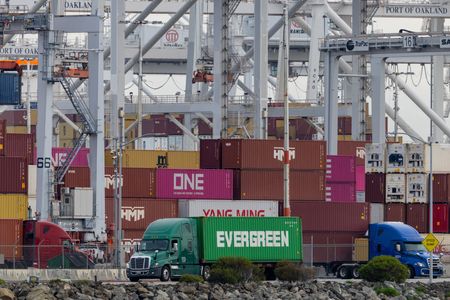

Starting Tuesday, the United States began collecting new 10% tariffs on most imported goods, according to a directive from U.S. Customs and Border Protection. The rate matches what President Donald Trump first announced Friday, rather than the higher 15% he pledged the following day.
The tariff implementation follows a Supreme Court decision that invalidated Trump’s previous emergency-based tariffs. Trump had initially responded by announcing a temporary 10% global tariff, but on Saturday stated he would raise it to 15%.
In guidance related to the February 20, 2026 Presidential Proclamation, CBP announced that imports not specifically exempted would face “an additional ad valorem rate of 10%.”
The decision to use the lower rate has created uncertainty about American trade policy direction, with officials offering no explanation for the discrepancy. The Financial Times reported that a White House official indicated the increase to 15% would occur at a later date, though Reuters was unable to verify this claim.
The new tariff collection began at midnight, replacing the Supreme Court-rejected tariffs that had ranged from 10% to 50%. Collection of those previous duties was simultaneously halted.
Trump is using Section 122 authority, which permits presidents to impose duties for up to 150 days on any nation to address “large and serious” balance-of-payments deficits and “fundamental international payments problems.”
The president’s tariff proclamation cited America’s $1.2 trillion annual goods trade deficit, a current account deficit representing 4% of GDP, and the reversal of the U.S. primary income surplus as justification for the serious balance of payments deficit.
On Monday, Trump cautioned nations against withdrawing from recently negotiated trade agreements with America, threatening to impose significantly higher duties under alternative trade legislation if they did.
Japan announced Tuesday it had requested assurance from the United States that it would receive treatment under the new tariff system as favorable as under existing agreements. The European Union and Britain have both signaled their intention to honor previously negotiated deals.