
MIAMI (AP) — Lesley VanNess attended the South Beach Wine & Food Festival for almost a decade straight, drawn to the oceanside celebration where celebrities, spirits, and cuisine attracted thousands willing to spend hundreds or thousands of dollars for admission.
The appeal centered on exclusive opportunities to sample food and chat with stars like Rachael Ray and Bobby Flay — personalities she could otherwise only watch through Food Network programming.
“I’d get the Food Network Magazine and there would be advertisements for it. I’m like, ‘Oh my god! You could go to that? Go to these great events and meet these celebrity chefs?’,” VanNess, a 44-year-old former Iowa restaurant owner, explained. “I’m in!”
This occurred during the golden age of culinary festivals, roughly a ten-year period beginning around 2010 when similar gatherings sprouted nationwide, establishing a touring network for top-tier chefs and aspiring culinary personalities.
Social media platforms then emerged as game-changers, breaking down traditional boundaries between admirers and food celebrities. Attendees like VanNess discovered they could skip crowding into massive pavilions hoping for brief conversations with Flay and instead send direct messages.
Even better, they could follow online food discussions to potentially identify emerging talents — the next Ray or Flay — earning cultural credibility in the process.
VanNess stopped attending South Beach events by 2020 at the latest. “I’d rather see them on social media or go to their restaurant,” she explained.
This past weekend marked the South Beach Wine & Food Festival’s 25th anniversary, establishing its position among veteran culinary gatherings alongside the New York City Wine & Food Festival and Colorado’s Food & Wine Classic in Aspen. Reports indicate all three continue performing well, though numerous smaller festivals have vanished due to pandemic impacts, declining attendance, rising operational expenses, and waning chef participation.
This raises questions about food festivals’ continued importance.
“South Beach and New York, they fill a niche and I can see them going on forever. But food events and food festivals are going in a whole other direction,” explained Mike Thelin, co-founder of the discontinued Oregon gathering Feast Portland.
Festival success traditionally depended on chefs, wineries, bartenders, food producers, and modern food influencers needing broader exposure. By 2026, this concept seems outdated.
“In 2010, they wanted to get on the map,” Thelin noted. “They don’t need that anymore.”
This doesn’t signal festival extinction, he clarified. Instead, a transformation is occurring. Traditional “white tent affairs” — referencing South Beach’s beachside pavilion events — are declining.
“If I’m going to a certain region, I want to know what makes that region special,” Thelin said. “I don’t want to go into a giant white tent that’s devoid of geography and drink a bunch of wines from California if I’m in Washington or Tennessee.”
Replacing them are numerous intimate, specialized gatherings rooted in local identity and community. Examples include AAPI Food & Wine, a three-year-old Oregon and New York City festival showcasing Asian American and Pacific Islander contributions.
“The foodie scene has changed so much,” said Lois Cho, one of the founders of that event, which draws about 1,000 attendees a year. “People didn’t realize wine and black bean noodles and izakaya and all these different Thai dishes — they had no idea they paired. Creating a different narrative and community where you can connect with people, those are the types of events we’ll see now.”
Social media platforms have amplified previously overlooked perspectives, she noted.
“And a lot of people haven’t caught on because it’s been a lot of cookie-cutter events for the last 20 years,” she added.
Birmingham, Alabama’s Southbound Food Festival follows a comparable approach, highlighting the city’s culinary landscape. Launched in 2022 as a week-long autumn celebration, the event incorporates regional arts and music communities alongside restaurant participation.
“There’s less appeal today with these TV chefs. Great chefs are everywhere,” said Nancy Hopkins, one of the event’s founders. “People come to celebrate and uplift Birmingham.”
Nevertheless, as Thelin observed, South Beach Wine & Food Festival and its New York counterpart show no signs of disappearing, complete with white pavilions and Food Network personalities. Nearly all 110 South Beach events featuring over 500 culinary professionals sold out this year. Over its quarter-century existence, the festival has contributed more than $45 million to Florida International University’s Chaplin School of Hospitality and Tourism Management.
Lee Schrager, the driving force behind both festivals, maintains the South Beach model’s ongoing relevance.
“There’s something very different about DM’ing Bobby Flay than going to an intimate dinner at a table of 10 that he’s doing that’s sold out in three days,” Schrager said. “Social media has made everyone available, but can you touch and feel it?”
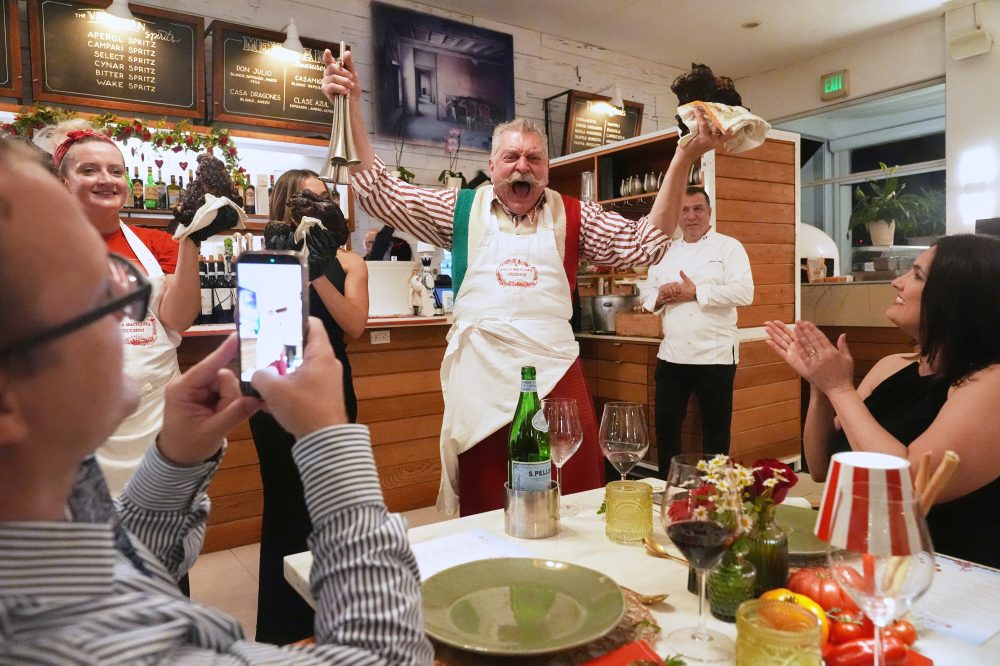
The inaugural South Beach gathering, featuring only 10 chefs, resembled little more than wine sampling. This year drew over 30,000 participants. Martha Stewart presented a luncheon at Joe’s Stone Crab, Italian celebrity butcher Dario Cecchini distributed beef portions to enthusiastic dinner guests, and Ray returned with her Burger Bash, featuring everything from Kool-Aid pickles to foie gras on premium wagyu patties served on potato rolls.
Schrager recognized that most smaller festivals cannot replicate his operational model, including hosting events he knows will generate ticket sales despite ultimately losing money. He reported $7 million in ticket revenue and $6 million in sponsorship income this year, netting slightly over $1 million.
“It’s a good number in the festival world, but it’s not a great return if you’re running a profit business,” he acknowledged.
Ray, who has participated in virtually every South Beach and New York festival, continues her involvement due to loyalty toward Schrager, who supported her when much of the culinary establishment didn’t. She also values direct fan interaction.
“I love talking to people, being with people, having people climb all over you, hang on you, give you a compliment,” she said. “I love being in the real-life experience.”