
Morocco’s standout showing against Brazil and Cape Verde’s surprising draw with Spain during the opening weekend of the World Cup both share a common thread: both teams were built largely on players born and developed outside their home countries.
When Morocco took the field, all 11 starters had been born abroad and came up through European club systems — with the lone exception being goalkeeper Yassine Bounou, who was born in Canada but developed within Morocco’s own football structure.
Over the past two decades, many African nations have increasingly looked to migrant communities in Europe to bolster their rosters. Cape Verde stands as one of the most striking examples. With a population of only around 600,000, the small island nation has leaned heavily on players born or raised in Europe to achieve World Cup qualification — a feat that would have seemed unimaginable just over 20 years ago, when the country wasn’t even entering the qualifying rounds.
This shift has been driven by a combination of global migration patterns, aggressive recruitment of diaspora talent, and significant changes to FIFA’s eligibility rules.
What the Rules Actually Say
Every player at the World Cup must hold citizenship in the country they represent, and officials conduct physical passport checks to verify this. To prevent nations from simply handing out passports to foreign players as a way to stack their rosters, FIFA requires that a player must have either lived in that country for at least five years or have a parent or grandparent born there.
How the Rules Evolved
In the early years of the World Cup, there were no eligibility restrictions at all. Luis Monti famously played for Argentina in the inaugural 1930 tournament, then switched to represent Italy four years later after relocating there to join Juventus. FIFA eventually cracked down with a strict rule: once a player appeared in an official international match at any level, they were permanently tied to that nation.
North African football federations were among the first to push back against that policy. Mohamed Raouraoua, the former president of the Algerian football federation and a key architect of the eventual rule change, explained the motivation behind the push: “We didn’t think it was fair that players (of African origin) were being selected for junior teams of European countries and then never getting a chance to play at full international level. Our proposal was to give liberty and freedom to these players to have a right to choose.”
He also noted the broader benefit: “Having these players is a huge benefit for many African teams. It improves the whole football product.”
FIFA updated its rules in 2003, allowing players to switch international allegiances provided they could demonstrate dual nationality eligibility and had not yet appeared at the full senior international level. An initial age cap of 21 was later lifted, opening the door for players of any age to make the switch with FIFA’s approval.
The First to Benefit
Defender Antar Yahia was the first player to take advantage of the new rule. He made his debut for Algeria’s Under-23 team in an Olympic qualifying match in January 2004, with his senior debut following just two weeks later. Prior to the switch, he had represented France at the Under-20 level. All such switches require a formal application and FIFA approval.
Notable Examples
Pierre-Emerick Aubameyang and Frederic Kanoute both started out as French junior internationals before changing their international allegiance and going on to be named African Footballer of the Year. Senegal captain Kalidou Koulibaly has earned more than 100 caps for the West African nation after choosing Senegal over France, where he had played at the Under-20 level. The impact has extended beyond Africa as well — Declan Rice, who was capped at all levels by Ireland, later switched to England and became a key figure in their midfield.
The Scale of the Impact Today
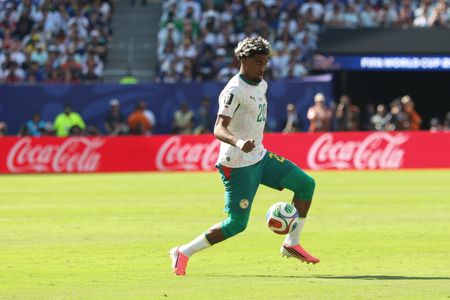
At this year’s World Cup, held across Canada, Mexico, and the United States, a remarkable 289 players — nearly 25% of all participants — are representing nations other than the ones where they were born. Many made formal nationality switches to get there. One vivid example is teenager Ibrahim Mbaye, who scored for Senegal against France on Tuesday, less than a year after he last suited up for French junior teams.