
BALTIMORE — Federal prosecutors have brought a criminal charge against the chief engineer of the cargo ship at the center of the deadly 2024 collapse of Baltimore’s Francis Scott Key Bridge, alleging he failed to report dangerous conditions on the vessel to the U.S. Coast Guard.
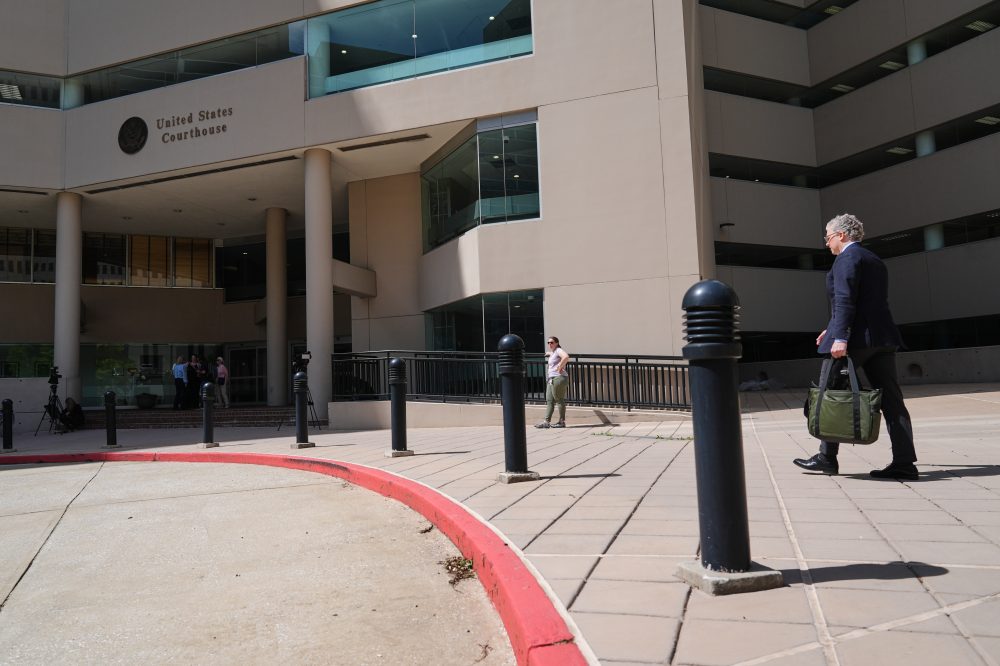
Karthikeyan Deenadayalan was charged Monday in U.S. District Court in Maryland with a single count of violating the federal Port and Waterways Safety Act. Attorneys representing Deenadayalan had not responded to a request for comment as of the time of this report.
Along with the criminal charge, prosecutors submitted notice of a “deferred prosecution agreement” to the court, though no details about the terms of the deal were released. Such agreements are commonly used when a defendant agrees to fulfill specific conditions — such as cooperating with investigators or paying restitution — in return for having the charges against them eventually dismissed.
According to court documents, Deenadayalan served as chief engineer of the container ship while it was docked at the Port of Baltimore in the days leading up to the fatal bridge strike. Prosecutors allege he knowingly failed to inform the U.S. Coast Guard that an improper fuel pump, lacking a backup system, was being used to run two of the ship’s generators.
The vessel, the Dali, was headed for Sri Lanka when it lost power twice within a four-minute window while departing the Port of Baltimore. That loss of power led to a steering failure, and the ship slammed into the Francis Scott Key Bridge in the early morning hours of March 26, 2024. Investigators determined that a loose wire in a switchboard most likely triggered the initial power failure.
After the ship briefly regained power, trouble struck again. Prosecutors say the fuel pump powering the two generators was not designed to automatically restart following a blackout, which caused a second power loss. The Dali then collided with a support column of the bridge, killing six construction workers who were filling potholes on the structure at the time. The bridge, which first opened in 1977, carried millions of vehicles annually.
In May, the Singapore-based company that operated the ship and a former employee were indicted on criminal charges. Synergy Marine Pte Ltd., along with Chennai, India-based Synergy Maritime Pte Ltd. and former technical superintendent Radhakrishnan Karthik Nair, 47, face charges including conspiracy, misconduct causing death, failure to promptly notify the U.S. Coast Guard of a hazardous condition, obstruction of the National Transportation Safety Board, and making false statements. A trial in that case has been set for October 2027.
Following the indictment, Synergy Marine expressed disappointment and accused the U.S. Justice Department of treating what it called an accident as a criminal matter. Nair’s attorney, David Gerger, offered a similar reaction in May, stating that his client “thinks about this accident every day, but he certainly did not cause it.”
In April, Maryland, Synergy Marine, and Grace Ocean Private Limited — the Singapore-based owner of the Dali — reached a $2.25 billion settlement. Grace Ocean has not faced any criminal charges in connection with the collapse.
Earlier this month, a federal judge agreed to delay a civil trial related to the disaster after a series of last-minute settlements resolved the majority of the remaining claims, including all pending claims tied to the deaths of the six construction workers. The unresolved claims that remain are largely focused on economic losses suffered by businesses and local governments, and none of the parties still involved had sought to proceed with the trial as originally scheduled.