Boeing has put its newest 737 MAX assembly line into operation at its Everett, Washington facility, marking a significant step in the company’s effort to build more of its best-selling narrow-body aircraft.
The new production line, referred to within Boeing as the North Line, began loading its first aircraft on July 6. Boeing CEO Kelly Ortberg announced the milestone in June, describing the Everett line as essentially a replica of the three existing 737 final assembly lines located at Boeing’s Renton facility, south of Seattle.
The launch is happening as Boeing ramps up 737 production from 42 to 47 jets per month, a move coordinated with the Federal Aviation Administration. However, the North Line itself is not expected to contribute to any production rate increases until early 2027, when Boeing is targeting an output of 52 aircraft per month. The company is also exploring the possibility of pushing production as high as 70 jets per month down the road.
Boosting 737 output is critical for Boeing as it works to stabilize its finances after years of manufacturing setbacks, safety controversies, and supply chain difficulties. The FAA placed production caps on the 737 program following a January 2024 incident in which a door plug blew out mid-flight on a nearly new Alaska Airlines 737 MAX 9. That alarming event led to heightened scrutiny of Boeing’s manufacturing practices and forced the company to scale back production while it worked to correct quality control problems.
The Everett plant holds the distinction of being the largest building in the world by volume. While it once hosted production lines for the 747, 767, 777, and 787 jets, significant factory floor space opened up after 747 production ended and 787 assembly was consolidated at a facility in South Carolina.
The 737 MAX goes head-to-head with Airbus’ A320neo family in the competitive single-aisle jet market, where airlines around the world are facing multi-year waits for new aircraft deliveries.
PARIS — Airbus has quietly set an internal delivery target of 900 aircraft for this year, even as the company’s official public guidance remains at 870 jets, according to industry sources familiar with the matter.
The European aircraft manufacturer delivered 89 planes in June, reflecting a growing momentum as the company works through a backlog of delayed deliveries to China and sees some relief from ongoing disruptions in engine supply chains, the sources said.
Bloomberg separately reported that Airbus handed over roughly 90 jets during the month of June.
Airbus did not respond when contacted for comment on the internal goal or its delivery outlook.
Excavation work at a newly discovered archaeological site in western Thailand has yielded a remarkable find — two gold rings believed to be approximately 2,000 years old, according to Thai government officials.
The rings were unearthed alongside human skeletal remains last week at the Don Yai Thong archaeological site, located in Phetchaburi province. Thailand’s Fine Arts Department announced the discovery in an official statement.
One of the rings, found on a Thursday, features engraved characters that experts believe to be Bhrami script — an ancient writing system originating in India. Specialists conducted an initial analysis and determined the inscription reads “pusarakhitasa,” which translates to “the one protected by Pushya.” According to the Fine Arts Department, Pushya is considered one of the most favorable zodiac signs in Indian astronomy.
The second ring, recovered from the same set of skeletal remains, is a plain gold band with no markings or decorative design. Based on their findings, experts believe the person who owned both rings may have been a merchant belonging to the Vaishyas, a caste within the ancient Indian social system.
The Don Yai Thong site sits roughly 130 kilometers — about 80 miles — southwest of the Thai capital, Bangkok. It came to light earlier this year after local residents stumbled upon fragments of ancient bronze drums in a rice field, prompting authorities to begin a formal excavation.
Researchers have dated the site to a late prehistoric period in Thailand, corresponding to what is known as the Iron Age — a span of human settlement roughly 1,500 to 2,500 years ago.
Since excavation work began in February, archaeologists have uncovered eight human skeletons along with bronze and gold jewelry, pottery, and other objects. The collection of finds suggests the site served as a ceremonial burial ground for affluent individuals or those of high social standing.
The Fine Arts Department said the dig is expected to wrap up within approximately one month, after which the recovered artifacts are planned to be put on public display.
Workers employed in Samsung Electronics’ smartphone, television, and home appliance operations are preparing to hold a protest rally later this month, upset over the dramatically higher bonuses recently secured by the company’s semiconductor employees.
The rally is scheduled for July 16 and will take place near Samsung’s headquarters in Suwon, according to the union representing workers in the company’s mobiles and consumer electronics division. That union has approximately 28,000 members.
The semiconductor division’s workers recently reached a wage agreement through a separate union, and the disparity in compensation has sparked outrage among non-chip employees. According to Yonhap News Agency, workers in the appliance and electronics division are expected to receive a bonus of 6 million won — roughly $3,900 — in treasury shares for 2026. By contrast, workers in the semiconductor division could receive bonuses of up to 600 million won.
Yonhap reported that between 2,000 and 3,000 workers are expected to take part in the demonstration.
Meanwhile, Samsung is anticipated to report that its operating profit surged approximately 18 times higher than the same period a year ago when it releases its earnings estimate for the April-June quarter on Tuesday.
LONDON — British broadcaster ITV announced Monday that it has reached an agreement to sell its media and entertainment division to Sky, which is owned by Comcast, in a deal valued at £1.6 billion, or approximately $2.13 billion.
Under the terms of the agreement, ITV will receive £1.2 billion in cash upfront. The deal also includes a potential additional payout of up to £200 million, which depends on advertising performance during the 2027 financial year. As part of the arrangement, ITV will also receive Love Productions — the company behind “The Great British Bake Off” — which will become part of ITV’s remaining studio operations.
Sky CEO Dana Strong described the transaction as a “defining moment” for the British media industry.
The combination of the UK’s largest free-to-air commercial broadcaster with pay-TV provider Sky would have seemed impossible just a few years ago. However, the explosive growth of platforms like YouTube and streaming services including Netflix, Amazon, and Disney has forced long-established broadcasters to seek greater scale in order to remain competitive.
“Bringing Sky and ITV Media and Entertainment together combines the very best of free-to-air television, pay TV and streaming, ensuring viewers across the UK continue to enjoy outstanding British programming in a rapidly changing world,” Strong said.
Strong added: “ITV will remain a public service broadcaster at the heart of British life, and we’re excited about the future we can build together.”
Once the transaction is complete, ITV will operate solely as a production company, creating content for the newly merged ITV-Sky entity as well as other broadcasters and streaming platforms around the world.
The combined ITV Media and Entertainment and Sky operation has pledged to invest a minimum of £2.1 billion in content between 2028 and 2032.
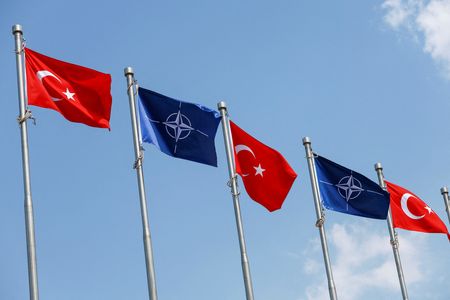
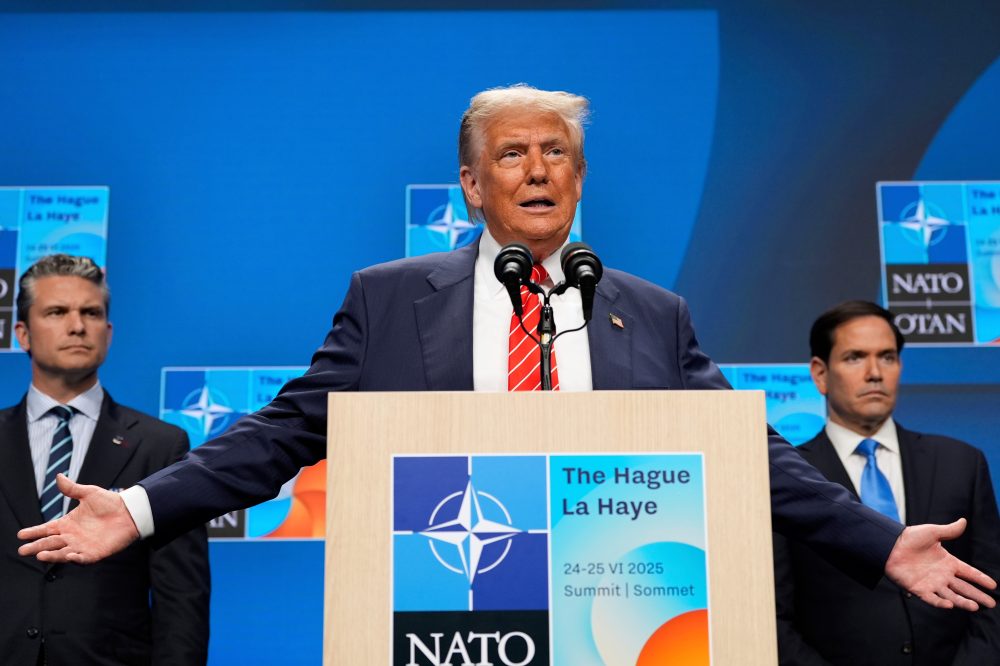
Leaders from all 32 NATO member nations are set to convene in Ankara, Turkey on Tuesday and Wednesday for a high-stakes alliance summit. The gathering comes as President Donald Trump continues to press European nations to dramatically increase their defense spending, and following months of friction between the U.S. and its European partners over the Iran war and the situation in Greenland.
Trump’s repeated criticism of the alliance, combined with announced withdrawals of American troops from Europe and a six-month review of U.S. military presence on the continent, has created significant uncertainty among alliance members heading into the summit.
What’s on the Agenda?
The Trump administration has been pushing hard for European nations to take on greater responsibility for their own defense and to significantly increase their defense investment. Officials anticipate that leaders will spend considerable time discussing progress toward spending targets, ramping up weapons manufacturing, and how to shift more of the defense burden from the United States to Europe.
Who Will Be in the Room?
In addition to the 32 NATO member nation leaders, Ukrainian President Volodymyr Zelenskiy, South Korean President Lee Jae Myung, European Council President Antonio Costa, and European Commission President Ursula von der Leyen are all expected to join NATO leaders for a dinner on Tuesday evening.
What Will Leaders Say About Defense Spending?
European leaders are expected to demonstrate to Trump that they are making good on a commitment made at last year’s summit in The Hague — a pledge to spend 5% of gross domestic product on defense and defense-related measures by the year 2035.
According to a draft of the summit declaration reviewed by Reuters, leaders are expected to announce: “In 2025, European Allies and Canada increased their investments in core defence requirements by more than $139bn.”
The declaration is also expected to include this statement: “We are building the future: a stronger Europe in a stronger NATO — a modernised Alliance. European Allies and Canada, working with the United States, are assuming greater responsibility for the Alliance’s defence.”
Support for Ukraine
NATO members are expected to reaffirm their backing for Ukraine and commit to further military assistance. The draft declaration indicates leaders plan to say: “For 2026, Allies pledge €70bn in military equipment, assistance and training for Ukraine and affirm their sovereign commitments to sustaining at least equivalent levels in 2027.”
A portion of that funding will come from existing bilateral commitments and an EU loan facility providing €60 billion for Ukrainian defense investment and procurement covering 2026 through 2027. The United States is not expected to contribute to that funding pool.
Defense Industry Focus
While last year’s summit centered on agreeing to new spending pledges, this year’s focus is expected to shift toward actually scaling up weapons production and accelerating defense innovation. A defense industry forum will be held in Ankara on Tuesday, where deals worth tens of billions of dollars are anticipated to be announced.
Will Iran Be Discussed?
European officials are worried that the ongoing Iran conflict — and Trump’s frustration with European governments over their handling of it — could cast a shadow over the summit. The expected declaration states that “allies reiterate that Iran must never have a nuclear weapon and call on Iran to fully respect freedom of navigation in the Strait of Hormuz.”
What Does Host Nation Turkey Want?
As the host country, Turkey is expected to use the summit to showcase its growing defense manufacturing capabilities and renew its longstanding push for alliance members to remove all restrictions on defense trade within NATO.
Turkish President Tayyip Erdogan is also expected to seek progress with allies including France and Italy on the potential purchase of SAMP/T missile defense systems and broader defense cooperation agreements.
In one-on-one talks with Trump, Erdogan is expected to highlight the improving relationship between Ankara and Washington while pushing for the removal of U.S. sanctions and restored access to the F-35 fighter jet program.
Other Meetings on the Sidelines
On the margins of the summit, NATO foreign ministers are expected to meet with counterparts from Bahrain, Kuwait, Qatar, and the United Arab Emirates, and to hold a dinner discussion with Ukraine’s foreign minister and European Union foreign policy chief Kaja Kallas. NATO defense ministers are also scheduled to hold talks with ministers from Australia, Japan, New Zealand, and South Korea.
ASM International, the second-largest semiconductor equipment manufacturer in Europe, announced Monday that it intends to nominate Chris Figee for the position of chief financial officer.
The Netherlands-based company said the nomination will be put to shareholders for a vote at an extraordinary general meeting, which is anticipated to take place in March 2027.
Figee currently holds the role of chief financial officer and serves on the board of management at Dutch telecommunications company KPN. He is scheduled to begin his new role at ASM on December 1st of this year.
Figee will take over from Paul Verhagen, who had already announced plans to retire at the conclusion of his current term. Once the shareholder meeting takes place, Verhagen will step down from the CFO position but will continue with ASM in an advisory capacity through the end of his contract.
BEIJING — China’s military launched a missile from a nuclear submarine into the Pacific Ocean on Monday, according to the country’s state-run media, prompting concern and criticism from several nations in the region.
The People’s Liberation Army Navy fired the missile — fitted with a dummy warhead — into international Pacific waters at 12:01 p.m. local time (0401 GMT), the official Xinhua news agency reported. The missile came down in what Xinhua called “designated waters,” though no specific location was provided.
Xinhua characterized the launch as a “routine arrangement” tied to China’s yearly military training schedule, emphasizing that it was not directed at any particular country or target.
Australian Foreign Minister Penny Wong confirmed that China had given advance notice of the planned test, but she still labeled the launch as “destabilising” for the broader region.
“Australia has been clear that this proposed test is in the context of a rapid military buildup by China, which is lacking in the transparency and reassurance as to intent that the region expects,” Wong told reporters at a press conference in Suva, the capital of Fiji.
Japan’s government also said it had been notified ahead of the launch and called on China to reconsider. “We expressed our grave concern over the Chinese military’s increased activity,” Tokyo stated. Japanese authorities added that China had separately alerted Japan’s Coast Guard on Sunday about possible falling space debris that could land within Japan’s exclusive economic zone. Japan’s Kyodo news agency later reported, citing a government source, that the missile had landed outside that zone.
New Zealand Foreign Minister Winston Peters described his country as “deeply concerned” by the test, noting that New Zealand had been informed “within hours” of the launch.
“New Zealand considers this an unwelcome and concerning development. We, like our neighbours in other Pacific countries, have no interest in China using the South Pacific as a testing site for missile capability,” Peters said in a written statement.
China’s most recent intercontinental ballistic missile test before this one took place in 2024 — an uncommon launch that drew international attention to the country’s growing military strength.
The National Weather Service office in Mount Holly, New Jersey has issued a Flood Watch effective Sunday, July 6, starting at 2:59 AM EDT and lasting through 8:00 PM EDT that same day.
A Flood Watch means conditions are favorable for flooding to develop in the watch area. Residents should monitor forecasts closely and be ready to take action if a Flood Warning is issued.
People in low-lying areas or near streams and waterways are encouraged to stay alert and avoid unnecessary travel through flooded roadways. Remember, it only takes a small amount of moving water to sweep a vehicle off the road.
A crash on Interstate 495 southbound has resulted in the closure of the left lane at Philadelphia Pike, according to Delaware transportation officials.
Motorists traveling through the area are advised to use caution and allow extra travel time as crews work at the scene. Drivers may want to consider alternate routes to avoid potential backups in the affected area.
No additional details regarding the crash were immediately available. TV Delmarva will provide updates as more information becomes available.
BALLOUNEH, Lebanon — Long before she became one of the most celebrated food writers in the Middle East, Anissa Helou never imagined a career in cooking or writing. She stumbled into both worlds almost by chance when she was in her late 30s.
Now 74, Helou has built a devoted following across the region and around the globe, publishing close to a dozen books since the 1990s on the cuisines of the Middle East and beyond. Just last month, she was honored with Britain’s prestigious Guild of Food Writers Lifetime Achievement Award.
Born to a Lebanese mother and a Syrian father, Helou grew up in a Christian household where she spent countless hours watching her mother, grandmother, and paternal aunt work in the kitchen. Those early experiences gave her a deep appreciation for the culinary traditions of both Lebanon and Syria — two countries celebrated throughout the region for their rich and flavorful food.
“I was always fascinated by the kitchen, by their movements (and) by how they put things together, by the chopping,” Helou said of those early mentors. “I love being in the kitchen with them and of course I loved eating.”
Her newest book, “Lebanon: Cooking the Foods of My Homeland,” had its official launch in late June in Beirut at a ceremony held at Lebanon’s Tourism Ministry. The event drew a crowd that included food critics and restaurant owners.
The book arrives at a difficult moment for Lebanon, which has endured two wars in the past three years involving Israel and the Hezbollah militant group. One section of the book focuses specifically on food traditions in some of the southern Lebanese villages that have suffered the most severe destruction.
During multiple visits to the south — the most recent in October 2023 — Helou found that residents had developed their own distinct takes on traditional dishes. One example is mujadara, a dish built primarily around lentils. While it is commonly prepared with rice elsewhere, southern Lebanese cooks are more likely to use bulgur wheat.
“I discovered more, like, variations and added dishes, rather than something that was a complete revelation,” Helou said.
She has gathered walnuts from a tree growing beside the massive barrier that divides southern Lebanon from northern Israel, and she has spoken with residents who have lost their homes and livelihoods in the Hezbollah-Israel conflict.
One person who left a lasting impression on her was Moussa Ibrahim, from the southern village of Dibbine — an area that has seen intense fighting between Israeli troops and Hezbollah fighters. The violence in 2024 cost Ibrahim his business, which produced mouneh: a traditional Lebanese method of preserving vegetables, fruits, grains, and dairy through techniques such as sun-drying, salting, pickling, and submerging in olive oil.
A world traveler with a wide-ranging palate, Helou said she also has a deep love for Korean and Japanese food in addition to Middle Eastern cuisine.
“Lebanese, Iranian and Moroccan are among the greatest cuisines,” Helou said earlier this month from her late mother’s apartment in the Mount Lebanon town of Ballouneh.
“Lebanese cuisine is kind of a little bit more sophisticated, a lot fresher, more vibrant” than some other Middle Eastern food, she added, while preparing a traditional Lebanese lamb confit known as awarma.
When asked which city in the region produces the finest food, Helou didn’t hesitate — and her answer took her outside Lebanon entirely. She pointed to Aleppo, Syria’s largest city.
Aleppo is known for its centuries-old covered market — which sustained heavy damage during Syria’s civil war that began in March 2011 — and for a complex, layered cuisine shaped by Persian, North African, and Armenian influences.
“I think that Aleppo is undoubtedly the gastronomic capital of the Middle East, regardless of me being Syrian,” she said.
Helou’s work has also been shaped by global events. When the Islamic State group seized large portions of Syria and Iraq and declared a caliphate in 2014 — sparking a wave of deadly attacks and a surge in anti-Islamic sentiment worldwide — she responded by writing a book featuring roughly 300 recipes from Muslim countries.
“I was thinking, one way of presenting Islam and Muslim people positively could be through their foods,” she said.
Helou left Lebanon at 21 and now holds citizenship in Lebanon, Syria, and the United Kingdom. She has spent much of her adult life in Britain and Italy, though she continues to visit Lebanon regularly, cooking alongside locals and learning how they prepare specific dishes.
For years as a young woman, she refused to cook at all — even telling a partner at the time not to count on her for meals.
“I didn’t want to be domesticated. I was like a feminist and so I didn’t cook for a very long time,” she said.
Her attitude shifted after watching a friend cook a meal and seeing the joy it brought her partner. That moment nudged her toward the kitchen.
Her path to food writing began in 1992, when a conversation with a group of Lebanese expatriates sparked the idea of creating a cookbook filled with her mother’s recipes — filling a gap she noticed in Lebanese culinary literature. As luck would have it, a publisher was already searching for someone to write exactly that kind of book.
“That’s how I started, by sheer coincidence,” Helou said.
MALINDI, Kenya (AP) — The walls are concrete, the beams are wood, and the building isn’t finished yet. But 54-year-old Nuru Mohammed is already envisioning the future. As her daughter clears away the last traces of sand, Mohammed directs other women hanging fishing nets along the walls as decoration. Within days, a new beachside restaurant on Kenya’s Indian Ocean coast will welcome its first customers — another way to earn a living beyond the sea.
“For us women, this is hope,” says Mohammed, who spent most of her life as one of the rare fisherwomen in Malindi, a town located northeast of the port city of Mombasa. “It will help support many families that have depended on the ocean for decades.”
All along East Africa’s coastline, fishing communities are turning to tourism, ecosystem restoration, and conservation-based enterprises, reshaping their connection to the sea as climate change, overfishing, and deteriorating ocean health put their traditional ways of life at risk.
In Kenya, women are transforming restored mangrove forests into revenue streams through beekeeping and ecotourism. In Tanzania’s Zanzibar archipelago, fishing villages are safeguarding coral reefs through community-managed closures. In Mozambique, sea grass restoration is generating employment while breathing life back into marine habitats. Taken together, these initiatives are redefining what it means to be resilient — not by walking away from the ocean, but by healing it while building lasting livelihoods.
“Communities that depend on the ocean are also its best stewards,” said Andreane Martel, project director for a conservation initiative known as ReSea. “When local people, especially women, lead conservation, they protect biodiversity while creating more resilient and inclusive livelihoods.”
Mohammed said she has had boats stolen and now finds it nearly impossible to compete against large industrial trawlers. A nearby Chinese-owned fish processing facility stands as a stark symbol of how dramatically the industry has changed.
“I can’t compete with that kind of power or scale,” she says.
“It has been tough,” Mohammed says, her eyes on the water. “I fought to remain a fisherwoman. But I think it’s a fight I can no longer win.”
About ten kilometers — roughly six miles — away, where the Sabaki River flows into the Indian Ocean, Beatrice Mwanyiro manages a mangrove nursery and restaurant constructed by ReSea, a 30-member women’s cooperative supported by the Canadian government.
“We have to adapt to the changing times,” Mwanyiro says. “The number of fish coming into the shallow waters are falling every year. Without another source of income, we won’t be able to feed our families.”
Mangroves, coral reefs, sea grass meadows, and nearshore fisheries do far more than provide food. They shield coastlines from storms and lock away enormous quantities of carbon. But rising ocean temperatures, pollution, habitat destruction, and overfishing are putting all of those ecosystems in jeopardy.
Mohamed Somo, a fishing community leader in Lamu — a UNESCO heritage site — says boats that once returned with catches of up to 100 kilograms, or about 220 pounds, of fish now frequently bring back fewer than 30 kilograms, or around 66 pounds.
Kenyan law bars trawlers from operating within 5 nautical miles, or 9 kilometers, of shore, yet fishers say some vessels regularly venture much closer. The problem reaches far beyond Kenya’s waters. According to the U.N. Food and Agricultural Organization, illegal, unreported, and unregulated fishing drains an estimated $23 billion from the global economy each year, while endangering marine life and the food security of billions of people who rely on fish as their main source of protein.
“The trawlers fish offshore during the day, but at night they move into the shallow waters where artisanal fishers work,” Somo says. “By morning, there’s very little left for us.”
The mounting pressure on coastal communities has elevated ocean conservation as a political priority, as people fight both for survival and for the protection of the marine economies they depend on.
“Coastal communities are on the frontlines of climate change and declining ocean health, but they are also among the strongest drivers of resilience,” said Jerry Mang’ena, co-founder and executive director of Action for Ocean, a Tanzania-based organization focused on mangrove restoration along the country’s coastline.
“Supporting sustainable livelihoods, from aquaculture and eco-tourism to ecosystem restoration, helps families adapt while reducing pressure on the ocean. If we’re serious about protecting our seas, we must invest in the people who have cared for them for generations.”
At a recent gathering called the Our Ocean Conference in Mombasa, conservation organizations called on African governments to ratify the Biodiversity Beyond National Jurisdiction Agreement — also known as the BBNJ Agreement or “High Seas” treaty. The landmark United Nations pact establishes marine protected areas in international waters and provides for the fair sharing of marine resources. It took effect in January, and as of April had been signed by 145 countries and formally ratified by 81.
How negotiations over additional ratifications unfold could significantly affect the lives of fishers like Mohammed as they work to build futures less dependent on increasingly unpredictable catches.
“The BBNJ Agreement gives African governments a historic opportunity to protect the high seas and safeguard the future of our fisheries,” said Aliou Ba, oceans campaign lead at Greenpeace Africa.
“But protecting the ocean also means confronting illegal, unreported and unregulated fishing that is stripping African waters of marine life and robbing coastal communities of food and income,” he said. “Governments cannot afford to delay.”
PARIS (AP) — A French appeals court is set to rule Tuesday on whether Marine Le Pen will be allowed to pursue what would be her fourth presidential campaign — and what many believe would be her best shot yet at leading the country. If the court blocks her, she has already been preparing a potential replacement.
That replacement is Jordan Bardella — but he is far from simply a younger version of Le Pen.
Perhaps the most significant difference between the two is one that cannot be changed: Bardella does not carry the Le Pen name. For a substantial portion of French voters, especially those on the political left, that surname carries deeply negative associations. Marine Le Pen inherited both the name and the party from her father, Jean-Marie Le Pen, who founded the organization and was widely despised for his far-right views and repeated legal violations, among them Holocaust denial.
If Tuesday’s court ruling bars Le Pen from next year’s election — the race to succeed two-term President Emmanuel Macron, who is constitutionally prohibited from seeking another term — or if it leads her to step aside in favor of Bardella, French voters will be weighing the two National Rally figures against one another.
Bardella currently serves as president of National Rally, the party Jean-Marie Le Pen originally founded in 1972 under the name National Front. Under Bardella’s leadership, the party has continued pushing its anti-immigration message. He has spoken of a France he describes as being overwhelmed by immigration, particularly from Africa, saying there are “many people who today no longer recognize the France that they loved.”
Where Bardella differs from Le Pen is in his approach to economic issues. He has worked to appeal to business owners and wealthier conservative voters with a more pro-business tone, while Le Pen has traditionally concentrated on cost-of-living concerns and government intervention — themes that tend to resonate with working-class supporters.
Le Pen handed the party’s leadership to Bardella in 2022, after years of working to make the organization more appealing to mainstream voters. That effort included distancing herself from her father — ultimately expelling him from the party — and walking back some of her more controversial policy positions, such as calls for France to exit the European Union and abandon the euro in favor of the old French franc.
The party has operated under the National Rally name since 2018 and became the largest single party in the National Assembly in 2024.
Luc Rouban, a senior researcher at Sciences Po, a Paris school of political sciences, who studies the party, says not carrying the Le Pen name could actually work in Bardella’s favor. “Symbolically, it would signal a break with the legacy of the old National Front, of Jean-Marie Le Pen,” he said.
That legacy has long been a liability for Marine Le Pen. Critics and historians have repeatedly tied her to her father’s associations with those who collaborated with Nazi occupiers during World War II, as well as his hate-speech convictions. Bardella, as the first party leader without the Le Pen name, may not face that same line of attack as effectively.
“Jean-Marie Le Pen’s legacy is a very heavy burden to carry,” Rouban said. “If you move beyond the Le Pen family, you’re entering different territory.”
Le Pen herself, who is 57, has spoken positively about Bardella’s age — he is 30. “We are complementary,” she said in a recent interview. “I have a certain experience, but Jordan has an absolutely incredible dynamism; he has the strength and energy of his youth.”
Bardella also has a stronger presence on social media. His Instagram following is nearly double Le Pen’s, and his 2.3 million TikTok followers surpass her 1.5 million. That digital reach could help him connect with younger voters — a group that has increasingly tuned out national elections. France’s national statistics agency found that only 17% of voters between the ages of 18 and 29 cast ballots consistently in 2022, when Macron defeated Le Pen in the presidential runoff for the second time. That figure is a sharp drop from 31% who voted consistently back in 2002.
Le Pen grew up surrounded by politics. Her father served in the legislature from 1956 to 1962, before she was born in 1968. She joined the National Front as a teenager and, after earning a law degree, first ran as a candidate at age 24 in the 1993 legislative elections.
Bardella, by contrast, has built his political career primarily in the European Parliament. Some analysts argue his comparatively limited experience could make it harder for him to connect with older voters, and that he might struggle under the intense pressure of a first presidential campaign.
However, Victor Mallet, the author of “Far-Right France: Le Pen, Bardella and the Future of Europe,” cautions against underestimating him. “A lot of people thought the same thing about Donald Trump,” Mallet said. “They thought, you know, this guy has no experience of government, his policies don’t make any sense, and he was elected twice.”
Artificial intelligence is quietly changing the way some of the world’s most recognizable consumer products are developed — from the shampoo on your bathroom shelf to the cookies in your pantry.
French cosmetics giant L’Oreal began incorporating AI into its laboratory work four years ago, and the results have been significant. The company is now able to develop new products four times faster than it previously could, according to Fabrice Megarbane, president of L’Oreal’s consumer products division.
Megarbane explained that AI has allowed the company to identify molecules originally used in skincare formulas and find new applications for them in hair care. One recent example: a shampoo that uses collagen to add lift and body to hair, developed by repurposing molecules from existing skincare lines.
“You can really go much faster by imagining … new associations of molecules and new benefits of molecules,” Megarbane said during the Consumer Goods Forum’s Global Summit held in Vienna in late June.
L’Oreal’s CEO launched a “beauty stimulus plan” last year aimed at driving innovation after the company reported its slowest sales growth in years.
Other major consumer brands are following a similar path. Chocolate and snack maker Mondelez — the company behind Cadbury and Toblerone — has embraced AI as a tool for recipe development. Chief Information and Digital Officer Filippo Catalano called the combination of human creativity and AI a “game-changer.”
Catalano said the technology can generate recipe concepts, including unconventional ideas, which human experts then review and evaluate. AI has already played a role in creating Gluten Free Golden Oreo cookies and updating the recipe for Chips Ahoy cookies. In the biscuit category alone, 60% of recipes developed with AI assistance showed improvements in nutrition, sustainability, and cost.
“You can optimise how you develop your recipes,” Catalano said, noting that AI also helps reduce reliance on single suppliers and allows companies to adapt formulas as consumer preferences shift.
“(AI capabilities are) accelerating things you could do already, but compressing the time from months to weeks or years to months,” he added.
Nestle, the company behind Nescafe, and Haleon, the maker of Sensodyne toothpaste, are also among the consumer goods companies now using AI in their product innovation efforts, executives said. The broader push reflects growing pressure on consumer companies to move faster and operate more efficiently in a rapidly changing marketplace.
At least eight Rohingya Muslims — among them several children — were killed and a number of others wounded early Monday morning after intense monsoon rainfall triggered a series of landslides across refugee camps in southeastern Bangladesh, according to officials.
The camps, located in Cox’s Bazar, are home to more than 1.2 million Rohingya people and make up the largest refugee settlement on the planet. The vast majority of residents fled Myanmar in 2017 following a military crackdown in that neighboring Buddhist-majority nation, where Rohingya are considered outsiders.
Most families in the camps are sheltered in temporary structures built from bamboo and plastic sheeting, perched on steep, treeless hillsides that become extremely dangerous during the yearly monsoon season.
The slides struck four different areas within the camps, collapsing shelters and burying them in mud while residents were still asleep. In a separate but related incident, a Bangladeshi man was also killed and two of his family members were hurt when a section of hillside gave way and crashed into their home in Cox’s Bazar, police reported.
“Eight people have died in landslides caused by heavy rain,” said Tumpa Das, a police official based in Cox’s Bazar.
Das added that ongoing rainfall has raised the likelihood of additional slides, with thousands of refugees still occupying unstable terrain.
Mohammed Mizanur Rahman, the Bangladeshi official responsible for refugee relief and repatriation efforts, said authorities are acting quickly to protect lives. “We’re moving people out of high-risk areas as quickly as possible to prevent any more casualties,” he said.
The tragedy comes at a particularly tense time, as renewed violence in Myanmar’s Rakhine State is raising fears that a new wave of Rohingya refugees could attempt to cross into Bangladesh. Bangladeshi authorities have increased their presence along the border after reports emerged of people gathering nearby hoping to enter the country.
Bangladesh’s meteorological agency has predicted continued heavy rainfall in the days ahead, keeping officials on high alert for additional landslides and flash flooding.
Deadly landslides and floods are a recurring threat each monsoon season in the refugee camps, routinely claiming lives and destroying homes, roads, and essential services.
LOS ANGELES — For nearly a decade in the minor leagues, Eliézer Alfonzo kept himself going by imagining how proud his family would be when he finally reached the big leagues. That moment arrived Sunday at Dodger Stadium — but it came wrapped in unimaginable grief.
Alfonzo’s 16-year-old sister, Eliana, and his stepmother, Patricia — the wife of former major league catcher Eliézer Alfonzo Sr. — had both been missing since a series of devastating earthquakes struck Venezuela on June 24. Just hours before the Dodgers faced the San Diego Padres, several Latin American media outlets reported that the bodies of both women had been discovered.
Alfonzo had received his long-awaited call-up to the defending World Series champions just the day before, on Saturday, while his family was already living through an agonizing period of uncertainty. By Sunday morning, that uncertainty had turned into crushing loss.
After speaking with his father, his brother, and his girlfriend, Alfonzo made the decision to play — finding peace in knowing how much this moment would have meant to Eliana.
KHARKIV REGION, Ukraine (AP) — From a basement command post in Ukraine’s Kharkiv region, drone pilots stare at thermal camera feeds streamed from aircraft flying hundreds of kilometers away over Russian-held territory, patiently waiting for vehicles to appear on the roads that keep enemy forces alive and fighting.
When a target comes into view, the pilots guide their aircraft into a dive, striking deep behind Russian lines to disrupt the flow of fuel, food, ammunition and other critical supplies.
“Our mission is to cut logistics,” said Kat, commander of Ukraine’s K-2 brigade, which operates midrange drones. “Cut off their supply lines, and the infantry on the front line have no food, no ammunition, no night vision, no batteries. Nothing. That’s how we’re wearing them down in every sense.”
Soldiers who spoke with The Associated Press agreed to be identified only by their military call signs rather than their real names, as required by military regulations.
Ukrainian commanders say the sustained strikes on major highways carrying fuel, ammunition and reinforcements have made Russian logistics slower, more expensive and far less predictable. That pressure, they say, has helped slow Russian advances and supported Ukrainian counterattacks, including strikes into illegally annexed Crimea aimed at cutting the peninsula off from the mainland.
Until recently, much of that territory was out of Ukraine’s reach. Short-range front-line drones couldn’t cover the distance, while long-range drones were saved for high-value strategic targets far away. That left a corridor roughly 25 to 200 kilometers (15 to 125 miles) wide where Russian troops and supplies could move with little interference.
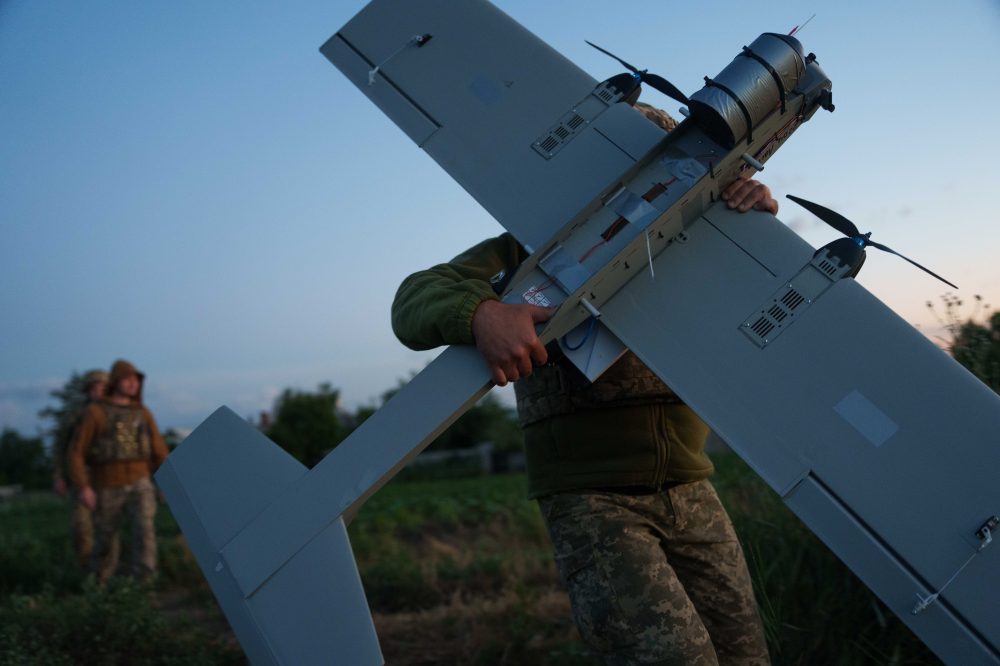
Fixed-wing midrange drones outfitted with Starlink satellite communications have begun filling that gap, effectively turning Russia’s logistical rear into a contested zone.
“They’re ensuring that the Russians are constantly pressured along their supply logistics lines and that they are unable to supply certain parts of the front so that the situation may be more controllable,” said Samuel Bendett, a researcher at the Center for Naval Analyses.
Bendett noted that Ukraine will need to keep up the pressure while Russia works to develop countermeasures. He expects Moscow to eventually adapt, but said Russia’s larger military allows it to absorb greater losses in the meantime.
“The question is whether Ukraine can keep this pressure up over the next few weeks and months,” he said.
The infrastructure behind Ukraine’s midrange drone campaign blends into the surrounding landscape. Ordinary offices double as command centers. A carpenter’s workshop serves as a drone assembly point. A modest village home becomes a launch site.
The headquarters of K-2, one of Ukraine’s most elite drone units, is housed in an unremarkable workspace littered with coffee mugs, energy drink cans and e-cigarettes. In May alone, the unit launched 800 midrange drones from that room, with 650 successfully hitting their intended targets.
The pilots work in civilian clothes under bright fluorescent lights, eyes locked on computer monitors — looking more like office workers than combatants. But the grids on their screens are target lists and satellite maps. After plotting each flight path, a separate team launches the drones more than 200 kilometers (125 miles) away. Control then shifts to the Kharkiv pilots, who fly the aircraft for up to four hours, reaching more than 100 kilometers (60 miles) behind Russian lines.
Some pilots were forced from their hometowns by Russia’s invasion and now find themselves peering down at familiar streets through a drone’s camera — passing old schools and childhood neighborhoods as they search for hidden Russian troops and weapons caches.
A whiteboard in the unit tracks an ongoing competition among its 10 drone crews. The current record stands at 17 consecutive successful strikes.
Missing a high-value target leaves a mark too. After one such miss, brigade commander Col. Kyrylo Veres got on the line with the crew and asked bluntly: “Are you drunk?”
Some days the camera reveals little more than a fuel truck or a single soldier on a motorcycle. Other days, operators spot more significant targets — a loaded multiple rocket launcher or a gathering of Russian troops.
Among the unit’s top pilots is Pharaon, 20, who says the work feels like a natural extension of the video games he grew up playing.
“When I was a kid, I used to go to computer clubs where we played Counter-Strike over a local network,” he said. “The competition here is pretty much the same. It’s about who can kill more enemy troops or take out the biggest target.”
A major turning point came earlier this year when SpaceX cut off Russian forces’ unauthorized use of Starlink satellite services, disrupting Russian drone operations and communications. That shift gave Ukraine a significant advantage, allowing its upgraded drones to better evade detection, resist jamming and strike with greater accuracy while Russia scrambled to respond.
“The blocking of Starlink for Russian forces was one of the most significant battlefield developments of the year,” said Rob Lee, a senior fellow in the Foreign Policy Research Institute’s Eurasia Program.
Pharaon said the impact on mission success has been dramatic. “What’s changed is that now eight out of every 10 sorties are successful,” he said, noting that just a few months ago the success rate was the reverse.
K-2 operates the Dart, one of the more affordable drones in Ukraine’s growing midrange fleet. Built from polystyrene, wood and 3D-printed components, the Dart is designed primarily to hit Russian logistics convoys. Larger models, such as the Hornet, carry heavier payloads and are used to strike bridges and other infrastructure.
Before each mission, crews inspect batteries, cameras, flight controllers and the Starlink terminal — the most critical piece of equipment keeping the drone connected during flight. The drones are then transported to hidden launch sites near the front, where a soldier with the call sign Buckwheat checks each Starlink connection before the aircraft are catapulted into the air.
“It’s gotten a little quieter now. You can tell the pressure from the enemy has eased,” Buckwheat said.
Russian forces were caught off guard when the campaign ramped up three months ago. Since then, they have begun deploying mobile fire groups and other countermeasures to intercept the drones. But Ukraine’s speed, scale and element of surprise have so far kept it ahead.
Bendett pointed to coordination problems within the Russian military as a key vulnerability. Even if one sector identifies the drone threat, that information may not reach neighboring units in time to intercept the aircraft.
Ukraine’s campaign targets the major highways connecting occupied Mariupol, Berdyansk, Melitopol and the Crimean Peninsula — the primary supply arteries for Russian forces fighting in southern and eastern Ukraine. Commanders say the sustained strikes have pushed Russia onto slower, less efficient resupply routes.
Ukrainian military intelligence says the drones have made portions of the land corridor linking Russia to Crimea too hazardous for normal operations, slowing the movement of fuel, ammunition and reinforcements.
In response, Russia is “significantly increasing the number of their mobile anti-aircraft units and fixed machine-gun positions, and are deploying more interceptor crews near major cities,” Pharaon said. Drone pilots now plan their routes around known enemy positions and can sometimes see the flashes of anti-aircraft fire through their cameras as their aircraft slips past.
Lee said Russia has been testing electronic warfare systems against Starlink since 2024 and has now begun deploying them more broadly. So far, their effectiveness has been limited.
“I think they have some success, but we’ll have to wait and see,” he said.
LONDON (AP) — Prince Harry is returning to the United Kingdom this week, and as usual, his arrival is generating plenty of attention from the British press.
The son of King Charles III is scheduled to attend several charity events beginning Tuesday. But for many royal observers, the bigger story is whether his wife, Meghan, and their two children — Prince Archie and Princess Lilibet — will be joining him, and whether the young royals will finally get some quality time with their grandfather, King Charles.
British tabloids and television news programs have spent the past 10 days buzzing with speculation about the family’s travel plans, but much remains uncertain as Harry works to secure protection for his family after a government committee declined to approve taxpayer-funded security.
“With just days to go until Harry’s first public engagement in the UK on Tuesday … very little is guaranteed at all,” the Times of London reported Saturday. The Telegraph put it more bluntly: “For Archie and Lilibet to meet the king, it’s now or never.”
Harry, who served in the British Army in Afghanistan, organized the trip partly to mark the one-year countdown to the Invictus Games — the Paralympic-style athletic competition he created to inspire and support military veterans recovering from injuries sustained in combat.
Also drawing attention this week is a Tuesday ruling at the High Court in London, where a judge is set to deliver a verdict in Harry’s privacy lawsuit against the publisher of the Daily Mail.
According to reports sourced from off-the-record briefings and unnamed individuals close to the royal family, the decision about whether to bring the children largely depends on whether the British government agrees to extend security coverage to Harry and his family. This has been a recurring issue every time the prince has returned to Britain since he and Meghan relocated to North America six years ago.
British authorities have maintained that Harry is not entitled to automatic protection because he is no longer an active working member of the royal family, and that his security needs will be evaluated on a case-by-case basis, as they would be for any high-profile celebrity. Harry, however, argues that his children cannot safely travel to Britain without protection, as their royal status continues to make them targets.
The decision on security rests with a government committee called Ravec, which determines who qualifies for state-funded protection.
The outcome could create headaches for the royal family, which has been trying to demonstrate its public value amid months of damaging headlines about the connections between the late financier and convicted sex offender Jeffrey Epstein and the former Prince Andrew, now known as Andrew Mountbatten-Windsor.
Royal commentator Tina Brown weighed in on the situation on X, writing: “In the paranoid atmosphere of waiting for more Andrew shoes to drop, Ravec and the royals themselves are terrified of public blowback if taxpayers are asked to fund protection for the House of Sussex. The issue is not a hill that either the king or the government wants to die on, and who can blame them?”
Early reports suggested that Archie, 7, and Lilibet, 5, would be making the trip, but those plans appeared to fall apart after the Daily Telegraph reported that Ravec had once again turned down Harry’s request for protection.
The Times of London reported that Harry was described as “distraught” following the decision and told friends he would not allow his children to be “chased by paparazzi” through the streets of London.
By Sunday, it had become apparent that Meghan and the children would not be with Harry when he arrives in London on Monday, though there remained some possibility they could join him at a later point during the visit.
Despite the security dispute, Harry has expressed a desire to repair his relationship with his 77-year-old father, who is currently receiving treatment for an undisclosed form of cancer. Harry has also said he wants his children — who first encountered the king during the late Queen Elizabeth II’s Platinum Jubilee celebrations in 2022 — to now spend meaningful time with their grandfather while they are old enough to form lasting memories of the experience.
Relations within the royal family have been strained since Harry and Meghan stepped back from royal duties and moved to California to pursue media opportunities outside the constraints of life as working royals.
Things deteriorated further after Harry released a tell-all memoir containing unflattering portrayals of royal family members and serious allegations about the damaging relationship between the monarchy and the British press.
Among the more explosive claims in his book, titled “Spare,” was the accusation that members of the royal family leaked information about one another to journalists in exchange for favorable coverage. Harry was particularly critical of Queen Camilla, alleging she shared private conversations with the media as part of an effort to improve her public image following her long-running affair with Charles while he was heir to the throne.
After losing a legal battle over the security issue last year, Harry expressed hope for a family reconciliation, while also suggesting that the royals had tried to block him from receiving police protection as punishment for stepping away from his royal role.
“I would love reconciliation with my family. There’s no point in continuing to fight anymore,” Harry told the BBC. “I don’t know how much longer my father has.”
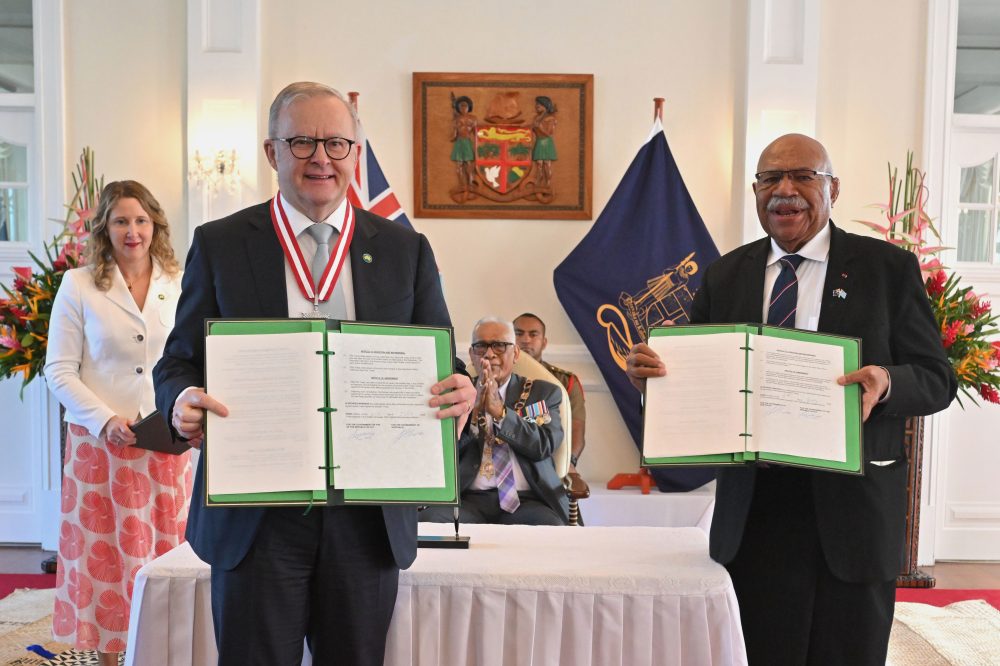
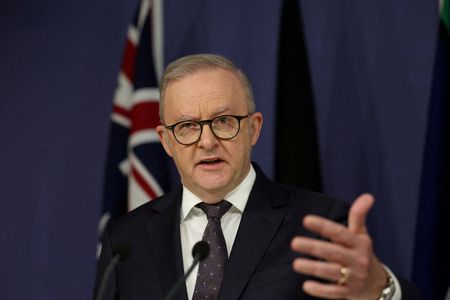
MELBOURNE, Australia — Australia and Fiji have officially signed a new bilateral defense agreement, marking the second major diplomatic achievement in less than a year for Australian Prime Minister Anthony Albanese in his effort to limit Chinese influence across the South Pacific.
Albanese and Fijian Prime Minister Sitiveni Rabuka put pen to paper on the Ocean of Peace Alliance in Fiji’s capital city of Suva. The two leaders also signed a separate economic agreement called the Vuvale Union, through which Australia has committed to investing more than 1 billion Australian dollars — roughly $693 million U.S. — in Fiji over the next ten years.
The Ocean of Peace Alliance is the first mutual defense treaty Fiji has ever entered into. For Australia, it is the fourth such agreement, coming after a 1951 treaty with the United States and New Zealand, and a bilateral defense pact signed with Papua New Guinea just last year.
Albanese described the weight of the new commitment, telling reporters: “The Ocean of Peace Alliance introduces a mutual defense obligation and there’s no higher obligation than to come to each other’s aid at a time of need.”
Rabuka expressed confidence that China would not react harshly to the newly signed agreements. “I do not expect China to have any severe pushback on either government. And I believe that they will welcome the understanding that is between Australia and Fiji,” he said. He added, “It does not threaten Fiji’s relationship with China nor Australia’s relationship with China.”
The Fijian prime minister described the agreements as being built on three core principles: deeper cooperation on security matters, stronger economic ties, and closer connections between the people of both nations.
“This is a clear affirmation of Australia’s sustained commitment to the stability, resilience and prosperity of the Blue Pacific region at a time of global uncertainty,” Rabuka said. He further noted, “These treaties reflect our shared understanding of the evolving and interconnected challenges that are facing our region.”
Australia has been working since 2022 to reinforce its position as the preferred security partner in the Pacific, following China’s signing of a secretive security agreement with the Solomon Islands that year. That deal sparked concerns about the potential construction of a Chinese naval base in the South Pacific.
Albanese is scheduled to travel to the Solomon Islands on Tuesday to meet with Prime Minister Matthew Wale after both nations agreed to pursue further talks on a security arrangement. Wale indicated during a visit to Australia last month that his new government plans to review the existing deal with Beijing.
On Wednesday, Albanese is set to host Papua New Guinea Prime Minister James Marape and Tongan Prime Minister Fatafehi Fakafānua in the Australian city of Brisbane. That same day, Australia’s defense treaty with Papua New Guinea — its closest neighbor — officially takes effect.
Just last week, Australia and Vanuatu signed a long-anticipated bilateral security and economic agreement known as the Nakamal Agreement. The deal, signed between Albanese and Vanuatu Prime Minister Jotham Napat in the Australian capital, explicitly blocks China from establishing a military base on the island nation. The agreement was finalized nine months after Vanuatu rejected an earlier version, citing concerns that it could restrict the country’s ability to draw in infrastructure investment. China voiced concern last week that the Nakamal Agreement may be aimed at Beijing.
Asian stock markets and U.S. futures were moving in different directions Monday, coming off a long holiday weekend for Wall Street, with technology stocks dragging down markets in Tokyo and Seoul.
Oil prices dropped after OPEC+ revealed Sunday that seven of its member countries plan to collectively boost crude production by 188,000 barrels per day in August. This marks the fifth month in a row that the group has agreed to increase output.
The seven nations moving forward with higher production are Saudi Arabia, Russia, Iraq, Kuwait, Kazakhstan, Algeria, and Oman.
Supply uncertainty remains in the market, however, as negotiations with Iran over fully reopening the Strait of Hormuz appear to be stalled. The pause comes as funeral ceremonies for Ayatollah Ali Khamenei are expected to continue for several more days.
In early Monday energy trading, Brent crude — the international benchmark — slipped 25 cents to $71.87 per barrel. The U.S. benchmark crude price fell 10 cents to $68.59 per barrel.
Japan’s Nikkei 225 index dropped 0.4% to 69,468.17. Technology firm SoftBank Group Corp. fell 3.4%, while chipmaker Tokyo Electron declined 1.4%. South Korea’s Kospi index fell 0.8% to 8,027.12.
Hong Kong’s Hang Seng index rose 0.8% to 23,542.97, and the Shanghai Composite edged up 0.1% to 4,046.71. Australia’s S&P/ASX 200 dipped slightly, down 0.1% to 8,833.20.
In currency markets, the U.S. dollar climbed to 161.92 Japanese yen, up from 161.34 yen. One year ago, the dollar was trading near the 140 yen level. The euro was valued at $1.1432, a slight decline from $1.1440.
U.S. markets were closed Friday, July 3, in observance of Independence Day, since the July 4th holiday fell on a Saturday this year.
MANILA, Philippines — A Philippine senator has been placed under arrest on large-scale plunder allegations, making him the second member of the country’s upper house to be detained in just over a month amid a sweeping corruption investigation.
Sen. Rodante Marcoleta, 71, a lawyer by profession, was taken into custody Monday at the Sandiganbayan, a special court dedicated to anti-corruption cases located in suburban Quezon City. He had arrived at the court alongside his legal team to challenge the charges filed against him and to request a postponement of his arrest.
Speaking to reporters gathered outside the courtroom, Marcoleta addressed the court’s decision to order his detention based on a preliminary review of the case. “Let’s respect that,” he said. He was subsequently escorted away by police. Because plunder is the charge against him, he is not entitled to post bail.
Marcoleta is a member of Iglesia ni Cristo, also known as the Church of Christ. The religious organization staged a three-day demonstration involving more than 15,000 members at a democracy landmark along one of metropolitan Manila’s most heavily traveled roads, protesting both the charges against Marcoleta and his anticipated arrest. The mass gathering caused significant traffic disruptions throughout the area.
President Ferdinand Marcos Jr. called off two scheduled public engagements outside his office on Tuesday, citing concern over the large-scale protest mounted by the religious group, which has a well-established reputation for mobilizing massive demonstrations.
The Office of the Ombudsman, which serves as a specialized anti-corruption prosecutor, announced it filed the plunder charge against Marcoleta last week. According to the office, Marcoleta allegedly received 75 million pesos — equivalent to approximately $1.2 million — described as campaign contributions from three supporters, which he failed to report in his legally required financial disclosure statement.
Earlier last month, Sen. Jinggoy Estrada, a political ally of Marcoleta, was also arrested and held on a non-bailable plunder charge. Estrada, 63, is accused of collecting more than 570 million pesos — roughly $9.3 million — in kickback payments tied to a government flood-control project. He has firmly denied those accusations, which stem primarily from allegations made by a former government public works engineer.
Both Marcoleta and Estrada were known supporters of former President Rodrigo Duterte and his daughter, Vice President Sara Duterte. On Monday, the 24-member Senate, sitting in its capacity as an impeachment court, was set to begin the trial of Sara Duterte, who was impeached by a sweeping vote in the House of Representatives back in May. She has denied the charges against her, which include accumulating undeclared wealth and publicly threatening to have the president killed.
A third senator with close ties to the Duterte family, Ronald dela Rosa, has gone into hiding following the issuance of an arrest warrant by the International Criminal Court. The ICC named him as a co-perpetrator alongside the former president in connection with the killings of mostly low-income drug suspects during a violent anti-narcotics campaign carried out under Duterte’s watch. Dela Rosa previously served as the national police chief who initially implemented those crackdowns.
Former President Duterte himself was arrested last year on the ICC’s orders and transported to the Netherlands, where he is scheduled to stand trial on November 30 on charges of crimes against humanity.
The United States is turning 250 years old, and while the milestone has inspired ambitious plans for community service drives and patriotic product launches, the celebrations are unfolding against a backdrop of national division and declining patriotism.
Well-known nonprofits had hoped the semiquincentennial would spark record-breaking volunteerism, and major corporations including Walmart and Coca-Cola have stepped in as sponsors, offering commemorative merchandise and community initiatives. But the private sector’s dreams of a unifying national moment have run into a complicated reality.
A recent survey from The Associated Press-NORC Center for Public Affairs Research found that fewer Americans today view their country as exceptional compared to a decade ago — part of a broader erosion of patriotic sentiment. Even the American flag, a centerpiece of anniversary celebrations, stirs different feelings depending on a person’s political views, age, and racial background.
Adding to the tension are two separate commissions organizing competing events. America250, the official nonpartisan group established by Congress in 2016, has been running the primary national commemoration. But late last year, President Donald Trump created Freedom 250, a nonprofit led by his allies, to put on alternative programming.
At a June 24 campaign-style rally kicking off Freedom 250’s Great American State Fair — an event that lost nearly all of its scheduled musical performers after concerns it had become too politically charged — Trump declared: “The American dream is alive again. That’s something that nobody thought they’d be saying when you went through that last four years of incompetence.”
The tone of that event stood in sharp contrast to America250’s flagship volunteer initiative, called America Gives, which encourages Americans to serve alongside nonprofit partners and track their hours through an online tool.
Salvation Army USA National Commander Merle Heatwole, whose organization co-sponsors the America Gives program, said some potential participants have wrongly assumed the nonpartisan initiative has a political agenda. He noted that thousands of churches did participate in a “Good Neighbor Day” of volunteering in May, calling that a bright spot.
“Some people have shied away because they’re not sure whether this is a nonpartisan effort, or whether it’s connected to the Trump administration versus the Democratic administrations,” Heatwole said. “That, I think, has hindered it slightly. But I think that overall, people are excited about having an opportunity to get involved.”
The America Gives online tracker recorded just over 38 million volunteer hours heading into the holiday weekend. For context, Americans logged 4.99 billion service hours in a single year between 2022 and 2023, according to an AmeriCorps analysis of Census Bureau data — though it remains unclear exactly how many hours would set a new single-year record.
America250 Chair Rosie Rios said she expects a significant surge in reported hours by year’s end, noting that many partner organizations tend to wait until “the last second” to enter their data. She stressed that the program’s only goal is highlighting the importance of service.
One consultant who has spent 30 years in the nonprofit sector, Jayne Cravens, found that most nonprofits are not taking advantage of semiquincentennial campaigns. She pointed out that many organizations simply lack the infrastructure to deliver meaningful volunteer experiences — a problem made worse after the Trump administration significantly cut AmeriCorps, the federal agency dedicated to national service, in 2025. Nonprofits were left scrambling to replace lost staff and funding.
Audra Watson, who leads youth civic programs at the nonprofit C&S, is heading a three-year effort to boost civic participation among 20 million people between the ages of 14 and 24. She has found that most young people are getting engaged through channels unrelated to the 250th anniversary. While the milestone has generated “some excitement for some young people,” she said those participants tend to be “hand-raisers” who are already “deeply excited about history.”
Watson has found that when young people focus on local issues — where she believes they have the most real influence — partisan divisions tend to fall away.
“For some young people, the 250th is their thing,” she said. “But for many, many more of them this is about really taking that energy and catalyzing that energy around issues of their community.”
Marketing professionals say brands must walk a careful line given the country’s polarized atmosphere and declining national pride. The existence of two competing logos has only added to the confusion, marketing executives noted. The America250 emblem features a bold red, white, and blue ribbon forming the number “250,” while the Freedom 250 design uses a classic serif font inside a circle of 13 stars, a reference to the original American flag.
“Once you have two competing logos, it’s confusing,” said Allen Adamson, co-founder of the marketing consultancy Metaforce.
Walmart, a founding sponsor of America250, is supporting a mobile recording studio traveling the country to collect personal stories from Americans. A selection of those recordings will be preserved by the Library of Congress, the company said.
Coca-Cola launched a program called “Paint the Nation,” a public art project resulting in dozens of murals created in partnership with local artists across the country. The company said each mural is meant to capture local culture and community pride, building what it described as a “visual legacy that extends beyond the anniversary year.” The beverage giant is also releasing commemorative mini-cans representing all 50 states, Puerto Rico, and Washington, D.C.
Not everyone is feeling the celebratory spirit. Aaron Hilton, 36, of Suffolk, Virginia, said he has noticed plenty of paper plates, cups, and T-shirts bearing the America 250 name, but he has no interest in buying them. He attributes his lack of enthusiasm to the current political climate.
“I’ll end up getting the Coke because I do drink Coke, but otherwise I really don’t want to buy anything like that,” Hilton said. “I’m not feeling really patriotic about this.”
Darrell Brown, 60, of Alexander, Arkansas, feels very differently. He has already purchased commemorative T-shirts and flags, and he decorates his lawn every year with a 7-foot inflatable Uncle Sam. This year, he added even more American flags than usual to mark the occasion. Brown said he has been sticking to merchandise featuring the America250 logo and views the existence of two competing designs as needlessly divisive.
“I don’t believe this should be a political issue,” he said. “I think it should be just about celebrating the country, regardless if you’re a Democrat or Republican.”
Cultural historian M.J. Rymsza-Pawlowska, who wrote a book about the 1976 bicentennial, suggested that future generations may look back on the 250th with more appreciation than people feel right now. She noted that during the bicentennial, the wounds of the Vietnam War and Watergate were still fresh. President Richard Nixon had initially replaced a bipartisan planning commission with political appointees who favored a top-down celebration, but he ultimately scrapped those plans in favor of federal funding for grassroots programs. Those efforts grew into forms of civic engagement — such as environmental cleanups and voter registration drives — that remain common today.
Private donors continue to fund similar efforts, though not at the scale that government support once made possible. State humanities councils have launched a “By the People” campaign to fund community-driven programs examining the nation’s culture and envisioning its future.
“We don’t really know what the ultimate legacy of the 250th will be,” Rymsza-Pawlowska said. “A commemoration is just an opportunity to do a thing that you were already doing but have an occasion for it. And possibly get some money for it.”
PROVO, Utah — A critical legal proceeding got underway Monday in the murder case surrounding the death of conservative activist Charlie Kirk, as prosecutors in Utah work to persuade a judge that enough evidence exists to bring the accused killer to trial and pursue a death sentence.
The five-day preliminary hearing represents the most substantial presentation of evidence in the case to date. It also marks the first time Kirk’s parents and widow will be present in the same courtroom as the defendant, Tyler Robinson.
Robinson, 23, faces an aggravated murder charge in connection with the September 10 killing of Kirk — a conservative activist and ally of President Donald Trump — at Utah Valley University. He surrendered to authorities the day after the shooting.
According to prosecutors, Robinson left a note for his roommate, who was also his romantic partner, that served as a confession. The note reportedly stated, “I had the opportunity to take out Charlie Kirk and I’m going to take it.”
Robinson has not yet entered a plea in the case, and his legal team has made no public statements regarding his guilt or innocence. His attorneys have, however, attempted to remove the death penalty as a possible punishment — efforts that have not succeeded so far.
The hearing is structured similarly to a condensed trial, though prosecutors are held to a lower standard here than at an actual trial. Rather than proving guilt “beyond a reasonable doubt,” they must only show there are reasonable grounds to believe Robinson committed the killing.
After the hearing concludes, state District Judge Tony Graf will decide whether the evidence is strong enough for the case to move forward to a full trial.
Among the evidence prosecutors plan to present are DNA findings tying Robinson to the suspected murder weapon, investigator testimony, autopsy results, witness accounts, and video footage of the shooting. Prosecutors are also expected to argue that others at Kirk’s campus event were put in danger — a factor that, under Utah law, could make the crime eligible for the death penalty.
During this phase of the proceedings, prosecutors are permitted to use hearsay, or secondhand information, to support their case.
Robinson’s roommate is not anticipated to appear in person during the hearing, though recorded testimony from the roommate could play a central role in the prosecution’s presentation.
Beyond the alleged confession note, prosecutors have indicated that Robinson also sent text messages to his roommate stating he targeted Kirk because he “had enough of his hatred.”
Before his death, Kirk and the organization he co-founded, Turning Point USA, played a significant role in energizing conservative youth voters in support of Trump’s successful second presidential campaign.
President Trump has publicly stated his hope that Robinson receives the death penalty.
Kirk’s widow, Erika Kirk, spoke at his memorial service and said she has forgiven Robinson. She is expected to be present throughout the week’s proceedings alongside Kirk’s parents, Robert and Kathryn Kirk, according to a source familiar with the matter who requested anonymity due to not being authorized to speak on the record.
Two years ago, a bearded young Russian man sat quietly on a bench in the German city of Hamburg, drawing no particular attention from passersby. But Yury Shekhvatov was not simply enjoying the summer weather — he was bracing himself for news that would change his life.
More than 1,100 miles away in Moscow, a military court was behind closed doors delivering a verdict in the trial of his wife, playwright Svetlana Petriychuk, and theatre director Zhenya Berkovich.
“I took several phones with me, and I sat and waited,” Shekhvatov recalled.
The news arrived through online feeds and messages from friends, and it was exactly what he had feared. The two women, who had been arrested in 2023, each received six-year sentences in a penal colony. The charge: “justifying terrorism” through a play that Petriychuk had written and Berkovich had directed.
At trial, the women argued that their play — “Finist the Bright Falcon,” which portrays Russian women who wed Islamic State fighters — was meant to stand against terrorism, not encourage it. The court was not persuaded.
Human rights advocates described the convictions as a troubling new low in the Russian government’s crackdown on free expression during wartime. The Kremlin offered no response to the case.
On Wednesday, July 8 — the second anniversary of that sentencing — Shekhvatov says he plans to return to that same bench overlooking a canal, sit in silence, and look through old photographs of his wife.
When asked what infuriates him most about the ordeal, he pointed to what he described as the cold indifference of Russia’s judicial system.
“Once you’re caught up in this system, things just roll along on autopilot,” he told Reuters.
“They opened the case, and it just dragged on; the investigator shuffled some papers around, and then the judge sat there putting on an act, pretending to be a rather intelligent man who was well-versed in literature… He went through the motions of looking into everything, yet he knew all along that the verdict would simply be handed down to him.”
Russia’s constitution calls for an independent judiciary insulated from political influence, but human rights organizations say the reality — particularly in high-profile or politically sensitive cases — is very different, with acquittals being extremely rare.
Shekhvatov, who had served as Petriychuk’s theatrical agent, said many people in the arts community publicly rallied behind her, sometimes at considerable personal risk. But he was deeply hurt by others who had worked closely with her and never reached out — not even with a private message of support.
“To me, that is just monstrous — something I will never be able to understand,” he said.
Petriychuk, now 46, is currently held at a penal colony in the Moscow region, where she and other inmates spend six days a week working in a sewing workshop. Her sentence still has three years left to run.
Following her arrest in May 2023, Shekhvatov wrote lengthy letters to her every single day for the first two years. These days, they communicate mainly through brief messages on a prison service app and are permitted to speak by phone a few times each month.
Shekhvatov, 38, said he developed a deliberate approach to supporting his wife emotionally — meeting her wherever she was mentally rather than trying to steer her toward a different mindset.
“From the outside you could see that things would hardly turn out well, but when she had moments of hope I always supported her and said, ‘Yeah, yeah — we’ll fight, absolutely, we’ll do it.’
“And when she was sad, on the other hand, I didn’t try to shift her mindset — like ‘No, let’s be positive, let’s fight…’
“It’s hard to describe how a person feels when they’re in prison… What they really want is total support in the broadest sense — just to be understood and supported.”
He maintains a website, freesveta.org, dedicated to raising awareness about Petriychuk’s case and keeping her play in the public eye. “Finist the Bright Falcon” has now been performed more than 75 times across the globe in 13 different languages.
While working as a massage therapist and health coach to make ends meet, Shekhvatov is also building knowledge of the publishing world with the goal of one day becoming his wife’s literary agent.
“She has always dreamed of writing prose, not just plays… (After her release) it will all happen — global bestsellers,” he said. “I haven’t the slightest doubt, not for a second, that when she gets out and starts writing, it will sell all over the world, get translated and so on. And I’ll make sure it happens.”
MEXICO CITY — Javier Aguirre wrapped up his third and final tenure as Mexico’s head coach on Sunday with a sense of pride, even as the pain of a 3-2 elimination loss to England stung deeply. Before departing, he threw his full support behind Rafa Marquez to carry the program into the next chapter.
Aguirre had already signaled before the tournament concluded that he would step away from the role. In the aftermath of the defeat, he pointed to Marquez — a former Mexico captain who worked alongside him during the tournament — as more than ready to take the reins of a squad that had reignited the nation’s passion for its national team.
The loss came at the Azteca Stadium, where England secured a spot in the quarter-finals despite a fierce late charge from the home side. The match itself was pushed back an hour due to poor weather conditions in the area surrounding the stadium.
“I would have liked to say goodbye to my people with a victory. That hurts,” Aguirre told reporters. “We tried.”
England built their lead through a rapid-fire brace from Jude Bellingham, before Julian Quinones pulled one back for Mexico. Harry Kane converted a penalty in the second half after England had been reduced to 10 men, and though Raul Jimenez also converted a late spot-kick for Mexico, it was not enough to change the outcome.
The atmosphere inside the Azteca was electric as the home crowd — which Aguirre has frequently called Mexico’s “12th player” — roared the team on in the closing minutes, chanting “yes we can” as Mexico pressed for an equalizer. England, however, held on and will now face Norway in Miami next Saturday in the quarter-finals.
“The players need to leave with their heads held high,” Aguirre said. “Today it could not be. We failed to capitalise, but I want to thank them all.”
Reflecting on his time in charge, Aguirre said the experience restored something important within the team and its connection to supporters across the country.
“I leave with a lot of pride,” he said. “These players made me very happy. We recovered the sense of belonging and the identity of this team.”
Marquez, who represented Mexico at five separate World Cups as a player, is widely expected to take over the project following Aguirre’s exit.
“I wish him the best,” Aguirre said of Marquez. “He is more than capable, and he will do better than me.”
MEXICO CITY — Mexico’s World Cup dream came to a painful end Sunday when England defeated the host nation 3-2 at the legendary Azteca Stadium, leaving tens of thousands of devoted fans devastated after a tournament that had sparked genuine belief that ‘El Tri’ could go all the way.
Supporters poured out of the famous stadium — where Mexico had only suffered two previous competitive losses — with many wiping away tears. The thunderous energy of more than 80,000 fans was reduced to silence as the final whistle confirmed the elimination.
Throughout the match, the chant “¿Y si sí?” — meaning “What if?” — had echoed through the stands. By the end, that hopeful question had received its brutal answer.
“The party’s over,” said fan Elizabeth Marcos as she exited the stadium. “It’s sad, they were down to 10 men… but that’s just how it goes.”
The defeat stung even more given Mexico’s impressive run to the round of 16 without allowing a single goal — only to fall to an England side that played the final third of the match shorthanded after Jarell Quansah was sent off with a red card.
Fan Ulises Chavez, leaning against a bench near the stadium exit, summed up the mood simply: “It’s hard to take, it’s so painful.”
The heartbreak extended well beyond the stadium walls. Along Reforma avenue — one of Mexico City’s main thoroughfares — thousands who had braved the rain to watch the game on large outdoor screens stood in quiet disbelief as the final result sank in.
In a striking contrast to the somber atmosphere, a lively mariachi band continued playing as dejected fans shuffled past on their way home.
Aysha Peraza, 39, had made the trip from Sinaloa to the capital to witness the match. She described watching a morning full of joy and optimism slowly transform into quiet grief.
“From early on, the people were in a super good mood,” Peraza said as the crowds dispersed. “Right now, people are sad, you can feel the sadness.”
“Mexico made it very far,” she added. “And, well, they made us feel things we hadn’t felt in a long time.”
Global financial markets got off to one of their calmest weekly starts in recent memory on Monday, with no major geopolitical flare-ups or new trade measures dominating headlines, as much of the world turned its attention to international soccer.
On the geopolitical front, no new progress has been reported in U.S.-Iran peace negotiations. However, the Strait of Hormuz remains partially open to shipping traffic. The United Kingdom Maritime Trade Operations reported 160 vessels passing through the waterway between Monday and Saturday of last week, including 98 tankers. While that figure remains well below the pre-war daily average of 138 transits, the gradual resumption of traffic is seen as a positive sign.
Over the weekend, OPEC+ reached an agreement to increase oil output quotas by 188,000 barrels per day beginning in August. That brings the total production increase since April to nearly 800,000 barrels per day.
Oil prices slipped following that announcement. Brent crude futures are hovering around $72.50 per barrel through December, a sign that traders believe prices have stabilized for now.
Stock markets across Asia posted modest declines, likely driven by investors locking in profits ahead of the upcoming earnings rush. The pullback comes after remarkable gains — South Korea’s primary stock index has surged nearly 90% this year, Taiwan’s market is up 62%, and Japan’s has climbed 37%.
All eyes will be on Samsung Electronics on Tuesday, when the world’s top memory chip manufacturer by sales is expected to report a stunning 18-fold increase in profits. According to an LSEG SmartEstimate, the company is forecast to post an operating profit of 86 trillion won — roughly $56.35 billion — for the April through June quarter.
On Wall Street, Delta Air Lines and PepsiCo are set to release their results ahead of the bigger earnings wave from major banks expected next week. Overall, analysts are projecting earnings-per-share growth of 25% compared to the same period last year, with semiconductor and energy companies expected to account for roughly half of that growth.
Futures tied to the S&P 500 and Nasdaq edged slightly higher after the holiday break, while European futures were little changed following solid gains the previous week.
U.S. Treasury yields dipped slightly as investors grew more confident that the Federal Reserve will hold interest rates steady at its meeting later this month, following a weaker-than-expected jobs report.
Minutes from the Fed’s most recent meeting are due out Wednesday and are expected to reflect a hawkish tone, given that nine members indicated support for at least one rate increase this year. However, that meeting took place before the recent decline in oil prices. Markets currently price in a 22% probability of rates staying unchanged at the July 29 meeting, but a 60% chance of a hike on September 16.
Fed Governor Christopher Waller is scheduled to speak in Rome later Monday. New York Fed Governor John Williams is set to appear Thursday. Those appearances come ahead of Fed Chair Kevin Warsh’s planned testimony before the House Financial Services Committee next week.
The ISM Services survey is also due Monday afternoon, with forecasters expecting a slight dip to 54.0 — still considered a healthy reading.
Key events and data releases to watch Monday include remarks from Fed Governor Christopher Waller, European Central Bank Board members Isabel Schnabel and Philip Lane, ECB President Christine Lagarde, and Riksbank Deputy Governor Anna Seim. On the data side, investors will also be watching EU retail sales and producer prices for May, German industrial output for May, and the U.S. ISM services survey for June.
The National Weather Service office in Mount Holly, New Jersey has issued a Flash Flood Warning that took effect at 12:26 AM EDT on Sunday, July 6, and is set to expire at 3:00 AM EDT the same morning.
Residents in the affected area are urged to take this warning seriously and avoid any travel through areas prone to flooding. Officials consistently remind the public that just a few inches of moving water can sweep a person off their feet, and even deeper water can carry away a vehicle.
If you encounter a flooded road, turn around and find an alternate route. Do not attempt to cross flooded areas on foot or by vehicle. Move to higher ground immediately if you are in a low-lying area.
Stay tuned to TV Delmarva and your local National Weather Service updates for the latest information as this warning remains in effect through the early morning hours.
It’s a big week for entertainment fans, with a wide range of new movies, TV shows, music, and video games arriving on streaming platforms and store shelves.
Among the most anticipated releases, as highlighted by Associated Press entertainment journalists: the viral horror film ‘Backrooms’ arrives for home viewing, Netflix launches a fresh take on ‘Little House on the Prairie,’ and the Rolling Stones drop a new studio album packed with famous collaborators.
The wildly successful theatrical release ‘Backrooms’ becomes available for purchase through all major streaming platforms on July 7 as a premium video-on-demand title. The film was helmed by Kane Parsons, 20, who expanded his popular viral web series about the unsettling nature of liminal spaces into a full-length feature. Chiwetel Ejiofor stars as a furniture store salesman. AP Film Writer Jake Coyle described the movie in his review as a ‘fitfully unsettling nightmare that never convincingly builds beyond its creepy, dated-decor premise.’
On July 10, Peacock begins streaming ‘Reminders of Him,’ based on a Colleen Hoover novel. Maika Monroe portrays a woman attempting to piece her life back together following prison, heartbreak, and tragedy, with Tyriq Withers co-starring. AP reviewer Mark Kennedy praised it as ‘a well-crafted, well-acted sad-happy Hoover adaptation,’ and gave Monroe special credit, writing that she ‘stretches out her dramatic muscles to play Kenna and nails the assignment, a woman with a hard shell who is looking for a little grace, a tricky role that’s both flirty and maternal.’
Also landing on July 10 is ‘The Long Walk’ on HBO Max, arriving just after the Fourth of July holiday. The film, adapted from a Stephen King story, is set in a bleak postwar America and follows 50 boys chosen by lottery to compete in a brutal endurance contest that ends only when a single survivor remains. Cooper Hoffman and David Jonsson lead the cast, and the film was directed by Francis Lawrence, known for his work on the ‘Hunger Games’ franchise.
— AP Film Writer Lindsey Bahr
The Rolling Stones are back with a new album called ‘Foreign Tongues,’ due out Friday, July 10. The band tapped actors Anya Taylor-Joy and Charles Melton to appear together in the music video for the soulful R&B single ‘Jealous Lover.’ The album also features the Cure’s Robert Smith on guitar for the energetic track ‘Divine Intervention,’ along with contributions from Steve Winwood, Paul McCartney, and the Red Hot Chili Peppers’ Chad Smith. In a touching tribute, the album also includes a recording from the late drummer Charlie Watts, captured during one of his final studio sessions before his passing in 2021.
‘Stranger Things’ actor Finn Wolfhard releases his second solo album, ‘Fire From the Hip,’ on July 10, one year after his debut record ‘Happy Birthday.’ The 12-track project marks a noticeable evolution — moving away from the lo-fi, distortion-heavy garage rock sound of his first effort toward more polished, melodic songwriting. The lead single ‘I’ll Let You Finish’ is a playful nod to the now-infamous 2009 Video Music Awards moment when Kanye West interrupted Taylor Swift’s acceptance speech.
Adam Lambert steps out on his own with his sixth solo studio album, simply called ‘Adam,’ also arriving this week. Lambert drew inspiration from 1990s alternative rock and electronic music, citing Nine Inch Nails, Björk, Prince, and Muse as influences. The 12-track record includes the dark, dance-floor-ready ‘Eat U Alive’ and the catchy glam track ‘Under the Rhythm,’ which samples ATC’s ‘Around the World (La La La La La).’ Both songs deal with the theme of losing yourself in a romantic relationship.
— AP Entertainment Writer Mark Kennedy
Husband-and-wife R&B duo The War and Treaty — Michael Trotter Jr. and Tanya Blount-Trotter, originally from Albion, Michigan — are releasing their latest album, ‘The Story of Michael and Tanya.’ The Associated Press first covered the pair in 2018, calling them ‘a powerhouse R&B duo who sound as though they were born to sing together.’ Their lead single ‘Don’t Say Goodbye’ is a smooth, timeless track built on rich harmonies and soulful production. The album also features guest appearances from Wynonna Judd and Whoopi Goldberg.
— AP Music Writer Maria Sherman
Netflix launches a reimagined version of ‘Little House on the Prairie’ on Thursday, July 9. Like the beloved original series, this new production draws from Laura Ingalls Wilder’s classic book series, following the Ingalls family as they settle in Kansas during the late 1800s. Luke Bracey takes on the role of father Charles, while Crosby Fitzgerald plays matriarch Caroline. Skywalker Hughes portrays eldest daughter Mary, and Alice Halsey plays the spirited younger daughter Laura, nicknamed Half-Pint.
J.K. Simmons leads the cast of ‘The Westies,’ a new crime drama on MGM+ premiering Sunday, July 12. The eight-episode series is based on the real Irish gang that controlled the Hell’s Kitchen neighborhood in Manhattan during the early 1980s. The story unfolds as the Jacob Javits Convention Center rises in their territory, bringing with it a wave of illegal opportunities — and tension between the gang’s younger and older members over how to run things.
— AP Writer Alicia Rancilio
EA Sports is getting football fans ready for the fall with the release of ‘College Football 27’ on Thursday, July 9. The game is available on PlayStation 5, Xbox X/S, and PC and features streamlined play-calling, a new ‘Dynasty Blueprint’ mode, and an updated ‘Road to Glory’ campaign that lets players chase the Heisman Trophy while earning sponsorship deals. Ole Miss running back Kewan Lacy, Miami wide receiver Malachi Toney, and Oregon quarterback Dante Moore grace the cover. Perhaps the most talked-about new feature is Mascot Mashup, a mode that pits college mascots against each other in full 11-on-11 games.
Bandai Namco’s ‘Echoes of Aincrad’ arrives Friday, July 10, on PlayStation 5, Xbox X/S, and PC. The game is set inside a 100-story floating castle — a virtual reality maze filled with friendly villagers on the lower levels and increasingly dangerous monsters, including giant cows, as players climb higher. A spinoff of the long-running Sword Art Online franchise, ‘Echoes’ marks the first entry in the series that allows players to build their own custom avatar instead of playing as the franchise’s signature teenage hero, Kirito.
PAMPLONA, Spain — Bill Hillmann has been gored by bulls three separate times during Spain’s famous running of the bulls, yet nothing could keep him away from this year’s San Fermin festival.
The reason for the extra buzz this year: it marks 100 years since Ernest Hemingway published the novel that launched him to literary stardom and put the city of Pamplona on the global map.
Hemingway’s 1926 work “The Sun Also Rises” has held readers spellbound for generations with its Jazz Age story of American and British bohemians seeking to fill an inner emptiness through exotic travel, heavy drinking, and the tortured pursuit of unattainable love.
The novel’s enormous success cemented its place as a pillar of American literature, standing alongside F. Scott Fitzgerald’s “The Great Gatsby.” It also brought widespread use of the phrase “lost generation” to describe the circle of early 20th-century writers living as expatriates in Paris. Hemingway’s stripped-down writing style permanently reshaped American literature.
Hillmann, who grew up in Chicago, was just 19 years old when Hemingway’s powerful portrayal of the bull-running tradition first grabbed his attention — particularly the scenes of ordinary Spaniards risking injury to sprint through the streets alongside the bulls, guiding them toward the bull ring. This year’s festival gets underway Monday with fireworks over a crowded plaza, and the first of eight bull runs takes place Tuesday.
“It was the first book I ever read,” Hillmann told the Associated Press while standing in Pamplona, looking out over the pen where bulls are held before being released onto the cobblestone route. “I sat there for about six hours, well past midnight, reading the book. And by the time I was done with that book, I was going to be a writer and I was going to be a bull runner.”
Since that night with the book, the now 44-year-old Hillmann has run alongside bulls in Spain hundreds of times — both in Pamplona and at dozens of other bull runs across the country. His passion for Hemingway and Pamplona has never faded, even after one goring nearly took his life.
That deep connection to the novel eventually led Hillmann to earn a doctorate in English. He now teaches “The Sun Also Rises” at East-West University in Chicago and writes about the bull-running tradition.
Hillmann is far from alone. Americans continue to be the largest group of foreign participants in the San Fermin bull runs. In 2022, 16% of all bull runners were American — the highest share among any foreign nationality and four times the number from neighboring France, according to figures from Pamplona’s City Hall.
A Dallas-based tour company called “Running Of The Bulls” has helped thousands of Americans make the trip to San Fermin over the years. Its operator, Bruce Anderson, says Hemingway’s novel turned the festival into a must-do experience for many people. This year, his company is bringing 1,400 attendees to Pamplona, with more than two-thirds coming from the United States.
“There’s a lot of energy, a lot of excitement around just remembering that book and the impact that it’s had,” said Anderson, who has been a Hemingway admirer his whole life. He spoke inside Pamplona’s art deco Café Iruña — a prominent drinking spot in the novel that today features a life-size statue of Hemingway leaning against the bar.
Anderson, who sports a thick white beard, even resembles Hemingway. Local Spaniards frequently call out to him using the writer’s famous nickname: “Papa!”
Hemingway’s presence is woven into the fabric of Pamplona. Hotels and bars display busts of him or post signs noting that he once visited. Outside the city’s bull ring — which also has a statue of the author — a large banner honoring the novel hangs with a quote showing how the festival left Hemingway at a loss for words: “At noon of Sunday, the 6th of July, the fiesta exploded. There is no other way to describe it.”
During his final visits to Pamplona, Hemingway regularly stayed at the Perla Hotel. His suite there still contains furniture from the 1950s, the era of his visits. The room, which looks out over the bull run route, also holds two glass bookcases filled with dozens of copies of “The Sun Also Rises.”
“Hemingway did a lot for Pamplona because he made it known around the world,” said Fernando Hualde, who spent four decades working as a receptionist at the hotel.
Still, Hemingway’s legacy in the city is complicated.
Beyond feminist criticism of his aggressively masculine public image, Hemingway has also faced pushback from animal rights advocates for his celebration of bullfighting. In “The Sun Also Rises,” he devotes far more attention to the courage of bullfighters than to the bull runs themselves.
Animal welfare activist Brook Spurling, speaking during a protest against the San Fermin bullfights, argued that “Hemingway wrote about many, many themes that today would not be accepted into society. He writes about hunting, about war, and we don’t want to be appreciating these themes today.”
Former hotel receptionist Hualde noted that some Pamplona residents resent Hemingway’s early promotion of the festival, blaming it for the overtourism now straining the once-quiet regional city.
Pamplona is home to 200,000 people but welcomes more than a million additional visitors during the festival. While most are Spanish, roughly 15% come from outside the country. Many visitors — especially younger ones — follow Hemingway’s lead when it comes to drinking heavily.
Some locals take quiet pride in places untouched by the Hemingway legend. Literature professor Gabriel Insausti of Pamplona’s University of Navarra recalled visiting a bar that displayed a sign reading, “Hemingway was not here.”
“In general, Hemingway has become a product of a franchise associated with San Fermin festival that has obscured his novel,” Insausti said. “People know who Hemingway is, but they haven’t read his novel.”
Hillmann warned that the large number of inexperienced foreign runners today makes the Pamplona bull runs more hazardous than ever. The last fatality occurred in 2009, but gorings and other injuries happen regularly. Beginners can easily panic and make a wrong move, triggering dangerous pileups or pushing someone into a bull’s path.
In 2014, Hillmann himself was seriously gored after he said a fellow runner’s poor decision left him exposed to a charging bull. Blood was pouring from his leg in such quantities that he believed he was dying.
After yet another goring in 2017, Hillmann spoke to the AP from his hospital bed in Pamplona and made clear he had no intention of stopping. “People think this is just crazy people running. There is real art. If you pay attention, you can see it,” he said at the time.
Hemingway’s granddaughter, actress Mariel Hemingway, remembers being treated “like royalty” when she attended San Fermin in years past. Mariel, who has written and spoken publicly about her grandfather’s mental illness and his suicide in 1961, believes his work will stand the test of time.
She sees his themes as timeless — including his preoccupation with death.
“Identity, love, purpose, and how to rebuild after profound loss … those themes haven’t ever changed. That’s what’s great about my grandfather,” Mariel Hemingway told the AP from her home in Idaho. “I think he captured something that will never go away.”
LONDON (AP) — When temperatures shattered records across Europe this past June, a Welsh school where teacher Mark Morris works was among hundreds across the United Kingdom forced to shut its doors.
With no air conditioning or fans available, and sunlight pouring through windows that barely open — some not at all — Morris said holding his design and technology classes was simply not possible when temperatures in Wales reached a record 35.9 degrees Celsius (96.6 degrees Fahrenheit).
“Even in a normal summer, the heat on those south-facing windows becomes unbearable,” said Morris, who teaches high school students subjects like woodworking and food preparation. “If there’s anything that you need to turn the oven on, you can forget about it. There’s no way anybody could carry on.”
Over 1,000 schools in the U.K. shut down for multiple days or released children early during the late June heat event, which toppled temperature records across the continent. The closures disrupted education and created economic ripple effects as parents with jobs scrambled to arrange childcare.
Experts say the widespread school closures have laid bare just how ill-equipped Britain is to handle what climate scientists now describe as a “new normal” — more frequent and more severe heat waves. Aging public buildings such as schools, hospitals, and care homes are among the hardest hit. Air conditioning is rarely found in these structures, and poor ventilation causes indoor temperatures to become dangerously stifling.
The British government’s own climate advisers noted in a recent report that these buildings were “built for a climate that no longer exists today” — designed to retain heat during cold winters, not to stay cool during extended stretches of extreme warmth.
At schools that remained open during the June heat wave, students and staff turned to low-tech workarounds: small handheld fans, water spray bottles, and cold popsicles replacing hot lunches. Blinds were pulled shut, and some people lay on the floor in the dim light — the coolest spot available. A few even soaked their bare feet in buckets of water.
Even so, with roughly 30 people packed into each classroom, conditions could quickly become a health risk.
“We’ve had members teaching in extremely hot conditions, to the extent that we’ve had reports of members passing out in classrooms while trying to teach,” said Wayne Bates, a health and safety spokesperson with the teachers’ union NASUWT.
Bates’ organization, along with other unions, has long pushed the British government to establish a maximum allowable workplace temperature. He noted that many school buildings constructed between the 1950s and 1970s have far outlived their intended lifespan, and that four out of five schools still have asbestos embedded in their structures — making it difficult to retrofit air conditioning systems.
Dave Woods, a head teacher at Beaconsfield Primary School in west London, pointed out that newer construction is not necessarily better. The newer section of his school, built just about a decade ago, actually performs worse in the heat than the original building constructed in 1908. He said the older structure benefits from high ceilings and thick brick walls that naturally keep it cooler.
“You would have thought in 2017, there would have been more thinking ahead because we already knew about changes to climate, changes to global temperatures,” said Woods, who also serves as vice president of the National Union of Headteachers.
Woods is exploring the possibility of adding air conditioning to portions of the campus, but tight finances are a major obstacle. He said U.K. schools have been chronically underfunded for more than a decade, with government funding slashed during austerity measures in the 2010s and never restored. His school now receives just 7,000 pounds (about $9,348) annually for repairs.
That falls well short of what’s needed, given that outfitting the school with air conditioning could run close to 20,000 pounds (roughly $26,700) — and pressing problems like leaking roofs also demand attention.
“We’re already looking at some longer-term things, like more tree planting to provide shade onto buildings, external screening onto windows or use of solar film to reflect some of the glare,” Woods said. “But nothing’s going to happen extremely quickly.”
The Climate Change Committee, an independent advisory body to the British government, warned in a May report that by 2050, with approximately 2 degrees Celsius of global warming, heat waves in southern England could routinely surpass 40 C (104 F). Without action, the number of days per year when indoor temperatures in thousands of English schools could reach 35 C is projected to rise by 70% compared to current levels, resulting in more lost school days and declining educational outcomes.
The committee recommended starting with low-cost “passive cooling” methods such as window blinds and external shading, but said that schools, care homes, and hospitals most at risk should have air conditioning installed within the next 25 years — ideally using low-carbon systems like heat pumps capable of both heating and cooling.
Richard Millar, the committee’s director of adaptation, stressed that investment must begin now.
“Our key message overall is that the effects being felt now, when we think about heat particularly, this isn’t something that we’ve historically thought about as one of the key hazards from weather or from climate change in the U.K.,” Millar said. “We increasingly need to think about heat as the evidence of the last few weeks shows us. And this is one of areas where we have a gap in terms of a proper plan for how this is led, particularly about the public services side of it.”
“It’s not just a future problem. Those impacts are here,” Millar added. “And we’re not prepared for today’s weather, let alone tomorrow’s.”
ALEXANDRIA, Louisiana — The Trump administration is moving ahead with plans to establish a 528-bed facility to hold migrant families and unaccompanied children near a major airport, a move designed to make deportations faster and more efficient.
The site in Alexandria, Louisiana, is intended to solve a longstanding logistical problem: rounding up children from foster homes and shelters scattered across the country and having no nearby location to house them in the final hours before a deportation flight. That problem came into sharp focus last year when Guatemalan children were roused from sleep in the middle of the night and given almost no time to travel to Harlingen, Texas, where they then sat waiting on an airport tarmac for hours.
A federal judge stepped in to halt those deportations, but the disorganized episode exposed just how unprepared authorities were without a dedicated holding space near the airport. U.S. Immigration and Customs Enforcement is describing the new Alexandria site as a “staging area” rather than a detention center, noting that people would remain there for only a few days at most.
Despite that characterization, immigration advocates are voicing serious concerns. Several worry that children could end up being held at the facility for weeks or even months — a pattern that has emerged at other federal immigration sites. They are also raising questions about oversight and say this facility marks a significant shift in how the government handles migrant children.
“It’s an expansion of the deportation system in ways we haven’t seen before,” said Leecia Welch, chief legal counsel at the nonprofit Children’s Rights. “There’s just so much that could go wrong with this facility.”
Under current law, unaccompanied children — those who arrive in the U.S. without a parent or close relative — are not placed in ICE-run facilities. They are required to be quickly transferred to state-licensed shelters and foster care programs, which fall under the Office of Refugee Resettlement within the Department of Health and Human Services. However, a spokesperson at the airfield where the new facility is being constructed confirmed that agency will have no role in operating it.
Instead, the facility will be managed by a nonprofit arm of LaSalle Corrections, a private prison company, according to Ralph Hennessy, executive director of the England Airpark Authority. He said the facility could open as early as August.
ICE officials signed a contract late last month to build the facility at a former military base near Alexandria International Airport, located roughly 175 miles northwest of New Orleans, Hennessy said. Records obtained by The Associated Press show it is intended to function as a 72-hour holding center for migrants awaiting deportation flights.
A Texas-based nonprofit called Compass Connections, which operates shelters for unaccompanied immigrant children, had originally been selected to help run the facility and presented plans publicly in February. However, the company’s president, Sonya Thompson, told the AP last week that the organization is no longer part of the project. She did not provide further details.
During public board meetings, airpark officials referred to the facility as a “humanitarian effort” for families choosing to “self-deport.” Immigration advocates counter that families and unaccompanied children sometimes make that choice under duress or without fully understanding their legal options.
“These are people that are volunteering to go back home and they’re going back home as a family unit,” Hennessy told the AP.
The facility will sit adjacent to the country’s busiest deportation hub. According to data from the ICE Flight Monitor, an initiative of Human Rights First, more than 4,400 immigration enforcement flights passed through Alexandria International Airport in 2025. ICE planning documents state that families and children at the facility “are in the legal custody of ICE and can only be released at the direction of ICE.”
The agency has directed contractors not to refer to those held there as prisoners, detainees, or inmates. Contractors have also been told not to use bars or cages when transporting families and children. The facility will not be required to conduct headcounts, and families will be permitted to wear their own clothing, according to agency guidelines.
LaSalle Corrections, based in Louisiana, operates a number of private prisons and federal immigration detention centers across the South, including a facility known as the “Louisiana Lockup” inside the state’s maximum-security prison in Angola. The official contractor for the new ICE holding site will be the company’s nonprofit arm, the LaSalle Family Foundation, which according to its tax filings provides chaplain services and educational programming inside correctional facilities.
LaSalle Corrections itself will also be involved in operating the facility and ensuring it meets compliance standards, according to an email from the company’s chief financial officer, Tim Kurpiewski, reviewed by the AP. A LaSalle spokesperson declined to comment.
The company’s track record has drawn scrutiny. Two detainees have died since April at a separate LaSalle-run ICE facility in Louisiana. Additionally, a facility called Winn Correctional Center was found in June to have violated standards related to environmental health and safety, food service, use of force, medical care, and other areas, according to the Department of Homeland Security’s Office of Inspector General.
WASHINGTON — President Donald Trump secured major concessions from NATO allies at last year’s summit, with most member nations agreeing to his push for significantly higher defense spending. Now, heading into this week’s gathering in Ankara, Turkey, his focus shifts to making sure those promises are kept.
The rapid pace at which most NATO countries have moved toward meeting Trump’s demand — that members spend 5% of their annual gross domestic product on defense over the coming decade — illustrates just how much the U.S. president has transformed the alliance to reflect his priorities. That’s true even as he continues to clash with allies over the conflict involving Iran, his repeated suggestions about acquiring Greenland, and a string of personal disputes with foreign leaders.
“President Trump fully expects that all allies will step up immediately and get on the path to 5% and do it with urgency,” said Matt Whitaker, the U.S. ambassador to NATO, speaking with reporters ahead of the summit in Ankara.
Trump departed Monday evening for the summit. In the days before leaving, he repeatedly voiced frustration over how much the United States contributes to defense compared to other alliance members. That came despite a recent Oval Office visit from the alliance’s secretary-general, Mark Rutte, who brought large charts displayed on easels to illustrate what he called “The Trump Trillion” — the total increase in allied spending commitments since 2017.
Luke Coffey, a senior fellow at the Hudson Institute, a conservative think tank based in Washington, described the Ankara summit as the “first report card” following last year’s meeting in The Hague.
“If NATO members play their cards right — if the leaders show up demonstrating a commitment and a reasonable plan to meet these spending targets — then it’ll allow President Trump to take a victory lap,” Coffey said.
Trump returned from last month’s G7 summit in France in good spirits, having received backing from other world leaders for his interim agreement to wind down the conflict with Iran. He spoke positively about the unity among those leaders, who also worked to get Trump on board with increasing security support for Ukraine in its ongoing fight against Russia.
That conflict, now entering its fifth year, is expected to be a central topic at the Ankara summit. The White House confirmed that Trump is scheduled to meet with Ukrainian President Volodymyr Zelenskyy on Wednesday. Trump also spoke separately with both Zelenskyy and Russian President Vladimir Putin on July 4th.
On the sidelines of the summit, Trump also plans to sit down with Syrian President Ahmad al-Sharaa. The White House has not outlined specific objectives for that meeting, though it comes as Trump has publicly floated the idea of Syria taking a more active role in countering Hezbollah in Lebanon. Al-Sharaa, who led an Islamic insurgent group whose forces drove out former Syrian President Bashar Assad, has publicly stated he has no desire to do so.
Trump also has a separate bilateral meeting scheduled with Turkish President Recep Tayyip Erdogan, the summit’s host and someone Trump considers a close ally. However, no other one-on-one meetings with foreign leaders are on his schedule.
Despite the relatively upbeat atmosphere at the G7, Trump quickly reignited disputes after returning home. He predicted that British Prime Minister Keir Starmer would step down before Starmer made the announcement himself, saying Starmer had “failed badly” on immigration and energy policy. Trump also claimed that Italian Prime Minister Giorgia Meloni had asked him for a photo opportunity — a claim she forcefully denied, and which led Italy to cancel a planned U.S. visit by its foreign minister.
Trump escalated the situation further on Sunday by posting a photo on social media showing Meloni smiling in his direction, captioning it with the words “RESTRAINING ORDER NEEDED.”
Relations with Canadian Prime Minister Mark Carney have also remained strained. And while French President Emmanuel Macron hosted Trump at an elaborate dinner at the Palace of Versailles last month, the relationship between the two leaders has not always been without friction.
With those tensions in mind, a bipartisan group of U.S. senators is once again traveling to the NATO summit, aiming to demonstrate that congressional support for the alliance remains strong and to serve as a counterbalance to Trump’s frequently critical stance toward NATO.
“They are our best allies, they are our best trading partners, they are critical to our national security, to our economic success, and we need to encourage those relationships,” said Sen. Jeanne Shaheen, D-N.H., who is leading the congressional delegation to Ankara. “That’s part of what Congress understands that the administration doesn’t seem to.”
The summit also arrives as the Trump administration promotes a vision it calls “NATO 3.0,” a framework that envisions European nations shouldering more of their own security responsibilities, freeing the U.S. to redirect its attention to other priorities.
That concept was laid out earlier this year by Elbridge Colby, a U.S. undersecretary of defense, at a meeting of NATO defense ministers. Defense Secretary Pete Hegseth added to the pressure last month with a pointed speech to those same ministers, announcing a six-month review of American troop deployments in Europe — a move that caught many allies off guard, as they had expected to be consulted during any such transition.
Trump himself created confusion earlier this year by appearing to send contradictory signals, announcing plans to send 5,000 troops to Poland just weeks after ordering the same number of forces to be pulled from the continent.
Sen. Shaheen said the NATO 3.0 vision “fails to understand — as this administration has consistently failed to understand — the threat that Putin and Russia are to Europe and subsequently to the United States.”
The 5% GDP spending target agreed upon at last year’s summit in The Hague breaks down as 3.5% for core military spending, with the remainder covering related costs such as infrastructure. Spain indicated at the time that it could not reach those levels, and other members have also raised concerns about the ambition of the goal.
Even with the increased spending pledges, experts caution that much of Europe still depends heavily on the United States for its actual defense capabilities if attacked. The foundational principle of NATO holds that an armed attack against one member is considered an attack against all.
“This is the reality for most Europeans,” said Liana Fix, senior fellow for Europe at the Council on Foreign Relations, noting that most member nations remain far from being able to defend themselves without U.S. support, “even if they’re starting to develop all that.”
Beyond the spending issue, NATO has made other moves to accommodate Trump’s priorities. Earlier this year, the alliance launched “Arctic Sentry,” a NATO-led military exercise designed to counter Russian and Chinese activity in the Arctic region. The exercise is also seen as a response to Trump’s repeated suggestions that the U.S. should acquire Greenland, the semiautonomous Danish territory he has argued is essential for American strategic security.
Eury Perez put together seven flawless innings for the Miami Marlins on Sunday, but the game nearly slipped away before Miami held on for a chaotic 9-8 triumph over the Athletics in West Sacramento, California, completing a three-game sweep in the process.
The moment Perez was removed from the game in the eighth inning, the perfect game and no-hitter vanished instantly. Reliever Lake Bachar issued a walk to Lawrence Butler and surrendered a single to Joshua Kuroda-Grauer. Jonah Heim then launched a grand slam, finishing with a career-best six RBIs as Oakland clawed its way back from an 8-0 deficit.
Down 9-5 heading into the ninth, Zack Gelof singled off Pete Fairbanks and Lawrence Butler followed with a double. Gelof crossed home plate on a passed ball by Joe Mack before Fairbanks recorded two outs. He then walked Max Muncy, who advanced to second on defensive indifference, and Heim came through again with a two-run single. However, Brian Serven grounded out to close the game.
Perez, a right-hander who improved to 5-6 on the season, struck out eight batters and threw 92 pitches. The 23-year-old has now gone seven innings three times in his career. Heriberto Hernandez reached base five times — on three hits and two walks — including a pair of home runs, while Otto Lopez collected three hits, one homer, and three RBIs. Lopez’s performance pushed his major league-leading batting average to .346.
Mets 10, Braves 9
Nolan McLean recovered from a shaky opening to deliver six strong innings as the visiting New York Mets survived a jaw-dropping ninth-inning rally to defeat Atlanta and snap a three-game skid.
Reliever Luke Weaver stretched his scoreless innings streak to 25 with a perfect eighth, but Huascar Brazoban was unable to protect a 10-3 lead, giving up five runs including a grand slam by Drake Baldwin. Closer Devin Williams was called in to record the final two outs. Bo Bichette contributed three hits and three RBIs, while A.J. Ewing and Tyrone Taylor each hit solo home runs for New York. Michael Harris II drove in three runs for Atlanta.
Pirates 11, Nationals 5
Konnor Griffin delivered a two-run single in the eighth inning to put Pittsburgh ahead for good as the visiting Pirates beat Washington to claim the series rubber match.
Brandon Lowe capped a five-run eighth with a three-run home run. Bryan Reynolds added a solo shot and Nick Gonzales had three hits for Pittsburgh. Gregory Soto, now 5-2, earned the win out of the bullpen, giving up just one hit and one run over two innings. Starter Bubba Chandler allowed four runs on six hits across four innings. For Washington, Luis Garcia Jr. went 2-for-5 with a two-run homer, and Dylan Crews added a solo shot. Brad Lord, also 5-2, was charged with all five Pittsburgh runs in the eighth, while Cade Cavalli lasted just 2 1/3 innings, allowing four runs on six hits.
Reds 3, Orioles 2
Spencer Steer connected on a two-run home run to help Cincinnati snap a six-game home losing streak and salvage the final game of a three-game set.
Reds starter Nick Lodolo improved to 3-2 after giving up six hits and one run across six innings on 87 pitches. Closer Emilio Pagan surrendered a run in the ninth but still notched his seventh save — his second appearance since returning from the injured list with a hamstring strain. His previous save chance came on May 4, with his last save recorded on April 17. Orioles starter Kyle Bradish fell to 5-9 after allowing five hits and three runs, finishing one out shy of a complete game while striking out five in 106 pitches.
White Sox 7, Guardians 6
Braden Montgomery scored the deciding run in the sixth inning on a Sam Antonacci groundout, pushing Chicago past host Cleveland and into a one-game lead over the Guardians in the American League Central.
Bulk reliever Erick Fedde, now 4-6, worked 5 1/3 innings and gave up three runs — two earned — on eight hits. Sean Newcomb closed it out by recording the final five outs for his third save. Colson Montgomery and Kyle Teel each launched two-run homers, and Tristan Peters added a solo shot against Guardians starter Tanner Bibee. Cleveland’s Colin Holderman, now 4-2, failed to retire anyone in the sixth and was tagged with the loss. Gabriel Arias hit a three-run homer for the Guardians in the fifth, while Chase DeLauter had a two-run shot and Daniel Schneemann drove in a run with a single in the first.
Twins 6, Yankees 1
Joe Ryan tossed seven shutout innings as visiting Minnesota cruised past New York for its first road series win against the Yankees since 2014.
Ryan, now 6-5, allowed just three singles in his fourth scoreless start of the season. Brooks Lee had three hits and an RBI after entering the game hitless in his previous 10 at-bats. All-Star outfielder Byron Buxton left in the first inning after aggravating a hip injury. Ryan Weathers dropped to 3-7 after giving up four runs on six hits in four-plus innings for New York, who have now lost nine of their last 10 games. The Yankees’ only run came on a double-play grounder by Jasson Dominguez in the ninth.
Cubs 6, Cardinals 4
Chicago erupted for four runs in the sixth inning to avoid a sweep against visiting St. Louis.
Cubs starter Javier Assad kept the Cardinals scoreless through 4 2/3 innings, surrendering just two hits and two walks. St. Louis counterpart Matthew Liberatore fell to 4-6 after giving up four runs — three earned — on four hits in five-plus innings. Chicago reliever Drew Pomeranz improved to 1-3 to earn the decision, and Jacob Webb recorded his third save. Pete Crow-Armstrong was the only Cubs player with multiple hits, going 2-for-4 with a run scored, while Nico Hoerner drove in two runs. Jordan Walker slugged his 20th home run of the season and accounted for all four St. Louis RBIs.
Astros 2, Rays 0
Peter Lambert kept Tampa Bay off the scoreboard into the sixth inning while Christian Walker and Isaac Paredes each homered as Houston took the rubber match of a three-game home series against the Rays.
Lambert improved to 7-5, bouncing back from his first loss in seven starts by limiting the Rays to three singles over 5 2/3 innings. Three left-handed Houston relievers combined to complete the four-hit shutout, holding Tampa Bay hitless in seven at-bats with runners in scoring position. Walker’s fourth-inning blast marked his fifth consecutive season reaching 20 home runs. Tampa Bay right-hander Mason Englert was called up from Triple-A Durham for a spot start and set career highs in innings pitched (5 2/3), strikeouts (nine), and pitches (101), allowing two runs on five hits and a walk.
Brewers 3, Diamondbacks 2
Jake Bauers launched a go-ahead two-run homer in the seventh inning as Milwaukee held on to win the rubber game of a three-game set in Phoenix against Arizona.
Jackson Chourio had two hits for the Brewers, who have now won five of their last seven games. Starter Brandon Sproat gave up one run and five hits over four innings. Arizona left-hander Eduardo Rodriguez, now 7-3, carried a shutout into the seventh before Bauers ended it, finishing with two runs allowed on five hits in six-plus innings. Geraldo Perdomo had three hits and scored for the Diamondbacks, who have dropped three of their last four.
Tigers 6, Rangers 3
Riley Greene went 3-for-the-day with a two-run homer and a two-run triple to lead Detroit past Texas in Arlington.
Kevin McGonigle had two hits and scored a run as the Tigers wrapped up their road trip at 5-1. Dillon Dingler added a run-scoring single and scored as well. Starter Casey Mize improved to 4-5, allowing two runs and five hits over 6 2/3 innings. Jake Burger and Ezequiel Duran hit solo home runs for Texas, and Brandon Nimmo drove in the Rangers’ other run. Kumar Rocker fell to 2-7 after being charged with three runs and five hits in 4 1/3 innings.
Royals 5, Phillies 2
Luinder Avila held the opposition to one run over five solid innings, Bobby Witt Jr. went 2-for-the-day with two runs scored, and Salvador Perez delivered a clutch two-run double as Kansas City evened its three-game series against visiting Philadelphia.
With the Royals ahead 3-2 in the eighth, Witt and Lane Thomas each drew walks and both came around to score on Perez’s two-out double to the left field wall. Phillies starter Aaron Nola dropped to 3-6 despite a season-high seven innings of work, giving up three runs and seven hits while striking out seven without issuing a walk. Bryson Stott had two of Philadelphia’s five hits.
Rockies 7, Giants 6
Kyle Karros crushed a three-run, go-ahead homer in the eighth inning to lift Colorado past San Francisco and take the rubber game of a three-game set in Denver.
Four Colorado relievers combined for four innings of four-hit relief to set up the comeback after San Francisco had taken a 6-4 lead in the sixth. Victor Vodnik improved to 3-3 with a scoreless eighth, and Jordan Romano collected his fifth save. TJ Rumfield had three hits and scored twice, while Hunter Goodman added two singles in an 11-hit attack. San Francisco’s Drew Gilbert went 4-for-4 with a homer and three RBIs, and Rafael Devers hit two home runs with Casey Schmitt adding another — all three off Colorado starter Tanner Gordon. Dylan Smith fell to 0-1 after surrendering Karros’ game-winner.
Mariners 4, Blue Jays 0
Emerson Hancock delivered seven innings of two-hit pitching and Mitch Garver homered as host Seattle blanked Toronto for the second consecutive game to take two of three in their weekend series.
The Blue Jays were held scoreless for the final 24 innings of the series. Toronto scored twice in the third inning of a 2-0 win on Friday before being routed 11-0 on Saturday. Hancock improved to 6-4, finishing with five strikeouts on 92 pitches. Blue Jays starter Trey Yesavage fell to 4-4 after allowing three runs on three hits with two walks and seven strikeouts in six innings. Nathan Lukes and recently named All-Stars Vladimir Guerrero Jr. and Ernie Clement accounted for Toronto’s three hits.
Padres 5, Dodgers 2
Manny Machado launched a three-run home run and JP Sears worked five scoreless innings as visiting San Diego snapped a season-worst eight-game losing streak with a win over Los Angeles.
Fernando Tatis Jr. added an RBI single during a four-run seventh inning as the Padres avoided a four-game sweep. The eight-game skid was San Diego’s longest since a 10-game losing streak in 2013. Mason Miller closed out the ninth for his 22nd save, his first since June 22. Los Angeles right-hander Kyle Hurt was tagged for four runs in his one inning of work after starter Emmet Sheehan, now 4-6, allowed one run over 4 1/3 innings. Alex Freeland and Shohei Ohtani each had RBI singles among the Dodgers’ four hits.
Australian Prime Minister Anthony Albanese found himself issuing a public apology Monday after a crude comment he made about pop icon Kylie Minogue during a comedy podcast sparked backlash from women’s rights groups and opposition lawmakers.
During the interview, host Nikki Osborne posed the question of which of three well-known Australian female celebrities Albanese would marry, date, or “shag” — a vulgar term in Australia used to refer to sexual intercourse.
At first, Albanese tried to sidestep the question, noting that he had recently gotten married. But Osborne pushed further, asking who he would pick if his marriage were to fall apart. Albanese responded, “Kylie, clearly.”
Osborne then followed up: “You’d marry Kylie, and shag her, and date her?” To which Albanese replied, “All of the above.”
The remarks quickly drew condemnation. Senator Sarah Henderson was among the opposition lawmakers who spoke out, calling the comments “disrespectful to women, embarrassing to Australians and demean the office of Prime Minister.”
Albanese wasted no time in releasing a formal apology. “I apologise unequivocally for the comments,” he said in a written statement issued Monday.
A representative for Minogue had not yet responded to media requests for comment at the time of the report.
Australia has a well-known informal political culture, where politicians are regularly asked about topics ranging from sports to pop culture during media appearances.
England fought off a fierce Mexican comeback at the Azteca Stadium in Mexico City to claim a thrilling 3-2 victory in the round of 16 on Sunday, booking their spot in the World Cup quarter-finals for the third consecutive time.
Thomas Tuchel’s squad made things far more difficult than necessary, but ultimately handed the co-host Mexicans only their third competitive loss at the iconic venue since 1966 — a remarkable achievement given Mexico had fallen just twice in 89 matches at the storied ground before Sunday’s clash.
The match got off to a delayed start, pushed back a full hour due to thunderstorms, but the Mexican faithful inside the Azteca were as loud and passionate as ever, urging their side forward from the opening whistle. England withstood the early pressure and gradually settled into the game.
Jude Bellingham broke the deadlock just after the half-hour mark, connecting with a diving header from a well-delivered cross by Bukayo Saka. Within two minutes, Bellingham had doubled England’s advantage after another swift move down the right flank, with captain Harry Kane providing the assist.
Mexico refused to fold. The crowd roared them on with chants of “Yes we can,” and winger Julian Quinones answered the call, volleying home inside the box following a scramble from a free kick to pull one back for the hosts.
England’s task grew even harder after the interval when defender Jarell Quansah was dismissed for a reckless challenge. Despite being reduced to ten men, England stayed composed. When Anthony Gordon was brought down by the Mexican goalkeeper around the hour mark, Kane stepped up and coolly slotted the penalty home to restore the two-goal cushion.
England’s relief was short-lived. Captain Kane gave away a penalty himself while attempting to clear the ball, and after a VAR review confirmed the decision, Raul Jimenez converted to make it 3-2 and reignite Mexican hopes.
With more than 20 minutes remaining, England were pinned back and forced to defend desperately, surrendering much of the possession as Mexico pressed for an equalizer. They held on, however, sealing a memorable win in what was the final World Cup match to be played in Mexico.
The victory marked England’s first appearance at the Azteca since the 1986 World Cup quarter-finals, when Diego Maradona’s notorious “Hand of God” goal and a stunning individual run through the defense ended Bobby Robson’s side’s tournament hopes against Argentina.
England will next face Norway, who stunned Brazil 2-1 earlier on Sunday to set up the quarter-final showdown.
MEXICO CITY — England held on for a hard-fought 3-2 victory over co-host Mexico on Sunday at the Azteca Stadium, punching their ticket to the World Cup quarterfinals while playing much of the second half a man down. The result ended Mexico’s longest run at the tournament in 40 years.
Jude Bellingham was the early hero for England, scoring twice within a single minute. He first converted a cross from Bukayo Saka, then tapped home a pass from Harry Kane, leaving the home crowd stunned.
Mexico got back into the match before halftime when Julian Quinones reacted fastest to a loose ball in the penalty area and fired it into the top of the net, cutting England’s lead in half and reigniting the co-hosts’ hopes.
The second half brought more drama when England’s Jarrell Quansah was shown a red card following a VAR review, leaving his side with 10 men. Despite the disadvantage, Kane stepped up and converted a penalty after goalkeeper Raul Rangel was judged to have fouled Anthony Gordon, restoring England’s two-goal cushion.
Mexico refused to give up, earning a penalty of their own after a VAR review determined that Kane had fouled Brian Gutierrez. Raul Jimenez converted the spot kick to make it 3-2, setting up a tense finish.
The match itself was delayed by a full hour before kickoff due to severe weather conditions in the area surrounding the Azteca Stadium.
England will next take on Norway in the quarterfinals, scheduled for Saturday in Miami.
The National Weather Service office in Mount Holly, New Jersey issued a Severe Thunderstorm Warning late Saturday night, with the alert taking effect at 11:30 PM EDT on July 5 and remaining in place until 12:15 AM EDT on July 6.
Residents in the warned area are urged to move indoors immediately and stay away from windows. Severe thunderstorms can bring dangerous lightning, damaging winds, and large hail in a short period of time.
The warning is set to expire at 12:15 AM EDT. People should continue to monitor local forecasts and official weather alerts for any updates or extensions to the warning.
The National Weather Service office in Mount Holly, New Jersey has issued a Flash Flood Warning effective from 11:00 PM on Saturday, July 5th, lasting through 3:00 AM on Sunday, July 6th.
Residents are urged to take this warning seriously and avoid traveling through areas prone to flooding. Rapidly rising water can be extremely dangerous, and even shallow floodwaters on roadways can sweep vehicles away.
If you encounter a flooded road, turn around and find an alternate route. Do not attempt to drive through standing or moving water, as it is impossible to judge the depth or current strength from inside a vehicle.
Stay tuned to TV Delmarva and monitor updates from the National Weather Service for the latest information as conditions develop overnight.
Iran kicked off a large funeral procession Monday through its capital city of Tehran to honor the late Supreme Leader Ayatollah Ali Khamenei.
Khamenei’s coffin, draped in a flag, along with the coffins of family members who died in an airstrike on February 28 — at the outset of the war launched by Israel and the United States — are being transported on a truck through Tehran’s streets.
The procession is making its way toward Mehrabad International Airport as part of the formal mourning ceremonies.
Iran’s theocratic government is expecting large crowds to turn out across the city, viewing the attendance as a public demonstration of support for the ruling regime.
Iranian state television confirmed the procession had officially gotten underway.
To accommodate the mourning period, authorities have closed off streets, restricted airspace, and brought much of daily life to a halt. The ceremonies are scheduled to wrap up Thursday, when the 86-year-old Khamenei will be laid to rest at the Imam Reza shrine in Mashhad, his birthplace.
Meanwhile, the United States continues to push forward with diplomatic negotiations with Iran. Those talks are focused on fully reopening the Strait of Hormuz, scaling back Iran’s disputed nuclear program, and achieving a lasting end to the ongoing war. However, negotiations appear to be paused until after the burial takes place.
Super Typhoon Bavi was churning across the Mariana Islands in the western Pacific Ocean on Monday, hammering Guam, Tinian, and Saipan while unleashing catastrophic winds on Rota, according to the U.S. National Weather Service.
Officials warned residents across the island chain to seek shelter immediately as the powerful Category 5 storm made its way through the region. The affected islands include the U.S. commonwealth of the Northern Mariana Islands and the U.S. territory of Guam, located roughly 3,800 miles west of Hawaii and about 1,550 miles east of the Philippines.
The weather service reported that Bavi’s eyewall was projected to come ashore at Rota shortly after sunrise local time, bringing what forecasters described as “catastrophically destructive” winds reaching up to 180 miles per hour. Wind gusts as high as 215 mph were considered possible.
Rota, the southernmost island in the Northern Mariana Islands chain, is home to approximately 2,000 residents.
The neighboring islands of Guam, Tinian, and Saipan were forecast to endure conditions ranging from severe tropical storm to full typhoon strength on Monday, with winds expected to gradually decrease afterward.
Heavy rainfall accompanied the storm, with the weather service projecting 12 to 20 inches of rain near the storm’s center, significantly raising the danger of flash flooding that could persist through Tuesday night.
The U.S. island territories serve as a critical military hub in the western Pacific, home to several key installations including Andersen Air Force Base, Naval Base Guam, and Marine Corps Base Camp Blaz.
Evacuation centers were opened throughout Guam in preparation for the storm. In a Facebook video posted Sunday, Guam Governor Lou Leon Guerrero called on residents to stay off the roads and remain indoors, saying the administration was “ready and prepared in our planning and our protection of our people.”
WELLINGTON — A powerful rainstorm brought flooding, road closures, and forced evacuations to the southern New Zealand city of Dunedin and the neighboring Waitaki District on Monday, with authorities calling on residents to stay home and limit travel wherever possible.
Dunedin City Council reported that multiple roads in Mosgiel, located west of the city center, were shut down overnight due to surface flooding. The road crossing Three Mile Hill was also closed, and minor landslides were reported on the Otago Peninsula. In Surrey Street in South Dunedin, flood protection barriers were put in place, and officials noted that pumps and pipes had successfully managed the rainfall accumulation up to that point.
An emergency evacuation center was set up overnight in Mosgiel to shelter displaced residents. The council confirmed that “a number of residents” had sought refuge there, including one family of five.
The situation was more severe in the Waitaki District, where officials declared a state of emergency following widespread flood damage. Local reports indicate that more than 20 residents chose to self-evacuate from their homes.
New Zealand’s national weather service, MetService, reported that both Dunedin and Oamaru received approximately 100 millimeters — about 4 inches — of rain within a 24-hour period. The storm system was expected to shift northward, bringing heavy rain toward the Canterbury and Marlborough regions.
MANILA — A Philippine anti-graft court moved to arrest a key ally of Vice President Sara Duterte on Monday, issuing a warrant for Senator Rodante Marcoleta on a plunder charge just hours before the Senate convened a high-profile impeachment trial that could shape Duterte’s political future.
Marcoleta had been set to serve as a senator-judge in the impeachment proceedings against Duterte. If two-thirds of the 24-member Senate votes to convict her, Duterte could be disqualified from running in the 2028 elections, in which she is currently considered the leading candidate to succeed President Ferdinand Marcos Jr.
Marcos and Duterte ran together on a joint ticket in 2022, but that partnership has since collapsed into an intense rivalry.
The anti-graft court issued the arrest warrant after the Ombudsman’s office accused Marcoleta of accepting 75 million pesos — roughly $1.2 million — from private donors during his 2025 Senate campaign, an alleged violation of anti-corruption laws. The court also issued a hold departure order, barring the senator from leaving the Philippines.
In a statement released last week, the Ombudsman declared, “A public servant owes no personal debt to any donor that supersedes what they owe the Filipino people.”
News of the impending arrest sparked protests last week, organized by a religious group with 2 million members. The demonstrations snarled traffic throughout the capital, Manila, and forced Marcos to cancel scheduled events outside the presidential palace.
Marcoleta’s office had not issued a response as of Monday. The senator told supporters last week that he was ready to face imprisonment.
The case is not the first of its kind in recent weeks. Last month, Senator Jose “Jinggoy” Estrada was taken into custody on plunder charges amid suspicions that he accepted kickbacks connected to infrastructure projects.
TAIPEI — Taiwan’s government says it is closely watching a growing number of Chinese naval movements as the military exercise season reaches its peak, including joint operations involving Russia, according to a senior Taiwanese security official who spoke Monday.
Taiwan, which operates as a self-governing democracy, is claimed by China as part of its territory. The island strongly rejects that claim and maintains that its own people have the sole right to determine their future. Taiwanese officials say the window of warning time before any potential military attack continues to narrow.
Taiwan National Security Bureau Director-General Tsai Ming-yen addressed reporters at parliament, noting that the period from July through September represents the height of Chinese military drill activity. He said officials are comparing current operations with previous ones to identify any emerging “new patterns.”
Tsai confirmed that four Chinese naval formations are currently active in the Western Pacific.
“Overall, during this seasonal peak for exercises, the mobilisation of Chinese Communist naval and maritime forces has indeed shown an upward trend,” Tsai stated.
China’s defense ministry had not responded to requests for comment at the time of this report.
On Sunday, both China’s defense ministry and Russian state media announced that the two countries’ naval forces would conduct joint exercises in the waters and airspace near the Chinese city of Qingdao this week. Tsai said Taiwanese officials became aware of those planned drills last week and held internal briefings ahead of time.
He also noted that the joint Chinese-Russian operations appear aimed at challenging the “denial and defence strategy” built by the United States and its allies along the First Island Chain — a stretch of territory running from Japan through Taiwan, the Philippines, and Borneo.
By Friday, Taiwan was tracking a record number of more than 110 Chinese military and Coast Guard vessels operating along the First Island Chain, according to a post on X by Joseph Wu, secretary-general of Taiwan’s National Security Council, published late Saturday.
This follows a 2023 incident in which Taiwan spotted two Russian warships off its eastern coastline.
FIFA has given U.S. men’s national team striker Folarin Balogun the green light to play in Monday’s World Cup round-of-16 matchup against Belgium in Miami, after the governing body put his red card suspension on hold by invoking Article 27 of its Disciplinary Code.
So what exactly is Article 27, and how does it work?
At its core, Article 27 gives FIFA the authority to suspend — or delay — the enforcement of a disciplinary penalty. The punishment itself remains officially on the books, but the player does not have to sit out immediately unless that suspension is later reversed.
FIFA’s judicial bodies, which include the Disciplinary Committee and the Appeal Committee, have the power under this article to pause all or part of a disciplinary sanction. Notably, the code does not spell out the specific circumstances under which a judicial body may choose to take that action.
When a sanction is suspended, the player enters a probationary period lasting anywhere from one to four years. In Balogun’s case, that probationary window has been set at one year.
Should the player commit another infringement of a similar nature during that probationary period, the suspended ban is automatically reinstated — on top of any additional punishment handed down for the new offense.
There is one category of discipline that cannot be suspended under any circumstances: penalties tied to match manipulation.
The Disciplinary Committee itself is made up of a chairperson, a deputy chairperson, and additional members. Both the chairperson and deputy chairperson are required to be qualified lawyers, and the committee must have at least three members present to issue a ruling. Mohammad Al Kamali of the United Arab Emirates currently serves as chairperson. Members are elected by the FIFA Congress for four-year terms, with a maximum of three terms allowed.
It’s worth noting that Article 27 wasn’t always called that. When FIFA updated its Disciplinary Code in 2019, the provision was numbered Article 26. It was renumbered to Article 27 in 2023.
Motorists traveling along Delaware Route 4 are facing significant delays after a crash forced the closure of multiple lanes in both directions.
The incident is affecting the stretch of roadway between Race Street and North DuPont Road, with lanes blocked in both directions as of the latest report from Delaware transportation officials.
Drivers in the affected area are advised to allow extra travel time or find an alternate route until the roadway is cleared and normal traffic flow is restored.
The National Weather Service office in Mount Holly, New Jersey issued a Severe Thunderstorm Warning on the night of July 5, effective from 10:52 PM EDT through 11:15 PM EDT.
Residents in the warned area were advised to seek shelter indoors, stay away from windows, and avoid unnecessary travel during the warning period.
Severe thunderstorms can bring dangerous lightning, damaging winds, and large hail. Authorities recommend staying informed through local weather alerts and having a plan in place during severe weather events.
The National Weather Service out of Mount Holly, New Jersey issued a Severe Thunderstorm Warning on the night of July 5, effective from 10:37 PM EDT through 11:15 PM EDT.
Those in the warning area were advised to seek shelter indoors, stay away from windows, and avoid any unnecessary travel until the warning expired.
Residents should continue to monitor local forecasts and weather alerts as conditions can change rapidly during severe weather events.
The National Weather Service office in Mount Holly, New Jersey issued a Severe Thunderstorm Warning on the night of July 5, effective from 10:05 PM EDT through 10:45 PM EDT.
Residents in the areas covered by the warning were advised to seek shelter indoors, stay away from windows, and avoid unnecessary travel until the warning expired.
Severe thunderstorms can bring dangerous lightning, damaging winds, and heavy rainfall. Authorities recommend that people remain weather-aware and monitor updates from the National Weather Service during active warnings.
KYIV, Ukraine — Russia unleashed a barrage of missiles and drones on Ukraine’s capital overnight into Monday, leaving at least three people dead, according to authorities. The assault began just hours after Ukrainian President Volodymyr Zelenskyy had publicly warned that a major Russian strike was on the way.
Tymur Tkachenko, the head of Kyiv’s City Military Administration, reported via Telegram that a residential building in the Podilskyi district partially collapsed during the attack. In the Darnytsia district, multiple high-rise buildings sustained damage, and rescuers believed people were trapped beneath the debris.
“These are residential buildings. Places where people slept and lived their ordinary lives,” Tkachenko wrote.
The strike, which was still ongoing in the early hours of Monday morning, involved multiple waves of ballistic missiles, cruise missiles, and drones. The sounds of explosions rang out across Kyiv as residents fled to underground metro stations seeking safety.
Monday’s attack follows a deadly combined Russian strike just days earlier that claimed the lives of at least 31 people in the capital. In a late Sunday Telegram post, Zelenskyy again urged Western allies to strengthen Ukraine’s air defense systems, specifically calling for more Patriot missiles. He argued that allowing those supplies to run low only encourages Russia to continue its four-year war against Ukraine.
The Pittsburgh Penguins made moves to keep their roster intact on Sunday, agreeing to terms with forward Egor Chinakhov on a three-year contract totaling $18.75 million. The deal carries an average annual value of $6.25 million for the 25-year-old Russian native.
Pittsburgh also retained goaltender Arturs Silovs, signing the 25-year-old to a one-year pact worth $2.8 million. Both players had been restricted free agents heading into the offseason.
Chinakhov came to Pittsburgh via a trade with the Columbus Blue Jackets on December 29, 2025, in exchange for forward Danton Heinen and a pair of draft picks. He had been relatively quiet in Columbus, putting up six points — three goals and three assists — across 29 games before the deal. Once in Pittsburgh, however, he caught fire, recording 36 points with 18 goals and 18 assists in just 43 regular-season contests.
In six playoff appearances with the Penguins, Chinakhov did not record a point and finished with a minus-4 rating, three blocked shots, and 11 hits. Over his entire NHL career spanning 247 regular-season games with both Columbus and Pittsburgh, he has accumulated 113 points — 55 goals and 58 assists — along with 46 penalty minutes, 102 blocks, and 216 hits.
Columbus originally selected Chinakhov in the first round, 21st overall, during the 2020 NHL Draft.
Silovs, a Latvia native, posted a 19-12-8 record last season for Pittsburgh with a 3.07 goals-against average and an .887 save percentage over 39 games, including 38 starts. For his career, he stands at 27-20-10 with a 3.09 GAA and an .885 save percentage across 58 games with the Vancouver Canucks and the Penguins. In postseason play, he has gone 7-6 with a sharper 2.56 GAA and a .907 save percentage in 13 starts.
Vancouver originally drafted Silovs in the sixth round of the 2019 NHL Draft.
SEOUL — South Korea’s President Lee Jae Myung is calling on government officials to move without delay in getting major chip and artificial intelligence projects off the ground, following a sweeping investment announcement made last week.
Speaking at a government meeting on Monday, Lee stressed that the nation’s ability to lead in advanced industries depends on how quickly it can act. He cautioned that bottlenecks in permitting, land acquisition, and securing reliable power and water supplies could jeopardize South Korea’s position in the global race for technological dominance.
“In this situation, it appears the outcome will be decided by who moves faster and who secures the lead first,” Lee said. “Only speed matters.”
Lee pointed to the Yongin industrial complex as an example of how slow the process can be, noting it took six years from site selection to breaking ground — and that timeline was actually considered relatively quick. He called on officials to shorten environmental reviews and other approval steps wherever possible, and said processes that are typically handled one after another should instead be pursued simultaneously.
The president also directed officials to get ahead of power and water infrastructure needs rather than waiting until projects are underway. He highlighted electricity as a particularly critical concern for chip manufacturing facilities, noting that companies have already expressed worries about reliable baseload power supply despite growth in renewable energy. Lee ordered officials to proactively address those concerns.
Lee also said government representatives and corporate leaders should begin talking about specific locations for the planned facilities.
Last week, South Korea unveiled a plan involving more than $576 billion in investment targeting the chip and AI sectors, with a goal of establishing global leadership and spreading economic growth beyond the Seoul metropolitan area. Samsung Electronics and SK Hynix are each set to invest 400 trillion won — roughly $260 billion apiece — to construct new chip manufacturing sites in the country’s southwest. An additional 81 trillion won is expected to flow into a chip-packaging cluster in the Chungcheong region.
SYDNEY — Australia and Fiji have formalized a new mutual defence alliance, signing the agreement on Monday alongside a separate treaty designed to deepen economic and security cooperation between the two Pacific nations.
Fiji Prime Minister Sitiveni Rabuka described the newly signed agreements as a meaningful upgrade in the relationship between the two countries.
The Milwaukee Brewers announced Sunday that starting pitcher Brandon Woodruff has been placed back on the 15-day injured list, this time dealing with right shoulder inflammation that cut his outing short during Saturday night’s 4-3 loss to the host Arizona Diamondbacks.
To fill the vacancy on the roster, Milwaukee called up left-handed pitcher Drew Rom from Triple-A Nashville.
Woodruff’s night ended in the fourth inning after he faced 14 batters, surrendering three runs on two hits and one walk while recording six strikeouts across 3 2/3 innings. The loss marked just his third start since coming back from surgery to remove a cyst from his shoulder joint — a procedure that had kept him sidelined for nearly two months.
The 33-year-old revealed he had been feeling discomfort in his shoulder as early as the second inning. His declining velocity told the story: his fastball dropped from 92.5 mph in the first inning down to 86.6 mph by the fourth, while his changeup fell from 82.9 mph to 76.6 mph over the same stretch.
Despite the setback, Woodruff expressed a measured outlook on the situation. “It gets frustrating having to go through this stuff, but I’m in a good spot mentally with it,” he said. “I know what’s before me. I know what I’m dealing with, so if I can avoid some things, it just becomes, ‘Get back on the field and pitch and help them win.’”
Woodruff left the mound following a visit from Milwaukee manager Pat Murphy, athletic trainer Brad Epstein, and pitching coach Chris Hook.
Murphy was candid about the impact Woodruff’s absence will have on the club. “It’s really unfortunate. He’s a huge part of our organization, a huge part of our team this year and was a huge part of the team last year,” Murphy said. “He just has an unbelievable presence and does whatever he can to help people. And he’s a great pitcher.”
Through nine starts this season, Woodruff holds a 2-2 record with a 2.98 ERA, 47 strikeouts, and 10 walks across 45 1/3 innings. He missed all of the 2024 season recovering from right shoulder surgery to repair his anterior capsule.
A two-time All-Star, selected in 2019 and 2021, Woodruff carries a career record of 55-30 with a 3.10 ERA over 151 appearances — including 136 starts — spanning nine seasons with the Brewers since 2017. Milwaukee originally drafted him in the 11th round of the 2014 MLB Draft.
As for Rom, the 26-year-old enters with a 1-0 record and 3.18 ERA for Milwaukee this season, posting four walks and 11 strikeouts across 5 2/3 innings in five relief appearances, including a win recorded over one-third of an inning in Sunday’s 3-2 victory over Arizona. At Nashville this season, he went 3-1 with one save, a 2.51 ERA, 10 walks, and 47 strikeouts across 32 1/3 innings in 25 relief outings. Rom also saw action in 2023 with the St. Louis Cardinals, going 1-4 with an 8.02 ERA in 33 2/3 innings over eight games, all starts.
The U.S. dollar held steady near a two-week low on Monday as investors dialed back their expectations for a Federal Reserve interest rate hike this year. At the same time, Japan’s yen remained pinned close to a 40-year low, leaving markets anxious about what Japanese authorities might do in response.
The euro was trading at $1.1435, not far from its strongest point in two weeks, while the British pound was last changing hands at $1.3351. The dollar index, which tracks the U.S. currency against six others, sat at 100.9 during early trading.
Japan’s yen stood at 161.57 per U.S. dollar, just above the 1986 low of 162.84 it reached last week. Traders remain on alert for potential government intervention after a sudden burst of buying briefly pushed the currency higher on Thursday.
In South Korea, the won gained slightly on the first day of the country’s landmark 24-hour onshore spot dollar-won trading session, trading at 1,534 per dollar.
The dollar posted its largest weekly decline since April last week after the U.S. payrolls report revealed that job growth slowed significantly in June, reducing market expectations that the Fed would raise rates.
However, strategists at OCBC noted that a drop in the unemployment rate suggests the labor market is still tight, which could keep pressure on the Fed to maintain its tightening stance. “The broader USD outlook remains constructive,” they said, holding to their forecast of a moderate 2-3% rise in the dollar during the second half of 2026.
Falling oil prices have helped calm some inflation worries. Investor attention this week is focused on the minutes from the Fed’s June meeting, which could offer insight into how policymakers are thinking about future rate decisions.
Strategists at Commonwealth Bank of Australia cautioned that the minutes might be shorter or less informative than usual, given that Fed Chair Kevin Warsh has expressed the view that the central bank has offered too much forward guidance in the past.
Japan’s yen remains a central focus in currency markets, hovering near its lowest level in four decades. The possibility of official intervention is keeping traders nervous, even though many analysts doubt any such action would produce lasting results.
According to OCBC strategists, intervention risk is more likely to spark short-term volatility and temporary price corrections than any permanent reversal in the dollar-yen exchange rate. “Without a meaningful shift in underlying macro fundamentals, verbal warnings and outright intervention alone are unlikely to change the broader direction of the pair,” they said.
Investors are also paying close attention to signals that Japanese officials may be shifting away from their usual practice of openly warning markets, instead suggesting a more targeted effort to squeeze speculators and make it more costly to bet against the yen.
Marc Chandler, chief market strategist at Bannockburn Global Forex, weighed in on the situation. “The market knows it risks intervention,” he said. “We continue to see signs in the options market that some large pools of capital have bought short-dated dollar puts to protect long dollar positions in the case of intervention.”
Asian stock markets were mostly in positive territory Monday, with Wall Street futures also starting the week on an upbeat note as investors looked ahead to a promising corporate earnings season. Meanwhile, declining oil prices offered some relief from ongoing inflationary concerns.
On the geopolitical front, no new developments emerged in the ongoing U.S.-Iran peace negotiations, though shipping traffic through the Strait of Hormuz continued normally, with 160 vessels reported passing through from Monday to Saturday of last week.
Adding to the downward pressure on energy prices, OPEC+ agreed to boost output targets by an additional 188,000 barrels per day beginning in August, following similar increases already put in place for June and July. Brent crude slipped 0.6% to around $71.70 per barrel — near four-month lows — while U.S. crude fell 0.5% to $68.38 per barrel.
The combination of cooling energy costs and a weaker-than-expected U.S. jobs report led investors to reduce their bets on a Federal Reserve rate increase in the near term. Futures markets now put the odds of the Fed holding rates steady at its July 29 meeting at 78%.
Minutes from the Fed’s most recent meeting are scheduled for release Wednesday, which could shed light on why some board members recently took a more hawkish stance — though that shift came before the latest drop in oil prices.
Richard Yetsenga, head of research at ANZ, offered his take on the situation: “Even if you thought there was a risk the Fed might move soon, I think we’re safe at least for another month.”
He added, “Our view overall still is the Fed won’t do anything, but clearly we’ve been above target on the Fed’s preferred inflation measure for five years. There is some risk that the Fed just runs out of patience.”
With a rate hike this month looking less likely, investors are expected to turn their attention to the approaching earnings season, where the artificial intelligence boom is anticipated to drive strong profits in the technology sector.
This week features just Delta Air Lines and PepsiCo as early reporters, but Samsung Electronics is expected to make a big impression Tuesday. Analysts are forecasting an 18-fold jump in the company’s profits.
Samsung, the world’s largest memory chipmaker by sales, is projected to report an operating profit of 86 trillion won — roughly $56.35 billion — for the April through June quarter, according to an LSEG SmartEstimate.
South Korea’s stock market, which had cooled slightly last week, remains up 92% for the year as AI demand and limited supplies continue to push chip prices higher. The index added another 2.25% on Monday, while Japan’s Nikkei edged down 0.1%.
The MSCI index tracking Asia-Pacific shares outside Japan gained 0.4%. In Europe, EUROSTOXX 50 futures were flat, DAX futures rose 0.2%, and FTSE futures dipped 0.2%. S&P 500 futures gained 0.5%, while Nasdaq futures climbed 1.4%, building on a 2.1% advance from last week.
On the economic data front, the U.S. ISM Services survey is due later Monday, with analysts expecting a slight dip to 54.0 for June — still considered a healthy reading.
Several central bank officials are scheduled to speak at a European Central Bank conference later in the day, including Fed Board Governor Christopher Waller. ECB President Christine Lagarde is also set to address an audience in Paris.
New Zealand’s central bank is also meeting Wednesday, and markets are betting the bank will raise its 2.25% cash rate by a quarter of a percentage point — what would be the country’s first rate hike since mid-2023. However, the recent slide in oil prices introduces some possibility the bank could opt to hold rates steady instead.
In currency trading, the U.S. dollar index steadied at 100.880 following a dip tied to the disappointing jobs report. The euro held flat at $1.1445, just above its recent 13-month low of $1.1325. The dollar remained at 161.45 yen, not far from 40-year highs of 162.84, as traders remain cautious about potential intervention by Japanese authorities.
Gold prices were little changed at $4,177 per ounce after bouncing about 2% last week.
Canadian swimming star Summer McIntosh erased a piece of history Sunday, breaking the last remaining world record from the controversial “supersuit” era in women’s competitive swimming.
The 19-year-old Olympic and world champion touched the wall in two minutes and 1.65 seconds during the 200 metres butterfly final at Canada’s trials for the Pan Pacific Championships, held in Montreal. Her time bested the long-standing mark of 2:01.81 set by Liu Zige at China’s National Games back in October 2009.
Liu’s record had been considered one of the toughest in the sport to crack. It was established just months before polyurethane “supersuits” were banned from international competition — suits that gave swimmers a significant performance advantage.
McIntosh had been steadily closing in on the record. Last year at the world championships, she became only the second woman ever to finish the event in under 2:02.00. She now holds five of the six fastest times ever recorded in the 200 metres butterfly.
Speaking poolside after her race, an emotional McIntosh shared what the achievement meant to her.
“As you can see my emotions, this means the absolute world,” she said.
“Growing up, this is the one world record I thought I would never break and to do it tonight is really special in front of a home crowd.”
“It means the absolute world and I’m in shock right now.”
Sunday’s performance adds to McIntosh’s growing collection of world records. She now holds four, including the 200 and 400 metres individual medley and the 400 metres freestyle — all set at last year’s Canadian trials.
Her work isn’t done yet. She is scheduled to compete in the 400 metres individual medley on Monday, giving her another opportunity to push the limits of the sport.
Despite still being a teenager, McIntosh has already built a remarkable resume — three Olympic gold medals at the Paris Games and eight world championship titles since 2022 — cementing her place among the elite in women’s swimming.
China’s national space administration revealed on Monday that its Tianwen-2 spacecraft has completed a 400-day journey spanning more than 1 billion kilometers — roughly 621 million miles — and is now positioned close enough to asteroid 2016H03 to begin scientific study. The announcement was made through China’s state broadcaster CCTV.
The probe lifted off on May 29, 2025, and has since closed to within 20,000 kilometers of the asteroid. Scientists have already captured images of the space rock as the mission moves into its next phase.
Researchers plan to use the spacecraft to analyze the asteroid’s physical shape, the materials it is made of, and what lies beneath its surface. Those findings will help guide a future effort to collect samples directly from the asteroid.
Oil prices slipped slightly Monday following a weekend decision by OPEC+ to push production targets even higher starting next month, while exports from major oil-producing nations through the Strait of Hormuz continue to recover — a combination that could add more supply to global markets.
Brent crude futures dropped 24 cents, or 0.33%, to $71.88 per barrel as of 0010 GMT on Monday, after closing 0.45% higher on Friday. U.S. West Texas Intermediate crude fell 11 cents, or 0.16%, to $68.58 a barrel. WTI had no official Friday closing price because U.S. markets were shut ahead of the Independence Day holiday on Saturday.
Both oil benchmarks finished last week with little movement overall. Prices had been mostly declining in recent weeks as investors closely watched ongoing negotiations between the United States and Iran over tanker access through the Strait of Hormuz, while also monitoring the gradual return of Gulf oil shipments.
On Sunday, the Organization of the Petroleum Exporting Countries and its allies — including Russia — voted to add another 188,000 barrels per day to their output targets beginning in August. That decision comes on top of comparable increases that were already approved for June and July.
Despite the announced increases, actual production gains have been limited. The U.S.-Israeli war with Iran effectively shut the Strait of Hormuz to tanker traffic, cutting off key OPEC members — including Saudi Arabia, Kuwait, and Iraq — from moving their oil, which kept real output in check.
IG market analyst Tony Sycamore said the latest decision was largely expected. “The number was largely in line with expectation,” he said. “With UAE leaving and when quotas are probably still not being met due to production still ramping up after the conflict — I’m not sure they mean much at the moment.”
The United Arab Emirates formally withdrew from OPEC as of May 1.
Gulf producers have been working to restore supplies that were shut down during the Iran conflict, and exports are gradually climbing. A Reuters survey found that OPEC’s total oil output in June rose by 3.3 million barrels per day compared to May, reaching 19.43 million barrels per day — a recovery from the lowest production levels seen in more than two decades.
Gulf oil exports in June surged by more than 3 million barrels compared to May, topping 10 million barrels per day. However, that figure still sits roughly 40% below the levels seen before the war began.
Meanwhile, crude shipments out of Russia’s western ports hit a record high in June and are expected to hold at that level through July. Industry sources say Ukraine’s drone attacks on Russian refineries have forced Moscow to redirect more crude oil to export rather than domestic processing.
Canada is poised to make a major defense decision Monday, selecting either a German or South Korean firm to construct a fleet of 12 submarines in what would rank among the country’s largest-ever military contracts.
The two companies in the running are Germany’s ThyssenKrupp Marine Systems and South Korea’s Hanwha Ocean. The deal, worth tens of billions of dollars, would deliver 12 conventionally powered submarines to the Canadian navy.
The decision is expected to come before Prime Minister Mark Carney travels to a NATO summit being held in Turkey, as member nations across the alliance continue ramping up their defense budgets.
On Monday, Carney is scheduled to visit a Canadian Armed Forces base in the Atlantic-coast province of Nova Scotia, where he plans to unveil “new measures to make Canada more secure, resilient, and prosperous.”
A spokesperson for the prime minister declined to confirm that the submarine contract announcement would specifically be part of that event. However, Carney stated back in May that a decision would be coming within a matter of weeks.
Canada’s existing submarine fleet — four Victoria class vessels — is barely operational at this point, making the new procurement a pressing priority.
The German-Norwegian consortium ThyssenKrupp Marine Systems has argued that its submarines would strengthen NATO as a whole, pointing out that it has already provided a large share of the alliance’s conventional submarine fleet.
Hanwha Ocean, meanwhile, has launched an aggressive advertising push and emphasized the economic advantages its proposal would bring to Canada. Last month, the South Korean company brought its KSS-III diesel-electric submarine to British Columbia following the vessel’s completion of the South Korean navy’s first-ever crossing of the Pacific Ocean.
Both bidders have stressed that their proposals would create jobs and drive investment within Canada.
Carney’s government has committed to meeting NATO’s elevated defense spending goals, pledging to dedicate 5% of Canada’s gross domestic product to defense by 2035. Canada reached the alliance’s previous benchmark of 2% of GDP this year.
MANILA, Philippines — The Philippine Senate, sitting as an impeachment court, launched the trial of Vice President Sara Duterte on Monday in what is shaping up to be one of the most politically explosive legal proceedings the country has seen in years — unfolding amid a deep and bitter feud between Duterte and President Ferdinand Marcos Jr.
Authorities deployed more than 6,000 police officers, including anti-riot units, around the Senate building as both supporters and opponents of Duterte were expected to gather outside. According to a pretrial plan reviewed by The Associated Press, Duterte or her legal team may appear at the outset of the proceedings, which are scheduled to run for 92 days.
The charges against her include accumulating unexplained wealth, misusing confidential government funds, and publicly threatening to arrange the assassination of Marcos, his wife, and a former House speaker if she were killed as a result of their political conflict. Duterte has denied the allegations.
A guilty verdict could permanently disqualify her from ever holding public office again — a devastating outcome for someone who has publicly declared her intention to run for president in mid-2028, when Marcos is set to complete his six-year term. The two had been running mates in the 2022 elections, combining the political muscle of two of the Philippines’ most powerful dynasties, but their partnership quickly unraveled.
Sara Duterte is the daughter of former President Rodrigo Duterte, who preceded Marcos in office. The elder Duterte was arrested last year on orders from the International Criminal Court and transported to The Hague, where he remains in detention. He was scheduled to face trial on November 30 over alleged crimes against humanity.
Those charges are rooted in the violent anti-drug campaign Rodrigo Duterte oversaw during his presidency, which left thousands of mostly impoverished suspects dead and drew sharp criticism from Western governments and human rights organizations. While he has denied ordering extrajudicial killings, he repeatedly made public threats against drug suspects while in office.
The vice president has placed the blame for her father’s arrest and transfer to the ICC squarely on President Marcos.
The two political figures also hold starkly different views on foreign policy. Marcos has deepened military cooperation with the United States, the Philippines’ treaty ally, and has taken a firm stance against China’s increasingly aggressive behavior in the contested South China Sea. In contrast, Rodrigo Duterte cultivated warm relationships with Chinese President Xi Jinping and Russian President Vladimir Putin while threatening to distance the Philippines from Washington. Sara Duterte has drawn criticism for failing to speak out against China’s actions — including the use of powerful water cannons — against Filipino military personnel and fishermen in the disputed waters.
Last month, the House of Representatives, where Marcos’ political allies hold a commanding majority, voted by a wide margin to impeach the vice president. The articles of impeachment cited unexplained wealth, misappropriation of confidential government funds, and the public assassination threat.
While Duterte has broadly rejected the charges, she has declined to address them in detail publicly ahead of the trial. Her allies have characterized the impeachment as a politically motivated campaign orchestrated by Marcos and his inner circle to neutralize her and her Senate supporters.
To secure a conviction, at least 16 of the Senate’s 24 members — two-thirds of the chamber — must vote against her.
The trial comes as several senators aligned with the Duterte camp face serious legal troubles of their own. Sen. Jinggoy Estrada, who supports the Duterte family, was arrested last month on a nonbailable plunder charge tied to a flood-control project bribery scandal. He has denied any wrongdoing.
Another pro-Duterte senator, Rodante Marcoleta, is facing possible arrest on a nonbailable plunder charge stemming from allegations that he received large campaign contributions and failed to disclose them in his financial disclosures. Marcoleta has denied any irregularities.
A third senator, Ronald dela Rosa, has gone into hiding after the ICC issued an arrest warrant naming him as a co-perpetrator in the killings carried out during the Duterte administration. Dela Rosa previously served as Rodrigo Duterte’s national police chief and was the first to implement the then-president’s deadly crackdown on illegal drugs.
SEOUL — South Korea took a significant step in global finance on Monday, rolling out a round-the-clock onshore spot trading system for the dollar-won currency pair in what officials are calling a historic development for the country’s financial markets.
The domestic trading market came online at 6 a.m. Monday local time — 21:00 GMT on Sunday — and is set to operate continuously through 6 a.m. Saturday without interruption.
The initiative is part of South Korea’s broader strategy to expand the convertibility of its currency and position itself for an upgrade to developed market status on the MSCI global index, one of the most closely watched benchmarks in international investing.
Finance Minister Koo Yun-cheol marked the occasion with a visit to the foreign exchange dealing room at Hana Bank in Seoul. According to the ministry, he described the launch as the “starting point for the won’s global leap.”
Las Vegas Aces center A’ja Wilson, a four-time WNBA MVP, has been ruled out for Sunday’s home game against the Indiana Fever because of a right ankle injury.
The absence marks Wilson’s third consecutive missed game. Adding to the star power void, the nationally televised contest will also be without Fever All-Star Caitlin Clark, who is sitting on the bench for the second game in a row as she recovers from a back injury.
Wilson first hurt her ankle a week ago during a 107-99 victory over the Chicago Sky. When those same two teams faced off again on Friday, Wilson was seen wearing a protective boot on her right foot.
Aces head coach Becky Hammon addressed Wilson’s status after Friday’s game. “She’s tough,” Hammon said. “I want to protect her as much as possible. She really wants to play, and we’re not going to rush.”
Heading into Sunday’s matchup, Wilson was pacing the entire WNBA in scoring, averaging 25.7 points per game.
Hong Kong’s stock market is bracing for an unprecedented surge of newly available shares this week, as lock-up periods expire for some of the city’s most talked-about recent initial public offerings — a development that brokers warn could add further strain to an already sluggish market.
Among the companies affected is Knowledge Atlas Technology, a Chinese artificial intelligence developer whose stock has skyrocketed more than 1,200% since it began trading. On Wednesday, roughly 25.6 million shares — nearly 6% of the company’s total outstanding stock — will be freed from a six-month cornerstone investor lock-up restriction.
Two other notable companies facing lock-up expirations this week are MiniMax and Shanghai Iluvatar CoreX Semiconductor. When their restrictions lift, 45% and 4.3% of their respective outstanding shares will become available for trading. In total, six companies are facing these expirations during the week.
The strong performance of recent new listings may be adding to concerns about profit-taking. According to EY, the average return on the first day of trading for Hong Kong IPOs during the first half of 2026 was 61% — a stark contrast to the broader market’s weak performance. Hong Kong’s benchmark Hang Seng Index has fallen 8.9% so far this year.
Analysts at Morgan Stanley noted in a research report that selling pressure from these share releases will be most concentrated in July and September. “These events can create liquidity headwinds even when fundamentals remain intact,” they wrote, citing this as one of the main reasons the bank is staying cautious about the Hong Kong market in the near term.
Meanwhile, Goldman Sachs has calculated that a record-high $274 billion worth of locked-up shares will be released into the Hong Kong market over the coming 12 months. Based on historical patterns, Goldman Sachs analysts said prices typically decline between 4% and 7% within three to six months of such releases.
South Korean chipmaker SK Hynix kicked off what is expected to be one of the world’s biggest stock offerings on Monday, launching an approximately $28 billion listing on the Nasdaq exchange, according to regulatory documents filed by the company.
The semiconductor giant plans to offer 17.79 million new shares through a depository receipt listing, a move that would place it among the most highly valued technology companies on the planet.
Each group of ten American Depositary Receipts will correspond to a single common share of the company. The price range for the offering was set to be announced Monday and will be tied to SK Hynix’s trading price on the Seoul stock exchange.
SK Hynix shares were up about 1% on Monday, and the stock has climbed roughly 273% so far this year — a dramatic rise fueled by booming investor appetite for companies tied to artificial intelligence. South Korea’s broader KOSPI index edged up 0.2% in early Monday trading.
The company has been one of the biggest winners of the global AI investment wave, outpacing major competitors including Samsung Electronics and Micron in recent performance.
According to regulatory filings, the final price for the New York listing will be determined on Thursday, with shares beginning to trade on Friday. Company executives are scheduled to meet with international investors during a roadshow throughout the week.
The offering is projected to rank as the second-largest share sale on record, trailing only last month’s record-breaking $85.7 billion initial public offering by SpaceX. It would surpass Saudi Aramco’s $25.6 billion IPO from 2019 and a similarly sized offering by Alibaba in 2014.
SK Hynix plays a critical role in the AI industry as a leading provider of high-bandwidth memory chips, supplying major technology companies including Nvidia and Google.
Last week, the company announced plans to invest 100 trillion won — equivalent to approximately $64.38 billion — in the construction of new semiconductor manufacturing facilities, including a plant dedicated to NAND flash memory. The investment is part of a large-scale South Korean initiative designed to distribute the economic benefits of the AI boom more broadly.
Brazilian soccer superstar Neymar dropped strong hints that his international career may be over after Brazil was knocked out of the World Cup by Norway in the round of 16 on Sunday in East Rutherford, New Jersey.
The forward stepped up to convert a penalty kick in stoppage time, but it wasn’t enough to save Brazil, who fell 2-1 to Norway. The loss eliminated the five-time World Cup champions and pushed their pursuit of a sixth title further into the future.
Shortly after the final whistle, Neymar spoke briefly with Bruno Formiga, a commentator for the Brazilian channel ge tv, and appeared to signal that his time wearing the national team jersey had come to an end.
“I tried, I tried … Now it’s over! I started here, I finished here,” Neymar said, pointing to the significance of the New Jersey stadium — the same venue where he made his debut for Brazil in a friendly against the United States back in 2010.
The 34-year-old was visibly emotional following the defeat, which marked Brazil’s worst World Cup showing since 1990.
The loss also puts Brazil on track for their longest title drought since they first captured the World Cup. Should they fail to win in 2030, it will have been 28 years since they last lifted the trophy.
Should Neymar officially announce his retirement from international soccer, he would close out his Brazil career having scored 80 goals and recorded 58 assists in 130 matches.
While Neymar has collected numerous trophies at the club level, his only major honor with the Brazilian national team was the 2013 Confederations Cup.
Residents of the Northern Mariana Islands, a group of remote U.S. territories located in the Pacific Ocean, are facing dangerous conditions as Super Typhoon Bavi moves through the region.
The powerful storm is bringing with it fierce winds and the possibility of significant flooding to Guam and the surrounding Pacific islands.
Satellite imagery from the National Oceanic and Atmospheric Administration captured the typhoon positioned east of Guam, giving a striking view of the storm’s scale and intensity.
DALLAS — Cristiano Ronaldo put any lingering speculation to rest Sunday, confirming that this FIFA World Cup will be the last of his legendary career — but not before expressing hope that Monday’s match against Spain won’t be his final game.
The 41-year-old made the announcement at the close of a press conference, drawing applause from the assembled journalists as he headed out.
“Let this be my last World Cup; it is my last World Cup, and I hope tomorrow won’t be my last match,” Ronaldo said.
Earlier in the same press conference, the former Manchester United and Real Madrid forward had been more guarded on the subject, deflecting the question and pointing out that he’ll be 45 years old when the next World Cup arrives in 2030.
“I will finish when I choose. You always ask the same question: is this the last one? We will see. I don’t want to draw attention to this, the most important thing is to play well tomorrow,” he initially told reporters.
Ronaldo went on to reflect on his long career and what drives him to keep playing at the highest level.
“I’m going to be perfectly honest, regardless of what happens tomorrow, Cristiano is going to be 1000% leaving with a clear conscience. I have given all I could to football, it’s my passion to play for so many years. I didn’t do it out of need, I’m doing well out of life. It’s about passion. I play for the national team and I love to play football.”
He also pushed back on any notion that he feels pressure to win, saying, “Regardless of what happens tomorrow I’m not going to exert pressure on myself that I must win. You have to enjoy every match at a huge competition like the World Cup. I think I’m not doing so bad. I’ve scored three goals, others have done better but I think I’m doing not so bad.”
Ronaldo appeared noticeably at ease throughout the session, saying this tournament has been more enjoyable than any of his previous five World Cup appearances. He expressed confidence that manager Roberto Martinez’s squad is ready to take on a Spanish side that has grown stronger as the competition has advanced.
“If we didn’t have this belief we wouldn’t be here,” Ronaldo said. “It’s been a beautiful experience, we’re getting better in every match. We know this is a tough competition and it’s impossible to always do well. Some good teams have been eliminated and that says everything. The team is well, calm and well prepared. We’re going to face a difficult team but I think we will be prepared.”
Monday’s match will mark Ronaldo’s 233rd cap for Portugal if he takes the field. Despite spending nine seasons at Real Madrid — giving him deep ties to Spain — his scoring record against the Spanish national team is relatively modest, with just four career goals. Among those, however, is a memorable hat-trick during a 3-3 group-stage draw at the 2018 World Cup.
Ronaldo acknowledged Spain’s pedigree while still backing Portugal to come out on top.
“Spain is always a contender to win the Euros, the Nations League, they have already won this competition,” he said. “Spain is the favourite. They have more titles than Portugal but this is a different competition with different players. There are injuries, there’s the heat.”
“I like playing against Spain, my record is quite good. I’ve played them 10 or 11 times and it’s quite balanced. It will be won on small details. I have this feeling we are going to win,” he added.
WASHINGTON (AP) — President Donald Trump took to social media Sunday to share a doctored photograph depicting former President Barack Obama and former first lady Michelle Obama smiling and waving as they prepared to board a version of Air Force One that had been digitally altered to appear covered in spray-painted graffiti.
The manipulated image is the latest in a series of inflammatory posts targeting the Obamas. Just months ago, Trump shared another post — widely condemned as racist — that depicted the couple as primates in a jungle setting. That image was taken down after drawing sharp criticism from both parties.
In the newest image, the Obamas are shown at the top of a staircase beside a baby blue and white presidential aircraft that has been defaced with graffiti. The painted messages include Obama’s campaign slogan “Yes We Can,” the word “Obama,” and “BLM,” a reference to Black Lives Matter. Arabic text reading “alhamdulillah” — meaning “praise be to God” or “thank God” — also appears on the plane in the image.
Experts and critics have noted that the use of graffiti imagery carries a coded message, historically linked to associations with crime and urban blight and used in racist messaging targeting Black communities.
Trump has a long history of making pointed and personal attacks against the Obamas, as well as using inflammatory and at times racially charged language. This has included promoting the debunked claim that Obama was not born in the United States, making broad generalizations about majority-Black nations, and sharing posts on his Truth Social platform that have repeatedly sparked public outrage.
The earlier primate post appeared in February, during the opening week of Black History Month, and was removed after civil rights leaders and Republican senators condemned it. Trump declined to apologize, and a staffer was later blamed for the post.
The timing of Sunday’s Air Force One image is also notable. Trump made his first flight last week aboard a newly retrofitted Boeing 747-800 — a $400 million aircraft gifted by Qatar — which replaced the traditional light blue presidential plane with a color scheme featuring a navy-blue body with red and gold stripes.
On Saturday night, Trump delivered a speech on the National Mall in Washington to commemorate Independence Day and the 250th anniversary of the signing of the Declaration of Independence. He had no public events scheduled for Sunday and spent the day at his golf club in Virginia. He is expected to depart Monday for Turkey to participate in a NATO summit.
The White House did not immediately respond to a request for comment. A spokesperson for the Obamas also did not respond.
Sunday’s post was not the first time Trump has shared a manipulated image involving Obama. Last month, he posted a doctored photo of Obama’s upcoming presidential library in Chicago, altered to show a large bag of garbage on top of the building surrounded by a wasteland. Trump wrote at the time: “The Obama Library ten years from now will be a ‘Mecca’ for those who hate America! President DJT.” He posted that image twice on his social media platform and has repeatedly criticized the library in public remarks.
The Air Force One image was among several posts Trump made Sunday on Truth Social. Another included a photo appearing to show Italian Prime Minister Giorgia Meloni looking up at Trump with a grin, accompanied by the words “RESTRAINING ORDER NEEDED.”
That post could add fresh tension to this week’s NATO meetings in Turkey. Trump had previously claimed that Meloni repeatedly asked for a photo with him at the recent Group of Seven summit, implying she had begged for the opportunity. Meloni pushed back, calling Trump’s account “completely fabricated” and stating, “Italy and I never beg.” Italian Foreign Minister Antonio Tajani separately canceled a planned trip to Washington following Trump’s remarks.
Ukraine’s capital city of Kyiv was struck by a Russian missile attack in the early morning hours of Monday, July 6, with local officials reporting that people were left trapped inside a severely damaged building not far from the city center.
Journalists from Reuters on the ground in Kyiv reported hearing multiple explosions both within the city and in surrounding areas. They also witnessed Ukrainian air defense systems working to intercept incoming Russian drones during the attack.
Kyiv’s mayor took to Telegram to inform residents that a residential building had been struck in the historic Podil neighborhood. “People are trapped on the seventh to ninth floors,” the mayor wrote.
The mayor also noted that debris from drones had come down on a second residential building within the same district, as well as in other parts of the city, which is home to approximately 3 million people.
Monday’s attack follows a deadly strike just last Thursday, when Russia unleashed hundreds of drones and dozens of missiles on Kyiv, killing at least 30 people.
Thousands of jubilant fans packed the streets of Praia on Sunday to give Cape Verde’s national soccer team a triumphant welcome home after an extraordinary run at the World Cup came to an end with a narrow 3-2 loss to Argentina in the round of 32.
Supporters waving flags crowded the airport when the players touched down in the nation’s capital, and even more fans lined the roads as the team rode through the city on an open-top truck, making their way to Quebra Canela beach for a festive homecoming gathering.
The celebration fell on July 5 — Cape Verde’s Independence Day — adding an extra layer of national pride to the festivities. The team, nicknamed the Blue Sharks, and their energetic coach Bubista danced to loud music on a stage beneath a banner that read “Obrigado! Cabo Verde” — Portuguese for “Thank you, Cape Verde.”
Goalkeeper Vozinha, who became a social media sensation during the tournament, grabbed a microphone and shouted “What’s up Praia!” to thunderous applause from the crowd.
Cape Verde is a collection of 10 volcanic islands located off the coast of West Africa, with a total population of roughly 500,000 people. The country did not compete in a World Cup qualifier until the early 2000s and entered this year’s tournament ranked 67th in the world.
Despite those modest expectations, the Blue Sharks shocked the global soccer community by holding two former World Cup champions — Spain and Uruguay — to draws in the group stage. That historic run made Cape Verde the least populous nation ever to advance to the knockout rounds of a World Cup.
In their final match, played in Miami last Friday, Cape Verde gave reigning champion Argentina everything they could handle before falling 3-2 after extra time in a thrilling contest that won the hearts of soccer fans worldwide.
EAST RUTHERFORD, New Jersey — Brazil spent three years desperately trying to bring Carlo Ancelotti on board, treating the Italian manager as though he held the secret to a sixth World Cup title. But after falling 2-1 to Norway in the sweltering New Jersey heat on Sunday, the five-time world champions found out the hard way that even one of club football’s most accomplished managers can’t work miracles with a squad held together by reputation, sentiment, and worn-out legs.
Italy’s footballing decline has long served as a cautionary tale — proof that nations can fall behind quickly if they neglect the game at home. Brazil is now writing its own uncomfortable chapter in that same story.
The years-long courtship of Ancelotti while he was still managing elsewhere left Brazil’s national program adrift under three different caretaker managers. By the time he finally took charge, the damage was already deep. One year was simply not enough to undo three years of drift and disorganization.
Ancelotti’s reputation as one of the most trophy-laden managers in football history couldn’t shield him from the consequences of his own squad decisions. His choice to lean on aging players who appeared well past their prime proved especially costly.
Casemiro, Danilo, and Neymar all arrived carrying storied careers — and heavy legs to match. Against Norway, those limitations were impossible to ignore.
Both of Norway’s goals came through Brazil’s left side, where substitute Andreas Schjelderup brought an energy that Brazil simply couldn’t match. Danilo, 34, was deployed at right back — a position he hadn’t regularly played in years, having been used more as a backup center back at club level. The result was a mismatch that Norway exploited with purpose. Schjelderup attacked with drive and directness; Danilo looked lost.
Casemiro fared no better throughout the tournament. He was repeatedly beaten for pace, gave the ball away too often, and on Sunday — grinding through the oppressive New Jersey heat — looked like a vehicle well past its service life struggling up a steep mountain pass.
Neymar was brought on late, with the match still scoreless and Brazil in desperate need of a spark. He did manage to convert a stoppage-time penalty, but it was a consolation goal rather than a rescue mission.
The deeper issue was everything that came before that moment. Neymar arrived at the tournament carrying an injury and offered almost none of the explosive pace, creativity, or unpredictability that once made him one of the most dangerous attackers in the world. He moved slowly, predictably, and without urgency — a shadow of the player he once was.
If the broader plan was to use this tournament to develop a new generation ahead of the 2030 World Cup, Brazil’s roster choices become even harder to defend. With a full international cycle ahead and less pressure on this group to deliver a title immediately, Ancelotti had the opportunity to leave the veterans at home and give younger players meaningful experience on the biggest stage. Instead, Brazil tried to honor the past while building toward the future — and managed to do neither.
The consequence is at least a 28-year wait for a sixth World Cup crown — an almost unimaginable drought for a nation whose footballing identity has always been built on creativity, boldness, and dominance.
For much of this tournament, Brazil looked like a team that had lost its identity. Only Vinicius Jr. offered glimpses of the flair and brilliance the country is known for, a sign that the talent hasn’t completely disappeared.
But around him, Brazil lacked sharpness, speed, and — most tellingly — looked nothing like themselves.
LONDON — The United Kingdom took steps Monday to strengthen its rules around foreign political donations, aiming to prevent outside money from shaping British elections in what Housing Minister Steve Reed described as a fight against “dodgy funding.”
The push for reform began last year after the government launched a review into foreign financial meddling in politics, triggered by the jailing of a former Reform UK politician who accepted bribes in exchange for making pro-Russia speeches and statements.
That review concluded that Britain faces an ongoing threat from foreign nations — specifically naming Russia, China, and Iran — attempting to interfere with and weaken the country’s democratic processes. Those findings led directly to the new regulations now taking effect.
The timing is notable, as Reform UK leader Nigel Farage is currently under investigation by parliament’s standards watchdog. The inquiry centers on whether Farage should have disclosed a £5 million ($6.68 million) donation from a Thailand-based cryptocurrency billionaire — money that was given before Farage announced he would run for a seat in parliament.
Britain’s Ministry of Housing, Communities and Local Government announced Monday that going forward, political candidates must declare any donations exceeding £2,230 that were received before they officially became a candidate. They must also demonstrate that any pre-candidacy funding came from legitimate sources.
“By holding overseas donors to tougher standards and requiring candidates to prove where their funding comes from, we are taking world-leading action to protect the integrity of our elections and tackle the threats we face from abroad,” Reed said in a prepared statement.
Additional provisions in the updated rules require individuals who move to the UK from other countries to live there permanently for at least one year before they are permitted to make a political donation of £100,000 or more. Donations from companies will now also be evaluated based on past post-tax profits rather than revenue, a change designed to ensure that only businesses with genuine ties to the UK can contribute.
These latest measures expand on rules announced back in March, which placed a £100,000-per-year cap on donations from British citizens living abroad and banned contributions made in cryptocurrency until a proper regulatory framework is in place.
Reform UK, which has led national opinion polls for more than a year, has maintained that no rules were violated regarding the donation Farage received from crypto investor Christopher Harborne. According to data from the Electoral Commission, Harborne supplied roughly two-thirds of Reform’s total funding last year.
Farage faced additional scrutiny on Sunday when he was referred to parliament’s standards watchdog following a report alleging he failed to disclose certain other benefits.
Samsung Electronics is on track to report that its operating profit soared roughly 18 times higher than it was a year ago during the second quarter, as the explosive growth of artificial intelligence continues to squeeze memory chip supplies and send prices upward.
According to an LSEG SmartEstimate drawing on projections from 30 analysts — weighted toward those with the strongest track records — the world’s top memory chipmaker by sales is expected to report an operating profit of approximately 86 trillion won, equivalent to about $56.35 billion, for the April through June period. That would be up sharply from 4.7 trillion won during the same quarter a year ago.
If confirmed, this would represent the third quarter in a row that Samsung has set a new operating profit record, a streak analysts attribute to a prolonged shortage of memory chips. The boom has been fueled by relentless demand for artificial intelligence infrastructure that continues to outpace what global memory manufacturers can produce.
Analysts believe the memory market will remain undersupplied at least through next year.
The surge in profits isn’t limited to high-bandwidth memory chips. Demand has also climbed for conventional DRAM and NAND products as AI applications — especially so-called agentic AI — spread into a wider range of computing tasks. Unlike earlier AI systems that focused primarily on training large models, agentic AI handles more complex, multi-step operations that require more memory for server processors and greater storage capacity to hold and retrieve information during use, analysts explained.
Samsung supplies memory chips to major technology companies including Nvidia, Google, and Apple.
Citi Research reported that average selling prices for DRAM and NAND climbed 44% and 53%, respectively, compared to the previous quarter during the second quarter. The ongoing shortage has also sparked a dramatic rally in memory chipmakers’ stock prices. Samsung Electronics, SK Hynix, and Micron have seen their shares rise 158%, 273%, and 242%, respectively, this year — pushing all three companies’ market valuations above $1 trillion.
Despite the strong financial picture, analysts warned that second-quarter results could miss expectations if Samsung sets aside more money than anticipated for employee bonuses. In late May, Samsung reached a wage agreement that averted a major strike. The deal sets aside 10.5% of the semiconductor division’s operating profit for special bonuses for chip workers. Some analysts estimate that Samsung’s total bonus provisions could top 40 trillion won, making the timing of when that money is recorded a critical factor in the quarter’s final results.
Samsung is expected to release detailed earnings figures later this month.
Looking further ahead, analysts identify a potential slowdown in AI infrastructure investment as the biggest threat to the current memory boom. JPMorgan noted in a recent report that while investors generally agree memory supply and demand remain tight, many are questioning whether the rapidly growing share of cloud service providers’ spending devoted to AI memory — estimated at 52% this year and projected to exceed 70% next year — can be sustained over time.
A pullback in AI spending could create serious problems for Samsung and SK Hynix, which recently committed to investing 3,200 trillion won, or about $2.07 trillion, to expand chip production capacity in South Korea. Samsung plans to make that investment between 2026 and 2040, while SK Hynix did not specify a timeline.
Investors are looking for clearer signs that advances in AI services will translate into faster growth in cloud computing revenues, which would help justify memory’s growing slice of AI infrastructure budgets, according to JPMorgan.
Samsung disclosed in April that it has signed multi-year binding contracts with customers seeking to lock in chip supplies, though it did not reveal the names of those customers or the terms of the agreements.
Nomura projected in a recent report that commodity DRAM prices will rise 24% quarter-over-quarter and NAND prices will increase 25% in the July through September period, supported by stronger demand for consumer memory products and chips used in both traditional and AI data centers.
On the consumer side, Samsung’s mobile division is feeling the squeeze from rising memory prices, which have increased component costs faster than recent smartphone price hikes can offset. Analysts said Samsung may need to raise handset prices again in the second half of the year. Rival Apple raised the prices of its iPads and MacBooks last month.
The stretch of sweltering heat gripping the Delmarva Peninsula and surrounding region is about to come to an end — and storms are the reason why.
The National Weather Service out of Mount Holly has issued a Heat Advisory for much of our area, including New Castle, Kent, and Sussex Counties in Delaware, as well as Kent, Queen Anne’s, Talbot, and Caroline Counties on Maryland’s Eastern Shore. The advisory also covers a wide swath of New Jersey and southeastern Pennsylvania.
Here’s the good news: incoming thunderstorms and rainfall are expected to break the oppressive heat pattern that has settled over the region. The advisory expires tonight at 8:45 p.m., signaling that conditions should improve quickly once those storms move through.
In the meantime, residents are urged to take the heat seriously during these final hours. Stay hydrated, avoid prolonged time outdoors, and check on elderly neighbors, young children, and pets who may be especially vulnerable to heat-related illness.
Once the storms clear, expect a much more comfortable air mass to settle in behind the system. TV Delmarva meteorologists will continue tracking the storms as they move through the area. Stay with us on-air and online for the latest updates on timing and any severe weather threats.
The National Weather Service office in Mount Holly, New Jersey has issued a Heat Advisory effective July 5, running until 8:00 PM EDT that same evening.
Residents in the affected area should be aware of the potentially dangerous heat conditions during this time. Health officials generally recommend staying hydrated, limiting outdoor activity during peak heat hours, and checking on elderly neighbors and vulnerable individuals during heat advisory periods.
The advisory was issued at 7:38 PM EDT on July 5. Those in the affected region should monitor local forecasts for any updates or extensions to the advisory as conditions develop.
The National Weather Service out of Mount Holly, New Jersey put a Severe Thunderstorm Warning into effect on the evening of July 5, running from 7:14PM EDT through 7:45PM EDT.
The alert was issued as part of an official weather notification, though specific details about storm intensity, wind speeds, hail size, or the exact counties and communities covered under the warning were not included in the available information.
Residents are always encouraged to take severe thunderstorm warnings seriously by moving indoors, staying away from windows, and avoiding travel when dangerous storms are nearby. The National Weather Service recommends monitoring local forecasts and official alert channels for the latest updates.
Canadian Prime Minister Mark Carney is expected to reveal which company will be awarded a contract to construct 12 submarines for Canada’s navy when he makes an announcement on Monday, according to a report from the Globe and Mail published Sunday.
The timing of the announcement is significant — Carney is scheduled to travel to Turkey for a NATO leaders’ summit on Tuesday and Wednesday, and sources cited by the Globe and Mail indicate the submarine contract decision will come before his departure.
A request for comment sent to the Prime Minister’s Office had not received a response at the time of reporting.
Two companies are vying for the lucrative naval contract: Thyssenkrupp Marine Systems (TKMS), a joint German-Norwegian venture, and Hanwha Ocean, a shipbuilder based in South Korea.
Canada has been under pressure from the United States to boost its defense spending. The country has already met NATO’s military spending benchmark of 2% of gross domestic product ahead of its original schedule. NATO leaders have collectively agreed to raise defense and security-related spending to 5% of GDP by the year 2035.
In addition to the submarine announcement, Canada is working to gather approximately 10 founding nations for a proposed global defense bank, with plans to unveil that initiative at the upcoming NATO summit.
The National Weather Service office out of Mount Holly, New Jersey issued a Severe Thunderstorm Warning on the evening of July 5, taking effect at 7:26PM EDT and remaining in place until 7:45PM EDT.
Residents in the areas covered by the warning were advised to seek shelter immediately and remain indoors until the warning expired. Severe thunderstorms can bring dangerous lightning, damaging winds, and heavy rainfall.
The warning was set to expire at 7:45PM EDT. Residents were encouraged to monitor local forecasts and alerts for any updates or additional warnings as conditions developed.
WEST SACRAMENTO, Calif. — Miami Marlins pitcher Eury Pérez was on the verge of baseball history Sunday, carrying a perfect game into the eighth inning against the Athletics.
The 23-year-old right-hander sat down all 21 batters he faced through seven innings, racking up eight strikeouts in the process. Pérez had thrown 92 pitches total, with 56 of them finding the strike zone.
A perfect game would mark a milestone not just for Pérez, but for the entire Marlins organization — the franchise has never had one in its 33-year existence.
Oakland’s hitters had little to show for their at-bats. Pérez generated six flyouts, and only one of those balls traveled deep enough to reach the warning track.
Sunday’s outing marked Pérez’s first appearance against the A’s since his rookie campaign back in 2023. He has yet to complete a full game at the major league level in his career.
The most recent perfect game in the big leagues was turned in by Domingo Germán of the New York Yankees — also against the Athletics — on July 28, 2023.
The Delaware Office of the State Fire Marshal has launched an investigation into a house fire that broke out late at night in Laurel, Delaware.
The fire was reported at around 10:00 p.m. in the 10000 block of Trussum Pond Road. When crews from the Laurel Fire Department arrived, along with firefighters from neighboring mutual aid companies, they discovered a two-story residential structure with heavy fire visible from the building.
The cause of the fire remains under investigation by state fire officials. Further details are expected to be released as the investigation continues.
The National Weather Service office in Mount Holly, New Jersey issued a Severe Thunderstorm Warning on the evening of July 5, beginning at 7:04 PM EDT and set to expire at 7:45 PM EDT.
The warning was issued as an official weather alert, though no additional descriptive details — such as storm location, expected wind speeds, or hail size — were included in the available alert text.
Residents in any area covered by this warning were advised to move indoors, stay away from windows, and avoid travel until the warning expired. Severe thunderstorms can bring dangerous lightning, damaging winds, and heavy rainfall in a short period of time.
For the latest weather information and to determine if your area was included in the warning zone, residents are encouraged to check the National Weather Service website or a trusted local weather source.
MANILA — The impeachment trial of Philippine Vice President Sara Duterte got underway Monday, a proceeding that analysts say will help define the country’s 2028 presidential race while deepening a bitter divide between two powerful political dynasties that has thrown the Senate into chaos.
The verdict will carry consequences far beyond Duterte’s political future — it will also serve as a test of public faith in the Philippines’ institutions. Experts warn that how the process is perceived matters just as much as the outcome itself.
“If it is seen as politically motivated or lacking credibility, questions may linger regardless of the outcome,” said Ederson Tapia, a public administration professor at the University of Makati.
How long the trial will take remains uncertain. Factors like procedural disputes, witness lists, and evidence presentations will all play a role in determining the pace. For reference, a 2012 impeachment trial involving a former chief justice stretched on for four months. To secure a conviction, at least 16 of the Senate’s 24 members must vote in favor. Opinion polls currently show Duterte as a top contender for the 2028 presidential race, though a guilty verdict could derail those ambitions.
“If the public perceives the process to have been fair, an acquittal could strengthen her position,” Tapia added.
This marks the first-ever impeachment trial of a Philippine vice president. The charges against Duterte include misappropriating government funds, accumulating wealth she cannot explain, and making threats against President Ferdinand Marcos Jr., the first lady, and a former House Speaker.
Duterte, whose father is former President Rodrigo Duterte, has denied all allegations and maintains the impeachment is a politically driven attack against her.
Congressman Robert “Ace” Barbers, who serves as spokesperson for the prosecution, dismissed her claims. “That is to be expected,” he said. “We will let the evidence speak for itself.”
Jean Encinas-Franco, a political science professor at the University of the Philippines, stressed that both sides need a full and fair opportunity to make their case. She pointed to the impeachment of then-President Joseph Estrada as a cautionary tale — a Senate vote to block key evidence sparked public fury, brought the trial to a halt, and fueled mass protests that ultimately led to Estrada’s removal from office in January 2001.
“They really have to make sure that both the prosecution and the defence are given enough time and voice … so the public does not perceive the trial as favouring one side,” she said.
Duterte’s attorney, Michael Poa, said the defense team is ready to demonstrate that the charges are “baseless.” He was unable to confirm whether Duterte herself would appear at Monday’s opening session, noting that the summons allowed her to be represented by her legal team.
FROM ALLIES TO ADVERSARIES
Marcos and Duterte — both heirs to two of the Philippines’ most influential political families — ran together on the same ticket in 2022. That partnership has since collapsed into an increasingly hostile feud, a rupture that intensified following Rodrigo Duterte’s arrest and transfer to the International Criminal Court in March of last year.
The fallout has spilled directly into the Senate, casting uncertainty over how the trial will play out.
In May, as the Senate was preparing to receive the impeachment complaint from the House of Representatives, Duterte ally Senator Ronald “Bato” dela Rosa suddenly reappeared in the chamber after being absent from public view since November. His vote proved decisive in installing Alan Peter Cayetano as Senate president.
Dela Rosa then remained inside the Senate building before quietly slipping out in the early hours of May 14 — just hours after gunfire and disorder broke out inside the parliament building. His current whereabouts are unknown.
Cayetano had previously served as the running mate of Duterte’s father in the 2016 election. Rodrigo Duterte is currently in The Hague awaiting trial on murder charges stemming from his administration’s “war on drugs.” Dela Rosa, who served as national police chief during much of that crackdown — in which thousands of suspects died — faces similar ICC charges. Both men deny any wrongdoing.
Roughly a month after the Senate leadership clash, a rival bloc of senators secured enough support to elect Senator Sherwin Gatchalian as Senate president.
While the internal power struggle has exposed the Senate’s deep divisions, analysts caution that the leadership battle should not be read as a reliable preview of how individual senators will vote in the actual trial.
“The impeachment process creates a different set of incentives and constitutional responsibilities than leadership contests or coalition politics,” Tapia said.
The trial’s outcome could also shape who becomes the leading presidential candidate from the Marcos camp in 2028, as Marcos himself is constitutionally prohibited from running for a second term.
Mitchell Robinson, the newly signed Boston Celtics center, has come forward to explain the circumstances behind the hand injury that sent him into surgery just days before the NBA Finals — and it had nothing to do with basketball.
In a Facebook post shared Sunday morning, Robinson, 28, described the terrifying moment he learned his brother had been involved in a car accident. The news triggered a panic response that led him to strike his hand against his truck, fracturing his right pinkie finger and requiring surgery.
“As the eldest sibling, I felt a deep sense of concern, and I immediately went into panic mode,” Robinson wrote. “I began returning calls and texts, and when I FaceTimed my brother, I thought he was deceased. He was wearing a neck brace, unresponsive, and not speaking. I broke down in tears, feeling like a failure for not being able to protect my siblings. Being 910 miles away, I felt helpless. In a moment of frustration, I banged my hand on my truck.”
Robinson said he found out about the accident after the New York Knicks returned home following a sweep of the Cleveland Cavaliers in the Eastern Conference Finals.
At the time of the injury, the Knicks confirmed that Robinson had not been hurt during practice or a game, but they declined to provide any further details about what had happened.
Despite the injury and surgery, Robinson suited up for all five games of the NBA Finals, where the Knicks defeated the San Antonio Spurs to claim their first NBA championship since 1973. He averaged 3.6 points, 5.6 rebounds, and 13.4 minutes per game throughout the series.
In his post, Robinson also addressed those who might be quick to judge without knowing the full story behind his injury.
“As many of you know, I have a deep affection for my trucks, but my siblings and daughter are my top priority,” he wrote. “Before judging someone, it is essential to understand their circumstances, which may not be publicly known. Life is unpredictable, and it is how we respond to challenges that truly matters.”
Robinson spent eight seasons with the Knicks after being selected in the second round of the 2018 NBA Draft. Across 397 games — including 215 starts — he averaged 7.5 points, 8.0 rebounds, and 1.7 blocks per game. He agreed to a three-year, $47.4 million contract with the Celtics on Wednesday.
LONDON — Canadian tennis star Felix Auger-Aliassime punched his ticket to the Wimbledon quarter-finals on Sunday, but the third seed wasn’t just talking about his win over Spain’s Alejandro Davidovich Fokina — he was fired up about a rule he believes needs to go.
The 25-year-old had his opponent on the ropes in the fourth set, holding two match points while serving, when Davidovich Fokina called for a medical timeout after twisting his ankle. When play resumed, Auger-Aliassime dropped his serve and was pulled into a fifth and final set before ultimately closing out the match 6-7(4) 7-6(6) 6-3 6-7(2) 6-1.
The tension didn’t end at the net. The two players exchanged words after their handshake, though Auger-Aliassime declined to reveal the specifics of that conversation.
“The interactions between him and I, I don’t want to get into that. If he wants to come in here and talk about it, he can. But he knows my opinion,” Auger-Aliassime said.
What he was willing to talk about was the rule itself, and he didn’t hold back.
“What I can say, though, is that I think the rule has to change. I think that obviously as long as the rule is like that, a player will use it to their advantage,” he said.
Auger-Aliassime went on to lay out what he believes a fairer system would look like: “I think that it’s very simple: if you’re hurt bad while the game’s going on… in the middle of the game, the opponent is serving, the shot clock is on, basically when you’re hurt bad, you’re forfeiting every point until you can call the physio. If the physio helps you recover, you play your service game. If you’re hurt bad, then you retire.”
He then made his feelings crystal clear: “But to stop in the middle of an opponent’s service game and to be able to call the physio, I think that’s a disgrace of a rule. I don’t see any other sport where you can do that. I mark my words. It’s a disgrace of a rule.”
Next up for Auger-Aliassime is a quarter-final matchup against seven-time Wimbledon champion Novak Djokovic — a prospect that has the Canadian reflecting on just how remarkable his next opponent’s career has been.
“I can only say good things about Novak because, I think as a kid I didn’t appreciate it as much, but now I’m a player, the load of work he’s done over the years, I mean, I’m not even near any of that. Just to think about it, it’s crazy,” he said.
American tennis star Coco Gauff punched her ticket to the Wimbledon quarterfinals for the very first time late Sunday evening, defeating Switzerland’s Belinda Bencic in a rollercoaster three-set match that wrapped up just two minutes before the tournament’s strict 11 p.m. noise curfew.
The seventh-seeded Gauff, 22, came away with a 4-6, 6-3, 6-4 victory under the closed roof on Court One. The match was far from flawless — Gauff racked up 46 unforced errors and nine double faults — but her aggressive style produced 35 winners compared to just 19 for 11th-seeded Bencic, who is 29 years old.
“I’m super happy to be in the quarters finally — I don’t know how many tries it’s been,” Gauff said in a quick courtside interview following the win. She will next take on fellow American Jessica Pegula in the quarterfinals.
Bencic, who reached the Wimbledon semifinals last year and claimed Olympic gold in 2021, controlled the opening set, clinching it on her third set point when Gauff sent a return into the net.
Gauff, who first captured the hearts of Wimbledon fans back in 2019 when she reached the fourth round as a 15-year-old, regrouped in the second set. She broke Bencic’s serve twice while only losing her own once, and pulled off a clever drop shot and a beautifully placed lob to force a deciding third set.
The two-time Grand Slam champion dominated the third set, pushing Bencic into a defensive position with sharp, corner-finding shots. As the clock crept toward the venue’s closing deadline, Gauff set up match point with a smash and sealed the win with a powerful serve that Bencic could not return.
“I was looking at the clock in the last service game and on that match point I was going for serve and volley as I was wanting to end the point,” Gauff said. “I’m not used to racing for time as we’re not used to having to finish by a certain time.”
The All England Club sits in a residential area of southwest London and enforces a firm curfew on night play.
Despite the pressure-filled finish, Gauff said the victory felt meaningful and left her wanting more. “Even though it was a tough match I feel this was my best match of the tournament,” she said.
The National Weather Service office out of Mount Holly, New Jersey issued a Severe Thunderstorm Warning on the evening of July 5, beginning at 6:54 PM EDT and running through 7:45 PM EDT.
The warning was issued as a public safety alert for those in the affected region. Residents were advised to seek shelter, stay away from windows, and remain indoors until the warning expired.
Severe thunderstorm warnings are typically issued when weather conditions are capable of producing damaging winds, large hail, or other hazardous conditions. Anyone caught outdoors during such a warning should move inside immediately and avoid contact with metal objects or standing water.
Residents are encouraged to monitor local weather updates and have a plan in place in the event of rapidly changing storm conditions.
The National Weather Service out of Mount Holly, New Jersey has put a Severe Thunderstorm Watch into effect beginning at 6:48 PM EDT on July 5, lasting through 1:00 AM EDT on July 6.
A Severe Thunderstorm Watch means conditions are favorable for severe thunderstorms to develop in and around the watch area. Residents are urged to remain alert and be ready to act quickly if a Severe Thunderstorm Warning is issued for their location.
Severe thunderstorms can bring damaging winds, large hail, and heavy rainfall. People are encouraged to stay indoors, avoid open areas, and keep an eye on local weather updates throughout the evening and into the early morning hours.
New Bridge Road is currently closed between DE-141 and Creek Road following a downed tree blocking the roadway.
Motorists traveling through the area are advised to find alternate routes until the road is reopened. No estimated time for the road to reopen has been announced at this time.
People living on Guam and nearby U.S. island territories in the western Pacific were told to seek shelter immediately as Super Typhoon Bavi closed in on the region, expected to make landfall early Monday — striking an area that is still healing from a powerful storm that hit earlier this year.
National Weather Service meteorologist Edwin Montvila said Bavi, a massive cyclone moving toward the Mariana Islands east of the Philippines, was on track to hit Rota early Monday morning local time.
“They are currently already encountering catastrophic wind,” Montvila said of Rota, a small territory of fewer than 2,000 residents located northeast of Guam. He added that an extreme wind warning was in place for the island. The storm is forecast to reach category five super typhoon strength, with sustained winds potentially hitting 180 miles (290 kilometers) per hour and gusts up to 215 miles (346 kilometers) per hour.
Beyond Rota, typhoon warnings were also issued for Guam, Tinian, and Saipan, while tropical storm warnings and watches covered other nearby islands.
This storm follows Super Typhoon Sinlaku — the strongest tropical cyclone of the year — which hammered the same island chain back in April with ferocious winds and relentless rainfall. For reference, a cyclone earns super typhoon status when its maximum sustained winds reach at least 150 mph (241 kph).
Montvila described Bavi as posing an “imminent danger to life,” with weather officials directing residents to move immediately to interior rooms in their shelters and stay clear of windows.
“Entering outside can result in death from flying projectiles. Utility poles and associated power lines will be down,” Montvila warned. “All those would pose a risk to life, so we recommend people to not venture out and hunker down.”
The storm was moving at a relatively quick pace Monday morning, giving officials some hope it would pass through without lingering. However, Montvila cautioned that due to the sheer size of Bavi, islands in the area could still be dealing with tropical storm conditions — including heavy rainfall — well into Monday night.
He also noted the typhoon “was a bit erratic” overnight into Monday morning, drifting north and south as it tracked westward toward the islands.
Guam Gov. Lou Leon Guerrero called on residents to remain at home or in a shelter and to stay off the roads.
“Here we are experiencing another severe force of winds on our island, but as we know, we are always ready and prepared in our planning and our protection of our people,” she said in a video she shared on social media Sunday.
A seaplane with eight people on board made a rough touchdown in New York City’s East River on Sunday, leaving two passengers with minor injuries, according to city officials.
The New York City Fire Department described the incident as a “hard landing” that occurred around midday. Despite the dramatic impact, the aircraft stayed upright and crews were able to tow it back to the dock without further incident.
Video and photos circulating on social media captured the scene, showing a white plane tilted sharply to one side with the tip of its left wing dipping into the water, while a helicopter flew overhead.
Editor’s note: This report reflects updated figures from the New York City Fire Department regarding the number of passengers aboard and the number of people injured.
Motorists traveling southbound on Interstate 95 near the Darley Road underpass are facing delays after a vehicle fire forced the closure of the right lane.
The incident is actively affecting traffic flow in that stretch of highway, and drivers are advised to use caution and allow extra travel time if heading through the area.
No additional details about the cause of the fire or a timeline for reopening the lane have been released at this time. TV Delmarva will continue to monitor the situation and provide updates as they become available.
SEATTLE — Belgium’s head coach Rudi Garcia did not hold back Sunday when criticizing FIFA’s surprise move to suspend a one-match ban that had been handed to United States striker Folarin Balogun, calling the decision a mockery of football’s values ahead of the two nations’ round-of-16 World Cup showdown on Monday.
“I didn’t know that at the FIFA World Cup the fifth of July is now the first of April and it’s April Fool’s Day,” Garcia told reporters at a pre-match press conference.
Garcia pointed to a statement from the Royal Belgian Football Association, which described itself as “astonished” by FIFA’s ruling and said it was “investigating all potential options” in response.
“We are not defending the national team or the federation, we are defending football with its ethics and integrity,” Garcia added.
Despite the controversy, both Garcia and goalkeeper Thibaut Courtois maintained that the off-field drama would not affect Belgium’s preparation for the match. Courtois acknowledged, however, that the timing of the announcement caught them off guard.
“For us as players, nothing changes,” Courtois said. “We focus on the game, to win on the pitch, whoever plays.”
As the press conference continued, Garcia grew increasingly frustrated with follow-up questions on the topic and eventually cut in: “Please don’t waste your time talking about that. We want to focus on sporting matters.”
Beyond the FIFA controversy, Courtois reflected on Belgium’s changing squad dynamic. He is among the last remaining players from Belgium’s celebrated “golden generation” — a group that reached the quarter-finals in 2014, defeating the U.S. in the process, and the semi-finals in 2018.
A wave of retirements has stripped the squad of much of its veteran experience, but Courtois expressed confidence in the younger players now stepping up to carry the nation’s soccer legacy forward.
“I think this is a new era for us,” Courtois said. “It’s true that there are some players from the golden era, as some would like to say. But the truth is that the World Cup in Qatar for us was not that good, we were eliminated in the group stage. Now we have another generation with younger people, new people, willing to do great things and writing in the history pages for Belgium.”
The Venezuelan information ministry announced Sunday that the combined death toll from two major earthquakes has reached 3,342, with the latest numbers painting a grim picture of the ongoing humanitarian crisis.
Beyond the fatalities, officials report that 16,470 people sustained injuries in the disaster, while 17,345 individuals have been left without a place to live.
The updated figures came on the same day that interim President Delcy Rodriguez addressed the nation during ceremonies marking Venezuela’s 215th independence day. During her speech, Rodriguez pushed back against mounting criticism that the government’s response to the earthquakes was too slow and fell short of what was needed.
Rodriguez stated that she moved quickly to send security forces to the affected areas following the quakes. She also announced the establishment of a new military unit that will be dedicated to responding to emergencies and natural disasters going forward.
LONDON — Naomi Osaka arrived at Wimbledon this week dressed in a kimono-inspired outfit paying tribute to her favorite character from Quentin Tarantino’s ‘Kill Bill,’ and she closed out her week by dismantling top seed Aryna Sabalenka in commanding fashion.
The Japanese 14th seed played the kind of tennis that earned her four Grand Slam titles, cruising to a 6-2, 7-6(2) victory to reach the Wimbledon quarter-finals for the very first time. Sabalenka’s exit only added to the growing chaos in the women’s bracket.
Osaka’s win comes on the heels of third-round losses for defending champion Iga Swiatek and 2022 winner Elena Rybakina, meaning all three of the top women’s seeds have been eliminated. With Barbora Krejcikova also falling in the fourth round to fellow Czech Karolina Muchova on Sunday, Wimbledon is now guaranteed to crown a first-time champion for the ninth year in a row.
On the men’s side, Novak Djokovic kept his bid alive for a record-tying eighth Wimbledon title, though the 39-year-old was candid about his dissatisfaction with his performance. He defeated Russian qualifier Roman Safiullin 7-6(6), 6-3, 3-6, 6-3 in a match that was far from polished — but it did earn him a historic milestone, surpassing Swiss legend Roger Federer with his 106th Wimbledon match win, a new men’s record.
“To be honest, I haven’t felt really great on the court, so I was relieved to get out of it and get a win,” Djokovic said after the match. “Satisfaction and enjoyment weren’t part of today’s win.”
Despite the rough outing, Djokovic has now advanced to his 17th Wimbledon quarter-final. Standing between him and a potential semi-final clash with defending champion and top seed Jannik Sinner is Canadian third seed Felix Auger-Aliassime. Sinner had little trouble in his own fourth-round match, dispatching Japanese qualifier Shintaro Mochizuki 6-3, 7-6(0), 6-3.
Auger-Aliassime earned his spot in the quarter-finals the hard way, outlasting Spain’s last remaining player, Alejandro Davidovich Fokina, in a grueling four-hour, 26-minute five-set battle that concluded with a heated exchange between the two players at the net. The final score read 6-7(4), 7-6(6), 6-3, 6-7(2), 6-1.
Sinner has yet to face a seeded opponent at this year’s tournament, and that won’t change in the quarter-finals either. He’ll meet veteran Jan-Lennard Struff, who reached the last eight at a Grand Slam for the first time in his career — on his 47th attempt. The 36-year-old German, ranked 74th in the world, was trailing Hubert Hurkacz by two sets when the Polish player was forced to retire due to a left hip injury.
“First of all, I would wish Hubi a speedy recovery,” Struff said. “It was tough to celebrate on the court because obviously I feel sorry for him. But I’m very happy because it’s a huge achievement for me. I’m 36, first quarters, amazing.”
The marquee match of Day Seven at the All England Club was without question the showdown between Sabalenka and Osaka — two 28-year-olds, each holding four Grand Slam titles, all earned on hard courts. The warm and sunny conditions set the stage for what many expected to be a clash of heavy hitters.
The two had not faced each other in nearly eight years following Osaka’s victory over Sabalenka on her way to the 2018 U.S. Open title. When they finally met again this season, Sabalenka had gotten the better of Osaka three times, including at the French Open.
Saturday’s rematch, however, was a different story. A composed Osaka overpowered Sabalenka with relentless precision and power, leaving the top seed visibly frustrated on Centre Court. Rather than the expected fireworks between two big hitters, it was a one-sided affair — Osaka’s biggest win since returning from maternity leave in 2024.
“It’s been a long time since I’ve had so much fun on the court. To do it here, it really means a lot. I lost to her like three times in a row, so that really sucked. So I wanted to turn it over,” Osaka said.
When asked about her slightly more subdued entrance outfit compared to earlier in the week, Osaka explained: “I actually really wanted to focus on the match. So that was me being very tame. I kind of want to focus on my tennis now, so I might dial back a little bit.”
For Sabalenka, the defeat was another painful chapter at Wimbledon, following three consecutive semi-final losses at the tournament. After the final point, she sent a ball sailing over the roof in frustration before heading off court.
“Now I want to go and get drunk and forget about tennis,” Sabalenka told reporters shortly after leaving the court.
Osaka will next face 10th seed Muchova, who edged out 2024 champion Krejcikova 7-5, 5-7, 6-3 in a close contest.
In other women’s action, five American players made it to the fourth round — the most since 2002. Two of them squared off on Court One, where fourth seed Jessica Pegula used her experience to school 18-year-old Iva Jovic in match management, winning 4-6, 6-3, 6-1. Pegula, who has now matched her best-ever Wimbledon run, could potentially face another American in the next round if Coco Gauff defeats Belinda Bencic.
Westbound travelers on DE-54 between DE-1 and DE-20 are experiencing significant slowdowns due to congestion, according to Delaware transportation officials.
Drivers on that stretch should expect delays of approximately 10 to 15 minutes as traffic backs up along the route. Authorities are advising motorists to allow extra time or seek alternate routes where available.
No additional details about the cause of the congestion were immediately available. TV Delmarva will continue to monitor the situation and provide updates as more information becomes available.
As the United States marks 250 years since its founding, author Mitchell S. Jackson is offering a thought-provoking take on what it really means to be a patriot.
Jackson argues that truly loving America requires being willing to confront the truth about the country’s past — even when that truth is difficult or uncomfortable to face.
In his reflection on the nation’s milestone birthday, Jackson makes the case that honest storytelling about American history is not an act of criticism, but one of genuine love for the country.
The National Weather Service out of Mount Holly, New Jersey issued a Severe Thunderstorm Warning on the evening of July 5, taking effect at 5:08 PM Eastern Time.
The warning was set to expire at 6:00 PM Eastern Time on July 5. Residents in areas covered by the alert were advised to move indoors and stay away from windows until the warning had passed.
Severe thunderstorms can bring dangerous lightning, damaging winds, and large hail. Authorities recommend avoiding travel during active warnings and waiting for the all-clear before heading back outside.
WASHINGTON — President Donald Trump reached out directly to FIFA President Gianni Infantino earlier this week, urging the international soccer governing body to take another look at a red card that had been issued to U.S. striker Folarin Balogun, according to a source who was briefed on the conversation.
The call appeared to have an impact. FIFA announced Sunday that Balogun would be cleared to take the field for the United States in Monday’s knockout round matchup against Belgium — an unusual reversal of the one-game ban he had been facing following the red card he received during a game against Bosnia.
Trump took to his Truth Social platform to applaud the decision, saying it had corrected what he described as a “great injustice.”
The National Weather Service office in Mount Holly, New Jersey issued a Severe Thunderstorm Warning on the evening of July 5, taking effect at 5:43 PM Eastern Time.
The warning was scheduled to expire at 6:00 PM Eastern Time on July 5, giving residents a short but critical window to take precautions and seek shelter from potentially dangerous storm conditions.
Residents in the warned area were advised to stay indoors, away from windows, and to avoid travel until the warning had expired and conditions improved.