Mitchell Robinson, the newly signed Boston Celtics center, has come forward to explain the circumstances behind the hand injury that sent him into surgery just days before the NBA Finals — and it had nothing to do with basketball.
In a Facebook post shared Sunday morning, Robinson, 28, described the terrifying moment he learned his brother had been involved in a car accident. The news triggered a panic response that led him to strike his hand against his truck, fracturing his right pinkie finger and requiring surgery.
“As the eldest sibling, I felt a deep sense of concern, and I immediately went into panic mode,” Robinson wrote. “I began returning calls and texts, and when I FaceTimed my brother, I thought he was deceased. He was wearing a neck brace, unresponsive, and not speaking. I broke down in tears, feeling like a failure for not being able to protect my siblings. Being 910 miles away, I felt helpless. In a moment of frustration, I banged my hand on my truck.”
Robinson said he found out about the accident after the New York Knicks returned home following a sweep of the Cleveland Cavaliers in the Eastern Conference Finals.
At the time of the injury, the Knicks confirmed that Robinson had not been hurt during practice or a game, but they declined to provide any further details about what had happened.
Despite the injury and surgery, Robinson suited up for all five games of the NBA Finals, where the Knicks defeated the San Antonio Spurs to claim their first NBA championship since 1973. He averaged 3.6 points, 5.6 rebounds, and 13.4 minutes per game throughout the series.
In his post, Robinson also addressed those who might be quick to judge without knowing the full story behind his injury.
“As many of you know, I have a deep affection for my trucks, but my siblings and daughter are my top priority,” he wrote. “Before judging someone, it is essential to understand their circumstances, which may not be publicly known. Life is unpredictable, and it is how we respond to challenges that truly matters.”
Robinson spent eight seasons with the Knicks after being selected in the second round of the 2018 NBA Draft. Across 397 games — including 215 starts — he averaged 7.5 points, 8.0 rebounds, and 1.7 blocks per game. He agreed to a three-year, $47.4 million contract with the Celtics on Wednesday.
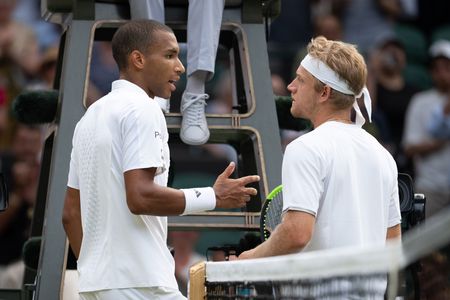
LONDON — Canadian tennis star Felix Auger-Aliassime punched his ticket to the Wimbledon quarter-finals on Sunday, but the third seed wasn’t just talking about his win over Spain’s Alejandro Davidovich Fokina — he was fired up about a rule he believes needs to go.
The 25-year-old had his opponent on the ropes in the fourth set, holding two match points while serving, when Davidovich Fokina called for a medical timeout after twisting his ankle. When play resumed, Auger-Aliassime dropped his serve and was pulled into a fifth and final set before ultimately closing out the match 6-7(4) 7-6(6) 6-3 6-7(2) 6-1.
The tension didn’t end at the net. The two players exchanged words after their handshake, though Auger-Aliassime declined to reveal the specifics of that conversation.
“The interactions between him and I, I don’t want to get into that. If he wants to come in here and talk about it, he can. But he knows my opinion,” Auger-Aliassime said.
What he was willing to talk about was the rule itself, and he didn’t hold back.
“What I can say, though, is that I think the rule has to change. I think that obviously as long as the rule is like that, a player will use it to their advantage,” he said.
Auger-Aliassime went on to lay out what he believes a fairer system would look like: “I think that it’s very simple: if you’re hurt bad while the game’s going on… in the middle of the game, the opponent is serving, the shot clock is on, basically when you’re hurt bad, you’re forfeiting every point until you can call the physio. If the physio helps you recover, you play your service game. If you’re hurt bad, then you retire.”
He then made his feelings crystal clear: “But to stop in the middle of an opponent’s service game and to be able to call the physio, I think that’s a disgrace of a rule. I don’t see any other sport where you can do that. I mark my words. It’s a disgrace of a rule.”
Next up for Auger-Aliassime is a quarter-final matchup against seven-time Wimbledon champion Novak Djokovic — a prospect that has the Canadian reflecting on just how remarkable his next opponent’s career has been.
“I can only say good things about Novak because, I think as a kid I didn’t appreciate it as much, but now I’m a player, the load of work he’s done over the years, I mean, I’m not even near any of that. Just to think about it, it’s crazy,” he said.
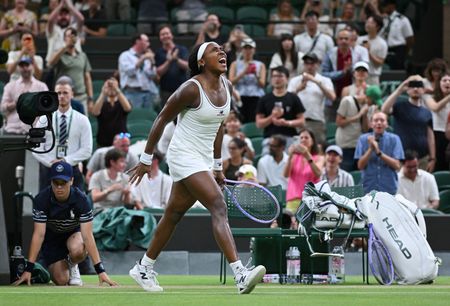
American tennis star Coco Gauff punched her ticket to the Wimbledon quarterfinals for the very first time late Sunday evening, defeating Switzerland’s Belinda Bencic in a rollercoaster three-set match that wrapped up just two minutes before the tournament’s strict 11 p.m. noise curfew.
The seventh-seeded Gauff, 22, came away with a 4-6, 6-3, 6-4 victory under the closed roof on Court One. The match was far from flawless — Gauff racked up 46 unforced errors and nine double faults — but her aggressive style produced 35 winners compared to just 19 for 11th-seeded Bencic, who is 29 years old.
“I’m super happy to be in the quarters finally — I don’t know how many tries it’s been,” Gauff said in a quick courtside interview following the win. She will next take on fellow American Jessica Pegula in the quarterfinals.
Bencic, who reached the Wimbledon semifinals last year and claimed Olympic gold in 2021, controlled the opening set, clinching it on her third set point when Gauff sent a return into the net.
Gauff, who first captured the hearts of Wimbledon fans back in 2019 when she reached the fourth round as a 15-year-old, regrouped in the second set. She broke Bencic’s serve twice while only losing her own once, and pulled off a clever drop shot and a beautifully placed lob to force a deciding third set.
The two-time Grand Slam champion dominated the third set, pushing Bencic into a defensive position with sharp, corner-finding shots. As the clock crept toward the venue’s closing deadline, Gauff set up match point with a smash and sealed the win with a powerful serve that Bencic could not return.
“I was looking at the clock in the last service game and on that match point I was going for serve and volley as I was wanting to end the point,” Gauff said. “I’m not used to racing for time as we’re not used to having to finish by a certain time.”
The All England Club sits in a residential area of southwest London and enforces a firm curfew on night play.
Despite the pressure-filled finish, Gauff said the victory felt meaningful and left her wanting more. “Even though it was a tough match I feel this was my best match of the tournament,” she said.
The National Weather Service office out of Mount Holly, New Jersey issued a Severe Thunderstorm Warning on the evening of July 5, beginning at 6:54 PM EDT and running through 7:45 PM EDT.
The warning was issued as a public safety alert for those in the affected region. Residents were advised to seek shelter, stay away from windows, and remain indoors until the warning expired.
Severe thunderstorm warnings are typically issued when weather conditions are capable of producing damaging winds, large hail, or other hazardous conditions. Anyone caught outdoors during such a warning should move inside immediately and avoid contact with metal objects or standing water.
Residents are encouraged to monitor local weather updates and have a plan in place in the event of rapidly changing storm conditions.
The National Weather Service out of Mount Holly, New Jersey has put a Severe Thunderstorm Watch into effect beginning at 6:48 PM EDT on July 5, lasting through 1:00 AM EDT on July 6.
A Severe Thunderstorm Watch means conditions are favorable for severe thunderstorms to develop in and around the watch area. Residents are urged to remain alert and be ready to act quickly if a Severe Thunderstorm Warning is issued for their location.
Severe thunderstorms can bring damaging winds, large hail, and heavy rainfall. People are encouraged to stay indoors, avoid open areas, and keep an eye on local weather updates throughout the evening and into the early morning hours.
New Bridge Road is currently closed between DE-141 and Creek Road following a downed tree blocking the roadway.
Motorists traveling through the area are advised to find alternate routes until the road is reopened. No estimated time for the road to reopen has been announced at this time.
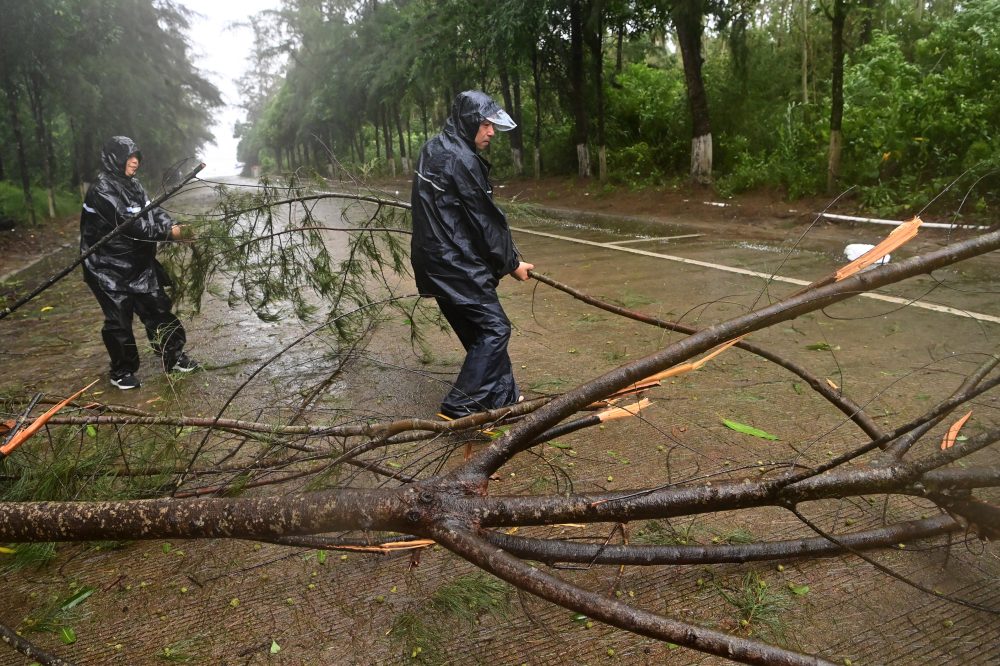
People living on Guam and nearby U.S. island territories in the western Pacific were told to seek shelter immediately as Super Typhoon Bavi closed in on the region, expected to make landfall early Monday — striking an area that is still healing from a powerful storm that hit earlier this year.
National Weather Service meteorologist Edwin Montvila said Bavi, a massive cyclone moving toward the Mariana Islands east of the Philippines, was on track to hit Rota early Monday morning local time.
“They are currently already encountering catastrophic wind,” Montvila said of Rota, a small territory of fewer than 2,000 residents located northeast of Guam. He added that an extreme wind warning was in place for the island. The storm is forecast to reach category five super typhoon strength, with sustained winds potentially hitting 180 miles (290 kilometers) per hour and gusts up to 215 miles (346 kilometers) per hour.
Beyond Rota, typhoon warnings were also issued for Guam, Tinian, and Saipan, while tropical storm warnings and watches covered other nearby islands.
This storm follows Super Typhoon Sinlaku — the strongest tropical cyclone of the year — which hammered the same island chain back in April with ferocious winds and relentless rainfall. For reference, a cyclone earns super typhoon status when its maximum sustained winds reach at least 150 mph (241 kph).
Montvila described Bavi as posing an “imminent danger to life,” with weather officials directing residents to move immediately to interior rooms in their shelters and stay clear of windows.
“Entering outside can result in death from flying projectiles. Utility poles and associated power lines will be down,” Montvila warned. “All those would pose a risk to life, so we recommend people to not venture out and hunker down.”
The storm was moving at a relatively quick pace Monday morning, giving officials some hope it would pass through without lingering. However, Montvila cautioned that due to the sheer size of Bavi, islands in the area could still be dealing with tropical storm conditions — including heavy rainfall — well into Monday night.
He also noted the typhoon “was a bit erratic” overnight into Monday morning, drifting north and south as it tracked westward toward the islands.
Guam Gov. Lou Leon Guerrero called on residents to remain at home or in a shelter and to stay off the roads.
“Here we are experiencing another severe force of winds on our island, but as we know, we are always ready and prepared in our planning and our protection of our people,” she said in a video she shared on social media Sunday.
A seaplane with eight people on board made a rough touchdown in New York City’s East River on Sunday, leaving two passengers with minor injuries, according to city officials.
The New York City Fire Department described the incident as a “hard landing” that occurred around midday. Despite the dramatic impact, the aircraft stayed upright and crews were able to tow it back to the dock without further incident.
Video and photos circulating on social media captured the scene, showing a white plane tilted sharply to one side with the tip of its left wing dipping into the water, while a helicopter flew overhead.
Editor’s note: This report reflects updated figures from the New York City Fire Department regarding the number of passengers aboard and the number of people injured.
Motorists traveling southbound on Interstate 95 near the Darley Road underpass are facing delays after a vehicle fire forced the closure of the right lane.
The incident is actively affecting traffic flow in that stretch of highway, and drivers are advised to use caution and allow extra travel time if heading through the area.
No additional details about the cause of the fire or a timeline for reopening the lane have been released at this time. TV Delmarva will continue to monitor the situation and provide updates as they become available.
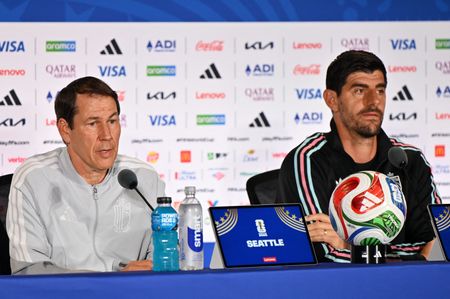
SEATTLE — Belgium’s head coach Rudi Garcia did not hold back Sunday when criticizing FIFA’s surprise move to suspend a one-match ban that had been handed to United States striker Folarin Balogun, calling the decision a mockery of football’s values ahead of the two nations’ round-of-16 World Cup showdown on Monday.
“I didn’t know that at the FIFA World Cup the fifth of July is now the first of April and it’s April Fool’s Day,” Garcia told reporters at a pre-match press conference.
Garcia pointed to a statement from the Royal Belgian Football Association, which described itself as “astonished” by FIFA’s ruling and said it was “investigating all potential options” in response.
“We are not defending the national team or the federation, we are defending football with its ethics and integrity,” Garcia added.
Despite the controversy, both Garcia and goalkeeper Thibaut Courtois maintained that the off-field drama would not affect Belgium’s preparation for the match. Courtois acknowledged, however, that the timing of the announcement caught them off guard.
“For us as players, nothing changes,” Courtois said. “We focus on the game, to win on the pitch, whoever plays.”
As the press conference continued, Garcia grew increasingly frustrated with follow-up questions on the topic and eventually cut in: “Please don’t waste your time talking about that. We want to focus on sporting matters.”
Beyond the FIFA controversy, Courtois reflected on Belgium’s changing squad dynamic. He is among the last remaining players from Belgium’s celebrated “golden generation” — a group that reached the quarter-finals in 2014, defeating the U.S. in the process, and the semi-finals in 2018.
A wave of retirements has stripped the squad of much of its veteran experience, but Courtois expressed confidence in the younger players now stepping up to carry the nation’s soccer legacy forward.
“I think this is a new era for us,” Courtois said. “It’s true that there are some players from the golden era, as some would like to say. But the truth is that the World Cup in Qatar for us was not that good, we were eliminated in the group stage. Now we have another generation with younger people, new people, willing to do great things and writing in the history pages for Belgium.”
The Venezuelan information ministry announced Sunday that the combined death toll from two major earthquakes has reached 3,342, with the latest numbers painting a grim picture of the ongoing humanitarian crisis.
Beyond the fatalities, officials report that 16,470 people sustained injuries in the disaster, while 17,345 individuals have been left without a place to live.
The updated figures came on the same day that interim President Delcy Rodriguez addressed the nation during ceremonies marking Venezuela’s 215th independence day. During her speech, Rodriguez pushed back against mounting criticism that the government’s response to the earthquakes was too slow and fell short of what was needed.
Rodriguez stated that she moved quickly to send security forces to the affected areas following the quakes. She also announced the establishment of a new military unit that will be dedicated to responding to emergencies and natural disasters going forward.
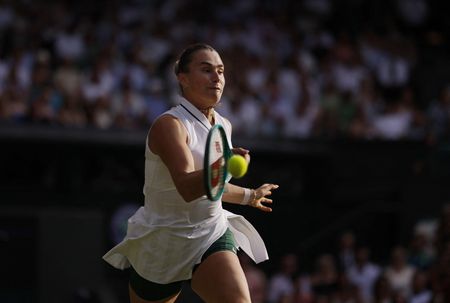
LONDON — Naomi Osaka arrived at Wimbledon this week dressed in a kimono-inspired outfit paying tribute to her favorite character from Quentin Tarantino’s ‘Kill Bill,’ and she closed out her week by dismantling top seed Aryna Sabalenka in commanding fashion.
The Japanese 14th seed played the kind of tennis that earned her four Grand Slam titles, cruising to a 6-2, 7-6(2) victory to reach the Wimbledon quarter-finals for the very first time. Sabalenka’s exit only added to the growing chaos in the women’s bracket.
Osaka’s win comes on the heels of third-round losses for defending champion Iga Swiatek and 2022 winner Elena Rybakina, meaning all three of the top women’s seeds have been eliminated. With Barbora Krejcikova also falling in the fourth round to fellow Czech Karolina Muchova on Sunday, Wimbledon is now guaranteed to crown a first-time champion for the ninth year in a row.
On the men’s side, Novak Djokovic kept his bid alive for a record-tying eighth Wimbledon title, though the 39-year-old was candid about his dissatisfaction with his performance. He defeated Russian qualifier Roman Safiullin 7-6(6), 6-3, 3-6, 6-3 in a match that was far from polished — but it did earn him a historic milestone, surpassing Swiss legend Roger Federer with his 106th Wimbledon match win, a new men’s record.
“To be honest, I haven’t felt really great on the court, so I was relieved to get out of it and get a win,” Djokovic said after the match. “Satisfaction and enjoyment weren’t part of today’s win.”
Despite the rough outing, Djokovic has now advanced to his 17th Wimbledon quarter-final. Standing between him and a potential semi-final clash with defending champion and top seed Jannik Sinner is Canadian third seed Felix Auger-Aliassime. Sinner had little trouble in his own fourth-round match, dispatching Japanese qualifier Shintaro Mochizuki 6-3, 7-6(0), 6-3.
Auger-Aliassime earned his spot in the quarter-finals the hard way, outlasting Spain’s last remaining player, Alejandro Davidovich Fokina, in a grueling four-hour, 26-minute five-set battle that concluded with a heated exchange between the two players at the net. The final score read 6-7(4), 7-6(6), 6-3, 6-7(2), 6-1.
Sinner has yet to face a seeded opponent at this year’s tournament, and that won’t change in the quarter-finals either. He’ll meet veteran Jan-Lennard Struff, who reached the last eight at a Grand Slam for the first time in his career — on his 47th attempt. The 36-year-old German, ranked 74th in the world, was trailing Hubert Hurkacz by two sets when the Polish player was forced to retire due to a left hip injury.
“First of all, I would wish Hubi a speedy recovery,” Struff said. “It was tough to celebrate on the court because obviously I feel sorry for him. But I’m very happy because it’s a huge achievement for me. I’m 36, first quarters, amazing.”
The marquee match of Day Seven at the All England Club was without question the showdown between Sabalenka and Osaka — two 28-year-olds, each holding four Grand Slam titles, all earned on hard courts. The warm and sunny conditions set the stage for what many expected to be a clash of heavy hitters.
The two had not faced each other in nearly eight years following Osaka’s victory over Sabalenka on her way to the 2018 U.S. Open title. When they finally met again this season, Sabalenka had gotten the better of Osaka three times, including at the French Open.
Saturday’s rematch, however, was a different story. A composed Osaka overpowered Sabalenka with relentless precision and power, leaving the top seed visibly frustrated on Centre Court. Rather than the expected fireworks between two big hitters, it was a one-sided affair — Osaka’s biggest win since returning from maternity leave in 2024.
“It’s been a long time since I’ve had so much fun on the court. To do it here, it really means a lot. I lost to her like three times in a row, so that really sucked. So I wanted to turn it over,” Osaka said.
When asked about her slightly more subdued entrance outfit compared to earlier in the week, Osaka explained: “I actually really wanted to focus on the match. So that was me being very tame. I kind of want to focus on my tennis now, so I might dial back a little bit.”
For Sabalenka, the defeat was another painful chapter at Wimbledon, following three consecutive semi-final losses at the tournament. After the final point, she sent a ball sailing over the roof in frustration before heading off court.
“Now I want to go and get drunk and forget about tennis,” Sabalenka told reporters shortly after leaving the court.
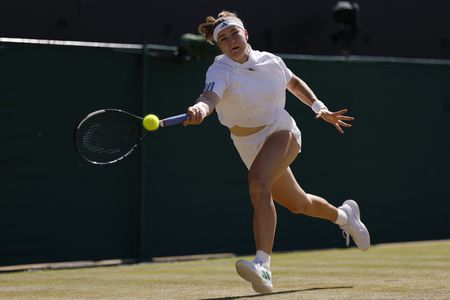
Osaka will next face 10th seed Muchova, who edged out 2024 champion Krejcikova 7-5, 5-7, 6-3 in a close contest.
In other women’s action, five American players made it to the fourth round — the most since 2002. Two of them squared off on Court One, where fourth seed Jessica Pegula used her experience to school 18-year-old Iva Jovic in match management, winning 4-6, 6-3, 6-1. Pegula, who has now matched her best-ever Wimbledon run, could potentially face another American in the next round if Coco Gauff defeats Belinda Bencic.
Westbound travelers on DE-54 between DE-1 and DE-20 are experiencing significant slowdowns due to congestion, according to Delaware transportation officials.
Drivers on that stretch should expect delays of approximately 10 to 15 minutes as traffic backs up along the route. Authorities are advising motorists to allow extra time or seek alternate routes where available.
No additional details about the cause of the congestion were immediately available. TV Delmarva will continue to monitor the situation and provide updates as more information becomes available.
As the United States marks 250 years since its founding, author Mitchell S. Jackson is offering a thought-provoking take on what it really means to be a patriot.
Jackson argues that truly loving America requires being willing to confront the truth about the country’s past — even when that truth is difficult or uncomfortable to face.
In his reflection on the nation’s milestone birthday, Jackson makes the case that honest storytelling about American history is not an act of criticism, but one of genuine love for the country.
The National Weather Service out of Mount Holly, New Jersey issued a Severe Thunderstorm Warning on the evening of July 5, taking effect at 5:08 PM Eastern Time.
The warning was set to expire at 6:00 PM Eastern Time on July 5. Residents in areas covered by the alert were advised to move indoors and stay away from windows until the warning had passed.
Severe thunderstorms can bring dangerous lightning, damaging winds, and large hail. Authorities recommend avoiding travel during active warnings and waiting for the all-clear before heading back outside.
WASHINGTON — President Donald Trump reached out directly to FIFA President Gianni Infantino earlier this week, urging the international soccer governing body to take another look at a red card that had been issued to U.S. striker Folarin Balogun, according to a source who was briefed on the conversation.
The call appeared to have an impact. FIFA announced Sunday that Balogun would be cleared to take the field for the United States in Monday’s knockout round matchup against Belgium — an unusual reversal of the one-game ban he had been facing following the red card he received during a game against Bosnia.
Trump took to his Truth Social platform to applaud the decision, saying it had corrected what he described as a “great injustice.”
The National Weather Service office in Mount Holly, New Jersey issued a Severe Thunderstorm Warning on the evening of July 5, taking effect at 5:43 PM Eastern Time.
The warning was scheduled to expire at 6:00 PM Eastern Time on July 5, giving residents a short but critical window to take precautions and seek shelter from potentially dangerous storm conditions.
Residents in the warned area were advised to stay indoors, away from windows, and to avoid travel until the warning had expired and conditions improved.
When temperatures soar to dangerous levels, outdoor workers face some of the most serious risks on the job — but the good news is that a handful of simple precautions can make a real difference.
For those who cannot step inside to escape the heat, the threat of heat stroke is a very real concern. Whether delivering packages, working construction, or handling any other outdoor duties, employees exposed to extreme heat need to know the warning signs and how to protect themselves.
Health experts point out that basic protective measures can go a long way toward reducing the danger. Staying hydrated, taking breaks in shaded or cool areas, and recognizing the early symptoms of heat-related illness are all critical steps.
Perhaps most importantly, awareness and education are key. Workers and employers alike benefit from understanding the risks that come with working in high temperatures, and from having a clear plan in place before conditions become dangerous.
The National Weather Service office in Mount Holly, New Jersey issued a Severe Thunderstorm Warning on July 5, taking effect at 5:26 PM EDT and running through 6:00 PM EDT.
Residents in the areas covered by the warning were advised to seek shelter and stay indoors until the warning expired. Severe thunderstorms can bring dangerous lightning, damaging winds, and heavy rainfall.
The warning was set to expire at 6:00 PM EDT. Residents were encouraged to monitor local forecasts and official NWS updates for the latest information as conditions developed.
U.S. forward Folarin Balogun, the American team’s leading scorer with three goals, will be on the field Monday when the United States faces Belgium in a World Cup match — thanks in part to a phone call from President Donald Trump to FIFA’s top official.
Balogun had received a red card during Wednesday’s 2-0 round of 32 victory after his foot came down awkwardly on the right ankle of Bosnia and Herzegovina’s Tarik Muharemović. Under normal circumstances, a red card automatically triggers a one-game ban.
But FIFA announced Sunday that the suspension had been lifted, a move that drew praise from Trump and sharp criticism from the Belgian side.
According to a person familiar with the matter who spoke on condition of anonymity because they were not authorized to discuss it publicly, Trump called FIFA president Gianni Infantino following the game and asked FIFA to take another look at the red card decision.
Trump later celebrated the outcome on social media, writing: “Thank you to FIFA for doing what was right, and reversing a great injustice!”
Belgium’s football federation said it was “astonished” by the ruling. Belgium coach Rudi Garcia was even more pointed in his reaction, comparing the announcement to an April Fools’ Day joke.
“I didn’t know that in the offices of FIFA the 5th of July was the 1st of April in Europe,” Garcia said through a translator. “The Belgian federation does not defend itself, it does not protect the national team. She defends football in general, she defends her integrity, her ethics. I think it’s the first time in the history of the World Cup that there is this kind of decision.”
When reporters asked Garcia whether Belgium might appeal to the Court of Arbitration for Sport, or whether he believed Trump’s involvement influenced FIFA’s ruling, he declined to answer.
The Royal Belgian Football Association (RBFA) said in a statement that it is “investigating all potential options” in order to “safeguard the legitimate rights of all participating teams and to protect the fundamental principles of fair play.”
American players found out about Balogun’s reinstatement through social media posts that began appearing during a 10-minute bus ride Sunday from their hotel to practice at the University of Washington’s Husky Soccer Stadium.
U.S. star Christian Pulisic weighed in on the original red card, saying: “If you look at the foul, it was just zero intent at all. I felt like there was much worse ones that went on this tournament.”
The U.S. Soccer Federation received official word of FIFA’s decision through a message sent via FIFA’s portal at 10:31 a.m. EDT.
In its announcement, FIFA stated: “The implementation of the match suspension is suspended for a probationary period of one year. If Folarin Balogun commits another infringement of a similar nature and gravity during the probationary period, the suspension shall be revoked and the sanction enforced without prejudice to any additional sanction imposed for the new infringement.”
FIFA said the ruling was based on Article 27 of its disciplinary committee rules, which allows a judicial body to “fully or partially suspend the implementation of a disciplinary measure” and place the sanctioned individual on a probationary period of one to four years.
Balogun’s three tournament goals — including the go-ahead strike against Bosnia — put him alongside Landon Donovan’s 2010 tally for the second-highest goal total by an American in a single World Cup. Only Bert Patenaude, who scored four goals in the very first World Cup in 1930, has done better for the U.S.
The 25-year-old Brooklyn-born forward plays for Monaco and scored 13 Ligue 1 goals last season. He has recorded 12 goals across 30 international appearances. Born to Nigerian parents who were living in London, Balogun had previously represented England at the under-21 level before switching his international allegiance to the United States in 2023.
“He strikes fear into a lot of defenders,” one source said of Balogun.
On Friday, before the suspension was lifted, Balogun had said he believed a yellow card “would have been fair” rather than the red he received. The U.S. Soccer Federation said Balogun would not be made available for media comment Sunday, though he did post a photo of himself with American fans on social media, set to Michael Jackson’s “Bad.”
This is not the first time FIFA has deferred a suspension. In November, FIFA postponed the final two games of a three-match ban for Portugal’s Cristiano Ronaldo, allowing him to play at the start of the World Cup. Argentine defender Nicolás Otamendi and Ecuadoran midfielder Moisés Caicedo also had one-game bans deferred in April for red cards received during qualifying matches. Historically, Brazil’s Garrincha was ejected from a 1962 semifinal but was permitted to play in the final against Chile following political pressure.
The U.S. is chasing a spot in the quarterfinals for the first time since 2002. The Americans were knocked out in the round of 16 by Ghana in 2010, Belgium in 2014, and the Netherlands in 2022. They were eliminated in the group stage in 2006 and failed to qualify for the 2018 tournament altogether.
A Delta Air Lines commercial jet reportedly collided with a firework in the skies above Chicago while the city was in the middle of its Fourth of July celebrations.
The pilot of Delta flight 1076 radioed air traffic controllers shortly before touching down at Chicago Midway International Airport on Saturday evening, reporting that a firework had struck the aircraft during its approach. An audio recording posted online by LiveATC.net captured the pilot describing what felt like “a big bang” aboard the plane.
According to that recording, the aircraft was flying at an altitude of between 200 and 250 feet when the incident took place. The pilot expressed hope that the noise “was just a mortar that went off” — referring to the device used to launch aerial fireworks into the sky.
Both Delta and the Federal Aviation Administration confirmed that the plane landed safely at approximately 8:30 p.m. local time. The flight had originated in Atlanta and was carrying 52 passengers along with six crew members.
No one on board was hurt, and Delta — which is headquartered in Atlanta — announced Sunday that maintenance crews who examined the Airbus A319 found no signs of damage to the aircraft.
The FAA has announced it will open an investigation into the episode.
Whether other aircraft were hit by fireworks that same night remains unknown. In the LiveATC.net audio, an air traffic controller can be heard referencing “multiple reports” of similar encounters and noting that Chicago city officials had been made aware of the situation.
The FAA did not immediately answer questions about whether additional firework-related incidents involving Saturday flights had been reported. The Associated Press reached out to both Chicago’s city government and the Chicago Police Department seeking more information.
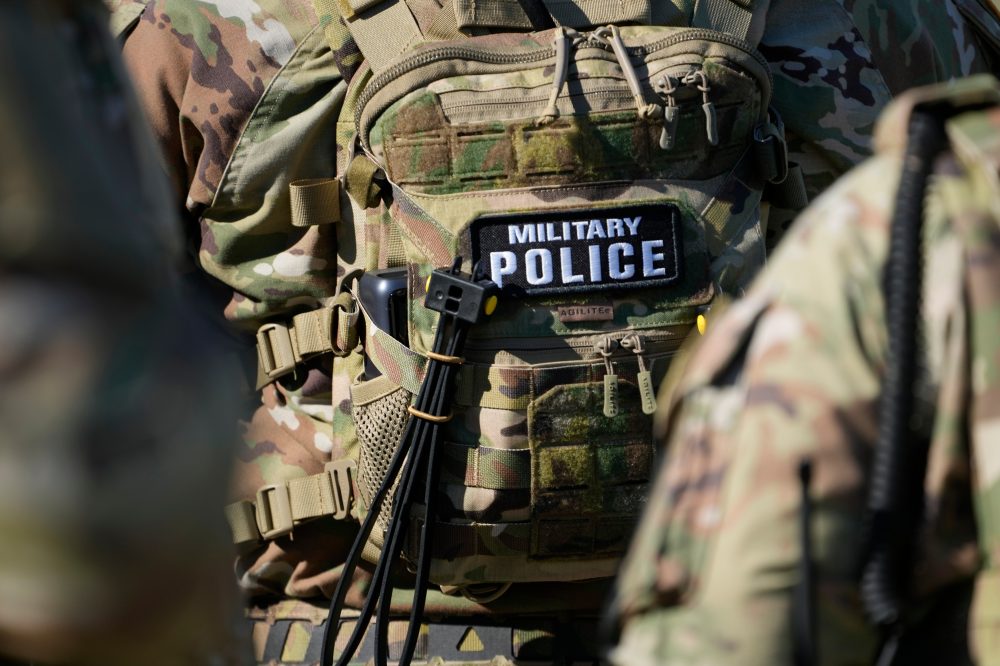
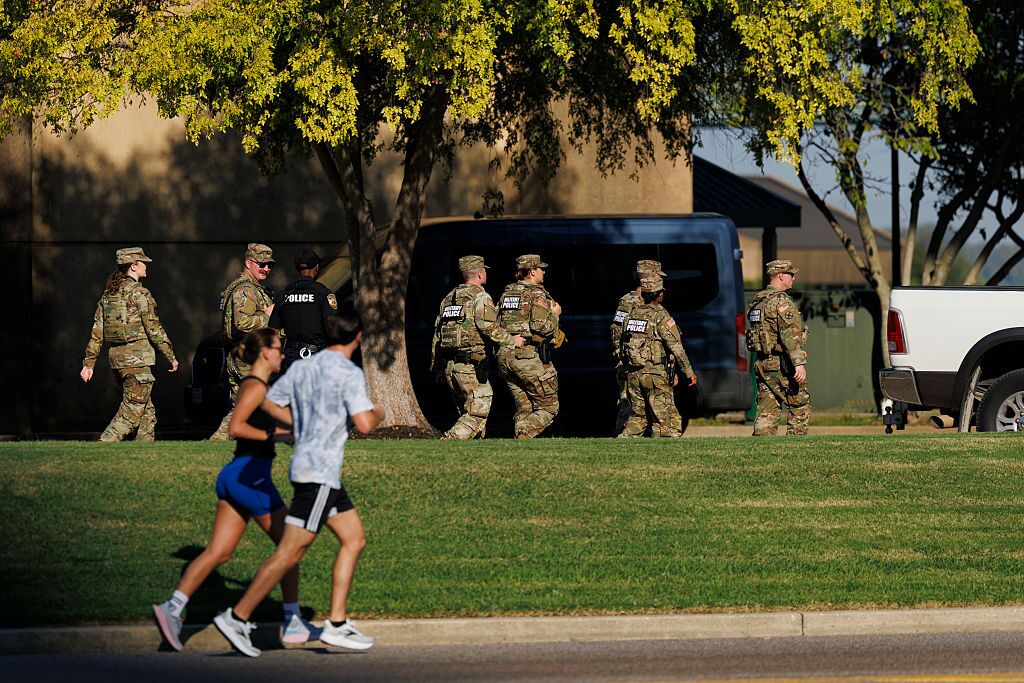
Two Tennessee National Guard soldiers assigned to a federally directed crime patrol in Memphis fatally shot a 20-year-old man early Sunday after he reportedly turned toward them with a firearm while being chased on foot, according to authorities.
The Trump administration ordered National Guard deployments to Memphis and five other cities run by Democratic mayors — among them New Orleans and Washington, D.C. — as part of an effort to address what the administration has characterized as an unchecked surge in violent crime. Critics point out that violent crime has actually dropped considerably in many Democrat-led cities since its peak during the pandemic. The Guard presence in Memphis began last fall as part of that broader federal push.
City and local leaders in the affected communities have pushed back against the federal intervention, arguing it is not needed, and some have taken legal action to challenge the deployments.
Memphis police said the soldiers were responding alongside local officers to reports of gunfire at around 4 a.m. when they spotted an armed man and gave chase on foot.
According to the police department, the guardsmen fired their weapons after the man turned in their direction while still holding his gun.
The Tennessee Bureau of Investigation identified the man as Tyrin Johnson, 20, and announced it is looking into the details surrounding the shooting. No officers or soldiers were hurt, the agency said.
Johnson died at the scene. Guard spokesperson Lt. Col. Darrin Haas said in a statement that two National Guard medical specialists tried to provide first aid before Johnson succumbed to his injuries.
Johnson’s older cousin, Terracle Nelson, 46, described him to The Associated Press as “as good a boy as can be.” She said Johnson had been living in Nashville, working in construction and taking university courses. He had also recently become a father for the first time earlier this year.
Nelson was with other family members when officials informed them that Johnson had been shot twice in the chest.
“I just want to know, how they shot a 20-year-old twice in the chest, he hadn’t harmed anyone,” Nelson said.
Law enforcement did not immediately respond to questions about the total number of shots fired. The TBI declined to comment on Nelson’s account of the events.
Memphis Mayor Paul Young described the shooting as an “unfortunate incident” and said he would wait for the TBI’s findings before making further remarks, according to a statement from spokesperson Penelope Huston.
Federal troops have been operating in Memphis since October, despite opposition from Mayor Young, a Democrat. The deployment has the backing of the state’s governor, a Republican. The soldiers are part of the Memphis Safe Task Force, which was established by the Trump administration and includes both federal and local agencies.
Memphis, a city of more than 600,000 residents, has long grappled with elevated levels of violent crime, including carjackings, assaults, and homicides. Officials from both parties have acknowledged that certain crime categories declined last year — a trend that predates the military deployment and mirrors patterns seen in cities across the country.
The Congressional Budget Office, a nonpartisan agency, has estimated that the deployments cost nearly half a billion dollars through the end of December and are projected to exceed $1 billion in taxpayer costs this year.
In April, the Tennessee Court of Appeals determined that Democratic state and local officials did not have legal standing to halt the federal troop deployment in Memphis.
In May, four Memphis residents filed a federal lawsuit still pending in court, seeking to prevent the task force from enforcing a rule that prohibits people from coming within 25 feet of law enforcement officers while recording their activities.
Those residents, represented by the American Civil Liberties Union, also claim that task force members have repeatedly retaliated against them for filming operations. They allege they have been followed by officers and that unmarked vehicles and people in tactical vests have appeared outside their homes after they were seen observing the task force.
A U.S. investment firm has struck a deal to take over one of Britain’s most recognizable budget airlines in a transaction worth £5.50 billion — roughly $7.34 billion — marking a major turning point in the carrier’s three-decade history.
Minneapolis-based aviation investor Castlelake and British airline easyJet announced Sunday that they had reached an agreement in principle, with Castlelake set to acquire easyJet at £6.90 per share on a fully diluted basis.
Here is a look at how easyJet got to this point, from its humble beginnings to the blockbuster deal announced this week:
1995: Founder Stelios Haji-Ioannou launches the airline out of London Luton Airport, offering low-fare flights to Glasgow and Edinburgh in Scotland and taking aim at established carriers.
2002: The airline expands by purchasing rival Go Fly.
2007: easyJet grows further with the acquisition of rival GB Airways.
2011–2013: The carrier modernizes its fleet by purchasing 135 Airbus aircraft.
2020: The COVID-19 pandemic forces easyJet to cut 4,500 jobs and reduce the size of its fleet.
2021: easyJet turns down a takeover approach from Wizz Air and raises $1.7 billion from existing shareholders.
February–March 2026: Conflict involving Iran shakes the global aviation industry. easyJet warns passengers of higher fares and signals concerns about fuel shortages.
May 29, 2026: Castlelake publicly discloses that it is weighing a potential offer for easyJet.
June 12, 2026: Castlelake submits a private takeover proposal at £5.60 per share.
June 16, 2026: easyJet turns down the offer.
June 17, 2026: Castlelake comes back with a revised private bid of £6.00 per share.
June 20, 2026: easyJet’s board rejects the second proposal, and Castlelake responds by privately raising its offer to £6.25 per share.
June 21, 2026: easyJet rejects the third proposal, publicly describing the offer as
It has been one year since the devastating flood at Camp Mystic claimed the life of a young girl named Chloe, and her parents are still searching for the truth about what happened that day.
Matthew and Wendie Childress spent the past year trying to find answers following their daughter’s death at the Texas camp. Their journey through grief and the pursuit of accountability is now the subject of a new podcast titled After the Flood.
Dominic Anthony Walsh of the Texas Newsroom spoke about the podcast, which explores the Childress family’s experience in the aftermath of the tragedy and the questions that remain unanswered a full year later.
Detroit’s Guardian Building continues to captivate visitors and locals alike, serving as a stunning testament to the city’s rich history and enduring spirit.
NPR correspondent Don Gonyea recently visited the iconic Art Deco structure and shared his impressions in an audio postcard, highlighting what makes this landmark so remarkable.
The Guardian Building is widely recognized not only as an architectural gem but also as a reflection of Detroit’s resilience and beauty — qualities that have defined the city through generations.
Any chance of Brandon Aiyuk landing with Washington may have just gone up in flames — and it happened on Instagram.
Despite a string of social media posts suggesting he was headed to Washington’s roster, Aiyuk abruptly shifted course and took a very public shot at the team’s starting quarterback, Jayden Daniels.
In an Instagram story where he directly tagged Daniels’ account, Aiyuk wrote: “‘5’ gonna text me talking about some, ‘You’re on my team now. You follow my rules.’”
He continued: “Boy, I’m a grown-ass man, boy. You gonna have to start running behind your mamma, and I might believe what you talking about. But until then, mmm-mmm.”
Aiyuk remains technically on the San Francisco 49ers’ roster, though he’s listed on the team’s reserve/did not report list. He’s also been publicly critical of Niners general manager John Lynch and his former agent Ryan Williams, labeling both of them “weirdos.” Lynch stated back in January that Aiyuk has thrown his last pass — or rather, caught his last pass — as a member of the team.
Daniels and Aiyuk are no strangers to each other — they were teammates at Arizona State. Daniels appeared to fire back with his own Instagram story, sharing a clip of Houston Rockets forward and Washington fan Kevin Durant giving a thumbs-down to someone in the crowd earlier this year.
Aiyuk then posted a GIF of himself holding up a pair of shoes along with the message: “Let’s Run it 5! Let’s see! Need you available all son, and I’ll do the same!”
The online back-and-forth was set off in part by a viral clip from a World Cup match, in which a fan yelled at Daniels: “F— Brandon Aiyuk! … You better not throw s— to him next year.” Daniels was seen laughing at the comment.
The Athletic had previously reported that Washington was open to offering Aiyuk a short-term deal loaded with incentives if he became available, hoping he could recapture his earlier form. Whether that interest still stands following his social media outbursts is unclear.
The 28-year-old sat out all of last season after suffering a serious knee injury in 2024, a year in which he managed only 25 receptions for 374 yards across seven games. Before the injury, he had put together back-to-back standout seasons — a career-best 1,342 receiving yards in 2023 and a career-high 78 catches in 2022.
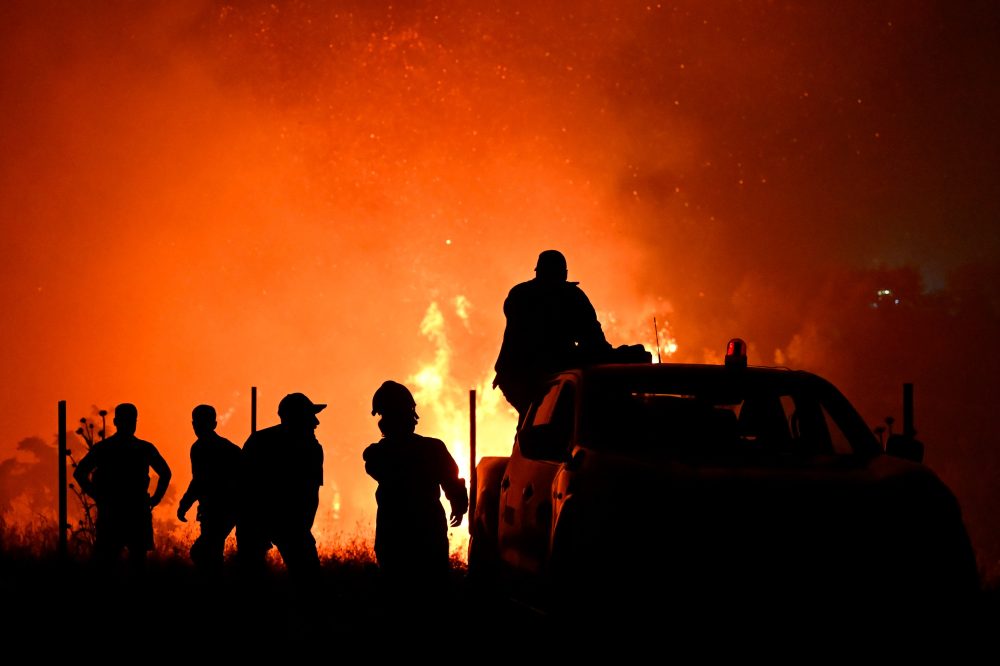
Firefighters battling a major wildfire in southern Colorado could soon face an even tougher fight, as threatening weather conditions are expected to move into the area.
Thunderstorms carrying strong, gusty winds are forecast to roll through the region, a combination that could make it significantly harder for crews to contain the massive blaze that has already torn through parts of the southern part of the state.
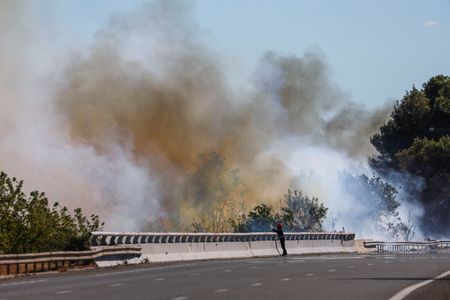
The fire, known as the Aspen Acres Fire, was photographed actively burning on Friday near the community of Rye, Colorado, as crews continued their efforts to establish containment lines around the blaze.
Weather conditions including high winds are among the most dangerous factors firefighters can face, as they can rapidly shift the direction of a fire and cause it to spread faster than crews can respond.
Delaware State Police are looking into a fatal single-vehicle crash that happened Sunday morning on Peterkins Road in Georgetown.
At around 9:15 a.m. on July 5, 2026, a Honda Accord was heading southbound on Peterkins Road and navigating a gentle left curve when, for reasons still under investigation, the vehicle veered off the western edge of the road. The car came back onto the roadway, then spun off the eastern side, crashing into two trees. The force of the impact caused the Honda to flip over onto its roof.
The man behind the wheel, a 32-year-old from Millsboro, was pronounced dead at the scene. His identity is being held back until his next of kin can be reached. The woman riding as a passenger, 31 years old and also from Millsboro, was rushed to a nearby hospital where she is being treated for serious injuries.
Peterkins Road was shut down for roughly three hours while investigators worked the scene and cleared the area.
The Delaware State Police Collision Reconstruction Unit is continuing its investigation into the crash. Authorities are asking anyone who saw what happened or who may have captured it on video to reach out to Master Corporal J. Smith at (302) 703-3267. Tips can also be submitted through a private message to the Delaware State Police Facebook page or by contacting Delaware Crime Stoppers at 1-800-847-3333.
Anyone who has been affected by a crime or the sudden loss of a loved one can reach the Delaware State Police Victim Services Unit and the Delaware Victim Center around the clock by calling their toll-free line at 1-800-VICTIM-1 (1-800-842-8461). You may also reach out by email at [email protected].
MEXICO CITY — The Mexican capital has turned green. With a population of 9 million, Mexico City is buzzing with energy and excitement as fans count down to one of the most eagerly awaited matches of this World Cup — Mexico taking on England at the legendary Azteca stadium.
Along the city’s main boulevard, Reforma Avenue, authorities have erected barricades and shut down traffic to make way for the hundreds of thousands of fans expected to gather and watch the game on giant outdoor screens.
Near the famous Azteca, history is on everyone’s lips.
“This match means everything,” said Adriana Martinez, 28, dressed in white cowboy boots decorated with ribbons in the green, red, and white of the Mexican flag. “History will be made here today.”
Both nations carry the burden of painful memories into Sunday’s match. England has never forgotten the 1986 World Cup defeat at this very stadium at the hands of Diego Maradona’s cunning brilliance. Mexico, meanwhile, has been haunted by a 40-year curse that has prevented the team from advancing past the World Cup round of 16. Both sides are desperate to finally move on from those ghosts.
“Whoever scores today will be a legend forever,” said 12-year-old Noa, who attended the match alongside his father.
In the narrow streets surrounding the stadium, riot police stood ready — shoes shined and out of view but on standby. A small group of Jehovah’s Witnesses attempted to reach passersby, but the sea of green-shirted fans already had their minds set on a different kind of prayer.
Mexican confidence has grown with each game the national team has played. Increasingly massive crowds have taken to the streets after every victory, with more than a million people celebrating across the capital following Mexico’s win over Ecuador. The rallying cry has become “Y si sí?” — or “What if?” — a phrase capturing the nation’s cautious but growing optimism.
It’s a remarkable shift for a squad that was considered so lacking in star power heading into the tournament that sponsors turned to retired legends for their advertising campaigns.
Axel Villarreal, a 23-year-old supporter from the northern city of Tampico, made the six-hour overnight bus journey to Mexico City, arriving before sunrise on Sunday. He had no ticket but was determined to be part of the moment in the capital.
“We really want to live the experience of having the World Cup here at home,” Villarreal said, speaking near the Angel monument — a traditional gathering spot for Mexicans during significant national moments. “I honestly have the hope they can advance.”
ALTITUDE TAKES CENTER STAGE
Much of the pre-match conversation has focused on the Azteca’s elevation. The stadium sits at more than 2,200 meters above sea level — roughly equivalent to the height of a typical Alpine ski resort — making it one of the highest-altitude venues in international soccer.
Mexico has lost just two competitive matches at the Azteca since it opened in 1966. The Mexican squad has been training in the city for weeks, while England only touched down on Friday.
English supporters took to social media to voice frustration over what they viewed as an unfair altitude advantage, prompting Mexican fans to joke that perhaps the stadium should be lowered into a giant hole to even the playing field.
England’s team was provided extra security at their hotel after Ecuador had previously complained to FIFA about fan noise outside their own accommodations ahead of their round-of-32 match against Mexico. Videos circulating online Sunday showed Mexican fans lighting fireworks and playing drums and trumpets near the area, though they appeared to remain well beyond the security zone around England’s hotel.
Several major brands in Mexico jumped on a lighthearted viral campaign encouraging fans to ditch English words and phrases. Under the banner “No Ingles” — or “No English” — companies playfully banned certain terms. Pizza Hut suggested replacing Worcester sauce — known locally as “salsa inglesa,” or English sauce — with a chili-based condiment. Mitsubishi joked that its mechanics would refuse to use an adjustable wrench, called a “llave inglesa” or English wrench, for the duration of the match.
Across the Atlantic, British bakery chain Greggs announced it had pulled its Mexican-style sandwiches from the menu.
Tim Allen, a 56-year-old England fan from Southend, acknowledged that Mexico’s home advantage could be a deciding factor.
“The big factor is they’ve got 80,000 fans in their home stadium,” he said. “They’re all fanatics.”
“It’s going to be mental,” he added — and by the look on his face, he couldn’t wait.
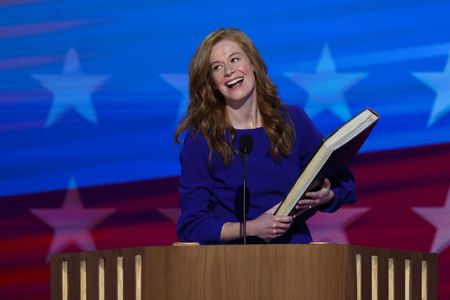
Michigan State Senator Mallory McMorrow announced Sunday that she is suspending her Democratic campaign for the U.S. Senate, transforming what had been a three-person primary contest in a crucial battleground state into a direct face-off between two very different candidates.
With McMorrow out of the race, centrist U.S. Representative Haley Stevens and progressive public health advocate Abdul El-Sayed are now the only two Democrats remaining in the fight for the nomination. The winner will go on to challenge Republican former U.S. Representative Mike Rogers in the general election.
McMorrow shared the news in a three-minute video posted to X, saying she would give her “full support” to whichever candidate wins the August 4 primary.
Her departure comes as recent polling had placed her in a distant third position, with El-Sayed holding the lead over Stevens.
El-Sayed responded to the news by welcoming McMorrow’s supporters, while sounding a cautionary note. He warned that Michiganders “cannot allow the establishment to decide our nominee for us.”
Stevens, meanwhile, offered kind words for her former rival, calling McMorrow an “important voice,” while making clear her own case for the nomination. “I’m the strongest Democrat to defeat Mike Rogers this November,” Stevens said.
The outcome of the Michigan Senate race carries significant weight for Democrats nationally. Losing the seat would make it considerably more difficult — though not impossible — for the party to flip control of the Senate in November. Republicans currently hold a 53-47 majority in the chamber. In the 2024 presidential race, Republican President Donald Trump carried Michigan by 1.4 percentage points.
DALLAS — Cristiano Ronaldo made clear Sunday that he plans to leave football without any regrets, but he was not ready to confirm that the current World Cup would mark his final appearance on the international stage. Portugal faces neighboring Spain in a round-of-16 showdown in Dallas on Monday.
The 41-year-old, who is competing at a record sixth World Cup, acknowledged that many expect him to step away from international play before the next tournament, but he was firm that the decision would be his alone.
“I will finish when I choose. You always ask the same question: is this the last one? We will see. I don’t want to draw attention to this, the most important thing is to play well tomorrow,” Ronaldo told reporters.
He went on to speak about his relationship with the sport: “I’m going to be perfectly honest, regardless of what happens tomorrow, Cristiano is going to be 1000% leaving with a clear conscience. I have given all I could to football, it’s my passion to play for so many years. I didn’t do it out of need, I’m doing well out of life. It’s about passion. I play for the national team and I love to play football.”
Ronaldo also pushed back against any notion that he feels pressure heading into the knockout match. “Regardless of what happens tomorrow I’m not going to exert pressure on myself that I must win. You have to enjoy every match at a huge competition like the World Cup. I think I’m not doing so bad. I’ve scored three goals, others have done better but I think I’m doing not so bad.”
Those who watched Ronaldo’s pre-match press conference noted a noticeably relaxed demeanor. He admitted this tournament has been more enjoyable for him than his previous five World Cup appearances and expressed confidence that manager Roberto Martinez’s squad is ready for the challenge ahead.
“If we didn’t have this belief we wouldn’t be here,” he said. “It’s been a beautiful experience, we’re getting better in every match. We know this is a tough competition and it’s impossible to always do well. Some good teams have been eliminated and that says everything. The team is well, calm and well prepared. We’re going to face a difficult team but I think we will be prepared.”
Should he take the field against Spain, it will be Ronaldo’s 233rd cap for Portugal. He has a deep personal connection to Spain, having spent nine seasons with Real Madrid before later moving to Manchester United. Despite that familiarity, his scoring record against the Spanish national side is modest — just four goals total, including a famous hat-trick in a 3-3 group-stage draw at the 2018 World Cup.
Ronaldo acknowledged Spain’s pedigree heading into the match. “Spain is always a contender to win the Euros, the Nations League, they have already won this competition. Spain is the favourite. They have more titles than Portugal but this is a different competition with different players. There are injuries, there’s the heat.”
Still, he expressed quiet confidence heading into the contest. “I like playing against Spain, my record is quite good. I’ve played them 10 or 11 times and it’s quite balanced. It will be won on small details. I have this feeling we are going to win.”
He closed with a message that left his international future deliberately open-ended: “What I have to do is enjoy it if it’s my last World Cup and it’s not going to be my last match at a World Cup because I want to continue onward.”
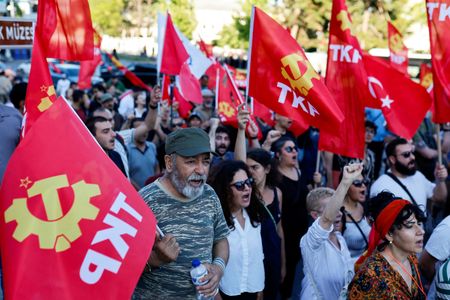
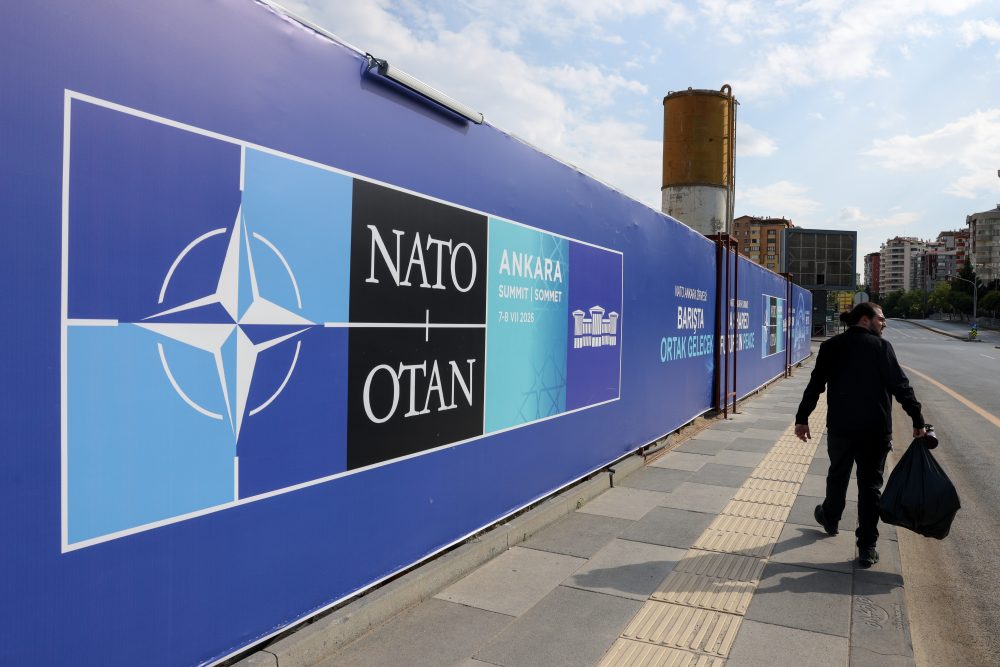
Turkish authorities detained more than 100 people Sunday during an anti-NATO protest march organized by the Communist Party of Turkey, known as the TKP, ahead of a major alliance summit scheduled for next week in Ankara.
Turkey is set to host leaders from all 32 NATO member nations, along with officials from partner countries, for a summit taking place Tuesday and Wednesday in the capital. In preparation for the high-profile gathering, authorities have significantly increased security throughout Ankara, prohibiting demonstrations, blocking off large sections of the city, and shutting down numerous roads.
The TKP released a statement saying it had organized a protest march at Kizilay square, located in central Ankara, and that more than 100 party members — including party administrators — had been taken into custody.
Video from the scene showed protesters waving flags and chanting phrases such as “Murderer NATO, get out of country” and “No passage to NATO” as riot police moved in, deploying tear gas to scatter the demonstrators.
In Istanbul, a separate TKP-organized march drew hundreds of participants who walked from Taksim Square to Dolmabahce. Two additional protests were held by leftist organizations in the city’s Kadikoy district. Despite a visible police presence, those Istanbul demonstrations remained peaceful with no confrontations reported.
“We have gathered today in many parts of Turkey to protest against NATO,” TKP Secretary General Kemal Okutan declared during the Istanbul demonstration.
“We said that we would not hand over Ankara to supporters of NATO, that we would not allow Ankara to remain silent. We have fulfilled that promise,” he added.
The Turkish government had not issued any response to the protests or the detentions as of Sunday.
Last month, authorities arrested 103 people during anti-terror raids in Ankara in which a total of 225 individuals were detained. On Sunday, media also reported that 39 additional people — among them journalists from independent news organizations, activists, and academics — were detained in anti-terror operations conducted across the country.
Tuncer Bakirhan, co-chair of Turkey’s pro-Kurdish DEM Party, and Kemal Kilicdaroglu, the court-appointed chairman of the main opposition Republican People’s Party, both condemned the detentions, calling them unacceptable actions that interfere with basic rights in the lead-up to the NATO summit.
“The country has been fully turned into a detention centre by using the NATO summit as an excuse,” Bakirhan wrote on X. “We are living through days of undeclared martial law.”
Turkish prosecutors have previously stated that the operations were aimed at uncovering militant group activities, making no reference to the upcoming summit in their explanations.
Minnesota Twins center fielder Byron Buxton was forced out of Sunday’s contest against the host New York Yankees after just the first inning, as he re-aggravated an existing hip injury.
Buxton had reached base on an infield single before attempting to steal second base. He was thrown out on the play, with shortstop Anthony Volpe applying the tag. Buxton visibly grimaced during the tag-out, and teammate Kody Clemens struck out to end the inning. Rookie Kyler Fedko stepped in to replace Buxton in center field.
The 32-year-old has now dealt with hip problems on multiple occasions this season, missing time twice due to the issue. He had just returned to action after sitting out four consecutive games because of right hip impingement, and on Saturday he contributed two RBIs in an 11-4 victory.
Despite the injury concerns, Buxton has put together an impressive season at the plate, batting .271 with 25 home runs and 45 RBIs across 75 games. On Saturday, he was announced as a starter for the American League squad in the upcoming All-Star Game — his third All-Star selection of his career.
The National Weather Service office in Mount Holly, New Jersey has put a Flood Watch in place starting Saturday, July 5 at 3:15 PM Eastern Time, with the watch remaining active through Sunday, July 6 at 8:00 PM Eastern Time.
A Flood Watch means that conditions are favorable for flooding to develop in the watch area. Residents should take precautions, avoid low-lying areas near waterways, and be ready to act quickly if flooding begins.
Officials urge people to never attempt to drive through flooded roadways and to stay informed by monitoring the latest updates from the National Weather Service.
NEW YORK — Mitchell Robinson has broken his silence on the hand injury that put his status in question heading into the New York Knicks’ NBA Finals opener, revealing it happened after he punched his truck in a moment of panic when he feared his youngest brother had died in a car crash.
Robinson, who recently agreed to depart the Knicks and join the Boston Celtics, shared the full story in a Facebook post on Sunday, also touching on the mental health battles he endured throughout the season.
The injury first surfaced after the Knicks knocked out Cleveland in the Eastern Conference finals, raising eyebrows because coach Mike Brown confirmed it did not occur during a game. At the time, it was described as a broken bone in his hand.
Robinson set the record straight Sunday, explaining it was actually a knuckle injury that happened after he returned from the team’s Game 4 win and received a devastating phone call about his brother.
NEW YORK — Seven nations within the OPEC+ oil-producing alliance have agreed to modestly increase their oil output next month, adding more supply to global markets at a time when fuel prices have dropped to levels not seen since before the conflict between the U.S., Israel, and Iran.
The Organization of the Petroleum Exporting Countries and its allies, known collectively as OPEC+, announced Sunday that the combined production increase would total 188,000 barrels per day starting in August. This marks the fifth month in a row that the alliance has agreed to raise output levels.
The seven nations participating in Sunday’s agreement are Saudi Arabia, Russia, Iraq, Kuwait, Kazakhstan, Algeria, and Oman.
In a statement, the group said: “The countries will continue to monitor and assess market conditions, and in their continuous efforts to support market stability, they reaffirmed the importance of adopting a cautious approach.”
Over the past month, growing optimism in financial markets sent crude oil prices falling both before and after the U.S. and Iran reached a temporary agreement to halt hostilities. Under a broader memorandum of understanding, Iran agreed to allow vessels to pass freely through the Strait of Hormuz, while the U.S. agreed to lift its blockade of Iranian ports.
Commercial ship traffic through the strait has been increasing since the deal was reached. Before the war, the waterway served as a passage for roughly one-fifth of the world’s oil supply. However, ship movement has not yet returned to pre-war levels, and tensions remain. As recently as Thursday, Iran’s joint military command issued a warning that oil tankers traveling through the strait must follow its approved routes or face a “forceful response.”
Oil prices have kept falling as negotiators from Iran and the U.S. work toward a permanent peace agreement. Brent crude, the international oil benchmark, closed below $72 per barrel on Friday — close to where prices stood before the U.S. and Israel launched strikes on Iran in late February, and far below the peak of nearly $120 per barrel seen in March.
The conflict sparked an energy crisis across much of the world. With shipping largely blocked in the Strait of Hormuz, the modest production increases OPEC+ had pledged in previous months were not enough to offset the disruption to global oil supplies.
Early in the war, many major Middle Eastern oil producers were forced to cut output because they had nowhere to send their crude. A recent estimate from S&P Global Energy projected that Gulf oil production would not fully recover until at least the first quarter of 2027.
Energy analysts have repeatedly cautioned that fuel prices and the cost of everyday consumer goods are likely to remain high well after the conflict officially ends.
WASHINGTON — The White House has announced that President Donald Trump plans to sit down with Ukrainian President Volodymyr Zelenskyy and Syrian President Ahmad al-Sharaa on Wednesday as part of his attendance at the NATO summit being held in Turkey.
White House spokesperson Anna Kelly confirmed both meetings during a call with reporters, offering a preview of the upcoming summit in Ankara. Trump is also scheduled to meet with Turkey’s President Recep Tayyip Erdogan on Tuesday, and before heading back to the United States on Wednesday, he is expected to hold a news conference, according to Kelly.
The meeting with Zelenskyy is taking place against the backdrop of a war between Russia and Ukraine that is now in its fifth year. Both Zelenskyy and Russian President Vladimir Putin separately called Trump on Saturday to congratulate him on the July Fourth celebration marking the 250th anniversary of American independence.
Following his call with Trump, Zelenskyy posted a statement on X saying the two leaders discussed conditions on the front lines of the war, where analysts indicate Russian advances have largely stalled. Ukraine has also ramped up its own strikes, showing it can hit targets deeper inside Russian territory.
Zelenskyy expressed optimism, saying there is “a real prospect of ending this war,” and indicated that conversation would continue at the NATO gathering in Ankara.
On the Russian side, Kremlin foreign affairs adviser Yuri Ushakov said that during Putin’s phone call with Trump, the president reaffirmed his “readiness to help achieve a quick cessation of hostilities and search for peaceful solutions to settle the crisis” in Ukraine.
A senior U.S. official, speaking anonymously on Sunday to describe the administration’s thinking, said Trump feels a strong sense of urgency to bring the conflict to a close and intends to discuss that with Zelenskyy. The official also indicated Trump is expected to follow up with Putin after his Ankara meeting with the Ukrainian president.
As for the planned meeting with Syrian President al-Sharaa, U.S. officials offered no details about what the two leaders intend to discuss.
Trump has recently drawn attention for repeatedly suggesting that Syria take on Hezbollah in Lebanon — a notion that has surprised many in the region and complicated ongoing negotiations related to the conflict with Iran. Al-Sharaa, who previously led an Islamic insurgent group and whose rebel forces drove Bashar Assad from power in Syria, has said he has no desire to pursue that course. He has suggested Trump’s remarks were misunderstood, even as Trump has continued to make them.
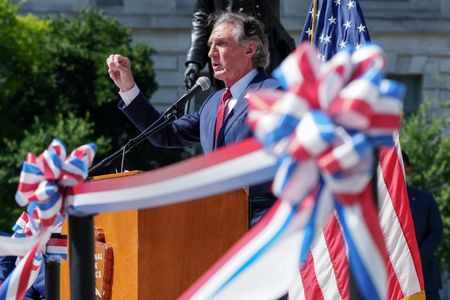
U.S. Interior Secretary Doug Burgum said Sunday that federal authorities had no grounds to intervene when a white supremacist organization staged a march through Washington on the Fourth of July, pointing to constitutional free speech protections.
Hundreds of masked members of Patriot Front marched through the nation’s capital on Independence Day without violating any laws, Burgum stated during an appearance on CNN’s “State of the Union” program. While he made clear that the group’s white supremacist and anti-immigrant views are “nothing that I could possibly agree with,” Burgum maintained that such ideology is still protected speech, even if it “makes democracy messy.”
Burgum drew a parallel to anti-Trump demonstrators on Washington’s National Mall, saying those protesters also exercise the same rights — “yet they’re allowed to go on because of free speech in our country.”
The group itself has publicly rejected democratic ideals. A manifesto posted on Patriot Front’s website declares that “Democracy has failed this once great nation” and calls for a “hard reset” to “return to the traditions and virtues of our forefathers” — whom the group identifies as European settlers.
During their march, Patriot Front members moved to the beat of drummers near the U.S. Capitol and the Union Station transit center before boarding Metro trains to a suburb of the District of Columbia.
When asked whether he personally condemned Patriot Front or would urge President Donald Trump to do the same, Burgum declined to answer directly. He instead minimized the march’s significance, framing it as an isolated incident amid the broader celebrations marking the country’s 250th anniversary.
Burgum also addressed the Trump administration’s efforts to improve Washington’s landmarks. Speaking on ABC’s “This Week,” he said the administration has already restored dozens of monuments and fountains throughout the city.
“When we look in context, President Trump set out to make D.C. safe and beautiful,” Burgum said. “He’s done that.”
Among the most talked-about projects is a $14.7 million renovation of the Reflecting Pool at the Lincoln Memorial — a project that drew scrutiny after algae growth, peeling surfaces, and visible decay appeared just weeks after the work was finished.
Burgum repeated President Trump’s unverified assertion that vandals used box cutters to slash the pool’s new liner, creating gashes hundreds of feet in length. He also defended the decision to bring back the same company that handled the original renovation — awarded through a no-bid contract — to carry out the repairs, saying the firm did “a fantastic job” on the initial project.
American soccer standout Folarin Balogun will be on the pitch after all. FIFA has suspended the World Cup ban that had been hanging over the U.S. striker, freeing him up to compete in the country’s round of 16 clash against Belgium this Monday.
The decision by soccer’s international governing body removes what had been a major obstacle for the U.S. squad heading into one of the tournament’s most anticipated knockout-round matchups.
Northbound travelers on Route 1 between Hall Avenue and Lewes are facing slowdowns due to heavy congestion, according to traffic officials.
The backup is adding approximately 10 to 15 minutes to travel times along that corridor. Drivers in the area are encouraged to allow extra time or seek alternate routes to avoid the delay.
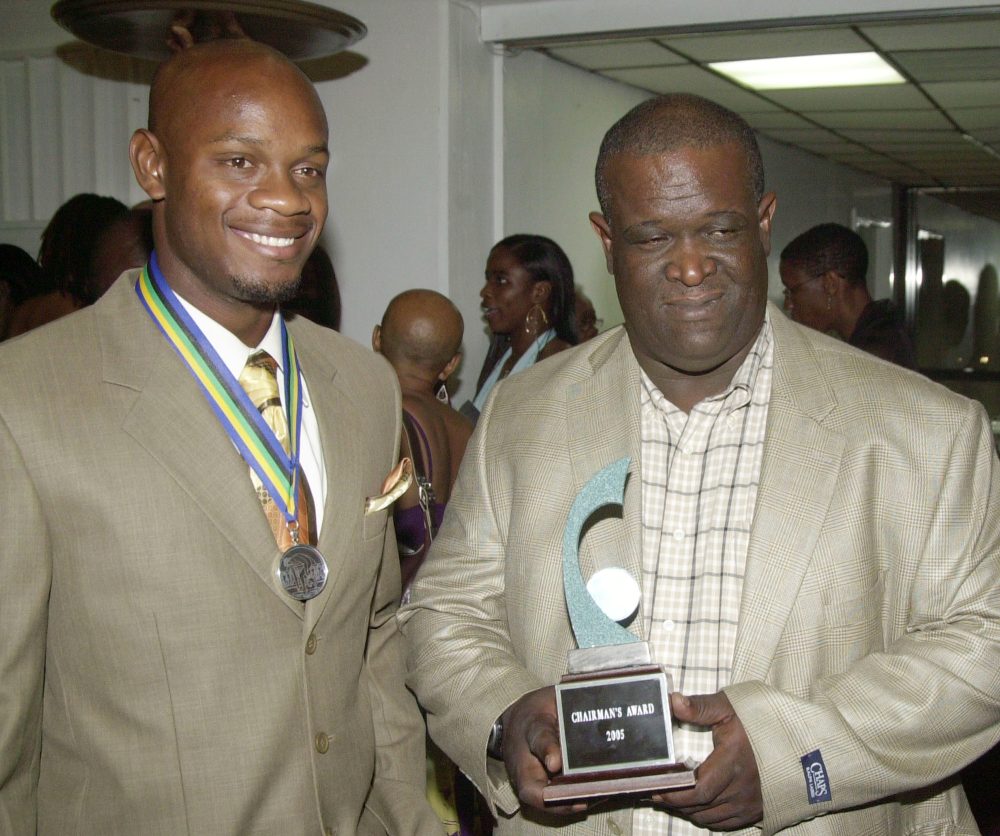
KINGSTON, Jamaica — One of track and field’s most influential figures has died. Stephen Francis, the Jamaican coach who helped turn a small Caribbean island of just 2.8 million people into one of the world’s dominant forces in sprinting, passed away late Saturday. He was 64. The training club he co-founded announced his death Sunday but did not reveal a cause.
Back in 1999, Francis helped establish the Maximising Velocity & Power Track & Field Club — known as MVP — which grew into one of the premier training programs in the sport. Over the decades, MVP produced wave after wave of Olympic champions and world record holders, fundamentally changing what was possible for Jamaican athletes training on home soil.
Bruce James, the president of MVP, honored Francis in a written statement, saying, “Stephen Francis changed the trajectory of Jamaican athletics for the better. He proved that Jamaican athletes, guided by Jamaican coaches, supported by Jamaican management, and training in Jamaica, could become the very best in the world.”
Jamaican Prime Minister Andrew Holness reflected on what he called Francis’ “bold decision” to walk away from a career in finance and commit himself entirely to coaching. At the time, the most elite Jamaican athletes typically looked overseas for top-level training. Holness wrote on X that the choice “helped shape one of the greatest legacies in track and field and inspired countless athletes to believe in themselves and pursue excellence,” adding, “Jamaica has lost a remarkable son whose impact will be felt for generations.”
World Athletics, the sport’s international governing body, expressed that it was “deeply saddened” by the news, noting that Francis’ vision helped slow Jamaica’s talent drain and deepened the island’s already fierce love of track and field.
The list of world-class athletes Francis coached reads like a who’s who of modern sprinting. Among them are Olympic champions Shelly-Ann Fraser-Pryce, Elaine Thompson-Herah, and Shericka Jackson, former men’s 100-meter world record holder Asafa Powell, Olympic silver medalist Kishane Thompson, and dozens of other international medalists.
In 2017, Jamaica recognized Francis with the Order of Jamaica, one of the country’s highest civilian honors, for his extraordinary contributions to the sport.
His influence stretched well beyond Jamaica’s borders. Barbados Prime Minister Mia Mottley noted that Francis inspired athletes across the wider Caribbean region, pointing to Barbadian Olympic medalist Sada Williams, who trained under Francis at MVP. “For so many boys and girls across the Caribbean, his work proved that small islands can still shake the world,” Mottley wrote.
Michigan Democrat Mallory McMorrow has stepped away from her U.S. Senate campaign, dropping a bombshell announcement on social media just one month before the August 4th primary.
McMorrow gave no reason for the surprise move, but she had been facing growing pressure from within her own party to exit the race — a move that would set up a cleaner head-to-head contest between U.S. Rep. Haley Stevens and progressive candidate Abdul El-Sayed.
In her statement, McMorrow wrote: “Today, I’m announcing that I am suspending my campaign for United States Senate.”
She continued: “And I’m doing it with a deep, deep sense of gratitude. For our thousands of volunteers, for everyone who donated what you could — building a campaign with zero corporate PAC dollars. For my staff, who built this team up from nothing. I thank you.”
The Senate seat up for grabs is being left open by retiring Democratic Sen. Gary Peters. For Democrats, holding onto this seat is critical — they cannot afford losses as they fight to reclaim the Senate majority during the final stretch of Donald Trump’s presidency.
The race has become a flashpoint for ideological divisions within the Democratic Party. Senate Democratic leader Chuck Schumer has thrown his weight behind Stevens, while El-Sayed has earned the backing of Vermont Sen. Bernie Sanders and allies including Rep. Alexandria Ocasio-Cortez of New York. El-Sayed, however, describes himself as a progressive rather than a democratic socialist.
Some establishment Democrats have expressed concern that El-Sayed’s far-left platform could hurt the party’s chances in the general election this fall. With McMorrow now out of the picture, party insiders believe El-Sayed will be a more manageable opponent for Stevens.
Whoever wins the Democratic primary is expected to face Republican Mike Rogers in the fall. Rogers previously lost a 2024 Senate race to now-Sen. Elissa Slotkin.
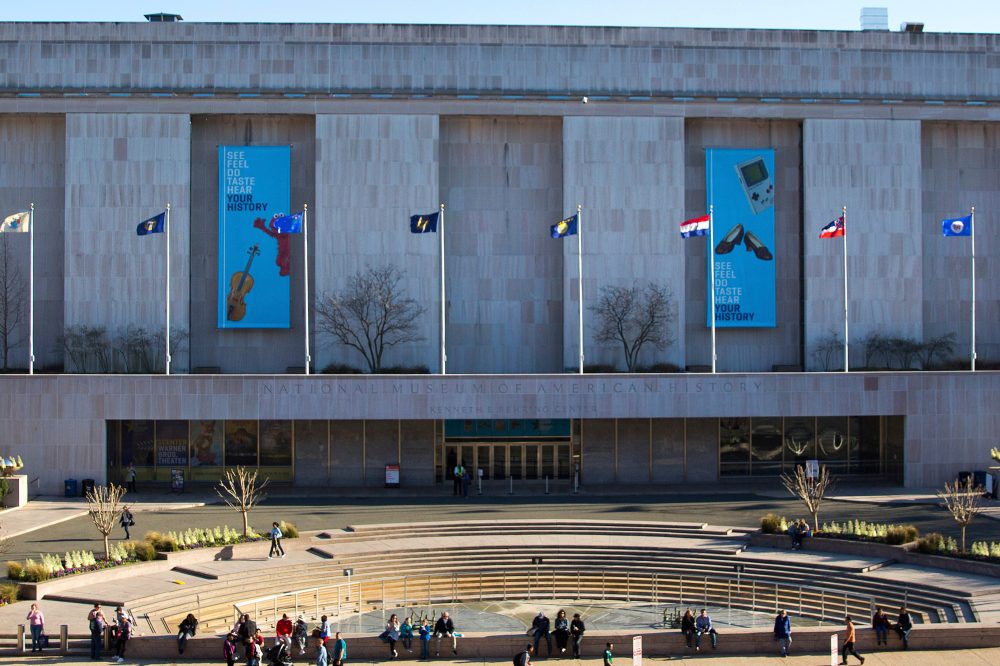
A scathing report from the White House Domestic Policy Council, released on the Fourth of July, declares that the leadership of the Smithsonian Institution — and the National Museum of American History in particular — cannot be trusted to present American history in an honest or uplifting way. The report suggests that President Donald Trump may be laying the groundwork to install his own leadership team at the institution.
The release comes as Trump continues an aggressive push to reshape some of Washington’s most prominent cultural and historical institutions. Back in March, Trump signed an executive order targeting Smithsonian programs that he said promoted “divisive narratives” and “improper ideology,” part of his wider effort to push back against what he views as overly liberal cultural influence.
The council’s report — led by a former top Trump speechwriter — states: “The Smithsonian Institution, and the National Museum of American History in particular, under its current leadership and current interpretive ideology, cannot be trusted to tell America’s story honestly and in a way that is inspiring, unifying, and worthy of our great republic.”
The report goes further, claiming: “As this report shows, confirmed in the words of Museum leadership, this ideological capture has moved the Museum’s mission away from straightforward historical education and scholarship toward an extreme political activism that seeks to transform our country.”
The Smithsonian did not respond to requests for comment on Sunday.
Historian Lonnie Bunch, who currently serves as the Smithsonian’s secretary, is the first African American to hold that position. In a separate interview that aired Sunday on NBC’s “Meet the Press,” Bunch spoke about his guiding philosophy. “The notion of being a more perfect union, not the perfect union, is really what motivates me,” he said.
Bunch continued: “I think what I want people to understand is that there is a responsibility to continue to make those aspirations available, accessible, meaningful to a whole range of people. And that, in essence, America’s greatest strength, it’s not running away from its history, but it’s understanding how that history shaped us and continues to shape us.”
Historian Anthea M. Hartig holds the distinction of being the first woman to serve as director of the National Museum of American History.
Trump’s push to overhaul the Smithsonian is the latest chapter in his broader effort to bring cultural institutions — including universities and the arts — in line with conservative values. He had himself named chairman of the John F. Kennedy Center for the Performing Arts and worked to overhaul its programming. His hand-selected board voted to add his name to the building, though a federal judge later ordered that signage to be taken down.
The administration also pressured Columbia University into making a series of policy changes by threatening to pull several hundred million dollars in federal funding from the Ivy League school.
Beyond Washington, the Trump administration has also moved to alter how history is presented at sites around the country. In Philadelphia, the administration won a court ruling last week allowing it to reinstall interpretive panels at the site of President George Washington’s home — panels that critics say downplay the history of slavery at that location. Scholars, advocates, and officials have expressed concern that the administration’s version of the exhibit softens the painful parts of history in favor of a more celebratory narrative.
Pennsylvania Gov. Josh Shapiro, a Democrat and potential presidential contender, pushed back sharply on the effort, accusing Trump and his allies of attempting to “rewrite history.”
“There’s not one individual narrative that a president gets about our history,” Shapiro said in an interview that aired Sunday on CNN’s “State of the Union.” “And any president should want to make sure that that full history is shared, that the American people are able to draw their own conclusions.”
He added: “If we understand where we came from, we’re going to have a better path forward.”
The White House Domestic Policy Council’s report took a different view, saying the National Museum of American History “confronts visitors with materials intended to undermine faith in American institutions and the longstanding shared ideals of the American people.” The report declared: “We must be committed to restoring truth and sanity in how American history is presented and taught.”
The review, carried out in connection with Trump’s executive order titled “Restoring Truth and Sanity to American History,” concluded that the museum “by the intention and at the direction of current Museum and Smithsonian leadership, has become subject to institutional capture by a radical, activist ideology that is fundamentally opposed to telling the noble, honest story of the great country we know and love.”
LONDON — Naomi Osaka delivered a stunning performance at Wimbledon on Sunday, eliminating women’s top seed Aryna Sabalenka in the fourth round with a dominant 6-2, 7-6(2) victory on Centre Court.
The matchup carried enormous star power, with the two players combining for eight Grand Slam titles between them. Billed as one of the marquee events of Day Seven, the contest was expected to be a fierce battle — but it was Osaka, seeded 14th, who controlled the action from the start.
Sabalenka’s typically powerful game broke down badly in the opening set, which Osaka swept in just 32 minutes, leaving the top seed screaming in frustration.
The second set brought more of the back-and-forth drama the sold-out crowd had hoped to see, but when the match went to a tiebreak, Osaka kept her composure and closed it out convincingly, winning 7-2 in the breaker.
The win is considered the biggest of Osaka’s comeback since she returned to the professional tour following a maternity break in 2023.
President Donald Trump is preparing to attend this week’s NATO summit in Turkey, where he plans to hold a series of high-stakes meetings with world leaders in an effort to advance peace in Ukraine, according to a senior U.S. official.
Trump is expected to arrive at the summit on Tuesday. His first sit-down will be with Turkish President Tayyip Erdogan, the host of the summit. The White House also confirmed that Trump will meet with Syrian President Ahmed al-Sharaa and hold a press conference during the visit.
A senior U.S. official, speaking to reporters on the condition that their name not be used, confirmed that Trump will sit down with Ukrainian President Volodymyr Zelenskiy on Wednesday. The purpose of that meeting, the official said, is to discuss “how we can end the war.”
The official described the current state of the conflict in stark terms. “The battlefield has clearly frozen over the last couple of months and neither side is making a lot of progress,” the official said. “The president feels a real sense of urgency to try to bring this to a stop.”
In addition to the Ukraine discussions, Trump is also expected to press fellow NATO member nations to increase what they spend on their own national defense, the official added.
U.S. striker Folarin Balogun has been cleared to take the field for Monday’s World Cup round-of-16 matchup against Belgium in Seattle, after FIFA announced Sunday that his one-match suspension has been put on hold.
Balogun, 25, had scored his third goal of the tournament in the Americans’ 2-0 victory over Bosnia, but was ejected in the second half following a VAR review for making contact with Bosnia’s Tarik Muharemovic’s ankle with his boot. The red card left the U.S. shorthanded for the rest of the match.
U.S. head coach Mauricio Pochettino maintained that the sending-off was unjustified, saying it was never a red card.
FIFA issued a statement explaining its decision: “…the implementation of the match suspension is suspended for a probationary period of one year.” The governing body added that if Balogun “commits another infringement of a similar nature and gravity during the probationary period, the suspension shall be revoked and the sanction enforced without prejudice to any additional sanction imposed for the new infringement.”
FIFA’s judicial body holds the authority to fully or partially suspend the enforcement of a disciplinary ruling.
U.S. President Donald Trump weighed in on the ruling via Truth Social, writing, “Thank you to FIFA for doing what was right, and reversing a great injustice.”
U.S. Soccer also welcomed the news, stating it was “pleased that Folarin Balogun is eligible to compete tomorrow.”
Balogun’s teammates said they learned about the ruling through social media while traveling to practice. American forward Christian Pulisic described the moment: “We found out about it just coming over here. At first, you’re like, ‘Oh really, is this real?’ And then ‘Oh, this is great news’.”
Belgium’s camp had not yet issued a response to Balogun’s reinstatement ahead of Monday’s game in Seattle.
This is not the first time FIFA has suspended a ban of this kind. Portugal captain Cristiano Ronaldo was permitted to play in his country’s opening World Cup matches after FIFA placed the final two games of a three-match suspension on hold — a ban that had stemmed from a red card he received in a qualifying match against Ireland the previous year.
In contrast, Qatar midfielder Assim Madibo received a five-match ban after a red card for a tackle that seriously injured Canada midfielder Ismael Kone during group stage play at the tournament.
JERUSALEM — In an unprecedented move, members of Israel’s cabinet voted Sunday to openly reject a Supreme Court ruling concerning the nation’s broadcast regulatory authority, sparking fears of a full-blown constitutional crisis.
This marks the first time Prime Minister Benjamin Netanyahu’s government has directly defied a court ruling, though tensions with the judiciary are nothing new. Following the 2022 elections, the government attempted to curb the court’s powers — a move that drew widespread international criticism and triggered massive protests across Israel. Those judicial reform efforts were put on hold after the Hamas attacks of October 7, 2023, though some elements have since been revived.
At the heart of the dispute is a legal requirement that Israel’s Second Authority for Television and Radio maintain a minimum number of members in order to conduct official business. The government contends that because the council no longer meets that threshold, it lacks the authority to approve appointments or carry out other functions. Despite this, on June 17, the Supreme Court ordered the council to press forward regardless.
On Sunday, the cabinet voted unanimously to reject that court order. Communications Minister Shlomo Karhi and Justice Minister Yariv Levin announced the decision in a joint statement. Opposition figures were quick to denounce the move.
Opposition leader Yair Lapid declared that “the government had turned criminal.”
“This is the most serious constitutional crisis in Israel’s history. It’s the destruction of the foundations of our democracy,” Lapid said in a statement.
Karhi and Levin — with Levin being a leading advocate for reshaping Israel’s judicial system — proposed that the government refuse to recognize any decisions or actions taken by the council until the legal membership requirement is satisfied. The cabinet’s formal statement asserted that the court had overstepped its bounds and pledged to “act through all legal means at its disposal to nullify the decision.”
“A ruling that contradicts the law will not be recognised and decisions made under it are null and void,” the cabinet statement read.
Karhi went further, arguing that judges are not lawmakers, and warned that any future decisions made by the media regulator would be “worthless.” Levin added that when parliament passes a law, the court is bound to respect it.
Israeli President Isaac Herzog pushed back strongly, warning that defying Supreme Court rulings threatens national unity.
“I have already made it clear, and I will repeat it again and again — disobedience to a court ruling is a red line that must not be crossed under any circumstances,” Herzog said.
Cabinet Secretary Yossi Fuchs sought to soften the tone of the ministers’ remarks, insisting the cabinet was not calling for outright defiance but rather offering “sharp criticism” of a ruling it believes conflicts with existing law. “The government declared that it will use all legal tools at its disposal to overturn the decision in the future. How do legal tools become disobedience to a ruling?” Fuchs wrote on X.
Netanyahu himself has not made any public comment on the cabinet’s decision, but his political rivals have been vocal. Naftali Bennett, who served as prime minister from 2021 to 2022, warned that “not adhering to court rulings brings anarchy in the streets and the disintegration of our country.”
Gadi Eisenkot, who currently leads in polls as a potential successor to Netanyahu, accused the government of “raising a hand against Israeli democracy” and said Netanyahu was “dividing Israel.”
The cabinet’s defiance could have real-world consequences for Israeli media. It may delay or block the potential sale of Channel 13 — one of Israel’s major commercial television networks and a frequent critic of Netanyahu — to a group of high-tech entrepreneurs. Additionally, the dispute could determine whether the right-leaning, pro-Netanyahu Channel 14 retains its classification as a “small channel,” a designation that provides it with regulatory advantages and exemptions.
No official date has been set for new elections, though one is widely anticipated to take place in September or October.
Northbound travelers on Delaware Route 1 should expect a significant slowdown between exits 114 and 119, where congestion is adding 20 to 25 minutes to drive times.
The delay is due to heavy traffic buildup in that corridor. No additional details about the cause of the congestion were provided.
Drivers are encouraged to allow extra time or seek alternate routes until conditions improve.
LOS ANGELES — The Minions have claimed victory over Woody and Buzz at the Fourth of July holiday box office, though the margin was razor thin.
“Minions & Monsters,” the seventh entry in the long-running “Despicable Me” franchise, brought in an estimated $36.4 million over the holiday weekend at North American theaters, according to studio estimates. Hot on its heels was “Toy Story 5” — which last week dethroned “Supergirl” — pulling in an estimated $31 million for the same period.
The Minions film, which follows the beloved yellow henchlings as they chase stardom during Hollywood’s Golden Age, got a head start by opening Wednesday. Over its first five days in theaters, it earned an estimated $61.4 million domestically. The franchise continues to perform strongly on the global stage, with “Minions & Monsters” raking in $160 million worldwide during its debut week.
Moviegoers in the mood for something patriotic amid the nation’s 250th birthday festivities had another option: “Young Washington,” which opened in third place with nearly $21 million. The film centers on George Washington’s military service during the French and Indian War.
“Supergirl” slipped to fourth place, earning just under $10 million — a sharp 74% decline from its already disappointing opening weekend performance.
According to figures compiled by Rentrak, the overall holiday weekend box office fell roughly 24% compared to the same time last year. However, the summer season as a whole is still running about 12% ahead of 2025, boosted in part by the low-budget Gen-Z hits “Obsession” and “Backrooms,” which landed in sixth and seventh place respectively, just behind Steven Spielberg’s “Disclosure Day.”
Final domestic numbers are expected Monday. The following rankings reflect estimated ticket sales for Friday through Sunday at U.S. and Canadian theaters, per Rentrak:
1. “Minions & Monsters” — $36.4 million 2. “Toy Story 5” — $31 million 3. “Young Washington” — $20.8 million 4. “Supergirl” — $9.6 million 5. “Disclosure Day” — $6 million 6. “Obsession” — $5.3 million 7. “Backrooms” — $3.3 million 8. “Jackass: Best and Last” — $2.7 million 9. “Scary Movie” — $1.1 million 10. “The Invite” — $800,708
DAMASCUS, Syria — French President Emmanuel Macron is preparing to make a historic trip to Syria, Syrian state media announced Sunday, which would make him the first leader from a Western nation to set foot in the country since former President Bashar Assad was removed from power in 2024.
The visit follows a meeting in Paris in May 2025, when Macron welcomed Syrian President Ahmad al-Sharaa — the former Islamist leader who took control of Damascus — and pledged to push both the European Union and the United States to ease the heavy economic sanctions that had long burdened Syria. Most of those sanctions have since been lifted.
The French presidential palace offered no comment on the reported Syria trip when contacted Sunday. Syria’s state-run SANA news agency, citing al-Sharaa’s office, confirmed the planned visit but stopped short of providing a specific date. Notably, Macron is scheduled to attend a NATO summit in Ankara, Turkey, on Tuesday and Wednesday.
According to SANA, Macron will not be traveling alone — he is expected to bring investors and representatives from French companies, signaling a potential economic dimension to the visit.
Syria continues to grapple with the aftermath of a 14-year conflict that claimed the lives of nearly half a million people and forced millions more to flee their homes. The country’s infrastructure has been left in ruins, and despite large investment commitments from various nations and businesses, Syria still requires hundreds of billions of dollars to rebuild and pull its population out of poverty.
A dangerous heat dome that baked parts of the central and eastern United States is now being blamed for at least 19 deaths in New Jersey, even as powerful storms swept in behind it, cutting power to nearly one million homes and businesses across the region.
New Jersey health officials said Saturday that heat-related fatalities began appearing as early as Thursday, with the majority concentrated in the central and northern portions of the state.
State Health Commissioner Dr. Raynard Washington addressed reporters Saturday, saying, “Unfortunately, many of these individuals were found in homes without air conditioning. A few were outside their residences, some on the street and some even in parked cars.”
New Jersey Gov. Mikie Sherrill described the event as “the hottest stretch we’ve seen in over 14 years,” and stressed that the danger extended beyond the elderly or those with existing medical conditions. “The heat’s hitting all of us, not just seniors, not just with underlying health conditions, people of all ages,” Sherrill said.
The scorching temperatures shattered records across the area. On Thursday, LaGuardia Airport in New York reached a new high of 104 degrees Fahrenheit (40 degrees Celsius), surpassing the previous record of 101 F (38.3 C) that had stood since 1966, according to Bryan Jackson, a meteorologist with the National Oceanic and Atmospheric Administration’s Weather Prediction Center. Trenton, New Jersey, hit 101 F, breaking a record of 100 F (37.7 C) that dated back to 1901. Newark climbed even higher, reaching 105 F (40.5 C) on Thursday.
Atlantic City also smashed records, reaching 103 F (39.4 C) on Thursday — topping its previous record of 100 F set in 1966 — then climbing to 105 F on Friday and 106 F (41.1 C) on Saturday, Jackson confirmed.
Jackson explained why heat domes are so dangerous, combining extreme temperatures with high humidity. “In a lot of cases they also had direct sunshine,” he said. “It was relentless. It was multiple days. It was not as cool overnight, as well. The low Friday morning in Atlantic City was 80. The body can’t recover as well. You just have that multiple day buildup and too much added stress on the body.”
As the heat gradually pushed eastward, severe thunderstorms moved in with powerful winds that toppled utility poles and brought trees crashing down onto power lines. By early Sunday afternoon, roughly 900,000 utility customers across parts of the central, eastern, and southern United States were without electricity, according to PowerOutage.com.
Michigan saw more than 223,000 customers lose power, while close to 170,000 customers in Pennsylvania were also affected. PPL Electric reported 121,417 customers without power Sunday morning, including approximately 47,000 in the Harrisburg, Pennsylvania, area. In New York State, Central Hudson reported more than 430 downed wires on Sunday, with about 50,000 customers impacted, though roughly 650 were still without service by Sunday.
In the Detroit area, Amanda Vesper, 40, of Commerce Township, was putting her children to bed Friday evening when the first round of storms hit and cut her power. “It didn’t seem that awful. It got quite windy,” she recalled. By late Sunday morning, her electricity had still not been restored.
“We’ve been going back and forth between a hotel and our home because we have dogs there,” Vesper said. “We really can’t stay there. I have a small child with autism. Our well runs on an electric pump.” The ongoing outage also forced the family to cancel their Fourth of July plans. “We had planned on having company over at the house, but had to cancel,” she said. “I went grocery shopping. I’m hoping my freezer holds.”
Jackson warned that heavy thunderstorms are expected Sunday in and around the Cleveland area before shifting east into Pennsylvania, New Jersey, and New York, where the risk of flash flooding remains a concern.
Canada’s remarkable run at the World Cup came to an end Saturday with a 3-0 defeat at the hands of Morocco in the round of 16, but rather than disappointment, the mood surrounding the young Canadian squad was one of hope and pride over what they had accomplished for the sport in their country.
Even without star player Alphonso Davies, the team shattered one milestone after another throughout the competition. Under coach Jesse Marsch’s aggressive, high-pressing style of play — attacking relentlessly and never backing down against stronger opponents — Canada secured the nation’s first-ever World Cup point, first World Cup win, and first knockout-stage victory.
That bold approach, combined with a resilience tested by injury and hardship, carried the team further into the tournament than any Canadian men’s squad had ever gone before. Though they fell short of the quarterfinals, the impression they left on fans both at home and around the world was undeniable.
Canada actually dominated much of the match against Morocco, recording 13 touches inside the opposition’s penalty area in one of the strongest halves in team history — compared to just one for Morocco — but ultimately could not convert their chances.
Midfielder Stephen Eustaquio couldn’t help but reflect on what might have been if Davies had been healthy enough to play a full role. “If there’s someone that can face Hakimi, it’s Phonzie,” Eustaquio said, referring to Morocco captain Achraf Hakimi, who assisted on the North Africans’ opening goal. “We missed our best player.”
Davies was only able to make a brief 15-minute substitute appearance in Canada’s round-of-32 win over South Africa — his sole contribution to the tournament. The injury troubles didn’t stop there. Marsch lost attacking midfielder Marcelo Flores to a torn ACL just days before the team’s opening match, and then midfielder Ismael Kone suffered a severe broken leg during Canada’s 6-0 rout of Qatar.
Despite their injuries, both Flores and Kone stayed with the team throughout the tournament, moving around on crutches and celebrating every victory alongside their teammates. A video of Kone dancing in the locker room following the South Africa win became one of the defining moments of Canada’s World Cup journey — a symbol of a group that refused to let adversity define them.
For years, Canada struggled to translate its enormous soccer participation base into consistent success on the men’s side. The women’s program, by contrast, has been a world power for two decades, producing all-time great Christine Sinclair and capturing Olympic gold in 2021.
But this generation of men’s players has begun to rewrite that story. With talents like Davies, Jonathan David, Richie Laryea, and Eustaquio leading the way under the energetic Marsch, Canada delivered the kind of breakthrough performance many believe can launch the program to new heights.
Canada entered the tournament ranked 30th in the world, with a combined transfer market value of roughly $232 million — with Bayern Munich’s Davies alone making up about 20% of that figure. That total was less than half of Morocco’s estimated value, and a fraction of powerhouses like France and England, each valued at well over $1 billion.
The team’s success comes as investment in Canadian soccer is picking up speed. Earlier this week, the Canada Soccer Foundation announced that its “Canada Rising” fundraising campaign had exceeded C$25 million in gifts and pledges — hitting its original goal a full 18 months ahead of schedule. The initiative, designed to build a lasting legacy from Canada’s role as a World Cup host nation, aims to grow youth participation, develop coaching talent, and strengthen high-performance programs for future generations. The fund also contributes directly to the national teams, helping cover the salaries of Marsch and women’s coach Casey Stoney.
Some of the most lasting images from Canada’s World Cup run came off the field entirely: overflowing fan viewing parties, record-breaking television audiences, and a wave of social media enthusiasm that pushed the team well beyond traditional soccer fans and into the broader public consciousness.
In the end, Canada’s run stopped in the round of 16 — but it left behind something the country’s men’s soccer program has long searched for and rarely found: a genuine belief that the best days are still ahead.
CAIRO — At least two Palestinians lost their lives Sunday when an Israeli airstrike hit a crowd of people along Omar Al-Mokhtar road in the center of Gaza City, located in the northern part of the enclave, according to health officials on the ground.
Medical personnel reported that several additional individuals sustained injuries in the strike. The Israeli military had not issued any statement addressing the incident as of Sunday.
Israel has conducted repeated strikes in Gaza following a U.S.-brokered ceasefire agreement with Hamas that was reached in October of last year. Israeli officials have maintained that these strikes target militants who pose a threat to Israeli forces in Gaza or who were involved in the 2023 attack.
Hamas has charged Israel with breaking the terms of the ceasefire. Meanwhile, Nikolay Mladenov, the envoy to Gaza appointed by U.S. President Donald Trump through the Board of Peace, has stated that both sides have failed to uphold the agreement.
Negotiations between Israel and Hamas remain stalled over how to carry out the second phase of the ceasefire deal, which calls for Hamas to disarm and for Israeli forces to withdraw from the territory.
In the eight months since the ceasefire went into effect, more than 1,060 Palestinians — a large portion of them civilians — and four Israeli soldiers have been killed in Gaza, based on figures provided by each side. Hamas has not disclosed its own casualty numbers.
Former NFL defensive end Marcellus Wiley is behind bars in Orange County, Florida, after being arrested on a domestic battery charge.
The 51-year-old was taken into custody by Orange County sheriff’s deputies on Saturday and is currently being held in jail with no bond. Jail records offered no further details about the circumstances of the arrest.
This latest legal trouble adds to an already troubling series of accusations facing Wiley. Back in May, Rolling Stone published a report detailing that four individuals — including a former production assistant at ESPN — had filed a lawsuit in New York accusing him of sexual assault. According to that same report, three additional people have filed separate lawsuits alleging he raped them while he was a student-athlete at Columbia University in 1994.
In response to those allegations, Wiley shared what he described as a court order dismissing three of the claims on his social media account in May.
Wiley had a decade-long career in the NFL. He was drafted by the Buffalo Bills in the second round of the 1997 NFL Draft and spent his first four seasons there. He then moved on to the then-San Diego Chargers, where he played from 2001 to 2003, followed by a single season with the Dallas Cowboys in 2004, and two seasons with the Jacksonville Jaguars from 2005 to 2006.
Standing 6-foot-4 and weighing 275 pounds, Wiley appeared in 147 games with 79 starts during his career and earned a Pro Bowl selection in 2001. He finished his playing days with 322 tackles, including 47 for loss, along with 44 sacks and five fumble recoveries.
Following his retirement from professional football, Wiley went on to work in sports media, holding various roles at both ESPN and Fox Sports.
British low-cost airline easyJet announced Sunday that it has reached an agreement in principle with U.S.-based investment firm Castlelake on a revised takeover proposal worth £6.90 per share.
The updated offer puts easyJet’s total value at approximately £5.23 billion, which is equivalent to around $6.94 billion.
Castlelake had made an earlier approach at £6.50 per share, but easyJet rejected that proposal. The investment firm later returned with another improved offer worth £4.93 billion, which the airline also declined — though easyJet signaled a willingness to keep negotiations going by allowing Castlelake limited access to its commercial data.
The latest sweetened bid at £6.90 per share appears to have moved the two sides closer to a deal, with the airline now agreeing in principle to the terms.
Novak Djokovic etched his name deeper into Wimbledon history on Sunday, defeating Russian qualifier Roman Safiullin 7-6(6) 6-3 3-6 6-3 to record his 106th match win at the All England Club — more than any other man in the tournament’s history.
The milestone puts the 39-year-old Serb ahead of retired tennis legend Roger Federer on the all-time men’s match wins list at the prestigious grass court Grand Slam. Now seeded seventh, Djokovic is also closing in on Federer’s record of eight Wimbledon championship titles.
Sunday’s victory was anything but comfortable for Djokovic, who struggled under the bright sun on Centre Court. He dropped his serve twice on uncharacteristic errors and found himself in trouble trailing 2-5 in the first set, before saving two set points and eventually claiming the tiebreak.
Safiullin, ranked 132nd in the world and returning from months away with a hip injury, gave Djokovic plenty to think about. The Russian’s run came to a halt when he put a backhand into the net while down 2-4 in the second set, allowing Djokovic to take control with sharp serve-and-volley play.
However, Safiullin rallied to break Djokovic’s serve and take the third set, keeping his run alive. Djokovic regrouped in the fourth set, relying on a precise first serve to see him through.
“Another hard-fought win,” Djokovic said after the match. “Roman started very well and very aggressively. I didn’t feel as comfortable from back on the court. I knew it was going to be a challenge, staying in the rally with him, particularly from the end where you played against the wind pretty much the whole match. He’s just a very solid player and I respect him a lot.”
Djokovic also reflected on having to change his approach throughout the contest. “I haven’t felt inferior from back of the court with too many players, to be honest, throughout my career. Today, it was one of those days where I didn’t want to stay in the rally for too long. I had to mix things up and it worked in some moments and didn’t in some. But in the end, I found the accuracy really and precision with the first serve. That really got me out of trouble in the fourth set.”
Djokovic has now dropped sets in three of his first four matches at this year’s tournament, but appears to be building momentum heading into the quarter-finals. He will face either third seed Felix Auger-Aliassime or Spaniard Alejandro Davidovich Fokina in the next round.
Summing up his first week, Djokovic kept it simple: “Survive to thrive. That’s how I feel. Hopefully the thriving part is coming.”
Delaware State Police have obtained an arrest warrant for 39-year-old Paul Waller of Wilmington in connection with a shooting that left a woman seriously injured on Independence Day.
At around 6:45 p.m. on July 4, 2026, troopers were called to the 2100 block of Marsh Road in Wilmington after a shooting was reported. When officers and emergency medical personnel arrived on scene, they discovered a 35-year-old woman with a gunshot wound to the face. She was transported by ambulance to a nearby hospital, where she is being treated for serious injuries.
Investigators determined that Waller fired the shot during a verbal confrontation with the victim. Based on that finding, detectives secured a warrant for his arrest.
The following day, on July 5, 2026, Waller was apprehended in Pennsylvania. Once extradited back to Delaware, he will face the following charges:
Attempted Murder in the First Degree (Felony)
Possession of a Firearm During the Commission of a Felony (Felony)
The Delaware State Police Criminal Investigations Unit is continuing to look into the circumstances surrounding this incident. Anyone who witnessed the shooting or has information that could assist investigators is asked to reach out to Detective D. Patterson at (302) 365-8471. Tips can also be submitted by sending a private message to the Delaware State Police on Facebook, or by contacting Delaware Crime Stoppers at 1-800-847-3333.
Victims of crime or those who have lost a loved one to a sudden death can reach the Delaware State Police Victim Services Unit and the Delaware Victim Center any time of day or night by calling the toll-free hotline at 1-800-VICTIM-1 (1-800-842-8461). The unit can also be contacted by email at [email protected].
A Heat Advisory remains in effect across much of the Delmarva Peninsula through 8 o’clock this evening, as dangerously high heat and humidity continue to grip the region.
The National Weather Service says heat index values — what it actually feels like outside — could reach between 100 and 105 degrees this afternoon. The advisory covers New Castle, Kent, and Sussex Counties in Delaware, including the Delaware Beaches, as well as Caroline, Kent, Queen Anne’s, and Talbot Counties on Maryland’s Eastern Shore.
While temperatures today won’t quite reach the extremes we saw over the holiday weekend, forecasters warn that the prolonged stretch of heat and humidity is taking a toll, and the risk for heat-related illness remains very real.
Residents are urged to drink plenty of water, stay in air-conditioned spaces, and avoid direct sun exposure during the hottest parts of the day. If you must be outside, wear lightweight, loose-fitting clothing and try to limit strenuous activity to the early morning or evening hours.
Please check on elderly neighbors, relatives, and those without air conditioning. If someone shows signs of heat stroke, move them to a cool location immediately and call 9-1-1. Heat stroke is a life-threatening emergency.
The advisory expires at 8 PM tonight.
Interior Secretary Doug Burgum announced Sunday that the Trump administration will not open up new bids to repair the Lincoln Memorial Reflecting Pool, as he fielded fresh questions about the troubled renovation project and how taxpayer money has been spent.
Both Burgum and President Donald Trump have expressed complete certainty that vandals are responsible for damage to the century-old pool on the National Mall. Trump has described a 350-foot gash cut into the pool’s liner during recent renovation work, while Burgum characterized it as several cuts that total that length. Burgum also indicated the pool would need to be at least partially drained within the coming week to complete the repair work.
The administration has no plans to bring in a different contractor for the job.
“We’ll use the same company, because they did a fantastic job,” Burgum said on CNN’s ‘State of the Union.’ “Thankfully, the vandalism was small. It was bad. I mean, it could cost tens of thousands of dollars to repair, so then it could fall into a felony … just like damaging any other government property could. But the job that was done to fix the Reflecting Pool was done extremely well.”
Earlier this spring, Trump pledged to have the Reflecting Pool looking its best before the country’s 250th birthday celebration on July Fourth. The pool was drained and Trump directed crews to paint the bottom a shade he referred to as “American flag blue.” However, once the site was refilled, an algae bloom overtook the water for more than a week, and sections of the newly applied coating began showing signs of peeling.
The pool was not accessible during the Independence Day festivities, though Burgum attributed that closure to a safety concern related to fireworks rather than the ongoing repair issues.
The ongoing controversy surrounding the Reflecting Pool has added fuel to a larger debate over Trump’s aggressive efforts to renovate Washington landmarks, including the White House, as he approaches the two-year mark of his final term.
Law enforcement has arrested more than a half dozen individuals in connection with damage to the pool. Among them is former Olympian David Hearn, who was indicted last week on a felony property destruction charge.
U.S. Attorney Jeanine Pirro, the top federal prosecutor in the District of Columbia, said Hearn deliberately tore up recently installed sealant on the pool, causing more than $1,000 in damage. She described him as “forcefully and violently” pulling up the bottom liner “with both hands” and acting belligerently toward a worker who intervened.
Hearn’s legal team — Democracy Defenders Fund co-founder Norm Eisen and attorney Mary Dohrmann — called the charges “outrageous and should be alarming to every American.” They characterized the case as an example of “the misuse of government power against an ordinary citizen based on a concocted narrative.”
When asked whether photographic evidence exists of vandals cutting the pool’s liner, Burgum did not give a direct answer. He was also pressed on whether Hearn should face the maximum penalty of 10 years in prison for his charge.
“Just because you were a former something doesn’t exclude you from the law today,” Burgum said on CNN. “The courts will decide.”
Scrutiny continues to surround the no-bid contracts awarded for the project, both of which went to vendors with previous connections to Trump. An Ohio-based company known as Green Water Solutions, also referred to as Greenwater Services, received a $1.7 million contract to install a water-purification system in the pool. A Virginia-based firm, Atlantic Industrial Coatings, was awarded $14.7 million to repaint and waterproof the pool’s concrete floor.
Roughly 10 Democratic senators and House members have launched an investigation into the pool project. A letter signed last month by six senators stated: “Taxpayers deserve a full explanation of how these failures occurred and who will be held accountable for correcting them.”
Burgum also made an appearance on ABC’s ‘This Week’ on Sunday.
The National Weather Service out of Mount Holly, New Jersey has put a Flood Watch into effect starting Saturday, July 5 at 12:09 PM Eastern Time, with the watch continuing through Sunday, July 6 at 8:00 PM Eastern Time.
A Flood Watch means that conditions are favorable for flooding to develop in the affected area. Residents are encouraged to monitor local forecasts closely and be ready to take action if flooding begins or a more urgent Flood Warning is issued.
If you live in a low-lying area or near streams and waterways, now is the time to make preparations. Avoid unnecessary travel through areas prone to standing water, and never attempt to drive through flooded roadways.
TV Delmarva will continue to monitor this situation and provide updates as new information becomes available from the National Weather Service.
Tenth-seeded Czech tennis star Karolina Muchova eliminated her friend and the reigning Wimbledon champion Barbora Krejcikova on Sunday, claiming a 7-5, 5-7, 6-3 victory in an intense all-Czech showdown that earned her a spot in the quarter-finals.
Muchova, who is 29 years old, relied on a versatile and athletic style of play — featuring well-placed volleys, crafty drop shots, and sharp cross-court winners — to get past Krejcikova, who at 30 is just eight months her senior and currently sits at 38th in the world rankings. The match was played in warm, sunny conditions on Court Two.
Muchova turned up the pressure in the 12th game of the opening set, going after Krejcikova’s serve and closing out the set with a blistering cross-court backhand return. By the end of the match, Muchova had racked up an impressive 50 winners compared to just 24 for Krejcikova.
In the second set, Muchova ground down her fellow Czech in a marathon sixth game that lasted 16 minutes, finally converting on her fourth break point opportunity.
However, Krejcikova — who also holds the 2021 French Open title — refused to go quietly, rallying to win five straight games and force a deciding third set.
Muchova regrouped and secured a crucial break in the fourth game of the final set as Krejcikova, whose career has been repeatedly interrupted by injuries, appeared to run low on energy in the heat. Muchova closed out the match with a lobbed forehand winner and then embraced her opponent warmly at the net.
The National Weather Service office in Mount Holly, New Jersey has issued a Heat Advisory that took effect Saturday, July 5 at 12:08 PM EDT and remains in place until 8:00 PM EDT that same evening.
Residents are encouraged to stay hydrated, seek air-conditioned spaces, and check on elderly neighbors and relatives during the period of elevated heat. Young children and pets should never be left in parked vehicles.
The advisory was issued as heat conditions reached levels considered potentially hazardous to public health. Those who must be outdoors are advised to limit strenuous activity and take frequent breaks in the shade or indoors.
Charles Leclerc delivered a British Grand Prix victory for Ferrari on Sunday at Silverstone, though the race ended in unusual fashion with the safety car guiding the entire field to the checkered flag amid late-race chaos.
The dramatic conclusion was set off when Red Bull’s Max Verstappen crashed out of the race with just four laps left on the circuit. The safety car was deployed and remained on track through the end of the race, even after a message went out suggesting it would return to the pits and allow one final lap of competition.
Mercedes driver George Russell benefited from the turbulent finish, crossing the line in second place. The result significantly tightened the championship standings, with points leader Kimi Antonelli’s advantage over Russell now cut to just 25 points through nine rounds of the season.
Antonelli, the 19-year-old Italian who had started from pole position, appeared to be mounting a challenge for the lead when things fell apart. Running in second place and closing the gap on Leclerc with 11 laps remaining, Antonelli suddenly slowed and radioed his team about a mechanical issue with the car. He ultimately finished 16th, failing to earn any championship points.
Lewis Hamilton completed the podium in third place for Ferrari, though officials placed him under investigation following the race for a possible violation related to yellow flag rules.
Athletics first baseman Nick Kurtz has been tapped to start at first base for the American League in the upcoming All-Star Game, stepping in for Toronto Blue Jays slugger Vladimir Guerrero Jr., who is sitting out to nurse an ailing back.
Guerrero had earned his spot through fan voting but made the decision to skip the midsummer classic in order to let his back recover ahead of the season’s second half. Kurtz, who holds the title of reigning AL Rookie of the Year, had received the highest vote total among AL first basemen on the player ballot, making him the natural replacement for the starting role.
Back problems have been a recurring issue for Guerrero this season. He missed back-to-back games against the New York Yankees in mid-June when the injury flared up, and he also sat out a game against the New York Mets last Tuesday because of the same problem.
Guerrero spoke about the tough call he had to make, saying, “It’s very difficult for me. But I really have to take care of myself and I’ve got to put my team first for the second half.” Those comments were reported by Sportsnet.
The All-Star selection would have been the 27-year-old’s sixth in a row. Offensively, Guerrero has had a quieter year than usual, posting a .265 batting average with just four home runs and 35 RBIs across 82 games. That’s a notable dip from his usual power output — he has hit 23 or more home runs in each of the past five seasons, including a league-leading 48 back in 2021.
Kurtz, 23, has been putting together a strong campaign of his own, hitting .278 with 20 home runs and 66 RBIs in 88 games this season.
The All-Star Game is set to take place on July 14 in Philadelphia.
Westbound travelers on Lighthouse Road (Delaware Route 54) between Coastal Highway (Delaware Route 1) and Mallard Lakes should expect delays of 15 to 20 minutes due to heavy congestion in the area.
Drivers are encouraged to allow extra travel time or consider using an alternate route until conditions improve.
ANAHEIM, Calif. — Getting passed over for the All-Star Game gave Boston Red Sox starting pitcher Sonny Gray some extra fire Saturday evening, and he made the most of it, leading his team to an 8-1 victory against the Los Angeles Angels.
The 36-year-old Gray turned in a strong outing, giving up just one run on four hits across six innings of work. He struck out seven batters and walked two, pushing his record to 10-1 with a 2.61 ERA — the second-lowest mark among American League pitchers. Over his last six starts dating back to May 30, Gray has gone 5-0 with a 1.97 ERA, a stretch that includes six consecutive quality starts.
Despite that impressive run, when All-Star selections were announced Saturday, Gray was not among them. Starter Ranger Suarez and closer Aroldis Chapman were the only two Boston players chosen for the American League squad.
Gray didn’t hide his feelings after the game. “I was disappointed, a little bummed, for sure,” he said. “I’m just being honest, you know? I’m happy for Ranger, and I’m happy for Chappy, for sure. They’re very well-deserving. But a little selfishly, yeah, I was disappointed.”
Gray’s recent performances have been hard to ignore. In his previous outing last Sunday, he carried a no-hitter into the eighth inning against the New York Yankees, ultimately finishing with 7 1/3 innings pitched, one hit allowed, nine strikeouts, and 97 pitches thrown in a 5-4 win.
Interim manager Chad Tracy believes the door may not be completely closed for Gray when it comes to the Midsummer Classic. “When the All-Star Game happens, there’s so much roster fluctuation — it happens every year with pitchers who can’t go, people are hurt, people back out,” Tracy said. “Things happen, so I’m still holding out hope for a couple more guys on the team who I feel are deserving.”
NEW YORK (AP) — Eight people were shot Saturday night at a Fourth of July family cookout near the famous Coney Island beach in New York, including four children, according to police.
Police Commissioner Jessica Tisch said one of those wounded — a 21-year-old woman — was listed in critical condition following the attack. The remaining seven victims were reported to be in stable condition and expected to recover.
The violence erupted in the courtyard of an apartment complex located about a block away from the well-known Coney Island boardwalk. The shooting happened not far from where the Nathan’s Famous hot dog eating contest had taken place earlier that same holiday.
According to Commissioner Tisch, a suspect wearing a black mask opened fire into the courtyard where a family had come together for a cookout celebration. The shooter fled the scene, though investigators were able to recover a firearm.
The four children who were shot ranged in age from 6 to 14 years old — specifically ages 6, 7, 12, and 14, Tisch confirmed. She also noted that there had been no reports of any trouble or disturbances at the gathering before the shooting took place.
A raging forest fire in southwest France has burned through more than 1,500 hectares — roughly 5.8 square miles — and is now threatening to disrupt the Tour de France’s third stage scheduled for Monday. The planned finish line in Les Angles sits only about 60 kilometers away from the active blaze.
Local officials announced Sunday that a final call on whether to cancel the stage would come “before the end of the day.” Race director Christian Prudhomme had already indicated earlier that organizers could modify the route if conditions required it.
The fire is burning in the Pyrenees-Orientales department, where crews are working to hold back a fire front stretching 18 kilometers — more than 11 miles. The response effort has involved approximately 750 firefighters, 200 vehicles, and nine water-bombing helicopters along with additional aircraft, according to the departmental prefect.
No fatalities have been reported, though two individuals — one firefighter and one local resident — are in critical condition. Emergency crews are focused on keeping the fire from pushing southward toward the Tet river and the Aspres mountain area, a dry and difficult-to-access region.
France’s national weather service, Meteo France, classified seven departments in the country’s south as having a “very high fire risk” on Sunday.
The Tour de France launched in Barcelona, Spain on Saturday, and the first two stages were held in Spain’s Catalonia region, where a separate wildfire also caused concern. That blaze scorched approximately 2,200 hectares of forest in Les Gavarres before being stabilized, officials said Sunday. However, elevated temperatures and lingering smoke could still complicate full containment efforts.
Authorities believe that fire, which ignited Friday along Catalonia’s Costa Brava coastline, was started by a worker operating a circular saw near a roadway, with sparks setting off the blaze. A suspect was taken into custody on Friday.
Extreme heat and wildfire conditions have spread across much of Europe, raising significant safety questions for one of cycling’s most celebrated annual events.
Russia’s Defense Ministry announced Sunday that Ukraine has declined to pause military operations around the eastern town of Kostiantynivka, blocking a proposed exchange of fallen Ukrainian soldiers’ remains.
The ministry said Russia put forward a six-hour ceasefire in and around Kostiantynivka on Monday to allow for the handover of Ukrainian servicemen’s bodies, giving Kyiv a deadline of 9:00 a.m. GMT Sunday to respond to the offer.
The announcement comes after Russian military commanders briefed President Vladimir Putin on Friday, telling him that Russian forces had seized control of Kostiantynivka. Ukraine pushed back on that claim, insisting its troops remain in control of the town.
Kostiantynivka has been a long-sought target for Russia as part of its ongoing military campaign in the Donetsk region of eastern Ukraine.
Ukraine’s defense ministry and general staff had not responded to requests for comment at the time of this report.
Fourth seed Jessica Pegula used her veteran savvy to outlast rising American teenager Iva Jovic on Sunday at Wimbledon, winning 4-6, 6-3, 6-1 to reach the quarter-finals for the second time — matching the best result of her Wimbledon career.
The match was a messy affair early on, with the opening set featuring seven service breaks. Pegula dropped that first set — her first of the entire tournament — but she regrouped and elevated her game significantly from there against the 18-year-old Jovic.
After dropping the opening game of the second set, Pegula rattled off four consecutive games and never slowed down. Her serve became a weapon again, and she began limiting her unforced errors, putting the match firmly in her control.
By the third set, the 16th-seeded Jovic appeared to lose her fighting spirit as the 32-year-old Pegula closed things out efficiently on a sun-drenched Court One.
“That was really tough,” Pegula said following the victory. “Iva’s a great player and brings lots of energy and intensity and I just couldn’t find my serve in the first set even though I wasn’t playing badly. Luckily I started to serve better.”
Pegula, who has reached at least the quarter-final stage at all four Grand Slam tournaments, was one of five American women to make it to the last 16 at Wimbledon — the most since 2002.
Depending on the outcome of a later Sunday match between Coco Gauff and Switzerland’s Belinda Bencic, Pegula could find herself facing yet another American in the quarter-finals.
LONDON — Wimbledon’s fourth round gets underway Monday, with one of the tournament’s biggest storylines centered on 21-year-old Filipino sensation Alexandra Eala, who will square off against two-time Grand Slam finalist Jasmine Paolini. American Taylor Fritz also has his hands full against Kazakhstan’s Alexander Bublik.
TOP WOMEN’S MATCH: EALA VS. PAOLINI
Eala has been one of the most talked-about players at this year’s tournament, having already knocked out Elena Rybakina and Coco Gauff before stunning defending champion Iga Swiatek on Saturday. Now she turns her attention to world number 17 Paolini, who reached the Wimbledon final in 2024.
Despite beating Paolini in straight sets earlier this year in Dubai, Eala is keeping her expectations measured. “She is a great fighter. It was not an easy match in Dubai for me. It will not be an easy match here either,” Eala told reporters.
Paolini, for her part, spoke highly of her opponent, noting Eala’s semi-final appearance in Berlin last month as evidence of her grass-court ability. “I think that the game of Eala’s fits very well to grass… I think she’s a very dangerous player here,” Paolini said.
“She’s playing great. She has a huge crowd with her. Now on the bridge they were screaming ‘Alex, Alex’. It’s so good for our sport, I think, to involve more people around the world,” Paolini added.
TOP MEN’S MATCH: FRITZ VS. BUBLIK
On the men’s side, Fritz is chasing a third consecutive appearance in the Wimbledon quarterfinals, but he’ll have to get past Bublik, who is known throughout the tennis world for his entertaining, unorthodox approach and frequent use of trick shots. Bublik advanced to the fourth round by defeating Fritz’s fellow American Frances Tiafoe in a five-set battle.
“It’s going to be a great match against Taylor. I hope to be in form. I have to take care of my body and I hope to deliver a great performance,” Bublik said ahead of the contest.
The two players are perfectly matched historically, each holding four wins in their head-to-head series. However, Fritz has claimed victory in both of their previous meetings on grass, including a win over Bublik in the Stuttgart semi-finals last month.
DIMITROV FOCUSED ON THE PRESENT
Bulgarian veteran Grigor Dimitrov, 35, is also back in fourth-round action Monday, taking on British wildcard Arthur Fery — himself a wildcard entry — in what is a matchup between two players who earned their spots through special invitation rather than ranking.
Dimitrov’s return to Wimbledon carries extra emotional weight. Last year, he suffered a pectoral tear while leading eventual champion Jannik Sinner by two sets to none in the round of 16, ending his campaign early.
Speaking after his Saturday win over Matteo Berrettini, Dimitrov reflected on his mindset this time around. “Right now, we’re just living in the moment,” he said. “I think that’s all I have been trying to do every single day when I get out there on the courts, whether I’m playing a match or not… I know it sounds a little bit cliche, but really the outcome for me, it becomes secondary right now.”
“Falling in love again with the game and everything that I have gone through the past 12 months, the magnitude of that, it’s way different for me,” Dimitrov added.
MONDAY ORDER OF PLAY
Centre Court (Play begins at 12:30 p.m. GMT): 13-Jasmine Paolini (Italy) vs. 29-Alexandra Eala (Philippines); Grigor Dimitrov (Bulgaria) vs. Arthur Fery (Britain); 13-Jiri Lehecka (Czech Republic) vs. 2-Alexander Zverev (Germany).
Court Number One (Play begins at 12:00 p.m. GMT): 5-Alex de Minaur (Australia) vs. 9-Flavio Cobolli (Italy); 26-Madison Keys (U.S.) vs. 9-Linda Noskova (Czech Republic); 6-Taylor Fritz (U.S.) vs. 10-Alexander Bublik (Kazakhstan).
Court Number Two (Play begins at 10:00 a.m. GMT): Ashlyn Krueger (U.S.) vs. 12-Marta Kostyuk (Ukraine); 21-Marie Bouzkova (Czech Republic) vs. 25-Elise Mertens (Belgium).
A new California law is taking aim at one of the more confusing aspects of grocery shopping — those often-puzzling date labels printed on food packaging.
The legislation standardizes how ‘use by’ dates are displayed on food products, a move supporters say will help cut down on the enormous amounts of edible food that consumers discard every year simply because they misread or misunderstand the labels.
Nick Lapis of Californians Against Waste discussed the new law, explaining how inconsistent food date labeling has long led shoppers to throw out food that is still perfectly safe to eat. By creating a uniform standard, the law aims to eliminate that confusion at the consumer level.
Food waste is a significant issue both environmentally and economically, and advocates argue that clearer labeling is one of the most straightforward ways to address it. The new California measure is seen as a meaningful step toward reducing the tons of food that end up in landfills each year due to label misunderstanding.
Drivers traveling northbound on Delaware Route 1 should be aware of a current traffic slowdown in the Milford area.
DelDOT is reporting congestion-related delays between the Milford Bypass at Northeast Front Street and Thompsonville Road. Travelers in that corridor can expect to add between 5 and 10 minutes to their commute due to the backup.
Motorists are advised to plan accordingly or consider alternate routes if possible.
Northbound travelers on Coastal Highway, also known as Delaware Route 1, are encountering delays in the Dewey Beach area.
According to traffic reports, congestion between Dewey Beach State Park and Wolfe Neck Road is causing a 5 to 10 minute delay for drivers heading north.
Motorists in the area should expect slower than normal travel times and may want to consider alternate routes if possible.
Motorists in the area should plan for delays as Peterkins Road has been shut down in both directions following a crash.
The closure spans the segment of Peterkins Road between Pie Lane and Springfield Road. Traffic is unable to pass through in either direction while the scene is being managed.
Drivers are advised to seek alternate routes until the road is reopened. No additional details about the crash have been released at this time.
Hundreds of firefighters are working around the clock to battle wildfires in both Portugal and Greece, with neighboring countries stepping in to provide critical support as blazes continue to burn across southern Europe.
In central Portugal’s Vouzela region, more than 1,200 firefighters supported by nearly 400 vehicles and 15 aircraft have been working to extinguish a fire that ignited Thursday. By Sunday, the blaze had scorched roughly 12,000 hectares — equivalent to about 120 square kilometers or 46 square miles — according to data from the European Union’s Copernicus satellite mapping agency.
The EU’s Civil Protection and Humanitarian Aid agency reported that Spain dispatched 120 firefighters and 45 vehicles to assist Portugal on Friday, while firefighting aircraft from both Italy and Spain were also sent to the region to help combat the massive fire.
Meanwhile, in Greece, a fast-moving fire broke out Saturday evening at a recycling plant near the Oraiokastro suburb of Thessaloniki — the country’s second-largest city. The blaze prompted evacuation alerts for three surrounding suburbs and a facility that houses 157 people with special needs.
Strong winds fueled the fire overnight, requiring approximately 160 firefighters to battle the flames until water-dropping aircraft could be deployed at daybreak, according to the fire department.
On Sunday, authorities urged residents in parts of Thessaloniki to stay inside their homes and keep windows and doors closed because of toxic smoke coming from the burning recycling facility, which had been engulfed by the wildfire on the city’s outskirts.
Oraiokastro’s mayor, Pandelis Tsakiris, told Greece’s state broadcaster ERT that a number of homes and businesses sustained damage in the fire, though he noted that a full assessment would be needed before a complete picture of the destruction could be determined.
A 76-year-old man was taken into custody on suspicion of accidentally starting the fire. Authorities allege he caused sparks from his vehicle that ignited roadside vegetation. He was scheduled to appear before a prosecutor on Sunday.
The recycling plant fire came just days after a separate wildfire in a nearby area claimed the lives of a 12-year-old boy and his father.
Fire department spokesman Brigadier Ioannis Artopoios, speaking on ERT television Sunday, noted that the vast majority of wildfires in Greece stem from human carelessness — including sparks from farming equipment, tossed cigarettes, and outdoor grills. “This means most of them could have been avoided,” he said.
Greece has long struggled with devastating wildfires during its hot, dry summer months. A 2018 fire east of Athens killed more than 100 people, and a 2023 wildfire that swept through a remote nature reserve in northeastern Greece became the largest wildfire ever recorded within the European Union.
In response to the growing threat — worsened by climate change — Greece has been expanding its use of technology to detect and fight fires. The country is integrating a network of four satellites, launched into low orbit in May, designed to monitor for wildfire activity.
While much of western Europe has endured intense heatwaves this summer, Greece has so far avoided the worst of them. Still, dozens of fires have broken out across the country, affecting both the mainland and its islands.
Three wildland firefighters who died fighting fires along the Colorado-Utah border are being honored as courageous pioneers who made lasting marks on their profession.
Wildfires have been tearing across the western United States, driven by months of dry conditions and historically low snowfall. The blazes have forced residents from their homes while crews continue working to bring the flames under control.
Emily Barker, Nick Hutcherson, and Sydney Watson lost their lives on Saturday, June 27, when fast-moving flames overtook them in Mesa County. Two additional crew members suffered burn injuries. The firefighters deployed emergency protective shelters — devices considered a last resort when firefighters have no other means of escape.
All three were part of a Helitack crew, a specialized team transported by helicopter into remote locations with the goal of stopping new fires before they grow into uncontrollable disasters.
Their deaths occurred nearly 13 years to the day after 19 elite wildland firefighters perished when they were trapped in a steep canyon near Yarnell, Arizona.
A memorial service honoring the three firefighters is scheduled for 11 a.m. Sunday at Las Colonias Park Amphitheater in Grand Junction, Colorado.
Barker, 38, was remembered by friend and former roommate Sarah Brubeck Schnurbusch as someone whose spirit inspired everyone around her to be a better person. Barker was originally from Clinton, Michigan, and had a passion for outdoor activities including hiking, skiing, and dirt biking, as well as playing hockey. She was deeply devoted to her career in firefighting.
“I’ve never seen someone so excited to go to work,” Brubeck Schnurbusch said, adding that Barker was a trailblazer who helped open doors for women in the firefighting industry.
Brubeck Schnurbusch said she hopes Barker’s death brings greater public awareness to the relentless dedication firefighters show every single day. “I just hope that Emily knows the impact that she left on everybody else, and how many people really truly love her,” she said.
Hutcherson, 27, was a U.S. Navy veteran from Glendale, Arizona, who had aspirations of becoming a physical therapy doctor. He was assigned to the Kaibab National Forest in northern Arizona. Beyond firefighting, Hutcherson was an active participant in the Northern Arizona Deaf and American Sign Language community and a committed Muay Thai practitioner who trained at Southside Combat Academy in Flagstaff.
The Kaibab National Forest expressed deep grief over his passing, saying Hutcherson embodied the agency’s dedication to public service and the bravery that wildland firefighters bring to their work each day.
The combat academy where he trained called Hutcherson a warrior and said it would be forever grateful to have known him. “We lost a good one,” a social media post read. “If you met Nick, you loved Nick. He was such a gentle and genuine soul. We are still in disbelief.”
Watson, 27, hailed from Warrior, Alabama, and earned her degree from the University of Tennessee Southern. A former pitcher on the university’s softball team, she was described by the school as “a quiet, composed leader” who was assigned to the U.S. Wildland Fire Service Rifle Helitack crew.
In 2023, Watson took part in a training program in North Carolina run by the Women-in-Fire Prescribed Fire Training Exchanges. In her application for that program, she expressed her desire to see more women working on the fire line and to learn alongside other women in the industry.
“It’s hard for people outside of the firefighting world to understand why we do what we do. We do it because we love it. Sydney loved it,” the organization wrote in a statement.
Plans to construct six data centers in the small town of Archbald, Pennsylvania have sparked an unlikely grassroots movement, drawing together people who had never met before to push back against the proposals.
The opposition has grown beyond Archbald itself, with concerned residents mobilizing in other parts of Pennsylvania as well, all united by their resistance to the data center developments.
TEL AVIV, Israel — The attorney representing a well-known Palestinian physician held by Israeli forces for the past 18 months is raising urgent alarms about his client’s deteriorating health and alleged mistreatment in custody, according to the human rights organization handling his case.
Hussam Abu Safiya, who served as the director of Kamal Adwan Hospital in northern Gaza, became a prominent symbol of healthcare workers struggling to care for patients throughout the ongoing conflict between Israel and Hamas.
Abu Safiya guided the hospital through an 85-day military siege, recording and releasing video messages pleading for international assistance before he was taken into custody in December 2024. He has not faced any formal charges.
The Israeli military has stated that Abu Safiya, who is 53 years old, is under investigation on suspicion of cooperating with or being affiliated with Hamas. Staff members and international aid organizations who worked alongside him have disputed those claims.
The human rights group Physicians for Human Rights Israel and Abu Safiya’s attorney, Nasser Odeh, reported that during a visit on July 2, Abu Safiya appeared severely weakened and was unable to sit up without difficulty. Odeh noted that his client had fresh injuries around his eyes, ears, and neck, and was having trouble breathing.
Both Odeh and Physicians for Human Rights Israel have filed petitions seeking to have Abu Safiya moved to a different detention facility.
Following an appearance before Israel’s Supreme Court last month — where his continued detention without charges was challenged — Odeh stated that Abu Safiya had endured both physical and psychological mistreatment and had been held in solitary confinement for extended stretches of time.
Abu Safiya appeared briefly via video link during that court hearing, visibly pale and thin, with marks resembling welts visible on both of his arms.
Israel’s Prison Service dismissed the claims as “false and entirely without factual basis.” While declining to address the specifics of the case due to privacy concerns, the agency stated that all individuals in its custody are held in compliance with the law and receive medical attention in line with Ministry of Health standards.
“The Israel Prison Service rejects allegations of abuse, torture, starvation, or denial of medical treatment,” the prison service said in a statement.
Israel has faced mounting international criticism over how Palestinian prisoners and detainees have been treated since the conflict with Hamas began in October 2023. Both human rights organizations and the United Nations have alleged that patterns of abuse have been widespread and systematic.
The number of Palestinians held in Israeli detention rose sharply after the war began, with thousands still remaining behind bars. Reporting has previously documented deeply troubling conditions within those facilities.
The conflict began on October 7, 2023, when the Gaza-based militant group carried out an attack on southern Israel, killing approximately 1,200 people and taking 251 individuals hostage. In the Israeli military campaign that followed, more than 73,000 Palestinians have been killed in Gaza, according to figures from the territory’s Health Ministry, which does not differentiate between civilian and combatant deaths.
ROME (AP) — Pope Leo XIV departed Sunday for his summer vacation, wrapping up a whirlwind first half of 2026 in which he established himself as a formidable global voice on topics ranging from artificial intelligence to armed conflict — while also taking firm action on difficult matters within the Catholic Church.
Leo will spend the remainder of July at Castel Gandolfo, the Vatican’s historic hilltop summer residence located south of Rome. The American pope has made the estate a regular weekend destination for tennis and swimming.
Vatican officials announced Leo will stay through July 27, with all scheduled audiences on hold. They also confirmed that he will be housed in the Apostolic Palace overlooking Lake Alban — a more substantial residence than the smaller villa where he had previously spent his days off.
His predecessor, Pope Francis, had avoided Castel Gandolfo throughout his 12-year papacy and had converted the Apostolic Palace on the main piazza into a public museum. With Leo now spending extended time at the estate, Vatican officials appear to have concluded that the larger palace is better suited for security purposes and would allow the necessary staff and infrastructure to operate alongside him.
Leo visited the estate for a few weeks last summer as well, using that time to settle into his new role following his election by fellow cardinals on May 8, 2025.
At that time, the then-reserved former Cardinal Robert Prevost expressed his hope to “restore the body and spirit” during a brief period of rest.
One year on, Leo is departing Rome after a period of papal decision-making that has left close Vatican observers astonished. After acknowledging in the summer of 2025 that he had much to learn about serving as a head of state, recent weeks have revealed a confident governing style in which Leo has set the agenda himself rather than simply following the path laid out by his predecessor.
“Many people last year would have predicted a quiet papacy on the world stage and a focus on internal reform and governance,” said Austen Ivereigh, the biographer of Pope Francis. “But the first half of 2026 has shown the opposite: ironically, the one area where Leo had least confidence, as international statesman, is where his pontificate has really taken off.”
On July 4th — the 250th anniversary of American independence — Leo traveled to the Sicilian island of Lampedusa, where he prayed at a cemetery for migrants to honor the thousands who lost their lives attempting to reach Europe in search of freedom and a better life.
That visit followed a similar gesture at the end of a trip to Spain, when Leo spoke from a dock in the Spanish Canary Islands once referred to as the “dock of shame” because of the terrible conditions migrants experienced during a surge in arrivals.
At both locations, Leo urged Europe to uphold the dignity of migrants. On Saturday, he also reminded the United States that it was built by immigrants and that Christians bear a responsibility to welcome, protect, and help integrate those seeking refuge from hardship.
For the Chicago-born pope, who has been at odds with the Trump administration over its immigration crackdown, choosing to spend Independence Day at the heart of Europe’s migration debate carried deep symbolic weight.
That symbolism was amplified by Leo’s opposition to the U.S.-Israel war in Iran and the very public back-and-forth between President Donald Trump and Leo in April — with Trump posting on Truth Social and Leo responding with in-flight remarks while traveling through Africa — which thrust the American pope into the role of a leading anti-war figure on the global stage.
Ivereigh noted that the Trump administration first took notice of Leo’s peace-oriented message during his January address to the Vatican’s diplomatic corps, when Leo condemned the use of military force by nations to assert dominance worldwide, saying it was “completely undermining” peace and the post-World War II international legal order.
“The January speech to diplomats that alarmed the Trump administration turned out to be the launchpad,” Ivereigh said. “The Iran war and Trump’s reaction to his remarks in Africa propelled Leo overnight to guardian of the global conscience, which was cemented by the encyclical.”
That encyclical — Leo’s first, titled “Magnifica Humanitas” (Magnificent Humanity) — was released to widespread attention in late May. In it, Leo called for strong oversight of artificial intelligence, particularly as the technology industry develops increasingly advanced tools for remote warfare.
The document declared that entrusting irreversible, life-or-death decisions to AI systems was “not permissible” — putting Leo in direct conflict with the Trump administration, which had been pushing aggressively to roll back AI regulations.
But the encyclical went beyond AI policy. Embedded within it was a historic acknowledgment of the Holy See’s own participation in facilitating slavery — a particularly striking moment given that Leo’s own family history includes both enslaved people and slave owners.
While previous popes have apologized for Christians’ involvement in the trans-Atlantic slave trade, no pope had ever publicly admitted — let alone apologized for — the role that 15th-century popes played in granting European rulers explicit authority to subjugate and enslave “infidels.”
Leo described the Vatican’s record as a “wound in Christian memory” and asked “in the name of the church” for forgiveness — an apology that now raises questions about reparations owed to the descendants of enslaved people.
Leo also demonstrated bold leadership in recent days by approving a decision that no pope has made in roughly 50 years. On Thursday, the Vatican formally declared a traditionalist Catholic group to be in schism — meaning in official rupture from the Catholic Church — after the group consecrated four bishops without the pope’s consent.
The Vatican excommunicated the bishops and priests of the Society of St. Pius X, known as the SSPX, which follows the ancient Latin Mass and rejects the modern reforms of the Catholic Church.
Following five decades of attempts to bring the society back into full communion with Rome, the Vatican also warned the group’s lay members — estimated by the SSPX itself at around half a million worldwide — that they too risk excommunication for participating in the schism.
“Pope Leo has demonstrated that his emphasis on dialogue does not come at the expense of decisive governance,” said Andrew Chesnut, a professor of religious studies at Virginia Commonwealth University.
“While the decision undoubtedly deepens the divide with the SSPX, it may ultimately strengthen cohesion among Catholics who accept Vatican authority, even when they disagree about liturgy or pastoral priorities,” he added.
The Rev. Robert Gahl, an ethics scholar at the Catholic University of America, said the SSPX situation highlighted how the pope remains the central figure and symbol of unity within the Church — a role that has come into sharper focus for Leo in recent weeks.
“With this decree he’s shown that he has the clarity and also the courage to inflict clear penalties on those who violate this communion,” Gahl said. “So we not only see Leo who is kind and level-headed, but he’s also an enforcer with clarity.”
High school students from around the country recently took center stage in NPR’s America 250 Student Podcast Challenge, sharing their thoughts on one of the most iconic phrases in American history: “life, liberty and the pursuit of happiness.”
NPR invited students nationwide to reflect on what that foundational phrase means to them, then recorded their responses for the competition. The winning entries captured a wide range of perspectives from today’s young Americans.
Please be aware that the content of this piece includes a mention of self-harm.
French President Emmanuel Macron is set to travel to Syria in an effort to strengthen bilateral relations and address matters of shared concern, according to Syria’s presidential media directorate, which announced the visit on Sunday.
Macron will be accompanied by a delegation that includes investors and representatives from French companies. While in Syria, he is expected to participate in a roundtable discussion with President Ahmed al-Sharaa alongside Syrian delegations.
Syria’s presidential media directorate did not provide a specific date for when the visit will take place.
WASHINGTON — The U.S. Supreme Court is gearing up for a consequential new term beginning in October, with a lineup of major cases already taking shape on topics ranging from gun regulations and voting rights to LGBT protections and immigration detention.
The court’s upcoming docket also includes several significant corporate legal battles. Among them: an effort by ExxonMobil and Suncor Energy to derail a climate-related lawsuit filed by officials in Boulder, Colorado; a dispute stemming from an antitrust case brought by the maker of the popular video game “Fortnite,” Epic Games, against Apple; and a trademark dispute involving PepsiCo.
The justices wrapped up their most recent term — one heavily shaped by cases tied to President Donald Trump and his administration — last Monday and Tuesday. Additional Trump-related cases currently working their way through lower courts are expected to reach the high court during the coming term as well.
GUNS AND THE SECOND AMENDMENT
The court, which holds a 6-3 conservative majority, has consistently moved U.S. law in a more conservative direction this decade, including taking a broad interpretation of Second Amendment gun rights. Just last month, the justices handed down two more rulings expanding those rights.
The gun case arriving next term gives the court a chance to strike down state-level bans on assault-style rifles, including the AR-15. The justices agreed to take up two separate appeals after lower courts upheld such bans in Connecticut and in Cook County, Illinois — which encompasses Chicago.
Gun rights advocates argue that Supreme Court precedent protects these weapons because they are in what they call “common use.” On the other side, officials in Connecticut and Cook County have characterized them as weapons of war and the preferred firearms of criminals and terrorists.
In 2022, the court fundamentally changed how gun regulations are evaluated, ruling that modern restrictions must align with what it called “this nation’s historical tradition of firearm regulation” to pass constitutional muster. Since that ruling, four federal appeals courts have upheld state bans on assault-style weapons.
Vanderbilt University law professor Brian Fitzpatrick noted the challenge ahead for the justices. “I think it’s going to be hard for them to kind of sort out what the original understanding is for these kinds of new types of weapons,” he said.
Fitzpatrick added that the court must wrestle not only with whether the bans fit within historical U.S. firearm regulation, but also with a more basic question: whether these weapons even qualify as “arms” under the Second Amendment at all. Some appeals courts have concluded they do not, reasoning that semiautomatic rifles are poorly suited for self-defense and are primarily useful in military settings.
VOTING RIGHTS
A major voting rights case is also on the court’s upcoming agenda. The justices will consider a Republican-backed effort, supported by the Trump administration, to reinstate Arizona voter restrictions that would tighten proof-of-citizenship requirements for people registering to vote and allow the removal of suspected non-U.S. citizens from state voter rolls.
A lower court had blocked portions of Arizona’s law after a lawsuit filed by Mi Familia Vota, a Latino-focused voting advocacy group, arguing the restrictions violated federal voter registration law.
Democrats have accused Republicans of pushing voter suppression measures designed to reduce turnout among groups that traditionally support Democratic candidates. Republicans counter that such measures are necessary to safeguard election integrity.
Hector Sanchez Barba, the head of Mi Familia Vota, released a statement criticizing the administration’s position: “Much like with its mass-deportation agenda, the Department of Justice is asking for something unprecedented: the power to remove voters from the rolls based solely on suspicion that they are not citizens.”
IMMIGRANT DETENTION
While the Supreme Court has sided with Trump on several immigration enforcement matters, it did rule against his administration’s effort to limit birthright citizenship. In the coming term, the justices will take up his administration’s appeal in a case questioning the legality of holding certain convicted immigrants in lengthy detention — without bond hearings — while their deportation cases are pending.
A lower court had ruled that the constitutional guarantee of due process prohibits “unreasonably prolonged” detention without a hearing for non-U.S. citizens facing deportation after criminal convictions.
LGBT RIGHTS
The court will also revisit LGBT rights issues in its next term. In March, the justices struck down a Colorado law that had prohibited psychotherapists from using so-called “conversion” therapy — talk therapy aimed at changing an LGBT minor’s sexual orientation or gender identity — ruling it violated free speech protections.
Now, the Archdiocese of Denver and other Catholic organizations are asking the court to exempt them from a nondiscrimination requirement tied to a Colorado preschool funding program. A lower court found that the program did not infringe on the Catholic plaintiffs’ constitutional religious rights. The case represents the court’s latest confrontation between religious liberty claims and LGBT protections.
British military officials are reporting that a cargo ship came under attack Sunday in the Red Sea off the coast of Yemen, marking the latest in a series of maritime incidents near the conflict-riddled country.
The United Kingdom Maritime Trade Operations center said the attack occurred near the coastal city of Hodeida, an area currently under the control of Iranian-backed Houthi rebels.
According to the UKMTO, the vessel reported being “under attack by unknown armed assailants” approximately 30 nautical miles — or about 55 kilometers — southwest of Hodeida. Authorities said they are actively investigating the incident.
As of Sunday, no group had stepped forward to claim responsibility for the attack, and a Houthi spokesman did not immediately respond when contacted for comment.
The Houthis have previously threatened to resume attacking ships in the area, though they had not been actively carrying out such attacks in recent weeks. In the past, the rebel group launched drones and missiles at vessels passing near the narrow Bab al-Mandab Strait at the southern end of the Red Sea. Those earlier attacks during the Gaza war compelled many shipping companies to redirect their vessels around the southern tip of Africa rather than using the Suez Canal route at the Red Sea’s northern end.
Meanwhile, Somali pirates have also been increasingly active in the nearby Gulf of Aden. On July 1, suspected pirates struck a vessel 76 nautical miles — roughly 140 kilometers — south of the port town of Balhaf in southeastern Yemen. The UKMTO reported that four armed men aboard a small craft boarded the ship and caused minor damage to the vessel’s bridge.
Nigeria’s government announced Sunday that two of its citizens lost their lives last month in South Africa, amid a surge of violent anti-immigrant unrest targeting African workers in the country.
According to Nigeria’s Ministry of Foreign Affairs, the two men were killed on June 28 — just two days before an unofficial deadline that protesters had set, demanding that all foreigners depart the country. Officials say one of the victims was allegedly killed by police officers, while the other was killed by unknown attackers.
South African police had not responded to a request for comment from The Associated Press at the time of reporting.
The unrest traces back to protests that erupted in April and May, when demonstrators blamed foreign nationals for the country’s high unemployment rate, rising crime, and strain on public services. The violence and attacks on African migrants prompted Nigeria, Ghana, and Malawi to bring their citizens home and call in South African diplomats for formal discussions.
Nigerian Foreign Ministry spokesperson Kimiebi Imomotimi Ebienfa issued a pointed statement in response to the deaths: “These two killings come at a time when foreigners are being unduly targeted in South Africa. This raises questions about deliberate attempt by some elements to wrongfully generalise and tag well-meaning, hard-working, and respectable Nigerians as criminals.”
South Africa has a long and troubled history with anti-migrant violence. In 2008, more than 60 people were killed in attacks on foreigners that international human rights organizations described as xenophobic.
State media in China reported Sunday that heavy rainfall has resulted in five deaths in the country’s north, while a tropical storm caused significant destruction across southern China and neighboring Vietnam.
According to the official Xinhua News Agency, two villagers lost their lives Saturday evening when a flash flood struck a mountainous area in the eastern portion of China’s Inner Mongolia region. One person drowned while tending to cattle, and another fell into floodwaters while attempting to move a herd to safety.
That same day, three additional fatalities were recorded roughly 390 kilometers — about 240 miles — to the southeast in Fushun, a city in Liaoning province. Xinhua did not release details on the circumstances of those deaths.
Fushun was hammered by a powerful rainstorm for several hours early Saturday, with rainfall reaching as much as 32.9 centimeters — approximately 13 inches — in at least one location. Video circulating online showed city streets completely submerged. Authorities relocated around 3,600 residents to safer ground.
Meanwhile, in China’s south, Tropical Storm Maysak crossed into the Guangxi region on Sunday after coming ashore the night before in Vietnam’s Quang Ninh province, packing winds of 101 kilometers — or 63 miles — per hour. As the storm pushed inland, it weakened from severe tropical storm status down to a standard tropical storm.
Footage aired on China’s state broadcaster CCTV showed rivers overflowing their banks in Guangxi’s Fangchenggang city, with cars submerged up to their rooftops. Emergency crews deployed inflatable boats to reach people who were stranded. A China News Service report noted that local residents described the flooding as the worst they had seen in roughly 20 years.
In Vietnam, the storm caused considerable damage Saturday evening in the town of Mong Cai, knocking down trees and tearing metal roofing off buildings, according to Vietnamese state media. After the winds died down, crews brought in chainsaws and heavy equipment to clear debris and restore access to roads.
Maysak also uprooted trees in Dongxing, a Chinese city that sits along the Vietnamese border. The storm had previously dumped heavy rain on China’s Hainan island before crossing open water and making landfall again in Vietnam.
The OPEC+ alliance of oil-producing nations is expected to approve yet another increase in production targets when members meet online this Sunday, according to sources with knowledge of the discussions.
In principle, the group has agreed to raise output quotas by 188,000 barrels per day beginning in August. That increase would follow similar production boosts already put in place for June and July, two sources familiar with OPEC+ thinking confirmed ahead of the Sunday meeting.
Seven of the group’s core members — Saudi Arabia, Russia, Iraq, Kuwait, Algeria, Kazakhstan, and Oman — have collectively raised their output quotas by nearly 800,000 barrels per day between April and July.
However, much of that increase existed only on paper. The U.S.-Israeli war on Iran forced the closure of the Strait of Hormuz to oil tankers, cutting off exports from some of OPEC+’s most significant members, including Saudi Arabia, Kuwait, and Iraq.
As a result, OPEC+ total output dropped sharply — from 42.77 million barrels per day in February to just 33.13 million barrels per day in May, according to OPEC data. Production began to rebound in June, aided by U.S. efforts to help the UAE and other OPEC+ nations resume exports, though output remains below what it was before the conflict began.
Despite ongoing supply disruptions, oil prices have retreated to pre-war levels. Analysts point to weaker Chinese imports, increased output from producers outside the Middle East, and a record release of global strategic reserves coordinated by the International Energy Agency as key factors pushing prices lower. A memorandum of understanding to end the war has also helped reassure traders that supply will eventually return to normal.
Brent crude was trading near $72 per barrel on Friday — down sharply from a recent peak above $120 per barrel and back in line with prices seen just before the U.S. and Israel launched strikes on Iran on February 28.
Beyond setting production targets, OPEC+ is grappling with additional complications. The United Arab Emirates departed the group, and Iraq has signaled it is seeking higher production quotas for itself.
The UAE exited the alliance in late April, citing a desire to align its production more closely with its actual capacity without the output restrictions the group imposed. The seven remaining core producers are currently unwinding a 1.65 million barrel-per-day production cut that was originally agreed upon in 2023, when the UAE was still a member.
Starting in August, those seven nations have approximately 379,000 barrels per day of that original cut left to restore to the market, according to Reuters calculations. At the current pace of increases, the group could fully unwind the remaining cut by the end of September.
LONDON — A spokesperson for British politician Nigel Farage is rejecting claims that the Reform UK leader may have violated parliamentary disclosure rules, following a report that he failed to declare certain benefits he received.
The Sunday Times reported that in the twelve months before his election to parliament, Farage was provided with security services, social media assistance, and a place to stay by George Cottrell, a longtime political ally. Cottrell served prison time in the United States in 2017 after pleading guilty to wire fraud. The newspaper also noted that Cottrell had involvement in cryptocurrency.
Farage’s spokesperson fired back at the report, calling it “baseless and contrived.” The spokesperson added, “Contrary to the story’s tone, no parliamentary rules have been broken.”
This is not the first time Farage’s finances have come under scrutiny. Parliament’s standards watchdog is already looking into whether Farage should have disclosed a £5 million — roughly $6.7 million — donation he received from Christopher Harborne, a Thailand-based cryptocurrency investor, before Farage announced his 2024 parliamentary run.
Farage has maintained that the money from Harborne was an unconditional personal gift, which he says falls outside parliamentary disclosure requirements, and that it was intended to cover his personal security costs. That donation only became public knowledge after a newspaper reported it in April.
Britain’s health minister James Murray weighed in on the matter during a Sunday BBC appearance, saying, “I think quite a lot of questions come up in relation to his finances. He seems to have a bit of a flexible relationship with transparency.”
Under parliamentary rules, newly elected members of parliament are required to disclose financial interests and “registrable benefits” received in the prior twelve months, though personal gifts are excluded from that requirement.
Reform UK currently leads national opinion polls in Britain, a position that has elevated Farage as a potential future prime minister following a possible 2029 election — and has intensified public interest in his financial dealings.
Farage is still awaiting the result of the ongoing parliamentary investigation. Should investigators determine he committed a serious breach of disclosure rules, he could face suspension from the House of Commons. A suspension lasting ten days or longer could trigger a recall petition, which might force a special election in his constituency.
Good morning, Delmarva! If you’re heading out to enjoy the long holiday weekend, make the most of your morning hours. Today will be mostly sunny with a high near 91°F — a hot and humid summer day across the peninsula. A light southeast breeze of up to 10 mph will offer little relief from the heat.
Here’s the heads-up: scattered showers and thunderstorms are possible after 3 PM, with a 30% chance of storms rolling through. Some of those storms could pack heavy rain, so keep an eye on the sky if you have outdoor plans this afternoon. Overall rainfall totals should stay light, under a tenth of an inch.
Tonight, storm chances linger as temperatures settle to a warm 72°F. Heading into Monday, expect more of the same — partly cloudy skies, another chance of showers and thunderstorms, and a more comfortable high of 82°F.
Stay weather-aware this afternoon, Delmarva. I’ll have updates throughout the day. Stay cool and stay safe out there!
A portion of Blackbird Landing Road is closed at this time following a downed tree and downed wires in the area.
The closure is in effect from Union Church Road to Gum Bush Road. Motorists are advised to avoid the area and plan for alternate routes until crews are able to clear the obstruction and make the roadway safe.
No timeline for reopening has been announced at this time. Drivers should use caution in the surrounding area and watch for emergency personnel on scene.
At least eight people — among them four children — were struck by gunfire during the late hours of Independence Day in Brooklyn’s Coney Island neighborhood, according to a report from ABC News citing the New York City Police Department.
The shooting occurred on July 4th, casting a dark shadow over the holiday celebration in the well-known New York City community.
Reuters, which first circulated the report, noted it was unable to immediately verify the information independently.
A Ukrainian strike on Russian-occupied Crimea left one person dead and two others wounded in the early morning hours of Sunday, according to officials installed by Moscow in the region. The attack occurred as both sides in the conflict were separately engaging U.S. President Donald Trump in talks about bringing the war to a close.
The Russia-appointed regional governor, Sergei Aksyonov, reported the casualties on Telegram, noting that one of the injured was in serious condition. He offered no further details about the nature of the attack.
Over recent weeks, Ukraine has intensified its strikes against key infrastructure targets in Crimea as part of a broader military strategy to cut off the Russian-held peninsula. The peninsula was forcibly seized and illegally annexed by Russia in 2014.
Western analysts and officials say Ukraine’s growing use of long-range strikes has demonstrated its capacity to inflict significant damage on Russia, putting increased pressure on Moscow at a time when Russian ground advances have largely stalled.
The overnight violence followed separate phone conversations that both Ukrainian President Volodymyr Zelenskyy and Russian President Vladimir Putin had with Trump on Saturday.
Zelenskyy posted on X that he reached out to Trump to mark the 250th anniversary of American independence, and that the two leaders talked about conditions along the front lines. “There is a real prospect of ending this war, and America’s determination will be crucial. We agreed to continue the conversation in person during the NATO summit in Ankara,” Zelenskyy wrote.
The Kremlin confirmed that Putin and Trump also spoke by phone Saturday in what it described as a “constructive” exchange lasting nearly an hour and a half — their fourth such conversation this year. Kremlin foreign affairs adviser Yuri Ushakov said Putin used the call to congratulate Trump and the American people on the Independence Day milestone.
Ushakov said Trump reaffirmed his willingness to help bring about a swift end to the fighting and pursue peaceful solutions. Trump’s envoys Steve Witkoff and Jared Kushner, he added, will continue their mediation efforts and remain prepared to travel to Moscow.
According to Ushakov, Putin reiterated Russia’s preference for a diplomatic resolution, provided that what he called Russia’s fundamental positions are taken into consideration. Putin also accused Ukraine and its European allies of pushing to extend and even escalate the conflict, claiming that the so-called European “party of war” is operating under a flawed understanding of the situation on the ground.
Putin also told Trump that Russian forces are making steady progress on the battlefield, specifically pointing to the capture of the Ukrainian stronghold of Kostyantynivka as a significant step toward what he described as the “liberation” of the entire Donetsk region. Ukrainian officials have disputed Russia’s claim that Kostyantynivka has fallen.
Qatar announced Sunday that all maritime activities are set to resume right away, according to a statement from the country’s Transport Ministry shared on X.
The announcement reverses a temporary advisory issued on June 29, which had called for the suspension of sailing and fishing vessels until further notice. Commercial shipping had been excluded from that earlier restriction.
In Sunday’s statement, the ministry called on all vessel operators and users to “abide by the maritime regulations and instructions in effect, to ensure the highest levels of safety and security for all trips.”
Qatar offered no explanation for why the original June 29 advisory was issued. However, it came just one day after the country announced that one of its citizens had been killed after suffering shrapnel injuries tied to what officials called “military operations in the region” — a death that followed the disappearance of the individual’s vessel.
Foxconn, the Taiwan-based company that holds the title of the world’s largest contract electronics manufacturer, announced a 39.8% increase in second-quarter revenue compared to the same period last year — a result that exceeded what market analysts had predicted, fueled largely by surging demand for artificial intelligence products.
The company, which serves as Nvidia’s top server manufacturer and Apple’s primary iPhone assembler, reported revenue of T$2.513 trillion, equivalent to approximately $78.71 billion, for the April through June quarter, according to a statement released Sunday.
That figure came in above the T$2.372 trillion estimate calculated by LSEG SmartEstimate, a forecasting tool that places greater emphasis on predictions from analysts with stronger track records of accuracy.
Foxconn credited strong AI-related demand for driving growth in its cloud and networking products division. Its smart consumer electronics segment, which includes iPhones, also saw what the company described as “significant” growth during the quarter.
Looking at June alone, monthly revenue climbed 52.1% year-over-year to T$821.8 billion — a record high for that particular month.
The company expressed optimism about the months ahead, indicating that operations are expected to expand both compared to the previous quarter and to the same period last year in the third quarter, with AI rack products continuing on a growth trajectory.
Despite the upbeat numbers, Foxconn struck a note of caution, stating that “it remains necessary to monitor the impact of the volatile global political and economic situation.” The company did not offer further details on that warning.
Foxconn, whose formal corporate name is Hon Hai Precision Industry, does not release specific numerical forecasts for future performance.
On the stock market, the company’s shares have risen 4.3% so far this year, a gain that falls well short of the broader Taiwan market’s 61.5% increase over the same period. Shares closed up 0.6% on Friday, just before the revenue figures were made public, while the benchmark index finished the day essentially unchanged.
(Note: $1 equals approximately 31.9260 Taiwan dollars)
BEIJING — The naval forces of China and Russia are preparing to conduct joint military exercises in the waters and airspace near the Chinese port city of Qingdao beginning next week, according to announcements from China’s defense ministry and Russian state media on Sunday.
China’s defense ministry noted in an official statement that once the drills conclude, participating forces from both countries will move on to conduct joint maritime patrols in relevant areas of the Pacific Ocean.
The exercises are held on a yearly basis and are described as being “aimed at jointly addressing security challenges and maintaining regional peace and stability,” according to the statement.
Russia’s state-run RIA news agency reported that vessels from Russia’s Pacific Fleet — including a cruiser, a corvette, a diesel-electric submarine, and a rescue ship — had already arrived in Qingdao ahead of the drills, which are scheduled to take place from July 6 through July 13.
TEHRAN — Three sons of Ayatollah Ali Khamenei, Iran’s slain supreme leader, gathered beside their father’s coffin during funeral ceremonies on Sunday, though his successor — another son — was nowhere to be seen.
Iranian state television broadcast footage of Mostafa, Meysam, and Masoud Khamenei standing in prayer behind a row of coffins arranged in the open courtyard of Tehran’s Imam Khomeini Grand Mosalla, a large religious complex in the capital.
Notably absent was Mojtaba Khamenei, who has assumed the role of supreme leader following his father’s death. No public images or appearances of Mojtaba have emerged since the February 28 attack in which Israel and the United States bombed Iranian targets at the start of the war, killing his father along with other family members.
Sources close to Mojtaba’s inner circle told Reuters that his face was disfigured in the attack and that he sustained a serious injury to one or both of his legs.
Also attending Sunday’s ceremonies were Iranian President Masoud Pezeshkian and Parliament Speaker Mohammad Baqer Qalibaf, both of whom prayed behind the coffins. Masoud Khamenei was visibly emotional, wiping away tears with a keffiyeh — the chequered scarf that carries symbolic meaning in Iran as a sign of revolutionary commitment and solidarity with Palestinians — while an imam led the funeral prayers.
Khamenei’s coffin was placed on public display outdoors under glass on Saturday, alongside the coffins of his daughter, son-in-law, daughter-in-law, and 14-month-old granddaughter, following a day of indoor viewing for senior Iranian officials and foreign dignitaries.
Massive crowds have gathered at the Mosalla, with many mourners weeping and some beating their chests in a traditional display of grief. The Iranian metro system reported recording 7 million trips from late Saturday through Sunday morning as people made their way to the site.
The Islamic Republic has organized an extensive week of funeral processions to honor Khamenei. Following a large procession planned for central Tehran on Monday, his remains will travel to the seminary city of Qom for ceremonies on Tuesday. From there, the body will be flown to Iraq for observances at the Shi’ite holy shrine cities of Najaf and Kerbala on Wednesday, before returning to Iran on Thursday for a final procession in Mashhad, where he will be buried near the tomb of a medieval Shi’ite imam.
Iranian authorities have pledged to provide transportation, food, and lodging to help bring millions of people out for the upcoming processions.
A ceasefire has halted the four-month conflict under a deal with Washington that Iranian authorities say will deliver significant economic gains — which they characterize as a victory over a superpower. U.S. President Donald Trump told the Axios news website that peace negotiations had been paused for one week in light of the funeral proceedings.