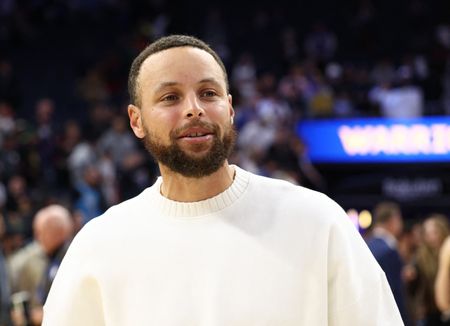
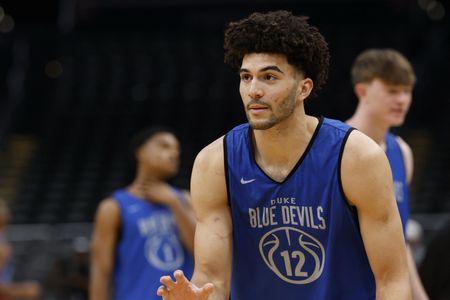
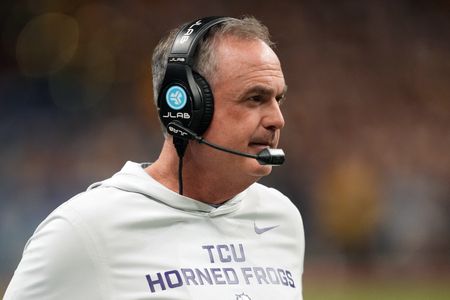
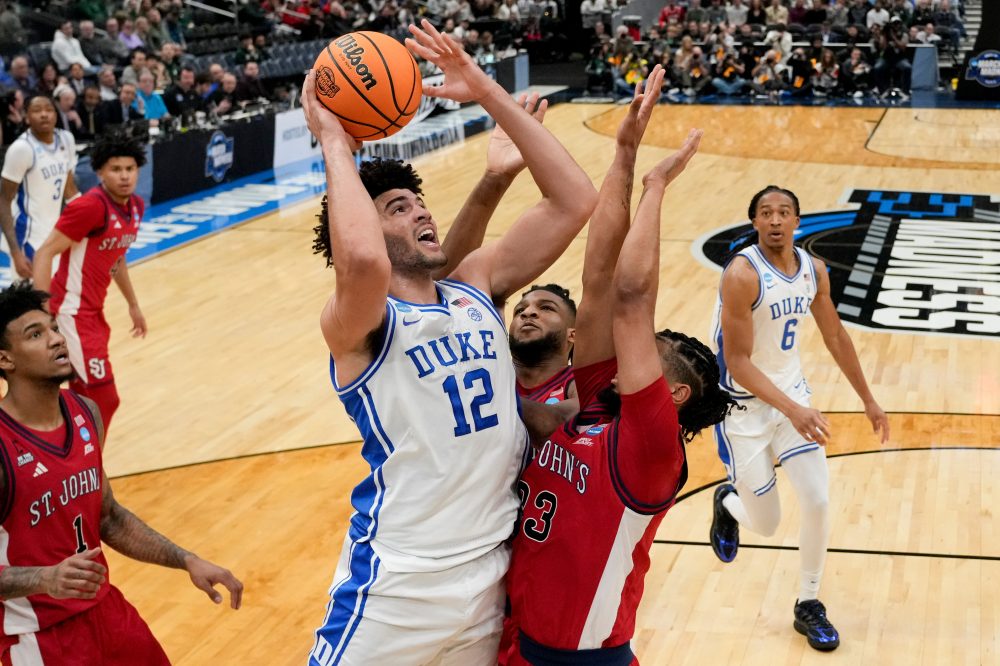
College basketball’s biggest tournament is poised for significant growth, with NCAA officials planning to approve an expansion to 76 teams for both men’s and women’s competitions following this year’s championship games, according to a Friday report from Yahoo Sports.
The proposed structure would allow 52 teams to advance straight to the current opening round, while 24 additional teams would compete in preliminary matchups. These early contests would feature the 12 lowest-seeded conference champions alongside the final 12 at-large selections, playing a dozen games across Tuesday and Wednesday to earn spots in the traditional first round scheduled for Thursday and Friday.
Dayton, Ohio, which has hosted the First Four games for years, would continue serving as one venue for these preliminary rounds, with organizers planning to add a second location to accommodate the increased number of early games.
Officials caution that specific arrangements remain fluid as the NCAA maintains ongoing discussions with television broadcast partners CBS and Warner Bros. Discovery, who hold exclusive rights to air the men’s tournament through 2031.
While the timeline for implementation wasn’t specified in the report, the expansion could potentially debut as early as the 2027 tournaments. Sources indicate the changes “will happen” unless unexpected complications arise in coming days.
This would represent the tournament’s first growth since 2011, when organizers increased participation from 65 to 68 teams by introducing the First Four format. Prior to that adjustment, the field had remained at 64 or 65 teams since 1985.
The Big 12 and Atlantic Coast Conference have emerged as the primary advocates pushing for tournament expansion, according to the report. NCAA President Charlie Baker has also publicly expressed support for enlarging the field.
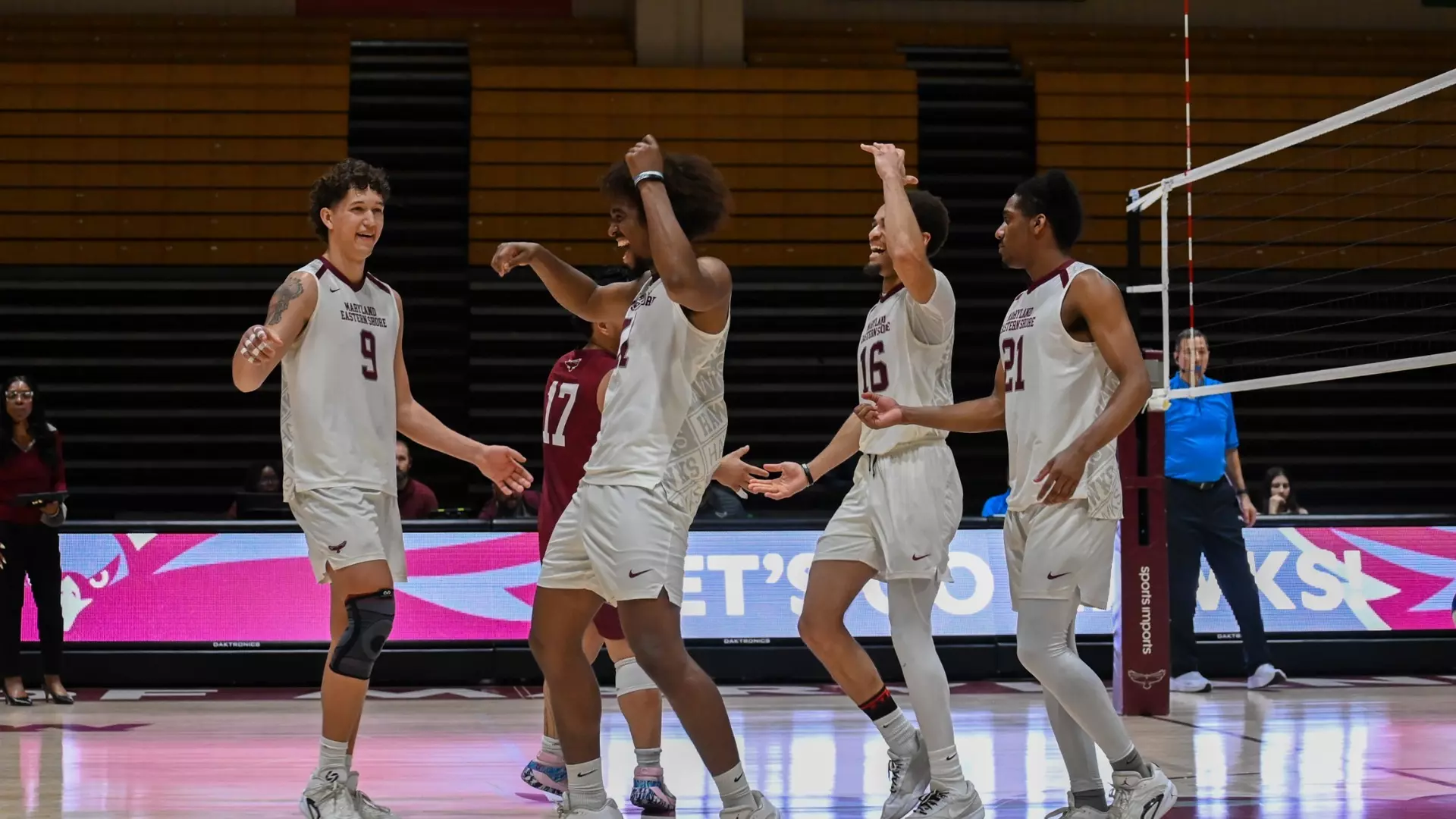
The University of Maryland Eastern Shore Hawks volleyball team extended their perfect home record Thursday night, defeating the LIU Sharks 3-2 in a hard-fought five-set battle.
The victory improved the Hawks to an impressive 8-0 record when playing on their home court this season. Four UMES players reached double digits in kills during the match, with Rowley, Hightower, Valentine, and Mills all contributing significantly to the offensive attack.
The match went the distance as both teams battled through five competitive sets before the Hawks ultimately prevailed over the visiting Sharks. The win demonstrates UMES’s continued dominance when playing in front of their home crowd.
With this latest victory, the Hawks have established themselves as a formidable force on their home court, maintaining their unblemished record at home while adding another quality win to their season resume.
PHOENIX — Basketball legends Candace Parker, Elena Delle Donne, Chamique Holdsclaw, and the entire 1996 U.S. Olympic women’s basketball squad will receive their ultimate honor this summer when they’re inducted into the Naismith Memorial Basketball Hall of Fame.
The announcement took place during the women’s Final Four halftime show, with Parker, Holdsclaw, and several 1996 Olympic team members on hand to witness the moment. Also present were fellow inductees Amar’e Stoudemire and Mike D’Antoni.
Joining them in this year’s class are veteran NBA referee Joey Crawford, NBA coach Doc Rivers, and Gonzaga’s Mark Few.
Parker’s remarkable career includes WNBA championships with three different franchises — Los Angeles, Chicago, and Las Vegas. She holds the unique distinction of being the only WNBA player to capture both MVP and Rookie of the Year honors in the same season.
Her trophy case also features two NCAA championships from her Tennessee days under legendary coach Pat Summitt, a pair of Olympic gold medals, and two WNBA MVP trophies.
Delle Donne earned league MVP recognition twice, in 2015 and 2019, with her second award coming during Washington’s championship season. She made history by becoming the first WNBA player to achieve the elite shooting milestone of 50% from the field, 40% from three-point range, and 90% from the free-throw line.
Holdsclaw led Tennessee to an unprecedented three consecutive championships from 1996-98. The 1998 title came during a perfect 39-0 campaign that established an NCAA record for most wins in a single season. She later enjoyed an 11-year professional career in the WNBA.
Stoudemire represents the NBA in this year’s class, earning Rookie of the Year honors in 2003 and six All-Star selections. He spent his first eight seasons with Phoenix, where he played under D’Antoni’s system.
Rivers brings nearly 1,200 coaching victories to his Hall of Fame resume, ranking eighth all-time. He guided Boston to the 2008 NBA championship and later coached the Los Angeles Clippers during their exciting “Lob City” period.
Few has accumulated more than 770 wins during his tenure at Gonzaga, including an NCAA Division I record of 81 victories in his first three seasons leading the program.
Crawford worked 2,561 regular-season NBA games and 50 Finals contests across his 39-year officiating career before retiring in 2016.
The formal induction ceremony is scheduled for August at the Hall of Fame facility in Springfield, Massachusetts.
Authorities have taken a second suspect into custody following the tragic drive-by shooting that claimed the life of an infant in Brooklyn earlier this week.
Matthew Rodriguez, 18, was captured Friday in Pennsylvania by New York Police Department investigators working alongside U.S. Marshals, according to police officials.
The alleged gunman, 21-year-old Amuri Greene, was taken into custody shortly after Wednesday’s deadly shooting that killed 7-month-old Kaori Patterson-Moore. During his Friday evening court appearance, Greene entered a not guilty plea to murder and additional charges and remains jailed without bond.
The tragic incident unfolded Wednesday afternoon when two individuals traveled down a Brooklyn street on a moped. According to court documents, Greene was positioned on the back of the vehicle when he opened fire toward a group of people gathered at a street corner, with baby Kaori sitting in her stroller nearby.
The child’s mother, Lianna Charles-Moore, described to the New York Post how she initially mistook the gunshots for fireworks. While tending to her frightened 2-year-old son, who suffered a bullet graze, she discovered her baby daughter had been struck in the head and was bleeding.
“My daughter was innocent. She didn’t deserve that,” Charles-Moore shared with the publication. She revealed that her little girl was beginning to crawl and had recently started saying “Mama.”
Court records indicate Greene admitted to investigators that he was targeting someone else in the crowd when he fired the weapon.
Greene’s legal representative, Jay Schwitzman, stated following the court proceeding that he plans to conduct “an independent and thorough investigation of the facts and circumstances of this tragic incident.”
Following the shooting, police report the moped accelerated and collided with a vehicle two blocks from the scene, throwing both riders from the bike. While Greene sustained injuries and was hospitalized under police supervision, the vehicle’s operator escaped on foot.
Officials have not yet disclosed court documents outlining Rodriguez’s specific involvement in the incident. However, investigators have not suggested they are seeking additional suspects beyond the shooter and the moped operator.
Law enforcement has not immediately provided details about any relationship between the two men or Rodriguez’s residence, and no active phone number for him was readily available. Formal charges against Rodriguez are still being processed.
Both Mayor Zohran Mamdani and Police Commissioner Jessica Tisch have voiced their devastation and anger regarding Kaori’s death.
“This is a terrible day in our city, a tragedy that truly shocks the conscience,” Tisch stated during Wednesday’s news conference.
Australian government officials are encouraging citizens to move forward with their Easter holiday travel despite widespread fuel shortages affecting hundreds of service stations across the country on Saturday, April 4th. The disruptions are linked to ongoing Middle East conflicts that have impacted the nation’s fuel supply chain.
Energy Minister Chris Bowen addressed the public through television broadcasts, stating: “Easter is a very special time of faith and family. We encourage people to feel free to stick to your plans, go and see your family, go take a break – but get no more fuel than you need.”
The fuel crisis has hit a nation that relies on imports for roughly 90% of its petroleum needs. Local shortages have emerged during the Middle East conflict, which entered its sixth week on Saturday. Some travelers have already canceled their holiday plans during what is traditionally one of the country’s peak travel periods.
Current fuel reserves stand at 39 days for gasoline, 29 days for diesel, and 30 days for aviation fuel, according to Bowen’s assessment.
“The total number of service stations without diesel in Australia, which is where the main pressure has been, is 312 out of the around 8,000 service stations,” Bowen explained, noting that rural locations face the greatest impact due to longer resupply times.
Prime Minister Anthony Albanese delivered an uncommon national address this week, warning citizens that economic impacts from the Middle East warfare would persist for months ahead. He also recommended using public transportation when possible.
The Jacksonville Jaguars have locked up defensive end Travon Walker with a massive four-year contract extension valued at $110 million, according to an announcement from his representation on Friday.
The lucrative deal includes $77 million in guaranteed money and provides Walker with $50 million upon signing, his agency revealed through social media. This extension keeps the star pass rusher in Jacksonville through the 2030 season.
Selected first overall in the 2022 NFL Draft, Walker has accumulated 27.5 quarterback sacks across 63 career games, starting 60 of those contests. His production peaked with 10 sacks during the 2023 season and 10.5 the following year, though he managed only 3.5 sacks in 14 appearances last season, starting 12 games.
Injuries hampered Walker’s 2025 performance, as he sat out one contest due to a fractured left wrist and missed two additional games because of a knee problem.
Beyond his pass-rushing abilities, Walker has forced three fumbles during his professional career and scored a touchdown after recovering a fumble and returning it 35 yards against Philadelphia in 2024.
Before this extension takes effect, Walker is set to earn $15.196 million in 2026 under his fifth-year rookie option, which Jacksonville exercised in April 2025.
The Goldey-Beacom Lightning baseball team continued their impressive run Thursday, capturing both ends of a doubleheader against Georgian Court University to push their winning streak to eight consecutive games.
Playing at Doyle Field in Hockessin, the Lightning claimed the opening game in dramatic fashion, prevailing 8-7 in an 11-inning marathon. Sophomore Jake Macey from Smyrna delivered the decisive blow with a clutch single that brought home the winning run in extra innings.
The Lightning followed up their thrilling opener by taking the second contest 4-3, completing the Central Atlantic Collegiate Conference sweep over the visiting Cougars.
The doubleheader victories showcase the team’s resilience and depth as they continue building momentum in conference play. With eight straight wins now under their belt, Goldey-Beacom has established themselves as a formidable force in the CACC standings.
GALLOWAY, N.J. – Salisbury University’s softball team experienced both victory and defeat Friday during a twin bill at Osprey Field against the 19th-ranked Stockton University Ospreys.
The Sea Gulls dominated the opening contest with a commanding 5-0 shutout victory over their highly-ranked opponents. However, the second matchup told a different story as Salisbury fell to the Ospreys 7-3 in a contest that was cut short after six innings when fading daylight forced officials to halt play.
The split results came during Friday afternoon action in Galloway, New Jersey, as the Sea Gulls faced one of the top-20 teams in the nation on the road.
NEWARK, Del. – The Blue Hens women’s tennis team earned a hard-fought 4-2 win against Virginia Commonwealth University during Friday afternoon competition at the Elkton Indoor Tennis facility.
The University of Delaware squad demonstrated resilience throughout the challenging matchup, securing the victory in what proved to be an intense contest between the two programs.
The win adds another successful result to the Blue Hens’ season as they continue their campaign on the courts.
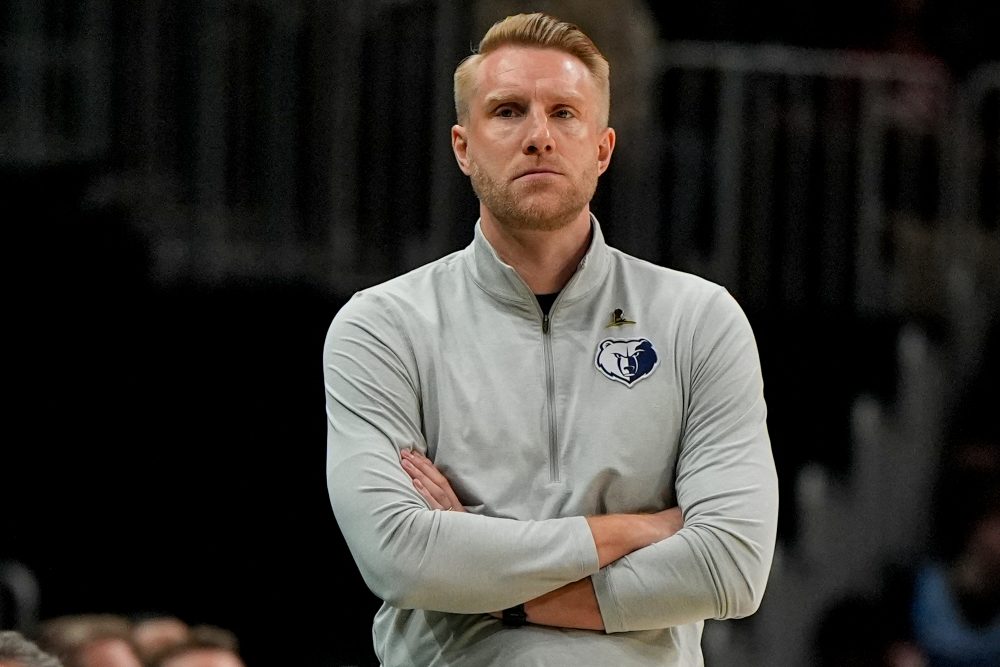
Two NBA head coaches came to Memphis’ defense on Friday after Los Angeles Lakers superstar LeBron James suggested the league would improve if the Grizzlies relocated to Nashville.
Memphis head coach Tuomas Iisalo and Toronto Raptors coach Darko Rajakovic, who previously served as an assistant in Memphis before becoming Toronto’s head coach, both contradicted James’ remarks made during a “Bob Does Sports” YouTube interview this week.
During the video, James slammed Memphis and argued the NBA would benefit if the Grizzlies moved 200 miles eastward to Nashville, citing Tennessee’s capital as home to Vanderbilt University, NASCAR events, and the NHL’s Predators. The four-time champion even claimed he might have refused to play in Memphis had the Grizzlies held the top pick in the 2003 NBA Draft.
“I can say from my own perspective that I have the complete opposite — 180-degree perspective on that,” Iisalo said. “The Memphis where we have arrived less than two years ago has been very warm. Very welcoming.”
Rajakovic expressed similar sentiments, stating: “I don’t care what the rest of the world thinks. I love the people of Memphis. I love the food. I love every single time I come over here.”
James specifically targeted the lack of entertainment options for visiting NBA players when their teams travel to Memphis for games.
“In Memphis on a (expletive) random (expletive) Thursday,” James said. “I’m not even the first guy to talk about it in the NBA, like, ‘You guys have to move. Go over to Nashville.’”
The Raptors demonstrated Memphis’ appeal by arriving a day early before Friday’s contest to tour St. Jude Children’s Research Hospital, which provides free treatment for pediatric cancer patients. Rajakovic described the hospital visit as motivating, noting his players expressed gratitude for the opportunity to meet young patients.
Both coaches have relatively brief connections to Memphis, with Iisalo completing just his second season and first as head coach. Despite this, Iisalo praised Memphis for hosting one of the NBA’s most dedicated fanbases and emphasized the city’s strong support for its team.
“All I can say is Memphis is the right place for the Grizzlies,” Iisalo said.
WASHINGTON — Beijing is intensifying its diplomatic initiatives regarding the Iran conflict, collaborating with Pakistan on a five-point peace framework while building support among Gulf nations and rejecting a United Nations proposal that would authorize military force to reopen the Strait of Hormuz.
The diplomatic push represents Beijing’s latest attempt to establish itself as a major player on the world stage, though analysts suggest the effort may be more symbolic than meaningful, particularly given Washington’s apparent lack of interest in China’s involvement.
“The war with Iran is the priority of all countries in and outside the region,” said Sun Yun, director of the China program at the Stimson Center, a Washington-based think tank. “It is an opportunity China will not miss to demonstrate its leadership and diplomatic initiative.”
Danny Russel, a former senior U.S. diplomat, characterized Beijing’s diplomatic efforts as “performative” and drew parallels to China’s 12-point Ukraine peace plan from 2023, which was “filled with platitudes but never acted on.”
“Its narrative is that while Washington is reckless, aggressive and heedless of the cost to others, China is a principled and responsible champion of peace,” said Russel, a distinguished fellow at the Asia Society Policy Institute. “What we are seeing from China is messaging, not mediation.”
Liu Pengyu, spokesperson for the Chinese Embassy in Washington, stated that China has been working “tirelessly for peace” since the conflict began.
The Trump administration shows minimal enthusiasm for Chinese mediation efforts, according to U.S. officials.
Washington has grown skeptical of third-party mediation attempts and has little desire to enhance China’s global standing or provide an opportunity for Beijing to claim diplomatic victories in the Middle East, said three U.S. officials who requested anonymity due to lack of authorization to discuss potential diplomatic strategies publicly.
One official characterized the administration’s stance on the Chinese-Pakistani initiative as “agnostic,” neither supporting nor opposing it, though all three emphasized this position could shift if President Donald Trump provides direction before his scheduled summit with Chinese President Xi Jinping.
Beijing may have motivation to see the conflict end before Trump’s planned visit to China in mid-May. Trump postponed the originally scheduled late March trip, citing war-related demands.
“There is no guarantee that Trump may not delay the trip to China again if the war rages on,” Sun said.
The conflict intensified significantly Friday when Iran shot down two U.S. military aircraft, marking the first such incident since hostilities began five weeks ago. Trump told NBC News this development would not affect negotiations with Iran, speaking just days after announcing in a national address that the U.S. has “beaten and completely decimated Iran.”
Currently, China faces less disruption from Strait of Hormuz complications than other nations, having diversified its energy portfolio and reduced fossil fuel dependence.
Iran supplies approximately 13% of China’s oil imports, and Beijing is coordinating with Tehran to ensure safe passage for Chinese-flagged ships through the strategic waterway, where Iran’s blockade has caused energy prices to spike. China also maintains substantial strategic petroleum reserves.
Though China has positioned itself to weather immediate disruptions, experts believe Beijing is concerned about an extended conflict and has genuine interest in ending hostilities.
“An escalation of the conflict will start to harm Chinese interests,” Russel said. “Because China’s growth model is so export-heavy, prolonged energy shocks and shipping disruption will mean costlier inputs and weaker global demand that damage its vulnerable economy.”
Beyond avoiding a prolonged war, China “welcomes the opportunity to suggest that it is helping mitigate a crisis of America’s making, especially as the Trump administration’s lack of a considered strategy for containing the fallout becomes more apparent,” said Ali Wyne, a senior research and advocacy adviser on U.S.-China relations at the International Crisis Group.
Following the conflict’s outbreak, Chinese Foreign Minister Wang Yi conducted discussions with officials from Russia, Oman, Iran, France, Israel, Saudi Arabia and the United Arab Emirates. He assured Iran of China’s valued friendship, called on Israel to halt military operations and indicated China’s willingness to facilitate peace efforts.
Recently, Wang welcomed his Pakistani counterpart to Beijing to develop their five-point framework, which calls for ending hostilities and reopening the strait.
Liu reported that Wang has conducted over 20 phone conversations with regional foreign ministers, while a special envoy has traveled throughout the region to promote peace and reduce tensions.
Wang sought backing for China’s initiative from European Union foreign policy chief Kaja Kallas, describing it as representing “broad, international consensus,” according to the Chinese foreign ministry. Wang told Saudi Foreign Minister Prince Faisal bin Farhan that stopping the fighting was the most pressing issue.
This week, Wang also spoke with Bahrain’s foreign minister, Abdullatif bin Rashid Al Zayani, to explain China’s opposition to Bahrain’s U.N. proposal authorizing military action to reopen the Strait of Hormuz. Wang argued that U.N. Security Council actions should help reduce tensions “rather than endorse illegal acts of war, still less add fuel to the fire.”
China and Russia contended that the U.S. or other nations could exploit a U.N.-authorized mechanism to escalate the deadly conflict, according to a U.N. diplomat who spoke anonymously to discuss diplomatic conversations.
Both nations appear to have less urgent need for the strait’s complete reopening. While China has managed to pay for some ship passages, Russia benefits from elevated oil prices for its primary export.
To avoid a veto, Bahrain substantially modified its proposal to authorize defensive — rather than offensive — action to ensure safe vessel transit through the strait. The vote was postponed until next week.
China maintains that resolving the strait situation requires a ceasefire. However, its collaborative plan with Pakistan has received mostly silence from the U.S.
One U.S. official noted the plan is challenging to evaluate because it functions less as a concrete peace roadmap and more as a general appeal for respecting international law and emphasizing diplomacy and the U.N.’s importance.
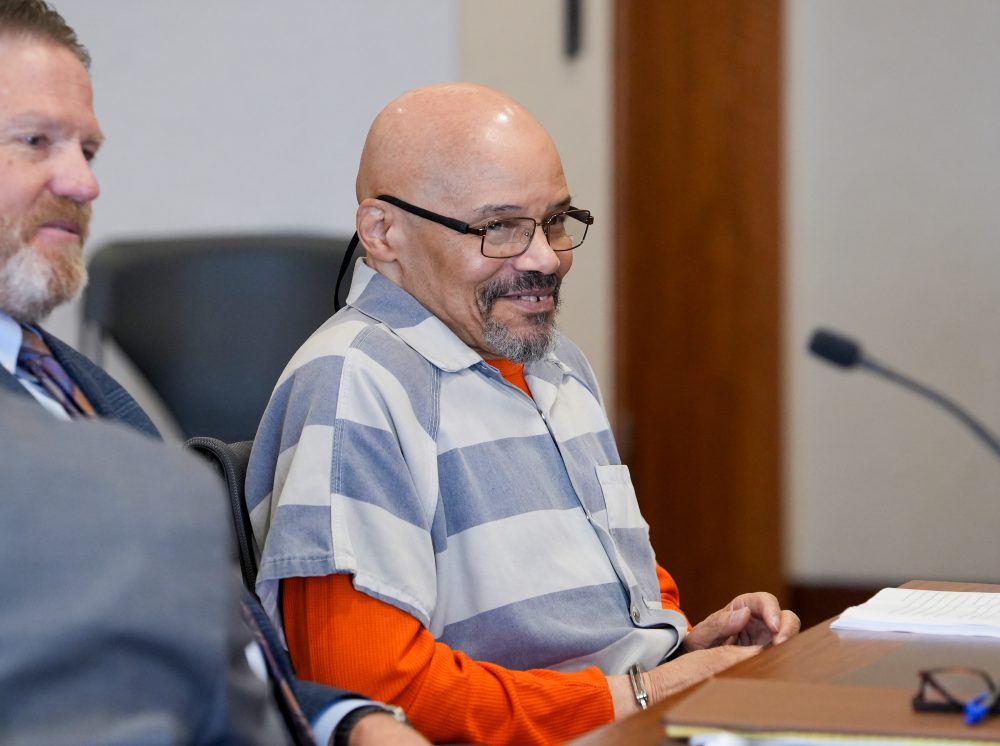
PROVO, Utah — A 70-year-old man who has spent 40 years on Utah’s death row filed a motion Friday requesting dismissal of his murder case following a state Supreme Court order for a new trial based on investigator wrongdoing.
Douglas Stewart Carter received a death sentence in 1985 when jurors convicted him of killing Eva Olesen, who was related to a former Provo police chief. The prosecution’s case relied entirely on Carter’s signed confession and testimony from two witnesses who claimed he boasted about the killing, as no physical evidence connected the Black defendant to the crime scene where the white victim was found.
Carter has consistently maintained his confession was forced from him. The two key witnesses, an undocumented immigrant couple, later revealed that law enforcement officials paid their housing costs, instructed them to provide false testimony, and used deportation threats against them and their child to secure Carter’s conviction.
In 2022, Judge Derek Pullan overturned the conviction, with the Utah Supreme Court upholding that decision last May, citing “numerous constitutional violations” that warranted a new trial. Carter remains incarcerated pending the retrial, with a bond hearing set for June.
“Douglas Carter spent over 40 years on death row for a crime which he, and the evidence, says he did not commit. Legally, enough is enough,” his defense team said in a motion filed Friday.
State prosecutors continue to oppose dismissing Carter’s case.
The latest defense filing claims an investigator concealed evidence that pointed toward alternative suspects, including victim’s spouse Orla Olesen. According to the motion, prosecutors were preparing to charge the husband when a Provo police lieutenant requested they hold off to allow further investigation. The document states Carter became a suspect shortly thereafter.
Neither the Provo Police Department nor Utah County Attorney’s Office responded to requests for comment Friday. Prosecutors have not yet responded to the dismissal motion.
Orla Olesen, who passed away in 2009, told investigators he discovered his wife’s body in their residence, partially clothed with her hands bound. Court records show she suffered 10 stab wounds and a gunshot to the head.
In recent court documents, prosecutors acknowledged uncertainty about whether Provo police still possess the recording of Orla Olesen’s polygraph examination. They also confirmed the state no longer has clothing taken from him during the investigation and lacks information about other potential evidence collected from him.
Motorists traveling eastbound on Pulaski Highway should expect delays and plan alternate routes as two lanes remain blocked at Eden Circle due to a traffic accident.
The Delaware Department of Transportation is reporting the lane closures are necessary while emergency crews respond to and clear the crash scene. The incident is affecting traffic flow in the eastbound direction at the Eden Circle intersection.
Drivers are advised to use caution in the area and consider taking alternate routes to avoid potential delays. DelDOT has not yet provided an estimated time for when the lanes will reopen to normal traffic.
A Nevada court has ruled to block prediction market platform Kalshi from continuing operations in the state unless the company secures proper gambling licenses, following a Friday hearing in Carson City.
Judge Jason Woodbury announced his decision to grant a preliminary injunction requested by the Nevada Gaming Control Board, which will prevent the New York-based company from offering event-based betting contracts to Nevada residents without appropriate licensing.
Legal representatives for Kalshi contended that their contracts should be classified as “swaps” under federal oversight, specifically falling within the U.S. Commodity Futures Trading Commission’s regulatory authority – a stance the federal agency has supported in similar court cases.
However, Judge Woodbury rejected this argument, drawing comparisons between traditional sports betting and Kalshi’s platform operations. He noted that placing a $100 wager on a baseball game through a licensed state gaming operator was essentially identical to purchasing a sporting event contract through Kalshi’s service.
“No matter how you slice it, that conduct is indistinguishable,” Woodbury stated. “So I find based on the arguments that have been presented that it is a gaming activity that is prohibited for any non-licensee to engage in.”
The judge’s ruling extends a temporary restraining order he had previously issued on March 20, which blocked the company from offering sports, election, and entertainment-related contracts. The new injunction will remain in effect through April 17 while court officials work to establish the terms of a longer-lasting prohibition.
Kalshi representatives did not provide immediate responses to requests for comment regarding the court’s decision.
Nevada stands alone as the only state that has successfully obtained a court-enforced prohibition against Kalshi, positioning itself at the center of an expanding legal dispute over state authority to regulate prediction market operations.
Prediction market platforms like Kalshi enable users to place financial wagers on various event outcomes, including sports competitions and elections, through what the companies call “event contracts.”
The legal battle escalated Thursday when the CFTC filed lawsuits against three states, challenging their regulatory authority over companies like Kalshi. Arizona is among those states, having made headlines last month as the first to file criminal charges against Kalshi for allegedly operating an unlicensed gambling operation.
Meanwhile, a similar injunction in Massachusetts that would have blocked Kalshi’s sports event contracts remains suspended while the company pursues an appeal of that ruling.
Drivers using Robinsonville Road southbound should expect delays today as construction crews conduct flagging operations in the area.
The traffic control measures are affecting the stretch of roadway between Harts Road and Conley Church Road, also known as Route 280B, according to DelDOT officials.
The flagging operations are scheduled to continue until 3 PM today, with crews directing vehicles through the construction zone.
Motorists are advised to allow extra travel time and consider alternate routes if possible to avoid potential delays in the area.
New Castle County police have activated a Gold Alert as they search for a missing 40-year-old resident who vanished from his neighborhood earlier this week.
Charles Chard disappeared from the unit block of Kellys Trailer Park on Tuesday afternoon, March 31, 2026, with his last confirmed sighting occurring around 4:00 p.m., according to the New Castle County Division of Police.
Law enforcement officials report that their search efforts have not yet yielded any leads, and they have been unable to make contact with Chard or determine his whereabouts.
India is strengthening its foothold across Africa through a dual strategy combining immediate humanitarian assistance with long-term economic partnerships. Recent weeks have seen New Delhi deliver rice shipments to Burkina Faso, Malawi, and Mozambique, while Indian policy experts advocate for enhanced engagement in Africa’s vital minerals industry, citing concerns over energy security and supply chain vulnerabilities that require stronger continental alliances.
The humanitarian initiative has moved swiftly and substantially. According to Business Insider Africa, India delivered 1,000 metric tons of rice to Burkina Faso, another 1,000 metric tons to drought-stricken Malawi, and 500 metric tons to flood-impacted Mozambique, accompanied by additional relief materials. Speaking about the Burkina Faso delivery, India’s Ministry of External Affairs spokesperson Randhir Jaiswal stated: “India has sent a consignment of 1000 metric tons of rice to Burkina Faso as humanitarian assistance. This is aimed at supporting food security for vulnerable communities and internally displaced persons. The gesture reflects India’s continued commitment as a reliable developmental and HADR partner to Global South countries.”
These humanitarian efforts address urgent crises affecting multiple African nations. Burkina Faso currently confronts one of the continent’s most serious humanitarian disasters, with millions requiring aid amid ongoing violence from Islamist militant groups and political instability following the 2022 military takeover. Meanwhile, Malawi battles food insecurity caused by El Niño-related drought conditions, and Mozambique continues recovering from devastating flood damage.
Beyond immediate relief efforts, India envisions broader engagement opportunities. A March 31 research document from the Center for Social and Economic Progress highlighted that Africa contains over 30% of worldwide critical and transition mineral reserves, recommending India move beyond traditional extraction methods or basic financing toward collaborative arrangements emphasizing technology sharing, skills development, and mutual benefit creation. The study identifies Zambia, Zimbabwe, and Tanzania as priority nations for future cooperation.
This blend of humanitarian outreach and resource-focused diplomacy indicates India seeks expanded African influence while China and the United States intensively compete for regional partnerships, infrastructure projects, and supply chain access. The approach appears both compassionate and pragmatic: providing rice for immediate needs while positioning for future mineral access.
The Kingdom of Saudi Arabia has rolled out stringent new penalties targeting nationals who journey to forbidden destinations, implementing financial sanctions as high as 30,000 Saudi riyals alongside potential movement restrictions extending up to two years, according to regulations approved by Interior Minister Prince Abdulaziz bin Saud bin Naif.
These enhanced enforcement measures will become active on March 31, 2026, representing the Interior Ministry’s strategy to control movement to specified dangerous nations during a period of heightened regional instability. Government officials stated that the catalog of prohibited locations will be established by the ministry following appropriate administrative processes.
The new framework establishes escalating punishments for multiple infractions. Financial penalties may increase twofold, while movement restrictions can stretch to five years for individuals who continue visiting banned nations.
The policies additionally target violations involving travel paperwork requirements. Submitting fraudulent details during travel document applications may trigger penalties reaching 5,000 Saudi riyals plus potential movement limitations.
More severe infractions, such as altering travel paperwork, misappropriating documents, or facilitating unauthorized usage by others, may result in financial sanctions reaching 100,000 Saudi riyals and movement bans extending five years. Government representatives stated these situations will be forwarded to the Public Prosecution.
Authorities noted that limitations may target particular nations classified as dangerous, including areas experiencing active warfare. Movement near the Yemeni frontier faces special restrictions; all journeys are discouraged within 30 kilometers, while non-critical travel is advised against within the 30-80 kilometer range due to ongoing military operations.
The framework acknowledges that exemptions might be granted under specific circumstances, including for persons 60 years or older or individuals maintaining immediate family connections to residents of restricted nations, where reduced sanctions could be applied.
In related developments, officials announced that foreign nationals and visitors holding expired documentation may utilize the Absher digital platform to extend their presence or depart the kingdom without penalties through April 18, 2026.
In the wake of Iranian Supreme Leader Ayatollah Ali Khamenei’s death, a London-based artist of Iranian heritage known as Naz has created a viral music video marking what many consider a turning point for Iran and the Middle East.
The TikTok creator appeared in a satirical music video just days following Khamenei’s killing, with the song serving as one of the first cultural responses to the dictator’s demise. Within its initial day online, the Instagram post accumulated hundreds of thousands of views.
The musical piece, titled “Hey Arr Arr” and performed by Hamed Fard with Naz dancing, emerged as regime forces fired upon Iranian citizens who were celebrating in the streets following news of Khamenei’s death.
Through social media platforms, Naz utilized music as a vehicle to amplify the voices of Iranians who, despite facing government violence, expressed joy over the end of the authoritarian leader’s reign. The video represents the intersection of art, resistance, and social media in documenting this historic moment for the Iranian people.
The United States Embassy in Albania has issued a security warning stating that Iran could potentially target American citizens, organizations with US connections, and Iranian opposition members as Middle East conflicts persist.
Albanian security agencies have elevated their alert status, with all protective systems described as “active and functional.” Embassy officials specifically warned that public locations such as tourist destinations, shopping centers, hotels, dining establishments, and nightlife venues may face increased risk. They encouraged heightened awareness and prompt reporting of any unusual activities.
Albanian President Bajram Begaj continues to receive regular briefings about possible security threats, his office announced in a Thursday statement.
“The president is informed about every situation and scenario, as well as all measures taken under security protocols,” the presidency stated, noting that collaboration with international allies remains at “extremely high levels.” Officials confirmed that Begaj maintains daily communication with the National Security Council.
These security concerns arise amid growing regional tensions, particularly after Bulgarian officials revealed that Iran delivered a diplomatic message last month warning Sofia against allowing American military aircraft to utilize Bulgarian airports for operations directed at Iran. This communication came after reports emerged of US military planes being observed in Bulgaria’s capital.
Former Foreign Minister Nadezhda Neynski characterized the message as typical diplomatic correspondence during crisis periods, though she acknowledged its significance given current circumstances. “This is normal diplomatic practice in times of crisis. It is not a threat, but a warning,” she told NOVA television during an interview.
Neynski explained that Bulgaria provided assurances to Tehran that it remains uninvolved in military operations, confirming that no combat missions fly through Bulgarian airspace and no military refueling occurs within its borders. She noted that officials delayed disclosing the diplomatic communication to prevent public alarm during the country’s election period, when national security matters are especially delicate.
Syrian military forces have found two underground passages used for illegal trafficking operations along the border with Lebanon, according to Damascus officials.
The tunnels were located during comprehensive security sweeps conducted by army units near Hawsh al-Sayyid Ali village in Homs province’s western region, Syrian government sources informed The Media Line.
Lt. Col. Shadi Hassan from Syria’s Ministry of Defense explained to The Media Line that authorities have now sealed the tunnels and implemented proper security measures after determining they were being used for illegal border crossings.
This latest find occurred just 24 hours after another similar tunnel was found in the same vicinity. According to Hassan, the discoveries point to an organized system of unauthorized border crossings being utilized for various illegal activities, including contraband trafficking and the transportation of armed individuals.
Evidence suggests these underground routes represent part of a broader pattern of criminal activity occurring along the Syria-Lebanon frontier. The region’s challenging landscape and overlapping geographical features create ideal conditions for such illegal operations to flourish.
Damascus officials stress that finding and shutting down these passages represents part of continuous border security initiatives aimed at stopping smuggling activities. They note that previous unauthorized crossing points have been eliminated after being used to illegally transport both merchandise and people.
Security experts view these actions as components of a wider plan to enhance border monitoring, especially given increasing worries that these pathways might be used for activities extending beyond typical contraband operations into security and military concerns.
The tunnel discoveries occur during a period of heightened regional tensions, particularly along Lebanon’s southern border areas where sporadic fighting and military escalation have generated growing international alarm.
Security analysts indicate that Syria has strengthened its frontier monitoring procedures due to concerns that regional conflicts might spread into Syrian territory through armed infiltration or weapons and supply smuggling.
These developments also coincide with reports of continued security cooperation between Damascus and Beirut in fighting smuggling operations and armed organizations, motivated by common border security challenges facing both nations.
Beyond immediate security concerns related to the tunnel findings, political factors also come into play, especially considering repeated allegations of non-governmental groups’ participation in managing cross-border trafficking operations.
Retired Brig. Gen. Ahmad Mansour explained to The Media Line that these passages might demonstrate overlapping interests between smuggling organizations and militant groups, which further complicates regional security and creates additional difficulties for law enforcement in both countries.
Mansour noted that the continuing discovery of such tunnels could lead to wider conversations about future border management strategies and the importance of regional cooperation in stopping illegal activities that threaten regional stability.
Following these revelations, Syrian authorities appear committed to expanding operations along their western frontier to prevent the construction of additional tunnels and unauthorized crossing points.
Regional observers suggest that the effectiveness of these initiatives will depend heavily on continued collaboration with Lebanese counterparts, along with addressing the underlying economic and security issues that fuel border area smuggling.
The discovery of these additional underground passages underscores the unstable security conditions along the Syria-Lebanon frontier. This situation presents a major challenge for both governments, particularly considering the potential for additional escalation.
Recent U.S. intelligence evaluations reveal that Iran continues to possess substantial missile capabilities following more than a month of coordinated strikes by Israeli and American forces, with approximately half of its missile launchers remaining operational, according to three sources with knowledge of the intelligence reports who spoke with CNN on Friday.
The intelligence assessments, gathered in recent days, indicate that Iran maintains the ability to conduct regional attacks. One source described Iran’s remaining capabilities, stating: “They are still very much poised to wreak absolute havoc throughout the entire region.”
The remaining operational launchers likely include missile systems that the Islamic Revolutionary Guard Corps (IRGC) concealed in underground facilities to protect them from aerial bombardment. Intelligence reports also revealed that a substantial portion of Iran’s coastal defense cruise missile systems remain undamaged, primarily because U.S. military operations have concentrated on Iran’s naval forces rather than the missile installations positioned along the coastline that could target vessels in the Strait of Hormuz.
These intelligence findings differ significantly from recent public comments made by President Donald Trump, who stated during Wednesday evening’s national address that Iran’s “ability to launch missiles and drones is dramatically curtailed, and their weapons factories and rocket launchers are being blown to pieces, very few of them left.”
Based on the most recent intelligence analysis, President Trump’s projection that the conflict could conclude within two to three weeks appears overly optimistic. “We can keep f**king them up, I don’t doubt it, but you’re out of your mind if you think this will be done in two weeks,” one intelligence source told CNN. During the early stages of the conflict, the Israel Defense Forces (IDF) claimed that 75% of Iran’s missile launchers had been eliminated within the first week of operations.
Nevertheless, a Reuters investigation conducted three weeks later indicated that U.S. intelligence could only verify the destruction of roughly one-third of Iran’s missile stockpile. Pentagon spokesperson Sean Parnell dismissed CNN’s reporting, describing it as “completely wrong.”
“The United States military has delivered a crippling series of blows to the Iranian regime,” Parnell said.
“We are far ahead of schedule on accomplishing our military objectives: destroy Iran’s missile arsenal, annihilate their Navy, destroy their terrorist proxies, and ensure Iran can never obtain a nuclear weapon,” he added.
Violence escalated in the Middle East during the Passover holiday as Hezbollah militants fired 130 rockets at Israel over Wednesday and Thursday, leaving four civilians with minor injuries while Israeli forces responded with operations in Lebanon that wounded two soldiers.
Emergency medical services reported casualties from two separate rocket strikes on Thursday. A direct hit on a building in Kiryat Shmona left a 34-year-old and an 85-year-old with minor injuries, according to Magen David Adom.
Another rocket impact in the northern community of Bi’ina caused light injuries to two men, ages 30 and 40. Additional rockets targeted the coastal city of Nahariya, with Israeli news outlets confirming that a kindergarten was among the structures hit. Emergency teams located two additional impact zones, though air defense systems successfully intercepted most of the incoming projectiles.
Israeli Defense Minister Israel Katz issued a stark warning to Hezbollah leader Naim Qassem regarding the continued aggression during the Jewish holiday. Following a security briefing with IDF Chief of Staff Lt. Gen. Eyal Zamir and senior military officials at the underground command facility beneath the Kiyra compound, Katz declared that Qassem would face a “very heavy price” and would end up “at the bottom of hell” with other eliminated members of Iran’s proxy network.
Israeli military officials confirmed that two soldiers received light wounds during combat operations in southern Lebanon. The injuries occurred during what the IDF described as a “targeted ground operation” by the 162nd Division aimed at strengthening Israel’s forward defensive positions, during which Israeli troops eliminated a Hezbollah fighter in close combat.
In a related development, Yemen’s Iran-supported Houthis took credit for launching a ballistic missile they claimed was aimed at “vital Israeli enemy targets” in the Tel Aviv region. However, Israeli defense forces reported the Yemen-launched missile actually activated warning sirens in Jerusalem before being successfully intercepted, with no casualties reported.
Syrian President Ahmed al-Sharaa revealed that diplomatic negotiations with Israel collapsed during the final stages, describing Israel’s stance toward Syria as consistently hostile.
Speaking at a Chatham House forum in London, al-Sharaa disclosed that Damascus had attempted to establish constructive dialogue with Israeli officials to find common ground, but recent events derailed any potential breakthrough.
On the topic of growing Middle East tensions, al-Sharaa declared that Syria will remain neutral in any US-Israeli conflict with Iran unless Syria faces direct attack and all diplomatic avenues are exhausted. Political analysts view this stance as Syria’s strategy to avoid getting pulled into a broader regional conflict.
The Syrian leader also distanced himself from al-Qaeda’s extremist views, stating his fundamental disagreements with their policies and ideology drove him to pursue an alternative path. He emphasized that Syria’s new government is adopting different strategies to prevent repeating historical errors, indicating efforts to reshape the nation’s political trajectory during this transition phase.
Al-Sharaa drew parallels between Syrian and Palestinian experiences, describing a common struggle where Syrians have faced hardships comparable to those endured by Gaza residents, underscoring the interconnected nature of regional humanitarian and political challenges.
These statements emerged during al-Sharaa’s ongoing European diplomatic tour. He traveled to Britain following meetings with high-ranking German officials, as part of Syria’s broader initiative to enhance political relationships and strengthen connections with European governments.
Iranian state television has broadcast footage of Iraqi Popular Mobilization Forces (PMF) fighters crossing into Khuzestan province, triggering widespread anger among Iranian citizens who believe these foreign military units are being deployed to suppress domestic opposition and protect the current government.
Iranian President Masoud Pezeshkian expressed gratitude on Tuesday through a social media post, thanking the “Muslim people of Iraq” for supporting Iran during what he characterized as an “unjust” conflict. He wrote, “I warmly shake the hands of the people, officials, and fighters of Iraq in Mesopotamia.”
Local residents in Khuzestan report that approximately 1,000 armed PMF members have crossed the border under the pretense of delivering humanitarian assistance, though they arrived with military vehicles and equipment while displaying official Iraqi flags. Sources suggest additional forces may have entered covertly.
The deployment violates Iran’s own constitutional provisions under Article 146, which prohibits foreign military forces from operating on Iranian territory. Similar criticism arose previously when Russian forces used Iranian military facilities.
A Khorramshahr resident spoke to The Media Line on Wednesday, describing widespread community distress over the PMF arrival, with some locals comparing it to the Iraqi occupation of their city during the Iran-Iraq War four decades ago. During that conflict, Iraqi forces held Khorramshahr for nearly two years.
The PMF deployment extends beyond Khorramshahr to include Abadan and Ahvaz, with forces positioned to assist Iranian military units during potential civil unrest or a possible American ground invasion of Khuzestan province.
Reports indicate PMF units previously entered Iran in January, working alongside the Islamic Revolutionary Guard Corps (IRGC) in violent suppression of civilian demonstrators. Protesters reported seeing non-Persian speaking armed personnel in Tehran firing on demonstrators. Social media footage allegedly shows PMF fighters departing Iran following the brutal crackdown that human rights organizations say resulted in approximately 10,000 deaths over several days beginning January 8.
The PMF also participated in crushing the Woman, Life, Freedom protests during fall 2022 in Tehran and other Iranian cities, working alongside proxy groups including Hezbollah. Witnesses reported these foreign forces operating throughout Tehran as prolonged nationwide demonstrations led by women had weakened Iran’s domestic security apparatus.
Iran has increasingly relied on various mercenary organizations to suppress major public demonstrations, including the Afghan Shiite Fatemiyoun Division and Pakistani Shiite Zainabiyoun Brigade, both of which maintain permanent bases inside Iran. Unlike these groups, PMF fighters typically do not establish permanent Iranian facilities.
PMF elements maintain an unofficial presence at the Ghayour military compound in Ahvaz, which serves as a training facility for Arabic-speaking forces, primarily Iraqis and Lebanese. Other Iranian proxy organizations also operate from this location, including Kata’ib Hezbollah, Harakat al-Nujaba, Asa’ib Ahl al-Haq, Kata’ib Sayyid al-Shuhada, and smaller groups like Saraya Awliya al-Dam.
While the PMF attempts to portray itself as a grassroots organization supported by Iraqi Shiites and remains officially part of Iraq’s military structure despite recent tensions, other groups function primarily as Iran’s operational forces in Iraq, conducting terrorist activities, sabotage operations against Kurdish populations, kidnappings, assassinations, and attacks on U.S. military installations.
PMF leadership also receives training at IRGC military academies, while core members travel regularly to Qom for ideological and political education.
Iran is utilizing the PMF’s extensive urban warfare experience to prepare for potential internal conflicts, assist in city control during a possible U.S. ground assault, and reinforce its own weakened military forces, which are reportedly now recruiting Basij militia members as young as 12 for urban area control.
Middle Eastern security analyst Shukriyga Bradost explained to The Media Line that the PMF’s open entry into Iran reflects the group’s necessity to maintain the Islamic Republic’s stability. “The fall of this regime would effectively mean the end of the PMF and other Shiite groups tied to the Islamic Republic regime,” she stated.
According to Bradost, PMF forces are being positioned for potential use against U.S. ground operations. “If there is a collapse within the regime’s military ranks, they could use the PMF against the United States, because since 2009 this group has had both experience fighting the Americans and also cooperating with them in Iraq, and therefore has greater familiarity with U.S. military forces,” she explained.
The Virginia Tech analyst and international security researcher suggested that U.S. and Israeli forces may have avoided striking PMF units before their Iranian entry because using these forces against protesters could intensify tensions between Iranian security forces and demonstrators, potentially leading to military confrontation or civil war.
Intelligence reports indicate PMF fighters have been stationed near Abadan’s oil refinery in strategically sensitive locations. These forces reportedly entered Khuzestan through both the Basra border and Shalamcheh crossing, traveling in fully equipped Toyota Hilux vehicles while carrying Iraqi flags and receiving official welcomes from Iranian government representatives.
Meanwhile, several PMF brigades in Iraq that had attacked Iranian Kurdish forces and threatened U.S. positions have come under American military strikes, resulting in reported casualties among their members.
Iraqi officials, concerned about potential U.S. retaliation for PMF deployment into Iran, believe Prime Minister Mohammed Shia al-Sudani’s government has implicitly opposed the entry of PMF fighters into Iran. According to Arab media reports, Baghdad has emphasized that only the commander-in-chief may authorize Iraqi armed forces movements.
Despite his close ties to Iran, Sudani has previously expressed concern about Iraq becoming a battlefield in an Iranian-American conflict. Other Iraqi officials and politicians have similarly warned against Iraq’s involvement in a war between Iran and the United States.
Recent Arab media reports indicate that Kata’ib Hezbollah, considered part of the PMF, also entered Khuzestan without Iraqi government coordination. Al-Araby al-Jadeed reported that several armed groups allied with Iran’s government, including Kata’ib Hezbollah, have defied Iraqi military and security directives requiring them to avoid border areas and parts of Baghdad, while the Iraqi government has remained silent on these violations.
Former Baghdad Post editor-in-chief Sufyan al-Samarrai wrote on social media that, contrary to Iranian government claims, the PMF convoy did not consist of food aid but secretly transported “important equipment, concealed light weapons, and missiles mounted on PMF pickup trucks, in preparation for street warfare in Iranian cities.”
On Tuesday, Iraqi Foreign Minister Fuad Hussein acknowledged in an Al Arabiya interview that Iraq had been unwillingly drawn into the conflict between Iran and the United States.
This development occurs as the PMF’s political influence in Iraq has become increasingly fragmented in recent years, particularly following Ali Khamenei’s death. A faction now identifying more closely with Iraqi Shiite religious authority Ayatollah Ali al-Sistani and Muqtada al-Sadr than with serving as Iran’s proxy force is distancing itself from Tehran’s agenda.
Both Sadr and Sistani are increasingly separating themselves from Iran’s Islamic Republic. Sistani did not issue a specific statement recognizing Mojtaba Khamenei as Iran’s leader, with his office merely expressing wishes for success to the former leader’s “successor.”
Sadr limited his response to a brief social media message following Ali Khamenei’s death, indicating a deepening divide between significant portions of Iraq’s Shiite religious establishment and Iran’s Islamic Republic, naturally placing the PMF in the center of this crisis.
Earlier, amid these disagreements, some PMF elements, including the Abbas Combat Division, separated and joined Iraq’s Ministry of Defense directly. The force is now split between a pro-velayat faction serving Iran’s Islamic Republic and a marjaiya faction loyal to Sistani. Another group, Saraya al-Salam, identifies itself as following Sadr’s orders.
The PMF appears to be losing Iraqi support, even among Shiites, with far more people turning away than in previous years. A recent IIACSS research group poll found that trust in the pro-velayat faction across Iraqi society dropped to approximately 28%, partly due to its service to Iran’s Islamic Republic within Iraq.
Iranian and Iraqi social media users have posted opposition to PMF presence on various platforms. Tishreen movement supporters, using the hashtag “Iraq is not (Iran’s) backyard,” have sharply criticized the economic consequences of PMF forces entering Iran.
Iranian users have expressed surprise that Israel or the United States did not attack the PMF, and, concerned about the likely reasons behind the Iraqi proxy group’s entry into Iran, have been discussing various scenarios.
One user named Mahtab wrote: “The country’s infrastructure has been destroyed, but the regime is still standing, and the PMF enters the country without coming under air attack. Isn’t that strange?”
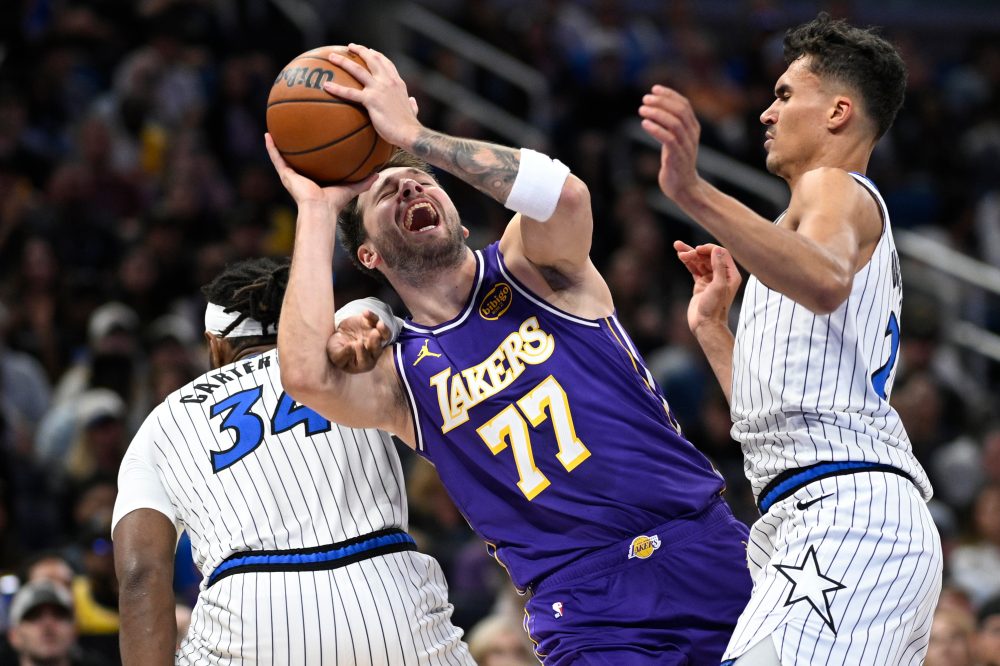
The Los Angeles Lakers announced Friday that their star player Luka Doncic will be sidelined for the remainder of the regular season after suffering a Grade 2 left hamstring strain.
The league’s current scoring champion sustained the injury during Thursday night’s decisive defeat against the Oklahoma City Thunder. Medical imaging confirmed the extent of the hamstring damage.
Doncic has been instrumental in propelling the Lakers to third place in the Western Conference standings this season. With a 50-27 record, Los Angeles has only five remaining games before playoff action begins, with their next matchup scheduled for Sunday against Dallas.
Recovery time for Grade 2 hamstring strains typically spans several weeks, though Doncic has dealt with similar hamstring problems before. Earlier this season, he sat out four games just prior to the All-Star break due to another left hamstring injury, but successfully returned to action following the mid-season break.
The Slovenian basketball star is enjoying an outstanding debut full season with Los Angeles after being traded from the Dallas Mavericks last year. His current averages include 33.5 points, 8.3 assists, and 7.7 rebounds per contest. March proved particularly impressive for Doncic, earning him Western Conference Player of the Month honors after delivering 13 straight games with at least 30 points, including seven contests where he scored 40 or more.
Head coach JJ Redick explained that Doncic initially suffered the injury during the first half against Oklahoma City but received medical clearance to continue playing. However, the superstar managed only approximately four minutes of additional game time before a spinning motion caused him to collapse in pain, forcing his exit from the contest.
WASHINGTON — Federal officials announced Friday they will merge two regulatory agencies that were divided following the catastrophic 2010 BP oil disaster in the Gulf of Mexico. The Interior Department stated the restructuring aims to boost efficiency and accelerate approval processes for offshore energy projects.
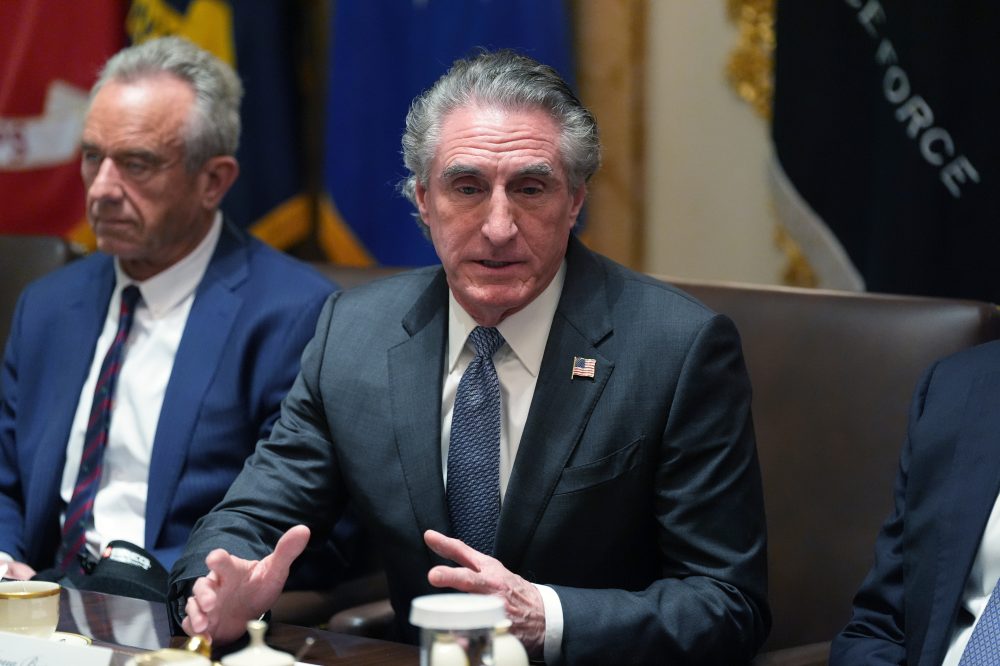
Interior Secretary Doug Burgum explained that the newly formed Marine Minerals Administration will unite the responsibilities currently handled by the Bureau of Ocean Energy Management and the Bureau of Safety and Environmental Enforcement. According to Burgum, this consolidation will create a “streamlined approach” while preserving current regulatory safeguards and strict safety protocols.
“The combined agency will deliver clearer coordination, better service to the public and stronger, more integrated oversight of offshore energy development,” Burgum stated.
The agency’s title echoes the former Minerals Management Service, which served as the primary federal oversight body for offshore drilling operations for many years. In April 2010, the BP Deepwater Horizon platform exploded in Gulf waters, resulting in 11 fatalities and releasing approximately 5 million barrels of oil into the ocean during a three-month period, marking America’s worst offshore environmental disaster.
Bipartisan criticism emerged against the agency for inadequate supervision and inappropriate relationships with energy companies. An inspector general investigation from 2008 revealed employees had accepted inappropriate gifts, directed contracts to preferred companies, and participated in substance abuse and intimate relationships with representatives from the very firms they were supposed to regulate.
The agency director stepped down in May 2010 following intense public scrutiny, prompting the Obama administration to implement tighter drilling oversight measures after the environmental catastrophe.
In 2011, the disbanded Minerals Management Service was replaced by the Bureau of Ocean Energy Management and the Bureau of Safety and Environmental Enforcement. Revenue collection duties were also transferred to a separate office. Obama administration officials said the restructuring eliminated the complicated and contradictory responsibilities of the original agency.
BOEM currently manages oil, gas, renewable energy and mineral development on federal offshore lands, while BSEE handles safety and environmental compliance.
Conservation organizations strongly criticized the reorganization as returning to the agency’s problematic history.
“The MMS was intentionally split up after the Gulf spill because regulators were too cozy with industry and we couldn’t trust the integrity of their work,” explained Miyoko Sakashita, oceans director at the Center for Biological Diversity.
She described the new structure as “yet another handout to the oil industry that will fast-track risky projects. It sure won’t make the people or wildlife on our coasts any safer.”
The National Ocean Industries Association, representing offshore energy companies, argued that having two separate but overlapping federal agencies managing offshore development creates confusion and delays.
“Bringing them back together should result in closer coordination and a more efficiently functioning government, for the benefit of American citizens who rely upon the energy produced from the U.S. Outer Continental Shelf to fuel our economy and lift society,” stated Association President Erik Milito.
British authorities announced Friday that three individuals have been formally charged in connection with a fire attack that targeted Jewish community emergency vehicles in north London last month.
According to prosecutors, the trio faces charges of arson with intent to damage property and reckless endangerment of life stemming from the March incident involving the ambulances.
While the Metropolitan Police have not officially categorized the case as terrorism, counter-terrorism specialists are heading up the investigation given the specific circumstances surrounding the attack on the Jewish community vehicles.
Minnesota Lynx forward Bridget Carleton became the top selection when the Portland Fire made their choice in Friday’s WNBA expansion draft, while the Toronto Tempo responded by choosing Julie Allemand as their initial pick.
The 6-foot-2 forward from the Lynx enters unrestricted free agency this offseason, which allows Portland to label Carleton as a “core” player and secure exclusive rights to negotiate a one-year, fully guaranteed maximum contract.
According to ESPN, the Tempo also had interest in Carleton, who hails from Ontario, prompting the Fire to use their top selection to secure the forward’s services.
Throughout her seven-season, 219-game professional career — with 215 contests for the Lynx and four for the Connecticut Sun — Carleton has averaged 5.7 points, 2.9 rebounds and 1.6 assists per contest. Her 2024 campaign saw her place third in Most Improved Player balloting after recording personal bests of 9.6 points, 3.8 rebounds and 2.2 assists for Minnesota. She began 36 contests that season and started all 44 games for the Lynx in 2025.
Los Angeles Sparks guard Allemand brings career numbers of 5.5 points, 4.7 assists and 3.3 rebounds per game to Toronto. During the shortened 2020 campaign, she connected on 47.8% of her three-point attempts across 22 appearances for the Indiana Fever, though she has divided her playing time between European leagues and the WNBA throughout her career.
Connecticut’s Marina Mabrey represented the most prominent player chosen on Friday, going sixth overall to the Tempo. Mabrey has reached double digits in scoring each season since 2020 but expressed dissatisfaction in Connecticut following the Sun’s rebuilding efforts last offseason, submitting a trade request that the organization declined.
Despite the situation, she produced 14.4 points per game along with 4.2 rebounds and 4.0 assists across 35 appearances (34 starts) for Connecticut.
The league’s 13 established franchises — including the Golden State Valkyries, who joined as an expansion team last year — were limited to protecting five players from the expansion draft.
Here are the complete expansion draft selections by team, listed in order of choice. Both Toronto and Portland declined one selection each, resulting in 22 total picks:
A championship boxing match will take place at one of the world’s most iconic locations when British fighter Hamzah Sheeraz faces off against Germany’s Alem Begic for the WBO super middleweight championship belt on May 23rd at the Pyramids of Giza in Egypt.
This title bout will serve as an undercard event for the main attraction featuring Oleksandr Usyk (24-0, 15 KOs) defending his WBC heavyweight championship against Rico Verhoeven (66-10, 21 KOs), according to Friday’s announcement from Ring Magazine, the event’s promoter.
Sheeraz, representing Britain with a record of 22-0-1 and 18 knockouts, earned his shot at the world championship by defeating Edgar Berlanga with a fifth-round knockout last July. The fighter previously battled for the title in February 2025, resulting in a draw against then-champion Carlos Adames in Riyadh, Saudi Arabia.
For Begic, this marks his inaugural opportunity to compete for a world title. The 39-year-old German boxer brings an impressive undefeated record of 30 fights with just one draw to his name.
Additional undercard action will feature Jack Catterall (32-2, 14 KOs) defending his WBA “regular” welterweight title against Shakhram Giyasov (17-0, 10 KOs). The evening will also showcase a heavyweight matchup between Cuban fighter Frank Sanchez (25-1, 18 KOs) and American rising star Richard Torrez Jr. (14-0, 12 KOs), who captured silver at the Tokyo Olympics.
WASHINGTON – Fresh intelligence assessments from U.S. agencies indicate that Iran has no intention of releasing its control over the Strait of Hormuz anytime soon, as Tehran views its dominance of the critical oil shipping channel as its primary bargaining chip against America, three informed sources revealed.
These intelligence findings suggest Iran may continue restricting passage through the waterway to maintain elevated energy costs, potentially forcing President Donald Trump to seek a rapid resolution to the ongoing conflict that has lasted nearly five weeks and remains deeply unpopular among American voters.
The assessments also reveal that the military campaign, originally designed to eliminate Iran’s military capabilities, may paradoxically be strengthening Tehran’s regional influence by demonstrating its capacity to threaten this essential shipping route.
President Trump has attempted to minimize the challenges involved in reopening the Strait of Hormuz, through which one-fifth of global oil shipments pass. Last Friday, he seemed to indicate he might deploy American military forces to clear the passage.
“With a little more time, we can easily OPEN THE HORMUZ STRAIT, TAKE THE OIL, & MAKE A FORTUNE,” Trump wrote on his Truth Social platform.
However, military experts have consistently cautioned that using military force against Iran, which maintains control over one side of the strait, could result in significant casualties and potentially drag America into an extended ground conflict.
“In the attempt to try to prevent Iran from developing a weapon of mass destruction, the U.S. handed Iran a weapon of mass disruption,” stated Ali Vaez, who leads the Iran Project at the International Crisis Group, an organization focused on conflict prevention.
According to Vaez, Tehran recognizes that its capacity to influence global energy markets through its control of the strait “is much more potent than even a nuclear weapon.”
Trump’s position regarding potential American military action to reopen the strait has been inconsistent. While he has established ending Iran’s blockade as a requirement for any ceasefire agreement, he has also urged Gulf nations dependent on oil exports and NATO partners to spearhead efforts to restore passage.
A White House representative, speaking on condition of anonymity, stated that Trump remains “confident that the strait will be open very soon” and has made clear that Iran will not be permitted to control waterway traffic following the conflict’s conclusion.
However, the official acknowledged that Trump has also emphasized that other nations “have far more at stake in preventing this outcome” compared to the United States.
The CIA has not yet provided a response to requests for comment.
Iran’s outmatched Islamic Revolutionary Guard Corps has employed multiple strategies to make commercial shipping through the waterway too hazardous or uninsurable since Trump and Israeli Prime Minister Benjamin Netanyahu initiated their military campaign on February 28.
Through attacks on civilian ships, deployment of sea mines, and demands for transit payments, Iran has successfully halted traffic through the strait, causing global oil prices to reach multi-year peaks and creating fuel shortages in nations dependent on Gulf petroleum and natural gas.
Increasing energy expenses threaten to drive up inflation across America, creating political challenges for Trump as he confronts poor polling numbers while his Republican Party prepares for November’s midterm congressional elections.
According to the three sources, Iran shows no signs of relinquishing this strategic advantage in the near future, as warned in recent intelligence reports. The sources declined to specify which agencies produced these evaluations.
“It is certainly the case that now that Iran has tasted its power and leverage over the strait, it won’t soon give it up,” explained one source. All three requested anonymity when discussing the classified intelligence reports.
Military specialists emphasize that any operation to forcibly reopen the waterway would involve substantial risks.
The strait runs between Iran and Oman, measuring 21 miles across at its most narrow section, though the actual shipping channels are only 2 miles wide in each direction, creating vulnerable targets for both vessels and military personnel.
Even if American forces successfully captured Iran’s southern coastline and offshore islands, the IRGC could continue attacking them and maintaining waterway control using drones and missiles launched from Iran’s interior, according to defense experts.
“All it takes to disrupt traffic and deter vessels from passing through is one or two drones,” Vaez noted.
Several analysts believe that even after the conflict ends, Iran will be reluctant to surrender its ability to control strait traffic because the nation will require reconstruction funding, and collecting commercial shipping fees would provide one method of generating revenue.
Tehran “is going to look to maintain the leverage that they have rediscovered by disrupting traffic” through the strait, former CIA Director Bill Burns commented during a Foreign Affairs magazine podcast released Thursday.
Burns explained that Iran will attempt to use its waterway control capabilities to secure “long-term deterrence and security guarantees” in any peace agreement with America while gaining “some direct material benefits” such as charging passage fees to finance post-war rebuilding efforts.
“That,” he concluded, “sets up a really difficult negotiation right now.”
The convenience store chain Wawa has initiated a voluntary recall of four beverage products due to concerns about potential undeclared milk allergens, according to an announcement made on April 3, 2026.
The recall affects 16-ounce containers of Wawa Iced Tea Lemon, Wawa Iced Tea Diet Lemon, Wawa Diet Lemonade, and Wawa Fruit Punch. These beverages were manufactured by the Wawa Beverage Company and distributed to select Wawa locations throughout Pennsylvania, Delaware, Maryland, New Jersey, and the Virgin Islands.
The Media, Pennsylvania-based company took the precautionary step after discovering that the affected products might contain milk allergens that are not listed on the product labels. This poses a significant health risk for individuals with milk allergies or lactose intolerance.
Customers who have purchased any of these beverages are advised to check their products and avoid consumption if they have milk allergies. Those with questions about the recall can contact Wawa directly for more information about returns or refunds.
The recall demonstrates the company’s commitment to customer safety and follows standard food safety protocols when potential allergen contamination is identified in retail products.
A Pennsylvania-based grocery chain announced a voluntary product recall on April 2, 2026, affecting chocolate confections that may pose serious health risks to allergy sufferers.
Karns Foods has pulled its Mini Dark Chocolate Raspberry Cups from shelves after discovering the treats contain peanuts that were not listed on product labels. The recall covers approximately 8-ounce packages of the chocolate items.
The company issued the recall from its Mechanicsburg, Pennsylvania headquarters, warning that individuals with peanut allergies could experience severe or potentially fatal reactions if they consume the mislabeled products.
Customers who purchased the affected chocolate raspberry cups are advised to check their packages and avoid consumption if they have peanut sensitivities.
DALLAS — Officials at the American Airlines Center have opened an internal probe after video surfaced showing what appears to be four hockey fans making Nazi salutes during a Dallas Stars game.
Arena representatives spoke to WFAA-TV in Dallas, emphasizing their “zero tolerance for any acts of hate and/or discrimination.”
“We strongly denounce the actions that appear to be depicted in the video footage and are conducting an internal investigation,” an arena spokesperson stated. “All fans and attendees are expected to adhere to AAC and, as applicable, NBA or NHL Codes of Conduct when attending events.”
The controversial footage was captured by Stars supporter Courtney Ripley during a late December matchup against Toronto. The 12-second clip depicts four spectators responding to a scoring play by what appears to be raising their right arms in an extended position with straightened hands pointing downward. The video circulated widely on social media platforms this week.
Dallas Stars officials confirmed to ESPN on Thursday that the organization is “fully aligned with the arena’s statement and working with them to find out exactly what happened.”
Hockey’s governing body maintains strict behavioral standards for spectators across all venues. Each NHL franchise presents mandatory segments through video displays and arena announcements outlining expected fan conduct.
The league’s comprehensive behavioral guidelines begin with the principle that “The best hockey experiences happen in environments that are inclusive, safe and respectful.”
According to NHL policy, violations of conduct standards can result in removal from the venue, temporary suspensions, or permanent prohibition from attending future games.
WASHINGTON — Los Angeles Dodgers manager Dave Roberts wasn’t worried about his struggling superstars, and Friday night proved his patience was justified.
The team’s first four batters — Shohei Ohtani, Kyle Tucker, Mookie Betts and Freddie Freeman — each launched home runs during a dominant 13-6 victory against the Washington Nationals. The performance marked Tucker’s inaugural long ball since becoming a Dodger and delivered Ohtani’s first RBI of the young season.
“Rome isn’t burning,” manager Dave Roberts cracked.
Roberts showed no signs of concern before the contest, despite his top four hitters struggling mightily through the season’s opening six games. Ohtani entered batting .167, Tucker at .174, Betts hitting just .136 and Freeman managing only .208. The team’s first six batters were retired in order early before Los Angeles found their rhythm in the third inning.
Ohtani’s powerful three-run blast to right field evened the score at 3-3, while Betts followed two batters later with a two-run shot of his own.
“It’s a new day. That’s really it,” Betts said. “Nobody in here is panicking or anything. One week, tough week. That probably is not going to be our last week that we don’t hit well.”
Andy Pages contributed a two-run homer in the fourth inning, extending the lead to 7-4, before Freeman added his own two-run blast in the fifth. Tucker capped his three-hit performance with a solo shot in the seventh inning — impressive work from the outfielder who inked a $240 million, four-year contract after leaving the Chicago Cubs for Los Angeles.
“It was nice. First homer — first actual ball I’ve hit in the air well, out in front and everything,” Tucker said. “You can’t complain when you hit a homer.”
Los Angeles’ top four hitters combined for an 8-for-21 performance featuring four home runs, 10 RBIs and six runs scored. The offensive explosion came against Miles Mikolas, who surrendered a career-worst 11 earned runs across 4 1/3 innings.
“I think a little bit of it is we’ve had a lot of history with Mikolas,” Roberts said “We’ve seen him, know some of his tendencies. Outside of that, they were just not missing today.”
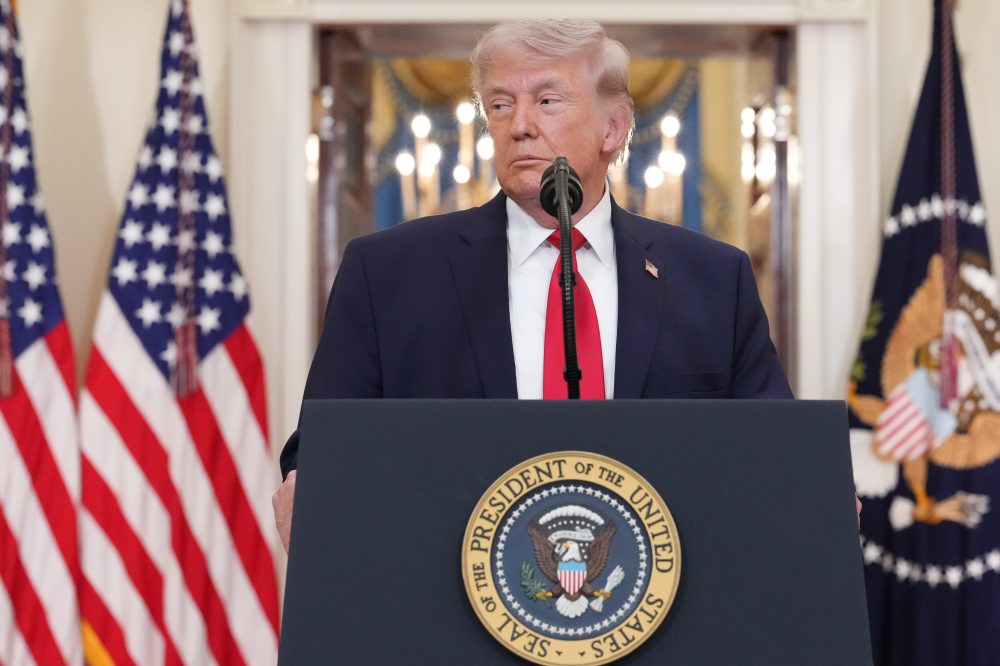
On Friday, President Donald Trump issued an executive directive focused on bringing “order, fairness and stability” back to collegiate athletics nationwide.
The presidential order instructs federal departments to strengthen enforcement of regulations governing student transfers, athletic eligibility, and compensation arrangements by examining whether rule violations should disqualify universities from receiving federal funding and contracts.
The directive also instructs relevant athletic governing organizations to revise current policies to restore financial balance and safeguard the future of collegiate sports programs, particularly women’s athletics and Olympic competitions through:
— creating transparent, uniform, and equitable eligibility requirements, including a five-year competition timeframe;
— developing organized transfer policies to maintain academic and athletic consistency;
— guaranteeing healthcare coverage for college athletes;
— establishing revenue distribution systems that preserve and expand opportunities for women’s and Olympic athletic programs;
— prohibiting inappropriate financial deals including compensation-for-participation agreements coordinated by collectives and comparable organizations; and
— creating safeguards against unethical agent behavior.
The executive order instructs the General Services Administrator and Education Department to expand data gathering throughout college athletics to verify compliance and directs the Federal Trade Commission Chairman and Attorney General to pursue proper enforcement measures.
Additionally, the order urges Congress to “quickly” enact legislation addressing these concerns.
Authorities in Los Angeles have taken a 12-year-old student into custody on murder charges following the death of a classmate who suffered fatal head injuries from a metal water bottle attack during what police describe as a bullying incident.
The juvenile suspect was arrested Thursday on suspicion of murder in connection with the February 25th death of 12-year-old Khimberly Zavaleta Chuquipa, according to Los Angeles Police Officer Charles Miller. The district attorney’s office confirmed Friday they are reviewing the case for potential charges.
Due to the ages of both the victim and suspect, Miller stated he could not provide additional details about the investigation.
According to the victim’s family, Khimberly sustained the fatal blow to her head on February 17th while attempting to defend her older sister Sharon Zavaleta from a group of students who were bullying her at Reseda Charter High School, which serves both high school and middle school students.
Family attorney Robert Glassman emphasized in a Friday email statement: “This arrest is an important step toward accountability, but an arrest alone does not equal justice and does not answer the larger question of how this was allowed to happen in the first place.”
Following the attack, Khimberly was transported to Valley Presbyterian Hospital for evaluation and discharged the same day. However, her condition deteriorated, and three days later she was rushed to UCLA Mattel Children’s Hospital, where medical staff placed her in an induced coma and performed emergency brain surgery to address internal bleeding. She passed away on February 25th.
The family has filed a wrongful death lawsuit against the Los Angeles Unified School District, alleging that both sisters endured months of bullying, harassment and physical attacks at school. Glassman stated that despite their mother’s repeated reports to school administrators, officials failed to take action to protect the students.
“The focus cannot stop with one student — there must be a hard look at what the adults in charge knew, when they knew it, and why meaningful action wasn’t taken sooner,” Glassman said.
While the family is considering legal action against Valley Presbyterian Hospital, Glassman said their primary focus remains on supporting one another and ensuring the school district is held responsible for its failure to intervene before the fatal incident occurred.
LAUSD representatives declined to comment, citing the ongoing litigation.
This incident follows another tragic case last month in Georgia, where 12-year-old sixth-grader Jada West died several days after collapsing following a physical altercation with another Mason Creek Middle School student near a bus stop in her neighborhood.
Drivers traveling north on Route 1 near Milton should expect delays this afternoon due to ongoing roadwork.
The Delaware Department of Transportation has closed the left lane on northbound Coastal Highway between Paynter Road and Broadkill Road (Route 16) for construction activities.
Traffic control personnel are on scene directing vehicles through the work zone, with the lane restriction scheduled to remain in place until 3 PM today.
Motorists are advised to allow extra travel time and exercise caution when approaching the construction area.
Financial analysts are divided on whether the private credit industry represents a minor concern or the seeds of the next major financial crisis, with both perspectives potentially proving accurate depending on timing.
Warning signals have been emerging from the specialized private lending market since mid-2023, as this sector had gained tremendous traction among businesses seeking customized financing and investors chasing higher yields.
Investor withdrawals from private credit funds, called business development companies (BDCs), have intensified in 2024 due to concerns about market competition, declining profits, and worries that artificial intelligence could disrupt software companies these funds support.
This week, Blue Owl Capital became the most recent BDC to announce record-breaking withdrawal requests and implemented limits on redemptions, which regulations permit them to do.
Major financial firms including Ares Management, Apollo Global, Blackstone, KKR, and private credit divisions of Morgan Stanley, J.P. Morgan, and Goldman Sachs have similarly restricted withdrawals.
Most companies have indicated these redemptions reflect an industry adjustment period rather than a full-blown crisis.
However, additional warning signs are appearing. BDCs face increased borrowing costs from banks while the historically high double-digit returns from private lending continue to decline.
“You’re going to have credit cycles, you’re going to have losses, you’re going to have some markdowns. I mean, they’re not lending at 5% for a reason, right?” said John Giordano, managing director of New York-based Seaport Global Holdings.
Giordano doesn’t view the risks as system-wide threats, highlighting how BDCs maintain low leverage, hold senior debt positions, or participate through equity stakes in company management. He also emphasized the banking sector’s strong capitalization.
The private lending sector expanded following the 2008 financial crisis, becoming an alternative to traditional bank financing for private equity firms acquiring mid-sized companies through long-term loans featuring simpler terms and higher returns.
Information about specific exposures, valuations, and losses at BDCs remains limited due to their private nature, but these companies collectively manage over half a trillion dollars in private assets. The Alternative Investment Management Association values the entire private credit industry at $3.5 trillion, making it large enough to significantly impact financial markets.
Stock prices of publicly traded BDCs have dropped significantly this year, trading at approximately 20% below their net asset values. Shares of U.S. software service companies, the sector most connected to private credit, have also declined by one-fifth in 2024.
Rory Dowie, equity portfolio manager at Marlborough in London, said his company has reduced exposure to several asset managers and eliminated holdings in Swiss private equity firm Partners Group. Partners Group’s chair Steffen Meister stated last month that default rates in private credit could double in coming years due to AI-driven economic disruption.
Dowie explains that the interconnected relationship between public and private markets in AI financing could create cascading effects. “It’s hard to say what’s going to crack first… and it becomes a self-fulfilling prophecy whereby you could get a bigger, more systemic issue occurring.”
Javier Corominas, director of global macro strategy at Oxford Economics, wrote this week that the market has already entered early phases of a gradual private credit crisis, estimating that 25%-35% of these portfolios face AI disruption risks.
“We are still at the beginning of discovering the issues and it might not happen tomorrow, it might happen in three months or six months,” said London-based Alberto Gallo, chief investment officer at Andromeda Capital Management.
“You have this box where you have 100 companies, but you know that 10 of them are dead cats. Until you open the box, they are still alive. That’s basically what they have created.”
Corominas noted that while total bank lending to BDCs remains modest and controllable, the greater concern lies with private credit holdings among U.S. life and annuity insurers, which have more than doubled over the past decade.
Private credit represents approximately 35% of total U.S. insurer investments and nearly 25% of UK insurer assets, according to his analysis.
More concerning, insurers connected to private equity firms hold an estimated $1 trillion in assets obtained through these relationships, and exposure to private credit losses will disproportionately affect U.S. pension funds and retail savers who purchased life annuities from these insurers.
“Should private credit losses erode insurer solvency, the resulting contagion would not resemble the bank-run dynamics of 2008, but would instead manifest as a slow, grinding erosion of retirement security — harder to detect in real time, and significantly more difficult to reverse,” Corominas wrote.
Andromeda’s Gallo said he wouldn’t dismiss private credit concerns as non-systemic risks simply by comparing them to the 2008 subprime crisis, which was driven by extended housing leverage through collateralized debt obligations.
“This is a different animal with different contagion channels,” he said, referring to how leverage increases in later stages of private credit through insurers.
During the subprime crisis, contagion spread through banks with proper asset valuation, but this situation involves insurance companies without mark-to-market pricing and higher default risk.
“Regulators always fight the last crisis, and here you have the opposite, the mirror image of the last crisis,” he said.
Newly released body camera footage from the Martin County, Florida Sheriff’s Office shows Tiger Woods maintaining his sense of humor about golf even while emergency crews responded to his March 27 vehicle rollover, according to multiple reports published Thursday.
The video captures an investigator asking Woods about his tournament plans while responders collected his golf equipment from his overturned Land Rover. When asked, “Are you golfing in the Masters this year?” Woods replied, “Hoping to. It depends on you all.”
The golfer’s response prompted laughter from several people at the scene, with one person responding, “It don’t depend on me.”
Woods had expressed similar sentiments just three days prior to the accident, stating he would “keep trying” to prepare for the Masters tournament, which begins April 9. Following his first TGL match of the season, Woods had said of the major championship, “I want to play. I love the tournament.”
According to Woods’ account, the crash occurred when he was distracted by his phone and adjusting the radio in his Land Rover, causing him to strike the rear of a truck before his vehicle rolled over on Jupiter Island, Florida.
The body camera footage became public one day after a Florida judge approved Woods’ request to travel outside the United States for comprehensive inpatient treatment while he faces misdemeanor DUI charges.
Martin County Judge Darren Steele approved the travel motion filed by Woods’ legal representative, Douglas Duncan, who argued the 50-year-old golf legend required an “intensive, highly individualized and medically integrated program” away from public attention and media coverage.
Woods issued a public statement Tuesday and entered a not guilty plea in Florida court regarding the misdemeanor driving under the influence charges involving property damage.
The arrest report indicated that while a breathalyzer test detected no alcohol presence, Woods declined to submit to a urine test for other substances.
According to the arrest documentation, Woods displayed signs of impairment including “sweating profusely,” “lethargic and slow” movements, “bloodshot and glassy” eyes, “extremely dilated” pupils, and was observed “limping and stumbling to the right” during field sobriety testing.
Golden State Warriors superstar Stephen Curry is expected to make his comeback Sunday when his team faces the Houston Rockets, according to an ESPN report released Friday. The veteran guard has been sidelined for 27 consecutive games due to ongoing knee problems.
The 38-year-old has been battling patellofemoral pain syndrome in his right knee, a condition commonly referred to as “runner’s knee,” which was complicated by bone bruising.
Curry’s last appearance came on January 30 during a 131-124 defeat to the Detroit Pistons, where he contributed 23 points. During his absence, Golden State has struggled with a 9-18 record, bringing their season total to 36-41. Despite the poor stretch, the Warriors have secured their position in the play-in tournament.
With just five regular season contests left on the schedule, Curry’s return comes at a crucial time for the franchise.
This season, the two-time NBA Most Valuable Player has posted averages of 27.2 points and 4.8 assists across 39 appearances. Throughout his entire 17-year career spent exclusively with Golden State, he has maintained career averages of 24.8 points, 6.3 assists, and 4.7 rebounds over 1,065 games with 1,059 starts.
The decorated veteran brings an impressive resume that includes 12 All-Star selections, four NBA championships, and the 2022 NBA Finals MVP award. He also holds the league record for career three-point shots made with 4,233.
Motorists traveling along Pike Creek Road should expect traffic delays today as construction crews continue work that requires intermittent lane restrictions.
The affected area spans the stretch of Pike Creek Road from Abbey Lane to Abbey Drive, where drivers may encounter temporary lane closures throughout the day.
According to DelDOT, the construction-related traffic pattern changes will remain active until 5 PM this evening. Drivers are advised to allow extra travel time and use alternate routes when possible to avoid potential delays in the area.
The University of Mississippi has created a specialized center dedicated to addressing gambling issues among college students as concerns mount over increasing addiction rates on campuses nationwide.
Daniel Durkin, who established the Center for Collegiate Gambling at Ole Miss, recently sat down with NPR’s Juana Summers to discuss the growing problem of student gambling and the concerning uptick in gambling-related addictions affecting young adults.
The new initiative represents one of the first comprehensive efforts by a major university to directly confront what experts are calling an emerging crisis in higher education as sports betting and online gambling become more accessible to students.
GUANABO, Cuba (AP) — Emotional scenes played out at Cuban detention facilities Friday as loved ones welcomed back inmates who had just been released, following the government’s Thursday announcement that 2,010 prisoners would be freed in what officials described as compassionate acts before Holy Week begins.
The release represents a significant number of inmates being returned to their communities as Cuba marks the religious observance period.
When visitors come to Seattle, they typically expect to see iconic landmarks like the Space Needle and downtown views from Puget Sound waters.
A family of three killer whales seems to have adopted the same sightseeing approach.
This trio of orcas, completely unknown to the Seattle marine area until now, has been captivating whale enthusiasts with multiple appearances near the city’s downtown waterfront over the past month. The whales have also been spotted along various other coastlines throughout the region.
“People … are all very happy to see this,” said Hongming Zheng, an amateur whale photographer who spent 10 hours driving to locate the enigmatic pod. “It was epic.”
Marine biologists maintain comprehensive documentation of killer whales that regularly visit the Salish Sea — the waterway separating Washington state from Canada — by cataloging their distinctive dorsal fins and saddle patches, which are gray-colored markings along their bodies.
The appearance of these three orcas in Vancouver, British Columbia, during March caught scientists off guard. None of the whales matched any existing records in regional databases.
Following investigation, researchers discovered photographs of the same pod in Alaskan waters from the previous year, according to Shari Tarantino from the Washington-based Orca Conservancy. The group consists of an adult female accompanied by what scientists believe are her two young, including one large juvenile male.
The whales have received official designations as T419, T420 and T421 — with the “T” indicating “transient” status rather than “tourist.”
These visiting orcas display distinctive markings absent from local whale populations: round scars created by cookie-cutter sharks, which attach themselves to larger marine animals and remove chunks of flesh. These marks prove the whales have lived in open ocean environments, where such sharks are commonly found.
“We don’t know their exact origin with 100% certainty yet, but the leading hypothesis is that they’re from Alaska, possibly the Aleutian region, given their appearance and the fact that some Alaskan populations range widely across the North Pacific,” Tarantino wrote in an email.
Regarding why this family has traveled thousands of miles from their typical habitat, Tarantino suggests they may be pursuing dining opportunities. Unlike the region’s endangered resident orcas that consume salmon, this pod hunts marine mammals — and the Salish Sea offers abundant harbor seals, sea lions and porpoises.
“They have quickly become a crowd favorite,” Tarantino wrote. “People spend a lifetime hoping to see a killer whale from shore, and these three have more than delivered.”
Airports nationwide are witnessing a surge in homeless individuals using terminals as temporary shelter as urban homelessness continues to climb across America.
Transportation hubs have become increasingly common refuges for people without permanent housing, prompting communities to expand their outreach programs at these facilities. These initiatives aim to connect vulnerable individuals with available shelter options and essential social services that could help them transition to more stable living situations.
The trend reflects the broader homelessness crisis affecting metropolitan areas throughout the United States, with airports serving as accessible indoor spaces that provide temporary relief from the elements.
Two key Russian oil export facilities along the Baltic Sea coast have been shut down for shipment operations for the second consecutive week following a series of Ukrainian drone strikes, according to industry sources who spoke Friday.
The Ust-Luga and Primorsk terminals have suffered infrastructure damage from ongoing attacks that intensified during the final two weeks of March, with Ust-Luga hit by at least five separate drone strikes within a 10-day period.
Industry insiders indicate that the export bottlenecks, combined with operational problems at major refineries, may result in reduced Russian oil production levels.
According to traders, refineries have been blocked from shipping diesel fuel through Primorsk since March 22, cutting off the primary export pathway for facilities across European Russia and Siberia.
One industry source explained the situation: “Diesel fuel has not been accepted in Primorsk since Sunday (March 22). They have promised to resume accepting delivers to the system.”
The shipping disruptions are forcing refineries to explore costlier rail transportation options to reach other export points, traders report.
Facilities that typically route fuel oil shipments through Ust-Luga have spent the past week and a half exploring alternatives, including the Vysotsk terminal located further north along the Gulf of Finland, or the Taman facility on the Black Sea coastline.
However, traders note that Vysotsk has limited processing capabilities, while shipping to Taman would require securing significantly more railway cars for transport.
Finnish maritime authorities confirmed to Reuters this week that vessel traffic from both Primorsk and Ust-Luga has dropped dramatically to just “individual vessels” compared to the typical weekly average of 40 to 50 ships.
Thousands of Catholics gathered at Rome’s historic Colosseum Friday night as Pope Leo conducted a candlelit Good Friday ceremony that included special prayers for war orphans and immigrant children facing deportation, along with stern words about divine accountability for global leaders.
The 70-year-old pontiff, who has become a vocal opponent of the Iran conflict, participated in the solemn observance inside the ancient arena as participants listened to powerful spiritual reflections marking Good Friday, when Christians commemorate Christ’s crucifixion.
“Every person in authority will have to answer to God for the way they exercise their power,” stated the opening meditation. “The power to start or end a war; the power to instil violence or peace.”
As America’s first pope, Leo carried a large wooden cross during the ceremonial procession called Via Crucis (Way of the Cross), which commemorates 14 significant moments from Jesus’ final hours, beginning with his death sentence through his entombment.
Throughout the evening, the pope paused at designated locations within the Colosseum to listen to Scripture passages, writings from St. Francis of Assisi, and spiritual reflections that emphasized social justice themes.
An Italian priest selected by the pope authored the spiritual texts, which avoided mentioning any particular world leaders by name.
Participants gathering both inside the venue and along the surrounding stone streets offered prayers for displaced persons, human trafficking victims, political detainees, and “those who have died beneath the rubble” in global conflicts.
The congregation also remembered children imprisoned during demonstrations or “deported by policies devoid of compassion,” though no specific nations were identified.
Pope Leo has previously denounced former President Donald Trump’s strict immigration measures, questioning their compatibility with Catholic pro-life principles.
This Good Friday observance represents the second of four Catholic holy days culminating in Easter Sunday, when Pope Leo will present a special blessing and address from St. Peter’s Basilica balcony.
The Easter address stands among the Vatican’s most anticipated annual events, typically serving as a platform for the pope’s significant international appeals.
Duke University’s first-year forward Cameron Boozer has captured the Associated Press men’s college basketball Player of the Year Award following an outstanding debut season with the Blue Devils.
The 18-year-old power forward posted impressive numbers throughout the campaign, averaging 22.5 points along with 10.2 rebounds and 4.1 assists across 38 games, starting in every contest. His stellar play helped propel Duke to an exceptional 35-3 overall record.
In the East Regional championship game, Boozer delivered 27 points on 10-of-21 field goal attempts while grabbing eight rebounds, though the Blue Devils fell short in a heartbreaking 73-72 loss to UConn after the Huskies mounted a late comeback.
Duke captured both the Atlantic Coast Conference regular season championship with a 17-1 league record and claimed the conference tournament title as well.
This recognition makes Boozer only the fifth first-year player in history to receive the AP Player of the Year honor, and marks the second straight year a Duke freshman has claimed the award following Cooper Flagg’s achievement in his lone collegiate campaign.
Both Boozer and Flagg are among nine Duke players who have received this prestigious recognition, giving the Blue Devils the most recipients in college basketball history.
Before joining Duke alongside his twin brother Cayden, Boozer starred at Christopher Columbus High School in Westchester, Florida, where he earned Florida Mr. Basketball honors and was named the Gatorade National Player of the Year.
The twin brothers are the children of former NBA veteran Carlos Boozer, who enjoyed a 13-year professional career that included two All-Star selections during his six seasons with the Utah Jazz. The elder Boozer compiled career averages of 16.2 points and 9.5 rebounds over 861 games while also suiting up for the Cleveland Cavaliers, Chicago Bulls and Los Angeles Lakers.
Cuban authorities commenced the release of inmates from detention facilities Friday, just hours after the island nation’s communist leadership announced a comprehensive prisoner amnesty amid heightened tensions with Washington.
The government plans to free more than 2,000 individuals in what state media described Thursday as a “sovereign and humanitarian” action, marking the most extensive such release in a decade.
Washington officials confirmed they are carefully observing whether individuals they classify as political detainees will be included in the releases.
“It is unclear how many, if any, political prisoners will be released,” the spokesperson said. “We continue to call for the immediate release of the hundreds of other brave Cuban patriots who remain unjustly detained.”
The issue of political detainees has remained a significant obstacle in diplomatic discussions between the two nations. If Cuba were to free all or most political prisoners, it would represent a substantial compromise in current negotiations.
Throughout Friday morning, a continuous flow of men and women emerged from La Lima detention center in Guanabacoa, located on Havana’s outskirts. Reuters interviewed several individuals who received pardons for various offenses including stealing and corruption, though none had participated in anti-government demonstrations.
“Long-live freedom,” shouted one man, convicted of theft, as he embraced his sister, waiting for him outside the prison gates. Others departed more quietly, some in tears, holding a single white slip of paper that stated the reason for their discharge was a “pardon.”
Abel Tamayo, who received a corruption conviction in 2024 and gained freedom Friday, described the amnesty as evidence of the Cuban leadership’s willingness to embrace reform.
“This shows they are open to everything, open to dialogue, open to national unity,” Tamayo told Reuters. “There are many people who are imprisoned who may well be bad people, but there are also many who are good people.”
Cuban officials have consistently denied making policy decisions in response to American demands.
Thursday evening’s official announcement made no reference to either the United States or the Vatican, which participated in previous amnesty efforts.
Human rights organizations, including some that receive American funding, claim Cuba detains hundreds of political prisoners, though exact numbers vary, and have pledged to closely examine the release proceedings.
Cuban authorities maintain they hold no political prisoners. Government officials argue those jailed following anti-government demonstrations were convicted of legitimate offenses including disturbing the peace, resisting law enforcement, theft, and property damage.
The Cuban Observatory for Human Rights, a Madrid-based organization that has received U.S. funding, reported that by midday Friday it had not documented the release of any individuals they classify as “prisoners of conscience.”
The island nation typically does not make public the identities of prisoners freed during such amnesties, making verification by advocacy groups more difficult.
Multiple sources informed Reuters that detention facilities throughout the Havana area and other Cuban regions had started releasing inmates.
During late 2015, Cuban leadership pardoned 3,522 prisoners to mark Pope Francis’ island visit during improved U.S.-Cuba diplomatic relations under former President Barack Obama.
In March, Cuba released 51 prisoners through an arrangement with the Vatican.
Rights organizations noted that some, though not all, of those freed last month were individuals they regarded as political prisoners.
Motorists traveling through northern New Castle County should plan for potential delays this afternoon as road crews continue paving operations on a busy stretch of Loveville Road.
The Delaware Department of Transportation reports that northbound lanes of Loveville Road are being affected by the construction work, specifically the section running from Newport Gap Pike (Route 41) to Lancaster Pike (Route 48).
Officials indicate the paving project is expected to wrap up by 5 PM today. Drivers are advised to seek alternate routes or allow extra travel time when passing through the work zone.
The ongoing road improvements are part of DelDOT’s regular maintenance efforts to keep state roadways in good condition for motorists.
Escalating rental prices across the nation are forcing Americans of all ages to abandon solo living arrangements, with a notable increase in older adults turning to shared housing solutions.
The housing affordability crisis has created an unexpected trend: seniors who once lived independently are now actively searching for roommates to help split monthly expenses. This shift represents a significant change in how older Americans approach their living situations as they face financial pressures from an increasingly expensive rental market.
The phenomenon reflects broader economic challenges affecting housing accessibility, as even older adults on fixed incomes find themselves unable to afford independent living arrangements they may have maintained for decades.
NEW YORK — Following his latest two-goal performance that pushed his season total to 49, Montreal Canadiens forward Cole Caufield displayed the same precision with his wit as he does with his hockey stick.
When reporters questioned whether he’s focused on hitting the 50-goal milestone and potentially overtaking Nathan MacKinnon for the NHL’s scoring lead, Caufield initially responded with a straight-faced “No.” Following a moment of silence, he broke into a grin and admitted “Yeah,” sparking laughter from the gathered media.
“We’re focused on our team game and winning games, and I think individual stuff comes with that,” Caufield said. “Doing the right things, you get more chances and opportunities. Obviously, it helps when you’re winning games and stuff.”
Montreal’s recent success has positioned them as legitimate Stanley Cup contenders, potentially ending Canada’s championship drought that stretches back to the Canadiens’ 1993 title. Remarkably, the franchise has celebrated a Cup victory more recently than producing a 50-goal scorer, with Caufield poised to become the first Montreal player to reach that benchmark since Stephane Richer achieved it in 1990.
“I didn’t know it was (nearly) 40 years,” teammate Alex Newhook said. “It’s been fun to watch. It seems like he keeps scoring every night. We’re happy for him. We’re pushing for him. Hopefully he keeps this thing rolling.”
Since returning from the Olympic break — following his omission from Team USA’s roster — Caufield has been unstoppable, tallying 17 goals across 17 contests, leading all NHL players during that span. His current 83 points already exceed his previous career-best mark by 13 points.
“He’s on a tremendous heater right now,” Canadiens captain and leading scorer Nick Suzuki said. “He’s just playing the right way, doing the right things and he’s getting rewarded for it.”
The complete player fans see today wasn’t always Caufield’s identity. Standing 5-foot-8 and weighing 175 pounds, the undersized forward faced expectations to produce offensively while battling defensive limitations. His struggles led to a demotion to Laval of the American Hockey League during fall 2021, when he managed just one assist without a single goal through 10 NHL appearances.
“I think it was worth it,” Caufield said, crediting coaches, linemates and others for helping him round out his play. “There’s still a lot more room to grow in my game. I think progressing every year with the team and the staff that we have, it’s pretty easy to kind of find yourself working every day. I think it’s just an addiction to kind of find ways to get better.”
Rival teams have taken notice of Caufield’s development since he turned 25 in January.
“He thinks the game at a real high level,” New York Rangers coach Mike Sullivan said. “It’s the combination that gives him the competitive advantage that he has. He’s a really good player.”
Sullivan, who has captured two Stanley Cups as a coach and guided Team USA to Olympic gold, described Montreal as “one of the emerging teams in the league” due to their combination of elite talent and speed throughout their lineup. The Canadiens excel at moving the puck quickly — both around the ice and into opposing nets.
Caufield serves as a crucial component of that system. Among NHL players with at least 100 shots on goal this season, only two maintain a better scoring percentage than his 21.2% rate, frustrating goaltenders while thrilling teammates eager to collect assists.
“I enjoy it,” linemate Juraj Slafkovsky said. “You have a goal-scorer like this, you can always pass to him and there is a big chance it’s going in. That’s what we’re trying to do. I hope he can get (to 50) as soon as possible and get a lot more.”
Caufield understands the historical significance of his pursuit, as he would join an elite group of just seven Canadiens players to score 50 goals in a single season, alongside Richer (twice), Guy Lafleur (six times), Steve Shutt, Bernie Geoffrion, Pierre Larouche and Maurice Richard. Should he surpass MacKinnon to lead the NHL in goals, he would also claim the Maurice “Rocket” Richard Trophy, named for one of Montreal’s most legendary players.
Despite his success, Caufield maintains he’s “still hungry.” This individual chase, followed by what he hopes will be an even more significant playoff run, continues to fuel his motivation.
“Certainly it’s a good feeling to be producing, but at the end of the day I think I’ve grown a lot as a player and I’m just going to try and continue to do that,” Caufield said. “For me, right now, I still feel like there’s more out there.”
PITTSBURGH — When 19-year-old shortstop Konnor Griffin received word that the Pittsburgh Pirates were promoting him to the big leagues just one week into the season, he experienced a range of feelings.
Surprise wasn’t among them.
“I’m ready for this,” Griffin declared Friday, mere hours before stepping onto the field for his major league debut against Baltimore at PNC Park.
The Pirates are placing a significant wager on Griffin’s abilities, making him the youngest position player to reach the majors before turning 20 since Juan Soto accomplished the feat with Washington in 2018.
A mere 628 days after Pittsburgh chose him ninth overall in the 2024 amateur draft, the athletic and mustached 6-foot-3 Griffin discovered jersey No. 6 waiting in his PNC Park locker and his name written in the seventh batting order position for the matchup with Baltimore.
While the promotion appears rapid, Griffin systematically met every requirement — and did so with remarkable speed — during his climb through Pittsburgh’s farm system. His final push came this past week when he posted a .438 batting average across several games with Triple-A Indianapolis.
Pirates manager Don Kelly observed that Griffin seemed to be “pressing” during the closing days of spring training, when Griffin launched three home runs but managed only a .171 batting average. The organization cut Griffin among the final roster decisions before opening day. Rather than becoming discouraged, he reported to Triple-A, implemented some modifications, and experienced immediate success.
“He just went right down and hit his stride and was able to reset in a couple of days,” Kelly explained. “Which again, for anybody, is really impressive, especially for a 19-year-old kid whose hopes and dreams were to make the big leagues.”
Griffin’s aspirations mirror those of countless children who first swing a bat during elementary school years. However, everything that followed has distinguished Griffin from his peers. He advanced rapidly through the minor league system last season, connecting for 21 home runs, recording 94 RBIs, and swiping 65 bases while demonstrating the defensive range required for baseball’s most challenging infield position.
Beyond his measurable field performance, Griffin has impressed the organization with his mature demeanor that belies his age. He wed his high school girlfriend, Dendy, during the offseason. She became the first person he contacted after Indianapolis manager Eric Patterson summoned Griffin to his Columbus hotel room Thursday morning to inform him of his major league promotion.
The following day passed in a whirlwind. Griffin made the brief journey from Columbus to Pittsburgh while his Mississippi family rushed to reach the ballpark situated along the Allegheny River in time for Friday’s opening pitch.
Just after midday, Griffin finally found a moment to settle down. He jogged to shortstop for fielding practice, his build and throwing arm suggesting he belonged in the position he’s been honing since age 5.
Griffin’s abilities have earned comparisons to Hall of Fame legend Cal Ripken Jr., lofty praise for someone barely two years past high school graduation. Nevertheless, he remains grounded in his approach.
“Today is the first day of carving out a legacy that I want to build,” he stated. “And I’m ready to do that and try to be right up there with those top guys.”
Griffin represents the newest addition to Pittsburgh’s recent wave of prominent prospects, joining reigning Cy Young Award winner Paul Skenes, rookie pitcher Bubba Chandler, and catcher Henry Davis.
The promising future that has been discussed since general manager Ben Cherington’s hiring in late 2019 is now materializing. Griffin’s arrival coincides with significant roster improvements, including the acquisitions of All-Star second baseman Brandon Lowe, All-Star first baseman/outfielder Ryan O’Hearn, and veteran designated hitter Marcell Ozuna.
“This team is loaded,” Griffin observed. “I get to come in here and just be a piece of this puzzle.”
He may prove to be a substantial component for years to come. Pittsburgh and Griffin have begun discussions regarding a contract extension that could secure his services for much of the next decade.
Griffin avoided specifics when questioned about negotiations Friday, though he expressed his desires clearly.
“All I’m going to say is, I want to be a Pirate for a long time,” he said. “This is a special place and I’m thankful to be here.”
Most significantly, his promotion allows him to abandon the “top prospect” designation and shift focus from personal development to contributing toward Pittsburgh’s first playoff appearance since the mid-2010s.
“Now it’s time to take all the skills that I’ve learned,” he concluded, “all the adjustments I’ve made. It’s time to go put them on the field and go win some games.”
HAVANA — Outside a detention center near Cuba’s capital, 43-year-old Katia Arias felt overwhelming hope Friday morning as she joined other families waiting for one of the largest prisoner releases the Cuban government has conducted in recent years.
Her son, 20-year-old Emilio Alejandro Leyva, emerged from the facility alongside dozens of other inmates, carrying his belongings and release papers after serving time for robbery charges. Mother and son embraced for the first time in years.
“It has been so difficult, but today God has given me so much joy,” said Arias, 43, breaking down in tears. “Today, I feel so happy. This is how all mothers who will have their children released today should feel.”
Families experienced waves of emotion following Thursday’s announcement that Cuban officials would free 2,010 inmates in what they described as “humanitarian gestures” before Holy Week. Officials have not confirmed how many walked free on Friday.
The prisoner release occurs while Cuba faces intense pressure and severe oil restrictions imposed by the Trump administration, which has publicly called for government change and the freedom of detained protesters.
Questions remain about whether Friday’s releases included any of the 1,214 individuals that activist organizations claim are jailed for political activities in Cuba. Cuban officials reject claims they hold political prisoners.
At La Lima prison in Havana’s rural outskirts Friday, inmates reported being awakened at 6 a.m. to hear their names announced. Within hours, they were reuniting with family members gathered outside the facility’s blue entrance gates.
Most prisoners who spoke with The Associated Press Friday had not been incarcerated on political charges, though it remains unknown how many released individuals were protesters — typically charged with public disturbance, disrespect, or terrorism. The activist group Prisoners Defended has documented more than one thousand people detained for political reasons, many stemming from the 2021 widespread demonstrations that resulted in mass government arrests.
Recent months have seen scattered protests as the island faces deepening crisis. In March, demonstrators set fire to the communist party building in central Cuba, resulting in five arrests.
Limited information about Friday’s releases sparked frustration among human rights and opposition organizations, who viewed the releases positively but insufficient for meaningful reform.
“The government presents it as a humanitarian gesture toward prisoners, not as the release of political prisoners,” said Manuel Cuesta Morúa, leader of the Council for Democratic Transition in Cuba, the island’s main opposition platform. “By doing so, it mixes things up to avoid giving the impression that it recognizes political imprisonment in Cuba.”
The organization has called for official amnesty legislation and notes that previously released individuals often face house arrest or restrictions on free speech.
In a March release of 51 people, prison monitoring groups identified political motivations in 22 cases.
The advocacy organization Justicia 11J stated Friday that partial releases cannot represent progress “as long as the criminalization of the exercise of fundamental rights persists.”
“Although every release represents immediate relief, especially for families, in a context marked by the severity of conditions in the country’s prisons … we warn that this gesture does not constitute a change in the repressive policy of the Cuban state,” the organization said.
These releases coincide with escalating U.S.-Cuban tensions. Trump administration policies have strangled the island through oil restrictions, pushing the already struggling nation toward collapse, devastating hospitals and increasing nationwide power outages.
Cubans received temporary relief this week when President Trump announced the government permitted a Russian vessel carrying nine to ten days’ worth of fuel to reach the island. Whether Cuban or Russian officials made concessions for the shipment remains unclear. Another Russian tanker is en route.
Cuba routinely releases prisoners during significant periods.
In January 2025, Cuban authorities freed 553 inmates as part of Vatican negotiations, one day after the Biden administration announced plans to remove the island’s state sponsor of terrorism designation.
Cuban officials stated Friday’s release represents the fifth since 2011, with more than 11,000 people freed overall.
Despite continuing uncertainty, hopeful scenes unfolded outside La Lima prison Friday as families embraced and a father kissed his pink-wrapped infant’s head.
Twenty-year-old Damián Fariñas, who completed most of his two-year robbery sentence, met three excited friends waiting on the street.
“This is freedom, a pardon, owing nothing to anyone. I’m heading out into the world,” he said.
Young treasure hunters in two Michigan communities experienced an unusual weather forecast Friday — clear skies with a shower of marshmallows falling from above.
Wayne County Parks organized their yearly helicopter marshmallow event, staging the popular activity at locations in Trenton and Westland, Michigan, with a two-hour gap between drops.
“It was great. The weather is beautiful, and I think this is a great thing to do with all the kids to start off Easter and the weekend, so yeah, I think it’s wonderful,” commented Anna Grote (GROH’-tee), a Westland local who brought her boyfriend and his 10-year-old son to watch the spectacle.
At both venues, hundreds of youngsters erupted in excitement as the aircraft approached the designated drop area. A crew member aboard the helicopter emptied bags of the sweet treats onto the grass below during three separate flyovers, with each round targeting different age brackets.
Inkster resident David Alexander brought his children, ages 7 and 10, to the Westland event and motivated them with competitive spirit.
“Ready, set, go. Be the first one, take off,” he told them, urging his kids “to be the first ones at the line.”
Event organizers made clear that while the marshmallows looked appetizing, they shouldn’t be consumed after hitting the ground. Children traded their collected treats for actual prizes instead.
While some youngsters managed to scoop up multiple marshmallows, their parents graciously returned extras to the field so other children could participate.
“Everybody was nice. There wasn’t any pushing, there wasn’t any shoving, no fighting,” Alexander observed, noting this was his family’s first time at the event.
Grote mentioned that her boyfriend’s son “did not have any difficulty at all” in securing a marshmallow.
“The thrill of the hunt, right,” she said with a laugh.
WASHINGTON — Supreme Court Justice Samuel Alito experienced a health scare during a Philadelphia event last month, requiring medical attention for dehydration, according to a Supreme Court spokesperson who disclosed the incident on Friday.
Court spokesperson Patricia McCabe confirmed in a statement that Alito’s condition did not necessitate an overnight hospital stay, and he resumed his duties on the bench the following Monday.
During oral arguments that Monday, Alito actively participated in questioning attorneys in a significant case involving mailed ballots and continued his full participation in all court proceedings throughout the subsequent two weeks.
The justice, who celebrated his 76th birthday on Wednesday, ranks as the court’s second-oldest member, with only 77-year-old Justice Clarence Thomas being older.
CNN initially broke the story, reporting that Alito received treatment at a Philadelphia medical facility, though the court declined to specify the exact location of his care.
This situation highlights the ongoing pattern of Supreme Court justices maintaining privacy about their health conditions until information becomes public through other channels.
A similar instance occurred in 2020 when Chief Justice John Roberts’ overnight hospitalization following a fall that required facial stitches only became known after the Washington Post reported the incident first.
According to CNN’s reporting, Alito had been transported by his security team from Washington to attend a dinner event following a Federalist Society panel discussion celebrating his two decades of service on the high court.
When the justice began feeling unwell that evening, “he agreed with his security detail’s recommendation to see a physician before the three-hour drive home” to northern Virginia, McCabe explained. Medical staff administered intravenous fluids to address his dehydration, she noted.
Although Alito has made no public statements regarding potential retirement, political observers have been discussing the possibility that he might step down soon, which would provide President Donald Trump an opportunity to select a fourth Supreme Court justice, adding to the three confirmed during his initial presidency.
Despite being relatively young by Supreme Court justice standards, Alito might choose not to remain on the court and risk the potential of Democrats gaining Senate control in November’s elections and a Democrat winning the presidency in two years.
A summer retirement would enable Trump to nominate a conservative replacement who is significantly younger and would likely receive confirmation from the current Republican-controlled Senate.
Drivers traveling on Old Orchard Road are facing lane restrictions today due to ongoing construction work in the area.
The Delaware Department of Transportation reports that the southbound lane remains closed between Peach Tree Lane and Edgemoor Street as crews continue their work.
The lane closure is expected to remain in effect until 5:00 PM today, and motorists should plan for potential delays or consider alternate routes during this time.
DelDOT advises drivers to use caution when traveling through the construction zone and to be aware of workers and equipment in the area.
Alabama basketball player Aden Holloway plans to return to campus this fall and aims to rejoin the Crimson Tide basketball program for the 2026-27 season, pending the resolution of his legal troubles, according to his lawyer who spoke with ESPN on Friday.
The 21-year-old junior has been banned from campus and suspended indefinitely from the basketball team following his arrest on March 16 for felony drug possession. Police discovered 2.1 pounds of marijuana during a search of his residence, an amount just below the threshold that would have triggered drug trafficking charges under state law, according to authorities.
Holloway faces charges of first-degree marijuana possession (not for personal use), classified as a Class C felony, along with failure to affix a tax stamp, which is also a felony offense. He posted $5,000 bond and was released from custody.
During Friday’s hearing, officials lifted the campus prohibition, allowing him to register for upcoming semesters.
However, his legal challenges remain far from resolved.
“Although it’s not Aden’s call to make, given the opportunity, his intent is to play basketball next year,” his lawyer Jason Neff stated to ESPN.
A grand jury in Alabama issued an indictment against Holloway on Thursday for both felony charges. Each charge carries a potential sentence of up to 10 years in prison and fines reaching $15,000.
Neff described the indictment as “procedural.”
“This was bound to happen no matter what because it’s a felony,” Neff explained to ESPN regarding the indictment. “This is the normal process or procedure for any felony charge.”
According to Neff, while a trial could be delayed for up to two years, the matter might be resolved through other means within several months. He cited “settlement negotiations or pretrial diversion” as possible alternatives.
Should the case proceed to trial, Holloway plans to contest the legality of the apartment search and the circumstances surrounding it, ESPN reported.
During this past season with the Crimson Tide, Holloway ranked as the team’s second-leading scorer, averaging 16.8 points per game while shooting 43.8% from three-point range.
His absence prevented him from participating in the NCAA Tournament, where Alabama reached the Sweet 16 before falling to top-seeded Michigan in the Midwest Region.
Another U.S. Air Force fighter aircraft went down Friday in the Persian Gulf area, with the lone pilot successfully rescued afterward, according to a New York Times report citing two American officials.
The incident marks the second military aircraft crash in the region, though details about the circumstances surrounding the emergency remain limited.
Military rescue operations were able to safely recover the pilot following the aircraft’s emergency landing.
The Tampa Bay Rays have sidelined left-handed reliever Garrett Cleavinger for at least 15 days due to tightness in his right calf, the team announced Friday.
The injury designation is effective as of Tuesday for the 31-year-old pitcher, who has posted a 1-1 record with a 7.71 earned run average through three outings this season.
Throughout his major league career spanning from 2020 to present, Cleavinger has compiled a 14-17 record with eight saves and a 3.25 ERA across 193 games with three different organizations, including one start.
To fill the vacant roster spot, Tampa Bay has promoted right-handed pitcher Hunter Bigge from their Triple-A affiliate in Durham.
The 27-year-old Bigge has appeared in two games for Durham’s bullpen this year, posting a 4.50 ERA without recording a win or loss.
A devastating earthquake claimed eight lives and injured one child in Afghanistan’s capital city on Friday after a residential building crumbled during the seismic event, according to the country’s National Disaster Management Authority.
The magnitude 5.9 tremor originated in Afghanistan’s Hindu Kush mountain region, as reported by the German Research Centre for Geosciences. Seismic monitoring showed the earthquake occurred approximately 110 miles below the surface.
The powerful shaking was experienced far beyond Afghanistan’s borders, with residents in Pakistan’s capital city of Islamabad, Afghanistan’s Kabul, and India’s New Delhi all reporting significant ground movement, according to international news witnesses.
The mountainous terrain of Afghanistan makes the nation particularly vulnerable to various natural catastrophes, with seismic activity being the most lethal. On average, earthquakes in the region claim approximately 560 lives annually.
This latest tragedy follows another devastating quake that struck the country last November, when a magnitude 6.3 earthquake resulted in at least 27 fatalities and leveled hundreds of residential structures.
UNION TOWNSHIP, N.J. — Law enforcement officers in New Jersey came to the aid of a young bear discovered stranded in a roadside ditch along a busy interstate highway in the northern part of the state.
Officers from the Perryville barracks arrived at the scene just before 1:40 p.m. on Wednesday after receiving reports of the animal near mile marker 12.2 on eastbound Interstate 78 in Union Township. Authorities confirmed the cub was alone when they found it.
Law enforcement successfully captured the young bear without incident and transported it to their headquarters facility. State Environmental Protection Department personnel later took custody of the animal and are now providing care.
Authorities have not determined what led to the cub becoming stranded in the roadside area or the length of time it remained there before being discovered. Information regarding the bear’s health status was not released as of Friday.
The Georgia legislature approved controversial legislation early Friday morning that would enable property owners to pursue legal action against municipal governments when they believe anti-camping ordinances and federal immigration cooperation requirements are not being properly enforced.
Should Republican Governor Brian Kemp sign the measure into law, citizens could seek financial compensation from local authorities for alleged decreases in property values or costs they incurred due to inadequate enforcement of regulations prohibiting public camping, loitering, and panhandling, as well as policies that limit cooperation with federal immigration officials.
Representative Houston Gaines, an Athens Republican and congressional candidate who sponsored the legislation, emphasized the need to ensure cities follow through on law enforcement. Property and business owners shouldn’t bear financial burdens when municipalities fail to address encampments, he argued.
“Allowing illegal encampments, theft and disorder to flourish is not kindness,” Gaines said. “It’s neglect.”
Democratic legislators and advocates for homeless individuals contend the bill would lead to arrests of people simply for having no place to sleep and would generate baseless litigation funded by taxpayer money. They argue state leaders should focus on housing investments and support services for homeless populations rather than incarceration, which can make securing employment and housing even more difficult.
“This bill is ineffective, cruel, and makes it harder to solve homelessness,” said Jesse Rabinowitz, campaign and communications director with the National Homelessness Law Center. “It’s also a thinly veiled attempt by lawmakers to score cheap political points on the backs of immigrant communities.”
A final amendment added to the bill would also allow individuals to petition courts to compel local governments to comply with restrictions on sanctuary policies.
Democratic state Senator Josh McLaurin described the legislation as “nuclear bad policy,” noting the difficulty of proving in court whether property values declined specifically due to unenforced immigration or homelessness regulations.
“What you’re inviting is a bunch of court cases where homeowners who are aggrieved at the local government can come make spurious claims about causation and have essentially a circus in court, which wastes judges’ time, it wastes juries’ time,” McLaurin said.
Critics also pointed out that local authorities cannot control who sleeps outdoors on any particular evening.
Atlanta city employee Justin Kirnon testified at a committee hearing that the city has achieved significant progress in addressing homelessness, noting that people from other areas often come to Atlanta because of available resources. However, homelessness is not an “issue that you can just police your way out of,” he stated.
“We all agree a lot of things have to be done on this topic, but this isn’t the right approach,” Kirnon said.
“This essentially turns the city’s general fund into a refund pool for any property owner that is dissatisfied with law enforcement’s outcomes when it comes to these particular matters.”
A 2024 Georgia statute requires local police to work with federal agencies to identify and hold immigrants who are in the country illegally, or risk losing state funding. Since then, legislators have examined additional proposals targeting the same population.
“When local governing authorities choose ideology over enforcement, it sends a message that our laws are optional, and when laws are optional, public safety suffers,” said Republican state Senator Clint Dixon Thursday.
Republicans pushed forward Gaines’ legislation last year, just weeks after an individual died when crushed by a bulldozer in his tent during a homeless camp clearing operation in Atlanta, though the bill failed to pass both legislative chambers at that time.
The homeless-related sections of the bill originated from proposals developed by the Cicero Institute, a conservative policy organization headquartered in Texas that has been promoting encampment prohibition policies nationwide.
Travelers flying United Airlines will face higher baggage costs starting Friday, with the carrier adding $10 to checked bag fees as escalating fuel expenses from Middle East warfare force major airlines to raise prices.
Passengers flying within the United States, Mexico, Canada and Latin America will now be charged $45 for their initial checked bag and $55 for a second piece of luggage, the airline announced.
“This is the first time in two years the airline has raised bag fees,” United said in a statement.
Certain travelers will continue to receive complimentary first checked bags, including those with co-branded credit cards, specific loyalty program members, active military service members and passengers flying in premium class seating. Travelers who check bags within 24 hours of departure will face an extra $5 charge.
United follows JetBlue’s lead, which increased its checked bag costs on Monday by as much as $9 during busy travel seasons, as ongoing Middle East conflicts continue to severely impact worldwide oil distribution, especially around the critical Strait of Hormuz where approximately 20% of global oil normally flows. This disruption has caused petroleum prices to swing dramatically, directly impacting airline operational expenses since aircraft fuel derives from crude oil.
JetBlue explained that increasing prices for optional services used by specific passengers helps maintain affordable base ticket prices. Similar to United’s approach, JetBlue will keep offering complimentary first checked bags to qualifying customers.
Jet fuel prices averaged $4.88 per gallon on Thursday across Chicago, Houston, Los Angeles and New York markets, rising sharply from $2.50 before hostilities started on February 28, data from Argus Media shows. The energy intelligence firm monitors average pricing across these key aviation centers through its U.S. Jet Fuel Index.
During an investor conference last month, United CEO Scott Kirby told attendees that elevated jet fuel expenses had already increased operating costs by approximately $400 million. Leadership at Delta Air Lines and American Airlines shared comparable financial impacts.
Aviation fuel represents airlines’ second-largest expense category behind personnel costs. Industry experts anticipate U.S. carriers will transfer higher fuel expenses to customers through increased ancillary fees or ticket pricing, as they typically avoid fuel surcharges that several international airlines have already implemented.
ATLANTA (AP) — After months of deliberation about restricting data center development, Georgia’s legislature concluded its annual session Thursday without enacting any measures to address community concerns.
As election campaigns heat up, state representatives are returning to districts where residents are increasingly frustrated with massive computer facilities that support artificial intelligence operations.
“I think they failed us, that’s what I think,” said Judy Mullis, an activist fighting plans for a data center near Newnan, southwest of Atlanta. “I think they had the opportunity to do the right thing, and they didn’t. I’m so tired of them prioritizing big money.”
The Peach State has emerged as a leading destination for data center construction, driven by power companies seeking electricity sales and tax incentives projected to cost state and local governments almost $3 billion starting July 1.
This rapid expansion has sparked resistance, including in traditionally business-friendly Republican strongholds. Democratic candidates are working to channel this frustration into electoral gains in the competitive state, potentially creating a blueprint for the party’s nationwide midterm strategy.
Previous year’s data center opposition and concerns about climbing electricity costs enabled Democrats to score surprising wins against Republican incumbents in Georgia Public Service Commission races, which oversee utility regulation. This election cycle, they’re targeting the governor’s mansion for the first time in nearly a quarter-century and seeking progress toward controlling the 180-seat state House.
Cyndie Hutchings, another activist, believes local data center resistance could influence election outcomes. She’s campaigning as a Democrat to defeat Vance Smith, a veteran Republican state representative, in a district southwest of Atlanta.
“They tell me that they are lifelong Republican voters, but this has changed the way they’re looking at everything,” Hutchings said.
Mullis described herself as one such voter, explaining she previously supported Republicans but now wants officials who will address data center issues, casting Democratic ballots “for the first time ever” in the utility commission contest.
State legislators never gave serious consideration to demands for halting new data center construction. However, they did examine tighter regulations to shield other electricity consumers from bearing costs associated with these developments.
The Public Service Commission implemented regulations last year that commissioners claimed would safeguard Georgia Power Co. customers from financing generation or transmission infrastructure required for data centers. Simultaneously, commissioners authorized substantial expansion of Georgia Power’s electricity generation capacity, with the company being a Southern Co. subsidiary based in Atlanta.
The power company dismissed rate increase concerns, citing an electricity price freeze and forecasts suggesting data center revenue could help lower future costs.
“Data center growth in our state means large energy users pay more so you pay less,” spokesperson Matthew Kent said in a statement Friday. “Georgia Power is able to leverage that growth to lower costs for everyone.”
However, skeptics maintain that residential and other customers might ultimately bear the financial burden, arguing additional action remains necessary.
“The No. 1 concern that we heard pretty much consistently across the board was the residential ratepayers, they were concerned about costs that would be inflicted on them from the infrastructure investments and data centers and their rates going up based on the basic supply-and-demand principles,” said state Rep. Brad Thomas, a Republican who chaired a special committee looking at resource usage.
One proposal involved codifying existing commission regulations. But Republican state Sen. Chuck Hufstetler called current provisions “extremely weak and doesn’t protect the consumers,” partnering with Democrats earlier in the session to push for stronger protections.
Republican Senate leadership, including Lt. Gov. Burt Jones who is seeking the governorship, blocked this effort by suddenly ending that day’s session, triggering Democratic protests.
Attempts to limit data center tax incentives also failed despite broad legislative interest.
Republican Gov. Brian Kemp rejected legislation ending data center tax breaks in 2024, but the matter gained renewed attention as their value expanded into billions. The House never considered Senate proposals to reduce tax incentives.
Jones faces accusations of favoring data centers due to his family’s ownership stake in a real estate development pursuing these computer facilities. A spokesperson didn’t immediately respond to Friday requests for comment.
Others point to Georgia Power’s political clout or the substantial financial backing behind data centers, which can increase property tax revenue when local governments face pressure to reduce taxes for other property owners.
“They had a choice, and they chose big business,” said Mark Woodall, a lobbyist for the Sierra Club.
Democratic candidates view this as a chance to present themselves as an alternative.
“We need to get people into the state legislature to undo this legislation that’s enabling all of this,” Hutchings said.
A California dairy company has agreed to pull several varieties of raw cheddar cheese from shelves following a federal investigation into an E. coli outbreak, after initially resisting calls for a recall.
Raw Farm, located in Fresno, California, announced Thursday it would voluntarily withdraw more than half a dozen types of cheddar cheese produced from unpasteurized milk. The affected products have expiration dates ranging from May 2026 through September 2026.
The popularity of raw milk products has grown significantly in recent years, driven by social media promotion and backing from Health Secretary Robert F. Kennedy Jr.’s Make America Healthy Again initiative. Unlike pasteurized milk, raw milk hasn’t undergone heat treatment that eliminates harmful bacteria such as E. coli, salmonella, listeria and campylobacter.
Federal health officials launched their investigation last month after reports emerged of E. coli poisoning among consumers who had used the company’s products. The Food and Drug Administration had previously asked the company to issue a recall.
During a facility inspection conducted last week, FDA investigators did not discover any positive E. coli test results in the company’s current product samples, according to an agency update.
The dairy company emphasized this finding in Thursday’s recall announcement and stated it was issuing the recall “under protest” while seeking to establish “a path forward.”
“This voluntary recall is limited to Raw Farm-brand cheddar cheese, and no other products are being voluntarily recalled,” the company said.
Federal regulations give the FDA power to mandate product recalls when there’s reasonable concern about serious harm or fatalities, though companies must first be given the chance to comply voluntarily.
According to FDA reports from last week, the outbreak has affected nine individuals, including children.
Health investigators interviewed eight victims, with seven confirming they had consumed Raw Farm products. Two people reported drinking the company’s milk in 2025, while five others said they consumed or were served Raw Farm raw cheddar cheese in 2026.
Laboratory analysis of E. coli samples from the affected individuals reveals closely matching genetic patterns, suggesting victims in this outbreak “share a common source of infection,” federal officials stated.
Federal law prohibits interstate commerce of unpasteurized milk for human consumption. Individual states maintain varying rules governing raw milk sales, with some permitting retail store sales while others restrict sales to farm locations only. Certain states permit “cowshare” arrangements where consumers purchase milk from specific animals, while others limit consumption to farm owners, workers or “non-paying guests.”
SILVER SPRING, Md. — A one-time member of the Grammy Award-winning Baltimore hardcore group Turnstile now faces attempted murder allegations following accusations that he deliberately ran down his former bandmate’s elderly father with a vehicle, causing severe injuries.
Brady Ebert, 33, who previously played guitar for the band, was taken into custody Tuesday on charges of attempted second-degree murder and first-degree assault after Sunday’s incident in the Washington D.C. suburb of Silver Spring, according to Montgomery County authorities.
Police responding to reports of a pedestrian collision discovered 79-year-old William Yates wounded in a residential front yard. Yates is the father of Turnstile’s lead vocalist Brendan Yates.
According to court filings, family members told investigators that Ebert, who lives nearby and left the band years earlier, had deliberately struck Yates with his automobile. Erin Gerber, Yates’ daughter, informed police that she and her spouse were removing their children from their vehicle when Ebert approached while honking aggressively and shouting profanities, then drove directly into her father.
Surveillance video from a neighboring residence captured Ebert operating a gold Buick LeSabre, initially swerving toward William Yates but failing to make contact, investigators documented. Yates subsequently hurled a stone at Ebert’s car while Gerber pulled her 3-year-old child to safety on the grass. Ebert then made a sharp turn into Yates’ driveway and struck him as the elderly man attempted to flee, before driving across the lawn and departing the scene.
William Yates informed detectives that while he lay injured, Ebert came back and shouted that he “deserved it” before leaving once more, court documents state.
The victim explained to authorities that Ebert had previously performed with his son’s band but had been creating difficulties for the family following his removal from the group. Yates described ongoing harassment that had been intensifying over time.
At Thursday’s bond hearing conducted via video link, Ebert referred to William Yates as a “maniac” who had thrown a rock at him and requested the judge review the surveillance video, claiming it would “contradict” the official account of events, The Baltimore Banner reported.
However, prosecutor Dominic Plantamura characterized the footage as evidence of a “clearly targeted attack” and noted that Yates was fortunate his injuries weren’t more severe.
Defense attorney John Costello recognized his client’s troubled relationship with his former bandmate but argued, “That does not, in this instance, warrant extra detention.” Costello’s office refused to provide additional comments to The Associated Press.
The presiding judge denied bail and ordered Ebert to remain in custody.
Plantamura revealed that William Yates sustained such serious injuries that bone protruded from one of his legs.
Turnstile released a public statement confirming they severed all connections with Ebert in 2022, “in response to a consistent pattern of harmful behavior.” The band explained they were forced to establish boundaries after he began making violent threats. While Ebert’s “baseless tirades” persisted publicly afterward, the group chose not to respond publicly to preserve his privacy. The statement noted that threats had intensified recently before culminating in the physical assault on Brendan Yates’ father.
“We are grateful that Mr. Yates survived, has successfully undergone surgery, and we’re hoping for the best possible outcome in his recovery,” the band stated. “We have no language left for Brady.”
Turnstile emerged from underground music circles to achieve mainstream recognition with their 2021 release “Glow On.” The band solidified their success this year by capturing Grammy Awards for Best Rock Album and Best Metal Performance.
The University of Delaware’s student-athletes have earned impressive academic recognition, with 126 Blue Hens making Conference USA’s Academic Medal List for 2025-26, placing them second among all conference institutions.
Conference USA Commissioner Judy MacLeod made the announcement on Friday from Dallas, highlighting the academic achievements of student-athletes across the league.
This recognition demonstrates the strong commitment to academic excellence among Delaware’s athletic programs, as student-athletes balanced their sports responsibilities with classroom success throughout the academic year.
The Academic Medal List honors student-athletes who have excelled in their studies while competing at the collegiate level, representing a significant achievement for both individual students and their universities.
New details about a classified underground shelter beneath the White House have emerged through court documents filed in connection with President Trump’s controversial East Wing renovation project.
The existence of a bunker system under the now-demolished East Wing has been brought to light as the Trump administration defends its construction plans in federal court. While the current condition and operational status of this decades-old underground facility remains unknown, administration lawyers have pointed to security-related justifications for proceeding with the modernization work.
President Trump was photographed aboard Air Force One on Sunday displaying architectural plans for the East Wing updates while addressing members of the press corps.
The legal filings represent the administration’s effort to continue the construction project despite ongoing challenges, with officials emphasizing the importance of maintaining secure facilities at the executive mansion.
The underground bunker’s history dates back several decades, though specific details about its construction and capabilities have not been publicly disclosed due to security protocols surrounding White House protective measures.
Golf legend Jack Nicklaus says his concerns about Tiger Woods extend beyond the golf course following Woods’ recent legal troubles in Florida.
The 18-time major champion expressed worry about Woods as a person after the golf star was taken into custody last Friday on charges including driving under the influence with property damage and refusing to comply with a lawful test. While Woods cleared a breathalyzer test, he declined to provide a urine sample. Authorities discovered two hydrocodone pills, a powerful opioid pain medication, in his possession.
Speaking to the Palm Beach Post, Nicklaus shared his thoughts about his fellow golfer’s situation.
“Sometimes you get, you know, too far down the line and you just need somebody to help you,” Nicklaus said about Woods.
“I think he probably needs some help. And we all want to help him. We’re all on his side. Obviously I feel bad for Tiger. I like Tiger. I don’t just like him, I like him a lot.
“He’s been taking painkillers for a long time and I don’t know how much pain he’s in because I just don’t know.
“But I don’t think he’d be taking them if he didn’t need them.”
The 86-year-old Nicklaus has captured 18 major championships and secured 73 victories on the PGA Tour during his illustrious career.
Woods, now 50, has claimed 15 major titles and earned 82 Tour wins, matching the all-time record held by Sam Snead. The Hall of Fame golfer’s last tournament victory came at the 2019 Zozo Championship.
Woods has been absent from competitive golf since the 2024 Open Championship. He suffered a torn left Achilles tendon last spring and had lumbar disk replacement surgery in October.
Israeli military forces launched airstrikes against Lebanon’s capital city on Friday evening, with officials stating they were targeting militant infrastructure as tensions continue escalating across the Middle East region.
The attacks occurred around sunset on Friday, with news reporters in the area hearing three powerful explosions that reverberated throughout Beirut. Many residents were observing Good Friday at the time of the strikes, despite the ongoing military hostilities affecting the religiously diverse nation.
Prior to the bombardment, Israeli military officials had issued evacuation warnings to civilians living in seven neighborhoods within Beirut’s southern suburbs, alerting them of planned military operations. Local Lebanese news sources confirmed the strikes targeted these southern suburban areas, though immediate casualty reports were not available.
Israeli military representatives stated they were “striking terror infrastructure in Beirut” but declined to provide additional operational details about the mission.
The conflict has expanded significantly since Israeli forces moved into southern Lebanon, with military leaders vowing to establish control over the region extending to the Litani River. This proposed security buffer zone is intended to protect Israeli communities in the north from attacks by Iran-supported Hezbollah fighters.
The current military campaign began after Hezbollah launched attacks into Israeli territory on March 2, acting in support of Iran following joint US-Israeli military operations against Iranian targets. Since then, the conflict has broadened to include Iranian strikes against Israeli positions, American military bases, and Gulf region nations.
More than one million Lebanese civilians have evacuated their homes due to the fighting, with Israeli evacuation orders now covering approximately 15 percent of Lebanese territory. Casualty figures show over 1,300 people have died in Israeli military strikes, while roughly one-fifth of Lebanon’s population has been forced to relocate.
Despite the widespread displacement, tens of thousands of Lebanese residents have chosen to remain in southern Lebanon communities, including approximately 9,000 Lebanese Christians living in border towns who have told international media they are determined to stay despite advancing military operations.
On Friday, American diplomatic officials in Beirut issued security warnings stating that “Iran and its aligned terrorist militias may intend to target universities in Lebanon.” This alert followed Iranian threats to retaliate against American universities in the region after Iranian educational institutions were damaged in recent attacks.
The American University of Beirut responded to these security concerns by moving to online instruction earlier this week. The US embassy also renewed its advisory for American citizens to leave Lebanon immediately.
The violence has also affected international peacekeeping forces, with three United Nations peacekeepers injured Friday in an explosion at a UN position near the Lebanese border. Two of the injured peacekeepers sustained serious injuries, though the cause of the explosion remains under investigation. This incident follows the deaths of three other UN peacekeepers earlier this week.
Lebanese military forces have withdrawn from southern border areas to avoid direct confrontations with advancing Israeli troops, leaving civilian populations in contested zones.
WASHINGTON – A U.S. official confirmed to Reuters Friday that one American crew member has been successfully recovered following the crash of an F-15 fighter aircraft in Iranian territory.
The military aircraft was carrying two American personnel when it went down in Iran. The official who spoke to Reuters declined to identify which organization or forces conducted the rescue mission and provided no additional information regarding the operation’s specifics.
No details were released about the condition of the rescued American or the status of the second crew member aboard the downed aircraft.
Delaware State Police have taken the second teenager into custody in connection with an armed robbery that took place last month at Christiana Mall in Newark.
The 17-year-old male from Wilmington was arrested after investigators determined he was the accomplice in the March 21, 2026 incident that occurred around 6:45 p.m. near the JCPenney entrance at 606 Christiana Mall.
According to police reports, officers initially responded to the parking area following reports of an armed holdup. Law enforcement spotted one suspect matching witness descriptions – a 17-year-old who fled on foot. Officers pursued the teenager across several lanes of Route 1 before apprehending him. Authorities discovered a loaded firearm tucked in his waistband.
The Delaware State Police Criminal Investigations Unit assumed control of the case. Initial findings showed that two victims were about to get into their car when both teenage suspects confronted them and ordered the first victim to hand over personal items. One teen brandished a gun while his partner took the victim’s belongings and fled. The armed teenager then hit the victim in the head with the weapon before pursuing the second victim while pointing the firearm at them. The second victim managed to escape without injury.
The victim who was assaulted, a 47-year-old Bridgeville resident, refused medical attention at the scene.
Investigators later found clothing that the second suspect had thrown away after the robbery.
In a separate development, New Castle County Police were simultaneously at the mall conducting their own investigation into a vehicle theft case. Though initially treated as unrelated incidents, detectives eventually discovered that the 17-year-old in New Castle County custody possessed items belonging to the robbery victim.
Additional investigation confirmed this teenager was indeed the second participant in the armed robbery. Detectives then secured an arrest warrant for him.
On April 1, 2026, the second teen, who was already being held at the Department of Services for Children, Youth, and Their Families, faced formal charges. He was processed through New Castle County Family Court and is being held on $115,000 cash bond.
The charges include First Degree Robbery (Felony), Wearing a Disguise During the Commission of a Felony (Felony), and Second Degree Conspiracy (Felony).
A federal judge in Washington has declined to reverse his earlier decision blocking subpoenas in a criminal investigation targeting Federal Reserve Chair Jerome Powell, potentially setting the stage for an appeal that could complicate President Trump’s plans to install new leadership at the central bank.
Chief U.S. District Judge James Boasberg of the District of Columbia turned down the Justice Department’s request to reconsider his previous ruling on Friday, which had effectively put a stop to the criminal investigation into Powell.
In his March 13 decision, Boasberg concluded that subpoenas sent to the Federal Reserve’s Board of Governors in January were issued with the inappropriate goal of forcing Powell to comply with Trump’s demands to quickly reduce interest rates or step down from his position.
The subpoenas came from Jeanine Pirro, Washington D.C.’s chief federal prosecutor and strong Trump supporter, who requested details about budget overruns during renovations at the Federal Reserve’s headquarters building and Powell’s congressional testimony regarding the project last year.
This decision represents another win for Powell in his ongoing conflict with Pirro’s office over the investigation, which he has characterized as a pretense for Trump to expand his control over the Fed and monetary policy decisions.
Pirro has committed to pursuing the investigation further and indicated her office plans to file an appeal with the U.S. Court of Appeals for the D.C. Circuit. A source with knowledge of the situation confirmed that Justice Department leadership supports moving forward with the appeal.
The appeal process could postpone the confirmation of Kevin Warsh, Trump’s nominee to replace Powell as Fed chair. Republican Senator Thom Tillis, who serves on the Senate Banking Committee and has criticized the Powell investigation, has promised to continue blocking Warsh’s nomination throughout any appeal proceedings.
Powell has committed to remaining at the central bank until the investigation concludes.
Federal prosecutors have indicated they are examining Powell for possible fraud charges and making false statements to a congressional committee. However, a senior attorney from Pirro’s office admitted during a March 3 court hearing that prosecutors currently lack knowledge of what evidence exists to support criminal charges against Powell, according to court records.
Pirro’s office encountered a significant legal challenge in attempting to persuade Boasberg to overturn his previous ruling, needing to demonstrate either the emergence of new evidence or that the judge committed a substantial legal mistake.
Justice Department attorneys contended that Boasberg established an unreasonably high threshold for prosecutors during the preliminary phases of an investigation and misunderstood the investigation’s timeline.
Legal representatives for the Fed’s Board of Governors maintained that Boasberg’s original decision was supported by “overwhelming evidence.”
ROME (AP) — During his inaugural Good Friday as pontiff, Pope Leo XIV will personally bear the wooden cross throughout all 14 stations of the Way of the Cross ceremony at the Colosseum, becoming the first pope in decades to carry the cross for the complete procession.
Speaking to reporters this week outside the papal retreat at Castel Gandolfo, Leo explained his decision: “I think it will be an important sign because of what the pope represents, a spiritual leader in the world today, and for this voice, that everyone wants to hear, that says Christ still suffers. I carry all of this suffering in my prayer.”
Historical records show that John Paul II bore the cross throughout the entire ceremony from his inaugural Good Friday in 1979 until undergoing hip surgery in 1995, after which he carried it only partially through the procession.
During his papacy’s first two years, Benedict XVI carried the cross solely for the opening station within the Colosseum, then walked behind other carriers in the procession that concludes on a platform atop the Palatine Hill.
Pope Francis never bore the cross during the ceremony but took part in the procession until his declining health prevented participation. Francis passed away following an extended illness last year on Easter Monday, which occurred on April 21.
When John Paul II assumed the papacy at age 58, he was recognized as an avid hiker and outdoor enthusiast. His two successors began their papal terms in their late 70s, and Francis had lost part of a lung due to a respiratory infection during his youth.
Leo, now 70, maintains excellent physical condition as a dedicated tennis player and swimmer. Prior to becoming pope, Leo maintained a regular workout routine at a Vatican-area gym, following a fitness regimen typical of someone in their early 50s, his former trainer reported.
Large crowds are anticipated to assemble outside the Colosseum for the Way of the Cross ceremony, which honors the final hours of Jesus’ earthly life, spanning from his death sentence through bearing the cross to his crucifixion, death and entombment. The procession concludes outside the Colosseum on the Palatine Hill.
Rev. Francesco Patton, who served as custos (custodian) of the Holy Land from 2016-25 and was responsible for overseeing sacred sites, authored the meditations that will be recited at each station.
In his introduction, Patton wrote: “The Way of the Cross is not intended for those who lead a pristinely pious or abstractly recollected life. Instead, it is the exercise of one who knows that faith, hope and charity must be incarnated in the real world.”
On Holy Saturday, the pontiff will oversee Easter vigil ceremonies at St. Peter’s Square and guide Roman Catholics into Christianity’s most celebratory observance honoring Christ’s resurrection.
Easter Sunday will see the pope celebrating an outdoor Mass in St. Peter’s Square before delivering his Easter message and offering the traditional “Urbi et Orbi” blessing to the city of Rome and the world.
NASHVILLE, Tenn. — Tennessee lawmakers have passed legislation that reduces two major financial obstacles preventing people with felony convictions from regaining their voting rights, including the state’s distinctive mandate requiring complete child support payment.
The state’s Republican-controlled Legislature passed the Democratic-backed legislation, which now allows individuals to demonstrate one year of compliance with child support arrangements, including payment plans. The new law also removes the requirement to pay all court fees before voting rights can be restored.
Civil rights advocates have campaigned for years to reform Tennessee’s voting rights restoration process through legislative and legal channels. They describe these changes as the most significant reduction of voting restoration barriers in decades.
“This is huge and this is history,” stated Keeda Haynes, senior attorney for Free Hearts, an advocacy organization led by formerly incarcerated women.
The bipartisan legislation received support from most Republicans and unanimous Democratic backing. Republican Governor Bill Lee signed the measure into law last week, making it effective immediately.
“I think people are at a point where they want to just remove the barriers out of the way and allow people to be fully functional members of society,” explained Democratic House Minority Leader Karen Camper, one of the bill’s sponsors.
In 2023, state officials linked gun rights restoration to voting rights restoration and eliminated a paperwork-based process that avoided court proceedings. Election authorities claimed a court decision necessitated these changes, though voting rights advocates argued officials misunderstood the ruling.
Legislators separated voting and gun rights issues last year. However, voting rights advocates opposed other aspects of the legislation, including maintaining the court-based process where expenses can accumulate unless someone qualifies as indigent.
The financial requirement changes created an unusual division among legislative Republicans. Senate Speaker Randy McNally opposed the measure, while House Speaker Cameron Sexton backed it, emphasizing that people aren’t receiving payment forgiveness.
“They need to continue paying that, and as long as they do, then there’s a possibility (to restore their voting rights),” Sexton explained. “I really think that’s harder for people to argue against than maybe what something else was.”
Republican Representative Johnny Garrett, who opposed the bill, stated in committee that his decision depended on whether “there still can be an (child support) arrearage owed beyond that 12 months.”
According to Gicola Lane, Campaign Legal Center’s Restore Your Vote community partnership senior manager, some individuals face hundreds or thousands of dollars in overdue child support payments, with court costs potentially adding hundreds or thousands more.
Advocates attributed their success to focusing on specific goals, avoiding broader objectives like automatic rights restoration, disconnecting restitution payments from voting rights, or creating pathways for permanently disenfranchised individuals, including those convicted of voter fraud or most murder charges.
The Senate approved the legislation last year, with the House following suit this year.
Lawmakers originally enacted the child support requirement in 2006 as part of comprehensive legislation that established a voting rights restoration process outside the court system. Critics argued the child support rule unfairly penalized low-income parents.
At that time, Democrats maintained narrow legislative control in both chambers. Republicans held a slim Senate majority, but GOP defectors supported a Democratic speaker.
Last year saw the conclusion of a five-year federal lawsuit challenging Tennessee’s voting rights restoration system. Free Hearts and the Campaign Legal Center represented plaintiffs in the lengthy case, which witnessed several election policy modifications during its course.
According to a plaintiff’s expert’s 2023 lawsuit estimate, approximately 184,000 people have finished felony supervision and their convictions don’t prevent voting rights restoration. About 10 percent were estimated to have unpaid child support, while more than 60 percent owed court costs, restitution, or both.
Both Republican and Democratic-controlled states have simplified voting rights restoration procedures recently, though some states have added complications.
In Florida, after voters approved a 2018 constitutional amendment restoring voting rights for people with felony convictions, the Republican-led Legislature weakened the measure by requiring payment of fines, fees, and court costs.
Nearly half of states automatically restore voting rights upon release. Fifteen others restore rights after parole, probation, or similar periods, sometimes requiring outstanding court cost payments, according to the National Conference of State Legislatures. Maine and Vermont allow incarcerated individuals with felonies to retain voting rights, the NCSL reports.
Ten additional states, including Tennessee, require further government action. Virginia’s governor must intervene to restore voting rights for people with felony convictions. Some states, including Tennessee, permanently disqualify certain conviction types.
Virginia lawmakers this year have passed a proposed state constitutional amendment asking voters whether they support automatic voting rights restoration after prison release. Kentucky legislators have proposed similar voter consideration for automatically restoring voting rights after completing certain sentences, including probation.
Multiple ships from Japan, France, and Oman have successfully navigated through the Strait of Hormuz since Thursday, according to shipping data, as Iran continues its policy of permitting vessels from nations it considers allies to pass through the critical waterway.
Iran had previously blocked the strait following U.S. and Israeli military strikes against Iran in late February that escalated regional tensions. The waterway serves as a passage for approximately 20 percent of the world’s oil and liquefied natural gas shipments. Tehran later announced it would allow ships without connections to the United States or Israel to continue their journeys.
Global oil and commodity markets are closely monitoring signs that shipping traffic is returning to normal levels. While some tankers and cargo vessels have managed to break through the blockade in recent weeks, such activity has typically been followed by periods of complete shutdown.
A cargo vessel belonging to French shipping company CMA CGM made the transit on Thursday, the same day French President Emmanuel Macron stated that diplomatic solutions, rather than military action, represented the only viable path to reopening the strait.
Before entering waters controlled by Iran, the French ship modified its Automatic Identification System to display “Owner France” as its destination, clearly indicating its nationality to Iranian officials.
The ships appeared to disable their AIS tracking systems while making the crossing, as their signals vanished from vessel monitoring systems.
Three ships operated by Oman Shipping Management – two large crude oil tankers and one LNG vessel – also departed the Gulf region on Thursday, based on data from MarineTraffic and LSEG.
Oman, which had facilitated discussions between Iran and the United States prior to the military strikes, has condemned the timing of the attacks while negotiations were still underway.
Japanese shipping company Mitsui O.S.K. Lines confirmed Friday that its partially-owned LNG tanker, Sohar LNG, had crossed the strait, marking the first Japanese-connected vessel and first LNG carrier to complete the journey since hostilities began.
A company representative refused to disclose to Reuters the exact timing of the passage or whether special negotiations were necessary.
As of early Friday, approximately 45 vessels owned or operated by Japanese companies remained stuck in the area, according to Japan’s transportation ministry.
Another Mitsui-owned LPG tanker, Green Sanvi, departed the Gulf through Iranian territorial waters earlier Friday, shipping records indicated.
The vessel, flying an Indian flag, displayed its destination as “India ship India crew.”
Additionally, the Panama-flagged Danisa, a large gas carrier, exited the Gulf using the same route while heading toward China, the data revealed.
Texas Christian University announced Friday that football coach Sonny Dykes has received a contract extension, though the university did not reveal specific terms of the new deal.
The 56-year-old coach’s previous contract ran through 2028 and paid him slightly more than $7 million annually last season, according to USA Today reports.
Since Dykes arrived at TCU in 2022, the Horned Frogs have accumulated 36 victories, surpassing all other Big 12 conference teams during that timeframe.
Athletic director Mike Buddie praised the decision, stating: “Competing for national and Big 12 championships requires the right leadership, and Sonny has proven he’s that person. His track record on the field, his standing in the community, and the decisions he’s made to position this program to pursue those goals speak for themselves.”
Dykes brings extensive coaching experience to Fort Worth, compiling a 107-80 career record across multiple programs. His coaching journey included tenures at Louisiana Tech from 2010-12, California from 2013-16, and SMU from 2017-21. At TCU, he has posted a 36-17 record. His bowl game performance stands at 4-4 overall, with a 3-1 mark while coaching the Horned Frogs.
Expressing gratitude for the extension, Dykes commented: “I am appreciative and thankful to Mike Buddie, Chancellor Daniel Pullin, and our administration for their belief and support of our program. The opportunity to pursue a national championship, the College Football Playoff, and Big 12 championships exists right here in Fort Worth, and my family and I, as well as our entire staff, are excited to continue that pursuit as Horned Frogs.”
Dykes made an immediate impact in his inaugural Fort Worth season, leading TCU to victory over Michigan in the Fiesta Bowl before falling to Georgia in the College Football Playoff championship game. His outstanding performance earned him both national Coach of the Year and Big 12 Coach of the Year honors.
Following a 9-4 season last year, the Horned Frogs are scheduled to begin their 2026 campaign with an international matchup against Bill Belichick’s North Carolina team on August 29 in Dublin, Ireland.
The Columbus Blue Jackets announced Friday that defenseman Damon Severson will be sidelined for the remainder of the season after undergoing shoulder surgery.
The 31-year-old veteran had the surgical procedure performed on Thursday. The injury occurred when Severson took a hit from Zachary Bolduc during the third period of Columbus’s 2-1 defeat against the Montreal Canadiens on March 26.
This season, Severson has been a key contributor for the Blue Jackets, tallying 32 points through eight goals and 24 assists while posting the team’s highest plus-18 rating across 71 games played.
Throughout his NHL career, Severson has accumulated 348 points, including 81 goals and 267 assists, over 855 games split between New Jersey and Columbus. The New Jersey Devils originally drafted him in the second round of the 2012 NHL Draft, and he joined the Blue Jackets organization on June 9, 2023, when Columbus acquired him in exchange for a third-round selection in the 2023 draft.
The National Hockey League imposed a $2,500 fine on Ottawa Senators captain Brady Tkachuk on Friday following an incident of unsportsmanlike behavior from the bench during Thursday evening’s 4-1 victory over the Buffalo Sabres at home.
The 26-year-old team captain appeared to hit Buffalo’s Beck Malenstyn in the face using his hockey stick while seated on the bench during the middle portion of the opening period. Officials called a minor slashing penalty on Tkachuk for the incident.
Later in the same period, Tkachuk received a five-minute major penalty after engaging in a fight with Buffalo defenseman Logan Stanley. Despite the penalties, Tkachuk contributed one assist to his team’s win.
Following the game’s conclusion, Tkachuk chose not to meet with media representatives.
The veteran forward, who has been selected for three All-Star games, has accumulated 52 points this season through 55 contests, including 20 goals and 32 assists. Since being selected fourth overall by Ottawa in the 2018 NHL Draft, Tkachuk has tallied 456 career points with 211 goals and 245 assists across 567 games.
Weber State University announced Friday the appointment of Kaleb Canales as the new head coach for their men’s basketball program.
The 47-year-old coach brings extensive experience to the position, having served as associate head coach at Troy University this past season when the team earned an NCAA Tournament berth.
Canales boasts nearly two decades of professional basketball experience in the NBA, including a notable period as interim head coach for the Portland Trail Blazers during the 2011-12 season.
“I am truly honored and humbled to be named the head coach of Weber State men’s basketball,” Canales stated in the university’s announcement. “I want to thank President Leslie Durham and Director of Athletics Tim Crompton for their belief in me and my vision for this program.”
“We will build a culture that is connected on both ends of the floor, connected in the classroom, and connected to the community. This is a program with a proud tradition, a world-class institution, and a passionate fan base. I’m ready to get to work.”
Canales steps into the role previously held by Eric Duft, who concluded his four-year tenure as the Wildcats’ head coach and moved into an administrative position within the university.
Athletics Director Tim Crompton praised the selection, saying, “Kaleb’s extensive background at the highest levels of the game, combined with his elite ability to evaluate and recruit talent, makes him an outstanding fit for our program. His infectious energy will resonate deeply with our fans.”
The Wildcats, based in Ogden, Utah, concluded this past season with a 16-16 overall record and went 10-8 in Big Sky Conference play. The program has not appeared in the NCAA Tournament since 2016.
Delaware Department of Transportation officials have shut down Shingle Point Road at the Lewes Georgetown Highway intersection following a traffic incident.
The roadway closure is currently in effect as authorities respond to the scene. DelDOT has not provided details about the nature of the incident or an estimated time for reopening the roadway.
Drivers traveling in the area are advised to find alternative routes and expect delays while the situation is resolved. Updates on the road closure status can be found on DelDOT’s traffic incident website.
Delaware State Police have taken a 31-year-old Claymont resident into custody following allegations that he brandished a firearm and made threats against two students near Claymont Elementary School on Wednesday morning.
Anthony Dejesus was arrested after the incident that occurred on April 1, 2026, around 9:30 a.m. outside the elementary school on Green Street. According to investigators, Dejesus arrived at the school in a red Nissan sedan while wearing a face covering just before classes were set to begin. A female passenger got out of the car to walk students into the building, while Dejesus drove to a parking spot on Green Street.
Two students approached Dejesus’s vehicle while he waited, leading to a confrontation where he allegedly showed what appeared to be a handgun and made threats to shoot the children. The frightened students fled the scene and immediately informed school personnel, who contacted emergency services and notified the school constable. School staff members attempted to speak with Dejesus, but he departed before law enforcement officers arrived.
Detectives later identified Dejesus as the suspect and discovered he was legally barred from owning firearms due to a previous misdemeanor conviction related to domestic violence.
Dejesus voluntarily came to Troop 2, where he faced multiple charges and was processed by Justice of the Peace 2. He is currently being held at Howard R. Young Correctional Institution with bail set at $41,000 cash.
The charges against Dejesus include:
Possession of a Deadly Weapon During the Commission of a Felony (Felony)
Carrying a Concealed Deadly Weapon (Felony)
Possession of a Firearm by a Person Prohibited Convicted of a Misdemeanor Crime of Domestic Violence (Felony)
Aggravated Menacing (Felony) – 2 counts
Wearing a Disguise During the Commission of a Felony (Felony)
A facial injury from an errant stick back in October 2013 knocked Brent Burns out of the San Jose lineup, costing the defenseman several teeth and multiple games on the sidelines.
Ever since his comeback on November 21, 2013, Burns has appeared in every single regular-season contest. The 41-year-old Colorado Avalanche veteran will reach a milestone 1,000 consecutive games when his team faces Dallas on Saturday.
The veteran defenseman has weathered countless injuries and physical punishment that typically sideline players for extended periods. Colorado head coach Jared Bednar looks forward to eventually learning about all the ailments Burns has battled through during his incredible streak.
“He plays through them like it’s not a big deal,” Bednar commented, noting his team currently holds the NHL’s best record with eight contests left, including Saturday’s crucial matchup against Dallas, which trails by six points. “(The streak) is an incredible accomplishment. It’s hard to believe.”
After celebrating his 41st birthday on March 9, Burns signed a one-year contract with Colorado this season, pursuing the only prize absent from his career achievements — a Stanley Cup championship.
Burns has emerged as a veteran leader and mentor for the Avalanche while continuing to contribute offensively alongside stars Nathan MacKinnon, Cale Makar and Martin Necas. His 11 goals this season place him alongside Hall of Famer Nicklas Lidstrom as the only NHL defensemen to score double-digit goals after turning 40.
However, Burns’ primary strength remains using his imposing 6-foot-5, 228-pound build to punish opponents in his defensive zone. This physical style makes his consecutive games streak even more impressive, considering the punishment he absorbs and delivers nightly. He’s approaching the all-time record of 1,064 straight regular-season appearances set by forward Phil Kessel between November 3, 2009, and April 13, 2023.
“It’s the same guy that we’ve been watching for a decade-plus, doing the exact thing,” Bednar observed. “To have guys with these ironman streaks get to a certain point … that’s an unbelievable career and accomplishment just to get that as a player total, never mind in a row.”
Avalanche captain Gabriel Landeskog, who missed three complete seasons with a knee injury after winning the 2022 Stanley Cup, deeply respects Burns’ durability.
“He comes to the rink with a great attitude,” Landeskog explained. “He wants to be here. He’s excited to come to work.”
Burns arrives at the arena carrying his signature military-style backpack filled with various items to maintain his physical condition. The exact contents remain mysterious, though speculation includes recovery equipment and personal coffee brewing supplies. Whatever the pack contains has proven effective — Burns is completing his 22nd NHL campaign and will play his 1,572nd career game Saturday. The 2016-17 Norris Trophy recipient still logs nearly 19 minutes per game and has blocked 83 shots this season.
Goaltender Scott Wedgewood marvels at Burns’ consistency.
“In my position alone, you’ll do something one game and your hip locks up a little bit,” Wedgewood said. “It’s like, ‘Thank God, I’m not playing the next one. It feels like crap right now.’
“That happens 15 times a year, just on me, let alone taking body checks and slap shots. Playing as much as he does now at that age, keeping that body fresh and everything? He probably wouldn’t be the one to tell you, but he’s probably played through thousands of different nuances.”
Burns entered the NHL on October 8, 2003, with Minnesota after the Wild selected him in the first round. His career included seven seasons in Minnesota, 11 years in San Jose, three campaigns in Carolina, and now his first year in Colorado.
His only Stanley Cup Final appearance came in 2016 with San Jose, where Pittsburgh defeated the Sharks in six games. Burns has participated in 135 playoff games throughout his career.
The current streak began November 21, 2013 — when he played right wing that season — as he returned from injury and immediately scored a goal. During Wednesday’s 999th consecutive game against Vancouver, he recorded a goal and assist, becoming the fifth defenseman in league history to achieve a 30-point season in his 40s.
“It’s just ridiculous,” Makar said about the streak before sustaining an upper-body injury Monday against Calgary that will sideline him briefly. “For him to be able to go out there every night and make an impact, and not just float around and do the minimum, is pretty spectacular, especially at his age.”
Duke University’s Cameron Boozer served as the cornerstone of his team’s success throughout this basketball season.
The towering 6-foot-9, 250-pound freshman forward displayed the physical strength to battle through contact while scoring. He possessed the versatility to stretch defenses with his outside shooting ability and demonstrated exceptional court vision when distributing the basketball, whether facing constant defensive pressure as the primary target on opposing teams’ game plans or orchestrating plays from the perimeter.
“You just want to affect winning in whatever way you can,” Boozer said.
The promising NBA draft prospect accomplished exactly that during a campaign in which his squad captured 35 victories, achieved the number one ranking in the Associated Press Top 25 poll, secured the top overall seeding for the NCAA Tournament, and advanced to the Elite Eight round. His efforts have now earned him recognition as The Associated Press men’s college basketball national player of the year, making him just the fifth first-year student to claim this distinction and the second consecutive Duke player to receive the award, extending the Blue Devils’ record as the program with the most winners.
“It just goes to show more about what our team has done, just because I think that really helps awards like this, having great team success,” Boozer told the AP. “It’s really just not me.”
Boozer, who earned unanimous first-team AP All-American recognition last month, captured 59 of 61 votes from AP Top 25 poll participants in Friday’s announcement. BYU freshman AJ Dybantsa, another projected high NBA draft selection, collected the remaining two votes following his nation-leading 25.5 points per game average.
The son of former Duke and NBA veteran Carlos Boozer posted averages of 22.5 points (ranking ninth nationally in Division I) and 10.2 rebounds (12th nationally) while sharing the national lead with 22 double-double performances. He also contributed 4.1 assists per contest while maintaining impressive shooting percentages of 55.6% from the field and 39.1% from three-point territory.
He becomes part of an exclusive group of freshman AP award recipients alongside last year’s Duke standout Cooper Flagg, former Blue Devil Zion Williamson (2019), Kentucky’s Anthony Davis (2012), and Texas star Kevin Durant (2007). Each of these players was selected first or second overall in their respective NBA drafts.
“I’m very grateful just that I’m even in those (NBA) conversations,” Boozer said. “I think a lot of people dream of being where I am. Sometimes you’ve got to take a step back and just remember that once upon a time, you were a kid dreaming to be here. So I think it’s very special.”
His coaching staff shares that sentiment about his abilities.
“We’ve been fortunate enough the last two years to have two of the best freshmen to ever play in college basketball back to back,” Duke associate head coach and former Blue Devils player Chris Carrawell said. “And Cam is right up there.”
Boozer represents Duke’s ninth AP winner, with each honor going to a different individual. UCLA ranks second with five recipients, though that total includes multiple awards for Kareem Abdul-Jabbar (1967 and 1969) and Bill Walton (1972 and 1973). UCLA, Ohio State, and Duke’s conference rival North Carolina are the only other institutions with three or more different players earning the recognition.
Boozer joined Duke alongside his twin brother Cayden after the pair guided Miami’s Columbus High School to four consecutive state championships. By late February, the Blue Devils had begun a four-week stretch at the top of the AP Top 25 rankings that extended into March Madness. Boozer — who describes winning as a learnable skill — consistently delivered his finest performances during Duke’s most significant contests, including throughout a challenging non-conference schedule.
He tied his season-high with 35 points during a November victory over Arkansas. He followed that effort with 29 points against defending national champion Florida. Additional standout performances included an 18-point, 15-rebound showing at Michigan State and a near triple-double (18 points, 10 rebounds, seven assists) in February’s triumph over Michigan.
Throughout the season, he persevered through physical confrontations and contact. He concluded Sunday’s season-ending defeat to UConn with 27 points despite playing with a swollen right eye from a first-half injury.
“There’s no agenda other than figuring out a way to win,” Wolverines coach Dusty May said. “I’ve seen him play a number of times this year where there’s six guys in the paint, and it’s not as if he’s jumping 40, 50 inches off the floor. His desire to rebound the ball, to set physical screens, to play to his advantages, is as impressive as any freshman that I can recall.”
Another obstacle involved handling the intense attention that accompanies expectations of excellence. Every errant shot, turnover, and difficult performance — like his 3-for-17 shooting struggle against Virginia shot-blocker Ugonna Onyenso in the ACC championship game while battling mounting frustration.
“He does a great job of flushing it and not letting it dwell on him too much,” Cayden said. “That’s something he’s always been able to do since we were younger. Obviously I talk to him when he needs me to. And I sometimes just understood that, hey, he’s going through something, give him some space for a little bit and he’ll figure it out.”
Cameron explained that finding solitude and stepping away from social media helps him cope. He credits prayer and a recent commitment to reading more books as beneficial practices.
Otherwise, he dedicates himself to continuous improvement as a player. He finds comfort in that consistent approach, as the results have consistently validated his efforts.
“I think just being prepared alleviates pressure,” Cameron said. “Being ready for a game, watching film, working out, knowing you put your time in, being confident in yourself — I think all that takes away a lot of the pressure that people talk about. At the end of the day, pressure really is what you put on yourself.”
WASHINGTON — Pam Bondi has been removed from her role as Attorney General following her inability to successfully prosecute President Donald Trump’s political adversaries.
However, her replacement may face identical challenges in satisfying the president’s expectations.
Throughout the past year, Bondi’s Justice Department faced opposition from judicial officials, grand jury members, and department staff while attempting to prove criminal behavior by Trump’s opponents. The incoming attorney general will face Trump’s ongoing pressure for politically-motivated prosecutions — a persistent demand from his previous White House tenure — along with the same doubtful judicial system and procedural obstacles that prevented achieving desired outcomes.
“At the end of the day, it’s not like there were some magic steps that Pam Bondi could have taken to make bad cases look good to grand juries or judges,” said Peter Keisler, who previously served as acting attorney general under President George W. Bush. “The problem is that the president is demanding that prosecutions be brought when there’s no evidence and no valid legal theory. A new Attorney General won’t change that.”
Bondi represents another Trump attorney general forced to meet the president’s loyalty expectations and appetite for revenge. During his initial presidency, Trump demanded Jeff Sessions investigate Democrat Hillary Clinton and eventually removed him due to his recusal from the Russia investigation. He also criticized William Barr for refusing to support his unfounded 2020 election fraud allegations, leading to Barr’s resignation.
When Bondi joined the Justice Department 14 months ago, she appeared committed to maintaining Trump’s approval unlike her predecessors, consistently praising him, providing unwavering support, and launching investigations targeting Democrats and presidential critics — despite career prosecutors’ concerns about insufficient evidence.
Following Trump’s September social media request for Bondi to prosecute former FBI Director James Comey and New York Attorney General Letitia James, the Justice Department obtained Virginia indictments within days.
However, success proved temporary when a judge dismissed the cases weeks later, ruling that prosecutor Lindsey Halligan received an illegal appointment. Grand juries subsequently declined to pursue new mortgage fraud charges against James, while the Comey case remains complicated by evidence disputes and statute of limitations issues. Both Comey and James strongly deny wrongdoing and characterize their cases as politically driven.
Subsequently, a Washington federal grand jury declined to indict Democratic legislators regarding a video encouraging military personnel to resist “illegal orders.” Additionally, a federal judge blocked Justice Department subpoenas directed at the Federal Reserve during an investigation of Chair Jerome Powell’s June testimony about a $2.5 billion building renovation.
Judge James Boasberg stated the government “produced essentially zero evidence to suspect Chair Powell of a crime” and described subpoena justifications as “thin and unsubstantiated” pretexts to pressure Powell into reducing interest rates. A case prosecutor later admitted in court that the investigation found no criminal evidence.
Another investigation targeting a Trump opponent continues as Florida prosecutors examine former CIA Director John Brennan regarding his congressional testimony about 2016 Russian interference. Despite months of activity, this investigation has produced no charges with unclear prospects. Brennan’s attorneys similarly dismiss the investigation as groundless.
Former national security adviser John Bolton represents one prominent Trump critic potentially facing trial, though the investigation resulting in his indictment concerning classified document handling began before Trump’s presidency.
Deputy Attorney General Todd Blanche currently leads the Justice Department, bringing extensive Trump connections from serving as his personal attorney. Multiple sources informed The Associated Press Thursday that Lee Zeldin, a Trump supporter heading the Environmental Protection Agency, has been privately discussed by Trump as a potential candidate.
The eventual long-term appointee will likely face expectations to execute Trump’s retribution agenda more effectively, according to Jimmy Gurule, a former Justice Department official and Notre Dame law professor. Blanche seemed to acknowledge this during a Thursday Fox News interview, stating “I think the president is frustrated, everybody is frustrated” and “what we saw happen for the past four years is unforgivable and can never happen again.”
“If she was fired because Trump did not think that she was moving quickly enough in bringing criminal cases against his political enemies, then you would expect that the person that would replace her would probably agree to escalate those efforts,” Gurule explained.
Bronx resident Gulhayo Yuldosheva frequently fears that mold growing in her apartment could be making her children ill. Marina Quiroz, who lives below her, constantly battles rat problems and water leaks that property managers refuse to repair. Meanwhile, wheelchair user Tommy Rodriguez was forced to “slide down the steps, like a kid” when his building’s elevator remained broken for months.
These struggling residents recently participated in a “rental ripoff” hearing organized by New York City Mayor Zohran Mamdani. The tenants remain optimistic that the mayor’s pledge to target “bad landlords” will lead to meaningful improvements, though they recognize the significant obstacles that lie ahead.
A significant obstacle facing many frustrated renters throughout New York City is their inability to identify who actually owns their apartment buildings.
This represents a photo collection assembled by Associated Press photo editors.
The White House has included a $152 million funding request in its proposed 2027 fiscal year budget to convert the historic Alcatraz island back into an operational prison facility, building on President Donald Trump’s previous announcement to revive the notorious correctional institution.
Friday’s budget proposal includes the funding request among other government spending measures, though congressional lawmakers typically view such presidential budget recommendations as advisory rather than mandatory.
The proposed allocation would provide the Federal Bureau of Prisons with initial funding needed to transform Alcatraz into what the budget describes as “a state-of-the-art secure prison facility.” The facility has operated under National Park Service management since shutting down as a prison in 1969.
Last May, Trump announced via social media his intention to instruct the Bureau of Prisons, Department of Justice, and additional federal agencies to “reopen a substantially enlarged and rebuilt ALCATRAZ, to house America’s most ruthless and violent Offenders.”
The prison facility, which began operations in 1934, gained recognition as the nation’s most impenetrable correctional institution due to its island setting surrounded by freezing waters and powerful ocean currents. Officials never documented any successful prisoner escapes, although five inmates remain classified as “missing and presumed drowned.”
During its operational years, the facility held infamous criminals including organized crime boss Al Capone and notorious gangster James “Whitey” Bulger.
According to the Federal Bureau of Prisons’ official records, the decision to shut down Alcatraz stemmed from excessive operational expenses, with costs running approximately three times higher than any other federal correctional facility in the system.
Israeli media outlets reported Friday that one American military crew member has been successfully rescued following the crash of a U.S. fighter aircraft over Iranian territory.
The report, which cited Israeli government officials, provided limited details about the circumstances surrounding the aircraft’s downing or the rescue operation that followed.
No additional information was immediately available regarding the incident or the condition of the rescued crew member.
WASHINGTON – The Biden administration unveiled plans on Friday to slash NASA’s funding by $5.6 billion for the 2027 fiscal year, according to budget proposals released from the nation’s capital.
The proposed reductions would hit NASA’s science division particularly hard, with a $3.4 billion decrease representing a 23% drop in funding for that department. These cuts come at a time when the space agency’s newly appointed administrator is developing multiple new missions as part of America’s premier lunar exploration program.
The significant budget reduction proposal was announced on April 3rd as part of the White House’s broader fiscal planning initiatives.
A court in Rome has declared subscription fee increases by the streaming service Netflix as illegal and mandated that the company provide refunds to its Italian customers, according to an announcement made Friday by a consumer advocacy organization.
The consumer advocacy group Movimento Consumatori released a statement explaining that the court sided with their legal action against Netflix Italia, finding that contract terms permitting subscription rate hikes between 2017 and January 2024 were unjust.
In response, Netflix announced plans to challenge the court’s ruling through an appeal process. The company stated: “We take consumer rights very seriously and believe our terms have always complied with Italian laws and practice.”
The judicial decision determined that these contract provisions violated Italy’s Consumer Code by permitting modifications without providing legitimate justification within the agreement itself.
Under the court’s order, each customer will receive a decrease in their current monthly fee, reimbursement for excessive payments already made, and potential additional compensation where warranted.
Data from Italy’s telecommunications regulatory body shows Netflix served slightly more than 8 million individual users in Italy during 2024, with paid subscriptions totaling 5.4 million in 2025.
Consumer attorneys Paolo Fiorio and Riccardo Pinna, who handled the legal case, explained the financial impact: “For the Premium Plan, the unlawful increases applied in 2017, 2019, 2021 and 2024 amount to 8 euros ($9.22) a month, while for the Standard Plan the total is 4 euros a month.”
They further detailed potential refunds: “A Premium subscriber who has paid for Netflix continuously from 2017 to the present day is entitled to a refund of about 500 euros, while a Standard subscriber is due a refund of about 250 euros.”
The Rome tribunal also mandated that Netflix Italia publish the decision on its website and in major Italian newspapers to notify customers about the voided clauses and their right to compensation.
Netflix operates as the globe’s biggest video streaming platform, providing movies and TV shows in multiple languages to over 190 nations worldwide.
The publicly-traded company, listed on the Nasdaq exchange, maintained a market capitalization of approximately $420 billion in early April 2026 while serving more than 325 million paying customers globally.
Maryland marinas have until April 15, 2026 to submit applications for state grants designed to help cover the costs of operating and maintaining sewage pumpout facilities for recreational boats. The Maryland Department of Natural Resources announced the availability of funding through their Marine Sewage Pumpout Grant program.
These grants reimburse marina operators for various expenses related to pumpout station upkeep, including equipment repairs, replacement parts, and labor costs. The facilities serve a crucial environmental purpose by giving boat owners a proper way to dispose of waste from their vessels, which helps keep harmful pollutants out of Maryland’s waters and supports broader efforts to improve Chesapeake Bay water quality.
The grant program receives its funding through a combination of federal and state sources. Three-quarters of the money comes from the U.S. Fish and Wildlife Service via the Clean Vessel Act, while the remaining 25% is supplied by Maryland’s Waterway Improvement Fund. Recreational boaters themselves generate this funding through federal taxes on fishing gear, boat fuel, and small engine fuel, as well as import fees. Maryland boat owners also contribute when they pay excise taxes during the vessel titling process.
Marina owners interested in applying can access application materials through the Department of Natural Resources website or reach out directly to the program coordinator at [email protected] or by calling 410-260-8772.
Twenty-two state attorneys general joined forces Friday to challenge President Trump’s recent executive order that establishes stricter requirements for mail-in voting, filing their lawsuit in federal court in Boston.
The legal action represents the latest in a growing wave of court challenges targeting the order Trump issued Tuesday, with Democratic Party organizations and voting rights groups also pursuing separate cases.
Pennsylvania Governor Josh Shapiro, along with attorneys general from 22 states and Washington D.C., brought the lawsuit forward.
“Free and fair elections are the cornerstone of our democracy, and no president has the power to rewrite the rules on his own,” stated New York Attorney General Letitia James.
The White House has not provided a response to requests for comment on the legal challenge.
For several years, Trump has maintained unsubstantiated allegations that his 2020 electoral loss resulted from widespread voting fraud, advocating for stricter mail-in ballot regulations in advance of November’s midterm elections.
The executive order mandates that Trump’s administration create a database of verified U.S. citizens qualified to vote in every state and utilize federal information to assist state officials in confirming voter eligibility.
Additionally, the order mandates that the Postal Service deliver ballots exclusively to individuals appearing on each state’s authorized mail-in voting roster. States must also maintain election documentation for a five-year period.
The coalition of state attorneys general contends that Trump’s directive breaches constitutional provisions and improperly meddles with mail-in voting procedures by instructing postal workers to prevent ballot delivery using standards beyond state jurisdiction.
According to the plaintiffs, permitting Trump’s order to take effect would compel states to hastily reorganize their electoral systems before November, creating disorder and potentially preventing qualified voters from participating.
Trump has simultaneously urged Congress to approve the SAVE America Act, legislation requiring citizenship verification for voter registration and photo identification for ballot casting. While the House approved the measure in February, it encounters significant opposition in the Senate.
The Trump administration is currently negotiating with the Democratic Republic of Congo about establishing a deportation agreement that would allow the United States to send migrants to the African nation, according to multiple government sources in Kinshasa who spoke with Reuters.
Two Congolese government officials confirmed the ongoing discussions, which were also verified by three United Nations sources and two diplomatic officials who have been briefed on the matter by American representatives.
These negotiations highlight Washington’s increasing dependence on third-country deportation arrangements to accelerate the removal process for migrants who entered the United States illegally or overstayed their authorized presence.
Such deportation agreements are typically negotiated behind closed doors, with minimal public information released about their scope or specific conditions.
The Congo discussions are happening alongside Trump administration efforts to broker a peace agreement between Congo and Rwanda, as well as secure American access to Congo’s valuable mineral resources.
The United States has previously established similar deportation partnerships with several African nations, including Ghana, Cameroon, Equatorial Guinea and Eswatini. Legal scholars and human rights organizations have condemned these arrangements, questioning their legal foundation and raising concerns about how deportees are treated when sent to countries where they are not citizens.
In some cases, migrants have been forcibly removed despite having received court-ordered protection in the United States that was specifically designed to prevent their deportation.
According to the Congolese sources, the current negotiations have not yet produced a finalized agreement, and several important aspects remain unresolved. Officials have not disclosed when deportation flights might begin, how many migrants could be affected, or which nationalities would be involved.
It remains unknown what compensation or benefits Congo might receive for agreeing to accept these deportees.
A source from the United Nations’ International Organization for Migration who is familiar with the negotiations indicated that the plan could include migrants from South American countries, potentially including Venezuelan nationals.
When asked for comment, a State Department representative stated that Washington had “no comment on the details of our diplomatic communications with other governments.”
A spokesperson for Congo’s presidential office did not respond to requests for comment.
MADISON, Wis. — A Republican state legislator is condemning what he calls a secretive attempt by the University of Wisconsin Board of Regents to remove the system’s president without providing any justification for their actions.
Jay Rothman, who has led the 165,000-student university system since 2022, revealed in correspondence first obtained by The Associated Press on Thursday that regents were pressuring him to step down or face termination without giving reasons. These letters marked the first public disclosure that Rothman’s position was at risk and caught university officials and state leaders off guard.
Board members contacted by the AP have refused to provide statements.
“This lack of transparency is unacceptable,” Wisconsin Assembly colleges and universities committee chair David Murphy, a Republican, declared in a Friday statement. “President Rothman deserves to know exactly why the Board has lost confidence in his leadership.”
During his time in office, Rothman has worked to secure additional state funding while facing federal budget cuts, handled campus free speech issues during pro-Palestinian demonstrations, and dealt with dropping student numbers that resulted in closing eight satellite campuses.
Murphy, who has frequently criticized the university in the past, commended Rothman’s performance, stating “he has made tough decisions to sustain our campuses and protect educational access for Wisconsin students.”
“I am concerned that the push to oust him may actually stem from his strong support for free speech and open inquiry on our campuses—core principles that must be defended in higher education,” Murphy added.
The legislator demanded the regents provide a “full explanation” for their desire to remove Rothman or “stand down from this effort.”
Throughout his leadership, Rothman has managed relationships with a Republican-dominated Legislature while working under a regent board where most members were chosen by Democratic Governor Tony Evers. The board had an Evers-appointed majority when they selected Rothman for the position.
Governor Evers’ spokesperson Britt Cudaback did not respond to requests for comment on Thursday or Friday.
Since Evers will not run for a third term, a new governor will take office next year with authority to select regent board members. This board holds responsibility for hiring and dismissing university administrators.
Rothman previously considered stepping down in 2023 after regents initially rejected an agreement he had negotiated with Republican legislators regarding diversity, equity and inclusion programs. The board subsequently changed course and approved the arrangement.
This dispute over Rothman’s leadership coincides with upcoming changes at the system’s main Madison campus. Chancellor Jennifer Mnookin will depart when the current academic year ends in May to assume the presidency at Columbia University.
Before taking the UW role, Rothman served as chair and CEO of Milwaukee-based Foley & Lardner law firm and had no background in higher education administration.
Rothman currently receives an annual salary of $600,943 as UW president.
BEIJING — Chinese foreign ministry officials announced Friday that diplomatic negotiations between Pakistan and Afghanistan’s Taliban leadership are showing steady progress, following the resumption of talks after weeks of deadly border violence that claimed hundreds of lives.
Foreign Ministry spokesperson Mao Ning told reporters that “The consultation process is being steadily implemented and advanced.” Beijing is serving as an intermediary between the two nations, with diplomatic representatives reconvening discussions Wednesday in Urumqi, located in western China.
Mao noted that all three nations “have also reached consensus and arrangements on a specific operational mode, including media coverage,” though she declined to elaborate on specific details.
“Since the recent escalation of the Pakistan–Afghanistan conflict, China has been mediating and promoting talks in its own way, maintaining close communication with both sides through multiple channels and at various levels, and creating conditions and providing platforms for dialogue,” the spokesperson explained.
She emphasized that both nations “attach importance to and welcome China’s mediation efforts, and are willing to sit down again for talks, which is a positive development.”
The diplomatic progress comes amid continued violence, as Pakistani authorities have documented an increase in militant attacks over recent years, with many attributed to the Pakistani Taliban organization.
Despite the renewed negotiations, violence persisted Thursday evening when a suicide attacker drove an explosive-filled vehicle into a police facility in Pakistan’s northwestern Bannu district, resulting in at least five deaths and multiple injuries, according to police reports.
Pakistani officials frequently claim that Afghanistan provides sanctuary for militants conducting cross-border attacks, particularly members of the Pakistani Taliban, known as TTP.
This organization operates separately from but maintains ties with Afghanistan’s Taliban, which assumed control of the country in 2021 after U.S.-led forces departed. Afghan officials reject allegations of supporting the militant group.
Cross-border hostilities intensified in February when Afghanistan’s Taliban administration reported that Pakistan conducted military strikes in Kabul and other locations, resulting primarily in civilian casualties. Pakistani officials stated they targeted TTP strongholds but also declared being in “open war” with Afghanistan.
Four astronauts aboard NASA’s Artemis II mission have transmitted breathtaking photographs of our planet as they journey toward the moon on humanity’s first crewed lunar voyage in more than five decades.
Mission control received the crew’s initial images on Friday, approximately 36 hours after their departure from Cape Canaveral, Florida. The photographs showcase Earth’s stunning appearance from deep space.
Mission commander Reid Wiseman captured the first image, displaying Earth’s curved edge visible through one of their spacecraft’s windows. A second photograph reveals the complete planet, featuring ocean surfaces decorated with spiraling white cloud formations.
By Friday mid-morning, Wiseman and his three fellow crew members had traveled 90,000 miles (145,000 kilometers) from Earth and were rapidly approaching the moon with an additional 168,000 miles (270,000 kilometers) remaining in their journey. The team expects to reach lunar vicinity on Monday.
The international crew, consisting of three American astronauts and one Canadian, will orbit around the moon aboard their Orion spacecraft before reversing course and returning directly to Earth without landing. On Thursday evening, they successfully fired Orion’s primary engine to establish their lunar trajectory.
This mission marks the first time humans have ventured toward the moon since the Apollo 17 expedition concluded in 1972.
LAS VEGAS (AP) — A historic chapter in American journalism closed Friday as the Las Vegas Review-Journal ceased printing the Las Vegas Sun, terminating the country’s final joint operating agreement between rival newspapers after decades of collaboration.
In an editorial announcement, the Review-Journal informed readers they would no longer discover a printed Las Vegas Sun section included with their newspaper. The editorial acknowledged that the Sun continues operating its website, maintains hundreds of thousands of social media followers, and remains free to produce its own print edition.
“We encourage them to do so. The Review-Journal competes with countless sources of news and entertainment, but we would welcome one more. We just don’t want to foot the bill. It is time the Sun stood up on its own two feet,” the editorial stated, though it did not reveal specific financial details.
Both newspapers were scheduled to appear in court Friday, where Sun representatives hoped a judge would mandate immediate resumption of printing services, according to attorney Leif Reid in an email statement. He noted this marked the first day in 76 years without a printed Sun edition.
“This does irreparable harm to our community, as no one benefits when a local newspaper is prevented from being published,” Reid commented.
The uncommon joint operating agreement mandated that the Sun be included as a daily insert within the Review-Journal, while both organizations maintained editorial independence through separate newsrooms and websites.
A trial court previously determined the agreement was invalid because a 2005 modification never received approval from the U.S. attorney general. In February, the U.S. Supreme Court refused to consider the Sun’s appeal.
The Review-Journal editorial characterized the Supreme Court ruling as a definitive win, stating that suspending Sun publication Friday resulted from “6½ years of litigation between the newspapers, precipitated by the Sun.”
These partnerships between competing publications have disappeared as part of the “long, slow goodbye of newspapers as we knew them,” explained news industry analyst Ken Doctor. The Detroit Free Press and Detroit News concluded their 40-year arrangement last year, with USA Today Co., owner of the Free Press, recently announcing plans to acquire the Detroit News.
The Sun launched in 1950 after the Review-Journal declined to negotiate with International Typographical Union typesetters. The union established its own publication and secured financial support from businessman Hank Greenspun, whose family continues to own the newspaper.
Operating since 1909, initially as the Clark County Review, the Review-Journal belongs to the Adelson family, casino industry leaders and major Republican Party contributors, and remains Nevada’s largest daily newspaper.
The Review-Journal’s editorial stance tends conservative, while the Sun leans liberal. The 1970 legislation signed by President Richard Nixon, known as the Newspaper Preservation Act, aimed to reduce newspaper expenses while preserving competition and editorial diversity in cities where newspapers faced financial difficulties.
The publications first established their joint operating agreement in 1989 when the Sun faced financial hardship. This arrangement transformed the Sun into a weekday afternoon paper and weekend morning section within the Review-Journal, while the Review-Journal managed production, distribution, and advertising. The Review-Journal also collected all revenue and paid monthly fees to cover the Sun’s news and editorial operations.
The 2005 amendment restructured the Sun as a daily morning insert in the Review-Journal.
Review-Journal ownership attempted to terminate the agreement in 2019, prompting Sun ownership to file suit claiming the termination violated antitrust regulations.
The 1970 legislation permitting such agreements emerged when news sources were limited and concerns about media monopolies were greater.
Las Vegas and Nevada overall now feature more robust, independent news organizations compared to many other regions, noted Stephen Bates, a journalism and media professor at the University of Nevada, Las Vegas.
While the Sun maintains an online presence, it has argued in court that eliminating its print edition could complicate staff recruitment, reduce readership, and potentially force closure.
Genelle Belmas, a University of Kansas journalism professor specializing in media law, expressed disappointment about the potential end of America’s final joint operating agreement. During Las Vegas visits, she appreciated obtaining the Review-Journal with the Sun included, providing contrasting perspectives in one publication. Online news sources enable consumers to remain in echo chambers more easily, she observed.
“Every local news outlet we lose — and that includes big towns, small towns, whatever — is a loss of perspective and a loss of a potential alternative view,” Belmas stated.
A Virginia court has rejected quarterback Chandler Morris’s legal bid to secure an unprecedented seventh year of college football eligibility, dealing a blow to the 25-year-old player’s hopes of returning to the field in 2026.
The court ruling denied Morris’s request for a preliminary injunction after the NCAA had previously rejected both his initial waiver application and his follow-up appeal earlier this year. Morris had filed the lawsuit in Charlottesville Circuit Court this past February.
The NCAA expressed satisfaction with the court’s ruling in a statement released Thursday, saying it was pleased the decision would help maintain the integrity of college athletics.
“As additional lawsuits challenging common-sense, academically-tied eligibility rules are filed, the NCAA will continue to defend against attempts to rob high school students across the nation of the opportunity to compete in college and experience the life-changing opportunities only college sports can create,” the organization stated.
“The NCAA and its member schools are making changes to deliver more benefits to student-athletes, but the patchwork of state laws and inconsistent, conflicting court decisions make partnering with Congress essential to provide stability for all college athletes.”
Morris’s legal team had argued that the NCAA improperly rejected his waiver request related to his 2022 campaign at TCU, during which he suffered a knee injury in the opening game. Though he returned to action later that season, appearing in three contests as a reserve player.
His attorneys contended that those limited appearances coming off the bench for the Horned Frogs were actually part of a medically recommended treatment program addressing mental health concerns.
However, the NCAA maintained that Morris had not demonstrated he experienced an “incapacitating physical or mental circumstance” that would warrant the waiver.
During his single season with Virginia in 2025, Morris led the Cavaliers to an impressive 11-victory campaign and a berth in the Atlantic Coast Conference title game. He threw for 3,000 yards while recording 16 touchdown passes against nine interceptions across 14 contests.
Throughout his college career, Morris competed in 46 games across four different institutions: Oklahoma in 2020, TCU from 2021-23, North Texas in 2024, and Virginia most recently.
Virginia is now moving ahead with transfer quarterbacks Beau Pribula, who came from Missouri, and Eli Holstein, formerly of Pittsburgh.
This ruling represents another legal victory for the NCAA as it faces mounting challenges to its eligibility regulations. In February, a Tennessee court similarly rejected quarterback Joey Aguilar’s request for a preliminary injunction that would have allowed him to continue playing for the Volunteers.