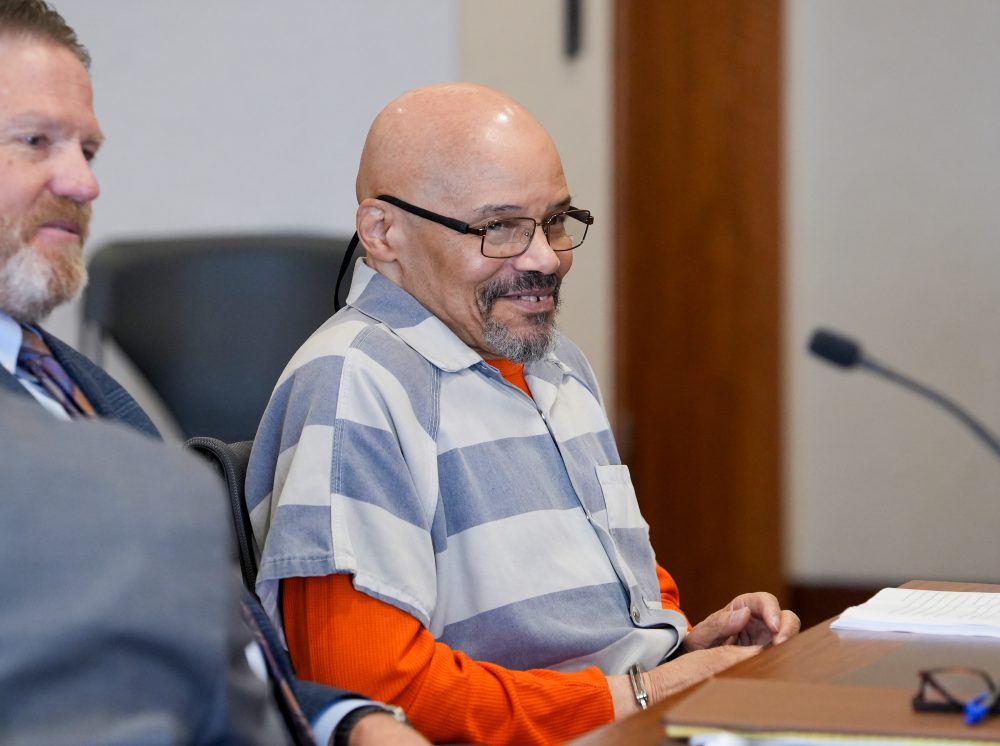

PROVO, Utah — A 70-year-old man who has spent 40 years on Utah’s death row filed a motion Friday requesting dismissal of his murder case following a state Supreme Court order for a new trial based on investigator wrongdoing.
Douglas Stewart Carter received a death sentence in 1985 when jurors convicted him of killing Eva Olesen, who was related to a former Provo police chief. The prosecution’s case relied entirely on Carter’s signed confession and testimony from two witnesses who claimed he boasted about the killing, as no physical evidence connected the Black defendant to the crime scene where the white victim was found.
Carter has consistently maintained his confession was forced from him. The two key witnesses, an undocumented immigrant couple, later revealed that law enforcement officials paid their housing costs, instructed them to provide false testimony, and used deportation threats against them and their child to secure Carter’s conviction.
In 2022, Judge Derek Pullan overturned the conviction, with the Utah Supreme Court upholding that decision last May, citing “numerous constitutional violations” that warranted a new trial. Carter remains incarcerated pending the retrial, with a bond hearing set for June.
“Douglas Carter spent over 40 years on death row for a crime which he, and the evidence, says he did not commit. Legally, enough is enough,” his defense team said in a motion filed Friday.
State prosecutors continue to oppose dismissing Carter’s case.
The latest defense filing claims an investigator concealed evidence that pointed toward alternative suspects, including victim’s spouse Orla Olesen. According to the motion, prosecutors were preparing to charge the husband when a Provo police lieutenant requested they hold off to allow further investigation. The document states Carter became a suspect shortly thereafter.
Neither the Provo Police Department nor Utah County Attorney’s Office responded to requests for comment Friday. Prosecutors have not yet responded to the dismissal motion.
Orla Olesen, who passed away in 2009, told investigators he discovered his wife’s body in their residence, partially clothed with her hands bound. Court records show she suffered 10 stab wounds and a gunshot to the head.
In recent court documents, prosecutors acknowledged uncertainty about whether Provo police still possess the recording of Orla Olesen’s polygraph examination. They also confirmed the state no longer has clothing taken from him during the investigation and lacks information about other potential evidence collected from him.