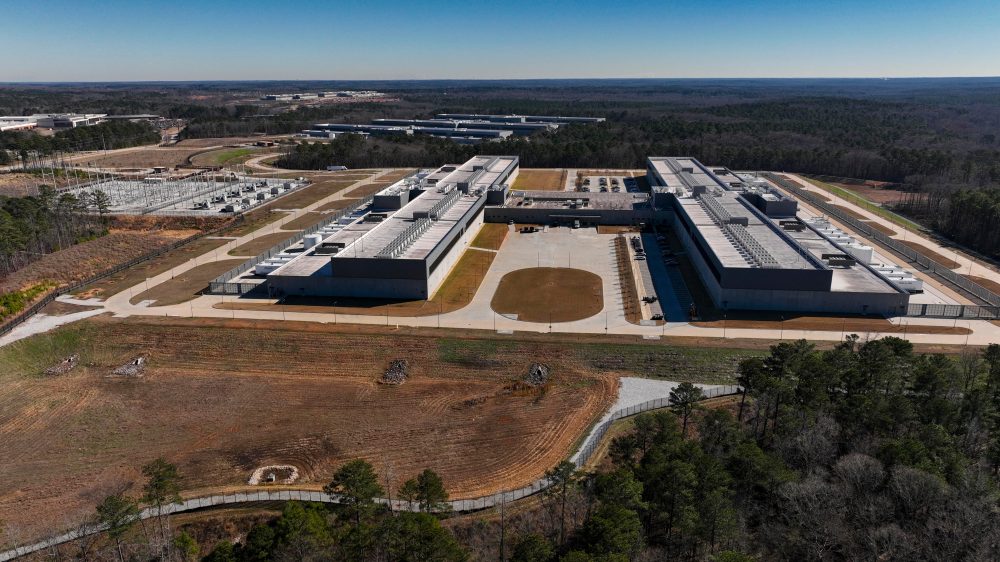

ATLANTA (AP) — After months of deliberation about restricting data center development, Georgia’s legislature concluded its annual session Thursday without enacting any measures to address community concerns.
As election campaigns heat up, state representatives are returning to districts where residents are increasingly frustrated with massive computer facilities that support artificial intelligence operations.
“I think they failed us, that’s what I think,” said Judy Mullis, an activist fighting plans for a data center near Newnan, southwest of Atlanta. “I think they had the opportunity to do the right thing, and they didn’t. I’m so tired of them prioritizing big money.”
The Peach State has emerged as a leading destination for data center construction, driven by power companies seeking electricity sales and tax incentives projected to cost state and local governments almost $3 billion starting July 1.
This rapid expansion has sparked resistance, including in traditionally business-friendly Republican strongholds. Democratic candidates are working to channel this frustration into electoral gains in the competitive state, potentially creating a blueprint for the party’s nationwide midterm strategy.
Previous year’s data center opposition and concerns about climbing electricity costs enabled Democrats to score surprising wins against Republican incumbents in Georgia Public Service Commission races, which oversee utility regulation. This election cycle, they’re targeting the governor’s mansion for the first time in nearly a quarter-century and seeking progress toward controlling the 180-seat state House.
Cyndie Hutchings, another activist, believes local data center resistance could influence election outcomes. She’s campaigning as a Democrat to defeat Vance Smith, a veteran Republican state representative, in a district southwest of Atlanta.
“They tell me that they are lifelong Republican voters, but this has changed the way they’re looking at everything,” Hutchings said.
Mullis described herself as one such voter, explaining she previously supported Republicans but now wants officials who will address data center issues, casting Democratic ballots “for the first time ever” in the utility commission contest.
State legislators never gave serious consideration to demands for halting new data center construction. However, they did examine tighter regulations to shield other electricity consumers from bearing costs associated with these developments.
The Public Service Commission implemented regulations last year that commissioners claimed would safeguard Georgia Power Co. customers from financing generation or transmission infrastructure required for data centers. Simultaneously, commissioners authorized substantial expansion of Georgia Power’s electricity generation capacity, with the company being a Southern Co. subsidiary based in Atlanta.
The power company dismissed rate increase concerns, citing an electricity price freeze and forecasts suggesting data center revenue could help lower future costs.
“Data center growth in our state means large energy users pay more so you pay less,” spokesperson Matthew Kent said in a statement Friday. “Georgia Power is able to leverage that growth to lower costs for everyone.”
However, skeptics maintain that residential and other customers might ultimately bear the financial burden, arguing additional action remains necessary.
“The No. 1 concern that we heard pretty much consistently across the board was the residential ratepayers, they were concerned about costs that would be inflicted on them from the infrastructure investments and data centers and their rates going up based on the basic supply-and-demand principles,” said state Rep. Brad Thomas, a Republican who chaired a special committee looking at resource usage.
One proposal involved codifying existing commission regulations. But Republican state Sen. Chuck Hufstetler called current provisions “extremely weak and doesn’t protect the consumers,” partnering with Democrats earlier in the session to push for stronger protections.
Republican Senate leadership, including Lt. Gov. Burt Jones who is seeking the governorship, blocked this effort by suddenly ending that day’s session, triggering Democratic protests.
Attempts to limit data center tax incentives also failed despite broad legislative interest.
Republican Gov. Brian Kemp rejected legislation ending data center tax breaks in 2024, but the matter gained renewed attention as their value expanded into billions. The House never considered Senate proposals to reduce tax incentives.
Jones faces accusations of favoring data centers due to his family’s ownership stake in a real estate development pursuing these computer facilities. A spokesperson didn’t immediately respond to Friday requests for comment.
Others point to Georgia Power’s political clout or the substantial financial backing behind data centers, which can increase property tax revenue when local governments face pressure to reduce taxes for other property owners.
“They had a choice, and they chose big business,” said Mark Woodall, a lobbyist for the Sierra Club.
Democratic candidates view this as a chance to present themselves as an alternative.
“We need to get people into the state legislature to undo this legislation that’s enabling all of this,” Hutchings said.