
The Georgia legislature approved controversial legislation early Friday morning that would enable property owners to pursue legal action against municipal governments when they believe anti-camping ordinances and federal immigration cooperation requirements are not being properly enforced.
Should Republican Governor Brian Kemp sign the measure into law, citizens could seek financial compensation from local authorities for alleged decreases in property values or costs they incurred due to inadequate enforcement of regulations prohibiting public camping, loitering, and panhandling, as well as policies that limit cooperation with federal immigration officials.
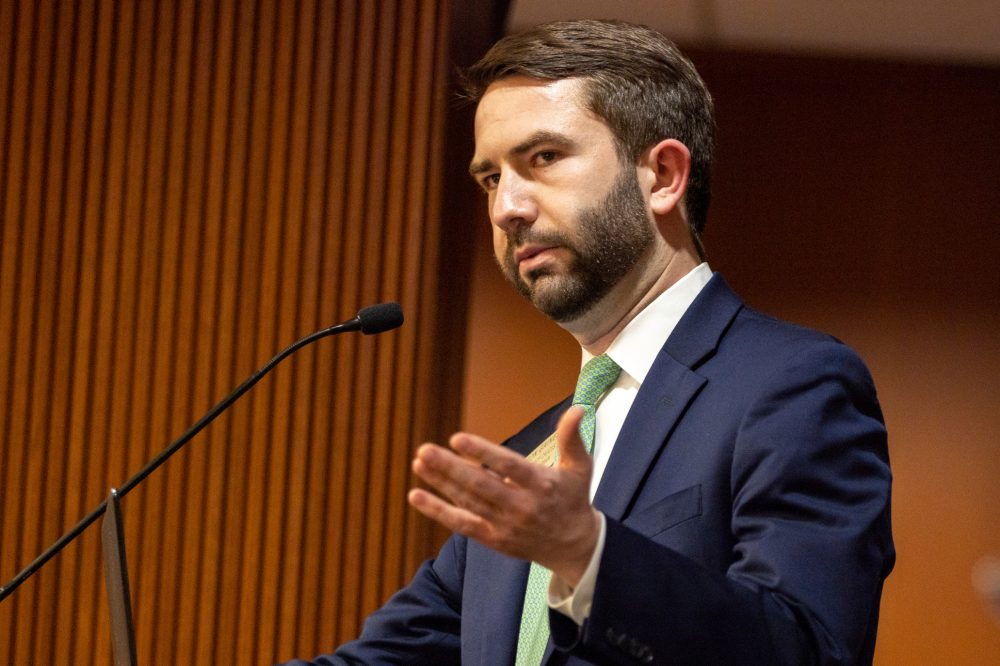
Representative Houston Gaines, an Athens Republican and congressional candidate who sponsored the legislation, emphasized the need to ensure cities follow through on law enforcement. Property and business owners shouldn’t bear financial burdens when municipalities fail to address encampments, he argued.
“Allowing illegal encampments, theft and disorder to flourish is not kindness,” Gaines said. “It’s neglect.”
Democratic legislators and advocates for homeless individuals contend the bill would lead to arrests of people simply for having no place to sleep and would generate baseless litigation funded by taxpayer money. They argue state leaders should focus on housing investments and support services for homeless populations rather than incarceration, which can make securing employment and housing even more difficult.
“This bill is ineffective, cruel, and makes it harder to solve homelessness,” said Jesse Rabinowitz, campaign and communications director with the National Homelessness Law Center. “It’s also a thinly veiled attempt by lawmakers to score cheap political points on the backs of immigrant communities.”
A final amendment added to the bill would also allow individuals to petition courts to compel local governments to comply with restrictions on sanctuary policies.
Democratic state Senator Josh McLaurin described the legislation as “nuclear bad policy,” noting the difficulty of proving in court whether property values declined specifically due to unenforced immigration or homelessness regulations.
“What you’re inviting is a bunch of court cases where homeowners who are aggrieved at the local government can come make spurious claims about causation and have essentially a circus in court, which wastes judges’ time, it wastes juries’ time,” McLaurin said.
Critics also pointed out that local authorities cannot control who sleeps outdoors on any particular evening.
Atlanta city employee Justin Kirnon testified at a committee hearing that the city has achieved significant progress in addressing homelessness, noting that people from other areas often come to Atlanta because of available resources. However, homelessness is not an “issue that you can just police your way out of,” he stated.
“We all agree a lot of things have to be done on this topic, but this isn’t the right approach,” Kirnon said.
“This essentially turns the city’s general fund into a refund pool for any property owner that is dissatisfied with law enforcement’s outcomes when it comes to these particular matters.”
A 2024 Georgia statute requires local police to work with federal agencies to identify and hold immigrants who are in the country illegally, or risk losing state funding. Since then, legislators have examined additional proposals targeting the same population.
“When local governing authorities choose ideology over enforcement, it sends a message that our laws are optional, and when laws are optional, public safety suffers,” said Republican state Senator Clint Dixon Thursday.
Republicans pushed forward Gaines’ legislation last year, just weeks after an individual died when crushed by a bulldozer in his tent during a homeless camp clearing operation in Atlanta, though the bill failed to pass both legislative chambers at that time.
The homeless-related sections of the bill originated from proposals developed by the Cicero Institute, a conservative policy organization headquartered in Texas that has been promoting encampment prohibition policies nationwide.