Author: Admin

  • Salisbury University Lacrosse Player Earns National Weekly Honor

    Salisbury University Lacrosse Player Earns National Weekly Honor

    LOUISVILLE, Ky. – A standout performance against a top-10 opponent has earned Riley Strub from Salisbury University’s men’s lacrosse program national recognition this week.

    The midfielder was selected for the United States Intercollegiate Lacrosse Association (USILA) Division III Team of the Week, officials announced Wednesday afternoon. Strub’s selection comes following his pivotal role in helping the second-ranked Sea Gulls secure a 15-12 victory against tenth-ranked Gettysburg.

    The recognition highlights Strub’s impact as the primary offensive force during the crucial matchup, where his contributions proved instrumental in the team’s success against highly-ranked competition.

  • Iranian Families Face Skyrocketing Food Costs Amid War Fears

    Iranian Families Face Skyrocketing Food Costs Amid War Fears

    TEHRAN, Iran (AP) — Iranian families face a daily struggle at the grocery store as prices continue climbing sharply. Many citizens share images on social platforms showing their diminished shopping baskets as they battle to afford essential items for their households. This financial burden adds to existing concerns about potential military conflict with the United States and ongoing recovery from recent nationwide demonstrations.

    “Everybody is under pressure: merchants, civil servants, laborers,” said Ebrahim Momeni, a 52-year-old retired civil servant. “The weaker class of people is being crushed.”

    International sanctions and poor economic management have plagued Iran’s financial system for years.

    The country saw temporary improvement following a 2015 nuclear agreement that removed numerous sanctions, but President Donald Trump pulled the United States out of that deal in 2018. After returning to office over a year ago, Trump reinstated his “maximum pressure” strategy, broadening sanctions targeting Iran’s banking system and oil exports. His administration added fresh sanctions Wednesday against 30 individuals and entities allegedly supporting Iran’s missile and drone manufacturing, plus illegal petroleum sales.

    This pressure has sped up the collapse of Iran’s national currency, the rial. When the nuclear agreement was established in 2015, the rial exchanged at approximately 32,000 per dollar. By late December, it had fallen to 1.3 million per dollar. Wednesday saw it hit a record low of 1.65 million rials per dollar — worsened by concerns over potential U.S. military action.

    Price increases have exceeded 46% compared to January last year. Financial experts caution that the rial’s rapid deterioration could create a destructive pattern of rising costs and diminished buying power. They predict Iran’s economy — already burdened by significant youth unemployment — will face substantial inflation for years ahead.

    The currency’s dramatic decline helped spark demonstrations that started in late December at Tehran’s central marketplace before spreading across the nation.

    Costs for daily necessities, including food and personal care items, are climbing rapidly.

    Momeni reported earning approximately 700 million rial (roughly $540) monthly. Over just the past month, a kilogram of red meat jumped from 13 million rials ($10) to 22 million rials ($17). During the same timeframe, milk prices doubled from 520,000 rials to 1.1 million per liter, while pasta increased from 340,000 to 570,000 rials per box.

    “Those with lower incomes and fixed salaries are suffering because of the price hikes,” said Farhad Panahirad, a 44-year-old taxi driver. He and his spouse together earn about 600 million rials monthly, he explained.

    Multiple shoppers at Wednesday markets described their strategies for managing increasing financial strain — monitoring social media daily for current pricing information, or shopping during evening hours when some vendors reduce produce prices by half to clear inventory before spoilage.

    With fears that U.S. strikes could happen without warning, Iranians are rushing to buy emergency provisions. This includes flashlights, portable gas stoves, and window tape for blast protection, according to a tool shop owner in central Iran who requested anonymity due to retaliation concerns.

    Some attempt purchasing large quantities of beans, bread, rice and preserved foods despite elevated costs. “I am not happy to buy this much stuff, but my wife said we had to be prepared for uncertainty in the coming days,” said Saeed Ebrahimi, 43, an electrical technician and father of two.

    Even household appliances like washing machines, vacuum cleaners, and refrigerators have seen prices double, Iranian media reports indicate.

    Tehran economist Farbod Molavi noted in the independent Dona-e-Eghtesad publication that elevated prices stem from market uncertainty and increased raw material expenses. Iran faces both economic downturn and widespread joblessness, he noted.

    Official unemployment reached around 7.8% in October, rising from 7.2% during the same 2024 period, with youth unemployment reaching 20%. Approximately 24 million citizens fall between ages 15 to 34, government data shows.

    Recognizing public hardship, the government began distributing monthly payments of 10 million rials in January to roughly 70 million people, representing about 75% of the population, for food purchases. Officials have pledged to boost these payments if prices continue rising.

    However, the economic pressure seems set to persist. Trump has warned of strikes against Iran unless it accepts a new agreement limiting its nuclear activities. He has assembled the region’s largest concentration of naval vessels and aircraft in decades. Both nations have completed two negotiation rounds recently, with a third scheduled for Thursday in Geneva.

    Panahirad, the taxi driver, expressed doubt that negotiations will help those struggling to afford food. “(Trump) is bullying them, to some extent. After all, he is a superpower and says what he wishes must be done,” he said.

    “Wherever you go now people are talking about war. If you go to a bakery to buy bread you see people talking about war,” said Momeni. “This state of limbo is worse than war.”

  • Corn Farmers Flood Congressional Phone Lines Demanding Year-Round E15 Action

    Corn Farmers Flood Congressional Phone Lines Demanding Year-Round E15 Action

    Agricultural producers across the country launched a coordinated telephone campaign Wednesday morning, targeting members of Congress with a unified demand for action on E15 ethanol fuel policy.

    The corn farming community organized the phone blitz to pressure lawmakers into supporting year-round sales of E15, a gasoline blend containing 15% ethanol that is currently restricted during summer months.

  • Seed Company Launches Nationwide Study to Help Corn Farmers Boost Yields

    Seed Company Launches Nationwide Study to Help Corn Farmers Boost Yields

    Agricultural researchers are launching an extensive nationwide study designed to help corn farmers maximize their harvests through improved seed choices and farming practices.

    According to a data analyst involved in the project, the expanded research initiative could provide valuable guidance to farmers looking to optimize their corn production. Jim Schwartz, who serves as director of research, agronomy, and PFR at Beck’s Hybrids, explained that experimental plots nationwide will evaluate 18 distinct management strategies for each corn hybrid variety.

    “We’re looking at different nitrogen rates,” Schwartz stated, describing one aspect of the comprehensive testing program that aims to determine the most effective approaches for managing corn crops.

    The research focuses on two critical areas that significantly impact farm profitability: selecting the right seed varieties and implementing optimal crop management techniques. The findings are expected to provide farmers with data-driven insights to enhance their corn yield performance across different growing conditions.

  • Rehoboth Beach Delays Street Parking Snow Removal Due to Storm Response

    Rehoboth Beach Delays Street Parking Snow Removal Due to Storm Response

    Rehoboth Beach officials announced they cannot provide a timeframe for when snow will be cleared from public street parking spaces as city workers focus on more urgent storm recovery tasks.

    Municipal crews are currently prioritizing the removal of fallen trees, supporting Delmarva Power’s efforts to restore electricity, and providing assistance for the Polar Plunge event following the significant snowfall that hit the area.

    City officials acknowledged the importance of street parking availability to residents and visitors, stating they will address snow removal from these areas once higher-priority storm response duties are completed.

    The city expressed appreciation for residents’ understanding during recovery efforts from what they described as an unprecedented winter weather event.

  • Delaware Tennis Star Gorman Takes Home CUSA Weekly Honors

    Delaware Tennis Star Gorman Takes Home CUSA Weekly Honors

    The University of Delaware women’s tennis program is celebrating after one of its standout players received conference recognition this week.

    Amelia Gorman has been selected as the Conference USA Women’s Tennis Athlete of the Week for the period ending February 25, officials announced Wednesday from the conference headquarters in Dallas.

    The Blue Hens also claimed additional honors as Gorman partnered with teammate Navya Vadlamudi to secure the CUSA Women’s Tennis Doubles Athletes of the Week award.

    The weekly recognition highlights the strong performance from Delaware’s tennis program as the spring season continues. Both individual and doubles achievements demonstrate the team’s competitive level within Conference USA play.

  • Mexico Lawmakers Vote to Cut Standard Work Week from 48 to 40 Hours

    Mexico Lawmakers Vote to Cut Standard Work Week from 48 to 40 Hours

    MEXICO CITY — Mexico’s national legislature has given final approval to a plan that will gradually shorten the country’s standard work week from 48 to 40 hours over the next several years.

    The constitutional amendment, championed by President Claudia Sheinbaum, received overwhelming support in the lower house early Wednesday morning, passing by a margin of 411 to 58. The upper chamber had already given its endorsement earlier this month.

    The legislation now moves to Mexico’s state-level assemblies for final ratification, where Sheinbaum’s political party holds commanding majorities.

    Rather than an immediate change, the new work schedule will be phased in over four years, cutting two hours annually starting in 2027 until reaching the 40-hour target in 2030. Legislators chose to keep the current structure of one rest day for every six work days, turning down a proposal that would have mandated two weekly rest days.

    Government estimates suggest the policy shift will directly impact 13.5 million Mexican workers, though some experts believe the actual number could be significantly higher.

    “The gradual implementation should help businesses adjust without hitting their finances,” said Oscar Ocampo from the Mexican Institute for Competitiveness.

    The reform will align Mexico with workplace standards already adopted across much of Latin America, Europe, and Asia, where some nations are even testing shortened four-day work schedules.

  • Trump Touts Economic Success, But Americans Remain Pessimistic About Finances

    Trump Touts Economic Success, But Americans Remain Pessimistic About Finances

    WASHINGTON — During his inaugural State of the Union address, President Donald Trump painted a picture of economic prosperity with declining inflation and robust job creation, but polling data reveals Americans hold a far more pessimistic outlook on the nation’s financial health.

    Just hours before Trump’s Tuesday evening speech, The Conference Board published consumer confidence data showing economic optimism remains at historically weak levels, hovering near the depths seen during the COVID-19 recession.

    The February confidence index registered 91.2, significantly lower than the four-year high of 112.8 recorded in November 2024. Survey respondents expressed concern about elevated costs and limited employment opportunities.

    Additional research supports these findings: Trump’s economic stewardship receives approval from only 39% of Americans, based on the most recent Associated Press-NORC Center for Public Affairs Research poll. The University of Michigan’s consumer sentiment measurements also remain stuck at levels typically associated with economic downturns.

    Trump attempted to counter this pessimism by highlighting positive economic indicators, a strategy previously employed unsuccessfully by President Joe Biden. However, Tuesday’s address contained discrepancies between presidential assertions and the financial realities confronting many citizens.

    “Inflation is plummeting, incomes are rising fast, the roaring economy is roaring like never before,” Trump declared.

    However, current economic expansion falls short of truly “roaring” growth patterns.

    The economy grew 2.2% in the previous year, declining from Biden’s final year rate of 2.8% and 2023’s 2.9% expansion. While Americans expressed widespread frustration with Biden-era price increases that drove inflation to 9.1% in 2022 — a four-decade record — current growth remains modest.

    Historical “roaring” economies typically resemble the late 1990s, when expansion exceeded 4% for four consecutive years, or the 1980s, which saw growth of 3.5% or higher for six straight years.

    While inflation has decelerated recently, Americans continue identifying high prices as their primary economic concern in surveys.

    Trump accurately stated that core inflation, excluding volatile food and energy sectors, reached a five-year low in January. Nevertheless, alternative price measurements indicate inflation remains persistently high: The Federal Reserve’s preferred core price gauge showed 3% year-over-year growth in December, exceeding the Fed’s 2% objective. This measure assigns less significance to housing costs, which have moderated, compared to Trump’s cited metric.

    Nearly half of University of Michigan survey participants in February “spontaneously mentioned high prices eroding their personal finances,” according to survey director Joanne Hsu.

    While Trump noted egg prices have dropped substantially from peak levels — which is accurate — most essential items Americans depend on, including groceries, housing, and utilities, cost significantly more than five years ago. Electricity prices alone increased 6.3% over the past year.

    Trump’s trade tariffs have elevated costs for numerous imported goods, encompassing furniture, automotive components, tools, and clothing. Grocery items like ground beef, coffee, and bananas have experienced sharp price increases recently, with ground beef costs rising 17%.

    Consumer pessimism likely stems partly from last year’s dramatic hiring slowdown. Employers created merely 181,000 positions in 2025 — approximately 15,000 monthly — marking the weakest job growth outside recession periods since 2002.

    Despite Trump’s commitment to revitalizing American manufacturing, factories eliminated 108,000 positions in 2025, adding to the 202,000 jobs lost during Biden’s final two years. Automotive and parts manufacturing has shed nearly 74,000 positions over two years.

    Trump’s tariffs bear partial responsibility, forcing manufacturers to pay premium prices for imported materials and components. High interest rates have also damaged manufacturing over recent years. Many companies hired extensively — perhaps excessively — during 2021 and 2022 as the economy recovered from pandemic restrictions. Automation additionally reduces factory workforce requirements.

    January hiring showed unexpected strength with 130,000 new positions, and manufacturing added jobs for the first time in over a year.

    Trump suggested his tariffs directly fuel American economic growth, though most citizens likely experience minimal benefits.

    “Moving forward, factories, jobs, investment and trillions and trillions of dollars will continue pouring into the United States of America,” Trump stated.

    Trump again portrayed tariffs as costless, claiming foreign nations pay them. Actually, U.S. importers pay these fees and frequently transfer costs to customers through higher prices. Foreign companies might suffer if they reduce prices to maintain American market share, but import prices haven’t decreased significantly, indicating overseas exporters aren’t experiencing substantial impact.

    Harvard University economist Alberto Cavallo and colleagues found American consumers absorb 43% of increased tariff costs, with U.S. businesses covering most remaining expenses.

    Trump’s comprehensive import taxes haven’t achieved meaningful progress toward reducing America’s substantial trade deficit — the difference between exports and imports.

    The U.S. goods trade deficit in products like automobiles and appliances — the target of Trump’s protectionist measures — reached a record $1.24 trillion last year, increasing 2% from 2024.

  • Texas Senate Race Breaks Spending Records with $110 Million in Campaign Ads

    Texas Senate Race Breaks Spending Records with $110 Million in Campaign Ads

    A record-breaking $110 million has been spent on television advertisements and reserved airtime for Texas’ U.S. Senate primary contest, making it the most expensive Senate primary in American history according to advertising tracking company AdImpact.

    The massive financial investment reflects the high-stakes battle between Democratic candidates James Talarico and U.S. Representative Jasmine Crockett, while Republican Senator John Cornyn fights to survive a primary challenge that could end his decades-long political career.

    This unprecedented spending in the Lone Star State offers a glimpse of the enormous sums expected to flow into congressional races nationwide this year as both parties battle for control of the Senate.

    On the Democratic side, Talarico has emerged as a fundraising powerhouse, collecting more than $21 million through last week’s reporting deadline. His opponent Crockett has brought in nearly $8.6 million, though most of that money came from transferring funds from her House campaign war chest after jumping into the Senate race in December, three months behind Talarico’s entry.

    Talarico released his closing television advertisement Wednesday before Tuesday’s primary, taking aim at former President Trump’s immigration policies and characterizing Immigration and Customs Enforcement as “secret police.”

    The ad’s aggressive tone marks a shift from Talarico’s earlier strategy of appealing to Republican voters by emphasizing his Christian beliefs and values.

    “We can transform this broken political system,” Talarico declared at a campaign event Tuesday in Tyler, located in northeastern Texas where Trump won decisively in 2024.

    Crockett has branded herself as the more combative candidate willing to take on tough fights.

    Texas Democrats haven’t captured a Senate seat since 1988, but Cornyn faces his most challenging primary battle yet against Texas Attorney General Ken Paxton and U.S. Representative Wesley Hunt.

    Independent political organizations account for more than $75 million of the total spending, with the overwhelming majority supporting Republican candidates, AdImpact data shows.

    Groups backing Cornyn’s quest for a fifth Senate term have invested nearly $57 million. The organization Texans for a Conservative Majority alone has poured over $22 million into negative advertisements targeting Hunt.

    Cornyn’s official campaign has collected more than $11 million, while two additional organizations using his name have contributed another $10 million to his cause.

    Political observers expect Paxton to advance to a May 26 runoff election despite running a relatively quiet campaign until recently and facing ongoing legal troubles.

    Cornyn and Republican Senate leadership fear the party may need to invest tens of millions more to defend the Texas seat if Paxton becomes the nominee.

    “It is a strong possibility we cannot hold Texas if John Cornyn is not our nominee,” Republican Senator Tim Scott of South Carolina warned Wednesday during an appearance on “Fox & Friends.”

    Not all Republicans share that concern. Paxton attended President Trump’s State of the Union address Tuesday as the invited guest of Texas Republican Representative Troy Nehls.

    Campaign finance reports show Paxton has raised approximately $6 million, while Hunt has collected about $2 million, plus roughly $3 million remaining in his House campaign account when he entered the Senate race in October.

    The combined $19 million raised by all Republican candidates falls short of Talarico’s individual fundraising total, highlighting the critical role outside groups will play in helping the GOP maintain control of the seat.

    Talarico received a significant financial windfall this month, with his campaign reporting $2.5 million in donations within 24 hours after late-night television host Stephen Colbert canceled a scheduled interview on February 16, citing concerns from CBS legal advisors.

    During a recent campaign appearance, Crockett reminded supporters of her 2020 Texas House race where opponents outspent her campaign by a 5-to-1 margin before she won her current Dallas-area congressional seat two years later.

    “People said, ‘There’s no way she’s going to win,’” Crockett said, becoming emotional. “I show up, authentically me. That makes some people cringe, but the people are tired of politics as usual.”

  • US Slaps Fresh Sanctions on Iran Days Before Nuclear Negotiations Begin

    US Slaps Fresh Sanctions on Iran Days Before Nuclear Negotiations Begin

    WASHINGTON — Days before critical nuclear negotiations are set to begin, the United States has levied fresh sanctions against Iran, targeting 30 individuals, businesses and vessels allegedly connected to the country’s weapons programs and illegal oil trade.

    The penalties were announced Wednesday as President Donald Trump has deployed what officials describe as the most significant concentration of American naval and air power in the Middle East in recent decades, while maintaining the threat of military intervention to force Iran to abandon its nuclear ambitions.

    Diplomatic talks involving U.S. representatives, including special envoy Steve Witkoff, and Iranian officials are planned for Thursday in Geneva, with Oman serving as an intermediary.

    The Treasury Department’s Office of Foreign Assets Control rolled out restrictions against vessels it claims are part of Iran’s “shadow fleet” — aging tankers used to secretly transport oil for nations under heavy international sanctions.

    The sanctions also strike at drone production facilities, notably Qods Aviation Industries, which according to Treasury officials has provided unmanned aircraft “to all branches of the Iranian military and buyers in Africa and Latin America.”

    These financial restrictions block access to any American-held assets and prohibit U.S. businesses and individuals from conducting transactions with the sanctioned entities. However, their practical impact may be limited since many targets likely have minimal ties to American financial institutions.

    “Treasury will continue to put maximum pressure on Iran to target the regime’s weapons capabilities and support for terrorism, which it has prioritized over the lives of the Iranian people,” Treasury Secretary Scott Bessent said in a statement.

    The Trump administration maintains that Iran must be prevented from acquiring nuclear weapons capability, escalating pressure following American military strikes in June against three Iranian nuclear facilities.

    Iranian officials have consistently stated their nuclear activities are for peaceful purposes. Prior to the June attacks, the nation had been processing uranium to 60% purity — just a technical step away from the 90% enrichment level needed for weapons.

    “We wiped it out and they want to start all over again. And they’re at this moment again pursuing their sinister ambitions,” Trump said during his State of the Union speech Tuesday night. “We are in negotiations with them. They want to make a deal, but we haven’t heard those secret words: We will never have a nuclear weapon.”

  • Federal Agents Execute Search Warrants at LA School District, Superintendent’s Home

    Federal Agents Execute Search Warrants at LA School District, Superintendent’s Home

    Federal agents executed search warrants Wednesday at both the Los Angeles Unified School District’s main offices and the home of Superintendent Alberto Carvalho as part of an active federal investigation.

    A source with knowledge of the investigation confirmed to The Associated Press that FBI officials carried out the warrant searches Wednesday, though they requested anonymity to discuss the ongoing probe. Authorities have not revealed what specific allegations or criminal activity they are investigating.

    Neither the school district nor Carvalho’s office provided immediate responses to requests for comment about the federal action.

    Television news cameras captured footage of federal agents wearing FBI identification outside Carvalho’s residence in San Pedro, a neighborhood located approximately 20 miles south of downtown Los Angeles. By mid-morning, no agents were visible at the district’s main administrative building.

    Los Angeles Unified serves as the country’s second-largest school system, educating more than 500,000 students across over two dozen municipalities throughout the region.

    Carvalho assumed leadership of the district in February 2022. Prior to his Los Angeles appointment, he led Miami-Dade County Public Schools—Florida’s largest district—for 13 years from 2008 to 2021, where he earned recognition for boosting graduation rates and student achievement.

  • Ukraine: Over 1,700 Africans Deceived Into Fighting for Russia

    Ukraine: Over 1,700 Africans Deceived Into Fighting for Russia

    Ukrainian officials revealed Wednesday that Russian forces have deceived more than 1,700 African citizens into joining their military campaign, according to Ukraine’s Foreign Minister Andrii Sybiha.

    During a joint press conference with Ghana’s foreign minister in Kyiv, Sybiha disclosed that Ukrainian intelligence shows 1,780 African nationals are currently serving in Russia’s military ranks. These fighters represent citizens from 36 nations across the African continent.

    “We clearly see that Russia is trying to drag African citizens into a deadly war,” Sybiha stated during the briefing. He indicated that Ukrainian officials are working with African governments to combat these recruitment schemes.

    Ghana’s Foreign Minister Samuel Okudzeto Ablakwa described the African fighters as victims of elaborate deception, explaining they were targeted through dark web platforms with promises of legitimate employment opportunities.

    “They have no security background. They have no military background. They have not been trained,” Ablakwa explained. “They were just lured and deceived, and then put on the frontlines.”

    Russian officials have previously rejected allegations of illegally recruiting African nationals for military service. However, documented cases of African men being misled with job offers only to end up in combat zones have increased significantly in recent months, straining diplomatic relationships between Moscow and several African nations.

    Ablakwa expressed Ghana’s support for Ukraine and advocated for a ceasefire to end the conflict, which reached its fourth anniversary on Tuesday. He also announced plans to request Ukrainian President Volodymyr Zelenskyy’s assistance in securing the release of two Ghanaian prisoners of war captured while fighting for Russian forces.

    As Ghana prepares to lead the African Union next year, Ablakwa pledged to implement awareness campaigns designed to expose trafficking networks that deceive Africans into joining Russian military operations.

  • Senate Democrat Pushes House to Revote on Aviation Safety Legislation

    Senate Democrat Pushes House to Revote on Aviation Safety Legislation

    WASHINGTON – A prominent Democratic senator is pushing the House of Representatives to schedule another vote on aviation safety legislation that came up just one vote short of passage despite Pentagon resistance.

    The House cast ballots with 264 members supporting and 133 opposing the ROTOR Act on Wednesday. The legislation had previously received unanimous approval from the Senate in December. The bill was drafted in response to a tragic mid-air collision between an American Airlines regional aircraft and an Army Black Hawk helicopter in Washington D.C. airspace that resulted in 67 fatalities. Senator Maria Cantwell is advocating for the House to hold another vote on the measure.

    Because the legislation was considered under expedited procedures, it required approval from two-thirds of House members to advance – missing that threshold by a single vote.

  • Vancouver Whitecaps Lock Up Two Key Players with Multi-Year Deals

    Vancouver Whitecaps Lock Up Two Key Players with Multi-Year Deals

    Vancouver Whitecaps have locked in two crucial players for the long term, announcing new contract extensions for defender Tristan Blackmon and midfielder Andres Cubas.

    Blackmon, who captured the 2025 MLS Defender of the Year award, has committed to stay with the club through the 2029-30 campaign.

    Meanwhile, Cubas has agreed to terms that will keep him in Vancouver through 2027-28, with the midfielder no longer taking up a designated player roster spot.

    The 29-year-old Blackmon enjoyed a standout campaign last season, earning both All-Star recognition and a spot on the Best XI team as Vancouver made impressive runs to both the MLS Cup and Concacaf Champions Cup championship matches.

    Throughout his MLS career spanning time with Los Angeles FC from 2018-2021 and now Vancouver, Blackmon has contributed seven goals and seven assists across 173 league appearances.

    “Since the day he arrived, Tristan has consistently pushed himself and grown into one of the league’s top defenders,” sporting director Axel Schuster said. “He has delivered countless memorable moments for our club, and we are excited to extend his contract and continue building together here in Vancouver.”

    Cubas, also 29 years old, has tallied one goal and three assists over 97 MLS appearances since arriving at the Whitecaps in 2022.

    “Andres embodies everything we value in our group,” Schuster said. “He is driven, relentless in his work ethic, and a true leader in our locker room, setting the standard for our younger players. On the pitch, he has been integral to our success and ranks among the very best in the league at his position.”

    Both players bring international experience to the club, with Cubas earning 32 appearances for Paraguay’s national team and Blackmon having represented the United States Men’s National Team twice.

  • Deadly Attacks in Nigeria Leave 25 Dead in Twin Village Raids

    Deadly Attacks in Nigeria Leave 25 Dead in Twin Village Raids

    Armed militants carried out deadly coordinated strikes on two Nigerian villages Tuesday evening, leaving at least 25 people dead and multiple homes destroyed, according to local officials and witnesses.

    The simultaneous assaults targeted Kirchinga village in Madagali district and Garaha in the neighboring Hong area, both located in Adamawa State in northeastern Nigeria. These communities sit along the borders of Sambisa Forest, a known stronghold for Boko Haram and Islamic State West Africa Province militants.

    Village leader Abubakar Lawan Kanuri from Kirchinga explained to Reuters that the attackers wore military clothing when they arrived Tuesday night, causing residents to initially believe they were government troops conducting routine patrols. Following the assault on his community, authorities recovered 18 bodies.

    The second attack in Garaha claimed seven lives when militants riding more than 50 motorcycles descended on the village and launched an assault on a nearby military installation, according to local resident Musa Isa, who said he “narrowly escaped” the violence.

    Isa described how the attackers approached from multiple angles before striking the military facility, where they killed three soldiers. Four civilians attempting to flee were also shot dead, and militants set fire to a local school. Many survivors have since evacuated to Mubi, the closest major town.

    Adamawa State’s Governor Ahmadu Umaru Fintiri issued a strong condemnation of the violence through his spokesperson, calling the incidents “cowardly acts of terrorism.” The governor pledged not to “let terrorists undermine our efforts to restore peace and stability” in the region.

    These latest attacks underscore the persistent security threats facing northeastern Nigeria, which has remained the center of a 17-year Islamic extremist insurgency despite ongoing military operations aimed at restoring stability to the area.

  • Salisbury University’s Miller Named Top Scholar-Athlete, Two Earn All-Conference

    Salisbury University’s Miller Named Top Scholar-Athlete, Two Earn All-Conference

    SALISBURY, Md. – Two standout players from Salisbury University’s women’s basketball team have received top recognition from the Coast-to-Coast Conference for their exceptional performance both on the court and in the classroom.

    Nicole Miller has been honored with the prestigious Scholar-Athlete of the Year award while also earning a place on the All-Conference First Team. Her teammate Abby Plaugher joined Miller on the First Team, giving the Sea Gulls a pair of players among the conference’s elite.

    The dual recognition highlights the program’s success in developing student-athletes who excel academically while competing at the highest level of collegiate basketball. Miller’s Scholar-Athlete honor particularly emphasizes her ability to balance rigorous academic demands with athletic excellence.

    The Coast-to-Coast Conference selections recognize the top performers from member institutions across the region, making these honors a significant achievement for the Salisbury women’s basketball program.

  • Sidney Crosby Out 4 Weeks with Olympics Injury

    Sidney Crosby Out 4 Weeks with Olympics Injury

    Pittsburgh Penguins star Sidney Crosby faces at least a month on the sidelines after sustaining a lower-body injury while representing Canada at the Winter Olympics, the team announced Wednesday.

    The injury occurred during last Wednesday’s quarter-final match in Milan when the 38-year-old captain collided with Czech defender Radko Gudas. Crosby was forced to leave the game during the second period and did not return to action.

    The veteran forward, who delivered Canada’s overtime victory in the 2010 Vancouver Olympics and later led his nation to back-to-back gold medals in Sochi, was unable to participate in Canada’s semi-final victory against Finland. He also sat out the championship game, which Canada lost in overtime to the United States, though he appeared on ice in uniform for the medal ceremony.

    This marked the first Winter Olympics to include NHL talent since 2014. Various obstacles had previously prevented league participation, including financial concerns over insurance and travel expenses, worries about schedule conflicts, injury risks to star players, and pandemic-related complications.

    Selected first overall by Pittsburgh in the 2005 NHL Draft, Crosby has captured three Stanley Cup titles with the Penguins. His individual honors include two Conn Smythe Trophies for playoff excellence and two Hart Memorial Trophies as the league’s most valuable player.

  • Agricultural Giant Corteva Plans to Split Into Two Companies This Fall

    Agricultural Giant Corteva Plans to Split Into Two Companies This Fall

    Agricultural chemicals giant Corteva announced Wednesday that it plans to complete its previously disclosed company division by the fourth quarter of 2024, creating two separate publicly traded entities.

    The corporation revealed late in 2023 that it intended to divide its seed operations from its pesticide divisions in an effort to create more focused strategic direction for each business segment.

    Speaking at the BofA Global Agriculture and Materials Conference, Corteva’s Chief Executive Chuck Magro indicated that the company will reveal the headquarters locations, top management teams, and chief executive officer for the restructured Corteva during the first six months of 2024.

    Company leadership expressed confidence about the crop protection sector’s outlook, pointing to consistent demand increases and opportunities for additional industry consolidation.

    “We’re seeing strong demand, essentially around the world, but there’s going to be some continued headwinds, in price, but volume should more than offset it,” a senior executive stated during the conference presentation.

    The agricultural company maintains a $9 billion crop protection development pipeline, featuring six active compounds and additional biological products scheduled for market introduction in the coming timeframe.

    “So the set up for our business is really strong,” the executive added.

    According to Corteva, favorable policy developments in the United States may provide benefits not only for the domestic soybean industry but also for canola and mustard crop markets.

  • Lawyers Push to Slow Down Bayer’s $7.25B Roundup Settlement Review

    Lawyers Push to Slow Down Bayer’s $7.25B Roundup Settlement Review

    Attorneys representing close to 20,000 individuals who filed lawsuits against Bayer regarding alleged harm from its Roundup herbicide asked a Missouri court Wednesday to postpone consideration of the German corporation’s massive $7.25 billion nationwide settlement proposal. The legal teams contend that expediting the process would harm the rights of numerous cancer patients and their loved ones.

    According to court documents filed in St. Louis state court, the lawyers stated the settlement agreement should not receive expedited treatment for potential preliminary approval scheduled for March 4, just fifteen days following the settlement announcement.

    This legal challenge represents the first significant coordinated opposition to Bayer’s efforts to settle the majority of approximately 65,000 outstanding Roundup litigation cases pending in both state and federal courtrooms across the nation.

  • Dairy Market Sees Gains Wednesday with Most Products Trading Higher

    Dairy Market Sees Gains Wednesday with Most Products Trading Higher

    Most dairy commodity values climbed Wednesday during trading sessions at the Chicago Mercantile Exchange, with several key products posting notable increases.

    Dry whey maintained its position at $0.6375 per pound with no trading activity recorded at that level. Forty-pound blocks of cheese gained $0.0425 to reach $1.6025, supported by two transactions at $1.58 and $1.59. Cheese barrels experienced a stronger rise of $0.0700 to settle at $1.56, though no actual sales occurred at that price point.

    Butter values advanced $0.0225 to $1.8350 per pound without any recorded transactions. Nonfat dry milk also increased by $0.0225 to finish at $1.6725, with two sales completed at the $1.67 level.

    The upward movement in dairy commodities reflects ongoing market dynamics affecting milk product pricing nationwide.

  • New Castle County Man Arrested After Bellefonte Hatchet Attack

    New Castle County Man Arrested After Bellefonte Hatchet Attack

    New Castle County police have taken a suspect into custody after a violent early morning attack involving a hatchet left a young man seriously injured in the Bellefonte neighborhood.

    The incident unfolded around 4:00 a.m. on Tuesday, February 24, 2026, when law enforcement officers were dispatched to the 500 block of Maple Avenue following reports of someone being hurt. Emergency responders arrived to discover a 20-year-old man suffering from a severe, gaping laceration.

    The New Castle County Division of Police confirmed that an arrest has been made in connection with the assault, though additional details about the suspect and circumstances surrounding the attack have not yet been released.

    The investigation into this violent incident remains ongoing as authorities work to piece together what led to the hatchet assault in the residential area.

  • Harvard Professor Larry Summers Steps Down Amid Epstein Scandal Fallout

    Harvard Professor Larry Summers Steps Down Amid Epstein Scandal Fallout

    Harvard University will lose one of its prominent faculty members as Larry Summers, who previously served as U.S. Treasury Secretary, plans to step down from his teaching position when the current academic year concludes, according to a Wednesday report from the New York Times.

    The departure comes as Harvard continues to grapple with ongoing controversy surrounding Summers’ past associations with Jeffrey Epstein, the deceased financier who faced conviction on sex trafficking charges.

    Summers’ decision to leave the prestigious university marks another chapter in the extended repercussions stemming from various academic and business leaders’ connections to Epstein, whose criminal activities have continued to impact institutions and individuals even after his death in federal custody.

  • Agricultural Broadcaster Reflects on FFA Legacy Spanning Four Generations

    Agricultural Broadcaster Reflects on FFA Legacy Spanning Four Generations

    For one agricultural broadcaster, the iconic blue corduroy jacket represents far more than professional expertise—it symbolizes a deep family tradition spanning four generations. This media professional wore the distinctive FFA uniform during high school, continuing a legacy established by their sister, father, and grandfather before them.

    The broadcaster’s involvement with the Future Farmers of America extended beyond high school, participating as a collegiate member at Western University. This personal experience with the organization provides authentic perspective when covering agricultural topics and youth development stories.

    The journey from student agriculture enthusiast to professional communicator demonstrates how FFA membership can create pathways to diverse career opportunities while maintaining strong connections to farming communities and agricultural advancement.

  • Penguins Star Crosby Sidelined After Olympic Injury

    Penguins Star Crosby Sidelined After Olympic Injury

    PITTSBURGH — The Pittsburgh Penguins face a significant challenge in their quest for the playoffs as they’ll be without their star player Sidney Crosby.

    On Wednesday, the team announced they’ve added their veteran captain to the injured reserve list. Crosby suffered a lower-body injury while competing for Team Canada at the Milan Cortina Olympic Games.

    The veteran forward was injured during the second period of Canada’s quarterfinal victory against Czechia. While Canadian officials initially hoped their captain could return to action, Crosby remained sidelined for both the semifinal victory over Sweden and the championship game defeat to the United States.

    While Crosby must sit out a minimum of one week, team officials expect his absence will likely extend well beyond that timeframe.

    The timing couldn’t be more challenging for Pittsburgh, as the team currently sits in second place within the Metropolitan Division. The Penguins are working toward their first playoff appearance since the 2022 season.

    This season, Crosby has delivered his trademark excellence on the ice. He tops Pittsburgh’s roster with 27 goals, 32 assists, and 59 total points, maintaining his remarkable streak of averaging at least one point per game — a record that now spans 21 consecutive seasons.
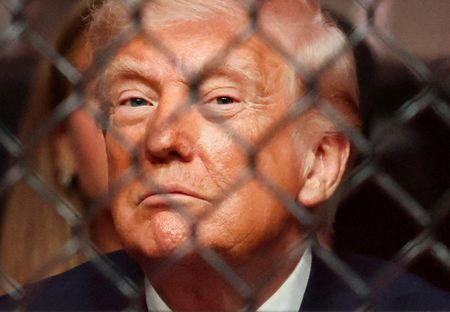
    The injury creates additional pressure as Pittsburgh faces a demanding schedule following the Olympic break. The team returns to action Thursday night at home against New Jersey, beginning a grueling stretch of 13 games over just 24 days.

  • Maria Grazia Chiuri Debuts at Fendi with Fur-Heavy Collection and Celebrity Audience

    Maria Grazia Chiuri Debuts at Fendi with Fur-Heavy Collection and Celebrity Audience

    MILAN (AP) — Maria Grazia Chiuri unveiled her inaugural collection as Fendi’s creative director during Milan Fashion Week on Wednesday, presenting a cold-weather lineup that ranged from practical daily wear to luxurious evening pieces, with fur-heavy outerwear taking center stage.

    The runway show attracted numerous celebrities, with Uma Thurman sporting a timeless white shirt beneath a dark jacket and Jessica Alba wearing a double-breasted suit. Their outfits mirrored styles featured in the collection.

    Also attending were Dakota Fanning and Monica Bellucci, alongside several K-pop celebrities, including Fendi brand ambassador Bang Chan. Outside the venue, hundreds of K-pop enthusiasts gathered with handmade posters and artwork of their beloved performers, while roughly a dozen anti-fur demonstrators protested across the street.

    Founded a hundred years ago in Rome as a fur and leather goods company, Fendi showcased its traditional fur expertise throughout the collection, displaying everything from bomber jackets to patchwork coats. Delicate fur trim enhanced silk dresses and transparent beaded evening wear, while fur-lined hoods decorated parkas and luxurious collars topped trench coats.

    The show opened with dark blazers and overcoats styled over pants, relaxed dresses, and see-through lace pieces. Lace patterns appeared on laser-cut leather garments, paired with crisp white collars and delicate bracelets.

    Brief appearances of bohemian floral designs and a transparent Art Deco-inspired dress added variety, while touches of denim and animal patterns broke up the predominantly black and navy color scheme.

    Chiuri’s debut ranked among the most eagerly awaited during this Milan Fashion Week, which focused primarily on women’s collections. Her fashion journey began at Fendi as a handbag designer before she became co-creative director at Valentino and later creative director at Dior.

    The recent wave of creative director changes in European fashion has been predominantly male-led, with Chiuri joining a select group of women assuming leadership roles at major fashion houses. This group includes Louise Trotter, presenting her second Bottega Veneta collection, and Meryll Rogge, making her Marni debut this week.

    Silvia Venturini Fendi, who stepped down from her creative director position last fall, occupied a front-row seat for Wednesday’s presentation.

    “It’s very moving,” Venturini Fendi commented, noting that until this season she had always been working behind the scenes during shows. “It’s the first time I have watched a Fendi runway show.”

  • Cattle Trading Remains Sluggish as Beef Prices Climb Midweek

    Cattle Trading Remains Sluggish as Beef Prices Climb Midweek

    Wednesday’s livestock trading activity remained sluggish across cattle markets, with buyers and sellers yet to establish clear price parameters. Industry observers expect meaningful trading volumes won’t materialize until later in the week, likely Thursday or Friday.

    Boxed beef values showed upward momentum during midday trading, with Choice grade cuts climbing $1.92 to reach $379.35 per hundredweight. Select grade beef also posted gains, advancing 75 cents to $366.76. The price differential between Choice and Select grades currently stands at $12.59.

  • Norway’s 89-Year-Old King Hospitalized in Spain for Leg Infection

    Norway’s 89-Year-Old King Hospitalized in Spain for Leg Infection

    Norway’s 89-year-old King Harald V will spend several additional days in a Spanish hospital while doctors treat a skin infection on his leg, according to his physician.

    The monarch was hospitalized Tuesday evening while vacationing with Queen Sonja on Tenerife in Spain’s Canary Islands, just days after celebrating his 89th birthday. His personal physician, Bjørn Bendz, flew to the island Wednesday to oversee his care.

    In a palace statement, Bendz reported that the king’s overall condition remains good and he is showing positive response to infection treatment. However, the doctor emphasized the need for continued hospital care over the coming days.

    “It’s always serious when people nearing 90 are admitted for treatment to an infection,” Bendz explained, adding that medical staff want to thoroughly assess Harald’s health before release, “even though his condition is stable now.”

    This marks another health challenge for the Norwegian ruler, who experienced medical issues during a 2022 vacation in Malaysia. During that trip, he required emergency pacemaker surgery and was transported back to Norway via medical aircraft for a permanent device.

    Harald has served as Norway’s king since taking the throne in 1991. His current hospitalization occurs during a difficult period for Norway’s royal family.

    Crown Princess Mette-Marit, wife of heir Crown Prince Haakon, has recently faced renewed questions about her past connections to convicted sex offender Jeffrey Epstein.

    Additionally, Mette-Marit’s son from an earlier relationship is currently facing trial in Oslo on serious criminal charges, including allegations of rape.

  • Canada Sends $6.7M in Food Aid to Cuba Amid Worsening Energy Crisis

    Canada Sends $6.7M in Food Aid to Cuba Amid Worsening Energy Crisis

    TORONTO — Canadian officials announced Wednesday they will provide $8 million Canadian dollars (approximately $6.7 million USD) in humanitarian food assistance to Cuba, as the Caribbean nation grapples with a deepening fuel shortage that has disrupted oil deliveries due to U.S. economic pressure.

    Canadian Foreign Affairs Minister Anita Anand stated she has not coordinated this aid decision with U.S. Secretary of State Marco Rubio or other American officials.

    “This is Canadian foreign policy,” Anand explained. “We are focused on the humanitarian situation.”

    The assistance will be distributed through United Nations organizations rather than directly to Cuban government officials.

    For over a year, Global Affairs Canada has issued travel advisories warning of “shortages of basic necessities, including food, medicine and fuel” throughout most of Cuba.

    The island nation is experiencing a worsening energy emergency that has intensified in recent weeks after oil deliveries from Venezuela, Cuba’s primary petroleum supplier, stopped when the U.S. took action against the South American nation in early January and detained its former leader. Mexico, another key oil provider, subsequently halted its shipments under American pressure.

    Aviation fuel shortages on the island have forced Air Canada and other carriers to cancel flights to the Caribbean destination.

    Cuban tourism depends heavily on Canadian visitors, and Canada ranks as the island’s second-largest source of foreign investment, especially in mining and tourism industries, according to Global Affairs Canada.

    Mexico has dispatched a second round of humanitarian supplies to Cuba. Two Mexican naval ships carrying 1,193 tons of aid left the port of Veracruz on Tuesday and are scheduled to reach Cuba on Saturday, the Mexican Foreign Ministry reported.

    The vessel Papaloapan is transporting 1,078 tons of beans and milk powder, while the Huasteco carries 92 tons of beans and 23 tons of additional food supplies. The remaining 23 tons of humanitarian goods were donated by various social groups with assistance from Mexico City’s government, according to ministry officials.

    In February, Mexico delivered over 814 tons of food and hygiene items to Cuba while diplomatic discussions continued about restarting oil deliveries. These petroleum shipments ceased in mid-January, shortly before President Donald Trump announced a substantial strengthening of the economic embargo against Havana.

    Cuba’s economic difficulties, ongoing since 2020, have been worsened by increased U.S. sanctions designed to pressure changes in the island’s government system. These restrictions have created critical supply shortages and widespread power outages that reached their worst point in early 2026.

    Since Cuba only produces 40% of its fuel needs domestically, the nation remains extremely susceptible to external supply disruptions. Although strong allies including Russia and China have criticized the U.S. actions, their assistance has been mostly symbolic so far.

  • Discord Delays Age Verification System After User Privacy Backlash

    Discord Delays Age Verification System After User Privacy Backlash

    The gaming communication platform Discord has pushed back its controversial age verification system until the second half of 2026 after facing intense criticism from users worried about privacy concerns.

    In a Tuesday blog post, Discord’s Chief Technology Officer and co-founder Stanislav Vishnevskiy admitted the company “missed the mark” with its original proposal and acknowledged user concerns about data collection.

    “Many of you are worried that this is just another Big Tech company finding new ways to collect your personal data. That we’re creating a problem to justify invasive solutions,” Vishnevskiy wrote. “I get that skepticism. It’s earned, not just toward us, but toward the entire tech industry. But that’s not what we’re doing.”

    The platform, which boasts over 200 million active users worldwide, had initially planned to launch the verification system in March. The proposal included facial scanning technology or requiring users to upload government identification for those whose ages couldn’t be automatically determined.

    User outrage intensified after a recent data breach involving a third-party vendor that Discord previously worked with, which exposed government ID photos belonging to as many as 70,000 platform users.

    Vishnevskiy addressed the security incident in his statement, noting that Discord no longer partners with that vendor and has implemented stricter security measures for all third-party relationships.

    “Every vendor we work with goes through a security and privacy review before integration,” he wrote. “That includes contractual limits on data use, and strict retention and deletion requirements. Information submitted for age verification is stored only for the minimum time necessary, which in most cases means it’s deleted immediately. If a vendor doesn’t pass, we don’t work with them.”

    Among the companies that failed to meet Discord’s requirements was Persona, an identity verification service that underwent limited testing in the United Kingdom during January. According to Vishnevskiy, Persona couldn’t satisfy Discord’s requirement that facial age estimation “must be performed entirely on-device, meaning your biometric data never leaves your phone.”

    The partnership with Persona also drew criticism due to its backing by Founders Fund, the venture capital firm led by Palantir Technologies co-founder Peter Thiel. Critics often target Thiel and Palantir for the company’s government surveillance contracts, including a recent deal with U.S. Immigration and Customs Enforcement for deportation operations.

    Rick Song, Persona’s co-founder and CEO, disputed Discord’s characterization of his company’s capabilities in a LinkedIn statement, claiming Discord made “untrue” statements about Persona’s age verification technology.

    “I’m fine if they don’t want to use us. I’m not okay with them publicly saying untrue things about our age assurance technologies to try to shift responsibility away from their own decisions,” he wrote. “Doing so further erodes trust.”

    Despite the controversy, Vishnevskiy emphasized that the verification system would affect a small minority of users, with “90%+ of users” experiencing no changes to their experience.

    The platform can automatically determine most users’ ages through various account indicators, including account longevity, payment method information, server memberships, and general usage patterns. Vishnevskiy stressed that Discord doesn’t examine private messages, analyze conversations, or review account content for age estimation purposes.

    For users whose ages cannot be automatically determined, Discord is now developing additional verification options beyond facial scanning and ID submission, including credit card verification. The company plans to “complete and expand” these alternatives before implementing the new system.

    Users who decline age verification will retain access to their accounts, servers, friend lists, direct messages, and voice chat features, but won’t be able to view age-restricted content or modify certain safety settings designed to protect younger users.

    Moving forward, Discord has committed to publishing detailed information about its automatic age determination processes and maintaining public documentation of all verification vendors and their practices on its website.

  • Trump Claims Zero Border Crossings as Immigration Enforcement Surges Nationwide

    Trump Claims Zero Border Crossings as Immigration Enforcement Surges Nationwide

    WASHINGTON — During Tuesday evening’s State of the Union address, President Donald Trump spotlighted his administration’s border security achievements, declaring that migrant arrivals at the southern border have dramatically decreased following his January 2025 inauguration.

    However, the president largely avoided discussing the controversial aftermath of federal enforcement actions in cities including Minneapolis and Chicago, where local communities have protested against federal agents’ methods. The Minneapolis operation in January resulted in the fatal shootings of two American citizens, sparking significant public backlash and broader criticism of how immigration authorities are executing the Republican president’s directives.

    “Today our border is secure,” Trump declared to Congress during his Tuesday evening remarks. “We now have the strongest and most secure border in American history by far. In the past nine months, zero illegal aliens have been admitted to the United States.”

    Immigration policy has remained Trump’s cornerstone political issue and played a crucial role in securing his 2024 electoral victory. His initial year back in the Oval Office brought dramatic enforcement overhauls and billions in additional funding for agencies implementing his policies. These changes are fundamentally altering enforcement practices for Trump’s remaining presidency, affecting everything from detention numbers to asylum approval rates.

    An examination of six critical immigration metrics reveals how his administration has performed.

    Throughout Joe Biden’s presidency, Republican lawmakers consistently characterized migrant flows at the U.S.-Mexico border as a crisis they attributed to Democratic policies.

    Illegal border crossing arrests peaked at nearly 250,000 in December 2023 before beginning to decline during Biden’s final months in office.

    December 2024, Biden’s last complete month as president, saw approximately 46,000 arrests. By February 2025, that figure dropped below 8,000 and has remained at similar or lower levels since. January’s total reached 6,070.

    U.S. Immigration and Customs Enforcement announced a transformed enforcement approach, eliminating previous restrictions on who could be detained and deported. This policy shift led to a dramatic increase in ICE apprehensions.

    December 2024 saw ICE record 8,507 arrests. Throughout 2025, numbers climbed to 17,000 by February, approached 30,000 by June, and hit 32,771 by September, based on University of California, Berkeley’s Deportation Data Project research analyzed by The Associated Press. The most recent data release covered mid-October, preceding the Minneapolis operation.

    Rising arrest numbers have correspondingly increased the immigrant population housed in ICE’s nationwide detention network.

    The Department of Homeland Security received $45 billion to construct, purchase, or lease additional facilities for detained immigrants awaiting deportation.

    ICE publishes detention population data biweekly. These figures change daily as individuals enter the system or are released through bond arrangements — now increasingly uncommon — or deportation.

    December 2024 average daily detention populations stayed just below 40,000 individuals. Under Trump’s leadership, these numbers have risen sharply. February figures reached 70,000 people. With current ICE funding, the agency could potentially detain approximately 100,000 immigrants or more.

    ICE has embarked on extensive spending following its $45 billion congressional allocation for enhanced immigration enforcement and border security. The agency is actively seeking additional detention space through rental or purchase agreements and collaborating with conservative states to establish facilities with distinctive names like “Alligator Alcatraz” and “Speedway Slammer.”

    Approximately $30 billion will fund hiring 10,000 additional deportation officers. Another $46 billion supports completing Trump’s first-term border wall project. Additional funds support hiring more Customs and Border Protection personnel and strengthening immigration court systems.

    Asylum seekers arriving at the U.S.-Mexico border have increased substantially in recent years, creating enormous immigration court backlogs.

    These individuals are experiencing higher case rejection rates under the current Trump administration.

    Transactional Records Access Clearinghouse data shows asylum application denial rates ranged from 40% to 60% before Trump’s initial presidency. Rejection rates increased annually during his first term before declining under Biden’s administration.

    However, the data indicates asylum denial rates surged 22.5% during Trump’s second term’s first year.

    The Trump administration consistently describes its mass deportation operations as targeting immigrants with criminal records or those posing public safety risks, labeling them “the worst of the worst.”

    Yet Deportation Data Project information reveals the percentage of ICE arrests involving individuals with criminal histories has steadily decreased.

    Prior to Trump’s inauguration, approximately 86% of ICE arrests involved people with criminal backgrounds — meaning they had been convicted or charged with U.S. crimes beyond illegal entry, which constitutes a civil violation.

    This percentage has declined, with mid-October data showing about 55% had criminal backgrounds while 45% did not. Critics note that criminal arrests don’t necessarily indicate serious felonies like murder, often involving minor offenses such as shoplifting.

    This trend partly reflects increased collateral arrests by immigration enforcement. When ICE targets specific individuals with criminal records, officers can arrest others encountered who are in the country illegally.

    Traditionally, most ICE arrests involved transfers from state or local correctional facilities. While ICE continues this practice, the Trump administration has implemented additional arrest strategies. These include workplace raids and targeting individuals attending immigration court hearings or routine agency check-ins.

  • House Bill Would Ban DHS From Using Controversial Full-Body Restraint Device

    House Bill Would Ban DHS From Using Controversial Full-Body Restraint Device

    Federal lawmakers are pushing to stop the Department of Homeland Security from purchasing and using a controversial full-body restraint system following revelations about its deployment during deportation operations.

    Congresswoman Delia Ramirez, a Democrat from Illinois, introduced the “Full-Body Restraint Prohibition Act” in the House Wednesday, which would block future acquisitions of the device known as the WRAP and establish new oversight measures.

    Ramirez referenced an Associated Press investigation that uncovered multiple instances where U.S. Immigration and Customs Enforcement used the restraint system on individuals during deportation flights, sometimes for extended periods, in cases dating back to 2020.

    “The WRAP fuels destruction in our communities and human suffering. This legislation is an additional step to end the pain and violence caused by DHS,” Ramirez said in a statement.

    The restraint system, manufactured by California company Safe Restraints Inc., has become the focus of multiple federal court cases, with plaintiffs arguing its improper use constitutes punishment or torture. Civil rights advocates worry that ICE isn’t properly documenting WRAP usage as mandated by federal regulations governing use of force, creating challenges in determining how many people have been subjected to the restraints.

    Beyond ICE’s deployment of the device, the Associated Press discovered twelve fatalities over the past ten years involving local police and jail officials using the WRAP, with medical examiners concluding that “restraint” contributed to the deaths.

    The Department of Homeland Security has not provided detailed responses to Associated Press inquiries about WRAP usage and did not comment on the proposed legislation.

    The investigation revealed that ICE continued using the device even after a 2023 internal report from DHS’s civil rights division raised concerns, partly based on fatality reports involving the WRAP’s use by local law enforcement. Ramirez also referenced Bloomberg Law reporting on the restraint system.

    Federal procurement documents indicate DHS has paid Safe Restraints Inc. $268,523 from when purchases began in late 2015 during the Obama presidency through June 2025. Government records show the Trump administrations accounted for approximately 91% of that expenditure.

    Company CEO Charles Hammond defended the device, stating the WRAP was created to offer a “safer, more humane, pain-free alternative to other restraint methods.”

    “Eliminating The WRAP from these situations would not lead to safer outcomes; it would force the return to alternative restraints and tactics proven to cause pain, injury and even fatalities,” Hammond said.

    Hammond explained that his company developed a specialized version for ICE, with modifications designed to accommodate use during flights and extended bus transportation.

    However, the Associated Press found that ICE personnel deploy the WRAP under circumstances that fall well below the manufacturer’s recommended guidelines. Detained individuals who spoke with the Associated Press described officers applying the restraints after they were already shackled, claiming this occurred to intimidate or punish them for requesting legal counsel or expressing concerns about deportation to countries they had fled due to violence and persecution.

    Hammond acknowledged to the Associated Press that if individuals were not acting violently and were only voicing protests, placing them in the WRAP might constitute inappropriate usage.

    Following the October Associated Press investigation, eleven Democratic senators sent correspondence to senior immigration officials, referencing the reporting and stating that ICE’s deployment of full-body restraints during deportation flights raises “serious human rights concerns.”

  • Secretary of State Rubio Meets Caribbean Leaders on Cuba Crisis Concerns

    Secretary of State Rubio Meets Caribbean Leaders on Cuba Crisis Concerns

    Secretary of State Marco Rubio touched down in the Caribbean nation of Saint Kitts and Nevis on Wednesday to meet with regional leaders expressing alarm over Cuba’s worsening conditions and potential regional fallout.

    The discussions come as the Trump administration has cut off oil deliveries to Cuba, intensifying pressure on the island nation following the January 3 removal of Venezuelan President Nicolas Maduro, who had been a crucial Cuban supporter.

    During his visit, Rubio participated in a private session with CARICOM, the 15-member Caribbean organization plus five associate members, and scheduled individual meetings with regional officials to address migration control and anti-drug trafficking efforts.

    The Secretary’s Caribbean trip followed his attendance at the State of the Union address, where President Trump declared he was “restoring American security and dominance in the Western Hemisphere” and highlighted the military operation that captured Maduro while eliminating Cuban forces protecting him.

    The administration has warned of potential tariff increases against countries that supply energy to Cuba, while encouraging Cuban leadership to negotiate an agreement that could prevent further humanitarian deterioration.

    Prior to Rubio’s visit, Jamaica’s Prime Minister Andrew Holness urged CARICOM to coordinate a unified response to Cuba’s crisis. Though Cuba isn’t a CARICOM member, it maintains relationships with the organization and has historically provided medical professionals and educators to neighboring nations. The U.S. is also pressuring countries to end participation in Cuba’s medical exchange program, which generates revenue for the Cuban government.

    “Humanitarian suffering serves no one. Apart from our fraternal care and solidarity with the Cuban people, it must be clear that a prolonged crisis in Cuba will not remain confined to Cuba. It will affect migration, security and economic security across the Caribbean basin,” Holness stated Tuesday, advocating for “constructive dialogue between Cuba and the United States aimed at de-escalation, reform and stability.”

    Saint Kitts and Nevis Prime Minister Terrance Drew, hosting the gathering, emphasized CARICOM’s potential role as a mediator in Cuba’s future. “A destabilized Cuba will destabilize all of us,” Drew warned.

  • Brazilian Supreme Court Convicts 5 in Murder of Rights Activist Marielle Franco

    Brazilian Supreme Court Convicts 5 in Murder of Rights Activist Marielle Franco

    RIO DE JANEIRO – Brazil’s Supreme Court delivered unanimous guilty verdicts Wednesday against five men connected to the 2018 murder of human rights activist and city councilwoman Marielle Franco, along with her driver Anderson Gomes, in Rio de Janeiro.

    The four-justice panel determined that former Representative Chiquinho Brazao and his brother Domingos Brazao, who served on Rio de Janeiro state’s audit court, masterminded Franco’s killing to prevent her and her political allies from interfering with their unlawful land acquisition operations.

    Franco, a 38-year-old Black lesbian progressive politician from Rio’s impoverished neighborhoods, had become a prominent figure in Brazil’s Socialism and Liberty Party. Her assassination sent shockwaves through Rio de Janeiro and triggered national and international condemnation, even in a city accustomed to violent crime.

    This verdict concludes an eight-year legal battle to hold accountable those responsible for Franco’s high-profile murder in a nation where many homicides remain unsolved.

    The Brazao siblings, who wielded significant political influence in Rio de Janeiro, accumulated substantial wealth through fraudulent schemes that seized government property in the city’s western districts for private development ventures.

    The court also found Rivaldo Barbosa, who headed Rio’s police force at the time, guilty of obstructing the investigation. Two additional defendants received convictions for participating in the criminal enterprise. Each of the five men maintained their innocence throughout the proceedings.

    Franco and Gomes died in a hail of bullets while sitting in her vehicle following a community gathering on March 14, 2018. The gunmen responsible for the shooting, former police officers Ronnie Lessa and Elcio de Queiroz, admitted guilt and received lengthy prison terms.

    Authorities apprehended the Brazao brothers in 2024 after Lessa identified them as the architects of the double homicide while cooperating with prosecutors under a plea agreement.

  • Major Companies Slash Thousands of Jobs as AI Technology Takes Over

    Major Companies Slash Thousands of Jobs as AI Technology Takes Over

    A new warning from Goldman Sachs reveals that artificial intelligence technology could significantly increase unemployment across the United States this year, as major corporations continue eliminating positions in favor of automated systems.

    According to Goldman Sachs economists, AI technology was responsible for between 5,000 and 10,000 monthly job eliminations in the most vulnerable U.S. industries during the previous year. The technology also contributed to 7 percent of all planned workforce reductions announced in January.

    The following companies have announced significant layoffs connected to AI implementation since October:

    Polish media company Agora announced plans in December to eliminate up to 166 positions, representing 6.56 percent of its staff, as part of digital business improvements.

    German insurance giant Allianz intends to eliminate up to 1,800 positions in its travel insurance operations as artificial intelligence replaces human-performed tasks, according to a source familiar with the strategy who spoke to Reuters in November.

    Technology leader Amazon confirmed 16,000 corporate position eliminations on January 28, while indicating additional cuts remain possible as the company pursues efficiency improvements through AI integration.

    Design software company Autodesk announced on January 22 it would eliminate approximately 7 percent of its global staff, roughly 1,000 positions, while redirecting resources toward cloud platform development and AI programs.

    British American Tobacco revealed on February 12 a new productivity initiative driven by AI technology that will result in workforce reductions, though the company did not specify how many employees would be affected.

    Chemical manufacturer Dow announced on January 29 it will eliminate approximately 4,500 positions, representing 13 percent of its total workforce, as the company implements automation and AI across all operational processes.

    Computer and printer manufacturer HP Inc stated in November it anticipates cutting between 4,000 and 6,000 positions globally by fiscal year 2028 as operations become more streamlined through AI adoption.

    Brazilian e-commerce platform MercadoLibre eliminated 119 positions as part of AI expansion efforts, according to a January 12 report from Folha de S. Paulo.

    Meta, which operates Facebook and Instagram, is eliminating more than 1,000 positions at its Reality Labs division as the company shifts focus from Metaverse technology to AI devices, Bloomberg reported on January 13. The social media company also cut approximately 600 positions from its Superintelligence Labs division in October.

    Sportswear manufacturer Nike is eliminating 775 employee positions, a source told Reuters in January, as the company seeks to increase profits while accelerating automation implementation.

    Social media platform Pinterest announced in January it will reduce its workforce by up to 15 percent to reallocate resources toward AI-focused positions and strategic initiatives.

    French appliance manufacturer SEB announced on February 25 a restructuring initiative that will leverage AI capabilities and potentially impact up to 2,100 positions worldwide by 2027.

    Australia’s largest telecommunications company Telstra plans to eliminate 650 positions through an AI-focused restructuring partnership with India’s Infosys, The Australian reported on February 11.

    Australian software company WiseTech announced on February 25 it will eliminate approximately 2,000 positions, nearly one-third of its global workforce, as AI technology becomes integrated into customer software and internal operations.

  • St. Louis City SC Locks Up Midfielder Chris Durkin Through 2028

    St. Louis City SC Locks Up Midfielder Chris Durkin Through 2028

    St. Louis City SC has locked up midfielder Chris Durkin with a new deal that will keep him with the Major League Soccer club through June 2028, the team revealed on Wednesday. The contract also includes a club option for the 2028-29 campaign.

    The 26-year-old midfielder has contributed one goal and six assists across 55 matches for St. Louis City following his acquisition in a trade from D.C. United prior to the start of the 2024 season.

    “We are extremely happy to keep a team-first player like Chris at the club for years to come,” St. Louis City sporting director Corey Wray said. “He’s a reliable presence in midfield and brings a strong work ethic, professionalism, and leadership that are invaluable to our group. While we always want to bring in talented players, it means a lot to us to have players who are here and want to continue with our club.”

    Throughout his MLS career, Durkin has tallied six goals and 13 assists over 143 regular-season appearances, making 112 starts between his time with D.C. United from 2017-23 and his current stint with St. Louis City.

  • Salisbury University’s Jamison Graves Earns Top Conference Basketball Honor

    Salisbury University’s Jamison Graves Earns Top Conference Basketball Honor

    SALISBURY, Md. – A standout player from Salisbury University’s men’s basketball program has received recognition at the conference level this week.

    Jamison Graves has been selected to the All-C2C First Team, as announced by the conference on Wednesday afternoon. The honor recognizes Graves as one of the top performers in the Coast-to-Coast Athletic Conference this season.

    The prestigious selection highlights Graves’ exceptional contributions to the Sea Gulls’ basketball program throughout the current campaign.

  • Agricultural Leaders Express Concerns Over Delayed Biofuel Legislation

    Agricultural Leaders Express Concerns Over Delayed Biofuel Legislation

    Agricultural industry representatives are expressing their disappointment with the sluggish progress on biofuel policy initiatives during recent industry discussions. Brett Grauerholtz, representing Kansas Corn, highlighted the complex challenges facing lawmakers as they work toward passing comprehensive E15 legislation on a national scale before today’s congressional deadline.

    “There is so many people that have to get involved with this to get legislation that benefits everybody,” Grauerholtz explained, pointing to the intricate nature of advancing year-round E15 fuel availability across the United States.

    The concerns emerged during conversations at the Commodity Classic, where farming leaders gathered to discuss pressing industry issues. The proposed legislation would expand access to E15 ethanol blends throughout the entire year, rather than the current seasonal restrictions that limit its availability during certain months.

  • Cyprus Launches Emergency Livestock Vaccination Campaign to Stop Disease Outbreak

    Cyprus Launches Emergency Livestock Vaccination Campaign to Stop Disease Outbreak

    NICOSIA, Cyprus (AP) — Cypriot officials announced Wednesday they will launch an extensive vaccination campaign targeting thousands of farm animals as they work to stop the spread of foot-and-mouth disease that has already forced the destruction of at least 13,000 livestock and poses a serious threat to the nation’s halloumi cheese industry.

    Agriculture and Environment Minister Maria Panayiotou revealed that specialists from the European Union have arrived to supervise the first phase of immunizations at agricultural operations within a 1.9-mile perimeter around where the outbreak began.

    The contagious viral infection has now impacted 11 agricultural facilities across four villages near Cyprus’s southern coast. Response teams are actively disinfecting vehicles as they enter the restricted area to prevent any potential transmission of the disease, which causes high temperatures and painful mouth lesions in animals while severely cutting milk output and weakening livestock.

    “Strictly obeying biosecurity measures is absolutely essential as they are a key tool to containing the virus,” Panayiotou told a news conference, adding that private veterinarians have been recruited to help state authorities administer the vaccine.

    Officials will initially use 10,000 vaccine doses obtained from the island’s northern Turkish Cypriot region before receiving more than 500,000 additional doses from European pharmaceutical companies.

    Soteria Georgiadou, a top administrator with Cyprus’ Veterinary Services, explained that authorities had previously provided EU-supplied vaccines to Turkish Cypriot farmers when the disease first emerged in northern livestock operations at the end of 2025. The Turkish Cypriots have now agreed to return some of those doses.

    Georgiadou confirmed that 263 cattle have been eliminated, with another 13,000 sheep, goats and pigs scheduled for destruction and burial at designated locations. She indicated the vaccination effort could expand to cover a 6.2-mile radius from the outbreak’s center, while disinfection procedures will continue for several more months.

    The island nation was divided along ethnic boundaries in 1974 when Turkey launched an invasion after a coup attempt aimed at joining Cyprus with Greece. Only Turkey recognizes the Turkish Cypriot declaration of independence. While Cyprus became an EU member in 2004, solely the southern Greek Cypriot region where the internationally recognized government operates receives complete membership privileges.

    President Nikos Christodoulides promised government assistance and financial compensation for affected farmers. He suggested the disease may have originated from the north due to “possibly illegal activities,” though he provided no additional details.

    Officials have moved swiftly to safeguard the island’s halloumi production, the distinctive white cheese that can be grilled and has gained popularity in international markets. The cheese generated exports worth just over 200 million euros ($236 million) during the first six months of 2025, reportedly exceeding revenues from the island’s important pharmaceutical industry.

    Marios Constantinou, who leads the Cheesemakers Association, assured that halloumi manufacturing and shipments to primary markets including the EU, United Kingdom and Australia remain secure thanks to safety protocols implemented during production.

    Panayiotou reported no additional cases of the disease have been discovered beyond the 11 impacted farms, and rigorous testing procedures for animal samples are now in effect. She emphasized that consuming meat remains safe even following vaccination.

  • High Court Denies Private Prison Company’s Appeal in Detainee Labor Case

    High Court Denies Private Prison Company’s Appeal in Detainee Labor Case

    WASHINGTON — The nation’s highest court delivered a setback Wednesday to a major private prison corporation battling claims that immigration detainees were compelled to perform labor for just $1 per day at a Colorado facility.

    In a unanimous decision, the Supreme Court rejected GEO Group’s request for an expedited appeal, though this represents a procedural loss rather than a final judgment on the merits. The company has been contesting a decade-old lawsuit from 2014 that accuses the firm of requiring detainees at its Aurora facility to carry out custodial duties and other tasks without compensation, or for minimal wages to help offset insufficient food provisions.

    The GEO Group has maintained its employment practices are lawful and contended the litigation should be dismissed because the company enjoys immunity from civil suits due to its status as a federal contractor.

    When a lower court rejected this argument, GEO petitioned the Supreme Court for permission to bypass normal appeals procedures. However, the justices declined to grant this request.

    Based in Florida, GEO Group ranks among the nation’s largest private detention operators, controlling approximately 77,000 beds across 98 facilities nationwide. The company’s portfolio includes a recently opened federal immigration detention facility in Newark, New Jersey, where Mayor Ras Baraka was taken into custody during a May 2025 demonstration, though charges against the Democratic mayor were subsequently dismissed.

    Comparable legal challenges have emerged at other locations where GEO operates, including litigation in Washington state that resulted in a court ordering the company to pay over $23 million in damages.

  • US Cuts Health Aid to Zimbabwe After Data Sharing Dispute Ends Talks

    US Cuts Health Aid to Zimbabwe After Data Sharing Dispute Ends Talks

    HARARE, Zimbabwe — America will terminate its health assistance program to Zimbabwe following the breakdown of negotiations over a proposed funding agreement that Zimbabwe declined due to requirements for sharing confidential health information.

    The termination leaves Zimbabwe without its largest health funding partner, creating uncertainty for HIV treatment programs and public health services in a nation where medical facilities often lack basic supplies and patients frequently purchase their own medications due to shortages.

    Zimbabwe’s leadership stated the funding proposal included unacceptable conditions. Government spokesperson Nick Mangwana explained Wednesday that the decision stemmed from worries about data sharing requirements, fairness issues, national sovereignty, and America’s broader retreat from global health organizations.

    According to Mangwana, the American proposal demanded “comprehensive access to Zimbabwe’s sensitive health data, including virus samples and epidemiological information from our citizens.”

    Mangwana reported that President Emmerson Mnangagwa ordered the talks ended because America failed to provide “a corresponding guarantee of access to any medical innovations — such as vaccines, diagnostics, or treatments — that might result from that shared data.”

    “The United States was not offering reciprocal sharing of its own epidemiological data with our health authorities,” Mangwana stated. “In essence, our nation would provide the raw materials for scientific discovery without any assurance that the end products would be accessible to our people should a future health crisis emerge.”

    America had proposed $367 million across five years to fund Zimbabwe’s key health initiatives, covering HIV/AIDS treatment and prevention, tuberculosis, malaria, maternal and child health services, and disease outbreak readiness, according to the American embassy in Zimbabwe.

    The arrangement would have marked the most significant potential health investment in Zimbabwe from any international ally, delivering “extraordinary benefits for Zimbabwean communities — especially the 1.2 million men, women, and children currently receiving HIV treatment through U.S.-supported programs,” stated U.S. ambassador Pamela Tremont on Tuesday.

    “We will now turn to the difficult and regrettable task of winding down our health assistance in Zimbabwe,” Tremont declared, noting that Zimbabwe indicated readiness to manage its HIV response without external support. “We wish them well,” Tremont added.

    America has served as Zimbabwe’s primary bilateral health funding source for years, contributing almost $2 billion in aid since 2006. The U.S. claims it “is directly responsible” for Zimbabwe’s achievement of United Nations HIV treatment, testing and viral suppression goals.

    Zimbabwe recently began distributing lenacapavir, an innovative HIV prevention medication given twice yearly. The distribution received backing from the United States President’s Emergency Plan for AIDS Relief, known as PEPFAR, working with the Global Fund, creating questions about future program deliveries.

    Zimbabwe’s College of Public Health Physicians has called for renewed discussions, emphasizing the necessity of continued American funding for “critical components” of Zimbabwe’s public health infrastructure.

    “An abrupt discontinuation of such support could risk treatment interruption, increased transmission, the emergence of drug resistance, and additional strain on the health system,” the organization stated.

    Zimbabwe, similar to other low-income nations, has struggled with reduced aid under President Donald Trump’s policies, though some programs persisted through PEPFAR. America also departed from the World Health Organization in January, reflecting a broader restructuring of global health involvement.

    Under the current American approach, the Trump administration has pursued direct “America First” health funding agreements, replacing arrangements previously managed through the now-dissolved U.S. Agency for International Development.

    The American embassy in Zimbabwe reported agreements exceeding $18 billion signed with 16 African nations, though recipient countries would provide approximately $7.1 billion of this total as part of America’s push for nations to increase their own health sector investments.

    Multiple countries have already joined the new agreements. Nigeria secured a deal emphasizing Christian-based medical facilities. Rwanda and Uganda have also signed contracts, while some agreements, including those with Rwanda and Côte d’Ivoire, feature provisions for private American sector investment.

    In Kenya, an agreement signed in December faces delays after the High Court halted implementation pending a lawsuit filed by a consumer rights organization regarding data security concerns.

    Zimbabwean officials condemned the bilateral approach as “a departure from the multilateral frameworks” and argued that virus data with pandemic potential should be shared only through the WHO system.

    “This system is designed to ensure that when a country contributes its data, the benefits — including vaccines and treatments — are shared equitably, not commercialized exclusively by those with the resources to develop them,” Mangwana explained.

  • Trump: No Congressional Vote Needed for Tariff Plans, Trade Deals Will Stick

    Trump: No Congressional Vote Needed for Tariff Plans, Trade Deals Will Stick

    During his State of the Union speech on Tuesday, President Donald Trump informed members of Congress that he will not require their approval to implement his tariff strategy moving forward. The president expressed confidence that existing trade agreements will remain in place, suggesting that other nations understand the consequences of backing out could be significantly more severe.

    Trump’s remarks indicate he plans to move ahead with trade policy initiatives without seeking legislative backing from lawmakers, relying instead on executive authority to pursue his economic agenda.

  • Senator Backs Trump’s Order to Boost Domestic Glyphosate Production

    Senator Backs Trump’s Order to Boost Domestic Glyphosate Production

    Iowa Senator Chuck Grassley has expressed his backing for a recent executive order from President Trump focused on increasing the nation’s domestic glyphosate production capabilities.

    The Republican senator emphasized the importance of the widely-used herbicide in American agriculture. “Glyphosate is the most widely used crop protection tool in the United States,” Grassley stated. He also noted that manufacturing of the chemical takes place in Muscatine, Iowa, saying “You may not know this but part of its production is also done in Muscatine, Iowa. I’m glad to see” the administration taking action on this issue.

    The executive order seeks to strengthen agricultural input supplies while providing liability protections for farmers who use these products.

  • Australia Orders Diplomat Families Out of Israel, Lebanon Over Security Fears

    Australia Orders Diplomat Families Out of Israel, Lebanon Over Security Fears

    The Australian foreign ministry announced Wednesday that it has ordered the families of its diplomatic personnel to evacuate from Israel and Lebanon due to worsening security conditions across the Middle East region.

    Officials from Australia’s foreign ministry stated that the decision was made in response to the declining safety situation in both nations, prompting the precautionary measure to protect diplomatic family members.

    The evacuation order affects relatives of Australian diplomatic staff currently stationed in the two Middle Eastern countries.

  • Pakistan Heightens Security Following Cross-Border Strikes in Afghanistan

    Pakistan Heightens Security Following Cross-Border Strikes in Afghanistan

    Pakistani authorities have intensified security operations and taken dozens of suspects into custody following concerns about potential retaliatory militant strikes after conducting weekend airstrikes across the border in Afghanistan, according to officials in Islamabad.

    Junior Interior Minister Talal Chaudhry confirmed Wednesday that Pakistani forces remain on heightened alert status. “Our forces are on high-alert to combat any attacks,” Chaudhry stated to Reuters. “You know the militants always react whenever we go after their hideouts in Afghanistan.”

    The weekend military operations targeted what Pakistani officials described as militant positions responsible for recent suicide bombings within Pakistan’s borders.

    Pakistani leadership continues to hold the Afghan government accountable for providing sanctuary to extremist groups, while Kabul maintains its position that such militancy represents Pakistan’s domestic issue rather than cross-border terrorism.

    Border tensions escalated Tuesday when Pakistani and Afghan military units engaged in gunfire exchanges, with both nations placing blame on the other for initiating hostilities.

    Recent militant violence has included an assault on law enforcement in Kohat city within Pakistan’s northwestern Khyber Pakhtunkhwa province, resulting in seven deaths including five police officers and two civilians, plus a checkpoint suicide attack that claimed two police lives.

    According to Chaudhry, these revenge attacks demonstrate Pakistan’s assertions about militant connections operating from Afghan territory. He noted that security forces have successfully prevented multiple planned attacks recently while apprehending various suspects, including Afghan nationals.

    “Security forces have accelerated search and intelligence based operations and have arrested dozens of suspected militants, their handlers and their facilitators,” the minister explained.

    Intelligence sources revealed that Pakistani security agencies have issued warnings regarding anticipated increases in terrorist activities throughout the country in upcoming days.

    Potential targets identified in these alerts include metropolitan areas, commercial districts, security installations, and religious facilities, according to intelligence sources.

    “We have been given a strong caution about more terror attacks in our official communications. In this regard, we have almost doubled our search operations across Pakistan,” an intelligence official reported.

    A second intelligence operative expressed concerns that while Khyber Pakhtunkhwa and Balochistan provinces already face ongoing terrorist threats, “we fear that Afghanistan will retaliate against Pakistan through terror networks in Punjab and Sindh as well.”

    Extremist violence represents an escalating challenge for Pakistan, with incident numbers climbing annually since 2022, based on data from Armed Conflict Location & Event Data (ACLED), an international monitoring group.

    ACLED statistics indicate attacks within Pakistan surged nearly four times to 2,425 incidents in 2025 compared to 658 in 2022, while TTP-related attacks during the same timeframe increased more than seven-fold from 118 to 838.

  • Climate Investment Group Returns with Relaxed Standards After US Political Pressure

    Climate Investment Group Returns with Relaxed Standards After US Political Pressure

    A major climate-focused investment alliance resumed operations Wednesday with relaxed membership requirements following intense political pressure that drove away dozens of American financial firms, including investment giant BlackRock.

    The Net Zero Asset Managers initiative welcomed back more than 250 member companies after being shut down for a full year while leadership conducted an extensive review of its policies and procedures.

    The organization’s updated membership guidelines no longer mandate that participating firms structure their investment portfolios to achieve carbon neutrality by 2050, eliminating what was previously a core requirement. The revised standards also dropped obligations for companies to establish interim environmental targets.

    These changes came in response to criticism from Republican lawmakers who argued that participation in such climate-focused coalitions could violate federal antitrust regulations. This political opposition led BlackRock, the world’s largest asset management company, to exit the group in early 2025.

    Following BlackRock’s departure, 32 additional American firms withdrew from the initiative, including major players like Capital Group, JPMorgan Asset Management, and Franklin Templeton.

    The political fallout significantly reduced American participation in the relaunched organization. Only 12 US-based companies rejoined, compared to the 44 American members before the suspension. Some firms like State Street Investment Management and Wellington Management chose to participate only through their European operations.

    Rebecca Mikula-Wright, who chairs the organization’s steering committee, defended the remaining support level as meaningful. “The strong participation in today’s relaunch reflects the value NZAM signatories find in having a credible platform to demonstrate to their clients how they are addressing climate-related financial risks and capturing transition opportunities,” she stated.

    Mikula-Wright added that the continued membership sends a “strong signal to clients, regulators and other key stakeholders” about participants’ commitment to addressing climate challenges.

    Under the revised framework, member companies will independently establish their own environmental goals and develop customized strategies for reducing carbon emissions associated with their investments. They must provide annual progress reports on their efforts.

    Dan Grandage, who serves as chief sustainable investment officer at Aberdeen Investments, explained the strategic shift. “The new statement reflects the evolution of climate investing from an original focus on decarbonising portfolios, towards a broader set of approaches that includes decarbonisation alongside transition investing, climate solutions, adaptation and resilience,” he said.

  • Lowe’s Cuts Outlook as Delaware Homeowners Delay Major Renovations

    Lowe’s Cuts Outlook as Delaware Homeowners Delay Major Renovations

    Home improvement retailer Lowe’s delivered disappointing projections for the coming year on Wednesday, signaling that consumers will continue holding back on major home renovation spending.

    The company’s stock dropped 3% in pre-market trading following the announcement.

    For 2026, Lowe’s anticipates comparable store sales will either remain unchanged or increase by up to 2%, falling short of the 2% growth that Wall Street analysts had predicted, based on LSEG data.

    The retailer also set its adjusted earnings per share forecast between $12.25 and $12.75, missing analyst expectations of $12.95.

    Lowe’s continues to face challenges in its do-it-yourself customer segment, as homeowners are postponing expensive projects like kitchen renovations and new flooring while they monitor job market conditions, interest rates, and overall economic stability.

    “While the housing macro remains pressured, we are focused on directing what is within our control, which includes our ongoing productivity initiatives,” said Lowe’s CEO Marvin Ellison.

    The company recently eliminated 600 positions in corporate and support functions last month, affecting less than 1% of its workforce, as part of efforts to maintain profit margins.

    Meanwhile, competitor Home Depot reported stronger results the previous day, benefiting from steady business with professional contractors, though its leadership cautioned that housing market challenges will continue through 2026.

    The broader housing market remains strained, with existing home sales in the United States dropping to their lowest point in over two years during January. Limited housing inventory has driven up prices, creating additional pressure from elevated borrowing costs.

    Despite the cautious outlook, Lowe’s fourth-quarter performance exceeded expectations, with same-store sales climbing 1.3% and adjusted earnings reaching $1.98 per share, topping the anticipated $1.94.

  • New Poll Shows Brazilian Presidential Race Tightening Dramatically

    New Poll Shows Brazilian Presidential Race Tightening Dramatically

    SAO PAULO – A new survey released Wednesday reveals that Brazilian President Luiz Inacio Lula da Silva maintains his frontrunner status for October’s presidential election, but his once-commanding advantage has vanished in a potential second-round matchup against Senator Flavio Bolsonaro.

    The AtlasIntel/Bloomberg survey indicates that in initial voting scenarios, the leftist incumbent would capture between 43% and 47% of ballots across five different simulated matchups. His right-wing opponent, Senator Bolsonaro, would secure between 33% and 40% across four separate scenarios.

    However, the most striking finding emerges in a hypothetical runoff situation, where both candidates are essentially deadlocked – Lula at 46.2% and Flavio Bolsonaro at 46.3%. This represents a dramatic shift from January’s polling, which showed Lula ahead 49.2% to 44.9%, and an even steeper decline from his 12-percentage-point lead recorded in December.

    While Lula would prevail against six other potential challengers, the survey shows he would narrowly lose to Sao Paulo Governor Tarcisio de Freitas in a head-to-head contest.

    Financial markets have been closely monitoring these polling trends since December, when imprisoned former President Jair Bolsonaro endorsed his son Flavio. This announcement triggered a decline in Brazil’s currency and stock markets, as investors had anticipated the elder Bolsonaro would support a more business-friendly candidate like Freitas.

    The 80-year-old Lula, who successfully defeated Jair Bolsonaro in 2022, is pursuing what would be his fourth non-consecutive presidential term. Under Brazil’s electoral system, any race where no candidate receives more than 50% of valid votes automatically triggers a runoff between the top two finishers – a scenario that has occurred in every presidential election since 2002.

    The polling data comes from AtlasIntel’s survey of 4,986 respondents conducted between February 19-24, with a margin of error of one percentage point in either direction.

  • Agriculture Leaders Push for Stability in Upcoming USMCA Trade Deal Review

    Agriculture Leaders Push for Stability in Upcoming USMCA Trade Deal Review

    Agricultural industry representatives are stressing the importance of maintaining trade stability as officials prepare to review the United States-Mexico-Canada Agreement in the coming months.

    Industry leaders and farming representatives gathered for discussions at the historic location where the original North American Free Trade Agreement was signed, emphasizing that the current trade framework delivers essential predictability for agricultural producers across the United States.

    According to the agricultural advocates, the scheduled USMCA evaluation will bring both potential benefits and risks for the farming sector as officials examine the agreement’s effectiveness and consider possible modifications.

    The trade agreement has been viewed as crucial for providing the economic stability that agricultural businesses need to make long-term planning decisions and investments in their operations.

  • Religious Minorities Face Genocide, Violence Worldwide as Anti-Semitism Surges

    Religious Minorities Face Genocide, Violence Worldwide as Anti-Semitism Surges

    A United Nations investigation team has determined that Christians and other religious minorities in Sudan could be experiencing genocide at the hands of militant forces. The fact-finding mission recently returned from the African country with disturbing conclusions about the Rapid Support Forces, a rebel organization fighting for governmental control.

    According to the UN report, this rebel group has conducted a “coordinated campaign of destruction against non-Arab communities in and around El-Fasher, the hallmarks of which point to genocide.” Sudan’s Christian population has endured persecution from Muslim groups for decades, with the nation currently holding the fourth position on Open Doors’ yearly ranking of countries with the most severe religious persecution.

    In Australia, government officials have initiated a comprehensive investigation into the dramatic increase of anti-Semitic incidents throughout the nation in recent years. The inquiry follows the December killing of 15 individuals at a Sydney Jewish festival, reportedly carried out by two Muslim attackers with ISIS connections.

    Prime Minister Anthony Albanese (al-buh-NEE-see) has authorized a royal commission, Australia’s most extensive form of public investigation. Anti-Semitic incidents have risen significantly in Australia following Hamas’s assault on Israel three years ago. The government appointed a special anti-Semitism envoy in 2024 to address the growing problem.

    The World Council of Churches has issued a strong condemnation of violence occurring in Myanmar, where both government forces and rebel groups have attacked Christian communities. A village with a predominantly Mennonite population in the country’s western region was subjected to bombing earlier this month.

    WCC General Secretary Jerry Pillay stated, “These ongoing attacks are grave violations of international law, of human dignity and the sanctity of life. We express our deep solidarity with the Mennonite church and with all the suffering communities in Myanmar.” Myanmar remains under the control of a military junta that violently overthrew civilian leadership five years ago.

    As anti-Semitic sentiment increases globally, the Auschwitz Jewish Center Foundation recently welcomed delegates from 26 countries for an educational program. The representatives participated in a multi-day visit to Poland this month, focusing on Holocaust education and combating prejudice.

    The delegation visited Auschwitz, the former Nazi concentration and death camp where hundreds of thousands of Jewish people were killed during World War Two. Anti-Semitic incidents have increased in virtually every nation worldwide since Hamas executed its large-scale assault on Israel in 2023.

  • Federal Judge Orders Montgomery County to Pay $1.4M to Parents

    Federal Judge Orders Montgomery County to Pay $1.4M to Parents

    A group of parents from Montgomery County has been awarded $1.4 million by a federal judge following a legal battle over their children’s education. The court ruled in favor of the mothers and fathers who challenged the school district’s decision to prevent them from withdrawing their kids from LGBT-related curriculum and coursework.

    The families took legal action against the county, and their case ultimately reached the nation’s highest court. In a victory for the parents, the Supreme Court determined last year that they possess the authority to remove their children from such educational content.

    Attorney Eric Baxter, representing the Becket Fund, emphasized the broader implications of the decision. “Public schools nationwide are on notice: running roughshod over parental rights and religious freedom isn’t just illegal — it’s costly,” Baxter stated.

  • Massive Blazes Consume Nearly 850K Acres Across Kansas and Oklahoma

    Massive Blazes Consume Nearly 850K Acres Across Kansas and Oklahoma

    Devastating blazes have consumed close to 850,000 acres across Kansas and Oklahoma during the past seven days, delivering severe blows to livestock operations and farming communities throughout both states.

    The widespread fires have created major challenges for cattle operations and various farming enterprises as flames continue to tear through agricultural regions in the two-state area.

  • Danish Pharma Giant Strikes $2.1B Deal for New Oral Weight Loss Medications

    Danish Pharma Giant Strikes $2.1B Deal for New Oral Weight Loss Medications

    A major pharmaceutical company announced Wednesday it has signed a massive agreement potentially worth $2.1 billion to develop new pill-form treatments for obesity and diabetes.

    Novo Nordisk, the Danish manufacturer behind popular weight loss drugs, has teamed up with American firm Vivtex Corp to create the next wave of oral medications for these conditions. The collaboration will focus on transforming biological drugs typically given through injections into pills that patients can take by mouth.

    The financial arrangement includes an initial payment from Novo Nordisk to Vivtex, though the exact amount wasn’t disclosed. Additional payments will be made when certain development milestones are reached, plus ongoing royalties once products reach the market.

    Vivtex will provide its specialized drug-delivery technology under the licensing agreement, while Novo Nordisk will handle worldwide development and bring the products to market. The U.S. company’s platform combines intestinal screening methods, advanced delivery systems, and artificial intelligence tools to help biological medications work effectively when taken as pills rather than injections.

    The Danish pharmaceutical company already markets several GLP-1 medications for weight management and type 2 diabetes, including well-known brands Wegovy, Ozempic, and the oral diabetes treatment Rybelsus. Just last month, Novo Nordisk introduced the pill version of Wegovy in the United States, marking the first oral medication specifically approved for obesity treatment worldwide.

    This partnership represents the latest effort by pharmaceutical companies to make weight loss and diabetes treatments more convenient for patients by eliminating the need for regular injections.

  • Palestinian Company Selected to Build UAE-Funded Housing for Gaza Displaced

    Palestinian Company Selected to Build UAE-Funded Housing for Gaza Displaced

    A construction company based in Gaza has been selected to develop a housing complex funded by the United Arab Emirates for tens of thousands of displaced Palestinians in territory currently controlled by Israeli forces, according to multiple sources familiar with the arrangement.

    Four sources, including Israeli officials and Palestinian business leaders, identified the contractor as Masoud & Ali Contracting Co (MACC), a Gaza-based firm with decades of experience on major construction projects throughout Gaza and the West Bank.

    The housing development represents an effort to begin rebuilding without waiting for Israeli forces to withdraw from Gaza, which is supposed to occur alongside Hamas disarmament in the next stage of President Trump’s ceasefire framework.

    Using Palestinian workers for construction may help minimize local opposition to the project, though it’s uncertain whether significant numbers of Palestinians would choose to live or work in areas under Israeli control.

    The UAE has not yet publicly announced the housing initiative, which some diplomatic sources have nicknamed “Emirates City.” Planning documents reviewed by Reuters show the development would be constructed near Rafah in southern Gaza, an area cleared and demolished by Israeli forces during the conflict with Hamas.

    One Palestinian business source with inside knowledge of the plans said MACC would collaborate with two Egyptian companies on the project. He described the development as covering approximately 74 acres and designed to accommodate tens of thousands of residents in prefabricated trailer-style units arranged in multi-story configurations.

    All sources requested anonymity when discussing plans that remain officially unannounced.

    MACC representatives declined to provide comment. Israeli military officials did not respond immediately to requests for comment, and Hamas spokespeople also did not respond.

    A UAE official avoided directly addressing the housing plans but stated the country remains “firmly committed to supporting all international relief and recovery efforts in Gaza, in close collaboration with partners, to ensure that life-saving assistance reaches those in need swiftly and effectively.”

    Following the October ceasefire agreement between Israel and Hamas, Israeli forces maintain control over 53% of Gaza, where they have destroyed numerous structures and established military installations. Gaza’s population of over 2 million people is now mostly restricted to a narrow coastal area still under Hamas control, living primarily in temporary shelters and damaged structures.

    Reconstruction efforts beginning in Rafah form a central component of Trump’s war-ending strategy, though other crucial elements remain unresolved, including Hamas disarmament and Israeli military withdrawal.

    Trump’s initiative operates through his Board of Peace, an international leadership group that supervises a Gaza-focused body comprising officials and business leaders, plus a Palestinian technical committee intended to take over Gaza governance from Hamas.

    At a Board of Peace gathering last week, the UAE committed $1.2 billion for Gaza assistance. However, the housing compound plans were not part of the reconstruction presentations at that conference.

    A U.S. official previously confirmed to Reuters that the UAE is coordinating the housing initiative with Washington, the Board of Peace, and the Palestinian technical committee.

    Since fighting began in October 2023, the UAE has emerged as one of Gaza’s largest donors, contributing nearly $3 billion in aid according to its foreign minister. The UAE developed strong ties with Israel after normalizing relations in 2020 through a U.S.-mediated agreement.

    The Palestinian business source familiar with the compound planning explained that MACC and the two Egyptian firms received their contracts through a major Egyptian company, which he declined to name. This Egyptian company would receive payment from the UAE, he said.

    Construction has not yet started, partly because Israeli authorities have not approved the compound’s blueprints, according to the source.

    A Western diplomat briefed on the project said contractors were supposed to visit the construction site earlier this month, though it’s unclear whether that inspection occurred.

    MACC’s website indicates the company has constructed desalination facilities, water pumping stations, solar energy installations, bridges and buildings throughout Gaza and the West Bank, working with funding partners including the World Bank and USAID.

    Palestinian political analyst Reham Owda said hiring a Palestinian company instead of bringing in foreign workers would be “more acceptable to Gazans” because it would generate employment opportunities and respect local cultural considerations.

    “It will gain wide acceptance because it will help solve the housing crisis, accelerate reconstruction, and employ Gaza’s workforce,” Owda explained.

  • Winter Storm Recovery Continues as West Coast Braces for Heavy Rain

    Winter Storm Recovery Continues as West Coast Braces for Heavy Rain

    Recovery operations are ongoing throughout Mid-Atlantic and northern Atlantic coastal areas hammered by recent blizzard conditions, though more than 250,000 Massachusetts residents continue dealing with power outages. At the same time, weather concerns are now turning toward the Pacific Northwest, where northwestern California and southwestern Oregon face the prospect of significant rainfall accumulations of 1 to 4 inches expected to continue through tonight.

  • Armed Robbery in Dover: Four Suspects Steal Car, Victim’s Property

    Armed Robbery in Dover: Four Suspects Steal Car, Victim’s Property

    Case Reference: 50-26-5917

    When: Sunday, February 22nd, 2026 at 1:21 a.m.

    Where: Unit Block of Ironwood Court, Dover, DE

    Contact: Dover Police Department Public Information Officer Master Corporal Ryan Schmid Email: [email protected]

    Details: Law enforcement officials in Dover are working to solve an armed robbery case from the early hours of Sunday morning. Authorities first made contact with the victim at the Wawa store located at 2800 North DuPont Highway in Dover. Through their inquiry, officers learned that the victim had been at a home on Ironwood Court when four armed Black men confronted him with firearms. The perpetrators ordered the victim to hand over his belongings, which he did under duress. After taking his possessions, the group escaped and also took the victim’s car. Police have since located and recovered the stolen vehicle, but currently have no suspect information to share publicly.

    Detectives continue working the case and are seeking public assistance with information. Anyone who may have details about this incident can reach the Dover Police Department by calling (302) 736-7130, with the option to remain unnamed. Additionally, tips can be provided through Delaware Crime Stoppers at 800-TIP-3333 or through their website at www.delaware.crimestoppersweb.com, where monetary rewards may be available for information that leads to arrests.

  • Chilean Telescope Captures Stunning New Image of Milky Way’s Center

    Chilean Telescope Captures Stunning New Image of Milky Way’s Center

    CAPE CANAVERAL, Fla. — Astronomers using a sophisticated telescope array in Chile have produced an extraordinary new photograph showing the star-forming region at the center of our Milky Way galaxy in remarkable detail.

    The European Southern Observatory made the image public on Wednesday, showcasing a vast area of frigid cosmic material spanning more than 650 light-years. To put that distance in perspective, each light-year equals approximately 6 trillion miles or 9.7 trillion kilometers.

    These massive clouds of gas and dust encircle the enormous black hole located at the very center of our galaxy.

    This record-breaking photograph represents the most expansive image ever captured by the ALMA telescope array, positioned in Chile’s Atacama Desert, known as one of Earth’s most arid locations.

    According to survey leader Steve Longmore from Liverpool John Moores University, examining star formation processes in this region, known as the Central Molecular Zone, helps scientists gain insights into galactic evolution.

    Ashley Barnes from the European Southern Observatory, who participated in the research, described the significance of the discovery. “It’s a place of extremes, invisible to our eyes, but now revealed in extraordinary detail,” Barnes stated.

  • 2026 Honda Passport vs Subaru Outback: Which SUV Wins Head-to-Head?

    2026 Honda Passport vs Subaru Outback: Which SUV Wins Head-to-Head?

    Shopping for a midsize SUV that can handle Delaware winters and summer adventures? Two standout options have emerged from the crowded field: the completely redesigned 2026 Honda Passport and 2026 Subaru Outback.

    Both vehicles offer significant upgrades over their smaller counterparts – the Honda CR-V and Subaru Forester – featuring standard all-wheel drive systems and specialized trim levels designed for light off-road use. Each model received comprehensive redesigns for the 2026 model year, introducing fresh styling and updated technology. However, automotive experts at Edmunds conducted detailed testing to determine which SUV delivers better overall value.

    When it comes to power and efficiency, the Subaru Outback provides two four-cylinder engine options: a standard 180-horsepower unit and an available turbocharged 260-horsepower variant. While the base engine can feel underpowered during highway merging, the turbocharged option delivers impressive acceleration for families who regularly carry passengers and cargo.

    Track testing revealed the turbocharged Outback’s performance advantage, completing the zero-to-60 mph sprint in just 6.5 seconds compared to the Passport’s 7.9-second time with its standard 285-horsepower V6 engine.

    Fuel efficiency also favors the Subaru, with the base Outback achieving an EPA-estimated 27 mpg combined and the turbocharged version earning up to 24 mpg combined. The Honda Passport manages only 21 mpg combined according to EPA estimates.

    Interior space and cargo capacity tell a different story, however. Despite improvements to the Outback’s storage capacity and its lower height making roof rack access easier, the Passport claims victory in this category. The Honda’s taller and wider dimensions translate to a more spacious rear seat that better accommodates three passengers and large child safety seats. The Passport also offers superior cargo space and more practical storage solutions for personal items and beverages.

    Price comparison reveals another Subaru advantage. The 2026 Outback Premium starts at $36,445 including destination charges, while the entry-level Passport RTL begins at $46,445. Although the Honda includes additional standard features and a more powerful engine, the Subaru maintains its value proposition across all trim levels. Fully-loaded models show the gap persisting, with top-tier Outbacks reaching approximately $50,000 compared to $55,000 for comparable Passports.

    Technology systems in both vehicles have addressed previous shortcomings. The Outback features Subaru’s new 12.1-inch touchscreen with improved graphics, faster response times, and simplified climate controls. Large virtual buttons and wireless Apple CarPlay and Android Auto integration enhance usability.

    The Passport counters with a 12.3-inch display incorporating Google Built-In services, enabling natural voice commands through Google Assistant and integrated Google Maps navigation. Both infotainment systems perform similarly well, and their advanced driver assistance features offer comparable functionality.

    After comprehensive evaluation, Edmunds determined both SUVs represent excellent choices in the competitive midsize segment. However, the Subaru Outback narrowly wins the comparison based on its combination of superior performance capabilities and stronger overall value proposition.

  • Hungary’s Leader Boosts Security at Energy Sites, Blames Ukraine for Disruptions

    Hungary’s Leader Boosts Security at Energy Sites, Blames Ukraine for Disruptions

    BUDAPEST, Hungary — Hungary’s Prime Minister Viktor Orbán announced Wednesday that he’s deploying additional security personnel to protect vital energy infrastructure, alleging that Ukraine is deliberately targeting Hungary’s energy supply system.

    The Hungarian government has recently blamed Kyiv for intentionally blocking Russian oil shipments through the Druzhba pipeline, which passes through Ukrainian territory. Ukraine has rejected these accusations, maintaining that the pipeline serving Hungarian and Slovakian refineries was damaged during a Russian drone strike.

    Speaking in a social media video, Orbán — who maintains Europe’s strongest ties with Moscow among EU leaders — accused Ukraine of implementing “an oil blockade” to pressure Hungary. He claimed Hungarian intelligence agencies have evidence that Ukraine is “preparing further actions to disrupt the operation of Hungary’s energy system,” though he offered no supporting evidence or specifics.

    “We will deploy soldiers and the necessary equipment to repel attacks near key energy facilities,” Orbán stated. “The police will patrol with increased forces around designated power plants, distribution stations and control centers.”

    While most European nations have dramatically cut or completely eliminated Russian energy imports following Moscow’s February 24, 2022 invasion of Ukraine, Hungary and Slovakia — both EU and NATO allies — have continued and even expanded their Russian oil and gas purchases, securing temporary waivers from EU restrictions on Russian oil imports.

    This past Sunday, Hungary threatened to obstruct a massive 90-billion euro ($106 billion) EU loan package for Kyiv, and on Monday blocked new EU sanctions targeting Russia. Orbán has pledged to oppose any additional EU support for Ukraine until oil deliveries restart.

    The Druzhba pipeline has remained offline since January 27. Ukrainian authorities say repairs are dangerous and the pipeline cannot function safely while Russia continues attacking energy infrastructure.

    Orbán also implemented a drone flight ban Wednesday in Szabolcs-Szatmár-Bereg County, which shares a border with Ukraine.

    The Hungarian leader has consistently accused Ukraine of “blackmail” aimed at forcing him to abandon his anti-Ukrainian stance, and of attempting to inflate Hungary’s energy costs ahead of a crucial election.

    Orbán, who returned to power in 2010, confronts his most serious political challenge in an April 12 election. The EU’s most tenured leader and his right-wing Fidesz party are behind in most independent surveys against rising center-right opponent Péter Magyar.

    Simultaneously, Orbán has initiated an intensive anti-Ukraine media blitz depicting the war-torn nation as a fundamental threat to Hungary.

    His party has promoted the narrative that an electoral defeat would result in the Tisza party pulling Hungary into Ukraine’s conflict, financially ruining the country and sending Hungarian youth to die in combat.

  • Salisbury University Athletics Earn Top-Five National Rankings Across Multiple Sports

    Salisbury University Athletics Earn Top-Five National Rankings Across Multiple Sports

    SALISBURY, Md. – Salisbury University athletics are having a standout season with multiple Sea Gulls programs earning prestigious national recognition in the latest rankings released on the fourth Wednesday of February.

    The university’s men’s lacrosse, women’s lacrosse, and baseball teams have all secured spots within the top five of their respective national rankings, showcasing the strength of Salisbury’s athletic programs.

    Additionally, the men’s track and field squad saw some shifts in their national standing following recent conference championship competition.

    These rankings highlight the continued excellence of Salisbury University’s athletic department and demonstrate the competitive level of play across multiple sports programs at the Maryland Eastern Shore institution.

  • Louvre Museum Names New Director After Crown Jewels Heist and Leadership Crisis

    Louvre Museum Names New Director After Crown Jewels Heist and Leadership Crisis

    PARIS — The world’s most visited museum has selected a new leader following months of mounting pressure and institutional turmoil.

    Officials announced Wednesday that Christophe Leribault will take the helm of the Louvre Museum, just hours after former director Laurence des Cars stepped down from her position. The administrative upheaval follows a devastating crown jewels theft in October valued at $102 million, along with numerous operational failures that have shaken public trust in France’s premier cultural institution.

    The swift transition aims to bring stability to a museum plagued by an unprecedented series of problems: the massive theft, worker strikes, structural water damage, deteriorating facilities, and allegations of a suspected decade-long ticketing scam worth $12 million.

    The directorial change also safeguards a politically significant initiative for French President Emmanuel Macron, who has positioned the Louvre’s comprehensive renovation as a cornerstone cultural achievement as his presidency nears its conclusion next year.

    Government officials have positioned Leribault as the stabilizing force needed for the troubled institution, tasking him with overseeing both security improvements and comprehensive modernization efforts.

    Leribault brings extensive credentials as an 18th-century art expert who received his education at the École du Louvre. His career includes leadership roles at France’s most prominent cultural institutions, such as the Petit Palais and the Musée d’Orsay.

    Most recently, he managed operations at Versailles, one of France’s largest heritage destinations, handling substantial visitor volumes and overseeing an annual operating budget of approximately $200 million.

    His professional background positions him as an ideal candidate for this crisis period: an experienced curator and administrator well-versed in France’s museum infrastructure and accustomed to public attention, massive crowds, and the complexities of state-run cultural operations.

    Des Cars held special significance beyond typical museum leadership. Her 2021 appointment marked a historic milestone as the first female director in the Louvre’s history — representing a meaningful shift at a palace originally constructed for monarchs.

    Many within France’s cultural community viewed her departure as finally addressing questions that had persisted since the theft: how could such a significant security failure occur at one of the nation’s most important cultural symbols without senior leadership being held accountable?

    Macron’s administration characterized her resignation as “an act of responsibility,” while emphasizing the museum’s need for stability and renewed energy for security and modernization initiatives.

    In a Tuesday interview with Le Figaro, des Cars explained that she had become a focal point for criticism and could no longer effectively lead the museum’s transformation under the current institutional circumstances.

    While the $102 million jewelry heist served as the catalyst, it represented only part of a broader pattern of institutional challenges.

    Worker unrest, water damage, aging infrastructure, and a separate ticketing fraud investigation had already created an impression that the famous institution was losing control of fundamental operations.

    A spontaneous employee strike in June left tourists stranded outside the iconic glass pyramid entrance, revealing staff frustrations over excessive crowding, insufficient personnel, and poor working conditions.

    In a rare media appearance with The Associated Press just days before des Cars’ resignation, the museum’s second-in-command, general administrator Kim Pham, described fraud at an institution of this magnitude as “statistically inevitable,” while acknowledging operational deficiencies and confirming that oversight measures had been strengthened.

    Pham highlighted the facility’s enormous scope: 86,000 square meters of space, 35,000 artworks on public display, and approximately 9 million annual visitors.

    Museum officials and others in France’s cultural sector privately acknowledge a more fundamental reality: historic stone structures inevitably develop leaks.

    The Louvre represents this challenge on an enormous scale — a medieval-to-contemporary palace complex situated in the heart of a bustling capital city, rather than an isolated facility on the periphery.

    Pham articulated this challenge more diplomatically, characterizing the Louvre as a historic structure with “many historical layers” spanning back to the early 13th century.

    The museum’s central Paris location creates additional pressures from tourism, traffic, numerous entry points, and constant wear from serving simultaneously as both historical monument and mass tourist destination.

    As Macron approaches the conclusion of his presidency — his final term expires next year — the Louvre renovation has emerged as his defining cultural legacy project, comparable to the major museum and monument initiatives that often define French presidential legacies.

    He unveiled the “Louvre New Renaissance” initiative in January 2025, a project now projected to cost approximately $1.36 billion, according to French government auditors.

    The plan encompasses a new entrance adjacent to the Seine River, expanded underground facilities, and a dedicated “Mona Lisa” gallery with scheduled access to reduce crowding around the famous painting and improve visitor circulation.

    French presidents traditionally become associated with significant cultural projects — Pompidou with the Centre Pompidou, Mitterrand with the national library, Chirac with the Quai Branly museum.

    The Louvre renovation represents Macron’s contribution to this presidential tradition.

    This connection explains why some cultural observers openly questioned why des Cars didn’t depart immediately in October following the heist, despite reportedly offering her resignation: Macron had invested so heavily in the Louvre initiative that an immediate leadership departure risked creating an impression that his primary cultural project was failing.

    The central issue remains security implementation, and progress has been insufficient and too slow.

    French government auditor reports indicate the Louvre’s security improvements won’t be finished until 2032, according to French media coverage, with shockingly fewer than 40% of museum galleries currently equipped with surveillance cameras.

    Some tangible improvements have been implemented since the theft occurred.

    Additional security measures, including intrusion detection systems and vehicle barriers, were installed by late 2025.

    Des Cars also informed legislators in November that the Louvre would deploy 100 exterior cameras by the end of 2026 and enhance coordination with law enforcement, including establishing an advanced police station within the Louvre complex.

  • Signs of Recovery Emerge as Haiti Reclaims Key Area from Criminal Gangs

    Signs of Recovery Emerge as Haiti Reclaims Key Area from Criminal Gangs

    PORT-AU-PRINCE, Haiti — Dawn breaks over a scene of cautious renewal as several women unfold weathered beach umbrellas in central Port-au-Prince, checking their surroundings before setting up produce stands.

    An unusual calm has settled over Carrefour Aéroport, the well-known crossroads in Haiti’s capital that previously thrived with busy traffic and trade before hundreds of gang members invaded the location in early March 2024 during an extraordinary surge of violence.

    The criminals destroyed shops, murdered innocent people, and burned down a police station while officers escaped.

    Following the assault, criminal groups sucked the vitality from Carrefour Aéroport for almost two years.

    In December, Haitian law enforcement launched a continuous offensive against the criminal organizations to push them from the territory, supported by a private security company and Kenyan officers leading a United Nations-backed operation that is now concluding.

    Recapturing Carrefour Aéroport represents “probably one of the very first tangible messages sent by the authorities that, ‘yes, we can take back the territory of … no man’s land,’” stated Romain Le Cour, director of the Haiti Observatory at the Global Initiative Against Transnational Organized Crime.

    The development offers a preview of potential outcomes throughout Port-au-Prince following attacks by the influential gang alliance Viv Ansanm, which started targeting neighborhoods and crucial government facilities in February 2024. These assaults forced the main international airport to close and ultimately caused former Prime Minister Ariel Henry to step down.

    “It is a sign of hope,” Le Cour stated. “It sends the message that this is doable.”

    On February 7, Haitian officials ceremoniously reopened a refurbished police station at Carrefour Aéroport amid great celebration in a capital where criminal groups control 90% of the territory.

    Interested spectators observed, with one person applauding as heavily protected officers entered their restored facility almost two years after gangs had burned it down.

    “Life is timidly returning to normal,” Jacques Ader, a police commissioner, told reporters.

    Following the reopening, street merchants and operators of vibrant buses called tap taps have begun returning to the location.

    “Small businesses are recovering,” said Jean-Remy Laveau, a 35-year-old motorcycle taxi driver who previously operated in the area before criminal groups took control.

    “It will be good for me, more activities, more money more work. I’ll be able to better feed my two kids and my wife,” he said.

    Mario Volcy, a 44-year-old tap tap operator, was also anxious to resume work. On a recent morning, he highlighted the vans and large buses moving through the area for the first time since early 2024.

    He urged the government to prosecute those responsible for the violence and assist those harmed by it.

    “All victims should receive support from the state,” he said as he ended the conversation quickly, noting with a grin that his tap tap was packed. “I have to go now!”

    He departed with a Bible on his dashboard and his tap tap displaying “God is my guide” along its side.

    Not everyone is celebrating Carrefour Aéroport’s revival.

    Gaspar Caseus, 49, expressed continued frustration because gangs still dominate the primary highway to southern Haiti. He urged officials to regain control of other major crossroads.

    “I need to be able to move south,” he said. “That is where I pick up coal to bring back to the city for sale.”

    “Things changed after the attack,” he continued. “It destroyed my life. It forced my family to move. I look like a beggar. I was able to eat whenever I felt like it. Now, I eat only if something comes around or a good friend remembers me.”

    Caseus mentioned hearing radio reports that additional assistance would arrive in April, when a gang-suppression force is scheduled to replace the current UN-backed mission that is ending due to insufficient funding and staffing.

    “As long as I am alive,” he said, “someday, things will change for the better.”

    Recently, 32-year-old Antoinette Desulmon put on a large hat to shield herself from the sun and arranged mangoes, oranges, tomatoes, and peppers, hoping someone at Carrefour Aéroport would purchase from her.

    She observed police patrolling in an armored vehicle and noted the station had reopened, but worried the tranquility might be temporary.

    “Fear is with me every second,” she said. “I am here selling, but my head is somewhere else.”

    Desulmon’s partner disappeared two years ago; she suspects he fell victim to gang violence.

    “I miss him a lot,” she said, expressing concern for her two children living in temporary housing with a cousin, among the 1.4 million Haitians forced from their homes by gang violence.

    Desulmon explained she had no alternative but to resume selling produce to support her two children and cousin.

    “My heart is broken,” she said. “The depression is real.”

    Surrounding her, only the police station has been reconstructed. Numerous burned homes remain destroyed while businesses and schools stay closed.

    Le Cour, the Haiti specialist, predicted it would likely require time before Carrefour Aéroport returns to its former bustling activity of street vendors, auto parts shops, and restaurants serving morning coffee to commuters and local soup called bouillon at lunch.

    He expressed optimism that the incoming gang-suppression force would reclaim additional territory.

    However, significant challenges persist even if successful.

    “We’re missing the other side of the equation, which is, what do you do with gang members? What’s the plan for the day after you retake the territory?” Le Cour questioned. “Are you able to rebuild the territory? Are you able to bring people back in?”

  • Iran Responds Defiantly to Trump Before Key Nuclear Talks in Geneva

    Iran Responds Defiantly to Trump Before Key Nuclear Talks in Geneva

    Iranian leadership delivered a sharp response Wednesday to President Trump’s diplomatic pressure campaign, just one day before high-stakes nuclear negotiations scheduled in Geneva, with officials denouncing his statements as “big lies” while simultaneously expressing hope that “honorable diplomacy” could produce an agreement.

    These defiant comments from two Iranian representatives come at a time when the United States has positioned its most substantial naval and air force presence in the Middle East in recent decades, as part of Trump’s strategy to secure a nuclear deal while Iran faces internal challenges from widespread domestic unrest that erupted last month.

    Should these diplomatic efforts collapse, Trump has repeatedly issued warnings of potential military strikes against Iran — a prospect that has regional powers concerned about the possibility of a broader Middle Eastern conflict.

    Stock market futures showed positive movement Wednesday morning, with S&P 500 and Dow Jones futures each gaining 0.3%, while Nasdaq futures advanced 0.5% ahead of market opening.

    During Tuesday evening’s address, Trump highlighted employment figures, manufacturing growth, and economic performance he claims is more robust than many Americans recognize. However, he avoided extensive discussion of cost-of-living concerns, despite surveys indicating his economic management and everyday financial issues have become increasingly problematic for his administration.

    Market watchers are paying close attention to upcoming quarterly earnings from semiconductor leader Nvidia, expected later today. This financial report could significantly impact volatile markets as investors evaluate whether enormous investments in artificial intelligence technology will deliver expected returns.

    Expectations remain extremely high for Nvidia’s results covering the company’s fiscal period from November through January, given that the company’s processors have become fundamental components for AI development.

    Dr. Casey Means, a health advocate and author connected to Health Secretary Robert F. Kennedy Jr.’s Make America Healthy Again initiative, will face Senate health committee questioning Wednesday as she pursues confirmation as the nation’s surgeon general.

    The Washington confirmation session was postponed from last October when Means went into labor on her scheduled appearance date. The 38-year-old candidate will have the chance to outline her approach to combating chronic illness by targeting underlying causes through nutrition and lifestyle modifications — a philosophy that aligns with the health department’s current emphasis on proper nutrition as midterm elections approach.

    However, Means will probably encounter challenging inquiries regarding her credentials and possible financial conflicts. The Stanford-trained doctor’s frustration with conventional medical practice led her toward promoting various products, sometimes without revealing her potential financial interests.

    The Central Intelligence Agency reached out to prospective Iranian sources Tuesday, publishing Farsi-language guidance on secure methods for contacting the American intelligence service.

    This outreach represents the most recent in a series of recruitment efforts conducted in Farsi, Korean, Russian, and Mandarin languages, offering protected communication channels with the CIA. Tuesday’s Farsi message on X, Instagram, and YouTube arrives during particularly strained U.S.-Iran relations and amid fresh Iranian domestic protests.

    Demonstrating continued Iranian unrest, university students staged anti-government demonstrations in Tehran on Monday.

    “Hello. The Central Intelligence Agency hears you and wants to help,” the agency stated in the message, according to an English translation. “Here are some tips on how to make a secure virtual call with us.”

    The Farsi post accumulated millions of views within hours of publication.

    Trump’s Tuesday speech served as a celebration of his early second-term accomplishments, as he highlighted domestic economic revival alongside international diplomatic changes. Trump will have his first chance to present this midterm message later this week during a Texas visit, where Latino voters whose support helped secure his 2024 reelection victory demonstrated his success in transforming the Republican voter base.

    The White House seeks to promote this message to a broader public that remains largely dissatisfied with Trump’s presidential performance, while potential Middle Eastern military action threatens to divert attention from his domestic agenda.

    Nevertheless, the economic growth and national security themes Trump emphasized during his 108-minute Tuesday address will form the foundation of the campaign message he and fellow Republicans plan to present to voters this November.

    The Pentagon is assembling the most extensive American military presence in the Middle East in decades, featuring two aircraft carrier battle groups, as President Trump considers potential military action against Iran if nuclear program discussions fail.

    “It’s proven to be, over the years, not easy to make a meaningful deal with Iran, and we have to make a meaningful deal,” Trump said last week. “Otherwise bad things happen.”

    Trump will likely have numerous military choices available, potentially including targeted strikes on Iranian air defense systems or operations aimed at Supreme Leader Ayatollah Ali Khamenei, according to defense analysts. However, they caution that Iran might respond more aggressively than it did following previous American or Israeli attacks, potentially endangering American personnel and triggering regional warfare.

    “It will be very hard for the Trump administration to do a one-and-done kind of attack in Iran this time around,” said Ali Vaez, an Iran expert at the International Crisis Group. “Because the Iranians would respond in a way that would make all-out conflict inevitable.”

    Iranian officials responded defiantly Wednesday to President Trump’s pressure tactics before Thursday’s critical Geneva discussions regarding Tehran’s nuclear program, fluctuating between denouncing his comments as “big lies” and suggesting negotiations might produce an agreement through “honorable diplomacy.”

    These statements from Iranian representatives precede Thursday’s talks as America has deployed its largest Middle Eastern military force in decades, supporting Trump’s negotiation strategy while Iran confronts domestic challenges following last month’s nationwide demonstrations.

    If diplomatic efforts fail, Trump has repeatedly warned of potential Iranian attacks — a scenario Middle Eastern nations worry could escalate into regional warfare as tensions from the extended Israel-Hamas conflict continue. Iran has already declared all American military installations in the Middle East would be considered valid targets, potentially endangering tens of thousands of U.S. service members stationed throughout the region.

  • Nonprofit Launches Initiative to Get Gen Z More Involved in Community Action

    Nonprofit Launches Initiative to Get Gen Z More Involved in Community Action

    NEW YORK — A privately-funded organization believes that simple, accessible community activities are the solution to getting more young Americans involved in civic life.

    The organization C&S, formerly called the Institute for Citizens & Scholars, is working with schools, businesses and community partners to motivate youth to participate in activities like contacting their representatives, volunteering in their neighborhoods, or organizing discussions with people from different backgrounds. Their ambitious plan, revealed on Wednesday, aims to inspire 20 million individuals aged 14 to 24 to participate in community-minded activities within the next three years.

    C&S President Rajiv Vinnakota compared the approach to fitness training. “You’re not going to immediately go to a gym and try to bench press 325 pounds. You’re gonna start easy, simple, something you can do — both to affirm and start to build your muscle,” Vinnakota explained. “That’s what these civic actions are all about.”

    This initiative challenges common assumptions that Generation Z members, typically born from 1997 to 2012, lack interest in civic participation. The program joins other efforts connected to America’s upcoming 250th Independence Day celebration designed to bring citizens together around common goals.

    Organizations focused on community service have also been promoting casual volunteer work among younger generations. Jennifer Sirangelo, who leads Points of Light, a group working to double American volunteer participation by 2035, observes that today’s youth prefer service activities outside traditional organizational structures. According to her, they’re more likely to assist neighbors directly or request charitable donations at personal celebrations.

    “Gen Z wants to do it fast, they want to do it authentic, they want to do it right now,” Sirangelo explained to The Associated Press recently. “They don’t have time — no patience for institutions or signing up.”

    C&S based their strategy on internal studies showing young people will participate when they believe their involvement matters and when they can help create solutions.

    According to C&S research, the main obstacles preventing youth civic participation are uncertainty about how to start and doubt about their ability to create change.

    “This is a generation that actually sees the problems and actually wants to try to solve them,” Vinnakota stated. “And we need to create the means, the tools and provide the capacity for them to do it.”

    A major component of their strategy involves a digital platform set to debut this summer as part of their semiquincentennial commemoration. Drawing inspiration from movements like GivingTuesday, Vinnakota hopes to connect with 15 million young people through an online initiative demonstrating how individual small efforts can create nationwide change.

    Existing collaborators including YPulse, which researches young consumer behavior, and DoSomething, a platform for youth social activism, will share these civic opportunities with their networks.

    However, Vinnakota stressed that these initiatives must emerge organically rather than being imposed by authority figures, allowing younger participants’ concepts to develop naturally.

    “Some of them will work. Some of them won’t. That’s fine,” he noted. “By bringing all those ideas into the common arena, seeing what happens, I think we’re actually going to be a richer society. We’re probably gonna have a greater chance of binding our democracy together.”

    Certain young leaders receive additional specialized assistance through an established program supported by the Carnegie Corporation of New York. C&S recently distributed funding and mentorship to 500 young activists working on diverse projects from cleaning environmental pollutants from waterways to expanding voting access for hospitalized patients.

    The organization is also utilizing its university connections. A group of 135 colleges is working to teach students three fundamental democratic capabilities: engaging in constructive dialogue, identifying reliable information sources, and collaborating to address problems despite disagreements.

    Additionally, they’re launching a workplace-focused program with the U.S. Chamber of Commerce Foundation. Currently, they’re recruiting 25 businesses for a test program that will train young employees in teamwork and citizenship skills.

    The organization’s goal, whether in educational or professional settings, is to bring motivated young people together face-to-face rather than virtually, demonstrating that their peers share similar desires to strengthen community involvement.

    “Civic actions that don’t take a lot of effort initially but start to build something that we call agency,” Vinnakota concluded, “and start to get the flywheel moving. That’s what this is about. How can you create the spark?”

  • Wellness Entrepreneur Casey Means Seeks Senate Approval for Surgeon General Role

    Wellness Entrepreneur Casey Means Seeks Senate Approval for Surgeon General Role

    WASHINGTON — A wellness entrepreneur and physician who champions Robert F. Kennedy Jr.’s Make America Healthy Again initiative will testify Wednesday before senators considering her nomination as the nation’s top doctor.

    Dr. Casey Means, 38, will finally get her chance to address the Senate health committee after her original October hearing was postponed when she went into labor on the scheduled day. The Stanford-educated nominee plans to outline her approach to combating chronic illness by tackling underlying causes through nutrition and lifestyle modifications — a philosophy that aligns with the health department’s current emphasis on dietary improvements as midterm elections draw near.

    However, Means is expected to encounter challenging questions regarding her credentials and possible financial entanglements. The physician’s frustration with conventional medicine led her to pursue ventures promoting various products, sometimes without revealing her potential financial gains.

    The surgeon general serves as America’s chief health advocate, issuing public health warnings and guidance to both citizens and medical professionals. Should senators confirm her appointment, Means would champion Kennedy’s comprehensive MAHA platform, which seeks to eliminate thousands of food additives, eliminate conflicts within federal agencies, and improve nutrition in school meals and related programs.

    While previous surgeons general have occasionally weighed in on vaccination matters — despite having no official vaccine policy authority — Means has largely avoided Kennedy’s discredited vaccine positions, though she has supported additional safety research.

    Means brings no government service to the role, and her medical license remains inactive. Following her medical degree completion at Stanford University, she abandoned her surgical residency at Oregon Health and Science University in 2018, citing her view that the healthcare system was fundamentally flawed and exploitative.

    She subsequently pursued alternative methods to address what she characterizes as widespread metabolic problems caused primarily by inadequate nutrition and excessive consumption of highly processed foods.

    Having completed sufficient postgraduate training for medical licensure, she obtained one and established a functional medicine practice in Oregon, which eventually shuttered. She later helped launch Levels, a health-tracking application that monitors nutrition, sleep, and exercise while providing users with blood test results and continuous glucose data.

    Financial disclosure documents reveal she earned hundreds of thousands of dollars endorsing wellness products, including specialized basil seed supplements, teas, elixirs, probiotics, and meal delivery services. An Associated Press review discovered that she sometimes failed to reveal potential financial benefits from these product recommendations.

    According to ethics documentation, Means has committed to leaving her Levels position and surrendering stock options and shares if confirmed by the full Senate. She also promised to end her relationship with Rupa, a specialized laboratory company for which she created an online educational program. While she may continue receiving book royalties from “Good Energy,” she will cease promotional activities, the filing indicated.

    The documentation further states she will “avoid acquiring direct financial stakes in companies appearing on the Food and Drug Administration’s prohibited holdings roster.”

    Two former surgeons general have publicly questioned Means’ suitability for the position.

    Former Bush administration surgeon general Dr. Rich Carmona wrote in a Hill op-ed last May that Means’ professional background “creates substantial concerns.” Shortly afterward, Dr. Jerome Adams, who served as surgeon general during Trump’s initial term, posted on social media platform X that leading the U.S. Public Health Service Commissioned Corps traditionally requires an active medical license.

    Means would join an administration already employing her brother, Calley Means, who serves as a senior Health and Human Services Department adviser promoting the Republican administration’s warnings about highly processed foods.

    Trump’s initial surgeon general selection, former Fox News medical contributor Janette Nesheiwat, withdrew her nomination following criticism from presidential allies. Means received her nomination last May.

  • Drug Research Company Boosts Profit Outlook After Asset Sales

    Drug Research Company Boosts Profit Outlook After Asset Sales

    Contract drug research firm Charles River Laboratories boosted its profit expectations for 2026 on Wednesday following the disclosure of asset sales to industry peer IQVIA and investment firm GI Partners.

    Back in November, the Massachusetts-based company had revealed intentions to shed poorly performing divisions without identifying potential purchasers.

    These divestments occur as Charles River anticipates stronger demand for its research services, citing increased project proposals and reduced contract cancellations from pharmaceutical companies. The upturn follows a period when federal drug pricing negotiations had dampened industry activity. Additionally, biotechnology firms have experienced improved funding access since early 2025 after facing financial constraints in the post-pandemic era.

    IQVIA will acquire specific European operations from Charles River’s drug discovery division for approximately $145 million, with possible additional payments reaching $10 million. These European facilities produced $144 million in revenue during 2025 and encompass five locations across the continent.

    According to IQVIA, this acquisition will enhance its comprehensive drug discovery services by incorporating innovative research methodologies and artificial intelligence platforms for small-molecule development. The deal, anticipated to finalize in the second quarter, will support increasing demand for research alternatives that don’t involve animal testing.

    Meanwhile, GI Partners will purchase Charles River’s contract manufacturing operations and cell solutions divisions, which collectively brought in $143 million in 2025 revenue. The transaction’s value depends largely on future business performance.

    The manufacturing unit specializes in producing gene-modified cell therapies and various gene treatments, while the cell solutions division supplies human-derived cellular materials essential for developing and manufacturing cell-based therapies.

    Charles River executives stated these strategic moves will allow greater concentration on business segments that complement their primary services. While the sales will reduce 2026 revenue by slightly more than $200 million, they expect operating profit margins to improve by at least 100 basis points.

    The company now projects adjusted earnings per share of $10.80 to $11.30 for 2026, representing a 10-cent increase at both the low and high ends of their previous forecast range.

  • Berlin Calls on Iran for Productive Nuclear Talks Set for Thursday

    Berlin Calls on Iran for Productive Nuclear Talks Set for Thursday

    BERLIN – German foreign ministry officials issued a public appeal Wednesday for Iran to abandon its pursuit of nuclear weapons capabilities and participate meaningfully in nuclear negotiations set to begin Thursday in Geneva.

    A spokesperson from Germany’s foreign office also called on Tehran to limit its ballistic missile development and end activities that create instability throughout the Middle East region.

    “We expect Iran to seize the opportunity to engage constructively in the (Geneva) talks,” the spokesperson stated.

    According to a senior U.S. official who spoke Monday, the Geneva negotiations will feature American representatives Steve Witkoff and Jared Kushner conducting discussions with Iran’s diplomatic team.

  • Swiss Pharmaceutical Giant Novartis Plans New Cancer Treatment Facility in Texas

    Swiss Pharmaceutical Giant Novartis Plans New Cancer Treatment Facility in Texas

    Swiss pharmaceutical company Novartis announced Wednesday its plans to construct a specialized manufacturing facility in Texas dedicated to producing advanced cancer treatments, marking the company’s first such operation in the Lone Star State.

    The new facility represents part of Novartis’s massive $23 billion investment strategy to expand its American manufacturing presence, a move that comes as pharmaceutical companies worldwide work to strengthen domestic production capabilities amid increased tariffs on imported medications under the Trump administration.

    Company CEO Vas Narasimhan emphasized the facility’s importance, stating: “The addition of our fifth RLT manufacturing site in the U.S. strengthens our ability to meet growing demand, building the capabilities needed to deliver these next-generation treatments with the speed and precision they require.”

    The facility will focus on producing radioligand therapy treatments, an innovative approach to fighting cancer that uses targeted radiation delivered straight to cancerous cells. Novartis currently sells two such medications: Pluvicto, designed for prostate cancer patients, and Lutathera, which treats uncommon digestive system tumors.

    Construction on the 46,000-square-foot facility in Denton, Texas is scheduled to commence this year, with full operations expected by 2028. The company anticipates the site will generate employment opportunities in bioengineering, sophisticated manufacturing processes, quality control, and operational management.

    This Texas location will join Novartis’s current network of radioligand therapy production sites across New Jersey, Indiana, and California, plus a recently announced Florida facility.

  • TJ Maxx Parent Company Expects Lower Sales as Shoppers Cut Back Spending

    TJ Maxx Parent Company Expects Lower Sales as Shoppers Cut Back Spending

    The parent company of TJ Maxx and Marshalls delivered disappointing projections for the coming year on Wednesday, citing customers who are cutting back on non-essential purchases due to economic uncertainty.

    TJX Companies is grappling with growing worries about shoppers pulling back on optional purchases as the cost of living remains elevated. The discount retailer is experiencing increased pressure on profit margins, with financial headwinds particularly affecting lower-income customers who make up their primary customer base, resulting in reduced purchase amounts and weaker sales.

    The company anticipates yearly comparable store sales will increase by 2% to 3%, falling short of Wall Street analysts’ projected 3.5% growth rate based on LSEG data.

    TJX projects fiscal 2027 earnings per share will range from $4.93 to $5.02, below the analyst consensus estimate of $5.18 per share.

    Despite the cautious outlook, the discount retailer exceeded expectations for quarterly revenue, reporting $17.74 billion compared to analysts’ average projection of $17.36 billion.

  • Germany Turns to AI to Combat Organized Crime Worth Billions

    Germany Turns to AI to Combat Organized Crime Worth Billions

    BERLIN – German officials unveiled a comprehensive plan Wednesday to overhaul the country’s security infrastructure and incorporate artificial intelligence tools in their battle against organized criminal networks responsible for billions in economic losses.

    The initiative, announced jointly by Germany’s finance, interior, and justice departments, focuses on upgrading the nation’s customs service and federal criminal police force (BKA) through enhanced legal authority, advanced technology, and expanded personnel.

    Data from the BKA indicates that organized criminal activity represents a major threat to Germany’s domestic security, generating approximately 2.64 billion euros in economic harm during 2024 alone.

    “We are ensuring that the investigating authorities hit the perpetrators where it hurts most: their money,” stated Finance Minister Lars Klingbeil.

    The comprehensive strategy emphasizes faster seizure of questionable assets, encompassing currency, high-end vehicles, and real estate properties linked to criminal enterprises.

    Interior Minister Alexander Dobrindt announced that the BKA will receive additional personnel, expanded authority, and stronger enforcement capabilities. The proposal includes establishing shared data analysis facilities and collaborative investigation units between customs officials and the BKA to address money laundering schemes and narcotics operations.

    According to Klingbeil, customs agents and BKA investigators will gain mutual access to their respective databases while utilizing artificial intelligence technology to identify suspects and process vast amounts of investigative material.

    Germany’s policing structure divides responsibilities between local forces handling routine law enforcement under individual state regulations and federal agencies managing border security, railway protection, and aviation safety.

    The BKA serves as the country’s primary federal investigation unit, addressing severe and organized criminal activity spanning multiple states or international boundaries, frequently coordinating complex cross-border cases.

    Justice Minister Stefanie Hubig emphasized that organized crime erodes public confidence in legal institutions and cannot be permitted to succeed, stressing the importance of rapid identification, prosecution, and punishment of offenders.

    BKA statistics reveal that illegal narcotics trafficking comprised 40% of organized crime cases in 2024, representing 259 of 650 total proceedings, while money laundering appeared in 146 cases involving approximately 230 million euros in total value.

  • Beef Demand Stays Strong Despite Rising Prices, Economists Report

    Beef Demand Stays Strong Despite Rising Prices, Economists Report

    Despite climbing costs at the meat counter, shoppers are maintaining their appetite for beef purchases, according to economic analysts.

    The sustained consumer demand indicates that rising prices have not yet reached a threshold that would drive customers toward cheaper protein alternatives or significantly reduce their beef consumption habits.

  • Convenience Stores Push Back on New Food Stamp Stocking Rules

    Convenience Stores Push Back on New Food Stamp Stocking Rules

    Small convenience stores across the region are voicing concerns over a new federal proposal that would change what items retailers must stock to accept food stamp benefits.

    Under the Trump administration’s plan, stores participating in the Supplemental Nutrition Assistance Program would need to carry increased amounts of fresh and whole food products. The proposal has sparked opposition from convenience store owners who fear the new mandates could force them to drop out of the federal nutrition program altogether.

    The potential changes would affect how local corner stores and small retailers serve customers who rely on SNAP benefits for their grocery needs.

  • Corn-Based Biofuel Industry Shifts Focus to International Markets

    Corn-Based Biofuel Industry Shifts Focus to International Markets

    America’s corn-based biofuel industry is increasingly turning its attention to international markets as efforts to grow domestic consumption face mounting obstacles.

    With difficulties in expanding ethanol use within the United States, industry leaders are now prioritizing overseas sales of the renewable fuel as a key growth strategy.

  • Delaware Farmers Face Tough Times as Cotton, Soybean Markets Struggle

    Delaware Farmers Face Tough Times as Cotton, Soybean Markets Struggle

    Delaware and regional farmers are confronting serious market headwinds as agricultural commodity prices face sustained pressure across multiple sectors.

    Cotton producers are grappling with a perfect storm of challenges that extend beyond current falling prices. The industry is struggling with a fundamental shift in consumer behavior, as buyers increasingly choose synthetic fibers over natural cotton materials for clothing and textile products.

    Meanwhile, the soybean sector is experiencing its own difficulties, with export volumes projected to keep shrinking in the coming months. This decline adds to the financial strain already felt by local growers who depend on international markets for their crop sales.

    Egg producers are also seeing prices drop, creating additional pressure across the agricultural community.

    However, there’s a bright spot emerging in the dairy industry. Growing consumer demand for protein-rich foods is creating new opportunities for milk producers and dairy operations, offering some hope amid the broader agricultural challenges facing the region.

  • Fallen Tree Blocks Water Street Near Clendaniel Pond Road

    Fallen Tree Blocks Water Street Near Clendaniel Pond Road

    Delaware motorists should expect delays on Water Street near Clendaniel Pond Road where a fallen tree is currently blocking the roadway.

    The Delaware Department of Transportation reported the obstruction and is working to address the traffic disruption in the area.

    Drivers are advised to seek alternate routes while crews work to remove the tree and restore normal traffic flow to the affected section of Water Street.

  • Federal Watchdog Calls for Better Tracking of Weather Modification Programs

    Federal Watchdog Calls for Better Tracking of Weather Modification Programs

    Federal oversight of weather modification programs needs significant improvement, according to a new report from a government watchdog agency.

    The Government Accountability Office has issued recommendations calling on federal agencies to enhance their documentation and tracking systems for cloud seeding and similar weather modification activities currently taking place across the country.

    The oversight agency’s findings highlight gaps in how the federal government monitors and maintains records of these atmospheric intervention programs.

  • Nation Adds 70 New Biogas Facilities as Clean Energy Sector Expands

    Nation Adds 70 New Biogas Facilities as Clean Energy Sector Expands

    America’s biogas industry experienced significant expansion last year as 70 additional facilities began operations across the country, new industry data reveals.

    The American Biogas Council released figures showing these new installations pushed the nation’s total biogas facility count to nearly 2,600 operational plants. This growth represents continued momentum in the renewable energy sector as more communities and businesses turn to organic waste conversion for power generation.

    Biogas facilities convert organic materials like food waste, agricultural byproducts, and sewage into usable energy, providing an environmentally friendly alternative to traditional power sources while reducing landfill waste.

  • Three Mexican Nationals Charged in Farm Worker Trafficking Scheme

    Three Mexican Nationals Charged in Farm Worker Trafficking Scheme

    Federal authorities have brought criminal charges against three individuals from Mexico in connection with an alleged scheme to exploit agricultural workers through forced labor, according to the U.S. Department of Justice.

    The defendants are accused of coercing Mexican farm laborers into working against their will and illegally harboring them in the United States once their H-2A work visas had expired, all while profiting from the arrangement, Justice Department officials announced.

    The H-2A program allows agricultural employers to bring foreign workers to the United States temporarily when American workers are not available for seasonal farm work.

  • Agricultural Leaders Take New Roles in National Organizations

    Agricultural Leaders Take New Roles in National Organizations

    The agricultural industry has announced several key leadership changes across major national organizations. Christy Puffenbarger has been chosen to serve as the new chairwoman of the National Turkey Federation, taking the helm of the organization that represents turkey producers nationwide.

    In other organizational news, the National Association of Conservation Districts’ board members have selected Mark Masters from Georgia to fill the role of president-elect for their conservation-focused association.

    Meanwhile, CropLife America has brought on Frank Plescia to handle their state government relations as their new director. The Commodity Futures Trading Commission has also expanded their team by adding Emma Johnston to serve as a senior agriculture adviser.

    Additionally, the Association of Equipment Manufacturers has welcomed Kristina Aleksander to their staff, where she will manage policy communications for the trade organization.

  • Trump’s State of Union Speech Downplays Economic Concerns; Aviation Bill Fails

    During his latest State of the Union speech, President Trump gave less attention to the economic challenges that have been troubling American voters across the country. The address, delivered in the House Chamber at the U.S. Capitol on February 24, focused on other priorities while economic concerns remained a key issue for many families.

    In separate congressional action, lawmakers in the House of Representatives voted against a bipartisan aviation safety measure. The bill’s failure came after the Pentagon unexpectedly reversed course and withdrew its support for the legislation, which had previously enjoyed backing from both political parties.

    The combination of these developments highlights ongoing tensions between the administration’s messaging priorities and the concerns of both voters and lawmakers on Capitol Hill.

  • Military Base Dismisses Substitute Teacher Over Classroom Conduct

    Military Base Dismisses Substitute Teacher Over Classroom Conduct

    Military officials have terminated a substitute teacher who worked at Mildred B. Poole Elementary School, located on Fort Bragg in North Carolina. The dismissal came after the educator declared himself a “transgender wolf” while teaching and appeared in classrooms wearing animal accessories including a tail and collar.

    The unusual behavior prompted multiple parent complaints to school administrators. Several young students at the elementary school reported feeling scared when encountering the teacher during class time.

    Defense Secretary Pete Hegseth confirmed that military officials have prohibited the individual from returning to the base premises. Fort Bragg operates multiple educational facilities serving military families stationed at the installation.

  • Vanderbilt Medical Center Ends Gender Transition Services Amid Federal Funding Concerns

    Vanderbilt Medical Center Ends Gender Transition Services Amid Federal Funding Concerns

    Vanderbilt University Medical Center has discontinued its gender transition surgical services, becoming another healthcare facility to halt these procedures amid concerns over potential federal funding cuts under the Trump administration. The Nashville-based medical center’s decision comes as President Trump has pledged to prevent taxpayer money from funding medical treatments aimed at helping individuals transition to live as a different gender.

    Vanderbilt’s situation draws particular attention due to a 2022 incident where one of the medical center’s administrators was recorded on video justifying gender transition surgeries by stating that “these surgeries make a lot of money.” This recording brought significant scrutiny to the institution’s motivations for offering such services.

    The medical center joins a growing list of hospitals across the country that have ceased providing these surgical procedures as healthcare institutions navigate the changing federal policy landscape regarding gender transition treatments.

  • Local Protestant Ministers Address Global Christian Persecution

    Local Protestant Ministers Address Global Christian Persecution

    Protestant ministers across the country are making global Christian persecution a priority topic in their churches, according to new research from LifeWay Research. The study reveals that an overwhelming 86% of Protestant pastors have specifically asked their congregations to offer prayers for Christians facing persecution in other countries.

    The survey data shows that two-thirds of ministers have dedicated entire sermons to addressing the mistreatment and abuse that believers encounter worldwide. Some pastors have gone further by inviting specialists and knowledgeable speakers to educate their congregations about the challenges facing Christians in various nations.

    The findings indicate that American Protestant leaders are actively working to raise awareness among their church members about the difficulties their fellow believers face internationally.

  • Pope Leo XIV Plans Extensive African Tour as Part of Ambitious 2026 Travel Schedule

    Pope Leo XIV Plans Extensive African Tour as Part of Ambitious 2026 Travel Schedule

    The Vatican revealed Wednesday that Pope Leo XIV has scheduled an ambitious series of international trips for the first half of 2026, including journeys to Monaco, Spain, and four African nations: Algeria, Cameroon, Angola, and Equatorial Guinea.

    This announcement marks one of the most extensive papal travel agendas in recent years, as Leo XIV will simultaneously conduct a comprehensive tour of Italy beginning in May, featuring multiple single-day visits throughout the country.

    Following Leo’s historic election last May as the first American-born pontiff, international papal travel had been suspended. The new pope dedicated his time to serving the 33 million pilgrims who traveled to the Vatican during the 2025 Holy Year celebration.

    With the Jubilee period now concluded, the 70-year-old pontiff has greater freedom to travel and connect with Catholics worldwide. He is currently making similar outreach efforts during Lent by visiting different Roman parishes each Sunday.

    The pontiff, formerly known as Robert Prevost, spent two decades serving as a missionary in Peru and has expressed his passion for travel. During his 12-year tenure as Augustinian superior, he frequently traveled to visit religious communities across the globe.

    His inaugural international journey as pope occurred late last year, when he traveled to Turkey and Lebanon. These visits completed commitments originally made by Pope Francis, who was unable to fulfill them due to declining health.

    Leo XIV’s upcoming travels begin with a single-day visit to Monaco scheduled for March 28.

    His most ambitious journey follows shortly after Easter: a 10-day expedition from April 13 to April 23 covering Algeria, Cameroon, Angola, and Equatorial Guinea. Such extensive foreign travel has rarely been undertaken in recent years, with only Francis completing a comparable journey when he visited Indonesia, Papua New Guinea, East Timor, and Singapore in 2024. The Algeria visit holds special significance for Leo XIV due to its connection to St. Augustine of Hippo, the 5th-century saint who inspired his religious order.

    Unlike Francis, who largely avoided major Catholic European nations during his 12-year papacy while focusing on smaller peripheral Catholic communities, Leo XIV will spend nearly a week in Spain from June 6 to June 12.

    Expectations are high that he will appear in Barcelona on June 10 to mark the centennial of Antoni Gaudí’s death, the renowned architect behind the famous Sagrada Familia basilica. The massive cathedral recently achieved a major milestone with the installation of its towering central spire, reaching its maximum planned height.

    Although the Vatican has not confirmed additional foreign travel plans, Leo XIV is anticipated to visit Peru, his former missionary home, and potentially Argentina and Uruguay during the latter half of 2026. The Vatican has confirmed he will not travel to the United States this year, despite the nation’s 250th independence celebration.

    On July 4th, America’s anniversary date, Leo will instead be visiting Lampedusa, the southern Italian island that serves as the primary entry point for migrants smuggled from North Africa to Europe.

  • Trump to Hit the Road After State of the Union, Testing Midterm Message

    Trump to Hit the Road After State of the Union, Testing Midterm Message

    WASHINGTON — After delivering his State of the Union address Tuesday evening, President Donald Trump faces the challenge of ensuring his message resonates with voters across the nation.

    Trump’s 108-minute speech served as a celebration of accomplishments during his second term’s early months, highlighting what he described as economic revival domestically and establishing new international leadership. He will first test this midterm election year messaging when he visits Texas later this week, targeting Latino voters who played a crucial role in his 2024 reelection victory and demonstrated his transformation of the Republican Party base.

    The administration seeks to communicate this message to a wider voter base that remains largely skeptical of Trump’s performance, even as potential Middle East tensions could divert attention from his domestic agenda. Trump has shown a tendency to deviate from prepared remarks during campaign events, including a recent Georgia appearance where he claimed to have “solved” affordability issues despite ongoing voter concerns about high costs.

    However, the economic growth and national security themes Trump highlighted during Tuesday’s lengthy address will form the foundation of the campaign message he and Republican colleagues plan to present to voters in November.

    “This is going to be setting the tone for the following year,” Sen. Markwayne Mullin, R-Okla., who maintains close relationships with Trump, told The Associated Press.

    Following State of the Union speeches, presidents typically embark on immediate travel to promote their priorities. President Joe Biden, for example, visited battleground states like Wisconsin and Pennsylvania the day following his addresses during his final two years in office.

    Trump will remain in the Washington region until later this week before departing for Texas, where he plans to address economic matters and energy initiatives just before the state’s March 3 congressional primaries. Instead of immediate travel, the president will spend Wednesday in White House meetings, including policy discussions and a session with Transportation Secretary Sean Duffy.

    Trump, who incorporated several social media-friendly surprises into his speech, demonstrates skill at capturing attention in today’s fragmented media landscape and will likely discover additional methods to maintain visibility beyond typical post-State of the Union activities.

    “Donald Trump is a master at the big moments, so he obviously cares a lot about how the speech goes, but what he cares a lot about are the clips that get replayed over and over again from the State of the Union,” said Austin Cantrell, who served as an assistant White House press secretary in Trump’s first term.

    Cantrell, now working with Chattanooga, Tennessee-based Bridge Public Affairs, added: “I don’t expect this to be some Aaron Sorkin-esque, perfectly choreographed post-State of the Union media fan-out.”

    Six years earlier, Trump surprised audiences by presenting conservative radio personality Rush Limbaugh with the Presidential Medal of Freedom, the nation’s highest civilian recognition. Tuesday’s record-breaking lengthy address featured comparable headline-grabbing moments. He announced plans to bestow the same honor on Connor Hellebuyck, the U.S. men’s hockey team goaltender who recently won gold at the Milano-Cortina Winter Olympics. Trump invited Hellebuyck and teammates into the House chamber, where they received thunderous applause.

    Trump also unveiled new proposals addressing affordability issues during his speech, while criticizing Democrats for opposing policies he credited with creating a more prosperous and secure America. Virginia Gov. Abigail Spanberger, delivering the Democratic response, countered that costs remain elevated for many Americans and families continue struggling under Trump’s policies.

    Trump urged both parties to “protect American citizens, not illegal aliens,” advocating for restrictions on mail-in voting and stricter voter identification requirements while emphasizing dangers of uncontrolled illegal immigration.

    “I do think a lot of the success outlined in the State of the Union will be a part of the Republican message in the fall,” Sen. Eric Schmitt, R-Mo., another Trump ally, told the AP, referencing GOP accomplishments in tax policy and border security. “As far as the president is concerned, I think he’ll be anxious to get on the road and talk about the success.”

    Senior White House staff members have committed to regular Trump travel until the midterm elections. His economy tour has included crucial swing states like Michigan, Pennsylvania and North Carolina, plus traditionally conservative Iowa and former Georgia Rep. Marjorie Taylor Greene’s congressional district. He has supported candidates — in Rocky Mount, North Carolina, he engaged with Republican Michael Whatley and endorsed his Senate campaign — while occasionally straying from the economic focus these trips are designed to emphasize.

    Simply leaving Washington can signal to voters that a president values connecting with them. Edward Frantz, a University of Indianapolis historian, noted that Herbert Hoover — an engineer, self-made millionaire and technocrat — believed he could address national problems by working with his team in isolation and rarely departing Washington. This created voter perception that Hoover was indifferent because they didn’t witness him engaging with Americans.

    “If you think about a call and response … the call is the State of the Union, and if you really do care about being in touch with others, then what’s the response?” Frantz explained. “The best way to be able to see that is by hitting the road.”

    American opinions about Trump have remained relatively consistent throughout his second term, making it improbable that a single speech will significantly alter public perception. His approval ratings have shown minimal change during his second term, with Associated Press-NORC Center for Public Affairs Research polling indicating only a slight decline from 42% in March 2025 to 36% in early February.

    Despite this, the annual address provides Trump an opportunity to reshape his message, as it has for previous presidents.

    Presidential historian Timothy Naftali noted that Bill Clinton used his 1996 State of the Union to establish themes for his Democratic reelection campaign. Following George W. Bush’s November 2006 midterm losses, the Republican adopted a notably more conciliatory approach toward newly empowered Democratic leadership on Capitol Hill.

    “The State of the Union, they’re less important than they once were because with a president like Trump, he’s always available,” said Naftali, a senior research scholar at Columbia University’s School of International and Public Affairs. “But the State of the Union is an opportunity to reset the president’s agenda or to reaffirm it, and resetting an agenda in the social media era is different from resetting it in previous times.”

  • Tech Stocks Swing as AI Companies Face Market Volatility Ahead of Nvidia Earnings

    Tech Stocks Swing as AI Companies Face Market Volatility Ahead of Nvidia Earnings

    Technology stocks experienced a rollercoaster day Tuesday as artificial intelligence developments continue to create winners and losers across the market.

    Software companies saw gains after AI laboratory Anthropic unveiled new capabilities, but this time investors focused on potential partnerships rather than viewing AI as a competitive threat. This marked a shift from recent weeks when AI announcements typically sent software stocks tumbling.

    However, not all companies benefited from the renewed optimism. Workday, which provides human resources software, dropped 10% after releasing disappointing revenue projections. The decline was worsened by the fact that HR functions were specifically mentioned as targets for Anthropic’s latest technology.

    The mixed reactions highlight ongoing uncertainty about whether traditional software companies can adapt and prosper alongside AI developments, or face displacement by automated alternatives.

    Market attention now shifts to tonight’s earnings announcement from Nvidia, currently the world’s most valuable company. Analysts predict the chip manufacturer will report a 64% surge in first-quarter revenue projections, reaching approximately $72 billion.

    Despite these impressive growth expectations, Nvidia faces mounting pressure to exceed increasingly high performance standards. The company also confronts growing rivalry from competitors including Alphabet and AMD, while navigating changing Chinese demand amid evolving government restrictions on advanced chip sales.

    Although Nvidia shares have gained only 2% this year, options trading suggests investors are preparing for significant post-earnings movement of roughly 5% in either direction. Given the company’s enormous size, such a swing would represent about $230 billion in market value.

    Following Tuesday’s 0.77% gain in the S&P 500, futures trading indicated continued upward momentum heading into Wednesday’s session.

    Asian markets rallied strongly Wednesday, with investors increasingly recognizing how AI infrastructure spending benefits companies supporting the technology buildout. South Korea’s Kospi index, already up an remarkable 45% this year, climbed another 2%. Japan’s Nikkei advanced 2.2%.

    The Japanese market received additional support from yen weakness, which fell to two-week lows after Prime Minister Sanae Takaichi’s Bank of Japan board nominees were characterized as favoring inflationary policies.

    Meanwhile, China’s yuan continued strengthening to near three-year highs against the dollar as German Chancellor Friedrich Merz joined other European leaders visiting China this year. The offshore yuan has appreciated 3% over the past month.

    President Trump’s State of the Union address Tuesday evening touched on AI themes, with Trump directing major technology companies to construct their own power facilities for data centers. The directive reflects concerns about rising household electricity costs from massive grid demands.

    Trump also announced plans for $1,000 contributions to Americans without 401k retirement coverage, funds likely to flow directly into stock market investments.

    Looking ahead to Nvidia’s results, the company has exceeded sales forecasts for 13 consecutive quarters, though the margin of those beats has narrowed as competition intensifies and expectations climb higher.

  • Italian Prosecutors Target Food Delivery Giant for Alleged Worker Exploitation

    Italian Prosecutors Target Food Delivery Giant for Alleged Worker Exploitation

    Italian authorities have taken control of food delivery company Deliveroo’s operations in the country following accusations of widespread worker exploitation, according to court documents released Wednesday.

    Milan prosecutors appointed a court-supervised administrator to oversee the company’s Italian branch and launched an investigation into its chief executive. The move aims to address alleged violations of labor laws and improve working conditions for delivery drivers.

    Deliveroo, which was purchased by U.S.-based DoorDash for approximately $3.92 billion last year, has not yet responded to requests for comment regarding the legal action.

    The crackdown follows similar enforcement measures taken against Spanish delivery service Glovo’s Italian operations just two weeks earlier, highlighting growing scrutiny of the gig economy sector.

    Court documents reveal that Deliveroo employed roughly 3,000 delivery drivers in the Milan region and approximately 20,000 across Italy. Prosecutors argue these workers, known as “riders,” were classified as independent contractors despite functioning as employees under company control through digital platform management.

    According to the 60-page legal filing, delivery drivers earned between $3.53 and $4.71 per delivery while covering their own transportation and equipment costs. Italian statistics show the poverty threshold stands at about $860 monthly for single individuals and $1,435 for couples.

    Investigators found that some workers earned up to 90% below poverty-level wages compared to standard employment contracts in the industry.

    The legal documents include sworn statements from 54 workers, predominantly immigrants from Pakistan and Nigeria. These individuals reported working 10 to 17 hours daily, seven days per week, earning barely enough to afford shared housing, basic food, and small remittances to family members abroad.

    “Investigations reveal genuine labor exploitation occurring over multiple years affecting a substantial number of workers receiving compensation completely inadequate for their work output,” prosecutors stated in their findings.

    “This unlawful practice must cease immediately, particularly given the significant worker population surviving on sub-poverty wages,” the document continued.

    This enforcement action represents part of Italy’s broader three-year campaign targeting labor violations across multiple industries throughout the country.

  • Iranian Official Survives Israeli Strike, Returns to Key Defense Role

    Iranian Official Survives Israeli Strike, Returns to Key Defense Role

    A senior Iranian official who narrowly escaped death when Israeli forces struck his Tehran residence has returned to a pivotal position in the country’s defense leadership during one of its most challenging periods.

    Ali Shamkhani, 70, was pulled from the debris of his destroyed home following the June 2025 attack and has now been named to head Iran’s newly formed Defense Council by Supreme Leader Ayatollah Ali Khamenei.

    “Bastards, I am alive,” Shamkhani declared in an October interview with Iranian filmmaker Javad Mogouei, describing his close call with death and referencing the classic 1973 prison break movie Papillon.

    The appointment places Shamkhani back at the heart of Iran’s military decision-making as the nation faces mounting pressure from the United States. His new role involves coordinating Iran’s wartime strategy while American warships in nearby waters threaten fresh airstrikes if diplomatic talks fail to reach a nuclear agreement.

    During his State of the Union address Tuesday, President Donald Trump outlined his rationale for potential military action against Iran, declaring he would not permit what he called the world’s leading terrorism sponsor to obtain nuclear weapons.

    Iranian officials reject terrorism allegations and maintain their nuclear program serves peaceful purposes, though Western nations and Israel suspect weapons development.

    In a January 2026 social media post, Shamkhani warned that any American military action would trigger immediate and massive retaliation. “A ‘limited strike’ is an illusion. Any military action by U.S. – from any origin and any level – will be considered the start of war, and its response will be immediate, all out, and unprecedented, targeting heart of Tel Aviv and all those supporting the aggressor,” he wrote.

    The veteran military leader earned his credentials during the brutal 1980-1988 conflict with Iraq, when Iran’s newly established Islamic Republic fought for its survival. Since leaving the Supreme National Security Council in 2023, he has served as a political counselor to Khamenei.

    For ten years, Shamkhani directed the security council through major events including Iran’s 2015 nuclear agreement with world powers and America’s 2018 withdrawal from that deal, experiences that deepened his distrust of such arrangements.

    Born in 1955 to an Arab family in Khuzestan province’s oil region, Shamkhani advanced through Revolutionary Guard leadership during the Iran-Iraq conflict, initially commanding forces in his home province where the heaviest fighting occurred.

    By 1982, he served as second-in-command to Revolutionary Guard chief Mohsen Rezaei, a fellow Khuzestan native and former anti-shah activist from the 1970s. Before the war concluded, he led the Guards’ ground troops while simultaneously holding a cabinet position.

    Supreme Leader Khamenei transferred him to the conventional navy in 1989 after U.S. forces had severely damaged that branch. Within twelve months, he commanded both regular and Revolutionary Guard naval forces, implementing unconventional maritime strategies to counter technologically superior opponents.

    Shamkhani’s career has included significant diplomatic assignments alongside his security duties.

    Serving as defense minister under reformist President Mohammad Khatami from 1997 to 2005, he conducted the first visit to Saudi Arabia by an Iranian defense official since the 1979 revolution, helping reduce tensions between the regional competitors.

    More recently, he spearheaded Chinese-mediated negotiations that restored diplomatic relations with Saudi Arabia in 2023, ending an eight-year break that began when Iranian demonstrators attacked the Saudi embassy in Tehran.

    His appointments typically occur when Tehran seeks engagement with opponents while maintaining a strong stance.

    This approach was evident during nuclear negotiations under President Hassan Rouhani, when Shamkhani helped implement the 2015 agreement and managed its collapse after American withdrawal.

    Rouhani eventually regretted selecting Shamkhani, believing he backed legislative measures that strengthened Iran’s negotiating stance by requiring increased uranium enrichment.

    In his October 2025 interview, Shamkhani suggested Iran should have pursued nuclear weapons in the 1990s, comments reflecting his focus on deterrence following major air attacks by Israel and the U.S. during last year’s 12-day conflict.

    The official has faced sanctions and corruption allegations regarding his family’s business activities. The U.S. Treasury sanctioned him in 2020 and targeted his son Mohammad Hossein in 2025 for operating ships that transport banned oil from Iran and Russia to international customers.

    Treasury officials describe the Shamkhani family’s “shipping empire” as generating enormous wealth while helping Iran evade U.S. sanctions.

    Shamkhani has not publicly addressed corruption claims.

    His daughter Fatemeh sparked controversy in 2025 when video of her wearing a revealing dress at an expensive wedding circulated widely, prompting criticism about elite privilege and highlighting conflicts between the government’s conservative values and the lifestyles of those in power.

  • Digital Currency Company Circle Sees Major Revenue Jump in Q4

    Digital Currency Company Circle Sees Major Revenue Jump in Q4

    Digital currency company Circle announced Wednesday that its fourth-quarter earnings climbed substantially, driven by growing use of its USDC stablecoin token, which pushed the company’s stock price up more than 14% before markets opened.

    The digital currency has gained momentum thanks to supportive legislation like the GENIUS Act, which President Donald Trump signed last year to create federal guidelines for dollar-backed digital currencies.

    International regulators have also been developing oversight structures for digital assets, creating opportunities for wider acceptance and helping companies like Circle expand their operations.

    USDC functions as a digital token tied to the U.S. dollar’s value, supported by reserves including cash and secure investments like U.S. Treasury bonds that keep its price stable at approximately $1.

    The amount of USDC in circulation jumped 72% compared to the previous year, reaching $75.3 billion during the fourth quarter and pushing reserve-based revenue to $733 million.

    Circle generates income by putting the cash it receives for token purchases into secure investments such as Treasury bonds and bank deposits, then keeping the profits from those investments.

    The company has recently formed important business relationships, including a deal with payment processor Visa that lets U.S. financial institutions use USDC for transaction settlements. Circle has also entered the prediction market space through a collaboration with Polymarket.

    During the three-month period, Circle obtained initial approval to operate as a national trust bank, a significant development that could help bring digital currencies further into traditional banking.

    Circle’s adjusted earnings before interest, taxes, depreciation and amortization reached $167 million for the fourth quarter, representing a 412% increase from the same period last year.

    The total value of USDC transactions processed on blockchain networks surged 247% to $11.9 trillion.

  • California Woman Testifies Against Meta, YouTube in Landmark Social Media Addiction Case

    California Woman Testifies Against Meta, YouTube in Landmark Social Media Addiction Case

    A groundbreaking legal battle is unfolding in Los Angeles as a California woman takes the witness stand Wednesday to share her story about how social media platforms allegedly damaged her mental health during childhood.

    The woman, identified in court documents as Kaley G.M., claims that using Instagram starting at age 9 and YouTube beginning at age 6 led to serious mental health struggles, including depression and body dysmorphia. Her legal team argues that Meta Platforms and Google deliberately designed their services to create addiction in young users while being aware of potential psychological harm.

    This high-profile lawsuit represents part of a growing worldwide movement challenging social media companies over their impact on young people. Australia recently prohibited minors from accessing these platforms, while other nations are exploring similar restrictions.

    The trial’s initial phase examined what company executives understood about social media’s effects on children and their marketing approaches toward younger demographics. Mark Zuckerberg, Meta’s CEO, provided testimony stating that while his company considered developing products for children, none were ever released.

    For the plaintiff to prevail, her attorneys must demonstrate that the platforms’ design and operation played a significant role in causing or amplifying her psychological problems.

    Defense attorneys for Meta have highlighted the woman’s background, noting her medical records document experiences with verbal and physical abuse, plus a troubled family dynamic following her parents’ divorce when she was three years old.

    However, the plaintiff’s legal team referenced a recent internal Meta research study showing that teenagers facing difficult personal circumstances were more likely to report using Instagram compulsively or without intention.

    The lawsuit alleges that specific platform features – including automatically playing videos and infinite scroll feeds – were intentionally created to maximize user engagement time, even with knowledge of potential harm to young people’s psychological well-being. Additionally, attorneys claim that “like” features exploited teenagers’ desire for approval while beauty enhancement filters distorted their self-perception.

    YouTube’s defense team countered that Kaley failed to utilize available safety features meant to shield users from harassment, such as comment deletion tools and viewing time restrictions. Court documents show her daily average viewing time for YouTube shorts was approximately 1 minute and 14 seconds, while her typical streaming time over the past five years averaged around 29 minutes per day.

  • Google Shuts Down Chinese Cyber Group That Infiltrated 53 Organizations Worldwide

    Google Shuts Down Chinese Cyber Group That Infiltrated 53 Organizations Worldwide

    Technology giant Google has successfully taken down a sophisticated Chinese-linked cyber operation that infiltrated 53 organizations spanning 42 nations, the company announced Wednesday.

    The cyber criminal group, identified by security experts as UNC2814 and “Gallium,” has been conducting espionage operations for almost ten years, primarily focusing on government agencies and telecommunications firms, according to exclusive findings Google shared with Reuters.

    “This was a vast surveillance apparatus used to spy on people and organizations throughout the world,” John Hultquist, chief analyst with Google Threat Intelligence Group, said.

    Google worked with undisclosed partners to shut down Google Cloud projects under the hackers’ control, identified and dismantled internet infrastructure they were operating, and deactivated accounts the criminals used to access Google Sheets for their targeting and data theft activities.

    The hackers’ use of Google Sheets helped them avoid detection by appearing as routine network activity, though the company emphasized this did not represent a breach of any Google services.

    Charlie Snyder, senior manager of Google Threat Intelligence Group, confirmed the organization had verified unauthorized access to 53 unnamed organizations across 42 nations, with suspected access to entities in at least 22 additional countries when the operation was disrupted.

    While Snyder would not reveal which organizations were compromised, he disclosed that in one instance, the hackers installed malicious software Google calls “GRIDTIDE” on a system containing complete names, telephone numbers, birth dates, birthplaces, voter identification numbers, and national identification numbers.

    The targeting patterns suggest efforts to identify and monitor specific individuals, according to the company. “Similar campaigns have been used to exfiltrate call data records, monitor SMS messages, and to even monitor targeted individuals through the telco’s lawful intercept capabilities.”

    Chinese Embassy spokesperson Liu Pengyu responded in a statement that “cyber security is a common challenge faced by all countries and should be addressed through dialogue and cooperation.”

    “China consistently opposes and combats hacking activities in accordance with the law, and at the same time firmly rejects attempts to use cyber security issues to smear or slander China,” Liu Pengyu said.

    Google clarified this operation is separate from another prominent Chinese telecommunications-focused hacking campaign known as “Salt Typhoon.” That separate operation, which U.S. officials have attributed to China, compromised hundreds of American organizations and targeted notable U.S. political figures.

  • Senate Panel to Review Trump’s Surgeon General Pick After Delayed Hearing

    Senate Panel to Review Trump’s Surgeon General Pick After Delayed Hearing

    President Donald Trump’s pick to serve as America’s top doctor will finally face senators Wednesday in a confirmation hearing that was delayed for months due to childbirth.

    Casey Means, the 38-year-old nominee for U.S. Surgeon General, was initially scheduled to testify before the Senate Health, Education, Labor, and Pensions Committee back in October. However, the session was postponed when she delivered her baby at full term.

    If senators approve her nomination, Means would take on the role of providing Americans with science-based health guidance aimed at preventing disease and injuries. She works closely with Health Secretary Robert F. Kennedy Jr. and strongly backs his “Make America Healthy Again” campaign, alongside her brother Calley Means, who advises the Trump administration on nutrition policy.

    This marks Trump’s second attempt to fill the surgeon general position after he pulled his earlier choice, Janette Nesheiwat, in May. Both selections have drawn criticism from conservative activists like Laura Loomer and traditional political figures who question her positions.

    The nominee has promoted drinking unpasteurized milk, repeatedly supported Kennedy’s debunked theories connecting vaccines to autism, and spoken against hormonal contraceptives.

    In testimony prepared for her original October appearance, Means described herself as both a wellness advocate and licensed physician who has cared for thousands of patients across 15 years in hospitals, surgical suites, and private practice. The committee has not posted any revised testimony for Wednesday’s hearing.

    The Stanford University School of Medicine graduate left her surgical training program before completion. Her Oregon medical credentials are currently listed as “inactive,” which Means explains is by choice since she’s not actively seeing patients.

    Means helped start Levels, a health technology application, and owns stock in Truemed, her brother’s business that helps customers get tax breaks for specialized medical treatments.

    She has promised in ethics documents to step down from Levels and sell her ownership stakes in both businesses if confirmed to the federal post.

    During a Food and Drug Administration gathering Tuesday, Kennedy praised Means for having “an extraordinary capacity to communicate to the American public” and said he expects her confirmation to succeed.

    “We’ve been waiting for a long time for Dr. Means to come on board,” he said.

  • Trump Administration Directs Diplomats to Challenge Foreign Data Privacy Rules

    Trump Administration Directs Diplomats to Challenge Foreign Data Privacy Rules

    The Trump administration has directed American diplomats to actively oppose foreign regulations targeting how U.S. technology companies manage overseas citizens’ personal information, according to an internal State Department communication obtained by Reuters.

    The diplomatic directive, issued February 18 and bearing Secretary of State Marco Rubio’s signature, warns that international data sovereignty measures could harm artificial intelligence services and disrupt global information networks.

    Policy analysts suggest this represents a shift toward more aggressive tactics as nations worldwide increasingly seek to control how Silicon Valley giants process and store their residents’ digital information through what experts call “data sovereignty” or “data localization” policies.

    According to the State Department memo, such regulations would “disrupt global data flows, increase costs and cybersecurity risks, limit Artificial Intelligence (AI) and cloud services, and expand government control in ways that can undermine civil liberties and enable censorship.”

    The communication outlined the administration’s push for “a more assertive international data policy” while instructing diplomatic personnel to “counter unnecessarily burdensome regulations, such as data localization mandates.”

    The State Department has not responded to requests for comment regarding the directive.

    These data protection efforts have accelerated across Europe amid growing tensions between Washington and the European Union over trade protectionism and political interference concerns.

    European officials have expressed mounting anxiety about American AI companies’ dominance, particularly given these firms’ reliance on vast personal data collections to fuel their technological models. Continental regulators have simultaneously intensified scrutiny of American social media platforms.

    Bert Hubert, a Netherlands-based cloud computing specialist and former Dutch intelligence oversight board member, believes Europe’s growing skepticism of American tech firms may be prompting Washington’s more confrontational stance.

    “Where the previous administration attempted to woo European customers, the current one is demanding that Europeans disregard their own data privacy regulations that could hinder American business,” he said.

    International data sovereignty legislation takes various forms. Some regulations mandate that information collected within specific countries remain stored domestically. Others restrict how data gets shared, limiting distribution to foreign corporations. The European Union’s 2018 General Data Protection Regulation exemplifies such measures, imposing transfer restrictions on Europeans’ data and resulting in substantial penalties for American technology companies.

    Rubio’s communication specifically criticized GDPR as imposing “unnecessarily burdensome data processing restrictions and cross-border data flow requirements.”

    The memo also accused China of “bundling enticing technology infrastructure projects with restrictive data policies that expand its global influence and access to international data for surveillance and strategic leverage.” Beijing has strengthened oversight of how Chinese companies handle and transfer user information in recent years.

    China’s Washington embassy stated unfamiliarity with the diplomatic cable but emphasized that Beijing “has always attached great importance to cybersecurity and data security.” The European Commission’s Washington office did not provide comment.

    The directive, labeled an “action request,” assigned American diplomatic staff to monitor proposals restricting international data transfers while providing promotional materials for the Global Cross-Border Privacy Rules Forum. This organization, established in 2022 by the United States alongside Mexico, Canada, Australia, Japan, and other nations, aims “to support the free flow of data and effective data protection and privacy globally.” The Forum has not responded to inquiries.

    This communication represents the latest effort to challenge European digital regulation initiatives.

    Last year, Rubio instructed diplomats to build opposition against the EU’s Digital Services Act, legislation designed to enhance internet safety by requiring major social platforms to eliminate illegal content including extremist materials and child exploitation imagery. Reuters recently reported that the United States plans to launch an online platform helping Europeans and others circumvent censorship of content including alleged hate speech and terrorist propaganda.

  • Wall Street Expects Nvidia’s Smallest Post-Earnings Stock Move in Three Years

    Wall Street Expects Nvidia’s Smallest Post-Earnings Stock Move in Three Years

    Financial markets are showing unusually calm expectations for Nvidia’s upcoming quarterly earnings report, with options traders predicting the smallest stock movement following results in at least three years.

    Market data reveals that options contracts are pricing in approximately a 5.6% movement in either direction for Thursday, following the chip manufacturer’s earnings announcement. According to analytics company Option Research & Technology Services (ORATS), this represents the most modest anticipated reaction to any Nvidia earnings release over the past three years.

    Though such a percentage swing would still represent roughly $260 billion in market value changes — exceeding the total worth of approximately 90% of companies in the S&P 500 — it falls significantly short of the 7.6% average movement anticipated over the previous 12 quarters, ORATS information shows.

    The current market expectations also fall below Nvidia’s actual average post-earnings stock movement of 7.4% during the past three years.

    “In a market where single-stock volatility is elevated relative to index volatility, this unusually low event pricing makes Nvidia one of the more interesting catalysts of the week,” stated Chris Murphy, co-head of derivatives strategy at Susquehanna, a market maker in NVDA securities.

    Although the S&P 500 has remained within a relatively narrow trading band this year — staying within 2% of its previous year-end closing price — individual companies have experienced dramatic price swings as investors have sold software stocks amid concerns that the artificial-intelligence revolution might transform markets unpredictably.

    The restrained expectations for Nvidia’s post-earnings stock reaction may stem from the company’s recent pattern of smaller price movements following quarterly reports, market analysts suggest. Data from ORATS indicates the stock moved more than 5% in just one of its last five quarterly earnings releases.

    “Nvidia simply has not been moving the way it used to on earnings,” Murphy from Susquehanna explained.

    “With 80+ analysts covering the name and every major fund heavily focused on AI capex trends, positioning and estimates are far more refined than they were during the explosive 2023 phase, when earnings reactions of +14% and +24% were common,” he noted.

    “The element of surprise has diminished,” Murphy added.

    During this earnings period, options traders have typically profited by wagering that stocks would experience larger-than-anticipated movements after companies released their financial results.

    Despite Nvidia’s approximately 8% weighting in the S&P 500 and its dominant position in artificial intelligence — factors that make its earnings critical for broader market performance — traders are forecasting only a moderate short-term stock reaction.

    “It does feel like regardless of how good the report is and their guidance, that probably has already been baked in and we will get a muted reaction as we have for most of earnings season where option sellers most likely win and collect premium from speculators of a very outsized move,” Ken Mahoney, CEO of Mahoney Asset Management, wrote in a research note.

    Nvidia’s stock price has increased approximately 3% year-to-date but has declined roughly 8% since reaching a record closing peak in late October.

  • Guinea Holds 16 Sierra Leone Soldiers After Border Flag Incident

    Guinea Holds 16 Sierra Leone Soldiers After Border Flag Incident

    Military officials in Guinea have announced they are holding 16 soldiers from Sierra Leone, claiming the troops illegally entered their territory and erected the Sierra Leonean flag on Guinean land.

    This latest incident adds to border tensions that have persisted between these neighboring West African nations for more than 20 years, dating back to Sierra Leone’s civil conflict from 1991 to 2002. During that war, Sierra Leone requested Guinea’s military assistance to protect its eastern frontier, but Guinean forces never fully departed when the fighting ended.

    According to a statement released late Tuesday by Guinea’s Ministry of National Defense, the Sierra Leonean troops entered the Koudaya district in Faranah, a border area, without proper authorization. Officials said the soldiers “set up a tent and raised their national flag” in the disputed territory. Guinea’s military also confiscated the soldiers’ gear and provisions.

    Sierra Leone’s government reported earlier on Tuesday that multiple members of a security team, including one officer, were taken into custody on Monday while constructing bricks for a border checkpoint in Kalieyereh, located in Falaba district.

    Tensions between the countries flared again last year when Guinea’s military forces moved into a mineral-rich border community claimed by Sierra Leone.

  • Ukraine Officials Set to Meet with Trump Representatives in Geneva Thursday

    Ukraine Officials Set to Meet with Trump Representatives in Geneva Thursday

    Ukrainian President Volodymyr Zelenskyy announced Wednesday that his nation’s representatives will sit down with Trump administration officials in Geneva this Thursday as part of ongoing diplomatic efforts involving Russia.

    Ukraine’s National Security and Defense Council Secretary Rustem Umerov is scheduled to conduct discussions with President Donald Trump’s special envoy Steve Witkoff and Trump’s son-in-law Jared Kushner, according to Zelenskyy’s remarks to media representatives. Press secretary Diana Davytian confirmed the Geneva location for these talks.

    The Swiss capital will simultaneously host nuclear negotiations between the United States and Iran on the same day.

    American diplomatic initiatives have previously facilitated discussions between Russian and Ukrainian representatives in both Abu Dhabi and Geneva during this year, though these sessions have failed to resolve fundamental disagreements as Russia’s comprehensive assault on Ukraine approaches its fifth year.

    According to Zelenskyy, Thursday’s discussions will focus on specifics regarding Ukraine’s potential reconstruction following the conflict and will prepare for an anticipated three-party meeting including Moscow representatives. He also revealed that he has instructed Umerov to explore possibilities for exchanging prisoners.

    The Ukrainian leader expressed his desire for the Russian talks to occur within the next week.

    During Tuesday’s observance of the fourth anniversary of Russia’s invasion, Zelenskyy maintained a resolute position, emphasizing that Russia has failed to conquer Ukraine or crush Ukrainian resolve, despite possessing superior military resources and conducting extensive bombardments of civilian targets.

    Recent months have seen Ukrainian military forces successfully repel Russian troops at various points along the approximately 1,250-kilometer (750-mile) battle line in the country’s eastern regions, according to the Institute for the Study of War.

    The Washington-based research organization described these “significant gains” as the most substantial since 2024, although they are unlikely to develop into major offensive operations due to Ukraine’s personnel shortages. Nevertheless, these advances will probably interfere with Russian plans for spring and summer military campaigns.

    Ukraine has maintained its nearly daily long-distance drone campaigns targeting military and supporting infrastructure locations within Russian territory.

    According to Kyiv’s top representative in Washington, the U.S. State Department has communicated concerns regarding Ukraine’s recent strikes on the Russian Black Sea port of Novorossiysk, which have affected American petroleum interests in Kazakhstan.

    In the early hours of Wednesday, a Ukrainian drone strike on the Dorogobuzh fertilizer facility in Russia’s western Smolensk region resulted in four worker fatalities and injured ten others, according to Governor Vasily Anokhin, who reported that the attack ignited a fire at the installation.

    Ukrainian officials reported that Russia launched 115 attack drones during overnight operations.

    In a community within the southern Zaporizhzhia region, a strike resulted in four deaths and injured one child, Ukraine’s State Emergency Service reported.

  • New Director Named to Lead Louvre After Crown Jewel Theft Crisis

    New Director Named to Lead Louvre After Crown Jewel Theft Crisis

    PARIS — Paris’s famous Louvre Museum, which houses Leonardo da Vinci’s “Mona Lisa,” has appointed a new director to navigate the institution through a period of significant turmoil. Christophe Leribault, an experienced art historian and museum administrator, will assume leadership of the world’s most visited museum as it grapples with serious challenges following October’s audacious theft of French crown jewels.

    Government spokesperson Maud Bregeon made the announcement Wednesday. Leribault will replace Laurence des Cars, who stepped down from her position on Tuesday.

    The incoming director faces substantial obstacles in restoring stability to the renowned institution.

    October’s bold theft during museum hours ranks among the most notorious art crimes in recent decades and revealed serious vulnerabilities in the landmark’s security systems.

    The historic former royal residence has been plagued by numerous additional issues that paint a troubling picture of a beloved cultural treasure in decline.

    These problems encompass a ruptured water pipe close to the “Mona Lisa,” flooding that harmed irreplaceable manuscripts, deteriorating infrastructure, employee strikes protesting visitor overcrowding, insufficient staffing levels, and increased admission costs for most international tourists.

    Calls for management changes intensified recently when officials disclosed a suspected ticketing scam operation connected to the museum that may have operated for ten years, potentially defrauding the Louvre of 10 million euros ($11.8 million).

    Leribault comes with impressive credentials, having successfully managed the Palace of Versailles, another internationally famous French cultural site and major tourist destination, while overseeing an annual operating budget of approximately 170 million euros ($200 million).

  • Tech Sector Struggles Weigh Down Market as Nvidia Earnings Await

    Tech Sector Struggles Weigh Down Market as Nvidia Earnings Await

    NEW YORK, Feb 25 (Reuters) — Technology stocks have gotten off to a rocky start in 2026, dragged down by concerns over artificial intelligence disruption and investor interest in previously overlooked sectors. However, the broader market may find it difficult to achieve significant growth without support from the influential tech industry.

    Wednesday’s quarterly earnings from Nvidia represent a crucial moment for technology stocks, as investors question whether the AI-driven sell-offs have gone too far and when struggling stocks might recover. As the semiconductor leader and world’s most valuable company by market cap, Nvidia serves as a key AI indicator whose financial performance and future guidance could send waves throughout the entire sector.

    “AI will continue to disrupt the world but I don’t think it’s the end of the world,” explained Ken Polcari, partner and chief market strategist at Slatestone Wealth in Jupiter, Florida. “Like every industrial revolution, there will be anxiety going through it, but then when it comes out the other side, there will be new opportunities.”

    The technology portion of the S&P 500 has declined 3.5% year-to-date, marking its poorest opening performance since 2022, when stocks dropped widely as the Federal Reserve began raising interest rates.

    Performance within the tech sector has varied significantly. Software firms have taken a beating due to worries that emerging AI technologies will disrupt their business models.

    The S&P 500 software and services index has fallen 23% in 2026 so far, representing the group’s worst year-to-date performance on record. Among major software stock declines, Intuit shares, with earnings scheduled for Thursday, have plummeted approximately 46% this year. Salesforce stock, reporting Wednesday, has fallen 30% year-to-date.

    However, some positive signals have appeared for investors. Despite shares being affected by a research report emphasizing AI-related threats, the group saw modest gains Tuesday after Anthropic announced new tools developed with partner companies.

    Two additional technology subsectors — semiconductors and equipment, plus hardware — have gained 7% and more than 4%, respectively, in 2026.

    The performance gap between semiconductor and software stocks has reached unprecedented levels.

    Nvidia also stands as the largest member of the “Magnificent Seven” megacap group, which includes Alphabet, Apple and Tesla.

    These companies drove much of the current bull market that started in October 2022, attracting investors with their exceptional earnings growth and market advantages.

    “Nvidia’s earnings matter because they are kind of the linchpin of the Mag Seven,” stated Chuck Carlson, chief executive officer at Horizon Investment Services in Hammond, Indiana.

    However, Magnificent Seven stocks have shown weak performance in 2026. Nvidia leads the group with gains exceeding 3%. Among other Mag 7 companies, Amazon has dropped about 10% and Microsoft has fallen nearly 20%, making it the largest individual contributor to S&P 500 underperformance this year through Friday, according to S&P Dow Jones Indices.

    Beyond software industry concerns, Microsoft shares have been pressured by fears that the company’s substantial AI infrastructure investments won’t generate adequate returns. Similar spending concerns have affected Amazon, Alphabet and Meta Platforms.

    Technology’s challenges have coincided with investor rotation into other market sectors that had been underperforming during most of the bull market.

    Since tech stocks peaked in late October last year, the sector has dropped roughly 10%. During the same period, materials and energy have both risen more than 20%, while industrials and consumer staples have each climbed well above 10%.

    Backed by these sectors, the benchmark S&P 500 has remained relatively flat since late October despite technology’s troubles.

    Despite tech’s modest returns this year, the sector continues to play a vital role in major index performance. Technology holds a 33% weight in the S&P 500; financials rank as the second-largest of the 11 sectors with a 12.4% weighting.

    This means that while other sectors perform well, benchmark indexes will struggle to advance meaningfully without technology sector participation.

  • Swiss Sneaker Company Opens Robot-Run Shoe Factory in South Korea

    Swiss Sneaker Company Opens Robot-Run Shoe Factory in South Korea

    A Swiss athletic footwear company has opened a cutting-edge robotic manufacturing plant in South Korea as part of its strategy to address supply chain challenges and reduce dependency on traditional overseas production methods.

    On Running announced Wednesday that its new facility in Busan utilizes advanced automation technology to manufacture running shoes, with plans to establish similar robotic operations in the United States and Europe in the coming years.

    The move comes as companies worldwide seek alternatives to conventional manufacturing approaches due to rising U.S. import duties, shipping disruptions, and international tensions that have prompted many brands to consider “nearshoring” – relocating production facilities closer to their primary customer bases.

    Caspar Coppetti, who helped establish On Running, explained that robotic manufacturing allows the company to produce footwear more quickly while reducing environmental impact and positioning production nearer to major markets, unlike traditional methods that depend on shipping completed products from Southeast Asian and Chinese facilities to American and European consumers.

    “The speed to market and the sustainability of it and also the fact that basically we’re running out of places with cheap labour are all speaking for automation and going closer to where consumers are,” Coppetti stated.

    Currently, the company obtains 90% of its footwear from contract manufacturers in Vietnam, with the remaining 10% coming from Indonesian suppliers, based on company financial documents.

    The brand initially introduced its “LightSpray” marathon running shoe during the 2024 Paris Olympics, featuring innovative technology where robotic equipment sprays material onto a form to create a seamless upper portion.

    The South Korean facility represents a significant scaling up from On’s initial automated plant in Zurich, which began operations last July with just four robots compared to the 32 machines now operating in Busan.

    The new factory has the capacity to manufacture approximately 1,000 shoe pairs per day, with the spray-application technique streamlining what was previously a complex 200-step manufacturing process spread across multiple facilities into one automated operation.

    On Running, which began operations in Switzerland in 2010, indicated that future robotic facilities planned for America would help reduce tariff expenses.

    High import duties imposed by the United States on major athletic footwear production centers including Vietnam and China have negatively affected the industry throughout the past year, increasing operational costs.

    A recent Supreme Court decision regarding tariffs has introduced additional uncertainty for retail companies and importers, with Coppetti advocating for greater policy clarity and expanded free trade agreements.

    In the competitive race among major athletic brands like Nike and Adidas to develop the fastest marathon footwear for both professional athletes and recreational runners seeking personal records, On has promoted the LightSpray technology as revolutionary due to its lightweight design.

    Professional runner Hellen Obiri, who represents the On brand, wore these shoes when she claimed victory at the New York Marathon in November.

  • Zimbabwe Abandons $367M US Health Deal Over Data Privacy Concerns

    Zimbabwe Abandons $367M US Health Deal Over Data Privacy Concerns

    Zimbabwe has walked away from negotiations for a substantial $367 million health partnership with the United States, expressing alarm over requirements to share confidential medical information in exchange for American financial assistance. A government official described the proposed deal as fundamentally unfair on Wednesday.

    “At its core, the arrangement was asymmetrical. Zimbabwe was being asked to share its biological resources and data over an extended period, with no corresponding guarantee of access to any medical innovations — such as vaccines, diagnostics, or treatments — that might result from that shared data,” government spokesperson Nick Mangwana said in a statement.

    According to Mangwana, the United States was unwilling to provide reciprocal access to its own disease surveillance information.

    The American embassy in Harare confirmed that Washington will now begin terminating its health programs in the southern African nation.

    The proposed five-year bilateral health Memorandum of Understanding would have allocated $367 million to Zimbabwe for programs addressing HIV/AIDS care and prevention, tuberculosis, malaria, maternal and child health services, and emergency disease response capabilities.

    “We will now turn to the difficult and regrettable task of winding down our health assistance in Zimbabwe,” U.S. Ambassador to Zimbabwe Pamela Tremont said.

    The Zimbabwean official criticized the American proposal for imposing excessive conditions on the financial aid.

    “When financial assistance is contingent upon concessions that touch upon national security, data sovereignty, or access to strategic resources, it fundamentally alters the nature of the relationship from one of partnership to one of unequal exchange. This we cannot accept.”

    Mangwana declined to identify the specific strategic resources referenced in his statement.

    On the same day, Zimbabwe, which produces valuable minerals including gold, platinum and lithium, announced an immediate halt to all exports of unprocessed minerals and lithium concentrates.

    This development follows a similar situation in Kenya, where a court halted a health funding agreement exceeding $1.6 billion between that government and the United States late last year. The suspension came after a consumer advocacy organization filed legal challenges over potential risks to citizens’ medical data privacy.

    “This growing continental reflection should not be misconstrued as anti-American sentiment,” Mangwana said. “On the contrary, it is a sign of Africa’s maturation as a geopolitical actor, one that seeks partnerships based on equality rather than patronage.”

  • Ukraine, US Officials Set to Discuss Reconstruction Plans in Geneva Meeting

    Ukraine, US Officials Set to Discuss Reconstruction Plans in Geneva Meeting

    Ukrainian President Volodymyr Zelenskyy announced Wednesday that his nation’s diplomatic team will sit down with American officials Thursday to hash out plans for rebuilding Ukraine after the war ends.

    Speaking to journalists through a WhatsApp media session, Zelenskyy revealed that the discussions will center around what he called a “prosperity package” designed to help Ukraine recover from years of conflict.

    The meeting in Geneva will bring together Ukraine’s top negotiator, Rustem Umerov, who serves as secretary of the National Security and Defence Council, with U.S. special envoy Steve Witkoff and Jared Kushner, son-in-law to the American president.

    “First, it will be a bilateral meeting with the American side. The first question is the prosperity package, which is the package for Ukraine’s recovery, and they will discuss the details,” Zelenskyy explained to reporters.

    The Ukrainian leader also indicated that Thursday’s talks would lay groundwork for a three-way meeting potentially including Russian representatives, which Kiev hopes to arrange for early March.

    Rebuilding Ukraine has emerged as a central issue in broader discussions about ending the conflict, which has now stretched into its fifth year. The war’s destruction from aerial bombardments and ground fighting has left the country facing massive reconstruction needs.

    Ukrainian leadership is seeking approximately $800 billion in combined public and private investment over the next decade to restore their nation. A recent World Bank analysis released Monday put the reconstruction price tag at $588 billion, based on damage assessments from February 2022 through the end of 2025.

    Ukraine is positioning itself as an attractive investment opportunity for when it joins the European Union, though any significant funding commitments hinge on achieving a ceasefire and peace agreement that remain out of reach.

    Earlier diplomatic efforts this month saw Ukrainian and Russian representatives hold their third U.S.-facilitated meeting of the year, but those talks produced no major progress on core disputes, particularly regarding territorial issues.

    Zelenskyy also mentioned that Thursday’s discussions would address arrangements for prisoner exchanges between Ukraine and Russia.