A former Israeli Air Force combat medic who spent over two decades treating wounded soldiers under fire has found relief from severe PTSD through an innovative oxygen therapy treatment that could revolutionize trauma care worldwide.
The veteran, identified only as Sarah to protect her privacy, witnessed horrific scenes during high-stakes military operations, including being ordered to separate a mother’s body from her two severely burned children. These traumatic images haunted her for years after leaving military service.
Sarah’s PTSD symptoms fully emerged when she became a nurse practitioner working in an intensive care unit. The high-stress medical environment seemed to trigger her delayed trauma response, leaving her unable to perform basic daily activities as a mother.
She developed severe anxiety, depression, sleep problems, and flashbacks. Sarah couldn’t eat meat because pulling chicken from bones reminded her of the trauma. Traditional talk therapy and antidepressant medications failed to provide relief for her treatment-resistant condition.
At age 60, Sarah was referred to the Aviv Clinic for hyperbaric oxygen therapy (HBOT). According to her case study published in 2024 in Annals of Case Reports, her nightmares ceased during treatment and she began remembering positive experiences from her past.
Three months after completing HBOT, clinical evaluations revealed significant reductions in anxiety and self-blame. Her PTSD severity score on the CAPS-5 scale plummeted from 34 to 10, indicating fewer intrusive thoughts, less avoidance behavior, and reduced hyperarousal.
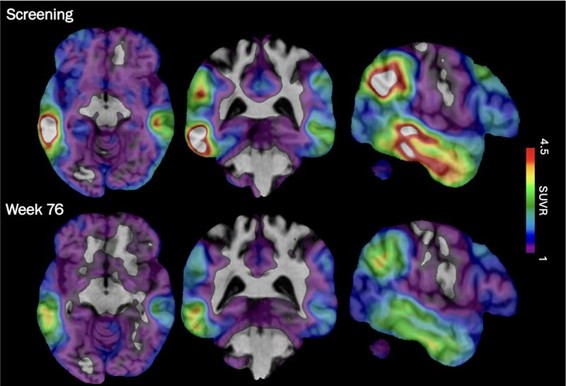
Brain scans comparing before and after treatment showed increased activity in frontal, parietal, and temporal brain regions, correlating with improvements in memory, coordination, attention, and language processing.
Research indicates PTSD affects up to 30% of combat veterans worldwide, according to a 2015 JAMA Psychiatry report. Traditional treatments including cognitive behavioral therapy fail to help approximately one-third of patients, with up to 50% showing resistance to CBT specifically.
Israeli Defense Forces data reveals only 39% of patients experience meaningful clinical improvement using conventional treatment approaches.
Dr. Keren Doenyas-Barak, who directs the Post-Traumatic Stress Disorder Unit at Shamir Medical Center, explains that trauma creates physical brain damage. These changes primarily affect the frontolimbic circuit and can permanently alter brain structure and function.
“Hyperbaric oxygen therapy is not a new technology,” Doenyas-Barak told The Media Line. However, the Israeli protocols represent a unique approach.
HBOT has existed for approximately 100 years, originally treating decompression sickness and air embolism in divers and surgical patients. “While historically we used hyperbaric treatment for these urgent indications, we are now familiar with its role in regenerative medicine,” Doenyas-Barak explained.
Professor Shai Efrati at the Sagol Center for Hyperbaric Medicine and Research developed the regenerative medicine protocols currently being used.
“We can increase the pressure from the pressure in which we sit right now, which is 1 atmosphere, to a higher pressure; we usually use the pressure of 2 atmospheres, and increase the amount of oxygen in the blood,” Doenyas-Barak said.
The treatment works by dramatically increasing oxygen levels in blood plasma under pressure. When pressure doubles and patients breathe concentrated oxygen, dissolved oxygen in blood increases substantially, reaching tissues that normally receive less oxygen.
The fluctuating oxygen levels during treatment create “relative hypoxia,” triggering the body’s natural regenerative responses. Patients complete 60 sessions over 60 days, breathing 100% oxygen through masks for 20-minute intervals, repeating this cycle four times per session.
“We cause a fluctuation in oxygen level in each of our cells,” Doenyas-Barak explained. “We are moving from a very high level of oxygen back to normal. … This generates repairing mechanisms, and these mechanisms can contribute to better healing of any wound that needs to be healed.”
The approach adapts wound-healing techniques originally used for diabetic ulcers to target brain injuries. “We know today that post-traumatic stress disorder is associated with long-lasting or very chronic changes in brain activity and even structure,” Doenyas-Barak reiterated. “By using hyperbaric treatment, we can activate the malfunctioning brain regions and contribute to their recovery.”
Research began in 2017 with 35 veterans suffering persistent PTSD unresponsive to conventional treatments. Participants demonstrated significant symptom improvement and reactivation of damaged brain regions.
A placebo-controlled study published in the Journal of Clinical Psychiatry in November 2024 confirmed that the Israeli HBOT protocol “may induce neuroplasticity and improve clinical symptoms of patients suffering from PTSD.”
The study examined 56 male veterans aged 25-60 with CAPS-5 scores above 20. Half received actual HBOT while the control group underwent sham treatment. The HBOT group’s scores dropped from 42.57 to 25.8 after treatment, while control group scores actually increased to 47.75.
Following the October 7 attacks, the clinic expanded from treating 50 patients simultaneously to groups of 200 every 60 days, reaching approximately 800 people annually with philanthropic funding supporting civilian survivors.
The program includes comprehensive support beyond HBOT, featuring psychotherapy, social workers, trauma-focused yoga, and movement specialists. About 50 staff members support the initiative at Shamir Medical Center.
Doenyas-Barak is now developing biological markers for PTSD diagnosis using MRI and other objective measurements. “Today, we diagnose PTSD based on what the patient reports and based on our impressions. It is very subjective,” she explained. “If we can characterize new biomarkers, that will enable objective diagnosis of people.”
Brain scans already reveal clear differences between individuals with and without PTSD, though individual-level diagnosis remains under development. “To take this to the individual level, we are not there yet,” Doenyas-Barak admitted, while expressing optimism that “we will get there.”