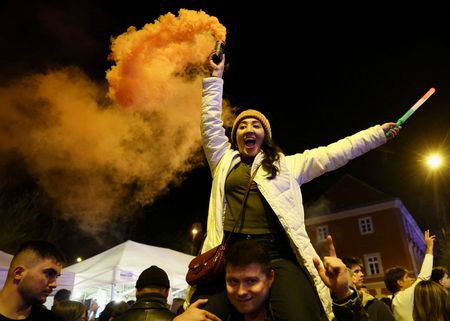

BUDAPEST – Hungary’s capital transformed into a massive street celebration that lasted until the early morning hours Monday as opposition supporters reveled in their stunning electoral victory that toppled Prime Minister Viktor Orban after 16 years in power.
Sunday’s election drew an unprecedented 80% voter turnout according to initial results, delivering a decisive win for the opposition Tisza party and bringing an end to Orban’s lengthy tenure as the country’s right-wing leader. For thousands of Hungarians who flooded the streets waving flags and raising toasts, the outcome represented a return to democratic values and closer ties with Europe after years of authoritarian drift under Orban’s administration since 2010.
The iconic Chain Bridge glowed with Hungary’s national colors as massive crowds gathered along the Danube riverfront, displaying both Hungarian and European Union flags while some celebrants shared champagne from disposable cups.
“I feel amazing! Really amazing! Like, I never thought this would actually happen. I’ve been praying for this for 16 years so I’m super happy,” expressed Szilvia, a Tisza supporter, while crowds gathered to watch opposition leader Peter Magyar deliver his victory address.
Spontaneous celebrations broke out throughout the city’s subway system, with riders chanting “it’s over.” Additional Tisza supporters organized an impromptu outdoor party near the nation’s historic parliament complex.
“It’s a big celebration. I’m quite happy. I have been waiting for this for some time. And I hope that the new leadership, new prime minister will be really a prime minister for all Hungarians, as he said,” commented Tisza supporter Sandor Zoletnik.
Groups of young voters expressed their elation with exclamations of “Amazing!” and “Can’t describe it!” as they embraced and celebrated, shouting “We are so happy that Orban is finally gone” and “We did not believe that it would change.”
“So, finally, after at least 16 years, we feel like there is a hope. We feel like there is a hope that Hungary can start walking into the right direction,” one young celebrant declared. Orban’s Fidesz party had struggled particularly with younger demographics throughout the campaign.
Polling data revealed Fidesz’s weakness among youth voters, with research firm Median showing only 8% support among 18-29 year-olds, while Zavecz Research found just 22% backing in the broader 18-39 age bracket. This marked a dramatic decline for Fidesz, which originally began as a youth opposition movement in the late 1980s.
Major thoroughfares experienced traffic disruptions as crowds spilled out from restaurants and bars, with flag-waving supporters stopping vehicles to share their joy. Hundreds continued strolling across the city’s Danube bridges well past midnight as the historic celebration continued.