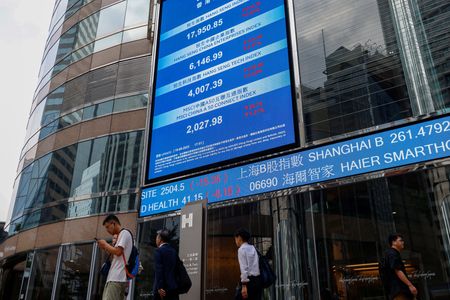

The US dollar strengthened considerably against major global currencies during early Monday trading in Asia, as investors flocked to its relative security following the breakdown of extensive diplomatic negotiations between Washington and Tehran that failed to produce an agreement, extending market volatility into its seventh consecutive week.
On Sunday, President Donald Trump announced that the US Navy would begin blocking the Strait of Hormuz, a critical passage for 20% of global daily energy shipments that Iran has effectively shut down since hostilities began in late February. This development has pushed oil prices upward by more than 30% and intensified concerns about widespread inflationary pressures.
The dollar, serving as a refuge given America’s limited vulnerability to imported energy-price inflation, strengthened as Asian trading commenced, pushing the euro down 0.53% to $1.1663 and advancing 0.1% against the Japanese yen to reach 159.43.
US stock futures dropped more than 1% during late Sunday trading in the United States.
Market optimism that the Middle East conflict was nearing resolution, following last week’s ceasefire declaration, had buoyed trading throughout the week, assisting the S&P 500’s recovery. By Friday, the index had regained almost all losses sustained since US and Israeli military operations commenced in late February.
The United States and Iran declared a two-week ceasefire on April 7, which investors initially welcomed by selling oil and redirecting some funds back into riskier assets like equities. Worries about the agreement’s fragile nature have since triggered a reversal of some of those investment moves.
“This is an absolute unwinding of any optimism heading into the peace talks into that play of dollar: safe-haven; oil jumping and selling out of everything else,” City Index senior market analyst Fiona Cincotta said.
“On the other hand, we have seen the markets over-exaggerate sometimes. And I think especially around this scenario, the market is struggling to really price it correctly, because there is so much uncertainty, so many unknowns.”
Currencies more sensitive to risk, including the Australian dollar and British pound, faced significant downward pressure, declining 1.1% and 0.5% respectively.
As anticipation grows for renewed inflationary trends, investors have factored in the likelihood that multiple central banks, including the European Central Bank and Bank of England, may lean toward increasing interest rates this year, contrasting sharply with pre-war expectations that borrowing costs would stay flat or decrease.
International stock markets, which concluded last week near their highest levels since early March due to optimism about potential US-Iran resolution, remain 2% below pre-war levels.
Gold has declined approximately 10% in value since late February, as investors currently view the dollar as a superior safe-haven option.
“The market is now largely back to conditions before the ceasefire, except now the US will block the remaining up to (2 mln barrels) Iranian-linked flows through the Strait of Hormuz as well,” said Saul Kavonic, MST Marquee analyst in Sydney.
“The key remaining question is if the U.S. renews strikes on Iran, raising the risk of strikes on energy infrastructure across the region which could have a further lasting impact beyond the duration of the war.”
Trump indicated on Sunday that oil and gasoline prices may stay elevated through November’s midterm elections, representing an unusual acknowledgment of the war’s potential political consequences.