New Jersey State Police have confirmed that a United Airlines commercial aircraft collided with a light pole and caused damage to a truck during its approach to Newark Liberty International Airport on Sunday.
The incident involving the passenger jet occurred as the aircraft was attempting to land at the New Jersey airport, according to authorities.
Officials have not yet released details about potential injuries or the extent of damage to the aircraft or ground equipment involved in the collision.
NEW YORK — Manhattan’s Eugene O’Neill Theatre was forced to shut down Monday after an electrical fire erupted backstage, temporarily halting performances of the hit Broadway musical “The Book of Mormon.”
The flames originated in an electrical utility room and resulted in “substantial damage” throughout the historic venue, New York Fire Department Assistant Chief David Simms reported. Fire investigators are still working to determine what sparked the blaze.
“Everyone has been safely removed from the theater,” ATG Entertainment, which owns the facility, announced in an official statement. “We will keep all parties abreast of this developing situation.”
Theater officials have not yet announced when the 1,108-seat venue might reopen. Representatives for “The Book of Mormon” production have not responded to requests for comment, though the musical was scheduled to perform again Tuesday evening.
According to Simms, the fire primarily affected the theater’s fourth floor and a backstage area housing lighting systems and hanging chandeliers. Firefighting efforts also resulted in water damage throughout parts of the building.
Crews faced initial challenges containing the flames due to the theater’s complex network of catwalks and stage rigging, Simms explained, though they ultimately gained control of the situation. One firefighter sustained minor injuries during the response.
“The Book of Mormon” ranks among Broadway’s most enduring productions, having staged over 5,000 performances since its Eugene O’Neill Theatre debut in 2011.
The venue itself dates back to 1925 and has welcomed numerous acclaimed productions over the decades, including “Sweeney Todd,” a revival of Tennessee Williams’ “Cat on a Hot Tin Roof,” and the rock musical “Spring Awakening.”
The entrepreneur who brought the Roomba vacuum into millions of homes is now working on his next breakthrough: an artificial intelligence-powered robotic companion that could serve as an alternative to traditional pets.
Colin Angle introduced his four-legged prototype, named the Familiar, during a presentation on Monday. The device resembles a bulldog-sized creature featuring gentle eyes and bear-like ears and paws, designed with touch-responsive synthetic fur that encourages interaction through petting and hugging.
“We chose a form factor that’s not a human, not a dog, not a cat, because we wanted to steer away from all of those preconceptions,” explained Angle, who now heads Familiar Machines & Magic after serving as the long-time chief executive of iRobot, the company behind Roomba.
This type of realistic robotic companion would have been impossible when Angle helped establish iRobot in 1990 or when the original Roomba debuted in 2002, thanks to recent advances in artificial intelligence technology.
While other companies have attempted similar projects – including Sony’s Aibo robotic dog from the late 1990s that was revived in 2018 – Angle believes his creation offers capabilities that “simply hasn’t existed before.”
“The challenge is to make something that’s not a watch-me toy,” Angle explained during an Associated Press interview. “This is about having something that you want to hug, you want to pet. When it’s happy, that makes you happy. And it is large enough or mobile enough to follow you to the kitchen or drag you off the couch and take a walk.”
The robotic companion produces emotional, animal-like vocalizations without speaking words. However, it features audio sensors that function as “ears” and an AI system capable of understanding and learning from human speech. The technology leverages recent breakthroughs in generative artificial intelligence similar to ChatGPT, allowing the robot to modify its responses based on interactions with its human companions.
“I couldn’t have done this six months ago,” Angle noted.
Angle guided iRobot for twenty-five years, transforming Roomba into the first mainstream household robot. However, fierce competition, particularly from Chinese manufacturers, eventually challenged the company’s market position. Angle resigned from his leadership roles in 2024 following Amazon’s decision to abandon its acquisition plans for the struggling Massachusetts-based company.
Familiar Machines emerged shortly afterward and operated secretly in Woburn, Massachusetts until Monday, when Angle demonstrated one of his Familiar prototypes in New York at The Wall Street Journal’s Future of Everything conference.
While commercial availability remains distant, Angle sees retired individuals as a primary market, particularly those who have moved beyond the typical pet-owning years.
“Not because people suddenly stop enjoying pets, but the fear and obligation of caring for them are such that people are very reluctant to get new pets at older ages,” Angle observed.
Unlike most robotics engineers who draw inspiration from science fiction, Angle’s concept stems from folklore traditions, including witches’ cats, wizards’ owls, and the animal companions featured in Philip Pullman’s “His Dark Materials” book series.
“It’s an archaic, ancient word,” Angle said. Surprisingly, he discovered he could also secure trademark protection for the name.
Angle has assembled a team of distinguished robotics experts, including Marc Raibert, who pioneered robot movement and established Boston Dynamics, creator of the four-legged Spot robot, and Cynthia Breazeal, who developed the robot head Kismet and later the desktop speaker robot Jibo, early experiments in giving robots social capabilities.
Many of these collaborators studied together at the Massachusetts Institute of Technology and share doubts about the current trend toward sleek humanoid robots designed to walk and move like people but currently lack practical physical capabilities.
Among these advisers is Maja Matarić, a computer science professor at the University of Southern California who helped establish the field of socially assistive robotics twenty-five years ago, focusing on robots that could provide social and emotional support to people.
Upon first encountering Angle’s prototype, she reported that she “immediately got down on the ground near it and had to hug it and pet it, then started to play with it to see what it would do.”
The robot’s ability to appear endearing rather than unsettling will be crucial. Matarić explained that decades of human-robot interaction research demonstrate that a robot that is “cute, personalized and vulnerable is much more appealing and lovable than the alternative.” She suggested it could prove especially valuable in nursing facilities or for mental health emotional support.
Matarić added that AI developments have made it more feasible to expand the technology’s reach to general consumers.
“Before generative AI, robots could not readily understand what people were saying,” she explained.
Mirum Pharmaceuticals announced Monday that their investigational medication volixibat successfully achieved its primary objective in a clinical trial focused on alleviating intense itching experienced by patients suffering from a rare liver condition.
The research involved 158 participants who received either volixibat at a dosage of 20 mg twice per day or a placebo treatment. Researchers focused their primary analysis on 111 patients experiencing moderate to severe itching symptoms, while an additional 47 participants with mild symptoms were evaluated in a separate analysis.
Primary sclerosing cholangitis, commonly referred to as PSC, is a condition that triggers inflammation and creates scar tissue in the bile ducts, causing them to narrow. This process results in bile accumulation, damage to the liver, and can progress to complete liver failure.
Among the primary study group, participants taking volixibat experienced a reduction in itching severity scores of 2.72 points compared to their baseline measurements, while those receiving placebo saw only a 1.08-point decrease. This created a statistically meaningful difference of 1.64 points favoring the experimental treatment, according to Mirum’s findings.
The pharmaceutical company stated that these outcomes demonstrate volixibat’s potential to become the initial approved therapy specifically targeting cholestatic pruritus in PSC patients.
“The takeaway here is very straightforward – trial is clearly positive & data is in line with expectations,” commented Evercore ISI analyst Gavin Clark-Gartner.
Mirum has arranged a preliminary meeting with the U.S. Food and Drug Administration for summer 2026 and intends to submit their application for regulatory approval during the latter half of that year.
BAMAKO, Mali (AP) — The military leader serving as Mali’s president has stepped into the role of defense minister following the death of the previous minister in devastating coordinated strikes by extremist and separatist forces that shocked the West African country, officials announced Monday.
A presidential decree broadcast on state television revealed that Assimi Goita will continue his presidential duties while simultaneously overseeing defense operations. Former military chief of staff Gen. Oumar Diarra has been appointed to serve as his deputy in the defense role.
The leadership change follows the tragic death of Defense Minister Gen. Sadio Camara on April 25, who was killed when a suicide bomber targeted his residence in Kati, a military garrison community located near Mali’s capital city of Bamako.
Kati and Bamako were among multiple locations struck by fighters from Jama’at Nusrat al-Islam wal-Muslimin, known as JNIM and affiliated with al-Qaida, working alongside rebels from the Azawad Liberation Front, a separatist organization led by Tuareg forces. The synchronized assault represented one of the most extensive coordinated operations the nation has experienced in more than ten years.
The extremist fighters and separatist forces successfully captured numerous strategic towns and military installations during their offensive.
Mali’s government has operated under military control since leaders seized power through a 2020 takeover, pledging to improve security conditions as extremist violence escalated. Following their rise to power, the military government shifted toward Russia for security assistance, leading to the departure of traditional partners including France and United Nations peacekeeping forces.
However, security experts indicate that Mali’s safety situation has deteriorated further since the military takeover, with unprecedented levels of attacks and civilian casualties resulting from both Islamic militant operations and government military actions.
Goita’s appointment to the defense position occurs amid rising tensions following the detention of military members, civilians, and political figures suspected of connections to the separatists and militants behind the recent attacks.
On Saturday, armed individuals kidnapped a former Malian government minister who had criticized the junta from his residence, according to family members who spoke with The Associated Press on Sunday.
JNIM fighters have escalated pressure on the military administration by establishing a blockade surrounding Bamako beginning last week, creating roadblocks and security checkpoints that restrict movement.
Transportation companies informed the AP that while the blockade initially disrupted travel across multiple routes last week, the armed groups have now focused their efforts on blocking only the connection between Bamako and the western city of Kayes, leaving other roads connecting the capital to various parts of the country mostly accessible.
SAN JOSE, Costa Rica — Several board members of La Nación, a prominent Costa Rican newspaper, have had their United States entry visas canceled, sparking new allegations that America is collaborating with Costa Rica’s government to silence critics through immigration penalties.
The newspaper’s board of directors announced in a front-page statement Sunday that the affected executives discovered their visa cancellations through reports in government-friendly media outlets.
La Nación has consistently challenged outgoing Costa Rican President Rodrigo Chaves, who maintains close ties with U.S. President Donald Trump and has committed to accepting up to 100 deportees monthly from third countries as part of Trump’s expanded deportation initiatives.
The publication, which Chaves has repeatedly attacked since it reported sexual harassment allegations during his 2022 presidential race, stated that American officials provided no explanation for canceling the visas.
The U.S. State Department has not yet responded to requests for comment.
“We fully recognize that the United States, like any sovereign state, has the power to determine the terms of entry into its territory,” La Nación said. “However, it is unprecedented in Costa Rica’s recent history for visas to be revoked from members of the board of a general-interest and independent newspaper.”
This action appears to represent another example of the Trump administration using immigration policies to target political adversaries, drawing harsh criticism from Costa Rican opposition groups and press freedom advocates who are demanding explanations from both governments.
“If this decision is based on their critical stance toward this government, it would be yet another troubling signal for our democratic system,” the organizations said in a statement, adding that failing to provide transparent information would “constitute an unacceptable form of complicity.”
Mauricio Herrera, a journalist and former Costa Rican communications minister from 2015 to 2018, made stronger accusations, stating “there is no doubt that the cancellation of visas for its board of directors is in response to a request from the Costa Rican government.”
“The sanction seeks to intimidate those who dare to dissent and exercise their freedom of expression,” Herrera told The Associated Press.
Multiple prominent figures in Costa Rica have experienced visa cancellations, as conservative President Chaves’ confrontational leadership approach has faced criticism for undermining democratic principles.
In the previous year, the U.S. canceled the visa of Nobel Prize winner and former Costa Rican President Óscar Arias, a vocal Trump critic, along with his brother Rodrigo Arias, who served as legislative president and believed Chaves requested the U.S. action.
Opposition legislators including Francisco Nicolás from the centrist National Liberation Party and independent Cynthia Córdoba, both known for criticizing Chaves, have also seen their U.S. visas canceled recently, as has Constitutional Court Judge Fernando Cruz, a migrant rights defender who was prevented from traveling to the U.S. last month to receive recognition from Northwestern Law School.
Chaves, who has worked closely with the Trump administration on accepting deportees from various nations and extraditing suspected drug traffickers to the U.S., will step down Friday when President-elect Laura Fernández takes office.
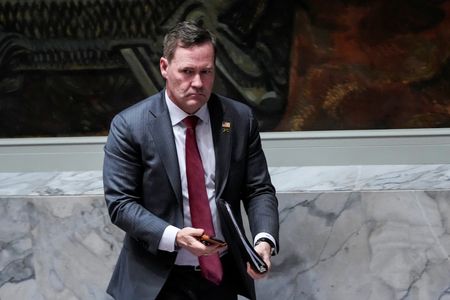
America and several Gulf Arab nations are collaborating on a fresh United Nations Security Council resolution aimed at criticizing Iran’s interference with shipping in the Strait of Hormuz, according to U.S. Ambassador to the U.N. Mike Waltz, who announced the effort Monday.
The ambassador indicated that discussions on this new proposal will occur throughout this week. This latest diplomatic push follows Russia and China’s decision last month to block an earlier resolution that Washington had hoped would rally global support for keeping the vital shipping lane open.
Waltz explained during a media briefing that the United States is working alongside Bahrain to develop this resolution, with additional contributions from Kuwait, Qatar, the United Arab Emirates and Saudi Arabia.
The proposed measure would call on Iran to halt its attacks against commercial vessels and stop attempting to collect fees from ships passing through the strait. Additionally, the resolution would demand that Iran cease deploying sea mines in the waterway and reveal where existing mines have been placed.
According to Waltz, this latest draft represents a “narrower effort” compared to the previously unsuccessful resolution and comes during an active ceasefire with Iran. “This is much more focused on mining international waterways and on tolling, which all of the economies of the world are affected by, particularly those in Asia,” he said.
MOSCOW, May 4 – On Monday, Russian President Vladimir Putin announced a temporary halt to military operations against Ukraine scheduled for May 8-9, coinciding with commemorations marking the end of World War II and Nazi Germany’s defeat, according to Russia’s Defense Ministry.
The Defense Ministry stated it expects Ukrainian forces to observe the same pause in fighting, while issuing a stern warning about potential consequences. Officials threatened to launch extensive missile attacks targeting central Kyiv should Ukraine attempt to interfere with Victory Day commemorative events.
“Despite the capabilities at our disposal, Russia has previously refrained from such actions on humanitarian grounds,” the ministry declared in an official statement, while emphasizing readiness to respond if the temporary truce is violated.
The ministry also issued evacuation advisories, stating: “We are warning the civilian population of Kyiv and staff at foreign diplomatic missions of the need to leave the city in a timely manner.”
Multiple media sources confirmed Monday that the Carolina Panthers have brought former NFL safety Mike Adams onto their coaching staff in an assistant role.
The 45-year-old Adams launched his professional football career in 2004 with San Francisco and spent two seasons (2017-18) playing for Carolina. Throughout his 16-year career spanning 228 games, he recorded 935 tackles and 30 interceptions while suiting up for San Francisco (2004-06), Cleveland (2007-11), Denver (2012-13), Indianapolis (2014-16), Carolina, and Houston (2019).
During his time with Indianapolis, Adams earned back-to-back Pro Bowl selections in 2014 and 2015.
Adams will start his coaching journey through the Bill Walsh coaching fellowship program, which aims to increase diversity among NFL coaching staffs. His responsibilities will include working with players during offseason training programs and throughout training camp.
SALISBURY, Md. – Salisbury University’s women’s lacrosse program has earned the right to host the initial rounds of the NCAA Division III Tournament, the NCAA announced Monday morning.
The Sea Gulls, currently ranked seventh nationally, have qualified for their 22nd straight NCAA Tournament appearance and 26th overall berth in the national championship event.
This marks another milestone for the consistently successful Salisbury women’s lacrosse program, which will welcome visiting teams to compete on their home turf during the tournament’s opening stages.
Delaware Governor Matt Meyer has unveiled a new streamlined permitting program designed to fast-track essential development projects throughout the First State.
The Permitting Accelerator represents a key component of Meyer’s broader JobsFirst program, which seeks to eliminate bureaucratic obstacles, accelerate vital construction projects, and produce tangible benefits for Delaware residents and the business community.
This new accelerator program will concentrate on high-priority developments across four critical sectors: residential housing, energy infrastructure, broadband expansion, and general infrastructure improvements. Officials indicate the program is now entering its initial implementation phase.
DOVER — Nearly 400 Delaware students showcased their engineering skills during the Delaware Department of Transportation’s seventh annual bridge building contest, held at Polytech High School on Friday, May 1, 2026.
A total of 397 students formed 130 teams representing 27 schools from across Delaware for the daylong competition. The hands-on event challenges participants to tackle engineering problems while promoting interest in mathematics, science, and engineering fields.
DelDOT designed the program to motivate middle and high school students to explore real-world challenges and consider future careers in civil engineering and transportation industries.
DALLAS — The Dallas Mavericks announced Monday they have brought aboard Masai Ujiri, the former Toronto Raptors executive, to serve as team president and alternate governor.
The 55-year-old Ujiri previously oversaw the Raptors organization during their championship run in 2018-19, when Toronto captured the NBA title with Kawhi Leonard after acquiring the star from San Antonio.
Ujiri steps into the role previously held by Nico Harrison, who was dismissed from his general manager position last November. Harrison’s tenure ended roughly nine months after orchestrating the controversial trade that sent Luka Doncic to the Los Angeles Lakers, a move that proved detrimental to Dallas.
The new president spent 13 years with Toronto’s organization before being let go as president and vice chairman this past June. He initially joined the Raptors as executive vice president and general manager.
According to the team’s announcement, Ujiri will oversee all basketball-related operations while collaborating with franchise leadership on strategic planning for the Mavericks’ future.
Michael Finley, a former Dallas player, and Matt Riccardi had been sharing general manager duties since Harrison’s departure. The duo orchestrated the February trade sending Anthony Davis to Washington. The injury-prone big man had been the primary asset Dallas received in the problematic Doncic transaction.
Ujiri takes charge of a franchise now built around Cooper Flagg, who earned Rookie of the Year honors after being selected first overall in last summer’s draft. Dallas secured Flagg despite having only a 1.8% probability of winning the top lottery selection. The team holds a 6.7% chance in the upcoming draft lottery.
Despite missing playoff action for two consecutive seasons, the Mavericks could return to postseason contention. The franchise reached the 2024 NBA Finals with Doncic and Kyrie Irving leading the way before falling to Boston in five games.
Should Ujiri retain Irving, Dallas would feature two former Duke standouts in Irving and Flagg. The rookie sensation guided the Blue Devils to the Final Four while becoming only the fourth first-year player to claim Associated Press men’s player of the year recognition.
Irving and Flagg have yet to share the court together, as Irving missed the entire campaign after suffering an ACL injury in March 2025.
The roster also includes another Duke product in center Dereck Lively II, though he has battled various injuries throughout his three-year career.
Additional core players include four-time champion Klay Thompson, who rebounded from early struggles to post strong three-point numbers and finish fourth in NBA history for made three-pointers. Forward P.J. Washington played a crucial role during the Finals run, while Naji Marshall emerged as a reliable scorer on an injury-riddled squad.
Federal prosecutors are revealing new details about the mental state of the man they say ignited the catastrophic Palisades Fire that devastated Los Angeles communities earlier this year.
Court documents show that 29-year-old Jonathan Rinderknecht was frustrated about having no New Year’s Eve plans and expressed rage toward society before allegedly setting the fire that would claim 12 lives. The defendant has entered a not guilty plea to charges related to starting what authorities call one of California’s most devastating wildfire disasters.
The massive blaze erupted on January 7, 2025, consuming hillside communities in Pacific Palisades and Malibu. However, federal authorities allege Rinderknecht initially set a fire on January 1 that smoldered undetected in underground root systems for nearly a week before resurging with deadly force.
A June 8 trial date has been scheduled for Rinderknecht. His legal team argues he’s being made a scapegoat to cover up the Los Angeles Fire Department’s inability to completely put out the original blaze.
The prosecution’s case strategy was outlined in an April 29 pre-trial document from the U.S. Attorney’s Office, which provides insight into Rinderknecht’s alleged mindset during the critical timeframe.
Court filings indicate that on New Year’s Eve, witnesses observed Rinderknecht driving dangerously while working Uber shifts in the Palisades area. Passengers told investigators he appeared “angry, intense, driving erratically, and ranting about being ‘pissed off at the world,’” according to the prosecution memo.
The documents reveal that Rinderknecht discussed accused UnitedHealthcare CEO shooter Luigi Mangione, capitalism, and vigilante justice with his passengers. During a January 24 interview with investigators, when questioned about potential motives for Palisades arson, Rinderknecht allegedly “responded that it would be out of resentment of the rich enjoying their money as ‘we’re basically being enslaved by them,’” and again brought up Mangione’s alleged actions.
Prosecutors also claim Rinderknecht was dealing with romantic relationship troubles and was upset about his canceled New Year’s Eve arrangements.
Defense attorney Steve Haney responded via email Sunday, stating: “My client maintains his innocence as he has from the beginning and we look forward to clearing his name at trial. The offered motive that my client started a fire on NYs Eve because he did not have date speaks for itself.”
During a March press conference, Haney demanded his client’s release from custody, citing evidence he believes proves Rinderknecht’s innocence. The attorney referenced deposition testimony from a firefighter who said he observed smoldering ground on January 2 and warned supervisors about remaining hot spots. This testimony emerged from litigation filed by fire victims against the city.
However, a battalion chief testified that he conducted four perimeter walks of the burned area throughout the day and confirmed all hot spots were extinguished.
Fire Department Chief Jaime Moore, who took the position in October, has expressed concern about the conflicting firefighter accounts and ordered an independent investigation into how the January 1 fire was managed.
Haney maintains this crucial evidence was unavailable to the defense team when the indictment was issued.
CINCINNATI (AP) — The legendary WKRP call letters have made their way from television fiction to radio reality in Cincinnati as of this Monday.
Co-owner Jeff Ziesmann reports that listeners are thrilled about the station’s adoption of the famous call letters from the beloved CBS comedy series, just in time for Monday’s morning commute programming.
“Our phones have been mobbed this morning, as I’m sure you can imagine,” Ziesmann said.
The WKRP identifier now covers three broadcasting locations across Cincinnati, northern Kentucky and Dayton, Ohio, which all share the same programming through simulcasting. These stations will maintain their existing adult-hits music format featuring songs from the 1960s through 1980s with a special focus on 1970s hits, previously known under “The Oasis” branding.
Station ownership secured these call letters through a charitable contribution to a North Carolina nonprofit organization that had held the WKRP designation since 2014 for their low-power radio operation. According to Ziesmann, federal broadcasting rules allow his full-power station to use identical call letters because the North Carolina WKRP-LP operates under different regulatory classifications.
Ziesmann clarified that the nonprofit contribution wasn’t a direct transaction for the call letters themselves, but rather purchased the opportunity to petition the FCC for those call letters with the North Carolina organization’s support.
The original “WKRP in Cincinnati” television series aired from 1978 through 1982, featuring stars like Loni Anderson, Howard Hesseman, Tim Reid and Richard Sanders, who portrayed the hapless news reporter Les Nessman.
Sanders responded to the news in character, writing via email: “I have spoken with Les Nessman regarding the resurrection of WKRP in Cincinnati. After the failure of his dream to replace Walter Cronkite on the CBS evening news, he is hopeful that he can resume his duties as the News, Sports, Weather, Traffic, and Farm Report Director at WKRP.”
“I think we can all hope that WKRP will return to the airwaves with more music and Les Nessman,” Sanders added, referencing a beloved catchphrase from the comedy series.
A fragile three-week ceasefire between the United States and Iran reached a dangerous breaking point Monday as American military forces launched an operation to escort trapped commercial vessels through the blocked Strait of Hormuz.
The crisis escalated when the United Arab Emirates reported coming under attack for the first time since the early April truce began, while British maritime officials confirmed two cargo ships were burning near UAE waters.
Tehran denounced the American-led naval escort mission as a breach of the delicate ceasefire agreement. Despite President Donald Trump’s Sunday announcement of ‘Project Freedom,’ only two US-flagged merchant vessels successfully passed through the waterway with military protection, according to American officials.
Shipping companies and financial markets are expressing growing concern over Washington’s limited operational details. Maritime industry leaders question which crews and cargo owners would risk potential Iranian attacks.
For more than two months since hostilities began, Iran’s control over this vital shipping lane has trapped hundreds of commercial vessels and tens of thousands of crew members in the region.
The maritime bottleneck has created a massive backup of essential global commodities including oil, natural gas, fertilizer and other critical supplies. This strategic chokehold has given Iran significant leverage while damaging international economies and potentially affecting the Republican administration’s prospects in upcoming midterm elections.
Monday saw oil markets climb as uncertainty persisted around both the strait’s status and the American military intervention, which Trump characterized as a humanitarian mission to assist nations that have remained ‘neutral and innocent’ during the conflict.
Although European nations and other allies have expressed anxiety about the strait situation and received Trump’s appeals for assistance, no other countries appeared to participate in Monday’s operations.
Pentagon officials revealed the mission would deploy guided-missile destroyers, over 100 aircraft and 15,000 military personnel, though specific deployment strategies were not disclosed.
Trump issued a stern warning that any interference with the escort operation ‘will, unfortunately, have to be dealt with forcefully.’
American military commanders reported destroying six small Iranian patrol boats that were attacking civilian ships. They also said Iranian forces fired missiles and deployed drones against vessels under US protection.
Iran has effectively sealed the waterway by launching attacks on various ships during the past two months, while demanding that non-US and non-Israeli vessels pay transit fees for passage.
Maritime safety experts continue worrying about Iranian naval mines scattered throughout the shipping channel as companies evaluate the new American protection program.
Iranian military leadership declared Monday that vessels must still coordinate transit plans with Tehran authorities, warning that ‘any foreign military force — especially the aggressive U.S. military — that intends to approach or enter the Strait of Hormuz will be targeted,’ according to state media reports.
Iran’s official IRNA news service dismissed Trump’s strait reopening strategy as part of his ‘delirium.’
Iranian media outlets claimed their forces attacked an American warship southeast of the strait, alleging it was ‘violating maritime security and navigation norms.’ US military officials, who have maintained a naval blockade of Iranian ports for weeks, rejected these claims.
The US-led Joint Maritime Information Center continues rating the threat level around the strait as critical, despite issuing earlier guidance about the new American escort program.
Jakob Larsen, chief safety and security officer for the Baltic and International Maritime Council, a major shipping industry organization, said no official operational guidelines or specifics have been provided to commercial operators.
‘Without consent from Iran to let commercial ships transit safely through the Strait of Hormuz, it is currently not clear whether the Iranian threat to ships can be degraded or suppressed,’ Larsen stated.
Larsen raised questions about the mission’s long-term viability versus its potential as a short-term operation, warning of a ‘risk of hostilities breaking out again’ if the effort proceeds.
The Joint Maritime Information Center has directed ships to use Omani territorial waters for strait crossings, noting that American forces have established an ‘enhanced security area.’ Officials cautioned that traveling near traditional shipping routes ‘should be considered extremely hazardous due to the presence of mines that have not been fully surveyed and mitigated.’
The center advised ship captains to maintain close coordination with Omani port authorities ‘due to anticipated high traffic volume.’
SALISBURY, Md. – Salisbury University’s men’s lacrosse squad has earned the right to host upcoming rounds of the NCAA Division III tournament after securing a historic milestone for their conference.
The Sea Gulls, currently ranked second nationally, captured the Coastal Lacrosse Conference’s very first automatic bid to the NCAA Division III Men’s Lacrosse Tournament when the bracket was announced Sunday night by the NCAA.
This tournament appearance marks the 36th year in a row that Salisbury has qualified for the NCAA championships and represents the program’s 42nd overall tournament berth.
The university will serve as host site for both the second and third rounds of the national tournament, bringing high-level collegiate lacrosse competition to the Salisbury campus.
Chicago Sky management announced Monday they have released rookie guard Hailey Van Lith, who was selected as their first-round draft choice in 2025.
The 24-year-old guard struggled during her debut season, posting averages of 3.5 points and 1.6 assists across 29 appearances without earning a single start.
All WNBA franchises must finalize their rosters by Thursday at 5 p.m. ET, just one day before the regular season kicks off on Friday.
During Chicago’s preseason play, Van Lith showed promise with 12.5 points and 4.5 assists per game over two contests. The Sky begin their campaign Saturday against Portland in what marks the inaugural game for the expansion Portland Fire franchise.
Chicago selected Van Lith as the 11th overall selection in 2025 following her impressive college basketball journey that took her through Louisville, LSU, and TCU.
Standing 5-foot-9, Van Lith earned All-American honors and claimed both Big 12 Player of the Year and Newcomer of the Year awards after posting 17.9 points, 5.4 assists, and 4.6 rebounds per game during her final collegiate season with the Horned Frogs in 2024-25.
The 81-year-old former New York City Mayor Rudy Giuliani is hospitalized Monday while battling pneumonia, with his representative confirming he remains in critical but stable condition.
Giuliani gained worldwide recognition in 2001 for his leadership during New York’s response to the September 11 World Trade Center attacks, but his spokesperson revealed this experience resulted in him developing restrictive airway disease.
“This condition adds complications to any respiratory illness, and the virus quickly overwhelmed his body, requiring mechanical ventilation to maintain adequate oxygen and stabilize his condition,” the statement explained, noting that Giuliani is now able to breathe without assistance.
The former mayor’s reputation as “America’s Mayor,” which he earned through his handling of the September 11, 2001 terrorist attacks, became damaged following his unsuccessful attempts to challenge President Donald Trump’s 2020 election loss.
His involvement in the 2020 election controversy resulted in criminal charges filed against Giuliani in two states, as well as a defamation case brought by election workers. Giuliani maintains his innocence regarding the criminal allegations.
Current New York Mayor Zohran Mamdani, a Democrat, extended well wishes to Giuliani on Monday for his recovery.
“He’s been a fixture in our city’s politics and public life for so many years. And I know that many New Yorkers are concerned by the reports that he’s in critical condition,” Mamdani said.
Multiple sources confirm the Dallas Mavericks have selected Masai Ujiri, the former Toronto Raptors executive, to serve as their new team president and alternate governor, according to reports released Monday.
The 55-year-old Ujiri led the Raptors’ front office operations for 12 years from 2013 through 2025, playing a key role in building the team that captured the franchise’s inaugural NBA title during the 2018-19 season.
Prior to his tenure with Toronto, Ujiri served as general manager for the Denver Nuggets between 2010 and 2013, earning recognition as the NBA’s Executive of the Year during the 2012-13 campaign. Under his leadership across both organizations, the teams compiled a 690-504 record and secured 12 playoff berths over his 15-year executive career.
The appointment brings to a close Dallas’s six-month executive search that began when the organization terminated general manager Nico Harrison on November 11. Harrison’s dismissal followed the team’s disappointing 3-8 opening to the 2025-26 season and ongoing fan criticism surrounding the February 2025 decision to trade star player Luka Doncic to the Los Angeles Lakers.
According to ESPN, team officials have scheduled a press conference featuring Ujiri and team governor Patrick Dumont for Tuesday in Dallas.
Michael Finley and Matt Riccardi served as co-interim general managers overseeing Dallas’s front office operations after Harrison’s departure.
The Mavericks concluded this season with a 26-56 record, marking their poorest performance since the 2017-18 campaign when they went 24-58. The team’s struggles persisted despite strong play from Cooper Flagg, the 19-year-old forward who was selected first overall in the draft and earned Rookie of the Year honors after averaging 21.0 points, 6.7 rebounds and 4.5 assists across 70 games.
Fertilizer manufacturers focused on nitrogen production are poised to deliver improved quarterly financial results as Middle Eastern natural gas supply disruptions drive up pricing and boost profit margins, though the full impact may not appear until future reporting periods.
Industry watchers anticipate that nitrogen-centered companies like CF Industries and Nutrien, which produce fertilizers from natural gas including urea and urea-ammonium nitrate, will outshine competitors with greater reliance on potash and phosphate products, such as Mosaic.
Global nitrogen availability has tightened due to interrupted natural gas supply chains, driving prices higher, while Mosaic’s product mix provides less exposure to this price increase.
Financial data from LSEG shows CF Industries and Nutrien together are projected to report approximately $619 million in first-quarter net income, representing a significant jump from $388 million during the same period last year.
The ongoing U.S.-Israeli conflict with Iran has disrupted natural gas flows from the Middle East, causing nitrogen prices to climb. Although this region doesn’t produce substantial amounts of nitrogen fertilizer directly, it serves as a crucial natural gas supplier for fertilizer manufacturing operations across Europe and Asia, constraining worldwide supply.
This situation has positioned North American manufacturers favorably, as they enjoy access to more stable and cost-effective gas supplies. Morningstar analysts note that as the conflict limits Gulf region exports, North American fertilizer companies could capitalize on the increasingly tight global nitrogen market.
Josh Linville, who serves as vice president for fertilizer at financial services company StoneX, reports that urea barge pricing at New Orleans has jumped more than 46% since the U.S.-Israeli conflict with Iran began on February 28.
During the first quarter, urea pricing averaged approximately $490 per short ton, marking an increase from around $375 during the previous year’s comparable period, based on StoneX information. “We’ve never seen anything like this before,” Linville stated, pointing to massive global nitrogen supply disruptions that are pushing prices upward while keeping U.S. producers’ input expenses relatively steady.
American purchasers are also taking advantage of arbitrage opportunities with urea imports at New Orleans, redirecting certain shipments to international markets to capitalize on elevated global pricing, which further tightens domestic availability.
Nitrogen-based fertilizers, commonly distributed as urea or urea-ammonium nitrate during spring planting seasons, typically experience intense but limited demand surges, which magnify price increases during supply disruptions.
RBC Capital Markets analyst Andrew Wong noted, “We see nitrogen pure plays as most benefiting from higher prices, but valuations are already pricing in the cash windfall,” while suggesting that more significant earnings effects will likely emerge in the second quarter.
Nutrien and CF are scheduled to announce their results on Wednesday, with Mosaic following on May 11.
Mosaic, which operates without nitrogen production capabilities, confronts a more uncertain situation.
Although phosphate pricing has strengthened, profit margins are anticipated to face continued pressure from increased sulfur and ammonia expenses.
Potash markets remain relatively quiet and represent one of the more economical fertilizer categories.
Mizuho analyst Edlain Rodriguez warned that if prices climb too rapidly and excessively, affordability issues will emerge again, potentially reducing sales volumes. Rodriguez explained that farmers might decrease phosphate application amounts, noting that these challenges are reflected in Mosaic’s recent stock performance.
SALISBURY, Md. – A Salisbury University athlete has capped off the spring sports season by earning her third consecutive weekly recognition from the Coast-to-Coast Athletic Conference.
Karlie Wolfe claimed the final Jersey Mike’s A Sub Above Player of the Week award for the spring semester, extending the Sea Gulls’ winning streak in the C2C Player of the Week competition to three weeks running.
The achievement represents the conclusion of spring athletic honors for Salisbury University, with Wolfe’s performance during the week of April 27 through May 3, 2026, earning her the distinguished recognition from the conference.
A Maryland Department of Natural Resources forester has earned the country’s highest honor for tree farm inspection work. Melissa Nash received the Outstanding Tree Farm Inspector of the Year award for 2026 from the American Tree Farm System during their leadership conference in Colorado this past March.
“Melissa has a heart for helping landowners, practicing good forestry, and building partnerships,” said Maryland State Forester Anne Hairston-Strang. “We are very proud that she has received this recognition; she is a real credit to DNR and public service in Maryland.”
Since joining the Maryland Forest Service in 2011, Nash has managed relationships with over 350 private forest property owners covering roughly 20,000 acres through the Maryland Forest Stewardship Program.
“I want to recognize my fellow inspectors, foresters, and program partners who give their time and expertise to make Tree Farm successful nationwide,” Nash stated. “The consistency, professionalism, and passion I see across this network is remarkable.”
Nash’s responsibilities encompass assisting property owners with tree planting initiatives, providing guidance for both commercial and non-commercial timber harvesting, offering advice on controlling invasive species, supervising controlled burns and wildfire response efforts, and leading educational outreach activities.
“I really enjoy hearing how landowners came to own their property and their personal connection to it,” she explained. “Some own land that has been in their family for close to 100 years, while others are first generation landowners. They all have different goals in mind from managing timber production to wildlife to simply enjoying vibrant fall colors. I’ve been able to build great relationships with them over the last 11 years, and it’s really rewarding to see all of the combined management efforts pay off.”
In her role as Tree Farm Inspector, Nash brings landowners into the certified Tree Farm program, evaluates their properties for compliance standards, and counsels them on maintaining their certification status. The American Forest Foundation oversees the national framework for this sustainability designation. During the previous year, she completed inspections covering 4,400 acres of Tree Farms.
“Of the 69 Tree Farms under her responsibility, all have been inspected within the last five years, and half within the last two years—an impressive feat among Maryland inspectors,” stated Rob Feldt, administrator of the Maryland Tree Farm committee, in Nash’s nomination materials. “Melissa has provided clear, no-nonsense guidance to her landowners over the years and is the go-to person for forestry advice.”
Feldt noted that Nash frequently exceeds expectations in her assistance efforts, including helping two property owners earn Maryland Tree Farmers of the Year recognition.
“[Nash] epitomizes the philosophy of ‘we’re all in this together,’ and continually demonstrates this in her willingness to assist internal and external partners and staff with project implementation and success,” commented George Eberling, Western Regional Forester. “She is a credit to the Maryland Forest Service, and I am proud to have her serving the citizens and natural resources of Maryland.”
Nash first started with the Maryland Forest Service as a seasonal worker at Green Ridge State Forest while attending college in 2006. She transitioned to full-time employment as a watershed forester in 2011, then advanced to her current role in 2015.
Her educational background includes an Associate of Applied Sciences in Forest Technology from Allegany College of Maryland in 2008 and a Bachelor’s of Science in Forest Resource Management from West Virginia University in 2010.
This latest recognition adds to Nash’s growing list of professional achievements, including the Maryland Forest Service Forester of the Year award in 2020, the Regional Cooperative Forest Management Forester of the Year in 2021, the National Field Forester Award from the USDA Forest Service and the National Association of State Foresters in 2024, and the Northeast Region Outstanding Tree Farm Inspector of the Year for 2025.
“I am grateful to the mentors and colleagues who helped shape my path in forestry,” Nash reflected. “Going forward, I want to continue building on established relationships…and to help landowners feel confident and supported in their stewardship journey.”
American military personnel provided assistance to two commercial vessels passing through the Strait of Hormuz, while the United Arab Emirates reported repelling Iranian missile and drone attacks in the region.
The developments underscore continuing tensions in the critical waterway, which serves as a vital corridor for international shipping and energy transport.
U.S. forces facilitated safe passage for the merchant vessels as part of ongoing efforts to maintain open navigation through the strait, according to military officials.
Meanwhile, UAE authorities indicated they successfully defended against incoming Iranian projectiles and unmanned aircraft targeting the area.
The strait represents one of the world’s most important maritime chokepoints, with disruptions potentially affecting global commerce and energy supplies.
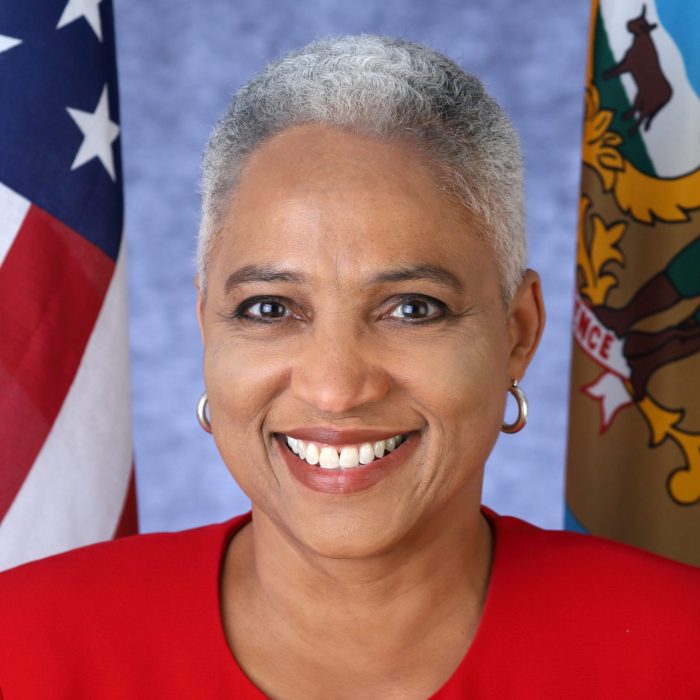
A federal judge has granted final approval for a substantial $700 million settlement with tech giant Google, concluding a major antitrust case that Delaware Attorney General Kathy Jennings helped lead.
The multistate legal action was initially launched in 2021 when 52 attorneys general from across the country joined forces in a bipartisan effort to challenge Google’s monopolistic practices. The lawsuit specifically targeted the company’s dominance in controlling how Android applications are distributed and how in-app purchases are processed.
With the court’s approval of this settlement agreement, the lengthy legal battle against Google’s app store monopoly has reached its conclusion. The case represents one of the largest antitrust settlements involving a major technology company in recent years.
New Castle County police have taken a 37-year-old Wilmington man into custody following reports of a neighborhood confrontation that involved a knife.
Law enforcement officers were called to the unit block of Hillside Road on Saturday evening, May 2, 2026, around 8:19 p.m. in response to the incident.
When police arrived at the scene, they interviewed multiple individuals who told officers they had been confronted by David Voyton during what authorities described as a neighborhood disagreement.
According to the New Castle County Division of Police, investigators determined that Voyton was involved in the altercation that prompted the emergency response.
DENVER — What was supposed to be a defensive battle between two of the NHL’s top defensive teams turned into an offensive showcase Sunday night, as the Colorado Avalanche defeated the Minnesota Wild 9-6 in their second-round playoff opener.
The game featured an incredible 14 different goal scorers, completely defying expectations for a matchup between teams known for their defensive prowess and elite goaltending.
Colorado netminder Scott Wedgewood allowed six goals — exceeding his total from the entire first-round sweep of Los Angeles by one. Meanwhile, Minnesota’s Jesper Wallstedt surrendered eight goals before an empty-net tally sealed the wild finish.
“It was a weird one,” commented Avalanche defenseman Cale Makar, who was the lone player to net multiple goals in the contest. The series continues Tuesday night at Ball Arena, with both clubs vowing to improve their defensive play.
Wild defenseman Jake Middleton echoed those sentiments, saying, “Weird game for sure. I mean, it’s the playoffs, you can’t be too surprised with what transpires.”
Avalanche center Nazem Kadri expressed his amazement at the goal-scoring barrage. “It was downright shocking to see so many goals,” Kadri noted. “We did not expect that kind of game at all. In fact, quite the opposite.”
Colorado, which allowed the fewest goals during the regular season, raced to a 3-0 advantage in less than seven minutes. However, Minnesota responded by scoring five of the following six goals, forcing the Avalanche to mount their own comeback effort.
“It felt like the puck, the puck just had eyes today for them,” Wallstedt reflected on Colorado’s offensive success.
Each period produced exactly five goals, creating an unprecedented scoring pace for teams known for defensive excellence.
“Yeah, it’s nothing either of us wants,” Wedgewood acknowledged. “Obviously we want a couple of them back on both sides. But you’ve got to give credit offenses. It’s playoff hockey.”
The President’s Trophy-winning Avalanche had opened their playoff run with consecutive 2-1 victories over Los Angeles, leading fans to expect another low-scoring affair.
Kadri found positive aspects in the high-scoring contest, suggesting Colorado’s week-long break after sweeping LA while Minnesota needed six games to eliminate Dallas may have contributed to the defensive struggles.
“Versatility,” Kadri explained regarding his team’s approach. “That’s what we always talk about, whether we’ve got to go high-flying offense or lock-down defense, I certainly feel comfortable in both scenarios and I know this team does as well.”
He added, “You’ve got to win different ways come playoff time. I think we were a little loose and a little rusty defensively, but we’ll get that tightened up. I think it’s just being off for a little while and defensively trying to get engaged in the game took a little longer than expected for us. But at the end of the day, we found a way to win. On the flip side, the offensive side was going.”
Colorado captain Gabe Landeskog acknowledged that while both teams are recognized for defense, “we’ve got some really good shooters on both teams.” Once the game became a shootout, survival became the primary objective.
“You have to find ways to win,” Landeskog stated. “We took the lead and they tied it back up and then they took the lead and we tied it back up, it was just back and forth, you’re just trying to find a way to win the hockey game, you’re trying to find a way to stop the bleeding. And you’re just trying to settle into the game.”
“It’s nice to be able to win games like this, not necessarily a coach’s dream or a player’s dream. We don’t want to give up six goals. So, it’s good to win this one, but we’ve got lots of things to clean up.”
Makar broke a 5-5 deadlock with an unassisted goal to open the third period, then added a crucial wrist shot with 2:54 remaining to make it 8-6. This performance came despite missing 17 minutes of the opening period due to a lower-body injury. Colorado defensemen combined for five goals in the contest.
“That’s Cale Makar doing Cale Makar things,” Landeskog praised his teammate’s effort.
Wild coach John Hynes summarized the chaotic nature of the game, saying, “Yeah, I mean, there’s a lot to unpack in this one. Was a bit of a helter-skelter game. Obviously you can tell by the score. We’ll take a look at some things and take some lessons out of this one. Be ready for Game 2.”
Despite the lopsided score, Hynes never considered removing Wallstedt from the game. “No, I thought Wally played … look what the score was,” Hynes explained. “And their guy was in for a lot of goals against, too.”
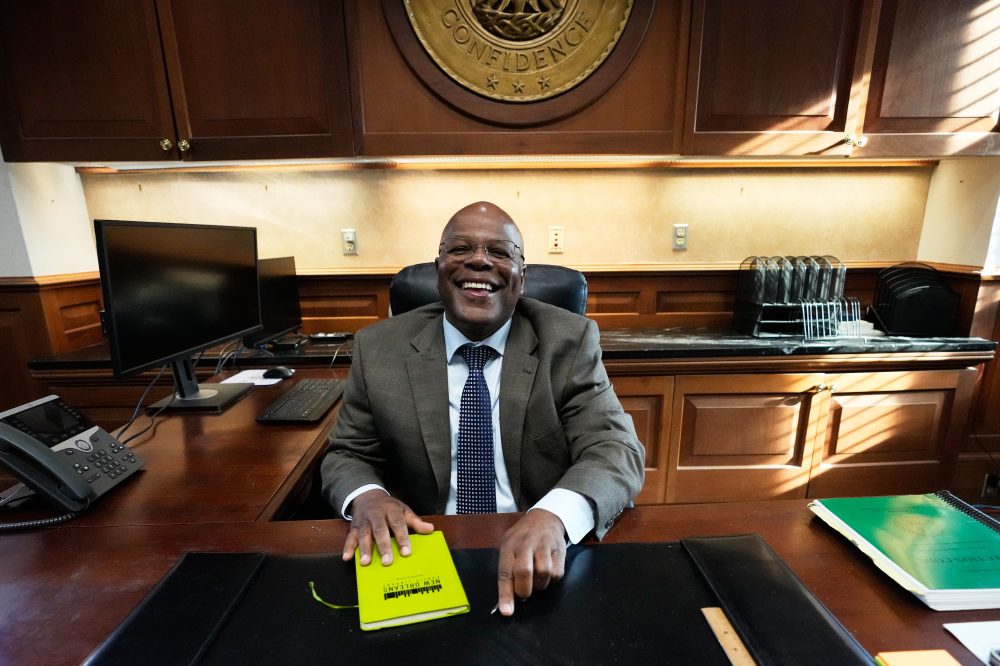
Salisbury, MD – Two new appointments have been made to strengthen Salisbury’s municipal leadership team, with city officials announcing Austin “Skip” Cox will take on the role of Assistant City Administrator while Jordan Ray steps up to serve as Acting Communications Director.
With more than three decades of expertise in construction, real estate development, and project oversight, Cox has managed large commercial developments and overseen budgets worth millions of dollars throughout his extensive career. Most recently serving as Senior Property and Project Manager at Brownmarsh LLC, Cox supervised the operations of over 2 million square feet of commercial properties spanning multiple states while spearheading capital improvements and facility enhancement projects. His previous collaboration with Salisbury on various planning and development initiatives provides him with valuable insight into the city’s operations.
“Austin ‘Skip’ Cox is a well-known and highly experienced contractor and developer. He brings next-level expertise in navigating both infrastructure and development projects. Our administration is extremely fortunate to have secured his skills and abilities as we advance both public and private initiatives. I look forward to his continued contributions and the tremendous value he brings to the Mayor’s Office,” Mayor Randy Taylor commented regarding Cox’s hiring.
Ray’s promotion to Acting Communications Director comes after his successful tenure as Media Specialist within the Mayor’s Office, where he has been instrumental in developing the city’s public communications strategy through digital platforms, community outreach programs, and media relations. His responsibilities have included creating promotional content, overseeing social media channels, producing multimedia materials, and coordinating coverage of significant municipal events and public announcements. Beyond his municipal experience, Ray founded his own media production business and possesses extensive knowledge in marketing, business growth, and community relations.
“I am thrilled to have Jordan Ray step into the role of Acting Communications Director. He has proven to be a thoughtful, talented, and gracious member of the team. I fully expect him to excel in this leadership role, as he has in the past, and I look forward to seeing him demonstrate that he is ready to lead,” Mayor Taylor stated about Ray’s advancement.
Both appointments are expected to bolster the city’s capacity to deliver services to residents, enhance community development efforts, and implement strategic municipal goals.
Following three consecutive seasons with over 100 losses — culminating in a franchise-worst 121 defeats last year — the Chicago White Sox desperately needed some spark.
Japanese infielder Munetaka Murakami has delivered exactly that kind of energy.
The 26-year-old slugger currently shares the major league home run lead with Aaron Judge at 13 long balls. Remarkably, those homers represent almost half of Murakami’s total base hits this season. His remaining 14 hits have all been singles, with zero doubles or triples to his name.
Such extreme power-or-nothing offensive numbers would mark historic territory if maintained across a full campaign. Currently, 48.1% of Murakami’s hits have left the ballpark. The existing single-season record among batting title qualifiers belongs to Barry Bonds at 46.8%, achieved during his legendary 2001 campaign when he launched 73 homers among 156 total hits.
Mark McGwire holds the next two spots on this exclusive list. His 1998 season featured 70 home runs in 152 hits (46.1%), while 1999 saw him blast 65 homers in 145 hits (44.8%). Just nine players in baseball history have homered on at least 40% of their hits, though not all required massive power numbers to reach that threshold. Joey Gallo achieved a 43.6% rate in 2017 with 41 homers in 94 hits while batting just .209. That profile may better mirror Murakami’s current .223 batting average.
With Murakami leading the charge, Chicago ranks 28th league-wide in team batting average but ninth in home runs. Fellow young player Colson Montgomery contributes a .227 average with nine homers. The White Sox enjoyed an encouraging stretch recently, riding a five-game winning streak before falling to San Diego on Sunday, missing a chance to reach .500.
Murakami joined Chicago after signing a two-year, $34 million deal to leave Japan during the offseason. Montgomery, at 24, remains under team control for several years. On the mound, rookie left-hander Noah Schultz has posted a 2-1 record with a 2.53 ERA in his debut season.
The White Sox also hold the top selection in this year’s amateur draft.
Regarding the automated ball-strike challenge system, no clear pattern emerges between successful challenges and team performance. The clubs with the most successful ABS challenges include Minnesota (52), Colorado (50), Miami (46), Oakland (45) and Kansas City (44). Among that group, only Oakland maintains a winning record.
Looking at success rates, Arizona leads at 64.3%, followed by San Diego (62.3%), Kansas City (62%), Detroit (60.7%) and Cincinnati (59.6%). San Diego, Detroit and Cincinnati currently have winning records.
Boston’s Ranger Suarez dominated Toronto on Monday night, striking out 10 batters while allowing just one hit across eight innings in a 5-0 Red Sox victory. That marked Boston’s third consecutive win, though they’ve since dropped four of their last five games. Suarez exited his previous Sunday start after four innings due to hamstring concerns.
Atlanta mounted a spectacular comeback against Colorado on Friday night, overcoming a 6-1 deficit to win 8-6. The Braves scored once in the seventh inning, then exploded for four runs in the eighth, highlighted by Mauricio Dubón’s bases-clearing triple. Michael Harris II capped the rally with a two-run homer in the ninth inning.
According to Baseball Savant, Colorado’s win probability reached 97.7% at one point during the game.
After completing a three-game sweep in Colorado, Atlanta now holds an 8.5-game lead atop the National League East. The Braves also boast baseball’s best run differential at plus-81.
For historical context, Adam Dunn connected on 41 homers among 110 hits (37.3%) in 2012 while batting .204. That same season, Dunn established the American League record with 222 strikeouts.
NEW YORK (AP) — John Sterling, the legendary radio voice of the New York Yankees celebrated for his dramatic and personalized home run catchphrases, passed away Monday, according to announcements from the baseball team and radio station WFAN. He was 87 years old.
Sterling had received heart bypass surgery during the winter months and was recovering at his Edgewater, New Jersey residence with professional care assistance. The Yankees organization confirmed his death occurred at a New Jersey medical facility.
The veteran broadcaster had covered 5,631 total games — including 5,420 regular season contests and 211 playoff games — before stepping away in April 2024 shortly after the season began, saying he was experiencing exhaustion. Sterling maintained an incredible streak of 5,060 straight games from September 1989 through July 2019 after initially joining the Yankees organization as a pregame show host. He briefly returned from retirement to cover the team’s 2024 playoff run.
Sterling’s signature home run announcements became as iconic to Yankees culture as the team’s famous pinstripe uniforms or World Series trophies. When new players joined the roster through trades or call-ups, supporters eagerly anticipated what creative phrase he would craft for their first long ball.
His memorable calls included “Bernie goes boom! Bern, baby, Bern!” for Bernie Williams, “It’s a Jeter jolt!” for Derek Jeter, “It’s an A-bomb from A-Rod!” for Alex Rodriguez, “The Giambino!” for Jason Giambi, and “A thrilla from Godzilla!” for Hideki Matsui. These personalized signatures became beloved from the team’s locker room to the stadium’s upper deck.
“It wasn’t meant that way. I just happened to do something for Bernie Williams. He hit a home run and I said, ‘Bern, baby, Bern!’ And it kind of mushroomed from there,” Sterling explained during his retirement announcement. “But it never was intended for every player, because, frankly, I’m not smart enough to do something for every player. But I did the best I could, and it’s amazing what started out as — became so big.”
“I did say ‘A-bomb from A-Rod!’ when he hit a home run and I did say: ‘Robbie Canó, don’t you know,’ and I think those were pretty good,” Sterling reflected on his calls for Rodriguez and Robinson Canó.
Originally named Josh Sloss, Sterling was born on July 4, 1938, in Manhattan and left his college studies to pursue radio work. His broadcasting dreams began after listening to “The Eddie Bracken Show” during the 1940s.
“I didn’t want to be Eddie Bracken. I wanted to be the guy who says: ‘Live from Hollywood!’” Sterling recalled. “And I knew that maybe a year or two later, but before puberty I knew I was going to be on the air. And it really helped me because I didn’t worry about school, because I knew what I was going to do. And it was a good thing because I was a terrible student — terrible.”
His broadcasting journey began in 1960 at a radio station in Wellsville, New York.
“I was preparing this all my life. It was easy,” he said. “I could always open my mouth and talk.”
Sterling drew inspiration from broadcasting legends Mel Allen, Russ Hodges, and Jim Karvellas. He eventually earned his place alongside Allen in Yankees broadcasting history, joining the ranks of Red Barber, Phil Rizzuto, Bill White, and Frank Messer.
During his early career, Sterling called games for the NBA’s Washington Bullets and Morgan State football, gaining recognition for his enthusiastic “Islanders goal! Islanders goal!” calls during the hockey team’s broadcasts from 1975-78, as well as covering the NBA’s Nets from 1975-80.
Sterling’s initial Yankees connection came through WMCA pregame radio programs from 1971-78. He later relocated to Atlanta, working with the Braves from 1982-87 and Hawks from 1981-89, before returning to New York to join the Yankees, taking over from Hank Greenwald.
Sterling rarely visited the team’s clubhouse and maintained his professional appearance in Brooks Brothers suits despite working in radio.
Throughout his Yankees tenure, he worked alongside various broadcast partners including Jay Johnstone (1989-90), Joe Angel (1991), Michael Kay (1992-2001), Charley Steiner (2002-04), and Suzyn Waldman (since 2005). Sterling and Waldman received induction into the New York State Broadcasters Hall of Fame in 2016.
Sterling took pride in his distinctive broadcasting approach.
“Harry Caray told me some years ago,” he remembered in 2024, referencing the famous Chicago Cubs and White Sox announcer, “and he says, ‘John, all the guys are great. We just have different styles.’ And no one has a more different style than I have.”
PORTLAND, Maine — The Trump administration has announced its strong support for legislation that would postpone new federal safeguards for North Atlantic right whales until 2035, prioritizing the interests of commercial fishing operations over immediate conservation measures.
With approximately 380 of these massive marine mammals remaining in North Atlantic waters, the species faces critical threats from entanglement in fishing gear and vessel strikes. These whales can weigh as much as a medium-sized bulldozer and are among the most endangered whale species on the planet.
The legislation, introduced by Maine Democratic Representative Jared Golden, aims to provide additional time for developing regulations that would be less restrictive to fishing operations. In a Friday memorandum, the White House indicated President Trump’s senior advisors would recommend signing the measure if Congress approves it.
Golden defended his proposal, stating that Maine’s renowned lobster fishing industry would have faced devastating impacts from the previously planned regulations, which he described as “based on flawed science and hypothetical scenarios rather than the reality on the water.”
“A longer delay would give the government time to get the science right” regarding whale threats, Golden explained in his Friday statement.
The timing is significant as federal authorities had already suspended new right whale regulations until 2028. The proposed extension would add seven more years to that timeline.
These endangered whales follow a predictable migration pattern, traveling from birthing waters near Florida and Georgia northward to feeding areas around New England and Canadian waters. However, warming ocean temperatures have caused the whales to venture outside traditional protected zones while searching for food sources.
Commercial lobster and crab fishing operations generate hundreds of millions of dollars in revenue annually at American ports.
“This legislation is critical to ensuring the long-term stability of American fisheries for generations to come,” stated John Drouin, vice president of the New England Fishermen’s Stewardship Association.
Conservation organizations, including California-based In Defense of Animals, have strongly opposed efforts to weaken whale protection measures. They point to alarming population statistics showing the species declined by approximately 25% between 2010 and 2020, with recovery efforts progressing slowly in recent years.
However, some recent developments offer hope for the species. The New England Aquarium reported that this year’s calving season resulted in 23 mother-calf pairs, representing the highest count since 2009.
Despite this positive news, the aquarium emphasized that right whales remain critically endangered after more than five decades of federal protection. These whales were once plentiful along the Eastern seaboard before commercial whaling operations nearly drove them to extinction.
BERLIN — Multiple pedestrians sustained injuries Monday when a vehicle struck them in downtown Leipzig, Germany, according to local authorities.
Officials have not released exact casualty figures at this time. However, police confirmed that while several people were hurt in the incident, no fatalities have been reported, according to the German news agency dpa.
According to an official statement on Leipzig’s municipal website, authorities have apprehended both the vehicle and its operator, and the threat has been neutralized.
The collision occurred on Grimmaische Strasse, a thoroughfare that connects to Leipzig’s main retail district in the city center.
With a population exceeding 630,000 residents, Leipzig ranks among eastern Germany’s largest metropolitan areas and sits southwest of the nation’s capital, Berlin.
Former New York City Mayor Rudy Giuliani has been taken off a ventilator and is now breathing independently while recovering from pneumonia at a Florida medical facility, according to his representative.
The 81-year-old political figure continues to receive treatment in critical but stable condition at the hospital near Palm Beach, with medical staff keeping close watch as a safety precaution, spokesman Ted Goodman announced Monday.
According to Goodman, Giuliani’s respiratory problems were worsened by restricted airway disease linked to his contact with debris and harmful substances during the September 11, 2001, World Trade Center attacks.
The former mayor’s admission to the hospital followed his Friday evening online program, where viewers could hear him coughing and speaking in a raspy voice as he told his audience his voice was “a little under the weather.”
“This condition adds complications to any respiratory illness, and the virus quickly overwhelmed his body, requiring mechanical ventilation to maintain adequate oxygen and stabilize his condition,” Goodman stated.
The spokesperson characterized Giuliani as “the ultimate fighter” and declared, “he is winning this battle.”
Goodman noted that Giuliani’s relatives and main doctor are staying close to the former mayor. He mentioned their gratitude for the “outpouring of love and support” from those sending well-wishes.
“The mayor believes in the power of prayer, and we are feeling that strength today,” Goodman stated.
During his eight years leading America’s largest city, Giuliani’s time in office was marked by the 9/11 terrorist attack occurring just months before his term ended. His response to the crisis earned him recognition as “America’s mayor,” a knighthood from Queen Elizabeth II, and Time magazine’s Person of the Year honor.
The Republican politician later launched an unsuccessful presidential campaign and served as an advisor to President Donald Trump, leading efforts to challenge the results of the 2020 election.
Trump announced last year that he would present Giuliani with the Presidential Medal of Freedom.
During Friday’s broadcast of his nightly program “America’s Mayor Live,” Giuliani began coughing and spoke with an unusually hoarse voice. Before discussing Iran-related topics, he noted: “My voice is a little under the weather, so I won’t be able to speak as loudly as I usually do, but I’ll get closer to the microphone.”
Writing on his Truth Social account, Trump described Giuliani as “a True Warrior, and the Best Mayor in the History of New York City, BY FAR.”
“What a tragedy that he was treated so badly by the Radical Left Lunatics, Democrats ALL — AND HE WAS RIGHT ABOUT EVERYTHING!” Trump posted Sunday. “They cheated on the Elections, fabricated hundreds of stories, did anything possible to destroy our Nation, and now, look at Rudy. So sad!”
While serving as Trump’s personal lawyer and advisor, Giuliani actively promoted the president’s claims of election fraud in 2020, which Democrat Joe Biden won. Trump and his supporters lost numerous court cases alleging fraud, and multiple recounts, examinations and audits of election results revealed no evidence of substantial misconduct or mistakes.
Two former Georgia election officials subsequently secured a $148 million defamation award against Giuliani. During efforts to collect the judgment, the former federal prosecutor was held in contempt and faced a winter trial regarding ownership of his assets.
Giuliani eventually reached an agreement allowing him to retain his residences and various possessions, including treasured World Series rings, in return for undisclosed payment and a commitment to cease making negative statements about the former election workers.
Last September, Giuliani required hospitalization after sustaining a broken vertebra and additional injuries in a New Hampshire vehicle accident.
Born in New York, Giuliani won the mayoral election in 1993 following his career as one of the country’s most prominent federal prosecutors, pursuing organized crime figures and corrupt Wall Street professionals.
He sought a U.S. Senate seat in 2000 but ended his campaign against Hillary Rodham Clinton following a prostate cancer diagnosis.
Giuliani pursued the presidency in 2007, initially leading among Republican candidates due to his post-9/11 fame. However, his campaign faltered quickly as he exited the race after poor primary performances, facing GOP opposition to his previous positions on abortion rights, gay rights and gun control, along with questions about his personal affairs and Middle Eastern business connections.
He considered running for additional offices before shifting to political analysis.
In 2016, Trump utilized Giuliani’s political expertise and dedication, deploying him as a spokesperson to lead attacks against Clinton, his Democratic opponent. Following Trump’s victory, Giuliani remained his defender, even journeying to Ukraine to gather damaging material about Biden’s son Hunter.
BERLIN – German Chancellor Friedrich Merz is confronting the most severe diplomatic rift with the United States in recent decades as he approaches the one-year anniversary of taking office this week. The crisis escalated after President Donald Trump announced plans to impose 25% tariffs on European automotive imports and withdraw thousands of American military personnel from Germany.
These developments, revealed on Friday following Trump’s furious response to Merz’s critique of American tactics in the Iran conflict, highlight the deteriorating relationship between the two nations that has become increasingly strained during Trump’s second presidency. The situation adds to a growing list of challenges now confronting the German chancellor.
“We can see what’s going on with Donald Trump and the U.S., and that this is having an impact. We can see that China is getting stronger and stronger,” Finance Minister Lars Klingbeil, who serves as Merz’s deputy and leads his Social Democrat coalition partners, stated to Reuters.
“We can see that Europe isn’t strong enough. In this regard, a great deal depends on Germany.”
Following two consecutive years of economic downturn, Germany’s fragile economic recovery now faces potential collapse due to energy disruptions stemming from the Iran crisis. Meanwhile, promised reforms covering taxation, social services, and healthcare have been overshadowed by disagreements within the governing coalition.
Merz’s spontaneous communication approach, which he admits can be impulsive at times, has also frustrated German citizens.
German automakers, who form the foundation of the nation’s manufacturing sector and already face intense competition from Chinese companies, must now contend with increased tariffs rising from 15% to 25% in one of their crucial export destinations.
During a Sunday interview with German public television, Merz, who took his oath of office on May 6 of the previous year, recognized growing public skepticism. Recent polling data shows the far-right Alternative for Germany party now surpasses his conservative party as the nation’s most favored political organization.
“The doubts are growing. Not about me, but about the coalition,” he said.
Throughout most of his inaugural year, Merz compensated for domestic dissatisfaction with a relatively confident international presence, temporarily earning recognition as one of the few European leaders to develop a positive personal connection with Trump.
“He has strengthened key relationships, particularly with France and Poland, and has secured European influence in the context of the war in Ukraine through forums such as the E3,” explained Oliver Lembcke, a political scientist at Ruhr University Bochum, noting that Merz’s primary challenges remain domestic.
“In domestic policy, he’s fallen short of expectations – particularly when it comes to leadership.”
As someone who speaks English fluently, Merz maintains his belief in the transatlantic partnership, working to preserve it while Germany reconstructs its weakened military after years of insufficient investment.
With the Ukrainian conflict continuing to rage near the European Union’s borders, he has also proceeded cautiously in attempting to dissuade Trump from completely abandoning support for Kyiv.
However, he has consistently cautioned that the period of depending on American forces for European protection has ended and has grown increasingly disapproving of the US-Israeli conflict with Iran, declining to deploy German troops to help secure the vital Strait of Hormuz until hostilities cease and a comprehensive international mission receives approval.
Recent events have demonstrated how delicate the balance must be with an American administration that has openly expressed contempt for European leadership, including those like Merz or Italian Prime Minister Giorgia Meloni who previously received Trump’s praise.
German Defense Minister Boris Pistorius minimized the importance of Trump’s decision to remove at least 5,000 troops from Germany and cancel planned Tomahawk cruise missile deployments, stating over the weekend that the action was anticipated.
Merz rejected claims that the decision resulted from his comments to students the previous week suggesting the US lacked an exit strategy in Iran and was experiencing “humiliation,” despite Trump’s angry social media criticism of the chancellor he once considered a friend.
Similar communication difficulties have characterized Merz’s tenure, including when he provoked controversy last year by implying that immigration had changed how German communities appeared.
Trump’s frustration with Europe has been evident throughout his presidency, particularly following Vice President JD Vance’s harsh remarks at last year’s Munich Security Conference.
“I think that just sped things up, but it wasn’t what set it off,” stated Roderich Kiesewetter, a foreign affairs committee member from Merz’s conservative CDU party. He indicated that canceling the Biden administration’s plan to station a US battalion equipped with long-range Tomahawk missiles posed a more serious concern for Germany.
“That undermines our deterrent. And it undermines trust in the U.S. And that is the real bad news,” he said.
The specific details regarding which troops will be removed from the 40,000 American forces based in Germany and how this will impact major US military installations, including the extensive Ramstein air base, remain uncertain.
While surveys indicate Trump lacks popularity among Germans and public sentiment strongly supports avoiding involvement in the Iran conflict, the American military presence has become an established part of life for Germans in the country’s western regions.
In Landstuhl, which houses one of the largest US military medical facilities, local resident Maria Raftopoulo described the deep connections that have developed between community members and American personnel over time.
“And even though there are fewer Americans now, they still provide jobs, they still rent, they contribute to the region doing as well as it does.”
BERLIN – A deadly vehicle attack in downtown Leipzig, Germany claimed two lives and left two others with severe injuries Monday when a car plowed into pedestrians, according to local media reports citing police sources.
Authorities in Leipzig verified to news outlets that a vehicle collision resulted in multiple casualties, though officials declined to provide additional specifics about the incident.
Witnesses described seeing a damaged Volkswagen SUV racing through a pedestrian area with an individual positioned on top of the vehicle, according to Radio Leipzig’s reporting.
Local media outlets quoted eyewitnesses who described seeing multiple victims covered by sheets at the scene, with some reports also mentioning a stabbing incident in connection with the attack.
Brazilian President Luiz Inacio Lula da Silva is set to make a diplomatic trip to the United States this week for discussions with President Donald Trump, according to two Brazilian government officials who spoke with Reuters on Monday.
The Brazilian leader is expected to depart on Wednesday and conduct his meeting with Trump the following day, one source indicated.
The Brazilian newspaper O Globo had reported on these travel arrangements earlier Monday.
When contacted for confirmation, the White House had not yet provided a response.
This upcoming visit stems from an agreement the two presidents reached during a telephone conversation earlier this year, with the original plan calling for the meeting to occur in March. However, that timeline was not met and the visit was rescheduled.
A major European semiconductor manufacturer is projecting massive growth in its space technology division, anticipating more than $3 billion in combined revenue over the next three years as satellite internet services explode in popularity.
STMicroelectronics announced Monday that it expects cumulative earnings from its space chip business to exceed $3 billion between 2026 and 2028, fueled by booming demand for semiconductors powering low-Earth orbit satellite systems.
The Franco-Italian company’s stock price surged as much as 7% following the announcement before closing 2.2% higher at 1536 GMT.
The semiconductor giant revealed dramatic growth figures, with space-related revenue climbing from approximately $175 million in 2021 to roughly $600 million in 2025, and projections showing nearly $1 billion by 2026.
“We are just in the early innings of this market,” STMicro executive Remi El-Ouazzane explained during an analyst conference call.
Major companies including Starlink, AST SpaceMobile, and Amazon Leo are transforming low-Earth orbit satellite communications from specialized applications into mainstream broadband internet and direct-to-cell phone services, with potential expansion into space-based data centers.
STMicroelectronics believes its decade-long supply partnership with Starlink for both satellites and user equipment positions the company to maintain its commanding market position, holding nearly 90% market share even as competition intensifies in the rapidly expanding sector.
The European chipmaker identified China as a significant opportunity for user terminal sales but acknowledged export restrictions prevent satellite technology business in that market.
“We are unapologetically European. So we end up being actually U.S. and China compatible,” El-Ouazzane stated.
“The China compatibility, though, starts and finishes at user terminal. Because of export control, we cannot have any satellite technology happening in China,” he elaborated.
While the company recognizes orbital data centers as a potential future revenue stream, it has not incorporated any related income projections into its current three-year financial targets.
“My wild guess as to when we could start to see, a relevant amount of orbital data centres in the sky, I would say three years from now would be maybe an interesting guess,” El-Ouazzane told reporters.
Kansas City made several roster adjustments Monday, releasing quarterback Jake Haener along with two defensive players.
The Chiefs also let go of defensive end Ethan Hurkett and defensive tackle Zacch Pickens while bringing in three new free agents: wide receiver Xavier Loyd, defensive back Marlen Sewell, and offensive tackle Kahlil Benson.
The 27-year-old Haener had been Kansas City’s most significant free-agent acquisition of the offseason when they signed him February 2nd. The team brought him in to provide quarterback depth as two-time NFL MVP Patrick Mahomes recovers from ACL surgery. However, Kansas City later added veteran quarterback Justin Fields in March to serve as Mahomes’ primary backup.
New Orleans selected Haener in the fourth round of the 2023 draft. During the 2024 season with the Saints, he saw action in eight contests with one starting assignment, throwing for 226 yards on 18 completions out of 39 attempts, recording one touchdown pass and one interception. The Saints cut him loose in January.
The Chiefs selected LSU’s Garrett Nussmeier in last month’s seventh round and also have Chris Oladokun on their quarterback roster. When Mahomes went down with injury last season, Oladokun stepped in and threw for 235 yards while completing 35 of 55 pass attempts across three appearances, including two starts, with one touchdown and zero interceptions.
The Delaware Farm Bureau has launched a special student membership program targeting young adults between 18 and 25 years old who are pursuing agriculture-related studies at the college level. The organization is offering this new category at a reduced annual fee of $30.
This membership tier caters specifically to college students studying agriculture or related disciplines who want to support and defend Delaware’s farming industry through educational initiatives and advocacy work. Student members will gain access to professional networking events, educational workshops, leadership training programs, and opportunities to influence the direction of agriculture policy in Delaware.
Through their Delaware Farm Bureau membership, students can bridge the gap between academic studies and practical industry experience while forming valuable professional connections and joining Delaware’s most prominent agricultural advocacy group.
As an incentive, the organization will provide free Delaware Farm Bureau t-shirts to the first ten students who sign up for membership.
Students who want additional information about the program or wish to enroll can go to defb.org or reach out to Jaiden Cain, the organization’s Membership and Outreach Coordinator, via email at [email protected].
Delaware environmental officials are organizing their inaugural public forum to address the recent discovery of Chronic Wasting Disease affecting the state’s white-tailed deer population.
The Department of Natural Resources and Environmental Control has scheduled the community gathering for Wednesday evening, May 13th, beginning at 6 p.m. at the Baldcypress Nature Center located within Trap Pond State Park in Laurel.
Residents who cannot participate in person will have the opportunity to join the discussion through a virtual meeting platform.
Dover Police have made available updated registry information for sex offenders residing within city boundaries, as required under state notification laws.
The department has published a series of notification documents containing current information about registered individuals in the community. These updates are part of ongoing public safety efforts to keep residents informed about sex offenders in their neighborhoods.
Community members who have questions or need additional information about these registry notifications are encouraged to reach out to the Dover Police Sex Offender Enforcement Unit for assistance.
The notification materials include detailed information about each registered individual as mandated by Delaware’s sex offender registration requirements.
ANNAPOLIS, MD – Maryland horse enthusiasts and racing fans will have a unique opportunity to go behind the scenes at working horse farms across the state this weekend. On Sunday, May 10, 2026, participating farms will open their gates to the public as part of the Preakness Festival celebration.
The special farm tour event coincides with Maryland’s annual Preakness Stakes festivities, giving both residents and out-of-state visitors a chance to witness firsthand the operations where thoroughbreds are bred and trained. The tours are scheduled to provide an inside look at one of Maryland’s most treasured agricultural and sporting traditions.
The farm visits represent a key component of the broader Preakness Festival, which celebrates the state’s rich horse racing heritage leading up to the second jewel of the Triple Crown.
ANNAPOLIS, MD (May 4, 2026) — Horse farms throughout Maryland will open their gates to the public this weekend, offering visitors an exclusive glimpse into the world of thoroughbred racing ahead of the Preakness Stakes.
The special farm tours are scheduled for Sunday, May 10, 2026, giving both Maryland residents and out-of-state guests the opportunity to witness the state’s equestrian heritage firsthand. These tours are being organized as part of the broader Preakness Festival celebrations.
Participating horse farms will provide visitors with behind-the-scenes access to see where some of Maryland’s premier racing horses are bred, raised and trained. The event represents a unique opportunity for the public to connect with one of the state’s most treasured cultural traditions.
CAPE CANAVERAL, Fla. (AP) — Scientists report discovering what appears to be a fragile atmosphere surrounding a small, frozen celestial body located in the outer reaches of our solar system past Pluto, possibly formed through volcanic activity or an impact from a comet.
Measuring approximately 300 miles (500 kilometers) in diameter, this distant mini-world may represent the smallest celestial object in our solar system confirmed to possess a gravity-bound global atmosphere, according to lead study author Ko Arimatsu from Japan’s National Astronomical Observatory.
“This is an amazing development, but it sorely needs independent verification. The implications are profound if verified,” stated Alan Stern from the Southwest Research Institute, who headed NASA’s New Horizons mission to Pluto and wasn’t part of this research.
The discovery provides new understanding about the most distant, frigid objects inhabiting the Kuiper Belt region of our solar system. Scientists employed three Japanese telescopes to study the object during 2024 when it crossed between Earth and a distant star, causing temporary dimming of the starlight.
“It changes our view of small worlds in the solar system, not only beyond Neptune,” Arimatsu explained via email. He described discovering an atmosphere around such a diminutive object as “genuinely surprising” and noted it contradicts “the conventional view that atmospheres are limited to large planets, dwarf planets and some large moons.”
The minor planet, officially designated (612533) 2002 XV93, belongs to a class called plutinos, completing two solar orbits during Neptune’s three-orbit cycle. When observed, it sat more than 3.4 billion miles (5.5 billion kilometers) from Earth, positioned even farther than Pluto, which remains the only other Kuiper Belt object known to possess an atmosphere.
This frozen world’s atmosphere appears to be between 5 million and 10 million times less dense than Earth’s protective atmospheric layer, based on research published Monday in Nature Astronomy journal.
The atmosphere measures 50 to 100 times thinner than Pluto’s already sparse atmospheric envelope. Arimatsu suggests the most probable atmospheric components include methane, nitrogen or carbon monoxide, any of which could explain the observed starlight dimming during the object’s transit.
Additional observations, particularly using NASA’s Webb Space Telescope, might confirm the atmosphere’s composition, Arimatsu noted.
“That is why future monitoring is so important,” he explained. “If the atmosphere fades over the next several years, that would support an impact origin. If it persists, or varies seasonally, that would point more toward ongoing internal gas supply” from ice volcanoes.
ORLANDO, Fla. — Another sloth has died at a Central Florida zoo following its rescue from a failed Orlando tourist attraction that authorities say was responsible for the deaths of more than 30 other sloths.
The Central Florida Zoo and Botanical Gardens announced that Habanero, an adult male sloth, was put down on Saturday to end his suffering. Zoo officials had been providing intensive care to Habanero and a dozen other sloths surrendered by Sloth World, an Orlando-area tourist destination that was planned but never launched.
Last week, another rescued sloth named Bandit also died at the facility.
“When the sloths arrived, all were underweight and are being treated for gastrointestinal (GI) issues, requiring intensive, specialized care,” the zoo said in a statement. “Habanero initially showed encouraging signs of stabilization, including eating and drinking regularly under the close supervision of the zoo’s veterinary and animal care teams. In recent days, however, his condition worsened.”
State and local officials have launched a criminal probe into how the animals were cared for while under Sloth World’s control.
Records from the Florida Fish and Wildlife Conservation Commission show that 31 sloths died between December 2024 and February 2025.
According to the wildlife commission, 21 sloths brought from Guyana perished at an Orlando location known as Sanctuary World Imports during December 2024 when cold weather pushed temperatures down to 40-55 degrees Fahrenheit. Unlike many other mammals, sloths cannot effectively control their body temperature and need environments between 68-85 degrees Fahrenheit to survive.
The attraction subsequently brought in 10 more sloths from Peru in February 2025. Two arrived already dead, while the remaining animals appeared severely malnourished and succumbed to what officials described as “poor health issues,” the state report indicated.
Attempts to reach the tourist attraction for comment were unsuccessful Monday.
NEW ORLEANS — A man who served decades behind bars for a crime he didn’t commit started his new job Monday running New Orleans’ criminal court operations, after a federal judge temporarily stopped Louisiana officials from dissolving his elected position.
Calvin Duncan secured 68% of voter support to become Orleans Parish criminal court clerk. However, with encouragement from Republican Governor Jeff Landry, the Republican-majority state Legislature quickly enacted a bill to eliminate Duncan’s role just days before he was scheduled to begin serving, moving his responsibilities to a different official.
On Sunday, U.S. District Judge John deGravelles stepped in, ruling that the legislation abolishing the clerk role violated constitutional principles by replacing a position chosen by voters with one filled through political appointment. He approved Duncan’s request for emergency protection while court proceedings continue and scheduled a Monday status meeting for all parties.
“The Court is not ruling that the state lacks the authority to abolish an agency or office writ large,” deGravelles stated.
The judge explained he’s “simply holding” that Louisiana’s method violated Duncan’s constitutional rights to due process.
Louisiana officials quickly filed an appeal Monday, requesting a higher court suspend the judge’s order.
The bill, which Landry approved Thursday, would have transferred criminal court clerk duties to the Orleans Parish civil court clerk. Landry and fellow Republicans argued the consolidation would streamline government operations and bring Orleans Parish in line with other areas statewide.
When Duncan walked up the courthouse steps Monday morning and entered his new workspace, he shared with The Associated Press his enthusiasm about starting work and confidence in ultimately prevailing in court.
“I’m not just elated but overelated and happy that this day finally came,” Duncan said to the AP. “It’s something I’ve been working towards a very long time. This is a testament that God is still in control.”
Duncan, whose murder conviction was overturned in 2021, studied law while incarcerated and eventually obtained his attorney’s license. He campaigned for the clerk role promising to make court documents more accessible, inspiring many voters with his firsthand experience battling to prove his innocence. He shared with the AP his plans to use his opening day meeting staff members and fellow courthouse workers.
Duncan’s advocates argue that efforts by the predominantly white conservative Legislature to eliminate Duncan’s position undermines the democratic choice of New Orleans voters, a mainly Black Democratic stronghold within a Republican-controlled state. Louisiana has been at the forefront of challenging the Voting Rights Act.
New Orleans Mayor Helena Moreno, a Democrat, praised the judge’s decision in Duncan’s case as protecting voting rights.
“The court made clear that you cannot change the rules after an election has already taken place,” Moreno stated. “Voters in New Orleans overwhelmingly elected Calvin Duncan and the will of the people should be respected.”
WASHINGTON — The nation’s highest court has temporarily reinstated widespread availability of the abortion medication mifepristone on Monday, halting a decision that could have dramatically altered how abortions are accessed nationwide.
Justice Samuel Alito signed the temporary order that permits women to receive the medication from pharmacies or by mail delivery, eliminating the requirement for face-to-face medical consultations.
These accessibility guidelines had been operating for multiple years before a federal appeals court established additional limitations the previous week.
Most abortions performed in America involve medication protocols, typically combining mifepristone with another medication called misoprostol. The continued accessibility of these drugs has lessened the effects of abortion prohibitions that numerous Republican-controlled states have begun implementing following the Supreme Court’s 2022 decision that eliminated Roe v. Wade protections and permitted individual states to enact their own restrictions.
Louisiana brought legal action seeking to limit mifepristone access, claiming the drug’s availability weakened their state’s prohibition.
Several Democratic-controlled states have enacted legislation designed to provide legal safeguards for medical professionals who use telehealth services to prescribe these medications to patients residing in states with abortion bans.
Alito’s directive remains active for an additional seven days as both parties submit their responses and the court conducts a more comprehensive review of the matter.
The companies that produce mifepristone submitted urgent appeals requesting Supreme Court intervention.
WASHINGTON (AP) — A federal judge issued instructions Monday requiring government officials to give advance warning before removing more than 10 trees at a historic Washington D.C. golf course that President Donald Trump intends to renovate.
During a virtual court session, U.S. District Court Judge Ana Reyes declined to immediately grant a temporary restraining order in the lawsuit filed by the DC Preservation League. However, she directed the National Park Service to coordinate with government attorneys before proceeding with the removal of more than 10 trees.
The court session followed an urgent legal filing by preservationists seeking to halt construction activities at the golf course, based on media reports indicating major renovation work was scheduled to commence Monday.
During the proceedings, Kevin Griess, who oversees the National Mall and Memorial Parks for the Park Service, stated that no major construction was planned for Monday, though he confirmed that safety evaluations were currently taking place.
Judge Reyes expressed her reluctance to micromanage park operations, referencing the popular television comedy series when she told the parties she didn’t want to function as the “Parks and Rec” department, while also emphasizing her concern about potential tree destruction.
“I’m no Amy Poehler,” she remarked, citing the comedy show’s lead actress.
During Monday’s session, the judge mentioned learning about closure notices allegedly posted at the location, prompting Griess to request verification. He subsequently confirmed that no such signage was present. Reyes requested notification to the government’s legal team if any closure signs were discovered.
The legal challenge against the Department of the Interior contends that the Trump administration’s plans to reconstruct East Potomac Park, which includes the East Potomac Golf Course, would breach the 1897 congressional legislation that established the park. The approximately 130-year-old law designated the park for “recreation and the pleasure of the people.” The golf facility itself began operations in 1919.
Trump, who is known for his passion for golf, also has plans to renovate a military golf facility located just outside Washington that has served presidents for many decades.
Delaware State Auditor Lydia York has selected a new second-in-command for her office following a recent retirement.
York announced today that Scott G. Sipple Jr., who holds certifications as both a CPA and CFE, has been promoted to serve as Deputy Auditor of Accounts. The position became available after Robert Sisk stepped down from his role as deputy auditor to enter retirement.
Sipple’s elevation to the deputy position represents a key staffing change within the state auditor’s office as York continues her oversight responsibilities for Delaware’s financial operations.
Formula One officials are reviewing policies around teams owning stakes in multiple racing operations after reports emerged linking Mercedes to a potential investment in Alpine, which is currently owned by Renault.
Speaking at the Miami Grand Prix, Mohammed Ben Sulayem, who leads the International Automobile Federation (FIA), revealed his personal opposition to such arrangements while acknowledging there could be valid justifications for allowing them.
The sport currently permits Red Bull to control both Red Bull Racing and Racing Bulls, making up two of Formula One’s 11 competing teams. While these organizations function as separate entities, their drivers work under centralized contracts and key personnel can transfer between them without the typical lengthy non-compete periods known as “gardening leave.”
Competitors have raised concerns about this structure, with McLaren’s Zak Brown particularly vocal about the challenges it creates when trying to hire top talent. Critics also worry about potential coordination between commonly-owned teams that could provide unfair advantages.
Ben Sulayem indicated that shared ownership might be permissible under certain circumstances.
“As long as you are not trying to take it (the stake) because you don’t want others to take it, or also get voting power when it comes to the regulations, then maybe it’s OK,” he stated.
“But then I do believe that owning two is not the right way, this is my personal point of view, but we are looking into that because it’s a complicated area,” Ben Sulayem added.
Red Bull’s acquisition of the struggling Minardi team in late 2005 prevented that organization’s collapse, preserving jobs and maintaining the sport’s full roster of competitors. The secondary team has since served as a development program for Red Bull’s main operation, nurturing future champions including Max Verstappen and Sebastian Vettel, along with numerous race winners.
Industry speculation has connected former Red Bull team principal Christian Horner, who was dismissed last July, to a 24% ownership stake in Alpine. This stake is currently held by investors led by Otro Capital, who are seeking buyers.
Flavio Briatore, who effectively runs Alpine, confirmed in March that Mercedes had also shown interest in acquiring the stake. Such a purchase would likely eliminate Horner’s involvement, given his contentious history with Mercedes team leader Toto Wolff.
Ben Sulayem expressed confidence that Horner would eventually return to Formula One in some capacity.
“Who can remove Christian Horner’s name from motorsport and Formula One?” he questioned. “You can’t. It was always successful. But success also has enemies, as we know.
“If you ask me, we miss him in this sport and I do. I keep in touch with him and he was good for the team, good for the sport.
“He wants to come back. I talk to him regularly and I feel he will be back. When he comes back, it’s like he went for a vacation … he’s been a character in the sport,” Ben Sulayem concluded.
The Trump administration began a new maritime operation Monday aimed at escorting commercial vessels through the Strait of Hormuz, where hundreds of ships have remained trapped since hostilities with Iran commenced.
According to U.S. military officials, two merchant vessels flying American flags have “successfully transited” the strategic waterway. In a separate development, American military leaders rejected Iranian assertions that they had attacked a U.S. Navy ship in waters southeast of the strait.
Iranian officials delivered their most recent diplomatic proposal to U.S. mediators through Pakistan, according to Iran’s government-controlled IRNA news service on Friday. President Trump later stated he was “not satisfied” with the offer but declined to specify what aspects of the proposal were inadequate. The fragile ceasefire between Washington and Tehran has now persisted for three weeks.
Financial markets showed mixed reactions Monday, with stocks hovering near record levels while petroleum prices surged amid uncertainty over when oil tankers might resume normal passage through the strait and restore global crude oil distribution. Conflicting reports about a potential Iranian attack on an American naval vessel in the waterway added to market tensions.
The S&P 500 declined 0.1% following its latest record high. The Dow Jones Industrial Average dropped 216 points, or 0.4%, by 9:35 a.m. Eastern time, while the Nasdaq composite gained 0.1%.
Oil markets experienced more dramatic movement, with Brent crude prices jumping 2% to $110.37 per barrel and briefly exceeding $114 during morning trading. Iran’s blockade of the Strait of Hormuz during its conflict with the United States has trapped oil tankers in the Persian Gulf, preventing deliveries to global customers. This disruption has driven Brent prices up dramatically from approximately $70 per barrel before the conflict began.
Secretary of State Marco Rubio plans to visit Rome and Vatican City this week in an attempt to reduce growing friction between the Trump administration and Pope Leo regarding U.S. Middle East policies, particularly concerning Iran.
The State Department announced Monday that Rubio, a practicing Catholic who has made at least three previous visits to Rome and the Vatican since becoming Trump’s chief diplomat, will be in Italy Thursday and Friday.
“Secretary Rubio will meet with Holy See leadership to discuss the situation in the Middle East and mutual interests in the Western Hemisphere,” the department stated. “Meetings with Italian counterparts will be focused on shared security interests and strategic alignment.”
This diplomatic mission occurs as Trump has publicly criticized Pope Leo, America’s first pontiff, for his Middle Eastern positions and other matters, including social media posts comparing Trump to Jesus Christ.
The waterway’s closure has created economic pressure for European and Asian nations that rely on Persian Gulf energy supplies, driving prices higher well beyond the immediate region.
Trump has pledged to reduce gasoline costs as he approaches midterm elections this year.
Washington has cautioned shipping companies they risk facing sanctions for making payments to Iran for strait passage. Since April 13, the U.S. has maintained a naval blockade of Iranian ports, forcing 49 commercial vessels to turn away, according to U.S. Central Command’s Sunday report. This blockade has cut off oil revenues that Tehran requires to support its struggling economy.
American officials have indicated they hope the blockade will compel Iran to return to diplomatic discussions.
Military leaders confirmed Monday that two American-flagged commercial ships had completed safe passage through the Strait of Hormuz, with Navy guided-missile destroyers in the Persian Gulf working to restore normal shipping operations. They also disputed Iranian claims of striking an American naval vessel.
This announcement followed President Trump’s Sunday declaration of a new program to assist ships navigating the vital global energy corridor. Iran has maintained an effective closure of the strait since the U.S. and Israel initiated the conflict on February 28, creating worldwide economic instability.
The U.S.-led Joint Maritime Information Center has recommended ships use Omani waters when crossing the strait, establishing what it calls an “enhanced security area.” U.S. Central Command has not disclosed when Navy ships arrived or when the merchant vessels departed.
Questions remain about whether shipping companies and their insurance providers will accept the risks, given that Iran has attacked vessels in the waterway and pledged to continue such actions.
U.S. Central Command on Monday rejected Iranian claims that their forces successfully attacked an American naval vessel in waters near the Strait of Hormuz, as Tehran’s account of the incident shifted from a missile strike to warning shots.
Military officials took to social media platform X to refute Iran’s assertions about hitting a U.S. warship. “The truth is, no US military vessel has been attacked,” Central Command declared in their response.
The American denial came after Iran’s Fars news agency reported earlier Monday that Iranian forces launched two missiles at a U.S. warship close to Jask Island following the vessel’s failure to heed Iranian warnings. According to the Iranian report, the American ship reversed course after being fired upon, and U.S. naval forces were blocked from accessing the Strait of Hormuz region.
Following Central Command’s contradiction of their initial report, an Iranian official provided a different version of events to Reuters, stating that Iranian military personnel discharged warning shots toward a U.S. warship to prevent its entry into the strait. This official acknowledged uncertainty about whether any harm resulted from the encounter.
A high-ranking U.S. official also dismissed Iran’s version of events in statements to Al Jazeera, declaring: “The Revolutionary Guards fabricated the story about an attack on a US Navy ship. This is a false story.”
The contradictory reports from both nations have created confusion about whether any actual confrontation occurred between American and Iranian military forces in the strategically important waterway. Iran’s narrative evolved from initially reporting a direct missile attack to later characterizing the event as warning fire, while U.S. authorities consistently denied that any assault took place.
Counterterrorism officials in Pakistan have detained an investigative journalist and social media content creator in Lahore on suspicion of connections to the al-Qaida terrorist organization, according to security sources.
Muhammad Saad bin Riaz, a 31-year-old academic and researcher, was taken into custody during a coordinated intelligence operation based on what authorities described as verified intelligence information.
During the detention, security personnel reportedly discovered an al-Qaida membership card, photographs of Osama bin Laden, and related materials in a bag he was carrying, according to security sources. Riaz, who also goes by Muhammad Saad, holds an MPhil degree in political science from Government College University and has spent the last two years working as a researcher and content strategist for the EON YouTube channel.
A counterterrorism official speaking to The Media Line revealed that intelligence agencies had received reports about someone recruiting individuals for the prohibited al-Qaida organization and distributing banned materials. “Swift action was taken and a man, who identified himself as Muhammad Saad, was taken into custody,” the official stated.
The official further disclosed that investigators found five books about Osama bin Laden in his bag during the search, and “an al-Qaida membership card was also found in his possession.” Additionally, Muhammad Saad had reportedly posted an image featuring Osama bin Laden on his X social media account, @Hafizsaadriaz.
Formal charges have been filed against Muhammad Saad, and he has been transferred to a secure location for additional questioning. However, his spouse, Ayesha A. Qayyum, has strongly disputed the counterterrorism department’s accusations, calling them groundless. In a social media post, she described the case as “an illegal act, a blatant violation of the requirements of justice, and driven by mala fide intent.”
This development comes after reports surfaced in September 2024 suggesting that Hamza bin Laden, Osama bin Laden’s son, remains alive and is working to rebuild al-Qaida operations in Afghanistan, contrary to previous reports that he died in a 2019 CIA airstrike.
Intelligence sources believe that Hamza bin Laden and al-Qaida’s current operational leader, Saif al-Adel, are operating from secure locations across multiple Afghan provinces, including Kandahar, Ghazni, Laghman, Parwan, Herat, and Helmand. These locations allegedly serve as transit points for al-Qaida operatives traveling to and from Iran.
Osama bin Laden, who established al-Qaida and orchestrated the September 11 attacks, was eliminated on May 2, 2011, during a secret US military raid in Abbottabad, Pakistan. More than a decade after his death, the suspected al-Qaida connections of a young academic and social media personality arrested in Lahore represents what some analysts view as a concerning development.
This incident adds to growing concerns that al-Qaida may be quietly working to preserve or broaden its reach, with some experts suggesting the organization could be leveraging anti-Israel and pro-Palestinian rhetoric to advance its messaging.
Israeli naval forces stopped more than 20 ships from the Global Sumud Flotilla on April 30 as they sailed toward Gaza, marking another confrontation over aid delivery to the territory. However, this incident unfolded during an established ceasefire period when aid distribution systems are already functioning.
Unlike previous flotilla attempts during active combat, these vessels approached Gaza’s coastline while a ceasefire agreement remains in effect, complete with organized humanitarian supply routes.
Israeli naval personnel broadcast multiple warnings to the flotilla as it traveled through the eastern Mediterranean waters. The radio communications outlined Israel’s legal stance while offering an alternative delivery method.
“This is the Israeli Navy. Attempts to breach the lawful maritime security blockade of the Gaza Strip constitute a violation of international law,” the transmitted message declared. “If you wish to deliver your maintained aid to Gaza, you may do so through established and recognized channels.”
The flotilla participants received instructions to redirect their course toward Ashdod port instead. According to the naval message, humanitarian supplies would undergo inspection there before transfer into Gaza through existing protocols. “You are invited to proceed to the port of Ashdod … the aid will undergo a security inspection and will subsequently be transferred to the Gaza Strip.”
Israeli forces warned of consequences for vessels that continued toward Gaza. “Any further attempt to sail toward Gaza places your safety at risk,” the message stated, noting that military personnel would stop and seize boats if needed.
Following the operation’s completion, Israeli Foreign Minister Gideon Sa’ar reported that individuals removed from the vessels were taken “unharmed” and arrangements were made for their return to Greece. “Israel will not allow the breach of the lawful naval blockade on Gaza,” he stated.
This incident followed a familiar pattern seen over the past decade: ships departing from European or Mediterranean ports, gaining media attention, receiving warnings as they approach, and facing interception before reaching Gaza waters. The key difference lies in the current circumstances rather than the operational sequence.
The Gaza conflict, which started with Hamas’ October 7, 2023, assault on Israel, transitioned into a ceasefire phase after both sides accepted the initial stage of a 20-point agreement promoted by President Donald Trump. This framework established procedures for hostage releases, prisoner swaps, aid distribution, Israeli troop withdrawals, disarmament, governance, and rebuilding efforts, though later phases remain contested and partially implemented.
Reconstruction planning continues to develop. Oversight procedures remain under discussion. Questions about long-term access management have not been resolved. These unresolved issues created the backdrop for this flotilla’s departure.
Organizers and participants characterized their mission as humanitarian assistance. In public statements before setting sail, activists portrayed the voyage as a response to what they viewed as inadequate action by Israeli authorities. This messaging persisted as events developed at sea.
During a livestream broadcast while nearby vessels faced interception, Chilean participant Macarena Chahuán repeatedly characterized the situation as an impending “kidnapping” in international waters. “We are about to be intercepted … therefore kidnapped by Israeli occupation forces,” she stated. “This is a kidnapping; this is an act of piracy.”
Throughout her broadcast, she urged viewers to pressure authorities in Chile. “It is the duty of all authorities to ensure our rights are not violated,” she declared. “You have to notify the Foreign Ministry … pressure must be applied.”
Meanwhile, she could be heard preparing with others aboard, collecting documents and putting on safety equipment. “We have no communication with any other vessel,” she reported as the situation developed.
Near her recording’s end, she announced her intention to dispose of her phone. “I am going to throw my phone into the water,” she said before the transmission ceased.
The sequence – a live appeal for visibility and external pressure followed by a deliberate decision to end communication – occurred within the same broadcast without additional explanation.
Similar messaging patterns appeared in recordings from participants representing other nations. Brazilian activist Thiago Ávila released a video following comparable structure, directing his appeal toward the Brazilian government. While the specific language differed, the sequence of interception, accusation, and call for national-level political response remained consistent.
These recordings circulated within hours of the interception, accompanied by calls for demonstrations and diplomatic pressure. Public mobilizations were announced in several countries shortly after the vessels were stopped.
The flotilla’s composition explains the rapid transition to public messaging. Many participants were not affiliated with major humanitarian organizations but were activists and public figures with established followings. Their involvement ensured the voyage gained visibility from its beginning, before any vessel approached Gaza.
Alongside the interception, Israeli officials emphasized a different comparison – focusing on land-based aid delivery rather than maritime attempts.
According to data from the Coordinator of Government Activities in the Territories, between 600 and 800 trucks have entered Gaza daily during the ceasefire period, with a significant portion carrying food and essential supplies. These statistics suggest the volume of food and supplies surpasses baseline nutritional requirements as defined by international standards.
This comparison has become central to how the episode is characterized. If aid is already entering at that scale through coordinated mechanisms, the question shifts from access to delivery method. Accounts from flotilla participants present a different perspective, though many claims remain unverified.
“I am Ilaria, I’m a nurse, and I’m here on the flotilla,” began a video testimony provided to The Media Line by an Italian participant. She described increased naval presence in the days before the interception. “Already from the second night of navigation, after leaving Catalonia, we began to see groups … they became more and closer.”
She claimed several boats faced interception and described confusion among participants as events unfolded. She stated some boats were left drifting after the interception. No independent confirmation of that occurrence exists.
Available evidence confirms that warnings were issued beforehand and that the option to redirect toward Ashdod was communicated multiple times before any boarding occurred.
Following the interception, additional footage began circulating. In videos released by the Israeli Foreign Ministry, some individuals removed from the vessels appear moving without visible restraint aboard the transport ship. The ministry also reported that items found on board included personal belongings and small bags containing what it described as drugs, a claim that could not be independently verified.
Collectively, the accounts are not entirely consistent. Different versions of the same sequence of events continue to circulate, often based on separate sources without direct overlap.
The legal argument remains part of that division. Israel maintains the naval blockade is lawful and connected to security concerns. Activists involved in flotilla efforts have long argued the opposite. This disagreement has been present in previous incidents and remains unresolved.
Reactions extended beyond the region. Italian Prime Minister Giorgia Meloni called for the release of activists, including Italian nationals. Coordination with Greece – as confirmed by Sa’ar – became part of managing subsequent events.
In a State Department statement, the United States condemned what it described as a “pro-Hamas Global Sumud Flotilla,” warning that such initiatives risked escalating tensions rather than addressing humanitarian needs. The statement characterized the effort as part of a broader pattern of political mobilization linked to the conflict, rather than as an independent aid operation.
This position places Washington closer to Israel’s interpretation of the event, particularly regarding intent. It also adds an external dimension to the dispute, extending it beyond the immediate actors at sea.
At sea, circumstances have already changed. The intercepted vessels are no longer heading toward Gaza. Others slowed, diverted, or stopped completely.
What remains focuses less on movement and more on how the episode is being interpreted. Organizers continue to describe the mission as humanitarian. Israel points to the existing aid system and argues attempts to bypass it are unnecessary.
Beyond those positions, the event’s structure itself has drawn attention. Messaging appeared early and continued throughout the event, both in pre-recorded videos and live transmissions. Public responses in several countries followed quickly, often within hours of the interception.
Even if all the cargo the flotilla claimed to be carrying had reached Gaza, its scale would still have been limited compared to the volume of aid entering daily through established channels.
This does not resolve the debate over humanitarian need. However, it shifts focus to something else: not just what was delivered, but how the effort was intended to be perceived.
What remains after the interception is not a question of navigation, but of interpretation. With most participants released to Greece and two still reportedly in Israeli custody for questioning, the flotilla’s practical impact appears limited; its political and symbolic impact may prove far greater. In that sense, the episode was not only about reaching Gaza, but about influencing how Gaza, and the systems now governing access to it, are viewed.
The Orlando Magic dismissed head coach Jamahl Mosley on Monday following a crushing playoff defeat that saw his team surrender a commanding 3-1 series advantage to the Detroit Pistons in the Eastern Conference’s opening round.
The dismissal marks the end of Mosley’s five-year tenure with Orlando, which concluded with the franchise’s third straight first-round playoff elimination. The eighth-seeded Magic’s collapse against the top-seeded Pistons proved particularly devastating, including a home defeat where Orlando surrendered a 24-point second-half advantage. The team’s offensive struggles reached a breaking point during Friday’s Game 6 loss, when they failed to score on 23 straight field goal attempts, prompting boos from their home crowd.
Many believe that Friday’s collapse sealed Mosley’s dismissal, even though Sunday’s Game 7 defeat in Detroit officially ended their season.
“We’re grateful to Jamahl for all he’s done for the Orlando Magic,” Magic president of basketball operations Jeff Weltman said. “We appreciate his leadership and the positive contributions he made as head coach. While this was a difficult decision, we feel it’s time for a new voice and fresh perspective. We wish Jamahl and his family nothing but the best.”
During his Orlando tenure, Mosley accumulated 189 victories, ranking third in franchise history behind Brian Hill’s 267 wins and Stan Van Gundy’s 259. He took control of a rebuilding roster that welcomed rookies Franz Wagner and Jalen Suggs during his inaugural campaign, then added top draft pick Paolo Banchero the following year.
The Magic’s progression under Mosley showed steady improvement: from 22 victories in his debut season to a 34-48 record in year two, followed by three consecutive seasons at or above .500 — posting 47-35, 41-41, and 45-37 records respectively.
This achievement placed Orlando among just 10 NBA franchises — including Boston, Cleveland, Denver, Houston, both Los Angeles teams, Minnesota, New York, and Oklahoma City — to avoid sub-.500 records over the past three campaigns.
However, the organization determined that bringing in new leadership represented the optimal strategy for advancing their young core, which includes Banchero, Wagner, Suggs, and Desmond Bane, all secured under long-term contracts.
“It’s been absolutely amazing journey with these guys,” Mosley said. “Their ability to grow, communicate … we’re going to fight until the final horn goes off. And that’s what you’ve seen for a majority of the five years.”
Orlando’s roster requires improvements in several areas, particularly three-point shooting, where they ranked 27th among the league’s 30 teams this season. Injuries also plagued the franchise, including during their playoff run when Wagner missed the final three games — all defeats — against Detroit.
Questions about Mosley’s job security persisted throughout the season, particularly following reports of tension between him and star player Banchero. In March, Banchero acknowledged occasional conflicts but believed the team benefited from working through those challenges.
“We’re both competitors,” Banchero said when asked then about his relationship with Mosley. “There were times where I was frustrated and I wasn’t playing as well as I think I should be. But it never became me pointing the finger at him or being disrespectful. It was all constructive; he’s talking to me, I’m talking to him. And winning, it cures everything.”
Ultimately, the victories weren’t sufficient to save Mosley’s position.
The dismissed coach had two years remaining on a contract extension signed in March 2024. At that time, the organization praised his “preparation, work ethic, ability to connect with the players and passion he brings to the job every day brings positive results, both on the court and off.”
Less than two years later, both sides have agreed to part ways.
Mosley’s five-year tenure ranks among the longest current coaching assignments in the NBA, with only seven coaches serving longer in their current positions: Miami’s Erik Spoelstra (2008), Golden State’s Steve Kerr (2014), the Clippers’ Tyronn Lue (2020), Oklahoma City’s Mark Daigneault (2020), Minnesota’s Chris Finch (2021), Indiana’s Rick Carlisle (2021), and Dallas’ Jason Kidd (2021).
Before joining Orlando, Mosley served 15 seasons as an assistant coach with Denver, Cleveland, and Dallas, frequently appearing on candidate lists for head coaching positions throughout the league. His relationship with Weltman dates back to their time together with the Denver Nuggets.
Mosley becomes the 14th head coach in Magic franchise history, or 15th if counting Billy Donovan, who initially accepted the position in 2007 before reversing his decision to return to the University of Florida. Donovan’s recent departure from the Chicago Bulls after six seasons has sparked speculation about his potential candidacy for the Orlando opening.
One of Berlin’s most visited cultural attractions will welcome tourists back after years of extensive renovation work, officials announced this week.
The Prussian Cultural Heritage Foundation revealed Monday that the Pergamon Museum will open its doors to the public on June 4, 2027, marking the end of the first phase of a comprehensive restoration project.
The museum’s most famous artifact is the ancient Pergamon Altar from the 2nd century B.C. This remarkable structure features intricate marble carvings and was originally constructed between 197 and 156 B.C. in present-day Bergama, Turkey.
Visitors have been unable to access the museum since October 2023, but the section housing the historic altar has been off-limits to tourists since 2014 due to ongoing restoration efforts.
Even after the 2027 reopening, certain areas will continue undergoing renovation work, including the section that displays Babylon’s famous Ishtar Gate. Complete restoration of the entire facility is expected to finish by 2037.
This restoration project is part of a broader initiative to renovate the historic Museum Island complex, a collection of neoclassical buildings constructed between 1830 and 1930 that holds UNESCO World Heritage status.
The museum complex suffered significant damage during World War II, and the former East German government lacked sufficient resources to complete full repairs. Renovation work has already been finished on three of the island’s five museums, and officials opened a new visitor center called the James Simon Gallery in 2019.
BUENOS AIRES, Argentina — After facing intense criticism for more than a week, Argentine President Javier Milei has lifted restrictions that prevented credentialed journalists from accessing the presidential palace, according to reports from Buenos Aires.
Media representatives confirmed Monday they were once again permitted to enter the Casa Rosada — Argentina’s presidential headquarters known as the Pink House — marking the first time since April 23 when access was suddenly revoked. On that date, Milei’s administration announced the closure of the decades-old press room utilized by approximately 60 credentialed reporters covering the presidency.
The restriction represented another chapter in Milei’s ongoing conflict with news media, echoing tactics employed by his supporter, former U.S. President Donald Trump. Press freedom organizations and journalists condemned the move as an assault on democratic transparency in Argentina.
According to Reporters Without Borders, Argentina has experienced a dramatic decline in press freedom rankings over the past two years, dropping from position 66 to 98 — representing one of South America’s steepest falls in media freedom.
Government officials defended the press corps restrictions by citing security concerns, specifically alleging that Todo Noticias television channel engaged in espionage by filming unauthorized footage of government facilities using smart glasses technology.
However, Todo Noticias maintains they obtained proper authorization for the recording and argues the filmed areas showing corridors and meeting rooms have always been publicly accessible.
Following widespread condemnation from business organizations, the Catholic Church, and politicians from multiple parties, Cabinet chief Manuel Adorni announced the reversal of the media ban. Adorni indicated new guidelines for credentialed journalists would be developed to address security issues.
“There will definitely be changes,” Adorni stated during a radio interview in Buenos Aires last week, though he did not detail the upcoming modifications.
Milei’s antagonistic relationship with journalists has reached levels not witnessed since Argentina’s return to democratic governance in 1983, with tensions escalating as his anti-corruption and inflation-fighting initiatives face challenges.
The president regularly shares the message “We don’t hate journalists enough” on his social media platforms. Last Tuesday, while entering Congress to support Adorni amid allegations of improper financial gain, Milei responded aggressively to reporters’ questions about the controversy.
“You’re the corrupt ones,” he declared to the assembled journalists.
WASHINGTON — This week, Secretary of State Marco Rubio will journey to Rome and Vatican City in an effort to smooth over escalating friction between President Donald Trump and Pope Leo XIV regarding American foreign policy decisions, especially concerning the conflict with Iran.
On Monday, the State Department announced that Rubio, who practices the Catholic faith and has made at least three previous trips to Rome and the Vatican since assuming his role as the Republican administration’s chief diplomat, will spend Thursday and Friday in Italy.
“Secretary Rubio will meet with Holy See leadership to discuss the situation in the Middle East and mutual interests in the Western Hemisphere,” the department said. “Meetings with Italian counterparts will be focused on shared security interests and strategic alignment.”
This diplomatic mission occurs amid Trump’s public criticism of Leo, who holds the distinction of being the first American pope, regarding his positions on Middle Eastern affairs and other global matters. The president has also faced backlash for sharing a social media image that portrayed him in a Christ-like manner. Trump has declined to offer an apology to Leo and has attempted to dismiss the controversial post, which has since been removed, by claiming he believed the image depicted him as a medical professional.
Throughout his tenure, Rubio has frequently served as a diplomatic intermediary, working to soften or clarify Trump’s aggressive statements concerning Europe, NATO, and Middle Eastern policy. However, this particular conflict with the pope carries significant domestic political consequences as congressional midterm elections draw near.
Leo, who became the first pontiff born in the United States, has clarified that his general calls for peace and his criticism of the Iran conflict and other global disputes were not intended as personal attacks on Trump or any specific individual.
Indian Prime Minister Narendra Modi’s political party appeared positioned for major victories in state elections Monday, results that could speed up implementation of controversial policies including uniform civil laws and large-scale infrastructure projects, according to political experts and party leaders.
The electoral success demonstrates that Modi’s approach of promoting economic development, providing substantial government benefits, and appealing to India’s Hindu majority population has proven highly effective, even in areas traditionally controlled by opposition parties. This strategy is supported by campaign funding that significantly exceeds what opposition groups can raise.
Modi’s Hindu nationalist Bharatiya Janata Party (BJP) has consistently advocated for implementing a Uniform Civil Code to standardize civil laws across the nation, replacing the current system that permits Indians of different religious backgrounds to follow faith-specific laws or choose secular alternatives.
While the BJP cannot advance this policy nationally due to lacking the required two-thirds parliamentary majority needed for constitutional changes, the party can implement such measures in states under its control. Additionally, their signature infrastructure development initiatives will face less opposition resistance with fewer states under opposition leadership.
Rahul Verma, a researcher at the Centre for Policy Research in Delhi, observed that several BJP-controlled states have already begun developing their own versions of uniform civil codes. He suggested the party might also advance other proposals including redrawing electoral districts nationwide and conducting simultaneous state and federal elections, both potentially benefiting the ruling party.
“It is not like they will act on this immediately, in the next six months to a year,” Verma said. “But you may hear these conversations again. It is definite that the party will get stronger and more confident to push these ideas again.”
According to Election Commission voting trend announcements from last month’s state elections, the BJP was positioned to capture the strategically important eastern state of West Bengal while maintaining control in neighboring Assam. The party invested heavily in the Bengal campaign, with Modi and Home Minister Amit Shah conducting over 80 rallies and public events throughout the state.
These victories would grant the party and its coalition partners control of 20 among India’s 28 states plus two of three federally administered territories with legislatures, representing unprecedented dominance since the 1960s. The primary achievement from April’s elections would be securing West Bengal, a major state that controls India’s eastern region where the BJP has long sought power.
Beyond the anticipated Assam victory, a BJP-aligned coalition has gained considerable ground in the crucial southern state of Tamil Nadu, though a new party led by a film star holds the leading position there.
These successes follow the 2024 national election where the BJP lost its parliamentary majority and required coalition partner support to form the federal government in New Delhi.
BJP legislator Praveen Khandelwal indicated the state victories would enhance investor confidence through increased political stability, accelerate infrastructure development, and improve social program delivery. The wins will also enable the party to advance policies replacing religion-based civil laws.
“The Uniform Civil Code has long been part of the BJP’s ideological and policy agenda,” Khandelwal told Reuters. “With more BJP-ruled states, state-level initiatives toward UCC, like drafting committees, consultations, or partial legal harmonisation, become more likely.”
State governments in West Bengal and Tamil Nadu that strongly opposed the BJP face removal based on voting patterns, delivering a devastating blow to anti-Modi political alliances.
“The inability of the opposition to mobilise and build a stable, ideologically driven base has been a major weakness,” said Neelanjan Sircar, associate professor at Ahmedabad University in Gujarat state.
Opposition groups and some analysts attribute the BJP’s success to factors including electoral district manipulation in Assam and voter registration revisions in Bengal that removed millions from voting lists, many of them Muslims.
Opposition parties claim many excluded voters were their supporters. However, the Election Commission stated the process followed established protocols designed to eliminate duplicate, deceased, or relocated voters among other categories.
Analysts also noted that Modi’s personal appeal combined with his platform of economic growth alongside a strong pro-Hindu agenda continues proving unbeatable.
“The BJP have a charismatic national leader, they are a very organised party, they have a resource advantage that many parties lack, and a clear ideological narrative – all of which help mobilise sections of the Hindu population,” Verma said.
During the 2024-25 fiscal year ending March 31, the BJP reported total income of 67.69 billion rupees ($712 million), compared to 9.18 billion rupees for the primary opposition Congress party, according to the Association of Democratic Reforms.
The BJP’s primary campaign promises in Bengal and Assam included deporting individuals they characterized as illegal Muslim immigrants from Bangladesh.
The party also pledged financial assistance including monthly payments of 3,000 rupees for women and unemployed youth in Bengal. Since the 2020 COVID pandemic, Modi’s government has supplied free food rations to over 800 million of India’s 1.42 billion citizens, a program analysts credit with strengthening support among lower-income voters.
“The party’s so-called ‘lost ground’ is a baseless argument built by the opposition,” said BJP spokesperson Nalin Kohli, referring to the 2024 general election result. “There is no challenge to either the BJP or the leadership of Prime Minister Narendra Modi.”
NEW YORK, May 4 – Corporate payment services firm WEX announced Monday it has struck an agreement with activist investor Impactive Capital that resolves a contentious boardroom dispute just hours before shareholders were set to vote.
The agreement was finalized late Monday night, preventing what industry observers called one of this season’s most acrimonious corporate battles from going to a shareholder vote that was scheduled for Tuesday. Several experts in the field had predicted Impactive was likely to prevail in the contest.
Under the terms of the settlement, all three board candidates proposed by Impactive will receive seats on WEX’s board of directors, including hedge fund co-founder Lauren Taylor Wolfe. Additionally, WEX has agreed to separate the positions of board chairman and chief executive officer.
The arrangement permits current CEO Melissa Smith to retain her board position, while director Stephen Smith, who has no family relation to the CEO, will also remain. Director Nancy Altobello will step down from her position as part of the restructuring.
WEX has delayed its annual shareholder meeting by one week due to the settlement.
Major U.S. stock markets opened with losses on Monday, May 4th, as investor concerns about escalating Middle East conflicts dampened the positive sentiment that had emerged from strong corporate earnings reports last week.
At the opening bell, the Dow Jones Industrial Average declined by 82.6 points, representing a 0.17% decrease to reach 49,416.66. Meanwhile, the S&P 500 index dropped 1.7 points or 0.02% to settle at 7,228.38 at market open. The technology-heavy Nasdaq Composite also experienced a slight decline, falling 2.3 points or 0.01% to 25,112.18.
The market downturn reflects growing unease among investors as geopolitical tensions in the Middle East continue to create uncertainty, overshadowing what had been encouraging corporate earnings results from the previous week.
KYIV – Ukrainian law enforcement officials launched extensive operations targeting military recruitment corruption, conducting searches across 16 regions and investigating current and former draft officials suspected of taking bribes, authorities announced Monday.
Ukraine’s armed forces have struggled with severe personnel shortages throughout the ongoing conflict with Russia that started in early 2022. Reports have surfaced of recruitment officials accepting payments to provide military exemptions or allowing draft-eligible men to leave the country illegally despite travel restrictions.
During the operations, the National Police confiscated cash, vehicles, and motorcycles while filing more than 150 administrative violations including unlawful enrichment and fraudulent asset reporting.
“These operations are aimed not only at exposing isolated incidents of corruption but at the systemic cleansing of abuse from the sphere of recruitment,” police officials stated.
“The aim is to restore trust in institutions that, in wartime, perform a critically important function for the state,” the statement continued.
Ukraine’s military forces continue to face significant disadvantages in both personnel and equipment. Public willingness to serve has declined due to accounts of inadequate training, widespread corruption, aggressive recruitment tactics, and harsh battlefield conditions in what has become a grinding war of attrition.
Soccer fans across India and China may find themselves unable to watch the upcoming World Cup as FIFA encounters significant hurdles securing television broadcast agreements in both nations.
According to sources familiar with the negotiations, a joint venture between Reliance and Disney has presented FIFA with a $20 million bid for India’s 2026 World Cup broadcasting rights. However, this offer represents only a small portion of what FIFA considers acceptable compensation, leading to an ongoing standoff between the parties.
Sony, another major player in India’s media landscape, reportedly held discussions but ultimately chose not to submit any proposal for the FIFA broadcasting package, according to an industry insider with direct knowledge of the situation.
The situation in China remains equally uncertain, with no official broadcast deal announcement despite the country representing nearly half of all digital and social media viewing hours during the previous World Cup in 2022.
Neither FIFA, the Reliance-Disney partnership led by billionaire Mukesh Ambani, nor Sony provided responses to requests for comment regarding the ongoing negotiations.
This timing presents an unusual challenge for FIFA, as previous tournaments saw agreements finalized well ahead of kickoff. During both the 2018 and 2022 World Cups, China’s state broadcaster CCTV had secured rights months in advance and was already running promotional materials and sponsor advertisements weeks before the events began.
The numbers highlight the significance of these markets for FIFA’s global reach. China represented 17.7% of worldwide linear television viewership for the 2022 tournament, while India accounted for 2.9%. Combined, both countries made up 22.6% of total global digital streaming audience for that World Cup.
With the 2026 tournament beginning June 11, FIFA has approximately five weeks remaining to finalize agreements, establish broadcast infrastructure, and allow partners to sell advertising space.
Sources indicate FIFA initially requested $100 million for combined broadcasting rights covering both the 2026 and 2030 World Cups in India. This represents a significant increase from the roughly $60 million that Reliance’s previous media division paid for 2022 rights, which were secured 14 months before that tournament in Qatar and ultimately attracted over 110 million digital viewers.
The merger between Reliance and Disney has created a media powerhouse in India’s entertainment and streaming sectors, potentially strengthening their negotiating position. While FIFA has reportedly reduced its initial $100 million asking price, the organization remains unsatisfied with Reliance’s $20 million counteroffer, according to one source.
The Reliance-Disney partnership, which has invested heavily in cricket broadcasting rights, believes World Cup viewership will be lower in India due to the tournament’s North American location across the United States, Canada, and Mexico. Most matches will air after midnight in India, potentially limiting audience size.
China boasts approximately 200 million soccer enthusiasts, more than any other nation, though the country has struggled to develop competitive international teams due to structural issues in player development and selection processes.
An industry source noted that soccer lacks the commercial appeal of cricket, India’s most popular sport, and recent advertising market slowdowns related to regional conflicts have further dampened revenue projections.
“Football is a niche segment in India,” explained the source.
Sony, which operates television channels and streaming services in India, determined that purchasing FIFA’s broadcast rights would not provide adequate financial returns for the company, according to a third industry insider.
Rohit Potphode, managing partner for sports at advertising agency Dentsu India, offered an optimistic perspective on the timeline: “Not much time is left but I won’t call it a stalemate. It’s more like we are at the end of a chess game with a couple of moves left.”
Biopharmaceutical firm Odyssey Therapeutics announced Monday its plans to go public with a stock offering that could value the company at nearly $810 million.
The drug development company plans to sell 13.2 million shares at a price range of $16 to $18 per share, which would generate up to $238.3 million in funding.
This announcement comes as the market for initial public offerings shows signs of recovery. Investment research firm Renaissance Capital reports that April saw the highest number of new IPO filings in more than four years, suggesting increased activity in public stock debuts may be ahead.
Odyssey Therapeutics plans to trade its shares on the Nasdaq Capital Market using the ticker symbol “ODTX.”
Major financial institutions including J.P. Morgan, TD Cowen and Cantor will serve as the lead underwriters managing the stock offering.
Global health authorities are working to contain a hantavirus outbreak aboard an expedition cruise vessel sailing in the Atlantic Ocean, after six passengers contracted the rare rodent-transmitted disease and three have died.
The MV Hondius, operated by Netherlands-based Oceanwide Expeditions, is currently dealing with what the company describes as “managing a serious medical situation” while positioned near Cape Verde, an island chain off the west coast of Africa.
The polar expedition departed from Argentina approximately three weeks ago carrying roughly 150 passengers, making stops in Antarctica and other destinations before reaching its current location, according to news reports.
Hans Kluge, the World Health Organization’s regional director for Europe, emphasized Monday that authorities see no cause for alarm. “The risk to the wider public remains low. There is no need for panic or travel restrictions,” Kluge stated.
Kluge explained that the WHO is responding rapidly to assist with the medical emergency and is collaborating with affected nations to provide medical treatment, evacuation services, investigation support, and public health risk evaluation.
“Hantavirus infections are uncommon and usually linked to exposure to infected rodents. While severe in some cases, it is not easily transmitted between people,” Kluge noted.
A representative from the Dutch Foreign Ministry verified that two Dutch nationals among the passengers have died, though no additional information was provided.
According to WHO communications on social media, one infected passenger is currently receiving intensive care treatment in South Africa. Sky News identified this patient as British, citing information from South Africa’s Department of Health.
Laboratory testing has positively identified hantavirus in one of the six affected individuals, health officials confirmed.
Motorists traveling along W Steven Drive are experiencing intermittent lane closures today as construction crews work in the area between Augusta Drive and Granville Lane.
According to DelDOT traffic reports, the lane restrictions will continue throughout the day until 7PM this evening. Drivers are advised to plan for potential delays and consider alternate routes if possible.
The construction work is causing periodic lane closures rather than a complete road shutdown, allowing traffic to continue moving through the area with some delays expected.
Motorists traveling through a section of W Steven Drive should plan for potential delays today as construction crews continue work in the area.
Delaware Department of Transportation reports that lanes will be closed periodically on W Steven Drive between Augusta Drive and Granville Lane as construction activities take place. The lane restrictions are scheduled to remain in effect until 7 PM this evening.
Drivers are advised to use alternate routes when possible or allow extra travel time if they must use this section of roadway during the construction period.
Motorists traveling on northbound Route 1 should expect lane changes at the Broadkill Road exit today as Delaware Department of Transportation crews work in the area.
The lane shift affects the exit ramp from Coastal Highway northbound onto Route 16 (Broadkill Road). DelDOT officials say the work and associated traffic pattern changes are scheduled to continue until 5 PM today.
Drivers are advised to use caution when approaching the work zone and allow extra time for potential delays.
Drivers traveling through a busy intersection should plan for potential delays as construction crews continue their work throughout the day.
The intersection of Doncaster Road and East Edinburgh Road is experiencing periodic lane restrictions while construction activities take place. Traffic patterns may be disrupted as workers alternate between opening and closing lanes as needed for their operations.
According to transportation officials, the temporary traffic control measures will remain active until 6 PM today. Motorists are advised to allow extra travel time when passing through this area and to follow all posted signs and flagging personnel directions.
The construction work is part of ongoing infrastructure improvements in the area. Drivers should exercise caution and reduce speeds when approaching the work zone for the safety of both motorists and construction workers.
Ten years following the NBA’s inaugural draft lottery featuring Patrick Ewing as the top prize, the NHL introduced its own version with much less publicity.
Gary Bettman, the NHL commissioner who previously worked in basketball, helped develop the league’s method for establishing draft order. The system debuted in 1995, when just one franchise was selected as the lottery “winner.” The Los Angeles Kings moved from seventh position to third overall, as teams were restricted from jumping more than four positions at that time.
The remaining draft order remained unchanged, with Ottawa securing the first pick after recording the league’s poorest season record.
“It wasn’t really suspenseful,” said Randy Sexton, who served as the Senators’ general manager then. “We had a list of the random numbers and everybody tried to pretend that they really didn’t care, but as the numbers started to pop up, everybody started to try and figure out which number fell in their realm.”
The NHL’s lottery system has never matched the unpredictability of the NBA version. Throughout most of its history, only one franchise was chosen to advance, meaning no team could fall more than a single spot. Before 2013, teams were limited to moving up just four positions maximum.
An exception occurred in 2005 following a lockout that canceled the entire season. Every franchise had an opportunity to win the lottery and select Sidney Crosby that year.
Today’s format operates differently. Two separate drawings determine the first and second picks, with teams able to jump as many as 10 positions. The lottery ball selection is broadcast live. With this year’s drawing scheduled for Tuesday, The Associated Press examined each franchise’s lottery performance, categorizing teams into six groups:
Several franchises have gained substantial advantages from the lottery system:
Summary: No franchise has secured the top selection more frequently during the lottery period, achieving this feat four times within six years. Edmonton held the strongest odds twice and capitalized both times. The other occasions saw the Oilers move up, including when McDavid was available.
Lost First-Overall Position: 2013 (Nathan MacKinnon)
Summary: Despite trading away consecutive top picks that allowed Columbus to select Nash and Pittsburgh to acquire Fleury, Florida benefited from three lottery-generated opportunities at the first position.
Lost First-Overall Position: 2001 (Ilya Kovalchuk)
Summary: The Islanders possessed only 3.5% odds for the first pick last season yet jumped from tenth position. Schaefer has already made an immediate impact.
Summary: New York surprisingly won the special 2020 lottery despite participating in that year’s COVID-delayed postseason play-in round. The previous season they moved from sixth to second.
Summary: Tampa Bay has never actually moved up in the lottery but received three top picks. During their frequent lottery appearances in the late 1990s and early 2000s, only five teams could receive the first selection. Having the best odds, as Tampa Bay did in 1998 and 1999, provided strong positioning.
Some franchises have received minimal assistance despite occasionally favorable odds:
ANAHEIM DUCKS
First-Overall Selections: None
Lost First-Overall Position: 2023 (Connor Bedard)
Summary: Anaheim has held top-three lottery odds three times since 2021, making their continued misfortune increasingly painful.
COLUMBUS BLUE JACKETS
First-Overall Selections: None
Lost First-Overall Position: 2012 (Neil Yakupov)
Summary: While Columbus traded for the top pick in 2002 to select Rick Nash, it’s surprising they’ve never won the first selection through the lottery given their frequent decent chances.
DETROIT RED WINGS
First-Overall Selections: None
Lost First-Overall Position: 2020 (Alexis Lafrenière)
Summary: Detroit followed a 25-season playoff streak with a decade-long drought that now represents the NHL’s longest. The Red Wings dropped in the lottery every year from 2017-2020.
UTAH MAMMOTH (formerly PHOENIX/ARIZONA COYOTES and WINNIPEG JETS)
First-Overall Selections: None
Lost First-Overall Position: Never
Summary: Utah jumped 10 positions to fourth last year, but the franchise has been poorly treated by the lottery overall. The original Jets, Coyotes, and Mammoth have had 13 different opportunities to win the top pick, more than any franchise that hasn’t received it.
VANCOUVER CANUCKS
First-Overall Selections: None
Lost First-Overall Position: Never
Summary: Vancouver has never moved up in the lottery. They held the third-best odds in 2016 and second-best in 2017 but received the fifth pick both times.
Several teams have each won the lottery once but selected impactful players:
COLORADO AVALANCHE
First-Overall Selections: 2013 (Nathan MacKinnon)
Lost First-Overall Position: 2017 (Nico Hischier), 2019 (Jack Hughes)
Summary: MacKinnon has delivered both a Stanley Cup championship and MVP award since joining Colorado.
PITTSBURGH PENGUINS
First-Overall Selections: 2005 (Sidney Crosby)
Lost First-Overall Position: 2004 (Alex Ovechkin)
Summary: The 2005 Crosby lottery included every team, with Pittsburgh prevailing. The Penguins also picked first in 2003 with Marc-Andre Fleury, but the lottery had placed them third before they traded for the top selection.
TORONTO MAPLE LEAFS
First-Overall Selections: 2016 (Auston Matthews)
Lost First-Overall Position: Never
Summary: While Matthews hasn’t brought Toronto significant playoff success, his arrival helped the Maple Leafs escape lottery territory immediately. He averages nearly 43 goals per season. Toronto and St. Louis are the only franchises never to move up or down in the lottery.
WASHINGTON CAPITALS
First-Overall Selections: 2004 (Alex Ovechkin)
Lost First-Overall Position: Never
Summary: Washington fell from playoff contention in 2003 to near the bottom in 2004, then landed Ovechkin. He quickly transformed their fortunes while becoming the NHL’s career goal-scoring leader and bringing the franchise its only Stanley Cup title.
Some teams have extensive lottery experience with mixed results:
Lost First-Overall Position: 2014 (Aaron Ekblad), 2015 (Connor McDavid)
Summary: After missing McDavid, Buffalo’s fortune eventually changed. Both Dahlin and Power are on this year’s Sabres team, which finally reached the postseason for the first time since 2011.
Summary: Ottawa secured the first pick in the initial two lotteries, though they held the best odds both times. They’ve never actually moved up from their expected position.
Lost First-Overall Position: 2025 (Matthew Schaefer)
Summary: Without the Celebrini selection, San Jose would rank among the unluckier lottery teams, but he appears to be an excellent choice.
WINNIPEG JETS (formerly ATLANTA THRASHERS)
First-Overall Selections: 2001 (Ilya Kovalchuk)
Lost First-Overall Position: 2000 (Rick DiPietro), 2002 (Rick Nash)
Summary: Atlanta moved from third to first in 2001, but failed to capitalize when holding the best odds in 2000 and 2002. After relocating to Winnipeg, they moved from sixth to second in 2016.
Several franchises have minimal lottery history:
CALGARY FLAMES
First-Overall Selections: None
Lost First-Overall Position: Never
Summary: Calgary’s only lottery movement was dropping from fifth to sixth in 2016.
DALLAS STARS
First-Overall Selections: None
Lost First-Overall Position: Never
Summary: Dallas moved from eighth to third in 2017 to select defenseman Miro Heiskanen, their only significant lottery experience.
MINNESOTA WILD
First-Overall Selections: None
Lost First-Overall Position: Never
Summary: Minnesota has been eligible for the top pick just four times, including 2000 before beginning play and 2005 when every team could select Crosby.
NASHVILLE PREDATORS
First-Overall Selections: None
Lost First-Overall Position: Never
Summary: Like other teams in this category, Nashville is younger than the lottery system. After selecting second before their inaugural season, they’ve never picked higher than fourth.
SEATTLE KRAKEN
First-Overall Selections: None
Lost First-Overall Position: Never
Summary: Seattle moved up one spot to second in 2021 to select Matty Beniers in their first lottery.
ST. LOUIS BLUES
First-Overall Selections: 2006 (Erik Johnson)
Lost First-Overall Position: Never
Summary: St. Louis has been eligible for the top pick just four times in the lottery era, the fewest of any long-standing team. They held the best odds in 2006 when receiving the top selection, though Johnson spent most of his career in Colorado.
VEGAS GOLDEN KNIGHTS
First-Overall Selections: None
Lost First-Overall Position: Never
Summary: Vegas dropped from third to sixth in 2017 before their inaugural season and hasn’t returned to the lottery since.
BOSTON BRUINS
First-Overall Selections: 1997 (Joe Thornton)
Lost First-Overall Position: Never
Summary: Acquiring Thornton was significant for Boston, but they held the best odds that year, making it unsurprising.
CAROLINA HURRICANES
First-Overall Selections: None
Lost First-Overall Position: 2003 (Marc-Andre Fleury)
Summary: Carolina’s only lottery advancement was substantial, moving from 11th to second in 2018 to select Andrei Svechnikov.
LOS ANGELES KINGS
First-Overall Selections: None
Lost First-Overall Position: Never
Summary: Los Angeles was chosen in the inaugural 1995 lottery, advancing from seventh to third. This represents one of only three instances where the top pick didn’t go to a lottery-selected team.
MONTREAL CANADIENS
First-Overall Selections: 2023 (Juraj Slafkovský)
Lost First-Overall Position: Never
Summary: Montreal may join the successful lottery teams in coming years. Slafkovský achieved his first 30-goal season this year.
PHILADELPHIA FLYERS
First-Overall Selections: None
Lost First-Overall Position: 2007 (Patrick Kane)
Summary: Philadelphia missed Kane, who later scored the goal that won Chicago the 2010 Stanley Cup Final against the Flyers.
ROME (AP) — For centuries, the Baths of Caracalla served as an ornate retreat where ancient Romans gathered for relaxation, healing, and social connection near the iconic Colosseum.
This past Sunday, the historic site offered a similar sanctuary to Palestinian children and their families who fled Gaza for life-saving medical treatment through Italy’s humanitarian corridor initiative.
“We brought families with children so they could experience visiting an ancient archaeological site,” Luisa delle Fratte, a tour guide in the group Guides for Gaza, told The Associated Press. “We also offered them a snack, some games and moments of social interaction and togetherness.”
Italian families wandered throughout the expansive ruins, many relaxing on the grass under the warm spring sunshine. The Palestinian families, all currently living in Rome, seamlessly joined the peaceful atmosphere — following their guide and interpreter, capturing photos against the ancient backdrop, and watching water fountains cascade from a modern reflecting pool. Event organizers designed the outing to offer relief from ongoing medical procedures and painful war memories.
“I was injured and lost my ability to speak, as well as mobility and normal function in my hand and leg,” 13-year-old Ahmed Skena said, struggling to string together his words. He haltingly added that he also lost his father and brother in the war.
Mariam Dawwas, 25, attended with her husband and four young children, one of whom is ill. They wound up in Italy after being displaced over 10 times.
“Thank God, I am still in a better situation than in Gaza, away from the bombing. At least I am safe, I have shelter, and there is light for my children,” she said.
Several families at Caracalla on Sunday had known each other back in Gaza but hadn’t reunited since their evacuation, explained Delle Fratte from Guides for Gaza, an organization established last year in Umbria and Tuscany that recently extended operations to Naples and Rome.
“It was very beautiful to see them there embracing again and meeting one another once more,” she said.
During the Palestinian families’ visit to the archaeological site, additional guides conducted tours for Italian visitors who made donations supporting Gazelle, a charity focused on child protection initiatives in the Gaza Strip.
The Gaza conflict started with a 2023 Hamas-led assault on southern Israel, during which militants killed 1,200 people, mostly civilians, and took 251 hostages. More than 72,000 Palestinians have died since the war’s beginning, according to the Gaza Health Ministry, which doesn’t differentiate between combatants and civilians. The ministry, operating under the Hamas-led government, keeps comprehensive casualty documentation that U.N. agencies and independent experts consider generally credible.
THE HAGUE, Netherlands — Two South American nations appeared before the world’s top court Monday as Guyana declared that nearly three-quarters of its national territory hangs in the balance during a century-old boundary conflict with Venezuela.
The week-long proceedings at the International Court of Justice focus on the contested Essequibo territory, a resource-laden jungle area abundant with gold, diamonds, timber, and other valuable materials, positioned near significant offshore petroleum reserves.
“This has been a blight on our existence as a sovereign state from the very beginning,” Guyana Foreign Minister Hugh Hilton Todd declared before justices in The Hague’s Great Hall of Justice.
The territorial boundaries were established through an 1899 arbitration involving representatives from Britain, Russia, and the United States, which largely favored Guyana by placing the border along the Essequibo River. American officials represented Venezuelan interests partly due to severed diplomatic ties between Venezuela and Britain at that time. Venezuelan officials maintain that the Americans and Europeans collaborated to unfairly deprive their nation of rightful territory.
Venezuela has claimed sovereignty over Essequibo dating back to Spanish colonial rule when the area fell within Venezuelan territorial limits. The nation maintains that a 1966 settlement agreement effectively invalidated the previous century’s arbitration ruling.
Following decades of unsuccessful mediation efforts, Guyana petitioned the ICJ in 2018 to validate the original 1899 boundary determination.
Pierre d’Argent, representing Guyana’s legal counsel, dismissed Venezuela’s position as “lengthy, pointlessly controversial and confusing” and informed the court that these arguments “are not new in any way and have already been rejected by the court.”
Both countries have appeared before the tribunal on several occasions. Venezuela previously contested the court’s authority, arguing the case couldn’t proceed without British participation, given the UK’s colonial control over Guyana during the original border ruling. The court determined in 2020 that it possessed proper jurisdiction, allowing this week’s proceedings to move forward.
The tribunal instructed Venezuela in 2025 to avoid conducting elections for officials who would allegedly govern the disputed territory.
During recent diplomatic visits to Grenada and Barbados, Venezuela’s acting President Delcy Rodríguez displayed a pin shaped like the Essequibo region.
Rodríguez was conducting her inaugural official international travel after Nicolás Maduro’s capture by U.S. forces in early January. The symbolic pin has become increasingly common among Venezuelan government representatives, state media personalities, legislators, and ruling party officials since Maduro’s removal during a dramatic nighttime operation in Caracas.
The proceedings resume Wednesday with Venezuela’s opening arguments.
Delaware Department of Transportation officials are advising drivers to plan alternate routes as construction work has forced the closure of a southbound lane on Janice Road.
The affected area spans from Nassau Commons Boulevard to Siham Road, where crews are working on roadway improvements. The lane restriction is scheduled to remain in place until 5 PM today.
Drivers traveling through the area should anticipate possible delays and consider using alternative routes to reach their destinations. DelDOT continues to monitor the situation and will reopen the lane once construction activities are completed for the day.
Drivers should plan for potential delays on Doncaster Road at East Edinburgh Road as construction crews continue their work through this evening.
According to traffic officials, motorists can expect periodic lane restrictions at the intersection until 6 PM today. The temporary closures are necessary to accommodate ongoing construction activities in the area.
Commuters are advised to allow extra travel time and consider alternate routes if possible to avoid potential backups during the construction period.
Drivers using Hardscrabble Road are encountering periodic lane restrictions today as construction work continues along a busy stretch of the roadway.
The Delaware Department of Transportation reports that lanes are being temporarily closed at various times between Bryans Store Road and East Trap Pond Road while crews complete ongoing construction activities.
The traffic disruptions are expected to last until 7 p.m. this evening, according to DelDOT officials.
Motorists are advised to allow extra travel time and exercise caution when driving through the work zone area.
Delaware Department of Transportation crews are conducting litter removal operations along the northbound Route 13 entrance ramp to Interstate 495 today.
The cleanup work is taking place on the ramp between Newport and Edgemoor and is expected to wrap up by 3 PM this afternoon.
Motorists traveling through the area should expect to see work crews and may encounter minor delays during the cleanup operation.
During a March day in Arizona’s Coconino National Forest, an artificial intelligence system flagged what appeared to be smoke through a camera monitoring system. After human experts confirmed the sighting wasn’t dust or clouds, they immediately contacted Arizona’s forestry department and the state’s main power company.
The AI-powered camera, part of a network installed by Arizona Public Service, had identified the beginning stages of what would become the Diamond Fire. Emergency crews quickly responded and successfully limited the fire to just 7 acres before it could expand further.
With extreme temperatures breaking records and minimal snowfall creating dangerous dry conditions, western states vulnerable to wildfires are incorporating artificial intelligence into their fire prevention strategies, hoping the technology will protect both lives and property.
Arizona Public Service currently operates close to 40 AI-powered smoke detection cameras and expects to expand to 71 units before summer concludes, while the state’s fire department has put seven of their own systems into service. Colorado-based Xcel Energy has established 126 cameras and plans to extend coverage across seven of the eight states where it provides service by the end of this year.
“Spotting fires sooner allows us to deploy aircraft and crews immediately, helping us maintain smaller fire sizes,” explained John Truett, who serves as fire management officer for the Arizona Department of Forestry and Fire Management.
California operates ALERTCalifornia, a comprehensive network featuring approximately 1,240 AI-equipped cameras throughout the state that function similarly to Arizona’s approach.
Human oversight reduces incorrect alerts while simultaneously improving the system’s precision, according to Neal Driscoll, a geology and geophysics professor at the University of California, San Diego, who established ALERTCalifornia.
“The artificial intelligence running these cameras is actually outperforming 911 emergency calls,” Driscoll noted.
Throughout Arizona, California and other western regions, this technology primarily monitors high-risk zones that are sparsely inhabited, rural, or isolated, where fires might go unnoticed by people for extended periods.
“In locations where 911 calls might be delayed significantly, having AI continuously watching those cameras proves extremely valuable,” said Brent Pascua, battalion chief for the California Department of Forestry and Fire Protection, known as Cal Fire. “We’ve frequently begun emergency responses before anyone called 911, and sometimes we’ve responded, extinguished fires, and never received any emergency calls at all.”
Pano AI, which integrates high-definition camera technology with satellite information and AI surveillance, has experienced increasing demand for its systems since beginning operations in 2020. Their equipment now operates across Australia, Canada, and 17 American states, including Oregon, Washington, and Texas. Clients range from forestry companies and government departments to utility providers like Arizona Public Service.
The company reports their technology identified 725 wildfires across the United States during the previous year.
“Stakeholders frequently tell us that this visual intelligence and the time advantage provides crucial early warning, preventing situations that could have escalated into hundreds or thousands of burned acres,” stated Arvind Satyam, the company’s co-founder and chief commercial officer.
Cindy Kobold, a meteorologist with Arizona Public Service, indicated the technology typically provides notifications approximately 45 minutes ahead of initial 911 reports.
Satyam explained that the technology emerged from the absence of robust solutions to address increasingly severe wildfires. Climate change, resulting from fossil fuel combustion, is raising global temperatures and creating arid conditions that intensify fires, causing them to burn more intensely, rapidly, and frequently. The technology enables firefighters to respond safely and effectively while safeguarding communities and critical infrastructure.
Implementation costs present a major challenge, with Pano AI charging roughly $50,000 per camera annually. This fee includes fire risk assessment and round-the-clock monitoring services.
Incorrect alerts create difficulties, consuming valuable time and resources, noted Patrick Roberts, a senior researcher with the nonprofit RAND organization who recently completed wildfire management innovation research.
Even when AI successfully identifies fires, it doesn’t provide guidance on appropriate responses.
“Should you dispatch help immediately? Should you monitor the situation? Is this cause for concern? Where should resources be sent? Should evacuations be considered? These decisions still require human judgment and support systems,” Roberts explained.
In densely populated regions, residents typically notice and report fires quickly, and the technology proves less beneficial during extreme weather conditions like hurricane-strength winds that rapidly intensify and redirect flames, as occurred in Los Angeles recently.
Pascua emphasizes that the technology enhances Cal Fire’s existing capabilities.
“When fires move and change direction, human expertise determines the most effective firefighting strategies. AI has limitations,” he said. “It simply provides real-time data that improves our decision-making during firefighting operations.”
AI can also help identify optimal locations for vegetation management and controlled burns, and monitor air quality for smoke detection, similar to home carbon monoxide detectors but “1,000 times more sensitive,” Roberts added.
At George Mason University in Virginia, professor Chaowei “Phil” Yang collaborates with researchers from California State University of Los Angeles, Los Angeles city officials, and NASA’s Jet Propulsion Laboratory to develop forecasting systems that predict fire spread patterns and identify communities most affected by smoke pollution.
The goal involves providing agencies with real-time mapping capabilities for rapid, life-saving decisions regarding evacuations, school and road closures, and early air quality alerts. Yang anticipates the technology will become operational within three years.
“AI applications in wildfire management have moved beyond theoretical concepts into practical implementation,” Roberts observed, predicting continued expansion.
“The future involves AI integration everywhere,” he concluded, “and distinctions between AI wildfire detection and traditional wildfire detection will disappear, just as they will in other aspects of our lives.”
Drivers traveling on northbound Route 15 should expect delays this afternoon as construction crews have blocked off the right lane in a busy corridor.
The Delaware Department of Transportation reports that the right lane of Dundee Road (Route 15) heading north is currently closed between Bison Road and Willow Grove Road (Route 10) due to ongoing construction activities.
Officials say the lane restriction will stay in place until 4 p.m. today, forcing traffic to merge into the remaining left lane through the work zone.
Motorists are advised to allow extra travel time and use caution when driving through the construction area.
Motorists traveling on northbound Route 15 should expect delays today as construction crews have shut down the right lane between Bison Road and Willow Grove Road.
The Delaware Department of Transportation reports that the lane restriction on Dundee Road is part of ongoing construction activities in the area. Traffic is being reduced to a single lane in the affected stretch.
Officials say the lane closure will remain active until 4 PM this afternoon. Drivers are advised to allow extra travel time and use caution when passing through the work zone.
BOSTON — The assault trial for former New England Patriots wide receiver Stefon Diggs is set to commence Monday with jury selection, following allegations of a violent confrontation with his former private chef.
The veteran NFL player entered not guilty pleas in February to charges including felony strangulation and misdemeanor assault and battery related to the alleged December incident.
Court documents reveal the chef informed police that she and Diggs had been disputing unpaid wages for her services. She alleges that during their December 2nd confrontation at his Dedham, Massachusetts residence, Diggs struck her face and attempted to strangle her by wrapping his arm around her throat, causing breathing difficulties. The woman reported to officers that she struggled to breathe and feared losing consciousness.
Defense counsel for Diggs has stated he “categorically denies these allegations,” describing them as baseless claims driven by monetary disagreements. Diggs remained silent when approached by media following his February court appearance.
The receiver inked a lucrative three-year, $69 million deal with New England last season, serving as a primary receiving option for quarterback Drake Maye as the Patriots captured the AFC East championship. His NFL journey began when Minnesota selected him in the 2015 draft, followed by stints with Buffalo and a brief period with Houston in 2024.
His 1,000-yard campaign with New England represented his seventh such season and marked a successful comeback following a career-threatening knee injury that cut short his single season with Houston in 2024.
Despite leading the Patriots with 85 catches for 1,013 yards and four touchdowns during his lone season in New England, the team released Diggs this past March. He acknowledged his departure through social media, expressing gratitude to the Patriots organization and stating: “We family forever.”
Drivers using Velley Road southbound should plan for potential delays today as construction crews have blocked off the right lane in a key stretch of the roadway.
The lane restriction affects the southbound direction between Hunter Way and Emandan Lane, according to DelDOT traffic officials.
The construction-related closure is expected to remain in place until 5 PM this evening. Motorists are advised to allow extra travel time and use caution when passing through the work zone.
Traffic is being directed into the remaining open lane during the construction period.
Worcester County, Maryland officials have announced the implementation of fire restrictions throughout the entire county jurisdiction.
The prohibition on outdoor burning activities has been established due to current environmental conditions that pose increased fire risk to the area.
Residents and property owners within Worcester County boundaries are required to comply with the burning restrictions until further notice from county authorities.
The fire ban affects all outdoor burning activities across the county’s geographic area.
Motorists using Pennsylvania Avenue in the Kennett Pike corridor are encountering periodic lane restrictions today that will remain in effect until 7 PM.
The Delaware Department of Transportation reports the temporary lane closures are impacting the section of Pennsylvania Avenue that runs between Brecks Lane and Delaware Avenue.
Drivers are advised to allow extra travel time and consider alternate routes when possible to avoid potential delays in the area.
Former President Donald Trump is launching a revenge effort against fellow Republicans in Tuesday’s Indiana primary elections. The former president has thrown his support behind primary opponents challenging seven GOP state senators who refused to back his congressional redistricting initiative.
Through multiple social media messages, Trump has attacked the sitting lawmakers with harsh language, branding them as incompetent, calling them RINOs — Republicans in name only — or labeling them as losers.
During 2025, Trump pressured Republican officials across multiple states to redesign their congressional boundaries to help the GOP keep its slim majority in the U.S. House. While Texas, Missouri, North Carolina and Ohio complied with his request, Indiana’s effort collapsed when more than half of the state’s GOP senators joined with Democrats to reject Trump’s supported proposal. Of the eight state senators who opposed the plan and face reelection in 2026, Trump has endorsed challengers against all except one.
Democratic-friendly redistricting in California and Virginia has counterbalanced some anticipated Republican advantages elsewhere, though a new Florida map and last week’s Supreme Court ruling that weakened the Voting Rights Act of 1965 have strengthened GOP efforts to alter the political map before November.
All of the Indiana state senators Trump is targeting come from districts he won in 2024, typically by margins of 20 percentage points or greater. The closest contest was in District 1, located near Lake Michigan and southeast of Chicago, where Trump secured approximately 53% of votes with a 7-point victory over then-Vice President Kamala Harris. Trump’s strongest showing among the seven targeted districts came in District 19 along the Ohio border, where he captured roughly 68% of votes with a 39-point margin.
Just one of the current officeholders, state Sen. Spencer Deery from District 23, experienced a competitive primary in 2022. He prevailed with about 31% of votes in a four-way race that included Paula Copenhaver, who is now Trump’s chosen candidate to defeat him this cycle. Another Trump target, state Sen. Greg Goode from District 38, was appointed to fill a vacancy in 2023 and has never run in a full district-wide campaign.
Twenty-five of Indiana’s 50 state Senate positions and all 100 state House seats are on the ballot in 2026. The Republican Party maintains supermajorities in both legislative chambers.
Indiana voters will also select candidates for the U.S. House under current district lines, though none of the state’s nine congressional seats is anticipated to be crucial in determining which party controls the chamber after November.
One significant race is the Democratic primary in the 7th Congressional District, where U.S. Rep. Andre Carson is fighting off three opponents as he seeks nomination for a 10th full term. George Hornedo works as an attorney and political consultant. Destiny Wells serves as an attorney, holds the rank of Army Reserve lieutenant colonel, and was the 2024 candidate for state attorney general. Denise Paul Hatch, a former Center Township constable, is challenging a 2024 felony conviction for official misconduct.
The Associated Press follows strict guidelines and will only declare winners when no mathematical possibility exists for trailing candidates to overcome their deficits. For races not yet called, the AP continues reporting significant developments like candidate concessions or victory claims while clearly stating no winner has been determined and explaining the reasoning.
Indiana law does not provide for automatic recounts, though losing candidates may request and fund recounts regardless of vote margins. Depending on recount outcomes, costs may receive partial or complete reimbursement. The AP may call winners in races eligible for recounts if the victory margin is too substantial for recounts or legal challenges to alter results.
Polling locations across Indiana close at 6 p.m. local time. Most of the state operates in the Eastern time zone with 6 p.m. ET closures, while some areas use Central time and close at 7 p.m. ET. Among Trump-targeted seats, only state Senate District 1 has polls closing at 7 p.m. ET. The 1st, 2nd, 4th and 8th Congressional Districts also have final poll closures at 7 p.m. ET.
The AP will deliver vote tallies and winner declarations for competitive primaries covering U.S. House, state Senate and state House races. Republican incumbents face Trump-endorsed challengers in state Senate Districts 1, 11, 19, 21, 23, 38 and 41.
Indiana does not require party registration, allowing registered voters to choose their preferred party’s primary ballot. Voter identification is mandatory. State law includes an unusual requirement that primary voters must have supported a majority of that party’s candidates in the previous general election or intend to do so in the upcoming general election if they did not vote previously. While essentially unenforceable, voters facing party affiliation challenges must use provisional ballots unless they sign affidavits declaring party alignment.
Approximately 4.8 million registered voters lived in Indiana during the November 2024 general election. Registration numbers across the state’s nine congressional districts varied from roughly 442,000 in District 7 to about 505,000 in District 5.
Most targeted state Senate contests lacked competitive primaries in 2022, but those with contested general elections recorded between approximately 32,000 to 45,000 total votes.
The 7th Congressional District Democratic primary in 2024 drew about 34,000 votes, representing the highest turnout among all districts and roughly 8% of registered voters. The Republican primary in that district attracted about 25,000 votes.
Early voting accounted for approximately 29% of all 2024 primary ballots.
As of Friday, more than 175,000 combined Democratic and Republican primary ballots had already been submitted.
Indiana permits absentee ballot processing upon receipt, with counting allowed before Election Day poll closures. This system enables rapid absentee ballot tabulation. Election officials from over three-quarters of Indiana’s 92 counties typically include complete or nearly complete absentee and early voting results in their initial evening reports.
In 2024, the AP released first results for the Republican presidential primary at 6:06 p.m. ET, just six minutes after most polls closed statewide. The final vote update occurred at 11:34 p.m. ET with over 99% of total votes tallied.
Final election night updates for congressional districts with competitive primaries came much earlier. The 5th Congressional District concluded earliest at 9:10 p.m. ET, while the 1st District finished latest at 11:34 p.m. ET. The 7th District Democratic primary’s final update was at 10:04 p.m. ET.
Initial vote results for the state Senate District 23 primary appeared at 6:59 p.m. ET, nearly one hour after district polls closed. The last update came at 11:11 p.m. ET with more than 99% of votes counted.
As of Tuesday, 182 days remain until the 2026 midterm elections.
CAPE TOWN, South Africa — A Dutch cruise vessel carrying approximately 150 passengers remains stranded off the coast of Cape Verde in the Atlantic Ocean following a deadly outbreak of suspected hantavirus that has claimed three lives and left several others critically ill, according to the World Health Organization and the ship’s operating company.
The MV Hondius, which had been conducting an extended polar expedition from Argentina to Antarctica before visiting remote South Atlantic islands, sought assistance from local health officials after arriving at Cape Verde off West Africa’s coast. However, passengers and crew have been prohibited from leaving the vessel, the cruise company announced Sunday evening.
The first casualty was a 70-year-old Dutch passenger who developed symptoms including fever, headache, stomach pain and diarrhea before dying aboard the ship near Saint Helena, a British territory located approximately 1,200 miles from the African coastline, South African health officials reported. His remains were removed at that location and are awaiting transport home.
The man’s 69-year-old spouse was transported to South Africa but suffered a medical emergency at Johannesburg’s airport and passed away at a local hospital, the health department confirmed.
The vessel subsequently traveled to Ascension Island, another remote Atlantic location roughly 800 miles northward, where a British passenger was evacuated. Laboratory results later confirmed he had contracted hantavirus, a uncommon infection transmitted through rodents that can trigger severe lung complications or bleeding disorders, health authorities stated.
The British passenger remains in critical condition under isolation protocols at a South African medical facility’s intensive care unit, officials said.
The identity of the third deceased individual has not been released publicly, though the body remains aboard the cruise ship, according to the operating company.
WHO representatives indicated the remaining five suspected cases have not yet received laboratory confirmation for hantavirus infection.
The timeline of the deaths remains unclear. Maritime tracking data shows the vessel departed Ascension Island on April 27 bound for Cape Verde, located approximately 1,700 miles to the north.
Two crew members currently aboard the Hondius require immediate medical attention, Netherlands-based Oceanwide Expeditions stated in their announcement.
Oceanwide acknowledged managing a “serious medical situation” aboard the vessel but declined to provide additional details or confirm whether passengers are under quarantine measures.
“Local health authorities have visited the vessel to assess the condition of the two symptomatic individuals,” the cruise operator said Sunday evening. “They are yet to make a decision regarding the transfer of these individuals into medical care in Cape Verde.”
The World Health Organization confirmed its collaboration with local officials and ship operators to complete a “full public health risk assessment” while coordinating evacuation efforts for the two ill individuals.
“Detailed investigations are ongoing, including further laboratory testing, and epidemiological investigations,” WHO stated. “Medical care and support are being provided to passengers and crew. Sequencing of the virus is also ongoing.”
The Dutch Foreign Ministry verified that two victims held Dutch citizenship and indicated they are examining options for evacuating additional people from the vessel.
Hantaviruses, present worldwide, comprise a virus family transmitted primarily through contact with urine or waste from infected rodents such as rats and mice. These viruses gained public attention following the death of actor Gene Hackman’s wife, Betsy Arakawa, from hantavirus infection in New Mexico last year.
Hackman passed away approximately one week later at their residence from cardiac complications.
Person-to-person transmission of hantavirus infections can occur in exceptional circumstances, WHO noted. No specific treatment or vaccine exists, though prompt medical intervention can improve survival rates.
According to the U.S. Centers for Disease Control and Prevention, hantaviruses cause two severe conditions: hantavirus pulmonary syndrome, which impacts the lungs, and hemorrhagic fever with renal syndrome, which affects kidney function.
The CDC notes that lung-related illness occurs more frequently in hantavirus cases throughout the Americas.
“While severe in some cases, it is not easily transmitted between people,” Dr. Hans Henri P. Kluge, WHO Regional Director for Europe, said Monday. “The risk to the wider public remains low. There is no need for panic or travel restrictions.”
South Africa’s Department of Health confirmed the ship had departed from Ushuaia in southern Argentina for an expedition that included stops in Antarctica, the Falkland Islands, South Georgia and other isolated South Atlantic locations.
Although Oceanwide Expeditions did not specify the exact voyage, the company promotes 33-night or 43-night “Atlantic Odyssey” expeditions aboard the 351-foot Hondius on their website, following similar routes and offering passengers access to some of Earth’s most remote islands.
The Hondius features 80 passenger cabins with capacity for 170 travelers, the company reported. Standard operations include 71 crew members, including medical personnel.
While authorities have not identified the potential source of the suspected outbreak, a previous hantavirus incident in southern Argentina during 2019 resulted in at least nine fatalities. That outbreak led a judge to mandate dozens of residents in a remote community remain in their homes for 30 days to prevent further transmission.
South Africa’s National Institute for Communicable Diseases is conducting contact tracing in the Johannesburg area to determine if other South African residents were exposed to infected cruise passengers. The 69-year-old woman who died had been attempting to board a flight at Johannesburg’s airport for her return journey to the Netherlands when she collapsed.
“There is no need for (the) public to panic,” South Africa’s health department stated, adding that WHO is “coordinating a multicountry response with all affected islands and countries to contain further spread of the disease.”
TOUBAB DIALAO, Senegal – A small fishing village in Senegal transformed into a vibrant stage this weekend as 25 dance troupes from throughout Africa gathered for the African Dance Biennial, the continent’s premier contemporary dance celebration.
Performers dressed in brilliant oranges, greens and blues moved across the sandy grounds of Toubab Dialao, located one hour from Senegal’s capital city of Dakar, with dramatic leaps, stomps and graceful collapses into the earth.
Established in 1997, this major dance festival has traveled to various African cities for nearly 30 years – with its most recent stop in Maputo, Mozambique in 2023 – working to spotlight choreographic artistry throughout the continent.
The weekend celebration, which wrapped up Sunday evening, took place at the École des Sables, known in English as the School of Sands, located in Toubab Diallo.
This institution has emerged as Africa’s leading professional dance training center in recent years. Germaine Acogny established the school in 1998, earning recognition as the pioneering figure of African contemporary dance. The school’s signature outdoor sand studio reflects Acogny’s philosophy of connecting with nature, attracting dancers from numerous countries for intensive training that combines her unique contemporary methods with traditional West African movements and Black modern dance forms.
The École des Sables received worldwide recognition recently as the location for the first African staging of Pina Bausch’s “The Rite of Spring,” which traveled internationally from 2021 through 2025.
However, the festival occurs during a challenging period for the school. A massive deep water port development valued at one billion dollars, managed by Dubai Port World and currently under construction south of the fishing community, poses a threat to nearby properties through potential land seizure, including areas the school purchased to preserve its natural surroundings. Local arts organizations have joined together in an association to oppose this development.
President Trump has unveiled sweeping proposals to transform the physical landscape of Washington D.C., targeting everything from government structures to public monuments and recreational areas.
The ambitious plans encompass modifications to the White House facilities, updates to reflecting pools, renovations at the Kennedy Center, and the construction of a triumphal arch among numerous other projects throughout the nation’s capital.
Legal obstacles are mounting against many of these proposed transformations to both the White House complex and the broader city. While some modifications could be easily reversed by future administrations, others have the potential to permanently alter the character of Washington D.C. for decades to come.
The scope of the proposed changes reflects a comprehensive vision to remake the visual and architectural identity of the federal district, though the timeline and feasibility of implementing these plans remain uncertain given the ongoing legal challenges.
A court in Prague has found a former aide to Czech Prime Minister Andrej Babiš guilty of fraud, issuing a three-year suspended sentence along with financial penalties on Monday.
Jana Nagyová, who now serves in the European Parliament, was convicted in connection with a $2 million scheme involving misused European Union funding. While Babiš faced charges in the same case, he escaped sentencing after Czech lawmakers voted in March against removing his legal immunity.
The billionaire politician, who started his third term as prime minister in December, has dismissed the charges as “clearly politically motivated.” Due to the parliamentary protection, any potential trial for Babiš must wait until his current term concludes in 2029.
Prague’s Municipal Court ordered Nagyová to pay 500,000 Czech crowns, equivalent to approximately $24,000. The European Parliament had previously voted to remove her immunity, allowing the prosecution to proceed.
Nagyová maintains the right to challenge the ruling through an appeal process.
The fraud centered on a property called the Stork’s Nest farm, which obtained EU funding after being moved from Babiš’s Agrofert business empire to his relatives. The company later regained control of the operation.
These particular subsidies targeted smaller businesses, making Agrofert ineligible for the funding. The conglomerate has since repaid the money.
Babiš regained leadership following his ANO (YES) party’s strong showing in October elections, creating a coalition government with the anti-immigration Freedom and Direct Democracy party and the right-wing Motorists group.
The new government plans to reduce Czech support for Ukraine and oppose certain European Union initiatives.
VIENNA (AP) — Three Russian Embassy workers have been forced to leave Austria after officials discovered they were conducting surveillance operations using antenna equipment installed on diplomatic buildings, the country’s Foreign Ministry announced Monday.
Austrian officials confirmed findings first reported by public broadcaster ORF on Sunday, which revealed that the three diplomats were under investigation for operating spy equipment mounted on the Russian Embassy roof in Vienna and another diplomatic facility in the Donaustadt area.
The rooftop equipment enabled Russian operatives to capture satellite internet communications from major international organizations headquartered in Vienna, according to ORF’s investigation.
Vienna serves as home base for numerous significant global organizations, including multiple United Nations agencies such as the International Atomic Energy Agency, along with the Organization of the Petroleum Exporting Countries and the Organization for Security and Cooperation in Europe.
“Espionage is a security problem for Austria. In this government, we have changed course and are taking decisive action against it,” Austria’s Foreign Minister Beate Meinl-Reisinger said in a statement.
“We have made this unequivocally clear to the Russian side, also with regard to the array of antennas at the Russian embassy. One thing is clear: it is unacceptable for diplomatic immunity to be used to engage in espionage.”
Diplomatic expulsions between Western European countries and Russia have become increasingly common following Moscow’s large-scale military assault on Ukraine that began in February 2022. While Austria maintains military neutrality as European Union policy and initially showed reluctance to take such measures, the nation has recently increased its expulsion of Russian diplomatic personnel.
ORF reported that Austrian authorities summoned the Russian ambassador in April to address the suspected activities of the three diplomats. Officials requested that Russia waive diplomatic immunity to allow criminal prosecutors to move forward with their investigation, but Russian authorities declined, ultimately resulting in the expulsions. The three individuals have already departed Austria, according to the report.
The foreign minister noted that Austria is currently working to strengthen its espionage legislation to address similar situations in the future. Current laws only criminalize foreign intelligence operations that specifically target Austrian national interests. The Austrian Press Agency reports that proposed government reforms would extend similar legal protections to cover international organizations operating within the country.
Russian Embassy officials in Vienna declined to provide comment when contacted. However, the embassy posted a response on Telegram Monday, stating it had noted Austria’s “outrageous” decision regarding its personnel.
The statement indicated Moscow plans a strong response, declaring, “Vienna bears full responsibility for the further deterioration of bilateral relations, which are already at a historical low.”
COLUMBUS, Ohio — Voters across Ohio will cast ballots Tuesday in primary elections that will determine candidates for the state’s highest offices, though many contenders are already focusing on November’s general election battles.
The Buckeye State is positioned to be a major battleground in the midterm elections, featuring races that could determine control of both the U.S. Senate and House of Representatives during the final two years of the current Republican presidency. Several candidates have received backing from President Donald Trump.
The gubernatorial race to succeed outgoing Republican Governor Mike DeWine pits technology entrepreneur and former 2024 presidential candidate Vivek Ramaswamy against automotive racing engineer and online personality Casey Putsch in the GOP primary.
Ramaswamy has secured endorsements from both Trump and the Ohio Republican Party, heading into the primary’s final days with a substantial $31 million campaign treasury, with $25 million coming from his own pocket. In contrast, Putsch has raised approximately $123,000 and reported roughly $8,700 remaining in his campaign fund according to April filings.
A third contender, Heather Hill, was removed from consideration after her running mate departed the ticket amid a bitter disagreement. While their names remain printed on ballots, any votes they receive will not be tallied.
The Republican primary victor will challenge Dr. Amy Acton, who faces no opposition in the Democratic primary. Acton previously served as Ohio Department of Health director during the initial phase of the state’s coronavirus pandemic response before stepping down in June 2020.
For the U.S. Senate seat, former Democratic Senator Sherrod Brown is campaigning to return to his previous position in Washington. Brown’s potential November victory is crucial for Democratic aspirations to gain Senate control, similar to the 2024 election when his defeat by Republican Bernie Moreno helped establish a GOP majority.
Brown competes against Ron Kincaid for the Democratic nomination, with Brown holding a significant fundraising edge over Kincaid as of mid-April reports.
The Republican nominee will be Senator Jon Husted, who encounters no primary opposition. Husted previously served as lieutenant governor before receiving appointment to the Senate position that JD Vance left vacant upon becoming vice president. This seat will be contested again for a complete term in 2028.
In notable U.S. House contests, multiple Republican candidates are vying for the opportunity to challenge Democratic Representative Marcy Kaptur in the 9th Congressional District. The 22-term representative barely secured reelection in 2024 against Republican Derek Merrin in one of that cycle’s final decided races.
Merrin is pursuing the GOP nomination once more, facing competition from former Immigration and Customs Enforcement Deputy Director Madison Sheahan, state Representative Josh Williams, and two additional candidates.
Lucas County, which includes Toledo, holds the greatest influence in 9th Congressional District primaries, accounting for over one-third of total votes in the 2024 Republican House primary. Both Merrin and Williams represent Lucas County, while Sheahan’s political base is in Ottawa County.
Franklin and Cuyahoga counties, containing Columbus and Cleveland respectively, represent the state’s largest population centers and significantly impact both Democratic and Republican statewide primaries, alongside Hamilton, Montgomery, and Summit counties.
Trump’s support should benefit Ramaswamy, as Trump won every county during the 2024 Republican presidential primary.
The Associated Press maintains strict standards for declaring winners, only making calls when no mathematical possibility exists for trailing candidates to overcome deficits. Until races are officially called, the AP continues reporting significant developments while clearly stating that winners have not been determined.
Ohio automatically triggers recounts when margins fall below 0.25% in statewide contests or 0.5% in congressional district races. The AP may still declare winners in recount-eligible races if leads appear too substantial for recounts or legal challenges to alter outcomes.
Election officials will close polling locations at 7:30 p.m. Eastern Time.
The Associated Press will deliver vote totals and announce winners in competitive primaries for U.S. Senate, U.S. House, governor, attorney general, secretary of state, treasurer, state Supreme Court, state Senate, and state House positions.
All registered Ohio voters may participate in any party’s primary election. While Ohio doesn’t require party registration, voters participating in party primaries become affiliated with those parties.
Approximately 7.9 million registered voters were recorded in Ohio as of Friday.
During 2022, both Republican primaries for U.S. Senate and governor recorded roughly 1.1 million votes each, representing about 14% of registered voters at that time. Democratic primaries drew approximately 518,000 votes for U.S. Senate and 509,000 for governor.
Early voting accounted for roughly 17% of 2022 primary votes, while 25% of 2024 presidential primary votes were cast before election day.
More than 153,000 Democratic primary ballots and approximately 122,000 Republican primary ballots had been submitted by Friday for Tuesday’s election.
Ohio’s 88 counties typically report their complete early and absentee voting results in initial updates, usually before releasing any Election Day voting data.
During the 2024 Ohio presidential primary, the AP published initial results at 7:36 p.m. Eastern Time, six minutes after polls closed. Approximately 90% of votes were counted by 10:19 p.m., with final updates at 1:28 a.m. showing over 99% completion.
Following Tuesday’s primary, 182 days will remain until the 2026 midterm elections.
Central Michigan voters head to the polls Tuesday in a crucial special election that will determine which party controls the state Senate, ending a 16-month period where the district lacked representation.
The contest centers on filling the vacancy left by former Democrat Kristen McDonald Rivet, who departed for Congress earlier this year. Currently, Democrats hold a razor-thin 19-18 advantage in the state Senate, meaning a Republican win would create an even 19-19 split.
Democrats achieved complete control of Michigan’s government in 2022, securing the governor’s office and both legislative chambers. However, they surrendered the state House in 2024, making this Senate race critical for maintaining any legislative influence.
Should Republicans capture the seat, they could effectively stall Democratic priorities despite Lieutenant Governor Garlin Gilchrist II’s tie-breaking authority, since most legislation requires 20 votes to advance.
Three candidates compete for the position: Democrat Chedrick Greene, Republican Jason Tunney, and Libertarian Ali Sledz.
Greene, who works as a firefighter and previously served as a state Senate aide to McDonald Rivet, dominated his February 3rd primary with 60% support against five rivals. Tunney, practicing attorney and former family roofing business executive, secured his party’s nomination with 51% in a four-way Republican primary.
The 35th District encompasses portions of Bay, Midland, and Saginaw counties along Lake Huron’s shoreline. Though Donald Trump won all three counties in 2024, the specific areas within District 35 remain politically competitive. McDonald Rivet originally captured this seat in 2022 with 53% of votes.
Presidential results highlight the district’s swing nature: Kamala Harris narrowly defeated Trump 49.7% to 48.9% in 2024, powered by strong performance in Saginaw County areas. Trump maintained smaller leads in the Bay and Midland County portions. Joe Biden also carried the district in 2020 by a slightly wider margin.
Governor Gretchen Whitmer scheduled this special election after McDonald Rivet’s January departure, setting the primary for February 3rd and the general election for Tuesday.
The victor will serve the final eight months of the current term. Both major party nominees have already filed paperwork to seek full terms in the August 4th primaries.
Voting concludes at 8 p.m. Eastern Time across District 35. Registered voters within the district boundaries may participate, with same-day registration available.
February’s special primary drew nearly 46,000 participants, with roughly 17,000 votes each from Saginaw and Bay counties, plus about 11,000 from Midland County. The 2022 general election in this district saw approximately 116,000 ballots cast.
Early and absentee voting comprised 43% of Democratic primary ballots and 29% of Republican primary ballots in February, compared to 60% advance voting in the 2024 presidential race. As of Friday, approximately 32,000 ballots had already been submitted for Tuesday’s election.
Vote reporting typically begins shortly after poll closing, with Bay County releasing early vote totals at the end of their tabulation process. Midland and Saginaw counties report advance and Election Day results throughout the evening.
In 2022, initial results appeared at 8:53 p.m. Eastern Time, with nearly 90% counted by 2:23 a.m. and final tallies reported around 5:33 a.m.
The August 4th state primary follows in 91 days, with the 2026 midterm elections scheduled 182 days from Tuesday.
Worcester County authorities have enacted an emergency fire restriction starting immediately as drought conditions and dropping water levels create dangerous fire hazards throughout the region.
Fire Marshal Owens announced the decision, stating: “Due to the County’s current dry conditions, low precipitation totals, and declining water table levels, the burn ban is effective immediately. This ban should reduce the number of out-of-control outside fires, which cause safety concerns for area residents, visitors, and especially responding fire personnel.”
The restriction prohibits most outdoor fires and ignition sources, though several activities remain permitted including:
Gas and charcoal grilling when used appropriately
Fires at commercial campgrounds within the county
Campfires at state and federal camping facilities
Authorized Ocean City bonfire events
Small recreational fires on private property (maximum 2-foot area, 3-foot height)
Public fireworks shows
Fire department training activities
County officials will maintain the restriction until weather conditions improve and safe burning can resume.
Environmental Programs Director Bob Mitchell explained the scope of the ban: “All existing outdoor burn permits have been rescinded. Conditions remain dry, rainfall has been below normal, and County monitoring indicates that water table levels remain low. These conditions increase the potential for rapid fire spread and support the need for this temporary ban.”
Officials are asking residents and visitors to exercise extreme care with any outdoor fire sources and stay informed about updates to the restriction.
Questions about the fire ban can be directed to the Worcester County Fire Marshal’s Office at 410-632-5666.
Stock prices for eBay climbed significantly in early Monday trading following news that GameStop has launched a massive takeover attempt valued at approximately $56 billion, with company leadership viewing the acquisition as a pathway to challenge Amazon’s retail dominance.
The gaming retailer’s strategy involves converting its roughly 1,600 locations across the United States into shipping and pickup centers. Plans also include broadcasting live product demonstrations of eBay merchandise directly from GameStop stores.
“EBay has the second largest commerce franchise and there’s a big opportunity to do something much larger,” Cohen said in a CNBC interview Monday.
The acquisition offer stands at $125 per share through a combination of cash and stock options. The total equity valuation reaches $55 billion according to current market calculations.
Beginning in February, GameStop started purchasing eBay stock and now holds a 5% ownership position in the online marketplace.
GameStop executives are targeting significant expense reductions at eBay, pointing to the company’s $2.4 billion expenditure on sales and marketing during fiscal 2025 that resulted in only 1 million additional active customers. The gaming retailer projects annual savings of $2 billion within twelve months following deal completion.
Cohen, who controls approximately 9% of GameStop, would lead the merged organization as chief executive. His compensation would depend entirely on the combined entity’s financial performance.
Taking the helm at GameStop in 2023, Cohen inherited a company struggling with leadership instability as digital gaming transformed the industry landscape. GameStop gained widespread attention as a prominent meme stock that captivated individual investors on Wall Street. The company’s stock price skyrocketed by 1,000% over a two-week period in 2021 when smaller investors collectively drove up share values.
While GameStop’s stock has declined from those peaks, it maintains gains exceeding 30% for the current year.
Pre-market trading showed eBay shares climbing more than 8%, while GameStop stock dropped over 3%.
Stock prices for JetBlue Airways and Frontier Airlines climbed during early Monday trading after competitor Spirit Airlines ceased all operations, creating new opportunities for the remaining carriers to expand their market presence and attract displaced travelers.
JetBlue’s stock value increased approximately 5% while Frontier saw gains of 4% in premarket activity.
The budget airline Spirit ended its operations Saturday following bankruptcy proceedings, marking the first major airline failure connected to ongoing international conflicts. The carrier was unable to secure creditor support for a proposed government rescue package.
Spirit cancelled its entire flight schedule and initiated an orderly closure process, bringing to an end more than three decades of operations based on a stripped-down service model that became less attractive to passengers seeking enhanced comfort following the pandemic.
The departure of Spirit from the marketplace may allow remaining airlines to expand their customer base while reducing the intense price competition that has pressured profit margins throughout the domestic aviation sector, especially in vacation-focused destinations like Florida.
According to aviation data company Cirium, Spirit had planned 4,119 domestic flights from May 1 through May 15, providing 809,638 passenger seats.
Both JetBlue and Frontier had previously attempted to acquire Spirit, with Frontier initially proposing a combination cash and stock transaction in early 2022.
JetBlue subsequently topped Frontier’s offer in a competitive bidding process that concluded with a $3.8 billion purchase agreement, though a federal judge prevented the merger on competition concerns in January 2024.
Frontier, which operates the most similar ultra-low-cost business model to Spirit, had already been expanding in Spirit’s key markets as the troubled airline reduced its flight schedule during bankruptcy proceedings, attracting budget-conscious travelers.
JetBlue has similarly been strengthening its position on competing routes and among customers seeking upgraded service from basic offerings, as the airline works to establish Fort Lauderdale as its third primary operational center alongside New York’s John F. Kennedy Airport and Boston Logan Airport.
TD Cowen analyst Tom Fitzgerald noted in his research report: “We would view the Blue Sky partnership between United and JetBlue as best positioned to capture the (Spirit’s) revenue over time.”
Fitzgerald added that while Frontier Airlines operates the most comparable business model to Spirit with significant route overlap, he believes JetBlue’s Blue Sky loyalty program offers superior value propositions in markets including Fort Lauderdale, Orlando and Newark.
JetBlue responded rapidly to Spirit’s closure, introducing $99 emergency fares for passengers left without transportation and announcing significant expansion plans at Fort Lauderdale-Hollywood International Airport in Florida, Spirit’s primary hub, including new service to 11 additional cities.
The airline plans to operate almost 130 daily departures from Fort Lauderdale during the summer travel season, representing its largest-ever operation at the airport with more than 75% additional daily flights compared to 2025.
The retail giant Amazon is now making its massive logistics infrastructure available to outside companies, creating a direct challenge to established shipping leaders UPS and FedEx.
Through its new “Amazon Supply Chain Services,” the Seattle-based company will provide businesses in sectors including retail, healthcare, and manufacturing with access to its distribution network for moving, storing, and delivering goods ranging from raw materials to finished products.
This expansion represents Amazon’s strategy to create additional revenue streams for its e-commerce division by leveraging the same infrastructure that has supported thousands of independent sellers on its platform for years.
With a transportation fleet exceeding 100 cargo aircraft plus an extensive network of distribution centers and sorting facilities, Amazon could emerge as a major competitor in a sector traditionally controlled by FedEx and UPS, potentially driving changes in both pricing and delivery speed.
Stock prices for both FedEx and UPS dropped in early trading, falling 1.8% and 1.5% respectively following the announcement.
The service encompasses distribution, order fulfillment, and package delivery capabilities, enabling businesses to benefit from Amazon’s rapid two-to-five-day shipping windows along with its warehousing and demand forecasting technology.
According to Amazon, businesses can integrate these services across multiple sales platforms, including their own websites, social media presence, and brick-and-mortar locations.
Several major corporations have already committed to using the supply chain services, including consumer products leader Procter & Gamble, industrial manufacturer 3M, and clothing retailer American Eagle Outfitters.
This business strategy mirrors Amazon’s approach with its cloud computing division – Amazon Web Services began in 2006 as an internal IT infrastructure upgrade before becoming the global leader in cloud services.
Crude oil markets experienced a sharp 5% increase Monday following Iran’s claims that it successfully blocked a United States naval vessel from entering the Strait of Hormuz, a critical global shipping corridor. American officials disputed Iranian reports suggesting the warship had been hit by missile fire.
The maritime confrontation unfolded after President Donald Trump announced Sunday that America would launch operations to help vessels trapped in the strait, describing the mission as a “humanitarian gesture.” While Trump provided few operational details, U.S. Central Command outlined the scope of the effort, indicating deployment of 15,000 military personnel along with over 100 aircraft operating from land and sea platforms.
Energy markets reacted swiftly to news of the warship incident, pushing Brent crude to approximately $112 per barrel while West Texas Intermediate reached around $106 per barrel. Iranian leadership had previously issued warnings that any foreign military forces attempting to enter the strait would face attack.
According to Iranian state television, Washington has delivered a response through Pakistani intermediaries regarding Tehran’s 14-point proposal to conclude the ongoing conflict. Trump indicated Saturday he would probably decline the Iranian peace plan.
Diplomatic progress remains stalled, with nuclear negotiations timing serving as a primary obstacle, suggesting continued disruption and deadlock in the Gulf region for the foreseeable future.
Currency markets also showed volatility Monday as Japan’s yen gained strength against the dollar, briefly reaching 155.7 before retreating. The movement sparked fresh speculation about additional Japanese government intervention following last week’s suspected currency support operations, which may have cost authorities up to $35 billion to strengthen their weakening currency.
Asian equity markets posted gains Monday, with South Korea’s technology-focused KOSPI index climbing nearly 5%. Memory chip manufacturer SK Hynix saw shares surge more than 12% amid increased artificial intelligence spending by American technology companies. Japanese markets remained closed through Wednesday for the Golden Week holiday period.
European stock exchanges declined after opening, with automotive companies facing pressure following Trump’s Friday announcement of renewed automobile tariff increases.
The week ahead features significant economic data releases and corporate earnings reports. Friday’s U.S. employment report is expected to show 60,000 new jobs added in April, substantially below March’s 178,000 figure. However, the Federal Reserve’s recent hawkish stance makes interest rate reductions unlikely this year, with policymakers refocusing on inflation concerns within their dual mandate.
Major technology firms scheduled to announce quarterly results include AMD, Super Micro Computer, and Palantir.
In aviation news, budget carrier Spirit Airlines suspended all operations over the weekend after failing to obtain creditor approval for a federal government rescue package. The airline’s shutdown, attributed to doubled fuel expenses due to the Iran conflict, eliminates a key affordable travel option for lower-income Americans and represents the first major corporate failure linked to the ongoing war.
Shipping data reveals dramatically reduced oil tanker movement through the Strait of Hormuz since hostilities began. While a small number of vessels have successfully navigated the waterway recently, overall traffic flows remain significantly below typical levels.
Commercial vessel movement through the strategically important Strait of Hormuz remained virtually nonexistent Monday, despite President Donald Trump’s announcement that American forces would work to restore shipping access through the waterway.
Maritime tracking data from MarineTraffic revealed only minimal activity on Monday, with just one sanctioned liquefied petroleum gas tanker of modest size making the passage, accompanied by several cargo vessels and one cable-laying ship entering the Gulf of Oman.
No commercial tankers or other merchant vessels were observed waiting to make the transit, and major German shipping company Hapag-Lloyd reported that passage for their fleet remained unfeasible due to unclear security protocols.
The US Central Command announced Monday it would initiate operations to help reestablish safe navigation through the strait while maintaining its blockade of Iranian ports.
However, the shipping industry has not received any operational guidance about the American initiative or its objectives, with overall security conditions remaining unchanged, according to the Baltic and International Maritime Council, which issues safety advisories for the maritime sector.
“Without consent from Iran to let commercial ships transit safely through the Strait of Hormuz, it is currently not clear whether the Iranian threat to ships can be degraded or suppressed,” stated Jakob Larsen, the organization’s chief safety and security officer.
The International Maritime Organization reports that hundreds of commercial ships and as many as 20,000 sailors have been prevented from using the waterway due to the ongoing conflict with Iran.
The US-led Joint Maritime Information Center maintained that the maritime security threat level in the strait remained at “critical” status, recommending that mariners consider alternative routes through Omani territorial waters south of established shipping lanes.
Central Command characterized American missions as “defensive” operations that would blend diplomatic initiatives with military coordination.
Iran responded by warning US naval forces to avoid the Strait of Hormuz and declaring that commercial ships would need to coordinate any transit with Iranian military forces. Tehran also released a new chart showing what it claims as its area of control.
Pakistan announced that all 22 crew members from the Iranian-flagged container vessel Touska, which was seized by US forces last month, had been evacuated to Pakistan and would be sent home.
The ship will also be returned to its owners following repairs, Pakistan’s foreign ministry stated, describing the action as a “confidence-building measure.”
The US naval blockade established at Iranian ports on April 13 has also reduced Tehran’s petroleum exports.
Motorists using Route 4 westbound in the Newport area should expect delays today as construction crews have closed the right lane between Petro Drive and Rothwell Drive.
The Delaware Department of Transportation reports the lane closure is part of ongoing construction work in the area. Traffic restrictions are expected to remain in effect until 5 PM today.
Drivers are advised to allow extra travel time and use caution when passing through the work zone. Traffic may be heavier than usual as vehicles merge from the closed right lane into the remaining open lanes.
Motorists traveling along Longridge Road should expect delays this afternoon as construction crews continue work that requires periodic lane closures.
According to DelDOT, the stretch of Longridge Road running from Deer Antler Road to Millington Road will see intermittent lane restrictions through 4 PM today as construction activities progress.
Drivers are advised to allow extra travel time and consider alternate routes if possible while crews complete their work in the area.
Motorists traveling on Longridge Road are encountering traffic delays today as construction crews work between Deer Antler Road and Millington Road.
According to DelDOT, drivers can expect intermittent lane restrictions in the area through 4 PM this afternoon. The construction activity is causing periodic lane closures that may slow traffic flow during the work period.
Commuters are advised to plan for extra travel time or consider alternate routes if possible while the construction continues.