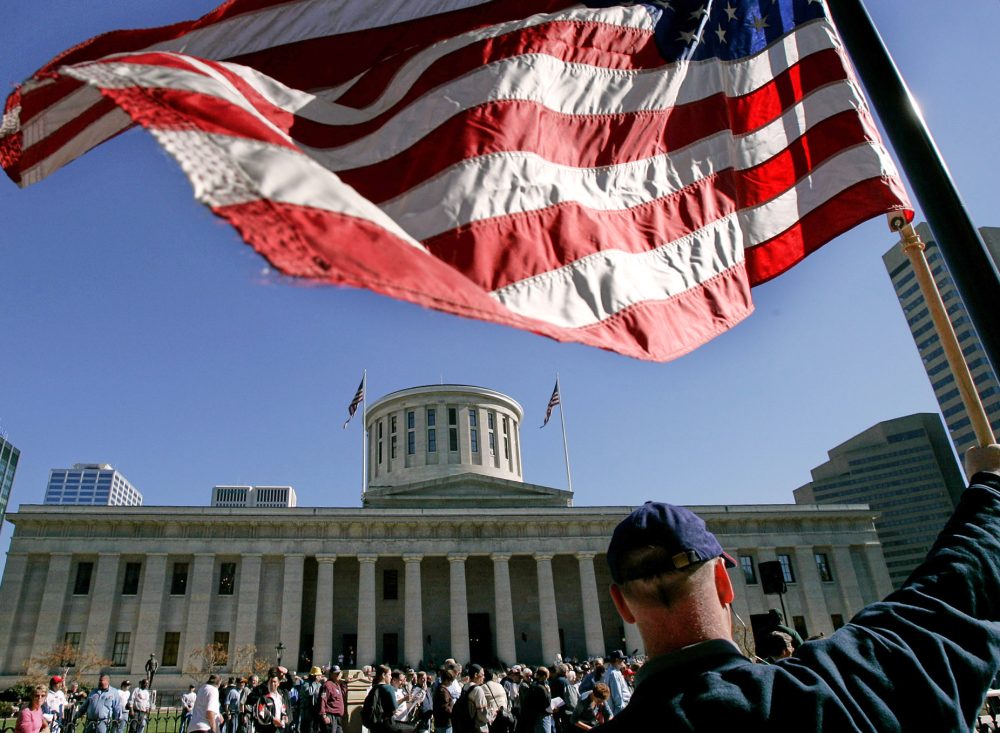

COLUMBUS, Ohio — Voters across Ohio will cast ballots Tuesday in primary elections that will determine candidates for the state’s highest offices, though many contenders are already focusing on November’s general election battles.
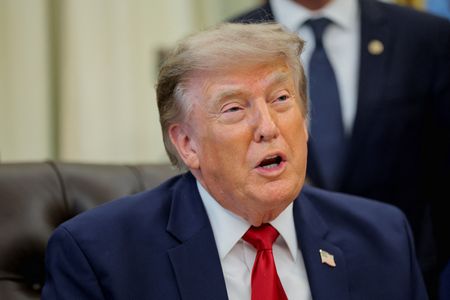
The Buckeye State is positioned to be a major battleground in the midterm elections, featuring races that could determine control of both the U.S. Senate and House of Representatives during the final two years of the current Republican presidency. Several candidates have received backing from President Donald Trump.
The gubernatorial race to succeed outgoing Republican Governor Mike DeWine pits technology entrepreneur and former 2024 presidential candidate Vivek Ramaswamy against automotive racing engineer and online personality Casey Putsch in the GOP primary.
Ramaswamy has secured endorsements from both Trump and the Ohio Republican Party, heading into the primary’s final days with a substantial $31 million campaign treasury, with $25 million coming from his own pocket. In contrast, Putsch has raised approximately $123,000 and reported roughly $8,700 remaining in his campaign fund according to April filings.
A third contender, Heather Hill, was removed from consideration after her running mate departed the ticket amid a bitter disagreement. While their names remain printed on ballots, any votes they receive will not be tallied.
The Republican primary victor will challenge Dr. Amy Acton, who faces no opposition in the Democratic primary. Acton previously served as Ohio Department of Health director during the initial phase of the state’s coronavirus pandemic response before stepping down in June 2020.
For the U.S. Senate seat, former Democratic Senator Sherrod Brown is campaigning to return to his previous position in Washington. Brown’s potential November victory is crucial for Democratic aspirations to gain Senate control, similar to the 2024 election when his defeat by Republican Bernie Moreno helped establish a GOP majority.
Brown competes against Ron Kincaid for the Democratic nomination, with Brown holding a significant fundraising edge over Kincaid as of mid-April reports.
The Republican nominee will be Senator Jon Husted, who encounters no primary opposition. Husted previously served as lieutenant governor before receiving appointment to the Senate position that JD Vance left vacant upon becoming vice president. This seat will be contested again for a complete term in 2028.
In notable U.S. House contests, multiple Republican candidates are vying for the opportunity to challenge Democratic Representative Marcy Kaptur in the 9th Congressional District. The 22-term representative barely secured reelection in 2024 against Republican Derek Merrin in one of that cycle’s final decided races.
Merrin is pursuing the GOP nomination once more, facing competition from former Immigration and Customs Enforcement Deputy Director Madison Sheahan, state Representative Josh Williams, and two additional candidates.
Lucas County, which includes Toledo, holds the greatest influence in 9th Congressional District primaries, accounting for over one-third of total votes in the 2024 Republican House primary. Both Merrin and Williams represent Lucas County, while Sheahan’s political base is in Ottawa County.
Franklin and Cuyahoga counties, containing Columbus and Cleveland respectively, represent the state’s largest population centers and significantly impact both Democratic and Republican statewide primaries, alongside Hamilton, Montgomery, and Summit counties.
Trump’s support should benefit Ramaswamy, as Trump won every county during the 2024 Republican presidential primary.
The Associated Press maintains strict standards for declaring winners, only making calls when no mathematical possibility exists for trailing candidates to overcome deficits. Until races are officially called, the AP continues reporting significant developments while clearly stating that winners have not been determined.
Ohio automatically triggers recounts when margins fall below 0.25% in statewide contests or 0.5% in congressional district races. The AP may still declare winners in recount-eligible races if leads appear too substantial for recounts or legal challenges to alter outcomes.
Election officials will close polling locations at 7:30 p.m. Eastern Time.
The Associated Press will deliver vote totals and announce winners in competitive primaries for U.S. Senate, U.S. House, governor, attorney general, secretary of state, treasurer, state Supreme Court, state Senate, and state House positions.
All registered Ohio voters may participate in any party’s primary election. While Ohio doesn’t require party registration, voters participating in party primaries become affiliated with those parties.
Approximately 7.9 million registered voters were recorded in Ohio as of Friday.
During 2022, both Republican primaries for U.S. Senate and governor recorded roughly 1.1 million votes each, representing about 14% of registered voters at that time. Democratic primaries drew approximately 518,000 votes for U.S. Senate and 509,000 for governor.
Early voting accounted for roughly 17% of 2022 primary votes, while 25% of 2024 presidential primary votes were cast before election day.
More than 153,000 Democratic primary ballots and approximately 122,000 Republican primary ballots had been submitted by Friday for Tuesday’s election.
Ohio’s 88 counties typically report their complete early and absentee voting results in initial updates, usually before releasing any Election Day voting data.
During the 2024 Ohio presidential primary, the AP published initial results at 7:36 p.m. Eastern Time, six minutes after polls closed. Approximately 90% of votes were counted by 10:19 p.m., with final updates at 1:28 a.m. showing over 99% completion.
Following Tuesday’s primary, 182 days will remain until the 2026 midterm elections.