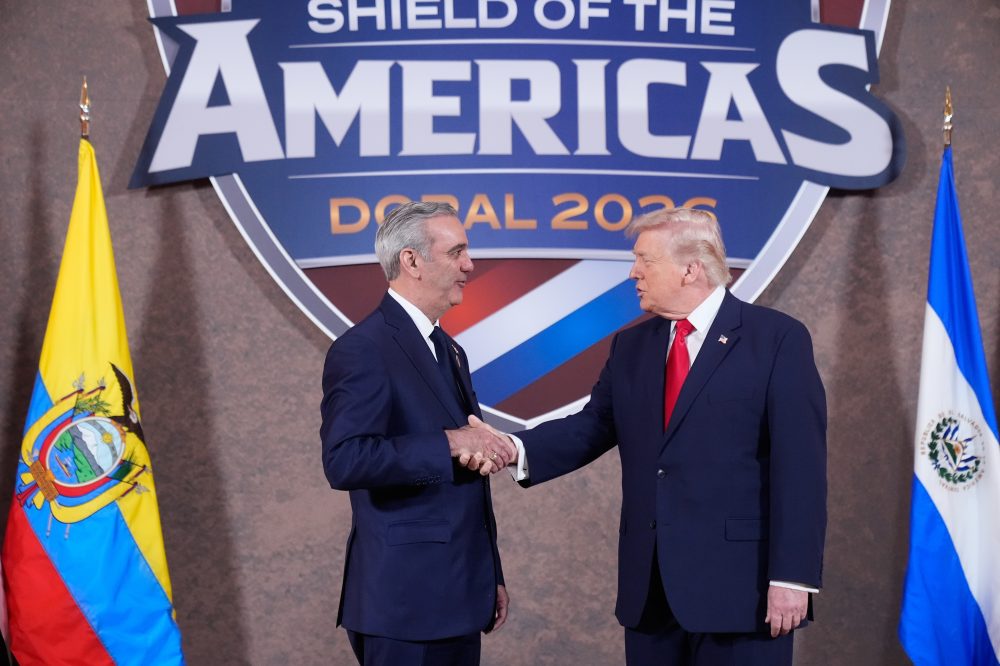

Political opposition leaders in the Dominican Republic voiced strong criticism Wednesday regarding a newly signed pact with the United States that would allow the Caribbean nation to temporarily house deportees from other countries, arguing the arrangement compromises national sovereignty and lacks sufficient transparency.
The Dominican Foreign Ministry announced Tuesday that the non-binding memorandum of understanding would permit the country to temporarily accept a restricted number of third-country nationals who have clean criminal backgrounds before they are sent back to their nations of origin.
This arrangement represents the most recent in a series of similar pacts between the Trump administration and various nations across Latin America and Africa, which have faced widespread criticism. These third-country deportation programs, requiring millions in funding, form part of U.S. President Donald Trump’s broader immigration enforcement strategy that involves sending migrants to nations other than their countries of origin.
“This agreement represents a surrender of our national sovereignty,” Manolo Pichardo, from the opposition Fuerza del Pueblo party, told The Associated Press.
“It subordinates Dominican interests to the geopolitical priorities of major Western powers and their strategic allies,” Pichardo added.
Former Dominican Foreign Minister Andrés Navarro raised concerns about the apparent secrecy surrounding the pact and urged the government to release the complete memorandum so citizens can fully comprehend its implications.
“What has been published says practically nothing,” Navarro said Tuesday.
Navarro explained that although he backs maintaining and enhancing ties with the U.S., he seeks assurance that the pact won’t compromise Dominican sovereignty.
The Dominican Foreign Ministry maintained the pact “will be carried out in accordance with national law and the country’s international obligations, without altering Dominican immigration policy or current border control and management procedures.”
The ministry stressed that the arrangement excludes children and nationals from neighboring Haiti, which occupies the same Caribbean island of Hispaniola alongside the Dominican Republic.
The U.S. Ambassador to the Dominican Republic, Leah Campos, stated on Instagram that “this short-term memorandum of understanding allows the United States to remove and repatriate third-country nationals more quickly, while respecting Dominican law, the country’s sovereignty, and current border procedures.”
She highlighted that the U.S. is working alongside the Dominican Republic to address transnational crime and drug trafficking, combat terrorism, and advance regional stability and prosperity.