
Syria and the United Arab Emirates unveiled an ambitious $50 billion economic partnership on Monday, May 11, marking what officials called a pivotal moment in Syria’s rebuilding process and a new era of Arab-led investment in the Eastern Mediterranean region.
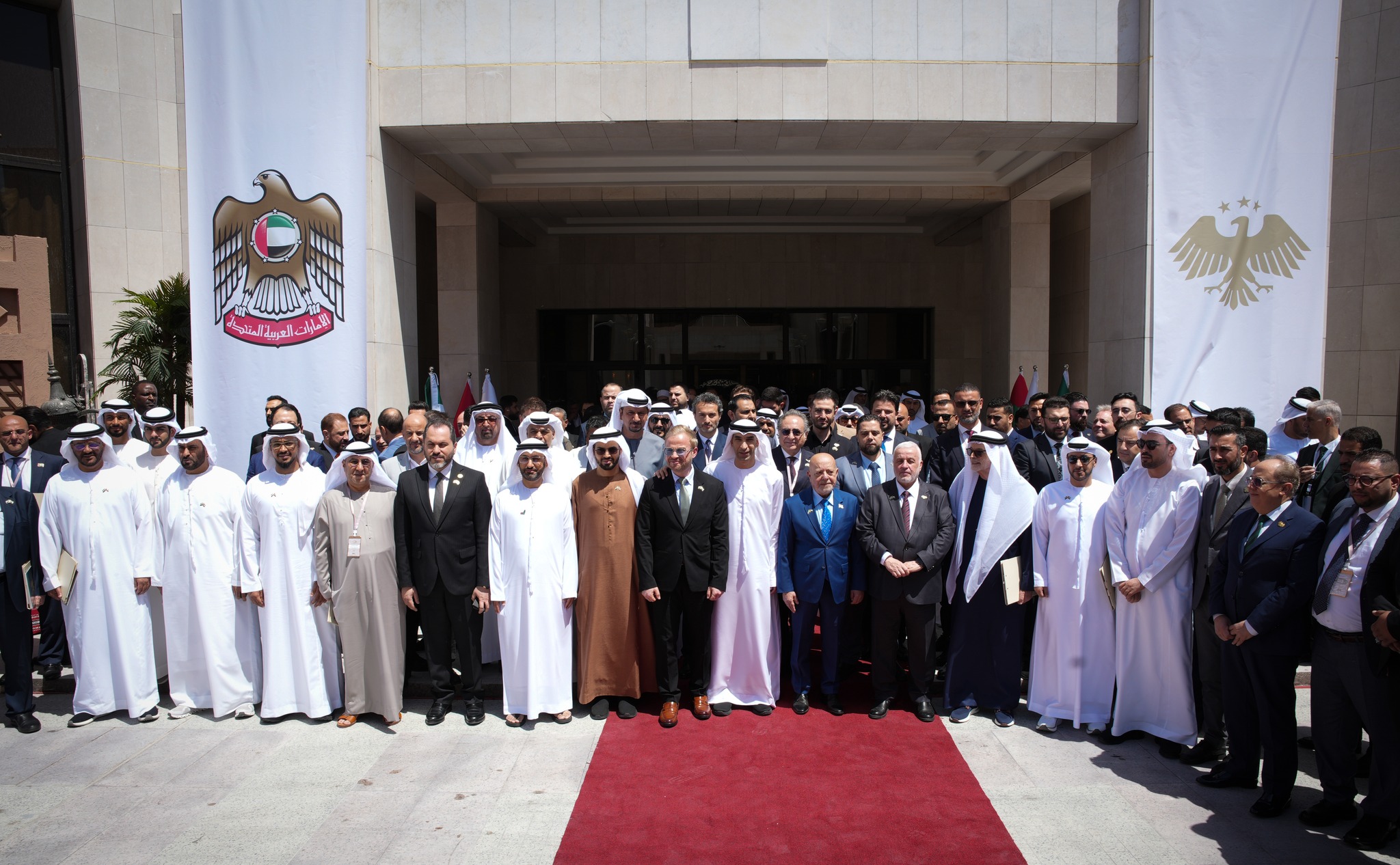
The massive investment plan was revealed during the inaugural Syrian-Emirati Investment Forum held in Damascus, featuring a high-ranking UAE delegation headed by Minister of State for Foreign Trade Thani bin Ahmed Al Zeyoudi and prominent business leaders, including Eagle Hills founder Mohamed Alabbar.
During the forum’s opening session, Al Zeyoudi detailed the UAE’s strategic vision, stating the initiative seeks to “advance bilateral relations across investment and trade sectors in a manner that serves the shared interests of both countries and their brotherly peoples.” He emphasized to Syrian officials and business leaders that the UAE views “economic integration and direct dialogue remain the optimal path toward sustainable growth.”
Syrian officials welcomed the announcement with enthusiasm. Dr. Mohammad Nidal al-Shaar, Syria’s Minister of Economy and Industry, characterized the forum as “a restoration of trust and natural communication between brothers.” He praised the UAE’s development approach, telling attendees: “What we see in the UAE is the result of genuine effort and vision. We seek to benefit from an experience that turns the impossible into reality.”
Al-Shaar also pledged government backing for the initiative, promising full support for UAE projects and describing modern Syria as “a major investment opportunity and a platform for launching toward the future.”
Alabbar captured significant attention when he revealed Eagle Hills’ plans for extensive urban development and logistics projects worth $50 billion. He told forum participants the region is “undergoing a very major political transformation,” explaining this shift has given investors confidence to commit substantial funding that matches Syria’s historical importance and its people’s hopes.
The comprehensive investment strategy encompasses building modern smart cities in Damascus and Latakia, delivering over 100,000 housing units, plus renovating critical infrastructure including airports in Latakia, Qamishli, and Deir ez-Zor. The overarching objective involves establishing Syria as a logistics center connecting the Arabian Gulf with the Mediterranean Sea.
This forum represents the culmination of Abu Dhabi’s gradual diplomatic approach spanning several years. Political observers highlight Syrian President Ahmed al-Sharaa’s April visit to the UAE as the crucial political endorsement that enabled major Emirati corporations to move forward with implementation.
The UAE’s Syrian community, numbering approximately 250,000 residents, is playing a vital role as a conduit for expertise and capital transfer. Mahmoud al-Dharawi, deputy head of the Syrian Economic Forum for Development, declared that Syria has become “a major investment opportunity” with the potential to attract long-term strategic partners.
While challenges persist regarding international financing systems and ongoing sanctions impacts, the substantial Emirati presence in Damascus delivers what experts call a clear message: economic considerations may ultimately prevail over political reluctance.
Success of this multi-billion dollar collaboration would extend beyond reconstructing Syria’s physical infrastructure. It could transform the power dynamics throughout the eastern Arab world by positioning economics as the sole reliable foundation for regional stability, proving that development and mutual economic benefits might achieve what years of warfare could not.
As the forum wrapped up, it became evident that Damascus and Abu Dhabi aim to create a new chapter in regional history—one based on the principle that lasting partnerships are built through economic integration and development, potentially restoring Syria’s traditional position as a commercial and investment hub in the Arab world.
The relationship between Syria and the UAE has evolved through multiple significant phases. Dating back to Zayed bin Sultan Al Nahyan’s leadership, the UAE has supported Syrian development initiatives, while Dubai and Sharjah became important centers for Syrian business communities starting in the 1990s.
Although diplomatic relations cooled following the start of Syria’s civil war in 2011, Abu Dhabi maintained relatively positive ties with Damascus before beginning what observers termed “active engagement” in 2018. This trajectory gained momentum after the catastrophic February 2023 earthquake, when UAE humanitarian assistance became a diplomatic bridge that facilitated Syria’s reintegration—under former President Bashar Assad—into the Arab League.
Current bilateral goals extend well beyond real estate development into strategic logistics cooperation. Forum discussions explored opportunities for investing in and managing airports in Latakia, Qamishli, and Deir ez-Zor, as part of broader efforts to reconnect Syria with international trade networks.
Given the substantial Syrian expatriate community in the UAE, representing approximately 68% of Syria’s educated workforce living abroad according to economic analysts, many experts anticipate this partnership will establish a “human bridge” that could accelerate the return of Syrian knowledge and investment capital.
Supporters of this initiative maintain the project transcends simple reconstruction. They view it as an effort to reshape the political and economic framework of the Arab East through investment-driven stability, providing a model where development and regional collaboration replace conflict as the primary language of the future.