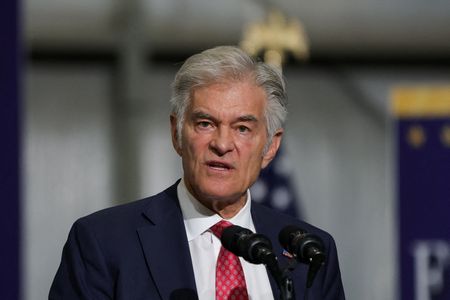

President Donald Trump is conducting high-stakes discussions with Chinese leader Xi Jinping in Beijing this Thursday, working to achieve economic victories, preserve a delicate trade agreement, and address complex challenges including the Iran conflict and weapons sales to Taiwan.
The president’s highly watched journey to China – his first presidential visit to America’s primary strategic competitor since 2017 – carries heightened importance as his public approval numbers have suffered due to the Iranian conflict.
Trump’s delegation includes business leaders such as Elon Musk and Nvidia’s chief executive Jensen Huang, who joined the presidential aircraft during a fuel stop in Alaska at Trump’s invitation.
Several of these business executives, including Huang and Musk, hope to address their concerns with China, and Trump has indicated he will press Xi to make China more accessible to American companies.
However, the balance of influence has changed since Trump’s 2017 visit when China made extraordinary efforts to impress Trump and purchase American products worth billions, according to Ali Wyne, senior advisor for U.S.-China relations at International Crisis Group.
During that earlier period “China was trying to persuade the United States of its growing status… This time around it’s the United States, unprompted, of its own volition, that is acknowledging that status,” Wyne explained, noting that Trump brought back the term ‘G2’, describing a superpower partnership, during his October meeting with Xi at an APEC gathering in South Korea.
The leaders’ agenda includes extensive interaction time: discussions at The Great Hall of the People, a visit to the UNESCO heritage site Temple of Heaven, and a formal state dinner on Thursday, followed by tea and lunch on Friday, the White House announced.
However, Trump approaches these negotiations from a position of reduced strength.
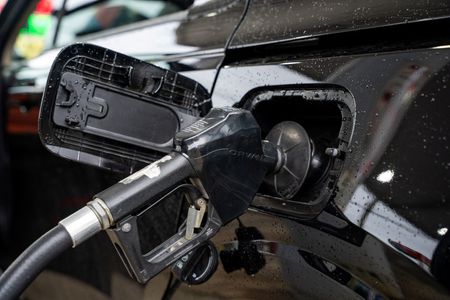
American judicial decisions have limited his authority to impose tariffs freely on Chinese and other foreign exports. The Iran conflict has also increased domestic inflation and raised the possibility that Trump’s Republican Party could lose control of one or both congressional chambers in November’s midterm voting.
While China’s economy has struggled, Xi doesn’t confront similar economic or political challenges.
Despite these tensions, both nations want to preserve the trade agreement reached last October, where Trump postponed massive tariffs on Chinese products and Xi stepped back from restricting global rare earth supplies, which are essential for manufacturing everything from electric vehicles to military equipment.
The leaders are also anticipated to explore mechanisms for supporting bilateral trade and investment, plus discussions on artificial intelligence matters.
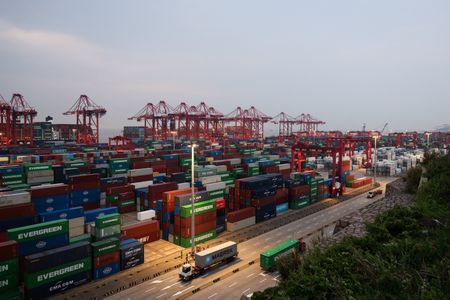
The United States hopes to export Boeing aircraft, agricultural products, and energy resources to China to reduce a trade imbalance that has long frustrated Trump, while China seeks American relaxation of restrictions on chipmaking technology and sophisticated semiconductors, according to planning officials.
Beyond trade issues, Trump is expected to ask China to persuade Tehran to negotiate with Washington to resolve the conflict. However, experts question whether Xi will pressure Tehran significantly or withdraw support for its military, considering Iran’s importance to Beijing as a strategic balance against American influence.
For Xi, American weapon sales to Taiwan, the democratically governed territory that China claims, represents a primary concern.
China restated its firm opposition to these sales on Wednesday, with the fate of a $14-billion package pending Trump’s decision remaining uncertain. American law requires providing Taiwan with defensive capabilities, despite the absence of official diplomatic relations.
“Trump doesn’t really have that many of the cards to play. But I don’t think that Trump actually sees the situation that way,” said Ronan Fu, an assistant research fellow at Taiwan’s top government think tank Academia Sinica.
“I don’t think that Trump is going to just let Beijing basically ask for whatever they want and then the US will make any concession that Beijing requests.”
Xi has a return visit provisionally scheduled for later this year, which would mark his first trip to the United States since Trump returned to office in 2025.