
NORTH BERGEN, N.J. — More than a hundred years ago, construction crews built the first rail tunnel under the Hudson River linking Manhattan and New Jersey using basic hand tools, digging from opposite ends until they connected underground.
Now, a massive new tunnel project representing one of America’s biggest mass transit undertakings in decades and carrying a $16 billion price tag will employ cutting-edge technology for the job.
Enormous automated drilling equipment stretching nearly 400 feet long and equipped with diamond-hard cutting tools will bore through solid rock formations. Teams of approximately 40 workers will manage conveyor belt systems that remove excavated material while simultaneously installing the tunnel’s curved concrete walls.
“This is a fully automated, underground factory,” said James Starace, chief of program delivery for the Gateway Development Commission, a public agency formed by New York and New Jersey that’s undertaking the tunnel project.
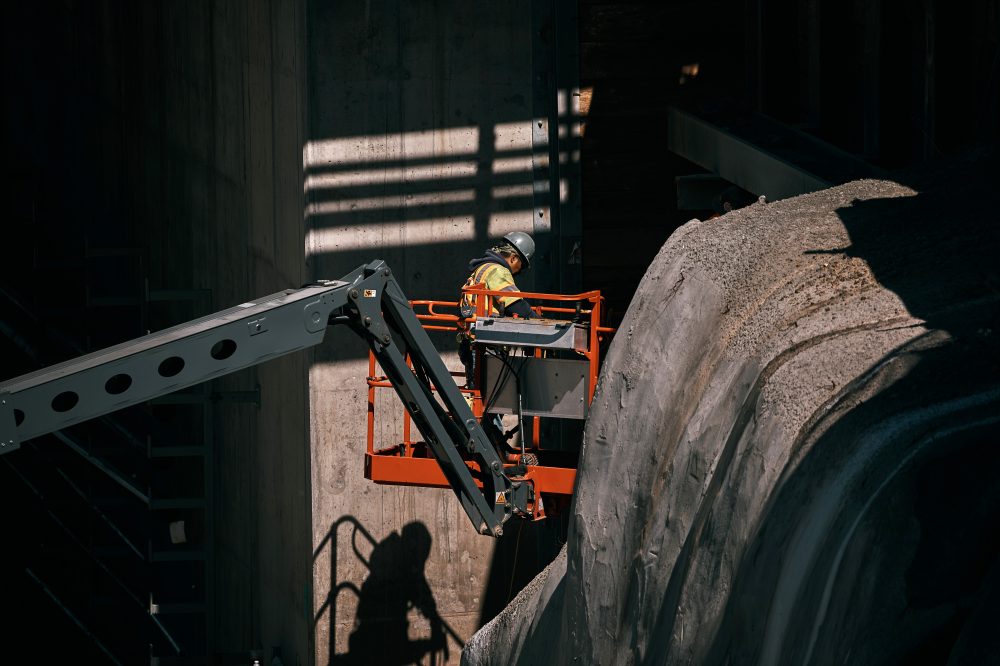
Dressed in protective gear and a bright yellow safety jacket, Starace spoke Tuesday while standing in an excavated area carved into the hillside opposite New York City. Above him loomed a massive rock face where, according to current schedules, trains will enter and exit the completed tunnel by 2035, reducing congestion along the country’s most heavily used passenger railway route.
The specialized boring equipment was shipped “like Lego pieces” from Germany in almost 100 separate parts, explained Hamed Nejad, the project’s chief engineer. Near the planned tunnel opening, welding crews worked with flying sparks to assemble sections of the enormous cutting mechanisms.
Danny Pearlstein, a spokesperson for the transit advocacy group Riders Alliance, said America has grown unaccustomed to building megaprojects at this scale, which has contributed to the cost.
“What’s astonishing about Gateway isn’t the size and scope of the project,” Pearlstein said, “but that it’s taken this long to get only so far.”
The drilling equipment is projected to require roughly 12 months to penetrate the initial section through the New Jersey Palisades, composed of hardened volcanic stone, once excavation begins later this year, Starace noted. Progress is expected at approximately 30 feet daily. Additional machines will tunnel beneath the river bottom.
When completed, the new dual-track tunnel will span almost 2.5 miles (4 kilometers). The existing two-track passage, which suffered saltwater damage during Superstorm Sandy, will undergo restoration.
The large-scale project gained essential approvals and financial backing during the Biden administration, but nearly stalled completely several months ago.
The Trump administration halted funding during the recent federal government shutdown, citing concerns that the project was allocating funds based on diversity, equity and inclusion principles.
With financing nearly exhausted in February, a federal judge commanded the administration to release the money. Funding has resumed while a legal challenge filed by New York and New Jersey against the federal government continues in court.