Officials in Hong Kong announced Wednesday that seven individuals and two companies now face criminal charges related to the catastrophic apartment fire that claimed 168 lives last November.
The devastating blaze swept through seven residential buildings on Nov. 26, 2025, marking the territory’s most deadly fire incident in recent decades. Survivors and families of victims have spent months seeking accountability following the tragedy that devastated the Wang Fuk Court community in the Tai Po suburban area, where thousands of residents lived.
According to Wednesday’s official announcement, law enforcement and the Independent Commission Against Corruption have filed 25 separate charges against the defendants. The allegations span multiple crimes including manslaughter, conspiracy, money laundering, obstruction of justice, and tax violations.
All seven charged individuals had various responsibilities connected to Wang Fuk Court’s extensive renovation work. The two corporate defendants include the consulting company that advised on the project and the primary construction contractor.
Court proceedings for these cases were set to begin Wednesday afternoon.
Earlier this year in March, police detained 38 individuals on charges related to the housing complex, with accusations ranging from manslaughter to fraud. Law enforcement confirmed that nine people have now been formally charged. That same month, anti-corruption investigators also took 23 people into custody on suspicion of bribery and conspiracy to commit fraud.
Victor Dawes, an attorney working with an independent panel investigating what caused the fire, has stated that nearly every fire protection system malfunctioned during the incident due to mistakes made by people.
GENERAL SANTOS, Philippines — Emergency responders wearing protective helmets rushed from a damaged shopping center in a southern Philippines city Wednesday when tremors from continuing aftershocks shook the structure following a devastating earthquake that claimed 45 lives and left 17 people unaccounted for across the area.
A safety coordinator sounded an alarm whistle while others shouted warnings for approximately 30 firefighters and coast guard members to evacuate quickly as chunks of concrete fell from the tilting three-story structure in General Santos city, according to witness accounts from an Associated Press video journalist on scene.
The waterfront city, known as a major commercial center and the nation’s tuna fishing capital, suffered severe damage from Monday’s 7.8-magnitude tremor that carved a path of destruction throughout southern Mindanao, the country’s second-largest populated area.
“It was a strong aftershock and an alarm was immediately sounded so those inside and under the damaged building can run out for a headcount,” said Ressa Mia Tactaquin-Betoya, who speaks for the firefighters searching for the last employee missing in the ruined grocery, where two upper floors collapsed during the initial quake.
“It was scary because we don’t want our rescuers to be harmed so the area must be secured before they can go back in,” she told The Associated Press.
More than 2,100 secondary tremors have followed the main earthquake, including several measuring up to 6.4 magnitude — powerful enough to inflict additional injuries and structural damage, according to Teresito Bacolcol, who heads the Philippines Institute of Volcanology and Seismology.
Over 25,000 residents continue living away from their homes, with many housed in 45 government emergency facilities and remaining too frightened to return to their residences, authorities reported.
The Monday tremor ranked among the most severe to strike the Philippines in fifty years. It left at least 630 people injured and caused damage to more than 3,100 homes, 29 roadways, 11 bridges and over 100 government facilities.
The disaster also affected General Santos’ international airport, forcing officials to suspend all operations indefinitely except for government and military aircraft delivering supplies and emergency personnel, Civil Aviation Authority of the Philippines spokesperson Eric Apolonio said.
Approximately 6,000 public school structures in earthquake-affected areas require safety evaluations before educational activities can restart. The tremor occurred on the opening day of nationwide classes following a two-month summer vacation, with many injuries affecting young students who had assembled enthusiastically for morning flag ceremonies.
The majority of fatalities resulted from falling rubble and landslides in General Santos and surrounding provinces of Sarangani, South Cotabato and Davao Occidental.
At least one fatality occurred when someone was carried into the ocean after the earthquake, as wave heights reached 1.4 meters (4.6 feet) above normal tide levels in the southern Philippines. Smaller waves reached shores in Indonesia and Palau and extended to southern Japan before tsunami alerts were canceled.
Seven people swimming near General Santos were caught by powerful currents immediately following the earthquake. Coast guard teams rescued three individuals, one managed to reach shore independently, one perished, and two remain unlocated, Philippine coast guard officials reported.
The dangerous currents that carried away the victims were likely triggered by the seismic activity, Bacolcol explained.
Movement within the Cotabato Trench caused the earthquake, marking one of the most powerful to affect the nation since the same underwater geological feature generated an 8.1-magnitude quake that created tsunami waves on Aug. 17, 1976 and resulted in approximately 8,000 deaths.
The Philippines, recognized as among the globe’s most disaster-vulnerable nations, frequently experiences earthquakes and volcanic activity because of its position along the Pacific “Ring of Fire,” a zone of seismic activity surrounding the ocean.
Visual coverage of primary election activities has been compiled from four states during recent voting proceedings.
The photographic documentation captures scenes from polling locations and election-related activities as voters participated in primary contests across the multiple states.
The images provide a glimpse into the electoral process as it unfolded during the primary election cycle in these four jurisdictions.
Authorities in Chicago are examining the circumstances surrounding a large wooden cross that was found ablaze at a city park on Tuesday afternoon, officials confirmed.
Footage captured by a passing driver reveals the wooden structure completely consumed by flames as it rested against a tree within Grant Park, a well-known recreational area situated close to Lake Michigan. Fire department officials verified the burning object was indeed a cross and reported that crews successfully extinguished the blaze.
Law enforcement representatives stated no injuries were reported in connection with the incident and confirmed they are examining both the motivation and situation surrounding the “object on fire.”
Keinika Carlton, 43, was returning home after completing errands with her daughter and mother-in-law when the group witnessed the flaming cross. She described experiencing a mix of shock, sadness, disgust, and curiosity upon seeing it.
“Is this a racial thing? Is this a religious thing?” she said. “As Black women, of course, our first thought is racial, because burning crosses are known to be used as a tactic, an act of violence toward Black Americans in the South.”
Carlton approximated the cross measured no less than 6 feet (1.83 meters) in height. The incident was unprecedented for all three women, including Carlton’s mother-in-law, who was raised in Kentucky.
According to Carlton, as their vehicle slowed to record the flames, she observed additional cars reducing speed and pedestrians in the vicinity stopping to stare at the burning structure.
Though the motivation for the cross burning remains unclear, such acts throughout American history have been recognized as “symbols of hate” that are “inextricably intertwined with the history of the Ku Klux Klan,” based on a 2003 U.S. Supreme Court ruling authored by the late Justice Sandra Day O’Connor. The court determined the First Amendment permits prohibitions on cross burnings solely when they aim to intimidate, as the practice “is a particularly virulent form of intimidation.”
Alyna Carlton, 22, expressed that she never anticipated witnessing such an event during her lifetime.
“It kind of really opened my eyes, had me realize that I’m not that far removed from the past.”
ATLANTA — Two Republican members of Congress from Georgia have filed impeachment resolutions targeting a federal judge in Atlanta who faced discipline following an investigation that confirmed she engaged in sexual activity with a police officer in her chambers, participated in a partisan political gathering, and provided false information to investigators examining the alleged wrongdoing.
U.S. Reps. Clay Fuller and Andrew Clyde submitted the resolutions against U.S. District Judge Eleanor Ross. Clyde posted on social media Tuesday that Ross’ “deeply disturbing actions prove she is incapable of displaying integrity or impartiality. She must be impeached and removed from the bench.”
The House Judiciary Committee holds the authority to determine whether to begin impeachment proceedings against Ross. Federal judges receive lifetime appointments and can only be removed through the impeachment process.
When contacted Tuesday afternoon, a person answering the phone at the judge’s chambers stated that Ross had no comment.
Ross received her nomination to the Northern District of Georgia in January 2014 from then-President Barack Obama, a Democrat, and gained Senate confirmation in November that same year. She previously held a position as a state court judge in DeKalb County, which encompasses a small portion of Atlanta, beginning in 2011. Prior to her judicial career, she spent more than ten years working as both a state and federal prosecutor, primarily in Atlanta.
The investigation into Ross started when one of her law clerks reported that the judge had repeatedly engaged in sexual conduct with a high-ranking uniformed police officer in her office while staff could hear. Additional allegations included improper supervision of clerks and an incident where she shouted and used profanity toward staff members.
Ross was issued a “private reprimand” following the investigation that substantiated the sexual activity and determined she attended a partisan event and initially provided false denials of the accusations.
The court’s investigation kept the judge’s identity and court location within the 11th Circuit’s jurisdiction confidential, which covers Alabama, Florida and Georgia. A person knowledgeable about the situation who requested anonymity to discuss sensitive information verified to The Associated Press that Ross was the judge who faced discipline.
Additionally, the Atlanta Police Department announced it has launched an investigation to establish whether the “high-ranking law enforcement officer” determined to have engaged in sexual activity with a federal judge in the judge’s chambers belongs to their department.
William Pryor, the chief judge of the 11th Circuit, initiated the original investigation of Ross. He requested her response to the clerk’s allegations and she answered the same day, “specifically denied” each claim. In a subsequent email the following day, the judge suggested to Pryor that the law clerk might have fabricated the allegations as revenge for being required to work in the office.
Pryor designated a special committee to conduct the investigation. That investigation received detailed documentation in a report included with the disciplinary order.
The committee’s examination of logs and security footage revealed an officer had regularly visited the judge’s chambers in uniform during lunch hours. Six clerks remembered seeing someone matching the officer’s description, with three recalling they overheard what could have been sexual activity in the judge’s office.
Three clerks recalled bringing summer interns on their initial day to observe the judge conducting a hearing in a criminal case. Immediately afterward, they informed the committee, the judge refused to have lunch with the interns, admitting to consuming too many martinis the previous night at a primary election victory celebration for a district attorney friend.
The clerks reported the judge failed to provide adequate guidance and “rarely, if ever, substantively edited civil orders the clerks drafted.” While clerks described an “eggshell culture,” the committee found no evidence of abusive conduct.
The judge eventually confessed to maintaining an extramarital sexual relationship with the officer but rejected the allegations regarding staff mistreatment, the committee documented. The judge acknowledged to the committee attending a “mixer” of former employees from a district attorney’s office where the judge previously worked but claimed it occurred in a separate room from the victory party.
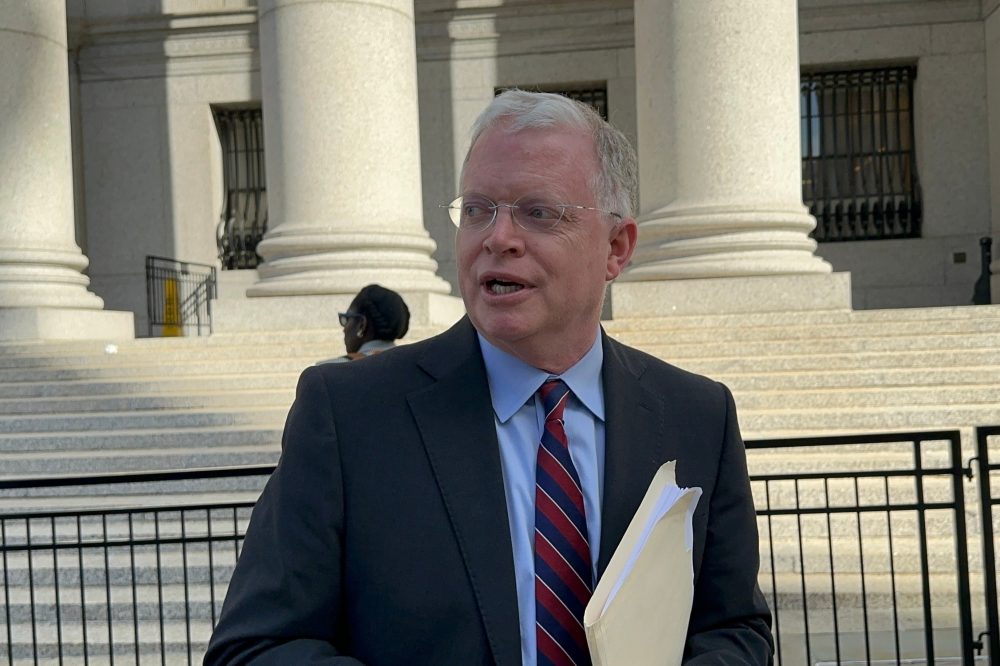
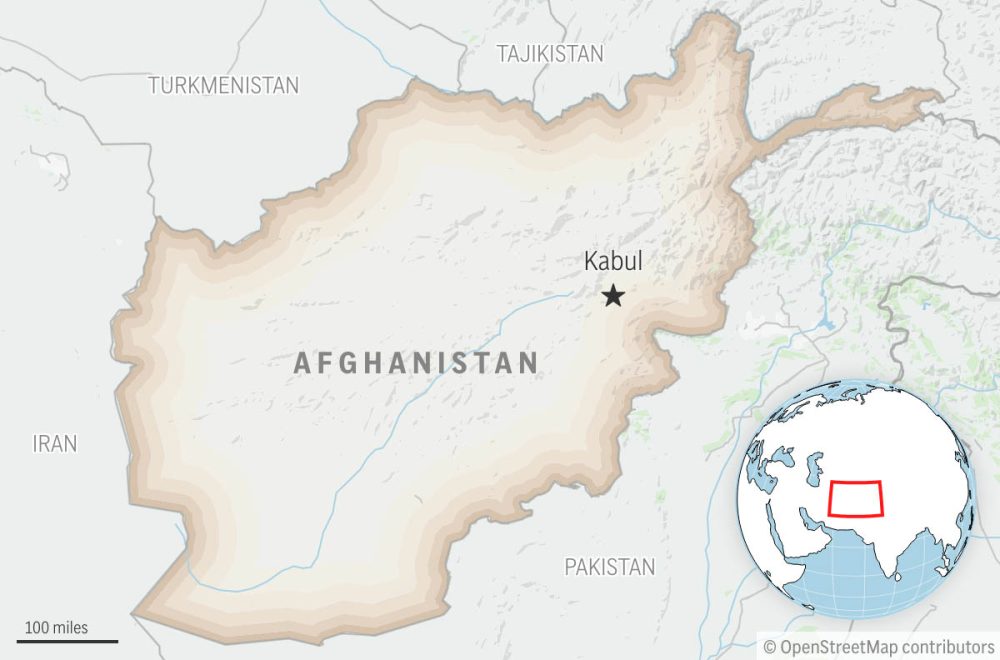
A former Taliban commander received a 42-year federal prison sentence Tuesday for crimes that included abducting a Pulitzer Prize-winning reporter and supporting operations that resulted in three American soldiers losing their lives.
The sentencing of Haji Najibullah concluded an intense day of proceedings in Manhattan federal court, highlighted by a powerful moment when journalist David Rohde confronted Najibullah directly, telling him he was “refusing to take responsibility as I look at him today” for his role in the 2008 abduction in Afghanistan.
Rohde, currently MSNOW’s national security reporter who previously worked at The New York Times and other news organizations, expressed to Judge Katherine Polk Failla that he felt “surprised and disappointed” by Najibullah’s attempts to shift blame for the kidnapping that also involved another journalist and a driver.
The three men remained captive for more than seven months before successfully escaping from a Taliban-controlled facility in Pakistan’s tribal regions.
Najibullah entered a guilty plea in April 2025 to charges of providing material support for terrorist activities and conspiracy to take hostages.
The 50-year-old defendant, sporting a beard and wearing a black skull cap during Tuesday’s proceedings, acknowledged supplying material support including weapons to the Taliban between 2007 and 2009, understanding these resources would be used against U.S. forces in Afghanistan.
Through an interpreter, Najibullah offered an apology to Rohde and his family, stating “what happened to him was terrible, and I deeply regret my role in it.”
Positioned at a podium mere feet away from Najibullah, Rohde explained that it was Najibullah’s deception that led him to what he believed would be an interview but instead became an ambush.
“Hostage taking is a cruel and cowardly crime. Family members spend weeks and months thinking they have the power to save their loved one’s life,” Rohde stated, describing this belief as “an illusion” since families lack the necessary leverage and enormous sums required for ransom payments.
However, Rohde emphasized that his suffering and that of his loved ones paled in comparison to the deaths of three U.S. soldiers killed by Najibullah’s associates in a different operation.
He emotionally named each soldier three times during his statement, becoming visibly moved while discussing their deaths, his family’s ordeal, and his passion for journalism.
Following the sentencing, Acting Attorney General Todd Blanche issued a statement declaring the case demonstrates that “those who harm Americans and engage in acts of terrorism will be hunted down and brought to justice, no matter how long it takes.”
While announcing the sentence, the judge commended Rohde for his and his wife’s advocacy work supporting families of other kidnapping victims.
Judge Failla explained she chose not to impose the life sentence recommended by federal guidelines because Najibullah had entered a guilty plea, preventing additional trauma for victims, and because he endured severe prison conditions for six years, including during the pandemic.
However, she dismissed most leniency arguments presented by his defense attorney, who had sought an 18-year sentence while characterizing his client as someone protecting his homeland during wartime.
The judge noted that fighters under Najibullah’s command had attacked a military convoy, resulting in three soldiers’ deaths.
“I don’t think he needed to pull the trigger, to decapitate a body, to be responsible for what happened,” Failla stated.
Rohde described arranging the interview with Najibullah that led to his kidnapping as the “biggest mistake of my life,” saying he would never have proceeded if he had known about Najibullah’s involvement in killing American soldiers.
During his court statement, Rohde mentioned that his captors had accused him of being a spy “when in fact I was a journalist” attempting to understand a Taliban commander’s perspective “to understand their hopes, their lives and their worldview.”
He then reaffirmed that he remains “a journalist and I could not be prouder of being part of this profession,” a declaration that momentarily left him emotional.
In Latvia’s peaceful woodland region near the Russian border, a tourism crisis is unfolding as visitors abandon their vacation plans due to concerns about wayward Ukrainian military drones.
Martins Kiscenko, who operates Birdwhistles Guesthouse in a rustic wooden structure located 50 kilometers from Russia, reports that all eight of his rooms sit empty during what should be peak season. Two wedding celebrations scheduled to take place at his facility were called off by couples worried their guests might need to seek emergency shelter during drone alerts.
The affected area, known as the Land of Blue Lakes, typically attracts summer visitors seeking tranquility in its pristine forests and clear waters. Tourists usually come for fishing, bird observation, forest walks among towering birch trees, and evening folk singing in intimate cabins.
However, the possibility of interruptions from errant Ukrainian attack drones has driven tourists elsewhere, putting approximately 500 small tourism-dependent enterprises at risk of financial hardship, according to Jelena Kijasko from the regional tourism industry association.
After a two-week period without drone incidents in late May raised hopes for improvement, a French NATO aircraft was compelled to destroy another drone on Monday. “Now we know it will not be so easy,” Kijasko told Reuters following that event.
Since March, Ukrainian military drones have been straying into Latvian and neighboring Baltic nations’ airspace. Both Ukrainian officials and NATO countries attribute these diversions to Russian electronic interference that redirects the weapons from their intended Russian targets.
While no injuries have occurred, these intrusions have prompted repeated shelter orders for residents. Kiscenko’s wooden lodge offers no basement or reinforced walls for protection. “That was not a requirement when I built it,” he noted.
During the previous month, two drones detonated within the town of Rezekne, where visitors typically come to see ancient castle ruins on a hilltop. Two additional drones struck a nearby oil storage facility, sparking a fire.
Government officials are working to convince Latvians that the region remains safe for normal vacation activities. Prime Minister Andris Kulbergs plans to spend his summer holiday in the area, his spokesperson confirmed to Reuters.
The reassurance efforts may be insufficient. Kijasko reported that her association’s survey of tourism operators revealed 85% experienced cancellations related to drone concerns, with some losing more than half their future bookings.
Kijasko argued that tourist fears are unreasonable. “We live here and we don’t feel ourselves particularly endangered,” she explained. “The probability of being in a road accident in Riga is much, much higher than having a drone fall on your head in the forest.”
BEIJING/TAIPEI, June 10 (Reuters) – A diplomatic confrontation erupted Wednesday between China and Taiwan regarding Chinese coast guard operations in waters east of the island, following Taiwan’s accusations that commercial vessels were being “harassed” near its territorial waters.
Beijing, which considers the democratically-run island part of its territory, became incensed after Japan and the Philippines announced plans last month to initiate official discussions about their sea boundaries, interpreting this as affecting Taiwan’s surrounding waters.
Chinese state media announced over the weekend that vessels had been deployed for a “special maritime traffic law-enforcement operation” in Taiwan’s eastern waters, responding to the Japanese-Philippine declaration.
Taiwan reported that these vessels had been “harassing” commercial shipping in recent days by requesting information about ships’ origins and destinations while asserting territorial control.
“The relevant mainland authorities’ law-enforcement patrols in the relevant waters are a just act to safeguard national sovereignty and maritime rights and interests,” Zhang Han, a spokesperson for China’s Taiwan Affairs Office, said in Beijing.
The Chinese coast guard is conducting “law-enforcement patrols” in the waters east of Taiwan in accordance with the law, and China will continue to strengthen its control over those waters, she said.
TAIWAN ANGERED
The patrols have angered Taiwan’s government, which rejects Beijing’s sovereignty claims, saying only the Taiwanese people can decide their future.
Speaking to reporters in Taipei on Wednesday, Taiwan Foreign Minister Lin Chia-lung said China was “using so-called ‘law enforcement’ as a pretext to pursue expansion”.
“The Chinese communists have no right to intervene in matters concerning the waters east of Taiwan, whether they involve Taiwan’s sovereignty or jurisdiction,” he said, describing China as a “problem-maker” that is damaging the status quo.
Beijing recognises no claims of sovereignty by Taiwan’s government and has rejected multiple offers of talks by President Lai Ching-te, saying he is a “separatist.”
“The Chinese communists’ actions not only endanger our country’s sovereignty, but also violate relevant international laws and international conventions,” Taiwan’s cabinet Secretary-General Xavier Chang said at a separate event in Taipei.
“We will not yield an inch of our blue maritime territory,” he added.
Taiwan has also complained in the past month of Chinese coast guard ships getting close to the Taiwan-controlled Pratas Islands, which sit strategically at the top of the South China Sea.
Zhang said China had sovereignty over the Pratas and its patrols there were likewise “normal”.
“If the Democratic Progressive Party authorities dare to provoke, they must bear all consequences arising from this,” she added, referring to Taiwan’s ruling party.
Pharmaceutical giant Sanofi announced on June 10 that it has discontinued a major clinical trial for its experimental drug riliprubart following disappointing interim results that indicated the treatment would not demonstrate adequate effectiveness.
The discontinued study, known as the MOBILIZE trial, was testing riliprubart as a potential treatment for chronic inflammatory demyelinating polyneuropathy, specifically targeting patients who had not responded to conventional therapies for this rare neurological disorder.
According to the company’s announcement, an independent data monitoring committee conducted the interim review and determined no safety concerns were associated with the experimental treatment during their analysis.
Sanofi indicated it will now assess whether to continue other ongoing studies involving riliprubart, including another Phase 3 trial called VITALIZE.
The pharmaceutical company stated that ending this trial will not result in substantial financial losses or alter its projected financial outlook for 2026.
Greek lawmakers voted late Tuesday to enact new measures designed to expedite the removal of asylum seekers whose applications have been rejected, while also establishing the framework for transferring them to detention facilities in nations outside the European Union once bilateral deals are finalized.
As the southernmost nation in Europe along the Mediterranean Sea, Greece serves as a primary gateway for migrants seeking to enter the continent. The country faced enormous pressure during the 2015-16 migration surge when over one million individuals from Middle Eastern and African nations made their way into Europe.
While the number of new arrivals has decreased since that period, two Greek islands closest to the African coastline – Crete and Gavdos – have experienced a significant increase in migrant vessels, primarily originating from Libya, arriving at their coastlines in recent years.
Last week, European Union legislators and national governments reached agreement on updated regulations that would permit member nations to transport migrants who have been ordered to depart to facilities located in non-EU countries. This decision has faced strong opposition from human rights organizations, which caution it may lead to potential mistreatment.
Greece has been collaborating with the Netherlands, Denmark, Germany and Austria to establish shared deportation and transit facilities, though discussions with Uganda regarding a comparable arrangement have been temporarily suspended.
Prior to Tuesday’s parliamentary vote, Greek Migration Minister Thanos Plevris indicated that EU member states have been conducting negotiations with non-EU nations as they work to finalize initial agreements this year, with the goal of having these facilities operational by 2027.
“The Greek government has already been in consultations with two African countries,” Plevris stated to the semi-state Athens News Agency on Wednesday. He declined to identify which specific countries were involved in these discussions.
The National Weather Service has issued a Heat Advisory for northern Delaware and surrounding areas, warning residents to prepare for dangerously hot conditions through Friday evening.
Heat index values could reach up to 103 degrees from 11 AM Thursday through 8 PM Friday. The advisory affects New Castle County in Delaware, along with parts of southeastern Pennsylvania and southern New Jersey, including Philadelphia and surrounding counties.
Health officials warn that the combination of hot temperatures and high humidity significantly increases the risk of heat-related illnesses. Residents are urged to take immediate precautions to stay safe.
The National Weather Service recommends drinking plenty of fluids, staying in air-conditioned spaces, and avoiding prolonged sun exposure. If you must go outside, wear lightweight, loose-fitting clothing and limit strenuous activities to early morning or evening hours.
Pay special attention to elderly neighbors and relatives, who are more vulnerable to heat-related health problems. Warning signs of heat exhaustion include heavy sweating, weakness, and nausea.
For those without air conditioning, call 211 or visit your local health department’s website to find cooling centers in your area.
The Heat Advisory remains in effect until 8 PM Friday evening.
Olympic sports leadership rarely sees a sitting president challenged for re-election after serving only one complete term in office.
Even more unusual is when that official has also gained membership in the International Olympic Committee.
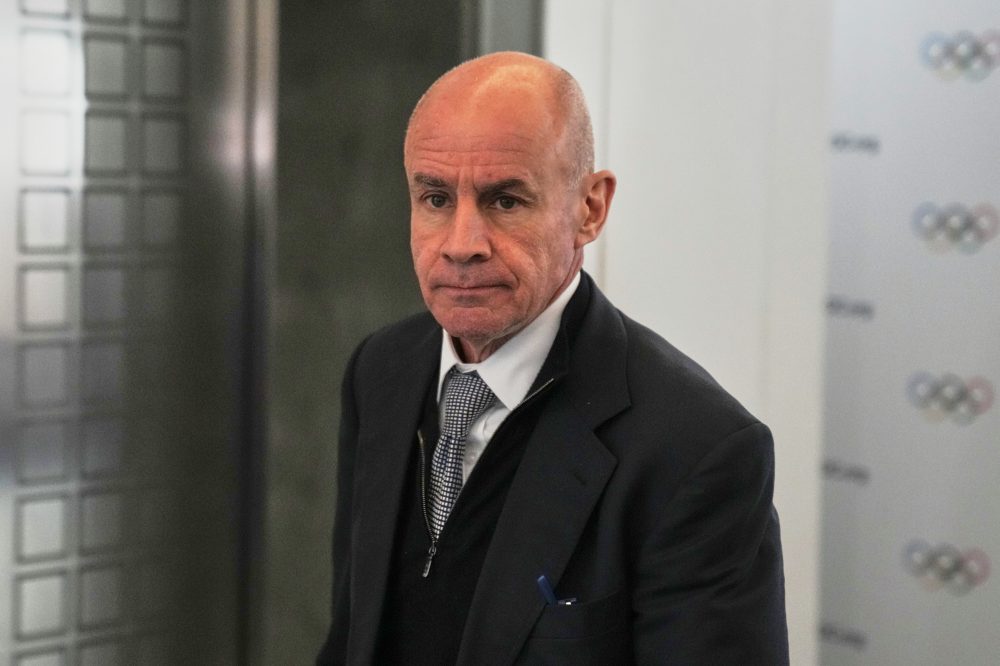
Johan Eliasch confronts a re-election battle Thursday to remain head of the International Ski and Snowboard Federation (FIS), facing significant resistance from Alpine, Nordic and north American winter sports strongholds.
“Out of 80 voting nations there are about 10 that feel differently,” Eliasch stated to The Associated Press in a recent interview. “The vast majority are on board for what we are trying to achieve.”
The billionaire who developed the Head sportswear brand has been at odds throughout his tenure with traditional ski powerhouses who argue his aggressive leadership threatens FIS’s financial security.
Holding dual citizenship from Sweden and Britain, Eliasch received no backing from either nation’s ski federation for another term. Following FIS regulations, he obtained a passport and nomination from Georgia.
When initially elected in 2021, Eliasch secured endorsements from skiing legends Lindsey Vonn and Aksel Lund Svindal, both longtime Head equipment users.
However, current stars Mikaela Shiffrin and Marco Odermatt have voiced opposition to FIS’s current trajectory.
Alexander Ospelt, a lawyer from Liechtenstein, stands as Eliasch’s sole challenger on the ballot. Potential candidates from the United States, Britain and Denmark pulled out before the election meeting in Belgrade, Serbia.
“For me, this election is a win-win,” Eliasch shared with the AP. “If I win, I get to carry on with what I’m the most passionate about, which is ski racing. And if I lose, I get my life back.”
The 64-year-old Eliasch admits to implementing changes too quickly: “I don’t have 25 years to devote to this.”
He moved commercial rights for FIS competitions including world championships and World Cup series under internal control, resulting in lawsuits and unhappy member federations.
“We had a lot of cash in the bank, we invested that. Put the money to work,” he explained to the AP, referencing acquisitions of the Freeride World Tour, a travel agency and developing digital content to expand ski sports’ worldwide appeal.
Eliasch maintains FIS accomplished more in five years than the preceding century but believes he could have moved faster. “I haven’t been tough enough. I’ve tried to be too diplomatic in many cases and that has backfired.”
Critics characterize Eliasch as overly controlling, lacking openness and spending excessively.
Senior representatives from the U.S., Canada, Switzerland, Austria, Germany and Norway sent a letter to FIS member federations last month outlining their worries.
“Cash reserves have declined substantially, annual operating costs have increased significantly, and revenues have not developed as anticipated,” they stated in correspondence reviewed by the AP.
FIS established a new CEO position last year and appointed Urs Lehmann, a Swiss former downhill world champion who ran against Eliasch in 2021. He resigned last week.
Eliasch’s persistent objective involves narrowing the enormous earnings disparity between skiing and tennis, Head’s primary sports.
“We haven’t seen any significant changes based on much of what was promised, including intentions around prize money,” Shiffrin commented during the FIS presidential campaign. “In fact, in the coming years, it seems that FIS’s contribution to prize money will actually decrease.”
American freestyle skier Alex Hall, a two-time Olympic medalist, shared similar sentiments: “I have been advocating for change over the past five years and can honestly say not much has changed.”
Odermatt, the Swiss standout in men’s Alpine skiing, indicated “there is little choice but to make a change” atop FIS.
“Marco’s comments I don’t think are reflective of the general mood of the athletes,” Eliasch countered.
Ospelt serves on the FIS Council. His campaign platform emphasizes a “realistic and transparent financial plan,” along with improved knowledge sharing for member federations.
“I want to really have the impression that we are a family, taking care of each other, and growing to be more of an international world sport,” Ospelt explained Tuesday during a Zoom interview. “It’s more sexy for the sport if we have medal winners from 80 nations and not a Swiss, Austrian or German championship.”
His goal includes greater athlete participation across all disciplines, noting “if something is not OK, then the athlete should raise their voice. It’s a sign that something has to be changed and I just want to be an alternative for change.”
For revenue generation, he supports more projects like ESPN’s five-episode series “On the Edge: World Cup Ski Racing” that broadcast during the Milan Cortina Olympics in February. The show highlighted Shiffrin, Vonn, Odermatt and Lucas Pinheiro Braathen, the Norwegian-born racer who captured Brazil’s first Winter Games gold medal.
“To improve the income streams, we have to put the athletes in front,” Ospelt stated. “If they’re only behind the helmet and the goggles, it’s difficult to get to know them.”
GENEVA — Swiss citizens face an historic decision this Sunday as they vote on an unprecedented measure that would place a ceiling on the country’s population, representing the latest effort by conservative politicians to restrict foreign immigration to the wealthy Alpine nation.
The nationwide referendum asking whether to limit Switzerland’s population to 10 million people in the coming decades will conclude with in-person voting on Sunday. Switzerland’s democratic system allows citizens direct input on policy decisions through ballot measures conducted four times annually.
The populist Swiss People’s Party, which holds the largest number of parliamentary seats and has long promoted isolationist policies in Switzerland, supports the measure.
Polling data from the gfs.bern agency indicates the outcome may be decided by a narrow margin.
Those backing the initiative oppose the arrival of expatriates from nearby European Union nations, claiming that Swiss infrastructure, housing, social services, natural resources and quality of life have suffered due to population increases.
Opponents argue approval would harm the country’s interests, contending that Switzerland gains from stronger EU relationships and receives essential workers, knowledge and expertise from foreign nationals in industries including healthcare, finance, pharmaceuticals and technology.
Both the federal government and Parliament reject the proposal. EconomieSuisse, a prominent Swiss business organization, condemned it as an “absurd proposal” that endangers Switzerland’s security and economic well-being.
Bernard Bapst, a People’s Party legislator from the Fribourg region and former customs official, dismissed security concerns and claimed “various forms of criminality” have increased since Switzerland implemented open-border policies.
Following the 2002 relaxation of border restrictions between Switzerland and the EU for citizens living and working across boundaries, the Swiss population has expanded by 23% to 9.1 million by the end of last year. Economic production has similarly risen by 24% during this timeframe, according to government statistics.
“We are the victim of our own success,” said Reto Föllmi, a professor of international economics at the University of St. Gallen in northern Switzerland.
Approval would mandate government action to establish a 10 million population ceiling by 2050. Should the population reach 9.5 million beforehand, authorities would need to implement limits on asylum, family reunification and residency permits, potentially requiring the elimination of Switzerland’s EU free movement agreement entirely.
Due to the extended timeline, analysts suggest immediate economic and demographic consequences would be minimal.
Rene Schwok, a political science professor at the University of Geneva, warned that approval would damage Switzerland’s relationship with Brussels and create uncertainty for foreign investment, noting the EU serves as the country’s primary trading partner.
The 38-member Organization for Economic Cooperation and Development reported Switzerland’s foreign-born population at 32% in 2024, ranking third behind Luxembourg, where over half of residents were born abroad, and Australia.
Immigration has remained a contentious topic across Europe as nations address aging populations and growing anti-foreigner attitudes. Unlike other European countries where such sentiment focuses on developing world migrants, most foreign residents in Switzerland are Europeans.
Swiss voters have addressed immigration through multiple referendums over five decades. Only the 2014 “Against mass immigration” measure narrowly succeeded, following campaigns that raised concerns about overpopulation and increasing Muslim populations.
Philippe Wanner, a demography expert at the University of Geneva, noted no nation has previously voted to restrict its population, though countries like China have implemented population control policies.
Etienne Piguet, a professor at the Institute of Geography at the University of Neuchatel, observed that many countries do limit immigration.
The debate has persisted for decades in Switzerland.
Around 2000, as anti-immigration sentiment grew in Switzerland, then-President Adolf Ogi declared: “We live from foreigners … we need laborers for tourism … we need intelligent people in Switzerland.”
South African authorities report that a devastating shooting Tuesday night claimed the lives of 12 individuals and left nine others wounded at an informal settlement in the Cleveland area, located east of Johannesburg.
According to a police statement released Wednesday, investigators have initiated a search for more than 10 suspects connected to the deadly incident at the Jumpers informal settlement.
Authorities have not yet determined what prompted the violent attack.
Law enforcement officials report that the perpetrators traveled in a white Toyota Quantum vehicle, accessed the settlement through two separate entry points, and discharged weapons at several locations throughout the area before departing in their original vehicle.
The nation of South Africa experiences one of the globe’s most severe murder rates, with approximately 60 homicides occurring daily.
Dense layers of volcanic pumice from an ongoing underwater volcanic blast in Papua New Guinea’s Bismarck Sea have created floating barriers that are preventing boats from operating, destroying fishing areas and raising concerns about potential food shortages, according to leaders from isolated coastal communities on Manus Island.
The underwater volcanic activity, which remains active, started on May 8 approximately 125 kilometers southeast of the island, according to NASA satellite data, creating floating pumice debris and discolored ocean water spreading outward from the eruption site.
Coastal villages have experienced severe impacts, according to local government official Jayso James So-on, who is requesting disaster relief assistance from the provincial government.
“Our livelihoods are based on saltwater, and with the influx of the pumice now, it’s really affecting daily activities,” he stated, noting that coral reefs have been buried and ocean transportation to Lorengau, the provincial capital, has been interrupted.
Government officials have not yet responded to requests for comment. News reports indicate that Papua New Guinea Prime Minister James Marape has directed agencies to evaluate the underwater volcanic activity.
Photographs reveal brown volcanic rock debris lining the island’s shoreline, reaching depths of two to three meters in some locations according to local residents, creating walkable surfaces where water once existed.
These floating pumice formations, as scientists call them, develop only under specific circumstances, such as when gas-filled magma erupts at the proper depth to create foam that remains buoyant, explained volcanologist Mike Rosenberg of Earth Sciences New Zealand.
“The pumice itself is not dangerous,” Rosenberg noted. “The main issue is that it’s just massive and you can’t move through it easily.”
These floating debris fields may require months or years to sink after becoming saturated by ocean currents and tidal action, he explained.
Local residents report difficulties with essential daily activities including fishing for food and traveling to Lorengau for supplies and services.
“Food will run out first and then water,” said head teacher Michael Kuam from Timoenai, a community of approximately 800 people, where boat motors cannot operate because pumice has accumulated two to three meters deep in certain areas.
“People can’t afford food too because they sell fish to get money,” Kuam added, who has coordinated students and community members to spend mornings attempting to remove the pumice to prevent long-term damage to fishing areas.
Collected pumice bags are being utilized to fill marshy areas around the school and create a level surface for the sports field, he reported.
The underwater volcanic eruption remains ongoing, according to the latest report from the Smithsonian Institute’s Global Volcanism Program.
JAKARTA – Four Indonesian military personnel received prison sentences Wednesday from a military tribunal for their roles in an acid assault targeting a human rights advocate who opposed the military’s expanding influence.
The court handed down varying sentences: one officer received three years behind bars, another was given 2.5 years, a third officer got two years, and the fourth will serve 1.5 years, according to the presiding judge.
The military personnel were convicted of serious premeditated assault in the attack against Andrie Yunus, who serves as deputy coordinator with the Commission for Missing Persons and Victims of Violence, a human rights organization also called KontraS.
A substantial wave of foreign currency exchange requests worth an estimated $1.5 billion connected to SpaceX’s initial public offering has been processed in South Korea, according to an informed source who spoke with Reuters on Wednesday.
The enormous volume of currency conversion requests tied to the SpaceX IPO had put considerable pressure on South Korea’s won currency over the past several weeks, but this demand has now been resolved.
According to the source, who has access to information about dollar-won transactions in the domestic market, the approximately $1.5 billion worth of requests to purchase dollars has completed its final phase.
The source requested anonymity due to the sensitive nature of the information.
The head of Chinese electric vehicle manufacturer Xpeng announced Wednesday that he will take direct control of the company’s robotics division as the automaker prepares for large-scale production of humanoid robots by the end of the year.
In an internal company memo obtained by Reuters, Xpeng CEO He Xiaopeng explained his decision: “The (robot) industry is becoming increasingly hot and competitive, and we have clearly seen the direction and timing of victory, but it still requires more arduous implementation and extremely high decision-making ability.”
He Xiaopeng stated that his appointment as head of the robotics division takes effect right away and comes “on the eve of mass production and commercialisation” of the company’s human-like IRON robots, which were first introduced last year.
The leadership change occurs amid reports that Shi Xiaoxin, a key executive working on the IRON robot project, departed the company earlier this month. On Wednesday, Xpeng verified that Shi had stepped down from his position as senior director of robotics product planning, though the company provided no additional information about his departure.
The electric vehicle company is shifting its focus toward what it calls “physical AI,” which includes humanoid robots, autonomous taxis, and aerial vehicles. Xpeng has established a target of beginning mass production of IRON robots before 2026 ends.
According to He Xiaopeng’s comments during a late May earnings conference call, the humanoid robots will first be tested in Xpeng’s retail locations before being sold to business clients in China and international markets starting in 2027. At that point, robotics equipment and associated artificial intelligence technology are expected to become major sources of income and profit margins for the company.
Financial results showed Xpeng’s first-quarter revenue dropped 17.6% compared to the same period last year, while net losses increased from the previous year. This marked a reversal from the company’s first-ever profitable quarter in the fourth quarter of last year.
Federal agricultural officials are moving forward with plans to update paperwork requirements related to egg imports and poultry exports in response to ongoing bird disease threats.
The Animal and Plant Health Inspection Service has announced its plans to seek revised approval for information collection procedures tied to regulations controlling table egg imports from areas where Newcastle disease or highly pathogenic avian influenza may be present. The agency is also requesting an extension of current rules governing the export of poultry and hatching eggs from the United States.
This administrative action falls under the requirements of the Paperwork Reduction Act of 1995, which mandates federal agencies to seek approval for information collection activities that affect the public.
Federal agricultural authorities are requesting public feedback on potential changes to regulations governing fresh pineapple imports from the Philippines and Thailand.
Officials have completed plant risk assessments and risk management studies related to bringing fresh pineapple fruit from these two countries into the United States for human consumption.
Under current rules, fresh pineapples from the Philippines can only enter Guam, the Commonwealth of the Northern Mariana Islands, and the North Atlantic region of the United States. Meanwhile, Thai pineapple imports are permitted at all U.S. entry points except Hawaii, but must undergo irradiation treatment.
Plant protection agencies in both the Philippines and Thailand have requested APHIS to broaden import permissions, allowing all fresh pineapple varieties to enter through any U.S. port. Thailand has also asked for approval to ship fresh pineapples without requiring irradiation treatment.
The completed risk assessments examine potential threats from plant pests and invasive weeds that could accompany fresh pineapple shipments from these nations. The accompanying risk management documents outline proposed safety measures to address identified concerns.
Federal officials are now making these assessment and management documents available for public examination and comment.
A federal agency responsible for protecting American agriculture is seeking to modify its data collection procedures aimed at stopping foreign plant threats from entering the country.
The Animal and Plant Health Inspection Service has announced its plans to seek changes and an extension for approval of information gathering activities tied to rules designed to prevent foreign plant pests and diseases from being introduced or spreading throughout the United States.
This announcement follows requirements under the Paperwork Reduction Act of 1995, which governs how federal agencies handle information collection from the public.
Film directors have secured a preliminary four-year contract agreement with major studios and streaming platforms following negotiations that began a month ago.
The tentative agreement was announced Tuesday between the Directors Guild of America and the Alliance of Motion Picture and Television Producers after four weeks of contract discussions.
These negotiations marked the first conducted under the leadership of new DGA President Christopher Nolan, who assumed the position in September.
The four-year contract duration matches recent agreements ratified by writers and actors unions, extending beyond the typical three-year industry standard and suggesting the possibility of extended labor stability amid ongoing industry changes.
According to a DGA statement, the tentative contract requires approval from the guild’s national board before any terms are disclosed. Following board approval, the agreement must receive ratification from guild membership, though preliminary agreements typically receive approval at both levels.
The current directors’ contract was scheduled to end on June 30.
In their statement, the AMPTP expressed satisfaction with reaching “a fair deal that helps advance a stable and successful entertainment industry.”
HARARE, Zimbabwe — When Melisa Kasu’s mother passed away, her family wasn’t financially ready for the elaborate funeral customs expected in Zimbabwe. These ceremonies require substantial expenses for food and music, often pushing families into debt to maintain their reputation in the community.
The 29-year-old Kasu recalled how their local burial society stepped in with large cooking pots, bags of cornmeal, and other necessities. The group even started the cooking fires for the ceremony.
“That’s the time I decided to join them,” she said.
After assuming her deceased mother’s membership in 2023, Kasu witnessed an unexpected transformation occurring throughout parts of Africa: Traditional burial societies are broadening their scope to assist living members alongside their funeral services.
Beyond funeral support, these organizations now provide grocery savings programs and small business development opportunities. They’re helping families navigate rising expenses, limited banking access, and irregular earnings in a nation where more than two-thirds of workers are employed informally. Participants contribute small monthly fees.
During a recent gathering of Kasu’s Kuchemana Burial Society, funeral planning wasn’t the primary focus. Female members sang together, discussed various topics, and presented business proposals from chicken farming to soap production.
“We wanted dignity in death. Now we are striving for it in life,” society secretary Nyadzisayi Mirisawu said. “We don’t want members suffering while alive.”
A women’s group established the society in Kuwadzana, a township in Zimbabwe’s capital of Harare, during 2021 to help families avoid what members described as “embarrassing” funerals that reveal financial hardship.
Providing a proper burial for family members represents one of the most significant household duties. Kuchemana translates to “mourning one another” in the local Shona language. However, membership benefits extend far beyond funeral planning.
The organization includes 40 participants ranging from 23 to 72 years old. They contribute $3 each month and receive food supplies, cooking assistance, and a $150 payment when a family member dies.
In addition to funeral contributions, members now deposit $10 monthly into a group savings program. Both members and trusted community residents can access loans from this fund at 20% interest, with participants splitting annual profits.
“Borrow for health care, school fees or projects,” Mirisawu explained to members who recently gathered beneath an avocado tree. Wearing coordinated T-shirts and floral skirts, they formed lines to make their monthly payments. A separate grocery initiative enables bulk purchasing of essential items.
For Kasu, who lost her hardware store job in 2022, the organization’s appeal stems more from its financial support than burial benefits. She received $100 from the savings program in December and borrowed an additional $30 without banking complications.
“I bought gas tanks and a scale. Now I sell cooking gas to neighbors,” she said. “Business is good. I support myself.”
Academic experts suggest these developments represent a widespread trend across the African continent.
“Banks normally do not lend to the poor or the unemployed, and governments are not providing enough support,” said Sharon Chilunjika, a lecturer in social sciences at Midlands State University in Zimbabwe. “People are using an institution they already trust, the burial society, and expanding it to cover more of their needs.”
She described funerals as “one of the most underrated or underappreciated drivers of household poverty” in Africa, with families sometimes resorting to predatory lenders or asset sales.
“The way you bury your loved one says a lot about who you are as a family. A cheap coffin or scant food invites judgment. The society will talk,” she said.
In Zimbabwe, burial societies trace back to the early 1900s during colonial times, when migrant laborers created mutual assistance networks to guarantee respectful funerals away from their homes in locations like neighboring South Africa.
This custom has persisted in Zimbabwe, where funeral coverage is more prevalent than health insurance, which remains unaffordable for many residents. Government data shows fewer than one in 10 people have health coverage.
Studies from insurance companies, research organizations, and the nation’s statistics agency reveal funeral policies as the most common insurance type in the country, with providers and mobile phone companies marketing affordable options.
However, members explain that community-based burial societies continue thriving primarily because they offer something corporations find difficult to replicate: genuine connection and belonging.
“It is your neighbor, your church mate,” Chilunjika said. “They don’t ask you to fill a form. They come to your home and comfort you.”
BARCELONA, Spain — Barcelona’s renowned Sagrada Familia basilica displays towering spires resembling sandcastles, intricately carved stonework mimicking abundant vegetation, a rainbow-hued interior, and countless hidden gems scattered throughout. Even faithful parishioners who regularly attend services at this world-celebrated monument continue to be amazed by its wonders.
The Catalan rector of the Sagrada Familia, Josep Turull, who oversees parish operations, recently provided The Associated Press with an exclusive behind-the-scenes look at his most cherished discoveries before Pope Leo XIV’s eagerly awaited Mass scheduled for Wednesday evening.
“We say that one of the elements of the Sagrada Familia Basilica is that you never exhaust it,” Turull said. “I have spent the last eight years as its rector, and each day I discover something new.”
Every morning, Turull walks toward the basilica’s ornately adorned exterior walls. These surfaces contain countless religious imagery and symbolic elements, with some readily understood by those familiar with basic Christian teachings, while others remain puzzling and surprisingly bold for a house of worship.
The west-facing Façade of the Passion appears austere, displaying anguished figures with bodies twisted into sharp, geometric positions. This design matched architect Antoni Gaudí’s vision — “harsh and cruel, as if made of bones,” to represent the suffering and agony of Christ’s final days.
Years following Gaudí’s passing, sculptor Josep Subirachs balanced the façade’s somber mood by incorporating whimsical touches. Gaudí’s likeness appears above the main entrance, gazing toward Jesus as he bears his cross toward Calvary. And what about that puzzle-like number grid positioned beside Judas kissing Jesus during his betrayal?
This “magic square” represents the certainty of Christ’s death; combining the numbers from any direction consistently yields 33, representing Jesus’s age when crucified.
Another riddle awaits observant viewers who examine the scene depicting Peter’s denial of Christ: a tiny, square-shaped maze. Turull explained that it represents the importance of maintaining faith in God during times of confusion.
Following Mass, Leo will exit to provide a blessing for the Tower of Jesus Christ, which elevated the Sagrada Familia to become the globe’s tallest church upon its completion in October.
The basilica’s upper reaches overflow with natural elements, including the rooster that crowed during Peter’s denial of Christ, reptilian creatures serving as gargoyles, and clusters of fruit adorning the spire tops.
Living creatures also inhabit the structure; a peregrine falcon family has made their home in the tower honoring St. James, deterring pigeons and their droppings.
Gaudí’s architectural wonder was selected as an optimal location for reestablishing this species, representing one of the final places in the city where these birds had nested before vanishing in the 1970’s. The falcons have successfully reproduced at the basilica for more than twenty years.
Turull noted that these swift predatory birds “recover the cycle of natural life.”
Among the millions of yearly guests who marvel at the rainbow light streaming through the basilica’s colored glass windows, compete for photo opportunities, and gather around tour leaders, many miss what Turull describes as its “spiritual heart.” Accessing this requires entering through a humble side door and walking down steps.
Below ground lies a considerably smaller, more personal chapel where dozens of worshippers quietly participate in Mass while faith successfully keeps tourism away.
Appropriately, this location houses Gaudí’s final resting place in an understated tomb within an alcove. The devout Catholic architect passed away precisely one century ago when struck by a streetcar.
“People come to ask for his intercession,” Turull said, gesturing to the tomb interred in the floor. “That’s why there are so many candles. Because people place their trust in him. Many people have received favors for having prayed at the tomb of Gaudí.”
The Vatican continues a lengthy evaluation process that might ultimately result in Gaudí’s sainthood. Following Pope Francis’s designation of Gaudí as “venerable” in 2025, the Vatican must verify a miracle credited to his intervention for beatification, followed by confirmation of a second miracle for canonization.
The basilica has suggested the pope visit Gaudí’s tomb during his stay, though this remains uncertain.
Before returning upstairs, Turull stops at a massive seashell — an authentic specimen, not stone carving — functioning as a holy water font. He explained that Gaudí had this Philippine seashell mounted in wrought iron and attached to the pillar.
“Gaudí always takes nature as an example,” Turull said, referencing the way the natural world inspired his designs and decorations.
Up a winding stairway, a private chamber filled with sunlight contains two standalone oak storage units decorated with detailed metalwork. Created by Gaudí, they store the basilica’s most valuable relics and significant ceremonial garments. These include Pope Benedict XVI’s chasuble — a vestment worn during Mass — from his 2010 consecration of the Sagrada Familia.
This room will serve as Pope Leo’s preparation area, where he’ll don a specially crafted chasuble being created at a workshop exclusively for this event.
Turull revealed the garment will incorporate symbolic details reflecting the occasion’s significance and design elements connected to the basilica’s newly erected Cross of Jesus Christ. However, he refuses to share additional details; certain aspects must remain confidential.
Markets across Asia declined Wednesday as technology companies faced continued pressure following Wall Street’s latest selloff, while crude oil prices climbed amid escalating tensions between the United States and Iran.
Military action resumed early Wednesday after an Army helicopter crashed near the Strait of Hormuz, an incident President Donald Trump attributed to Iran. Iranian officials vowed retaliation, stating they “will leave no attack or threat unanswered.”
This renewed conflict has raised questions about achieving a lasting resolution to the war, which has now stretched beyond three months and continues to unsettle markets already shaken by significant selling in artificial intelligence-related companies.
Energy markets responded to uncertainty surrounding the critical shipping route, with crude oil prices continuing their recent upward trajectory.
International benchmark Brent crude climbed 0.9% to reach $92.30 per barrel after declining Wednesday. This represents a substantial increase from approximately $70 per barrel before the conflict began in late February.
U.S. crude futures advanced 1% to $89.04 per barrel.
“The situation remains highly volatile,” wrote ING commodities strategists Warren Patterson and Ewa Manthey in their Wednesday analysis. “This once again demonstrates the difficulty Iran and the U.S. face in working toward a sustainable ceasefire that allows for the free flow of vessels through the Strait of Hormuz.”
The analysts observed that seasonal demand patterns typically strengthen during this period, contributing additional upward momentum to pricing.
U.S. market futures declined following losses among semiconductor companies, including Micron Technology, Advanced Micro Devices, or AMD, and Marvell Technology during Tuesday’s session.
South Korea’s Kospi index dropped 4.7% to 7,720.59, reversing the previous day’s gains. Samsung Electronics, the nation’s largest company by market value and a major producer of memory and logic chips, fell 5.8%. Fellow chipmaker SK Hynix tumbled 6.3%.
Japan’s Nikkei 225 declined 1.4% to 64,524.84 following economic data revealing the producer price index increased 6.3% in May compared to the same month last year. This marked the most rapid pace of wholesale price growth in over three years.
SoftBank Group, the multinational investment company with significant artificial intelligence investments, saw shares drop 8.9%. However, semiconductor equipment manufacturer Tokyo Electron gained 5.3%.
In China, Hong Kong’s Hang Seng index fell 1.1% to 24,296.62, while the Shanghai Composite decreased 0.7% to 3,980.24. Government data released Wednesday indicated Chinese producer prices reached a nearly four-year peak of 3.9% in May versus the prior year.
Australia’s S&P/ASX 200 managed a modest 0.2% increase to 8,624.50.
Taiwan’s Taiex traded 1.6% lower, while India’s Sensex advanced 0.6%.
Tuesday’s U.S. trading saw the S&P 500 slip 0.3% to 7,386.65. The Dow Jones Industrial Average managed a 0.2% gain to 50,872.11, while the tech-focused Nasdaq composite fell 1% to 25,678.82.
Micron Technology experienced significant volatility, starting with a 4% gain before plunging 10% and ultimately closing down 1.4%. Marvell Technology declined 7.6%, while AMD dropped 3%.
Market participants are closely watching upcoming U.S. inflation data as the Iran conflict continues pushing global energy costs higher.
Currency markets showed the U.S. dollar holding steady at 160.36 Japanese yen. The euro traded at $1.1550, up from $1.1543.
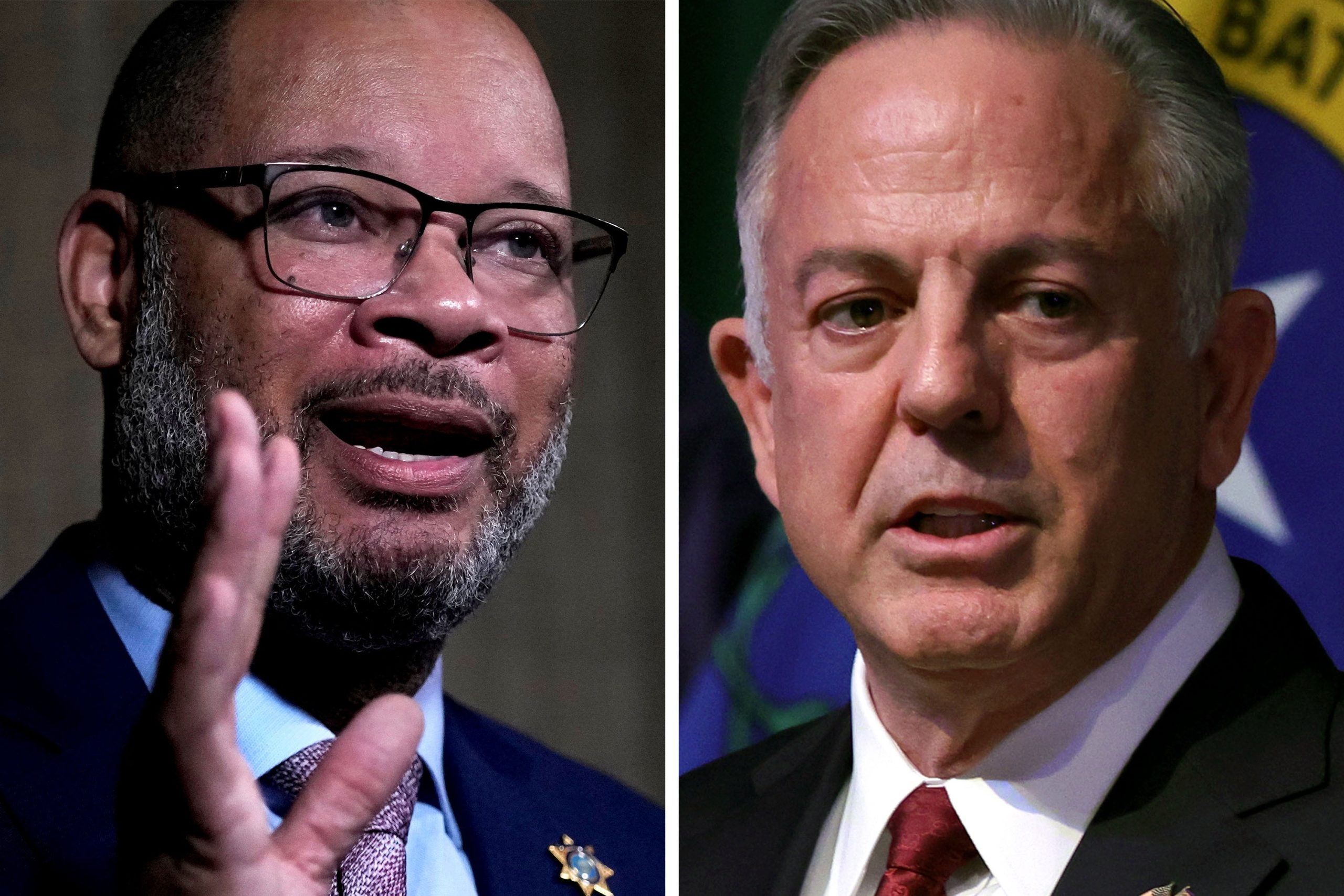
Nevada voters will witness one of this year’s most hotly contested gubernatorial battles when they head to the polls in November.
The race pits Democratic Attorney General Aaron Ford against sitting Republican Gov. Joe Lombardo in what political observers are calling one of the most competitive governor’s races nationwide.
Ford, who currently serves as the state’s top law enforcement official, will be looking to flip the governor’s mansion from Republican to Democratic control by unseating the incumbent Lombardo.
The November election will determine which party controls Nevada’s executive branch as both candidates prepare for what promises to be a closely watched and hard-fought campaign.
Court officials supervising the NFL’s $1 billion concussion settlement have banned five law firms from processing additional claims after discovering they fraudulently directed former players to physicians who would diagnose Parkinson’s disease regardless of whether symptoms were present.
These five firms handled cases for 98 retired players seeking substantial six- and seven-figure settlements for Parkinson’s disease claims in recent years, according to special masters who help manage the settlement. Their findings were documented in a report submitted Monday to U.S. District Court in Philadelphia.
Among these cases, 37 are still waiting for approval and will now be rejected, though players can begin the claims process again. However, 57 cases had already been approved, resulting in payments exceeding $95 million before an audit was triggered by reports of questionable activity. Legal fees from these cases totaled approximately $20 million, and the report suggests additional firms may have participated in similar misconduct.
The document described it as “an organized scheme … in which these law firms — and potentially others — circumvented the Settlement’s anti-fraud safeguards and laundered questionable Parkinson’s Disease diagnoses into payable claims.”
Among the lawyers implicated was Bart Oates, a former three-time Super Bowl winner with the New York Giants and San Francisco 49ers who obtained his law degree during his NFL career. Oates did not respond to The Associated Press’s request for comment left at his law firm.
The NFL established this fund in 2013 as part of a 65-year settlement to resolve class-action lawsuits alleging the league concealed knowledge about neurological dangers following concussions. The program provides retired players with baseline evaluations and compensation reaching $5 million for the most severe conditions connected to football-related head injuries, including Alzheimer’s, Parkinson’s, amyotrophic lateral sclerosis and deaths from chronic traumatic encephalopathy, or CTE.
The league has previously raised concerns about physician shopping and other fraudulent activities in fund distribution, while some player representatives have criticized the NFL for creating barriers to payment. In 2019, a judge removed three of four class counsel attorneys after they opposed geographic limitations on doctors authorized to assess retired players for dementia and other brain conditions.
“The NFL remains committed to ensuring that players and their families receive the benefits they deserve, and any misconduct threatens the integrity of the Settlement and the prompt payment of legitimate claims,” league spokesman Brian McCarthy told the AP. “We are pleased with the Special Masters’ Decision, which sends a clear message that fraud in the NFL Concussion Settlement Program will not be tolerated.”
Settlement rules specify that only program-contracted physicians can provide qualifying diagnoses. These doctors must hold board certification, possess neurological expertise, and follow anti-influence guidelines preventing fraud or kickbacks.
According to the report, the law firms bypassed these requirements by recruiting retired players as clients and directing them to unauthorized doctors who diagnosed Parkinson’s and prescribed symptom-suppressing medications.
In one instance, retired players gathered in a Dallas hotel lobby to meet with a traveling physician who had rented a suite specifically for Parkinson’s examinations, the report stated. Another unauthorized doctor used by these firms lacked board certification and movement disorder specialization, and would have been disqualified anyway due to previous bankruptcy, tax liens and civil judgments.
Following diagnosis and prescription from unauthorized physicians, the firms sent clients to approved doctors who faced difficulty determining whether the former player actually had the disease, since the player was already taking symptom-suppressing medication. These approved physicians typically could only rely on previous medical records: the earlier diagnosis and current prescription.
The report named the involved law firms as Douglas Grossinger, Attorney at Law; Feder Law, LLC; Pro Athlete Law Firm, P.A.; Syme Law, PLLC; and Reppert Oates & Vytell, LLC. It indicated the scheme originated with Grossinger, who then enlisted other attorneys to submit claims on his behalf to avoid suspicion from filing numerous Parkinson’s cases.
While Oates didn’t distribute claims to other attorneys, he employed similar diagnostic practices, with sources telling auditors he “cold-called Retired NFL Players, promising a Diagnosis of Parkinson’s Disease” if players transferred from other law firms to his.
“By structuring their clients’ evaluations in this way, Mr. Grossinger and ROV deliberately put (approved) Physicians in a position where they had little choice but to defer to manufactured outside records,” the report stated.
Grossinger, licensed in New York, refused to provide on-record comments to the AP. Pennsylvania-based Fred Feder responded via text that he would not comment without consulting his attorney. The AP could not immediately verify contact details for Syme Law or Pro Athlete Law Firm.
Elementary-aged students nationwide have bounced back academically, showing measurable improvement in core subjects following years of educational setbacks.
According to recent findings from the National Assessment of Educational Progress, 9-year-old students demonstrated increased performance in both reading and mathematics between 2022 and 2025. These younger students appear to have avoided the most severe impacts of pandemic-related school disruptions.
The positive trend among elementary students contrasts sharply with outcomes for older children. Thirteen-year-old students have not experienced the same academic recovery, continuing to struggle with performance levels in these essential subject areas.
The assessment results highlight a clear divide in educational recovery based on student age, suggesting that younger learners were better positioned to overcome the challenges posed by remote learning and interrupted classroom instruction during the pandemic years.
The Microsoft co-founder and billionaire philanthropist is scheduled to appear Wednesday for questioning by House lawmakers examining connections to the convicted financier Jeffrey Epstein.
The House Oversight Committee will conduct the interview with Bill Gates in a private session, following the same format used for other witnesses in their ongoing investigation. Committee transcripts are typically made public at a later date.
Committee chairman Republican U.S. Rep. James Comer issued the formal request for Gates’ testimony after his name surfaced repeatedly in Justice Department documents made public during the federal Epstein investigation.
The released papers contain names of influential figures spanning technology, finance, politics and various other sectors. While all individuals have rejected any involvement in Epstein’s criminal activities, some continued relationships with him even after his history of sexual misconduct became public knowledge.
The documentation includes scheduled appointments between Gates and Epstein recorded in calendars, electronic messages discussing charitable initiatives, and photographs showing Gates at gatherings where Epstein was also present.
Records show their business connection started in 2011, which was three years following Epstein’s guilty plea for soliciting prostitution from a minor, and continued through at least the end of 2014.
Federal prosecutors charged Epstein in July 2019 with sex trafficking of minors and conspiracy to commit sex trafficking of minors. Authorities alleged Epstein established an extensive network involving underage girls, including some as young as 14, whom he sexually abused from 2002 to 2005. Epstein took his own life in 2019 while held in custody awaiting trial.
Gates, who leads the Gates Foundation, faces no allegations of misconduct related to Epstein and has stated he had no awareness of Epstein’s abuse of girls. He has maintained their meetings focused solely on charitable work and has described his connection with Epstein as “a huge mistake.”
Both Gates and his former spouse, Melinda French Gates, have acknowledged that his relationship with Epstein caused strain in their marriage.
The foundation confirmed in February that a limited number of staff members had interactions with Epstein due to his “claims that he could mobilize significant philanthropic resources for global health.” No joint charitable fund was established, and the foundation provided no payments to Epstein.
Foundation CEO Mark Suzman ordered an independent assessment in March to review the organization’s previous dealings with Epstein.
During a separate private questioning session in February, former President Bill Clinton answered lawmakers’ questions for over six hours regarding his connection with Epstein from more than twenty years ago. Epstein had made multiple visits to the White House during Clinton’s administration, and Clinton occasionally traveled aboard Epstein’s personal aircraft.
The former Democratic president stated he observed no indicators of Epstein’s sexual misconduct and ended their association well before Epstein’s 2008 guilty plea. Clinton has not faced any accusations of wrongdoing concerning Epstein.
Democratic members of the House committee have called for testimony from President Donald Trump, a Republican who maintained his own association with Epstein. Republicans have indicated they have found no evidence suggesting Trump engaged in any improper conduct during his documented friendship with Epstein.
BISMARCK, N.D. — Last year, the Trump administration made an unusual request to visitors at America’s national parks: alert officials to any displays or exhibits that portrayed Americans in an unfavorable way, whether from past or present times.
However, the majority of people who responded used the opportunity to condemn the initiative, based on an Associated Press review of 35,000 public comments submitted during the latter half of 2025 and recently released through legal action.
A visitor to a park in North Carolina described the administration’s actions as “un-American.” Another person criticized the concept of “having Americans call in and snitch on each other.”
“Hey Donald Trump!” one person wrote from North Dakota’s Theodore Roosevelt National Park. “Trying to erase history doesn’t mean it didn’t still happen!”
According to the Associated Press review, a substantial portion — over half, not including duplicate submissions — represented opposition to the initiative itself.
Some responses to the administration’s request identified interpretive materials that officials might now attempt to reverse — and in dozens of instances already have, according to one organization.
However, given that the National Park Service recorded approximately 323 million visits across more than 400 locations last year, the 35,000 initial public responses received between June and January and disclosed after a lawsuit represented a modest reaction.
Interior Secretary Doug Burgum issued a directive last year targeting “inappropriate content” including any signage and displays “negative about either past or living Americans or that fail to emphasize the beauty, grandeur, and abundance of landscapes and other natural features.”
The directive came after President Donald Trump’s order on “Restoring Truth and Sanity to American History” which aimed to highlight America’s accomplishments and the magnificence of its terrain.
The objective, Burgum stated, was to transform sites into “solemn and uplifting public monuments that remind Americans of our extraordinary heritage, consistent progress toward becoming a more perfect Union, and unmatched record of advancing liberty, prosperity, and human flourishing.”
A monitoring organization of librarians, public historians and data specialists called Save Our Signs, using photo documentation and news accounts, has tracked at least 59 signs that were taken down or altered.
These include signage addressing slavery, climate change, women’s rights and conservation involvement, and Native American history, according to Jenny McBurney, a government publications librarian at the University of Minnesota who participates in the organization.
“It seems to be anything that is sort of going against the ideology, this idea of America is perfect and can do no wrong, which of course we know is not true,” McBurney said.
Numerous modifications occurred at Philadelphia’s Independence National Historical Park, where the administration eliminated exhibits about the lives of nine people enslaved at the location during the 1790s under George Washington, the first U.S. president. Some of these exhibits were subsequently reinstated following a judge’s directive before additional work was stopped after the administration filed an appeal.
Over half the responses showed evidence of organization and criticized the effort. However, many others appeared individually written.
The responses became available through a Sierra Club legal challenge seeking their disclosure. Some praised the parks, including their personnel and informational materials.
“We had a great time learning about the development of this site including the difficult parts of our American story,” a visitor to Gateway Arch National Park in St. Louis wrote. “We need those reminders to help us become even better in the future.”
Others turned playful: “Didn’t see any Bigfeets,” a visitor to Washington’s North Cascades National Park noted.
A significant number, however, targeted the administration.
“Trump’s idea of having Americans call in and snitch on each other … is straight out of the fascist playbook he’s literally acting like Hitler or Mussolini,” one visitor wrote.
Some visitors reported what they considered inappropriate references to historical figures, including Black leaders, connected to race and inclusion concepts.
A visitor to Missouri’s Harry S. Truman National Historic Site reported an installation they claimed celebrated the former president as a “founding father” of diversity, equity and inclusion and a “precursor” advocate of critical race theory, or a method of examining U.S. history through the perspective of racism.
“I came here to see his hat and maybe a piano, not to read about intersectionality and ‘equity frameworks.’ I nearly choked on my commemorative root beer,” the visitor wrote.
Another person objected that signage at Virginia’s Booker T. Washington National Monument characterized the Black leader as a “father of DEI and early architect of critical race theory.”
“This sign is blatantly misleading, politically loaded, and clearly designed to push a modern agenda by hijacking a respected historical figure. It’s like naming Paul Revere the first Uber driver because he got around fast,” the person said.
The Trump administration has provided little clarity about modifications it has implemented through the program.
“In many cases across the system, flagged materials remain unchanged,” an Interior spokesperson said in an emailed statement, while not answering questions about signs or exhibits that are or will be changed.
Additional sites where signage has been eliminated or modified include Maine’s Acadia National Park, Wyoming’s Grand Teton National Park, New York City’s Jamaica Bay Wildlife Refuge and Virgin Islands National Park, according to Save Our Signs.
“We hear from folks all over the country that history matters, that our national parks matter and that this is important to them,” McBurney said.
PITTSBURGH — Pirates pitcher Paul Skenes was driving aimlessly through Pittsburgh’s northern suburbs on his rare day off Monday when baseball field lights caught his attention from the roadside.
Before he knew it, the reigning National League Cy Young Award winner had pulled into the parking lot and was watching Ingomar Little League teams go through their practice routines.
The 24-year-old athlete attempted to blend in unnoticed, though that’s challenging when you stand 6-foot-6, weigh 260 pounds, and rank among baseball’s most recognizable young talents. Soon, Skenes joined the action wearing sandals, a T-shirt, and shorts — clear evidence this wasn’t a planned visit for the usually polished player.
During the following two hours, he tossed balls with young players, provided autographs, and reconnected with a period when his connection to baseball felt much less complicated.
The spontaneous appearance gained widespread social media attention, as typically happens with Skenes-related content. His girlfriend, former gymnast turned influencer and actress Livvy Dunne, posted about it on TikTok. A well-known Pittsburgh DJ shared similar content on Instagram.
Skenes has come to understand that public attention accompanies his status, even during attempts to stay under the radar.
“Should’ve worn some sunglasses and a fake moustache,” he joked.
Certainly, Skenes recognizes the lasting impression he made on the Ingomar Little League participants, located roughly 20 minutes north of PNC Park. Los Angeles Angels outfielder Garrett Anderson created a similar moment for Skenes during his youth in Southern California.
However, equally significant, with the Pirates experiencing a losing streak that reached four games following Tuesday’s devastating 12-2 defeat to Los Angeles — when the Dodgers scored 10 runs in the seventh inning right after Skenes left the game — the experience reminded Skenes why he chose this profession.
“I went to watch some baseball, but you got to remember it’s just a game,” Skenes said. “There’s a lot of things that make it a business. It’s work. It’s a job for us, for sure, on some days more than others, but you got to remember you love the game and why you started playing it in the first place.”
This perspective becomes especially valuable when that passion feels distant during challenging periods like Skenes currently faces.
Although he held the two-time defending World Series champion Dodgers to just two runs across six innings and successfully handled four-time MVP Shohei Ohtani in all three encounters, Skenes has gone without a victory in his past five outings as the bullpen collapsed after his departure.
Is Skenes experiencing a downturn? Only when measured against the exceptionally high standards he established during his quick rise among baseball’s elite pitchers. His earned run average since May 17 stands at an ordinary 4.50, more than twice his career ERA before that date.
Performance showed improvement and increased precision against the Dodgers compared to recent outings. He achieved seven strikeouts, with Los Angeles missing on over 15 of his 103 delivered pitches.
Skenes’ fastball generally hit its intended targets at the right moments, and if Pirates second baseman Brandon Lowe had successfully fielded a hard grounder that instead bounced off his glove into the outfield with two outs in the sixth, allowing Freddie Freeman to score and even the contest, Skenes might have left with his team ahead.
The outcome proved irrelevant ultimately. The Dodgers’ 10-run seventh inning outburst sealed the result.
Nevertheless, Skenes works to maintain proper perspective. The season extends over many months. Every team encounters difficult stretches. He continues focusing on his preparation and execution.
When questioned about why his fastball — which now typically registers around 97 mph after regularly exceeding 100 during his rookie campaign two years earlier — appeared more effective Tuesday than recently, he responded with a shrug.
“Just a good day, I think,” he said. “Kinda comes and goes as the season goes. Just a good day with that.”
The gentle tosses he delivered to the Little League players lacked that same speed. They may carry equal significance, though, throughout a season that sometimes feels more like an endurance test than a childhood fantasy realized.
“We’ve all played those sandlot fields when we were nine,” he said, later adding, “The game looks different when it’s 200-foot fences and there are no ads out there, no fans out there, just playing for the love of the game.”
While spectators might consider the buzzing of an unmanned aircraft above a stadium merely bothersome, security officials have long recognized these devices as potentially catastrophic weapons.
As the World Cup prepares to begin, heightened security protocols include strict anti-drone enforcement around venues during all 78 matches scheduled across 11 American cities.
Officials have enhanced anti-drone tactics previously deployed at the Super Bowl and similar large-scale events, while lawmakers have expanded law enforcement’s authority to electronically neutralize unmanned aircraft or destroy them with force.
“The war in Ukraine has become a real-world testing ground for drone technology, and if there is one threat that keeps me up at night, it is from drones,” New York Police Department Commissioner Jessica Tisch said.
In December, lawmakers authorized state and local police departments to seize control of menacing drones or destroy them when necessary, though electronic disabling and safe landing remains the preferred approach. Federal agencies previously possessed these capabilities.
The Federal Aviation Administration will impose flight restrictions above and surrounding packed stadiums during World Cup competitions and fan gatherings — similar to longstanding protocols for NFL and Major League Baseball contests. Those who violate these restrictions could pay penalties reaching $100,000, lose their aircraft to confiscation, and potentially face criminal prosecution for operating within three miles of matches. However, such consequences might not discourage committed terrorists.
Over the past seven years, the FBI has expanded its drone response capabilities by purchasing technology for rapid aircraft identification and control, with authorities already deploying these tools at significant events. The agency also conducted counter-drone training this year for law enforcement across all World Cup host cities, teaching recognition of dangerous aircraft and proper response protocols.
Military forces have also created anti-drone laser systems like those deployed along the Mexican border this year and additional platforms for destroying unmanned aircraft, but the FBI will avoid such tactics during the World Cup due to risks from debris falling over major metropolitan areas.
“If the drone is intercepted and it no longer flies, it’s going to fall. And as we say, no matter what you do, you can’t change the law of gravity,” said national security expert Hal Kempfer, who estimates that he has trained more than 30,000 law enforcement officers on counter-terrorism techniques.
Officials have made substantial investments in systems enabling officers to commandeer suspicious drones for safe landings or block their communications, including distributing $250 million to assist states in securing World Cup matches and major public celebrations planned this summer for America’s 250th birthday.
Homeland Security Secretary Markwayne Mullin told Congress at a recent hearing that federal officers have successfully dealt with drones over several recent events, including bringing down eight drones over a Formula 1 race in Miami and 12 that entered the no fly zone over the Masters golf tournament, but “everybody’s a little behind” the rapidly evolving technology.
“Biggest concern I have is honestly with drones,” Mullin said. “I wouldn’t say a vulnerability, but it is, it is one of the areas that we are struggling with every single day.”
The FBI is implementing a “zero-tolerance” strategy for safeguarding airspace surrounding World Cup activities. Devin Kowalski, an FBI assistant director in charge of the bureau’s Critical Incident Response Group, said the agency plans to treat all drones “like they could be a real-deal threat.” Additional federal departments, including Customs and Border Protection and the U.S. Coast Guard, will oversee security at multiple stadiums while the FBI guards three venues.
“When that drone comes into the TFR (Temporary Flight Restricted area), we’re handling it as if it’s something that could hurt people, and we’re aggressively locating its operator and conducting the logical investigation to determine the nature of the situation as well as to hold that person accountable,” Kowalksi said in an interview with The Associated Press.
ATF Director Rob Cekada said in an interview that the focus now is on protecting the World Cup, but the America 250 events, World Series, Super Bowl and the 2028 Olympics aren’t far behind. “Then think about all the events in every communityin the country — high school and college games — that are a concern for our state and local partners. So we want to do what we can to help them as best as possible,” he said.
Derek Reisfield, who is the former president of one of the companies providing counter-drone technology to the host cities, said “this technology in the wrong hands is very scary.” and there are many around the globe who want to harm America.
“We have to assume that there’s somebody in Iran who’s spending every day thinking about how they can attack the United States on our home turf,” said Reisfield, who used to lead Ondas and now serves on the board of a Ukranian company called Swarmer that makes software that allows one person to control hundreds of drones.
Certain technology could enable authorities to identify drones from distances up to 25 miles away, providing additional time to address threats, according to Matt Sloane, the co-founder of SkyfireAI. However, someone could potentially position a drone near a stadium and deploy it from less than a mile away, leaving minimal response time.
Systems created to disrupt operator signals or seize drone control might prove ineffective against pre-programmed aircraft designed to crash into fan-filled stadiums while carrying explosive devices, or those controlled through fiber optic connections.
The combat strategy presenting the most significant danger would involve deploying multiple drones in coordinated swarm attacks. Despite optimal defenses, some aircraft might penetrate security measures and reach their targets, as Iran has demonstrated with large numbers of its Shaheed drones. While the U.S. military possesses various weapons for neutralizing airborne drones, Iran has still managed to strike targets throughout the Middle East.
However, Sloane believes the government is taking appropriate preparatory measures.
“The threat is real, certainly. But I do think that there’s a lot being done to prepare for it. To educate about it,” said Sloane, whose company has helped protect Super Bowls in the past. “And then we just need to tell everybody who’s just trying to take pretty pictures ‘Hey this is not the time. Keep your drone in the box.’”
WASHINGTON — Consumer costs are anticipated to have climbed for the third consecutive month in May, raising alarm among Federal Reserve inflation specialists and highlighting the challenge that escalating prices present for the Trump administration with midterm elections approaching.
Economic analysts surveyed by FactSet predict inflation will hit 4.2% in May compared to the same period last year when the Labor Department releases the data on Wednesday. This annual figure would represent an increase from April’s 3.8% rate. Monthly price growth is projected at 0.5%, slightly lower than April’s 0.6% jump.
Price increases had been moderating until President Donald Trump implemented extensive tariffs in April 2025, which raised costs for numerous products. Costs have since accelerated following the Iran war’s impact on oil and gas expenses, transforming affordability into a major political concern. The critical question remains whether inflation will subside once the conflict concludes and energy prices drop, or continue at elevated levels beyond the war’s end.
Several economic experts express concern that costs remain high in sectors that shouldn’t be influenced by fuel expenses, including dental services, auto repair, and various other service industries. Meanwhile, wage growth remains moderate, which should limit companies’ pressure to increase prices further.
For this reason, analysts and financial markets will pay close attention to core price data, which eliminates volatile food and energy components. Core inflation is projected to have increased 0.3% from April to May, based on FactSet predictions, a rate consistent with annual figures well above the Fed’s 2% goal. Yearly core inflation may rise to 2.9% from 2.8%.
Fuel costs have declined this month, but they increased in May due to Iran’s blockade of the Strait of Hormuz, which has restricted roughly one-fifth of global oil supplies. According to the Energy Information Administration, pump prices climbed from approximately $4.04 in mid-April to $4.49 in mid-May.
AAA reports they have subsequently dropped to a nationwide average of $4.16, potentially resulting in lower inflation data for June.
Higher diesel costs have increased transportation expenses, with shipping companies like UPS and FedEx implementing fuel surcharges over recent months. This development will likely drive up food prices, which rose 0.7% in April and stand 2.9% above year-ago levels.
Persistent inflation has altered discussions among Fed officials, who indicated early this year they were considering two additional rate reductions. Currently, more policymakers suggest the Fed’s next action will probably be an increase rather than a decrease. Fed rate hikes typically result in higher costs for home mortgages, car loans, and commercial borrowing over time.
Financial market participants anticipate the Fed will increase rates in December, based on CME Fedwatch futures pricing.
While inflation remains elevated, employment conditions appear to be strengthening, with May hiring reaching healthy levels, and economic expansion continues. These encouraging indicators suggest the Fed doesn’t need to lower rates to boost growth and employment. They also demonstrate that current Fed rates aren’t so restrictive that they’re hampering economic activity. However, some officials prefer rates that would moderate growth somewhat, as this approach can reduce inflation.
Two-year and 10-year Treasury yields have risen following Friday’s employment report showing accelerated May hiring, indicating investors believe inflation may stay high and eventually necessitate Fed rate increases.
Rising inflation has placed new Fed Chair Kevin Warsh in a challenging position. He supported rate reductions last year and was selected by Trump to succeed Jerome Powell, after Trump consistently criticized Powell for not lowering rates more aggressively. Currently, Trump and White House representatives are primarily contending that rates don’t need to rise, rather than demanding additional cuts.
Some analysts continue to see tariffs driving up certain costs, especially apparel, which increased 0.6% in April and costs 4.2% more than a year ago. More expensive fuel may have also contributed to higher airfares last month, which would increase core inflation.
Citizens in four states participated in primary voting on Tuesday as Maine, Nevada, South Carolina and North Dakota held their latest round of election contests.
The voting day marked another chapter in the ongoing primary season happening throughout the United States.
This collection of images was assembled by AP photo editors to document the election activities.
JERUSALEM (AP) — After fighting for decades to protect his residence, Fakhri Abu Diab watched helplessly as Israeli officials demolished his home with bulldozers two years ago.
Today, he and his spouse live surrounded by fragments of their past: a bicycle sits where their bedroom once was; a garden exists where he grew tomatoes during his childhood; a portrait of his deceased mother adorns a remaining wall, recreated from a photograph destroyed during the demolition. The temporary trailer they now occupy among the debris is also scheduled for demolition.
“They are trying to erase my memories, my childhood, my history,” he stated while tears streamed down his face.
For many years, Israel has pursued efforts to increase Jewish settlement in annexed east Jerusalem — the center of the Israeli-Palestinian dispute and location of significant Jewish, Christian and Muslim holy sites. Settlement groups have used discriminatory regulations and archaeological arguments to remove Palestinians from areas distant from active conflict zones.
According to activists, these initiatives have accelerated dramatically in recent years, as Israel faces reduced U.S. diplomatic pressure while global focus has turned toward Gaza, Lebanon and Iran.
More than 260 residential and other buildings were destroyed in 2025, representing a 70% rise compared to three years prior, with certain areas experiencing their highest eviction rates in decades, based on data from Ir Amim, an Israeli organization opposing settlements that monitors such policies closely. At least 116 demolitions have occurred so far this year, the group reported.
“This represents an intensity and scope that we have never seen,” stated Aviv Tatarsky, a researcher with Ir Amim. “Israel can decide, yes, this neighborhood, we want to erase it … No one is going to stop us.”
Israel seized east Jerusalem, together with the West Bank and Gaza, during the 1967 Middle East conflict. Palestinians seek all three territories for their planned state, while the U.N. and most of the international community regard them as illegally occupied.
Israel views all of Jerusalem as its unified capital and maintains that residents receive equal treatment under law.
Palestinians living in annexed east Jerusalem can apply for Israeli citizenship, but unlike Jewish residents, they must go through an application process — a lengthy, uncertain procedure. Most decline to apply because doing so would acknowledge Israel’s territorial claims. This leaves them with limited options to contest housing policies, which are primarily determined by Israel’s Parliament.
Human rights advocates report that beyond supporting major Jewish settlement development — which many Israelis consider regular neighborhoods — officials have strictly restricted Palestinian neighborhood expansion, making housing permit approval nearly impossible.
During the previous year, almost 9,000 permits received approval for Jerusalem’s Jewish population while fewer than 700 were granted to Palestinians, according to Bimkom, an Israeli human rights organization. Palestinians comprise approximately 40% of Jerusalem’s residents and are primarily located in the eastern section.
Israeli authorities explain the disparity by noting that Palestinians seldom submit permit applications. Many Palestinians describe the process as pointless.
Palestinians who construct buildings without permits face demolition threats. Meanwhile, settlement organizations use various legal provisions to acquire or seize Palestinian properties.
Earlier U.S. administrations urged Israel to reduce or halt settlement projects, considering them barriers to conflict resolution. U.S. President Donald Trump departed from this approach during his initial presidency, acknowledging Jerusalem as Israel’s capital.
The U.S. State Department indicated in a statement that Israeli authorities determine Jerusalem policy, and that it anticipates they will honor due process and legal standards.
Abu Diab’s community, al-Bustan, spreads through a valley adjacent to the Old City, with the Al-Aqsa Mosque’s dome visible above the towering walls. Named after orchards that previously flourished there, the area now consists of crowded low concrete structures and demolition sites.
The neighborhood belongs to the broader Silwan district, housing approximately 20,000 Palestinians and desired by settlers due to its proximity to important religious and archaeological locations. The mosque ranks as Islam’s third holiest site, while the hilltop where it sits represents Judaism’s most sacred location, known to Jews as the Temple Mount where two ancient Jewish temples once stood.
The Jerusalem municipality explained that al-Bustan homes face demolition because they were constructed without permits in areas not designated for residential use. A park and public parking facility will be created there to serve all residents, according to their statement.
The municipality reported proposing alternative housing plans for the neighborhood but said residents failed to demonstrate “serious intentions” toward reaching an agreement.
Abu Diab has contested demolition orders in court since 2004. Portions of his residence predated 1967, but his expanding family enlarged it without permits because obtaining them was impossible, he explained.
In February 2024, police provided him and his spouse only minutes to gather belongings before destroying their home. Since then, they have resided in the mobile home with packed suitcases.
They join approximately 1,500 Palestinians in al-Bustan whose homes face potential demolition at any moment.
Nearby, in the crowded Batan al-Hawah neighborhood, settlers are establishing residence as Palestinians face eviction.
Zuhair al-Rajabi and numerous extended family members received eviction orders in January, following Israel’s Supreme Court ruling against them after more than ten years of legal proceedings.
Reviewing documents in his living room, he displayed a 1966 paper confirming his property ownership. He must vacate by July but lacks alternative housing due to expensive Jerusalem rental costs. “The problem, in short, is that they don’t want us here,” he said.
March witnessed the neighborhood’s highest state-directed eviction rate in decades, with 15 families removed and hundreds more people facing risk, according to B’Tselem, an Israeli human rights organization.
Israeli legislation permits settlers to reclaim properties previously owned by other Jewish residents before the 1948 conflict surrounding Israel’s establishment. Palestinians who fled or were expelled from homes in present-day Israel during that war cannot return. Authorities have also transferred government-controlled land to settlement groups.
The Batan al-Hawah evictions demonstrate “the cooperation between settler organizations and state institutions, based on discriminatory laws, toward a shared goal — the Judaization of east Jerusalem and the replacement of Palestinian residents with Israeli settlers,” said Yair Dvir, a spokesperson for B’Tselem.
The Israeli judiciary stated in a response that courts decide cases based on individual merits, circumstances, applicable law and established precedent, and rejected claims of collaboration with private organizations.
Daniel Luria, executive director of Ateret Cohanim, a primary settler organization in east Jerusalem, said the group works to address a “monumental historical injustice” by assisting Jewish families in returning to what had been a Yemenite and Sephardic Jewish community until the early 20th century, when he claims they were forced out by Arabs and subsequently by the British.
Since 2004, approximately 50 Jewish families have relocated to the neighborhood with more seeking to join them, he reported. “There’s never going to be a Palestinian state,” he added.
An Israeli flag flies over the residence where Khalil Basbous faced eviction in January. The 68-year-old relocated to a relative’s home nearby but passes his former residence daily.
“It’s mine,” he declared, tears flowing as he gently touched an olive tree he had planted beside the entrance. “I have no doubt that I will return.”
DUBAI, United Arab Emirates (AP) — Tensions escalated dramatically Wednesday as Iran launched missile strikes against multiple targets after the United States conducted airstrikes on Iranian territory, blaming Tehran for the downing of an American military helicopter. Iran’s retaliation included attacks on Bahrain, Kuwait and Jordan, marking a dangerous expansion of hostilities that could undermine ongoing diplomatic efforts to end the Iran conflict.
Iran targeted locations across Bahrain and Kuwait, prompting both nations to activate warning systems and deploy air defense systems. Jordan confirmed its forces intercepted five missiles that Iran directed at an air base where U.S. military personnel are stationed.
The conflict, which began when the U.S. and Israel initiated strikes against Iran on Feb. 28, has created ripple effects across the global economy, pushing energy costs higher worldwide and increasing the price of essential goods like food.
Diplomatic efforts to transform the April ceasefire into a lasting peace agreement have stalled, complicated by Israel’s expanding military operations in Lebanon targeting the Iranian-supported militia Hezbollah.
The helicopter incident and subsequent U.S. military response have put additional pressure on the ceasefire just one day after Iran and Israel engaged in direct combat for the first time since the fragile truce began. Iranian state media reported Tuesday that Israeli attacks resulted in the deaths of at least two personnel from the country’s air-defense forces.
U.S. Air Force and Navy aircraft carried out the strikes against Iran, according to the U.S. military’s Central Command, focusing on “air defense, ground control stations, and surveillance radar sites.” Iran confirmed strikes occurred near Bandar Abbas and Qeshm Island but provided no information about casualties or damage.
“The operation was a proportional response to recent attacks on U.S. forces and international commercial ships transiting regional waters,” Central Command said.
Iran’s top diplomat warned that foreign military forces operating near its borders “are at constant risk” and promised retaliation for the latest U.S. strikes.
Iranian forces “will leave no attack or threat unanswered,” Iranian Foreign Minister Abbas Araghchi said on X. “Leave our region if you want to be safe.”
Jordan confirmed Wednesday that it successfully intercepted five incoming missiles from Iran, which Iran said were aimed at the Muwaffaq Salti Air Base. The facility has previously housed American F-35 fighter jets and other military aircraft.
Jordan’s state-run Petra news agency published the military’s statement, noting that no personnel were harmed in the attack and that bomb disposal experts had analyzed debris from the intercepted missiles.
A U.S. Army AH-64 Apache attack helicopter crashed near the Strait of Hormuz after striking an Iranian drone, according to a U.S. official who requested anonymity due to the ongoing investigation.
Officials have not determined whether the collision was deliberate, and formal statements indicate the incident remains under review. CNN, CBS News and other media outlets previously reported the collision.
In an unprecedented rescue operation by American forces, a drone boat retrieved two crew members at 3:30 a.m. local time Tuesday, approximately two hours after their helicopter went down during a patrol mission off Oman’s coast, U.S. Central Command reported.
Trump confirmed both service members were “safe and uninjured.”
The U.S. personnel were located and recovered by a drone boat that transported them to another maritime location, where a helicopter completed their evacuation, explained Capt. Tim Hawkins, a spokesman for U.S. Central Command.
According to Hawkins, this marked the first documented drone rescue operation at sea conducted by the U.S. military.
AH-64 Apache helicopters serve as crucial equipment for American forces enforcing a blockade on Iranian oil shipments and tankers, designed to pressure Tehran toward a negotiated settlement. The United Arab Emirates has also deployed these helicopters to intercept Iranian drones.
Prior to blaming Iran for the U.S. helicopter loss, Trump voiced renewed hope regarding negotiations with Iran, though he did not explain the basis for his optimism.
Mediators, primarily led by Pakistan, have spent weeks attempting to finalize an agreement. Nevertheless, both Iran and the U.S. maintain inflexible negotiating positions.
The U.S. seeks Iran’s surrender of its highly enriched uranium stockpile, believed to be buried following American airstrikes during the 12-day conflict in 2025. Iran rejects this demand while insisting on sanctions relief and the release of frozen assets before any final agreement, conditions Trump has rejected.
The ongoing conflict between Israel and Hezbollah remains a central concern for Iran. Lebanon’s army chief, Gen. Rodolphe Haykal, visited Pakistan on Tuesday, meeting with Pakistan’s army chief, Field Marshal Asim Munir, who plays a significant role in Iran-U.S. negotiations.
Haykal’s trip occurs as Lebanon’s government adopts a tougher stance toward Hezbollah while remaining unable to dismantle the influential militia. Hezbollah expressed gratitude to Iran on Tuesday for attacking Israel “in defense of our Lebanese people,” suggesting Lebanon’s government should use this moment to strengthen ties with Tehran.
Catholic bishops from around the nation will gather Thursday to perform a historic religious ceremony dedicating America to the Sacred Heart of Jesus in honor of the country’s 250th anniversary.
The religious ceremony will take place during the bishops’ spring assembly meeting in Orlando, Florida, and is rooted in an ancient Catholic tradition that emphasizes Jesus’ loving sacrifice for all people. Many Catholic families and business owners perform similar dedications for their homes and companies.
However, this religious devotion has sparked political debate and controversy in various locations. In some instances, it has been linked to Catholic nationalism, while others have promoted it as a counter to state worship.
The U.S. Conference of Catholic Bishops plans to use Thursday’s ceremony to encourage devotion to God, nation and those in need, according to Archbishop Alexander Sample of Portland, Oregon, who leads the bishops’ religious liberty committee.
“As we reflect with gratitude on the blessings God has bestowed on our country, our devotion to the Sacred Heart demands that we consider how we might foster truth, justice and charity in American life,” Sample said in a video promoting the service.
This marks the first occasion American Catholic leadership has conducted such a ceremony, though similar events have occurred elsewhere.
Catholic bishops in multiple European and Latin American nations have performed similar dedications of their countries to the Sacred Heart, sometimes with government officials participating. Ecuador initiated this practice in 1874. Most of these ceremonies occurred in predominantly Catholic nations, which differs from the United States.
Pope Leo XIII — who shares a name with the current pope — dedicated the entire world to the Sacred Heart in 1899.
Multiple popes have endorsed devotion to the Sacred Heart. The late Pope Francis emphasized the Sacred Heart as motivation for service and justice. Pope Leo XIV encouraged followers to look “to the Sacred Heart, model of true humanity.”
This devotion has generated political tension in certain nations. It has been used to support a combination of Catholic faith and nationalism.
The famous Basilica of Sacre-Coeur (Sacred Heart) in Paris has historically represented Catholic opposition to secularism during France’s revolutionary period.
Recently, a French movie called “Sacre Coeur” depicts a 17th century French nun’s religious visions that inspired the contemporary devotion.
The film attracted large audiences in France last year despite criticism from secular and Catholic critics. One progressive Catholic group, writing in La Croix, criticized the movie for being used “to further a political agenda obsessed with reaffirming France’s Christian identity.”
The film started showing in American movie theaters Tuesday.
Additionally, a Catholic organization launched a billboard campaign this month highlighting June as the designated month of the Sacred Heart. A Republican candidate for Florida governor, James Fishback, officially consecrated his campaign to the Sacred Heart.
History shows that devotional practices can develop controversial political associations, even when they begin as neutral spiritual expressions.
The declaration “Christ is king” has become more common in American political contexts, sometimes connected with Christian nationalist statements or even anti-Zionist or antisemitic rhetoric.
Catholic researcher Robert Fastiggi, who has studied the extensive history of Sacred Heart devotion, believes the American bishops’ consecration ceremony should be viewed as a unifying action during divisive times.
It opposes any tendency to worship the state — instead promoting Jesus as “a king with a heart,” he explained.
“There’s such polarization or infelicitous language even coming from the president of the United States, threatening violence and annihilation on a whole civilization,” Fastiggi said in an interview. “Pope Leo was correct in saying this is unacceptable.”
Performing a Sacred Heart consecration, Fastiggi explained, means “reminding ourselves we’re answerable to the law of God and of love.”
Sacred Heart devotion has ancient origins, but it developed its contemporary form during the 17th century, Fastiggi documented in the academic journal Religions in 2025.
During that period, a French nun, St. Margaret Mary Alacoque, claimed to have visions of Jesus showing “the marvels of His love and the inexplicable secrets of His Sacred Heart.”
Many religious communities and fraternal groups formed to promote this devotion. Churches and schools adopted the Sacred Heart name.
A 19th century German nun, Blessed Marie of the Divine Heart, encouraged then-Pope Leo XIII to dedicate the world to the Sacred Heart. She predicted he would recover from a serious illness.
Leo XIII agreed, documenting the healing in a papal letter that promoted the devotion.
Currently, many Catholic homes, businesses and churches display images of Jesus with his Sacred Heart visible, typically showing flames, a cross and a crown of thorns representing sacrificial love. This devotion often pairs with honoring the Immaculate Heart of Mary.
Solar energy reached a historic benchmark in the United States, outpacing coal in electricity generation for the first time during May, according to new research released Wednesday.
Information from global energy research organization Ember, alongside findings from the Solar Energy Industries Association and Wood Mackenzie analytics company, reveals solar’s continued expansion despite current federal energy policies. During May, solar contributed 12.8% of the country’s electricity supply while coal provided 12.2%, marking coal’s fourth-lowest monthly percentage on record.
“For years solar power has risen in the U.S. electricity mix,” said Nicolas Fulghum, senior energy and data analyst at Ember. “At the same time, coal power has lost its status, first as the largest source in the U.S. mix, and then gradually over the years has fallen even further.”
May also marked solar’s rise to become the nation’s third-largest electricity source, trailing only natural gas and nuclear power, according to Fulghum. Coal production reached its lowest monthly level ever in April and showed only slight improvement in May, enabling solar’s growing output to surpass coal generation, he explained.
Power generation involves transforming various energy sources — including fossil fuels, renewable materials and nuclear fuel — into electrical energy. Coal, oil and natural gas combustion for electricity releases carbon dioxide, which traps atmospheric heat and contributes to global warming. Solar, wind, geothermal, hydroelectric and nuclear sources produce no carbon emissions.
Following approximately twenty years of stable electricity usage nationwide, power demand is rising to support artificial intelligence systems, expand domestic manufacturing and electrify transportation and heating systems. Fulghum anticipates additional months where solar generation will exceed coal before permanently overtaking it annually within several years.
These achievements demonstrate that solar “has staying power” during a period of reduced federal renewable energy support, he noted.
Wind and solar technologies have previously combined to exceed coal generation, and wind alone has outperformed coal during spring seasons when wind conditions intensify. Ember obtains its hourly and monthly statistics from the U.S. Energy Information Administration.
Worldwide, renewable electricity production is expanding rapidly. Renewable sources will become the dominant global energy provider, accounting for nearly 45% of electricity generation by 2030, according to the International Energy Agency.
Last week, President Donald Trump unveiled a strategy to revitalize the declining U.S. coal sector by allocating nearly $700 million to support coal-powered facilities and coal exports. During a White House announcement, Trump stated that “coal’s a great business,” and that “in terms of power, there’s really nothing like it.”
Martin Pochtaruk, CEO and founder of Canadian-based solar panel manufacturer Heliene, said Trump can say that coal is coming back, but investors will invest their money in whatever brings the best return. And for power generation that is solar, making it the fastest-growing fuel, he added.
A White House spokeswoman defended the administration’s overall energy policies, saying they were geared toward strengthening the country’s security.
“The President has reversed the Left’s devastating policies, saved the American coal industry, prevented the retirement of more than 17 gigawatts of power, and saved lives during heightened demand periods,” Taylor Rogers said in a statement.
While President Donald Trump works to halt the coal industry’s downturn, solar has remained the primary source for new electricity capacity for five consecutive years, according to SEIA. SEIA and Wood Mackenzie reported that solar and battery storage represented virtually all energy infrastructure constructed during the first quarter, comprising 91% of new generating capacity.
The current administration has halted solar and wind developments, enacted policies that hindered clean energy approval and construction processes, and ended $7 billion in funding designated for affordable solar energy initiatives nationwide.
“As power demand skyrockets, political and regulatory attacks are slowing down the exact resources we rely on,” Darren Van’t Hof, interim president and CEO of SEIA, said in a statement. “Impeding the only sector that is actively building new power is a reckless gamble that will only drive electricity bills higher.”
Multiple organizations filed lawsuits against the Environmental Protection Agency regarding the cancellation of the Solar for All program. A district court dismissed the case last week citing lack of jurisdiction. The plaintiffs have another filing pending in the Court of Federal Claims.
In a ruling Saturday, a federal judge struck down guidance from the Internal Revenue Service restricting tax credits for wind and solar projects.
President Donald Trump has attributed rising energy costs to renewable sources like wind and solar power. However, energy experts indicate recent price increases stem from increasing demand, deteriorating infrastructure and more severe weather patterns intensified by climate change. Most recently, the war in Iran that Trump launched has also led to a spike in energy costs.
States that supported Trump in the 2024 election represented 74% of all solar installations during the first quarter of 2026, with Texas, Florida, Ohio, Indiana, Michigan, Arizona and Mississippi among the top ten states for new solar development, SEIA reported. The nation now surpasses 6 million total installations across all solar categories, including large-scale arrays, commercial systems, community solar and residential rooftop installations.
Johanna Neumann, at the Environment America Research and Policy Center, said it’s “good news for our health and our planet that solar continues to grow,” and also, not surprising.
“Today we can harness solar more affordably than any other energy source. It’s scalable. And it’s also our most abundant renewable energy source,” said Neumann, senior director of the center’s campaign for 100% renewable energy. “So I think it’s hard to keep the lid on a good idea, especially if the economics are tilting in your favor as well, which they are in the case of solar.”
Environment America’s renewable energy dashboard shows that 32 U.S. states generated at least 10% of their retail electricity sales from solar, wind and geothermal energy last year, compared to 18 states in 2016. Clean energy in the South is booming, particularly in Florida, Arkansas and Mississippi, Neumann said.
“I think there is a misconception in the United States that clean energy is something for the coasts and liberal cities,” she said. “The true story of renewable energy is a 50-state story.”
Ukrainian drone strikes damaged a historic war museum in Sevastopol, located in Russian-controlled Crimea, according to local officials who announced the attack on Wednesday. The incident has prompted authorities to scale back overnight train operations due to escalating aerial assaults.
The targeted museum honors the 1853-1856 Crimea War, a conflict between the Russian Empire and a coalition that included the Ottoman Empire, which resulted in Russia’s defeat.
Mikhail Razvozhayev, Sevastopol’s Russian-installed governor, reported via Telegram that the museum’s roof sustained damage from the drone attack. He did not elaborate on the extent of the destruction or report any injuries.
“The enemy will pay for this sacrilege!” Razvozhayev declared in his Wednesday morning social media post.
In other parts of Crimea, officials have reduced train operations during nighttime hours, according to Sergei Aksyonov, the peninsula’s Russian-installed governor, who made the announcement on Telegram. This decision follows a recent drone strike that wounded a train operator and fatally injured his colleague.
The Black Sea peninsula, which Russia seized from Ukraine in 2014, is experiencing fuel supply problems due to recent Ukrainian drone operations, coinciding with the start of vacation season.
Ukrainian President Volodymyr Zelenskiy recently suggested direct negotiations with Russian President Vladimir Putin, which Putin declined. Following the railway incident, the Kremlin accused Ukraine of sabotaging efforts toward a peaceful settlement of the conflict.
Meanwhile, the city of Novokuibyshevsk in Russia’s Samara region was defending against drone attacks, according to the regional governor. The city serves as a significant petroleum center along the Volga river and houses multiple refineries run by state-owned oil company Rosneft.
Officials advised the city’s one million residents to take cover as public transit was halted during air raid warnings, local news outlets reported.
Ukraine’s persistent strikes on Russian energy facilities have compelled Moscow to reduce oil production, despite being the world’s third-largest producer.
In Russia’s southern Rostov region, which borders Ukraine, debris from a drone caused a fire in a fuel storage tank at a civilian location, the regional governor reported on Telegram.
The mayor of Moscow also announced via Telegram that the capital was defending against drone attacks.
In unusual developments, distant Russian oil-producing areas including Khanty-Mansiysk, Perm and Tyumen, along with industrial regions Chelyabinsk and Sverdlovsk in the Ural mountains thousands of kilometers from Ukraine, issued air raid warnings, based on local officials’ social media announcements.
Reuters was unable to independently confirm these reports.
WASHINGTON, June 10 – Consumer prices across the United States are expected to have climbed in May at their steepest rate in three years, with escalating gasoline costs from Middle East tensions driving the increase and potentially convincing the Federal Reserve to maintain current interest rates through 2024.
Wednesday’s anticipated Consumer Price Index data from the Labor Department would mark the third consecutive month of robust year-over-year inflation readings, intensifying financial strain on American families as more people tap into personal savings to cover expenses. For the second month running, inflation is projected to exceed wage increases, potentially dampening broader economic expansion.
Rising living costs present a significant political challenge for President Donald Trump and his Republican Party as they work to maintain Congressional control in November’s midterm elections. Despite Trump’s 2024 presidential victory built largely on pledges to reduce inflation, his approval numbers have declined as economic frustrations grow.
“The top-line increase in inflation will outpace wage growth for the second consecutive month,” said Joseph Brusuelas, chief economist at RSM. “What that means is Americans are seeing their paycheck decline in real terms, which, if it were sustained, would tend to suggest we’re going to have a challenge around household consumption in the second half of the year.”
Economic forecasters surveyed by Reuters predict the Consumer Price Index climbed 4.2% over the 12 months ending in May, representing the steepest annual increase since April 2023 and surpassing April’s 3.8% gain. March saw a 3.3% year-over-year rise. Monthly figures are expected to show a 0.5% May increase following April’s 0.6% advance.
While the Federal Reserve uses Personal Consumption Expenditures Price Indexes to measure progress toward its 2% inflation goal, all price measures currently exceed that target.
National gasoline prices jumped 8.8% during May to reach $4.60 per gallon, according to U.S. Energy Information Administration data. Gas prices had surged more than 50% at one point following late February attacks by the U.S. and Israel on Iran.
Recent weeks have seen some price relief amid ceasefire developments, giving economists cautious optimism that May inflation figures might represent a temporary peak. While Strait of Hormuz shipping restrictions have elevated fertilizer costs, food prices have not yet seen significant impact.
“There is a good chance that the year-over-year advance in headline inflation peaks for the moment in May, though, of course, oil prices could surge again depending on the course of events in the Middle East,” said Stephen Stanley, chief U.S. economist at Santander U.S. Capital Markets.
LABOR MARKET IS RESILIENT
The inflation report follows last week’s employment data showing the economy added jobs above expectations for three straight months in May. Unemployment held steady at 4.3% for the third consecutive month. While financial markets have begun factoring in potential rate increases, economists maintain that the Federal Reserve faces a high threshold for tightening monetary policy.
Some analysts note that beyond elevated airfare costs, there’s limited evidence of oil price shocks spreading into service sectors.
Core CPI, which strips out volatile food and energy prices, is forecast to have risen 2.9% annually in May compared to April’s 2.8% increase. Monthly core CPI projections show a 0.3% gain after April’s 0.4% rise.
“If the core was to show some signs of pass through, higher energy costs being reflected into other categories as well, then that would be the story that would trigger the Fed rate-hike narrative,” said James Knightley, chief international economist at ING. “We’re in an environment where we’ve got a central bank that still considers the monetary policy stance to be somewhat restrictive.”
Expected monthly CPI moderation partly reflects diminishing effects from a one-time rent adjustment following last year’s government shutdown that disrupted data collection. Artificial intelligence spending increases are pushing up computer and software prices, though these carry less weight in core CPI calculations compared to core PCE inflation measures.
Unexpected declines in used vehicle prices have helped contain goods inflation. Economists remain split on import tariff impacts, with some seeing the pass-through effects largely complete while others argue duties continue elevating prices, particularly for clothing.
“The economy is nearing the end of the tariff pass-through phase,” said Diego Anzoategui, an economist at Morgan Stanley. “Our estimates suggest tariffs have lifted prices by about 63 basis points so far, with total pass-through closer to 70 basis points. We saw early signs of deceleration in March and expect that trend to continue.”
English professional golfer Marco Penge announced Tuesday that he will not compete in next week’s U.S. Open championship as he continues battling ongoing health complications involving his nervous system, ears and neck.
The 28-year-old golfer has been struggling with these medical issues for eight months after contracting a viral infection in November 2025. Despite having a promising start to his first season on the PGA Tour, Penge declared last month that he would step away from competitive play to prioritize his health recovery.
His decision to take a break came after the PGA Championship, where he failed to make the cut due to a sinus infection that triggered vertigo symptoms. Although Penge had hoped to compete in next week’s major championship at Shinnecock Hills, he confirmed his withdrawal on Tuesday.
“Unfortunately, myself and my team have decided that i am going to have to WD from the @usopengolf championship which Im gutted about,” Penge wrote on X. “My health is the no.1 priority for now and until i get to the bottom of the issues i wont be competing. The plan is to return fully fit.”
“I have had numerous scans and seen several specialists and we are getting close to resolving the issue that I’ve been struggling with for 8 months. I Appreciate the continued support as always and Ill be back soon!” he added.
In a May 12 post on X, Penge revealed he had been battling “ear/neck/nervous system” complications since his November viral infection. After ongoing struggles with sinus problems and vertigo, he received an MRI examination of his brain, head and neck areas.
“Thankfully the images were great and so a few of the doubts I have had have gone away which is a big relief,” he shared in that earlier post.
Following three victories on the DP World Tour during the previous season, Penge has successfully made the cut in seven of his 12 tournament appearances this year, highlighted by a fourth-place tie at the Valspar Championship. His world ranking peaked at 29th in the Official World Golf Ranking but has dropped to 47th position since his competitive hiatus began.
Manila officials are demanding that Beijing remove a newly installed structure from the Scarborough Shoal, claiming the installation breaches agreements regarding conduct in the South China Sea region.
On Wednesday, Philippine maritime affairs spokesperson Rogelio Villanueva stated that the structure’s installation occurred without authorization and represents a breach of Philippine territorial rights.
Beijing’s foreign ministry responded on Tuesday by reaffirming China’s “indisputable sovereignty” over the Scarborough Shoal and declaring that Chinese operations in the area, including scientific research activities, are lawful.
Australian tennis player Nick Kyrgios celebrated his return to competitive tennis Tuesday after securing his first professional victory in more than a year at the Stuttgart Open in Germany.
The former world number 13 defeated France’s Corentin Moutet with a commanding 6-3, 6-4 victory in the tournament’s opening round, displaying the grass court skills that once took him to tennis’s biggest stages.
Following his win, the 31-year-old spoke candidly about his lengthy battle with injuries that have derailed his career in recent years.
“I had a wrist reconstruction, I’ve had four knee surgeries, so I’m really battling, but at the same time I’ve put in a lot of work, I’m really feeling good about myself,” he said on court after the match.
Kyrgios also reflected on moments of doubt during his recovery process.
“Honestly, there were so many times I was thinking: ‘Why am I playing? What more do I need to do?’ And I look at you guys and this is why I’m playing, so I’ll hang around a little longer,” he told the crowd.
“I’m pleased with the way I played today, I’m pleased with the way I’m feeling in my body, I’ve been putting in a lot of work so I’m just really happy to be back.”
The Australian’s career has been severely hampered by injuries since his runner-up finish at Wimbledon in 2022. His playing schedule has been drastically reduced, with only one singles match in 2023, no matches throughout 2024, five professional tournaments in 2025, and just one appearance this year prior to Tuesday’s victory at the Tennis Club Weissenhof.
Currently without a ranking, Kyrgios is scheduled to face Japanese qualifier Sho Shimabukuro in Thursday’s second round. A strong performance could position him for consideration when Wimbledon wild cards are distributed next week.
Despite his successful return, the injury-plagued player remained cautious about making future predictions.
“I’m so thrilled to be back, and playing some high-level tennis as well,” he added.
“Confident? I don’t know if that is a word I’m feeling quite yet. Obviously, I will see how I feel tomorrow.”
Facebook’s parent company Meta announced on Wednesday that it has formed a partnership with Indian billionaire Mukesh Ambani’s Reliance Industries to establish an artificial intelligence data center in India.
The facility will be constructed by Reliance in Jamnagar, Gujarat, featuring a 168 MW capacity. Meta will lease the data center with opportunities to expand operations as needed, according to the announcement.
LAS VEGAS — Carolina captain Jordan Staal opted for a straightforward mindset entering Game 4 of the Stanley Cup Final with the Hurricanes facing a deficit in the best-of-seven matchup.
However, the veteran’s decisive goal on Tuesday evening was far from straightforward. Though given his performance throughout this series against Vegas, maybe it shouldn’t come as a surprise.
During a 3-3 deadlock in the third period, Staal delivered a diving backhand shot while airborne that sailed past Vegas goaltender Carter Hart with 13:29 remaining on the clock, marking his second goal of the night and securing the winning score in Carolina’s 5-3 triumph.
The series now stands even at 2-2 and shifts back to Carolina for Game 5 this Thursday.
With five goals through the series, Staal achieved a milestone not reached since New York Islanders’ Mike Bossy in 1982 by finding the net in each of the final’s opening four contests.
The captain also matched the franchise’s second-longest postseason scoring streak, trailing only teammate Logan Stankoven, who established the record at five games during this playoff run.
Staal has accumulated 11 points throughout these playoffs, with seven coming from goals.
Afghan authorities reported Wednesday that Pakistani forces conducted fresh airstrikes on their territory, resulting in the deaths of at least 13 individuals and injuring 14 more.
The strikes were announced by Taliban chief spokesperson Zabihullah Mujahid, who stated the attacks hit the Afghan provinces of Khost, Kunar and Paktika. According to Mujahid, the casualties included 11 children, one woman and one elderly man.
Pakistani officials have not yet confirmed or responded to reports of the strikes.
The two neighboring countries have been locked in months of violent cross-border conflict that has claimed hundreds of lives since late February, when Afghanistan conducted a retaliatory cross-border assault on Pakistan following Pakistani airstrikes on Afghan soil.
Pakistani authorities claim Afghanistan provides safe haven for militants who conduct fatal attacks within Pakistani borders, particularly the Pakistani Taliban, referred to as Tehrik-e-Taliban Pakistan or TTP. This organization operates independently from but maintains an alliance with the Afghan Taliban, which has controlled Afghanistan since taking power in 2021 during the tumultuous departure of U.S.-led forces. Afghan leadership rejects these accusations.
SYDNEY, June 10 – The suspect in a devastating mass shooting that occurred at Sydney’s renowned Bondi Beach in December has been hit with 19 more criminal charges, authorities announced.
Law enforcement officials say the deadly assault during a Hanukkah celebration that claimed 15 lives was motivated by Islamic State ideology.
Originally, authorities filed 59 charges against Naveed Akram in the immediate aftermath of the shooting incident, which included 15 murder charges, 40 charges for wounding with intent to murder, and one terrorism-related charge.
During a Sydney court hearing on Wednesday, Akram’s legal representative, Leonie Gittani, confirmed that prosecutors had added 19 more charges to the case, local media outlets reported.
According to court documentation, the latest charges encompass 10 counts of shooting with intent to murder, six counts of discharging a firearm with intent to resist arrest, and three counts of causing wounding or grievous bodily harm with intent to murder.
The 24-year-old Akram has not yet submitted a plea in the case.
Authorities say his father, Sajid Akram, 50, who was also allegedly involved in carrying out the shooting attack, was killed by police officers at the location.
The violent incident shocked Australia, a country recognized for having stringent firearm regulations, leading to fresh demands for stronger gun control measures and more effective efforts to address antisemitism.
The Australian government has initiated an official investigation into antisemitism and social cohesion, with results expected to be released by December.
The Japanese athletic footwear company Asics announced Wednesday it will separate its profitable Onitsuka Tiger brand into an independent subsidiary to enhance decision-making speed and strengthen market competition.
Company stock climbed 2.7% during late morning Tokyo trading, outperforming the broader TOPIX index which declined 0.7%.
The restructuring will move the Onitsuka Tiger operations to OT Group Corp, a completely owned subsidiary, through a corporate division that takes effect January 1st, according to the company’s announcement.
The brand has served as a major growth engine for the athletic company over recent years. Revenue from Onitsuka Tiger surged 43% year-over-year to 136.5 billion yen ($851.32 million) during the December-ending fiscal year, driven by robust European demand and tourist spending in Japan.
The Onitsuka Tiger division achieved a profit margin approaching 38%, ranking as the most profitable among the company’s five primary business segments.
The Japanese athletic wear and shoe manufacturer projected another record-breaking profit year during its February earnings announcement.
The brand, recognized for its vintage-style, clean aesthetic designs, originated from the company’s founding entity established in 1949 by Kihachiro Onitsuka, who believed creating athletic footwear would help develop healthy youth crucial for Japan’s post-World War Two recovery.
The founder created his initial basketball shoe design and chose the “Tiger” brand name, drawing inspiration from what he considered Asia’s most formidable animal’s power and speed.
The coffee giant Starbucks is exploring various strategies for its operations in Japan, which may include selling a portion of its ownership stake, according to a Tuesday report from Bloomberg News.
Industry sources familiar with the discussions suggest the potential transaction could fetch between ¥400 billion and ¥500 billion (approximately $2.5 billion to $3.1 billion), with possible buyers including competing companies in the sector and private equity investment groups.
When contacted for comment outside normal operating hours, Starbucks representatives had not yet responded to inquiries about the reported plans. The information in the Bloomberg report could not be independently confirmed.
The Seattle-headquartered coffee company previously acquired full ownership of Starbucks Coffee Japan Ltd in 2014, ending a joint venture arrangement with partner Sazaby League that had been in place since 1995.
Earlier this year in April, Starbucks completed a transaction with Boyu Capital to transfer control of its China business operations, with that deal placing a $4 billion valuation on those assets.
While the company reported its most robust quarterly sales increases in over two years this past April, CEO Brian Niccol’s restructuring efforts are driving up operational expenses, leaving uncertainty about when profitability margins will bounce back.
The Athletics have shuffled their pitching rotation, bringing Joey Estes back from their Las Vegas minor league team while sending Kade Morris down to the Triple-A club.
The 24-year-old Estes posted a 2-6 record with a 5.95 ERA during 12 starts for Las Vegas this season. He recorded 39 strikeouts and issued 38 walks across 59 innings of work.
During the previous season, Estes appeared in three games for the Athletics – two starts early in the year and one relief outing mid-season – compiling an 0-2 record with a 9.82 ERA.
Throughout his major league career spanning parts of three seasons with the Athletics, Estes holds a 7-12 record and 5.51 ERA. He has recorded 105 strikeouts while walking 35 batters in 148 2/3 innings.
Meanwhile, Morris, a 23-year-old rookie, struggled badly against the Astros on Saturday during his first major league appearance. The young pitcher surrendered nine runs on nine hits over four-plus innings, including three home runs. Morris managed four strikeouts and three walks in the loss as the Athletics were defeated 13-3 in Houston. He has not taken the mound since that outing.
These roster adjustments involving the Las Vegas affiliate occur while the Athletics are currently playing a series against the Milwaukee Brewers at the minor league facility in Sin City. The Athletics are constructing a new stadium in Las Vegas and intend to relocate there from their current temporary base in West Sacramento, California, by 2028.
Federal attorneys are urging a judge to dismiss a legal challenge aimed at stopping a planned Ultimate Fighting Championship bout scheduled for this weekend on White House property.
The administration filed court documents on Tuesday defending the June 14 mixed martial arts event, claiming the lawsuit was filed too late and that the event complies with all applicable laws.
Two residents from the Washington area have petitioned U.S. District Judge Amit Mehta for an emergency order to prevent the fight from taking place. Their legal challenge claims that sporting competitions are prohibited on the White House South Lawn and that the massive metal fighting structure being built requires congressional authorization.
In their response, federal lawyers argued the challengers failed to demonstrate potential success in their case or prove they would suffer any actual harm from the event.
“It would be easy enough to simply avert their gazes for the weekend,” the administration’s filing stated. “Instead, they seek to enlist the power of a federal court to impose their idiosyncratic preferences on the rest of the country and ruin an event designed to celebrate the United States of America.”
Legal representatives for the challengers have not yet provided a response to requests for comment.
The planned White House spectacle, titled “UFC Freedom 250” and scheduled to coincide with the president’s 80th birthday celebration, features fights inside a towering 92-foot octagon-shaped arena. Preliminary weigh-ins are planned for the Lincoln Memorial.
The legal complaint accuses the National Park Service and Interior Department of improperly authorizing the event and demands the approval be overturned.
“This nation’s public monuments should not be loaned out for private exploitation,” the lawsuit states.
Government attorneys countered that current rules do not prohibit such events and pointed to the South Lawn’s long tradition of hosting public gatherings.
The president’s relationship with the Ultimate Fighting Championship organization extends back to the early 2000s, when he arranged for events at his former Taj Mahal casino in Atlantic City, New Jersey, which later went bankrupt. UFC Chief Executive Dana White maintains a close alliance with the president.
A massive $3.6 billion airport project in western Sydney will begin welcoming passengers this October following more than ten years of development and planning.
The new facility will provide around-the-clock flight operations, a significant advantage over Sydney’s current airport which faces strict nighttime noise regulations. Those restrictions prevent departures and arrivals between 11 p.m. and 6 a.m., creating scheduling challenges that other major Australian cities like Melbourne don’t face.
Located in Badgerys Creek approximately 37.3 miles west of Sydney’s downtown area, the Western Sydney Airport will serve the region’s rapidly expanding and culturally diverse communities with continuous daily operations.
The facility’s 24-hour schedule will benefit airlines operating routes to Asia and Gulf destinations that connect to European travel, though the western location may be less convenient for business travelers who typically purchase premium cabin seats.
“This is a big moment for Sydney, with passenger flights at Western Sydney Airport commencing in just 137 days,” Australian Transport Minister Catherine King said.
Jetstar, the budget division of Qantas, will operate the inaugural flight to the Gold Coast and has scheduled up to 14 weekly Melbourne services, four Gold Coast routes, and three Brisbane connections.
Beginning in March, Qantas’ regional operations will add Melbourne and Brisbane flights from the new location, with projections showing the airport will initially accommodate up to 10 million passengers yearly – roughly one-fourth the volume of the competing Sydney Airport.
CEO Vanessa Hudson announced that Qantas will establish a major cargo operation at the new airport, with freight services launching next month.
International service will include Air New Zealand’s Auckland flights starting October 26, while Singapore Airlines will begin daily flights to Singapore on November 23. The Singapore Airlines departure will utilize the midnight hour, capitalizing on the absence of curfew restrictions.
This development represents Australia’s first significant airport construction in more than five decades and serves as the centerpiece of an $18 billion federal investment in Western Sydney, which encompasses future rail connections through the Sydney Metro Airport line and extensive roadway improvements.
SoftBank Group’s negotiations with potential lenders to secure a minimum of $6 billion through a margin loan using its OpenAI investment as backing have encountered obstacles, according to a Wednesday report from Bloomberg News that referenced unnamed sources.
According to the report, the company is exploring alternative methods to raise funds, though it noted that SoftBank might still pursue the margin loan arrangement at some point down the road.
Reuters was unable to independently confirm the Bloomberg report.
Alphabet’s Google Cloud reported on Tuesday that several customers in India were facing sporadic network service interruptions following a blaze at an external data center that necessitated an emergency shutdown of network infrastructure.
The cloud computing division explained that the fire prompted an emergency power shutdown at the third-party facility, cutting off a local connection point in Delhi and diminishing network capacity throughout the metropolitan region.
Atlanta Braves star outfielder Ronald Acuna Jr. left Tuesday’s matchup against the Chicago White Sox during the fourth inning after suffering what appeared to be a left leg injury.
The injury occurred as Acuna was running out an infield hit. He pulled up short and limped past first base before heading off the field and into the clubhouse, appearing to hurt himself on his last step before reaching the base.
Atlanta has not yet released any information about his condition. Eli White took over for him in right field and at the top of the batting order.
Acuna, who earned 2018 National League Rookie of the Year honors and claimed the 2023 NL MVP award, was sidelined for 14 games earlier this year with a hamstring injury that also happened while running out an infield grounder. Both his 2021 and 2024 campaigns were cut short by ACL tears.
The five-time All-Star was batting .254 this season with seven home runs and 22 RBIs through 52 games. Throughout his nine-year career with Atlanta spanning 869 games, he has maintained a .287 batting average with 193 home runs and 481 RBIs.
American military forces have launched strikes against Iran after investigators determined that Iranian forces were responsible for shooting down a US Army Apache helicopter, US Central Command announced Tuesday.
The military action commenced at 5 p.m. Eastern Time following direct orders from President Donald Trump, according to a statement released on social media by US Central Command.
“US Central Command forces began launching self-defense strikes against Iran at 5 p.m. ET today at the Commander in Chief’s direction, in response to yesterday’s downing of a U.S. Army Apache helicopter. The mission is a proportional response to unjustified Iranian aggression,” the command stated.
The strikes followed President Trump’s earlier declaration that America would retaliate after military investigators determined Iran was behind the helicopter incident.
In a post on Truth Social, President Trump revealed that military leadership had briefed him on their investigation results.
“I have just been informed by our Great Military that last night the Iranians shot down one of our highly sophisticated Apache Helicopters while patrolling over the Strait of Hormuz,” President Trump wrote.
The president confirmed that both aviators aboard the aircraft made it out safely.
“There were two pilots involved, both are safe and uninjured. Nevertheless, the United States must, of necessity, respond to this attack,” he stated.
The helicopter went down Monday evening in the vicinity of the Strait of Hormuz. According to two sources speaking to The New York Times, both crew members were recovered without sustaining injuries.
Initially following the crash, questions remained about whether enemy fire or mechanical failure caused the aircraft to go down. President Trump made public remarks about the incident soon after it occurred, and a follow-up investigation concluded that Iran had deliberately attacked the helicopter.
The incident took place during a lull in hostilities between Iran and Israel after recent tensions had escalated.
Military officials have not disclosed what specific mission the helicopter was conducting when it was hit.
Based on US Central Command documentation, Apache helicopters serve multiple combat roles, including targeted strikes, supporting ground forces, and surveillance operations.
Both US Central Command and President Trump have not revealed specific information about which targets are being hit in the retaliatory strikes or the expected duration of the military response.
Motorists traveling westbound on Route 9 will encounter intermittent lane restrictions between Fawn Lane and Emerson Way, with the closures set to continue until 5 AM.
Drivers are advised to plan for potential delays and consider alternate routes if possible during the affected timeframe.
South Carolina’s Republican gubernatorial primary is advancing to a runoff between two candidates who both align themselves with former President Trump’s political movement.
Lt. Gov. Pamela Evette, who secured Trump’s endorsement, will face off against Attorney General Alan Wilson in the GOP runoff election. Wilson, while also a Trump supporter, did not receive the former president’s backing in the race.
The matchup sets up an interesting dynamic where both contenders appeal to the same conservative base that has embraced Trump’s political brand, despite only one candidate having his official support.
Civil liberties organizations filed a legal challenge on Tuesday requesting a state court to halt a New York suburban county’s operation of almost 600 license plate scanning devices, describing the program as an unauthorized “mass surveillance network” that breaches state constitutional protections.
The class action complaint further claims Westchester County failed to obtain appropriate approval before implementing the initiative, which has compiled a repository of 1.6 billion license plate records shared with more than 50 external law enforcement organizations, including U.S. Immigration and Customs Enforcement. According to the filing, this network “captures the extended movement histories, routine behaviors, and private details of countless law-abiding New Yorkers and additional drivers passing through Westchester.”
“In a democracy, a police department cannot unilaterally decide — without legislative authorization — to surveil the daily movements of its own citizens without any real accountability, transparency, or oversight,” said Barry Friedman, founder and faculty director of the Policing Project at NYU School of Law, which brought the suit on behalf of four motorists. “This indiscriminate data surveillance must not be allowed to continue in the dark.”
“Westchester County has not yet received or reviewed the lawsuit referenced,” a spokesperson for the county said.
The extensive deployment of license plate scanning networks, which employ camera systems to capture and store drivers’ plate data, has sparked debate. The Associated Press reported in November that the U.S. Border Patrol operated a covert license plate scanning initiative that targeted motorists based on their movement histories, leading to objections from congressional Democrats who questioned the program’s legality.
A license plate reader company, Flock Safety, announced last year it was suspending operations with the Department of Homeland Security following revelations that police departments nationwide were providing license plate scanner information to immigration officials. Additional municipalities and states are limiting information sharing with federal agencies, shortening data retention periods for license plate scanner records, or terminating agreements following citizen objections.
The civil rights organizations filed the action against Westchester County representing four women residing in the county or neighboring areas. The lawsuit claims these four drivers’ license plate information had been recorded thousands of times collectively by the county’s camera system over recent years. A car owned by one plaintiff, Lora Nelson, was documented by the county’s cameras over 2,400 times. Another plaintiff’s automobile was recorded 1,134 times between 2023 and 2026, according to the lawsuit.
Westchester County, spanning 430-square miles (1,114 square kilometers) and located north of New York City, contains major highways including Interstate 87 and Interstate 95 and the Hutchinson River Parkway that handle daily commuter traffic to and from New York City plus long-distance travel.
The women pursuing the case receive representation from the Policing Project at New York University School of Law, the Knight First Amendment Institute at Columbia University, the New York Civil Liberties Union and the law firm Freshfields.
Courts have generally supported license plate reader usage since they document vehicle movement on public streets. The Westchester case represents part of a wider legal campaign attempting to persuade courts to reconsider established legal principles given the expansion of surveillance technology, data gathering and analysis.
WASHINGTON — The Trump administration is pressuring European countries to implement stronger travel controls for individuals arriving from African nations experiencing Ebola outbreaks, warning that insufficient action could lead to heightened U.S. travel restrictions from Europe, potentially affecting the World Cup soccer tournament.
On Tuesday, Secretary of State Marco Rubio contacted European Commission President Ursula von der Leyen to express these concerns and “to discuss U.S. and European coordination and response efforts to the Ebola outbreak in the Democratic Republic of the Congo and Uganda,” according to a State Department statement.
“The department’s highest priority and focus remain protecting the health of the American people and preventing this Ebola outbreak from reaching our shores,” the statement declared.
A State Department official spoke more directly about the situation, stating that the U.S. “has stepped up” to address the outbreak and “now the world must do more to step up as well.”
Speaking anonymously about the private conversation between Rubio and von der Leyen, the official emphasized that immediate action is needed and warned that inaction could impact trans-Atlantic travel.
The official indicated that the U.S. seeks action including financial support to fight the disease and “commonsense restrictions on travel from the affected area.”
The World Cup tournament begins Thursday in Mexico and continues for nearly six weeks, with the United States serving as host for most matches.
The Trump administration has prohibited travelers who visited any affected countries within the past three weeks from entering the United States and is implementing quarantine protocols for American citizens returning from those regions.
While relatively few direct flights operate daily between Africa and the United States, more than 300 direct daily flights connect Europe and the United States.
The U.S. reports contributing over $200 million toward efforts to stop the outbreak in Congo and Uganda since its initial confirmation last month.
The European Union announced Tuesday that it was increasing its Ebola response funding by 16.5 million euros ($19 million) in addition to 15 million euros ($17.3 million) it provided last month for outbreak response. The European Union delegation in Washington did not immediately respond regarding Rubio’s conversation with von der Leyen.
During congressional hearings last week, Democrats criticized Rubio concerning the dismantling of the U.S. Agency for International Development and its potential impact on Ebola response efforts. Rubio maintained that early detection programs have been incorporated into health agreements with African countries and that the U.S. “response has been very quick.”
Six Western nations unveiled coordinated sanctions Tuesday against Israeli officials and settlers linked to West Bank settlement activities, with France specifically barring Finance Minister Bezalel Smotrich from entering French territory.
Foreign ministers from Australia, the United Kingdom, Canada, France, Norway and New Zealand released a collective statement condemning what they termed persistent settler violence and the ongoing growth of settlements and outposts.
“Extremist violent settlers, with the backing of their supporters, continue to attack Palestinians and abuse their human rights,” the ministers said. “For too long, violent settlers have been able to act with near impunity, and settlement expansion and creation of outposts continue with the support and facilitation of the government of Israel.”
In a separate announcement, French Foreign Minister Jean-Noël Barrot disclosed that Smotrich was included among multiple Israelis now subject to French entry restrictions. The ban encompasses four heads of settler organizations and 21 individual settlers as well.
Barrot explained the decision’s reasoning through a social media post on X, claiming Smotrich endorses policies that France rejects.
The French minister’s accusations against Smotrich included his backing of West Bank annexation and what Barrot described as the “recolonization” of Gaza.
Barrot additionally condemned the Israeli minister’s stance regarding the Palestinian Authority. He claimed that Smotrich was promoting “the economic collapse of the Palestinian Authority and its deleterious consequences on the Palestinian population.”
Such positions clash with the approach preferred by governments backing a negotiated two-state solution, according to Barrot.
He wrote that these policies are something “the overwhelming majority of the international community, firmly committed to the two-state solution, cannot accept.”
Smotrich now joins other Israelis facing limitations announced by European nations as part of wider actions related to West Bank developments.
The declarations came Tuesday as multiple Western governments synchronized measures aimed at Israeli individuals and organizations.
The top military official from Lebanon’s armed forces conducted diplomatic meetings in Pakistan this week, focusing on defense partnerships and regional security matters between the two nations.
General Rodolphe Haykal, who leads Lebanon’s military forces, held discussions with Pakistan’s Field Marshal Asim Munir regarding current regional security challenges, military collaboration, and opportunities to enhance cooperation between their respective armed forces.
Pakistan’s military communications department, the Inter-Services Public Relations (ISPR), released information on Tuesday detailing how the discussions took place at the General Headquarters located in Rawalpindi. The talks centered on enhancing professional military partnerships, collaborative training programs, and institutional connections between both nations’ military branches.
Field Marshal Munir emphasized Pakistan’s enduring positive relationship with Lebanon and highlighted the Pakistan Army’s dedication to broadening defense partnerships with Lebanon’s military forces.
The ISPR’s statement noted that General Haykal commended the professional standards and operational effectiveness of Pakistan’s military and acknowledged their role in promoting regional stability, peace efforts, and international peacekeeping operations.
According to the ISPR, the visit demonstrates “the shared commitment of both countries’ armed forces to further enhance military-to-military cooperation and strengthen bilateral defense relations.”
Lebanon’s military announced on June 6 that their commander was traveling to Pakistan for official business. General Haykal made the trip following an invitation from his Pakistani military counterpart.
The Tuesday discussions at Rawalpindi’s General Headquarters represent the first confirmed official meeting during the Lebanese military leader’s visit, though it’s uncertain whether he has also engaged with Pakistan’s civilian government officials.
General Haykal’s Pakistan trip occurs while the country pursues diplomatic initiatives to reduce tensions involving the United States, Israel, and Iran.
Recent weeks have seen conflict effects extending into Lebanon, adding complexity to the regional security situation.
A Middle East scholar warns that Iran’s strategy of using terrorist proxy organizations to encircle Israel is facing significant challenges, though the Islamic Republic remains committed to maintaining these alliances.
Recent escalations began Tuesday following a day of military exchanges between Israel and Iran that concluded after American intervention, elevating the Lebanon-based Hezbollah terrorist group’s role as a significant regional force.
President Donald Trump quickly moved to pressure both Israel and Iran to cease their mutual attacks. According to media accounts, a heated phone call between President Trump and Israeli Prime Minister Benjamin Netanyahu included the American leader threatening to withdraw support from Israel if it continued striking the Islamic Republic.
“The Trump administration has created a totally new and very bad reality,” Amatzia Baram, a professor emeritus at the University of Haifa and an expert in Middle Eastern politics, told The Media Line. “To appease Iran, they are willing to limit Israel in Lebanon. Washington wants this even more than the Lebanese government itself. This is a grave mistake.”
Weekend Israeli operations against Hezbollah prompted retaliatory action from Iran, establishing a new dynamic. For years, Israel viewed Hezbollah as its primary adversary. While Israel believed it had nearly neutralized Hezbollah by late 2024, it now finds itself constrained as Iran employs the organization as a shield, threatening to attack Israel if it targets this valuable proxy.
Monday’s brief period of military exchanges between Israel and Iran concluded with Iranian warnings of stronger retaliation if Israel continues operations in Lebanon.
Hezbollah commenced attacks on Israel two days following the joint American-Israeli offensive against Iran that started in March, culminating in a ceasefire one month afterward. Subsequently, Israel has maintained strikes on Hezbollah positions in southern Lebanon, strengthening its foothold in the region, which Hezbollah considers a breach of the original November 2024 ceasefire agreement.
Hezbollah has maintained its rocket and drone attacks on northern Israel. Both parties are essentially breaking the ceasefire while attempting to manage violence levels and restrict attacks to northern Israel and southern Lebanon, keeping the Hezbollah stronghold of the Dahieh neighborhood in Beirut beyond Israel’s reach.
The ceasefire briefly collapsed when Israel targeted Hezbollah operatives in the Dahieh, deep inside Lebanon. Iran warned of retaliation for such strikes and followed through.
No casualties resulted from Iran’s missile attack on Israel. Iranian reports also indicated no casualties on their side.
“The Iranian attack appears to be an attempt to save face and not an effort to exact a price on Israel,” Dr. Menahem Merhavy, a research fellow and expert on Iran at the Harry S. Truman Institute for the Advancement of Peace at the Hebrew University of Jerusalem, told The Media Line. “The attack extracted Iran from a trap.”
“Iran has been unsuccessful in leveraging what it believes was victory over the US and Israel,” Merhavy continued. “Iran is on the verge of catastrophe, and losing Hezbollah is a major source of stress for it.”
Iran has been orchestrating Middle Eastern affairs through multiple terrorist groups it has supported, funded, and trained over the years, establishing a “ring of fire” around Israel.
“The ‘ring of fire’ is currently stuttering,” said Merhavy. “But Iran won’t give up the idea and will not abandon Hezbollah.”
“Hezbollah has been weakened to about half of its previous abilities,” Baram said. “But still, they have significant ability to fight. Hezbollah is busy rebuilding itself, and despite Iran being in a difficult position, it is still helping Hezbollah—financially, militarily, and strategically by positioning itself as its defender and savior.”
“Hezbollah was meant to help Iran, not the opposite,” Baram continued. “The US bears responsibility for this.”
The October 2023 conflict started with an unexpected assault by Gaza-based Hamas against Israel and rapidly expanded into a regional war involving Iran’s proxy network. Israel’s counteroffensive has systematically dismantled this web, weakening Iran before its initial direct confrontation with Israel in April 2024.
“Iran’s latest attack and its quick signal that it finished retaliating, signals its unwillingness to enter another prolonged conflict because they cannot afford it,” said Merhavy.
Following Monday’s cessation of hostilities by both Iran and Israel, Netanyahu declared “our struggle with them has not ended yet,” referring to both Iran and Hezbollah.
“They are weaker than ever,” he added in an attempt to convince the public that Israel had the upper hand.
“Israel didn’t attack Hezbollah between 2006 to 2023 for one reason—it was afraid that the massive missile and rocket arsenal would cause major damage to Israel,” Baram said. “Now, Israel isn’t afraid of attacking Hezbollah because of its potential to cause damage, but rather Israel is concerned that Iran will get involved and the US will not support Israel if it chooses to respond to this.”
Tuesday saw Israeli military forces believed responsible for strikes against Hezbollah positions in southern Lebanon. The Israel Defense Forces (IDF) did not provide confirmation.
Netanyahu has consistently promised to eliminate Hezbollah after the organization joined Gaza-based Hamas’ conflict against Israel in October 2023. Despite multiple wars and repeated fighting, Israel has failed to definitively neutralize Hezbollah’s threat. The group’s attacks primarily target northern Israel, severely disrupting daily life and creating substantial frustration.
“Attacks against Hezbollah targets in southern Lebanon are small, tactical, and have little significance to Hezbollah’s standing in Lebanon,” said Baram. “Attacks against command headquarters, weapons depots, and assembly factories in Beirut and north of Beirut are at an almost strategic level that can weaken Hezbollah, and that needs to be Israel’s target for the future.”
According to Merhavy, this new dynamic may prove temporary. However, currently Hezbollah faces considerable vulnerability to Israeli operations.
“Hezbollah can be pounded all over Lebanon, but Beirut and Iran can do absolutely nothing about it,” he said. “Israel has been able to act freely in Lebanon for months.”
Apart from its military strength, Hezbollah has established an extensive financial and social infrastructure deeply integrated into Lebanese society, particularly within the nation’s Shiite population. Through charitable organizations, educational institutions, medical services, reconstruction efforts, and direct monetary aid, the group has developed an alternative support structure that numerous Lebanese families rely upon, especially in regions where government services are inadequate. This entrenched social and economic presence has complicated efforts by both the Lebanese government and Israel to substantially diminish Hezbollah’s power.
“There is a lot of frustration with both Hezbollah and Iran amongst the Shiite community in Lebanon,” Merhavy said. “Iran has yet to provide funds to rebuild homes that were destroyed by the Israeli military in the past two years. Hezbollah terrorists are also unable to move freely in Lebanon for constant fear of being targeted by Israel.”
The circumstances are further complicated by conflicting objectives between Israel and the United States.
Netanyahu faces significant pressure from President Donald Trump to reduce operations against Hezbollah, with concerns that such actions could undermine negotiations for a lasting agreement between the US and Iranian leadership. Israel has also engaged in direct talks with the Lebanese government for several weeks. With US mediation, there is optimism that Beirut’s government could compel Hezbollah to retreat from southern Lebanon, thereby eliminating a major direct threat to Israel. Tehran has reportedly warned the Lebanese government against negotiating with Israel.
“It should be an American interest that Israel weakens Hezbollah,” said Baram. “Israel has no choice but to continue to engage in dialogue with the US. But because it is now extremely limited in conducting military strikes against Hezbollah, Israel must work with the US to target Hezbollah’s financial network and also cooperate with Syria against Hezbollah.”
The late 2024 fall of the Assad government in Syria significantly damaged Hezbollah’s regional standing by disrupting crucial supply lines used for transferring Iranian weapons through Syria into Lebanon. Israel has attempted to exploit Syria’s changing situation, conducting strikes within the country and restricting Hezbollah’s capacity to restore its military strength along Israel’s northern frontier.
This new arrangement allows all parties to declare success while creating fresh constraints. Israel can target Hezbollah but risks confrontation with Iran and tension with Washington. Iran can threaten escalation but seems hesitant to engage in another broader direct conflict. Hezbollah, formerly the cornerstone of Tehran’s regional deterrence approach, is increasingly focused on ensuring its own survival.
The consequences are significant. Whether this new balance persists or breaks down in another cycle of violence, the result will determine the power structure throughout the Middle East.
A Canadian healthcare company successfully completed a major stock market debut Tuesday, with Apotex Health setting the price for its initial public offering at the maximum end of its projected range.
The company established its share price at C$24 each, generating approximately C$1.3 billion in total proceeds, equivalent to roughly $931.90 million in U.S. currency.
According to company officials, Apotex Health distributed 54.17 million common shares through the expanded offering. Trading is scheduled to commence Wednesday on the Toronto Stock Exchange, where shares will be available under the ticker symbol “APTX”.
The successful IPO represents one of the larger healthcare sector public offerings in the Canadian market this year, with the company achieving its maximum fundraising target.
The American currency remained stable against other major global currencies on Wednesday after US forces conducted military strikes against Iran, with market participants looking ahead to important inflation statistics that could provide insight into Federal Reserve monetary policy decisions.
US military forces carried out strikes against Iran on Tuesday following President Donald Trump’s statement that Tehran had shot down an American Apache helicopter in the Strait of Hormuz, creating obstacles for peace negotiations between the nations and adding stress to an already fragile ceasefire. However, Trump minimized the helicopter incident when speaking to The Wall Street Journal, saying it “wasn’t a big deal” and emphasizing that “the pilot is fine.”
Even with these developments and the weekend breakdown of the ceasefire, “we continue to assess the war to be on a de-escalatory path,” stated Harry Ottley, economist at Commonwealth Bank of Australia, in a note.
The dollar index, which tracks the American currency against a collection of other currencies including the yen and euro, rose slightly by 0.01% to reach 100.02.
The euro declined 0.05% to $1.1537 while the British pound dropped 0.04% to $1.337.
America’s economy is viewed as being more protected from energy-related disruptions compared to other nations, which has bolstered safe-haven interest in the dollar during the Iran conflict while putting pressure on the euro and Japanese yen.
At the same time, markets have almost completely priced in a Bank of Japan interest rate increase at the June 16 policy meeting, suggesting it would be unlikely by itself to cause a major shift in yen weakness if implemented.
“It’s going to take some hawkish commentary from Governor (Kazuo) Ueda that signals the BOJ could bring forward its next hike from December to September – with the possibility of a third hike before year-end,” noted Tony Sycamore, market analyst at IG, in a statement. “Without that or something similar, the Ministry of Finance will likely need to pull out its cheque book again to defend the currency.”
The Japanese currency weakened 0.03% against the dollar to 160.38 per dollar, staying near the 160 threshold widely considered a trigger point for possible official intervention.
Wednesday’s data revealed Japan’s wholesale prices jumped 6.3% year-over-year in May, surpassing forecasts and demonstrating growing price pressures from the Middle East conflict.
Later Wednesday, the United States will publish consumer price index figures for May, considered vital for determining whether the Fed might favor interest rate increases later this year after last week’s better-than-anticipated employment data.
“Markets will be watching whether the impact of persistently high oil prices spills over into services and other sectors. If rising inflationary pressure comes into sharper focus, the dollar is likely to attract further buying,” commented Akihiko Yokoo, senior analyst at Mitsubishi UFJ Bank, in a note.
Strong economic growth and ongoing inflation will probably maintain expectations leaning toward additional US rate increases, even though any potential US-Iran agreement could provide some relief.
Financial markets will also monitor the European Central Bank’s approaching policy meeting scheduled for Thursday, where a 25-basis-point rate increase is broadly anticipated.
The risk-sensitive Australian dollar fell 0.1% against the American currency to $0.7021. The New Zealand dollar declined 0.17% versus the greenback to $0.5812.
A surprising development has emerged following a court decision that cleared the way for Texas Tech quarterback Brendan Sorsby to compete next season, even after he had previously wagered on his own team – bettors are now flocking to back the Red Raiders for a national title.
BetMGM had Texas Tech listed at +2000 odds before Monday’s court decision. After the injunction was approved, those numbers improved to +1700, with the sportsbook noting that 35% of all championship betting money during that period went toward the Red Raiders.
While they maintain just the 11th-best championship odds, the concentrated betting activity has influenced the overall national title marketplace.
Ohio State continues to lead as the championship favorite with +600 odds, while Notre Dame sits at +700 and both Indiana and Texas hold +750 odds. At DraftKings, Texas Tech remains at +2000, with Ohio State favored at +650, followed by Notre Dame, Indiana and Texas matching BetMGM’s pricing.
The 22-year-old Sorsby started with +2500 Heisman Trophy odds at BetMGM for next season. Those numbers have also improved to +2000, with 3.6% of all Heisman betting money supporting him.
Leading the Heisman race are quarterbacks Arch Manning from Texas and Notre Dame’s CJ Carr, both at +750 odds, with Ole Miss quarterback Trinidad Chambliss at +900. Ohio State quarterback Julian Sayin holds the next-best odds at +1100.
Monday’s court ruling continues to create waves throughout collegiate athletics, as several schools are considering boycotts against competing with the Red Raiders in any sport.
The controversy stems from a temporary court order issued Monday in Lubbock County, Texas, by district judge Ken Curry that reinstated Sorsby’s playing eligibility. The ruling also stated the NCAA cannot stop him from “practicing, playing or otherwise participating on Texas Tech’s football team for the 2026 season.”
This comes after the NCAA had declared Sorsby ineligible following findings that he wagered approximately $90,000 on collegiate and professional sports over four years, including bets on his team while at Indiana in 2022. The NCAA rejected his appeal last Friday.
The NCAA has already filed an appeal of Curry’s decision with the Court of Appeals for the Seventh District of Texas in Amarillo.
The Cincinnati Bengals have modified their star quarterback Joe Burrow’s contract arrangement, according to a source with knowledge of the transaction who spoke to The Associated Press on Tuesday.
The individual provided information to the AP under the condition of remaining unnamed since the team had not made an official announcement about the move.
ESPN and NFL Network were the first outlets to report on the contract adjustment.
The modification allows Cincinnati to create approximately $10 million in salary cap room by distributing portions of Burrow’s base salary across the remaining three years of his contract (2027 through 2029). The quarterback had signed a five-year extension worth $275 million in 2023.
The team needed additional cap flexibility following their acquisition of defensive tackle Dexter Lawrence from the New York Giants prior to the NFL draft and subsequently signing him to a one-year extension valued at $28 million.
Cincinnati is working to secure contract extensions for several important players from their 2023 draft class who remain on rookie contracts before training camp begins. This group consists of defensive end Myles Murphy, running back Chase Brown, and defensive backs Jordan Battle, DJ Turner and Dax Hill.
The quarterback, who was selected first overall in the 2023 draft, is entering his seventh NFL season. He guided the Bengals to a Super Bowl appearance during the 2021 campaign and to the AFC championship game the year after, though Cincinnati has failed to reach the playoffs over the past three seasons.
Burrow appeared in just eight games during the previous season. He sustained a turf toe injury during a Week 2 victory against Jacksonville and remained sidelined until late November. His statistics included 1,809 passing yards, 17 touchdown passes and five interceptions, with three of those interceptions returned for touchdowns.
VILAFRANCA DEL PENEDES, Spain (AP) — Eight-year-old Bruna Vall Galán delivered an extraordinary greeting to Pope Leo XIV on Tuesday evening in Catalonia — perched atop a towering human formation stretching nearly 10 meters (33 feet) high during the pontiff’s prayer vigil in Barcelona.
These human formations, known as “castells” in Catalan, represent far more than displays of balance, power and cooperation — they embody the deeply-rooted cultural identity of this Spanish region in the northeast.
The Castellers de Vilafranca, among the most renowned groups maintaining this heritage, were selected to showcase their skills for the pope during his week-long Spanish visit. The Associated Press followed their experience from the lengthy bus journey through pre-performance nerves to the triumphant celebrations following Leo’s enthusiastic response.
“A fundamental richness of castells is that anybody can take part, independently of their age, their culture, their weight or height, their beliefs or ideologies,” said Ernest Gallart Pérez, the group’s president. “Every person has their place on the structure.”
Bruna’s mother, Maria Vall Camell, became a member at age 18 and eventually found her spouse within the organization, where participants wear distinctive jade green shirts, white pants, tight black sashes and red bandannas with white dots. These bandannas and sashes serve as essential grip points for members scaling up and down one another as the formation grows.
“The human towers are like the skyline of Catalonia,” Vall told the AP on the bus as more than 130 castellers traveled from their small town, Vilafranca del Penedes, deep in Cava wine country about 30 miles (50 kilometers) from Barcelona. “They are an identity, very important for our culture, and they represent very well our society, that we work together as a team.”
These formations serve as centerpieces of Catalan festivities, from patron saint celebrations to competitions involving hundreds of performers. Yet fundamentally, they constitute family customs handed down across generations.
“It’s union, family, strength,” said Aida Ibañez Sadurní, who participated in Tuesday’s tower with her father, Xavier Ibañez Sanz. “When we get everybody down, we hug each other crying, and it’s the biggest emotion.”
Months of preparation precede these brief construction moments, beginning with a substantial foundation of people packed shoulder to shoulder in compact circles, heads pressed against neighboring shoulders, arms locked together.
During Tuesday’s performance, smaller four-person teams ascended to form an initial standing circle, followed by additional climbers until Bruna — fulfilling her role as the “anxaneta,” the girl positioned at the peak — reached the summit and waved before descending.
Following the castell’s successful completion, Leo beamed widely as roughly 40,000 stadium attendees responded with stadium-level cheering.
“It’s a relief, I’m very happy, very joyful,” said Àngel Grau, the “cap de colla” or coach of the group, as the sweaty, cheerful group made their way back out to their buses and long ride home.
“There were a lot of people watching us from around the world, and whether you believe a lot or believe less, it’s such an occasion for pride for us.”
SACRAMENTO, Calif. — Republican candidate Steve Hilton has secured his position in California’s gubernatorial general election, campaigning on a platform that the Golden State requires fresh leadership after more than a decade and a half under Democratic control.
Hilton will square off against Democrat Xavier Becerra, who previously served as the state’s attorney general and as health secretary in the Biden administration. The Associated Press had earlier confirmed Becerra secured sufficient votes to advance.
The Republican candidate confronts difficult electoral math this November, given that California’s registered Democratic voters outnumber Republicans by nearly two-to-one. Should he prevail, Hilton would become the first Republican to capture statewide office since 2006.
Despite the odds, Hilton remains confident about his chances.
“My mission is clear: to go to Sacramento, clean up the corruption, cut your costs, help your business, and fix our schools,” Hilton said in a statement.
“Xavier Becerra is the ultimate career politician. After 36 years in the political machine, his policies gave California the highest poverty rate, the highest unemployment rate, and the highest cost of living in America. Now he promises ‘no change’ to those policies,” Hilton said.
The results mean Democratic contender Tom Steyer failed to advance to the November contest.
Throughout his campaign, Hilton has targeted Democrats on issues including the state’s expensive living costs, homelessness problems and other challenges. His proposals include reducing prices for gasoline and housing, eliminating income taxes on the first $100,000 earned by Californians, establishing a lending program for first-time home purchasers, and maintaining current tuition levels at state universities.
President Donald Trump backed Hilton in April, which strengthened his support among Republican primary voters but may prove problematic in the general election.
Hilton, who lacks experience in elected positions, arrived in the United States from the United Kingdom in 2012, where he had advised Conservative Party leaders including former Prime Minister David Cameron. He hosted a Fox News program from 2017 through 2023 and obtained U.S. citizenship in 2021.
Hilton frequently references his parents’ escape from communist Hungary before settling in the U.K. as a defining element of his family background that influenced his conservative political beliefs.
Former California State Senator Richard Pan has secured his place on the November general election ballot following a competitive primary race in the state’s 6th Congressional District.
The Sacramento-area congressional seat was reconfigured by state Democratic leaders during last year’s redistricting process, creating what they believe will be a more secure district for their party come November.
In another race, Sacramento City Councilwoman Mai Vang earned her spot in November’s general election for a different California congressional seat, creating a matchup between two Democrats against veteran Representative Doris Matsui.
The 81-year-old Representative Matsui has served in the Sacramento-based position since her husband, former Representative Bob Matsui, passed away in 2005. Bob Matsui had represented the area since the 1970s.
At 41 years old, Vang represents part of a nationwide movement of Democratic candidates making generational appeals following Joe Biden’s presidency.
“People are tired of leaders who answer to their biggest donors instead of the families they represent,” Vang said in a statement after the race was called. “The squeeze on working families doesn’t check your party registration — and neither will I.”
Matsui’s campaign referenced a statement she issued last week expressing gratitude to voters. The Representative launched her first general election advertisement Tuesday evening, highlighting a local mother whose child has muscular dystrophy and who commended Matsui for supporting legislation that funds treatments for the condition.
California’s 52 House contests reflected broader national political patterns, including the effects of redistricting before this year’s midterm elections with Democrats controlling the map-drawing process, generational conflicts within the Democratic Party, and debates over whether moderate or progressive candidates perform better in competitive districts.
Two additional longtime House Democrats in California successfully survived challenges from younger opponents to reach the November election. Representative Brad Sherman, age 72 and serving his 15th term representing parts of Los Angeles, will compete against a Republican candidate in the fall. Mike Thompson, 75, is pursuing his 13th term representing a Northern California district.
In San Francisco, a well-funded progressive candidate failed to secure one of the top two positions for retiring Representative Nancy Pelosi’s seat. State Senator Scott Wiener and city Supervisor Connie Chan will compete to succeed the former House speaker.
Matsui’s 7th District seat is viewed as safely Democratic but underwent redrawing as part of the party’s strategy to gain five additional House seats in other areas. Voters approved these modifications through a constitutional amendment last year.
Democrats initially worried about being shut out of the general election in a San Diego-area district under the state’s primary structure, which advances the two highest vote recipients to November regardless of party affiliation. However, San Diego City Councilwoman Marni von Wilpert successfully emerged from a crowded field of Democratic candidates and will compete against Republican Jim Desmond, a San Diego County supervisor.
The party experienced concern in a redrawn Sacramento-area district when an independent candidate and a longshot Republican initially held the top two positions after early vote counting. Subsequent results revealed that one of the Democratic contenders, former state legislator Dr. Richard Pan, had moved into the top two.
In Southern California, Democrats’ redistricting placed two prominent Republican House members in the same district, sparking a months-long primary contest between Representative Ken Calvert and Representative Young Kim over Trump loyalty. Calvert, whose previous district included more of the new territory, secured one of the two advancing positions.
In the Central Valley, Republican Representative David Valadao, considered among the most vulnerable House Republicans, awaits confirmation of his November opponent – either centrist Democrat and Assemblywoman Jasmeet Bains or progressive political science professor and school board member Randy Villegas.
Despite maintaining a 2-1 series advantage and the benefit of playing at home in the NBA Finals, admission costs for Wednesday evening’s Game 4 have dropped dramatically by 70% after the New York Knicks suffered a defeat in Game 3.
When it appeared the Knicks might secure their first title in more than fifty years, entry-level pricing for Game 4 had climbed to approximately $13,500 and remained at $8,600 as of Monday. By Tuesday afternoon, however, costs had fallen to $4,025 — still exceeding this year’s Super Bowl prices, based on data from ticket tracking service TicketData.com.
After the Spurs’ victory in Game 3, the earliest opportunity for the Knicks to wrap up the championship would now be Game 5 in San Antonio. Entry-level pricing for that possible series-ending contest has also declined by 40% during the last three days.
The sole game experiencing a price increase is a possible Game 7, which would also occur in San Antonio. Entry costs for this potentially decisive matchup have jumped 38%, partly due to expectations that numerous New York supporters would make the trip to San Antonio.
NBA FINALS ENTRY PRICING*
Game 4 — New York: $4,025 (Down 70% past three days)
Game 5 — San Antonio: $1,438 (Down 40%)
Game 6 — New York: $10,282 (Down 8%)
Game 7 — San Antonio: $5,181 (Up 38%)
*Source: TicketData
By comparison, the previous two Super Bowls featured game-day entry prices of $2,002 in 2025 and $3,251 this year. The typical Super Bowl entry cost since the COVID-19 pandemic concluded has averaged $3,914, according to TicketData.
Beyond the World Cup and Stanley Cup Final, the next costliest sporting event scheduled through year’s end is currently UFC 329. The card showcasing Conor McGregor’s return against Max Holloway presently carries an entry price of $1,369 and is scheduled for July 11 in Las Vegas.
The Knicks began the series as heavy underdogs but became -140 favorites at BetMGM after winning Game 1. Currently leading 2-1 with potentially two additional home games remaining, New York remains the -185 favorite while San Antonio sits at +155.
An Australian pharmaceutical company confirmed Wednesday that it has entered preliminary talks about potentially purchasing the well-known British pharmacy chain Boots, addressing recent media reports about the possible acquisition.
Sigma Healthcare, which operates as both a pharmaceutical distributor and retailer, acknowledged the early-stage discussions while emphasizing that the company regularly evaluates potential opportunities that might benefit shareholders. However, the company stressed that there is no guarantee any deal will ultimately come to fruition.
Japan’s central banking authority is confronting intensifying demands to speed up interest rate adjustments as the nation’s currency remains under pressure and the Federal Reserve appears poised for a more aggressive stance following robust U.S. employment figures.
While the Fed will likely maintain current rates at this month’s gathering, the initial session led by Chair Kevin Warsh, recent employment statistics revealing three consecutive months of solid job creation have heightened expectations for a U.S. rate increase by year-end, shifting from earlier predictions of a decrease.
“The firm U.S. labour data has added pressure on the BOJ for interest rate hikes,” said Masayuki Koguchi, executive chief fund manager at Mitsubishi UFJ Asset Management. “There had been optimism that the yen might strengthen as U.S. rates had been expected to fall.”
On Tuesday, the Japanese currency was exchanging at 160.14 against the dollar, reaching levels that have triggered Tokyo’s intervention in currency markets. After the yen initially surpassed 160 on April 30, Japan has allocated 11.7 trillion yen ($73 billion) — an unprecedented monthly sum — to support its currency.
Market observers broadly anticipate the Bank of Japan will boost its primary rate by 25 basis points to 1% during its June 15-16 session, with a second increase later this year already largely factored into market expectations.
However, given that the substantial difference between U.S. and Japanese monetary policy rates represents a primary driver of the yen’s decline, financial experts are watching closely to determine whether currency market forces will compel the BOJ toward a more aggressive approach.
“I interpret the coming rate hike as a defensive measure intended to prevent further yen depreciation,” said Shigeto Nagai, the head of Japan economics at Oxford. “The focus of the coming meeting is how the BOJ will communicate their stance regarding future interest rate hikes.”
This approach may represent the primary instrument available to Japanese officials in addressing currency weakness, despite Prime Minister Sanae Takaichi’s emphasis on fostering economic expansion through government expenditure and her cautious stance toward rapid interest rate normalization.
“The gap between the one-year forward policy rates of Japan and the U.S. is expected to widen as of now. Based on this fundamental, currency intervention at this point may not be effective,” added Satsuki Yuba, an economist at Daiwa Asset Management.
Trading markets on Tuesday reflected a 93% probability of a BOJ rate adjustment this month, rising from May expectations of approximately 80%, based on information from Tokyo Tanshi, a money market broker.
These same markets are also indicating a 92.5% likelihood of an additional rate increase to 1.25% by December.
Colorado Avalanche captain Gabriel Landeskog made NHL history Tuesday by becoming the first player ever to capture both the Bill Masterton Memorial Trophy and Mark Messier Leadership Award in a single season – or even during an entire career.
The Bill Masterton Memorial Trophy recognizes the NHL player who “best exemplifies the qualities of perseverance, sportsmanship and dedication to hockey” each year. Winners also receive a $2,500 grant to the Bill Masterton Scholarship Fund from the Professional Hockey Writers Association.
The Mark Messier Leadership Award, which began in 2006-07, honors the player who “exemplifies great leadership qualities to his team, on and off the ice, during the regular season and who plays a leading role in his community growing the game of hockey.”
The 33-year-old Landeskog endured a lengthy absence from hockey, missing three complete seasons from 2022-23 through 2024-25 while recovering from knee problems that necessitated several surgical procedures, including a cartilage transplant. His return to competitive play came 1,032 days after his last game, when he rejoined the team for the 2025 Stanley Cup playoffs.
This past season marked Landeskog’s first complete campaign since scoring 30 goals during Colorado’s 2021-22 Stanley Cup championship run. He contributed 14 goals and 21 assists across 60 regular season contests, helping the Avalanche claim the Presidents’ Trophy, before adding six goals and five assists through 13 playoff appearances.
Throughout his dozen NHL seasons, all with Colorado, Landeskog has accumulated 606 points on 262 goals and 344 assists over 798 games. He assumed the captaincy following his rookie year, becoming the league’s youngest captain in history at 19 years and 286 days old.
Speaking to NHL.com about the Mark Messier Leadership Award, Landeskog described it as “a huge honor.”
“Obviously it goes without saying that no leader is going to sit here and take the honor and accept the award on his own,” he said. “It’s because of my teammates that allowed me this opportunity, and even though I’m the one wearing the ‘C’ on my chest, it’s leadership by committee.
“There are plenty of guys in that locker room with ‘A’s on their jerseys or no letters on their jerseys. Guys bring so much to the table. We all lead in different ways.”
Mexico has suspended imports of most live animals from the United States following the confirmation of screwworm cases in Texas and New Mexico, according to an announcement from Mexico’s agriculture ministry on Tuesday.
The ban covers cattle, horses, pigs, sheep, goats and multiple other animal species, the ministry announced. Officials said the decision was made in collaboration with the United States Department of Agriculture (USDA).
Since November 2024, Mexico has documented over 28,200 screwworm cases. The country is working to safeguard its livestock populations in the northern states of Baja California, Baja California Sur, Chihuahua and Sinaloa, where no screwworm cases have been confirmed.
The United States has documented five screwworm cases beginning June 3.
Motorists traveling on Interstate 95 northbound should expect delays this morning as construction crews have shut down the two left lanes between Churchmans Road and Exit 5A.
The lane closures are scheduled to remain in effect until 5:30 AM, according to traffic officials.
Drivers are advised to allow extra travel time and use caution when approaching the work zone area.
DETROIT — A Michigan appeals court has overturned the conviction of a man found guilty of supporting a conspiracy to abduct Gov. Gretchen Whitmer in 2020.
The appeals court unanimously reversed Joe Morrison’s conviction on Tuesday, determining that kidnapping cannot serve as the foundational violent crime needed to support charges under Michigan’s anti-terrorism statute. Morrison had been found guilty of providing material support for terrorism along with additional charges.
The 32-year-old Morrison has remained incarcerated since 2022. He initially received a minimum 10-year sentence for three offenses, though this was later shortened to six years.
The ruling drew sharp criticism from State Attorney General Dana Nessel, a Democrat, who denounced the decision as “completely and irredeemably nonsensical, outrageous and irresponsible.” Nessel announced plans to appeal the matter to the Michigan Supreme Court.
Morrison was tried alongside Pete Musico and Paul Bellar, though none of the three faced accusations of directly participating in the kidnapping conspiracy. Instead, they belonged to a militia organization that conducted training exercises with Adam Fox, a central conspirator currently serving 16 years in federal prison after his conviction.
Gov. Whitmer, a Democrat, was never injured in the plot. Federal agents and informants had infiltrated Fox’s organization for several months before authorities arrested 14 individuals in October 2020, dismantling the scheme.
Both Musico and Bellar received guilty verdicts in the same Jackson County trial as Morrison. Their attorneys plan to challenge those convictions before a separate appeals panel in July.
The broader investigation yielded varying outcomes for state and federal prosecutors. Five of the 14 defendants were cleared at trial, and Morrison’s overturned conviction adds to the mixed results.
A federal judge has permanently stopped Alabama from carrying out an execution using nitrogen gas, determining the technique violates constitutional protections against cruel and unusual punishment.
U.S. District Judge Emily C. Marks made the ruling on Tuesday, one day following an appeals court decision that overturned her previous determination finding the method constitutional.
The judge’s order permanently prevents the state from executing Jeffery Lee using nitrogen gas. Lee had been scheduled for execution on Thursday at an Alabama correctional facility.
A representative for Alabama Attorney General Steve Marshall stated the state is examining the ruling and weighing potential next moves, including filing an appeal. The matter will likely reach the U.S. Supreme Court, which has previously allowed nitrogen executions to move forward.
A representative for Lee’s attorneys indicated they had no immediate statement.
In her 26-page decision, Marks acknowledged that litigation remains constant in capital punishment cases.
“Were Alabama to adopt firing squad as a method of execution, that method would likely be challenged as well. Indeed, there is likely no method — no matter how humane — that would be immune to constitutional challenge. But the Constitution does not guarantee a painless death, and human life cannot be purposefully extinguished without some risk of pain. The Court, the condemned, and the State must all confront that sobering reality,” Marks wrote.
The judge pointed out that Alabama has authorized two additional execution methods: lethal injection and the electric chair. She determined Lee is “not entitled to an injunction barring the State from executing him using one of those methods.”
Marks also determined the state could implement Lee’s preferred alternative method, a firing squad. Inmates who challenge execution methods must propose an alternative approach.
“The State can readily obtain rifles, ammunition, and other materials necessary to carry out a firing squad execution. Additionally, the State would be able to modify space at Holman to carry out executions by firing squad. The State is also able to source and train volunteers willing to carry out such an execution,” Marks wrote.
Lee is held at Holman Correctional Facility in Atmore. He received convictions on two capital murder charges for the deaths of Jimmy Ellis and Elaine Thompson during a pawnshop robbery on Dec. 12, 1998. Prosecutors stated Lee entered Jimmy’s Pawnshop carrying a sawed-off shotgun and fatally shot Ellis, the shop’s owner, and Thompson, who worked at the store.
Jurors voted 7-5 to sentence Lee to life in prison. A judge, however, overruled that recommendation and imposed the death penalty. Alabama eliminated the judicial override practice in 2017 and no longer permits judges to disregard jury sentencing recommendations in capital cases.
The House has passed legislation designed to accelerate the contract negotiation process for workers who have recently formed unions. The bill received backing from 20 Republican representatives.
Under the new measure, the timeframe for newly unionized employees to secure their initial contract would be significantly reduced. The legislation establishes a 90-day deadline for reaching agreements between unions and employers.
If negotiations extend beyond the 90-day period without resolution, the bill would authorize government officials to step in and help facilitate the process. This intervention mechanism represents a key component of the labor-friendly legislation.
The head of Brazil’s aviation regulatory agency anticipates that U.S. authorities will approve the Boeing 737 MAX 10 aircraft before 2024 concludes, with Brazilian officials prepared to rapidly validate that decision domestically.
Tiago Faierstein, who leads ANAC, shared his outlook during discussions with Reuters at a global airline industry conference held in Rio de Janeiro this Monday. The approval process for the MAX 10 has experienced significant delays, making certification crucial for Boeing and airlines including Brazilian carrier Gol, which relies on this largest version of the 737 series for its expansion strategy.
“Because that is an FAA timeline, I can’t really comment, but I strongly believe it will happen this year,” Faierstein stated during the interview conducted alongside the airline executives’ meeting.
“We will work to make it quick here as well. We know Gol really needs these aircraft,” he added.
Both ANAC and the Federal Aviation Administration participate in the Certification Management Team, an international group that also encompasses European and Canadian regulatory bodies.
The aircraft manufacturer has encountered setbacks in obtaining approval for both its MAX 7 and MAX 10 variants, stemming from complications related to engine de-icing systems.
After traveling to the United States in May, Faierstein also advocated for enhanced collaboration between Brazilian and American officials regarding certification of electric vertical takeoff and landing aircraft, a new category of aviation technology.
Brazil has gained an early advantage in developing these battery-powered vehicles through Embraer’s Eve division, which aims to create aircraft capable of transporting passengers on brief urban journeys while avoiding ground traffic congestion.
Eve has recently adjusted its service launch timeline, moving the target from 2027 to 2028, following an earlier postponement from the original 2026 goal.
Faierstein described the updated schedule as achievable given the complexity of establishing the necessary infrastructure, including charging stations, pilot certification programs, and air traffic management protocols.
“Regarding the aircraft process, we are very confident. Embraer is making progress and the tests have been successful. The issue is the ecosystem,” the ANAC head explained.
NASA announced Tuesday the selection of four astronauts who will crew the upcoming Artemis III mission, featuring three Americans and one Italian astronaut for a complex orbital demonstration scheduled for next year.
The space agency chose U.S. astronauts Andre Douglas, Frank Rubio, and Randy Bresnik, along with Italian astronaut Luca Parmitano from the European Space Agency, for the Artemis III mission set to launch in 2027, though no specific launch date has been determined.
This four-person mission will conduct the first space trials of lunar landing vehicles developed by Elon Musk’s SpaceX and Jeff Bezos’ Blue Origin, executing a complex docking demonstration with three spacecraft in Earth’s orbit.
MISSION COMMANDER RANDY BRESNIK
At 58 years old, Bresnik became part of NASA’s astronaut program in 2004. His space experience includes three missions totaling approximately 150 days beyond Earth’s atmosphere, with 32 hours conducting spacewalks.
A former U.S. Marine Corps colonel and test pilot, Bresnik brings more than 7,000 flight hours across 95 different types of aircraft to his role.
PILOT LUCA PARMITANO
The 49-year-old Italian astronaut Parmitano became part of the European Space Agency’s astronaut program in 2009 and has completed two space missions. He represents the first European Space Agency astronaut assigned to an Artemis mission and becomes the second non-American crew member, following Canadian Space Agency astronaut Jeremy Hansen who participated in Artemis II.
Parmitano’s participation represents Italy’s continued collaboration in NASA’s Artemis program, as the space agency’s international partners seek expanded involvement.
MISSION SPECIALIST FRANK RUBIO
The 50-year-old Rubio established a new record for the longest single spaceflight by an American astronaut, spending 371 days in space during his inaugural mission.
Rubio achieved this milestone in 2023 when his planned six-month stay aboard the International Space Station extended to nearly a year after the Russian vehicle that transported him developed a leak while attached to the station. Following months of waiting for Russia to deliver a replacement spacecraft, he returned to Earth in early 2023.
Beyond his astronaut duties, Rubio serves as a certified family physician and flight surgeon.
MISSION SPECIALIST ANDRE DOUGLAS
The upcoming Artemis III mission will mark Douglas’s inaugural space journey. The 40-year-old Miami native joined NASA’s astronaut program in 2021.
Douglas brings extensive academic credentials, including multiple master’s degrees in engineering fields and a doctorate in systems engineering from George Washington University.
Prior to his NASA career, Douglas worked with the U.S. Coast Guard as a naval architect and contributed to various NASA initiatives while serving as a professional staff member at Johns Hopkins University Applied Physics Lab.
The chief executive of LIV Golf says he’s trusting Saudi Arabia’s Public Investment Fund to honor its commitment to finance the golf circuit through the 2026 season, despite the fund’s announcement that it would cease backing after this year.
Scott O’Neil, who leads the golf league, spoke with CNBC on Tuesday, weeks following the PIF’s confirmation that it would withdraw financial support from the five-year-old tournament series following the current season.
“I can say they’ve been terrific partners so far, and you have to take an incredible organization like PIF at their word,” O’Neil stated. “They’ve been very public about funding us through the season, so we are full steam ahead.”
During the interview, O’Neil faced questions about recent speculation that LIV’s remaining four tournaments this season might face cancellation as PIF considers ending its financial backing even earlier than planned. The LIV Golf Louisiana tournament, originally set for late June, was delayed shortly after news broke about PIF’s funding decision.
As PIF steps back and its governor Yasir Al-Rumayyan resigns from his role as LIV Golf’s chairman, the tournament series has started courting potential new financial backers, according to reports seeking approximately $250-350 million in funding for what’s being called a “LIV 2.0” strategy.
When directly questioned about whether he could promise the four remaining tournaments in England, New Jersey, Indianapolis and Michigan would proceed as scheduled this summer, O’Neil, a veteran sports industry leader in his second year heading LIV, gave an indirect response.
“What I can guarantee is a heck of a return if you come invest in this business,” O’Neil answered.
O’Neil continued by expressing his belief that LIV possesses “incredible business momentum.”
“What we don’t have is a lot of time, so we’re very urgently out there talking to those who are interested,” he explained.
Following the Louisiana tournament’s postponement, LIV Golf now faces a six-week gap in its summer calendar before resuming with LIV Golf UK scheduled for July 23-26.
SpaceX leadership has informed investors that the company intends to begin initial testing of space-based artificial intelligence computing systems by late 2027, according to two individuals who participated in investor meetings conducted before the company’s public stock offering.
This timeline represents an acceleration from the “as early as 2028” schedule mentioned in the company’s IPO documentation for deploying this technology.
The space-based computing initiative represents a key component of SpaceX’s long-term expansion strategy presented to potential investors. In its public offering materials, the company states it is “the only company with a commercially viable path to building orbital AI compute at scale.”
The company has sought regulatory approval to deploy as many as 1 million satellites designed to function as data centers in space.
Two investor briefings conducted prior to the IPO, both including President Gwynne Shotwell and Chief Financial Officer Bret Johnsen, featured SpaceX leadership presenting a timeline to start showcasing orbital computing technology in 2027, based on accounts from the two sources with knowledge of these discussions. Both individuals attended a Goldman Sachs session, with one also present at an additional meeting.
Though the IPO paperwork indicated orbital data center launches might commence as early as 2028, it did not differentiate between test missions and full commercial operations.
Shotwell and Johnsen, who have been conducting meetings with prominent investment firms to secure a $75 billion capital raise through the company’s IPO seeking a $1.75 trillion market value, characterized the early launches as proof-of-concept systems designed to verify the technology prior to any wider commercial deployment, sources reported.
One source suggested the IPO timeline gives leadership flexibility for possible setbacks in Starship rocket development or satellite production.
SpaceX has not yet provided a response to requests for comment regarding the investor event that included multiple investors and fund managers.
Trading of SpaceX shares is set to commence on the Nasdaq this Friday using the ticker SPCX, with the IPO priced at a target of $135 per share.
The Starship rocket, which features complete reusability and serves as the foundation for the company’s orbital computing ambitions, continues to lag years behind the original schedule set by SpaceX CEO Elon Musk and has not yet proven the quick turnaround reusability required to make massive deployment financially feasible.
While Musk has experienced project delays across his various companies, many involve complex challenges that were especially hard to resolve, noted Michael Monaghan, partner and portfolio manager at Founder ETFs, who did not attend the investor meetings.
“I think that orbital data centers, while a difficult problem, have some bounds on it, which to me gives greater confidence that the timelines laid out will be hit,” Monaghan said.
In a video published Monday, Musk stated that constructing orbital AI data centers does not present a major engineering obstacle since much of the necessary technology is already present in the company’s existing Starlink satellite constellation.
The initial AI satellite version will likely incorporate Nvidia processors, and the spacecraft’s computing capacity would match that of an Nvidia GB300 rack, according to the CEO.
Motorists traveling on Route 896 should expect traffic delays due to ongoing lane restrictions affecting both directions of travel.
The left lane remains blocked for northbound and southbound traffic along a stretch of roadway between Old Baltimore Pike and Welsh Tract Road. These traffic restrictions are expected to continue through the early morning hours, with lanes scheduled to reopen at 5AM.
Drivers using this route are advised to allow extra travel time and exercise caution while navigating through the affected area.
Motorists traveling on Route 40 should expect delays as the left lane remains blocked in both the eastbound and westbound directions between Appleby Road and Wilton Boulevard.
The lane restriction is currently in effect and is expected to continue until 5 AM, according to traffic officials.
Drivers are advised to use caution when traveling through the area and allow extra time for their commute.
Motorists traveling on southbound Interstate 95 are encountering lane restrictions this morning as two left lanes remain closed between the Welcome Center and the EZ-Pass high speed lanes.
The lane closure is expected to continue until 7 a.m. today. Drivers should plan for potential delays and consider alternate routes if possible.
Traffic conditions may be impacted during the morning commute as vehicles merge around the work zone.
Allegations of improper conduct involving judges across three states are intensifying discussions about how effectively the federal court system oversees misconduct within its own structure.
The cases, spanning multiple jurisdictions, have brought renewed focus to the mechanisms in place for addressing judicial wrongdoing and ensuring accountability among members of the bench.
These developments come as questions mount about whether current oversight systems are adequate for addressing behavioral issues and maintaining public trust in the judicial system.
Chinese President Xi Jinping announced that he and North Korean leader Kim Jong Un achieved significant agreements during his recent diplomatic mission to Pyongyang, according to North Korean state media KCNA reports released Wednesday.
In a thank-you message published in its entirety by KCNA, Xi stated the two nations had “exchanged in-depth views on issues of common concern and reached a series of important joint consensus,” demonstrating their commitment to strengthening their relationship.
Moving forward, Xi expressed his readiness to collaborate with Kim “based on fundamental and long-term interests” to “steadily safeguard, consolidate and develop” their nations’ partnership while contributing to regional and global peace and development.
The Chinese leader also declared the diplomatic mission had been “successfully concluded” and that their relationship had entered “a new historical stage,” while voicing his desire for future meetings with Kim.
Xi’s diplomatic mission to Pyongyang lasted from Monday through Tuesday, marking his first journey to North Korea in seven years. According to China’s official Xinhua news agency, Xi stated the visit created deeper, more comprehensive understanding and provided a clearer direction for advancing their nations’ ties.
The leaders committed to broadening collaboration in political, economic and cultural areas, while promising enhanced strategic communication between their administrations, state media from both nations reported.
Additional KCNA coverage Wednesday revealed the two leaders honored fallen Chinese soldiers at Pyongyang’s Sino-Korean Friendship Tower, which memorializes those who perished in the Korean War, and visited a political training facility for party officials.
Multiple reports indicate the Cincinnati Bengals generated $10 million in salary cap room for the upcoming season by restructuring their Pro Bowl quarterback Joe Burrow’s contract, according to Tuesday reports.
The restructuring moved the Bengals from having just $7.1 million in effective cap room—among the lowest in the league—to a middle-of-the-pack position, reports stated. The team had the option to free up as much as $19.2 million by converting Burrow’s full base salary into a bonus, according to the same reports.
On Tuesday, the organization announced that second-round draft selection Cashius Howell, a defensive end from Texas A&M, has signed his rookie deal, completing contracts for all seven of the Bengals’ draft picks.
In September 2023, Burrow inked a five-year, $275 million contract extension that included $219 million in guaranteed money, according to reports from that time.
The 29-year-old quarterback has expressed approval of the Bengals’ unusual activity in free agency and major trades following their 6-11 record and third consecutive season without a playoff appearance in 2025.
“We’re going to go win a lot of games this year and play great and win a Super Bowl,” Burrow stated to reporters following a voluntary workout last month.
Cincinnati brought in former Kansas City Chiefs safety Bryan Cook on a three-year, $40.25 million contract and acquired former Seattle Seahawks edge rusher Boye Mafe with a three-year, $60 million agreement. The organization also secured former Minnesota Vikings defensive tackle Jonathan Allen on a two-year, $25 million contract.
The defensive unit received another significant upgrade when the Bengals traded their 10th overall selection in April’s NFL draft to the New York Giants for three-time All-Pro defensive tackle Dexter Lawrence, who then signed a one-year, $28 million extension covering the 2028 season after the trade.
The Bengals selected Burrow as the first overall choice in the 2020 NFL Draft from LSU.
Burrow has earned three Pro Bowl honors, including in 2025 when he completed 66.8% of his throws for 1,809 yards, 17 touchdowns and five interceptions across just eight games (all starts) due to a turf toe injury.
Throughout his career, he has started all 77 regular-season contests he has appeared in, posting an NFL-record 68.5% completion rate for 20,810 yards, 157 touchdowns and 51 interceptions. In postseason play, Burrow has accumulated 1,826 passing yards, nine touchdowns and four interceptions over seven playoff appearances.
He earned NFL Comeback Player of the Year honors in both 2021 and 2024.
A Long Island man’s audacious basketball prediction from his high school days is capturing national attention as the New York Knicks battle for an NBA championship.
Six years ago, while his fellow graduates filled their yearbook entries with academic honors and club memberships, Evan Pfeufer chose a different path for his 2020 Smithtown High School West yearbook quote.
Next to his senior portrait, Pfeufer boldly declared: “Knicks in 6. 2026 NBA Finals.”
That forecast is now drawing massive social media buzz after Pfeufer posted images of his yearbook page online. His Instagram share has attracted over 130,000 viewers as his prediction edges closer to reality.
Currently, New York holds a 2-1 advantage over the San Antonio Spurs in their championship showdown. The Knicks suffered a setback in Monday’s Game 3, which featured President Donald Trump as the first sitting president to attend an NBA Finals contest. Game 4 is scheduled for Wednesday at Madison Square Garden.
The 23-year-old sales professional admits his team was struggling when he made his championship call. He acknowledged the Knicks were “terrible” during that period, despite their 41-31 record in the 2020-21 campaign.
“I was at my good buddy’s house and I said, ‘Knicks, six, 2026’,” Pfeufer recalled. “It rhymed so well that I just figured, all right, I’m gonna put that there.”
“I could have said Knicks in 5, 2025, or Knicks in 7, 2027,” he continued. “I guess I got the right year.”
His unconventional yearbook choice initially drew criticism, especially from his family, who questioned why he didn’t highlight his academic accomplishments, including his honor society membership.
“I kept it just as the quote because I thought that if it happened, it would look way better than if I had a bunch of awards underneath,” he explained.
His parents have since changed their tune about his decision.
“Now that it’s happening the way it is, they said for the first time in their lives, alright, you were right,” he shared.
The devoted fan revealed he stopped watching games during the early playoff rounds, believing his viewership jinxed the team’s performance. However, with the Finals underway and his prophecy within reach, he’s returned to watching alongside his family at home.
Pfeufer remains confident this current roster can deliver the franchise’s first championship since 1973, regardless of whether it happens in six games.
“I absolutely love that they play ethical basketball,” he said. “It’s team basketball. Everyone knows their role and cares so deeply, and you can see it whenever they play. They have heart.”
RALEIGH, N.C. — A North Carolina judge has thrown out a legal case brought by 31 former NC State male athletes who accused the university’s former sports medicine director of sexual abuse and misconduct.
Wake County Superior Court Judge Bryan Collins issued orders Tuesday dismissing the claims against Robert M. Murphy Jr. and several NC State athletics administrators involved in oversight responsibilities, based on procedural grounds.
The legal action was brought to state court in February, stemming from an initial federal case filed by one athlete in 2022. The original complaint detailed years of improper conduct by Murphy, including inappropriate genital contact during massage sessions and invasive monitoring while athletes provided urine samples for drug screenings.
Collins approved Murphy’s legal team’s request for dismissal, determining that the time limit for filing such claims had run out for incidents going back to 2013.
The judge also threw out allegations against several athletics administrators, including former athletic director Debbie Yow and current AD Boo Corrigan, on jurisdictional issues. His decision stated that such complaints should be handled by the North Carolina Industrial Commission — a state body that addresses workplace issues involving NC State as a public institution — instead of civil court.
Jared Hammett, a Raleigh-based lawyer representing Murphy, released a statement to The Associated Press calling his client “someone who dedicated his life to working with athletes” while mentioning a “rush to judgment” that can affect “real people’s lives.”
“The truth is nothing happened but a man’s career being ruined for money,” Hammett said. “As a lawyer I am just glad that we have been able to help another person who needed support and found himself needing that defense.”
Durham-based lawyer Kerry Sutton, who has represented athletes since the original case began, said the former players intend to appeal.
“This dismissal has nothing at all to do with Mr. Murphy’s sexual abuse of these 31 former student-athletes,” Sutton said in a statement to the AP. “It was decided based only on questions of legal procedure. We plan to appeal this outcome and in coming days will be adding new claims against NCSU for men who have recently come forward.”
Twenty-nine of the 31 athletes are listed as “John Doe” plaintiffs to maintain their privacy, while two former men’s soccer players are identified by name.
One is Benjamin Locke, who brought the initial complaint in August 2022. The other is one of two athletes who filed separate federal lawsuits in February 2023 and April 2023. The AP typically doesn’t identify those who say they have been sexually assaulted or abused unless the person has spoken publicly about it, which Locke has done.
Sutton, who has represented plaintiffs in each lawsuit, filed to dismiss those pending Title IX lawsuits before moving the case to state-level jurisdiction in September 2025.
Murphy, who worked at NC State from 2012-22, was among nine defendants initially named individually. Others were university officials accused of negligence in oversight roles, saying concerns about Murphy’s conduct reached senior levels of the athletic department but the school’s response was insufficient.
Sutton and co-counsel Robert O. Jenkins filed in April to dismiss former NC State chancellor Randy Woodson as a defendant.
“N.C. State does not condone sexual misconduct of any kind,” the school said in a statement Tuesday evening. “The health and safety of our students and student-athletes is paramount to the university and our athletic programs.
“We agree with the court’s analysis and the decision that the law supports dismissal of the plaintiffs’ claims in this case. We recognize the immense courage it takes for someone to come forward, and our hearts go out to any student or student-athlete who has been impacted by distressing experiences.”
Health authorities in the Democratic Republic of Congo announced Tuesday that confirmed Ebola infections have reached 598 cases, prompting increased efforts to educate communities about critical prevention measures.
Officials declared the outbreak of the Bundibugyo strain on May 15, but authorities later acknowledged the virus had been spreading undetected for several weeks, putting health workers at a disadvantage in controlling the epidemic.
The outbreak represents one of the most significant Ebola emergencies globally, affecting three provinces plagued by ongoing armed violence: Ituri, North Kivu and South Kivu.
According to the government’s most recent update posted on X, the confirmed case count has reached 598, with 115 fatalities recorded.
Health officials also reported that 22 individuals have successfully recovered from the illness, while noting that recent infections have not expanded into additional health districts.
The epidemic has affected 17 health districts within Ituri province, along with seven districts in North Kivu and one district in South Kivu.
“If you have a fever, vomiting, diarrhea, or severe weakness, you should go to the nearest health center immediately,” the government statement advised, encouraging residents to cooperate with medical personnel and refrain from violent acts against them.
Community distrust and opposition have created significant obstacles for the emergency response, with documented assaults on burial crews and medical facilities.
Healthcare workers are also facing shortages of essential protective equipment needed to maintain safety and limit disease transmission, according to more than a dozen physicians, aid workers and public health experts.
The International Rescue Committee issued an appeal Tuesday for financial support necessary to control the outbreak in Ituri province and prevent its expansion to other areas.
Australian airline Qantas Airways announced Wednesday that both the main carrier and its budget subsidiary Jetstar will begin passenger operations at Western Sydney International Airport when the facility opens on October 25 this year.
The flight schedules include several key routes:
• Jetstar will begin operations immediately when the airport opens, offering up to 14 weekly flights to Melbourne, plus four weekly flights to the Gold Coast and three to Brisbane.
• Qantas will start its passenger service on March 28 next year, providing four weekly flights each to Melbourne and Brisbane.
• The carrier’s first freight service will depart from the airport’s round-the-clock cargo facility on the evening of July 27.
• “WSI will also become a key hub for Qantas Freight, with more than 850 tonnes of freight expected to move through our new terminal each week,” CEO Vanessa Hudson said.
• Singapore Airlines previously announced in March that it would begin daily direct flights to the new airport starting November 23.
• Air New Zealand began selling tickets in April for three weekly round-trip flights that will start operating from the airport beginning October 26.
• New Zealand’s flag carrier had signed an agreement with the airport in June 2025.
General Motors has announced a new software upgrade that will enable electric vehicle owners across the United States to sell electricity back to power companies, marking another step by automakers into the energy business sector.
The software enhancement expands capabilities for owners who already have GM’s vehicle-to-home energy systems, which currently allow electric cars to supply power to houses during outages. Now, these same drivers will be able to send electricity back to the power grid and receive compensation from utilities during peak demand periods, with GM taking a portion of those payments.
According to a GM spokesperson, the company currently has thousands of customers using the vehicle-to-home technology, though specific numbers were not disclosed. The success of this grid-selling feature may depend on whether drivers are willing to use their car’s battery power for the grid rather than keeping it fully charged for driving.
The rollout faces several challenges, as very few utility companies currently offer this type of service, and the practice remains largely experimental. GM Energy Chief Revenue Officer Aseem Kapur told Reuters during a San Francisco event that the company is currently in talks with approximately 10 utility providers.
Kapur indicated that commercial availability of the grid-selling technology will likely begin within the coming months, with California and Texas expected to be the first states to offer the service. In Michigan, GM has partnered with utility DTE Energy to test the vehicle-to-grid concept with 30 company employees.
Utility companies have shown caution regarding vehicle-to-grid programs due to concerns about required investments, technological uncertainties, and questions about user adoption rates.
GM joins other major automakers, including crosstown competitor Ford Motor, in developing energy-related business ventures, following the path established by Tesla in expanding beyond traditional vehicle manufacturing.
Food service employees at SoFi Stadium have secured a preliminary labor deal with their employer just days ahead of World Cup competition beginning at the Inglewood venue.
Unite Here Local 11, which represents roughly 2,000 food and beverage staff members, announced the tentative agreement with Legends Hospitality includes substantial pay raises, restrictions on subcontracting work, limitations on implementing new automated systems, and safeguards for worker privacy during credential processes for large events.
The labor organization highlighted an unusual clause allowing employees to walk off their jobs if the union determines federal immigration enforcement activities at the stadium pose safety risks to workers during World Cup games. Union officials called this provision groundbreaking.
Stadium workers will cast ballots Wednesday to decide whether to approve the proposed contract. Complete terms of the agreement will be made public following the ratification vote.
The labor deal would remain in effect until April 30, 2028, matching the timeline of over 100 other contracts covering stadium, hotel and airport food service workers that are set to end before the Los Angeles Olympics begin in two years, according to the union.
“These workers are heroes,” Kurt Petersen, co-president of Unite Here Local 11, said in a statement. “If federal immigration agencies threaten workers’ safety, our members have the right to walk off the job. That is now in their contract.”
The United States is set to face Paraguay on Friday at SoFi Stadium, which will operate under the name Los Angeles Stadium throughout the tournament. The venue will host eight total matches during the competition.
Shares of Chilean lithium manufacturer SQM jumped more than 3% during Tuesday trading in Santiago following renewed support from financial analysts at Scotiabank.
The banking institution said recent discussions with company leadership strengthened their confidence in robust lithium demand expansion and highlighted SQM’s competitive cost structure at Chile’s Salar de Atacama facility.
Following discussions with SQM Chief Financial Officer Gerardo Illanes and Head of Investor Relations Isabel Bendeck, Scotiabank kept its “Sector Outperform” rating and $105 price target unchanged, naming SQM among its preferred investments for 2026.
According to the analyst report, SQM anticipates lithium incentive pricing around $18 per kilogram, falling within a broader $15-to-$20 range, and projects demand will continue growing substantially through 2030, necessitating additional supply from new market participants.
The analysis revealed SQM’s comprehensive lithium production costs, not including payments to state development agency Corfo, stand at approximately $4,500 per metric ton, maintaining its status among the sector’s most cost-effective producers.
Scotiabank reported that SQM plans to make a decision in the upcoming months regarding potential expansion of the Mt. Holland project in Australia, which could increase capacity to 100,000 metric tons, with SQM holding rights to half that amount.
The bank noted SQM identified attractive financial prospects in battery energy storage systems, or BESS, where the company believes lithium demand growth is becoming more influenced by cost advantages than consumer preferences.
According to Scotiabank, SQM acknowledges it cannot sustain its current market position permanently, with company officials stating that industry expansion is occurring too quickly for any individual producer to maintain pace.
SQM identified environmental permitting as the primary bottleneck limiting new lithium supply development.
Good evening, Delmarva! We’re looking at a mild and mostly cloudy Tuesday night with temperatures holding steady around 65 degrees. Those gentle south winds at 5 to 10 mph will keep things comfortable for any evening plans you might have.
Wednesday brings a significant warmup as we climb to 86 degrees, but keep that umbrella handy! We’re tracking scattered showers and thunderstorms that could develop throughout the day. While not everyone will see rain, it’s worth staying weather-aware, especially during the afternoon and evening hours.
Wednesday night stays active with continued chances for showers and storms as temperatures drop to a pleasant 72 degrees. Looking ahead to Thursday, we’ll see a dramatic temperature spike to 97 degrees with mostly sunny skies early, though more storm chances return later in the day.
That Thursday heat will be quite intense for early June, so make sure to stay hydrated and take breaks in the shade or air conditioning. We’ll keep monitoring this active weather pattern for you. Stay safe out there, Delmarva!
Motorists traveling on Route 10 should expect delays as construction work has prompted officials to close a shoulder along a section of the roadway.
The shoulder closure affects the stretch of Route 10 running between Lordship Lane and First Tenth Court. Transportation officials indicate the restriction will remain active until 5 PM today.
Drivers are advised to use caution when traveling through the construction zone and allow extra time for their commute.