
While spectators might consider the buzzing of an unmanned aircraft above a stadium merely bothersome, security officials have long recognized these devices as potentially catastrophic weapons.
As the World Cup prepares to begin, heightened security protocols include strict anti-drone enforcement around venues during all 78 matches scheduled across 11 American cities.
Officials have enhanced anti-drone tactics previously deployed at the Super Bowl and similar large-scale events, while lawmakers have expanded law enforcement’s authority to electronically neutralize unmanned aircraft or destroy them with force.
“The war in Ukraine has become a real-world testing ground for drone technology, and if there is one threat that keeps me up at night, it is from drones,” New York Police Department Commissioner Jessica Tisch said.
In December, lawmakers authorized state and local police departments to seize control of menacing drones or destroy them when necessary, though electronic disabling and safe landing remains the preferred approach. Federal agencies previously possessed these capabilities.
The Federal Aviation Administration will impose flight restrictions above and surrounding packed stadiums during World Cup competitions and fan gatherings — similar to longstanding protocols for NFL and Major League Baseball contests. Those who violate these restrictions could pay penalties reaching $100,000, lose their aircraft to confiscation, and potentially face criminal prosecution for operating within three miles of matches. However, such consequences might not discourage committed terrorists.
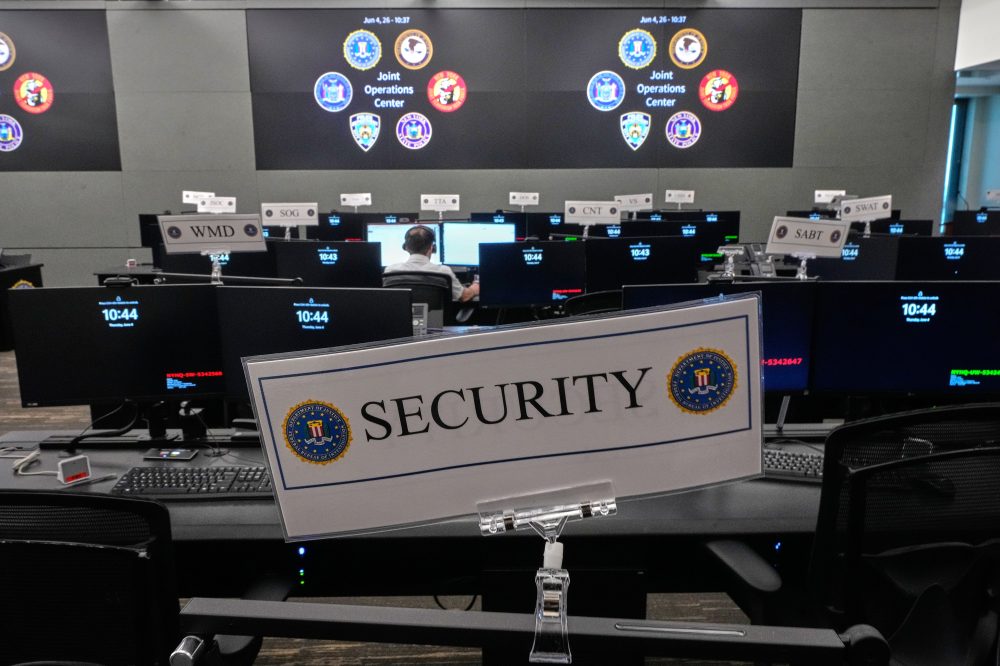
Over the past seven years, the FBI has expanded its drone response capabilities by purchasing technology for rapid aircraft identification and control, with authorities already deploying these tools at significant events. The agency also conducted counter-drone training this year for law enforcement across all World Cup host cities, teaching recognition of dangerous aircraft and proper response protocols.
Military forces have also created anti-drone laser systems like those deployed along the Mexican border this year and additional platforms for destroying unmanned aircraft, but the FBI will avoid such tactics during the World Cup due to risks from debris falling over major metropolitan areas.
“If the drone is intercepted and it no longer flies, it’s going to fall. And as we say, no matter what you do, you can’t change the law of gravity,” said national security expert Hal Kempfer, who estimates that he has trained more than 30,000 law enforcement officers on counter-terrorism techniques.
Officials have made substantial investments in systems enabling officers to commandeer suspicious drones for safe landings or block their communications, including distributing $250 million to assist states in securing World Cup matches and major public celebrations planned this summer for America’s 250th birthday.
Homeland Security Secretary Markwayne Mullin told Congress at a recent hearing that federal officers have successfully dealt with drones over several recent events, including bringing down eight drones over a Formula 1 race in Miami and 12 that entered the no fly zone over the Masters golf tournament, but “everybody’s a little behind” the rapidly evolving technology.
“Biggest concern I have is honestly with drones,” Mullin said. “I wouldn’t say a vulnerability, but it is, it is one of the areas that we are struggling with every single day.”
The FBI is implementing a “zero-tolerance” strategy for safeguarding airspace surrounding World Cup activities. Devin Kowalski, an FBI assistant director in charge of the bureau’s Critical Incident Response Group, said the agency plans to treat all drones “like they could be a real-deal threat.” Additional federal departments, including Customs and Border Protection and the U.S. Coast Guard, will oversee security at multiple stadiums while the FBI guards three venues.
“When that drone comes into the TFR (Temporary Flight Restricted area), we’re handling it as if it’s something that could hurt people, and we’re aggressively locating its operator and conducting the logical investigation to determine the nature of the situation as well as to hold that person accountable,” Kowalksi said in an interview with The Associated Press.
ATF Director Rob Cekada said in an interview that the focus now is on protecting the World Cup, but the America 250 events, World Series, Super Bowl and the 2028 Olympics aren’t far behind. “Then think about all the events in every communityin the country — high school and college games — that are a concern for our state and local partners. So we want to do what we can to help them as best as possible,” he said.
Derek Reisfield, who is the former president of one of the companies providing counter-drone technology to the host cities, said “this technology in the wrong hands is very scary.” and there are many around the globe who want to harm America.
“We have to assume that there’s somebody in Iran who’s spending every day thinking about how they can attack the United States on our home turf,” said Reisfield, who used to lead Ondas and now serves on the board of a Ukranian company called Swarmer that makes software that allows one person to control hundreds of drones.
Certain technology could enable authorities to identify drones from distances up to 25 miles away, providing additional time to address threats, according to Matt Sloane, the co-founder of SkyfireAI. However, someone could potentially position a drone near a stadium and deploy it from less than a mile away, leaving minimal response time.
Systems created to disrupt operator signals or seize drone control might prove ineffective against pre-programmed aircraft designed to crash into fan-filled stadiums while carrying explosive devices, or those controlled through fiber optic connections.
The combat strategy presenting the most significant danger would involve deploying multiple drones in coordinated swarm attacks. Despite optimal defenses, some aircraft might penetrate security measures and reach their targets, as Iran has demonstrated with large numbers of its Shaheed drones. While the U.S. military possesses various weapons for neutralizing airborne drones, Iran has still managed to strike targets throughout the Middle East.
However, Sloane believes the government is taking appropriate preparatory measures.
“The threat is real, certainly. But I do think that there’s a lot being done to prepare for it. To educate about it,” said Sloane, whose company has helped protect Super Bowls in the past. “And then we just need to tell everybody who’s just trying to take pretty pictures ‘Hey this is not the time. Keep your drone in the box.’”