
A former Taliban commander received a 42-year federal prison sentence Tuesday for crimes that included abducting a Pulitzer Prize-winning reporter and supporting operations that resulted in three American soldiers losing their lives.
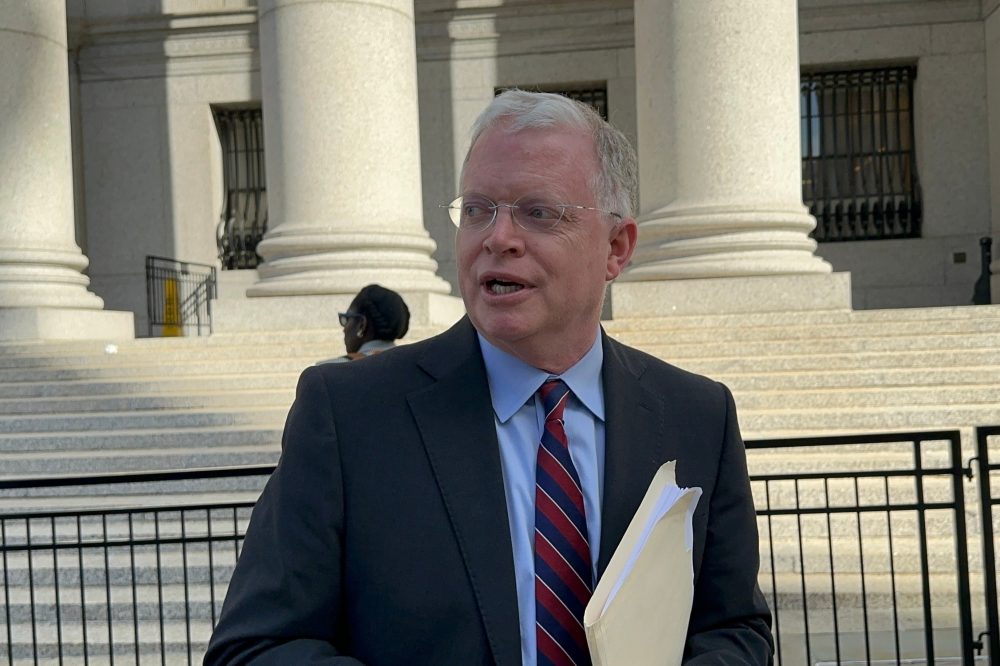
The sentencing of Haji Najibullah concluded an intense day of proceedings in Manhattan federal court, highlighted by a powerful moment when journalist David Rohde confronted Najibullah directly, telling him he was “refusing to take responsibility as I look at him today” for his role in the 2008 abduction in Afghanistan.
Rohde, currently MSNOW’s national security reporter who previously worked at The New York Times and other news organizations, expressed to Judge Katherine Polk Failla that he felt “surprised and disappointed” by Najibullah’s attempts to shift blame for the kidnapping that also involved another journalist and a driver.
The three men remained captive for more than seven months before successfully escaping from a Taliban-controlled facility in Pakistan’s tribal regions.
Najibullah entered a guilty plea in April 2025 to charges of providing material support for terrorist activities and conspiracy to take hostages.
The 50-year-old defendant, sporting a beard and wearing a black skull cap during Tuesday’s proceedings, acknowledged supplying material support including weapons to the Taliban between 2007 and 2009, understanding these resources would be used against U.S. forces in Afghanistan.
Through an interpreter, Najibullah offered an apology to Rohde and his family, stating “what happened to him was terrible, and I deeply regret my role in it.”
Positioned at a podium mere feet away from Najibullah, Rohde explained that it was Najibullah’s deception that led him to what he believed would be an interview but instead became an ambush.
“Hostage taking is a cruel and cowardly crime. Family members spend weeks and months thinking they have the power to save their loved one’s life,” Rohde stated, describing this belief as “an illusion” since families lack the necessary leverage and enormous sums required for ransom payments.
However, Rohde emphasized that his suffering and that of his loved ones paled in comparison to the deaths of three U.S. soldiers killed by Najibullah’s associates in a different operation.
He emotionally named each soldier three times during his statement, becoming visibly moved while discussing their deaths, his family’s ordeal, and his passion for journalism.
Following the sentencing, Acting Attorney General Todd Blanche issued a statement declaring the case demonstrates that “those who harm Americans and engage in acts of terrorism will be hunted down and brought to justice, no matter how long it takes.”
While announcing the sentence, the judge commended Rohde for his and his wife’s advocacy work supporting families of other kidnapping victims.
Judge Failla explained she chose not to impose the life sentence recommended by federal guidelines because Najibullah had entered a guilty plea, preventing additional trauma for victims, and because he endured severe prison conditions for six years, including during the pandemic.
However, she dismissed most leniency arguments presented by his defense attorney, who had sought an 18-year sentence while characterizing his client as someone protecting his homeland during wartime.
The judge noted that fighters under Najibullah’s command had attacked a military convoy, resulting in three soldiers’ deaths.
“I don’t think he needed to pull the trigger, to decapitate a body, to be responsible for what happened,” Failla stated.
Rohde described arranging the interview with Najibullah that led to his kidnapping as the “biggest mistake of my life,” saying he would never have proceeded if he had known about Najibullah’s involvement in killing American soldiers.
During his court statement, Rohde mentioned that his captors had accused him of being a spy “when in fact I was a journalist” attempting to understand a Taliban commander’s perspective “to understand their hopes, their lives and their worldview.”
He then reaffirmed that he remains “a journalist and I could not be prouder of being part of this profession,” a declaration that momentarily left him emotional.