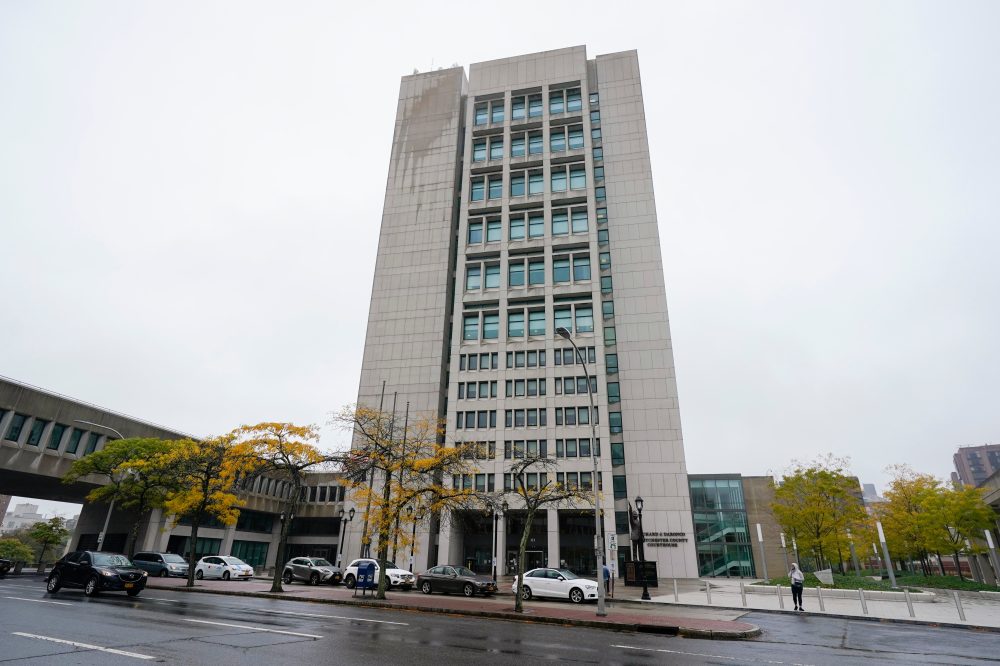

Civil liberties organizations filed a legal challenge on Tuesday requesting a state court to halt a New York suburban county’s operation of almost 600 license plate scanning devices, describing the program as an unauthorized “mass surveillance network” that breaches state constitutional protections.
The class action complaint further claims Westchester County failed to obtain appropriate approval before implementing the initiative, which has compiled a repository of 1.6 billion license plate records shared with more than 50 external law enforcement organizations, including U.S. Immigration and Customs Enforcement. According to the filing, this network “captures the extended movement histories, routine behaviors, and private details of countless law-abiding New Yorkers and additional drivers passing through Westchester.”
“In a democracy, a police department cannot unilaterally decide — without legislative authorization — to surveil the daily movements of its own citizens without any real accountability, transparency, or oversight,” said Barry Friedman, founder and faculty director of the Policing Project at NYU School of Law, which brought the suit on behalf of four motorists. “This indiscriminate data surveillance must not be allowed to continue in the dark.”
“Westchester County has not yet received or reviewed the lawsuit referenced,” a spokesperson for the county said.
The extensive deployment of license plate scanning networks, which employ camera systems to capture and store drivers’ plate data, has sparked debate. The Associated Press reported in November that the U.S. Border Patrol operated a covert license plate scanning initiative that targeted motorists based on their movement histories, leading to objections from congressional Democrats who questioned the program’s legality.
A license plate reader company, Flock Safety, announced last year it was suspending operations with the Department of Homeland Security following revelations that police departments nationwide were providing license plate scanner information to immigration officials. Additional municipalities and states are limiting information sharing with federal agencies, shortening data retention periods for license plate scanner records, or terminating agreements following citizen objections.
The civil rights organizations filed the action against Westchester County representing four women residing in the county or neighboring areas. The lawsuit claims these four drivers’ license plate information had been recorded thousands of times collectively by the county’s camera system over recent years. A car owned by one plaintiff, Lora Nelson, was documented by the county’s cameras over 2,400 times. Another plaintiff’s automobile was recorded 1,134 times between 2023 and 2026, according to the lawsuit.
Westchester County, spanning 430-square miles (1,114 square kilometers) and located north of New York City, contains major highways including Interstate 87 and Interstate 95 and the Hutchinson River Parkway that handle daily commuter traffic to and from New York City plus long-distance travel.
The women pursuing the case receive representation from the Policing Project at New York University School of Law, the Knight First Amendment Institute at Columbia University, the New York Civil Liberties Union and the law firm Freshfields.
Courts have generally supported license plate reader usage since they document vehicle movement on public streets. The Westchester case represents part of a wider legal campaign attempting to persuade courts to reconsider established legal principles given the expansion of surveillance technology, data gathering and analysis.