
WASHINGTON – What began as a flawlessly executed military operation in Iran nearly turned into disaster when critical equipment failures threatened to strand roughly 100 elite US commandos deep in enemy territory.
The dramatic rescue mission unfolded with clockwork precision initially, as American special forces penetrated Iranian airspace undetected during nighttime hours, climbed a towering 7,000-foot mountain ridge, and located a stranded US weapons specialist, according to a US official who spoke anonymously to Reuters.
The operation targeted the second crew member from an F-15E Strike Eagle fighter jet that Iranian forces had shot down over Isfahan province on Friday. While the pilot had been successfully recovered earlier, the weapons specialist – a colonel according to President Trump – remained trapped behind enemy lines with an injured ankle, hiding in a rocky crevice on a hilltop.
Everything changed when two MC-130 transport planes experienced mechanical problems and became unable to take off from their landing site south of Tehran, the official revealed.
“If there was a ‘holy shit’ moment, that was it,” the source said, praising rapid decision-making that ultimately prevented catastrophe.
Military commanders faced an agonizing choice: risk sending additional aircraft into hostile territory or potentially lose an entire special operations team. They chose the dangerous option, dispatching replacement planes to evacuate the stranded forces in multiple trips over several tense hours.
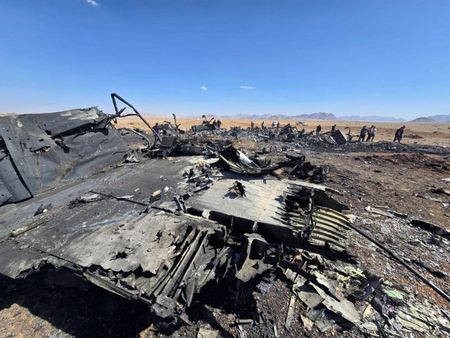
The bold strategy succeeded. All personnel were extracted safely, though US forces had to destroy the disabled MC-130s and four helicopters rather than leave sensitive military technology in Iranian hands.
Prior to the rescue attempt, the CIA had conducted a disinformation operation, deliberately spreading false intelligence within Iran suggesting American forces had already located and were moving the missing airman. US military units also jammed electronic communications and bombed roads around the rescue site to prevent Iranian interference.
The rescued airman had followed standard Survival, Evasion, Resistance and Escape protocols, eventually establishing contact with US military personnel and verifying his identity to ensure the rescue team wasn’t walking into an ambush.
Smaller turboprop aircraft ultimately completed the extraction, chosen for their ability to operate from improvised landing areas, according to sources familiar with the operation’s details.
During the mission, the White House, Pentagon and US Central Command maintained unusual silence. Trump remained so quiet that local reporters checked whether he was hospitalized at Walter Reed.
Once the operation concluded successfully, Trump celebrated the achievement.
“Over the past several hours, the United States Military pulled off one of the most daring Search and Rescue Operations in U.S. History,” Trump declared in his statement, noting the airman sustained injuries but “he will be just fine.”
The rescue capped a challenging period that began Friday when initial search efforts met fierce Iranian resistance. Two Black Hawk helicopters involved in the earlier search sustained damage from Iranian fire but managed to escape. Additionally, an A-10 Warthog aircraft was hit over Kuwait, forcing its pilot to eject, though details about crew injuries remain unclear.
The ongoing conflict has claimed 13 American military lives with over 300 wounded, according to US Central Command figures. No US personnel have been captured by Iranian forces.
Despite Trump’s repeated claims about Iranian military weakness, defense experts note that Iran’s ability to consistently target US aircraft demonstrates significant capability. Iranian military officials announced Saturday they had employed a new air defense system to down the Friday fighter jet.
Intelligence reports indicate Iran retains substantial missile and drone capabilities. As recently as one week ago, US assessments showed only about one-third of Iran’s missile arsenal had been definitively destroyed, with another third possibly damaged or buried in underground facilities.
Following the successful rescue, Trump issued stern warnings to Tehran regarding the Strait of Hormuz, demanding Iran reopen the critical waterway for global oil shipments.