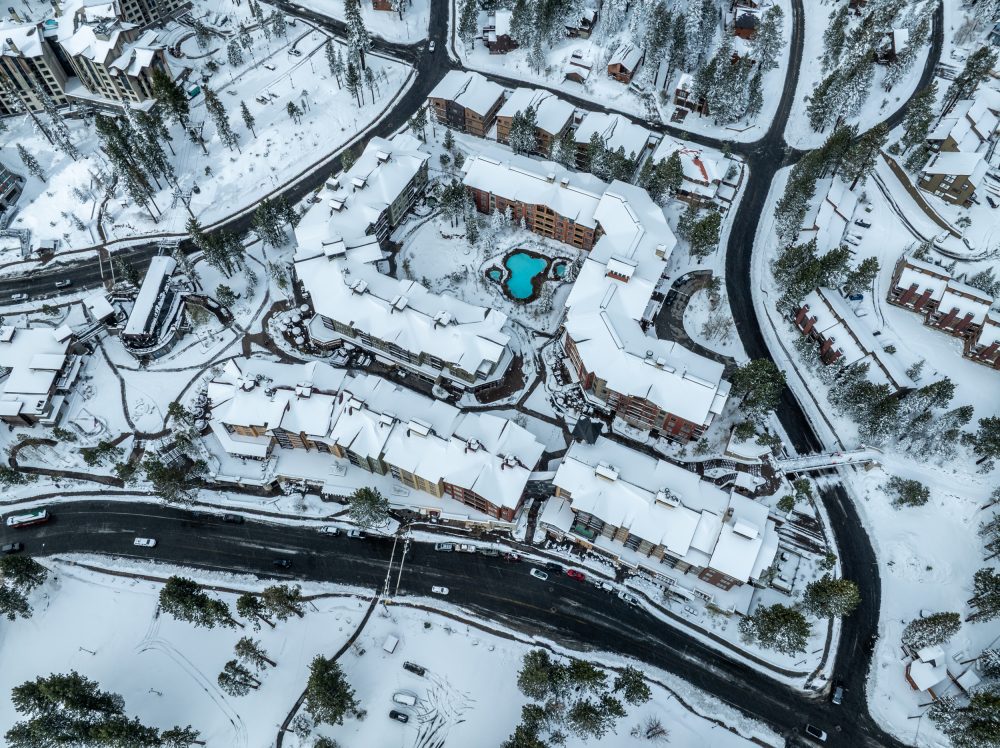

MAMMOTH LAKES, Calif. — A powerful weekend storm brought more than 3.5 feet of fresh snow to California’s eastern Sierra Nevada mountains, temporarily shuttering a major highway and giving Mammoth Mountain an unexpected opportunity to keep its slopes open longer.
The late-season snowfall arrived just weeks following a March heat wave that melted significant portions of California’s snowpack, compelling numerous ski facilities to end their seasons early. Additional snow remained in the forecast for Monday.
By April 1st, the Sierra snowpack — which supplies one-third of California’s water resources — measured only 18% of normal levels based on readings taken in mountains near Lake Tahoe. This marked the second-lowest measurement recorded for that date in history.
Between Friday and Sunday, the UC Berkeley Central Sierra Snow Lab documented 42.5 inches of accumulation, noting it “has been great to create a late-season snowpack.”
“Unfortunately, record warm temps this winter means that we’re still well below average for the water year,” the laboratory posted on social media.
Blizzard conditions forced authorities to close Interstate 80 in Northern California on Sunday, while chain requirements remained in effect Monday morning for the vital corridor linking San Francisco and Lake Tahoe.
The weather system also delivered powerful winds, intense rainfall and hail throughout many regions. Near Sacramento, a tornado made contact with the ground Sunday, though the National Weather Service reported no resulting damage.
Mammoth Mountain operated 11 chairlifts on Monday as conditions improved. While skies were becoming clearer, the resort’s daily update indicated another few inches of snow could still fall.
“While fresh snow may look inviting, hazards like dirt, rocks, and bushes remain just below the surface. Ski and ride with caution and avoid venturing off trail,” the resort’s report cautioned.
Throughout much of the western United States, snow had been disappearing following an unusually warm winter that created poor skiing conditions before giving way to record-breaking spring temperatures. Colorado this month recorded its most severe snowpack deficit since comprehensive state tracking began in 1941.
Authorities cautioned that these measurements clearly indicate potential worsening of water shortages amid the current substantial drought, unless unexpected heavy precipitation occurs.
Regional municipalities are implementing water usage limitations, while ranchers face uncertainty about feeding and watering their livestock. The possibility of catastrophic wildfire activity continues to threaten the area.