
BEIRUT (AP) — A top Hezbollah leader announced Monday that the Iranian-backed militant organization will reject any deals emerging from direct diplomatic discussions between Lebanon and Israel scheduled to take place in Washington.
Wafiq Safa, a senior member of Hezbollah’s political council, made his declaration just one day before Lebanese and Israeli ambassadors to the United States are set to conduct their first face-to-face negotiations in decades. The two nations maintain no formal diplomatic ties.
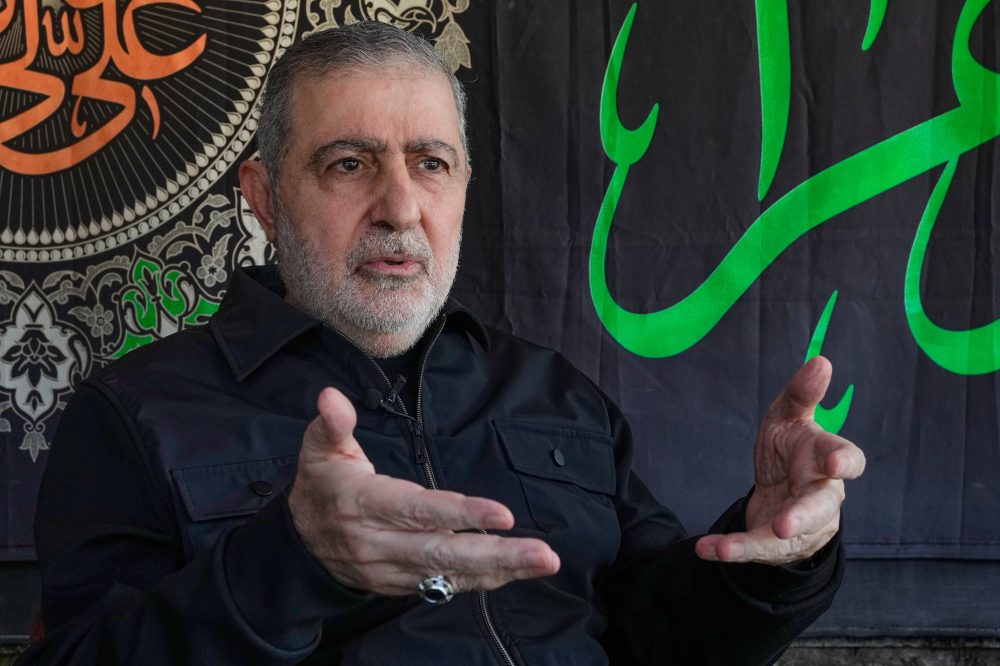
“As for the outcomes of this negotiation between Lebanon and the Israeli enemy, we are not interested in or concerned with them at all,” Safa stated during an interview with The Associated Press.
“We are not bound by what they agree to,” he continued in the uncommon media appearance, speaking beside a graveyard while an Israeli surveillance drone flew above.
Lebanese government representatives hope to secure a ceasefire in the current Israel-Hezbollah conflict through these Washington negotiations.
Israeli Prime Minister Benjamin Netanyahu has outlined different objectives, seeking Hezbollah’s complete disarmament and potentially establishing a formal peace treaty between the two countries. Netanyahu’s spokesperson Shosh Bedrosian stated Monday that Israel will not agree to any ceasefire with Hezbollah.
In related diplomatic activity, Iran attempted to incorporate Lebanon into its own ceasefire negotiations with the United States during talks held in Pakistan over the weekend. Both Israel and the U.S. rejected including Lebanon in those discussions.
Following Tehran and Washington’s announcement of a temporary truce last Wednesday, Israel conducted over 100 bombing raids throughout Lebanon, targeting crowded residential and business districts in central Beirut.
Despite the collapse of U.S.-Iran negotiations without reaching an accord, Safa revealed that Hezbollah learned Iran “was able to obtain a cessation of attacks” across Beirut’s entire administrative zone, including the southern suburbs known as Dahiyeh where Hezbollah maintains strong influence.
Israeli bombardment of Beirut and surrounding areas has ceased since Wednesday, though fierce combat persists in southern Lebanon.
The Iran-supported Lebanese militant organization and Israel have engaged in numerous conflicts since Hezbollah’s establishment in the 1980s as a guerrilla force opposing Israel’s occupation of southern Lebanese territory.
The current warfare began March 2, just two days after Israel and the United States initiated military action against Iran. Hezbollah joined the conflict by launching rockets across the border into Israeli territory. Israel retaliated with air strikes and ground forces.
The war has forced more than one million Lebanese residents from their homes and resulted in over 2,000 deaths, including more than 500 women, children, and healthcare personnel. Many Lebanese citizens have criticized Hezbollah for dragging Lebanon into the conflict while serving Iranian interests.
Safa defended Hezbollah’s involvement as a preventive measure, claiming the organization’s leadership believed “Israel was preparing for a second battle with Lebanon” aimed at eliminating Hezbollah entirely.
He described it as “an appropriate moment for Hezbollah … to rebuild a new equation” and reestablish deterrence against Israel, while denying any prior agreements with Tehran requiring Hezbollah to join combat if Iran faced attack.
Following a U.S.-mediated ceasefire that ended the previous Israel-Hezbollah war in November 2024, Israel maintained almost daily strikes in Lebanon, claiming these operations prevented the group from rebuilding its capabilities. Safa indicated Hezbollah seeks to prevent returning to that situation.
Israel has asserted that its Wednesday strikes in Lebanon eliminated more than 250 Hezbollah fighters. However, Lebanon’s health ministry reported that over 100 women and children were among the more than 350 people killed that day.
Based on Israel’s claims, this would indicate every adult male killed was allegedly a Hezbollah member.
“None of our officials or cadres was killed in Beirut,” Safa countered. “Those who died in Beirut are 100% civilians.” He did not dispute that group members may have been killed in other areas outside the Lebanese capital.
Israel claimed to have eliminated Ali Yusuf Harshi, who served as both secretary and nephew to Hezbollah leader Naim Kassem, along with several high-ranking commanders.
Safa disputed this, saying Kassem’s secretary survived, though “maybe a relative of his was” killed.
He also revealed for the first time that he sustained injuries during the earlier 2024 Israel-Hezbollah war after being targeted in two Israeli strikes in Beirut, “but God granted me survival.”
Tensions have escalated between Lebanon’s government and Hezbollah, which operates both as a militant organization and a political party holding parliamentary seats.
The government approved legislation last year requiring removal of all weapons not belonging to state security forces or the military, later claiming substantial progress implementing this policy south of the Litani River, where Hezbollah militants currently battle Israeli forces.
After March 2, the government took additional action by declaring Hezbollah’s military wing an illegal organization.
Safa disclosed that Hezbollah currently maintains no direct communication with President Joseph Aoun or Prime Minister Nawaf Salam, instead channeling all dialogue through Parliament Speaker Nabih Berri, who leads the Hezbollah-aligned Amal party.
Safa indicated that following any ceasefire and Israeli troop withdrawal from Lebanon, Hezbollah — which characterizes itself as a “resistance” movement opposing Israel — would be willing to discuss its weapons with the Lebanese government.
“The issue of resistance weapons is a Lebanese matter that has nothing to do with Israel or the United States,” he concluded.