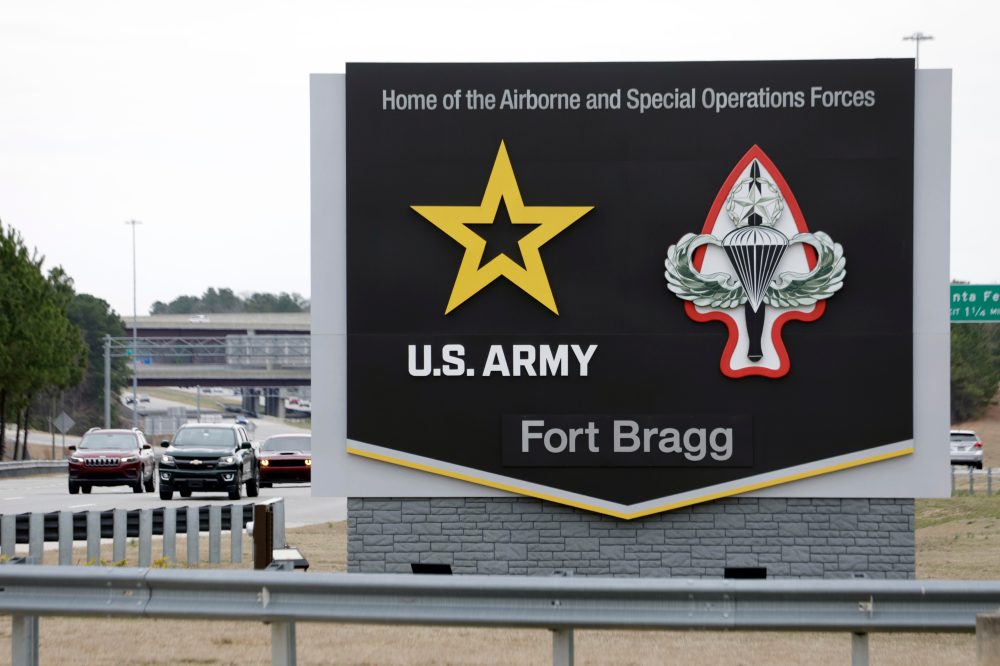

RALEIGH, N.C. — A federal judge has approved home detention for a former military contractor who stands accused of sharing classified details about an elite special operations unit with a journalist and through social media platforms.
Courtney Williams, 40, appeared before U.S. Magistrate Judge Brian Meyers on Monday, facing four federal charges related to disclosing national defense information about a specialized military unit stationed at Fort Bragg, North Carolina. Williams worked as a civilian contractor for the unit before her arrest last week.
Judge Meyers granted Williams’ release from custody but imposed strict conditions including electronic monitoring and a complete ban on media contact and social media use. Williams, who appeared in court wearing jail clothing, was taken into custody just days earlier.
Defense attorney Christian Dysart chose not to speak with reporters following Monday’s court proceeding, which occurred more than a week after prosecutors initially filed criminal charges against his client.
Federal authorities unsealed the criminal complaint last week simultaneously with a grand jury indictment and the Justice Department’s public announcement of Williams’ arrest. An FBI spokesperson characterized her alleged actions as putting “our nation, our warfighters, and our allies at risk.” Williams could face up to 10 years in prison on each charge if convicted, plus financial penalties.
According to court records, Williams began working as a defense contractor in 2010 before transitioning to a Department of Defense position several months later. She maintained employment with the special operations unit at Fort Bragg through 2016 and possessed top-secret security clearance during her tenure.
While court documents don’t identify the specific unit or journalist involved, the timeline and circumstances align with reporting and a book about the Army’s classified Delta Force written by author Seth Harp.
Williams, whose residence is located approximately 35 miles from Fort Bragg, was featured prominently in a 2025 Politico piece titled “My Life Became a Living Hell: One Woman’s Career in Delta Force, the Army’s Most Elite Unit.” The story detailed Williams’ military background as an interrogator and Arabic language specialist, and was published alongside Harp’s book “The Fort Bragg Cartel,” which documents allegations of sexual harassment and workplace discrimination.
Prosecutors claim that from 2022 through 2025, Williams maintained extensive communication with the author, including more than 10 hours of recorded phone conversations and hundreds of text message exchanges.
The federal indictment specifically alleges Williams improperly revealed a “cover alias identity issued and owned” by the unit, operational methods the unit employed to “execute covert missions without being detected,” and “true names of individuals” working for the unit, including details about “their capture during a sensitive military mission in a foreign country.”
In a written response last week, Harp defended Williams as a “courageous whistleblower” exposing discrimination and harassment within Delta Force operations. He argued that former unit personnel regularly share similar operational details on podcasts and YouTube programs that the government now considers criminal when disclosed by Williams.
“I am confident that the DOJ’s slapdash indictment, full of misleadingly juxtaposed quotations taken out of context, will fall apart upon careful scrutiny,” Harp stated.
FBI documentation indicates Williams had signed multiple nondisclosure agreements concerning classified materials both during her employment with the unit and upon her departure from the position.
According to the FBI affidavit, Williams sent messages to the journalist around the time of the article’s publication expressing worry about “the amount of classified information being disclosed.” In separate communications, she allegedly told her mother she might face arrest “for disclosing classified information.”