
NEWPORT, R.I. — A stark contrast exists between Newport’s wealthy southern districts, where grand historic estates enjoy the shade and environmental benefits of established trees, and the city’s economically disadvantaged northern neighborhoods, where large trees are scarce among subsidized housing developments.
“Residents in this area aren’t getting the advantages that trees provide,” explained Natasha Harrison, who heads the Newport Tree Conservancy. “They deserve more.”
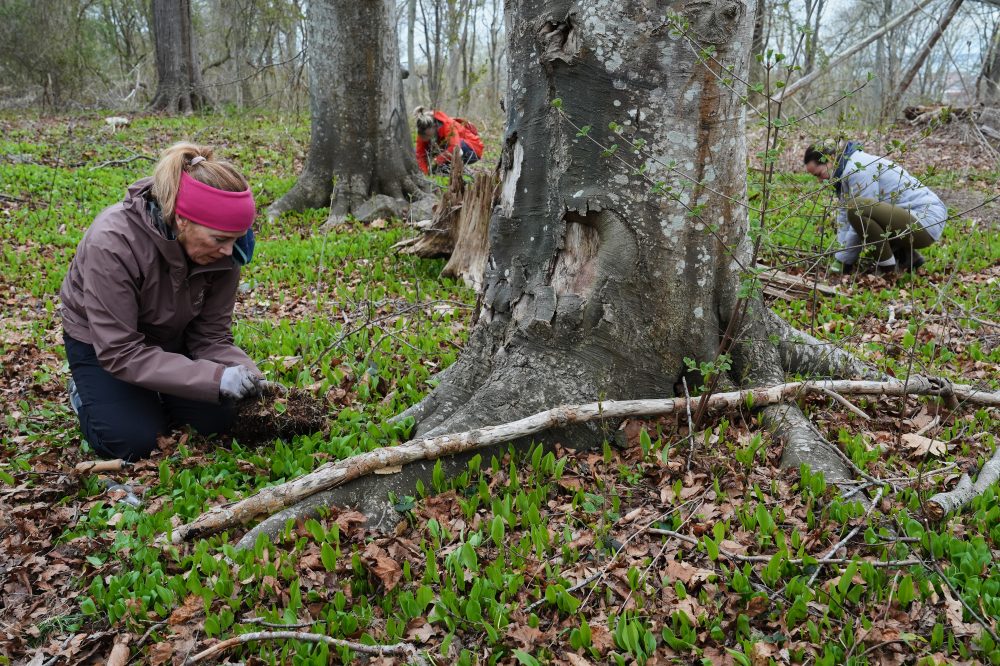
The organization has worked to establish hundreds of indigenous trees within Miantonomi Memorial Park, a 30-acre municipal green space, aiming to restore a healthier woodland ecosystem. Fifteen community members joined conservancy staff at the northern park location Wednesday in observance of Earth Day.
Native forest species in the park have struggled against invasive vegetation, disease outbreaks, and damage from local wildlife including deer, rabbits, and squirrels. This year marks the first time the conservancy has attempted to relocate native saplings to their nursery facility for protection before returning them to the forest environment.
The organization aims to increase tree coverage in the region and improve what’s known as the “tree equity score” — a measurement system that determines whether communities have adequate tree populations to provide residents with health, economic, and environmental advantages.
Federal support was initially expected through U.S. Forest Service funding distributed to the Arbor Day Foundation, a worldwide organization focused on tree planting and forest protection, according to Harrison. However, the Forest Service canceled a $75 million grant to the foundation last year as the Trump administration moved to eliminate environmental justice programs targeting tree planting in financially disadvantaged areas.
Harrison noted the conservancy had anticipated receiving $150,000 through the foundation partnership. Private donors stepped in to cover the funding gap following the grant cancellation, while volunteer support continues to drive the organization’s efforts.
“The situation created stress, but I refused to let it stop our progress,” Harrison stated.
For nearly four decades, the conservancy has collaborated with city officials to expand Newport’s tree coverage through strategic planting initiatives.
During the park visit, Joe Verstandig, who manages the conservancy’s plant collections, guided participants through the woodland area. He identified problematic invasive species including Aralia spinosa clusters (known as devil’s walking stick), Norway maples, and Japanese knotweed. He demonstrated proper techniques for carefully removing desired native plants like Rhode Island’s common arrowwood, elderberry, and American holly.
Among the volunteers were friends Allie Bujakowski and Mara Swist. Bujakowski, who lives within a mile of the park and regularly walks her dog there, was joined by Swist from nearby Portsmouth, Rhode Island. Both women expressed enthusiasm about participating in hands-on Earth Day activities while supporting the conservancy, which had previously planted a tree in Bujakowski’s yard.
“They’re establishing trees in community areas where they’re desperately needed,” said Bujakowski, wearing a Newport mansions cap. “The visual impact is significant. Trees they planted two years ago are already attracting birds back to the area.”