
The tech giant is preparing to launch an extensive collection of artificial intelligence innovations, featuring a digital assistant designed to handle tasks automatically for users without constant supervision.
The concept of “agentic” AI took center stage during the company’s yearly developer gathering, Google I/O, held this week. The forthcoming AI assistant, called Gemini Spark, represented just one highlight among numerous revelations shared at Tuesday’s event.
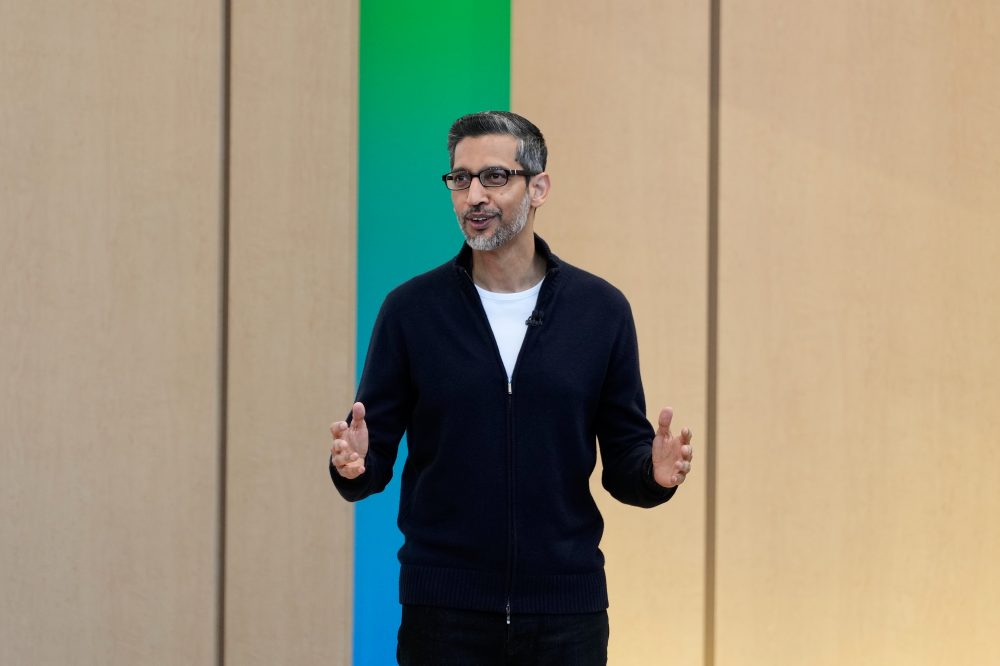
“We are firmly in our agentic Gemini era,” Google CEO Sundar Pichai said Tuesday before a packed amphitheater near the company’s Mountain View, California, headquarters. “I’ve played around with all sorts of agents and you can really see the potential, but it’s still early days when it comes to making agents easy to use, super secure and truly helpful.”
The search company and its corporate parent, Alphabet Inc., have invested billions of dollars in artificial intelligence research and development. A top financial executive revealed during an investor call in late April that capital spending could reach as much as $190 billion this year. However, these investments appear to be generating returns, with quarterly financial results demonstrating robust growth. Share prices have increased an additional 11% following the earnings announcement.
During his keynote presentation, Pichai revealed that the Gemini application reached 400 million monthly users last year, but has now exceeded 900 million users, representing more than double the previous year’s figure.
The company’s newest suite of models, called Gemini 3.5, began rolling out Tuesday to users worldwide, starting with Gemini 3.5 Flash. The Flash version prioritizes processing speed, and the company claims 3.5 Flash represents its most powerful agentic and coding model to date, while operating approximately four times faster than competing systems.
This model now serves as the standard for the Gemini application and “AI mode” within the company’s search platform. Development continues on the 3.5 version of Gemini Pro, which is currently being tested internally with an expected launch next month.
Gemini 3.5 incorporates enhanced safety protocols and protective measures, reducing the likelihood of producing harmful material or incorrectly declining to respond to legitimate inquiries, according to company officials.
The announcement also included details about Gemini Omni, a new model enabling users to produce high-quality video content through various input methods, including text, images, videos and audio. Videos generated by Omni can be modified easily through conversational interactions with the system. Future capabilities will include image and audio creation, though no timeline was provided for these additions.
Company representatives explained that Omni’s video output will appear more lifelike than content from competing models due to its comprehension of physical principles such as gravity, kinetic energy and fluid dynamics.
Gemini Omni Flash, the initial release in the Omni series, became available Tuesday for Google AI Plus, Pro and Ultra subscribers via the Gemini app and Google Flow. Starting this week, it will be offered at no charge through YouTube Shorts and YouTube Create App.
Every video produced with Omni will feature the company’s invisible digital watermark, SynthID, while content verification capabilities are being added to the Gemini application. This feature identifies whether photos or videos were generated by AI or captured with camera equipment and modified using AI tools. The verification system will appear in Chrome search results in upcoming months. The company also announced that AI firms Open AI, Kakao and Eleven Labs are incorporating its SynthID technology into more of their AI-generated material.
Operating on Gemini 3.5 technology, Gemini Spark will handle repetitive, everyday responsibilities such as organizing meeting notes, emails and messages, then producing documents containing key insights and action items. Unlike existing assistants, Spark functions through cloud computing, allowing it to continue operating even when users close their laptops or lock their devices.
The autonomous capabilities of AI assistants distinguish them from traditional chatbots, though this functionality has also generated concerns about the technology’s influence. Gemini Spark is programmed to request approval before executing “high-stakes” actions such as sending emails or making purchases, the company explained.
A limited group of testers will gain access to the assistant starting Tuesday, with plans to expand beta access to U.S.-based subscribers of the Google AI Ultra service.
This summer, Gemini Spark will function directly within the Chrome browser, according to company officials.
During last year’s conference, the most significant development was the introduction and deployment of “AI mode” for the company’s search engine. This feature provides users with conversational responses to their inquiries before displaying relevant links, building upon previously implemented changes that transformed how users experience and interact with the platform.
AI mode searches have more than doubled each quarter since launching last year, with the feature recently exceeding 1 billion monthly users, according to Liz Reid, Google’s head of search.
The updated default model for search will now be Gemini 3.5 Flash, and the company is launching what it describes as an intelligent search interface. This modification, which Reid characterizes as the most significant search box improvement in 25 years, means the interface will adjust to accommodate longer queries and can assist users in formulating their questions through AI-powered suggestions rather than traditional autocomplete.
Users can now search using multiple input types, incorporating text, images, video, files and even Chrome browser tabs as search parameters. The enhanced search interface begins its rollout Tuesday in all countries and languages where AI mode is currently accessible.
The company also revealed a new feature called the Universal Cart, described as “a truly intelligent shopping cart.” It operates across different retailers and services, allowing users to add items while browsing search results, chatting with Gemini, watching YouTube, or reading emails in Gmail. The cart utilizes Gemini models to immediately begin working when items are added, searching for discounts and price reductions, providing pricing history data and notifying users when out-of-stock items become available.
The Universal Cart feature will become available to users through search and the Gemini app this summer, with YouTube and Gmail integration following later.