
For Juli Skinner, a member of the Ponca Tribe of Oklahoma who serves as senior director of the Cherokee Nation’s behavioral health center, incorporating cultural elements into addiction recovery isn’t just beneficial—it’s essential.
Through her experiences in foster care, child welfare work, and tribal behavioral health, Skinner has witnessed how traditional practices provide healthy coping mechanisms and spiritual connections.
“Culture is such a protective factor,” Skinner said. “Historical trauma has hit a lot of people — Native Americans, tribes — hard. Lost language, lost traditional ways, and we’ll never get all of that back.”
While Skinner has observed these advantages firsthand, the Cherokee Nation in Oklahoma has lacked inpatient treatment facilities that integrate cultural elements—until now. The tribe, where Skinner has served for over ten years, is set to change this approach.
Next year, the Cherokee Nation will launch a residential and intensive outpatient treatment facility in Tahlequah, the tribal headquarters location. The center will weave ancient customs into the recovery process, featuring traditional stickball activities and on-site cultivation of selu, the Cherokee word for corn.
Funding for this project stems from approximately $150 million the tribe obtained through legal settlements with opioid companies. The 45,000-square-foot facility will accommodate 100 residential patients and include an outpatient center offering continued support services.
Native American tribes joined thousands of state and local jurisdictions in filing lawsuits against pharmaceutical companies, distributors, pharmacies and related businesses over the past decade, seeking accountability for an opioid epidemic responsible for over 900,000 American deaths since 1999.
These corporations have agreed to settlements totaling almost $58 billion, based on data compiled by Christine Minhee, who maintains the Opioid Settlement Tracker. The majority of these funds must address the ongoing crisis, though some communities have found it challenging to determine optimal usage strategies.
Approximately $1.3 billion from the overall settlement amount will be distributed among hundreds of tribes and Alaska Native corporations over several years.
As the largest among 575 federally recognized tribes, Cherokee Nation became the first to file suit against opioid manufacturers in 2017. The tribe counts more than 450,000 citizens, with many living in Oklahoma following federal policies that displaced Cherokee people from the southeastern United States.
Principal Chief Chuck Hoskin Jr. explained that Cherokee leadership chose to actively participate in opioid litigation after being excluded from similar tobacco company lawsuits during the late 1990s.
“There will never be another era in which there’s some industry that does damage to the Cherokee Nation, damage to the Cherokee people, where we will be bystanders looking for state legislatures, state attorney(s) general to get us justice,” he said.
The opioid epidemic has evolved through three distinct phases: initial prescription painkiller deaths, followed by heroin, and most recently fentanyl and other synthetic substances over the past decade. Native American opioid death rates matched those of white Americans until fentanyl’s emergence. Since then, particularly during the coronavirus pandemic, Native Americans have experienced higher rates of opioid-related fatalities.
Ashley Caudle, a Cherokee Nation citizen, witnessed this crisis directly while operating her small business last year. She routinely stocked free Narcan outside her Stilwell storefront, located 20 miles east of Tahlequah.
“I had to restock that thing every week, almost daily,” Caudle said.
Within the 14 counties comprising Cherokee Nation territory, over 1,000 people died between 2020 and 2024. Hoskin Jr. noted that many fatalities occurred in rural communities where language and cultural practices remain strongest. He views behavioral health investment as preserving the tribe’s essential foundation.
“In many ways, our success here is part of an existential effort,” Hoskin Jr. said. “Whether what it means to be Cherokee is going to continue on; that’s only true if we have people that continue our lifeways and continue to speak our language and pass that down.”
Cultural elements are woven throughout the new treatment center’s entire design concept. During the planning process, the tribe conducted community listening sessions with members and elders. Cherokee language specialists are completing work on the center’s name.
The building features expansive windows overlooking rolling hills and grazing cattle. Its eastern orientation welcomes the sunrise, and it sits within a short distance of a sweat lodge. Residential patients will have access to a stickball court, traditional food gardens, fitness facilities, and meditation spaces.
According to Skinner, typically 50 to 70 tribal citizens require residential treatment connections monthly. Currently, when individuals seek substance abuse help through emergency rooms, primary care physicians, or local clinics, the tribe refers them to contracted facilities not owned by Cherokee Nation.
The upcoming center represents the first facility completely operated by Cherokee Nation, providing services at no cost to tribal citizens.
“I can hardly wait until we have our own,” Skinner said.
The Tahlequah treatment center will join two other reservation locations providing intensive outpatient services to Cherokee Nation citizens.
Skinner explained that the tribe is developing a comprehensive care system encompassing various treatment approaches beyond residential care. Returning to previous living environments where addiction was active can make maintaining sobriety particularly challenging.
Caudle, the Cherokee Nation citizen from Stilwell, personally knows individuals who could have benefited from the resources the tribe is developing. Her mother and brother both battled substance abuse, ultimately leading to their deaths.
Reflecting on how the new Tahlequah facility might have affected their lives, Caudle said, “I guess there’s a lot of ‘what ifs’ and ‘woulda, coulda, shouldas,’ and that will never change. But the opportunities that people will have with this facility and the potential is huge.”
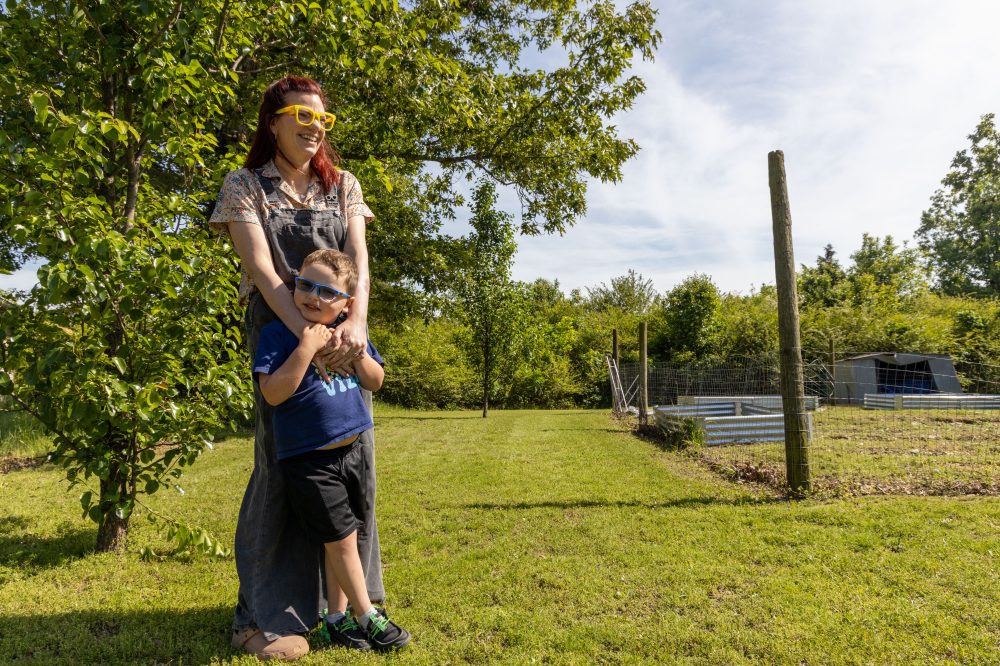
Caudle continues pursuing her own healing journey while sharing this knowledge with her son, Elliot.
“If he messes up, it’s not ‘get out of my house. I never want to see you again,’” Caudle said. “(It’s) let’s pick yourself back up and let’s try again. Same concept I want people to embrace as a community.”