
Marine biologists have documented two humpback whales that completed extraordinary migrations spanning the Pacific Ocean between Australia and Brazil, setting new distance records for the species.
Researchers identified the massive marine mammals through their unique tail markings captured at locations roughly 9,000 miles (14,500 kilometers) apart. Both whales swam in different directions and covered greater distances than any previously documented humpback whale journey.
“It’s a very rare event, but it is a really wonderful demonstration of just how wide-ranging these animals are,” said Phillip Clapham, former head of a NOAA whale research program who was not involved with the new findings.
These massive creatures are famous for their extensive ocean travels following established migration patterns, usually routes passed down from their mothers. During warmer seasons, they hunt for krill and small fish, then move to tropical breeding areas when winter arrives.
Monitoring animals that live primarily beneath the ocean surface presents significant challenges for scientists. For this research, marine biologists examined more than 19,000 whale photographs collected over four decades by research teams and volunteer citizen scientists.
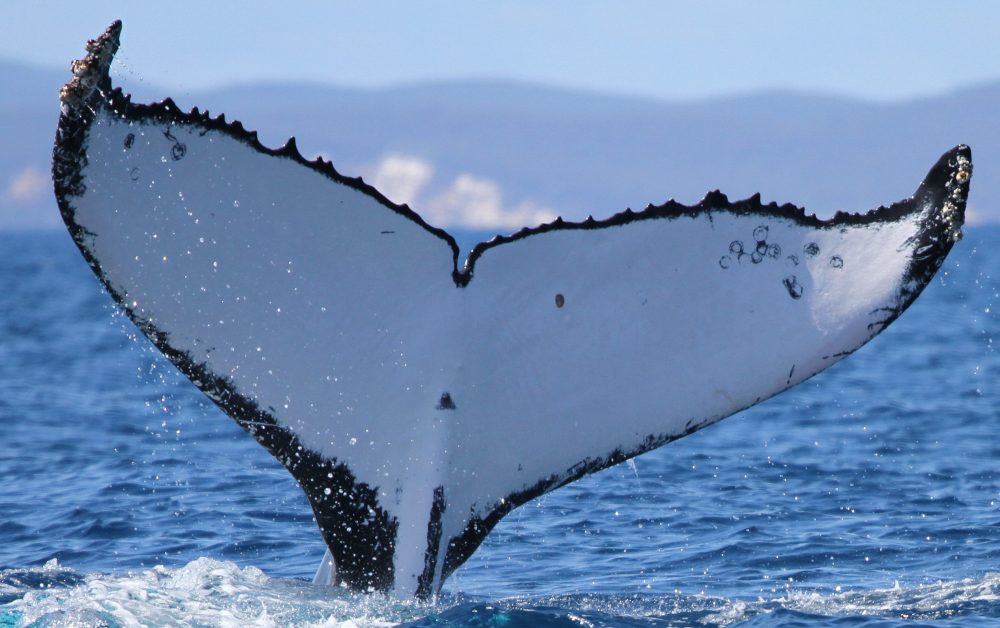
Computer recognition technology helped researchers match whales by analyzing their tail fins’ unique color markings and irregular edges. Scientists confirmed two distinct whales appeared at breeding locations in eastern Australia and Brazil across multiple years, indicating they had made the crossing between these distant regions.
One whale’s journey measured just over 9,300 miles (15,000 kilometers), surpassing earlier record holders including a humpback that swam from Colombia to Zanzibar.
The research findings appeared Tuesday in the journal Royal Society Open Science.
Because photographs only captured the whales at their starting and ending points, scientists cannot determine the precise paths they followed during their epic voyages.
Since whales rarely migrate between different mating areas, researchers remain uncertain about what motivated these two animals to undertake such unusual journeys. The whales might have encountered other whale groups at common feeding areas and chosen to follow them rather than return to their original locations, study co-author Stephanie Stack with the Pacific Whale Foundation said in an email.
“Finding not one but two individuals that have crossed between Australia and Brazil challenges what we thought we knew about how separate these populations really are,” Stack said.
Similar long-distance travels prove more challenging for whales in the Northern Hemisphere, where large landmasses create barriers to cross-ocean migration.
Researchers noted these record-setting journeys demonstrate the remarkable traveling capabilities of humpback whales. These tracking techniques could prove valuable for monitoring whale populations as climate change alters ocean temperatures, potentially shifting krill habitats and affecting where humpbacks travel to feed and reproduce.