
USHUAIA, Argentina — Scientists investigating a fatal hantavirus outbreak aboard a cruise ship last month began capturing rodents in forests near Argentina’s southernmost city on Tuesday, seeking to determine whether the deadly virus exists in a region previously considered free of the disease.
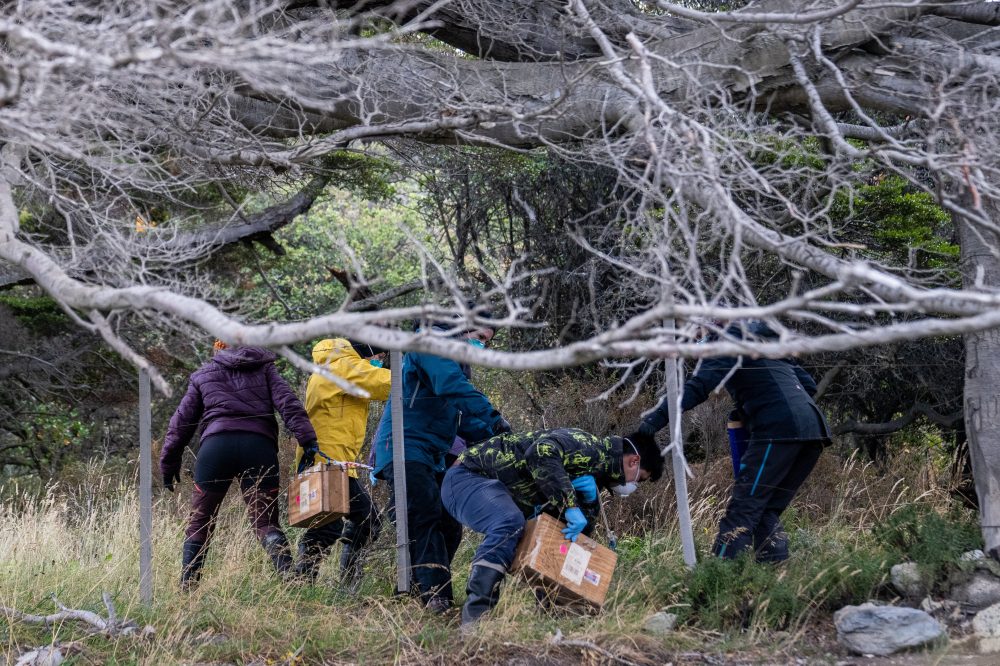
Researchers dressed in bright blue protective gloves and surgical masks examined 150 cage traps they had placed the night before, placing deceased rodents into black plastic bags before transporting them to a temporary laboratory for blood sample collection.
Tuesday’s rodent collection operation launched field research as part of Argentina’s broader probe into what caused the disease outbreak on the MV Hondius, which resulted in three deaths and multiple illnesses while triggering an international effort to locate passengers and their contacts.
The research team working through muddy terrain to collect the dead animals refused to discuss their activities with reporters. Argentina’s state-supported Malbrán Institute, the nation’s premier infectious disease research facility, indicated the team would continue this process for three additional days before transporting specimens to the institute’s primary laboratory in Buenos Aires for hantavirus testing. While testing may require up to one month, officials provided limited additional information.
“They were able to capture what was expected,” said Martín Alfaro, the spokesperson for the local health ministry of Tierra del Fuego.
The investigation began nearly two weeks after Argentina’s Health Ministry initially announced plans to deploy the Malbrán Institute team to Ushuaia. This popular tourist location where the cruise began its journey — known for being situated at the “end of the world” — functions as the primary entry point for Antarctic travel.
Hantavirus has never been documented in Ushuaia or throughout the broader Tierra del Fuego archipelago. However, provincial authorities from northern Patagonian regions where hantavirus commonly occurs maintain that the outbreak’s first known victims — a Dutch couple with a passion for birdwatching — did not travel there during the timeframe when they likely became infected.
The Dutch visitors finished an extensive road journey through Chile and Argentina in late March, spending several days birdwatching and hiking in Ushuaia before departing on the ship April 1.
Local health officials have strongly disputed the national government’s original theory that the cruise ship infection chain started when the couple visited an Ushuaia landfill. Both individuals have since passed away, making it more difficult for Argentine investigators to track their movements throughout the country to identify where they acquired the virus.
Present across southern Chile and Argentina, the Andes virus can occasionally transmit between humans in uncommon instances. Most Andes virus outbreaks, according to experts, result from contact with air polluted by waste products from the long-tailed pygmy rice rat called the “colilargo” that thrives in northern Patagonian forests.
The colilargo does not exist beyond the Strait of Magellan in Tierra del Fuego, which researchers believe is too harsh and remote for this rodent species. However, a related subspecies inhabits forests surrounding Ushuaia, and researchers have never studied whether it can carry hantavirus.
Insisting that tourism-reliant Tierra del Fuego is not responsible for the cruise ship outbreak, local health officials expressed support for a wider investigation goal: determining whether their province contains hantavirus during an era of climate change. They noted scientists were setting traps in two locations where the colilargo subspecies thrives — the national park and forested slopes above Ushuaia’s main pebble beach.
“The province has never done this kind of testing before,” Alfaro said. “It’s important that we rule out the possibility of transmission occurring here.”
Hantavirus infections have risen in recent years throughout Argentina, a pattern researchers connect to colilargos significantly expanding their territory due to climate change and human development.