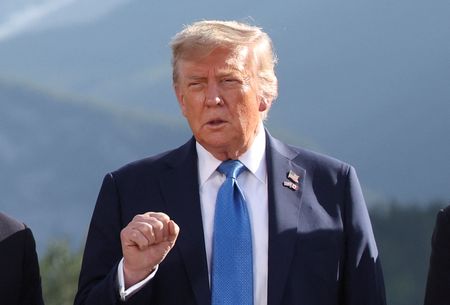
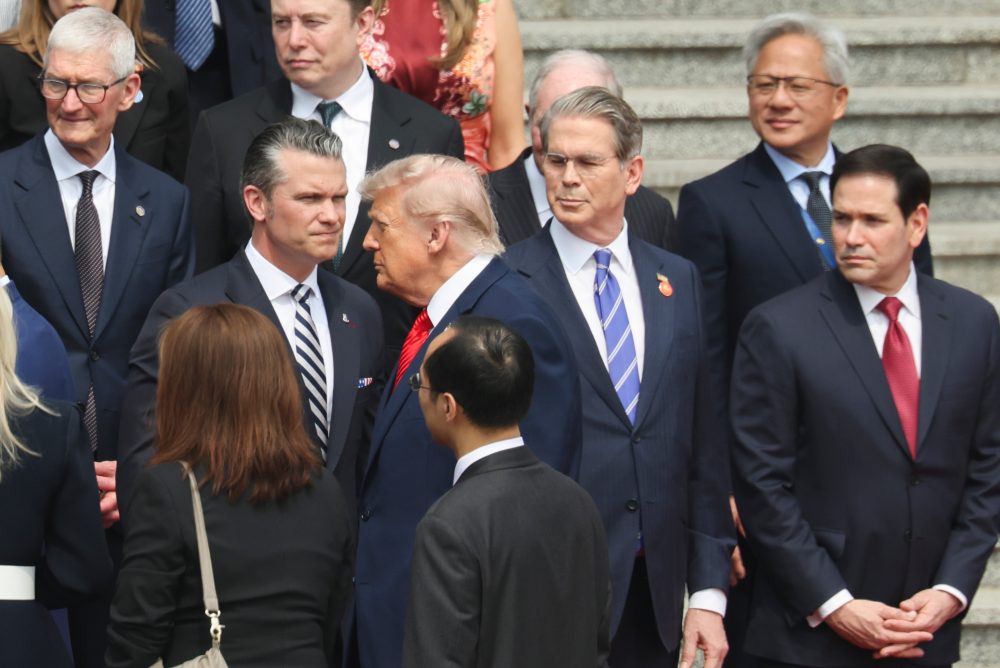
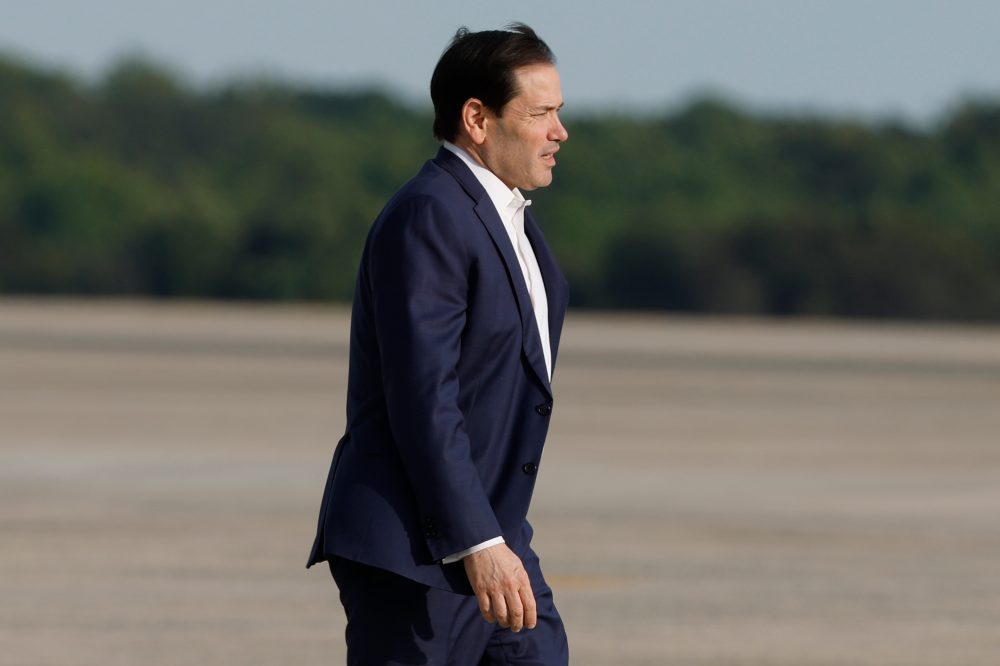
Beijing’s Ministry of Commerce announced Wednesday that the United States and China have reached an understanding to reduce agricultural trade tariffs as part of a comprehensive trade agreement, though the statement left many implementation questions unresolved.
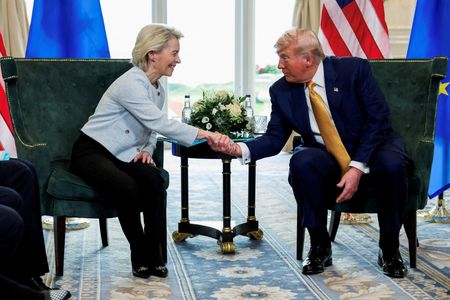
Following last week’s meeting between President Donald Trump and President Xi Jinping in Beijing, the White House reported that China committed to purchasing $17 billion in American agricultural products annually, in addition to an existing multi-billion-dollar soybean agreement.
This purchasing commitment would restore Chinese imports of American agricultural goods to near-record levels, but meeting this target would likely necessitate Beijing removing tariffs implemented during the trade conflict.
According to the Ministry of Commerce, both nations “in principle agreed to include relevant [agricultural] products in the reciprocal tariff reduction framework, while also setting guiding goals to expand two-way trade in agricultural products,” in a statement that largely mirrored Saturday’s announcement.
The ministry’s statement failed to specify which products might be covered or reference the $17 billion purchasing commitment.
Beijing’s official statements typically contain less detail than Washington’s versions. China purchased 12 million tons of soybeans in late last year following an October summit agreement, though it never publicly confirmed this commitment.
The announcement also mentioned a trade board that will be established to identify and monitor $30 billion in goods eligible for tariff reductions to historical lows or below.
“We think the Chinese side will focus those reductions on U.S. agricultural products,” stated Even Rogers Pay, a director at Trivium China.
“The $17 billion purchase agreement and 25 million metric tons soybean deal, together, would roughly total out to just over $30 billion.”
The ministry also confirmed that China has renewed American beef company certifications, as Reuters previously reported, and will restart poultry imports from certain American states that experienced avian influenza outbreaks.
Additionally, China indicated it would address agricultural biotechnology concerns raised by Washington, without providing further specifics.
Two prominent healthcare investment firms are joining forces in what the Financial Times reports could become the largest healthcare sector investment management company worldwide.
According to the Wednesday Financial Times report, London-based Global Healthcare Opportunities and Singapore’s CBC Group plan to combine operations, creating a $21 billion investment powerhouse with more than 200 professionals spanning North America, Europe and Asia-Pacific regions.
Reuters was unable to independently confirm the merger details, and both Global Healthcare Opportunities and CBC Group have not yet responded to requests for comment.
Global Healthcare Opportunities operates as one of Europe’s most substantial healthcare private equity funds from its London headquarters, managing over 9 billion euros (approximately $10.44 billion) in assets according to company information. CBC Group, based in Singapore, holds the position as Asia’s premier healthcare-focused asset management firm with roughly $10.5 billion under management.
The Financial Times reported that Fu Wei, CBC’s chief executive who will co-lead the merged entity alongside Global Healthcare Opportunities co-founder Mike Mortimer, believes the combination will help healthcare companies navigate artificial intelligence disruption.
“This gives the healthcare sector the reason to be the most defensive sector. An ageing population would lead to more unknown diseases and the need for more new drugs. Healthcare is therefore an evergreen sector and will continuously be more defensive,” Wei told the Financial Times.
The healthcare industry has become increasingly important to private credit markets in recent years, representing approximately 20% of direct lending transactions in 2024, according to Prospect Capital citing PitchBook information from the previous year.
Markets across Asia continued their downward slide Wednesday as concerns over rising interest rates weighed heavily on investor sentiment, with all eyes turning to upcoming earnings from tech giant Nvidia.
Bond markets worldwide remained under pressure as traders increased expectations that the Federal Reserve might raise interest rates this year. The 10-year Treasury yield reached a 16-month peak of 4.687% overnight, while the 30-year yield climbed to 5.198% – levels not witnessed since 2007.
European markets appeared headed for a negative opening, with futures contracts down 0.7% across the region. Nasdaq futures declined 0.1% while S&P 500 futures dropped 0.2%.
Oil markets saw modest declines Wednesday, with Brent crude falling 0.5% but remaining above $110 per barrel at $110.7. The Strait of Hormuz remained effectively closed and U.S. President Donald Trump said he might need to strike Iran again, a day after he said he was postponing an imminent attack to allow for more negotiations with Tehran.
Meanwhile in Beijing, less than a week after Trump’s high-profile visit, Chinese leader Xi Jinping held talks with Russian President Vladimir Putin, saying it was imperative to stop the war in the Middle East.
MSCI’s broadest index of Asia-Pacific shares outside Japan declined 0.7% Wednesday, marking its fourth consecutive day of losses, while Japan’s Nikkei dropped 1.5% for its fifth straight session in the red.
South Korea’s KOSPI tumbled 1.7%. Samsung Electronics fell 1.4% after its union announced plans to proceed with an 18-day strike starting Thursday, potentially disrupting global semiconductor supplies.
China’s blue-chip CSI300 index remained unchanged, while Hong Kong’s Hang Seng index slid 0.6%.
“At this point of time, it remains my base case that we are seeing a corrective pullback after an absolutely phenomenal rally,” said Tony Sycamore, analyst at IG. “The U.S. yields obviously are creating some rumbles in the market and now attracting a lot of attention.
“Nvidia could come out and absolutely exceed expectations … but I don’t think so. I think the ability for Nvidia to just absolutely shoot the lights out and shock everybody like it has done, I don’t think that’s in its book of tricks anymore.”
The chipmaking giant will announce first quarter earnings after the market close on Wednesday. Expectations, as always, are sky-high. Revenue is projected to increase by almost 80% to nearly $79 billion, according to the median forecast in an LSEG survey of analysts.
Treasury bonds continued to nurse losses in Asian trading, with the benchmark U.S. 10-year note yield holding steady at 4.6613%, having surged 21 basis points over the past three sessions. The 30-year yield remained flat at 5.1795% following a 17 basis point jump since last Thursday.
The dollar maintained its position near a six-week high against major currencies. It held steady at 158.95 yen, having gained for seven consecutive sessions that reversed most of the intervention-driven losses on April 30 when Japanese authorities stepped into the market to safeguard the yen at the 160 mark.
The euro last traded at $1.1597, having touched its lowest level since April 8 overnight. The British pound was at $1.3391, not far from the six-week low it reached earlier this week.
Gold prices fell 0.4% to $4,463 an ounce, the lowest since the end of March as the U.S. dollar strengthened.
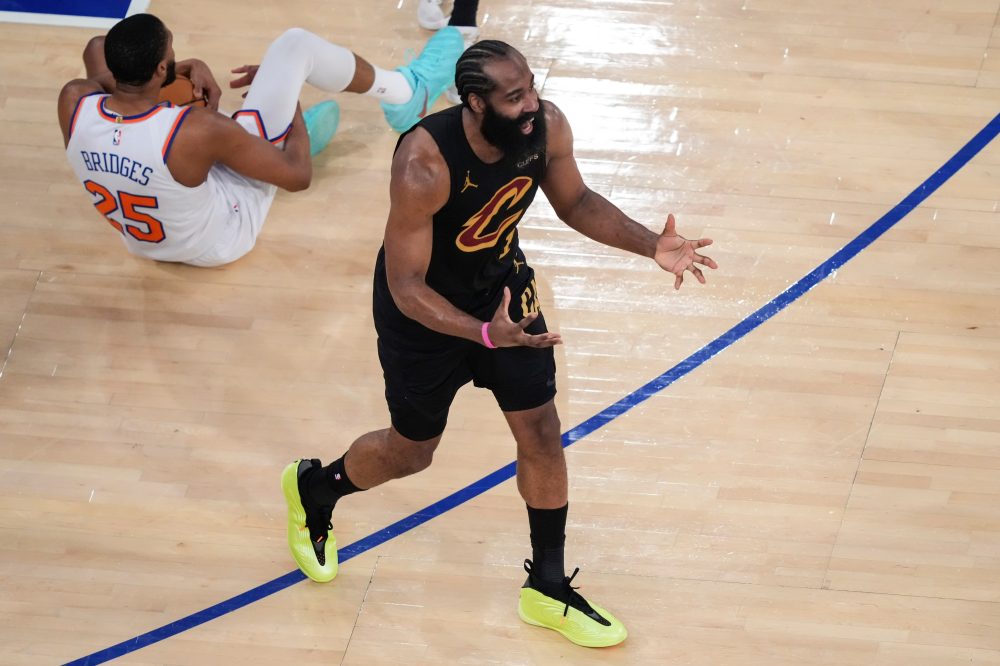
NEW YORK (AP) — Jalen Brunson repeatedly exploited James Harden defensively in the final period, while the veteran guard couldn’t provide enough offensive production to compensate.
The New York Knicks erased a 22-point deficit to defeat the Cleveland Cavaliers in overtime during Game 1 of the Eastern Conference finals Tuesday evening, with Harden’s defensive and offensive struggles contributing significantly to the stunning collapse.
Brunson dominated multiple consecutive possessions by driving against Harden’s defense. The point guard tallied 15 points on 7-of-9 shooting during the fourth quarter exclusively.
“He made some tough ones, but we obviously all know he’s a great 1-on-1 player,” Harden said. “Anybody on an island, it’s going to be difficult, so we’ve got to do a better job of making sure he sees bodies. On the other hand, they do a good job at supporting him and helping him when he’s on an island. He made some tough ones, but we’ve got to do a better job as a team.”
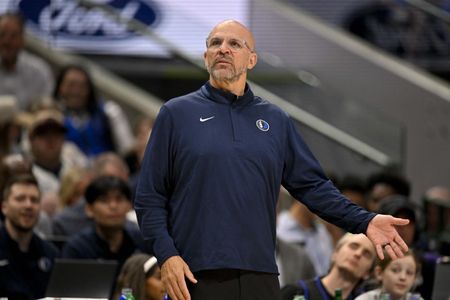
New York’s coach Mike Brown deliberately placed the basketball in Brunson’s control and relied on his floor general to take advantage of the defensive matchup against Harden.
“There is no secret: We were attacking Harden,” Brown said. “Sometimes you’ve got to do what the game dictates, and they were trying to do the same thing with Jalen, so we said, ‘OK, we feel like we can play that game.’ We try not to play that game much, but we feel like we have a guy that we can play that game with in Jalen.”
Brunson managed just 14 points through the first half, as Cleveland’s strategy of switching multiple defenders against him proved effective until he began facing Harden individually to ignite the rally.
“Jalen was a little bit more aggressive,” Harden said. “We just allowed him to be aggressive, and he made shots and he continued to make shots.”
Coach Kenny Atkinson acknowledged that he and his coaching staff implemented adjustments, though none proved successful.
“We started sending two at him, getting the ball out of his hands, full rotating,” Atkinson said. “James was good most of the game. Listen, we weren’t great defensively in the fourth quarter.”
Following a 48-hour turnaround after eliminating Detroit in Game 7 of the previous round, Atkinson said he never contemplated removing Harden from defensive assignments.
“Listen, he’s been one of our best defenders and a big player in the playoffs,” Atkinson said. “I trust him. He’s smart, great hands.”
Acquiring Harden, an 11-time All-Star, during February helped drive the Cavaliers to this stage. However, the 36-year-old veteran experienced difficulties handling the basketball Tuesday evening as well.
Harden connected on 5 of 16 field goal attempts, including 1 of 8 from three-point territory, while committing six turnovers.
Donovan Mitchell, who paced Cleveland with 29 points, emphasized that he and his teammates could have contributed much more as a unit to contain Brunson and refused to place responsibility for the shocking loss solely on Harden.
“Ultimately, this isn’t on him — it’s on all of us,” Mitchell said. “It’s not just on one person. He’s been around the league long enough. He understands that.”
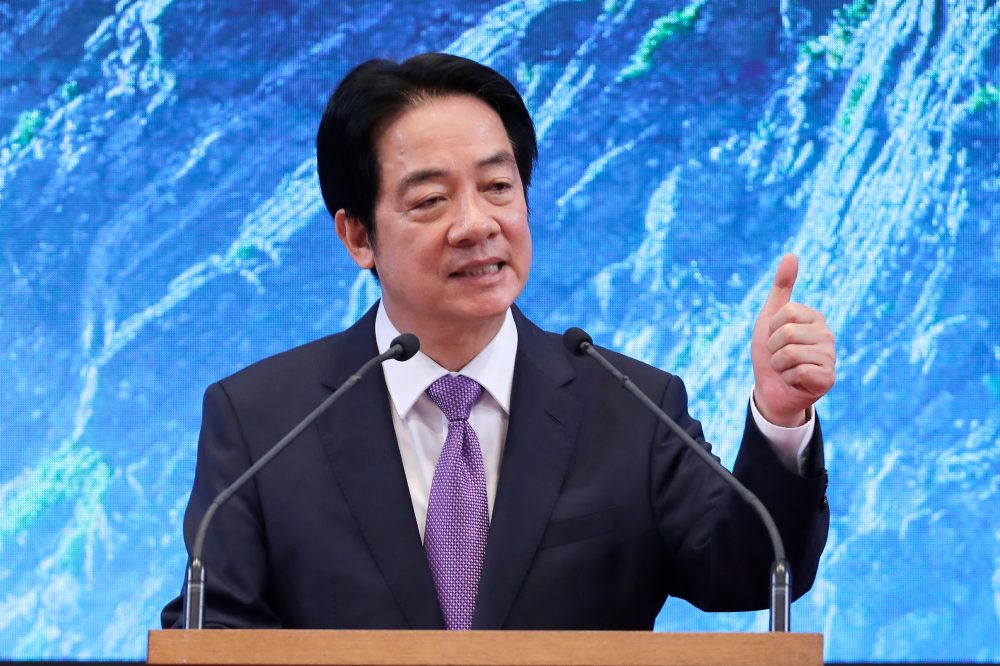
Taiwan’s President Lai Ching-te announced Wednesday that he would seek to discuss ongoing U.S. weapons sales with President Donald Trump if the opportunity arose, describing such purchases as vital for maintaining peace while emphasizing that outside powers cannot determine the island’s destiny.
The statement comes as Lai reaches the midpoint of his four-year presidency, facing increased pressure from China, which views Taiwan as a rebellious territory that must be brought under Beijing’s control through military action if needed. Recent comments from Trump have also sparked worries about America’s longstanding backing of Taiwan despite the absence of official diplomatic relations.
During a press conference, Lai outlined what he would communicate to Trump, stressing that maintaining peace and stability across the Taiwan Strait remains vital for worldwide security. He characterized China as the force undermining peace in the waterway.
The Taiwanese leader explained he would inform Trump that Taiwan’s growing military spending responds to security threats, and that purchasing American weapons serves as a critical tool for preserving regional stability. “Only strength can bring peace,” Lai declared.
“No country has the right to annex Taiwan,” Lai said at the news briefing. “Democracy and freedom should also not be seen as provocation.”
He expressed enthusiasm for expanded collaboration between Taiwan, the United States, and other democratic nations in advancing peace across the strait.
During the previous week, Chinese President Xi Jinping delivered a stern message to the U.S., warning Trump at their Beijing meeting that the “Taiwan question” represents the most critical matter in Chinese-American relations. Xi cautioned that both countries will “have clashes and even conflicts” without proper handling of the issue.
Trump had previously authorized a historic $11 billion weapons package for Taiwan in December. Speaking on Fox News last Friday following his China visit, Trump indicated his approval of an additional $14 billion arms deal for Taiwan would depend on China’s response, calling it “a very good negotiating chip.”
Trump later informed reporters he needed to speak with Taiwan’s leader, though he did not mention Lai by name. Beijing has labeled Lai a separatist.
In Wednesday’s address, Lai emphasized that democracy does not come without effort.
“Taiwan’s future cannot be decided by external forces, nor can it be hijacked by fear, division, or short-term interests,” he stated, without identifying specific external actors.
He noted Taiwan’s readiness to participate in constructive exchanges with China based on equality and respect, while strongly opposing united front strategies that “package unification as peace.”
Apart from geopolitical concerns, Taiwan plays a crucial role in manufacturing artificial intelligence servers, computer processors, and advanced equipment. The AI surge has driven Taiwan’s top technology firms to unprecedented profits and sales. However, experts express concern about the island’s dependence on semiconductor manufacturers and tech companies, which could pose risks if the AI trend proves unsustainable.
Lai announced plans for a $3.1 billion initiative to speed up modernization and transformation of smaller businesses and traditional industries, with technology sectors leading conventional industries forward.
In Beijing, Zhu Fenglian, spokesperson for China’s Taiwan Affairs Office, criticized Lai’s Sunday Facebook post that blamed China for altering the status quo. According to Chinese state news agency Xinhua, she called his statement full of “lies and deception, hostility and confrontation.”
She claimed Lai remained committed to Taiwan independence while promoting division and conflict across the strait.
“(Lai) is the destroyer of the status quo of Taiwan’s strait,” Xinhua reported her saying.
Devastating flooding across several Chinese provinces has resulted in at least 12 fatalities and prompted the evacuation of tens of thousands of residents, according to state media reports.
China’s state television network CCTV announced Wednesday that five people died and 11 remain unaccounted for in Shimen County within Hunan province in central China following severe rainfall in the area. Emergency rescue teams are actively searching for survivors. More than 19,000 residents had been moved to safety by Tuesday evening, according to the Chinese official news agency Xinhua.
The county experienced an extraordinary 339 millimeters (approximately 13 inches) of precipitation in a single 24-hour span that concluded Monday morning at 7 a.m., Xinhua reported. One community within the county saw 240 millimeters (roughly 9 inches) fall in mere hours, establishing new rainfall records.
Adjacent Hubei province witnessed roadways transformed into waterways, requiring emergency teams to use inflatable watercraft for resident rescues. Multiple homes were either flooded or destroyed, Xinhua stated. As of Tuesday morning, three fatalities and four missing persons were reported in that province.
CCTV also announced Tuesday that severe precipitation and flooding in southwestern Guizhou Province resulted in four deaths with five people still missing. The flooding damaged homes, destroyed roadways, and knocked out communication systems in various locations. More than 3,700 residents required relocation from one affected area, Xinhua reported.
In an unrelated incident, 10 people lost their lives when a pickup truck plunged from a bridge in the southern Guangxi region on Saturday, according to Xinhua.
SAN FRANCISCO, Calif. — Commercial vessels navigated the choppy waters of San Francisco Bay this Tuesday while a whale emerged nearby, its breath spray barely distinguishable against the breaking waves. Previously, these marine mammals could pass undetected by boat operators, but a newly launched artificial intelligence monitoring system aims to track their movements continuously.
The technology, known as WhaleSpotter, monitors the bay continuously for whale breathing patterns and thermal signatures within a 2-nautical-mile radius, sending notifications to vessel operators to reduce speed or change course when whales are detected in the area.
“They’ll be able to make adjustments way before they get anywhere close,” said Thomas Hall, director of operations for San Francisco Bay Ferry. “It will also allow us to track data over time and see where the whales are camping out so we can adjust our routes during whale season to avoid those areas completely.”
This initiative responds to a troubling increase in gray whale fatalities throughout the bay region. During the previous year, 21 deceased gray whales were discovered across the broader Bay Area — representing the highest count in a quarter-century, as reported by The Marine Mammal Center — with ship strikes responsible for killing at least 40% of them. An additional 10 or more have perished in the Bay Area during the current year.
Researchers indicate these statistics probably underrepresent the actual death toll since numerous whale bodies either sink beneath the surface or drift back to open ocean before discovery or documentation.
Gray whales have historically traveled along California’s coastline during their approximately 12,000-mile (19,300-kilometer) migration between Mexican breeding areas and Arctic feeding territories.
However, rather than simply traveling past the coast, growing numbers are now entering San Francisco Bay and remaining for extended periods within the busy waterway — a behavioral change researchers increasingly attribute to climate change. Rising temperatures and changing sea ice patterns in the Arctic are disrupting the food systems gray whales depend on during summer feeding periods, according to a 2023 study in Science, resulting in malnutrition during their migration journey.
Numerous whales now gather in a busy shipping corridor between Angel Island, Alcatraz and Treasure Island, creating direct overlap with ferry paths and commercial shipping routes.
“It’s the worst place possible in terms of all the ship traffic,” said Rachel Rhodes, a project scientist at the Benioff Ocean Science Laboratory who led the initiative. There have been so many collisions that “the teams responding to strandings said they ran out of places to even land dead whales.”
The eastern North Pacific gray whale population was previously celebrated as a conservation achievement after recovering from commercial hunting and being delisted from the Endangered Species Act in 1994. However, population numbers have since dropped dramatically, falling by 50% during the past decade, according to the National Oceanic and Atmospheric Administration. Only 13,000 individuals survive today.
“They may not be getting the quality or quantity of food they’re used to in the Arctic,” Rhodes said. “That means they’re starting this incredibly long migration at a disadvantage.”
Artificial intelligence technology automatically identifies possible whale observations, which trained marine mammal specialists then confirm before notifications are transmitted via radio to ferry operators, vessel traffic controllers and published on the Whale Safe website.
WhaleSpotter technologies are currently deployed on boats and permanent installations including lighthouses and coastal structures throughout the United States, Canada and Australia. However, researchers indicate the San Francisco Bay network represents the first system to directly combine land-based and ship-mounted detection capabilities with official maritime alerts, enabling whale observations to be communicated almost instantly to vessels operating in the bay.
Initial testing hours generated an immediate surge of whale detections.
“Suddenly to have a full sense of how much whale activity is in this space honestly put me a little bit on edge,” said Douglas McCauley, director of the Benioff lab. “But we’re going to use that data and we’re going to be smart about how we use that space and share it with the whales.”
Scientists emphasize the system’s primary benefit is continuous surveillance. Unlike human watchers, thermal imaging equipment can function during nighttime hours and in frequent foggy weather typical of the bay area.
One camera has been positioned on Angel Island while a second will be mounted on a ferry operating between downtown San Francisco and Vallejo to establish what Rhodes called a “moving data collection platform.” Researchers anticipate additional cameras on the Golden Gate Bridge and Alcatraz could eventually provide comprehensive bay coverage.
A persistent marine heat wave along California’s coast is reducing the zone of cold, nutrient-dense water where krill, anchovies and sardines flourish. As coastal waters warm, humpback whales are increasingly pursuing their prey nearer to shore, where California’s Dungeness crab fishing industry operates.
The fishing industry employs thousands of vertical lines connecting seafloor traps to surface markers, creating entanglement dangers for whales traveling and feeding along the coastline.
During this spring season, officials once again restricted portions of the central California fishery from using conventional equipment, a protective action that has become more frequent in recent years as warming waters increase whale encounters with crab fishing activities.
Although gray whales face risks, humpbacks remain most susceptible to entanglement.
“Humpbacks are curious and they’ll scratch their backs on the gear,” said Kathi George, director of cetacean conservation biology at The Marine Mammal Center. “If they get a line caught on their body, they’ll breach and they’ll roll and end up entangling themselves.”
Whales may carry heavy fishing equipment for months, preventing proper diving or feeding behavior, resulting in starvation, infection and drowning.
Thirty-six whales were documented as entangled along the West Coast during 2024 — the highest total since 2018, according to NOAA – although scientists warn most incidents remain unreported.
California authorized commercial deployment of ropeless pop-up crab fishing equipment for the first time this spring, enabling fishermen to continue operations through the season’s conclusion.
Rather than using floating surface markers connected to traps, this system keeps ropes and markers on the ocean floor until fishermen return and activate an acoustic mechanism that brings the equipment to the surface.
Advocates argue this technology permits fishermen to maintain crab harvesting while significantly reducing whale endangerment.
As climate change continues altering ocean environments and whale migration behaviors, scientists anticipate ongoing conflicts between whales, shipping vessels and fishing operations.
“We will have to continue to be adaptive and science driven in terms of our management to reduce wildlife risk and keep fishermen on the water,” said Caitlynn Birch, Oceana’s Pacific campaign manager and a marine scientist. “California has been a national leader in developing whale-safe fishing technologies and we hope that model can help guide other fisheries on the West Coast and nationally.”
Young people entering today’s job market are expressing mounting concern about artificial intelligence’s growing influence on their career prospects, as major corporations announce widespread layoffs tied to AI implementation.
During a recent university commencement address, former Google CEO Eric Schmidt faced audible disapproval from graduating students at the University of Arizona when he described AI’s impact as something that would be “larger, faster, and more consequential” than previous technological shifts.
“It will touch every profession, every classroom, every hospital, every laboratory, every person, and every relationship you have,” Schmidt stated, as negative reactions echoed through the audience despite his attempts to address concerns about employment security and an uncertain economic landscape.
These workplace anxieties appear well-founded, as evidenced by Standard Chartered’s recent announcement that it plans to eliminate more than 7,000 positions while substituting “lower-value human capital” with artificial intelligence systems.
Several technology companies are also reducing their workforce while citing AI advancement as a factor. Meta, currently installing monitoring software on employee computers in the United States to develop its AI capabilities, intends to eliminate 10% of its global staff beginning this month.
Amazon.com has eliminated approximately 30,000 corporate positions in recent months as the company emphasizes AI integration and operational efficiency, while fintech company Block reduced nearly half its workforce in February.
The Iran war is also contributing to reduced hiring activity.
Schmidt recognized the younger generation’s concerns as “rational,” though like other corporate leaders, he characterized the transformation and upheaval brought by AI as an unavoidable development requiring widespread adaptation.
Research from Gallup released in April revealed that increasing numbers of Generation Z individuals – those born from 1997 to 2012 – reported feeling anxious or angry about artificial intelligence, while those expressing hope or excitement about the technology declined significantly from the previous year.
Nearly half of survey participants believed AI’s dangers outweigh its advantages, while only 15% viewed it as beneficial overall – a considerably more pessimistic outlook than twelve months earlier. Most acknowledged the importance of understanding AI but expressed concern that it impedes comprehensive learning and creative thinking.
“Negative emotions have intensified over the past year,” the research authors observed, noting that usage patterns were beginning to level off. “Young adults in the workforce are significantly more likely to view AI as a risk than a benefit.”
The study did indicate that favorable opinions of AI grew among heavier users while declining among those with limited exposure to the technology.
Schmidt’s cool reception followed other recent displays of student opposition to AI discussions. At the University of Central Florida on May 8, real estate executive Gloria Caulfield experienced similar heckling and disapproval during her graduation speech about artificial intelligence.
“The rise of artificial intelligence is the next industrial revolution,” she remarked as negative reactions erupted, visibly surprising her. “What happened? OK, I struck a chord… Only a few years ago AI was not a factor in our lives.”
The audience responded with enthusiastic applause to her acknowledgment of their concerns.
Electric vehicle purchases across Europe have experienced a dramatic increase as escalating fuel costs tied to the conflict in Iran drive consumers toward battery-powered alternatives, according to exclusive data shared with Reuters. This trend is delivering a welcome boost to automotive manufacturers who had been struggling with disappointing EV sales.
While fully electric vehicle sales increased by 30% throughout Europe in 2025, the adoption rate had previously fallen short of industry projections. Major automakers including Volkswagen and Stellantis, Fiat’s parent company, had made substantial investments anticipating much stronger EV demand but were forced to write down billions in assets over the past year.
Consumer purchasing decisions have been dramatically altered by rising international oil costs, which climbed well beyond $100 per barrel following U.S. and Israeli military strikes against Iran in late February. These attacks sparked broader regional conflict and created significant energy supply disruptions.
“This isn’t a blip, it’s an inflection point,” said Gurjeet Grewal, CEO of UK-based Octopus Electric Vehicles, which registered a 95% year-on-year increase in demand for new EVs and 160% rise for used EVs in April.
Britain, as an energy importing nation, has faced particular exposure to rising inflation and food costs.
Throughout Europe, information shared with Reuters by research organization New Automotive and industry association E-Mobility Europe revealed that new EV registrations climbed 34% compared to the previous year in April.
The statistics encompass 16 markets representing over 80% of European Union and European Free Trade Association vehicle sales.
The data revealed robust EV expansion in Denmark and the Netherlands, where electric vehicles already enjoy popularity, as well as in markets like Italy, where EV adoption has been sluggish.
Erik Severinson, Chief Commercial Officer at Volvo Cars, reported that the Swedish manufacturer’s orders have increased, particularly for its entry-level compact EX30 electric SUV “where customers are most sensitive to increase in oil prices”.
“We are also seeing increased customer enquiries in our fully-electric cars even in southern European markets where EV penetration is comparatively lower,” Severinsson said.
French automaker Renault reported that 50% of its registrations in Britain during April were EVs, with EV-related inquiries on its UK website climbing 48% since the Iran war began. April registrations, which follow orders, represent the first month to completely capture the conflict’s impact.
“Interest in Renault’s EV range has undergone a seismic shift,” said Renault UK managing director Adam Wood.
An anonymous source at the company indicated that Renault was working to boost production levels.
Markus Haupt, CEO of Seat/Cupra, both Volkswagen subsidiaries, noted in early May that his German sales team reported EVs comprising nearly 60% of orders, significantly exceeding their 25% target.
“We have a production budget for this year,” Haupt said. “But maybe we’ll need to increase the amount of EVs.”
Digital marketplaces have similarly witnessed increased searches for both new and used EVs, with a notable spike in interest for Chinese brands offering more budget-friendly options.
Since the conflict started, German marketplace Carwow reported its share of EV inquiries rose to 75% from approximately 40%, while traditional gasoline vehicle inquiries dropped to 16% from 33%.
“What is striking is the strong momentum of Chinese manufacturers,” said Carwow Germany Managing Director Philipp Sayler von Amende. Prominent names like BYD have evolved from “niche brands” to among the most desired.
Carwow indicated that purchase inquiries for BYD on its platform surged by an enormous 25,000% in the first quarter, while Leapmotor inquiries jumped 436% and Xpeng climbed 153%.
Competing online marketplace OLX reported customer inquiries for EVs on its French platform increased 80% since the war commenced.
During previous fuel price spikes dating to the 1970s, consumers typically shifted to more efficient vehicles but returned to less efficient models when pump prices decreased.
This situation may prove different, industry experts suggested.
“The Iran conflict has fundamentally reshaped how people think about energy security in their daily lives,” said OLX CEO Christian Gisy. “Europeans have shifted from ‘maybe someday’ to ‘right now’ on electric vehicles.”
Chinese technology company Alibaba Group announced Wednesday the launch of its newest artificial intelligence processor, the Zhenwu M890, as the firm accelerates efforts to create homegrown alternatives to processors amid stricter U.S. trade restrictions.
The processor, created by Alibaba’s chip design division T-Head, provides triple the performance capabilities compared to its earlier version, the Zhenwu 810E. The chip was specifically designed for the next generation of AI “agents” — computer programs capable of executing complicated, multi-phase operations with minimal human intervention.
According to Alibaba, the latest processor excels at managing the substantial memory requirements and communication needs of agent-based computing tasks, where AI models must maintain extensive contextual information and work together simultaneously.
The technology giant also revealed its long-term processor development strategy, announcing plans to release a follow-up chip named the V900 during the third quarter of 2027, followed by another processor called the J900 in the third quarter of 2028. The V900 is projected to provide approximately three times the performance improvement over the M890, demonstrating Alibaba’s commitment to continuous internal chip advancement.
This strategy highlights China’s expanding initiatives to develop domestically-produced AI processors as Washington prohibits sales of the most advanced U.S. chips to Chinese buyers, following a comparable announcement by another Chinese company last year.
The Hangzhou-based technology firm committed last year to investing more than 380 billion yuan ($53 billion) in cloud computing and AI infrastructure over a three-year period, representing its largest financial commitment to this sector.
This investment demonstrates a wider industry belief across China’s technology sector that AI computing demand will continue growing as businesses implement agent-based software solutions.
Alibaba revealed the chip during its yearly Alibaba Cloud Summit, along with introducing a new server configuration called the Panjiu AL128, which combines 128 of these processors into one rack system.
The server system became immediately available to Chinese business customers via Alibaba Cloud’s domestic platform, called Bailian.
T-Head reported delivering more than 560,000 Zhenwu processors so far, with over 400 external clients spanning 20 different sectors, including automotive manufacturers and financial services companies, currently using these chips.
Alibaba additionally announced Qwen 3.7-Max, the newest iteration of its primary large language model, which the company stated was built for sophisticated programming tasks and extended agent operations. The firm claimed this model can function continuously for up to 35 hours without any decline in performance.
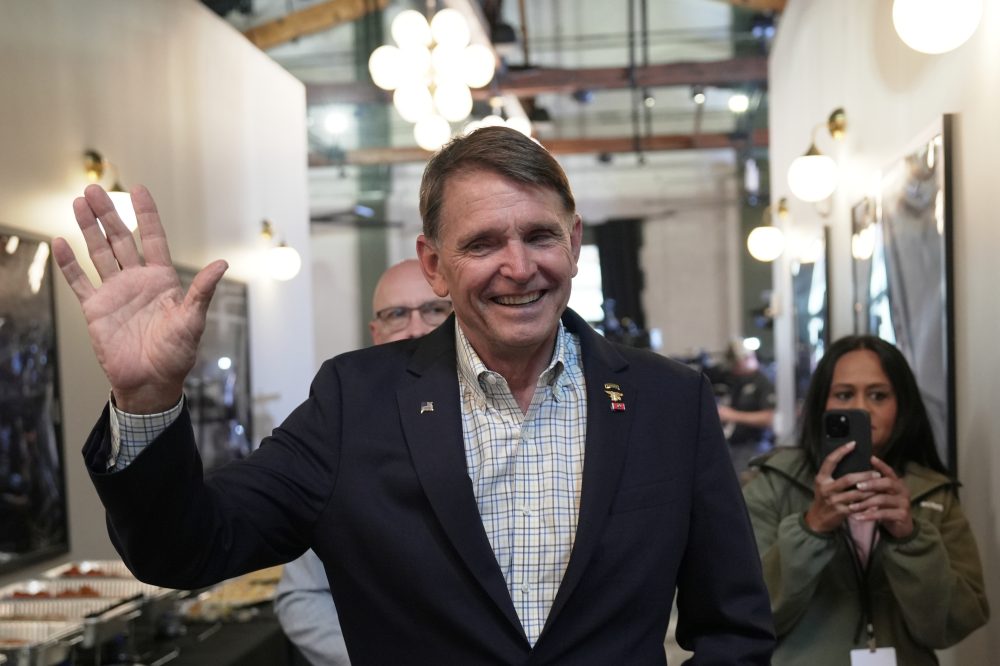
Two Republican candidates will face off in a June runoff election after neither secured enough votes to win Georgia’s U.S. Senate primary outright on Tuesday, setting up a continued battle within the party to determine who will challenge Democratic Senator Jon Ossoff this fall.
U.S. Representative Mike Collins captured 40.5% of the vote while former University of Tennessee football coach Derek Dooley received 30%, with 80% of ballots tallied, according to the Associated Press. Their advancement to the June 16 runoff knocked out a third candidate, Representative Buddy Carter, who had invested significant resources in building recognition across the state.
The Republican who ultimately wins the nomination will face a challenging race against Ossoff, a 39-year-old former media executive whose reelection bid could play a crucial role in determining whether Democrats can gain Senate control, as Republicans currently hold a 53-47 advantage.
Collins, 58, who has served two terms in the House of Representatives, has maintained his position as the leading candidate by adopting an aggressive, vocal style similar to President Donald Trump and highlighting his sponsorship of the Laken Riley Act, legislation named after a Georgia nursing student who was murdered by someone accused of being in the country without legal status.
Dooley, 57, who works as an attorney in addition to his coaching background, has campaigned as a fresh face in Washington politics and secured the backing of two-term Georgia Governor Brian Kemp. Kemp had been considered a potential front-runner for the Senate nomination but chose not to pursue the race.
Ossoff, the sole Senate Democrat seeking reelection in a state Trump won in 2024, has been leading both Collins and Dooley in polling. The Republican candidates, like others in the state, face challenges from Trump’s declining approval ratings amid concerns over increasing costs for gas and other essential goods.
While Trump secured Georgia with nearly 51% of the vote, independent political experts now classify the state as favoring Democrats. Ossoff initially won his Senate seat by defeating Trump-supported Republican incumbent David Perdue in a 2021 runoff contest.
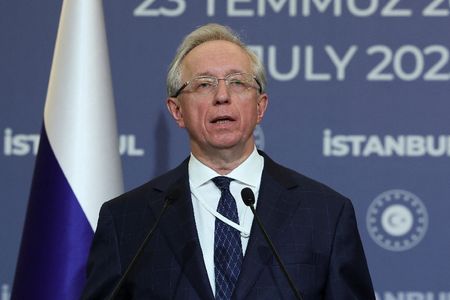
Russian President Vladimir Putin declared Wednesday that diplomatic relations between his nation and China have reached historic heights during a meeting with Chinese leader Xi Jinping in Beijing.
During their discussions on May 20, Putin also extended an invitation for Xi to make an official visit to Russia next year, signaling the continued strengthening of ties between the two world powers.
China’s Commerce Ministry announced Wednesday that the country plans to purchase 200 Boeing aircraft while pursuing an extension of its trade deal with the United States that was originally negotiated in Kuala Lumpur last year.
According to the ministry’s statement, the United States will guarantee supply chains for aircraft engine parts and components as part of the Boeing purchase agreement.
The ministry further indicated that both nations will pursue mutual tariff reductions affecting $30 billion or more in goods from each country. Officials emphasized that American tariffs imposed on Chinese products cannot surpass the limits established in the original Kuala Lumpur agreement.
Even the most creative Hollywood writers would struggle to script the incredible opening night that launched the NBA conference finals.
The basketball world witnessed something extraordinary as Victor Wembanyama delivered 41 points and 24 rebounds, leading San Antonio to a stunning road victory over the defending champion Oklahoma City Thunder. Meanwhile, New York mounted an incredible comeback from a 22-point deficit with roughly eight minutes remaining to defeat Cleveland. Both contests required overtime play – marking the first time in conference finals history – and remarkably, each game was deadlocked at 101-101 when regulation time expired.
Impressive performances from the Spurs and Knicks set the stage for what promises to be memorable series.
The defining characteristic of both victories was watching elite players elevate their performance when it mattered most. Monday evening belonged to Wembanyama and the Spurs, while Tuesday night saw Jalen Brunson take control for the Knicks during an extraordinary 44-11 scoring surge across the final 13 minutes.
Yes, that’s 44-11 over 13 minutes.
“I don’t know if I’ve seen that in a playoff game,” Knicks coach Mike Brown said. “I take my hat off to my group.”
The Spurs and Thunder will meet for Game 2 on Wednesday, followed by the Knicks and Cavaliers on Thursday. Expectations are high for continued excitement.
“Found a way. … We got some stops,” Brunson said. “Kept fighting, kept believing, kept chipping away.”
The statistical achievements from both games seem almost fictional.
Tuesday night’s action at Madison Square Garden defied basketball logic. A 44-11 run simply doesn’t occur at the NBA level, especially during conference finals play. Teams holding 22-point or larger fourth-quarter leads had posted a 452-1 record this season across regular season and playoffs combined. That mark now stands at 452-2. During playoff action specifically, teams had captured 330 straight victories when ahead by 22 or more points in the fourth quarter dating back to 2013. That streak is now 330-1.
The numbers seem impossible to explain.
“I don’t have an answer,” Brunson said.
Cleveland’s players and coaches were equally baffled during and after the collapse.
“We got a little unlucky,” Cavaliers coach Kenny Atkinson said. “Brunson obviously took over at the end. … We played great basketball tonight for three quarters. Unfortunately, the fourth quarter, they dominated us in the fourth quarter.”
Wembanyama’s 41-point, 24-rebound performance represents another rare achievement. The young star shined in his conference finals debut, receiving strong support from Spurs rookie guard Dylan Harper. San Antonio, similar to Cleveland, surrendered a double-digit fourth-quarter advantage in Game 1 before heading to overtime. The Spurs led by 10 points rather than 22, but still squandered a significant lead.
Unlike Cleveland, San Antonio managed to regain composure during both overtime periods Monday night.
“That game was in the balance multiple times for both teams,” Spurs coach Mitch Johnson said Tuesday. “You can’t get preoccupied with the outcome because there was so much in the balance that could have went either way.”
Simply put, capturing home-court advantage through a Game 1 victory doesn’t make the Spurs believe their series is decided. The Thunder understand Game 1’s importance while recognizing it’s far from conclusive.
“The cumulative experience just teaches you that it’s a series,” Thunder coach Mark Daigneault said Tuesday. “Game 1’s a starting point, not an end point. We’ve lost playoff series that we’ve won Game 1 pretty convincingly. And we’ve also won series that we won Game 1. So, every series is different. It’s the first to four. They’re 25% of the way there and we’re at zero right now. But there’s a lot of basketball left to be played. I think this team kind of understands the length of the series, the length of the playoff run and the length of a playoff game.”
The reigning champions face mounting pressure. New York’s confidence is soaring. Wembanyama continues building his reputation. Cleveland – having survived two Game 7 victories during these playoffs – must overcome adversity once more.
These conference finals opened with spectacular drama. The second chapter promises even more excitement.
A wave of shirtless enthusiasm is taking over baseball stadiums nationwide as fans embrace what’s being called the “Tarps Off” phenomenon.
The movement involves groups of predominantly young male fans gathering in stadium sections, removing their shirts, and spinning them overhead while engaging in soccer-style chants and singing. The energetic displays are bringing a new level of excitement to a sport sometimes criticized for lacking stadium atmosphere.
The phenomenon originated in St. Louis last Friday and has rapidly expanded to ballparks in Detroit, Tampa Bay, Philadelphia and Anaheim, California.
“It’s hard not to have fun when the fans are like that,” Cardinals shortstop Masyn Winn said. “We’ve got the best fans in the world, but it seems like the younger generation makes it more like a college atmosphere.”
The movement began when a club baseball team from Stephen F. Austin State University attended a Cardinals game while in Alton, Illinois, for the National Club Baseball Division II World Series. The Cardinals had provided tickets to the team, and 17 players showed up.
Those players initiated the celebration, which attracted dozens of additional participants and eventually grew to include several hundred fans creating an uproar in right field. The energy contributed to the Cardinals’ 5-4 victory over the Kansas City Royals in 11 innings. Cardinals manager Oliver Marmol was so impressed by the atmosphere that he purchased tickets for the enthusiastic fans to return for Saturday’s game.
The Cardinals’ mascot Fredbird even participated in the festivities.
The trend appears to be establishing itself as a regular occurrence, with more shirtless supporters cheering during Tuesday’s matchup against the Pirates. The home field energy seems to be paying dividends, as Ivan Herrera delivered a three-run homer that secured a 9-6 victory in 10 innings for the Cardinals.
Similar displays emerged at Tampa Bay Rays games on Monday and Tuesday. A smaller group celebrated in Philadelphia during a rain-soaked game between the Reds and Phillies. Angels fans combined their shirtless celebration with frustration, chanting demands for owner Arte Moreno to sell the franchise.
Major League Baseball likely welcomes the increased attention, as stadium attendance has improved this season with approximately 1,000 additional fans per game compared to last year through Monday’s games.
Should this upward trend persist, baseball could reach an average of 30,000 fans per game for the first time since 2016.
An increasing number of those spectators may simply be without shirts.
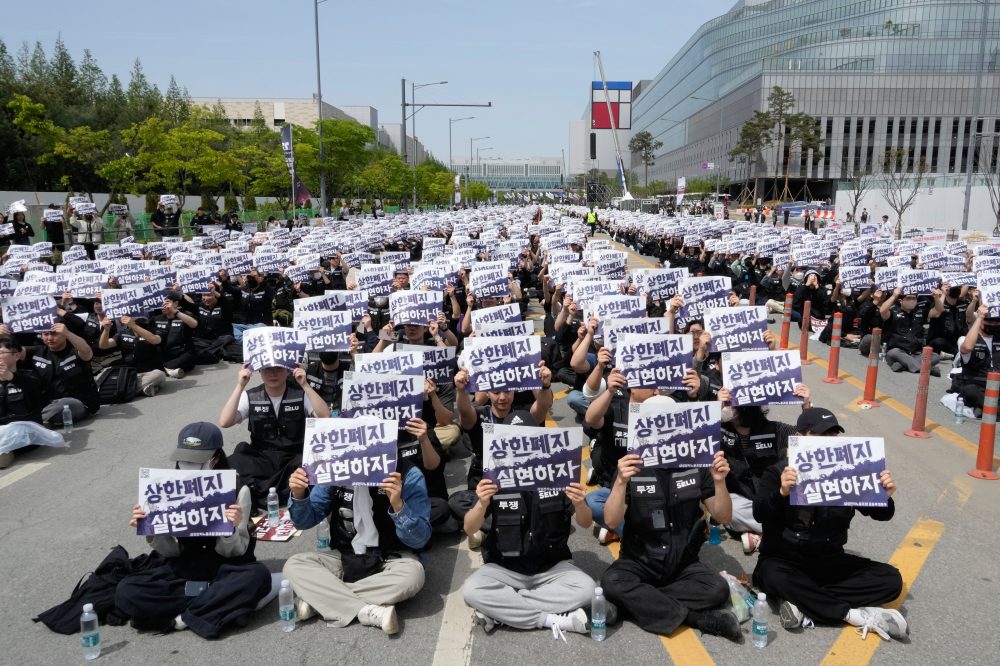
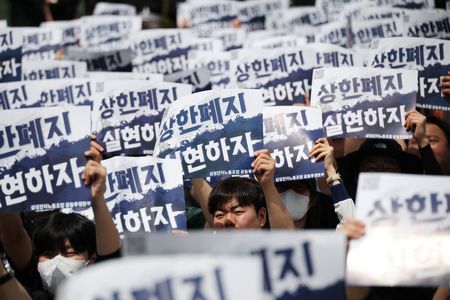
SEOUL, South Korea — Wage negotiations between Samsung Electronics and its union collapsed Wednesday, setting the stage for a major work stoppage that could impact worldwide semiconductor production and South Korea’s economy.
The union representing approximately 74,000 Samsung employees announced plans for an 18-day strike beginning Thursday after last-ditch talks failed to produce an agreement. Union representatives argue the electronics manufacturer has not provided fair compensation despite record profits driven by artificial intelligence demand.
Government authorities have warned they may use emergency powers to force a resolution at Samsung, where workers claim adequate pay increases have been denied despite the company’s financial success.
Following Wednesday’s unsuccessful negotiations, union leader Choi Seung-ho informed media that the strike would proceed as planned.
Each side blamed the other for the breakdown in discussions. Choi claimed management rejected a government-brokered proposal, though he declined to reveal specifics. Company officials countered that union demands for worker compensation at unprofitable divisions were unreasonable.
While both parties indicated willingness to continue negotiations, it remained uncertain whether additional talks would occur.
Samsung produces smartphones, consumer electronics and semiconductors on a global scale.
The electronics giant and its competitor SK Hynix manufacture roughly two-thirds of worldwide memory chips, which are experiencing increased demand due to AI applications. Samsung reported last month that its January-March operating profit surged eight times to reach a record 57.2 trillion won ($38 billion).
Union representatives want Samsung to establish a compensation framework allocating 15% of yearly operating profits to worker bonuses while eliminating current bonus limits of 50% of annual wages. Company leadership considers these demands unrealistic given the semiconductor industry’s volatile cycles.
Prime Minister Kim Min-seok, the nation’s second-ranking official behind President Lee Jae Myung, warned in a Sunday television address that the strike could inflict up to 100 trillion won ($66 billion) in economic harm by disrupting Samsung’s intricate chip manufacturing operations.
A regional court Monday approved part of Samsung’s injunction request against the planned strike, ordering the union to maintain specific staffing requirements to protect equipment and materials while ensuring operational safety. The Suwon District Court also prohibited union members from taking over critical facilities and offices.
BEIJING — Russian President Vladimir Putin arrived in Beijing on Wednesday for high-level discussions with Chinese leader Xi Jinping, a diplomatic encounter occurring just days following U.S. President Donald Trump’s recent journey to China.
Putin received a formal welcome ceremony at the Great Hall of the People from Xi. Following the ceremonial reception, both delegations engaged in bilateral discussions, with plans for a signing ceremony of cooperative agreements.
The timing of Putin’s arrival, coming shortly after Trump’s Beijing trip, serves to reinforce China’s position as a major global diplomatic power, according to analysts.
“The message is clearly one that China maintains friendship and strategic partnership with whichever power it likes, and the USA is just one of them,” said Steve Tsang, director of the SOAS China Institute at the University of London.
Russian presidential aide Yuri Ushakov previously stated there was “no connection” between Trump and Putin’s visits, explaining that the Russian leader’s trip was arranged several days following a Feb. 4 videoconference between Putin and Xi.
The agenda for the Russian and Chinese leaders includes discussions on energy cooperation, security matters, and broader diplomatic relations. According to Chinese state media reports, both nations agreed to extend a friendship treaty originally established in 2001.
Following Moscow’s full-scale invasion of Ukraine in 2022, China emerged as Russia’s leading trade partner. Beijing maintains it remains neutral in the conflict while continuing commercial relationships with the Kremlin despite U.S. and European economic and financial sanctions.
China serves as the primary buyer of Russian oil and gas exports, with Moscow anticipating increased demand due to the war in Iran. China has also disregarded Western demands to cease providing high-tech components for Russia’s weapons industries.
According to Ushakov, Russian oil exports to China increased by 35% during the first quarter of 2026, with Russia ranking among China’s largest natural gas suppliers.
During “the crisis in the Middle East,” Russia continues as a dependable energy provider while China remains a “responsible consumer,” Ushakov stated.
Earlier this month, Putin highlighted that Moscow and Beijing achieved “a very substantial step forward in our cooperation in the oil and gas sector.”
“Practically all the key issues have been agreed upon,” he said. “If we succeed in finalizing these details and bringing them to a conclusion during this visit, I will be extremely pleased.”
Putin also characterized their bilateral partnership as an essential stabilizing element in global affairs.
“Interaction between such nations as China and Russia undoubtedly serves as a factor of deterrence and stability,” he said.
Moscow views China’s dialogue with the U.S. as an additional stabilizing factor for the worldwide economy, Putin noted.
“We stand only to benefit from this, from the stability and constructive engagement between the U.S. and China,” he said.
Markets across Asia declined Wednesday, mirroring Wall Street’s downturn as climbing government bond yields applied increasing pressure to equities and other investments, weakening the artificial intelligence-fueled surge in tech stocks.
Government bond yields have been rising as the conflict with Iran continues, heightening concerns about sustained elevated inflation.
Japan’s Nikkei 225 declined 1.2% to close at 59,834.15.
Japan’s 10-year government bond yield dropped to just under 2.8% but stayed near its highest point since 1997. The dollar traded at 159.00 Japanese yen, slightly down from 159.09 yen.
The euro declined to $1.1601 from $1.1608.
Markets in China also dropped, with Hong Kong’s Hang Seng falling 0.6% to 25,635.82. The Shanghai Composite index declined 0.5% to 4,148.16.
Australia’s S&P/ASX 200 fell 0.8% to 8,533.60.
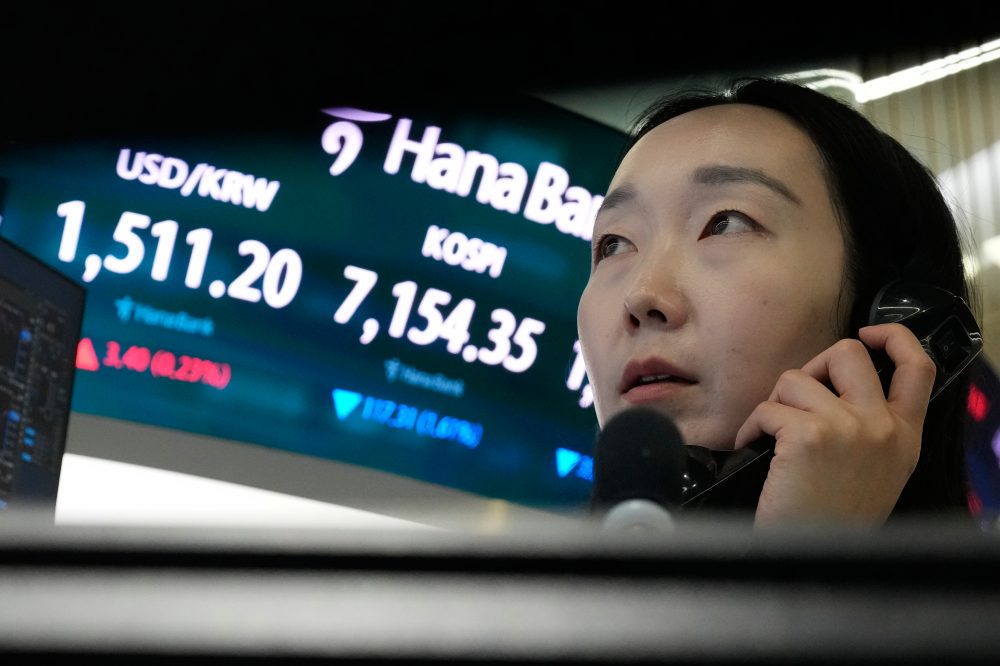
South Korea’s Kospi managed a 0.3% gain to 7,292.41 following widespread selling the previous day. Taiwan’s Taiex rose 0.4%.
American futures showed little movement after the S&P 500 dropped 0.7% Tuesday, ending at 7,353.61 for its third consecutive decline since reaching its most recent record high.
The Dow Jones Industrial Average fell 0.6% to 49,363.88, while the Nasdaq composite declined 0.8% to 25,870.71.
Technology shares are struggling after massive gains driven by artificial intelligence enthusiasm that skeptics argue inflated their valuations excessively.
At the same time, petroleum prices have been fluctuating amid uncertainty over how long the Iran conflict will keep the Strait of Hormuz blocked to oil tankers.
Wednesday’s focus will center on the latest quarterly earnings from the chip company. The corporation has repeatedly exceeded analyst projections each quarter and delivered growth forecasts that have consistently surpassed Wall Street expectations.
Its performance could decide whether technology equities and the broader American stock market can sustain their upward momentum. The chip company dropped 0.8% Tuesday and was among the heaviest drags on the S&P 500 due to its massive market value.
The cybersecurity and cloud computing company plummeted 6.3% for one of Tuesday’s steepest declines after announcing plans to raise $2.6 billion through a convertible note offering.
The home improvement retailer gained 0.9% after reversing an early decline following its earnings announcement. Its earnings and sales slightly exceeded analyst forecasts, though a key retail metric examining performance at locations operating more than one year fell short of some analyst predictions.
“Home Depot saw similar demand from its customers as it did throughout last year despite greater consumer uncertainty and housing affordability pressure,” said CEO Ted Decker.
Numerous major American corporations have delivered better-than-anticipated earnings for the recent quarter, partly due to customers maintaining spending levels despite elevated fuel costs and other headwinds. This has helped push American stock indices to new highs, but unrest in bond markets poses a threat to this trend.
The 10-year Treasury yield climbed to 4.66% from 4.61% late Monday and from under 4% before the Iran conflict started. This represents a significant increase and is part of a global rise making stock valuations appear more expensive and potentially slowing economic growth.
Elevated yields can increase borrowing costs for home loans and corporate financing for artificial intelligence data center construction, which has been a major economic growth driver.
Yields increased even as petroleum prices declined.
Early Wednesday, American benchmark crude oil was down 45 cents at $103.70 per barrel. Brent crude, the global standard, lost 50 cents to $110.78 per barrel.
The average gasoline price per gallon rose again overnight to $4.53, according to the AAA motor club, representing approximately 43% more than the cost one year ago.
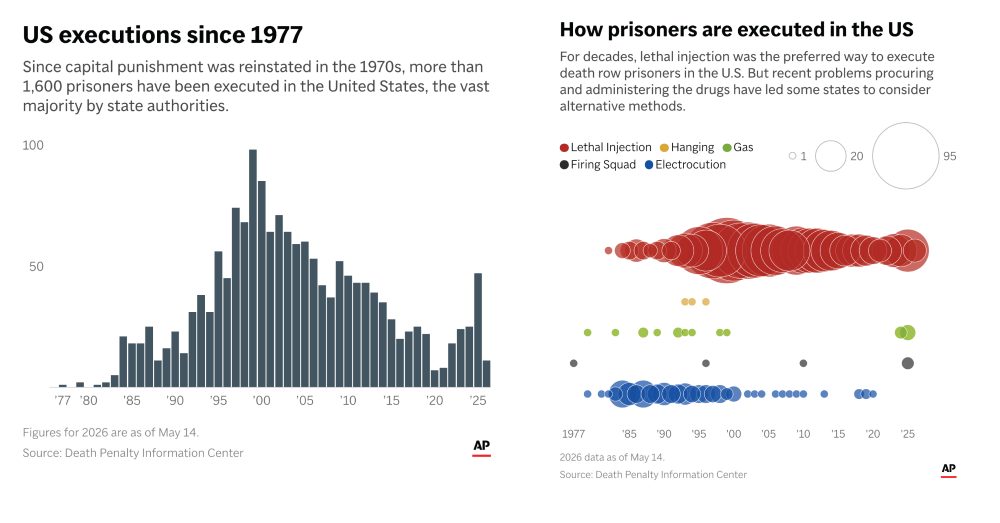
A death row inmate in Arizona is scheduled to die by lethal injection Wednesday for a deadly arson attack that claimed a man’s life more than two decades ago.
Leroy Dean McGill, 63, faces execution at the Arizona State Prison Complex in Florence for the murder of Charles Perez in July 2002.
Officials say McGill doused Perez and his girlfriend, Nova Banta, with gasoline before igniting a match while the couple was sitting on a couch in a Phoenix apartment on July 13 that year. The attack came after Perez and Banta had confronted McGill about allegedly taking a firearm from their residence. McGill had been awake for multiple days while under the influence of methamphetamine at the time of the incident.
While Banta managed to survive the assault, Perez succumbed to his injuries.
The execution would mark the 13th carried out nationwide this year, with additional executions planned in Tennessee and Florida on Thursday.
During McGill’s trial, Banta gave testimony describing how McGill warned her and Perez against speaking negatively about others. Officials reported that McGill then set the victims ablaze before they had a chance to reply.
Both victims fled the burning apartment. A resident helped extinguish the flames on Banta using a blanket, though she sustained severe third-degree burns across most of her body. Perez later died at a medical facility after enduring what prosecutors called excruciating suffering.
Banta positively identified McGill as her attacker during court proceedings.
In October 2004, a jury took less than 60 minutes to find McGill guilty of murder in Perez’s death. Additional convictions included attempted murder for the attack on Banta, arson charges, and endangering other residents who had to evacuate when flames spread to neighboring units.
Defense attorneys sought a lighter sentence by highlighting McGill’s history of childhood trauma, mental disabilities, and psychological development issues. However, the jury ultimately imposed capital punishment.
Earlier this year, McGill’s legal team attempted one final effort to have his sentence reduced, but a trial court denied the request. The state’s highest court also refused to delay the scheduled execution.
McGill turned down an interview opportunity with The Associated Press and chose not to pursue clemency.
Arizona most recently carried out executions in 2025, putting to death Richard Kenneth Djerf for murdering four Phoenix family members in 1993 and Aaron Gunches for the 2002 fatal shooting of his girlfriend’s former husband.
The state performed three executions in 2022 after an almost eight-year pause caused by challenges securing lethal injection drugs and backlash over a problematic 2014 execution. During that execution, Joseph Wood received 15 injections of a two-drug mixture over two hours, causing him to make repeated snorting sounds and gasp hundreds of times before dying.
Current execution procedures involve administering two doses of the sedative pentobarbital, according to the Arizona Department of Corrections, Rehabilitation and Reentry.
The state currently houses 109 inmates awaiting execution.
Few members of Congress operated quite like Thomas Massie.
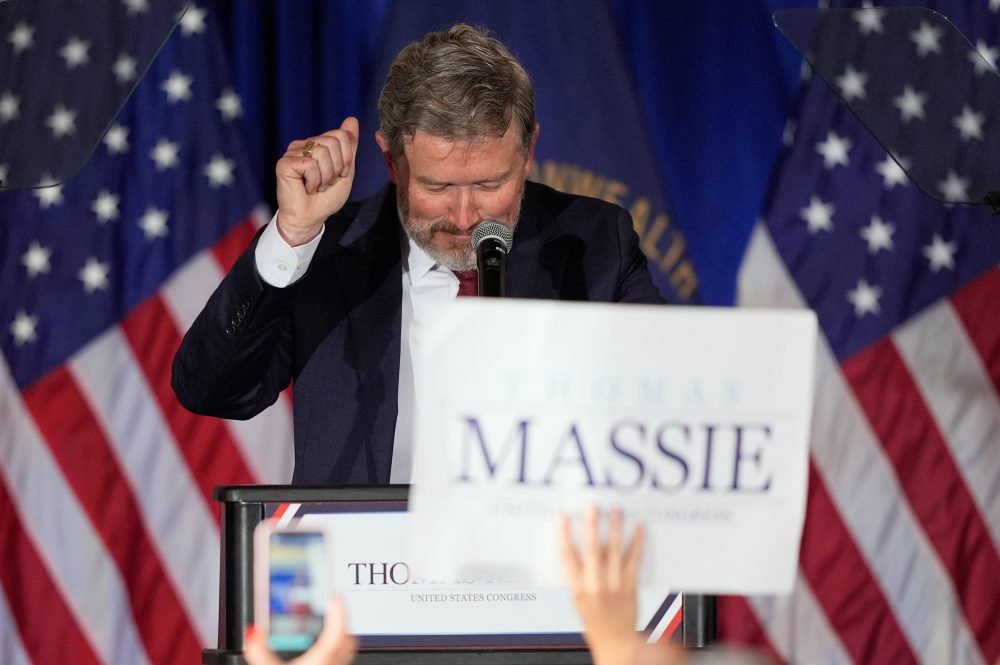
The independent-minded Republican who gained attention for his unconventional approach and willingness to oppose his own party’s leadership was defeated in Tuesday’s primary election following an aggressive campaign against him by President Donald Trump. Massie had built strong support in his Kentucky congressional district through multiple election cycles.
This remarkable conclusion to his legislative career demonstrates Trump’s power to pressure, criticize and ultimately remove political opponents — suggesting no elected official may be immune from such tactics. Massie’s loss follows Trump’s successful effort to remove Sen. Bill Cassidy in Louisiana recently and the president’s Tuesday backing of Texas Attorney General Ken Paxton against Sen. John Cornyn, creating concern among Senate members.
Trump had directed his harshest criticism toward Massie, an unconventional conservative who had gained significant influence among House Republicans by voting according to his principles rather than party leadership’s wishes. He now joins other Republicans who challenged the president and faced similar consequences.
Following his loss to Ed Gallrein, a former Navy SEAL chosen by Trump, Massie remained defiant.
“If the legislative branch always votes with the president, we do have a king,” Massie told cheering supporters Tuesday night. But if lawmakers follow the Constitution, he said, “we have a republic.”
During his concession remarks, Massie hinted his political involvement might continue as supporters chanted “2028!” and “President!”
“You’ve made a compelling argument,” he replied. “We’ll talk about it later.”
Trump commented on Massie’s loss: “He deserves to lose.”
Massie built his reputation from the House Republican ranks by following his own course and repeatedly demonstrating his readiness to oppose both his party and the president.
He opposed Trump’s major tax reduction legislation the previous year, concerned the multi-trillion-dollar expense would increase national debt.
He disagreed with Trump’s military actions regarding Iran and Venezuela, opposing American intervention abroad, and consistently voted against foreign assistance, including aid to Israel, which resulted in millions in opposition spending from pro-Israel organizations.
Most notably, Massie collaborated with Democratic Rep. Ro Khanna of California in a determined campaign to compel the Justice Department to release Jeffrey Epstein documents.
His efforts regarding the Epstein documents, possibly more than his repeated opposition to spending measures and other party initiatives, raised Massie’s public recognition.
Trump attacked the “lowlife” Massie as the congressman pursued this matter last year, extending political difficulties for the administration.
Initially elected in 2012 during the final phase of the Republican tea party movement before Trump’s Make America Great Again campaign emerged, Massie distinguished himself immediately.
With an engineering background, Massie created multiple patents — displayed in his office — plus a debt tracking device that shows flashing red numbers as national deficits increase. He frequently wore a small version of this debt tracker as a pin.
He wed his high school girlfriend, Rhonda, and accompanied her to the Massachusetts Institute of Technology. They raised four children while living mostly independently in a solar-powered house he built, earning recognition among self-sufficient lifestyle enthusiasts. He managed livestock, owned an early Tesla vehicle and consumed unpasteurized milk.
Motivated by fellow Kentuckian Rand Paul after supporting the senator’s campaign, the libertarian-minded Massie sought office himself.
After securing his House position, Massie chose not to participate in the emerging Freedom Caucus, as his far-right positions didn’t completely match the conservative group’s agenda.
Trump targeted Massie in 2020 during his initial presidency when the congressman challenged a $2.2 trillion coronavirus relief measure.
During that period, Massie insisted the COVID-19 legislation receive a formal vote count rather than voice approval, requiring hundreds of legislators to return to Washington. Trump labeled him a “third rate Grandstander.”
Trump continued his criticism even following Massie’s wife’s death in 2024. Massie revealed in 2025 that he had married again, after proposing to Carolyn Grace Moffa, a former Paul aide, at the Library of Congress steps. He indicated they would reside on the farm.
The president criticized Massie’s quick remarriage, posting on social media that “his wife will soon find out that she’s stuck with a LOSER!”
Two Chinese oil tankers carrying crude successfully navigated through the Strait of Hormuz on Wednesday, according to shipping data, as optimistic statements from President Donald Trump and Vice President JD Vance suggest progress in resolving the ongoing U.S.-Israeli conflict with Iran.
Speaking Tuesday, President Donald Trump indicated the conflict would conclude “very quickly” while Vice President JD Vance highlighted advancement in negotiations with Tehran aimed at ending the hostilities.
“We’re in a pretty good spot here,” Vance stated during a White House press briefing.
Trump’s remarks came one day after he announced delaying planned military action following Tehran’s newest proposal to conclude the conflict.
“I was an hour away from making the decision to go today,” Trump explained to White House reporters on Tuesday.
According to Trump, Iranian leadership is desperately seeking an agreement, though he warned that fresh U.S. military action would occur within days without a successful accord.
The United States has faced challenges ending the conflict it initiated alongside Israel approximately three months ago. Throughout the hostilities, Trump has consistently claimed a Tehran agreement was imminent while simultaneously threatening significant strikes against Iran for failing to reach a settlement.
Domestic political pressure continues mounting on the U.S. president to secure an agreement reopening the Strait of Hormuz – a crucial pathway for worldwide oil and commodity shipments. With elevated gasoline costs and Trump’s declining approval numbers ahead of November’s congressional elections, pressure remains intense.
The conflict has created unprecedented global energy supply disruptions, trapping hundreds of tankers in the Gulf while damaging energy infrastructure and shipping operations throughout the region.
The two Chinese vessels, part of a small group of supertankers transporting Iraqi crude that have departed the Gulf this month, carried approximately 4 million barrels of crude through the narrow waterway, based on LSEG and Kpler data.
Oil markets responded positively to encouraging White House and Gulf signals, with Brent crude dropping to $110.16 per barrel before recovering most losses.
“Investors are keen to gauge whether Washington and Tehran can actually find common ground and reach a peace agreement, with the U.S. stance shifting daily,” commented Toshitaka Tazawa, an analyst at Fujitomi Securities.
During a White House briefing, Vance acknowledged challenges in negotiating with Iran’s divided leadership. “It’s not sometimes totally clear what the negotiating position of the team is,” he explained, noting the U.S. is working to clarify its own boundaries.
Vance also mentioned that preventing regional nuclear proliferation represents one goal of Trump’s policy approach.
Ebrahim Azizi, who leads the Iranian parliament’s national security committee, posted on X that Trump’s attack postponement resulted from understanding that any action against Iran would trigger “facing a decisive military response.”
Iranian state media reported Tehran’s most recent peace proposal includes ending hostilities across all fronts including Lebanon, withdrawing U.S. forces from areas near Iran, and providing reparations for damage from U.S.-Israeli attacks.
Tehran additionally requested sanctions removal, release of frozen assets and termination of the U.S. marine blockade, according to Deputy Foreign Minister Kazem Gharibabadi as quoted by IRNA news agency.
The conditions outlined in Iranian reports seemed largely unchanged from Iran’s earlier offer, which Trump dismissed last week as “garbage.”
The U.S.-Israeli bombing campaign resulted in thousands of Iranian deaths before suspension under an early April ceasefire. Israel has caused thousands more casualties and displaced hundreds of thousands in Lebanon, which it invaded while pursuing the Iran-supported Hezbollah militia.
Iranian attacks on Israel and neighboring Gulf nations have resulted in dozens of deaths.
While the Iran ceasefire has generally remained intact, recent drone launches from Iraq targeting Gulf countries, including Saudi Arabia and Kuwait, appear linked to Iran and its allies.
Trump and Israeli Prime Minister Benjamin Netanyahu stated they initiated the conflict to limit Iran’s regional militia support, dismantle its nuclear program, destroy missile capabilities and establish conditions for Iranians to overthrow their government.
However, the conflict has not eliminated Iran’s near-weapons-grade enriched uranium stockpile or its capacity to threaten neighbors through missiles, drones and proxy militias.
The Islamic Republic’s clerical leadership, which had confronted mass protests earlier this year, survived the superpower assault without signs of organized resistance.
Australia’s upcoming tax reform package is expected to dramatically alter how investors approach the market, with dividend-paying established companies likely to gain favor over growth-focused stocks, according to fund managers.
The center-left Labor government’s budget proposal would eliminate the current 50% capital gains discount for assets held longer than one year, replacing it with taxes on inflation-adjusted gains. Beginning in July 2027, a 30% minimum tax on net capital gains would take effect.
This represents a fundamental change in Australian investment behavior. The planned capital gains tax increases, designed as part of broader measures to reduce property speculation, would apply to stocks and bonds starting mid-next year, potentially driving investors to prioritize income over capital appreciation and altering investment fund flows.
“Investors are likely to herd into low-risk, boring investments that generate income rather than capital appreciation,” said Dion Hershan, executive chairman at Yarra Capital Management, which has A$20 billion under management.
“The capital will shift from investments that will help to create jobs and grow GDP to ones that harvest what already exists,” Hershan added.
The modifications may reduce the attractiveness of primarily smaller companies that don’t pay dividends, as investors would face taxation on stock price increases upon selling, analysts noted.
Treasurer Jim Chalmers has positioned the tax restructuring as an equity measure, aimed at reducing tax advantages for property investors to assist younger first-time homebuyers in accessing the housing market.
However, Australia’s substantial dividend framework will remain unchanged, allowing companies to transfer tax credits on previously-taxed earnings to shareholders.
“Corporate payout policies could swing even further in the direction of dividends, reducing reinvestment rates, and potentially lowering future growth for the economy,” Goldman Sachs analysts wrote in a research note.
UBS strategists indicated that investment managers and exchanges including ASX, AMP and Challenger, which regularly distribute dividends, might benefit positively while developers such as Stockland or Mirvac may encounter challenges.
Trading activity following the budget announcement suggests this rotation is beginning. The ASX Small Caps Index has declined 2.6%, performing worse than the broader S&P/ASX 200 and its financials sub-index, both falling 1.9%.
The tax modifications reach beyond stock markets. Australia will restrict negative gearing, which allows investors to deduct property losses from taxable income, to newly constructed homes to direct capital toward new housing supply.
This adjustment, analysts explained, will reduce landlords’ borrowing needs, causing Australia’s top four banks’ stock prices to drop 1.3% to 6% since the budget announcement, and may also impact property-related retailers like Harvey Norman.
The proposals must gain approval from Australia’s Senate, where the government requires crossbench backing, and with capital gains tax changes not beginning until 2027, investors have considerable time to adjust.
Since bond returns depend less on capital gains, fund managers anticipate money may move into debt markets and tax-advantaged retirement accounts.
“Strategies that deliver returns through carry, income, and relative value trading, such as fixed income and in particular active fixed income, could stand to benefit and therefore make up a greater share of investment portfolios,” said Kris Bernie, a portfolio manager at Kapstream Capital, a fixed income investment firm.
Demographic trends may strengthen this pattern, as aging investors increasingly prefer reliable cash flow, such as bond coupons, over unpredictable growth investments.
Not all observers believe the transition will be harmless.
Datt Capital’s chief investment officer Emanuel Datt warned it will drain the economy’s vitality and that a minimum 30% tax rate on discretionary trust income from July 1, 2028 could also damage investors.
“We anticipate a hollowing of the local market, as the Australian taxation environment is exceptionally onerous compared to larger global peers,” Datt said.
The artificial intelligence company OpenAI announced Wednesday it will establish its inaugural international applied AI research facility in Singapore, according to the city-state’s Ministry of Digital Development and Information.
The tech company plans to expand its Singapore workforce to approximately 200 employees over the coming years and has pledged an investment exceeding S$300 million, equivalent to $235 million USD, to support operations in the Southeast Asian nation.
The partnership between OpenAI and Singapore focuses on three key areas: advancing applied artificial intelligence innovation, developing AI expertise and talent, and ensuring AI technologies are available to individual citizens, businesses, and government agencies.
This expansion aligns with Singapore’s strategic initiative to leverage artificial intelligence for economic transformation, as the nation works to establish itself as a premier destination for top AI companies and talent in the region.
The NAACP has initiated a campaign urging Black athletes, former students and supporters to pull their athletic and monetary backing from state universities across the South as those states pursue redistricting efforts stemming from a recent Supreme Court ruling.
The court’s 6-3 decision in “Louisiana vs. Callais” on April 29 diminished the strength of the Voting Rights Act of 1965, declaring that election districts drawn based on racial considerations constitute an “unconstitutional gerrymander.”
Those opposing the ruling have pointed out that the safeguards established by the legislation signed by Lyndon Johnson have been crucial in ensuring Black voters maintain influence in the nation’s electoral process, helping guarantee that Black candidates have viable paths to electoral victory.
Following the court’s decision, several Southern states have started efforts to redesign their electoral maps.
The NAACP responded Tuesday by unveiling an initiative to persuade athletes and their supporters to avoid major NCAA sports programs across Alabama, Florida, Georgia, Louisiana, Mississippi, South Carolina, Tennessee and Texas.
The group specifically named these institutions: Alabama, Auburn, Georgia, Florida, Florida State, LSU, Ole Miss, Mississippi State, South Carolina, Clemson, Tennessee, Texas and Texas A&M.
“Across the South, Black athletes have helped build some of the most profitable college athletic programs in America, generating hundreds of millions of dollars in annual revenue,” the organization’s website reads. “At the same time, several southern state governments are moving to limit, reduce, weaken, or erase Black voting representation by creating new, unconstitutional voting districts.
“You can’t have one without the other. Profiting off of Black athletes while suppressing their vote is out of bounds.”
The group additionally urged athletes and donors to redirect their support toward Historically Black Colleges and Universities (HBCUs) instead of the major state institutions in those regions.
The NAACP identified these HBCUs in the targeted states: Alabama A&M, Alabama State, Florida A&M, Fort Valley State, Savannah State, Albany State, Southern, Grambling State, Jackson State, Alcorn State, Mississippi Valley State, South Carolina State, Tennessee State, Texas Southern and Prairie View A&M.
The chief executive of international banking corporation HSBC warned Wednesday that artificial intelligence technology will both eliminate existing positions and generate new employment opportunities within the financial services industry, while announcing the company’s commitment to retrain its workforce for this transition.
Georges Elhedery addressed investors during a company event, emphasizing that employees must welcome AI-driven transformation instead of opposing it and collaborate with management to navigate emerging technology.
“We all know generative AI will destroy certain jobs and will create new jobs,” Elhedery said.
“But my initial mission is I need 200,000 colleagues with us on this journey. However many will be left at the end of the journey isn’t the problem.
“The problem is how can we make sure that those 200,000 colleagues have been given all the capabilities, the training, the tools to make themselves future ready, be more productive versions of themselves.”
Elhedery stressed that HSBC workers must avoid being “not fighting us, not disenfranchised, not anxious, overwhelmed, and resisting the change.”
The head of Europe’s largest banking institution made these remarks one day following competitor Standard Chartered’s announcement of plans to eliminate thousands of positions over the coming years, marking the first major global bank to openly disclose artificial intelligence’s workforce impact.
During Standard Chartered’s investor presentation, chief executive Bill Winters explained the institution’s intention to substitute “lower-value human capital” with technological solutions and other investments.
Winters noted the affected positions were primarily those without direct customer interaction.
The emerging market-focused financial institution announced plans to reduce corporate function roles by 15% before 2030, which Reuters calculations indicate would eliminate over 7,000 positions from the more than 52,000 employees in such departments.
These statements from both HSBC and Standard Chartered demonstrate how leading global financial institutions are becoming increasingly focused on cost management while working to incorporate advanced AI systems and defend against growing cybersecurity risks. Japanese banking company Mizuho announced in March plans for up to 5,000 position cuts spanning ten years.
HSBC, which named David Rice as its inaugural chief AI officer in March, has identified artificial intelligence as central to the institution’s broader strategic objective of improving returns through savings achieved by automating and streamlining operational processes.
The financial institution is implementing AI technology across various departments and business units to simplify operations and customize content for clients, according to Elhedery.
Company investor materials indicate that customer onboarding and Know Your Customer procedures, financial risk assessment and monitoring, contact centers, and wealth management services are all undergoing AI-driven updates.
The Chicago White Sox completed a player exchange with the Tampa Bay Rays on Tuesday, bringing in left-handed pitcher Joe Rock while sending infielder Oliver Dunn to Tampa Bay.
Following the trade’s completion, the White Sox placed Rock with their Triple-A Charlotte affiliate. To create space on their 40-man roster for Rock, the team moved catcher Kyle Teel to the 60-day injured list due to his sprained right knee ligament.
The 25-year-old Rock entered the major leagues last June, recording a 2.35 ERA through seven innings in three relief outings for Tampa Bay. During the current season, he compiled a 1-1 record with one save and a 5.40 ERA across 13 appearances for Triple-A Durham.
The 28-year-old Dunn logged 55 games with the Milwaukee Brewers during the 2024 and 2025 seasons, recording a .206 batting average along with one home run and 13 RBIs. This season with Triple-A Charlotte in the White Sox system, he posted a .296 average with eight home runs and 33 RBIs across 40 games.
Workers at Samsung Electronics in South Korea will move forward with a strike scheduled for Thursday after wage negotiations collapsed, according to a union representative who spoke on Wednesday.
The labor organization representing Samsung Electronics employees announced the work stoppage will proceed as planned following unsuccessful government-facilitated discussions aimed at reaching a compensation agreement.
The union leader confirmed that efforts to resolve the pay dispute through mediated talks were unsuccessful, leading to the decision to continue with the planned labor action.
The European Union made significant progress Wednesday toward completing a trade agreement with the United States, reaching a preliminary deal on legislation that would eliminate import taxes on American products.
The agreement stems from a trade framework negotiated at U.S. President Donald Trump’s Turnberry golf resort in Scotland last July. Under that arrangement, the EU committed to eliminating import taxes on U.S. industrial products and providing favorable access for American agricultural and seafood items, while the U.S. maintains 15% tariffs on most European goods.
After nearly 10 months since the initial framework was established, the European Parliament and the Council representing EU member nations reached consensus on legislative language to implement the EU’s tariff reductions. Following five hours of discussions, negotiators also established stronger provisions to halt the concessions if Trump abandons the agreement and included an expiration clause ending the deal at 2029’s close unless new legislation extends it.
This internal EU agreement should help stabilize the world’s most significant trading partnership, which involves $2 trillion annually in goods and services exchanges. The development comes one week after Trump’s China visit, which featured positive rhetoric but yielded no substantial progress. European exports to America represent approximately 20% of the EU’s goods shipments, though Trump seeks to use tariffs to narrow the goods trade deficit with Europe, which exceeds $200 billion.
“I am proud to announce that Europe has avoided a damaging escalation of transatlantic trade tensions and protected European companies, investments and millions of jobs on both sides of the Atlantic,” Zeljana Zovko, the lead trade negotiator in the European People’s Party on the U.S. deal, said in an X post.
“The EU walks the talk, while defending our interests. Once approved, it’ll boost transatlantic stability and cooperation,” European Trade Commissioner Maros Sefcovic wrote on X.
Trump established a July 4 deadline, threatening to implement significantly higher tariffs on European products including automobiles if the EU fails to fulfill its trade commitments by that date. He previously warned of increasing tariffs on EU automotive imports to 25% from the existing 15%.
European legislators had previously delayed the necessary legislation twice following Trump’s threats to impose additional tariffs on European allies who didn’t support his proposed Greenland acquisition and after the U.S. Supreme Court overturned his global tariffs.
The bloc appears positioned to meet Trump’s July 4 timeline, with final approval voting in the European Parliament anticipated in mid-June.
EU lawmakers had sought stronger guarantees, but negotiators rejected their proposed “sunrise clause” that would have delayed EU duty cuts until the U.S. met its obligations, and the “sunset clause” was extended from March 2028’s end to December 2029.
The European Commission retains authority to suspend tariff preferences by year’s end if the U.S. maintains tariffs above 15% on steel and aluminum “derivative” products such as wind turbines and refrigerators.
EU member governments showed less enthusiasm for including such provisions, worried they might provoke the Trump administration and create business uncertainty for European companies.
Comments from U.S. Treasury Secretary Scott Bessent regarding Japan’s monetary policy could help the Bank of Japan overcome domestic political resistance to raising interest rates next month, according to financial analysts.
Speaking to Reuters on Tuesday, Bessent expressed confidence that BOJ Governor Kazuo Ueda would take necessary action if given adequate independence from Japan’s government, indicating Washington’s preference for additional rate increases by the central bank.
Following his Tuesday meeting with Ueda, Bessent posted on X that Japan’s economic fundamentals remained robust and excessive currency fluctuations were unwelcome, implying that the country’s solid growth warranted a stronger yen and higher BOJ rates.
These statements arrive before the BOJ’s upcoming policy meeting scheduled for June 15-16, where financial markets are anticipating an 80% probability of raising the short-term policy rate from 0.75% to 1%.
Nevertheless, a June rate increase might encounter resistance from Prime Minister Sanae Takaichi and her dovish advisors, several of whom have expressed opposition to immediate rate hikes.
Bessent’s statements mirror his previous comments suggesting yen weakness could be tackled through higher BOJ rates. Last October, he encouraged Takaichi to permit the BOJ to increase rates. Two months afterward, the BOJ raised interest rates from 0.5% to 0.75%.
Mari Iwashita, executive rates strategist at Nomura Securities, believes Bessent probably shared his BOJ perspectives with Takaichi and Katayama during his Tokyo visit last week, strengthening the possibility of a June rate hike.
“The fact Bessent stopped by in Tokyo, as well as his latest remarks, show Ueda has Washington’s full support in raising rates,” Iwashita said. “Takaichi may consent to a hike if the BOJ says it would help keep yen falls at bay,” she said.
When questioned about Bessent’s statements, Katayama informed a news conference that the government has consistently honored the relationship outlined by the BOJ law — which ensures central bank independence while requiring the BOJ to collaborate closely with the government on economic policy.
Japan’s chief government spokesperson Minoru Kihara refused to comment when asked Wednesday whether Bessent had advocated for additional BOJ rate hikes during his meeting with Takaichi and Katayama last week.
“The government hopes the BOJ works closely with the government and guides appropriate monetary policy to stably, sustainably achieve 2% inflation accompanying wage gains, rather than one led by cost-push factors,” he said, when asked for the government’s view on whether the BOJ should hike rates in June.
The crucial factor would be whether the BOJ can organize a meeting between Ueda and Takaichi before the governor’s highly anticipated speech on June 3, where he might hint at the probability of an immediate rate hike, analysts suggest.
Takaichi and her advisors have openly expressed concerns about an immediate BOJ rate hike, contending that the central bank should coordinate its policy with government efforts to continue reflating the economy through spending and investment.
The BOJ’s June meeting occurs around the same time the government prepares a supplementary budget to finance subsidies designed to soften the impact on households from rising fuel costs caused by the Middle East conflict.
It may also align with increasing indicators of economic pressure from the Iran war, which is elevating living costs and creating supply disruptions in an economy heavily dependent on fuel imports from the Middle East.
“The premier is said to be cautious about further rate increases, though the administration may nod to a June hike if there was strong pressure from Washington,” said a source familiar with government negotiations with the BOJ.
A worldwide bond market selloff, fueled by investor concerns over inflationary risks from the conflict, also complicates the BOJ’s decision.
Beyond establishing its short-term policy rate, the BOJ will also examine its bond reduction plan extending through March next year and outline a new plan for fiscal 2027 at the June meeting.
Financial market volatility could compel the BOJ to proceed cautiously on reducing its extensive debt holdings, providing worried bond investors some comfort as rising yields expose deteriorating fiscal pressures and inflation concerns.
Taiwan’s president emphasized Wednesday that outside nations have no authority to determine the island’s destiny, declaring that only Taiwan’s citizens can chart their own course while vowing to preserve their democratic freedoms.
President Lai Ching-te delivered these remarks while commemorating his second anniversary in office, facing mounting pressure from multiple directions. China continues to assert territorial claims over Taiwan and has labeled Lai a “separatist,” while the United States, traditionally Taiwan’s strongest ally, has also applied pressure.
Recent developments have intensified these tensions. Following his recent meeting with China’s Xi Jinping, U.S. President Donald Trump expressed uncertainty about continuing weapons sales to Taiwan last week, describing such sales as a “good negotiating chip” and stating he was “not looking to have somebody say, ‘Let’s go independent.’”
During his address from the presidential office in Taipei, Lai emphasized that democratic governance requires active protection rather than passive acceptance.
“Taiwan’s future cannot be decided by external forces, nor can it be held hostage by fear, division, or short-term interests. Taiwan’s future must be decided jointly by its 23 million people,” he declared.
The president outlined Taiwan’s strategic goals as preserving peace and stability in the Taiwan Strait while preventing outside nations from altering the existing cross-strait arrangements.
“Taiwan is a responsible member of the international community, not a party that undermines stability,” Lai stated.
While expressing openness to dialogue with China based on equal standing and mutual respect, Lai firmly dismissed any attempts that “package unification as peace.”
Federal prosecutors are conducting a second criminal investigation targeting former Venezuelan President Nicolas Maduro, potentially setting the stage for additional charges against the deposed leader, according to a Justice Department official and another source with knowledge of the matter.
The Miami-based U.S. Attorney’s Office has been running the investigation for several months, both sources revealed, speaking anonymously due to the ongoing nature of the probe.
According to the Justice Department official, the Florida investigation was already underway when President Donald Trump authorized the military operation that resulted in the capture of Maduro, 63, and his wife, Cilia Flores, 69, this past January. The other source indicated the probe is focusing on possible money laundering violations.
Neither Maduro’s legal representative nor a Justice Department spokesperson provided immediate responses to requests for comment.
CBS News initially broke the story about the Florida-based investigation. Whether this probe will result in new charges remains uncertain.
Maduro is currently facing narcoterrorism conspiracy charges and other drug trafficking-related offenses in Manhattan federal court. He has entered a not guilty plea and remains detained at a Brooklyn correctional facility while awaiting trial.
The Manhattan indictment, which was initially filed in 2020, served as the legal basis for the U.S. special operations raid in Caracas that removed Maduro from power in Venezuela.
The Florida investigation could provide the Justice Department with an alternative prosecution path should legal challenges arise in the New York proceedings. In March, Trump indicated that Maduro would be facing additional charges in the United States.
The Miami U.S. Attorney’s Office on Monday revealed money laundering charges against Alex Saab, an associate of Maduro. The same office is anticipated to file charges on Wednesday against former Cuban President Raul Castro related to the 1996 shootdown of aircraft operated by a Cuban exile organization.
The arrest and extradition of Saab indicates increased cooperation between American and Venezuelan law enforcement agencies under acting President Delcy Rodriguez, who previously served as Maduro’s vice president.
Democratic voters across Pennsylvania selected their nominees Tuesday to take on sitting Republican members of Congress in November’s elections, which will help decide control of the U.S. House of Representatives.
The following candidates emerged victorious in Tuesday’s primary contests for the most competitive congressional seats that Democrats hope to capture, based on projections from local media using early vote tallies:
• Bob Harvie, who serves as a Bucks County Board commissioner, secured the Democratic nomination in eastern Pennsylvania’s 1st congressional district and will face off against Representative Brian Fitzpatrick, a Republican incumbent.
• Bob Brooks, who previously worked as a firefighter before retiring and has experience as a former labor union leader, earned the Democratic nod in the 7th district to take on sitting Representative Ryan Mackenzie, a Republican.
• Janelle Stelson, who formerly worked as an anchor for a local news channel, claimed the Democratic nomination in the 10th district and will challenge incumbent Representative Scott Perry, a Republican.
Colorado Avalanche defenseman Cale Makar’s participation in the opening game of the Western Conference finals remains uncertain following his absence from Tuesday’s practice session, marking the third time he has skipped practice since their previous playoff series concluded.
Team officials have not revealed any specific injury details regarding Makar, who has participated in every playoff contest this season. When Colorado coach Jared Bednar was questioned about whether Makar’s potential absence from Wednesday’s Game 1 in Denver against the Vegas Golden Knights was worrisome, his response was cautiously optimistic.
“No,” Bednar stated. “Not yet.”
The Avalanche, who captured the Presidents’ Trophy, eliminated the Los Angeles Kings with a clean sweep to open their playoff run, then knocked out the Minnesota Wild in five contests. Makar has suited up for all nine postseason games and leads the team’s defensemen with four goals and one assist while logging nearly 25 minutes per game.
Despite his consistent presence in the lineup, Makar left both Games 1 and 5 during the Minnesota series after absorbing significant hits, though he managed to return in both instances.
“If he can’t go, it is what it is,” veteran Colorado defenseman Josh Manson commented. “That’s a huge piece. You don’t replace a guy like that. We need guys to step and fill roles and you just do what you can. We’ve done it in the past with other guys out.”
The 27-year-old Makar captured the Norris Trophy as the league’s top defenseman in 2021-22 and 2024-25, and remains a nominee for this season’s award. Throughout his seven-year career with Colorado, he has accumulated 507 points on 136 goals and 371 assists across 470 games. During the 2025-26 regular season, he recorded 20 goals and 59 assists in 75 appearances.
Colorado forward Artturi Lehkonen and defenseman Sam Malinski, who sat out the final two games against Minnesota, returned to full practice participation on Tuesday.
The American dollar maintained strength near its highest level in six weeks on Wednesday as markets grapple with the possibility of elevated interest rates needed to combat inflation stemming from the Iran conflict, driving the Japanese yen back toward levels that prompt intervention.
Market sentiment has been dampened by uncertainty surrounding when the Middle East conflict might conclude, sparking concerns about inflation and causing a worldwide bond market selloff. The 30-year U.S. Treasury bond yield reached its peak level since 2007.
President Donald Trump indicated the United States might need to take military action against Iran once more, while also suggesting Iran seeks an agreement to conclude the conflict that has disrupted markets and caused energy costs to surge.
The euro was trading at $1.1608, after reaching its weakest position since April 8 during the prior trading session. The British pound stood at $1.3398, close to the six-week low it hit earlier this week.
The Australian dollar, commonly viewed as a measure of market risk appetite, declined 0.14% to $0.7097, while the New Zealand dollar dropped 0.24% to $0.5822.
Measured against a collection of major currencies, the dollar held steady at 99.306. The currency index has gained more than 1% during May due to safe-haven buying and market expectations that the Federal Reserve may raise rates before year-end.
Market participants now see greater than 50% odds of a rate increase in December, according to CME FedWatch data, representing a dramatic shift from the two rate reductions anticipated before the conflict began. Investment professionals will focus on the Fed’s meeting minutes scheduled for release later Wednesday.
Carol Kong, a currency strategist at Commonwealth Bank of Australia, anticipates the minutes will take a hawkish stance, potentially driving the dollar higher. She noted that additional Fed policymakers have expressed concerns about elevated U.S. inflation following the central bank’s April meeting.
“We continue to expect the FOMC to start a tightening cycle in December,” Kong said.
The delicate ceasefire established in April has largely remained intact, though markets continue to worry as the Strait of Hormuz — a crucial pathway for worldwide oil and commodity shipments — remains essentially blocked.
Brent crude futures traded at $110.8 per barrel during early sessions, significantly above pre-war levels from late February.
The dollar’s strength has driven the yen back toward the 160-per-dollar threshold that prompted Japanese authorities to conduct their first currency intervention in almost two years last month.
Tokyo intervened multiple times to halt the yen’s decline during late April and early May, according to sources who spoke with Reuters, though the yen’s recovery proved short-lived. The currency last traded at 159.03 per U.S. dollar, its weakest position since April 30.
“Near term, excessive volatility is key while 160/161 remains the line to watch,” said Christopher Wong, currency strategist at OCBC.
“Intervention risk should make markets more cautious about chasing dollar/yen higher, but unless U.S. Treasury yields and the broad USD soften, official action may only temporarily slow the move rather than reverse it,” he said.
Global oil markets retreated Wednesday following fresh statements from U.S. President Donald Trump predicting the Iran conflict will conclude “very quickly,” though energy traders continue to express caution regarding diplomatic efforts and ongoing Middle Eastern supply chain interruptions.
Brent crude futures dropped 45 cents, representing a 0.4% decline to $110.83 per barrel by 0050 GMT, while U.S. West Texas Intermediate futures decreased 27 cents, or 0.3%, settling at $103.88.
Both oil benchmarks experienced nearly $1 declines Tuesday following statements from U.S. Vice President JD Vance indicating advancement in diplomatic discussions, with both nations expressing reluctance to resume military operations.
“Investors are keen to gauge whether Washington and Tehran can actually find common ground and reach a peace agreement, with the U.S. stance shifting daily,” said Toshitaka Tazawa, an analyst at Fujitomi Securities.
“Oil prices are likely to remain elevated given the possibility of renewed U.S. attacks on Iran and expectations that, even if a peace deal is reached, crude supply will not quickly return to pre-war levels,” he said.
While Trump told U.S. lawmakers late Tuesday about rapidly concluding the conflict, he previously indicated the United States might need to launch additional strikes against Iran and had come within an hour of authorizing an attack before delaying the decision.
His statements regarding potential additional strikes followed his announcement that he had delayed planned military action resumption after Tehran presented a new proposal to conclude the U.S.-Israeli war.
During Tuesday’s remarks, Trump also claimed Iran’s leadership is desperately seeking an agreement and cautioned that additional U.S. military action could occur within days without a resolution.
The U.S.-Israeli military campaign against Iran has resulted in the practical shutdown of the Strait of Hormuz, which typically handles approximately one-fifth of worldwide oil shipments, creating what the International Energy Agency describes as the globe’s most significant oil supply interruption.
Citi announced Tuesday its projection for Brent crude to climb to $120 per barrel in the immediate future, arguing that energy markets are underestimating risks of extended supply disruptions and broader potential complications.
To compensate for global supply shortages resulting from the conflict, nations are drawing upon their commercial and strategic reserves.
Within the U.S., crude oil stockpiles declined for the fifth consecutive week, based on market sources referencing American Petroleum Institute data released Tuesday, with fuel inventories also showing decreases.
U.S. crude reserves tracked by the Energy Information Administration are projected to have dropped approximately 3.4 million barrels during the week ending May 15, according to a Reuters survey. The weekly EIA report is scheduled for release later Wednesday.
Chinese authorities decided Wednesday to maintain their primary lending rates at existing levels, marking a full year without changes to these critical financial benchmarks.
The move aligned with forecasts from financial experts who anticipated no adjustments to the rates that help guide borrowing costs throughout the nation’s economy.
Officials kept the one-year loan prime rate steady at 3.00%, while the five-year rate remained at 3.50%. A recent poll of 20 market analysts conducted this week showed unanimous agreement that both rates would stay unchanged.
The decision reflects policymakers’ cautious approach despite economic headwinds. Sufficient cash flow between banks and recent central bank communications indicate officials see no immediate need for rate reductions, even as economic growth faces pressure.
Recent data showed China’s economic expansion slowed in April, with factory production declining and consumer spending dropping to levels not seen in over three years. The world’s second-largest economy continues grappling with elevated energy prices stemming from the Iran conflict and persistent weakness in domestic consumer activity.
The seven-day reverse repo rate, which influences loan prime rate decisions, has remained stable throughout this year.
Financial analysts offered varying perspectives on the central bank’s strategy. TD Securities noted: “We foresee the PBOC being more hesitant to cut rates to stimulate growth after the surge in producer prices, which may reflect a more worrying inflation backdrop.”
The firm added: “We expect targeted fiscal stimulus from Beijing, especially on infrastructure investment rather than large-scale measures.”
Huatai Securities observed significant changes in official language, noting the central bank introduced new phrasing in its quarterly policy report. For the first time, officials described their approach as “targeted and effective” before referring to “moderately loose” monetary policy, while highlighting the importance of strengthening “the economy’s endogenous growth drivers.” These adjustments suggest reduced likelihood of widespread policy easing measures.
Samsung Electronics and its workers’ union returned to the negotiating table Wednesday as time runs short to prevent a massive work stoppage that could impact the technology giant and create ripple effects across worldwide supply networks.
With pressure mounting from South Korean officials and industry leaders, both parties are working to reach an agreement on bonus compensation issues before approximately 48,000 employees begin their planned 18-day work stoppage Thursday.
Extended negotiations lasting over 15 hours on Tuesday failed to yield a resolution, with the parties unable to close the divide on what government mediator Park Su-keun described late Tuesday as “the most important issue,” though he did not provide additional details.
Chilean President Jose Antonio Kast announced significant changes to his administration on Tuesday, appointing Martin Arrau to serve as the country’s new security minister and selecting Claudio Alvarado as the government’s spokesperson.
Alvarado, who currently serves as interior minister, will continue in that capacity while taking on his additional role as spokesperson. Arrau is stepping down from his position leading the public works ministry. Transport Minister Louis de Grange will assume responsibility for the public works portfolio, overseeing both departments moving forward.
The president, who took office just two months ago, made public safety a central theme of his election campaign, vowing to strengthen border controls and reduce criminal activity while promoting economic expansion through reduced regulations, budget reductions and business-friendly initiatives.
The provided article content appears to be incomplete, containing only source attribution and URL information without the actual news story text. Based on the headline reference to primary elections in six states with Kentucky highlighted as significant for Republican Party dynamics, this appears to be a political story about recent primary election results.
Without the full article content available, specific details about candidates, vote tallies, and election outcomes cannot be accurately reported at this time.
CARACAS, Venezuela (AP) — Venezuelan authorities announced this week they will release 300 individuals from detention, including some who have been held on political grounds for extended periods.
The planned releases were revealed Tuesday by National Assembly president Jorge Rodríguez during proceedings at the legislative building in Caracas. While Rodríguez did not directly label those being freed as political detainees, human rights advocates have characterized many of their cases as politically driven arrests.
“We’re not asking anything of anyone, nor are we asking for anything in return,” Rodríguez said. “We simply ask that you appreciate the gesture, and if at any point you become aware of any opposition member who has committed a crime against public funds, please report it, and we will assist you in filing the complaint.”
The timing of this announcement follows increased pressure on acting President Delcy Rodríguez, the National Assembly president’s sister, regarding the in-custody death of Víctor Hugo Quero last year and the recent passing of his mother, Carmen Navas, on Sunday.
Navas, age 82, passed away just 10 days after Venezuela’s prison authorities issued a statement revealing that Quero had died in July following hospitalization while detained. Officials had kept this information secret even as Navas desperately searched for her son, visiting jails, courts, and government offices demanding proof he was alive. Quero had been in custody since January 2025.
According to the official statement, Quero, a 51-year-old salesperson, succumbed to “acute respiratory failure secondary to pulmonary thromboembolism” 10 days after being hospitalized for digestive problems. Authorities claimed they didn’t contact his family because he hadn’t provided emergency contact details.
Navas was buried Tuesday in Caracas. The previous day, several dozen protesters, primarily university students, held a demonstration honoring Navas and holding Venezuela’s leadership responsible for both her death and her son’s.
According to Foro Penal, a Venezuelan organization monitoring prisoner rights, over 400 individuals remain imprisoned in the South American nation for political reasons.
This week’s announcement mirrors a similar declaration made following the January 3 U.S. military action against the country that resulted in the capture of former President Nicolás Maduro. During that time, Jorge Rodríguez described the planned prisoner releases as efforts “intended to seek peace” without identifying specific parties involved.
The earlier releases drew approval from U.S. President Donald Trump, though family members of those still imprisoned and human rights organizations have criticized Venezuela’s leadership for the limited scope and sluggish implementation of the release process. Last week, Trump promised reporters he would ensure all political prisoners gain freedom.
Two candidates have emerged from the Republican primary field to compete in a runoff election for Georgia’s governor’s race, according to media reports released Tuesday.
Burt Jones and Rick Jackson will face off in the Republican runoff, with the victor earning the party’s nomination for the November general election.
The winning candidate will seek to replace Brian Kemp, a Republican who is prevented from seeking another term due to state term limit restrictions.
Netflix’s inaugural mixed martial arts event featuring Ronda Rousey versus Gina Carano reached almost 17 million viewers worldwide at its peak, with the three-bout main card drawing an average of 12.4 million viewers, the streaming platform and Most Valuable Promotions revealed Tuesday.
Within the United States, the Rousey-Carano matchup reached a maximum of 11.6 million viewers, while the overall card maintained an average of 9.3 million American viewers.
The 39-year-old Rousey, who previously held the inaugural UFC bantamweight title, made her comeback against 44-year-old Carano and secured victory using her trademark armbar submission just 17 seconds into the featherweight contest. The fight took place Saturday night in Inglewood, California, marking Most Valuable Promotions’ inaugural mixed martial arts event.
Nakisa Bidarian and Jake Paul, who co-founded Most Valuable Productions, issued a statement that read partially, “We’re incredibly proud of what was accomplished alongside our partners at Netflix and grateful to the athletes who helped make MVP MMA’s debut such a success. We’ve received an overwhelming amount of interest from investors, strategic partners, and fighters who want to be involved with MVP and the future of MVP MMA.”
The statement continued, “We are currently reviewing all strategic options to do something very meaningful within MMA on a go-forward basis with a distribution partner like Netflix that shares our vision to create lasting impact.”
Looking ahead, Netflix has secured rights to stream the T-Mobile Home Run Derby in July 2026, an expanded collection of 2026 NFL games, and worldwide streaming rights for the 2027 FIFA Women’s World Cup.
The European Union announced Wednesday that it has reached a preliminary agreement on new legislation designed to eliminate import taxes on American goods, representing a crucial component of the trade arrangement negotiated with the United States last July.
The agreement is expected to help prevent the implementation of increased American tariffs on European exports, marking a significant step forward in transatlantic trade relations.
A senior Russian official has expressed alarm about American and European Union initiatives to gain access to valuable minerals in Central Asia, according to statements made to a Russian newspaper on May 20.
Deputy Foreign Minister Mikhail Galuzin shared these concerns with Izvestia newspaper, highlighting Moscow’s unease with Western activities in the region.
The G7 countries, which include the United States and European Union members, have been seeking new sources for essential materials as they work to reduce their reliance on China. These rare earth elements and critical minerals are crucial components in electric vehicle production, clean energy technologies, and military equipment.
Moscow views the Central Asian countries of Kazakhstan, Kyrgyzstan, Tajikistan, Turkmenistan and Uzbekistan as falling within its area of influence, even as Beijing has also expanded its presence in the mineral-rich region.
“We are concerned by the intensity with which Washington is pushing agreements on critical minerals and rare earth metals,” Galuzin stated during his interview published on Wednesday.
“This is not merely about economic competition, but about an attempt to push Russia out and create a Western-controlled infrastructure in the immediate vicinity of our borders,” he added.
The competition for these resources gained additional attention when U.S. President Donald Trump highlighted critical minerals as a major focus during a November meeting with Central Asian leaders at the White House. During that gathering, he stressed his administration’s commitment to strengthening American supply chains through international partnerships.
The Dallas Mavericks and head coach Jason Kidd have reached a mutual decision to separate after five years together, the team revealed on Tuesday.
Kidd’s time leading the franchise produced mixed results, with two seasons of 50 or more victories, highlighted by a Western Conference title in 2023-24. However, that squad fell to the Boston Celtics in the NBA Finals, losing the series in five games. The coach also oversaw three seasons with losing records, including a disappointing 25-56 campaign last year.
“Jason has had a meaningful impact on the Dallas Mavericks, both as a Hall of Fame player and as the head coach who helped lead this franchise back to the NBA Finals,” Mavericks president Masai Ujiri said. “We are thankful for Jason’s leadership, his professionalism and his commitment to the team. In my short time here, I’ve developed an enormous amount of respect for what he has built. He will always be an important part of the Mavericks family.”
During his Dallas tenure, Kidd compiled a 205-205 regular season record along with a 22-18 mark in playoff games. His overall coaching record stands at 388-395 in regular season play and 31-33 in postseason contests.
The 53-year-old coach recently received a contract extension in October 2025, leaving four years and more than $40 million still owed on his agreement.
Kidd’s standing with fans deteriorated following the February 2025 trade that sent superstar Luka Doncic elsewhere. While Kidd claimed he only learned about the transaction at “the 11th hour,” he became linked to the move that transformed Dallas from a championship contender into a lottery franchise.
Team leadership indicated their intention to begin an immediate and thorough coaching search.
“As we evaluate the future of our basketball program, we believe this is the right moment for a new direction for our team,” Ujiri said. “We have high expectations for this franchise and a responsibility to build a basketball organization capable of sustained championship contention. We will conduct a thorough, disciplined search for our next head coach and continue to evaluate our entire basketball operations staff to ensure we compete at the standard Mavs fans expect and deserve.”
The former point guard enjoyed a distinguished playing career that earned him Hall of Fame recognition and brings a decade of head coaching experience to his resume. He previously guided the Brooklyn Nets to a successful 44-38 season before moving to Milwaukee in 2014. His Milwaukee teams struggled to maintain consistency, achieving a winning record just once (42-40 in 2016-17) before his dismissal during the following campaign.
Following two years as an assistant coach with the Los Angeles Lakers, Dallas hired Kidd in 2021. He had previously played eight seasons with the Mavericks during a 19-year career that included 10 All-Star selections.
Kidd experienced early success upon returning to Dallas, guiding the team to a 52-30 record and Western Conference finals berth in his first season. The strong performance, fueled by Doncic’s excellence and two playoff series victories, earned him sixth place in Coach of the Year voting.
After the Finals run two seasons later, he placed ninth in that same award consideration.
Georgia’s Republican gubernatorial primary will advance to a runoff election between two candidates who both back Trump, as the state continues to serve as a critical political battleground.
The state represents a key swing territory where both major political parties are working to establish their strategic direction for the upcoming fall election season, with contests for both the senate seat and the governor’s office at stake.
Voters lined up at polling locations throughout the state during the primary election process, as Georgia residents participated in selecting their party nominees for the general election.
The New Jersey Devils have decided to keep head coach Sheldon Keefe on the bench, multiple reports confirmed Tuesday.
The organization announced it has dismissed goaltending coach Dave Rogalski and will be moving assistant coach Sergei Brylin to a different role within the team.
New general manager Sunny Mehta, who joined the organization on April 16, conducted a review of the coaching staff and chose to keep Keefe, who still has two years left on his current deal.
Keefe previously coached in Toronto for five seasons from 2019 to 2024 before taking over the Devils’ bench in May 2024. In his debut season with New Jersey, he guided the team to a playoff berth, though they fell to the Carolina Hurricanes in the first round of the Eastern Conference playoffs by a 4-1 series margin.
This past season, New Jersey matched their previous win total of 42 games but failed to secure a postseason spot, ending Keefe’s impressive run of six straight playoff appearances with his teams.
During his tenure with the Devils, Keefe has compiled a record of 84 wins, 70 losses, and 10 overtime losses across two seasons. His overall coaching record stands at 296-167-50 over seven seasons.
Rogalski had been part of the coaching staff since the 2020-21 season. The team’s defensive performance declined this year, allowing 3.09 goals per game compared to 2.68 the previous season.
Before joining the Devils, Mehta worked as assistant general manager and head of analytics for the Florida Panthers from 2023 to 2026, where he was part of two Stanley Cup championship teams.
Professional basketball’s postseason tournament is celebrating a dramatic surge in television viewership through the first two rounds of competition.
League officials announced Tuesday that games have drawn an average of 4.5 million viewers per contest, with broadcasts distributed among ABC, ESPN, and newer media partners NBC/Peacock and Amazon Prime Video.
The league reports this represents the strongest viewership numbers in 29 years, dating back to 1997.
Amazon Prime Video separately revealed that the decisive seventh game of the Eastern Conference semifinals, where the Cleveland Cavaliers defeated the top-ranked Detroit Pistons, attracted 6.53 million viewers. This figure exceeded the previous year’s equivalent second-round finale between Oklahoma City and Denver by 3 percent.
The playoff action continues with the Cavaliers traveling to face the New York Knicks Tuesday evening for the opening game of the Eastern Conference championship series. Meanwhile, the San Antonio Spurs defeated the reigning champion Thunder in a double-overtime thriller Monday night in the first game of the Western Conference finals.
The federal government has agreed to abandon tax claims against President Trump through an expanded settlement arrangement with the Internal Revenue Service, according to official documents.
Under the terms of the settlement agreement, the United States is permanently prohibited and banned from investigating or pursuing President Trump, his sons, and the Trump organization regarding existing tax matters, based on documentation published on the Department of Justice website.
The settlement represents a significant development in the ongoing tax disputes involving the former president and his business interests.
DALLAS — The Dallas Mavericks have dismissed head coach Jason Kidd following five seasons with the franchise, announcing the separation just two weeks after bringing on former Toronto Raptors executive Masai Ujiri as team president and governor.
Dallas officials announced Tuesday they were separating from Kidd, characterizing the decision as mutually agreed upon. The Hall of Fame point guard previously helped bring the franchise its sole championship as a player in 2011.
During his May 5 introduction, Ujiri remained uncommitted regarding Kidd’s future, stating he would speak with the coach while assessing every element of the organization.
“As we evaluate the future of our basketball program, we believe this is the right moment for a new direction for our team,” Ujiri said in a statement. “We have high expectations for this franchise and a responsibility to build a basketball organization capable of sustained championship contention.”
Under Kidd’s leadership, the Mavericks achieved two significant playoff campaigns alongside Luka Doncic, advancing to the NBA Finals in 2024 after reaching the Western Conference finals two years earlier against Golden State.
Dallas traded Doncic to the Los Angeles Lakers during the 2024-25 campaign, acquiring Anthony Davis as the primary asset in an exchange that proved disastrous for the organization. The Mavericks failed to reach the playoffs that year and again in 2025-26.
The 53-year-old coach had expressed enthusiasm about working with 2025 No. 1 overall draft selection Cooper Flagg, who earned Rookie of the Year honors. That responsibility will now shift to his successor.
Kidd concluded his Dallas tenure with an even .500 regular-season mark (205-205), perfectly reflecting the inconsistent nature of his time with the team.
The Western Conference finals appearance occurred during his inaugural season, when Dallas upset the favored Phoenix Suns in a road Game 7 during the second round. The Mavericks fell to the eventual champion Warriors in five games.
Then-general manager Nico Harrison acquired Kyrie Irving the following season, though injuries to both him and Doncic prevented them from forming an elite scoring tandem. Dallas failed to qualify for the playoffs.
During their sole healthy campaign together in 2023-24, Doncic and Irving guided the Mavericks to their first Finals appearance since Kidd’s championship-winning playing days.
Nine months afterward, Harrison stunned the league by dealing Doncic. Due to injuries, Irving and Davis shared the court for merely 2 1/2 quarters.
Harrison received his dismissal early in the 2025-26 season following a poor start and another Davis injury. Davis was subsequently dealt to Washington, and despite exceptional performances from Flagg, the Mavericks concluded with a 26-56 record.
Dallas joins Orlando, Chicago and Portland as franchises seeking new head coaches. The Trail Blazers utilized Tiago Splitter in an interim capacity this season. Since the regular season concluded, Milwaukee has brought in Taylor Jenkins while New Orleans hired Jamahl Mosley.
Among the 12 coaches who have guided teams to NBA Finals since 2019, seven have departed those organizations — including four championship winners: Nick Nurse with Toronto in 2019; Frank Vogel with the Lakers in 2020; Mike Budenholzer with Milwaukee in 2021; and Michael Malone with Denver in 2023.
Additional coaches who reached the Finals since 2019 but no longer remain with those franchises include: Monty Williams (Phoenix in 2021), Ime Udoka (Boston in 2022) and Kidd.
Kidd holds a 388-395 record across nine-plus seasons as a head coach. He transitioned directly from playing to coaching, guiding Brooklyn to the second playoff round in 2013-14. He departed for Milwaukee, where he was dismissed midway through his fourth season.
Following two seasons as a Lakers assistant, including their 2020 championship run in the playoff bubble alongside LeBron James and Davis, Kidd joined the Mavericks.
Ujiri advised reporters against interpreting his non-committal stance regarding Kidd’s return, noting coaches had lengthy tenures during his previous basketball operations roles with Toronto and Denver.
NEW YORK (AP) — After an extended absence, Gerrit Cole and the New York Yankees are preparing for his highly anticipated comeback.
The pitcher is slated to make his season debut Friday evening when New York faces Tampa Bay, marking his first major league appearance in nearly 19 months following Tommy John surgery.
Cole, a six-time All-Star who earned the 2023 AL Cy Young Award, last took the mound in the majors during October 2024’s World Series Game 5 against the Los Angeles Dodgers.
“It’s been tough. I mean, I’ve missed it quite a bit,” he said Tuesday at Yankee Stadium. “There’s been some blessings along the way as well. I talked about my family, and spending time with my boys. But largely I’m just looking forward to being really tired and having that exhaustion, like, mean something.”
Manager Aaron Boone indicated that Cole was scheduled for a bullpen session Tuesday and will face pitch limitations Friday.
“He hasn’t been in that flow of competition for 17 months. That being said, it is Gerrit Cole,” Boone said. “He looks great to me. So, my expectation is that he’s going to be really good.”
Despite Max Fried joining the injured list last weekend with a left elbow bone bruise, Boone explained the team had originally planned for Cole to complete a seventh minor league rehabilitation appearance this week before returning to a big league rotation featuring Cam Schlittler, Carlos Rodón, Will Warren and Ryan Weathers.
However, following the 35-year-old right-hander’s 86-pitch performance across 5 1/3 innings for Triple-A Scranton/Wilkes-Barre against Syracuse on Saturday evening, Cole and the organization shifted their approach.
“We just kind of continued to work through that. Didn’t want to make any rash decisions just because Max was out. This isn’t about that spot. It’s like, we were going to play the long game with this,” Boone said.
“But in just like, all the talks with the trainers, pitching group, Gerrit, his support group and all that, we just felt like he has done everything he needs to be ready to compete now at this level. So, I’m really excited to get him back and excited for him because, again, knowing the long road that it’s been and the blood, sweat and tears he put in the rehab process.”
During his latest minor league appearance, Cole’s four-seam fastball averaged 97 mph and topped out at 99.6 mph.
“When we all looked at it and just considered all the variables, it checked all the boxes,” he said.
Cole will take the mound for the series opener at Yankee Stadium against the AL East division rival Rays, who completed a three-game sweep of New York last month in Florida and held the league’s best record at 31-15 entering Tuesday.
“I expect it to be intense. Tough matchup. Lot of balls in play. Control the running game,” Cole said. “Lot of pressure from the other team.
“I’m most looking forward to just competing at the highest stage,” he added. “Pretty high stakes Friday night for May, and I mean, it’s just a blessing to play the game. You get a better sense of that once you’re removed from it.”
Cole expressed satisfaction with his advancement through the lengthy rehabilitation period.
“I felt like any return around this point, even with a few weeks ahead of time, would be generally viewed as a good return-to-play plan and a good level of execution. I mean, I expected to do well. I didn’t really hit any significant snags. And so, you put a lot of hard work in and execute along the way and this is where it takes you,” he said.
“It didn’t feel very quick, yet it’s been very efficient and optimal.”
Cole holds a career record of 153-80 with a 3.18 ERA across 12 major league seasons with the Pirates, Astros and Yankees. The two-time ERA champion’s comeback to an already-solid rotation should provide substantial support for second-place New York, which stood at 29-19 entering Tuesday, three games behind Tampa Bay.
“This is a good measuring stick. So you get a good litmus test of where you are,” Cole said. “I’m confident. I’m optimistic. But I definitely know there’s some work in front of us. It’s just the right time to take the next step.
“I’m as prepared as possible to do the best I can, whatever challenges come our way on Friday.”
Cole underwent testing in 2025 after surrendering two home runs during his second spring training appearance against Minnesota on March 6, and received reconstructive elbow surgery five days afterward.
This year, he completed two one-inning spring training starts on March 18 and 24, then started minor league rehabilitation outings on April 17. He posted a 4.71 ERA across 28 2/3 innings, allowing 28 hits while recording 28 strikeouts and three walks.
“We’re all excited for him and know the long road that it’s been to get back to this point,” Boone said. “I’m sure there’s been some trying moments for him, but I also feel like he’s handled it all really well, and there’s been a discipline to what he’s done.”
Lebanese health officials reported that Israeli airstrikes across southern Lebanon on Tuesday resulted in the deaths of at least 19 people, among them four women and three children, according to Lebanon’s Health Ministry. The deadly attacks continue the pattern of near-daily violence from both sides that has persisted even with a fragile, U.S.-mediated ceasefire currently in effect for the Israel-Hezbollah conflict.
Israeli military officials did not provide immediate comment regarding the casualties or specific incidents, though they confirmed targeting more than 25 Hezbollah infrastructure locations in southern Lebanon between Monday afternoon and Tuesday afternoon.
The current round of Israel-Hezbollah fighting commenced on March 2 when the Lebanese militant Hezbollah group launched rockets at Israel, occurring two days following attacks by the United States and Israel on Iran.
Lebanese government officials reported that a single attack on the village of Deir Qanoun al Nahr in the coastal Tyre province resulted in 10 fatalities, including three children and three women. Three additional people sustained injuries, including one child.
While the ministry offered no additional details regarding the attack, the state-run National News Agency reported that it demolished a house, trapping several people beneath the debris. Recovery teams retrieved their bodies later that day.
The ministry also documented another airstrike on the southern city of Nabatieh that claimed four lives and injured 10 others, including two women. A third attack in the neighboring village of Kfar Sir resulted in five deaths, including one woman.
These recent fatalities occurred one day after the death toll in the current fighting between Israel and Hezbollah exceeded 3,000, and two days following the extension of the U.S.-brokered truce for an additional 45 days. The ceasefire has been active since April 17.
Israel has conducted an invasion of southern Lebanon and launched bombardments of Beirut, the capital, along with other regions, stating its focus on Hezbollah infrastructure. Hezbollah, functioning as both a militant organization and influential political entity in Lebanon, has maintained resistance to disarmament pressure, including from Lebanon’s own government.
The conflict has forced more than a million Lebanese people from their homes, with some taking shelter in tents positioned along roadways and near the Mediterranean Sea in Beirut.
Meanwhile, Israel has faced challenges in stopping persistent Hezbollah drone strikes aimed at its forces operating on Lebanese territory and northern Israeli border communities.
Israeli military officials confirmed that one soldier died on Tuesday during combat operations in southern Lebanon, bringing the total number of Israeli military deaths to 21 since the current conflict began.
Ed Gallrein, with support from U.S. President Donald Trump, defeated sitting Representative Thomas Massie in Tuesday’s Republican primary for Kentucky’s 4th congressional district, according to projections from NBC News.
The primary election served as a gauge of Trump’s ability to influence Republican voters against those who have criticized him. Massie, who has served northern Kentucky areas in the House of Representatives since 2012, has been a vocal opponent of Trump throughout the president’s second term in office.
Gallrein will now become the Republican Party’s candidate for the House seat in the general election.
WASHINGTON – The nation’s major airline carriers are voicing strong opposition to a White House initiative that would force smaller airports to replace Transportation Security Administration screeners with private security personnel, according to written testimony obtained by Reuters.
Chris Sununu, who leads Airlines for America, plans to address a House committee Wednesday, emphasizing that keeping private security “remains an option for airports and does not become a mandatory program is paramount to the U.S. aviation industry.”
The proposal comes as part of President Donald Trump’s plan from last month to eliminate more than 9,400 positions and reduce funding by over $1.5 billion from the TSA, which currently employs 60,000 people and oversees security operations at airports nationwide.
A federal regulatory agency has taken legal action against Minnesota’s groundbreaking legislation that would completely prohibit prediction market operations within state borders.
The U.S. Commodity Futures Trading Commission filed the lawsuit on Tuesday, one day following Minnesota Governor Tim Walz’s signing of the legislation. The Democratic governor approved a measure that will criminalize the operation, hosting, or promotion of prediction markets starting August 1.
These digital platforms enable users to earn money by making predictions about various events, including sporting competitions and political elections. The industry has become the focal point of disputes regarding state gaming authorities’ authority to oversee the multi-billion dollar prediction market sector.
Kalshi, recently valued at $22 billion during a funding round, has been engaged in multiple legal battles with states that allege the company operates an unlawful, unlicensed betting service that permits gambling by adults under 21 years old.
During President Donald Trump’s administration, the CFTC has aligned with these companies’ stance that event contracts traded on prediction markets fall solely within the federal agency’s regulatory authority over “swaps,” which are derivative contract instruments.
In the Tuesday filing, the CFTC contended that Minnesota’s unprecedented legislation violates constitutional principles by creating state-level criminal penalties for operating derivatives markets that federal law governs.
“This Minnesota law turns lawful operators and participants in prediction markets into felons overnight,” CFTC Chairman Michael Selig said in a statement.
Minnesota Attorney General Keith Ellison, a Democrat, in a statement said his office was reviewing the lawsuit and would respond in court. He said he was concerned about the harms prediction markets pose to Minnesotans.
“Prediction markets are designed to be addictive and prey especially on young people and low-income folks,” Ellison said. “They help the ultra-rich get richer and the rest of us get poorer.”
A Polymarket spokesperson said in a statement that the CFTC’s case demonstrated how Minnesota’s law “runs counter to the federal government’s established framework for regulating prediction markets.”
Kalshi spokesperson Elisabeth Diana said: “Outside of this ban being unenforceable, it’s also a terrible idea for the citizens of Minnesota because it reduces competition and drives activity offshore.”
The federal agency has initiated legal proceedings against multiple states to prevent enforcement actions against prediction market companies. The commission recently secured a judicial ruling preventing Arizona from pursuing criminal charges against the New York-based Kalshi.
Nevada remains the sole state that has obtained a court-enforced prohibition against Kalshi that is currently in effect. Massachusetts’ supreme court is deliberating whether to maintain a temporarily suspended injunction that would prevent Kalshi from offering sports betting contracts within that state.
According to a Tuesday report from Axios, U.S. President Donald Trump plans to participate in the G7 leaders gathering scheduled for June in France, where he will address topics including artificial intelligence, trade policies, and crime-fighting efforts, a White House official told the news outlet.
The president’s agenda includes discussions on connecting U.S. aid with trade agreements, encouraging the use of artificial intelligence technologies developed in America, and working to diminish China’s influence over essential mineral supply networks, according to the Axios report.
This year’s G7 summit will be hosted by France, with world leaders meeting at the lakeside resort of Evian-les-Bains located at the base of the French Alps from June 15-17.
Relations between Trump and several G7 member nations have become more tense recently, particularly due to his conflict with Iran and other international matters.
The United Kingdom’s foreign office confirmed early Wednesday that James Roscoe, who served as deputy head of mission at the British embassy in Washington, has departed from his role.
Roscoe held the position of deputy ambassador to the United States before leaving his post, according to the announcement from Britain’s foreign ministry.
Motorists should expect delays at a busy intersection along S. DuPont Highway as construction crews continue their work.
Left turn lanes at the intersection of US Route 13 and Old North Road are currently closed to traffic due to ongoing construction activities. The lane closures are expected to remain in place until 5AM.
Drivers traveling through the area should plan for additional travel time and consider alternate routes if possible. The construction work is affecting traffic flow at this major intersection along the heavily traveled corridor.
A major sweeping operation is currently underway on northbound Route 141 at the Interstate 95 interchange, according to traffic officials.
The road maintenance work extends from the I-95 area up to Route 2 and includes both entrance and exit ramps in the affected zone.
The sweeping operation is expected to continue until 12:00 AM, potentially causing delays for motorists traveling through the area during evening hours.
Drivers are advised to plan alternate routes or allow extra travel time when navigating through this section of Route 141 until the operation concludes at midnight.
Worcester County commissioners convened for a budget planning session on Tuesday, May 19, 2026, at their government facility in Snow Hill, Maryland.
The work session was held at 11:30 a.m. in the Commissioners Meeting Room at the Worcester County Government Center, located at 1 West Market Street in Snow Hill, MD 21863.
A video recording of the budget work session is available for public viewing online through the county’s video streaming platform.
Motorists traveling on US 13 should expect delays as construction crews have closed the left lane in both directions along a section of the highway.
The lane closure affects the stretch of US 13 between Voshells Mill Star Hill Road and Shamrock Avenue, with work continuing through the overnight hours until 5 AM.
Drivers are advised to allow extra travel time and exercise caution when passing through the construction zone. Traffic is being maintained in the remaining lanes during the work period.
Marine biologists have documented two humpback whales that completed extraordinary migrations spanning the Pacific Ocean between Australia and Brazil, setting new distance records for the species.
Researchers identified the massive marine mammals through their unique tail markings captured at locations roughly 9,000 miles (14,500 kilometers) apart. Both whales swam in different directions and covered greater distances than any previously documented humpback whale journey.
“It’s a very rare event, but it is a really wonderful demonstration of just how wide-ranging these animals are,” said Phillip Clapham, former head of a NOAA whale research program who was not involved with the new findings.
These massive creatures are famous for their extensive ocean travels following established migration patterns, usually routes passed down from their mothers. During warmer seasons, they hunt for krill and small fish, then move to tropical breeding areas when winter arrives.
Monitoring animals that live primarily beneath the ocean surface presents significant challenges for scientists. For this research, marine biologists examined more than 19,000 whale photographs collected over four decades by research teams and volunteer citizen scientists.
Computer recognition technology helped researchers match whales by analyzing their tail fins’ unique color markings and irregular edges. Scientists confirmed two distinct whales appeared at breeding locations in eastern Australia and Brazil across multiple years, indicating they had made the crossing between these distant regions.
One whale’s journey measured just over 9,300 miles (15,000 kilometers), surpassing earlier record holders including a humpback that swam from Colombia to Zanzibar.
The research findings appeared Tuesday in the journal Royal Society Open Science.
Because photographs only captured the whales at their starting and ending points, scientists cannot determine the precise paths they followed during their epic voyages.
Since whales rarely migrate between different mating areas, researchers remain uncertain about what motivated these two animals to undertake such unusual journeys. The whales might have encountered other whale groups at common feeding areas and chosen to follow them rather than return to their original locations, study co-author Stephanie Stack with the Pacific Whale Foundation said in an email.
“Finding not one but two individuals that have crossed between Australia and Brazil challenges what we thought we knew about how separate these populations really are,” Stack said.
Similar long-distance travels prove more challenging for whales in the Northern Hemisphere, where large landmasses create barriers to cross-ocean migration.
Researchers noted these record-setting journeys demonstrate the remarkable traveling capabilities of humpback whales. These tracking techniques could prove valuable for monitoring whale populations as climate change alters ocean temperatures, potentially shifting krill habitats and affecting where humpbacks travel to feed and reproduce.
COLUMBUS, Ohio — Vice President JD Vance has expanded his Medicaid fraud investigation to include Ohio, creating political challenges for Republican gubernatorial candidate Vivek Ramaswamy, who is also a close political ally.
Just one day before Ramaswamy secured victory in Ohio’s May 5 primary election, Vance announced on X that his anti-fraud task force would investigate the Buckeye State. This announcement coincided with a Daily Wire investigation that exposed widespread abuse in Ohio’s Medicaid-funded home health care system.
Shortly afterward, U.S. House Republicans established a new Task Force on Defending Constitutional Rights and Exposing Institutional Abuses, naming the Ohio fraud allegations as their initial focus.
This represents a significant shift for Vance, whose previous high-profile enforcement actions have primarily focused on Democratic-controlled states like Minnesota, California and Maine. While he has attempted to counter accusations of partisan targeting by pointing to investigations in Republican states such as Florida, Vance has specifically blamed Democrats for enabling Medicaid fraud.
On Tuesday, Ramaswamy embraced the political moment by announcing that combating Medicaid fraud would be his “absolute top priority.” His strategy to lower healthcare expenses and “crush” Medicaid waste includes renegotiating Ohio’s agreement with the Centers for Medicare and Medicaid Services to secure better fraud-prevention incentives and reduce bureaucratic red tape.
Based on a waiver that Tennessee secured during the previous Trump presidency, this new agreement could generate $3.1 billion in savings for healthcare programs, according to campaign projections.
During Ramaswamy’s press event, criticism of the state’s Department of Medicaid, which has operated under Republican Gov. Mike DeWine for seven years, was a recurring topic. This criticism came not only from Ramaswamy but also from current Republican officials who have overseen Ohio’s existing oversight mechanisms for years.
When questioned about whether the Republican establishment that has governed for over 15 years should bear responsibility for missing Medicaid fraud, Ramaswamy declined to assign blame. “I’m not playing that game, OK?”
“I think we need a fresh approach, and what my candidacy represents is, I believe, a bottom-up movement and a demand for change, positive change in the state,” he stated. “A movement beyond the status quo that takes a lot of this for granted.”
Ramaswamy’s running mate, Ohio Senate President Rob McColley, wielded significant influence over the state budget that eliminated Ohio’s Joint Medicaid Oversight Committee last year. This committee was responsible for monitoring Medicaid, a federal-state healthcare program serving more than 25% of Ohio residents. The panel was examining contracts with Gainwell, the country’s largest Medicaid claims processor, when it was dissolved.
State Rep. Jennifer Gross, a Republican who sat on the committee, said Tuesday that the panel could have supported Vance’s and Ramaswamy’s fraud-fighting objectives.
“I believe that if we had kept JMOC it always could have been something that we kept in place that could have morphed into a DOGE Ohio, an Ohio Medicaid DOGE,” she stated.
The Trump administration has positioned its anti-fraud initiatives as protection for taxpayers facing economic pressures. Multiple state-level Republicans and candidates have adopted similar approaches.
However, some of these financial pressures stem from federal government policies. New Medicaid work requirements enacted by Congress are anticipated to burden hospitals nationwide and cause millions of enrollees to lose coverage.
DeWine has responded defensively to the criticism. Under scrutiny from his own party, the former congressman, U.S. senator and state attorney general unveiled new Medicaid fraud prevention measures on May 13, including suspending new enrollments in the home health program highlighted by the Daily Wire. He defended the “nation-leading work” Ohio was already conducting in this area.
On Tuesday, his spokesman Dan Tierney defended the governor’s track record and that of the state’s $43 billion Medicaid program, which covers more than 25% of all Ohioans.
“A general sentiment that Ohio was not working to combat or prosecute Medicaid fraud prior to the publication of the Daily Wire stories is just not true,” he stated. “There may be people who were unaware of Medicaid fraud prior to that, but Mike DeWine was not one of them.”
Tierney highlighted that Ohio consistently ranks among the nation’s top states for prosecuting Medicaid fraud, achieving 2,300 indictments, 2,200 convictions and recovering $644 million since 2011. He noted that DeWine set records for Medicaid fraud convictions three times as Ohio attorney general, and his successor, Republican Dave Yost, has surpassed those records twice.
Republican Ohio Auditor Keith Faber, who is seeking the attorney general position in 2026, said Tuesday that the Medicaid fraud Ramaswamy is emphasizing was already known to state officials. He stated that his office presented multiple findings to DeWine’s former Medicaid director, Maureen Corcoran, who resigned in September after serving more than six years.
Documents obtained by The Associated Press through public records requests reveal that Corcoran was battling the oversight committee over access to fiscal experts crucial to Ohio’s budgeting process shortly before the committee was eliminated. These investigations ceased when the committee was disbanded.
“As governor, Dr. Amy Acton will prioritize rooting out Medicaid fraud, waste, and abuse while ensuring that Ohioans can access affordable, quality healthcare,” campaign spokeswoman Addie Bullock said in a statement. “Dr. Acton is fighting to lower healthcare costs, protect Medicaid and Medicare access, and end the rampant corruption in Ohio’s Statehouse that has allowed fraud, waste, and abuse for far too long.”
WASHINGTON — The Defense Department’s internal oversight office will examine whether proper targeting procedures were followed during military strikes against suspected drug-smuggling vessels in Latin American waters that have resulted in nearly 200 fatalities since September.
According to a May 11 correspondence to Defense Department leadership, the review will specifically examine adherence to the six-phase Joint Targeting Cycle protocol. This framework encompasses a military commander’s objectives, target identification, analysis, decision-making, execution and evaluation phases.
In a Tuesday statement, the Pentagon inspector general’s office indicated the review was “self-initiated” and declined to establish a completion timeline. Bloomberg first reported on the evaluation.
The examination will not address the legal aspects of these strikes, which have faced sharp criticism from Democratic legislators and military law experts. The current administration characterizes its actions as warfare against Latin American drug cartels, citing their role in fatal overdoses affecting American communities.
This campaign of destroying small vessels suspected of drug trafficking in the eastern Pacific Ocean and Caribbean Sea has continued since September, resulting in at least 193 total deaths. U.S. Southern Command reported one survivor from the most recent May 8 attack, though it remains unclear whether the Coast Guard located and rescued this individual, which could increase the casualty count.
Military officials have not presented evidence of drug cargo aboard any targeted vessels, instead consistently referencing intelligence in social media communications confirming these boats were “transiting along known narco-trafficking routes.”
The military’s initial September strike has generated particular concern among legislators and military law experts. Two individuals initially survived the attack that claimed nine lives, but while clinging to debris, their vessel was struck a second time, killing them.
The top Democrat on the House Armed Services Committee said in December that the survivors were “basically two shirtless people clinging to the bow of a capsized and inoperable boat, drifting in the water — until the missiles come and kill them.”
The White House defended the secondary strike, stating it was conducted “in self-defense” to ensure complete vessel destruction and complied with armed conflict regulations.
Worcester County commissioners have scheduled their regular meeting for Tuesday, May 19, 2026, beginning at 11:30 a.m. at the Worcester County Government Center.
The session will take place in the Commissioners Meeting Room, located at 1 West Market Street in Snow Hill, Maryland.
Public documents for the meeting are available online, including the official agenda and meeting packet materials. Additional documentation is also accessible through the county’s website.
Residents who cannot attend in person can view the proceedings through a live video stream, with the link provided on the county’s event page. The meeting materials and video access demonstrate the county’s commitment to transparency in local government operations.
Regional officials in Russia reported drone strikes targeting manufacturing facilities near Nevinnomyssk in the southern Stavropol region on May 20, according to Governor Vladimir Vladimirov’s announcement on social media.
The governor did not release additional information about the attacks. The targeted area houses Nevinnomyssky Azot, a major chemical manufacturing facility that has previously been struck by Ukrainian drone operations.
Meanwhile, Ukrainian regional authorities reported that five individuals sustained injuries when Russian forces struck Dnipro, a city in the country’s southeast. Regional governor Oleksandr Hanzha made the announcement via Telegram, though Reuters was unable to independently confirm these reports.
Both Russia and Ukraine have consistently denied intentionally striking civilian targets during the ongoing conflict.
Hotel operators and labor unions in New York City have successfully negotiated an eight-year contract covering approximately 25,000 employees, preventing a potential work stoppage that could have created chaos during the FIFA World Cup, according to the president of the Hotel Association of New York City.
Following weeks of intensive bargaining sessions, Vijay Dandapani, who serves as the association’s president and chief executive, described the sentiment among hotel owners as “overall positive,” despite making substantial compromises during negotiations.
“We came a long way from where things were,” Dandapani said.
Although FIFA, the international soccer organization, did not participate in the discussions, the anticipated arrival of soccer fans significantly increased pressure on both sides to reach an agreement. Union organizers had threatened a work stoppage and encouraged tourists to boycott certain hotels.
Dandapani characterized the possibility of a walkout as a “very real threat,” pointing to similar labor disputes that have occurred in cities such as Los Angeles and Boston.
Specific details regarding wages and benefits in the new contract were not immediately disclosed. Dandapani clarified that a figure of approximately $200,000 represents compensation levels at the contract’s conclusion, rather than starting wages.
Hotel management approached the negotiations seeking to maintain financial viability, contending that New York’s hospitality sector has not completely bounced back from pandemic impacts. Room occupancy continues to lag behind 2019 figures, while inflation-adjusted rates remain below previous levels, according to Dandapani.
He additionally pointed to external challenges, including the conflict in Iran, trade tariffs and visa complications.
The agreement comes after the city withdrew a proposed regulation that hotel operators claimed would have dramatically increased labor expenses by restricting housekeepers’ room assignments and mandating double wages beyond specific limits. Industry representatives estimated this measure could have increased payroll costs by roughly 40%.
While the new contract will increase operational expenses, hotel operators anticipate that tourist activity and significant events will help offset these costs.
“We believe strongly in the New York City market,” Dandapani said, while emphasizing that the city must work to reduce business operating costs.
NFL Commissioner Roger Goodell announced the league will work with Florida’s Attorney General James Uthmeier following receipt of a legal subpoena regarding the organization’s diversity hiring policies.
The Attorney General’s office issued the subpoena on May 13 as part of an investigation into possible civil rights violations connected to the Rooney Rule and other NFL employment policies and programs.
“I think we have been very clear about our programs, and we obviously evaluate them all the time, not just for how they get better, but also to make sure that they’re consistent with the law,” Goodell stated Tuesday at league meetings in Orlando, Florida. “We’re engaging with the Florida attorney general and will continue to. We’ll share everything we’re doing with them. We think it’s certainly within the law, but also something very positive.”
In March, Uthmeier warned of potential enforcement measures against the NFL unless it halted the 23-year-old Rooney Rule, which mandates teams interview a minimum of two external minority candidates for head coaching, general manager and coordinator roles. Teams must also interview at least one minority candidate for quarterbacks coach positions.
In correspondence to Goodell, Uthmeier characterized the Rooney Rule as “blatant race and sex discrimination.”
The legal document requires the league to appear at the attorney general’s Tallahassee office on June 12. It demands comprehensive documentation, including “all diversity reports, coaching census data, or demographic surveys that reflect the race and sex of coaching staffs of the teams from 2017 to the present.”
The investigation includes examination of the accelerator program, which the NFL established in 2022 as an expansion of the Rooney Rule to boost diversity among coaching staff and front office leadership.
The accelerator program provides participants chances to network with team owners and executives, plus attend educational sessions preparing them for future job interviews.
Following a pause last May, the NFL conducted its updated accelerator program Monday and Tuesday in Orlando. The revised version now includes nonminority participants, with nearly half of this year’s attendees being white men.
“There are a lot of candidates up there that are diverse, that are getting the opportunity to improve themselves and to get exposure, to get an opportunity,” Goodell said. “So, the people that are up there are the best of the best and they are a very diverse group, but they are the best of the best. And what we’re trying to do here is to make them even better and to give them opportunities. And that’s what I heard is that one, they appreciate the opportunity; two, it was helpful in that.”
Kansas City Chiefs wide receiver Rashee Rice has been sentenced to 30 days behind bars after failing a drug test for marijuana, violating his probation conditions. The Dallas-area incident stems from his involvement in a highway collision that injured several people two years ago.
Officials from the Texas State Attorney’s Office announced that Rice must begin serving his jail term immediately as part of his original punishment for the third-degree felony charge of racing and causing bodily injury. His release date is scheduled for June 16. The Chiefs organization has refused to provide any statement regarding the legal matter.
In other sports news, the NAACP has launched a campaign urging Black athletes, former students, supporters and the public to avoid supporting athletic programs at public universities in states targeting longtime Black legislators through redistricting efforts.
The organization announced the initiative Tuesday, as civil rights advocates seek to pressure Republican-controlled state governments through mass demonstrations and economic boycotts. Should Black athletes join this boycott, it could significantly impact rosters for major football and basketball teams throughout the Southeastern Conference and Atlantic Coast Conference. The Congressional Black Caucus has also stated it will resist key legislation supported by college athletic conferences unless conference officials stand against the redistricting campaigns.
Meanwhile, Victor Wembanyama delivered a spectacular performance in his conference finals debut, posting remarkable statistics of 41 points, 24 rebounds, and three blocked shots. These numbers represent an unprecedented conference finals opening game in the NBA’s eight-decade history.
The San Antonio standout dominated every aspect of the Spurs’ 122-115 double-overtime Game 1 triumph over Oklahoma City to begin the Western Conference finals Monday evening. He showcased powerful dunks, celebrated with intensity, and energized his teammates throughout the contest. Despite his individual brilliance, Wembanyama emphasized that team victory was his primary focus. San Antonio head coach Mitch Johnson praised him, saying “he has a rare desire to step into every moment that’s in front of him.”
Women’s flag football is advancing toward NCAA championship recognition, with a potential title game occurring just before the sport debuts in the 2028 LA Olympics. The NCAA Committee on Access, Opportunity and Impact voted Tuesday to support adding a national collegiate flag football championship across Divisions I, II and III as early as spring 2028.
This represents significant progress toward full NCAA championship inclusion for women’s flag football. The sport requires 40 schools to sponsor it at the varsity level for recommendation approval. According to NCAA data, over 100 schools are planning to compete in the upcoming academic year.
NFL Commissioner Roger Goodell confirmed the league is working with Florida Attorney General James Uthmeier following a subpoena issued last week. Uthmeier delivered the subpoena to the NFL on May 13 as part of an investigation into potential civil rights violations concerning the Rooney Rule and other league employment practices, policies and programs.
The attorney general had previously threatened possible enforcement measures against the league in March unless it suspended the 23-year-old Rooney Rule. The subpoena requires the league to appear at the attorney general’s Tallahassee, Florida office on June 12.
Aaron Rai captured the PGA Championship title in what many consider a surprising victory, though his triumph was built on exceptional shot-making rather than luck. Rai demonstrated championship-level performance and executed memorable shots at Aronimink throughout the tournament.
The most remarkable aspect was his ability to outperform some of golf’s elite competitors. The PGA Championship itself also emerged as a winner, often labeled as the fourth major tournament. This week’s competition thoroughly tested every element of the game from driving to putting.
Two-time Wimbledon champion Carlos Alcaraz has withdrawn from next month’s grass-court Grand Slam tournament due to his persistent wrist injury. Alcaraz suffered the wrist injury during last month’s Barcelona Open, which also forced his withdrawal from this weekend’s French Open.
The tennis star began the year by claiming the Australian Open championship, becoming the youngest male player to capture all four major tennis titles.
The Vegas Golden Knights’ request to reduce their penalty for violating media access regulations has been rejected by the NHL, and they will forfeit a second-round draft pick this year. Two sources familiar with the situation confirmed this information to The Associated Press on Tuesday, speaking anonymously since the league had not publicly announced the appeal outcome.
The league penalized Vegas with the loss of their second-round selection and imposed a $100,000 fine on coach John Tortorella for what officials termed flagrant violations of media regulations. Tortorella declined to speak with reporters and the team failed to provide locker room access following their series-clinching Game 6 victory.
The removal of a massive whale mural in Dallas to prepare for upcoming World Cup artwork has generated significant public backlash. The mural had become a cherished feature of the downtown area for many residents.
This month, people walking by began observing that the artwork, which had adorned two complete walls of a parking structure for nearly three decades, was being covered with solid blue paint. Wyland, who created the original mural, released a statement expressing that the destruction left him “deeply disheartened.” Hundreds of upset individuals have signed a Change.org petition protesting the mural’s removal.
The iconic gelatin brand famous for its vibrant artificial colors is introducing a natural alternative to satisfy growing consumer preferences for cleaner ingredients.
Kraft Heinz Co. announced Tuesday the launch of Jell-O Simply, a collection of ready-to-eat gelatin products that eliminates synthetic colors and artificial sweeteners. The company reports these new offerings contain at least 25% less sugar compared to traditional varieties.
Three flavors are currently available in retail locations: orange, raspberry lemonade and blueberry. According to Kathryn O’Brien, Kraft Heinz’s head of marketing for desserts, the vibrant colors come from natural sources including vegetable juice, fruit juice and turmeric root extract.
The company plans to broaden the Jell-O Simply product line in August with vanilla and chocolate instant pudding options, plus banana and strawberry gelatin mixes. This expansion represents part of the food manufacturer’s wider shift toward natural ingredients.
Market data from NielsenIQ shows the challenges facing artificially-colored products like traditional Jell-O. Sales of prepared gelatin have dropped 21% in the past four years, while gelatin mix sales declined 4% during the same period, reflecting consumer demand for more natural food options.
Government pressure has also influenced the industry’s move away from artificial additives. The U.S. Food and Drug Administration recently prohibited Red 3 dye from American food products during the final weeks of the Biden administration. Subsequently, Trump administration officials encouraged manufacturers to voluntarily eliminate other petroleum-derived artificial colors.
Retail pressure is adding to this trend, with Target announcing in February its decision to discontinue cereals containing synthetic colors by summer.
Kraft Heinz committed last summer to eliminating artificial dyes from all U.S. products by 2027. The company stated that 90% of its American products already exclude synthetic dyes, noting it removed artificial colors from macaroni and cheese in 2016. However, brands including Jell-O, Kool-Aid and Crystal Light still contain these additives.
O’Brien characterized Jell-O Simply as a “meaningful evolution” for the brand that has existed for 125 years. She emphasized that the product maintains the familiar jiggle, taste and bright appearance consumers expect.
“We know families are looking for treats that strike the right balance between great taste and ingredients they can feel good about, and they don’t want to sacrifice the brands they know and love to get there,” O’Brien said in a statement.
The Jell-O Simply line will become a permanent fixture in the company’s product range, remaining available even after artificial colors are eliminated from standard Jell-O products next year. Traditional Jell-O varieties may continue to include artificial sweeteners, differentiating them from the Simply line.
Both product lines share gelatin as their main ingredient, a colorless and tasteless substance created from animal collagen. The Michigan State University Center for Research on Ingredient Safety explains that collagen comes from skin, bones and connective tissues of animals such as cows, pigs or fish.
Consumers will pay a premium for the natural alternative, similar to other products like Lay’s Simply Cheetos. A four-pack of Jell-O Simply costs $3.99, representing a 46-cent increase over regular Jell-O four-packs, according to company pricing.
WASHINGTON — Congressional Republicans are expressing growing resistance to a $1 billion security enhancement package for the White House complex and the president’s ballroom, despite backing from President Donald Trump and the U.S. Secret Service as lawmakers prepare for an anticipated vote this week.
GOP leaders are revising their approach after the Senate parliamentarian determined Saturday that the proposal failed to qualify for inclusion in legislation targeting immigration enforcement funding. Even with potential modifications to satisfy parliamentary rules, the plan’s future remains unclear as multiple Republican senators voice concerns about the security expenditures while White House-Senate relations have grown more strained recently.
“In the end it’s going to come down to what we have the votes to pass,” said Senate Majority Leader John Thune, R-S.D., said Tuesday, suggesting that the support was still an open question.
Thune indicated that discussions continue across both chambers and with the White House regarding the legislation’s structure and compliance with parliamentary requirements.
Multiple GOP senators have indicated they’re unlikely to back legislation carrying the full $1 billion White House security cost.
People “can’t afford groceries and gasoline and healthcare, and we’re going to do a billion dollars for a ballroom?” asked Louisiana Sen. Bill Cassidy, who lost reelection in the GOP primary on Saturday after Trump endorsed one of his opponents.
Cassidy described the initiative, covering Secret Service training and a White House visitor center alongside security for Trump’s ballroom, as rushed given unresolved project details. He noted the Trump administration has failed to deliver engineering studies, environmental reviews, or architectural plans to Congress.
“And by the way, the president has pledged to us that he would use private donations to pay for it,” Cassidy said.
Republican Sens. Rand Paul of Kentucky and Lisa Murkowski of Alaska have similarly indicated potential opposition to the security funding, joining others expressing reservations. Sen. Thom Tillis, R-N.C., has declared his opposition unless the proposal undergoes changes.
The security funding debate and Trump’s ballroom project emerge as Senate Republicans work to maintain their majority in upcoming midterm elections while Democrats emphasize affordability as a key campaign theme.
“Americans can barely afford to keep a roof over their own heads,” Senate Democratic Leader Chuck Schumer, D-N.Y. “They should not be forced to pay for a golden roof over Trump’s head.”
While Republicans typically align with Trump, this week has seen heightened friction between the Senate and White House, including disputes over the announcement of a $1.8 billion court settlement compensating Trump’s allies who claim they faced political targeting.
“I don’t see a purpose for that,” Thune told reporters Tuesday morning.
Later that day, Trump unexpectedly endorsed a Texas Republican primary candidate opposing incumbent Sen. John Cornyn, frustrating GOP senators who had spent months urging Trump to support Cornyn.
“Not very enthusiastic” is how Murkowski described her own mood after Trump’s endorsement and the Republicans’ weekly conference lunch.
Sen. Jim Justice, R-W.Va., said he’s supportive of the security money and thinks it is necessary to protect the president. But he conceded that the optics aren’t very good for Republicans, and that they haven’t communicated about it very well.
“We’ve got people out there who are worried about how in the world they’re going to have enough gas to get home,” Justice said.
Republicans are exploring options to reduce White House security funding or substantially narrow the proposal while seeking votes and parliamentarian approval. They’re employing a complex budget procedure called reconciliation to circumvent Democrats, who have obstructed funding for U.S. Immigration and Customs Enforcement and Border Patrol for months.
Thune emphasized that immigration enforcement funding represents the legislation’s “principal objective.”
Floor consideration will trigger an extended series of votes allowing Democrats to propose removing various bill components.
The Homeland Security and Governmental Affairs Committee approved the immigration elements of the $72 billion package Tuesday morning during a session where Democrats seeking ICE and Border Patrol reforms presented approximately five dozen amendments.
The Republican-controlled committee rejected all Democratic amendments, including requirements for federal agents to display surnames and identification numbers on uniforms and obtain judicial warrants before entering homes.
NEW YORK (TV Delmarva) — The United Nations announced Tuesday that it has revised downward its economic projections for worldwide growth while increasing inflation expectations due to ongoing Middle Eastern conflicts and climbing energy costs.
Economic analysts at the U.N. now project worldwide GDP expansion at 2.5% for 2026, a reduction from the 2.7% prediction made in January. Officials warned the figure could drop further to just 2.1% under more challenging conditions.
Such weak expansion would rank among the poorest performance levels seen this century, excluding periods during the COVID-19 pandemic and the 2008 financial crisis, according to Shantanu Mukherjee, director of economic analysis in the U.N. Department of Economic and Social Affairs, who spoke during a press briefing.
Worldwide inflation expectations have been adjusted upward to 3.9% for this year, representing an increase of 0.8% from January projections, following military strikes by the U.S. and Israel against Iran. Iran’s response included blocking the Strait of Hormuz, a vital shipping route for oil, natural gas, fertilizer and other petroleum-based products.
“Increased energy prices are a potent factor, as are the prices of refinery products that are crucial to industrial production and commercial transport,” Mukherjee said.
However, he emphasized that inflation impacts will vary across different nations.
Wealthier developed nations are expected to see inflation climb from 2.6% in 2025 to 2.9% in 2026. Developing countries face steeper increases, with inflation anticipated to jump from 4.2% to 5.2% as elevated energy, transportation and import costs reduce actual purchasing power.
WASHINGTON — The U.S. Senate moved forward Tuesday with legislation designed to compel President Donald Trump to end military involvement in Iran, with an increasing number of Republicans breaking ranks with the president’s position.
Following Trump’s decision to launch military action against Iran in late February, Democrats have repeatedly brought forward war powers measures requiring the president to either secure congressional authorization for the conflict or pull back U.S. forces. While Republicans had previously managed to block these initiatives, Louisiana Sen. Bill Cassidy — coming off a recent primary defeat where Trump backed his challenger — changed his vote to provide key support for moving the bill forward.
The narrow 50-47 margin highlighted the small yet significant group of Republicans backing efforts to end the Iranian conflict. While the measure will proceed to a final vote, the schedule remains uncertain. Several Republican senators were absent Tuesday, and their opposition could potentially sink the legislation if they maintain their current position on the war.
The vote nevertheless revealed growing Republican concerns about a conflict currently under a tenuous ceasefire that has contributed to increased fuel costs across the country.
Republican Sens. Rand Paul of Kentucky, Susan Collins of Maine and Lisa Murkowski of Alaska had all supported comparable war powers measures before and cast similar votes Tuesday. Cassidy backed the legislation for the first time.
Following his primary defeat last week, Cassidy came back to Washington stating he took pride in his constitutional duties and would thoroughly weigh his positions on various Trump administration priorities.
DALLAS (AP) — Dallas residents are expressing outrage over the removal of a treasured downtown whale mural as the city prepares to host World Cup soccer matches this summer.
“I see that mural almost every day on my way to school and then one day they were painting it over,” Katy Rose Cusick said. “And it was just so incredibly shocking to me that that could happen so quickly.”
Crews have been working this month to cover the massive artwork that has adorned two complete sides of a downtown parking structure for almost three decades. The space will be used for new artwork connected to the approaching World Cup games. Wyland, who originally painted the mural, expressed his disappointment in a public statement, saying the elimination has left him “deeply disheartened.”
“When a piece that has carried meaning for generations can be erased without dialogue, it raises serious questions about how we value public art, artists, and the communities these works were created to serve,” Wyland said.
Two high school seniors, Cusick and Joshua Hurston, who attend a local arts-focused school, launched an online petition through Change.org to bring attention to protecting historical artwork. Their effort has collected hundreds of supporters, many sharing childhood memories of seeing the whale artwork.
“If we couldn’t save necessarily the mural, making sure that something like this doesn’t happen again,” he said.
A representative from the regional World Cup planning organization stated they anticipate “unveiling a new piece that captures this current historical moment and reflects the energy, unity, and global spirit surrounding the World Cup 2026.” They noted that a “portion” of Wyland’s original work will remain “as a tribute to its lasting impact on the city.”
The city will host more World Cup games than any other venue in the tournament shared between the U.S., Canada and Mexico. Nine matches are scheduled at AT&T Stadium in nearby Arlington, the home field of the Dallas Cowboys. During the World Cup, the stadium with the retractable roof will be renamed Dallas Stadium.
Downtown Dallas Inc. confirmed in a statement that they participated in initial conversations about the artwork and verified it was not included in the city’s official public art collection before connecting the World Cup organizers with the property owners. A representative for the building owners, Slate Asset Management, said they were contacted by Downtown Dallas Inc. and the organizing committee this year about donating the wall space for a new public art piece created by a local artist.
The whale artwork, called “Whaling Wall 82,” was unveiled in 1999. Wyland has created more than 100 similar whale-themed murals worldwide as part of his efforts to promote ocean conservation.
“This was more than paint on a wall — it was part of my work, alongside the Wyland Foundation, to bring people together to protect our oceans and clean water,” he said.
President Donald Trump announced Tuesday his backing of Texas Attorney General Ken Paxton in the Republican primary runoff, energizing Paxton’s campaign to unseat incumbent Senator John Cornyn ahead of next week’s election.
Trump declared on social media that Paxton is “a true MAGA Warrior who has ALWAYS delivered for Texas and will continue to do so in the United States Senate.”
The announcement came during a Paxton rally, sparking celebration among attendees who broke into dancing to “YMCA,” a familiar tune from Trump rallies.
“I have so much respect for the president and appreciate so much his endorsement,” Paxton told supporters at the Allen, Texas gathering.
Both candidates qualified for the May 26 runoff after emerging as the leading vote-getters in the March 3 primary, where no contender secured a majority. Early voting began Monday and runs through Friday.
This endorsement represents another example of Trump’s strategy to eliminate Republicans who have opposed him from the party. His recent victories include the defeats of Republican Sen. Bill Cassidy in Louisiana and Indiana state senators who challenged him on redistricting matters.
Trump also selected and backed a challenger to Kentucky U.S. Rep. Thomas Massie in Tuesday’s primary. Massie’s efforts to release the Jeffrey Epstein files and his vocal opposition to the Iran war have frustrated Trump, whose backing of Ed Gallrein is creating Massie’s toughest reelection battle to date.
While the four-term Cornyn has supported Trump’s agenda in Washington, Paxton has positioned himself as a champion for the Make America Great Again movement. Trump’s backing puts him in conflict with his party’s establishment, which believes Cornyn offers the stronger candidacy for November’s general election. The Republican winner will face Democratic state Rep. James Talarico.
A Contentious and Costly Republican Fight
At a campaign stop in Lubbock later Tuesday, Cornyn acknowledged Trump’s endorsement “will certainly have an impact on the race” but declared “we’re not giving up the fight.”
“I know who gets to choose our senators and it’s the people of Texas,” Cornyn stated. “And there’s no substitute for that.”
Cornyn, who confirmed he had not discussed the endorsement with Trump, reinforced his campaign message that in November’s general election against Talarico, Paxton would be “a weak nominee who jeopardizes everything we care about.”
Talarico responded in a statement that “it doesn’t matter who wins this runoff. We already know who we’re running against: the billionaire megadonors and their corrupt political system.”
In his social media message, Trump called Cornyn “a good man,” but criticized that “he was not supportive of me when times were tough.” He expressed frustration that “John was very late in backing me in what turned out to be a Historic Run for the Republican Nomination.”
The contest between Cornyn and Paxton has become a harsh and costly fight over the Republican Party’s direction, pulling resources away from other competitive races nationwide.
Cornyn’s campaign and supporting super PACs have dramatically outspent Paxton on advertisements since last year, with most funding targeting attacks on Paxton. This week, Cornyn’s campaign and allied groups will have invested over $87 million in advertising, according to AdImpact, an ad-tracking company, including more than $18.5 million since the March 3 primary.
Paxton’s campaign and a single super PAC have spent significantly less than pro-Cornyn organizations, totaling $9.2 million on advertising, with approximately $4.9 million spent since the primary election on March 3.
Capitol Hill Worries
Senate Republicans emerged from a luncheon expressing disappointment over Trump’s decision and its consequences for Cornyn. GOP leaders have publicly expressed concern that Republicans will need to invest millions more in a general election with Paxton as the nominee.
“I’m sad, I’m actually sad,” said Republican Sen. Cynthia Lummis, explaining she believed Cornyn had superior chances in the general election.
“Now it’ll just cost us a fortune,” she added.
The endorsement energized attendees at Paxton’s Tuesday event. Caroline Zadeh called it an “awesome thing” and said she trusts “Trump to do the right thing.”
“We’ve had Cornyn in the office for quite a while,” she expressed regarding her frustrations with the senator, noting “a lot of controversy between him and Trump’s administration.”
On the opposing side, Bennie Newman, 84, said he cast his ballot for Cornyn on Tuesday before learning of the endorsement, which came as “a surprise” and “a disappointment.”
Newman supports Trump, but would still have chosen Cornyn because he “has almost been impeccable in terms of his reputation,” he explained. Citing some of Paxton’s controversies, he argued that the attorney general would be a less viable candidate against Talarico in November’s general election.
Trump has maintained a sometimes strained relationship with Cornyn, particularly after the senator suggested in 2023 that Trump could not secure the presidency again in 2024 and that his “time has passed him by.”
Cornyn also initially criticized Trump’s plan for a border wall between the U.S. and Mexico — a project he now endorses.
A former state attorney general and state Supreme Court judge, Cornyn first won statewide office 36 years ago. His reserved approach and judicial demeanor differ from the passionate rhetoric of Trump and his Make America Great Again movement.
Cornyn has received backing from Senate Republican leadership, including South Carolina Sen. Tim Scott, chairman of the National Republican Senatorial Committee, who cautioned that “it is a strong possibility we cannot hold Texas if John Cornyn is not our nominee.”
Some Republican leaders have expressed concern the party will need to allocate significantly more money to defend the seat with Paxton as the nominee — funds they could direct toward Senate races in more competitive states. Paxton was acquitted in a 2023 impeachment trial on corruption charges. He also reached a deal in 2024 to end a long-running securities fraud case.
Three former racing stars will be honored as the NASCAR Hall of Fame announced its Class of 2027 inductees on Tuesday, with Kevin Harvick earning selection in his first year of eligibility alongside Jeff Burton and Larry Phillips.
The voting took place Tuesday at the Charlotte Convention Center, where Harvick and Burton were selected from 10 Modern Era candidates while Phillips was chosen from five Pioneer Era nominees.
Lesa France Kennedy was also named as this year’s Landmark Award recipient for Outstanding Contributions to NASCAR.
The induction ceremony is scheduled for January 22 at the NASCAR Hall of Fame in Charlotte.
At age 50, Harvick stepped away from full-time competition following the 2023 season, finishing his 23-year career with 60 Cup Series wins, ranking him 11th all-time. His achievements include the 2014 Cup Series title and championships in what is now known as the O’Reilly Auto Parts Series in 2001 and 2006.
Harvick’s career began when he took over for the late Dale Earnhardt after the seven-time champion’s fatal crash at the 2001 Daytona 500. Working with team owner Richard Childress, Harvick achieved immediate success, capturing his third race and earning 2001 NASCAR Rookie of the Year honors.
Throughout his career, Harvick reached at least five wins in a season four different times, with his best year coming in 2020 when he won nine races. Known by his nickname “The Closer,” Harvick now works as an analyst for Fox Sports’ NASCAR broadcasts.
Burton, who like Harvick was recognized among NASCAR’s 75 Greatest Drivers in 2023, accumulated 21 Cup Series victories and 27 O’Reilly Series wins during his career. “The Mayor” of NASCAR achieved his career-best season in 1999 with six race wins. The 58-year-old received his Hall of Fame selection in his sixth year of eligibility.
Currently, Burton serves as a broadcaster for NBC Sports and works as an adviser for NASCAR’s drivers’ council.
Phillips’ racing accomplishments are estimated to include 1,000 or possibly 2,000 victories according to his crew chief James Ince, though NASCAR notes the exact number remains uncertain due to Phillips competing on various surfaces across multiple locations where results weren’t always documented. Phillips passed away in September 2004 at 62 years old.
According to NASCAR, Phillips became the first driver to claim five NASCAR Weekly Series championships, and between 1989 and 1996, he won 220 out of 289 NASCAR-sanctioned events.
Kennedy serves as NASCAR’s Executive Vice Chair and brings over three decades of experience with International Speedway Corporation. Recognized as one of sports’ most influential women, Kennedy has held various executive positions including secretary, treasurer, executive vice president and CEO.
In 2016, Kennedy received induction into the Cynopsis Sports Business Hall of Fame.
The selection process involved a 50-member voting panel consisting of NASCAR representatives, NASCAR Hall of Fame officials, track owners, media personnel, competitors including drivers, owners and crew chiefs, nationwide fan voting, and reigning NASCAR Cup Series champion Kyle Larson.
Harvick earned 92% of Modern Era votes while Burton received 32%. Neil Bonnett finished third in voting, followed by Randy Dorton and Greg Biffle. Phillips captured 38% of Pioneer Era votes.
Fan voting through NASCAR.com selected Harry Hyde for the Pioneer category and Greg Biffle and Kevin Harvick for the Modern Era.
WASHINGTON, May 19 – The United States Senate moved forward Tuesday with legislation designed to restrict President Donald Trump’s military authority regarding Iran, requiring congressional approval before any war operations could continue.
The resolution represents an uncommon challenge to the Republican president’s war-making powers, though the proposal still faces multiple procedural hurdles before it could take effect.
The measure would effectively halt any military conflict with Iran unless President Donald Trump secures proper authorization from Congress first.
New York Yankees right-handed pitcher Gerrit Cole will take the mound Friday at Yankee Stadium against the Tampa Bay Rays, marking his return to major league action after a 14-month absence due to Tommy John surgery.
The former Cy Young Award recipient sat out the entire 2025 season following elbow issues that arose during spring training, leading doctors to recommend the surgical procedure. Cole’s most recent competitive appearance was in Game 5 of the 2024 World Series, where the Los Angeles Dodgers defeated the Yankees 4-1 to claim the championship.
The 35-year-old hurler completed six rehabilitation appearances across three minor league levels this spring, posting a 5.28 ERA over 29 innings pitched. Earlier this week, Yankees skipper Aaron Boone had not committed to Cole’s return, suggesting the team might send him for an additional rehab outing.
New York’s roster move sending pitching prospect Elmer Rodriguez back to Triple-A Scranton/Wilkes-Barre created the opening for Cole’s comeback when the rotation cycle came around.
The Yankees currently trail the division-leading Rays by three games and recently placed star southpaw Max Fried on the 15-day injured list with a left elbow bone bruise, which had necessitated Rodriguez’s second promotion this season.
The six-time All-Star earned the 2023 AL Cy Young Award while wearing pinstripes, compiling a 15-4 record with a league-best 2.63 ERA across 33 starts.
During the 2024 campaign, he posted an 8-5 mark with a 3.41 ERA in 17 appearances, having missed the season’s first half due to elbow soreness. Cole delivered strong postseason performance for New York’s playoff run that year, recording a 1-0 record with a 2.17 ERA in five starts.
Throughout his major league career spanning stints with the Pittsburgh Pirates (2013-17), Houston Astros (2018-19) and New York (2020-24), Cole has accumulated a 153-80 regular-season record with a 3.18 ERA in 317 starts. His postseason resume includes an 11-6 record with a 2.77 ERA over 22 starts.
A Heat Advisory remains in effect for northern Delaware and surrounding areas as dangerously hot temperatures grip the region through Wednesday evening.
The National Weather Service warns heat index values could reach 99 degrees, with some areas approaching 100 degrees during peak afternoon hours both today and Wednesday. New Castle County in Delaware, along with portions of southeastern Pennsylvania and southern New Jersey, are under the advisory until 8 PM Wednesday.
“Given the intensity of this early season stretch of heat and humidity, we are not fully acclimated to it,” meteorologists warn, noting that impacts could be greater without proper precautions.
Health officials urge residents to drink plenty of fluids, stay in air-conditioned spaces, and avoid prolonged sun exposure. Check on elderly relatives and neighbors who may be more vulnerable to heat-related illnesses.
Relief is on the way. Showers and thunderstorms are expected to arrive Wednesday afternoon and evening, bringing an end to this unseasonably hot weather pattern.
The advisory affects New Castle County in Delaware, plus Mercer, Camden, Gloucester, and northwestern Burlington counties in New Jersey, and Philadelphia, Delaware, eastern Chester, eastern Montgomery, and lower Bucks counties in Pennsylvania.
Good evening, Delmarva! We’re wrapping up a beautiful Tuesday with mostly clear skies and pleasant conditions across the peninsula. Tonight will be quite mild with temperatures staying warm around 73 degrees and mostly clear skies continuing. You’ll feel a gentle southwest breeze at about 10 mph – perfect for any evening outdoor plans.
Wednesday brings a dramatic change to our weather pattern. We’ll start sunny and hot, climbing to a sizzling 95 degrees – the hottest day we’ve seen this season! But don’t get too comfortable, because Mother Nature has other plans. By afternoon and evening, we’re tracking showers and thunderstorms moving into the area.
The stormy weather continues Wednesday night with temperatures dropping to a much more comfortable 59 degrees. Thursday isn’t looking much drier, with showers and thunderstorms likely to stick around and temperatures rebounding to 66 degrees.
If you have outdoor plans for Wednesday, get them done early before those storms roll in. Stay weather-aware and have a great evening, Delmarva!
The International Christian Embassy Jerusalem has named Dr. Susan Michael as the new chairwoman of its International Board of Trustees, positioning a veteran Evangelical Israel advocate to head one of the globe’s most prominent Christian organizations backing Israel.
According to the Jerusalem-headquartered group, Michael takes the helm from Rev. Ingolf Ellssel of Germany, who held the leadership role for a decade and a half. The organization’s president, Dr. Jürgen Bühler, noted that Michael brings extensive organizational experience, having participated in the ministry since it began 46 years ago.
“We are so pleased that Dr. Susan Michael was just chosen as the new Chairperson of our International Board of Trustees,” Bühler stated. “She has achieved so many accomplishments over her years as ICEJ USA National Director, rising in stature and influence as a key pro-Israel Christian leader in America and beyond.”
Bühler emphasized that Michael’s connection to the ministry reaches back to “our inception in 1980.”
Michael presently leads the Christian Embassy’s USA Branch as president. According to the organization, she has emerged as an influential Evangelical advocate for Israel while fighting antisemitism both domestically and globally.
The board appointment arrives as the American division of the organization strengthens its advocacy and outreach initiatives. During a video presentation at the International Leadership Conference in Prague the previous week, Michael explained that the U.S. branch has focused recent efforts on reorganizing and expanding its nationwide involvement.
She emphasized the creation of American Christian Leaders for Israel, known as ACLI, which brings together pastors, ministry heads, and pro-Israel groups throughout the country into what she termed a “network of networks.”
The National Religious Broadcasters designated ACLI as its main advocacy collaborator on Israel matters last year. Michael gained election to the NRB Board of Directors earlier this year.
Michael also coordinated the third Israel Advocacy Day in Washington the previous week in partnership with the Israel Allies Foundation and Eagles’ Wings ministry. The organization reported that the gathering drew over 500 rabbis, pastors, and Jewish and Christian community leaders to Washington to demonstrate support for Israel.
“At a time of rising antisemitism and growing challenges facing Israel, the role of building strong relationships between Christians and Jews has never been more important,” Michael said.
Listen to the Evening Delmarva Farm Report Update — May 19, 2026
DELMARVA — A northwest Missouri farmer is assessing replant needs after excessive rainfall hit his operation. Ryan Meyerkorth from Atchison County reported receiving more than 6 inches of rain during April, followed by another 7 inches in the last 48 hours. Portions of his soybean crops have been affected by the heavy precipitation.
Policy
The Agriculture Secretary announced today that federal agencies are speeding up permits for new fertilizer plants to help cut farm input costs. Secretary Brooke Rollins said the approval process for an ammonia production facility under construction in Louisiana could be completed within 45 days through the Army Corps of Engineers, representing a significant acceleration in the typical permitting timeline.
Markets
July corn futures closed today at $4.75¼, down 1¾ cents. July soybeans settled at $12.09½, dropping 3½ cents. July Chicago wheat gained 2¾ cents, finishing at $6.67¼.
For local cash bids, corn at Laurel Grain Company in Laurel, Delaware is bringing $5.20 a bushel for July delivery. Soybeans are $11.50 for July.
Forecast
The region is under a heat advisory tonight with mostly clear skies and a low around 70°F. Wednesday looks sunny with a high near 87°F before afternoon thunderstorms develop. Thursday brings showers and thunderstorms likely with cooler temperatures in the mid-60s.
This article is based on the Delmarva Farm Report Update Evening Edition, May 19, 2026. Hosted by Tom Bradley.
The NCAA has taken a major step toward establishing a national championship for women’s flag football, potentially launching the title competition just before the sport debuts at the 2028 Olympic Games in Los Angeles.
On Tuesday, the NCAA Committee on Access, Opportunity and Impact approved a recommendation to create national collegiate flag football championships across Divisions I, II and III, targeting spring 2028 for the inaugural tournament.
While the decision isn’t finalized, this represents significant progress for the emerging sport. The recommendation required sponsorship from 40 schools at the varsity level, but more than 100 institutions are already preparing to field teams during the upcoming academic year, the NCAA reported.
“Today is a landmark day for collegiate athletics, as women’s flag football officially becomes an NCAA championship sport,” said Marion Terenzio, chair of the Committee on Access, Opportunity and Impact Emerging Sport Subcommittee and president at SUNY Cobleskill. “This step recognizes a sport whose growth, competitiveness and national momentum have been impossible to ignore. Elevating flag football to championship status affirms that progress and opens new doors for women to compete at the highest level.”
The approval process continues with each division needing to review the recommendation and submit proposals by July 1. Following that timeline, voting would occur in January 2027, requiring unanimous approval from all three divisions to move forward. Officials would also establish an oversight committee for NCAA women’s flag football.
Flag football would join other sports that achieved NCAA championship recognition through the Emerging Sports for Women program, including rowing in 1996, ice hockey in 2000, water polo in 2000, bowling in 2003, beach volleyball in 2015, wrestling in 2025, acrobatics and tumbling in 2026, and stunt in 2026.
“The momentum behind the game reflects the passion of athletes, coaches, administrators and partners across the country who have embraced flag football and invested in creating more opportunities for female athletes,” said Izell Reese, founder and CEO of RCX Sports, the official operator of NFL FLAG. “We’re excited to continue working alongside the NCAA, NFL and school leaders to help accelerate that growth and build sustainable pathways for the next generation.”
Jacqie McWilliams Parker, chair of the Committee on Access, Opportunity, added: “Girls want to play. Whenever you give access and opportunity to an easier way to play, the better the success and numbers in participation you see.”
The International Olympic Committee approved flag football for the Los Angeles Olympic program in 2023, alongside cricket, baseball-softball, lacrosse and squash.
Female participation in flag football continues surging nationwide. Over 20 states now recognize it as an official girls’ high school varsity sport, and NFL clubs approved launching a professional flag football league in December 2025.
The growth extends to youth levels as well. USA Football research shows participation among girls ages 6 to 12 jumped 283% between 2015 and 2024.
“This is great news for flag football,” USA Football CEO Scott Hallenbeck said. “Growing the game is central to our mission, and the potential for women’s flag football to have a fully recognized NCAA championship does exactly that.”
ORLANDO, Fla. — Professional football will expand its global presence with more games scheduled outside American borders.
League owners gave their approval Tuesday for increasing international contests to 10 games starting after the upcoming season. This represents the highest number of overseas games permitted under the current collective bargaining agreement with the NFL Players Association.
NFL Commissioner Roger Goodell has stated that 16 international games remains the ultimate target.
This season will feature a record-breaking nine international contests spanning four continents, marking the debut of regular-season play in France and Australia. Rio de Janeiro will host its first game, while London gets three contests, with additional games planned for Munich, Spain, and Mexico City.
“Our strategy is not one and done so our goal is to go back to those markets that we’re establishing,” NFL executive Peter O’Reilly said. “There are parts of the world that we are looking at for future years, maybe not ’27, beyond. Asia would be an example of that. Japan would be a good example within Asia of a market that has complexity.”
When asked about the possibility of an international Super Bowl, O’Reilly offered measured optimism.
“I don’t know if I can fully parse that in terms of feasibility versus likelihood, but if you’re just talking feasibility, obviously, as we go to new stadiums around the world, we’re getting a better sense of those buildings,” O’Reilly said. “And, as we go around the whole world, we get a sense of the passion there, and the partnerships, governmental partnerships, private sector partnerships, and otherwise. So I think all of that strengthens the foundation that you need to perhaps someday on a far off horizon have an international Super Bowl.
“You have great buildings like Tottenham (in London) that were built with the NFL in mind from Day 1. So I think passion, partners, some stadiums, there’s some feasibility, obviously a lot of other factors, inclusive of the fact there’s tremendous demand as we saw today from Nashville, from the U.S. cities in hosting this major event and the massive economic impact that comes with it, but we’re learning every day to increase the feasibility.”
Owners also passed a measure eliminating teams’ ability to shield two home games from international scheduling.
The league’s Inspire Change program has exceeded half a billion dollars in funding.
Since its 2017 inception, the NFL has distributed nearly $575 million to support thousands of partner organizations and nonprofits through four main areas: education, economic advancement, police/community relations and criminal justice reform.
Nine nonprofit organizations will receive renewed funding, including Big Brothers Big Sisters of America, Law Enforcement Action Partnership and Center for Employment Opportunities.
“It’s really a credit to the NFL family for contributing back to our communities that need us to reach the under resourced and the underserved,” said Anna Isaacson, senior vice president of social responsibility for the NFL. “The dollar amount is big, but it’s really what that dollar amount represents. It’s thousands of organizations over the last nine years that have received grants from NFL clubs, from club foundations, from the NFL Foundation, to do the work in their communities across the four pillars of Inspire Change.”
The funding renewals received approval from the Player-Owner Social Justice Committee, a 12-member group featuring current and former players from the Players Coalition alongside team owners.
“Our mission as the Players Coalition is to use our collective voices and influence to advocate for the individuals actively making a difference in their communities,” Arizona Cardinals offensive tackle Kelvin Beachum said. “The collaborative work with the NFL’s Inspire Change initiative gives players the opportunity to raise awareness of social issues and direct funds to solve them.”
Nashville and the Tennessee Titans’ upcoming Nissan Stadium will host the 2030 Super Bowl.
The Titans remain on track to complete their new venue directly opposite the existing Nissan Stadium by February, wrapping up the three-year construction project. The NFL previously brought the 2019 draft to Music City.
“That for us changed the future of the draft, arguably changed the future of the Titans and the community,” NFL Commissioner Roger Goodell said. “And I think this is the next great step in a remarkable football journey and a great community in Nashville. We can’t wait to be there.”
Los Angeles will host this season’s Super Bowl, followed by Atlanta in 2028 and Las Vegas in 2029.
Minnesota will welcome the 2028 draft to Minneapolis.
Owners approved bringing the three-day event to Minneapolis, which previously hosted the 2018 Super Bowl when the Eagles beat the Patriots 41-33.
Washington will host next year’s draft.
“Minnesota knows how to show up for big moments, and we’ve experienced it firsthand,” Goodell said. “Working with the Minnesota Vikings and Minnesota Sports and Events, we look forward to bringing the 2028 NFL draft to this great community, driving positive economic impact throughout the region, and hosting an incredible event for fans and the next generation of the NFL.”
The NFL draft took place in New York from 1965 to 2014. Radio City Music Hall served as the venue nine times, with the Rockettes’ spring show forcing the draft into May in 2014. The league relocated to Chicago for two years, achieved significant success, and transformed the draft into a major attraction, particularly for cities unable to host a Super Bowl.
“For three days, Minnesota will become the center of the football world,” Vikings owner/President Mark Wilf said. “The 2028 NFL draft will give us an opportunity to showcase not just U.S. Bank Stadium, but the energy, hospitality and pride that define Minneapolis-St. Paul and the entire state and region. We have no doubt the community will deliver a world-class event that is unique to Minnesota.”
Federal ethics documents show President Donald Trump has shattered longstanding presidential tradition by executing thousands of stock transactions in companies whose business prospects he can directly influence through his policy decisions.
Ethics filings reveal Trump’s investment portfolio conducted over 3,600 buying and selling transactions during the first three months of this year, with many investments targeting corporations whose financial performance has been shaped by his presidential actions.
The trading activity included investments worth as much as $6 million in Nvidia, a company that received Trump’s authorization last year to sell advanced computer chips to China. His investment holdings also acquired shares in multiple defense contractors affected by conflicts involving Iran, such as Lockheed Martin, General Dynamics and Northrop Grumman.
“If he were defense secretary, he would be committing a crime,” said Richard Painter, the chief White House ethics adviser in the George W. Bush administration and a big critic of congressional trading, too. “Technically he can do this, but it is fundamental breach of trust.”
While federal regulations prohibit government employees from maintaining financial holdings that their policy work could influence, presidents receive an exemption from this restriction.
A representative for the Trump family business stated that outside parties manage the president’s investment portfolio with “sole and exclusive” decision-making power.
“Neither President Trump, his family, nor The Trump Organization plays any role in selecting, directing, or approving specific investments,” spokesperson Kimberly Benza said in a statement. “They receive no advance notice of trading activity and provide no input regarding investment decisions or portfolio management.”
Ethics experts have noted that simply knowing which companies are in his portfolio creates potential problems, as this knowledge could influence presidential decisions on matters ranging from healthcare regulations to military contracts to international conflicts.
The ethics filing submitted to the federal Office of Government Ethics spans over 100 pages and indicates potentially more than $100 million in transactions over the three-month period, with trades occurring at a rate of approximately 50 per business day.
While the documentation shows more stock purchases than sales, determining exact proportions remains difficult since the reports provide value ranges rather than specific dollar amounts for each transaction.
Trump has historically maintained relatively small stock market investments compared to his overall wealth, though this pattern appears to be shifting alongside his expanding fortune, which has included significant cash increases.
Following his return to the presidency, the Trump Organization has collected tens of millions in advance payments from international developers seeking to license his name for resort projects, plus hundreds of millions from cryptocurrency transactions that remain largely anonymous, making it impossible to determine if buyers seek presidential influence.
Every recent president has eliminated their stock holdings before taking office, transferred funds to broadly diversified investments, or established “blind” trusts to prevent knowledge of their specific holdings.
George H.W. Bush and Bill Clinton both utilized blind trust arrangements. George W. Bush sold his stock holdings entirely. Barack Obama maintained investments only in broadly diversified mutual funds. Joe Biden conducted no stock trading.
Beyond Nvidia, the president’s portfolio contains investments in Apple, Boeing and Tesla. The chief executives of all four corporations joined Trump during his recent trip to China.
The investment holdings also include Intel, the semiconductor company in which the federal government acquired a 10% ownership stake last year.
The portfolio of the president, known for his preference for fast food, recently added restaurant chain stocks including Shake Shack, Papa John’s and Cheesecake Factory.
USHUAIA, Argentina — Scientists investigating a fatal hantavirus outbreak aboard a cruise ship last month began capturing rodents in forests near Argentina’s southernmost city on Tuesday, seeking to determine whether the deadly virus exists in a region previously considered free of the disease.
Researchers dressed in bright blue protective gloves and surgical masks examined 150 cage traps they had placed the night before, placing deceased rodents into black plastic bags before transporting them to a temporary laboratory for blood sample collection.
Tuesday’s rodent collection operation launched field research as part of Argentina’s broader probe into what caused the disease outbreak on the MV Hondius, which resulted in three deaths and multiple illnesses while triggering an international effort to locate passengers and their contacts.
The research team working through muddy terrain to collect the dead animals refused to discuss their activities with reporters. Argentina’s state-supported Malbrán Institute, the nation’s premier infectious disease research facility, indicated the team would continue this process for three additional days before transporting specimens to the institute’s primary laboratory in Buenos Aires for hantavirus testing. While testing may require up to one month, officials provided limited additional information.
“They were able to capture what was expected,” said Martín Alfaro, the spokesperson for the local health ministry of Tierra del Fuego.
The investigation began nearly two weeks after Argentina’s Health Ministry initially announced plans to deploy the Malbrán Institute team to Ushuaia. This popular tourist location where the cruise began its journey — known for being situated at the “end of the world” — functions as the primary entry point for Antarctic travel.
Hantavirus has never been documented in Ushuaia or throughout the broader Tierra del Fuego archipelago. However, provincial authorities from northern Patagonian regions where hantavirus commonly occurs maintain that the outbreak’s first known victims — a Dutch couple with a passion for birdwatching — did not travel there during the timeframe when they likely became infected.
The Dutch visitors finished an extensive road journey through Chile and Argentina in late March, spending several days birdwatching and hiking in Ushuaia before departing on the ship April 1.
Local health officials have strongly disputed the national government’s original theory that the cruise ship infection chain started when the couple visited an Ushuaia landfill. Both individuals have since passed away, making it more difficult for Argentine investigators to track their movements throughout the country to identify where they acquired the virus.
Present across southern Chile and Argentina, the Andes virus can occasionally transmit between humans in uncommon instances. Most Andes virus outbreaks, according to experts, result from contact with air polluted by waste products from the long-tailed pygmy rice rat called the “colilargo” that thrives in northern Patagonian forests.
The colilargo does not exist beyond the Strait of Magellan in Tierra del Fuego, which researchers believe is too harsh and remote for this rodent species. However, a related subspecies inhabits forests surrounding Ushuaia, and researchers have never studied whether it can carry hantavirus.
Insisting that tourism-reliant Tierra del Fuego is not responsible for the cruise ship outbreak, local health officials expressed support for a wider investigation goal: determining whether their province contains hantavirus during an era of climate change. They noted scientists were setting traps in two locations where the colilargo subspecies thrives — the national park and forested slopes above Ushuaia’s main pebble beach.
“The province has never done this kind of testing before,” Alfaro said. “It’s important that we rule out the possibility of transmission occurring here.”
Hantavirus infections have risen in recent years throughout Argentina, a pattern researchers connect to colilargos significantly expanding their territory due to climate change and human development.
Former President Donald Trump made unfounded allegations on Monday claiming Maryland election officials, including the state’s Democratic governor, deliberately distributed hundreds of thousands of illegal mail-in ballots to benefit Democratic candidates.
Trump posted his accusations on Truth Social and reiterated them during a White House healthcare event, stating he would request the attorney general and Justice Department to launch an investigation.
These allegations followed a vendor mistake that required election officials to mail new ballots to certain voters before Maryland’s June 2026 gubernatorial primary.
Trump stated: “In Maryland, they sent out 500,000 Illegal Mail In Ballots, and they got caught! So now, they’re going to send out 500,000 more Mail In Ballots, but nobody knows what’s happening with the first 500,000 they sent. In addition, many of these ballots went to Democrats, so any Republican running in Maryland doesn’t have a chance! This was done by the Corrupt Governor of the State, Wes Moore. He allowed this to happen in order to make sure that Democrats win.”
However, these claims are inaccurate. The Maryland State Board of Elections confirmed that no unlawful mail-in ballots were distributed. Instead, certain voters received primary ballots for the incorrect political party because of a vendor mistake. Affected voters will get replacement ballots, and the original incorrect ballots sent to election offices will be invalidated. Voters have been told to discard their original ballots if they haven’t returned them yet.
Security measures including unique identifiers on ballot envelopes prevent voters from casting multiple ballots. The mistake won’t benefit either political party since Maryland holds separate Republican and Democratic primaries to select general election candidates.
“It bears repeating that no fake OR illegal mail-in ballots were distributed,” posted Jared DeMarinis, Maryland’s state administrator of elections, on X Monday evening. “The wording in President Trump’s continued posts about Maryland’s elections creates an environment of misinformation on a voting right. Mail-in voting is not a partisan issue. Mail-in voting is legal.”
DeMarinis added clarification: “Maryland elections are administered, supervised and managed by the bipartisan State Board of Elections — not the Governor.” He noted that he serves as “the chief State election official in charge of implementing and conducting the election.”
A spokesperson for the governor, Ammar Moussa, described Trump’s claims as “false and irresponsible” and advised, “Marylanders should look to the State Board of Elections for accurate information — not social media misinformation designed to undermine confidence in our elections.”
When asked for response, the White House referred The Associated Press to Trump’s Truth Social post.
According to the state Board of Elections, only voters who received ballots before May 14 were impacted. The board hasn’t disclosed the exact number of affected voters, their party registration, or the quantity of replacement ballots being distributed. Neither the board nor the vendor — Taylor Print & Visual Impressions Inc. — provided these figures when requested. DeMarinis said Friday, “With over 500,000 voters requesting mail-in ballots, we want to eliminate any doubt in its integrity or accuracy.”
The board chose to send replacement ballots to all potentially affected voters because the vendor couldn’t precisely determine which voters received correct versus incorrect ballots. These voters will get postcards notifying them of incoming new ballots, plus email and text alerts if they’ve signed up for such notifications. The replacement ballot will arrive in an envelope marked “REPLACEMENT BALLOT INSIDE” with a return envelope labeled “REPLACEMENT ENVELOPE.”
Voters receiving replacement ballots should not use their original ballot and must return the replacement in the proper envelope for their vote to count. The board anticipates completing the replacement ballot mailing process by May 29 on a rolling schedule.
Mark Lindeman, policy and strategy director at Verified Voting, a nonpartisan election technology organization, noted that “nobody can vote twice” in the coming election because “each returned mail ballot envelope is authenticated against voter records before the ballot is accepted and counted.” He added that the error likely won’t significantly impact the election.
“Given how quickly the error was discovered, it is unlikely to have even a small effect on the primary election over a month from now. Beyond that, it cannot possibly affect the general election, so Trump’s claim that ‘any Republican running in Maryland doesn’t have a chance!’ makes no sense. It fits into a pattern of baseless, unworthy attacks on U.S. elections and election officials.”
The Texas Rangers brought back right-handed pitcher Chris Martin from the 15-day injured list on Tuesday, while sending fellow right-hander Gavin Collyer down to Triple-A Round Rock.
Martin, who will celebrate his 40th birthday next month, was placed on the IL on April 15 due to a right shoulder impingement. Before getting hurt, he posted a 1-1 record with a 7.11 ERA across eight bullpen outings.
Throughout his career since 2014, Martin holds a 19-25 record with a 3.39 ERA and 16 saves across 426 career appearances (all in relief) while playing for seven different teams, including two separate periods with the Rangers (2018-19, 2025-current). He earned a World Series championship with the Atlanta Braves in 2021.
Collyer, 25, first appeared in the major leagues on April 15. In his 14 relief outings, he has compiled a 1-0 record with a 2.84 ERA, recording 10 strikeouts and issuing eight walks over 12 2/3 innings pitched.
American chipmaker Analog Devices announced Tuesday its plans to purchase Empower Semiconductor in a $1.5 billion cash transaction, strengthening its artificial intelligence power management capabilities.
Both companies stated the acquisition will help improve power delivery systems for artificial intelligence and other demanding computing applications, where power limitations often create bottlenecks.
Key transaction details include:
• Empower CEO Tim Phillips explained his company was established to address “the hardest problem in AI power delivery,” referring to power bottlenecks that limit AI performance. “Our technology enables the power density, speed and efficiency required by AI processors to reach their full potential,” Phillips stated.
• The acquisition is anticipated to finalize during the latter half of 2026, pending regulatory approval.
• After completion, Phillips will remain at Analog Devices to oversee integrated voltage regulator technology initiatives.
• PJT Partners serves as financial advisor to Analog Devices, while Barclays advises Empower Semiconductor on the transaction.
• Analog Devices stock prices rose 1.2% in after-hours trading following the announcement.
WASHINGTON – Vice President JD Vance clarified Tuesday that a planned U.S. military deployment to Poland has been postponed, emphasizing that this does not constitute a withdrawal of American forces from Europe.
Speaking to reporters during a White House briefing, Vance explained that the administration seeks to push Europe to “take more ownership” of collective defense efforts.
“We’re not talking about pulling every single American troop out of Europe. We’re talking about shifting some resources around in a way that maximizes American security. I don’t think that’s bad for Europe,” Vance stated.
The administration has been conducting a comprehensive assessment of American military presence across Europe, with expectations of reductions following demands from the president that NATO assume greater responsibility for European security. Military officials have yet to release specific details about future troop arrangements throughout the region.
“We’ve not reduced the troop levels in Poland by 4000 troops. What we did is that we delayed a troop deployment that was going to go to Poland, that’s not a reduction, that’s just a standard delay in rotation that sometimes happens in these situations,” Vance explained.
News of the altered deployment plans for the 4,000 service members has sparked strong opposition from congressional members who worry about potential abandonment of American allies.
Tuesday brought shocking results at the Hamburg Open in Germany, where second-seeded Ben Shelton and fourth-seeded defending champion Flavio Cobolli both fell to unexpected defeats.
In the biggest surprise of the day, German player Daniel Altmaier delivered a stunning blow to World No. 6 Shelton, winning 4-6, 7-6 (4), 6-4 in a marathon match lasting two hours and 51 minutes. The victory sends Altmaier into the quarterfinals despite entering the tournament ranked No. 65 with just a 4-13 record this season. Shelton appeared poised for victory when he held a 5-4 lead in the second set with a chance to close out the match on his serve, but Altmaier mounted a dramatic comeback.
In another major upset, Peruvian qualifier Ignacio Buse eliminated Italy’s Cobolli with a straight-set victory of 6-2, 7-5 in just one hour and 31 minutes. Buse dominated the match by recording more winners than his opponent 15-13 and never allowed Cobolli a single break point opportunity.
Canada’s Felix Auger-Aliassime, the tournament’s top seed, successfully navigated his opening match by defeating Vit Kopriva of the Czech Republic 7-5, 6-1. Additional victorious players included Russia’s fifth-seeded Karen Kachanov, Italy’s seventh-seeded Luciano Darderi, France’s Ugo Humbert, and American lucky loser Aleksandar Kovacevic. The second-round contest between sixth-seeded Tommy Paul and Argentina’s Tomas Martin Etcheverry had to be halted due to insufficient light, with each player claiming one set 7-6 (5).
At the Geneva Open in Switzerland, Norway’s sixth-seeded Casper Ruud bounced back from his recent loss to World No. 1 Jannik Sinner in the Italian Open final by defeating Jenson Brooksby 6-3, 7-5 in first-round action. The world No. 17 Ruud capitalized on half of his break point opportunities, converting five of 10 chances against Brooksby, who managed more winners 28-21 but also committed significantly more unforced errors 22-12.
Other Geneva Open results included Spain’s eighth-seeded Jaume Munar’s dominant 6-0, 6-3 victory over American qualifier Nishesh Basavareddy, Belgium’s Raphael Collignon’s 6-3, 7-6 (5) win against France’s Adrian Mannarino, Australia’s Alexei Popyrin’s three-set triumph over French qualifier Clement Tabur 7-6 (2), 6-7 (5), 6-4, and Serbia’s Laslo Djere’s 6-4, 3-6, 6-3 victory over Australia’s James Duckworth.
Georgetown, Del., May 19, 2026: Sussex County officials are blending traditional priorities with innovative approaches in their financial blueprint for the upcoming fiscal year.
On Tuesday, May 19, 2026, county leadership presented a proposed $300 million spending plan for Fiscal Year 2027, designed to support various local programs including public safety, wastewater system expansion, and ongoing open space conservation efforts. The proposal introduces groundbreaking initiatives for county government, featuring the establishment of a building permit fee for independent public school districts and a coordinated billing system with ambulance purchase cost-sharing for local fire and emergency medical service organizations—significant developments as southern Delaware experiences growth and increasing service demands.
Although the total budget represents an increase of approximately $15 million, or 5.2 percent, compared to the current year—driven primarily by capital expenditures for public wastewater enhancements—the general fund segment covering daily operations is growing by only $4 million, or 3.6 percent. The county’s property tax rate of 2.14 cents per $100 of assessed value, established last year after the court-mandated reassessment project, will stay the same.
“This budget is forward looking to a future that presents new challenges for County government, but it continues the past traditions of limited government, disciplined spending, and delivering critical local public services for the best value possible,” said County Administrator Todd F. Lawson, who presented to County Council the proposed budget for the fiscal year that begins July 1. “Times and demands may change, but the need for sound financial planning remains.”
Key components of the proposed FY2027 budget include:
$74.6 million allocated for wastewater infrastructure, encompassing treatment plant expansions, new service territories, enhanced capacity, and additional improvements to county utility networks;
$7.6 million designated for local fire and ambulance organizations to support operational expenses, including EMT wages, plus an extra $1.6 million for a coordinated ambulance billing and vehicle purchase cost-sharing program to assist basic life support (BLS) operations;
$7.4 million earmarked to purchase open space and agricultural land for future preservation;
As much as $7 million, based on construction activity, in new revenue generated by a proposed $5 per $1,000 construction value fee on most building permits, with proceeds allocated to local school districts for capacity-related infrastructure projects;
Enhanced funding, rising from $5.8 million to $6.1 million, for the county’s agreement with the State of Delaware for additional state police troopers assigned to Sussex County;
$3.4 million for new paramedic facilities in the Dewey Beach, Lincoln, and Milton regions;
$1.25 million for affordable housing programs, including rehabilitation assistance for low-income families and homebuying settlement support;
$1 million for municipalities that provide local law enforcement services;
Several fee adjustments are recommended, including annual increases of $36 for sewer service and $90 for unmetered water on public utility systems, along with new and modified charges for the Geographic Information, Engineering, and Planning & Zoning departments.
County government funding comes from multiple sources, including property taxes, realty transfer taxes, building permits, and various service fees.
Council President Doug Hudson praised the budget team, including Mr. Lawson and Finance Director Gina A. Jennings, for developing the balanced plan. “Our constituents benefit thanks to the hard work of these folks, who keep the taxpayers top of mind every budget year,” President Hudson said.
County Council will hold a public hearing on the proposal during its 10 a.m. meeting Tuesday, June 16, 2026, in council chambers at the County Administrative Offices building, 2 The Circle, in Georgetown. The public can comment on that date, or submit comments through the web at [email protected]. By law, Council must adopt a budget by June 30.
To view a copy of the proposed Fiscal Year 2027 budget, as well as the accompanying budget presentation, visit www.sussexcountyde.gov/county-budget.
DOVER — Governor Matt Meyer announced today that the Delaware State Senate has approved all five members of the Delaware Public Service Commission (PSC), officially creating new leadership during a critical period for utility oversight and energy policy in the state.
Governor Meyer has also appointed Commissioner Harold Gray to lead the Commission as Chair.
The confirmations come at what officials describe as a pivotal time for utility regulation and energy policy decisions in Delaware.
Electrical outages are becoming more frequent nationwide as extreme weather intensifies due to climate change. Underground power infrastructure proves far more dependable than overhead cables during severe storms and weather events.
Currently, only approximately one-fifth of America’s electrical grid runs below ground, despite the superior reliability of buried systems. The vast majority of power distribution still relies on overhead lines that remain vulnerable to wind, ice, and falling trees.
In northern Michigan, several utility companies are now exploring initiatives to transition more of their electrical infrastructure underground as a strategy to improve service reliability for customers.
WASHINGTON – Amid the loud noise of heavy machinery and construction work, President Donald Trump took a group of reporters on Tuesday to view the ongoing construction of his planned White House ballroom, built where the former East Wing once stood, as he worked to defend a project facing obstacles in Congress.
The administration is seeking $1 billion in taxpayer funding for security enhancements across the White House grounds, which includes the ballroom project. However, the Senate parliamentarian determined this proposal couldn’t be part of legislation funding immigrant enforcement agencies over three years, while multiple Republican lawmakers have expressed concerns about the cost during an election year when citizens are dealing with elevated prices for gas, food and other necessities driven higher by the Iran war and oil supply disruptions.
Acting as a salesman for his project, Trump unexpectedly brought White House reporters to an observation platform above the construction area on a windy, warm morning while hard-hatted workers in bright yellow safety vests worked below.
Display easels showing architectural drawings of the ballroom structure were arranged nearby, with at least one blown over by wind gusts. “Give that to me, I’ll hold it,” Trump said to a staff member.
“There will never be another building like this built, that I can tell you,” Trump said to the assembled media.
He emphasized the structure’s security features, particularly its “dead flat” roof constructed from “very strong steel” and described it as “drone-proof” because “if a drone hits it, it bounces off, it won’t have any impact — but it’s also meant as a drone port, so it protects all of Washington, the roof of the building.”
He explained that military personnel will “stay on it” to monitor the city.
Trump noted there’s no air conditioning or similar equipment on the rooftop for security purposes, saying all ductwork and similar systems were concealed inside the building’s walls, which will function as a “shield” for a military hospital, research areas, offices for the first lady and her team, and a complete kitchen — along with a ballroom capable of holding 1,000 guests.
He described how the ballroom structure extends six stories below ground and is truly “complex” because “everything is intertwined.”
“The roof goes with the ground floor, the ground floor goes with the roof. The roof also goes down into the basement,” the president explained. “This is one well-knit building. One thing doesn’t work without the other.”
He reiterated that the $400 million ballroom expense will be funded by donors, including himself, and that construction is proceeding “in strict coordination” with military officials and the U.S. Secret Service.
“This is not going to be paid for by the taxpayer,” Trump stated. “This is a gift to the United States of America.”
However, it appears to be a gift many don’t want, as surveys indicate most Americans are against the ballroom, which is currently involved in federal court battles. A Washington Post/ABC News/Ipsos poll from April revealed that most Americans, 56%, disapprove of Trump’s choice to demolish the East Wing for the ballroom, with just 28% supporting it.
The National Trust for Historic Preservation filed a lawsuit to stop construction until Congress gives approval for the building plans.
Trump claimed he will have “very little” opportunity to use the ballroom himself. He recently stated it will be completed in September 2028, just under six months before his presidency concludes.
“This is really for other presidents,” he commented.
Trump avoided answering whether he would contribute more of his personal funds if Congress denies the $1 billion funding request.
White House spokesperson Davis Ingle stated Trump’s construction tour wasn’t a response to congressional challenges. “President Trump is the most transparent president of all time and was excited to showcase to the press and American people the amazing gift he is giving to the White House and generations of future presidents to come,” Ingle commented.
Trump also discussed other beautification efforts he’s pursuing throughout the city, including reactivating inactive park fountains. He said he’s spending significantly less to restore the Lincoln Memorial Reflecting Pool compared to his Democratic predecessors.
“I’m doing a job on the Reflecting Lake for a fraction of what they paid,” Trump said. He’s having the surface painted blue and aims to reopen it by July 4. Another nonprofit organization, The Cultural Landscape Foundation, has filed suit to stop this project as well.
Secretary of State Marco Rubio is set to attend a NATO foreign ministers gathering in Sweden this week, as European allies express mounting concerns about President Donald Trump’s commitment to the alliance and America’s military presence in the region amid ongoing tensions over the Iran war and escalating energy costs.
The State Department announced Tuesday that Rubio will participate in the NATO conference in Helsingborg on Friday, marking one of the final high-level NATO sessions before alliance leaders convene for their summit in Ankara, Turkey, this July.
Following the Sweden meeting, Rubio will continue to India for visits to four cities: Kolkata, Agra, Jaipur and New Delhi. During his time there, he plans to meet with Indian officials and is anticipated to hold discussions with his counterparts from India, Australia and Japan, the other three nations in the “Quad” grouping of Indo-Pacific democracies.
During his time in Sweden, Rubio will reiterate longstanding American calls “for increased defense investment and greater burden sharing in the alliance,” according to a State Department announcement.
The department noted he will also address Arctic concerns and convene with NATO’s Arctic member nations “to discuss our shared economic and security interests in the Arctic and our strengthened posture in the High North.”
While the announcement didn’t specifically reference Greenland, Trump has upset Europeans with ongoing discussions about acquiring the Danish territory. Trump’s special envoy for Greenland, Louisiana Gov. Jeff Landry, made a visit to the island this week.
Greenland’s Prime Minister Jens-Frederik Nielsen stated Monday that his meeting with Landry was respectful and constructive, though he emphasized that the Greenlandic people demand self-determination.
“The Greenlandic people are not for sale. Greenlandic self-determination is not something that can be negotiated,” Nielsen was quoted by Danish TV 2 as saying after meeting Landry.
Europeans who have concerns about Trump often view Rubio’s participation in transatlantic meetings favorably due to his more diplomatic approach and composed manner.
He has been sent on multiple such assignments this year, including the Munich Security Conference in February and a recent trip to Italy, where he met with Italian leaders and the pope following Trump’s criticism of the pontiff regarding his positions on crime and the Iran war.
Prior to the NATO foreign ministers gathering, the alliance’s senior military leader said Tuesday he doesn’t anticipate additional reductions of American forces from Europe in the near future, beyond the 5,000 troops Trump announced would depart the continent.
These comments from U.S. Lt. Gen. Alex Grynkewich come after Trump’s unexpected announcement of the military move earlier this month. The U.S. leader has disagreed with allies regarding the Iran war and demanded modifications.
The Pentagon subsequently clarified it would reduce European troop numbers by thousands through canceling scheduled deployments to Poland and Germany rather than withdrawing forces currently based there.
When questioned Tuesday about Trump’s intentions for troop numbers in Poland, Vice President JD Vance said the administration’s priority is advancing “European independence and sovereignty.” He also challenged claims that the U.S. is cutting troop levels in Poland.
“What we did is that we delayed a troop deployment that was going to go to Poland,” Vance told White House reporters. “That’s not a reduction. That’s just a standard delay in rotation that sometimes happens in these situations.”
Trump’s announcement caught NATO off guard and occurred despite American commitments to coordinate military decisions with allies and prevent security vulnerabilities.
Trump expressed particular frustration with Germany after Chancellor Friedrich Merz stated the United States was being “humiliated” by Iranian leadership and criticized what he described as insufficient U.S. strategy in the conflict.