
College students celebrating their graduation are making their feelings about artificial intelligence crystal clear – and they’re not happy about it. At commencement ceremonies nationwide, graduates have loudly jeered speakers who brought up the topic of AI during what should be celebratory addresses.
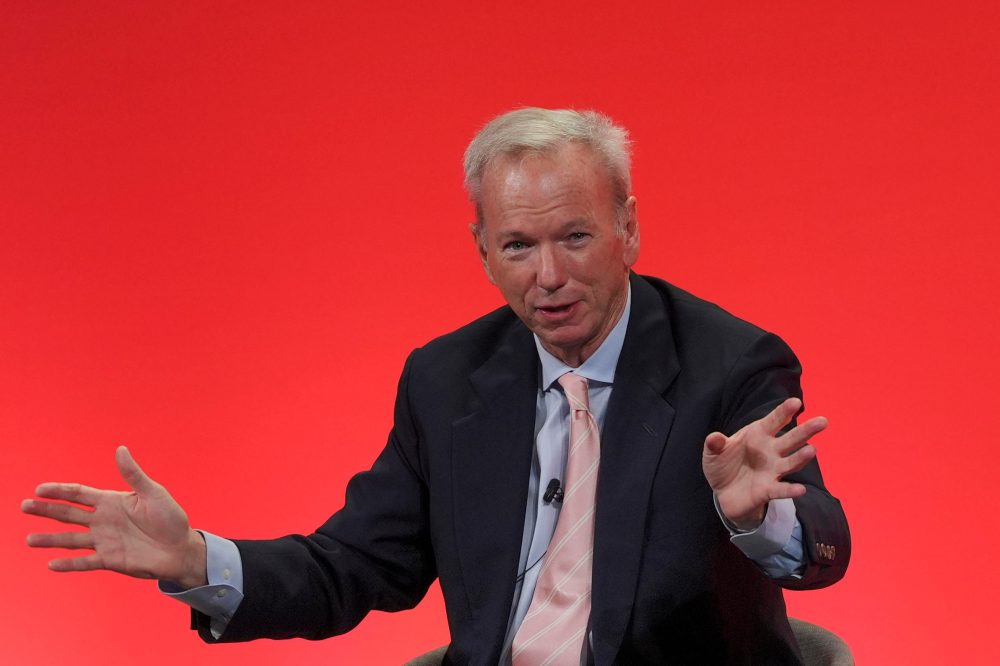
The former head of Google, Eric Schmidt, encountered vocal disapproval this past weekend while delivering remarks to roughly 10,000 graduates at the University of Arizona. When Schmidt discussed AI’s expanding influence, the crowd’s displeasure became audible.
“It will touch every profession, every classroom, every hospital, every laboratory, every person and every relationship you have,” Schmidt said, as booing began to build in the audience.
“I know what many of you are feeling about that. I can hear you,” Schmidt responded as the boos continued. “There is a fear in your generation that the future has already been written, that the machines are coming, that the jobs are evaporating … and I understand that fear.”
The subject matter struck students as insensitive, according to Olivia Malone, a 22-year-old University of Arizona graduate heading to law school.
“His speech was incredibly disrespectful to students,” said Malone. “We as students are discouraged from using it and penalized for using it. And then to have our speaker be the champion of AI is just like, OK? Why?”
The hostile reception toward commencement speakers discussing AI at various institutions reveals widespread concern among current college students.
Students nationwide and through numerous recent studies express worry about determining which abilities, academic fields and career paths will remain relevant as AI advances.
Research from the Institute of Politics at the Harvard Kennedy School shows roughly 70% of college students view AI as threatening their employment opportunities in a 2025 survey.
Recent polling by Gallup examining Generation Z individuals and young adults aged 14 to 29 revealed growing pessimism toward AI technology. Approximately half of Gen Z teenagers and adults report using AI on a daily or weekly basis. However, frustration with the technology has grown compared to last year, while enthusiasm and optimism about AI continues dropping.
Real estate executive Gloria Caulfield encountered similar pushback when she emphasized artificial intelligence’s emergence during her keynote address this month at the University of Central Florida.
“The rise of artificial intelligence is the next industrial revolution,” Caulfield said, as boos erupted, to her surprise. She turned around to ask those behind her, “What happened?”
“OK, I struck a chord. May I finish?” said Caulfield, who is vice president of strategic alliances at the Tavistock Development Company in Orlando.
“Only a few years ago, AI was not a factor in our lives,” she said, prompting cheers. “And now, AI capabilities are in the palm of our hand,” she said to more jeering.
Music industry executive Scott Borchetta received comparable treatment when addressing Middle Tennessee State University’s graduating class about AI’s impact on the music business.
“AI is rewriting production as we sit here,” said Borchetta, the CEO of Big Machine Records, as the students in caps and gowns booed. “I know it. Deal with it … Do something about it. It’s a tool. Make it work for you.”
Schmidt delivered comparable guidance to graduates: While their concerns are understandable, they possess the ability to influence AI’s future development.
The recommendations didn’t resonate with students like Malone, who felt the former Google executive’s remarks served his own interests rather than inspiring graduates.
“It felt like a big advertisement. It felt like the longest Gemini ad ever,” said Malone, noting that the choice of Schmidt as keynote speaker had also been controversial because his name appears in the Epstein files. “Everybody I was sitting by was really hooting and hollering about that, yelling, ‘Epstein files! Epstein files!’”
Some of the negative response from new graduates comes from the challenging employment landscape they’re facing. Unemployment among college graduates between ages 22 and 27 has climbed to its highest point in twelve years.
Sami Wargo recently completed her studies at Marquette University in Milwaukee, where an AI specialist served as the undergraduate commencement speaker despite student efforts to petition the school for a different choice.
“Given how AI has become an increasing threat towards our jobs, especially for our graduating class, we thought it was a little bit tone deaf,” said Wargo, who majored in digital media and minored in advertising.
Chris Duffey, an AI evangelist at Adobe who recently used AI to “co-author” a book titled “Superhuman Innovation: Transforming Business with Artificial Intelligence,” took the stage anyway.
“Innovation,” he told the students, “will reveal what can be done, but only you can decide what should be done.”
Wargo reported that she participated with fellow students around her in expressing disapproval of his remarks.
The 21-year-old has submitted applications for approximately 30 positions but hasn’t secured employment yet. Many job postings require applicants to “collaborate with AI,” but “I don’t know what that means,” she said, noting that most of her classes banned her from using AI.
Being forced to confront all the uncertainty during their graduation ceremony, she explained, created another “little dent in what was supposed to be a celebratory day.”