
Officials in Southern California continue preparing for a potential disaster as a malfunctioning chemical tank threatens to explode or leak, forcing 40,000 residents from their homes with no clear timeline for their return during Memorial Day weekend.
The pressurized container overheated Thursday and started releasing vapors at a business facility in Garden Grove, located roughly 40 miles south of downtown Los Angeles, the Orange County Fire Authority reported. No injuries have occurred so far.
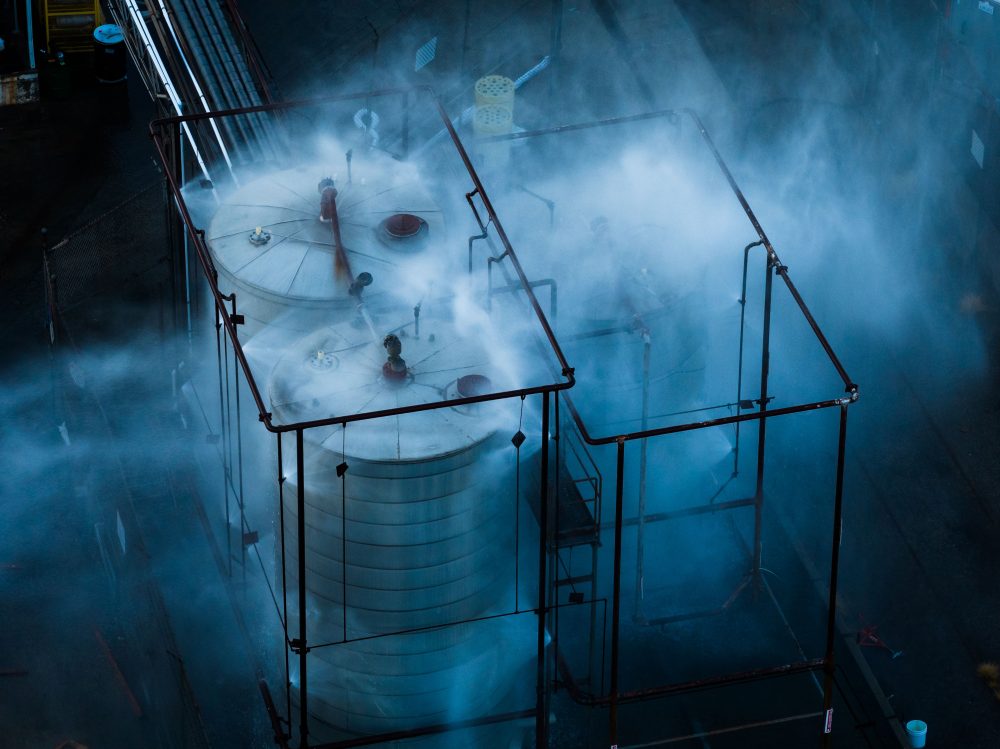
However, emergency responders face a critical problem: the tank’s valves are either damaged or “gummed up,” making it impossible for crews to extract the chemical or reduce pressure buildup, explained Craig Covey, Orange County Fire Authority division chief.
Emergency teams are primarily focused on finding methods to lower the temperature of the chemical contents to prevent a leak or explosion. Should cooling efforts fail, Purdue University engineering professor Andrew Whelton noted that a controlled leak would be preferable to contain most of the substance. The most dangerous outcome would be an explosion spreading the chemical across a wide area while sending debris flying.
Should internal temperatures keep rising, pressure will continue mounting as the methyl methacrylate transforms from liquid to gas, since the pressure relief mechanisms have stopped functioning. Whelton explained that firefighters would likely avoid puncturing the tank due to concerns about creating sparks that could ignite the volatile, flammable gas.
Temperature monitoring through drones occurs every 10 minutes to detect any increases, while teams prepare containment measures to prevent potential leaks from reaching waterways or the ocean, Covey reported on social media platform X during an evening update.
“Sitting back and allowing these tanks to fail is unacceptable,” Covey stated, while acknowledging no guarantees exist that tanks won’t rupture and leak. “Our goal is to protect your homes — no damage to them — and protect the environment.”
Tank cooling efforts seemed successful Friday, though Covey later corrected his assessment the next day, revealing that drone readings measured external rather than internal temperatures.
“Unfortunately I do have to report that the temperature was 90 degrees,” Covey announced, representing an increase from 77 Fahrenheit recorded the previous morning.
Temperature control remains crucial since the liquid chemical’s flashpoint reaches 50 Fahrenheit, according to the National Institute for Occupational Safety and Health.
Garden Grove residents received initial evacuation orders, which later expanded to portions of five additional Orange County communities: Cypress, Stanton, Anaheim, Buena Park and Westminster. Some evacuees with pets prepared to spend nights in vehicles.
Multiple shelters continued operating Saturday, including facilities at three high schools.
Marco Solano, 32, stayed Friday night at his parents’ residence, expressing frustration while monitoring news for updates about returning home.
“I don’t think that they should have dangerous chemicals in a neighborhood area, especially that dangerous that they have to evacuate people,” Solano commented. “But again, it’s not up to me. I don’t make the laws. I don’t make the rules. We just have to do what is best I guess.”
Solano, who works multiple jobs, described feeling extremely tired and weak, believing the chemical leak stress was worsening his anemia and ulcerative colitis.
“This has been affecting me quite a bit,” he said.
After work Friday, Solano visited his apartment to collect belongings and observed other residents who hadn’t evacuated, causing him concern for their safety.
The compromised tank sits at GKN Aerospace, a manufacturer of commercial and military aircraft components. It contains 6,000 to 7,000 gallons of methyl methacrylate, a substance used in plastic parts production.
Methyl methacrylate exposure can trigger severe breathing difficulties and loss of consciousness. The chemical may also cause neurological issues and irritation to skin, eyes and throat, according to safety documentation. Orange County health authorities noted the chemical produces a distinct odor that residents might detect across large areas without experiencing harm.
Whelton compared the tank’s chemical volume to the catastrophic 2023 train derailment in East Palestine, Ohio, which he investigated when more than 115,000 gallons of vinyl chloride was released after officials deliberately opened five tank cars and burned the chemical. This incident involves significantly less material.
“Many of these are acute, fast-acting effects. But the longer somebody stays in contact with it, the more potential for significant damage that occurs,” Whelton explained.
In case of explosion, officials anticipate “severe structural damage and significant harm” within the blast zone nearest the tank.
Should an explosion release chemicals into the atmosphere, Whelton emphasized the importance of conducting detailed air monitoring specifically for methyl methacrylate rather than generic volatile organic compound testing used in East Palestine. Standard tests, typically performed with portable detectors, may fail to identify this particular chemical. Indoor testing of buildings and residences might be necessary before residents return.
Weather conditions will significantly influence the direction of any chemical plume following an explosion. Officials are creating maps to predict various scenarios identifying the most affected areas.
Containment barriers have been installed to block chemicals from entering storm drainage systems or reaching nearby creeks and ocean in case of spillage, Covey reported.
Gov. Gavin Newsom issued a state emergency declaration for Orange County, providing state resources to local agencies and allowing state properties and fairgrounds to serve as emergency shelters if needed.
Garden Grove borders Anaheim, which houses Disneyland’s two theme parks that remain outside evacuation zones. Park representatives said they’re monitoring the situation and assisting affected employees.
GKN accepted a payment of more than $900,000 to state regulators in 2025 to resolve violations related to recordkeeping, permitting problems and nitrogen oxide emissions, based on South Coast Air Quality Management District website information.