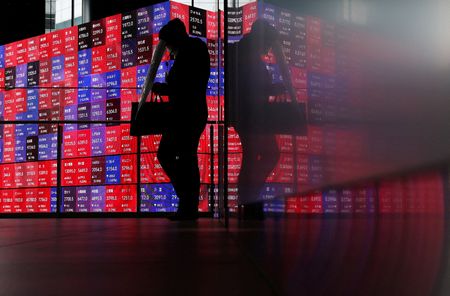

Asian financial markets displayed hesitant trading patterns Tuesday morning as geopolitical tensions in the Middle East region tempered investor enthusiasm sparked by artificial intelligence developments.
The MSCI Asia-Pacific stock index excluding Japan wavered between positive and negative territory during early trading hours, ultimately falling 0.5%. Korean equities led the decline with a 2% drop after opening higher, while S&P 500 electronic mini futures decreased 0.3% and Japan’s Nikkei 225 tumbled 0.7%.
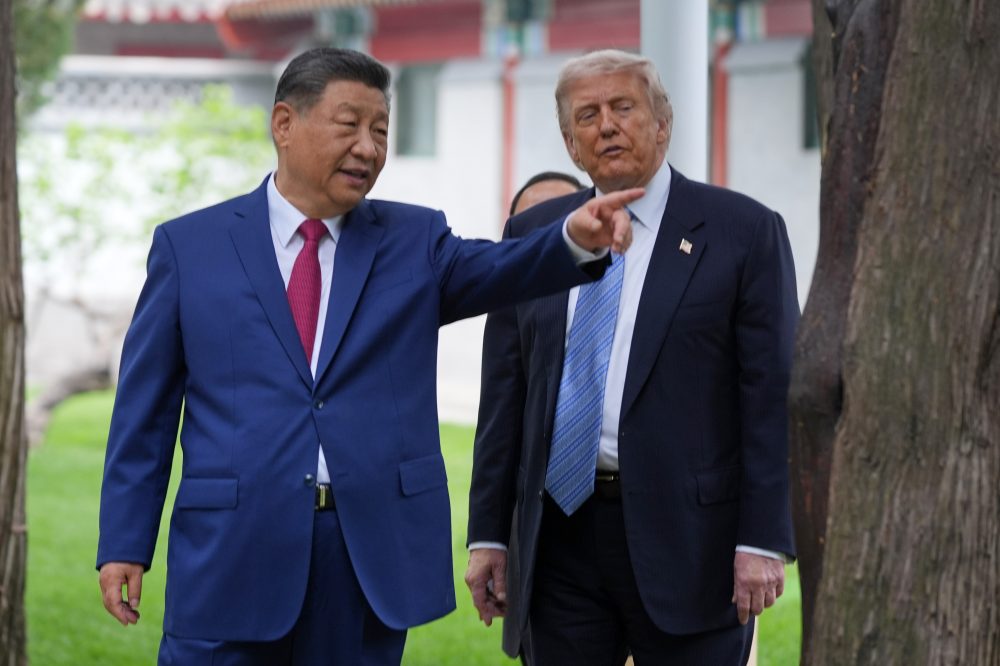
Market analysts from Westpac explained the volatility in a research report: “Conflicting news coming out of the Middle East left markets whipsawing, with Iran stating that negotiations with the U.S. have been suspended, only for President Trump to follow up in recent hours with reassurances that talks are continuing ‘at a rapid pace’.”
Brent crude oil maintained stability near $95 per barrel following Lebanon’s announcement Monday of a partial ceasefire agreement between Hezbollah and Israel, potentially opening doors for renewed diplomatic efforts to conclude the three-month conflict between the United States and Iran.
Energy prices had surged more than 4% Monday after reports emerged that Tehran had paused indirect diplomatic discussions with the U.S.
During Monday’s session, the S&P 500 gained 0.3% after the ISM manufacturing PMI climbed to 54.0 in May from the prior month’s 52.7, surpassing forecasts to achieve a four-year high, apparently fueled by companies accelerating orders due to rising costs and supply shortages related to the Iranian conflict.
David Rosenberg, founder and president at Rosenberg Research in Toronto, noted in a client communication: “That the equity market is in boom mode is not up for debate,” despite elevated energy costs and climbing real interest rates. “The S&P 500 is now up nine weeks in a row, a streak we last witnessed in late 2023.”
Asian artificial intelligence suppliers posted gains following news that AI company Anthropic had privately submitted paperwork for a U.S. initial public offering, potentially achieving a trillion-dollar market value.
Alphabet stock declined 0.7% after the technology company announced plans to pursue $80 billion in equity fundraising, including investment from Berkshire Hathaway, as part of an ambitious strategy to finance AI infrastructure expansion.
The U.S. dollar index, tracking the currency’s performance against six major counterparts, remained stable at 99.18, staying within the narrow trading band established over the past three weeks.
The 10-year U.S. Treasury bond yield dropped 2.0 basis points to 4.455%. Gold prices fell 0.1% to $4,479.17.
In digital currency markets, bitcoin decreased 0.2% to $71,232.83, while ether held steady at $2,002.03.