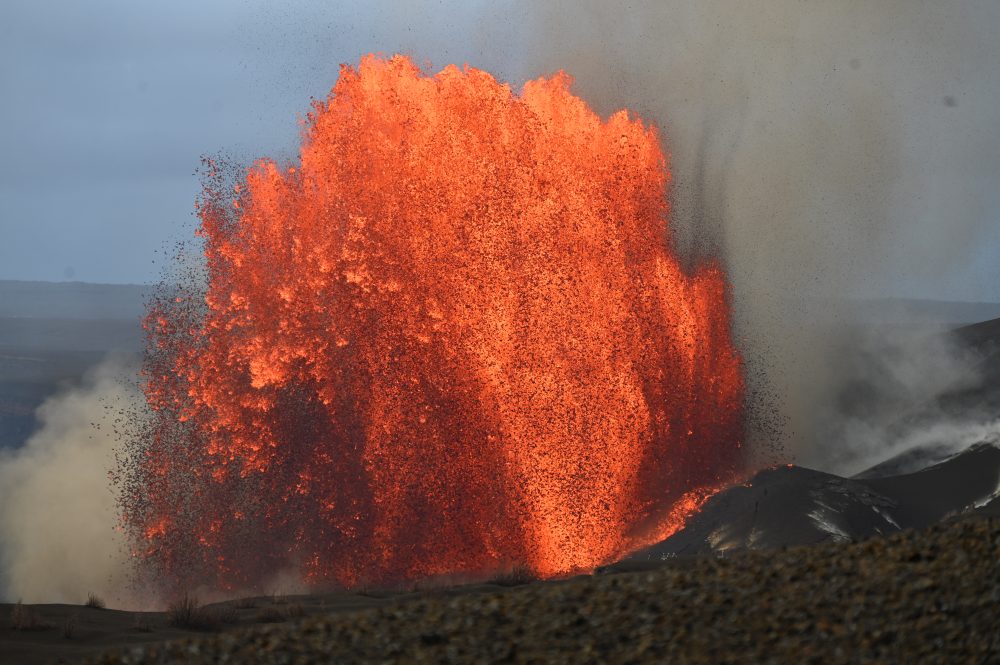

The Hawaiian Volcano Observatory announced Monday that Kilauea volcano has achieved a historic milestone, recording 48 separate lava fountaining episodes since its current eruption cycle started in December 2024.
According to Katie Mulliken, a geologist and spokesperson with the observatory, this marks the highest number of fountaining episodes ever documented during a single eruption at Kilauea.
“Episodes are separated by periods during which little to no lava erupts. Since lava is coming from the same vents in a crater at Kilauea’s summit, it is the same overall eruption,” she explained in an email statement.
The current volcanic activity stands out for multiple reasons, Mulliken noted, particularly because of its accessibility to both local residents and visitors. She contrasted this with a previous eruption in the 1980s that produced 47 lava fountaining episodes across approximately 3½ years but occurred in a much more isolated location.
“The ongoing eruption is also reshaping the topography at the summit,” she said.
However, the spectacular lava displays come with potential risks, as the fountains can affect surrounding communities through the dispersal of volcanic debris and ash, scientifically referred to as tephra.
Situated on Hawaii’s Big Island, Kilauea ranks among the planet’s most active volcanic sites.