
WEST SACRAMENTO, Calif. — After completing a winning road series against the Athletics, Yankees manager Aaron Boone expressed frustration with the challenging conditions at the minor league facility where Oakland temporarily plays their home games.
“I didn’t play in the PCL. But I feel like I’ve experienced it a couple times here when it gets hot like this,” Boone commented Sunday after New York’s 13-8 victory over the A’s. “You’re never feeling safe. … Just glad to escape here and get on the bird. It’s a challenging place to play. You have to figure it out.”
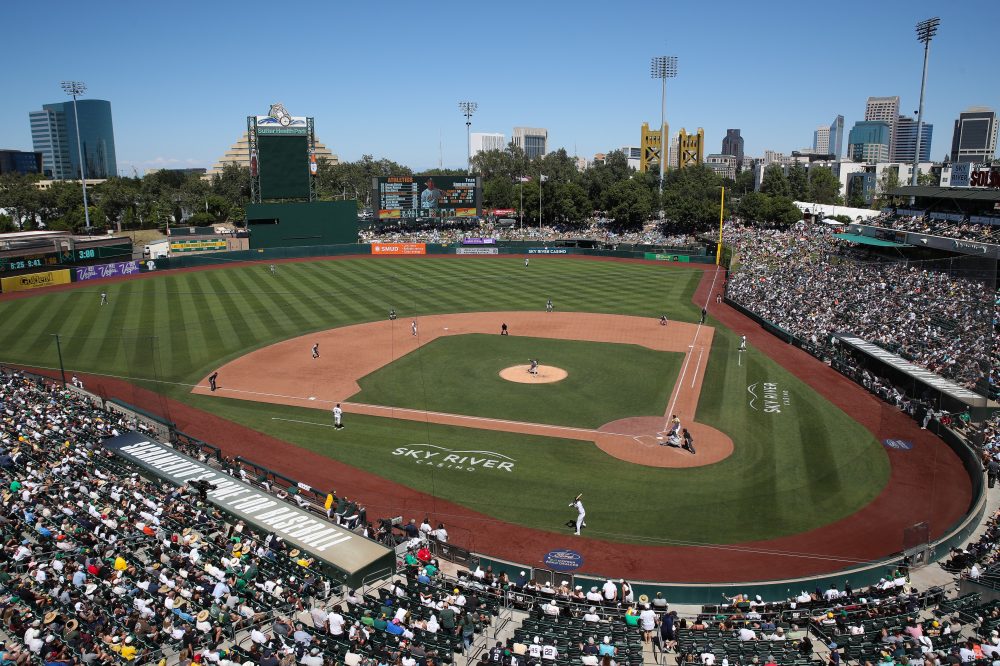
Now in their second year at Sutter Health Park in the Sacramento region, the Athletics continue struggling with a venue that dramatically favors offensive production.
Extreme temperatures and air currents transform routine fly balls into home runs, while high skies and shifting winds make defensive plays unpredictable. These factors create one of baseball’s most offense-friendly environments and appear to be wearing down Oakland’s pitching staff.
During their latest home stretch, the A’s managed just one victory in six games, surrendering 47 runs to Seattle and New York — including 13 runs in a single inning versus the Yankees — establishing a troubling trend at their interim location before relocating to Las Vegas.
Despite showing potential this season and spending considerable time atop the AL West standings before their recent struggles, Oakland’s home-road performance gap is stark. The team ranks 10th in baseball with a 17-14 away record, while their 11-17 home mark ranks second-worst.
Pitching performance explains the disparity.
Oakland surrenders 3.01 more runs per contest at home compared to road games. According to Sportradar, this differential would establish a new major league record for a complete season, surpassing the previous high of 2.82 set by the Phillies in 1923 and exceeding any season played at Denver’s high altitude.
“You watch games here,” Athletics manager Mark Kotsay explained regarding the pitching challenges at their ballpark. “You got to keep the ball down the zone and get the ball on the ground. We’ve paid for our mistakes probably more than what we’ve paid for mistakes on the road. That being said, we’ve got to play better defense at home. … That’s a combination of what it takes to pitch better. It’s also to play better.”
Despite Oakland’s attempts to minimize the ballpark’s influence, knowing they cannot alter the circumstances, the statistics tell a clear story. The ease with which baseballs carry affects pitcher confidence, making them hesitant to attack hitters aggressively.
At home, the A’s issue walks at the majors’ second-highest frequency, compared to 18th-highest during road games. Oakland pitchers walked 16 batters during the Yankees series, including four with bases loaded.
“We’re not going to overfocus on home-road splits right now but obviously we’re well aware that we haven’t played well in this ballpark,” Kotsay acknowledged.
However, Oakland’s pitchers say they attempt to prevent the conditions from affecting their mental approach.
“You can try and pitch to it, and if you do that, it might work one time, but you might also do something that you don’t want to do, or try and do something you’re not good at,” A’s starter Aaron Civale stated. “Sometimes the wind’s blowing out here, sometimes the wind is blowing out in another stadium or different place. So there’s factors everywhere, rain, weather, cold, hot. It’s all conditions that we can’t control. Unless you have a roof over your head, then surely there’s nothing you can do about it.”
While Athletics pitchers have suffered more from environmental factors than visiting teams, the conditions challenge everyone. Saturday evening, Yankees starter Ryan Weathers delivered the type of performance that typically produces excellent results.
Weathers recorded 10 strikeouts across 6 2-3 innings and generated swings and misses on over 40% of swings for only the third time in his career. However, three home runs — including two on pitches he considered well-executed — proved damaging in a 6-4 defeat.
Despite understanding the risks associated with any fly ball, Weathers said he couldn’t modify his pitching strategy.
“I did my time in the PCL, so I know how these parks work,” he explained. “But obviously, that can’t go into your decision-making, can’t go into your pitching.”