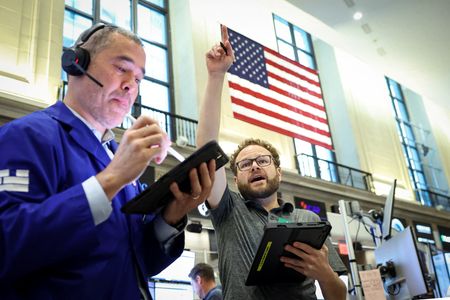

Wall Street’s major stock indexes climbed to record highs Monday, powered by artificial intelligence companies despite mixed signals about ongoing U.S.-Iran diplomatic discussions that created volatility throughout the trading session.
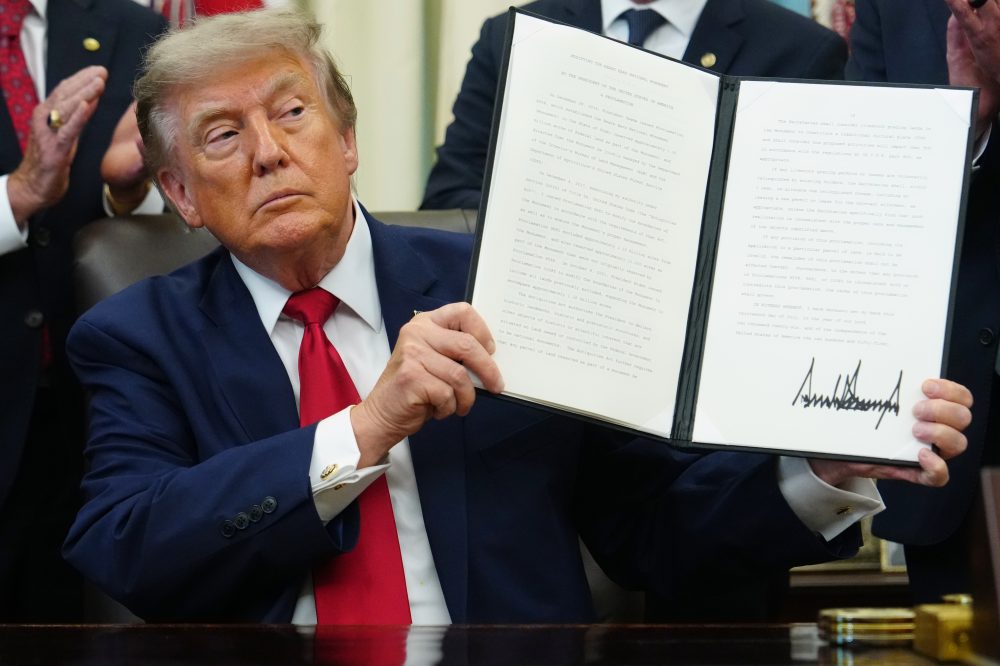
The market rally was driven primarily by technology stocks after President Donald Trump indicated that diplomatic conversations between the two nations were continuing. However, the gains showed unusual concentration, with only two sectors advancing while the majority of the market declined.
Market analyst Jamie McGeever examined what he calls the “K-shaped” U.S. economy in his Monday analysis, noting how personal savings have dropped to historic lows while corporations and wealthy asset owners benefit from AI-related investment spending. “Something has to give, right?” he wrote.
The technology sector jumped 2.5% and energy gained 1.9%, but the remaining nine sectors in the S&P 500 fell, with utilities dropping 3% and leading the decline. Individual tech stocks showed mixed results – Dell and Oracle each surged 10%, while Nvidia climbed 6% and Micron crossed the $1,000 mark. However, Qualcomm fell 9% and both Meta and Intel declined 5%.
The AI investment boom accelerated with several major developments. Nvidia introduced new processors designed to bring artificial intelligence capabilities directly to laptop and desktop computers. Anthropic announced it has privately submitted paperwork for a U.S. stock market debut, joining OpenAI in preparation for public trading. SpaceX is also expected to price its public offering later this month.
These potential listings could represent up to $4 trillion in combined market value, raising questions about whether the market can handle such large new offerings and whether current valuations indicate a market peak.
Manufacturing data released Monday showed U.S. factory activity expanding at its strongest pace in four years, driven by AI-related capital spending. This growth surprised many economists, particularly given concerns about tariffs, inflation, and low consumer confidence.
Currency markets saw the dollar strengthen broadly, with the USD/JPY pair approaching 160.00. New Zealand’s dollar and the Swedish krona each fell 1%, while Argentina’s peso dropped 1.5%. Bitcoin declined 3% to its lowest level since mid-April.
Oil prices spiked on Middle East tensions, with Brent crude rising 5% and West Texas Intermediate up 6%. Natural gas fell 3% while gold declined 1%. Treasury bond yields increased by as much as 3 basis points.
Global markets showed strength in Asia, with South Korea gaining 4% and major indexes including MSCI World, MSCI Asia ex-Japan, and Japan’s Nikkei all reaching new highs. European and UK markets declined.
Looking ahead, market watchers will monitor developments in the Middle East, along with economic data from Australia, South Korea, and the eurozone. U.S. job opening figures for April will be released, and Federal Reserve officials from Minneapolis and Cleveland are scheduled to speak.